The History of an Error

Preface

I once was crazy, completely insane. Some would say that I still am.

Should I ever have been so bold as to analyze the arguments throughout history for and against the existence of God? The will to Truth had possessed me.

I had, in essence, sold my soul for Truth.

Panic? Crisis? Call it what you will.

Should I have spent my time doing something other than reading philosophy for hours on end for years? The abyss stares back.

Perhaps I should have trembled before God with fear and just continued my computer science studies. I would at least have become financially sound, right?

But I had to look into the abyss. Call it destiny.

Does it haunt me to this day? I was compelled to stare.

Not by my will, but by the will of God!

Truth be told, there is nobody to blame but my self.

Let me now put on an old tune that was first played back in 2008 by a tiny white hermit named Joshua Synon who was still a serious metaphysician – in an ironic sense at least.

When I heard the learn’d astronomer,
When the proofs, the figures, were ranged in columns before me,
When I was shown the charts and diagrams, to add, divide, and measure them,
When I sitting heard the astronomer where he lectured with much applause in the lecture-room,
How soon unaccountable I became tired and sick,
Till rising and gliding out I wander’d off by myself,
In the mystical moist night-air, and from time to time,
Look’d up in perfect silence at the stars.

– Walt Whitman


The History of an Error

By Joshua Synon

Man is the measure of all things – of things that are, that they are, and of things that are not, that they are not.

– Protagoras

And Plato said, “Let there be Truth,” and there was Truth. Man saw that the Truth was good, and he separated the Truth from the truth. Man called the Truth “Form,” and the truth he called “illusion.” Such is the spectacular deceit that marked the beginning of thousands of years of philosophical confusion. To the self-proclaimed Sophos that advocate the attribution of absolute value to that which is – to Truth – to apodictic certainty of noumena, I write with fear and trembling, but with utmost necessity. In the tradition of Pontius Pilate, may we ask, “What is Truth?”

In the above, I have used a capitalized ‘T’ in truth to signify absolute, unchangeable, objective truth arrived at through reason alone. The lower case ‘truth’ represents truths arrived at through subjective experience alone. What Western philosophy has embarked upon is a millennia surpassing dichotomy of essentially contradictory philosophical understandings of the world. One team argues that truth is objective in nature, that there are facts-in-themselves that exist independent of any observer (e.g. traditional theists), and these I will term objectivists (not to be confused with the doctrine of Ayn Rand). The other argues that truth is qualified by subjective experience, that there are indeed no facts-in-themselves – only perspectives, and these I will call subjectivists. On the metaphysical side there is a subtle, but significant, difference between the two: objectivists believe that we experience (or at least possibly can experience) the world as it is in-itself, while the subjectivist believes that there are only many different interpretations or perspectives possible. There have been many proponents for each side throughout the ages. What I would like to do is provide an explanation for this epic rift in Western philosophy and present an account as to why objectivism won out in the West until recent times.

In our present age most people share an objectivist point of view. Metaphysical objectivism is presumed to be common sense. Nobody doubts that there is an external world existing independently of oneself. People believe that when they die the world will continue along just as it had before. Certainly the scientific method would not work if this were not the case. Science today is on a search for the same objective Truth that Plato was so befriended to. The difference, however, lies in the fact that science evokes practical principles as opposed to abstract theoretical fantasies. It is my endeavor to convince the reader that what I have labeled subjectivism is much more common-sensical than its rival. I need not delve into the niceties of objectivism precisely because it is so familiar to us. It is enough to say that the ancient Greeks, specifically Plato, marked the beginning of objectivist thought in the Western world.

The so-called sophists of ancient Greece can be seen as prototypes of subjectivist thought in Western philosophy. They recognized and embellished upon a certain relativity in matters of truth. It was a sophist named Protagoras who pronounced, “Man is the measure of all things – of things that are, that they are, and of things that are not, that they are not” (Reeve 30). I think this is one of the most important quotes in ancient Western philosophy. This man, Protagoras, somehow acquired insight into a fundamental psychological truth about the nature of man and his ideas. That is, man is the sole creator and destroyer of his own ideas. It would seem to me that this hitherto profound insight was as common-sensical to Protagoras as objectivism is to the masses today. This same philosopher recognized that, “There are two opposing arguments concerning everything” (Ibid). Whether he believed that both sides of an argument are equally valid is a matter of interpretation and subject to argument. However, in matters of abstract metaphysical thought, I think Protagoras would agree that both sides are equally valid.

Thrasymachus, another among the ranks of the sophists, proclaimed in Book I of Plato’s Republic that “justice is the advantage of the stronger;” that, “each [ruler] declares that what is just for its subjects is what is advantageous for itself” (Ibid., at 149). This view of Thrasymachus’ is clearly relativistic in that justice in one state would theoretically be different from justice in another state. What is not recognized, however, by Plato in his dialogue is that the argument is over the definition of a word, and not, as he would have us believe, over an abstract concept of justice-in-itself. Such a concept, as will be argued later, is non-cognitive to man, for it is an oxymoron for man, a ‘subject,’ to perceive things-in-themselves as if he were an objective observer – an ‘unknowing knower.’

The subjectivism of the sophists, and perhaps other circumstances irrelevant to this discourse, provoked the Sophos – the self-proclaimed true seekers of Truth, with Plato being the most prominent among their ranks. Plato dishonored the sophists in his dialogues and the term sophist itself remains derogatory to this day. The divine Plato introduced, in his own sophistic manner, a cunning theory that would sweep through the ages of philosophy and even seep into the core of the world’s most prominent religion. His theory of the Forms – of Ideals – that began the artificial distinction between being and becoming, between reality and appearance, was his magnum opus: Man is in a cave of ignorance, blinded by his own senses, only to be redeemed by subjection to the Forms – to Truth, to the Good, even apotheosized and anthropomorphized into God – all essentially the same thing. “The true world – attainable for the sage, the pious, the virtuous man; he lives in it, he is it” (Portable 485). Plato himself wrote it in Book VII of the Republic, “I, Plato, have had the divination to leave the confines of that gloomy cave, to escape the shadowy appearances, and have come into the light of true knowledge. If I appear completely ridiculous to you it is only because your eyes are not well adjusted to Truth.” Perhaps he was operating on the principle of omne ignotum pro magnifico est. It is interesting to review Nietzsche’s view of Plato’s theory of the Forms:

Every concept originates through our equating what is unequal. No leaf ever wholly equals another, and the concept “leaf” is formed through an arbitrary abstraction from these individual differences, through forgetting the distinctions; and now it gives rise to the idea that in nature there might be something besides the leaves which would be “leaf” – some kind of original form after which all leaves have been woven, marked, copied, colored, curled, and painted, but by unskilled hands, so that no copy turned out to be a correct, reliable, and faithful image of the original form. We call a person “honest.” Why did he act so honestly today? we ask. Our answer usually sounds like this: because of his honesty. Honesty! That is to say again: the leaf is the cause of the leaves. After all, we know nothing of an essence-like quality named “honesty”; we know only numerous individualized, and thus unequal actions, which we equate by omitting the unequal and by then calling them honest actions. In the end, we distill from them a qualitas occulta with the name of “honesty”… (Portable 46)

I think that the most important developments in this great debate consist of the expansions of subjectivist thinking in more recent times. William James, a well known American philosopher, was a prominent proponent of the pragmatic theory of truth.

William James insisted that truth happens to an idea. “So there is no such thing as disinterested truth. Pragmatic truth is human truth. ‘Purely objective truth,’ James asserts, ‘plays no role whatsoever, is nowhere to be found.’ He adds that the most absolute-seeming truths ‘also once were plastic. They were called true for human reasons. They also mediate between still earlier truths and what in those days were novel observations.’ Useful, human truth is alive; rationalistic, abstract, dogmatic truth is ‘the dead heart of the living tree.’ Truth grows.” (Soccio 411)

It is becoming obvious that objectivism is losing its hold on the hearts and minds of philosophers. James’ theory helped to reduce fruitless metaphysical debates by only accepting practical truths. James was by no means a radical subjectivist, but his ideas reveal that the magnificent tower that is the reign of objective truth is beginning to falter.

Kierkegaard held a more extreme view on the value of subjective truth. Indeed, he wrote that subjectivity is truth:

When the question about truth is asked objectively, truth is reflected upon objectively as an object to which the knower relates himself. What is reflected upon is not the relation but that what he relates himself to is the truth, the true. If only that to which he relates himself is the truth, the true, then the subject is in the truth. When the question about truth is asked subjectively, the individual’s relation is reflected upon subjectively. If only the how of this relation is in truth, the individual is in truth, even if he in this way were to relate himself to untruth. (Hong 206)

For Kierkegaard, it is only subjective truth that has value. He does not, however, argue against the possibility of facts-in-themselves. He only intended to devalue them and the attempt at proving or even searching for them. One of the most common objections to subjectivism is that it creates a contradiction upon itself, but Kierkegaard was quick to guard against this objection:

When subjectivity, inwardness, is truth, then truth, objectively defined, is a paradox; and that truth is objectively a paradox shows precisely that subjectivity is truth, since the objectivity does indeed thrust away, and the objectivity’s repulsion, or the expression for the objectivity’s repulsion, is the resilience and dynamometer of inwardness. The paradox is the objective uncertainty that is the expression for the passion of inwardness that is truth. So much for the Socratic. The eternal, essential truth, that is, the truth that is related essentially to the existing person by pertaining essentially to what it means to exist (viewed Socratically, all other knowledge is accidental, its degree and scope indifferent), is a paradox. Nevertheless the eternal, essential truth is itself not at all a paradox, but it is a paradox by being related to an existing person. Socratic ignorance is an expression of the objective uncertainty; the inwardness of the existing person is truth. (Ibid., at 207)

This passage clearly shows that there have developed multiple meanings for the same philosophical words, viz. truth, which has caused much confusion in philosophy. But Kierkegaard was an avid ironist and his point is not to be taken lightly: If subjectivity is truth, then, objectively defined, truth is a paradox. However, the offensiveness to us objective truth-seekers of this so-called paradox is precisely an expression of subjectivity. What marvelous word games we have come up with throughout the ages! If anything, Kierkegaard has proven that it is certainly unfounded to regard subjectivity as untruth.

If Plato marked the beginning of objectivist thought in Western philosophy, then it is the Enlightenment that lead the course to its destruction. I am not going to tell the story of modern philosophy here. I will simply assume that the reader is familiar with the drama that started with Rene Descartes’ rationalism,

There is thinking; consequently there is that which thinks’ – that is what Descartes’ argument comes to. Yet this means positing our faith in the concept of substance as ‘a priori true.’ When there is thinking, something must be there which thinks – that is merely a formulation of our grammatical habit, which posits a doer for what is done… Rational thought is interpretation according to a scheme which we cannot escape. (Portable 455)

…proceeded through Berkeley’s idealism and Hume’s empirical skepticism, to finally be “solved” by Kant’s Copernican revolution. Enter the new pandemic – the Cartesian disease! “The true world – unattainable, indemonstrable, unpromisable; but the very thought of it – a consolation, an obligation, an imperative” (Ibid., at 485). There is a common factor underlying the thought of all of these men and their contemporary supporters. That common factor I will call logocentrism, a will to abstract metaphysical Truth at all costs. “’Will to truth’ does not mean ‘I will not let myself be deceived’ but – there is no choice – ‘I will not deceive, not even myself’: and with this we are on the ground of morality” (Ibid., at 449).

Kierkegaard once remarked upon an absent-minded man so abstracted from his own life that he hardly knew he existed, until, one fine morning, he woke up to find himself dead. Let us call this man philosophy. Almost twenty-three hundred years after Plato the question of the value of this objective Truth-seeking was finally posed:

The will to truth which will still tempt us to may a venture, that famous truthfulness of which all philosophers so far have spoken with respect – what questions has this will to truth not laid before us! What strange, wicked, questionable questions! That is a long story even now – and yet it seems as if it had scarcely begun. Is it any wonder that we should finally become suspicious, lose patience, and turn away impatiently? That we should finally learn from this Sphinx to ask questions, too? Who is it really that puts questions to us here? What in us really wants “truth”? Indeed we came to a long halt at the question about the cause of this will – until we finally came to a complete stop before a still more basic question. We asked about the value of this will. Suppose we want truth: why not rather untruth? And uncertainty? Even ignorance? The problem of the value of truth came before us – or was it we who came before the problem? Who of us is Oedipus here? Who the Sphinx? It is a rendezvous, it seems, of questions and question marks. And though it scarcely seems credible, it finally almost seems to us as if the problem had never even been put so far – as if we were the first to see it, fix it with our eyes, and risk it. For it does involve a risk, and perhaps there is none that is greater. (Basic Writings 199)

Shall we play the blind man who speaks of colors and lives by his word? When one asks what the value is of a fact-in-itself, a plethora, indeed an onslaught, of conscientious objections arise. Have we been indoctrinated to idolize Truth? I think that, if the question is asked metaphysically, the answer is easily found in the philosophical writings of the past twenty-four hundred years. Even so, given this great quest for objective Truth succeeds – as if objective is a meaningful word! Where have we gone and where are we to go from there? Ah, so we have proven that an external world exists, and we have ascertained every principle of physics! Alas, we can all now rest in peace and cease living, for by the power of Truth we have conquered the Universe! Abstract theory, nay, the Truth – The Truth – has set us free! However, when the will to Truth is abolished the voice of King Solomon again reigns supreme, which is perhaps irrelevant to this discourse, but certainly relevant to every living individual, “O Vanity of vanities, all is vanity!” But – nil desperandum– it would appear that nihilism itself was also invented by the Sophos!

Philosophy, for the past 2,400 years, has been on a search for the Truth. It is my contention that certain qualities of language itself have impeded and distorted this search, even possibly necessitated it. Language is the foundation of philosophical discourse, but language itself has limits, boundaries, ambiguities, obscurities, and preordained meanings.

When someone hides something behind a bush and looks for it again in the same place and finds it there as well, there is not much to praise in such seeking and finding. Yet this is how matters stand regarding seeking and finding “truth” within the realm of reason. If I make up the definition of a mammal, and then, after inspecting a camel, declare “look, a mammal” I have indeed brought a truth to light in this way, but it is a truth of limited value. That is to say, it is a thoroughly anthropomorphic truth which contains not a single point which would be “true in itself” or really and universally valid apart from man. At bottom, what the investigator of such truths is seeking is only the metamorphosis of the world into man. He strives to understand the world as something analogous to man, and at best he achieves by his struggles the feeling of assimilation. (“On Truth”)

Language, created by man, has been used by man to create an ordered universe. Language is confined to the system from which it originated and cannot gaze in as an objective thinker.

We have fixed up a world for ourselves in which we can live – assuming bodies, lines, planes, causes and effects, motion and rest, form and content: without these articles of faith, nobody now would endure life. But that does not mean that they have been proved. Life is no argument; the conditions of life could include error. (Basic Writings 171)

Every religion that has developed even a modicum of semantic sophistication recognizes to some extent the way words and reason fall short of reality when they do not actually distort it. However much the rationalist may begrudge the fact, paradox and the transrational are religion’s life blood, and that of art as well. Mystics in every faith report contacts with a world that startles and transforms them with its dazzling darkness. Zen stands squarely in this camp, its only uniqueness being that it makes breaking the language barrier its central concern. (Smith 130)

Shall we now give credence to that ancient question of Pontius Pilate? It has been said that there have developed multiple meanings for the same philosophical words. The word under the microscope at the moment is ‘truth.’ From what we have ascertained we may infer that truth is simply another creation of language; an attempt to bring order from chaos, meaning from meaninglessness.

What, then, is truth? A mobile army of metaphors, metonyms, and anthropomorphisms – in short, a sum of human relations, which have been enhanced, transposed, and embellished poetically and rhetorically, and which after long use seem firm, canonical, and obligatory to a people: truths are illusions about which one has forgotten that this is what they are. (Portable 47)

If this much is clear, then it is also clear that we cannot communicate without these metaphors, perhaps not even live without what we have created. It is not as clear, however, that is it high time for philosophy to abandon its search for Truth. Metaphysics, epistemology, ethics: all artificial creations for the sole purposes of mankind. Even logic cannot escape the grasp of owing its life to man:

That all contradiction in concepts should be forbidden, is the result of a belief, that we are able to form concepts, that a concept not only characterises but also holds the essence of a thing. … As a matter of fact, logic (like geometry and arithmetic) only holds good ofassumed existences which we have created. Logic is the attempt on our part to understand the actual world according to a scheme of Being devised by ourselves; or, more exactly, it is our attempt at making the actual world more calculable and more susceptible to formulation, for our own purposes. (Langiulli 90)

According to Wittgenstein, words themselves are relative in their meaning with respect to the specific ‘language-game’ that is taking place at any given time. He argued that language is not an adequate expression of objective reality. In a similar line of thought, Nietzsche doubts the truth-extracting powers of language,

[W]hat about these conventions of language? Are they really the products of knowledge, of the sense of truth? Do the designations and the things coincide? Is language the adequate expression of all realities? Only through forgetfulness can man ever achieve the illusion of possessing a ‘truth’… If he does not wish to be satisfied with truth in the form of a tautology… then he will forever buy illusions for truths. What is a word? The expression of a nerve-stimulus in sounds. But to infer from the nerve stimulus, a cause outside us, that is already the result of a false and unjustified application of the principle of reason… The ‘thing in itself’ (for that is what pure truth, without consequences, would be) is quite incomprehensible to the creators of language and not at all worth aiming for. One designates only the relations of things to man, and to express them one calls on the boldest metaphors. A nerve stimulus, first transposed into an image – first metaphor. The image, in turn, imitated by a sound – second metaphor… (Portable 45)

Noscitur a sociis – ad absurdum. In similar fashion, and perhaps beyond what Wittgenstein attempted, Jacques Derrida developed the tradition of deconstruction, which attempts to discover and incorporate, to deconstruct, underlying metaphysical assumptions in the interpretation of a reading. Each of these approaches lend a hand in the recovery of philosophy from thousands of years of that deceptively naive game of language.

Let us think about this subject in a common-sensical fashion. Our modern day common sense tells us, as was noted previously, that an external world-in-itself does exist, but this can be easily explained on account of indoctrination. A question for the reader: Have you ever existed outside of yourself? In other words, have you experienced anything other than what you have experienced? A clear contradiction. When one admits that subjective experience is the beginning and end of all knowledge, then one also admits ipso facto that there is absolutely no rational ground for assuming an objective reality outside of ones own experiences.

The practice of philosophy is, and always has been, man projecting his ideals into the world, a type of creative autobiography if you will. The existence of a word does not prove the ontological existence of an object. Perhaps an analogy will suffice: Computer scientists frequently use the term ‘null pointer.’ In computer science, a pointer is essentially a data element whose value is an address. A pointer basically points to the value of a given variable and can be dereferenced in certain operations requiring said variable. A null pointer is a pointer with no address. It is a pointer that is pointing to nothing. If a program attempts to dereference a null pointer, there will result a run-time error and the program will shut down. Words used in abstract philosophy can be said to be equivalent to null pointers. They dereference nothing and are only useful on an aesthetic level.

The separate elements of philosophy have gradually become assimilated into modern science. Metaphysics and epistemology have merged into science proper: physics, biology, astronomy, etc. Morality is now under the guise of psychology. Ethics has been made the foundation of law and an instrument of control. Political theory will be the last to be taught in history classrooms alone. Aesthetics has become vanity instead of vitality. With fear and trembling, not for me, but for the world, I pronounce the death of Truth – and with it, the death of 2,400 years of Western philosophy.

History of an Error

  1. The real world attainable for the wise man, the pious man, the virtuous man—he lives in it, he is it.

(Most ancient form of the idea, relatively clever, simple, convincing. Paraphrase of the proposition: ‘I, Plato, am the truth.’)

  1. The real world unattainable for now, but promised to the wise man, the pious man, the virtuous man (‘to the sinner who repents’).

(Progress of the idea: it becomes more cunning, more insidious, more incomprehensible—it becomes a woman, it becomes Christian…)

  1. The real world unattainable, unprovable, unpromisable, but the mere thought of it a consolation, an obligation, an imperative.

(The old sun in the background, but seen through mist and scepticism; the idea becomes sublime, pale, Nordic, Königsbergian.)

  1. The real world—unattainable? At any rate unattained. And since unattained also unknown. Hence no consolation, redemption, obligation either: what could something unknown oblige us to do? …

(Break of day. First yawn of reason. Cock-crow of positivism.)

  1. The ‘real world’—an idea with no further use, no longer even an obligation—an idea become useless, superfluous, therefore a refuted idea: let us do away with it!

(Broad daylight; breakfast; return of bon sens and cheerfulness; Plato’s shameful blush; din from all free spirits.)

  1. The real world—we have done away with it: what world was left? the apparent one, perhaps? … But no! with the real world we have also done away with the apparent one!

(Noon; moment of the shortest shadow; end of the longest error; pinnacle of humanity; INCIPIT ZARATHUSTRA.)

– Friedrich Nietzsch

[Bibliography unavailable]

—————————-

What is left Nietzsche? – Phenomenology? Subjectivism? Perspectivism? Simulacrum? – No. – Be-ing-No-thing-ness. A.K.A. Pure Experience liberated from sincerely concerned metaphysical speculation. A.K.A. Life. But you knew that already.

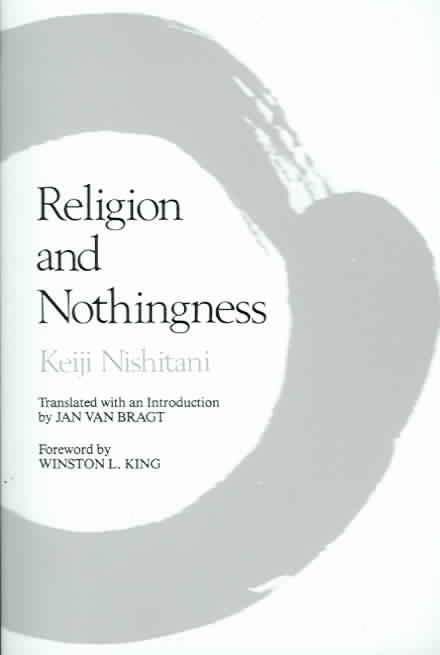
Later, Nishitani Keiji continues alongside myself spouting nonsense in underground notes! And stay tuned for The Magnum Opiate of Malaclypse the Younger! Be ye not lost among precepts of order!
The Floating Continent

Kefka Palazzo

kefka

  • Phooey! Emperor Gesthal’s stupid orders! Edgar, you pinhead! Why do you have to live in the middle of a stinking desert?!? These recon jobs are the pits! …AHEM! There’s SAND on my boots!
  • Oh, Edgar… You know you only stand to lose from trying to hide her from us! Hee-hee-hee… I truly hope nothing happens to your precious Figaro!
  • Fire! Fire! Heh-heh-heh!
  • Oh? Then…welcome to my barbecue! Hee-hee-hee!
  • Son of a Submariner! You’ll pay for this!
  • Once Leo’s gone, I can turn this water into a flowing river of poison! Anyone who touches it’ll be pushing up daisies! Hee-hee…
  • (About the prisoners of the castle his men are to poisoned) Who cares? They’re the ones who were stupid enough to get caught by the enemy!
  • “Wait,” he says… Do I look like a waiter?
  • Hee-hee… Nothing beats the sweet music of hundreds of voices screaming in unison! Uwee-hee-hee!
  • I’m a god! I’m all-powerful! Uwee-hee-hee… I’ll collect more Espers I’ll extract their magic… And then… … … I’ll revive the Warring Triad! I’ve already drained all your powers! You’re useless to me now! You too! Take a hike!
  • Gah! How dare they put me in a place like this! …Hmph! I just can’t believe it! What a bore.
    • while imprisoned
  • Read my lips – mercy is for wimps! There’s a reason “oppose” rhymes with “dispose”…If they get in your way, kill them!
  • Oh dear…you wanna fight me?! This is just dreadful!
  • How ’bout a little Magitek mayhem?
  • I don’t care for the appearance of this pitiful little hamlet… So burn it!!
  • This little hamlet has too much boring and not enough burning… TORCH EVERYTHING!
  • I’d say you’re all charged up, boys and girls…or whatever… Say, remind me to show you my Magicite collection someday! You might see a few familiar faces!!! Now for a little Magicite hocus-pocus…!
  • Ooh! They’re warm to the touch! What treasures!
  • You really are a slow one. And always, always…ALWAYS such a little goody two-shoes!!!
    • to General Leo before killing him
  • Ouch! B-blood… Blood! Blood!!! You vicious brat! Argh… Grrr…! You know, you really are a stupid… Vicious… Arrogant, whiny, pampered, backstabbing, worthless… LITTLE BRAT!!!
    • to Celes after she stabs him on the Floating Continent
  • Run! Run! Or you’ll be well done!
  • Oh dear… Well, I guess I was a bit hasty in calling you a useless old man before… NOW you’re useless!
    • after killing Emperor Gestahl
  • I’ve acquired the ultimate power! Observe…Such magnificent power! You’re all nothing more than fleas compared to me now! Embrace your destruction… It is the fate of all things.
  • I will destroy everything… I will create a monument to non-existence!
  • Why do people insist on creating things that will inevitably be destroyed? Why do people cling to life, knowing that they must someday die? …Knowing that none of it will have meant anything once they do?
  • Why do you build, knowing destruction is inevitable? Why do you yearn to live, knowing all things must die? (Alternate version of the previous line which appears in the Anthology FMV)
  • And did you all find your “somethings” in this broken world that just won’t die?
  • Bleh! You people make me sick! You sound like lines from a self-help book! If that’s how it’s going to be… I’ll snuff them all out! Every last one of your sickening, happy little reasons for living!
  • Hee-hee-hee! But what fun is destruction if no “precious” lives are lost?
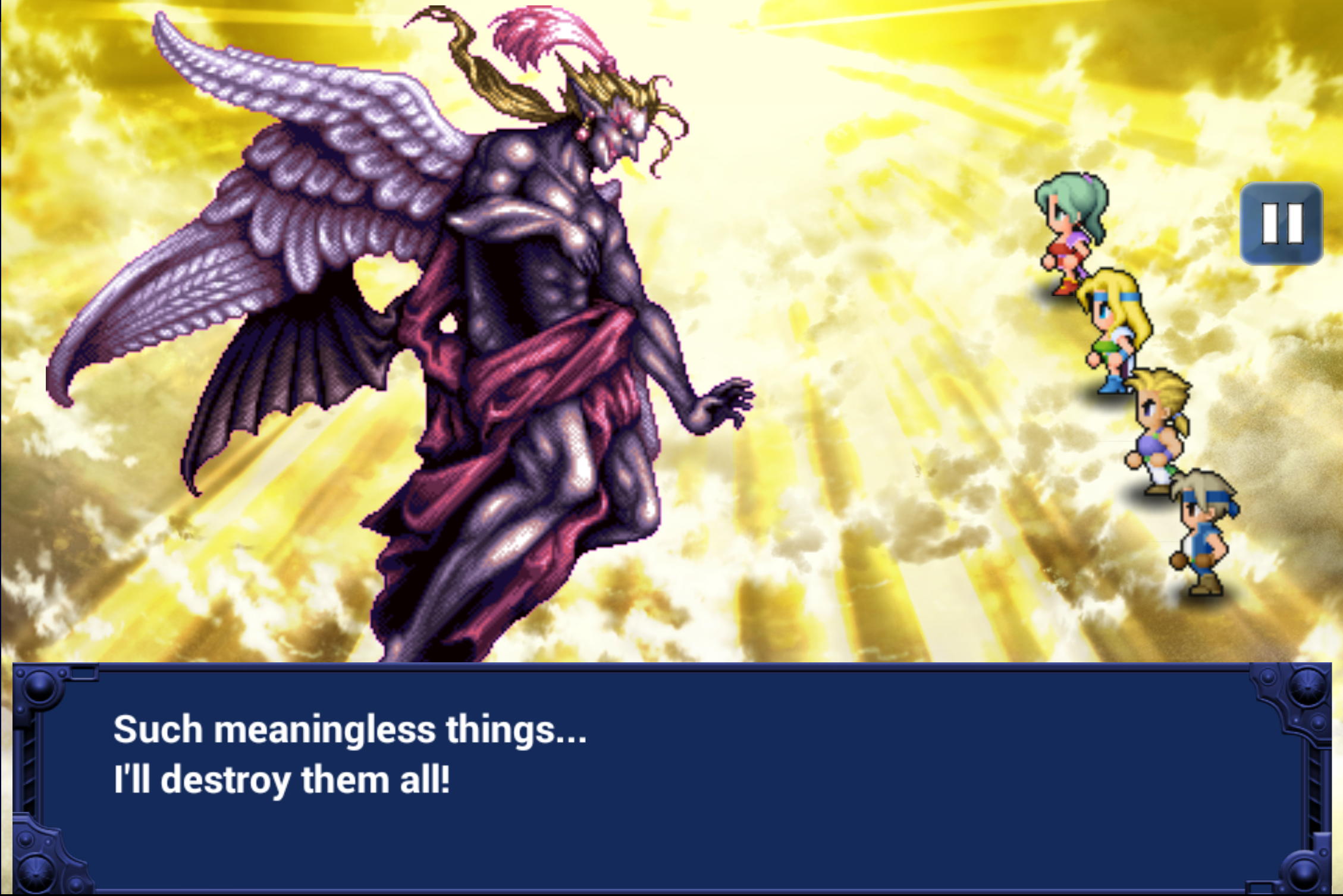
  • .. Dreams… Hope… Where do they come from? And where do they go…? Such meaningless things… I’ll destroy them all!
  • The end draws near…
    • Just before using his “Forsaken” attack for the first time.
  • ..Dreams…Hope…Where do they come from? And where do they go? None of that junk is enough to fulfill your hearts! Destruction…Destruction is what makes life worth living! Destroy! Destroy! Destroy! Let’s destroy everything!

Franz Kafka

kafka

Aphorisms (1918)

Many of these statements in Kafka’s notebooks were later published posthumously in Parables and Paradoxes (1946), and The Blue Octavo Notebooks (1954) as translated by Ernst Kaiser and Eithne Wilkins, Original German text

  • The true way is along a rope that is not spanned high in the air, but only just above the ground. It seems intended more to cause stumbling than to be walked upon.
    • 1
  • All human errors are impatience, the premature breaking off of what is methodical, an apparent fencing in of the apparent thing.
    • 2; Variant translation: All human errors are impatience, a premature breaking off of methodical procedure, an apparent fencing-in of what is apparently at issue.
  • There are two main human sins from which all the others derive: impatience and indolence.It was because of impatience that they were expelled from Paradise; it is because of indolence that they do not return. Yet perhaps there is only one major sin: impatience. Because of impatience they were expelled, because of impatience they do not return.
  • 3, (20 October 1917); as published in The Blue Octavo Notebooks(1954); also in Dearest Father: Stories and Other Writings (1954); variant translations use “cardinal sins” instead of “main human sins” and “laziness” instead of “indolence”.
  • Beyond a certain point there is no return. This point has to be reached.
    • 5; variant translations:

From a certain point onward there is no longer any turning back. That is the point that must be reached.

  • As quoted in The Unfinished Country: A Book of American Symbols(1959) by Max Lerner, p. 452; also in Wait Without Idols (1964) by Gabriel Vahanian, p, 216; in Joyce, Decadence, and Emancipation (1995) by Vivian Heller, 39; in “The Sheltering Sky” (1949) by Paul Bowles, p.213; and in the poem “Father and Son” by Delmore Schwartz.
  • There is a point of no return. This point has to be reached.
  • The decisive moment in human evolution is perpetual.That is why the revolutionary spiritual movements that declare all former things worthless are in the right, for nothing has yet happened.
    • 6
  • One of the first signs of the beginnings of understanding is the wish to die. This life appears unbearable, another unattainable. One is no longer ashamed of wanting to die; one asks to be moved from the old cell, which one hates, to a new one, which one will only in time come to hate.
    • 13
  • A cage went in search of a bird.
    • 16
  • If it had been possible to build the Tower of Babel without climbing it, it would have been permitted.
    • 18; (9 November 1917) a slight variant of this was published in Parables and Paradoxes(1946): If it had been possible to build the Tower of Babel without ascending it, the work would have been permitted.
  • Leopards break into the temple and drink to the dregs what is in the sacrificial pitchers; this is repeated over and over again; finally it can be calculated in advance, and it becomes a part of the ceremony.
    • 20 (10 November 1917)
  • From the true antagonist illimitable courage is transmitted to you.
    • 23
  • Hiding places there are innumerable, escape is only one, but possibilities for escape, again, are as many as hiding places.

There is a goal, but no way; what we call a way is hesitation.

    • 27
  • When one has once accepted and absorbed Evil, it no longer demands to be believed.
    • 28
  • The ulterior motives with which you absorb and assimilate Evil are not your own but those of Evil.

The animal wrests the whip from its master and whips itself in order to become master, not knowing that this is only a fantasy produced by a new knot in the master’s whiplash.

  • 29
  • In a certain sense the Good is comfortless.
    • 30
  • Self-control is something for which I do not strive. Self-control means wanting to be effective at some random point in the infinite radiations of my spiritual existence.
    • 31
  • Martyrs do not underrate the body, they allow it to be elevated on the cross. In this they are at one with their antagonists.
    • 33
  • His weariness is that of the gladiator after the combat; his work was the whitewashing of a corner in a state official’s office.
    • 34; variant translation: His exhaustion is that of the gladiator after the fight, his work was the whitewashing of one corner in a clerk’s office.
  • Previously I did not understand why I got no answer to my question; today I do not understand how I could believe I was capable of asking. But I didn’t really believe, I only asked.
    • 36
  • The way is infinitely long, nothing of it can be subtracted, nothing can be added, and yet everyone applies his own childish yardstick to it. “Certainly, this yard of the way you still have to go, too, and it will be accounted unto you.”
    • 39
  • It is only our conception of time that makes us call the Last Judgment by this name. It is, in fact, a kind of martial law.
    • 40
  • Believing in progress does not mean believing that any progress has yet been made. That is not the sort of belief that indicates real faith.
    • 48
  • Man cannot live without a permanent trust in something indestructible in himself, though both the indestructible element and the trust may remain permanently hidden from him. One of the ways in which this hiddenness can express itself is through faith in a personal god.
    • 50; Der Mensch kann nicht leben ohne ein dauerndes Vertrauen zu etwas Unzerstörbarem in sich, wobei sowohl das Unzerstörbare als auch das Vertrauen ihm dauernd verborgen bleiben können. Eine der Ausdrucksmöglichkeiten dieses Verborgen-Bleibens ist der Glaube an einen persönlichen Gott.
  • The mediation by the serpent was necessary: Evil can seduce man, but cannot become man.
    • 51
  • In the struggle between yourself and the world, second the world.
    • 52, Im Kampf zwischen Dir und der Welt, sekundiere der Welt.
    • Aphorism 52 in Unpublished Works 1916-1918
    • Variant translations:

In the struggle between yourself and the world, back the world.

In the struggle between yourself and the world, side with the world.

In the fight between you and the world, back the world.

  • One must not cheat anyone, not even the world of its victory.
    • 53; Variant translation: One must not cheat anybody, not even the world of one’s triumph.
  • There is nothing besides a spiritual world; what we call the world of the senses is the Evil in the spiritual world, and what we call Evil is only the necessity of a moment in our eternal evolution.

One can disintegrate the world by means of very strong light. For weak eyes the world becomes solid, for still weaker eyes it seems to develop fists, for eyes weaker still it becomes shamefaced and smashes anyone who dares to gaze upon it.

  • 54
  • There are questions we could not get past if we were not set free from them by our very nature.
    • 56
  • One tells as few lies as possible only by telling as few lies as possible, and not by having the least possible opportunity to do so.
    • 58
  • The fact that there is nothing but a spiritual world deprives us of hope and gives us certainty.
    • 62
  • Expulsion from Paradise is in its main aspect eternal: that is to say, although expulsion from Paradise is final, and life in the world unavoidable, the eternity of the process (or, expressed in temporal terms, the eternal repetition of the process) nevertheless makes it possible not only that we might remain in Paradise permanently, but that we may in fact be there permanently, no matter whether we know it here or not.
    • 65; a slight variant of this statement was later published in Parables and Paradoxes(1946):

The expulsion from Paradise is in its main significance eternal:

Consequently the expulsion from Paradise is final, and life in this world irrevocable, but the eternal nature of the occurrence (or, temporally expressed, the eternal recapitulation of the occurrence) makes it nevertheless possible that not only could we live continuously in Paradise, but that we are continuously there in actual fact, no matter whether we know it here or not.

  • What is gayer than believing in a household god?
    • 68
  • Theoretically there is a perfect possibility of happiness: believing in the indestructible element in oneself and not striving towards it.
    • 69
  • The indestructible is one: it is each individual human being and, at the same time, it is common to all, hence the incomparably indivisible union that exists between human beings.
    • 71
  • If what was supposed to have been destroyed in Paradise was destructible, then it was not decisive; but if it was indestructible, then we are living in a false belief.
    • 74
  • Test yourself on mankind. It is something that makes the doubter doubt, the believer believe.
    • 75
  • Association with human beings lures one into self-observation.
    • 77
  • Sensual love deceives one as to the nature of heavenly love; it could not do so alone, but since it unconsciously has the element of heavenly love within it, it can do so.
    • 79
  • Truth is indivisible, hence it cannot recognize itself; anyone who wants to recognize it has to be a lie.
    • 80
  • Why do we complain about the Fall? It is not on its account that we were expelled from Paradise, but on account of the Tree of Life, lest we might eat of it.
    • 82, a slight variant of this was later published in Parables and Paradoxes(1946):

Why do we lament over the fall of man? We were not driven out of Paradise because of it, but because of the Tree of Life, that we might not eat of it.

  • “Paradise”
  • The whole visible world is perhaps nothing more than than the rationalization of a man who wants to find peace for a moment. An attempt to falsify the actuality of knowledge, to regard knowledge as a goal still to be reached.
    • “Paradise”
  • We are sinful not only because we have eaten of the Tree of Knowledge, but also because we have not yet eaten of the Tree of Life. The state in which we are is sinful, irrespective of guilt.
    • 83, a slight variant of this was later published in Parables and Paradoxes(1946):

We are sinful not merely because we have eaten of the Tree of Knowledge, but also because we have not yet eaten of the Tree of Life. The state in which we find ourselves is sinful, quite independent of guilt.

  • Also quoted in this form in The Parables of Peanuts(1968) by Robert L. Short, and Like a Dream, Like a Fantasy: The Zen Teachings and Translations of Nyogen (2005)
  • Evil is a radiation of the human consciousness in certain transitional positions.It is not actually the sensual world that is a mere appearance; what is so is the evil of it, which, admittedly, is what constitutes the sensual world in our eyes.
    • 85
  • The whole visible world is perhaps nothing other than a motivation of man’s wish to rest for a moment — an attempt to falsify the fact of knowledge, to try to turn the knowledge into the goal.
    • 86
  • A belief is like a guillotine, just as heavy, just as light.
    • 87
  • Two possibilities: making oneself infinitely small or being so. The second is perfection, that is to say, inactivity, the first is beginning, that is to say, action.
    • 90
  • Towards the avoidance of a piece of verbal confusion: What is intended to be actively destroyed must first of all have been firmly grasped; what crumbles away crumbles away, but cannot be destroyed.
    • 91
  • The first worship of idols was certainly fear of the things in the world, but, connected with this, fear of the necessity of the things, and, connected with this, fear of responsibility for the things. So tremendous did this responsibility appear that people did not even dare to impose it upon one single extra-human entity, for even the mediation of one being would not have sufficiently lightened human responsibility, intercourse with only one being would still have been all too deeply tainted with responsibility, and that is why each things was given the responsibility for itself, more indeed, these things were also given a degree of responsibility for man.
    • 92
  • There can be knowledge of the diabolical, but no belief in it, for more of the diabolical than there is does not exist.
    • 99
  • We too must suffer all the suffering around us. We all have not one body, but we have one way of growing, and this leads us through all anguish, whether in this or in that form. Just as the child develops through all the stages of life right into old age and to death (and fundamentally to the earlier stage the later one seems out of reach, in relation both to desire and to fear), so also do we develop (no less deeply bound up with mankind than with ourselves) through all the sufferings of this world. There is no room for justice in this context, but neither is there any room either for fear of suffering or for the interpretation of suffering as a merit.
    • 102
  • Humility provides everyone, even him who despairs in solitude, with the strongest relationship to his fellow man, and this immediately, though, of course, only in the case of complete and permanent humility. It can do this because it is the true language of prayer, at once adoration and the firmest of unions. The relationship to one’s fellow man is the relationship of prayer, the relationship to oneself is the relationship of striving; it is from prayer that one draws the strength for one’s striving.
    • 106
  • “It cannot be said that we are lacking in faith. Even the simple fact of our life is of a faith-value that can never be exhausted.” “You suggest there is some faith-value in this? Onecannotnot-live, after all.” “It is precisely in this ‘Cannot, after all’ that the mad strength of faith lies; it is in this negation that it takes on form.”

There is no need for you to leave the house. Stay at your table and listen. Don’t even listen, just wait. Don’t even wait, be completely quiet and alone. The world will offer itself to you to be unmasked; it can’t do otherwise; in raptures it will writhe before you.

  • 109; Variant translations: It is not necessary that you leave the house. Remain at your table and listen. Do not even listen, only wait. Do not even wait, be wholly still and alone. The world will present itself to you for its unmasking, it can do no other, in ecstasy it will writhe at your feet.

You do not need to leave your room. Remain sitting at your table and listen. Do not even listen, simply wait, be quiet, still and solitary. The world will freely offer itself to you to be unmasked, it has no choice, it will roll in ecstasy at your feet.

You do not need to leave your room. Remain sitting at your table and listen. Do not even listen, simply wait. Do not even wait, be quiet still and solitary. The world will freely offer itself to you to be unmasked, it has no choice, it will roll in ecstasy at your feet.

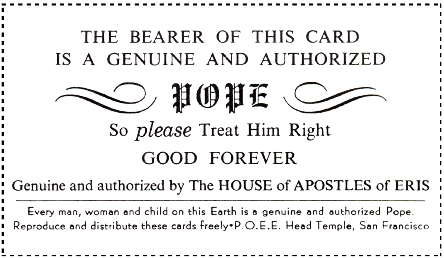
The Curse of Greyface

POEE_Pope_Card

In the year 1166 B.C. a malcontented hunchbrain by the name of Greyface got it into his head that the universe was as humorless as he, and he began to teach that play was sinful because it contradicted the ways of Serious Order. “Look at all the order around you,” he said. And from that, he deluded honest men to believe that reality was a straightjacket affair and not the happy romance as men had known it.

It is not presently understood why men were so gullible at that particular time, for absolutely no one thought to observe all the disorder around them and conclude just the opposite. But anyway, Greyface and his followers took the game of playing at life more seriously than they took life itself and were known even to destroy other living beings whose ways of life differed from their own.

The unfortunate result of this is that mankind has since been suffering from a psychological and spiritual imbalance. Imbalance causes frustration, and frustration causes fear. And fear makes for a bad trip. Man has been on a bad trip for a long time now. It is called THE CURSE OF GREYFACE.

The Aneristic Principle is that of APPARENT ORDER; the Erisitic Principle is that of APPARENT DISORDER. Both order and disorder are man made CONCEPTS and are artificial divisions of PURE CHAOS, which is a level deeper than is the level of distinction making.

The human race will begin solving its problems on the day that it ceases taking itself so seriously. To that end, Paratheo-Anametamystikhood Of Eris Esoteric (POEE) proposes the countergame of NONSENSE AS SALVATION. Salvation from an ugly and barbarous existence that is the result of taking order so seriously and so seriously fearing contrary orders and disorder, that GAMES are taken as more important than LIFE; rather than taking LIFE AS THE ART OF PLAYING GAMES. To this end, we propose that man develop his innate love for disorder, and play with The Goddess Eris. And know that it is a joyful play, and that thereby CAN BE REVOKED THE CURSE OF GREYFACE.

Bullshit makes the flowers grow and that is beautiful. If you want in on the Discordian Society, then declare yourself what you wish, do what you like and tell us about it. Or if you prefer, don’t. Repeat after me: Spectacles, testicles, brandy, cigars. You are now a Discordian Pope and therefore absolutely infallible. You must also excommunicate every other Discordian Pope you meet, because we Discordians must stick apart.

A Discordian is required during his early Illumination to go off Alone and partake joyously of a Hot Dog on a Friday; this Devotive Ceremony to Remonstrate against the popular Paganisms of the Day: of Catholic Christendom (no meat on Friday), of Judaism (no meat of Pork), of Hindic Peoples (no meat of Beef), of Buddhists (no meat of animal), and of Discordians (no Hot Dog Buns). A Discordian is also Prohibited of Believing what he reads.

If you can master nonsense as well as you have already learned to master sense, then each will expose the other for what it is: absurdity. From that moment of illumination, a man begins to be free regardless of his surroundings. He becomes free to play order games and change them at will. He becomes free to play disorder games just for the hell of it. He becomes free to play neither or both. And as the master of his own games, he plays without fear, and therefore without frustration, and therefore with good will in his soul and love in his being.

And when men become free then mankind will be free.

THE SACRED CHAO is the key to illumination. Devised by the Apostle Hung Mung in ancient China, it was modified and popularized by the Taoists and is sometimes called the YIN-YANG. The Sacred Chao is not the Yin-Yang of the Taoists. It is the HODGE-PODGE of the Erisians. And, instead of a Podge spot on the Hodge side, it has a PENTAGON which symbolizes the ANERISTIC PRINCIPLE, and instead of a Hodge spot on the Podge side, it depicts the GOLDEN APPLE OF DISCORDIA to symbolize the ERISTIC PRINCIPLE. The Sacred Chao symbolizes absolutely everything anyone need ever know about absolutely anything, and more! It even symbolizes everything not worth knowing, depicted by the empty space surrounding the Hodge-Podge.

May you be free of The Curse of Greyface.

May the Goddess put twinkles in your eyes.

May you have the knowledge of a sage,

and the wisdom of a child.

Hail Eris.

The Crowd is Untruth

And to honour every man, absolutely every man, is the truth, and this is what it is to fear God and love one’s “neighbour.” But from an ethico-religious point of view, to recognize the “crowd” as the court of last resort is to deny God, and it cannot exactly mean to love the “neighbour.” And the “neighbour” is the absolutely true expression for human equality. In case every one were in truth to love his neighbour as himself, complete human equality would be attained. Every one who loves his neighbour in truth, expresses unconditionally human equality. Every one who, like me, admits that his effort is weak and imperfect, yet is aware that the task is to love one’s neighbour, is also aware of what human equality is. But never have I read in Holy Scripture the commandment, Thou shalt love the crowd – and still less, Thou shalt recognize, ethico-religiously, in the crowd the supreme authority in matters of “truth.” But the thing is simple enough: this thing of loving one’s neighbour is self-denial; that of loving the crowd, or of pretending to love it, of making it the authority in matters of truth, is the way to material power, the way to temporal and earthly advantages of all sorts – at the same time it is the untruth, for a crowd is the untruth.

Therefore was Christ crucified, because, although He addressed himself to all, He would have no dealings with the crowd, because He would not permit the crowd to aid him in any way, because in this regard He repelled people absolutely, would not found a party, did not permit balloting, but would be what He is, the Truth, which relates itself to the individual. – And hence every one who truly would serve the truth is eo ipso, in one way or another, a martyr.

For it is not so great a trick to win the crowd. All that is needed is some talent, a certain dose of falsehood, and a little acquaintance with human passions. But no witness for the truth (Aa! and that is what every man should be, including you and me) – no witness for the truth dare become engaged with the crowd.

~ Kierkegaard

Søren K. (March 30, 1846)

Image result for soren kierkegaard

The present age is essentially a sensible, reflecting age, devoid of passion, flaring up in superficial, short-lived enthusiasm and prudentially relaxing in indolence. In contrast to the age of revolution, which took action, the present age is an age of publicity, the age of miscellaneous announcements: nothing happens but still there is instant publicity. There is a mutual inquisitiveness; everyone is experienced in indecisiveness and evasions and waits for someone to come along who wills something – so that they may place bets on him.

Self-Transcendence

world-religions

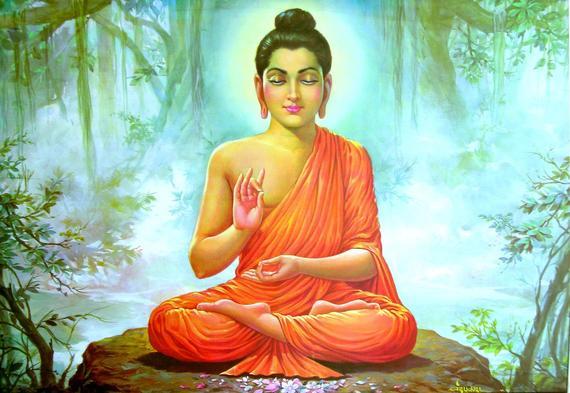
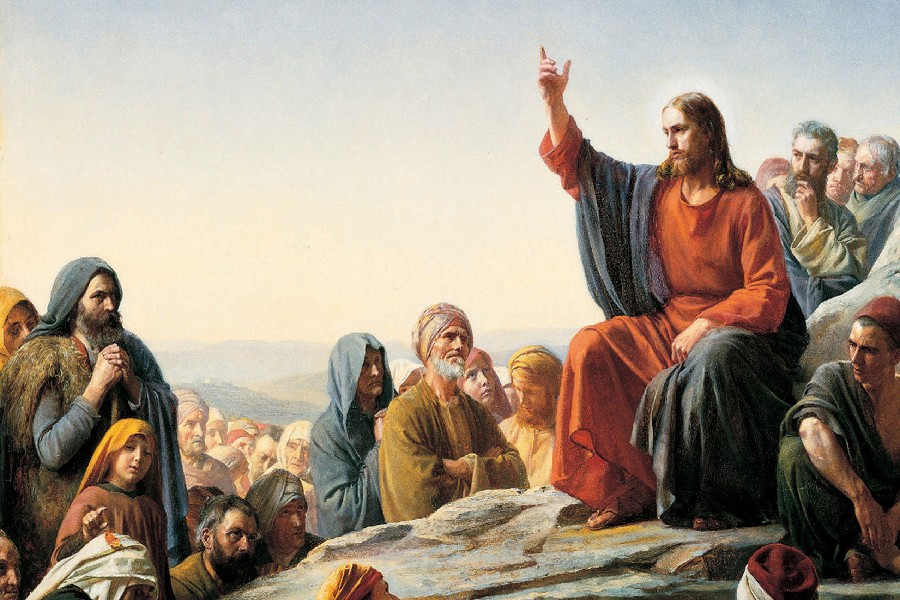
Buddhism begins with a man. In his later years, when India was afire with his message and kings themselves were bowing before him, people came to him even as they were to come to Jesus asking what he was. How many people have provoked this question – not “Who are you?” with respect to name, origin, or ancestry, but “What are you? What order of being do you belong to? What species do you represent?” Not Caesar, certainly. Not Napoleon, or even Socrates. Only two: Jesus and Buddha. When the people carried their puzzlement to the Buddha himself, the answer he gave provided an identity for his entire message.

“Are you a god?” they asked. “No.” “An angel?” “No.” “A saint?” “No.” “Then what are you?”

Buddha answered, “I am awake.”

His answer became his title, for this is what Buddha means. The Sanskrit root budh denotes both to wake up and to know. Buddha, then, means the “Enlightened One,” or the “Awakened One.” While the rest of the world was wrapped in the womb of sleep, dreaming a dream known as the waking state of human life, one of their number roused himself. Buddhism begins with a man who shook off the daze, the doze, the dream-like vagaries of ordinary awareness. It begins with a man who woke up…

To appreciate the force of [the Parable of the Ferryboat] we must remember the role the ferry played in traditional Asian life. In lands laced by rivers and canals, almost every considerable journey required a ferry. This routine fact underlies and inspires every school of Buddhism, as the use of the word yana by all of them attests. Buddhism is a voyage across life’s river, a transport from the common-sense shore of ignorance, grasping, and death, to the further bank of wisdom and enlightenment. Compared with this settled fact, the differences within Buddhism are no more than variations in the kind of vehicle one boards, or the stage one has reached on the journey.

What are these stages?

While we are on the first bank it is in effect the world for us. Its earth underfoot is solid and reassuring. The rewards and disappointments of its social life are vivid and compelling. The opposite shore is barely visible and has no impact on our dealings.

If, however, something prompts us to see what the other side is like, we may decide to attempt a crossing. If we are of independent bent, we may decide to make it on our own. In this case we are Theravadins; we follow the Buddha’s design for a sturdy craft, but we build ours ourself. Most of us, however, have neither the time nor the talent for such a project of such proportions. We are Mahayanists and move down the bank to where a ready-made ferryboat is expected. As the group of explorers clamber aboard at the landing there is an air of excitement. Attention is focused on the distant bank, still indistinct, but the voyagers are still very much like citizens of this side of the river.

The ferry pushes off and moves across the water. The bank we are leaving behind is losing its substance. The shops and streets and ant-like figures are blending together and releasing their hold on us. Meanwhile, the shore toward which we are headed is not in focus either; it seems almost as far away as it ever was. There is an interval in the crossing when the only tangible realities are the water, with its treacherous currents, and the boat, which is stoutly but precariously contending with them. This is the moment for Buddhism’s Three Vows: I take refuge in the Buddha, the fact that there was an explorer who made this trip and proved to us that is can succeed. I take refuge in the dharma, the vehicle of transport, this boat to which we have committed our lives in the conviction that it is seaworthy. I take refuge in the sangha, the order, the crew that is navigating this ship, in whom we have confidence. The shoreline of the world has been left behind. Until we set foot on the further bank, these are the only things in which we can trust.

The further shore draws near, becomes real. The craft jolts onto the sand and we step onto solid ground. The land, which had been misty and unsubstantial as a dream, is now fact. And the shore that we left behind, which was so palpable and real, is now only a slender horizontal line, a visual patch, a memory without substance.

Impatient to explore our new surroundings, we nevertheless remember our gratitude for the splendid ship and crew who have brought us safely to what promises to be a rewarding land. It will not be gratitude, however, to insist on packing the boat with us as we plunge into the woods. “Would he be a clever man,” the Buddha asked, “if out of gratitude for the raft that has carried him across the stream to safety he, having reached the other shore, should cling to it, take it on his back, and walk about with the weight of it? Would not the clever man be the one who left the raft, no longer of use to him, to the current of the stream and walked ahead without turning back to look at it? Is it not simply a tool to be cast away and forsaken once it has served the purpose for which it was made? In the same way the vehicle of the doctrine is to be cast away and forsaken once the other shore of Enlightenment has been attained.”

Here we come to the Prajnaparamita or Perfection of Wisdom sutras, which are widely considered to be the culminating texts of Buddhism. The Five Precepts and the Eightfold Path; the technical terminology of dukkha, karma, nirvana, and their like; the committed order and the person of the Buddha himself – all these are vitally important to the individual in the act of making the crossing. They lose their relevance for those who have arrived. Indeed, to the traveler who has not only reached the promised shore but who keeps moving into its interior, there comes a time when not only the raft but the river itself drops from view. When such a one turns around to look for the land that has been left behind, what appears? What of that land can appear to one who has crossed a horizon beyond which the river dividing this shore from that shore has vanished? One looks, and there is no other shore. There is no separating river: There is no raft, no ferryman. These things are not a part of the new world.

Before the river was crossed the two shores, human and divine, had to appear distinct from each other, different as life and death, as day and night. But once the crossing has been made, no dichotomy remains. The realm of the gods is not a distinct place. It is where the traveler stands; and if that stance happens to be in this world, the world itself is transmuted. It is in this sense that we are to read the avowals in The Perfection of Wisdom that “this our worldly life is an activity of Nirvana itself; not the slightest distinction exists between them.” Introspection having led to a condition described positively as nirvana and negatively as Emptiness because it transcends all forms, the “stream-winner” now finds in the world itself this same Emptiness that he discovered within. “Form is emptiness, emptiness is form. Emptiness is not different from form, form is not different from emptiness.” The noisy disjunction between acceptance and rejection having been stilled, every moment is affirmed for what it actually is. It is Indra’s cosmic net, laced with jewels at every juncture. Each jewel reflects the others, together with all the reflections in the others. In such a vision the categories of good and evil disappear. “That which is sin is also Wisdom” we read; and once again, “the realm of Becoming is Nirvana.”

This earth on which we stand

is the promised Lotus Land,

And this very body

is the body of the Buddha.

This new-found shore throws light on the bodhisattva‘s vow not to enter nirvana “until the grass itself be enlightened.” As grass keeps coming, does this mean that the bodhisattva will never be enlightened? Not exactly. It means, rather, that he (or she) has risen to the point where the distinction between time and eternity has lost its force. That distinction, drawn by the rational mind, is dissolved in the lightning-and-thunder insight that annihilates opposites. Time and eternity are now two aspects of the same experiential whole, two sides of the same coin. “The jewel of eternity is in the lotus of birth and death.”

From the standpoint of normal, worldly consciousness there must always remain an inconsistency between this climactic insight and worldly prudence. This, though, should not surprise us, for it would be flatly contradictory if the world looked exactly the same to those who have crossed the river of ignorance. Only they can dissolve the world’s distinctions – or, perhaps we should say, take them in their stride, for the distinctions persist, but now without difference. Where to eagle vision the river can still be seen, it is seen as connecting the two banks rather than dividing them.

– Huston Smith, The World’s Religions: Our Great Wisdom Traditions

* * * * *

buddha

For ten years, in the different Pavilions of Spring, Autumn and the Rainy Season, the Prince was immersed in rounds of music, dancing and pleasure, but always his thoughts returned to the problem of suffering of human life.

“The luxuries of the palace, this healthy body, this rejoicing youth! What do they mean to me?” he thought. “Some day we may be sick, we shall become aged; from death there is no escape. Pride of youth, pride of health, pride of existence – all thoughtful people should cast them aside.”

“If he looks in the right way he recognizes the true nature of sickness, old age and death, and he searches for meaning in that which transcends all human sufferings. In my life of pleasures I seem to be looking in the wrong way.”

Thus the spiritual struggle went on in the mind of the Prince until his only child, Rahula, was born when he was 29. This seemed to bring things to a climax, for he then decided to leave the palace and look for the solution of his spiritual unrest in the homeless life of a mendicant. He left the castle one night with only his charioteer, Chandaka, and his favorite horse, the snow-white Kanthaka.

His anguish did not end and many devils tempted him saying: “You would do better to return to the castle for the whole world would soon be yours.” But he told the devil that he did not want the whole world. So he shaved his head and turned his steps toward the south, carrying a begging bowl in his hand.

The Prince first visited the hermit Bhagava and watched the ascetic practices. He then went to Arada Kalama and Udraka Ramaputra to learn their methods of attaining Enlightenment through meditation; but after practicing them for a time he became convinced that they would not lead him to Enlightenment. Finally, he went to the land of Magadha and practiced asceticism in the forest of Uruvilva on the banks of the Nairanjana River, which flows by the Gaya Village.

The methods of his practice where unbelievably rigorous. He spurred himself on with the though that “no ascetic in the past, none in the present, and none in the future, ever has practiced or ever will practice more earnestly than I do.”

Still the Prince could not realize his goal. After six years in the forest, he gave up the practice of asceticism. He went bathing in the river and accepted a bowl of milk from the hand of Sujata, a maiden who lived in the neighboring village. The five companions who had been living with the Prince during the six years of his ascetic practice were shocked that he should receive milk from the hand of a maiden; they thought him degraded and left him.

Thus the Prince was left alone. He was still weak, but at the risk of losing his life he attempted yet another period of meditation, saying to himself, “Blood may become exhausted, flesh may decay, bones may fall apart, but I will never leave this place until I find the way to Enlightenment.”

It was an intense and incomparable struggle for him. He was desperate and filled with confusing thoughts, dark shadows overhung his spirit, and he was beleaguered by all the lures of the devils. Carefully and patiently he examined them one by one and rejected them all. It was a hard struggle indeed, making his blood run thin, his flesh fall away, and his bones crack.

But when the morning star appeared in the eastern sky, the struggle was over and the Prince’s mind was as clear and bright as the breaking day. He had, at last, found the path to Enlightenment. It was December eighth, when the Prince became a Buddha at thirty-five years of age.

From this time on the Prince was known by different names: some spoke of him as Buddha, the Perfectly Enlightened One, Tathagata; some spoke of him as Shakyamuni, the Sage of the Shakya clan; others called him the World-Honored One.

He went first to Mrigadava in Varanasi where the five mendicants who had lived with him during the six years of his ascetic life were staying. At first they shunned him, but after they had talked with him, they believed in him and became his first followers. He then went to the Rajagriha Castle and won over King Bimbisara who had always been his friend. From there he went about the country living on alms and teaching men to accept his way of life.

Men responded to him as the thirsty seek water and the hungry food. Two great disciples, Shariputra and Maudgalyayana, and their two thousand followers, came to him.

At first the Buddha’s father, King Shuddhodana, still inwardly suffering because of his son’s decision to leave the palace, remained aloof, but then became his faithful disciple. Mahaprajapati, the Buddha’s foster mother, and Princess Yashodhara, his wife, and all the members of the Shakya clan began to follow him. Multitudes of others also became his devoted and faithful followers.

For forty-five years the Buddha went about the country preaching and persuading men to follow his way of life. But when he was eighty, at Vaisali and on his way from Rajagriha to Shrvasti, he became ill and predicted that after three months he would enter Nirvana. Still he journeyed on until he reached Pava where he fell seriously ill from some food offered by Chundra, a blacksmith. Eventually, in spite of great pain and weakness, he reached the forest that bordered Kusinagara.

Lying between two large sala trees, he continued teaching his disciples until his last moment. Thus, he entered into perfect tranquility after he had completed his work as the world’s greatest teacher.

. . .

Beneath the sala trees at Kusinagara, in his last words to his disciples, the Buddha said: Make of yourself a light. Rely upon yourself: do not depend upon anyone else. Make my teachings your light. Rely upon them: do not depend upon any other teaching.

Consider your body: Think of its impurity. Knowing that both its pain and its delight are alike causes of suffering, how can you indulge in its desires? Consider your ‘self’; think of its transiency; how can you fall into delusion about it and cherish pride and selfishness, knowing that they must all end in inevitable suffering? Consider all substances; can you find among them any enduring ‘self’? Are they not all aggregates that sooner or later will break apart and be scattered? Do not be confused by the universality of suffering, but follow my teaching, even after my death, and you will be rid of pain. Do this and you will indeed be my disciples.

My disciples, the teachings that I have given you are never to be forgotten or abandoned. They are always to be treasured, they are to be thought about, they are to be practiced. If you follow these teachings you will always be happy.
The point of the teachings is to control your own mind. Keep your mind from greed, and you will keep your behavior right, your mind pure and your words faithful. By always thinking about the transience of your life, you will be able to resist green and anger, and will be able to avoid all evils.

If you find your mind tempted and so entangled in greed, you must suppress and control the temptation; be the master of your own mind.

A man’s mind may make him a Buddha, or it may make him a beast. Misled by error, one becomes a demon; enlightened, one becomes a Buddha. Therefore, control your mind and do not let it deviate from the right path.

You should respect each other, follow my teachings, and refrain from disputes; you should not, like water and oil, repel each other, but should, like milk and water, mingle together.

Study together, learn together, practice my teachings together. Do not waste your mind and time in idleness and quarreling. Enjoy the blossoms of Enlightenment in their season and harvest the fruit of the right path.

The teachings which I have given you, I gained by following the path myself… If you neglect them, it means that you have never really met me. It means that you are far from me, even if you are actually with me; but if you accept and practise my teachings, then you are very near to me, even though you are far away.

My disciples, my end is approaching, our parting is near, but do not lament. Life is ever changing; none can escape the dissolution of the body. This I am now to show by my own death, my body falling apart like a dilapidated cart.

Do not vainly lament, but realize that nothing is permanent and learn from it the emptiness of human life. Do not cherish the unworthy desire that the changeable might become unchanging.

The demon of worldly desires is always seeking chances to deceive the mind. If a viper lives in your room and you wish to have a peaceful sleep, you must first chase it out.

You must break the bonds of worldly passions and drive them away as you would a viper. You must positively protect your own mind.

My disciples, my last moment has come, but do not forget that death is only the end of the physical body. The body was born from parents and was nourished by food; just as inevitable are sickness and death.

But the true Buddha is not a human body: — it is Enlightenment. A human body must die, but the Wisdom of Enlightenment will exist forever in the truth of the Dharma, and in the practice of the Dharma. He who sees merely my body does not truly see me. Only he who accepts my teaching truly sees me.

After my death, the Dharma shall be your teacher. Follow the Dharma and you will be true to me.

During the last forty-five years of my life, I have withheld nothing from my teachings. There is no secret teaching, no hidden meaning; everything has been taught openly and clearly.

My dear disciples, this is the end. In a moment, I shall be passing into Nirvana. This is my instruction.

. . .

If one carefully considers all the facts, one must be convinced that at the basis of all suffering lies the principle of craving desire. If avarice can be removed, human suffering will come to an end.

From ignorance and greed there spring impure desires for things that are, in fact, unobtainable, but for which men restlessly and blindly search.

Because of ignorance and greed, people imagine discriminations where, in reality, there are no discriminations. Inherently, there is no discrimination of right and wrong in human behavior; but people, because of ignorance, imagine such distinctions and judge them as right or wrong.

In reality, therefore, it is their own mind that causes the delusions of grief, lamentation, pain and agony.

The whole world of delusion is nothing but a shadow caused by the mind. And yet, it is also from this same mind that the world of Enlightenment appears.

If everything in the last resort is in the hands of an unknowable God, or of blind chance, what hope has humanity except in submission? It is no wonder that people holding these conceptions lose hope and neglect efforts to act wisely and to avoid evil.

There are four truths in this world: first, all living beings rise from ignorance; second, all objects of desire are impermanent, uncertain and suffering; third, all existing things are also impermanent, uncertain and suffering; fourth, there is nothing that can be called an “ego,” and there is no such thing as “mind” in all the world.

Both delusion and Enlightenment originate within the mind, and every existence or phenomenon arises from the functions of the mind, just as different things appear from the sleeve of a magician.

An unenlightened life rises from a mind that is bewildered by its own world or delusion. If we learn that there is no world of delusion outside the mind, the bewildered mind becomes clear; and because we cease to create impure surroundings, we attain Enlightenment.

Since everything in this world is brought about by causes and conditions, there can be no fundamental distinctions among things. The apparent distinctions exist because of people’s absurd and discriminating thoughts.

In the sky there is no distinction of east and west; people create the distinctions out of their own minds and then believe them to be true.

Mathematical numbers from one to infinity are each complete numbers, and each in itself carries no distinction of quantity; but people make the discrimination for their own convenience, so as to be able to indicate varying amounts.

They make arbitrary distinctions between existence and non-existence, good and bad, right and wrong.

The world, indeed, is like a dream and the treasures of the world are an alluring mirage.

The categories of everlasting life and death, and existence and non-existence, do not apply to the essential nature of things, but only to their appearances as they are observed by defiled human eyes.

Yet it can not be said that, apart from this world of change and appearance, there is another world of permanence and truth. It is a mistake to regard this world as either a temporal or as a real one.

To those who choose the path that leads to Enlightenment, there are two extremes that should be carefully avoided. First, there is the extreme of indulgence in the desires of the body. Second, there is the opposite extreme of ascetic discipline, torturing one’s body and mind unreasonably.

If in his search for Enlightenment he does not become contemptuous of delusion, nor fear it, such a person is following the Middle Way.

Enlightenment exists solely because of delusion and ignorance; if they disappear, so will Enlightenment. As long as people desire Enlightenment and grasp at it, it means that delusion is still with them; therefore, those who are following the way to Enlightenment must not grasp at it, and if they reach Enlightenment they must not linger in it.

When people attain Enlightenment in this sense, it means that everything is Enlightenment itself as it is; therefore, people should follow the path to Enlightenment until in their thoughts, worldly passions and Enlightenment become identical as they are.

This concept of universal oneness – that things in their essential nature have no distinguishing marks – is called “??nyat?.” ??nyat? means non-substantiality, the un-born, having no self-nature, no duality. It is because things in themselves have no form or characteristics that we can speak of them as neither being born nor being destroyed.

Nothing ever exists entirely alone; everything is in relation to everything else. People make distinctions between good and evil, but good and evil do not exist separately. Those who are following the path to Enlightenment recognize no such duality, and it leads them to neither praise the good and condemn the evil, nor despise the good and condone the evil.

Therefore, all the words that express relations of duality – such as existence and non-existence, worldly-passions and true-knowledge, purity and impurity, good and evil – none of these terms of contrast in one’s thinking are expressed or recognized in their true nature. When people keep free from such terms and from the emotions engendered by them, they realize ??nyat?’s universal truth.

Buddha teaches the Middle Way transcending these prejudiced concepts, where duality merges into oneness.

. . .

In the search for truth there are certain questions that are unimportant. Of what material is the universe constructed? Is the universe eternal? Are there limits or not to the universe? In what way is this human society put together? What is the ideal form of organization for human society? If a man were to postpone his search and practicing for Enlightenment until such questions were solved, he would die before he found the path.

The question of whether the universe has limits or is eternal can wait until some way is found to extinguish the fires of birth, old age, sickness and death; in the presence of misery, sorrow, suffering and agony, one should first search for a way to solve these problems and devote oneself to the practice of that way.

The Buddha’s teaching contains what is important to know and not what is unimportant. Those who seek the true path to Enlightenment must not expect any offer of respect, honor or devotion. And further, they must not aim with a slight effort, at a trifling advance in calmness or knowledge or insight.

[Upon suffering an injustice a woman shouted,] “Righteousness must have disappeared from the world… Now, we must have a funeral of this ‘righteousness’.” Like a mad woman she went to the cemetery to hold a funeral service.

Righteousness is never lost forever unless one casts it away oneself. Righteousness occasionally may seem to disappear, but, in fact, it never disappears. When it seems to be disappearing, it is because one is losing the righteousness of one’s own mind.

The world has no substance of its own. It is simply a vast concordance of causes and conditions that have had their origin, solely and exclusively, in the activities of the mind that has been stimulated by ignorance, false imagination, desires and infatuation. It is not something external about which the mind has false conceptions; it has no substance whatever. It has come into appearance by the processes of the mind itself, manifesting its own delusions. It is founded and built up out of the desires of the mind, out of its sufferings and struggles incidental to the pain caused by its own greed, anger and foolishness. Men who seek the way to Enlightenment should be ready to fight such a mind to attain their goal.

Those who really seek the path to Enlightenment dictate terms to their mind. Then they proceed with strong determination. Even though they are abused by some and scorned by others, they go forward undisturbed.

Sadaprarudita… [being an earnest seeker of the true path] sometimes… slept where night found him in a lonely field or in the wild mountains. At last Sadaprarudita reached the presence of the teacher himself and then he had a new difficulty. He had no paper on which to take notes and no brush or ink to write with. Then he pricked his wrist with a dagger and took notes in his own blood. In this way he secured the precious Truth.

[My disciples] must not argue with worldly people. The practice of Concentration helps one to control a wandering and futile mind. Offering and keeping Precepts make the foundation necessary to build a great castle on. Endurance and Endeavor are the walls of the castle that protect it against enemies from outside. Concentration and Wisdom are the personal armour that protects one against the assaults of life and death.

An evil mind is as hard to remove as letters carved in stone, and a right mind is as easy to lose as words written in water. Indeed, it is the most difficult thing in life to train oneself for Enlightenment.

If a man possesses a repentant spirit his sins will disappear, but if he has an unrepentant spirit his sins will continue and condemn him forever.

It is only the one who hears the true teaching rightly and realizes its meaning and relation to oneself who can receive and profit by it. If a man merely hears the true teaching but does not acquire it, he will fail in his search for Enlightenment.

Pain is only a reaction of the mind.

Faith is the fire that consumes all the impurities of worldly desires, it removes the burden, and it is the guide that leads one’s way.

Indeed, there is nothing more dreadful than doubt. It is, indeed, hard to be born in this world. It is hard to hear the Dharma; it is harder to awaken faith.

Do not dwell in the past, do not dream of the future, concentrate the mind on the present moment.

If a man lives a pure life nothing can destroy him; if he has conquered greed nothing can limit his freedom.

One should forget oneself for the sake of one’s family; one should forget one’s family for the sake of one’s village; one should forget one’s village for the sake of the nation; and one should forget everything for the sake of Enlightenment.

A man who wishes to become my disciple must be willing to give up all direct relations with his family, the social life of the world and all dependence upon wealth.

The fact is there is only one world, not two worlds, one meaningless and the other full of meaning, or one good and the other bad. People only think there are two worlds, due to their discriminating faculty.

The life of a homeless brother is not an easy one; he ought not to undertake it if he can not keep his mind free from greed and anger or if he can not control his mind or his five senses.

. . .

There are two kinds of worldly passions that defile and cover the purity of Buddha-nature. The first is the passion for analysis and discussion by which people become confused in judgement. The second is the passion for emotional experience by which people’s values become confused.

Both delusions of reasoning and delusions of practice can be thought of as a classification of all human defilements, but really there are two original worldly predicaments in their bases. The first is ignorance, and the second is desire.

The delusions of reasoning are based upon ignorance, and the delusions of practice are based upon desire, so that the two sets are really one set after all, and together they are the source of all unhappiness.

If people are ignorant they cannot reason correctly and safely. As they yield to a desire for existence, graspings, clingings and attachments to everything inevitably follow. It is this constant hunger for every pleasant thing seen and heard that leads people into the delusions of habit. Some people even yield to the desire for the death of the body.

From these primary sources all greed, anger, foolishness, misunderstanding, resentment, jealousy, flattery, deceit, pride, contempt, inebriety, selfishness, have their generations and appearances.

Hatred never ceases by hatred, but by love alone is healed. This is an ancient and eternal law.

Greed rises from wrong ideas of satisfaction; anger rises from wrong ideas concerning the state of one’s affairs and surroundings; foolishness rises from the inability to judge what correct conduct is.

Human desires are endless. It is like the thirst of a man who drinks salt water: he gets no satisfaction and his thirst is only increased.

So it is with a man who seeks to gratify his desires; he only gains increased dissatisfaction and his woes are multiplied.

The gratification of desires never satisfies; it always leaves behind unrest and irritation that can never be allayed, and then, if the gratification of his desires is thwarted, it will often drive him “insane.”

Although the nature of Buddhahood is possessed by all people, it is buried so deeply in the defilements of worldly passion that it long remains unknown. That is why suffering is so universal and why there is this endless recurrence of miserable lives.

There are three other kinds of people. The first are those who are proud, act rashly and are never satisfied; their natures are easy to understand. Then there are those who are courteous and always act after consideration; their natures are hard to understand. Then there are those who have overcome desire completely; it is impossible to understand their natures.

It would be impossible for a son to repay his parents for their gracious kindness, even if he could carry his father on his right shoulder and his mother on his left for one hundred long years.

And even if he could bathe the bodies of his parents in sweet-smelling ointments for a hundred years, serve as an ideal son, gain a throne for them, and give them all the luxuries of the world, still he would not be able to repay them sufficiently for the great indebtedness of gratitude he owes to them.

But if he leads his parents to Buddha and explains the Buddha’s teachings to them, and persuades them to give up a wrong course and follow a right one, leading them to give up all greed and enjoy the practice of offering, then he will be more than repaying them.

A fool who thinks that he is a fool is for that very reason a wise man. The fool who thinks that he is wise is called a fool indeed.

Though he should conquer a thousand men in the battlefield a thousand times, yet he, indeed, who would conquer himself is the noblest victor.

In the spirit of these vows [the bodhisattva seeks to] cast away all worldly attachments and realize the impermanence of this world. And they devote their merits to the emancipation of all sentient life; they integrate their own lives with the lives of all others, sharing their illusions and sufferings but, at the same time, realizing their freedom from the bonds and attachments of this worldly life.

They know the hindrances and difficulties of worldly living but they know, also, the boundless potentialities of Buddha’s compassion. They are free to go or come, they are free to advance or to stop as they wish, but they choose to remain with those upon whom Buddha has compassion.

– The Teaching of Buddha

* * * * *

jesus

Assuredly, I say to you, unless you are changed and become as little children, you will by no means enter the kingdom of heaven.

The kingdom of God does not come with observation; nor will they say, ‘See here!’ or ‘See there!’ For indeed, the kingdom of God is within you.

Blessed are the poor in spirit,
For theirs is the kingdom of heaven.
Blessed are those who mourn,
For they shall be comforted.
Blessed are the meek,
For they shall inherit the earth.
Blessed are those who hunger and thirst for righteousness,
For they shall be filled.
Blessed are the merciful,
For they shall obtain mercy.
Blessed are the pure in heart,
For they shall see God.
Blessed are the peacemakers,
For they shall be called sons of God.
Blessed are those who are persecuted for righteousness’ sake,
For theirs is the kingdom of heaven.

Blessed are you when they revile and persecute you, and say all kinds of evil against you falsely for my sake. Rejoice and be exceedingly glad, for great is your reward in heaven, for so they persecuted the prophets who were before you.

You are the salt of the earth; but if the salt loses its flavor, how shall it be seasoned? It is then good for nothing but to be thrown out and trampled underfoot by men.

You are the light of the world. A city that is set on a hill cannot be hidden. Nor do they light a lamp and put it under a basket, but on a lampstand, and it gives light to all who are in the house. Let your light so shine before men, that they may see your good works and glorify your Father in heaven.

Do not think that I came to destroy the Law or the Prophets. I did not come to destroy but to fulfill. For assuredly, I say to you, till heaven and earth pass away, one jot or one tittle will by no means pass from the law till all is fulfilled. Whoever therefore breaks one of the least of these commandments, and teaches men so, shall be called least in the kingdom of heaven; but whoever does and teaches them, he shall be called great in the kingdom of heaven. For I say to you, that unless your righteousness exceeds the righteousness of the scribes and Pharisees, you will by no means enter the kingdom of heaven.

You have heard that it was said to those of old, ‘You shall not murder, and whoever murders will be in danger of the judgment.’ But I say to you that whoever is angry with his brother without a cause shall be in danger of the judgment. And whoever says to his brother, ‘Raca [worthless]!’ shall be in danger of the council. But whoever says, ‘You fool!’ shall be in danger of hell fire. Therefore if you bring your gift to the altar, and there remember that your brother has something against you, leave your gift there before the altar, and go your way. First be reconciled to your brother, and then come and offer your gift. Agree with your adversary quickly, while you are on the way with him, lest your adversary deliver you to the judge, the judge hand you over to the officer, and you be thrown into prison. Assuredly, I say to you, you will by no means get out of there till you have paid the last penny.

You have heard that it was said to those of old, ‘You shall not commit adultery.’ But I say to you that whoever looks at a woman to lust for her has already committed adultery with her in his heart. If your right eye causes you to sin, pluck it out and cast it from you; for it is more profitable for you that one of your members perish, than for your whole body to be cast into hell. And if your right hand causes you to sin, cut it off and cast it from you; for it is more profitable for you that one of your members perish, than for your whole body to be cast into hell.

Again you have heard that it was said to those of old, ‘You shall not swear falsely, but shall perform your oaths to the Lord.’ But I say to you, do not swear at all: neither by heaven, for it is God’s throne; nor by the earth, for it is His footstool; nor by Jerusalem, for it is the city of the great king. Nor shall you swear by your head, because you cannot make one hair white or black. But let your ‘Yes’ be ‘Yes,’ and your ‘No,’ ‘No.’ For whatever is more than these is from the evil one.

You have heard that it was said, ‘An eye for an eye and a tooth for a tooth.’ But I tell you not to resist an evil person. But whoever slaps you on your right cheek, turn the other to him also. If anyone wants to sue you and take away your tunic, let him have your cloak also. And whoever compels you to go one mile, go with him two. Give to him who asks you, and from him who wants to borrow from you do not turn away.

You have heard that it was said, ‘You shall love your neighbor and hate your enemy.’ But I say to you, love your enemies, bless those who curse you, do good to those who hate you, and pray for those who spitefully use you and persecute you, that you may be sons of your Father in heaven; for He makes His sun rise on the evil and on the good, and sends rain on the just and on the unjust. For if you love those who love you, what reward have you? Do not even the tax collectors do the same? And if you greet your brethren only, what do you do more than others? Do not even the tax collectors do so? Therefore you shall be perfect, just as your Father in heaven is perfect.

Take heed that you do not do your charitable deeds before men, to be seen by them. Otherwise you have no reward from your Father in heaven. Therefore, when you do a charitable deed, do not sound a trumpet before you as the hypocrites do in the synagogues and in the streets, that they may have glory from men. Assuredly, I say to you, they have their reward. But when you do a charitable deed, do not let your left hand know what your right hand is doing, that your charitable deed may be in secret; and your Father who sees in secret will Himself reward you openly.

And when you pray, you shall not be like the hypocrites. For they love to pray standing in the synagogues and on the corners of the streets, that they may be seen by men. Assuredly, I say to you, they have their reward. But you, when you pray, go into your room, and when you have shut your door, pray to your Father who is in the secret place; and your Father who sees in secret will reward you openly. And when you pray, do not use vain repetitions as the heathen do. For they think that they will be heard for their many words.

Therefore I say to you, do not worry about your life, what you will eat or what you will drink; nor about your body, what you will put on. Is not life more than food and the body more than clothing? Look at the birds of the air, for they neither sow nor reap nor gather into barns; yet your heavenly Father feeds them. Are you not of more value than they? Which of you by worrying can add one cubit to his stature?

So why do you worry about clothing? Consider the lilies of the field, how they grow: they neither toil nor spin; and yet I say to you that even Solomon in all his glory was not arrayed like one of these. Now if God so clothes the grass of the field, which today is, and tomorrow is thrown into the oven, will He not much more clothe you, O you of little faith?

Therefore do not worry, saying, ‘What shall we eat?’ or ‘What shall we drink?’ or ‘What shall we wear?’ For after all these things the Gentiles seek. For your heavenly Father knows that you need all these things. But seek first the kingdom of God and His righteousness, and all these things shall be added to you. Therefore do not worry about tomorrow, for tomorrow will worry about its own things. Sufficient for the day is its own trouble.

Do not lay up for yourselves treasures on earth, where moth and rust destroy and where thieves break in and steal; but lay up for yourselves treasures in heaven, where neither moth nor rust destroys and where thieves do not break in and steal. For where your treasure is, there your heart will be also.

No one can serve two masters; for either he will hate the one and love the other, or else he will be loyal to the one and despise the other. You cannot serve God and mammon [material wealth]. It is easier for a camel to go through the eye of a needle than for a rich man to enter the kingdom of God.

If you want to be perfect, go, sell what you have and give to the poor, and you will have treasure in heaven; and come, follow me.

For whoever desires to save his life will lose it, but whoever loses his life for my sake and the gospel’s will save it. For what will it profit a man if he gains the whole world, and loses his own soul? Or what will a man give in exchange for his soul?
For if you forgive men their trespasses, your heavenly Father will also forgive you. But if you do not forgive men their trespasses, neither will your Father forgive your trespasses.

Judge not, that you be not judged. For with what judgment you judge, you will be judged; and with the measure you use, it will be measured back to you. And why do you look at the speck in your brother’s eye, but do not consider the plank in your own eye? Or how can you say to your brother, ‘Let me remove the speck from your eye’; and look, a plank is in your own eye? Hypocrite! First remove the plank from your own eye, and then you will see clearly to remove the speck from your brother’s eye.

Ask, and it will be given to you; seek, and you will find; knock, and it will be opened to you. For everyone who asks receives, and he who seeks finds, and to him who knocks it will be opened. Or what man is there among you who, if his son asks for bread, will give him a stone? Or if he asks for a fish, will he give him a serpent? If you then, being evil, know how to give good gifts to your children, how much more will your Father who is in heaven give good things to those who ask Him! Therefore, whatever you want men to do to you, do also to them, for this is the Law and the Prophets.

A new commandment I give to you, that you love one another; as I have loved you, that you also love one another. By this all will know that you are my disciples, if you have love for one another.

Enter by the narrow gate; for wide is the gate and broad is the way that leads to destruction, and there are many who go in by it. Because narrow is the gate and difficult is the way which leads to life, and there are few who find it.

Beware of false prophets, who come to you in sheep’s clothing, but inwardly they are ravenous wolves. You will know them by their fruits. Do men gather grapes from thornbushes or figs from thistles? Even so, every good tree bears good fruit, but a bad tree bears bad fruit. A good tree cannot bear bad fruit, nor can a bad tree bear good fruit. Every tree that does not bear good fruit is cut down and thrown into the fire. Therefore by their fruits you will know them.

Not everyone who says to me, ‘Lord, Lord,’ shall enter the kingdom of heaven, but he who does the will of my Father in heaven. Many will say to me in that day, ‘Lord, Lord, have we not prophesied in your name, cast out demons in your name, and done many wonders in your name?’ And then I will declare to them, ‘I never knew you; depart from me, you who practice lawlessness!’

Therefore whoever hears these sayings of mine, and does them, I will liken him to a wise man who built his house on the rock: and the rain descended, the floods came, and the winds blew and beat on that house; and it did not fall, for it was founded on the rock.

But everyone who hears these sayings of mine, and does not do them, will be like a foolish man who built his house on the sand: and the rain descended, the floods came, and the winds blew and beat on that house; and it fell. And great was its fall.

Again, the kingdom of heaven is like treasure hidden in a field, which a man found and hid; and for joy over it he goes and sells all that he has and buys that field.

Again, the kingdom of heaven is like a merchant seeking beautiful pearls, who, when he had found one pearl of great price, went and sold all that he had and bought it.

Do you not know that you are the temple of God and that the Spirit of God dwells in you? If anyone defiles the temple of God, God will destroy him. For the temple of God is holy, which temple you are.

If you abide in my word, you are truly my disciples, and you will know the truth, and the truth will set you free.

It is written, ‘Man shall not live by bread alone, but by every word that proceeds from the mouth of God.’

And so it was, when Jesus had ended these sayings, that the people were astonished at his teaching, for he taught them as one having authority, and not as the scribes.

And the disciples came and said to him, “Why do you speak to them in parables?”

He answered and said to them, “Because it has been given to you to know the mysteries of the kingdom of heaven, but to them it has not been given. For whoever has, to him more will be given, and he will have abundance; but whoever does not have, even what he has will be taken away from him. Therefore I speak to them in parables, because seeing they do not see, and hearing they do not hear, nor do they understand.

Now it came to pass, when Jesus had finished these parables, that he departed from there. When he had come to his own country, he taught them in their synagogue, so that they were astonished and said, “Where did this man get this wisdom and these mighty works? Is this not the carpenter’s son? Is not his mother called Mary? And his brothers James, Joses, Simon, and Judas? And his sisters, are they not all with us? Where then did this man get all these things?” So they were offended at him.

But Jesus said to them, “A prophet is not without honor except in his own country and in his own house.” Now he did not do many mighty works there because of their unbelief.

Behold, I send you out as sheep in the midst of wolves. Therefore be wise as serpents and harmless as doves. But beware of men, for they will deliver you up to councils and scourge you in their synagogues. You will be brought before governors and kings for my sake. And you will be hated by all for my name’s sake. But he who endures to the end will be saved. When they persecute you in this city, flee to another.

For even the son of man did not come to be served, but to serve, and to give his life as a ransom for many.

Do not think that I came to bring peace on earth. I did not come to bring peace but a sword. For I have come to ‘set a man against his father, a daughter against her mother, and a daughter-in-law against her mother-in-law’; and ‘a man’s enemies will be those of his own household.’ He who loves father or mother more than me is not worthy of me. And he who loves son or daughter more than me is not worthy of me. And he who does not take his cross and follow after me is not worthy of me. He who finds his life will lose it, and he who loses his life for my sake will find it.

Therefore do not fear them. For there is nothing covered that will not be revealed, and hidden that will not be known. And do not fear those who kill the body but cannot kill the soul. But rather fear Him who is able to destroy both soul and body in hell. Blessed are those who are persecuted for righteousness’ sake, for theirs is the kingdom of heaven.

All authority has been given to me in heaven and on earth. Go therefore and make disciples of all the nations, baptizing them in the name of the Father and of the son and of the holy spirit, teaching them to observe all things that I have commanded you; and lo, I am with you always, even to the end of the age.

. . .

When I was a child, I spoke as a child, I understood as a child, I thought as a child; but when I became a man, I put away childish things. For now we see in a mirror, dimly, but then face to face. Now I know in part, but then I shall know just as I also am known.

Let no one deceive himself. If anyone among you seems to be wise in this age, let him become a fool that he may become wise. For the wisdom of this world is foolishness with God. Beware lest anyone cheat you through philosophy and empty deceit, according to the tradition of men, according to the basic principles of the world, and not according to Christ.

But someone will say, “How are the dead raised up? And with what body do they come?” Foolish one, what you sow is not made alive unless it dies. All flesh is not the same flesh, but there is one kind of flesh of men, another flesh of animals, another of fish, and another of birds. There are also celestial bodies and terrestrial bodies; but the glory of the celestial is one, and the glory of the terrestrial is another. There is one glory of the sun, another glory of the moon, and another glory of the stars; for one star differs from another star in glory.

So also is the resurrection of the dead. The body is sown in corruption, it is raised in incorruption. It is sown in dishonor, it is raised in glory. It is sown in weakness, it is raised in power. It is sown a natural body, it is raised a spiritual body. There is a natural body, and there is a spiritual body. And so it is written, “The first man Adam became a living being.” The last Adam became a life-giving spirit. However, the spiritual is not first, but the natural, and afterward the spiritual. The first man was of the earth, made of dust; the second man is the Lord from heaven. As was the man of dust, so also are those who are made of dust; and as is the heavenly man, so also are those who are heavenly. And as we have borne the image of the man of dust, we shall also bear the image of the heavenly man.

Now this I say, brethren, that flesh and blood cannot inherit the kingdom of God; nor does corruption inherit incorruption. Behold, I tell you a mystery: We shall not all sleep, but we shall all be changed— in a moment, in the twinkling of an eye, at the last trumpet. For the trumpet will sound, and the dead will be raised incorruptible, and we shall be changed. For this corruptible must put on incorruption, and this mortal must put on immortality. So when this corruptible has put on incorruption, and this mortal has put on immortality, then shall be brought to pass the saying that is written: “Death is swallowed up in victory.”

O Death, where is your sting?
O Hades, where is your victory?

The sting of death is sin, and the strength of sin is the law. But thanks be to God, who gives us the victory through our Lord Jesus Christ.

For since by man came death, by man also came the resurrection of the dead. For as in Adam all die, even so in Christ all shall be made alive. I die daily. If, in the manner of men, I have fought with beasts at Ephesus, what advantage is it to me? If the dead do not rise, “Let us eat and drink, for tomorrow we die!”

Now faith is the substance of things hoped for, the evidence of things not seen. Assuredly, I say to you, if you have faith and do not doubt, you will not only do what was done to the fig tree, but also if you say to this mountain, ‘Be removed and be cast into the sea,’ it will be done.

Though I speak with the tongues of men and of angels, but have not love, I have become sounding brass or a clanging cymbal. And though I have the gift of prophecy, and understand all mysteries and all knowledge, and though I have all faith, so that I could remove mountains, but have not love, I am nothing. And though I bestow all my goods to feed the poor, and though I give my body to be burned, but have not love, it profits me nothing.

Love suffers long and is kind; love does not envy; love does not parade itself, is not puffed up; does not behave rudely, does not seek its own, is not provoked, thinks no evil; does not rejoice in iniquity, but rejoices in the truth; bears all things, believes all things, hopes all things, endures all things.

Love never fails. But whether there are prophecies, they will fail; whether there are tongues, they will cease; whether there is knowledge, it will vanish away. For we know in part and we prophesy in part. But when that which is perfect has come, then that which is in part will be done away.

And now abide faith, hope, love, these three; but the greatest of these is love.

– The Teaching of Jesus

Consider also the Gospel of Thomas and other apocryphal writings.

* * * * *

“Understand the nature and purpose of teaching by way of myth and parable and allegory. Blessed are those with ears to hear and eyes to see beyond the literal word to the metaphorical and spiritual and moral meaning. Do not listen as the fool listens, for he hears only the literal word and it profits him not. It would be better for him to hear only the noise of words than to understand only the literal word and not the true teaching.“

– The Teaching of Joshua Synon

Religion & Nothingness

Keiji Nishitani – “Religion and Nothingness”

religion and nothingness

Originally Published on Strong Reading

Introduction

Keiji Nishitani attempts in this book to reformulate the question “What is religion?” away from attempts to amass historical evidence from a variety of traditions in order to create a universal definition of religion based on certain shared characteristics, from using an objective viewpoint to encounter religion as some type of object whose characteristics can be catalogued and compared. Instead, Nishitani seeks the home-ground of religion, its existence as it is lived by people. The question of religion is to be approached by a person questioning what religion is specifically to them, how they live what they call religion, treating that practice as religion’s sole existence, “where religion emerges from man himself, as a subject, as a self living in the present.” (xlviii) So Nishitani is uninterested in what religion “has been,” but in what it “ought to be,” how it can be understood and practiced in such a way as to carry personal conviction.

In so reformulating the question of religion, Nishitani attempts to engage not only with the Zen Buddhist tradition in which he has been raised and practiced, but also with Western philosophies of religion (comparisons of Eastern vs. Western thinking/society are all over this book – I’m too lazy to put scare quotes over all of them…). Nishitani regards the contemporary situation of Western culture (this book was written in 1982) as one whose primary disease is nihilism, the loss of lived belief in personal deities and an ordered cosmos, replaced by what he sees as empty worship of human capacities. In order to overcome this situation, Western thought must come to recognize the Buddhist standpoint of sunyata, and the perspective it opens on human affairs and the natural world.

Nishitani insists that his account is meant to be non-doctrinal, equally applicable to all religions, but he ultimately criticizes Christianity and Judaism for embodying a pre-nihilistic viewpoint, that of a personal deity and of individual chosenness and election by God, a fundamentally self-centered viewpoint, which he argues can only be overcome, along with the nihilism to which it has succumbed, by adoption of certain Buddhist concepts and perspectives, heavily inflected with concepts taken from Heidegger, Hegel, and Kierkegaard.

Chapter 1: “What is Religion?”

The question “What is religion?” or, more importantly, the question “Why do we need religion?” is ambiguous: asking the question is a demonstration that religion has not yet become a necessity for the questioner, but religion should be necessary even for one who does not yet see its value. This ambiguity arises from the fact that religion cannot be defended in terms of its utility: “a religion concerned primarily with its own utility bears witness to its degeneration.” (2) Utility is a form of evaluation that is fundamentally self-centered; when I ask what purpose religion serves I really ask what purpose it serves for me.

The question of religion opens up, for Nishitani, at the point where we no longer understand utility as a viable form of evaluation, in what are called limit experiences such as death, illness, poverty, etc., undermines “the roothold of our existence and bring[s] the meaning of life into question – become[s] pressing personal problems for us.” (3) The value of all our previous projects undertaken for our own sakes is dissolved in these limit experiences, and we recognize that “not one of all the things that had made up the stuff of life until then is of any use.” (3) Nishitani argues that, following Kierkegaard and Heidegger, “that abyss is always just underfoot,” and that the nihility, “that which renders meaningless the meaning of life,” always underlies the projects we create for ourselves (3-4). Religion arises at these moments of crisis where nihility has overcome our self-centered existence and called the meaning of our lives into question, such that we are force to asked for what purpose we exist. Religion, then, for Nishitani, is the practice, the lived experience, of an individual’s answering this question for herself, the overcoming of self-centered living through the replacement of self-love by life lived for a purpose which becomes the new object of live, which he will later compare to love of one’s neighbor.

Nishitani, noting that there are many different perspective by which one can view religion, chooses to focus on religion as the “real self-awareness of reality,” which refers both to our awareness of reality and reality’s realizing (actualizing itself and coming to its self-awareness) itself within our awareness and actions (5). Reality realizes itself in us by appropriating us to reality, thus altering not only our thoughts, but also our actions and practices to take up their “essential determination,” thus bringing us to live in the fullest sense of the term according to our real being (6).

Reality for Nishitani is unrelated to bare physical existence, as the nihility representing the meaninglessness of physical things and the death representing the negation of life are equally real phenomena. When Nishitani speaks of reality, he refers to “a great harmony among all things in the universe that brings them into being and sustains them in mutual dependence and cooperation, a mystical order that rules over all things so that God can be seen in the most trivial of things.” (8-9) In other words, reality constitutes that perspective whereby we can see within each individual thing, in its course of changes and ultimately its inevitable death, its essential relationship and harmony with all other things in the universe. Reality realizes itself in us when we not only see the universe according to this perspective, but actively take it up in our practices of living, behaving and becoming a harmonious being in relationship with all other things, described in more detail in later chapters.

Two types of self-centeredness, however, prevent us from living within what Nishitani calls the field of reality: the first, already described above, is the self-centeredness of our intentions and interests, understanding all of our activities in terms of their utility for us. The second is a conceptual self-centeredness, or the “subjective autonomy of the ego” that arises from Cartesian philosophy (10). Modern philosophy regards the ego as a separate individual, cut off from the world which it represents to itself and thus comprehends as a set of objects. This egocentric perspective prevents us from comprehending the pre-Cartesian view of the universe, as an organic whole whose parts are in sympathy with each other, connected by the souls of each thing.

The modern egocentric perspective sees only its own intentions and representations, its forms of knowledge and emotions, reflected back to it when looking into the universe. The egocentric subject is closed within its own self-understanding, such that “ego means self in a state of self-attachment.” (14) Nishitani opposes what he refers to as the elemental self to this form of encountering the world, where one recognizes and therefore lives within one’s roots or grounds within universal harmony. The passing-over from the self-attached to the elemental selves begins in the limit experiences outlined above, which create in the individual “the Great Doubt,” a Zen phrase Nishitani uses to express the “fundamental uncertainty about the very existence of oneself and others.” (16) The Great Doubt involves recognizing that nihility not only is present as a threat amongst our everyday existence, but is fundamentally at its root, that nihility, meaningless and formlessness, lies “concealed at the ground of all that exists, at the ground of the world itself,” a recognition that does not negate the reality of the world, but “nullifies” it, bringing us face-to-face with the impermanence and evanescence of our own existences, along with that of all things (16).

Nishitani compares the experience of the Great Doubt to the Christian recognition of sin and evil. An individual’s recognition of his or her own sinful state is connected with recognizing the sinfulness of all humanity, that in the very ground of humanity’s existence as humanity, it is in essence sinful. True recognition of sin is deeper than secular definitions of evil as the latter only isolate instances of evil actions, whereas the former recognizes the transtemporality and essentiality of sin to humanity as such, in other words that humanity is in itself corrupt. In Christianity, faith must exist within this experience of sin, beginning in the recognition that sin, the shunning of divine love, is only possible inasmuch as humanity is essentially a receptacle for divine love, such that the “point of contact” between humans and God is found within “the very awareness of the fact of complete corruption itself.” (25)

Nishitani labels this realization the “Great Reality,” which follows from the Great Doubt in Zen Buddhism. In both religions, faith comes upon the recognition that humanity, in its state of nihility/sinfulness, is in reality essentially connected by its point of contact with some form of divine love. It follows that humanity is transtemporally and essentially connected not only in its sinfulness, but also in its relationship with the divine, the “‘Power of the Original Vow’ (that is, the saving will) of the Tagatha (Buddha) in the direction of all sentient beings,” or God’s agape. (26) Our recognition of our relationship with all other sentient beings and thus also with the divine is the only way to fully overcome our egocentric selfhood, fully break apart our solitude, and actualize our true elemental selfhood through faith.

Modern atheism in fact provides the key to start each individual’s personal journey towards faith. Nishitani chooses Sartre as his representative for modern atheistic humanism, basing his understanding of the ego on “subjective nothingness,” where no transcendent meaning grounds human existence, such that humans are capable of choosing “an image of what he believes man ought to be” and living that image out (31). In place of the imago Dei as the transcendent ground of human ethics, Sartre has humans create an “image of man” by which they model themselves. In this way, Nishitani argues, humans become fully closed within their ego’s projections of who they ought to be, blinded to the nihility that underlies their projections.

Modern atheism does not, however, liberate humanity from nihility, but rather brings it closer to it. Limit experiences will still call into question an individual’s existence, but this time with no grounding meaning to their lives outside of that which they have created and has just been called into question. In response, religion must reassert itself by coming to terms with two issues that have traditionally hampered it. First is a paradox regarding the ontological status of humanity vis a vis God. God has in traditional Christianity been understood as creator ex nihilo, meaning that God is ultimately more real than creation, being its archetype and architect. At the same time, however, creation is seen as imbued and sustained by divine love, and so the exact ontological status of creation is unsettled. Second, religion must come to terms with the problem of evil, of theodicy. Religion must finally be able to answer the problem of how a good and omnipotent God can allow evil and, for Nishitani, nihility, in the world.

Chapter 2: “The Personal and the Impersonal in Religion”

The two great intellectual crises of our time, Nishitani argues, are the resolution of the debate between religion and science, and the overcoming of philosophical nihilism, seen most prevalently in the form of modern atheism described above. The twin forces of science and philosophical nihilism began to challenge religion as the classical view of a teleologically ordered universe collapsed. The 1755 Lisbon Earthquake (destroyed lots of the city, churches destroyed, brothels not, etc., the idea that natural disasters were divine punishment was shattered) demonstrated that God and humanity do not have a personal relationship with each other, such that God responds to and ultimately supports human interests. In its wake a materialistic and mechanistic view of the universe, “a world cold and dead, governed by laws of mechanical necessity, completely indifferent to the fact of men.” (48) Without the idea of soul or spirit, the world now began to be seen as a collection of matter that followed impersonal rules.

This materialistic and mechanistic view of the physical universe was accompanied by a social vision of human progress. Under this vision, humans were viewed as the subjugators of nature, making the world conform to its own will and conceptions of justice and rationality. These three ideas, materialism, mechanism, and progress, are for Nishitani the three poles of modern atheism. The problem of nihility, however, was not resolved in the modern atheistic view of the world, but in fact was made into a presupposition of it. Humans became the masters of their own destiny with no structure of transcendent meaning (ie. metaphysics or religion) to ground their self-understanding, thus making them free to self-define.

The nihility underlying the modern atheistic subject, however, is not overcome by this kind of freedom, as limit experiences will always call into question whatever self-definition the subject gives itself. The only appropriate response to nihilism, for Nishitani, is to affirm the indifference of nature, but “not a cold and insensitive indifference, but an indifference of love. It is a non-differentiating love that transcends the distinctions men make between good and evil, justice and injustice.” (58) This type of love for Nishitani is the common denominator between Christian agape and Buddhist non-ego, both ways of indifferently appreciating all things, regardless of individual differences.

Nishitani explains the link between non-ego and agape in his reading of Meister Eckhart. For Eckhart, the essence of God is “absolute nothingness,” equated with the “Godhead” as opposed to the personal God, and a transcendence of any mode of divine being (61). When humans are made in the image of God, then, this includes the Godhead as well, such that each human has an element of absolute nothingness in his or herself. Union with God, then, requires that individual subjectivity be transcended in order to attain the divine element of absolute nothingness in the depths of the individual soul, such that “the element of self is broken through again and again” in mystic ascent (62). The individual in mystic ascent dies to his or her individual subjectivity, but begins to live a divine life having found and taken up his or her absolute nothingness, entering a condition Nishitani calls “death-sive-life,” the unity of death and life in mystic union (63). Having reached this union, Eckhart warns against rapture and self-intoxication in divine perfection, but advocates living everyday life with a higher sense of the value of all activities, each inspired with divine perfection. In fact, for Eckhart there is no divine soul beyond this everyday activity, such that Nishitani concludes that the mystic soul “bears witness to God as present in the Dasein of the soul itself.” (64) God does not stand in some transcendent ground beyond human experience, but in fact only exists as the Existenz, existence without essence, only through activity, of humans, the point of intersection between human and divine nature in the godhead which reveals itself as perfect practices of living.

In order to achieve this state, however, the subject must overcome the self-centered view of personhood implied in modern atheism. Modern atheistic subjects create and define themselves against a backdrop of nihility. Mystic ascent begins by affirming this nihility, recognizing that nothing underlies human subjectivity. There is no thing that models human existence, and the recognition of this opens the possibility of awareness of absolute nothingness: “true nothingness means that there is no thing that is nothingness, and this is absolute nothingness.” (70) Absolute nothingness can only be experienced as this lack of grounding of human subjectivity, experienced in succumbing to the experience of nihility in limit situations. Grounding subjectivity, in other words, is absolute nothingness, which opens up therefore as an individual’s true self:

The ‘nothing at all’ behind the person comes out into the open on the side of the self, the original self. If person [ie. modern atheistic subjectivity] be regarded as the sheer mode of self-being itself, ‘behind’ which there is nothing, this is so because the matter is being looked at from the side of the person. […] When the ‘nothing at all’ opens up on the near side of the personal self, however, and is seen as the sheer self itself, then nothingness really becomes actualized in the self as the true self. (70-71).

Instead of living as a “person,” an independent subject, we find ourselves, when recognizing that absolute nothingness is our ground, to be a “persona,” a role we play and nothing more. We are actors playing out roles that absolute nothingness delimits: our true nature is absolute nothingness, and so we merely embody the nature of absolute nothingness. Nishitani compares this situation to a wave and water. The wave is water and behaves as water does, but it an individual unit of it. There is no water that is not a wave, just as there is no ideal “humanity” that exists without individual humans, such that humans are the form and its instantiation at the same time. So it is not that humans are formless, but have no-form, have nothingness as their form, such that we are not “personal” beings, but are impersonal in our existence: “Seen from that aspect, every man, such as he is in the real Form of his suchness, is not man. He is impersonal. In other words, he is ‘man’ as an appearance with nothing at all behind it to make it an appearance,” and is “impersonal-sive-personal,” or beyond the duality of personality and impersonality. (74)

Chapter 3: “Nihility and Sunyata”

The similarity between religion and science/modern atheism is that each religion, and modern science as well, is grounded on a particular ontology or worldview. Each worldview acts as a basis for the truths expounded by the religion or science, and science, no less than religion, “seems to regard its own scientific standpoint as a position of unquestionable truth from which it can assert itself in all directions.” (78) Nishitani has already argued that modern science possesses a worldview of mechanism and materialism, or that the matter comprising the universe follows predictable laws. Each event in the universe, then, is an instance of those laws of nature.

Human freedom, then, follows a peculiar course for the scientific subject. Humans begin already appropriated to particular laws of their nature, those of human instincts. However, the ideal of progress requires transcendence of mere instinct to gain knowledge. At the same time, though, “knowledge advances and develops through the technological labors of man; and the advance of knowledge in turn advances technology.” (81) As humans free themselves from their bondage to instinct, they ultimately submit to the mechanistic rules of nature through technology. The condition of modern life is one of increasing impersonalization and mechanization of everyday human activity, so that just as humans liberate themselves from instincts often described as “animal,” they re-enslave themselves to their technology, causing the “mechanization of man, toward the loss of the human.” (85)

At the same time as human everyday life has become increasingly mechanized and routinized, however, humans themselves have become increasingly hedonistic. Humans see themselves as unbound by any laws whatsoever, free only to follow their personal desires, engaged in what Nishitani calls “crypto-nihilism,” the denial of any transcendent grounding of human subjectivity but without the Sartrean “image of man” or the Nietzschean drive toward self-transcendence that provided some guide to and impetus for subjective aspirations.

The standpoint that allows for movement beyond the mechanistic and hedonistic lives of modern subjects living by scientific atheism is the standpoint of sunyata, which in Buddhism refers to emptiness. Sunyata is the standpoint where each individual person becomes manifest as they are “as concrete human beings, as individuals with both body and personality. And at the same time, it is the point at which everything around us becomes manifest in its own suchness.” (90) The standpoint of sunyata is accessed through nihility. As one experiences the Great Doubt described above, all things in the world begin to appear meaningless and inessential, and beings become eclipsed by the absolute nothingness that not only serves as our ground, but the ground of the entire world. Sunyata, then, is the way of interpreting experience from the standpoint of absolute nothingness, how the world appears when being has been transcended.

Here the wave metaphor comes in handy again. Whereas classical Christianity would see God as inaccessibly transcendent to humanity, sunyata recognizes that each thing is like a wave in the ocean, where no ocean exists outside of the waves, but the waves themselves have no essential independent existence. “Rather, at the point that water and waves are self-identical (as water-waves), this flowing wetness emerges into reality for what it is, water there being water and waves there being waves.” (103) All things are absolute nothingness, but absolute nothingness has no existence (is nothing) apart from the things in the world which are groundless and inessential.

Attaining the standpoint of sunyata requires giving up conceptions of subject and object. Understanding the world as an object, or as a collection of objects, presumes an observing subject separated from those objects, particularly one who can represent the world to his or herself. In sunyata, contrastingly, each thing appears in its elemental existence as an appearance of absolute nothingness, “the point at which the self is truly on its own home-ground. Here plants and trees have penetrated to the bottom to be themselves; here tiles and stones are through and through tiles and stones; and here, too, in self-identity with everything, the self is radically itself.” (110) Sunyata understands each thing in its own selfhood as an appearance of absolute nothingness, thus revealing it not only its original nature but also its essential harmony with other things.

Chapter 4: “The Standpoint of Sunyata”

In classical Western philosophy, however, objectivity has traditionally taken the form of understanding individual things in terms of concepts like “substance” or “essence.” An individual existence is said to be an outgrowth of some form of true essence that explains the individual thing in its particular way of being. In classical philosophy, things are not seen on their home-ground, here defined as their existence as revealed by their particular activities, but rather as mediated through some more general concept that obscures the existenz of those things. In order to reach the standpoint of sunyata, individuals must transcend logical reason which categorizes objects and understands them in terms of universal concepts such as substance, etc.

The standpoint of sunyata regards things not as species within higher levels of logical genera, culminating with universalities such as “substance” or “matter,” but as they appear “with nihility at [their] ground, as lacking roots from the very beginning.” (122) In other words, rather than deriving the activity of things from a ground in universal concepts and laws, the standpoint of sunyata attends to the be-ing of things, their activity or in Nishitani’s terms, their virtus: “that individual capacity that each things possesses as a display of its own possibility of existence. The pine tree is returned to the virtus of the pine, the bamboo to the virtus of the bamboo, man to the virtus of his humanity.” (123-124) So rather than thinking of being as some kind of material base that differentiates itself to produce the myriad of existent things, things are grounded on nihility, and so only exist insofar as they are made visible in their virtus.

The conclusion Nishitani reaches is that being is only a coherent concept when united with emptiness. To explain this paradoxical conclusion, Nishitani gives the example of fire. Fire burns, but it burns something other than itself (ie. oxygen, wood, etc.). In fact, fire’s activity is in burning things other than itself, and not burning itself up in the process. So if we called the virtus of fire combustion, then the being of fire as combustion is dependent on its negation, its not combusting itself, so that fire is grounded on nothingness, non-combustion. The same goes with attributes as with substance. When we say that fire is hot, we do not say that the heat of fire itself is hot, because that statement would presuppose some deeper conception of heat that allows us to say that heat is hot, and so on ad infinitum. Heat is only an intelligible concept because of the existence of non-heat, the negation of heat as a concept, that heat is not itself hot. In both cases, being is grounded upon nothingness, such that being is only intelligible from the perspective of nothingness or sunyata.

For Nishitani, that being is grounded upon nothingness justifies its being labeled an illusion, an appearance that can only exist by virtue of its dependence on nothingness. Thus, the standpoint of sunyata allows us to see things in their truly elemental existence, in the sense described above. Since, furthermore, this standpoint allows things to reveal themselves in their activity, their virtus, rather than as a species within a category, taking up sunyata allows us to affirm the existence of all things as they are in their elemental natures. Things are as they reveal themselves when viewed from the standpoint of sunyata, and so are nothing but their own activity, and are thus radically affirmed, giving Nishitani cause to apply the Nietzschean title “Great Affirmation” to sunyata (131).

The standpoint of sunyata also breaks through the limitations of Enlightenment and German Idealist conceptions of human subjectivity, both sharing the notion of an isolated individual human subject standing apart from the world, representing it to itself as a set of objects. For Nishitani, this conception of subjectivity naturally bleeds into modern atheism, with an independent subject who is able to represent and order the world and himself according to his own faculties of reason and imagination. The Enlightenment/German Idealist subject, then, fails to confront its nihility as with the modern atheist subject. The standpoint of sunyata, however, allows subjects to see themselves as grounded in the same absolute nothingness as all other beings, finally overcoming their isolation and allowing them to affirm themselves and their own virtus in elemental existence. To this state of affairs of interconnectedness of all things by virtue of being grounded in absolute nothingness Nishitani applies the term circumincession, originally a Christian term used to describe the mutual indwelling of the Father, Son, and Holy Spirit of the Trinity. Nishitani also likens it to Leibniz’s monads, each “reflecting one another like living mirrors of the universe.” (150)

Realizing the circumincession of ourselves with the rest of the world allows us to finally overcome the self-centeredness and self-attachment of our everyday lives. All of our activity is grounded on nothingness, such that the absolute nothingness we share with the rest of the world is closer to our true selves than our egos. Sight is only sight because it is also non-sight, the eye does not see itself or it would be eternally lost in itself viewing itself viewing itself, etc., and the same goes for consciousness. By recognizing one’s own grounding in nothingness, we can cease to cling to our ego-based self-recognition that inevitably succumbs to nihility, and rather take up the absolute nothingness that connects us with the rest of the world, thus answering the question of how to overcome the essential nihility at the heart of the human experience posed at the end of chapter 1. Religion also answers the problem of the ontological status of humanity by arguing that humanity is indeed essentially nothingness, but a nothingness that connects it will all things, including the godhead as per Eckhart.

Chapter 5: “Sunyata and Time”

The question of theodicy, however, still remains open, and Nishitani spends the rest of the book dealing with it by reconceptualizing time and history from the perspective of sunyata. Nishitani begins by stating the basic principle of samsara, describing the way sentient beings exist, condemned to a constant cycle of births and deaths of their selves and their projects, or in other words, “the awareness of an unfathomable nihility and “nullification.” (169) Samsara is the state of our being as always threatened by nihility underlying our activity. Nishitani connects samsara with karma, where humans are bound to experience the consequences of their past actions that condition their present possibilities, such that “everyone without exception reaps only the fruits of his own acts.” (169)

Nishitani argues that the recognition of samsaric suffering in the face of constant nihility and our imprisonment to the causal conditions of karma that continually renew our commitment to actions underlain by nihility constitutes Buddhism’s mythos, its fundamental awareness of humanity’s subjective experience. From the mythic perspective of Buddhism, our struggle against suffering and to overcome nihility is fundamentally a search for liberation from samsara and eventually for Nirvana, a state of absolute freedom unbound by karmic conditioning. Buddhism’s mythos provides the interpretive ground to understand human suffering as fundamentally a struggle to overcome the despair brought on by nihility.

Even if, however, we succeed in finding our original selves on the elemental ground of our existence described in the previous chapters, that attainment does not constitute the end of our struggle against despair. Nirvana cannot be considered some paradisiacal state outside of human experience, or only existing after death, but must be lived within ordinary life, as liberation from samsaric suffering while still enduring the “anxious, petty troubles of daily life,” or in Nishitani’s terms, “samsara-sive-Nirvana.” (182) Keeping in mind that samsaric suffering is truly suffering at the nihility grounding all existence, affirming nihility allows us to see the wheel of birth and death in each thing or event in the world as a microcosm of the absolute nothingness that pervades the entire universe, of the godhead that is imbued into all things.

Zen Buddhism refers to the ability to recognize absolute nothingness in any event or object as meditation, zazen, or in other words, religious practice. Through meditation, which in Zen takes the form of “just sitting,” one releases one’s interests and desires that keep one chained to karmic conditions, allowing oneself to experience the godhead hidden within each moment. Nishitani compares the experience of religious practice to opening oneself to the “atom of eternity” Kierkegaard sees in temporality, where every moment may open up transcendence from the despair of everyday life (189). In each moment one can find absolute nothingness, allowing one to view the universal harmony of elemental existence within its microcosm contained in the present moment. Viewing eternity and the fullness of universal harmony within the present moment is, for Nishitani, the standpoint opened and represented by all “religions that have their base in myth,” in recognition and interpretation of our subjective existence. (206)

Chapter 6: Sunyata and History

The standpoint of religion allows us to see eternal and universal harmony among the meaninglessness and suffering of samsara by coming to terms with and ultimately affirming nihility. The problem of theodicy is thus resolved inasmuch as it is only through a recognition of the suffering that is inherent to the samsaric condition of all sentient beings that the ability to see eternity and universal harmony in each moment is opened. Nishitani also seeks, however, to demonstrate that sunyata provides a standpoint to justify ethical behavior and action against suffering and in favor of love, so that religion does not achieve liberation by merely ignoring concrete suffering by seeking eternity within people’s pain.

The Buddhist conception of time is as an infinite system of simultaneous kalpas, closed and complete temporal systems that coexist. These kalpas exist overlain upon “an infinite openness at the bottom of time, like a great expanse of vast, skylike emptiness that cannot be confined to any systematic enclosure.” (219) Thus time is truly irreversible and unique in the Buddhist scheme, as each “now” in one kalpa only exists in the context of an infinite set of other “nows” in other kalpas. Each moment is thus truly impermanent, as no moment could ever be conceivably repeated, unlike a circular system of time, or even Nietzsche’s Eternal Recurrence. This system of infinite time, always opening onto newness, is both profoundly liberating and profoundly burdensome. For, at the same time as each moment is necessarily and truly new and unrepeatable, the constant becoming of time continually pushes us into having to confront ever-renewed realities, such that the “obligation to unceasing newness makes our existence an infinite burden to us.” (220) The infinite nature of time signifies that we are always caught within karma, that our actions will necessarily feed back upon us in the future and keep us chained to causality.

The Buddhist conception of time also escapes the illusion that time has a beginning and an end, a key grounding of both classical religious and modern atheist histories. The idea of divine election seeks the ground of time in a transcendent being that can create time and give it a sense and purpose. Modern atheist historicism grew in revolt against this notion, affirming instead that there is no ground transcendent to time, that all things exist only within time, not recognizing that “the time that provides it with its field, a time unrestrictedly open to both past and future, can only come about by virtue of an infinite openness lying at the ground of the present.” (227) Progress narratives merely posit a point where history will culminate and fulfill itself, rather than grasping the infinite openness the Buddhist conception of time understands as grounding any temporal system.

While both classical religious and modern atheist understandings of time are future-oriented, however (with the exception of scientific time seeking the causes of things, thus being past-oriented), Nietzsche’s Eternal Return provides a way to come to the Buddhist understanding of time as present-oriented. As time for Nietzsche bends and meets at the extremes of past and future it returns at the beginning of the cycle to now, the present, where in the Great Affirmation one sees the significance of all past and future things in the present moment. The Great Affirmation brings us back to the present moment, where nihility inevitably comes to overthrow whatever sense of meaning we build, thus opening the ground for absolute emptiness to appear in the present moment.

The Buddhist affirmation of nihility allows for the burden of existence to be interpreted in another way than as the field for the pursuit of self-centered endeavors based on our self-definition. Modern atheistic time also contains a form of infinite time, inasmuch as “each of the various facets of human existence becomes autotelic, each as it were becomes autonomous. Each begins to contain a kind of infinity, an infinite finitude.” (235) Each moment can become the fulfillment of human desires inasmuch as one acts exactly according to one’s self-definition at every moment. At this point, however, human activity ceases to serve anything other than its own desires and interests, bringing us back to the beginning of the book where nihility calls into the question the meaning of our projects.

The burden of existence from the perspective of sunyata appears instead as a mission or a debt towards all others with whom we are essentially connected in elemental existence. As discussed last chapter, entering the infinity of the present moment allows to see our connection with all other things in the universe, effecting a liberation from karmic conditioning. The moment of time and the present moment, then, appears from this perspective as instead one unit of time, the present moment, “spreading out endlessly before and after with the present at its point of origin.” (267) This conception of time as one moment spreading out infinitely into the past and future correlates with the understanding of the elemental existence of the universe as one harmony, a single whole. Understanding the universe as essentially connected makes self-love ignoring others impossible, as loving ourselves necessarily entails loving all other sentient beings, such that loving thy neighbor “as thyself” “comes about where each and every ‘other’ has its being as other, namely, at its own home-ground; or again, where all things are gathered into one circumcessional interpenetration as a ‘world’ and ‘All are One.’” (279) Self-centeredness gives way in religion to understanding the entire world as its own center, such that love must be directed towards all others. Thus, only from the perspective of religion can we grasp our ethical purpose in loving all others, seen most clearly for Nishitani in Boddhisattvahood in Buddhism and love of one’s neighbor in Christianity.

Source: Strong Reading

Primary Sources

The Self-Overcoming of Nihilism

Religion and Nothingness

Further Reading

Nishitani’s Buddhist Response to Nihilism

Re: Ecclesiastes

We are unknown to ourselves, we men of knowledge – and with good reason. We  have never sought ourselves – how could it happen that we should ever find ourselves?

The will to truth which will still tempt us to many a venture, that famous truthfulness of which all philosophers so far have spoken with respect – what questions has this will to truth not laid before us! What strange, wicked, questionable questions! That is a long story even now – and yet it seems as if it had scarcely begun. Is it any wonder that we should finally become suspicious, lose patience, and turn away impatiently? that we should finally learn from this Sphinx to ask questions, too? Who is it really that puts questions to us here? What in us really wants “truth”?

Indeed we came to a long halt at the question about the cause of this will – until we finally came to a complete stop before a still more basic question. We asked about the value of this will. Suppose we want truth: why not rather untruth? and uncertainty? even ignorance?

The problem of the value of truth came before us – or was it we who came before the problem? Who of us is Oedipus here? Who the Sphinx? It is a rendezvous, it seems, of questions and question marks.

And though it scarcely seems credible, it finally almost seems to us as if the problem had never even been put so far – as if we were the first to see it, fix it with our eyes, and risk it. For it does involve a risk, and perhaps there is none that is greater.

…

All these pale atheists, anti-Christians, immoralists, nihilists; these skeptics, ephectics, hectics of the spirit… They are far from being free spirits: for they still have faith in truth. It is still a metaphysical faith that underlies our faith in science – and we men of knowledge of today, we godless men and anti-metaphysicians, we, too, still derive our flame from the fire ignited by a faith millennia old, the Christian faith, which was also Plato’s, that God is truth, that truth is divine. – But what if this belief is becoming more and more unbelievable, if nothing turns out to be divine any longer unless it be error, blindness, lies – if God himself turns out to be our longest lie? Science itself henceforth requires justification (which is not to say that there is any such justification).

The ascetic ideal has hitherto dominated all philosophy, because truth was posited as being, as God, as the highest court of appeal – because truth was not permitted to be a problem at all. Is this “permitted” understood? – From the moment faith in the God of the ascetic ideal is denied, a new problem arises: that of the value of truth.

No! Don’t come to me with science when I ask for the natural antagonist of the ascetic ideal, when I demand: “where is the opposing will expressing the opposing ideal?”

No! this “modern science” – let us face this fact! – is the best ally the ascetic ideal has at present, and precisely because it is the most unconscious, involuntary, hidden, and subterranean ally!

Does one still seriously believe (as theologian’s imagined for a while) that Kant’s victory over the dogmatic concepts of theology (“God,” “soul,” “freedom,” “immortality”) damaged that ideal?

The ascetic ideal has at present only one kind of real enemy capable of harming it: the comedians of this ideal – for they arouse mistrust of it. Everywhere else that the spirit is strong, mighty, and at work without counterfeit today, it does without ideals of any kind – the popular expression for this abstinence is “atheism” – except for its will to truth. But this will, this remnant of an ideal, is, if you will believe me, this ideal itself in its strictest, most spiritual formulation, esoteric through and through, with all external additions abolished, and thus not so much its remnant as its kernel. Unconditional honest atheism (and its is the only air we breathe, we more spiritual men of this age!) is therefore not the antithesis of that ideal, as it appears to be; it is rather only one of the latest phases of its evolution, one of its terminal forms and inner consequences – it is the awe-inspiring catastrophe of two thousand years of training in truthfulness that finally forbids itself the lie involved in belief in God.

The same evolutionary course in India, completely independent of ours, should prove something: the same ideal leads to the same conclusion.

What, in all strictness, has really conquered the Christian God? Christian morality itself, the concept of truthfulness taken more and more strictly, the confessional subtlety of the Christian conscience translated and sublimated into the scientific conscience, into intellectual cleanliness at any price. To view nature as if it were a proof of the goodness and providence of a God; to interpret history to the glory of a divine reason, as the perpetual witness to a moral world order and moral intentions; to interpret one’s own experiences, as pious men long interpreted them, as if everything were preordained, everything a sign, everything sent for the salvation of the soul – that now belongs to the past, that has the conscience against it, that seems to every more sensitive conscience indecent, dishonest, mendacious, feminism, weakness, cowardice: it is this rigor if anything that makes us good Europeans and the heirs of Europe’s longest and bravest self-overcoming.

All great things bring about their own destruction through an act of self-overcoming: thus the law of life will have it, the law of the necessity of “self-overcoming” in the nature of life – the lawgiver himself eventually receives the call: “submit to the law you yourself proposed.” In this way Christianity as a dogma was destroyed by its own morality; in the same way Christianity as morality must now perish, too: we stand on the threshold of this event. After Christian truthfulness has drawn one inference after another, it must end by drawing its most striking inference, its inference against itself; this will happen, however, when it posts the question “what is the meaning of all will to truth?”

And here I again touch on my problem, on our problem: what meaning would our whole being possess if it were not this, that in us the will to truth becomes conscious of itself as a problem?

As the will to truth thus gains self-consciousness – there can be no doubt of that – morality will gradually perish now: this is the great spectacle in a hundred acts reserved for the next two centuries in Europe – the most terrible, most questionable, and perhaps also the most hopeful of all spectacles. –

Apart from the ascetic ideal, man, the human animal, had no meaning so far. His existence on earth contained no goal; “why man at all?” – was a question without an answer; the will for man and earth was lacking; behind every great human destiny there sounded as a refrain a yet greater “in vain!” This is precisely what the ascetic ideal means: that something was lacking, that man was surrounded by a fearful void – he did not know how to justify, to account for, to affirm himself; he suffered from the problem of his meaning. He also suffered otherwise, he was in the main a sickly animal: but his problem was not suffering itself, but that there was no answer to the crying question, “why do I suffer?”

Man, the bravest of animals and the one most accustomed to suffering, does not repudiate suffering as such; he desires it, he even seeks it out, provided he is shown a meaning for it, a purpose of suffering. The meaninglessness of suffering, not suffering itself, was the curse that lay over mankind so far – and the ascetic ideal offered man meaning! It was the only meaning offered so far; any meaning is better than none at all; the ascetic ideal was in every sense the “faute de mieux” par excellence so far. In it, suffering was interpreted; the tremendous void seemed to have been filled; the door was closed to any kind of suicidal nihilism. This interpretation – there is no doubt of it – brought fresh suffering with it, deeper, more inward, more poisonous, more life-destructive suffering: it placed all suffering under the perspective of guilt.

But all this notwithstanding – man was saved thereby, he possessed a meaning, he was henceforth no longer like a leaf in the wind, a plaything of nonsense – the “sense-less” – he could now will something; no matter at first to what end, why, with what he willed: the will itself was saved.

We can no longer conceal from ourselves what is expressed by all that willing which has taken its direction from the ascetic ideal: this hatred of the human, and even more of the animal, and more still of the material, this horror of the senses, of reason itself, this fear of happiness and beauty, this longing to get away from all appearance, change, becoming, death, wishing, from longing itself – all this means – let us dare to grasp it – a will to nothingness, an aversion to life, a rebellion against the most fundamental presuppositions of life; but it is and remains a will! . . . And, to repeat in conclusion what I said at the beginning: man would rather will nothingness than not will.

– Friedrich Nietzsche

Ratio Legis est Anima Legis

“The law is not made for a righteous person, but for the lawless and insubordinate.”

– 1 Timothy 1:9

What is the contemporary status of America with regard to the distinction between the “letter” of the law and the “spirit” of the law?

How would America’s founding fathers respond to the government that has developed out of the American Revolution?

Legalism

noun

  1. Strict adherence, or the principle of strict adherence, to law or prescription, especially to the letter rather than the spirit.
  2. Theology
  3. The doctrine that salvation is gained through good works.
  4. The judging of conduct in terms of adherence to precise laws.
  5. (Initial capital letter, in Chinese philosophy) The principles and practices of a school of political theorists advocating strict legal control over all activities, a system of rewards and punishments uniform for all classes, and an absolute monarchy.