Why Stephen Hawking is Wrong

Is Philosophy Dead?

Why Stephen Hawking is Wrong

Originally published by Paul Thagard in Psychology Today


In his recent best seller, the world’s most famous scientist proclaims that philosophy is dead. But those who ignore philosophy are condemned to repeat it. And those who disparage philosophy are usually slaves of some defunct philosopher.

In The Grand Design, Stephen Hawking and fellow physicist Leonard Mlodinow declare on the first page that philosophy is dead, because it has not kept up with modern developments in science. They then proceed to make a series of philosophical pronouncements, including the following:

  1. “There is no picture- or theory-independent concept of reality.”
  2. “A model is a good model if it:
  3. Is elegant
  4. Contains few arbitrary or adjustable elements
  5. Agrees with and explains all existing observations
  6. Makes detailed predictions about future observations that can disprove or falsify the mode if they are not borne out.”
  7. “A well-constructed model creates a reality of its own.”

Of these, A is true only if you accept (as I do) the view that concepts depend on theories. B is fairly consistent with the way in which philosophers of science talk about science, although it is perhaps a conceit of mathematical physicists to place elegance ahead of experimental support. But C is highly contentious in proposing that models can create rather than approximately discover reality. Obviously these assertions are all philosophical in making general claims about the nature of knowledge and reality.

Hawking and Mlodinow assume a connection between their philosophical claims and what they take to be scientific conclusions such as:

  1. “The universe does not have just a single existence or history, but rather every possible version of the universe exists simultaneously.”
  2. “The universe itself has no single history, nor even an independent existence.”
  3. “We now have a candidate for the ultimate theory of everything, if indeed one exists, called M-theory.”
  4. “M-theory predicts that a great many universes were created out of nothing”
  5. “The universe, according to quantum physics, has no single past, or history.”
  6. “The universe doesn’t have just a single history, but every possible history, each with its own probability.”

Hawking and Mlodinow state these general claims as if they were consequences of quantum mechanics, which has had a huge amount of empirical support. But the claims are not consequences of quantum theory as such, only of particular philosophical interpretations, of which there are more than a dozen, all highly controversial. Physicists agree that quantum theory provides successful predictions, but there is much disagreement about how to understand that success. Many eminent physicists, from Einstein to Lee Smolin, have questioned the kind of interpretation of quantum theory assumed by Hawking and Mlodinow, whose discussion of multiple universes is through-and-through philosophical, not straightforwardly scientific in the way they pretend. Like string theory on which it is based, it is difficult to find direct experimental support for M-theory. Hence Hawking and Mlodinow are deriving philosophical conclusions from a shaky interpretation of a controversial scientific theory.

What is the proper relation between philosophy and science? Once answer is the naturalist view, exemplified by philosophers such as Aristotle, Locke, Hume, Mill, Peirce, Dewey, Quine, and many contemporary philosophers of science. On this view, philosophy and science are continuous, so that fundamental questions about the nature of knowledge, reality, morality, and meaning should be addressed by taking into account scientific theories and evidence. In my recent book, The Brain and the Meaning of Life, I defend this approach, describing how philosophy differs from science only in being more general and more normative, concerned with how things ought to be as well as how they are.

In contrast, there are many philosophers who think that philosophy and science are fundamentally different enterprises because philosophy can use reason alone, or attention to language and logic, to arrive at truths that are a priori (independent of experience), necessary (true in all possible worlds), or purely conceptual. Unlike these anti-naturalist philosophers, however, I think that Hawking and Mlodinow are justified in trying to look at fundamental questions about the nature of reality by taking into account advances in physics.

The key question is: How well do Hawking and Mlodinow succeed in reaching defensible conclusions about knowledge and reality? Fully answering that question would take a much longer evaluation, but it should be evident from the quotes above that their assertions go well beyond the genuine empirical successes of quantum theory into a realm of philosophical speculation akin to other philosophers who have been skeptical about the independent existence of reality.

The defunct philosopher that Hawking and Mlodinow are unknowingly slaves to is Immanuel Kant, who tried to show that reality is mind-dependent. He was appalled by threats raised by such Enlightenment philosophers as David Hume to his beloved values of religion, immortality, and free will. Kant developed the view that there could be no knowledge of things in themselves because all experience is filtered through schemas. This view is the predecessor of the claim that all knowledge is model-based.

Hawking and Mlodinow repeat the Kantian philosophical error of inferring from the fact that we need minds to develop knowledge of reality to supposing that there is no reality independent of minds and the models they produce. We have abundant evidence from astronomy, cosmology, geology, and biology that human minds are relatively recent additions to the universe, and that stars and galaxies preceded us by billions of years. Minds are needed to construct models of how the universe works, but the workings of the universe do not depend on the relatively recent models that people construct. The relation between minds, models, and reality is an important philosophical problem that arises in many sciences, and contemporary physics alone fails to provide an answer to it.

The philosopher Bertrand Russell and the author Mark Twain are among many people who have been erroneously reported dead and hence were able to read their own premature obituaries. Twain wrote that “the report of my death is an exaggeration.” The same is true for philosophy.

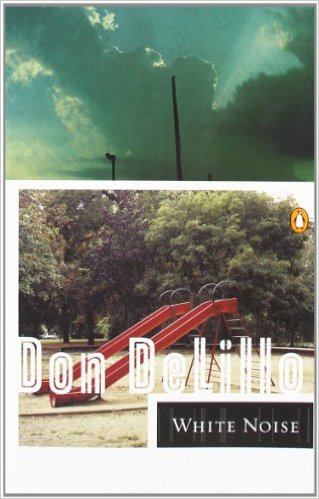
White Noise

What if there were a pill that cured the fear of death?

white noise

@Don DeLillo: My apologies for chopping your novel up, but I’ll try to get the point across in the sections I use. Great novel by the way.

@Everybody: Buy “White Noise” by Don DeLillo.


“Why can’t we be intelligent about death?” I said.

“It’s obvious.”

“It is?”

“Ivan Ilyich screamed for three days. That’s about as intelligent as we get. Tolstoy himself struggled to understand. He feared it terribly.”

“It’s almost as though our fear is what brings it on. If we could learn not to be afraid, we could live forever.”

“We talk ourselves into it. Is that what you mean?”

…

“Every death is premature…”

“Do you think it’s a sense of incompleteness that causes you the deepest regret? There are things you still hope to accomplish. Work to be done, intellectual challenges to be faced.”

“The deepest regret is death. The only thing to face is death. This is all I think about. There’s only one issue here. I want to live.”

…

“This is death. I don’t want it to tarry awhile so I can write a monograph. I want it to go away for seventy or eighty years.”

“Your status as a doomed man lends your words a certain prestige and authority. I like that. As the time nears, I think you’ll find that people will be eager to hear what you have to say. They will seek you out.”

“Are you saying this is a wonderful opportunity for me to win friends?”

“I’m saying you can’t let down the living by slipping into self-pity and despair. People will depend on you to be brave.”

…

“Do you believe love is stronger than death?”

“Not in a million years.”

“Good,” he said. “Nothing is stronger than death. Do you believe the only people who fear death are those who are afraid of life?”

“That’s crazy. Completely stupid.”

“Right. We all fear death to some extent.”

…

“Doesn’t our knowledge of death make life more precious?”

“What good is a preciousness based on fear and anxiety? It’s an anxious quivering thing.”

…

“There is no reason to believe life is more precious because it is fleeting. Here is a statement. A person has to be told he is going to die before he can begin to live life to the fullest. True or false?”

“False. Once your death is established, it becomes impossible to live a satisfying life.”

“Would you prefer to know the exact date and time of your death?”

“Absolutely not. It’s bad enough to fear the unknown. Faced with the unknown, we can pretend it isn’t there. Exact dates would drive many to suicide, if only to beat the system.”

…

“This is the whole point of technology. It creates an appetite for immortality on the one hand. It threatens universal extinction on the other. Technology is lust removed from nature.”

“It is?”

“It’s what we invented to conceal the terrible secret of our decaying bodies. But it’s also life, isn’t it? … Give yourself up to it, Jack. Believe in it… God’s own goodness.”

“I don’t think I want to see any doctors for a while, Murray, thanks.”

“In that case you can always get around death by concentrating on the life beyond.”

…

“Pick one you like.”

“But you make it sound like a convenient fantasy, the worst kind of self-delusion.”

…

“But I don’t have to believe? Don’t I have to feel in my heart that there is something, genuinely, beyond this life, out there, looming, in the dark?”

“What do you think the afterlife is, a body of facts just waiting to be uncovered?”

…

“I’ll tell you what the afterlife is. It’s a sweet and terribly touching idea. You can take it or leave it. In the meantime what you have to do is survive an assassination attempt. That would be an instant tonic. You would feel specially favored, you would grow in charisma.”

…

“Why  have you failed, Jack?”

“A confusion of means.”

“Correct. There are numerous ways to get around death. You tried to employ two of them at once. You stood out on the one hand and tried to hide on the other. What is the name we give to this attempt?”

“Dumb.”

…

“Why have I had this fear so long, so consistently?”

“It’s obvious. You don’t know how to repress. We’re all aware there’s no escape from death. How do we deal with this crushing knowledge? We repress, we disguise, we bury, we exclude. Some people do it better than others, that’s all.”

“How can I improve?”

“You can’t.”

…

“Do you think I’m somehow healthier because I don’t know how to repress? Is it possible that constant fear is the natural state of man…”

“But isn’t repression unnatural?”

“Fear is unnatural. Lightning and thunder are unnatural. Pain, death, reality, these are all unnatural. We can’t bear these things as they are. We know too much. So we resort to repression, compromise and disguise. This is how we survive the universe. This is the natural language of the species.”

…

“Why do I feel so good when I’m with Wilder? It’s not like being with the other kids,” I said.

“You sense his total ego, his freedom from limits.”

“In what way is he free from limits?”

“He doesn’t know he’s going to die. He doesn’t know death at all… How lucky he is. A cloud of unknowing, an omnipotent little person. The child is everything, the adult nothing. Think about it. A person’s entire life is the unraveling of this conflict. No wonder we’re bewildered, staggered, shattered.”

…

“We create beautiful and lasting things, build vast civilizations.”

“Gorgeous evasions,” he said. “Great escapes.”

…

“We have talked about ways to get around death,” he said… “There are other methods as well and I would like to talk about one such approach.”

We crossed the street.

“I believe, Jack, there are two kinds of people in the world. Killers and diers. Most of us are diers. We don’t have the disposition, the rage or whatever it takes to be a killer. We let death happen. We lie down and die. But think what it’s like to be a killer. Think how exciting it is, in theory, to kill a person in direct confrontation. If he dies, you cannot. To kill him is to gain life-credit. The more people you kill, the more credit you store up. It explains any number of massacres, wars, executions.”

…

“In theory, violence is a form of rebirth. The dier passively succumbs. The killer lives on.”

…

“Nothingness is staring you in the face. Utter and permanent oblivion. You will cease to be. To be, Jack. The dier accepts this and dies. The killer, in theory, attempts to defeat his own death by killing others. He buys time, he buys life…”

…

“To plot is to live,” he said… “We start our lives in chaos, in babble. As we surge up into the world, we try to devise a shape, a plan. There is dignity in this. Your whole life is a plot, a scheme, a diagram. It is a failed scheme but that’s not the point. To plot is to affirm life, to seek shape and control. Even after death, most particularly after death, the search continues. Burial rites are an attempt to complete the scheme, in ritual…”

…

“I only want to elicit truths you already possess, truths you’ve always known at some basic level.”

…

“How does a person say good-bye to himself? It’s a juicy existential dilemma.”

…

“Better you than me.”

…

REMEMBER. You cannot access your account unless your code is entered properly. Know your code. Reveal your code to no one. Only your code allows you to enter the system.

…

“How stupid these people were, coming into my office unarmed.”

…

“What is dark? It’s just another name for light.”

…

This must be how people escape the pull of the earth, the gravitational leaf-flutter that brings us hourly closer to dying. Simply stop obeying. Steal instead of buy, shoot intead of talk.

…

“You’re saying there is no death as we know it without the element of fear. People would adjust to it, accept its inevitability.”

…

“There will eventually be an effective medication, you’re saying. A remedy for fear.”

“Followed by a greater death. More effective, productwise. This is what the scientists don’t understand, scrubbing their smocks with Woolite…”

“Are you saying death adapts? It eludes our attempts to reason with it?”

…

[After some events that I would consider spoilers to the story…]

…

White noise everywhere… I continued to advance in consciousness… I knew for the first time what rain really was. I knew what wet was. I understood the neurochemistry of my brain, the meaning of my dreams (the waste material of premonitions [with deja vu being a physiological side effect of premonition in still-primitive man.]) Great stuff everywhere, racing through the room, racing slowly. A richness, a density. I believed everything. I was a Buddhist, a Jain, a Duck River Baptist… I saw things new… I saw beyond words… Is it better to commit evil and attempt to balance it with an exalted act than to live a resolutely neutral life?… This was the key to selflessness… Get past disgust. Forgive the foul body. Embrace it whole… My humanity soared…

It hadn’t occurred to me that a man’s attempts to redeem himself might prolong the elation he felt when he committed the crime he now sought to make up for.

…

Heaven was a partly cloudy place…

I said to my nun, “What does the Church say about heaven today? Is it still the old heaven, like that, in the sky?”

She turned to glance at the picture.

“Do you think we are stupid?” she asked.

…

“You would come in bleeding from the street and tell me six days it took to make a universe?”

“On the seventh He rested.”

“You would talk of angels? Here?”

“Of course here. Where else?”

I was frustrated and puzzled, close to shouting.

“Why not armies that would fight in the sky at the end of the world?”

“Why not? Why are you a nun anyway? Why do you have that picture on the wall?”

She drew back, her eyes filled with contemptuous pleasure.

“It is for others. Not for us.”

“But that’s ridiculous. What others?”

“All the others. The others who spend their lives believing that we still believe. It is our task in the world to believe things no one else takes seriously. To abandon such beliefs completely, the human race would die. This is why we are here. A tiny minority. To embody old things, old beliefs. The devil, the angels, heaven, hell. If we did not pretend to believe these things, the world would collapse.”

…

“You don’t believe in heaven? A nun?”

“If you don’t, why should I?”

“If you did, maybe I would.”

“If I did, you would not have to.”

…

“Your dedication is a pretense?”

“Our pretense is a dedication. Someone must appear to believe. Our lives are no less serious than if we professed real faith, real belief. As belief shrinks from the world, people find it more necessary than ever that someone believe. Wild-eyed men in caves. Nuns in black. Monks who do not speak. We are left to believe. Fools, children. Those who have abandoned belief must still believe in us. They are sure that they are right not to believe but they know belief must not fade completely. Hell is when no one believes. There must always be believers. Fools, idiots, those who hear voices, those who speak in tongues. We are your lunatics. We surrender our lives to make your nonbelief possible. You are sure that you are right but you don’t want everyone to think as you do. There is no truth without fools. We are your fools, your madwomen, rising at dawn to pray, lighting candles, asking statues for good health, long life.”

…

“Soon no more. You will lose your believers.”

…

“And nothing survives? Death is the end?”

“Do you want to know what I believe or what I pretend to believe?”

“I don’t want to hear this. This is terrible.”

“But true.”

…

The supermarket shelves have been rearranged… There is a sense of wandering now, an aimless and haunted mood, sweet-tempered people taken to the edge… But in the end it doesn’t matter what they see or think they see. The terminals are equipped with holographic scanners, which decode the binary secret of every item, infallibly. This is the language of waves and radiation, or how the dead speak to the living. And this is where we wait together, regardless of age, our carts stocked with brightly colored goods…

~ Excerpts from White Noise, a novel by Don DeLillo

—————————————-

“If God did not exist, then it would be necessary to invent him.”

– Voltaire


“May not religious optimism be too idyllic? Must all be saved? Is no price to be paid in the work for salvation? …

As a matter of fact countless human imaginations live in this moralistic and epic kind of a universe, and find its disseminated and strung-along successes sufficient for their rational needs…

The way of escape from evil on this system is not by preserving it in the whole as an element essential but ‘overcome.’

It is by dropping it out altogether, throwing it overboard and getting beyond it, helping to make a universe that shall forget its very place and name.”

– William James (GO USA! Destroy and create anew! Fnord.)

What is the Life of Meaning?

Depending upon whom one asks, the question, “What is the meaning of life?” may be one of the most profound questions of human existence or nothing more than a nonsensical request built on conceptual confusion, much like, “What does the color red taste like?” Ask a non-philosopher, “What do philosophers discuss?” and a likely answer will be, “The meaning of life.” Ask the same question of a philosopher within the analytic tradition, and you will rarely get this answer. Within the analytic philosophical community, the disinterest in the question of life’s meaning, and in some cases outright logical suspicion, is likely partly a result of the question’s inherent lack of clarity and partly a result of the suspicion that it is a request for which no answer exists because it is built on suspect assumptions about what would have to be the case in order for life to have a meaning. Indeed, it is not immediately clear what is being requested in asking the question of life’s meaning, nor is it clear that life could have such a meaning, given latent assumptions often accompanying the asking of the question.

Despite the relative disinterest in the question of life’s meaning among analytic philosophers for a large part of the twentieth century, there has been a growing body of work on the topic by contemporary analytic philosophers since the 1980’s. The parameters in which the philosophical discussion of the meaning of life is unfolding within analytic philosophy largely center on two dimensions: the first, with bringing clarity and sense to the question, and the second, on fitting the concept of meaning within the realm of normativity in general, and then with discovering the necessary and sufficient conditions for a meaningful life.

This article surveys the important trajectories in discussions of life’s meaning within contemporary analytic philosophy. It begins with a consideration of an important generating condition of the question of life’s meaning, one that Thomas Nagel has particularly noted (Nagel 1971, 1989)—the human ability to view life sub specie aeternitatis. Next, it surveys current analytic philosophical discussions over the following prominent themes: (i) strategies for understanding what the question is asking, (ii) extant views of how a meaningful life can be secured, and (iii) the connection between death, futility, and a meaningful life. This article concludes by noting some considerations that may bring further depth to discussions over life’s meaning as they progress.

Table of Contents

  1. Introduction
  2. The Human Context
  3. The Meaning of Life in Contemporary Analytic Philosophy
    1. Addressing the Question’s Lack of Clarity: Securing a Non-linguistic Usage of “Meaning”
    2. Addressing the Question’s Lack of Clarity: The Amalgam Thesis
    3. A Meaningful Life: Current Views
      1. Supernaturalism
      2. Objective Naturalism
      3. Subjective Naturalism
      4. Pessimistic Naturalism: Nihilism
    4. Death, Futility, and a Meaningful Life
  4. The Future of the Discussion
  5. References and Further Reading
  1. Introduction

Vis-à-vis the meaning of life, there are two juxtaposed and incongruent realities. On the one hand, for a large part of the twentieth century, analytic philosophers generally ignored the question of life’s meaning because they were doubtful that it had no answer. This doubt was because of latent assumptions on the part of many who ask the question about what would have to be the case for life to have a meaning or because they were suspicious that it is incoherent and meaningless. On the other hand, most non-philosophers consider it one of the most important questions, if not the most important question, of human existence. This, of course, creates a prima facie impasse, given that the question of life’s meaning is one that many of those supposedly functioning as guardians of the canons of reason think is rationally sub-par or at least less deserving of philosophical energy than is a consideration of, for example, how consciousness and accompanying qualia arise from matter or whether discussions of epistemic luck and control hold the key to discovering the necessary and sufficient conditions of propositional knowledge.

While this trend of neglect is unfortunate, it is partly understandable given that the question, “What is the meaning of life?” is at least moderately characterized by a lack of clarity (and some would say a lack of coherence). Philosophically, the question therefore has seemed unmanageable to many. It is surely not a question about the semantic meaning of the word “life,” but what then is it a question about? Is it a question about human life? Is it a question about all biological life? Is it a question about all of existence? Is it asking for a comprehensive explanation of why the universe exists and of our place within it? And if so, is it asked with strong teleological assumptions at the fore, such that a purely efficient, mechanistic causal story would leave the inquirer unsatisfied? These latter questions with aglobal focus seem to track a request like, “What is it all about?” Indeed, there is a profound human impulse to seek a sweeping, deep explanation, context, or narrative through which to interpret existence, and then to move beyond localized foci by living into this universal, totalizing narrative. This first cluster of questions highlights the explanatory dimension of the question of life’s meaning whereby some sort of explanation (perhaps even narrativeexplanation) is sought that will render the universe and our lives within it intelligible. Conceding the question’s lack of clarity, these requests partially illuminate what is being asked.

However, raising these questions alone neglects other important questions in the neighborhood of life’s meaning. Though connected, they are conceptually distinct from the first set; although, depending on how robust the above explanation of what it is all about is, one might have good reason to think that it would also encompass this second dimension. In any case, while related to the explanatory dimension, these next questions highlight thenormative dimension of the meaning of life question. When asking these, we are more concerned with the aim of securing a meaningful life. We wonder what we must, or should, or ought to order our lives around so as to render them meaningful. Meaningfulness, then, perhaps supervenes on a life properly ordered around the right stuff. Questions within this dimension include, “What is (are) the purpose(s) of life (my life)?” “What makes life valuable?” or “What makes life worthwhile and not irredeemably futile?”

Most philosophers currently writing on the topic think the question of life’s meaning is somehow a question about all of these and other related topics, but only insofar as it is viewed as a long disjunctive question or an amalgam of related yet distinct requests about purpose, value, worth, significance, death, and futility, among others. Furthermore, though it is viewed as a request that moves us into normative territory, this question is thought to be distinct from purely ethical requests about rightness and wrongness, purely aesthetic requests about the good and beautiful, and purely eudaimonistic requests about human happiness and flourishing, while bearing some relationship to all three. There is little consensus beyond this minimal agreement.

  1. The Human Context

The human preoccupation with the question of life’s meaning is at least partly generated by our capacity to get-outside-of ourselves and view our pursuits and very lives first-person oriented and distantly from a detached, more-or-less dispassionate standpoint (see Nagel 1971; 1989; Fischer 1993). We, unlike butterflies or cats for example, can take a  critical viewpoint on our lives. We possess the ability to shift from engagement to reflection. We question what we do. We question how what we do coheres with the rest of reality, and whether reality, at the deepest level, in any way cares about us and our pursuits. We can view our lives sub specie aeternitatis, after which we can either experience profound angst, indifference, or hope, among other reactions, depending upon what we think that viewpoint entails. Whether, in normative appraisals of life, it is reasonable to privilege this detached perspective over our immediate, human perspective is beside the point. The fact is we often do, and this human propensity is correlated with inquiring into the meaning of life.

  1. The Meaning of Life in Contemporary Analytic Philosophy

Contemporary analytic philosophy has inherited important trajectories from the ancient and modern worlds, whether from Qohelet, Schopenhauer, Tolstoy, Camus, or Sartre among others, vis-à-vis the meaning of life. But, understandably, the analytic philosophical impulse toward conceptual clarification has given discussions of the meaning of life within this tradition a unique shape. Indeed, a significant portion of the discussion within this contemporary context has been primarily concerned with trying to understand the question itself. Is it coherent? Is it meaningful? What is it asking? What assumptions motivate the question? Asking such questions is necessary because the question of life’s meaning lacks clarity and has an elusive quality to it. Analytic philosophers have rightly noticed this. There exist a couple of options for addressing this lack of clarity short of the outright charge of incoherence that was common for a substantial portion of the twentieth century in the wake of logical positivism’s once strong grip.

  1. Addressing the Question’s Lack of Clarity: Securing a Non-linguistic Usage of “Meaning”

One option for addressing the clarity problem is to retain the use of the word “meaning” and to secure a usage that applies to non-linguistic phenomena, given that in asking the question of life’s meaning, one is not asking for the semantic meaning of the word “life.” This strategy is especially concerned with finding a natural interpretation of the question through a plausible employment of the term “meaning.” “Meaning” has multiple meanings, and at least some of the more prominent ones mitigate its usefulness in the context of trying to formulate the intuitions driving the question of life’s meaning. Indeed, if one is asking for the semantic meaning of life rather than “life,” then the accusation of incoherence is plausible. We ask for the meanings of semantic constructions, but not of things like physical entities, events, or life in general. The problem then is that “meaning” is a term which appears to most naturally find its home within a linguistic context. However, life itself is not such a context. That is to say, in asking the question, one is not asking for any sort of definition of “life” or a description of this term’s usage. But then, what is being asked? This is where the problem lies.

The problem is solvable, though, given that asking what something means need not be a request for a definition or description. There are additional non-linguistic contexts in which the locution, “What is the meaning of x?” makes perfect sense (for example, intentional signification, non-intentional signification (that is, natural signs), and so forth.) (see Nozick 1981). Some of them even share family resemblances to the question of life’s meaning. One in particular is especially relevant.

The question, “What is the meaning of x?” functions naturally in the largely non-linguistic context in which we seek to know how something fits within a larger context or narrative. We naturally and legitimately invoke the formula, “What is the meaning of x?” in situations wherex is some fact, event, or phenomenon we encounter and of which we want to know the fact’s or event’s or phenomenon’s “. . . implication in the wider world within which this notion [or fact, event, or phenomenon] makes the sense it makes” (Wright 2003: 719). This “wider world” Wright considers to be a worldview, metanarrative, or something similar.

To make his point, Wright uses the example of how one comes to understand the Easter Event (that is, the putative bodily resurrection of Jesus of Nazerath). For example, a well-educated Roman soldier who comes to learn of the event may contextualize it, and therefore “fix” its meaning, through the myth of Nero redivivus, the idea that Nero had come back to life in order to return to Rome in all his glory. The event means something different for him than for, say, Saul of Tarsus. The wider worldview framework or narrative (or even simply a more localized narrative which is, itself, part of a larger worldview narrative) will play a heavy hermeneutical role, then, in “discovering” (some may prefer determining) what any given fact, event, or phenomenon means. Discovering this meaning will be a product of asking and answering questions like: In what larger narrative(s) does the sentence (intended to refer to a fact, event, or phenomenon) belong? What worldviews do such narratives embody and reinforce? What are the universes of discourse within which this sentence, and the event it refers to, settle down and make themselves at home – and which, at the same time, they challenge and reshape from within? (Wright 2003: 719).

In terms of the meaning of life, one could argue that we are trying to find the “wider world” (i.e., worldview, metanarrative) in which the existentially salient elements and accompanying questions of life fit. These existentially salient elements and accompanying questions of life, for which the word “life” is a marker, are perennial meaning of life themes. They are what often prompt in us the grand question: “What is the meaning of life?” and include:

(1) Fact—something exists, we [humans] exist, and I exist / Question—Why does anything or we or I exist at all?

(2) Question—Does life have any purpose(s), and if so, what is its nature and source?

(3) Fact—we are often passionately engaged in life pursuits and projects that we deem valuable and worthwhile / Question—Does the worth and value of these pursuits and projects need grounding in something else, and if so, what?

(4) Fact—pain and suffering are part of the universe / Question—Why?

(5) Question—How does it all end? Is death final? Is there an eschatological remedy to the ills of this world?

(1) – (5) constitute the cluster of considerations that track discussions of life’s meaning, even though reasonable debate will exist about the details. In asking, “What is the meaning of life?” it is plausible to view this as the request for a “wider world” (that is, worldview, metanarrative) through which to secure answers to these questions. Viewed as such, this renders the question, “What is the meaning of life?” coherent and intelligible by securing a usage of “meaning” that fits naturally within a non-linguistic context.

  1. Addressing the Question’s Lack of Clarity: The Amalgam Thesis

The most common interpretive strategy for understanding what the question, “What is the meaning of life?” involves discarding the word “meaning” and reformulating the question entirely. With this approach, the question is morphed into a cluster of other supposedly less vague questions, even if no less difficult to answer:  “What is (are) the purpose(s) of life?”, or “What makes life valuable?”, or “What makes life worthwhile and not irredeemably futile?” among others.

Following precedent in the literature, especially R. W. Hepburn, this approach for addressing the vagueness in the question of life’s meaning may be called the amalgam thesis (Hepburn 1966). Roughly, the amalgam thesis entails that the original question, framed in terms of meaning, is a largely ill-conceived place-holder for a cluster of related requests, and thus, not really a single question at all. One way of understanding the amalgam thesis is to view it as making the question of life’s meaning little more than a disjunctive question:

What is the purpose of life, or what makes life valuable, or what makes life worthwhile?

On amalgam thesis premises the question, “What is the meaning of life?” ought  to be a question about purpose, or value, or worth or something else. However one worry is that these questions are primarily about purpose, value, and worth and  then secondly about the meaning of life.

Due to the dominance of the amalgam thesis as an interpretive strategy and its arguable philosophical merit, most contemporary philosophical treatments of the question of life’s meaning consider it in one of its reformulated versions such as, “What makes life valuable?”, “What makes life significant?”, “What is (are) the purpose(s) of life?”, “Does a particular life achieve some good purpose?”, or “What makes life worth living?” among others. So, there exist at least two interpretive levels of the question using the amalgam thesis, one tracking something like the question’s formal properties, and the other tracking the subsequent questions’ material content. In other words, the amalgam thesis implies that the question, “What is the meaning of life?” is really just a disjunctive question whereby requests about purpose, value, worth, and significance are made.

  1. A Meaningful Life: Current Views

Beyond discussions over the nature of the question itself, one will find competing views on what gives life meaning, whereby meaningfulness is meant. That is to say, by virtue of what can life be said to be meaningful, if it all? The four primary competitors are: (1) Supernaturalism, (2) Objective Naturalism, (3) Subjective Naturalism, and (4) Nihilism (inter-subjectivism and non-naturalism are additional options, but are much less prevalent). Importantly, both objective and subjective naturalism can be categorized as optimisticnaturalisms, in that these views allow for a meaningful existence in a world devoid of finite and infinite spiritual realities. Pessimistic naturalism is what is commonly called “nihilism.” Nihilism is generally a view adopted alongside an entirely naturalistic ontology (though vigorous debate exits about whether naturalism entails nihilism), although there is nothing logically impossible about someone adopting nihilism while being a religious believer. One will be hard-pressed, however, to find genuine examples of this belief, save some sort of rhetorical, provisional nihilism, as found in Ecclesiastes in the Bible.

  1. Supernaturalism

Roughly, supernaturalism maintains that God’s existence, along with “appropriately relating” to God, is both necessary and sufficient for securing a meaningful life, although different accounts can be given as to the nature of this relationship. Among countless others, historic representatives of supernaturalism in the Near-Eastern ancient world and in subsequent Western history are Qoheleth, Jesus, Paul, Augustine, Aquinas, Edwards, Pascal, and Tolstoy. The supernaturalist position can be plausibly viewed as possessing three distinct yet related dimensions: metaphysical, epistemological, and relational-axiological. Metaphysically, it is argued that God’s existence is necessary in order to ground a meaningful life because, for example, conditions necessary for securing a meaningful existence like objective value are most plausibly anchored in an entity like God (Cottingham 2005; Craig 2008). In addition to the metaphysical dimension, supernaturalism often requires, at some level, orthodoxy (right belief) and orthopraxy (right practice), although much debate exists on the details. God’s existence may be a necessary condition for securing a meaningful life, but it is generally thought that one must additionally relate to God in some relevant way in the epistemological and axiological dimensions (In addition to God-based supernaturalist theories, there are soul-based theories, where meaning in life is thought to be a function, not so much of God, but rather of having an indestructible soul whereby immortality is possible).

  1. Objective Naturalism

Objective naturalism, like supernaturalism, posits that a meaningful life is possible, but denies that a supernatural realm is necessary for such a life. Life in a purely physical world, devoid of finite and infinite spiritual realities, is sufficient for meaning according to objective naturalism. Objective naturalists claim that a meaningful life is a function of appropriately connecting with mind-independent realities that are, contra supernaturalism, entirely natural. Objective naturalism is further distinguished (from subjective naturalism) by its emphasis onmind-independence. One way of putting the point is to say that wanting or choosing is insufficient for a meaningful life. For example, choosing to spend one’s waking hours counting and re-counting blades of grass is likely insufficient for meaning on objective naturalism. Rather, meaning is a function of linking one’s life to inherently valuable, mind-independent conditions that are not themselves the sole products of what one wants strongly and chooses (contra subjective naturalism). Put simply, with objective naturalism it is possible to be wrong about what confers meaning on life—something is meaningful, at least partly, in virtue of its intrinsic nature, irrespective of what is believed about it. This is why spending one’s entire existence counting blades of grass or reading and re-reading phone books is probably not meaningful on objective naturalism, even if the person strongly desires to do so.

iii. Subjective Naturalism

Like objective naturalism, subjective naturalism posits that a meaningful life is possible apart from something like supernaturalism being true, but unlike objective naturalism, it differs on what confers meaning to life. According to subjective naturalism, what constitutes a meaningful life varies from person to person, and is a function of one getting what one strongly wants, or by achieving self-established goals, or through accomplishing what one believes to be really important. Caring about or loving something deeply has been thought by some to confer meaningfulness to life (Frankfurt 1988). Subjectivism seems most plausible to some in light of perceived failures to ground objective value, either naturally, non-naturally, or supernaturally. A worry for subjective naturalism, however, is analogous to ethical worries over moral relativism. Many protest that surely deep care and love simpliciterare not sufficient to confer meaningfulness on life. What if someone claims to find meaning in life counting blades of grass, or reading and re-reading the phone book, or worse, torturing people for fun? Can a life centering on such pursuits be a meaningful life? The strong, nearly universal intuition here towards objective value in some form inclines in the direction of requiring an objective standard that comes to bear on the meaningfulness of an activity or life in general. Subjectivism still has its defenders, with some proposals moving towards grounding value inter-subjectively—in community—as opposed to in the individual exclusively.

Nuanced forms of naturalism, vis-à-vis meaningfulness in life, make room for both objective and subjective elements, as is captured nicely by Susan Wolf, “Meaning arises when subjective attraction meets objective attractiveness” (Wolf 1997: 211). On this view, the objective and the subjective must unite in order to give birth to robust meaningfulness. Meaningfulness is not present in a life spent believing in, being satisfied by, or caring about worthless projects.However neither is it present in a life spent engaging in worthwhile, inherently valuable projects without believing in, or caring about, or being satisfied by them.

Though they are in disagreement on the conditions for meaningfulness, both objective and subjective naturalism are united in their rejection of supernaturalism and supernaturalism’s insistence that God is necessary in order to secure a meaningful life. In this way, both forms of naturalism, vis-à-vis meaningfulness in life, can be thought of as optimistic naturalisms—that is, meaningful life is possible in a godless universe. An optimistic naturalist sees no problem in thinking that a meaningful life can be secured within an entirely naturalistic ontology. Nothing additional, nothing of the transcendent sort, is needed to ground those things in life that we, pre-philosophically, find to be meaningful. The raw materials for meaningfulness are available apart from God.

  1. Pessimistic Naturalism: Nihilism

Against all views which think a meaningful existence is possible, is the view of pessimistic naturalism, more commonly called nihilism. Roughly, nihilism is the view that denies that a meaningful life is possible because, literally, nothing has any value. One way to understand nihilism is by seeing it as the fusion of theses and assumptions drawn from both supernaturalism and naturalism. That is to say, nihilism may be seen as requiring (i) that God or some supernatural realm is likely necessary for value and a meaningful existence, but (ii) that no such realm exists, and therefore nothing is of ultimate value. Other forms of nihilism focus on states like boredom or dissatisfaction, arguing that boredom sufficiently infuses life so as to make it meaningless, or that human lives lack the requisite amount of satisfaction to confer meaning upon them. Another form of nihilism that is logically compatible with the existence of God is one based upon a disparity between standpoints. It has been argued that from the most distant, detached viewpoint, nothing we do seems to matter at all. If one thinks that it is possible to view even God and the economy of his workings from some more distant standpoint, then even supernaturalism may face a nihilistic threat of this form.

  1. Death, Futility, and a Meaningful Life

The meaning of life is closely linked with a cluster of related issues surrounding death, futility, and the way life is going to end, in regards to both the individual life and to the universe as a whole. These are common threads in the meaning of life literature, from Ecclesiastes to Camus to contemporary analytic philosophy. Death (and the end of the universe itself) often is thought to bear a close relationship with futility. The common pessimistic claim is that cosmic futility supervenes upon the entirety of human existence, given a naturalistic view of the ultimate fate of life, both human life as well as the universe itself, where death and entropy will very likely be the final, irreversible state of reality.

Why is death in an exclusively naturalistic world thought by many to be a challenge to a meaningful life? One reason may be the widespread view that, ceteris paribus, meaningful things last, as in ‘’diamonds are forever’’. Vis-à-vis the meaning of life, most people judge various aspects of life, pre-philosophically, to be meaningful. When subsequently engaged in conscious reflection on the necessary conditions for meaningfulness, immortality is often thought to be transcendentally necessary (though not sufficient) for meaningfulness. Many people desire consciousness, memory, personhood, love, creativity, and achievement to be part of the deep structure of reality, in that the universe, in the long run, makes space for these things. An exclusively naturalistic universe likely does not. From the perspective of a universe that will very likely become unfavorable to the existence of intelligent life, nothing we do seems of any real consequence or value. Death, both our own and the universe’s (speaking metaphorically of course), is a profound barrier to the meaningful properties and activities that populate human existence continuing on in any robust sense. And so the threat of futility lingers for many who worry that we live in an exclusively naturalistic universe.

The kind of futility surfacing in this context can be thought of as strong futility or weak futility. In the strong sense, it is claimed that if the final state of affairs of the universe (e.g. heat death) is one in which nothing matters, then nothing ever really mattered and everything is irredeemably futile. In the weaker sense, it is claimed that if the final state of affairs of the universe is one in which nothing matters, then the mattering or significance of current states of affairs is in some way mitigated, either minimally or considerably, though not completely destroyed. This futility partly arises, then, through an asymmetry between the vantage points of the lifeless, distant future that lacks consciousness of any sort, and the present filled with conscious life and its various dimensions. A “bad” ending is thought to threaten the meaningfulness of the entire story.

Critics of these strong and weak futility claims counter by calling into question what can be called the-arbitrary-privileging-of-the-future. They ask, “Why should the end state of affairs be given such veto power over the worth and meaning of the here and now?” It has been noted that appealing to such asymmetry by which to charge naturalism with irredeemable futility is contingent upon a suspect assumption; namely, arbitrarily placing an undue amount of importance (perhaps all the importance) on the final state of affairs to which life leads. But why give the future priority over the present and the past? If life is meaningful now, how can the fact that it will cease to exist make it less meaningful now? And, if life is not meaningful now, how could its un-ending continuation confer meaningfulness to it? Critics of such futility claims argue that the most plausible way to appraise the meaningfulness and worth of life here and now, is by adopting the here and now perspective, not the distant, detached perspective of some indifferent future of a universe in ruins. Of course, one might make the converse claim, “Why privilege the present over the future?” Principled reasons must be offered that will help settle the question of which viewpoint—the distant-future or theimmediate-present—gets normative priority for appraisals of life as either worthwhile or futile.

  1. The Future of the Discussion

Within normative theory, one underexplored question is where the concept ofmeaningfulness fits within the normative realm shared by the ethical, aesthetic, and eudaimonistic. Meaning seems closely connected to these other normative categories, but reducible to none (though it is perhaps closest to the third). One can perhaps imagine ethical lives that are, for example, profoundly unsatisfying to the one who lives them. And even if the ethical is one component of the meaningful, it seems implausible to think that an apathetic, yet morally exemplary life, qualifies as fully meaningful, especially if one thinks that meaningfulness is at least partly a function of being subjectively attracted to objective attractiveness. Meaningfulness extends beyond the ethical, while somehow including it. These same sorts of questions can be raised regarding the relationship between meaningfulness and other normative categories.

In addition, the debate between reductive naturalists and non-reductive naturalists has direct implications for whether it can be thought that normative properties are part of the deep structure of reality on naturalism. If they are, then optimistic naturalism of the objective variety will gain the upper hand over subjective optimistic naturalism. So, progress in the debate between objective and subjective naturalism will track progress in discussions within metaphysics more generally.

Or, consider the problem of evil in the philosophy of religion. The experience of evil links to the meaning of life, especially when one considers death and futility. Quite apart from philosophical reflections on the problem, the experience of evil is often one of those generating conditions of the question of life’s meaning born out of existential angst. Is there an intelligible, existentially satisfying narrative in which to locate the experience of pain and suffering and to give the sufferer some solace and hope? Evil in a meaningful universe may not cease from being evil, but it may be more bearable. In this way, the problem of meaning may be more foundational than the problem of evil. And one especially thinks of what we might call the eschatological dimension of the problem of evil—is there any hope in the face of pain, suffering, and death, and if so, what is its nature? Bringing future-oriented considerations of pain and suffering into the philosophical discussion will also naturally link to perennial meaning of life topics like death and futility. Additionally, it will motivate more vigorous research and debate over whether the inherent human desire for a felicitous ending to life’s narrative, including, for example, post-mortem survival and enjoyment of the beatific vision or some other blessed state is mere wishful thinking or a cousin to our desire for water, and thus, a truly natural desire that points to a referent capable of fulfilling it. In any case, discussions over the problem of evil are correlated with discussions over the meaning of life, and progress in one might be significant for progress in the other.

Finally, an underexplored area in contemporary analytic philosophy is how the concept ofnarrative might shed light on the meaning of life. One reason this is important can be seen in the following. Historically, most of the satisfying narratives that in some way narrated the meaning of life were also religious or quasi-religious. Additionally, many of these narratives count as narratives in the paradigmatic sense as opposed to non-narrative modes of discourse. However, with the rise of modern science, both the narratives and the religious or quasi-religious worldviews embodied in them were diminished in certain spheres. This led to the anxious questioning of life’s meaning and the fear that a thoroughly scientific-naturalistic narrative of the universe is far from existentially satisfying. This elicits the following important question: Are such paradigmatic instances of narratives which, in some way, narrate the meaning of life, thought to be more existentially satisfying in virtue of their explicitly religious perspective on the world or in virtue of the fact that they are paradigmatic instances of narrative or both? In terms of an interdisciplinary approach, the work of cognitive scientists who are informing us that personal identity has a substantial narrative component may be of benefit here. Perhaps our deep human need to construct meaningful narratives in order to contextualize parts of our lives and our very lives themselves is genetically hardwired. More specifically, perhaps our existential need to locate our lives and the profound elements that populate human life within grand narratives that are paradigmatic instances of narrative is genetically hardwired. If something like this is correct, then it may become clearer why questioning the meaning of life with such intensity and angst is correlated with the rise of a grand narrative (that is, naturalism) that is not a narrative in the paradigmatic sense.

Within a philosophical tradition that has had relatively little to say about the meaning of life, there are signs of change. Since the 1980’s, some within the ranks of analytic philosophy have turned their attention to life’s great question. The question is approached with an analytic rigor that will hopefully illumine some of the assumptions motivating it and point in the direction of possible approaches for answering it. Much work remains to be done. The philosophical waters remain murky, but they are clearing.

Source: http://www.iep.utm.edu/mean-ana/

Further Reading: https://en.wikipedia.org/wiki/Meaning_of_life
To Be Governed

To be governed is to be watched, inspected, spied upon, directed, law-driven, numbered, regulated, enrolled, indoctrinated, preached at, controlled, checked, estimated, valued, censured, commanded, by creatures who have neither the right nor the wisdom nor the virtue to do so. To be governed is to be at every operation, at every transaction noted, registered, counted, taxed, stamped, measured, numbered, assessed, licensed, authorized, admonished, prevented, forbidden, reformed, corrected, punished. It is, under pretext of public utility, and in the name of the public interest, to be placed under contribution, drilled, fleeced, exploited, monopolized, extorted from, squeezed, hoaxed, robbed; then, at the slightest resistance, the first word of complaint, to be repressed, fined, vilified, harassed, hunted down, abused, clubbed, disarmed, bound, choked, imprisoned, judged, condemned, shot, deported, sacrificed, sold, betrayed; and to crown all, mocked, ridiculed, derided, outraged, dishonored. That is government; that is its justice; that is its morality.

– Pierre-Joseph Proudhon

The Parable of the Arrow

arrow-parable-statue

The Buddha was sitting in the park when his disciple Malunkyaputta approached him. Malunkyaputta had recently retired from the world and he was concerned that so many things remained unexplained by the Buddha. Was the world eternal or not eternal? Was the soul different from the body? Did the enlightened exist after death or not? He thought, “If the Buddha does not explain these things to me, I will give up this training and return to worldly life.”

Thus, he approached the Buddha with this question, who replied:

It’s just as if a man were wounded with an arrow thickly smeared with poison. His friends and companions, kinsmen and relatives would provide him with a surgeon, and the man would say, ‘I won’t have this arrow removed until I know whether the man who wounded me was a noble warrior, a priest, a merchant, or a worker.’ He would say, ‘I won’t have this arrow removed until I know the given name and clan name of the man who wounded me… until I know whether he was tall, medium, or short… until I know whether he was dark, ruddy-brown, or golden-colored… until I know his home village, town, or city… until I know whether the bow with which I was wounded was a long bow or a crossbow… until I know whether the bowstring with which I was wounded was fiber, bamboo threads, sinew, hemp, or bark… until I know whether the shaft with which I was wounded was wild or cultivated… until I know whether the feathers of the shaft with which I was wounded were those of a vulture, a stork, a hawk, a peacock, or another bird… until I know whether the shaft with which I was wounded was bound with the sinew of an ox, a water buffalo, a langur, or a monkey.’ He would say, ‘I won’t have this arrow removed until I know whether the shaft with which I was wounded was that of a common arrow, a curved arrow, a barbed, a calf-toothed, or an oleander arrow.’ The man would die and those things would still remain unknown to him.

Whether the view is held that the world is eternal or not, Malunkyaputta, there is still birth, old age, death, grief, suffering, sorrow and despair – and these can be destroyed in this life! I have not explained these other things because they are not useful, they are not conducive to tranquility and Nirvana. What I have explained is suffering, the cause of suffering, the destruction of suffering and the path that leads to the destruction of suffering. This is useful, leading to non-attachment, the absence of passion, perfect knowledge.

Thus spoke the Buddha, and with joy Malunkyaputta applauded his words.

– Majjhima-nikaya, Sutta 63

The New Idol

Somewhere there are still peoples and herds, but not with us, my brethren: here there are states.

A state? What is that? Well! open now your ears unto me, for now will I say unto you my word concerning the death of peoples.

A state, is called the coldest of all cold monsters. Coldly lieth it also; and this lie creepeth from its mouth: “I, the state, am the people.”

It is a lie! Creators were they who created peoples, and hung a faith and a love over them: thus they served life.

Destroyers, are they who lay snares for many, and call it the state: they hang a sword and a hundred cravings over them.

Where there is still a people, there the state is not understood, but hated as the evil eye, and as sin against laws and customs.

This sign I give unto you: every people speaketh its language of good and evil: this its neighbour understandeth not. Its language hath it devised for itself in laws and customs.

But the state lieth in all languages of good and evil; and whatever it saith it lieth; and whatever it hath it hath stolen.

False is everything in it; with stolen teeth it biteth, the biting one. False are even its bowels.

Confusion of language of good and evil; this sign I give unto you as the sign of the state. Verily, the will to death, indicateth this sign! Verily, it beckoneth unto the preachers of death!

Many too many are born: for the superfluous ones was the state devised!

See just how it enticeth them to it, the many-too-many! How it swalloweth and cheweth and recheweth them!

“On earth there is nothing greater than I: it is I who am the regulating finger of God.”—thus roareth the monster. And not only the long-eared and short-sighted fall upon their knees!

Ah! even in your ears, ye great souls, it whispereth its gloomy lies! Ah! it findeth out the rich hearts which willingly lavish themselves!

Yea, it findeth you out too, ye conquerors of the old God! Weary ye became of the conflict, and now your weariness serveth the new idol!

Heroes and honourable ones, it would fain set up around it, the new idol! Gladly it basketh in the sunshine of good consciences,- the cold monster!

Everything will it give you, if ye worship it, the new idol: thus it purchaseth the lustre of your virtue, and the glance of your proud eyes.

It seeketh to allure by means of you, the many-too-many! Yea, a hellish artifice hath here been devised, a death-horse jingling with the trappings of divine honours!

Yea, a dying for many hath here been devised, which glorifieth itself as life: verily, a hearty service unto all preachers of death!

The state, I call it, where all are poison-drinkers, the good and the bad: the state, where all lose themselves, the good and the bad: the state, where the slow suicide of all—is called “life.”

Just see these superfluous ones! They steal the works of the inventors and the treasures of the wise. Culture, they call their theft—and everything becometh sickness and trouble unto them!

Just see these superfluous ones! Sick are they always; they vomit their bile and call it a newspaper. They devour one another, and cannot even digest themselves.

Just see these superfluous ones! Wealth they acquire and become poorer thereby. Power they seek for, and above all, the lever of power, much money—these impotent ones!

See them clamber, these nimble apes! They clamber over one another, and thus scuffle into the mud and the abyss.

Towards the throne they all strive: it is their madness—as if happiness sat on the throne! Ofttimes sitteth filth on the throne.- and ofttimes also the throne on filth.

Madmen they all seem to me, and clambering apes, and too eager. Badly smelleth their idol to me, the cold monster: badly they all smell to me, these idolaters.

My brethren, will ye suffocate in the fumes of their maws and appetites! Better break the windows and jump into the open air!

Do go out of the way of the bad odour! Withdraw from the idolatry of the superfluous!

Do go out of the way of the bad odour! Withdraw from the steam of these human sacrifices!

Open still remaineth the earth for great souls. Empty are still many sites for lone ones and twain ones, around which floateth the odour of tranquil seas.

Open still remaineth a free life for great souls. Verily, he who possesseth little is so much the less possessed: blessed be moderate poverty!

There, where the state ceaseth—there only commenceth the man who is not superfluous: there commenceth the song of the necessary ones, the single and irreplaceable melody.

There, where the state ceaseth—pray look thither, my brethren! Do ye not see it, the rainbow and the bridges of the Superman?—

Thus spake Zarathustra.

– Friedrich Nietzsche

The Myth of Homo Sapiens

I leave Sisyphus at the foot of the mountain! One always finds one’s burden again. But Sisyphus teaches the higher fidelity that negates the gods and raises rocks. He too concludes that all is well. This universe henceforth without a master seems to him neither sterile nor futile. Each atom of that stone, each mineral flake of that night-filled mountain, in itself forms a world. The struggle itself toward the heights is enough to fill a man’s heart. One must imagine Sisyphus happy.

– Albert Camus

—

Happiness is just a feeling of euphoria. It’s your brain chemistry going in overdrive. That’s why so many relationships fail when the honeymoon ends and reality sets in.

– Lex Luthor

—

What I relate is the history of the next two centuries. I describe what is coming, what can no longer come differently: the advent of nihilism. Why has the advent of nihilism become necessary? Because the values we have had hitherto thus draw their final consequence; because nihilism represents the ultimate logical conclusion of our great values and ideals – because we must experience nihilism before we can find out what value these “values” really had. – We require, at some time, new values.

– Friedrich Nietzsche

—

While some of you might not consider Josh Duhamel’s admission that he misses Megan Fox the smoking penis that proves he’s not always about the tuck-back, I think we can all agree he makes a lot of douchey faces. Douchey faces that I may have added captions for because tomorrow starts the holiday weekend, and I’m about to mentally check out like Baby Doll as demonstrated by that Sucker Punch reference that there’s no excuse for. You’re right.

– Mike Redmond

The Madman (in me)

Have you not heard of that madman who lit a lantern in the bright morning hours, ran to the market place, and cried incessantly, “I seek God! I seek God!”

As many of those who do not believe in God were standing around just then, he provoked much laughter. Why, did he get lost? said one. Did he lose his way like a child? said another. Or is he hiding? Is he afraid of us? Has he gone on a voyage? or emigrated? Thus they yelled and laughed.

The madman jumped into their midst and pierced them with his glances.

“Whither is God?” he cried.

“I shall tell you. We have killed him – you and I. All of us are his murderers. But how have we done this? How were we able to drink up the sea? Who gave us the sponge to wipe away the entire horizon? What did we do when we unchained this earth from its sun? Whither is it moving now? Whither are we moving now? Away from all suns? Are we not plunging continually? Backward, sideward, forward, in all directions? Is there any up or down left? Are we not straying as through an infinite nothing? Do we not feel the breath of empty space? Has it not become colder? Is not night and more night coming on all the while? Must not lanterns be lit in the morning?

Do we not hear anything yet of the noise of the grave-diggers who are burying God?

Do we not smell anything yet of God’s decomposition?

Gods too decompose.

God is dead.

God remains dead.

And we have killed him.

How shall we, the murderers of all murderers, comfort ourselves? What was holiest and most powerful of all that the world has yet owned has bled to death under our knives. Who will wipe this blood off us? What water is there for us to clean ourselves? What festivals of atonement, what sacred games shall we have to invent? Is not the greatness of this deed too great for us? Must not we ourselves become gods simply to seem worthy of it? There has never been a greater deed; and whoever will be born after us – for the sake of this deed he will be part of a higher history than all history hitherto.”

Here the madman fell silent and looked again at his listeners; and they too were silent and stared at him in astonishment. At last he threw his lantern on the ground, and it broke and went out. “I come too early,” He said then; “my time has not come yet. This tremendous event is still on its way, still wandering – it has not yet reached the ears of man. Lightning and thunder require time, the light of the stars requires time, deeds require time even after they are done, before they can be seen and heard. This deed is still more distant from them than the most distant stars – and yet they have don it themselves.”

It has been related further that on that same day the madman entered a bunch of churches and there sand his requiem aeternam deo. Led out and called to account, he is said to have replied each time, “What are these churches now if they are not the tombs and sepulchers of God?”

– Nietzsche


It is quite true what philosophy says: that life must be understood backwards. But then one forgets the other principle: that it must be lived forwards. Which principle, the more one thinks it through, ends exactly with the thought that temporal life can never properly be understood precisely because I can at no instant find complete rest in which to adopt a position: backwards, lol.

– Kierkegaard


Is it possible that, in spite of inventions and progress, in spite of culture, religion, and wisdom, one has remained at the surface of life? Is it possible that even this surface, which would at least have been something, has been covered with an incredibly dull material till it looks like salon furniture during the summer vacation?

Is it possible that there are people who say “God” and suppose that this is something one can have in common? – Just look at two school children: one of them buys a knife, and his neighbor buys one just like it, on the very same day. And a week later they compare their two knives, and by now they are barely similar: so differently have they developed in different hands. (Sure, says the mother of one boy, if you always get everything to look used right away!)

I see: Is it possible to believe that one can have a god without using him?

– Rilke

The Logic of Basho

Nishida Kitar?‘s logic of basho, contra the substance logic of Aristotle and the predicate logic of Kant?

Subject and object nondualism?

“To be” is “to be within.”

“To be” is “to be in relation.”

“To be” is “not to be.”

Universe as self-aware with nothing outside?

“Two truths” of Buddhism?

Logic as limited by language and reason and sense?

Logos as language as logic?

Worldview development restricted by culture, producing fundamentally differing languages?

Which is first – Language or Worldview?

What is the mathematical equation that explains, or rather describes, all of existence?

Mathematics as limited by virtue of its own abstract nature?

Death is not an event at the end of one’s life but penetrates life at each and every moment.

The Kyoto School’s Takeover of Hegel

Japanese Journal of Religious Studies 38/1 (2011)

Reviews, pp. 223-226

kyoto hegel

Peter Suares, The Kyoto School’s Takeover of Hegel: Nishida,

Nishitani, and Tanabe Remake the Philosophy of Spirit

Lanham, MD: Lexington Books, 2010. 238 pp. Cloth, $65.00.

ISBN 0-7391-4688-2/978-0-7391-4688-0.


Suares’s first book-length publication on philosophy fills a conspicuous lacuna of

scholarship on the complex relationship between Hegel and the philosophers of the

Kyoto School. The uptake of Hegel’s thought in Japan has been addressed by scholars

in articles, book chapters, or in passing within the context of other subjects;

but given the pervasive influence of Hegelian philosophy on Nishida and Tanabe in

particular, Suares’s in-depth treatment of the Kyoto School’s “takeover” of Hegel is a

needed addition to the existing comparative studies on this topic.


Suares makes a compelling and well-documented argument demonstrating that

Nishida, Nishitani, and Tanabe all rely heavily on Hegel’s ideas and methodology in

fashioning their own positions, despite their harsh criticisms of certain views they

attribute to him. Suares does a convincing job of showing that though the Kyoto

scholars unanimously reject what they take to be the central tenets of Hegel’s philosophy,

namely his “dogmatic Christian theism, the promotion of being to the central

category of reality, and rigid rationalism,” these “ostensibly Hegelian features

are in fact nowhere to be found in his philosophy”(190). Not only do the Kyoto

scholars misinterpret Hegel in their critiques of him, Suares argues, they actually

incorporate Hegel’s thought in significant ways such that their own philosophies

must be considered Hegelian in many respects. This idea itself is not new, however,

and Suares acknowledges that others have made similar observations. The contribution

made by this book is its thorough demonstration of this fact, with trenchant

reasoning and clear explanations of the many confounding formulations employed

by these thinkers.


The book consists of a short introduction and five chapters. Besides a brief chapter

on “The Danish Parallel” which addresses Kierkegaard’s critique of Hegel and his

stance on faith in relation to reason, the author primarily examines and critiques the

thought of Nishida, Nishitani, and Tanabe. While dimensions of Hegel’s philosophy

are discussed at length throughout the volume, the book focuses on the work of

the Kyoto School philosophers and the presence of Hegel’s ideas therein. This being

the case, the reading of Hegel adopted by Suares is not worked out in conversation

with current developments in Hegel scholarship. This may be a disappointment to

those who come to the subject well versed in those debates since the reader must

simply accept the author’s interpretation of Hegel in order to follow him through

his comparative enterprise. This disappointment is far outweighed, however, by

the original insights offered. Suares’s analysis of the uptake of Hegel in Japan illuminates

issues germane to Hegel studies and the history of philosophy broadly. In

fact, this volume’s account of how the Kyoto scholars “remake” Hegel’s philosophy

of spirit addresses important issues in Hegel scholarship that have not been probed

this deeply until now. For example, the in-depth analysis of Hegelian contradiction

given within this context provides a lucid explanation of perhaps the most notorious

dimensions of his philosophy—the inner workings of his dialectical method.

With the Kyoto scholars as Hegel’s conversation partners, the nature of dialectic

and the movement of spirit in self-consciousness becomes clearer than it could have

been had it been treated exclusively within the European and American context.


The first chapter, which comprises roughly half of the book, is devoted to

Nishida and surveys the development of his thought throughout his life. The chapter

is divided into two main sections. The first describes the “anatomy of subjectivity”

and the “world within,” situating Nishida’s conception of self-consciousness

within the context of Western philosophy. Here Nishida’s notion of pure experience

and his logic of place are examined alongside Hegel’s developmental model of

selfconsciousness, in addition to the models put forth by other notable figures such as

Kant, Fichte, Schelling, Hölderlin, and Josiah Royce. The second section confronts

“the objective dimension” which delves into the finer workings of “the dialectical

formula” operative in both Hegel and Nishida and addresses Nishida’s attempts at

sociopolitical thought in relation to history. Nishida’s notion of jikaku ??,

or selfawareness, establishes the continuity of the chapter in that it encompasses both the

subjective and objective components of reality in one two-fold activity. The most

notable strength of this discussion lies in its analysis and explication of the form of

Nishida’s logic in relation to Hegel’s. The analysis Suares gives is highly technical,

providing an account of paradox, contradiction, and negation in the work of both

authors. Suares tackles their perplexing dialectical maneuvers with uncommon

precision and clarity, relating them at times to their possible counterparts within

certain Buddhist strands such as Mādhyamika and Pure Land.


In addition to the analysis of the logical forms employed by Hegel and Nishida,

one of the most provocative elements of Suares’s discussion—and one which warrants

further debate—is his investigation into the limits of rationality for these

thinkers, a theme that continues throughout the remaining chapters of the book.

Despite the close analysis of the logical structures shaping the thought of each, the

question remains as to whether a fully rational account of reality and experience is

possible. Suares writes of Nishida, “The reconciliation of the rationality of everyday

life with the transrational level of consciousness at the base of reality is the central

problem with which he will struggle until the end of his career” (12). This struggle

is evident in Nishida’s simultaneous commitment to rational, philosophical discourse

and his use of utterly paradoxical language to formulate his position. This

tension points to a deeper issue not specifically taken up in the book, which is the

possibility that contradiction and paradox are themselves forms of rationality, both

operating within and pointing beyond the laws that define them. For both Nishida

and Hegel, self-consciousness and the reality it grounds exist through dialectical

conflict. For Hegel, as Suares points out, “Contradiction is the motor of life” (57).

And for Nishida, remaining true to the convolutions of the self in its ordinary and

ultimate character requires articulations that conjoin antithetical terms. Nishida’s

notions of the eternal now (eien no ima, 永遠の今), the continuity of discontinuity

(hirenzoku no renzoku, 非連続の連続), and the self-identity of absolute contradictories

(zettai mujunteki jikodōitsu, 絶対矛盾的自己同一) are examples. Prompted by

the author’s comparison of the ways these thinkers conceive of contradiction, the

reader is led to question the nature of logic itself and to confront how dialectical

reason challenges common notions of rationality.


The limits of reason discussed within the context of Nishida’s philosophy are

taken up in different ways, both directly and indirectly, in the following chapters

on Nishitani, Tanabe, and Kierkegaard. In the chapter on Nishitani, his “postulate

of emptiness as enhancement of being” as a means to counter the problem of nihilism

is examined through his accounts of “original nature” and emptiness as “double

exposure.” Nishitani’s notion of double exposure in particular proves to be a useful

tool for explaining how seemingly incompatible views can be held at the same time.

This also provides a useful point of comparison with Hegel’s logic, elucidating similar

conundrums therein, shedding light on the issues related to rationality just noted.


Suares’s general approach in each chapter is to lay out his chosen thinkers’ critiques

of Hegel and proceed to show whether or not they successfully avoid the

pitfalls into which they perceive Hegel to have fallen. In each case he concludes that

they are either unsuccessful in clearing themselves of the same charges that they

level against him, or that their criticisms reject claims that Hegel cannot be proven

to have actually made. In Tanabe’s case, these failures are particularly pointed,

Suares argues, since his adoption of numerous Hegelian features in his own work

clashes harshly with his stringent critique of those same features in Hegel’s philosophy.

In addition, Tanabe rejects certain ideas that he incorrectly attributes to Hegel.

For Tanabe, Hegel is both a well of inspiration and a foil he continually pits himself

against, and, as Suares aptly shows, that ambivalence has problematic consequences

that come to bear in the anti-philosophical position Tanabe eventually adopts.


Overall, Suares’s study is well-documented with an extensive bibliography

divided into sections according to subjects for convenient reference. Textual references

to Hegel and the Kyoto scholars make use of both translations and the sources

in their original languages, providing guidance for readers at various levels of expertise.

There is one reference, however, that must be flagged. On page 69, Suares cites

a passage from David Dilworth’s translation of Nishida’s final essay, “The Logic of

Nothingness [Place] and the Religious Worldview,” in which the philosopher says of

his logic that it “is illustrated by Nāgārjuna’s logic of the eightfold negation” and “is

decidedly not a dialectic of substance in the Hegelian sense.” Michiko Yusa (1988),

in her review of this translation, makes the important observation that in the original

text Nishida makes no direct mention of either Nāgārjuna or Hegel here, and

charges Dilworth with having been excessively interpretive at this point in his translation.

This pivotal passage bears upon a number of themes dealt with in Suares’s

book, so readers should consult the original text, mindful of its disputed translation.


The book’s thesis, succinctly put forth in the conclusion, emphasizes the closeness

of the principal views held by Hegel and the philosophers of the Kyoto School.

Suares, in fact, finds no significant difference between the notion of absolute spirit

delineated by Hegel and the Japanese philosophers’ notion of absolute nothingness.

Though he voices good reasons to support this view, not enough analysis of

Hegel’s notion of spirit is given to prove this particular point. But whether or not

this point is proved, the final assessment of the relationship between Hegel and the

Kyoto scholars given in the conclusion presents a new reading of Hegel informed

by the ways his thought has been adapted by Nishida, Nishitani, and Tanabe. The

convergence of their various dialectics opens new ways of understanding Hegel, in

addition to bringing together and clarifying the ideas that have shaped philosophical

thought in Japan. In this respect The Kyoto School’s Takeover of Hegel is a model

work of comparative scholarship and makes a highly valuable contribution to the

field. All in all, this work boldly charts exciting frontiers in world philosophy, demonstrating

the potential fruit that may come from thorough and intelligent crosscultural

comparative studies.


References

Yusa, Michiko

1988 Review of “Last writings: The logic of nothingness and the religious worldview.”

Journal of the American Academy of Religion 56: 802–804.


Lucy Schultz

University of Oregon


Source: Nanzan Institute for Religion and Culture