Science as Mythology

For is it not possible that science as we know it today, or a “search for the truth” in the style of traditional philosophy, will create a monster? Is it not possible that an objective approach that frowns upon personal connections between the entities examined will harm people, turn them into miserable, unfriendly, self-righteous mechanisms without charm or humour? “Is it not possible,” asks Kierkegaard, “that my activity as an objective [or critico-rational] observer of nature will weaken my strength as a human being?” I suspect the answer to many of these questions is affirmative and I believe that a reform of the sciences that makes them more anarchic and more subjective (in Kierkegaard’s sense) is urgently needed.

– Paul Feyerabend

evolution touches god

Epistemological anarchism is an epistemological theory advanced by Austrian philosopher of science Paul Feyerabend which holds that there are no useful and exception-free methodological rules governing the progress of science or the growth of knowledge. It holds that the idea that science can or should operate according to universal and fixed rules is unrealistic, pernicious, and detrimental to science itself.

The use of the term anarchism in the name reflected the methodological pluralism prescription of the theory, as the purported scientific method does not have a monopoly on truth or useful results. Feyerabend once famously said that because there is no fixed scientific method, it is best to have an “anything goes” attitude toward methodologies. Feyerabend felt that science started as a liberating movement, but over time it had become increasingly dogmatic and rigid, and therefore had become increasingly an ideology, and, despite its successes, science had started to attain some oppressive features, and it was not possible to come up with an unambiguous way to distinguish science from religion, magic, or mythology. He felt the exclusive dominance of science as a means of directing society was authoritarian and ungrounded. Promulgation of the theory earned Feyerabend the title of “the worst enemy of science” from his detractors.

The theory draws on the observation that there is no identifiable fixed scientific method that is consistent with the practices of the paradigm of scientific progress – the scientific revolution. It is a radical critique of rationalist and empiricist historiography which tend to represent the heroes of the scientific revolution as scrupulous researchers reliant on empirical research, whereas Feyerabend countered that Galileo for example, relied on rhetoric, propaganda and epistemological tricks to support his doctrine of heliocentrism, and that aesthetic criteria, personal whims and social factors were far more prevalent than the dominant historiographies allowed.

Scientific laws such as those posited by Aristotelian or Newtonian physics that assumed the stance of objective models of the universe have been found to come short in describing the entirety of the universe. The movement of universal models from Aristotelian to Newtonian physics to Einstein’s relativity theory, where each preceding theory has been refuted as entirely universal model of reality, illustrates for the epistemological anarchist that scientific theories do not correspond to truth, as they are in part cultural manifestations, and ergo not objective. Feyerabend drew a comparison between one scientific paradigm triumphing over or superseding another, in the same manner a given myth is adapted and appropriated by a new, triumphant successor myth in comparative mythology. Feyerabend contended, with Imre Lakatos, that the demarcation problem of distinguishing on objective grounds science from pseudoscience was irresolvable and thus fatal to the notion of science run according to fixed, universal rules.

Feyerabend also notes that science’s success is not solely due to its own methods, but also to its having taken in knowledge from unscientific sources. In turn the notion that there is no knowledge outside science is a ‘convenient fairy-tale’ held only by dogmatists who distort history for the convenience of scientific institutions. For instance, Copernicus was heavily influenced by Pythagoras, whose view of the world had previously been rejected as mystical and irrational. Hermetic writings played an important role in the works of Copernicus as well as Newton. There exists fairly accurate astronomical knowledge that reaches back even to the Stone Age, measured in stone observatories in England and the South Pacific. Pre-Modern inventions such as crop rotation, hybrid plants, chemical inventions and architectural achievements not yet understood like that of the pyramids are all examples which threaten the notion that science is the only means of attaining knowledge.

Feyerabend also criticized science for not having evidence for its own philosophical precepts, particularly the notions of Uniformity of Law and of Uniformity of Process across time and space. “We have to realize that a unified theory of the physical world simply does not exist,” said Feyerabend; “we have theories that work in restricted regions, we have purely formal attempts to condense them into a single formula, we have lots of unfounded claims (such as the claim that all of chemistry can be reduced to physics), phenomena that do not fit into the accepted framework are suppressed; in physics, which many scientists regard as the one really basic science, we have now at least three different points of view… without a promise of conceptual (and not only formal) unification”.

Furthermore, Feyerabend held that deciding between competing scientific accounts was complicated by the incommensurability of scientific theories. Incommensurability means that scientific theories cannot be reconciled or synthesized because the interpretation and practice of science is always informed by theoretical assumptions, which leads to proponents of competing theories using different terms, engaged in different language-games and thus talking past each other. This for Feyerabend was another reason why the idea of science as proceeding according to universal, fixed laws was both historically inaccurate and prescriptively useless.

Physical objects are conceptually imported into the situation as convenient intermediaries not by definition in terms of experience, but simply as irreducible posits comparable, epistemologically, to the gods of Homer … For my part I do, qua lay physicist, believe in physical objects and not in Homer’s gods; and I consider it a scientific error to believe otherwise. But in point of epistemological footing, the physical objects and the gods differ only in degree and not in kind. Both sorts of entities enter our conceptions only as cultural posits.

– W. V. Quine

It appears that, in single instances of the operation of bodies, we never can, by our utmost scrutiny, discover any thing but one event following another, without being able to comprehend any force or power by which the cause operates, or any connexion between it and its supposed effect. The same difficulty occurs in contemplating the operations of mind on body- where we observe the motion of the latter to follow upon the volition of the former, but are not able to observe or conceive the tie which binds together the motion and volition, or the energy by which the mind produces this effect. The authority of the will over its own faculties and ideas is not a whit more comprehensible: So that, upon the whole, there appears not, throughout all nature, any one instance of connexion which is conceivable by us. All events seem entirely loose and separate. One event follows another; but we never can observe any tie between them. They seemed conjoined, but never connected. And as we can have no idea of any thing which never appeared to our outward sense or inward sentiment, the necessary conclusion seems to be that we have no idea of connexion or force at all, and that these words are absolutely without meaning, when employed either in philosophical reasonings or common life.

– David Hume

We see that science also rests on a faith; there simply is no science “without presuppositions.” The question whether truth is needed must not only have been affirmed in advance, but affirmed to such a degree that the principle, the faith, the conviction finds expression: “Nothing is needed more than truth, and in relation to it everything else has only second-rate value.”

Thus the question “Why science?” leads back to the moral problem: Why have morality at all when life, nature, and history are “not moral”? No doubt, those who are truthful in that audacious and ultimate sense that is presupposed by the faith in science thus affirm another world than the world of life, nature, and history; and insofar as they affirm this “other world”—look, must they not by the same token negate its counterpart, this world, our world?—But you will have gathered what I am driving at, namely, that it is still a metaphysical faith upon which our faith in science rests—that even we seekers after knowledge today, we godless anti-metaphysicians still take our fire, too, from the flame lit by a faith that is thousands of years old, that Christian faith which was also the faith of Plato, that God is the truth, that truth is divine.

A “scientific” interpretation of the world, as you understand it, might therefore still be one of the most stupid of all possible interpretations of the world, meaning that it be one of the poorest in meaning. This thought is intended for the ears and consciences of our mechanists who nowadays like to pass as philosophers and insist that mechanics is the doctrine of the first and last laws on which all existence must be based as on a ground floor. But an essentially mechanical world would be an essentially meaningless world. Assuming that one estimated the value of a piece of music according to how much of it could be counted, calculated, and expressed in formulas: how absurd would such a “scientific” estimation of music be! What would one have comprehended, understood, grasped of it? Nothing, really nothing of what is “music” in it!

– Friedrich Nietzsche

The man who is striving to solve a problem defined by existing knowledge and technique is not, however, just looking around. He knows what he wants to achieve, and he designs his instruments and directs his thoughts accordingly. Unanticipated novelty, the new discovery, can emerge only to the extent that his anticipations about nature and his instruments prove wrong… There is no other effective way in which discoveries might be generated.

If these out-of date beliefs are to be called myths, then myths can be produced by the same sorts of methods and held for the same sorts of reasons that now lead to scientific knowledge.

– Thomas Kuhn

Long before quantum mechanics, the German philosopher, Husserl, said that “All perception is gamble.”

Every type of bigotry, every type of racism, sexism, prejudice, every dogmatic ideology that allows people to kill other people with a clear conscience, every stupid cult, every superstition, written religion, every kind of ignorance in the world all results from not realizing that our perceptions are gambles.

We believe what we see and then we believe our interpretation of it, we don’t even know we are making an interpretation most of the time. We think that this is reality. In philosophy that is called naïve realism. “What I perceive is reality.” And philosophers have refuted naïve realism every century for the last twenty-five hundred years starting with Buddha & Plato, and yet most people still act on the basis of naive realism.

Now the argument is maybe my perceptions are inaccurate but somewhere there is accuracy. The scientists have it with their instruments. That’s how we can find out what’s really real. But relativity and quantum mechanics have demonstrated clearly that what you find out with instruments is true relative only to the instrument you are using and where that instrument is located in space-time.

So there is no vantage point from which real reality can be seen, we are all looking from the point of our own reality tunnels. And when we begin to realize that we are all looking from the point of view of our own reality tunnels, we find it is much easier to understand where other people are coming from. Or, the ones who don’t have the same reality tunnels as us do not seem ignorant or deliberately perverse or lying or hypnotized by some mad ideology. They just have a different reality tunnel, and every reality tunnel might tell us something interesting about our world, if we are willing to listen.

– Robert Anton Wilson

Science manipulates things and gives up living in them. It makes its own limited models of things; operating upon these indices or variables to effect whatever transformations are permitted by their definition, it comes face to face with the real world only at rare intervals. Science is and always will be that admirably active, ingenious, and bold way of thinking whose fundamental bias is to treat everything as though it were an object-in-general – as though it meant nothing to us and yet was predestined for our own use.

– Maurice Merleau-Ponty

See Also

Darwin’s Dangerous Idea

The Limits of Science

Doing Away with Scientism

Quantum Mysticism

Our bodies are like a radio device. They have the unique ability to serve as the suitable instrument to allow the soul to flow through us, animate us, and receive expression through us. Each of our distinct bodies possesses a unique frequency which is perfectly set to ‘pick up’ the waves of only our soul. My body is set to a frequency to serve as the home to my soul, and your body is set to a frequency to serve as the home to your soul.

This concept contains profound meaning when we consider death. When someone dies, we all ask the question, “Where did the soul go?” The real answer to this is that the soul didn’t go anywhere. It already exists everywhere. The only thing that ‘went somewhere’ was the body.

But in addition to teaching a lesson about death, this concept teaches an even greater lesson about life. Our life’s perfection can only be accomplished if and when our bodies are precisely in sync with the frequency of our soul. Only then can our soul be fully integrated within us, and can our bodies serve as perfect conduits to give expression to our soul’s desires, passions and destiny. Only then can we exist completely ‘in our element’, in perfect harmony and inner peace.

– Rabbi Eliezer Wolf

niels bohr quote

Quantum Mysticism

Quantum mysticism is a set of metaphysical beliefs and associated practices that seek to relate consciousness, intelligence, spirituality, or mystical world-views to the ideas of quantum mechanics and its interpretations. Quantum mysticism is considered by most scientists and philosophers to be pseudoscience or “quackery”.

Early Controversy and Resolution

Quantum mysticism in the sense of consciousness playing a role in quantum theory first appeared in Germany during the 1920s when some of the leading quantum physicists, such as Erwin Schrödinger and Werner Heisenberg, leaned toward such interpretations of their theories. Others, such as Albert Einstein and Max Planck, objected to these interpretations. Despite the accusation of mysticism from Einstein, Niels Bohr denied the charge, attributing it to misunderstandings. By the second half of the twentieth century the controversy had run its course—Schrödinger’s 1958 lectures are said to “mark the last of a generation that lived with the mysticism controversy”—and today most physicists are realists who do not believe that quantum theory is involved with consciousness.

Wigner

In 1961 Eugene Wigner wrote a paper, titled Remarks on the mind–body question, suggesting that a conscious observer played a fundamental role in quantum mechanics. A part of the Von Neumann–Wigner interpretation. While his paper would serve as inspiration for later mystical works by others, Wigner’s ideas were primarily philosophical in nature and are not considered “in the same ballpark” as the mysticism that would follow.

Appropriation by New Age Thought

In the early 1970s New Age culture began to incorporate ideas from quantum physics, beginning with books by Arthur Koestler, Lawrence LeShan and others which suggested that purported parapsychological phenomena could be explained by quantum mechanics. In this decade the Fundamental Fysiks Group emerged, a group of physicists who embraced quantum mysticism while engaging in parapsychology, Transcendental Meditation, and various New Age and Eastern mystical practices. Inspired in part by Wigner, Fritjof Capra, a member of the Fundamental Fysiks Group, wrote The Tao of Physics: An Exploration of the Parallels Between Modern Physics and Eastern Mysticism (1975), a book espousing New Age quantum physics that gained popularity among the non-scientific public. In 1979 came the publication of The Dancing Wu Li Masters by Gary Zukav, a non-scientist and “the most successful of Capra’s followers”. The Fundamental Fysiks Group is said to be one of the agents responsible for the “huge amount of pseudoscientific nonsense” surrounding interpretations of quantum mechanics.

Modern Usage and Examples

In contrast to the mysticism of Schrödinger and Heisenberg, today quantum mysticism typically refers to its New Age incarnation that combines ancient mysticism with quantum mechanics. Called a pseudoscience and a “hijacking” of quantum physics, it draws upon “coincidental similarities of language rather than genuine connections” to quantum mechanics. Physicist Murray Gell-Mann coined the phrase “quantum flapdoodle” to refer to the misuse and misapplication of quantum physics to other topics.

An example of such misuse is New Age guru Deepak Chopra’s “quantum theory” that aging is caused by the mind, expounded in his books Quantum Healing (1989) and Ageless Body, Timeless Mind (1993). In 1998 Chopra was awarded the parody Ig Nobel Prize in the physics category for “his unique interpretation of quantum physics as it applies to life, liberty, and the pursuit of economic happiness”.

The 2004 film What the Bleep Do We Know!? dealt with a range of New Age ideas in relation to physics. It was produced by the Ramtha School of Enlightenment which was founded by J.Z. Knight, a channeler who said that her teachings were based on a discourse with a 35,000-year-old disembodied entity named Ramtha. Featuring Fundamental Fysiks Group member Fred Alan Wolf, the film misused some aspects of quantum mechanics—including the Heisenberg Uncertainty Principle and the observer effect—as well as biology and medicine. Numerous critics dismissed the film for its use of pseudoscience.

I love that in quantum physics for some reason it’s become an excuse to mock all of science. See it’s nothing real, nothing true and whatever you think, that’s how the world is. So if you think positively you remake the world positively according to this pseudo scientist explanation.

 – Barbara Ehrenreich, Royal Society of Arts


Source: https://en.wikipedia.org/wiki/Quantum_mysticism

Further reading: Quantum Approaches to Consciousness

Reflections on Another World

During the time men live without a common power to keep them all in awe, they are in that condition called war; and such a war is as of every man against every man.

To this war of every man against every man, this also is consequent; that nothing can be unjust. The notions of right and wrong, justice and injustice have there no place. Where there is no common power, there is no law, where no law, no injustice. Force, and fraud, are in war the cardinal virtues.

No arts; no letters; no society; and which is worst of all, continual fear, and danger of violent death: and the life of man, solitary, poor, nasty, brutish and short.

– Thomas Hobbes

tibia map


What is Tibia?

You’ll never forget your first dragon. Tibia is an online fantasy world in which you may escape the mundane realities of your boring life. Thousands of people plug into this Matrix-esque world (it is literally a matrix) every day to mindlessly murder trolls and goblins in the vain effort to increase their skill numbers. Tibia offers a huge world to explore and more ways to die than Dark Souls (“Did you bring a rope?”). If killing the local creatures isn’t enough for you, then you will be pleased to learn that you also have the freedom to murder other players at will and loot their corpses, offering the sweet satisfaction of ruining their day while at the same time improving your own. But beware, for every time you die you will lose a small part of yourself and become that much weaker.

tibia_screenshot_3


If you find yourself being murdered more than you see fit, then you also have the freedom to band together with other adventurers (unless they be secret spies from a foreign land). Tibia is a world in which lost souls bring out the true nature of men (or children? – certainly not women). From political alliances to rogue assassins for hire, this is a land where might makes right. And might is here defined as he who can sit in his computer chair for the most amount of time. The illusory sense of progress is not to be underestimated. The most elite players have transcended the urge to piss for days and may even starve to death while staring at the wall for the sake of increasing their numbers faster than yours seem to decrease.

tibia_screenshot_6


Sure, you may rent a house (if you prefer to throw your things all over the floor), but other lost souls may also threaten to erase you and your entire virtual family from the annals of Tibian history unless you turn over the deed. You may scavenge dungeons and slay dragons for hours, only to be murdered on the way back home, effectively losing your spoils and spirit. You may wander the world for days on end, solving puzzles and catering to NPC’s riddles, only to be rewarded with a worthless virtual achievement. You may innocently offer help to a poor lost Brazilian, only to find that their God-damned cohorts are waiting in ambush to trap and murder you with geometrical precision.

tibia screenshot 9


Of course, there is something to be learned from your time in the fantastical land of Tibia: trust nobody, not even yourself. Each time your health reaches zero, whether it be from the slow tick of poison or the blade of another lost soul, the game reminds you of why you are spending your days sitting in the same chair, in the same clothes, staring at the same screen: “You are dead.” Perhaps your mundane life is not so bad after all.

you_are_dead_rl_by_yuguni-d4f2jf8


This is what is sad when one contemplates human life, that so many live out their lives in quiet lostness… they live, as it were, away from themselves and vanish like shadows… The most common form of despair is not being who you are… The greatest hazard of all, losing one’s self, can occur very quietly in the world, as if it were nothing at all. No other loss can occur so quietly; any other loss – an arm, a leg, five dollars, a wife, etc. – is sure to be noticed.

– Soren Kierkegaard

Divine Wisdom


texttriangle

THE ALLEGORY OF THE CAVE


Those having Lamps will pass them on to others.

— PLATO

In The Secret Doctrine we are told that Plato was not merely the greatest philosopher of Greece but also an Adept who belonged psychically, mentally and spiritually to the higher planes of evolution, a ‘Fifth-rounder’ in the Fourth Round, immensely higher than is our present humanity. He imparted spiritual truths through myths and allegories as his aim was both to awaken the Manas and to arouse the Buddhi of his hearers. In the ratiocinative climate of our own age, his myths have been often dismissed as mere poetic fantasies, and some have even suggested that they were employed to cover up deficiencies in his chain of reasoning. As a result his system of philosophy and political thought has not been properly grasped by his critics.

One of Plato’s most well-known myths is the ‘quaint parable’ with which the Seventh Book of the Republicopens. In this allegory of the cave he intimated the teaching that there is a truth beyond sense, pertaining to the eternal noumena underlying earthly phenomena, a deeper realm of reality which cannot be adequately apprehended except by the philosopher who has been initiated into the Mysteries. Even to realize the distinction between the intuitive standpoint of the true seer and the shared delusions of most men is an important step forward from the region of avidya, ignorance, to the realm of truth. Our tragedy lies simply in our refusal to recognize that we live in a condition of perpetual imprisonment, clinging tenaciously to the sights and sounds of earthly life, mistaking slavery for freedom and shadows for realities.

The allegory begins with a graphic picture of the pathetic condition of the majority of mankind. We are like chained slaves living in an underground den, which has a mouth open towards the light and reaching all along the den. Here we have been from our childhood, unable to move or to see beyond, being prevented by the chains from turning round our heads. Above and behind us a fire is blazing at a distance, but between the fire and ourselves there is a low wall like the screen which marionette players have in front of them to foster the illusion necessary for a puppet-show. We are like the strange prisoners in this den who see only their own shadows or the shadows of one another, which the fire throws on the opposite wall of the cave. To them the truth would be literally nothing but the shadows of the images, and they cannot distinguish the voices of one another from the echoes emanating from the surrounding darkness.

Given this allegory, we might think that if only the prisoners were released from their chains by some external agency, they would cease to mistake shadows for realities and would be automatically disabused of their former errors. The allegory points out that no such simple deliverance from illusions is possible. At first, when any of the prisoners is liberated and compelled suddenly to stand up and turn his neck round and walk and look towards the light, he will suffer sharp pains. Further, the glare will disturb him and he will be unable to see the realities he formerly identified with their mere shadows. If he is now told that what he saw before was an illusion and that now he is approaching real existence and has a clearer vision, he will be perplexed. He will continue to fancy that the shadows he saw for so long were truer than the objects which are now shown to him. If he is compelled to look straight at the light, the pain in his eyes will induce him to turn away to take refuge in the objects of vision that have acquired a false but greater reality than the things which are now being shown to him. If he is dragged up a steep ascent and forced into the presence of the sun, his eyes will be dazzled and he will not be able to see anything at all.

The liberated prisoner will obviously require to grow accustomed to the sight of the upper world. He will first see the shadows best, then the reflections of men and objects in the water, and then the objects themselves; and then he will gaze upon the light of the moon and the stars by night. At last he will be able to see the sun. He will come to see that the sun is the guardian of all that is in the visible world and in a certain sense the cause of all that he and his fellows had been accustomed to behold. He would remember his old habitation and the delusions of his fellow prisoners, pity them and felicitate himself on the change in himself and in his position. He would no longer care for the honours conferred upon one another by the ignorant prisoners on the basis of who were the quickest to observe the passing shadows.

The first test that the liberated prisoner has to face is to get accustomed to his new condition and to forsake his long-cherished illusions. The second test is to see the unity of all things. The third is to show compassion towards his fellow prisoners and not merely revel in his own happiness. The fourth is to detach himself completely from the false valuations and hierarchical distinctions made by the men in the den. His fifth and much more difficult test comes if he is then made to re-enter the cave of darkness, for he would appear ridiculous to the prisoners who still cling to their former illusions centered on the shadows. They would say that he had become blind to realities since leaving the cave, that it is better not even to think of ascending, that they would be entitled to put to death anyone who tried to free another and lead him up to the light.

The allegory then explains that the prison-house is the world of sight, the light of the fire is the sun, and the journey upwards is the ascent of the soul into the intellectual world. In the world of knowledge the archetypal idea of Good appears last of all and is seen only with an effort. It is only then inferred to be the universal author of all things beautiful and right, the lord of light in this visible world and the immediate source of reason and truth in the intellectual world, the power upon which the eye must be fixed in private and public life in order to act rationally. It is not surprising, we are told, that those who attain to this beatific vision are unwilling to descend to human affairs; for their souls are ever hastening into the upper world where they desire to dwell. Those who do descend from divine contemplations to the underground den will not find it easy to deal with those who have never yet seen Absolute Good or Justice.

The bewilderments of the eyes, the bodily eye as well as the mind’s eye, are of two kinds and arise either from coming out of the light or from going into the light. The plight of the soul as soon as it comes from darkness into the light is to be pitied, and there is no reason to laugh at the condition of the soul which has come out of the brighter life and is unable to see because unaccustomed to the dark. It is wrong to think that we can put sight into blind eyes or knowledge into the soul, which was not there before. The power and capacity of learning exist in the soul already, and just as the eye was unable to turn from darkness to light without the whole body, so too it is only by the movement of the whole soul that the instrument of knowledge can be turned from the world of Becoming into that of Being, and can learn by degrees to endure the sight of the good and the true. Whereas the other so-called virtues of the soul can be implanted by habit and exercise, the virtue of wisdom or of spiritual sight contains a divine element which is the identifying property or function of the soul. Sensual pleasures, like leaden weights, drag down the soul and turn its vision upon the things below, but if the soul is released from earthly impediments, the faculty of seeing the truth comes into full play.

Every detail of the allegory of the cave has been mentioned here because everything in it is significant. The entire allegory could be interpreted in several ways – mystically, psychologically or even politically. It was Plato’s great genius that he could give us a parable, archetypal in meaning and full of occult truth, that is rich in its symbolism and suggestive of several profitable interpretations. His method was to descend from universals to particulars, to use his insight into the process of Becoming or of cosmic evolution to derive lessons for personal and social life. He exemplified the ancient maxim: “As above, so below.” Recent interpreters have concentrated on the political moral to be drawn from the parable and some have wrongly regarded it as a poetic rationalization of a particular political outlook designed to make the philosopher acceptable in a polis. Plato explicitly states that the founders of the State must compel the best minds to continue to ascend until they arrive at the highest truth or ultimate good and then to make them descend again into the den and partake of honours and labours for which they do not care. They must become the benefactors of the entire community. They are not obliged to share in the toils of politics, but if they were deliberately encouraged in their quest for truth, they must share the fruits of their vision with their fellow men. Being Just Men, they will comply with the demands made upon them. The State in which the rulers are most reluctant to govern is always the best.

The entire political moral of the parable has a close resemblance to the Kumaras, who refuse to create but are induced by cosmic necessity to complete divine Man by incarnating in him. The unwillingness of the sower in the field to heed the voice of his master involves the latter in unearned and unnecessary suffering, but he accepts this burden flowing from his decision to become involved in the process of evolution. The incarnation of the Kumaras, which makes cosmic evolution possible, is paralleled by the sacrifice of theNirmanakayas who resolved, even before attaining perfection, to renounce its fruit and re-enter the world of human ignorance and suffering. Similarly, the Avatar who descends amidst humanity cheerfully accepts the risk of ridicule and rejection, so that at least a few may be called to the pursuit of spiritual truth and many more aroused out of their state of slavery and illusion. The probationer on the path of the spiritual life has to emulate the example of the Avatars and the Nirmanakayas. He has both to isolate himself from humanity in his all-absorbing pursuit of pure truth and to heed the voice of suffering humanity, ever ascending on the pathway of the soul and ever preparing himself for the perfect service of humanity.

The parable also contains the mystical truth that, as the soul is initiated into the higher realms of being, it experiences a sense of strangeness, a new birth, until it has become accustomed to the sights and sounds of its higher plane of consciousness and become wholly indifferent to the lower impulses of earthly life. In his ascent the mystic comes to worship the spiritual Sun, which gives sustenance to the whole universe, and to perceive the unity of all life and being. At the same time the mystic who has chosen the path of renunciation and not of liberation has to learn to preserve his vision of the unity of the unseen universe while moving among the shadows of earthly existence, to bring back the soul’s memory of its inward ascent and spiritual faculties while also becoming able to cope with the limitations of incarnated existence in a phenomenal world. These truths pertain not merely to the mystic and the Initiate but also to the psychological evolution of our entire humanity. We are so overpowered by the shadowy attractions and images from the Astral Light that we shut ourselves from the archetypal ideas radiating from Akasha. Our earth – Plato’s den – is only “the footstool of man in his ascension to higher regions; the vestibule –

“. . . to glorious mansions,
Through which a moving crowd for ever press.”

“Kosmos – the NOUMENON – has nought to do with the causal relations of the phenomenal World” (The Secret Doctrine, i 3). We are told by Shankaracharya that the knowledge of the absolute Spirit, like the effulgence of the sun, or like the heat in the fire, is naught else than the absolute Essence itself. The Dhyan-Chohans do for the universe what Plato’s guardians do for the polis. “They are the Intelligent Forces that give to and enact in Nature her ‘laws,’ while themselves acting according to laws imposed upon them in a similar manner by still higher Powers” (The Secret Doctrine, i 38). Where the normal eye sees only blackness, the average mystic sees a grey twilight and the spiritual eye of the Initiate sees absolute Light. The One Being is the noumenon of all the noumena which must underlie phenomena and give them whatever shadow of reality they possess, but which we have not the senses or the intellect to cognize at present.

The ascent of the soul is beautifully described in The Secret Doctrine and its descent into the world is referred to in The Voice of the Silence.

?The existences belonging to every plane of being, up to the highest Dhyan-Chohans, are, in degree, of the nature of shadows cast by a magic lantern on a colourless screen; but all things are relatively real, for the cognizer is also a reflection, and the things cognized are therefore as real to him as himself. Whatever reality things possess must be looked for in them before or after they have passed like a flash through the material world; but we cannot cognize any such existence directly, so long as we have sense- instruments which bring only material existence into the field of consciousness. Whatever plane our consciousness may be acting in, both we and the things belonging to that plane are, for the time being, our only realities. As we rise in the scale of development we perceive that during the stages through which we have passed we mistook shadows for realities, and the upward progress of the Ego is a series of progressive awakenings, each advance bringing with it the idea that now, at last, we have reached ‘reality’; but only when we shall have reached the absolute Consciousness, and blended our own with it, shall we be free from the delusions produced by Maya.

The Secret Doctrine, i 39-40

The Secret Doctrine, with its teaching about planes of reality and appropriate states of consciousness, generalizes at a metaphysical level the truth underlying the allegory of the cave. In The Voice of the Silence we are given the practical and ethical corollary of this metaphysical truth. We are made to realize the helpless condition of the hosts of souls who will not avail themselves of Maya, and we are firmly told: “Give up thy life, if thou wouldst live.”

?The seeds of Wisdom cannot sprout and grow in airless space. To live and reap experience, the mind needs breadth and depth and points to draw it towards the Diamond Soul. Seek not those points in Maya’s realm; but soar beyond illusions, search the eternal for the changeless SAT, mistrusting fancy’s false suggestions.

?For mind is like a mirror; it gathers dust while it reflects. It needs the gentle breezes of Soul-wisdom to brush away the dust of our illusions. Seek, O Beginner, to blend thy Mind and Soul.

?Shun ignorance, and likewise shun illusion. Avert thy face from world deceptions: mistrust thy senses; they are false. But within thy body – the shine of thy sensations – seek in the Impersonal for the ‘Eternal Man’; and having sought him out, look inward: thou art Buddha.

The Voice of the Silence

Hermes, February 1975
by Raghavan Iyer

Source: Theosophy Trust

See also: The Key to Theosophy

We Know So Little About So Much

I find it very interesting that even with the exponential growth in knowledge that we have witnessed from ancient times through the industrial age to the digital age, there still remains so much that is simply unknown to us. I have no doubt that the human spirit will in time conquer each and every question that it poses to itself. The following is a list of unsolved problems in various fields of scientific and philosophical inquiry. Aside from the solutions being interesting in themselves and offering the opportunity of contributing to our collective history, some of these problems even offer monetary incentives for proven solutions. So go ahead and tackle one!

We know very little, and yet it is astonishing that we know so much, and still more astonishing that so little knowledge can give us so much power.

– Bertrand Russell

Unsolved Problems in Artificial Intelligence

In the field of artificial intelligence, the most difficult problems are informally known as AI-complete or AI-hard, implying that the difficulty of these computational problems is equivalent to that of solving the central artificial intelligence problem—making computers as intelligent as people, or strong AI.[1] To call a problem AI-complete reflects an attitude that it would not be solved by a simple specific algorithm.

AI-complete problems are hypothesised to include computer vision, natural language understanding, and dealing with unexpected circumstances while solving any real world problem.[2]

Currently, AI-complete problems cannot be solved with modern computer technology alone, but would also require human computation. This property can be useful, for instance to test for the presence of humans as with CAPTCHAs, and for computer security to circumvent brute-force attacks.[3][4]

History

The term was coined by Fanya Montalvo by analogy with NP-complete and NP-hard in complexity theory, which formally describes the most famous class of difficult problems.[5] Early uses of the term are in Erik Mueller’s 1987 Ph.D. dissertation[6] and in Eric Raymond‘s 1991 Jargon File.[7]

AI-complete problems

AI-complete problems are hypothesised to include:

Machine translation

Main article: Machine translation

To translate accurately, a machine must be able to understand the text. It must be able to follow the author’s argument, so it must have some ability to reason. It must have extensive world knowledge so that it knows what is being discussed — it must at least be familiar with all the same commonsense facts that the average human translator knows. Some of this knowledge is in the form of facts that can be explicitly represented, but some knowledge is unconscious and closely tied to the human body: for example, the machine may need to understand how an ocean makes one feel to accurately translate a specific metaphor in the text. It must also model the authors’ goals, intentions, and emotional states to accurately reproduce them in a new language. In short, the machine is required to have wide variety of human intellectual skills, including reason, commonsense knowledge and the intuitions that underlie motion and manipulation, perception, and social intelligence.Machine translation, therefore, is believed to be AI-complete: it may require strong AI to be done as well as humans can do it.

Software brittleness

Main article: Software brittleness

Current AI systems can solve very simple restricted versions of AI-complete problems, but never in their full generality. When AI researchers attempt to “scale up” their systems to handle more complicated, real world situations, the programs tend to become excessively brittle without commonsense knowledge or a rudimentary understanding of the situation: they fail as unexpected circumstances outside of its original problem context begin to appear. When human beings are dealing with new situations in the world, they are helped immensely by the fact that they know what to expect: they know what all things around them are, why they are there, what they are likely to do and so on. They can recognize unusual situations and adjust accordingly. A machine without strong AI has no other skills to fall back on.[8]

Formalization

Computational complexity theory deals with the relative computational difficulty of computable functions. By definition it does not cover problems whose solution is unknown or has not been characterised formally. Since many AI problems have no formalisation yet, conventional complexity theory does not allow the definition of AI-completeness.

To address this problem, a complexity theory for AI has been proposed.[9] It is based on a model of computation that splits the computational burden between a computer and a human: one part is solved by computer and the other part solved by human. This is formalised by a human-assisted Turing machine. The formalisation defines algorithm complexity, problem complexity and reducibility which in turn allows equivalence classes to be defined.

The complexity of executing an algorithm with a human-assisted Turing machine is given by a pair \langle\Phi_{H},\Phi_{M}\rangle, where the first element represents the complexity of the human’s part and the second element is the complexity of the machine’s part.

Results

The complexity of solving the following problems with a human-assisted Turing machine is:[9]

  • Optical character recognition for printed text: \langle O(1), poly(n) \rangle
  • Turing test:
    • for an n-sentence conversation where the oracle remembers the conversation history (persistent oracle): \langle O(n), O(n) \rangle
    • for an n-sentence conversation where the conversation history must be retransmitted: \langle O(n), O(n^2) \rangle
    • for an n-sentence conversation where the conversation history must be retransmitted and the person takes linear time to read the query: \langle O(n^2), O(n^2) \rangle
  • ESP game: \langle O(n), O(n) \rangle
  • Image labelling (based on the Arthur–Merlin protocol): \langle O(n), O(n) \rangle
  • Image classification: human only: \langle O(n), O(n) \rangle , and with less reliance on the human: \langle O(\log n), O(n \log n) \rangle .

See also

References

  1. Jump up^ Shapiro, Stuart C. (1992). Artificial Intelligence In Stuart C. Shapiro (Ed.), Encyclopedia of Artificial Intelligence (Second Edition, pp. 54–57). New York: John Wiley. (Section 4 is on “AI-Complete Tasks”.)
  2. Jump up^ Roman V. Yampolskiy. Turing Test as a Defining Feature of AI-Completeness . In Artificial Intelligence, Evolutionary Computation and Metaheuristics (AIECM) –In the footsteps of Alan Turing. Xin-She Yang (Ed.). pp. 3-17. (Chapter 1). Springer, London. 2013. http://cecs.louisville.edu/ry/TuringTestasaDefiningFeature04270003.pdf
  3. Jump up^ Luis von Ahn, Manuel Blum, Nicholas Hopper, and John Langford. CAPTCHA: Using Hard AI Problems for Security. In Proceedings of Eurocrypt, Vol. 2656 (2003), pp. 294-311.
  4. Jump up^ Bergmair, Richard (January 7, 2006). “Natural Language Steganography and an “AI-complete” Security Primitive”. CiteSeerX: 10.1.1.105.129. (unpublished?)
  5. Jump up^ Mallery, John C. (1988), “Thinking About Foreign Policy: Finding an Appropriate Role for Artificially Intelligent Computers”, The 1988 Annual Meeting of the International Studies Association., St. Louis, MO.
  6. Jump up^ Mueller, Erik T. (1987, March). Daydreaming and Computation (Technical Report CSD-870017) Ph.D. dissertation, University of California, Los Angeles. (“Daydreaming is but one more AI-complete problem: if we could solve any one artificial intelligence problem, we could solve all the others”, p. 302)
  7. Jump up^ Raymond, Eric S. (1991, March 22). Jargon File Version 2.8.1 (Definition of “AI-complete” first added to jargon file.)
  8. Jump up^ Lenat, Douglas; Guha, R. V. (1989), Building Large Knowledge-Based Systems, Addison-Wesley, pp. 1–5
  9. ^ Jump up to:a b Dafna Shahaf and Eyal Amir (2007) Towards a theory of AI completeness. Commonsense 2007, 8th International Symposium on Logical Formalizations of Commonsense Reasoning.

Unsolved Problems in Biology

Adaptation At present there is no theoretical model for how adaptation occurs that is close to being complete. Mathematical models of evolution (e.g. within population genetics) describe how the process of natural selection influences the frequency of already-existing gene variants based on their relative fitnesses. Only a small amount of theory treats the problem of modelling the generation of new variants through mutation, in terms of either the fitnesses or phenotypic forms they confer.
Alkaloids The function of these substances in living organisms which produce them is not known[1]
Arthropod head problem A long-standing zoological dispute concerning the segmental composition of the heads of the various arthropod groups, and how they are evolutionarily related to each other.
Basking shark Only the right ovary in this fish appears to function, the reason is unknown.
Biological aging There are a number of hypotheses why senescence occurs including those that it is programmed by gene expression changes and that it is the accumulative damage of biological processes.
Blue Whale There is not much data on the sexuality of the biggest animal ever.[2]
Botany/Plants What is the exact evolutionary history of flowers and their blossoms?
Butterfly migration How do the descendants of Monarch butterfly all over Canada and the US eventually, after migrating for several generations, manage to return to a few relatively small overwintering spots?
Cambrian explosion What is the cause of the apparent rapid diversification of multicellular animal life around the beginning of the Cambrian, resulting in the emergence of almost all modern animal phyla?
Consciousness What is the brain basis of subjective experience, cognition, wakefulness, alertness, arousal, and attention? Is there a “hard problem of consciousness“? If so, how is it solved? What, if any, is the function of consciousness?[3][4]
Evolution of sex What selective advantages drove the development of sexual reproduction, and how did it develop?[5]
Extraterrestrial life Might life which does not originate from planet Earth also have developed on other planets? Might this life be intelligent?
Gall wasp It is largely unknown how these insects induce gall formation in plants; chemical, mechanical, and viral triggers have been discussed.
Glycogen body The function of this structure is not known.
Golgi apparatus In cell theory, what is the exact transport mechanism by which proteins travel through the Golgi apparatus?
Hammerhead shark The reason for their distinctive and unusual head structure is not known.
Homing (biology) A satisfactory explanation for the neurobiological mechanisms that allow Homing, has yet to be found.
Korarchaeota Their metabolic processes are so far unclear.
Latitudinal diversity gradient Why does biodiversity increase when going from the poles towards the equator?
Loricifera There are at least 100 species of this phylum that are yet to be described, but none of them is known to be present in the fossil record.
Origin of life Exactly how and when did life on Earth originate? Which, if any, of the many hypotheses is correct?
Paradox of the plankton The high diversity of phytoplankton seems to violate the competitive exclusion principle.

References

  1. Jump up^ Aniszewski, p. 142
  2. Jump up^ Articleworld.org Blue Whale
  3. Jump up^ Sejnowski, Terrence J.; Hemmen, J. L. van (2006). 23 problems in systems neuroscience (PDF). Oxford [Oxfordshire]: Oxford University Press. ISBN 0-19-514822-3.
  4. Jump up^ Tononi, G; Koch, C. (2015). “Consciousness: Here, there and everywhere?” (PDF). Philosophical Transactions of the Royal Society London B.
  5. Jump up^ Thomas N. Sherratt, David M. Wilkinson. Big questions in ecology and evolution. Oxford University Press US, 2009. ISBN 978-0-19-954861-3

Unsolved Problems in Chemistry

Unsolved problems in chemistry tend to be questions of the kind “Can we make X chemical compound?”, “Can we analyse it?”, “Can we purify it?” and are commonly solved rather quickly, but may just as well require considerable efforts to be solved. However, there are also some questions with deeper implications. This article tends to deal with the areas that are the center of new scientific research in chemistry. Problems in chemistry are considered unsolved when an expert in the field considers it unsolved or when several experts in the field disagree about a solution to a problem.

Physical chemistry problems

Organic chemistry problems

In addition to these, it is noteworthy that many mechanisms proposed for catalytic processes are poorly understood[which?] and often fail to explain all relevant phenomena.[citation needed]

Biochemistry problems

  • Enzyme kinetics: Why do some enzymes exhibit faster-than-diffusion kinetics?[8]
  • Protein folding problem: Is it possible to predict the secondary, tertiary and quaternary structure of a polypeptide sequence based solely on the sequence and environmental information? Inverse protein-folding problem: Is it possible to design a polypeptide sequence which will adopt a given structure under certain environmental conditions?[5][9] This has been achieved for several small globular proteins in recent years.[10]
  • RNA folding problem: Is it possible to accurately predict the secondary, tertiary and quaternary structure of a polyribonucleic acid sequence based on its sequence and environment?
  • What are the chemical origins of life? How did non-living chemical compounds generate self-replicating, complex life forms?
  • Protein design: Is it possible to design highly active enzymes de novo for any desired reaction?[11]
  • Biosynthesis: Can desired molecules, natural products or otherwise, be produced in high yield through biosynthetic pathway manipulation?[12]

References

  1. ^ Jump up to:a b c The Future of Post-Human Chemistry: A Preface to a New Theory of Substances …, de Peter Baofu, page 285
  2. Jump up^ The problem may actually occur at approximately Element 173, given the finite extension of nuclear-charge distribution.[citation needed] See the article on Extension of the periodic table beyond the seventh period, and the article section Relativistic effects of Atomic orbital.
  3. Jump up^ Duffie, John A. (August 2006). Solar Engineering of Thermal Processes. Wiley-Interscience. p. 928. ISBN 978-0-471-69867-8.
  4. Jump up^ Brabec, Christoph; Vladimir Dyakonov; Jürgen Parisi; Niyazi Serdar Sarıçiftçi (March 2006). Organic Photovoltaics: Concepts and Realization. Springer. p. 300. ISBN 978-3-540-00405-9.
  5. ^ Jump up to:a b “So much more to know”. Science 309 (5731): 78–102. July 2005. doi:10.1126/science.309.5731.78b. PMID 15994524.
  6. Jump up^ S. Narayan, J. Muldoon, M.G. Finn, V.V. Fokin, H.C. Kolb, K.B. Sharpless,2005, “On Water: Unique Reactivity of Organic Compounds in Aqueous Suspension,” Angew. Chem. Int. Ed. 21:3157, see [onlinelibrary.wiley.com/doi/10.1002/anie.200462883/full]. accessed 15 December 2015.
  7. Jump up^ Fredrik von Kieseritzky, 2013, “What is the true nature of gold-sulfur bonds?”, see [1], accessed 15 December 2014.
  8. Jump up^ Hsieh M, Brenowitz M (August 1997). “Comparison of the DNA association kinetics of the Lac repressor tetramer, its dimeric mutant LacIadi, and the native dimeric Gal repressor”. J. Biol. Chem. 272 (35): 22092–6. doi:10.1074/jbc.272.35.22092. PMID 9268351.
  9. Jump up^ King, Jonathan (2007). “MIT OpenCourseWare – 7.88J / 5.48J / 7.24J / 10.543J Protein Folding Problem, Fall 2007 Lecture Notes – 1”. MIT OpenCourseWare. RetrievedJune 22, 2013.
  10. Jump up^ Dill KA; et al. (June 2008). “The Protein Folding Problem”. Annu Rev Biophys 37: 289–316. doi:10.1146/annurev.biophys.37.092707.153558. PMID 9268351.
  11. Jump up^ http://depts.washington.edu/bakerpg/drupal/node/465
  12. Jump up^ http://www.nature.com/nature/journal/v488/n7411/full/nature11478.html

External links

Unsolved Problems in Computer Science

This article is a list of unsolved problems in computer science. A problem in computer science is considered unsolved when an expert in the field (i.e, a computer scientist) considers it unsolved or when several experts in the field disagree about a solution to a problem.

Computational complexity

Algorithms

Programming language theory

Other problems

External links

Unsolved Problems in Economics

This is a list of some of the major unsolved problems, puzzles, or questions in neoclassical economics. Some of these are theoretical in origin and some of them concern the inability of orthodox economic theory to explain an empirical observation.

Behavioral economics

Main article: Behavioral economics
  • Revealed preference: Does Revealed Preference theory truly reveal consumer preference when the consumer is able to afford all of the available options? For example, if a consumer is confronted with three goods and they can afford to purchase all three (A, B, and C) and they choose to first purchase A, then C, and then B – does this suggest that the consumer preference for the goods is A > C > B? The debate rests on the fact that since the consumer can afford all three goods and does not need to make a preferential decision, does the order of consumption reflect any preference?[1]
  • Tâtonnement: The act of tâtonnement plays a key role in the formulation of general equilibrium theory. The claim is that if an initial contract does not lead to an equilibrium, it is ended and new contracts are formulated. If the initial contract is not called off, it will likely lead to a different set of prices, depending on the degree of error in the original process. The question is whether successive re-contracting continues with the parties forgetting the previously planned positions taken or whether the parties engage in a form of tâtonnement to achieve optimality.[1] See also Hill climbing and Walrasian auction.
  • Unified Models of Human Biases: Neoclassical economics has concentrated on the development of models that reflect an idealized economic agent, sometimes referred to as Homo economicus, as a way of studying economics. In the period spanning the 1970s to the 1990s, research began to emerge that suggested that people were subject to cognitive biases such as the framing effect, loss aversion, the gambler’s fallacy, confirmation bias, and many others. Further, these effects could produce anomalies such as herd behavior or momentum investing inconsistent with economic models that did not incorporate human psychological limitations.[2] While some models have begun to include bounded rationality and risk aversion, such as Prospect Theory, there still remains to be seen a unified model that can make useful predictions that incorporates the entirety of cognitive biases and rational limitations in most humans.[3] Further, there even exists debate as to whether it is necessary to incorporate such psychological limitations into economic models. While some economists insist they are necessary to fully appreciate the complexity of the market, others still contend that a model that incorporates human biases is either unrealistic or question its usefulness arguing that a model that doesn’t approximate agents as being perfectly rational, with the possibility of minimal exceptions, is unlikely to be successful.[3][4]

Financial economics

Main article: Financial economics
  • Equity premium puzzle: The equity premium puzzle is thought to be one of the most important outstanding questions in neoclassical economics.[5] It is founded on the basis that over the last one hundred years or so the average real return to stocks in the US has been substantially higher than that of bonds. The puzzle lies in the explaining the causes behind this equity premium. While there are a number of different theories regarding the puzzle, there still exists no definitive agreement on its cause.[6]
  • Dividend puzzle: The dividend puzzle is the empirically observed phenomenon that companies that pay dividends tend to be rewarded by investors with highervaluations. At present, there is no explanation widely accepted by economists.[7][8][9] The Modigliani-Miller theorem suggests that the puzzle can (only) be explained by some combination of taxes, bankruptcy costs, market inefficiency (including that due to investor psychology), and asymmetric information.
  • Improved Black–Scholes and Binomial Options Pricing models: The Black–Scholes model and the more general binomial options pricing models are a collection of equations that seek to model and price equity and call options. While the models are widely used, they have many significant limitations.[10] Chief among them are the model’s inability to account for historical market movements[11] and their frequent overpricing of options, with the overpricing increasing with the time to maturity.[12] The development of a model that can properly account for the pricing of call options on an asset with stochastic volatility is considered an open problem in financial economics.[12]
  • Problems with the American option: Is there a closed form for American put options? Is there a forward partial differential equation for the American Option in a local volatility model?

International economics

  • Home bias in trade puzzle: The home bias in trade puzzle is an empirical observation that even when factors such as economic size of trading partners and the distance between them are considered, trade between regions within a given country is substantially greater than trade between regions in different countries, even when there are no substantial legal barriers. There is currently no framework to explain this observation.[13][14]
  • Equity home bias puzzle: This puzzle concerns the observation that individuals and institutions in many countries only hold modest amounts of foreign equity, despite the ability for vast diversification of their portfolios in the global economy.[13] While some explanations do exist, such as that local individuals and firms have greater access to information about local firms and economic conditions, these explanations are not accepted by the majority of economists and have been mostly refuted.[15]
  • Backus-Kehoe-Kydland puzzle: The Backus-Kehoe-Kydland consumption correlation puzzle is the empirical observation that consumption is much less correlated across countries than output.[13] Standard economic theory suggests that country-specific output risks should be collective and domestic consumption growth should not depend strongly on country-specific income shocks. Thus, we should not see the observation that consumption is much less correlated across countries than output; and yet we do.[16][17]
  • Feldstein-Horioka puzzle: The Feldstein-Horioka puzzle originates from an article in the 1980s that found that among OECD countries, averages of long-term national savings rates are highly correlated with similar averages of domestic investment rates. Standard economic theory suggests that in relatively open international financial markets, the savings of any country would flow to countries with the most productive investment opportunities; hence, saving rates and domestic investment rates would be uncorrelated, contrary to the empirical evidence suggested by Martin Feldstein and Charles Horioka. While numerous articles regarding the puzzle have been published, none of the explanations put forth have adequate empirical support.[13]
  • PPP Puzzle: The PPP puzzle, considered one of the two real exchange rate puzzles, concerns the observation that real exchange rates are both more volatileand more persistent than most models would suggest. The only clear way to understand this volatility would be to assign substantial roles to monetary and financial shocks. However, if shocks play such a large role the challenge becomes finding what source, if one even exists, of nominal rigidity that could be so persistent to explain the long-term prolonged nature of real exchange rate deviations.[13]
  • The Exchange Rate Disconnect Puzzle: The exchange rate disconnect puzzle, also one of the so-called real exchange rate puzzles, concerns the weak short-term feedback link between exchange rates and the rest of the economy. In most economies, the exchange rate is the most important relative price, so it is surprising, and thus far unexplained entirely, that the correlations are not stronger.[13]

References

  1. ^ Jump up to:a b Oskar Morgenstern (1972). “Thirteen critical points in contemporary economic theory”. Journal of Economic Literature 10: 1163–1189. JSTOR 2721542.
  2. Jump up^ “Foundations of Behavioral and Experimental Economics: Daniel Kahneman and Vernon Smith” (PDF) (Press release). The Royal Swedish Academy of Sciences. 17 December 2002.
  3. ^ Jump up to:a b Machina, Mark (1987). “Choice under Uncertainty: Problems Solved and Unsolved” (PDF). Journal of Economic Perspectives 1 (1): 121–154. doi:10.1257/jep.1.1.121.
  4. Jump up^ Krugman, Paul (2 September 2009), “How Did Economists Get It So Wrong?”, The New York Times
  5. Jump up^ “Has Barro solved the equity premium puzzle?”. New Economist weblog. 2005-09-29.
  6. Jump up^ Narayana R. Kocherlakota (March 1996). “The Equity Premium: It’s Still a Puzzle” (PDF). Journal of Economic Literature 34: 42–71.
  7. Jump up^ Borges, Maria Rosa (July 2008), Is The Dividend Puzzle Solved ? (PDF)
  8. Jump up^ Prast, Henriette (March 2004), Investor psychology: a behavioral explanation of six finance puzzles (PDF)
  9. Jump up^ Bernheim, B. Douglas (1991). “Tax Policy and the Dividend Puzzle”. RAND Journal of Economics 22 (4): 455–476. doi:10.2307/2600982.
  10. Jump up^ http://www.wilmott.com/blogs/paul/index.cfm/2008/4/29/Science-in-Finance-IX-In-defence-of-Black-Scholes-and-Merton
  11. Jump up^ Baggett, L. Scott; Thompson, James; Williams, Edward; Wojciechowski, William (October 2006). “Nobels for nonsense”. Journal of Post Keynesian Economics 29 (1): 3–18.doi:10.2753/pke0160-3477290101.
  12. ^ Jump up to:a b Hull, John; White, Alan (June 1987). “The Pricing of Options on Assets with Stochastic Volatilities”. Journal of Finance 42 (2): 281–300. doi:10.1111/j.1540-6261.1987.tb02568.x.
  13. ^ Jump up to:a b c d e f Obstfeld, Maurice; Rogoff, Kenneth (2000), “The Six Major Puzzles in International Macroeconomics: Is There a Common Cause?”, in Bernanke, Ben; Rogoff, Kenneth, NBER Macroeconomics Annual 2000 15, The MIT Press, pp. 339–390, ISBN 0-262-02503-5
  14. Jump up^ Edmond, Chris, Note 8a from course 316–632 “International Monetary Economics” (PDF) (Handout)
  15. Jump up^ Van Nieuwerburgh, Stijn; Veldkamp, Laura (July 2005). “Information Immobility and the Home Bias Puzzle”. NYU Working Paper. FIN-04-026. ssrn 1294476.
  16. Jump up^ Backus, David K.; Kehoe, Patrick J.; Kydland, Finn E. (1992), “International Real Business Cycles”, Journal of Political Economy 100: 745–775, doi:10.1086/261838
  17. Jump up^ Backus, David K.; Kehoe, Patrick J.; Kydland, Finn E. (1995), “International Business Cycles: Theory and Evidence”, in Cooley, Tom, Frontiers of Business Cycle Research,Princeton University Press, ISBN 0-691-04323-X

Further reading

Unsolved Problems in Geoscience

This article discusses currently unsolved problems in geoscience.

The early Earth and the solar system

  • How did Earth and other planets form? Were planets formed in situ? Or are orbital changes relatively frequent? What determined the different deep layering of the solar planets?[1]
  • Was there ever a collision of the Earth with another planet Theia, giving birth to our satellite?[2] There is compelling evidence, such as measures of a shorter duration of the Earth’s rotation and lunar month in the past, pointing to a Moon much closer to Earth during the early stages of the Solar System.[3]
  • What is the long-term heat balance of Earth? How did its internal temperature decay since it formed by accretion of chondrites? How abundant are radiogenic elements in the interior? Did a “faint young Sun” ever warm a “snowball Earth“? [4][5]
  • What made plate tectonics a dominant process only on Earth?[6] How did the planet cool down before plate tectonics?[7] Was the Earth’s crust formed during the early stages of its evolution or is it the result of a gradual distillation of the mantle that continues today along with crustal recycling? Is the crust still growing or does its recycling compensate for crust formation at mid-ocean ridges and other volcanic areas?

Topography and environment

  • Can the now widely available topographic data be used to derive past tectonic and climatic conditions (in the multi-million year scale)? Do we know enough about the erosion and transport processes? Does the stocasticity of meteorological and tectonic events reflect in the landscape? How much has life contributed to shape the Earth’s surface?
  • Can classical geomorphological concepts such as peneplanation or retrogressive erosion be quantitatively understood? Old mountain ranges such as the Appalachian or the Urals seem to retain relief for >108 years, while subglacial fluvial valleys under Antarctica are preserved under moving ice of kilometric thickness since the Neogene. What controls the time-scale of topographic decay?[8]
  • What are the erosion and transport laws governing the evolution of the Earth’s Surface?[Willenbring et al., Geology, 2013] Rivers transport sediment particles that are at the same time the tools for erosion but also the shield protecting the bedrock. How important is this double role of sediment for the evolution of landscapes?[9][10]
  • How resilient is the ocean to chemical perturbations?
  • What caused the huge salt deposition in the Mediterranean known as the Messinian salinity crisis? Was the Mediterranean truly desiccated? What were the effects on climate and biology, and what can we learn from extreme salt giants like this? How were the normal marine conditions reestablished?[11][12][13][14]
  • There are several places where water does drain or has drained underground, but the destination is unknown. One example is “the Devil’s Kettle” in Minnesota, a pothole which swallows half of the Brule River.[15]

External links

References

  1. Jump up^ McKinnon, W. B. (12 April 2012). “The Strangest Terrestrial Planet”. Science 336 (6078): 162–163. doi:10.1126/science.1220825.
  2. Jump up^ Canup, R. M. (17 October 2012). “Forming a Moon with an Earth-like Composition via a Giant Impact”. Science 338 (6110): 1052–1055. doi:10.1126/science.1226073.
  3. Jump up^ George, Williams (1991). “Upper Proterozoic Tidal Rhythmites, South Australia: Sedimentary Features, Deposition, and Implications for the Earth’s Paleorotation”. Clastic Tidal Sedimentology – Memoir 16, 1991 (CSPG Special Publications): 161–177. Retrieved 3 March 2015.
  4. Jump up^ Wired: Was the Earth a migratory planet?
  5. Jump up^ Marty, B.; Zimmermann, L.; Pujol, M.; Burgess, R.; Philippot, P. (19 September 2013). “Nitrogen Isotopic Composition and Density of the Archean Atmosphere”. Science 342(6154): 101–104. doi:10.1126/science.1240971.
  6. Jump up^ Martin, Paula; Hunen, Jeroen van; Parman, Stephen; Davidson, Jon (1 March 2008). “Why does plate tectonics occur only on Earth?” (PDF). Physics Education 43 (2): 144–150. doi:10.1088/0031-9120/43/2/002. Retrieved 3 March 2015.
  7. Jump up^ Moore, William B.; Webb, A. Alexander G. (25 September 2013). “Heat-pipe Earth”. Nature 501 (7468): 501–505. doi:10.1038/nature12473. Retrieved 3 March 2015.
  8. Jump up^ Egholm, David L.; Knudsen, Mads F.; Sandiford, Mike (26 June 2013). “Lifespan of mountain ranges scaled by feedbacks between landsliding and erosion by rivers”. Nature498 (7455): 475–478. doi:10.1038/nature12218.
  9. Jump up^ Sklar, Leonard S.; Dietrich, William E. (2001). “Sediment and rock strength controls on river incision into bedrock” (PDF). Geology 29 (12): 1087. doi:10.1130/0091-7613(2001)029<1087:SARSCO>2.0.CO;2. Retrieved 3 March 2015. (effect description and tools)
  10. Jump up^ Cowie, Patience A.; Whittaker, Alexander C.; Attal, Mikaël; Roberts, Gerald; Tucker, Greg E.; Ganas, Athanassios (2008). “New constraints on sediment-flux–dependent river incision: Implications for extracting tectonic signals from river profiles” (PDF). Geology 36 (7): 535. doi:10.1130/G24681A.1. Retrieved 3 March 2015.(field example)
  11. Jump up^ Garcia-Castellanos, D.; Villaseñor, A. (14 December 2011). “Messinian salinity crisis regulated by competing tectonics and erosion at the Gibraltar arc”. Nature 480 (7377): 359–363. doi:10.1038/nature10651. PMID 22170684. Retrieved 3 March 2015. Author Publications Link
  12. Jump up^ Hsü, Kenneth J. (1987). The Mediterranean was a desert : a voyage of the Glomar Challenger (First Princeton paperback printing ed.). Princeton, N.J.: Princeton University Press. ISBN 978-0691024066.
  13. Jump up^ Clauzon, Georges; Suc, Jean-Pierre; Gautier, François; Berger, André; Loutre, Marie-France (1996). “Alternate interpretation of the Messinian salinity crisis: Controversy resolved?”. Geology 24 (4): 363. doi:10.1130/0091-7613(1996)024<0363:AIOTMS>2.3.CO;2.
  14. Jump up^ Krijgsman, W.; Hilgen, F. J.; Raffi, I.; Sierro, F. J.; Wilson, D. S. (12 August 1999). “Chronology, causes and progression of the Messinian salinity crisis”. Nature 400 (6745): 652–655. doi:10.1038/23231.
  15. Jump up^ http://www.mnn.com/earth-matters/wilderness-resources/stories/7-bizarre-places-on-earth-where-water-disappears

Unsolved Problems in Information Theory

This article lists some unsolved problems in information theory which are separated into source coding and channel coding. There are also related unsolved problems[1] in philosophy.

Channel coding

  • Capacity of a network:[2] The capacity of a general wireless network is not known. There are some specific cases for which the capacity is known, such as theAWGN channel and fading channel.
  • Capacity of the broadcast channel:[3][4] The capacity of the broadcast channel, or the case in which a single transmitter is sending information to many receivers is unknown in general, though it is known for several specific cases.
  • Capacity of the interference channel (Two User): The capacity of the interference channel, in the case where there are two transmitter and receiver pairs that interfere among each other, is unknown in general. Capacity is known in special cases: strong interference regime, injective-deterministic. Capacity is known in approximate sense or with in a gap for: injective-semi-deterministic, additive white Gaussian noise with per block power constraint.
  • Capacity of the two-way channel.[5][6] The capacity of the two-way channel (a channel in which information is sent in both directions simultaneously) is unknown.
  • The capacity of Aloha:[7] The ALOHAnet used a very simple access scheme for which the capacity is still unknown, though it is known in a few special cases.
  • Quantum capacity: The capacity of a quantum channel is in general not known.[8]

There are many other unsolved problems in coding theory:[9] and in other areas.[10][11]

Source coding

Distributed source coding: The best way to compress multiple correlated information sources that do not communicate with each other is not known.

References

  1. Jump up^ Adriaans, Pieter. “Open Problems in the Study of Information and Computation”. Retrieved 21 June 2013.
  2. Jump up^ Cover, Thomas. Elements of Information Theory. Wiley-Interscience. ISBN 978-0471062592.
  3. Jump up^ Cover, Thomas (Oct 1998). “Comments on Broadcast Channels”. IEEE Trans Inf Theory 44 (6): 2524.
  4. Jump up^ Sridharan, Arvind. “Broadcast Channels” (PDF). Notre Dame. Retrieved 6 July 2014.
  5. Jump up^ Shannon, Claude (1961). “Two-way communication channels”. Proc Fourth Berkeley sump on Mathematical Statistics and Probability 1: 611.
  6. Jump up^ meeuwissen, Erik (16 Aug 1998). “The Origin of Two-Way Channels”. Proc ISIT I: 185.
  7. Jump up^ Medard, Muriel (March 2004). “Capacity of Time-Slotted ALOHA Packetized Multiple-Access Systems Over the AWGN Channel” (PDF). EEE Transactions on Wireless COMMUNICATIONS 3 (2). Retrieved 11 July 2014.
  8. Jump up^ Shor, Peter (2000). “Quantum Information Theory: Results and Open Problems” (PDF). Geom. Funct. Anal.: 816–838.
  9. Jump up^ David Joyner; Jon-Lark Kim (2010). Selected Unsolved Problems in Coding Theory. New York: Springer.
  10. Jump up^ Longo, Giuseppe (1975). Information theory: new trends and open problems.
  11. Jump up^ Tse, David (1996). “It’s Easier to Approximate” (PDF). Information Theory Society Newsletter. Retrieved 26 June 2013.

Unsolved Problems in Linguistics

Some of the issues below are commonly recognized as unsolved problems; i.e. it is generally agreed that no solution is known. Others may be described as controversies; i.e. although there is no common agreement about the answer, there are established schools of thought that believe they have a correct answer.

Concepts

  • Is there a universal definition of word?
  • Is there a universal definition of sentence?
  • Are there any universal grammatical categories?
  • Can the elements contained in words (morphemes) and the elements contained in sentences (syntactic constituents) be shown to follow the same principles?
  • How are domains for phonological processes related to syntactic structure? Do prosodic domains deviate fromsyntactic constituent structure?
  • Is it possible to formally delineate languages from each other? That is to say, is it possible to use linguistic (rather than social) criteria to draw a clear boundary between two closely related languages with a dialect continuumbetween their respective standard forms (e.g. Occitan and Catalan)?
  • How does grammaticalization function?
  • What constitutes grammatically correct language, as viewed by native speakers of that particular language, i.e. the problem of gradient well-formedness)?
  • How do creole languages emerge?
  • How does lexical substitution function given the potentially limitless number of different contexts, the limits of one’s knowledge and the limits of one’s understanding and usage of language?
  • How do idiolects and dialects emerge? Are there any common patterns in their development? Can they be quantitatively and qualitatively measured at all and if so, how?

Philosophy of language

Languages

Psycholinguistics

  • Language emergence:
  • Language acquisition:
    • Controversy: infant language acquisition / first language acquisition. How are infants able to learn language? One line of debate is between two points of view: that of psychological nativism, i.e., the language ability is somehow “hardwired” in the human brain, and that of the “tabula rasa“ or blank slate, i.e., language is acquired due to brain’s interaction with environment. Another formulation of this controversy is “nature versus nurture“.
    • Is the human ability to use syntax based on innate mental structures or is syntactic speech the function of intelligence and interaction with other humans? The question is closely related to those of language emergence and acquisition.
    • The language acquisition device: How localized is language in the brain? Is there a particular area in the brain responsible for the development of language abilities or is it only partially localized?
    • What fundamental reasons explain why ultimate attainment in second language acquisition is typically some way short of the native speaker‘s ability, with learners varying widely in performance?
    • What are the optimal ways to achieve successful second-language acquisition?
    • Animals and language: How much language (e.g. syntax) can animals be taught to use? How much of animal communication can be said to have the same properties as human language (e.g. syntax)?
    • What role does linguistic intuition play, how is it formed and how does it function? Is it closely linked to exposure to a unique set of different experiences and their contexts throughout one’s personal life?

Sociolinguistics

Main article: Sociolinguistics

Computational linguistics

  • Is perfect computational word-sense disambiguation attainable by using software? If yes, how and why? If no, why? (This presupposes the solution to the unsolved problems in the other areas of linguistics as a basis.)
  • Is accurate computational word-sense induction feasible? If yes, how and why? If not, why?

Lexicology and lexicography

Main articles: Lexicology and lexicography

Translation

References

  1. Jump up^ Givon, Talmy; Bertram F. Malle (2002). The Evolution of Language Out of Pre-language. John Benjamins. ISBN 1-58811-237-3.
  2. Jump up^ Deacon, Terrence (1997). The Symbolic Species: The Co-evolution of Language and the Brain. W.W. Norton. ISBN 0-571-17396-9.
  3. Jump up^ MacNeilage, Peter, 2008. The Origin of Speech. Oxford: Oxford University Press.
  4. Jump up^ Botha, R. and C. Knight (eds) 2009. The Cradle of Language. Oxford: Oxford University Press.
  5. Jump up^ Dor, D., C. Knight & J. Lewis (eds), 2014. The Social Origins of Language. Oxford: Oxford University Press.
  6. ^ Jump up to:a b Lewis, M. Paul, ed. (2009). Ethnologue: Languages of the World (16 ed.). Dallas: SIL International. ISBN 1-55671-216-2.
  7. Jump up^ “Simulated Evolution of Language: a Review of the Field”, Journal of Artificial Societies and Social Simulation vol. 5, no. 2
  8. Jump up^ Robert Spence, “A Functional Approach to Translation Studies. New systemic linguistic challenges in empirically informed didactics”, 2004, ISBN 3-89825-777-0, thesis. A pdf file

Unsolved Problems in Mathematics

Since the Renaissance, every century has seen the solution of more mathematical problems than the century before, and yet many mathematical problems, both major and minor, still elude solution.[1]

An unsolved problem in mathematics does not refer to the kind of problem found as an exercise in a textbook, but rather to the answer to a major question or a general method that provides a solution to an entire class of problems. Prizes are often awarded for the solution to a long-standing problem, and lists of unsolved problems receive considerable attention. This article reiterates the list of Millennium Prize Problems of unsolved problems in mathematics (includes problems ofphysics and computer science) as of August 2015, and lists further unsolved problems in algebra, additive and algebraic number theories, analysis, combinatorics,algebraic, discrete and Euclidean geometries, dynamical systems, partial differential equations, and graph, group, model, number, set and Ramsey theories, as well as miscellaneous unsolved problems. A list of problems solved since 1995 also appears, alongside some sources, general and specific, for the stated problems.

Lists of unsolved problems in mathematics

Over the course of time, several lists of unsolved mathematical problems have appeared. The following is a listing of those lists.

List Number of problems Proposed by Proposed in
Hilbert’s problems 23 David Hilbert 1900
Landau’s problems 4 Edmund Landau 1912
Taniyama’s problems[2] 36 Yutaka Taniyama 1955
Thurston’s 24 questions[3][4] 24 William Thurston 1982
Smale’s problems 18 Stephen Smale 1998
Millennium Prize problems 7 Clay Mathematics Institute 2000
Unsolved Problems in Mathematics for the 21st Century[5] 22 Jair Minoro Abe, Shotaro Tanaka 2001
DARPA’s math challenges[6][7] 23 DARPA 2007

Millennium Prize Problems

Of the original seven Millennium Prize Problems set by the Clay Mathematics Institute, six have yet to be solved, as of 2016:[8]

The seventh problem, the Poincaré conjecture, has been solved.[9] The smooth four-dimensional Poincaré conjecture—that is, whether a four-dimensional topological sphere can have two or more inequivalent smooth structures—is still unsolved.[10]

Unsolved problems

Additive number theory

Algebra

Algebraic geometry

Algebraic number theory

Analysis

Combinatorics

Discrete geometry

Euclidean geometry

Dynamical systems

Graph theory

Group theory

Model theory

  • Vaught’s conjecture
  • The Cherlin–Zilber conjecture: A simple group whose first-order theory is stable in \aleph_0 is a simple algebraic group over an algebraically closed field.
  • The Main Gap conjecture, e.g. for uncountable first order theories, for AECs, and for \aleph_1-saturated models of a countable theory.[22]
  • Determine the structure of Keisler’s order[23][24]
  • The stable field conjecture: every infinite field with a stable first-order theory is separably closed.
  • Is the theory of the field of Laurent series over \mathbb{Z}_p decidable? of the field of polynomials over \mathbb{C}?
  • (BMTO) Is the Borel monadic theory of the real order decidable? (MTWO) Is the monadic theory of well-ordering consistently decidable?[25]
  • The Stable Forking Conjecture for simple theories[26]
  • For which number fields does Hilbert’s tenth problem hold?
  • Assume K is the class of models of a countable first order theory omitting countably many types. If K has a model of cardinality \aleph_{\omega_1} does it have a model of cardinality continuum?[27]
  • Shelah’s eventual Categority conjecture: For every cardinal \lambda there exists a cardinal \mu(\lambda) such that If an AEC K with LS(K)<= \lambda is categorical in a cardinal above \mu(\lambda) then it is categorical in all cardinals above \mu(\lambda).[22][28]
  • Shelah’s categoricity conjecture for L_{\omega_1,\omega}: If a sentence is categorical above the Hanf number then it is categorical in all cardinals above the Hanf number.[22]
  • Is there a logic L which satisfies both the Beth property and ?-interpolation, is compact but does not satisfy the interpolation property?[29]
  • If the class of atomic models of a complete first order theory is categorical in the \aleph_n, is it categorical in every cardinal?[30][31]
  • Is every infinite, minimal field of characteristic zero algebraically closed? (minimal = no proper elementary substructure)
  • Kueker’s conjecture[32]
  • Does there exist an o-minimal first order theory with a trans-exponential (rapid growth) function?
  • Lachlan’s decision problem
  • Does a finitely presented homogeneous structure for a finite relational language have finitely many reducts?
  • Do the Henson graphs have the finite model property? (e.g. triangle-free graphs)
  • The universality problem for C-free graphs: For which finite sets C of graphs does the class of C-free countable graphs have a universal member under strong embeddings?[33]
  • The universality spectrum problem: Is there a first-order theory whose universality spectrum is minimum?[34]

Number theory (general)

Number theory (prime numbers)

Partial differential equations

Ramsey theory

Set theory

Other

Problems solved since 1995

References

  1. Jump up^ Eves, An Introduction to the History of Mathematics 6th Edition, Thomson, 1990,ISBN 978-0-03-029558-4.
  2. Jump up^ Shimura, G. (1989). “Yutaka Taniyama and his time”. Bulletin of the London Mathematical Society 21 (2): 186–196. doi:10.1112/blms/21.2.186.
  3. Jump up^ http://www.uni-regensburg.de/Fakultaeten/nat_Fak_I/friedl/papers/dmv_091514.pdf
  4. Jump up^ THREE DIMENSIONAL MANIFOLDS, KLEINIAN GROUPS AND HYPERBOLIC GEOMETRY
  5. Jump up^ Abe, Jair Minoro; Tanaka, Shotaro (2001). Unsolved Problems in Mathematics for the 21st Century. IOS Press. ISBN 9051994907.
  6. Jump up^ “DARPA invests in math”. CNN. 2008-10-14. Archived from the original on 2009-03-04. Retrieved 2013-01-14.
  7. Jump up^ “Broad Agency Announcement (BAA 07-68) for Defense Sciences Office (DSO)”. DARPA. 2007-09-10. Archived from the original on 2012-10-01. Retrieved 2013-06-25.
  8. Jump up^ “Millennium Problems”.
  9. Jump up^ “Poincaré Conjecture”. Clay Mathematics Institute. Archived from the originalon 2013-12-15.
  10. Jump up^ “Smooth 4-dimensional Poincare conjecture”.
  11. Jump up^ For background on the numbers that are the focus of this problem, see articles by Eric W. Weisstein, on pi ([1]), e ([2]), Khinchin’s Constant ([3]), irrational numbers ([4]), transcendental numbers ([5]), and irrationality measures ([6]) at Wolfram MathWorld, all articles accessed 15 December 2014.
  12. Jump up^ Michel Waldschmidt, 2008, “An introduction to irrationality and transcendence methods,” at The University of Arizona The Southwest Center for Arithmetic Geometry 2008 Arizona Winter School, March 15–19, 2008 (Special Functions and Transcendence), see [7], accessed 15 December 2014.
  13. Jump up^ John Albert, posting date unknown, “Some unsolved problems in number theory” [from Victor Klee & Stan Wagon, “Old and New Unsolved Problems in Plane Geometry and Number Theory”], in University of Oklahoma Math 4513 course materials, see [8], accessed 15 December 2014.
  14. Jump up^ Solution to the Counterfeit Coin Problem and its Generalization
  15. Jump up^ Socolar, Joshua E. S.; Taylor, Joan M. (2012), “Forcing nonperiodicity with a single tile”, The Mathematical Intelligencer 34 (1): 18–28, arXiv:1009.1419,doi:10.1007/s00283-011-9255-y, MR 2902144
  16. Jump up^ Matschke, Benjamin (2014), “A survey on the square peg problem”, Notices of the American Mathematical Society 61 (4): 346–253, doi:10.1090/noti1100
  17. Jump up^ Norwood, Rick; Poole, George; Laidacker, Michael (1992), “The worm problem of Leo Moser”, Discrete and Computational Geometry 7 (2): 153–162,doi:10.1007/BF02187832, MR 1139077
  18. Jump up^ Wagner, Neal R. (1976), “The Sofa Problem” (PDF), The American Mathematical Monthly 83 (3): 188–189, doi:10.2307/2977022,JSTOR 2977022
  19. Jump up^ Demaine, Erik D.; O’Rourke, Joseph (2007), “Chapter 22. Edge Unfolding of Polyhedra”, Geometric Folding Algorithms: Linkages, Origami, Polyhedra, Cambridge University Press, pp. 306–338
  20. Jump up^ Bellos, Alex (11 August 2015), “Attack on the pentagon results in discovery of new mathematical tile”, The Guardian
  21. Jump up^ Kari, Jarkko (2009), “Structure of reversible cellular automata”, Unconventional Computation: 8th International Conference, UC 2009, Ponta Delgada, Portugal, September 7ÔÇô11, 2009, Proceedings, Lecture Notes in Computer Science 5715, Springer, p. 6, doi:10.1007/978-3-642-03745-0_5
  22. ^ Jump up to:a b c Shelah S, Classification Theory, North-Holland, 1990
  23. Jump up^ Keisler, HJ, “Ultraproducts which are not saturated.” J. Symb Logic 32 (1967) 23—46.
  24. Jump up^ Malliaris M, Shelah S, “A dividing line in simple unstable theories.”http://arxiv.org/abs/1208.2140
  25. Jump up^ Gurevich, Yuri, “Monadic Second-Order Theories,” in J. Barwise, S. Feferman, eds., Model-Theoretic Logics (New York: Springer-Verlag, 1985), 479–506.
  26. Jump up^ Peretz, Assaf, “Geometry of forking in simple theories.” J. Symbolic Logic Volume 71, Issue 1 (2006), 347–359.
  27. Jump up^ Shelah, Saharon (1999). “Borel sets with large squares”. Fundamenta Mathematicae 159 (1): 1–50. arXiv:math/9802134.
  28. Jump up^ Shelah, Saharon (2009). Classification theory for abstract elementary classes. College Publications. ISBN 978-1-904987-71-0.
  29. Jump up^ Makowsky J, “Compactness, embeddings and definability,” in Model-Theoretic Logics, eds Barwise and Feferman, Springer 1985 pps. 645–715.
  30. Jump up^ Baldwin, John T. (July 24, 2009). Categoricity (PDF). American Mathematical Society. ISBN 978-0821848937. Retrieved February 20, 2014.
  31. Jump up^ Shelah, Saharon. “Introduction to classification theory for abstract elementary classes”.
  32. Jump up^ Hrushovski, Ehud, “Kueker’s conjecture for stable theories.” Journal of Symbolic Logic Vol. 54, No. 1 (Mar., 1989), pp. 207–220.
  33. Jump up^ Cherlin, G.; Shelah, S. (May 2007). “Universal graphs with a forbidden subtree”.Journal of Combinatorial Theory, Series B 97 (3): 293–333. arXiv:math/0512218.doi:10.1016/j.jctb.2006.05.008.
  34. Jump up^ Džamonja, Mirna, “Club guessing and the universal models.” On PCF, ed. M. Foreman, (Banff, Alberta, 2004).
  35. Jump up^ “Are the Digits of Pi Random? Berkeley Lab Researcher May Hold Key”.
  36. Jump up^ Ribenboim, P. (2006). Die Welt der Primzahlen (in German) (2nd ed.). Springer. pp. 242–243. doi:10.1007/978-3-642-18079-8. ISBN 978-3-642-18078-1.
  37. Jump up^ Dobson, J. B. (June 2012) [2011], On Lerch’s formula for the Fermat quotient, p. 15, arXiv:1103.3907
  38. Jump up^ Barros, Manuel (1997), “General Helices and a Theorem of Lancret”, American Mathematical Society 125: 1503–1509, JSTOR 2162098
  39. Jump up^ http://arxiv.org/pdf/1605.00723v1.pdf
  40. Jump up^ Bourgain, Jean; Ciprian, Demeter; Larry, Guth (2015). “Proof of the main conjecture in Vinogradov’s Mean Value Theorem for degrees higher than three”.Annals of Mathematics.
  41. Jump up^ http://arxiv.org/pdf/1509.05363v5.pdf
  42. Jump up^ Proof of the umbral moonshine conjecture – Springer
  43. Jump up^ http://arxiv.org/pdf/1406.6534v10.pdf
  44. Jump up^ Helfgott, Harald A. (2013). “Major arcs for Goldbach’s theorem”.arXiv:1305.2897 [math.NT].
  45. Jump up^ Helfgott, Harald A. (2012). “Minor arcs for Goldbach’s problem”.arXiv:1205.5252 [math.NT].
  46. Jump up^ Helfgott, Harald A. (2013). “The ternary Goldbach conjecture is true”.arXiv:1312.7748 [math.NT].
  47. Jump up^ Casazza, Peter G.; Fickus, Matthew; Tremain, Janet C.; Weber, Eric (2006). Han, Deguang; Jorgensen, Palle E. T.; Larson, David Royal, eds. “The Kadison-Singer problem in mathematics and engineering: A detailed account”.Contemporary Mathematics. Large Deviations for Additive Functionals of Markov Chains: The 25th Great Plains Operator Theory Symposium, June 7–12, 2005, University of Central Florida, Florida (American Mathematical Society.) 414: 299–355. doi:10.1090/conm/414/07820. ISBN 978-0-8218-3923-2. Retrieved 24 April2015.
  48. Jump up^ Mackenzie, Dana. “Kadison–Singer Problem Solved” (PDF). SIAM News(January/February 2014) (Society for Industrial and Applied Mathematics). Retrieved 24 April 2015.
  49. Jump up^ http://arxiv.org/pdf/1204.2810v1.pdf
  50. Jump up^ http://www.math.jhu.edu/~js/Math646/brendle.lawson.pdf
  51. Jump up^ Marques, Fernando C.; Neves, André (2013). “Min-max theory and the Willmore conjecture”. Annals of Mathematics. arXiv:1202.6036.doi:10.4007/annals.2014.179.2.6.
  52. Jump up^ http://arxiv.org/pdf/1101.1330v4.pdf
  53. Jump up^ http://www.math.uiuc.edu/~mineyev/math/art/submult-shnc.pdf
  54. Jump up^ http://annals.math.princeton.edu/wp-content/uploads/annals-v174-n1-p11-p.pdf
  55. Jump up^ https://www.uni-due.de/~bm0032/publ/BlochKato.pdf
  56. Jump up^ page 359
  57. Jump up^ “motivic cohomology – Milnor-Bloch-Kato conjecture implies the Beilinson-Lichtenbaum conjecture – MathOverflow”.
  58. Jump up^ http://arxiv.org/pdf/1011.4105v3.pdf
  59. Jump up^ https://www.researchgate.net/profile/Juan_Souto3/publication/228365532_Non-realizability_and_ending_laminations_Proof_of_the_Density_Conjecture/links/541d85a10cf2218008d1d2e5.pdf
  60. Jump up^ Santos, Franciscos (2012). “A counterexample to the Hirsch conjecture”. Annals of Mathematics (Princeton University and Institute for Advanced Study) 176 (1): 383–412. doi:10.4007/annals.2012.176.1.7.
  61. Jump up^ Ziegler, Günter M. (2012). “Who solved the Hirsch conjecture?”. Documenta Mathematica. Extra Volume “Optimization Stories”: 75–85.
  62. Jump up^ “Generalized Sidon sets”.
  63. Jump up^ http://arxiv.org/pdf/0909.2360v3.pdf
  64. Jump up^ http://arxiv.org/pdf/0906.1612v2.pdf
  65. Jump up^ http://arxiv.org/pdf/0910.5501v5.pdf
  66. Jump up^ http://www.csie.ntu.edu.tw/~hil/bib/ChalopinG09.pdf
  67. Jump up^ http://arxiv.org/pdf/0809.4040.pdf
  68. ^ Jump up to:a b “Prize for Resolution of the Poincaré Conjecture Awarded to Dr. Grigoriy Perelman” (PDF) (Press release). Clay Mathematics Institute. March 18, 2010. Retrieved November 13, 2015. The Clay Mathematics Institute hereby awards the Millennium Prize for resolution of the Poincaré conjecture to Grigoriy Perelman.
  69. Jump up^ Khare, Chandrashekhar; Wintenberger, Jean-Pierre (2009), “Serre’s modularity conjecture (I)”, Inventiones Mathematicae 178 (3): 485–504, doi:10.1007/s00222-009-0205-7
  70. Jump up^ Khare, Chandrashekhar; Wintenberger, Jean-Pierre (2009), “Serre’s modularity conjecture (II)”, Inventiones Mathematicae 178 (3): 505–586, doi:10.1007/s00222-009-0206-6
  71. Jump up^ “2011 Cole Prize in Number Theory” (PDF). Notices of the AMS (Providence, Rhode Island, United States: American Mathematical Society) 58 (4): 610–611.ISSN 1088-9477. OCLC 34550461.
  72. Jump up^ http://www.ww.amc12.org/sites/default/files/pdf/pubs/SquaringThePlane.pdf
  73. Jump up^ http://arxiv.org/pdf/math/0509397.pdf
  74. Jump up^ Seigel-Itzkovich, Judy (2008-02-08). “Russian immigrant solves math puzzle”. The Jerusalem Post. Retrieved 2015-11-12.
  75. Jump up^ http://homepages.warwick.ac.uk/~masgak/papers/bhb-angel.pdf
  76. Jump up^ http://home.broadpark.no/~oddvark/angel/Angel.pdf
  77. Jump up^ http://homepages.warwick.ac.uk/~masibe/angel-mathe.pdf
  78. Jump up^ http://www.cs.bu.edu/~gacs/papers/angel.pdf
  79. Jump up^ http://www.ams.org/journals/proc/2005-133-09/S0002-9939-05-07752-X/S0002-9939-05-07752-X.pdf
  80. Jump up^ “Fields Medal – Ngô Bảo Châu”. International Congress of Mathematicians 2010. ICM. 19 August 2010. Retrieved 2015-11-12. Ngô Bảo Châu is being awarded the 2010 Fields Medal for his proof of the Fundamental Lemma in the theory of automorphic forms through the introduction of new algebro-geometric methods.
  81. Jump up^ http://arxiv.org/pdf/math/0405568v1.pdf
  82. Jump up^ “Graph Theory”.
  83. Jump up^ Chung, Fan; Greene, Curtis; Hutchinson, Joan (April 2015). “Herbert S. Wilf (1931–2012)” (PDF). Notices of the AMS (Providence, Rhode Island, United States: American Mathematical Society) 62 (4): 358. ISSN 1088-9477.OCLC 34550461. The conjecture was finally given an exceptionally elegant proof by A. Marcus and G. Tardos in 2004.
  84. Jump up^ “Bombieri and Tao Receive King Faisal Prize” (PDF). Notices of the AMS(Providence, Rhode Island, United States: American Mathematical Society) 57 (5): 642–643. May 2010. ISSN 1088-9477. OCLC 34550461. Working with Ben Green, he proved there are arbitrarily long arithmetic progressions of prime numbers—a result now known as the Green–Tao theorem.
  85. Jump up^ http://arxiv.org/pdf/math/0412006v2.pdf
  86. Jump up^ Green, Ben (2004), “The Cameron–Erdős conjecture”, The Bulletin of the London Mathematical Society 36 (6): 769–778, arXiv:math.NT/0304058,doi:10.1112/S0024609304003650, MR 2083752
  87. Jump up^ “News from 2007”. American Mathematical Society. AMS. 31 December 2007. Retrieved 2015-11-13. The 2007 prize also recognizes Green for “his many outstanding results including his resolution of the Cameron-Erdős conjecture…”
  88. Jump up^http://archive.numdam.org/ARCHIVE/PMIHES/PMIHES_2003__98_/PMIHES_2003__98__1_0/PMIHES_2003__98__1_0.pdf
  89. Jump up^ “Kemnitz’ conjecture revisited”.
  90. Jump up^ http://www.ams.org/journals/jams/2004-17-01/S0894-0347-03-00440-5/S0894-0347-03-00440-5.pdf
  91. Jump up^ http://annals.math.princeton.edu/wp-content/uploads/annals-v158-n1-p04.pdf
  92. Jump up^ “The strong perfect graph theorem”.
  93. Jump up^ http://www.emis.de/journals/BAG/vol.43/no.1/b43h1haa.pdf
  94. Jump up^ Knight, R. W. (2002), The Vaught Conjecture: A Counterexample, manuscript
  95. Jump up^ http://www.ugr.es/~ritore/preprints/0406017.pdf
  96. Jump up^ Metsänkylä, Tauno (5 September 2003). “Catalan’s conjecture: another old diophantine problem solved” (PDF). Bulletin of the American Mathematical Society (American Mathematical Society) 41 (1): 43–57. ISSN 0273-0979. The conjecture, which dates back to 1844, was recently proven by the Swiss mathematician Preda Mihăilescu.
  97. Jump up^ http://www.ams.org/journals/jams/2001-14-04/S0894-0347-01-00373-3/S0894-0347-01-00373-3.pdf
  98. Jump up^ http://junon.u-3mrs.fr/monniaux/AHLMT02.pdf
  99. Jump up^ http://arxiv.org/pdf/math/0102150v4.pdf
  100. Jump up^ Breuil, Christophe; Conrad, Brian; Diamond, Fred; Taylor, Richard (2001), “On the modularity of elliptic curves over Q: wild 3-adic exercises”, Journal of the American Mathematical Society 14 (4): 843–939, doi:10.1090/S0894-0347-01-00370-8, ISSN 0894-0347, MR 1839918
  101. Jump up^ http://www.ams.org/journals/mcom/2001-70-234/S0025-5718-00-01178-9/S0025-5718-00-01178-9.pdf
  102. Jump up^ http://intlpress.com/site/pub/files/_fulltext/journals/sdg/2002/0007/0001/SDG-2002-0007-0001-a001.pdf
  103. Jump up^ Croot, Ernest S., III (2000), Unit Fractions, Ph.D. thesis, University of Georgia, Athens. Croot, Ernest S., III (2003), “On a coloring conjecture about unit fractions”,Annals of Mathematics 157 (2): 545–556, arXiv:math.NT/0311421,doi:10.4007/annals.2003.157.545
  104. Jump up^ http://arxiv.org/pdf/math/9906042v2.pdf
  105. Jump up^ http://arxiv.org/pdf/math/9906212v2.pdf
  106. Jump up^ Ullmo, E. (1998), “Positivité et Discrétion des Points Algébriques des Courbes”, Annals of Mathematics 147 (1): 167–179, doi:10.2307/120987, Zbl 0934.14013
  107. Jump up^ Zhang, S.-W. (1998), “Equidistribution of small points on abelian varieties”, Annals of Mathematics 147 (1): 159–165, doi:10.2307/120986
  108. Jump up^ Lafforgue, Laurent (1998), “Chtoucas de Drinfeld et applications” [Drinfel'd shtukas and applications], Documenta Mathematica (in French) II: 563–570,ISSN 1431-0635, MR 1648105
  109. Jump up^ http://arxiv.org/pdf/1501.02155.pdf
  110. Jump up^ http://arxiv.org/pdf/math/9811079v3.pdf
  111. Jump up^ Norio Iwase (1 November 1998). “Ganea’s Conjecture on Lusternik-Schnirelmann Category”. ResearchGate.
  112. Jump up^ Merel, Loïc (1996). “Bornes pour la torsion des courbes elliptiques sur les corps de nombres” [Bounds for the torsion of elliptic curves over number fields]. Inventiones Mathematicae (in French) 124 (1): 437–449. doi:10.1007/s002220050059. MR 1369424
  113. Jump up^https://www.researchgate.net/profile/Zhibo_Chen/publication/220188021_Harary’s_conjectures_on_integral_sum_graphs/links/5422b2490cf290c9e3aac7fe.pdf
  114. Jump up^ Wiles, Andrew (1995). “Modular elliptic curves and Fermat’s Last Theorem”(PDF). Annals of Mathematics (Annals of Mathematics) 141 (3): 443–551.doi:10.2307/2118559. JSTOR 2118559. OCLC 37032255.
  115. Jump up^ Taylor R, Wiles A (1995). “Ring theoretic properties of certain Hecke algebras”.Annals of Mathematics (Annals of Mathematics) 141 (3): 553–572.doi:10.2307/2118560. JSTOR 2118560. OCLC 37032255.

Further reading

Books discussing recently solved problems[dated info]

Books discussing unsolved problems

  • Fan Chung; Graham, Ron (1999). Erdos on Graphs: His Legacy of Unsolved Problems. AK Peters. ISBN 1-56881-111-X.
  • Croft, Hallard T.; Falconer, Kenneth J.; Guy, Richard K. (1994). Unsolved Problems in Geometry. Springer. ISBN 0-387-97506-3.
  • Guy, Richard K. (2004). Unsolved Problems in Number Theory. Springer. ISBN 0-387-20860-7.
  • Klee, Victor; Wagon, Stan (1996). Old and New Unsolved Problems in Plane Geometry and Number Theory. The Mathematical Association of America. ISBN 0-88385-315-9.
  • Du Sautoy, Marcus (2003). The Music of the Primes: Searching to Solve the Greatest Mystery in Mathematics. Harper Collins. ISBN 0-06-093558-8.
  • Derbyshire, John (2003). Prime Obsession: Bernhard Riemann and the Greatest Unsolved Problem in Mathematics. Joseph Henry Press. ISBN 0-309-08549-7.
  • Devlin, Keith (2006). The Millennium Problems – The Seven Greatest Unsolved* Mathematical Puzzles Of Our Time. Barnes & Noble. ISBN 978-0-7607-8659-8.
  • Blondel, Vincent D.; Megrestski, Alexandre (2004). Unsolved problems in mathematical systems and control theory. Princeton University Press. ISBN 0-691-11748-9.
  • Lizhen Ji, [various]; Yat-Sun Poon, Shing-Tung Yau (2013). Open Problems and Surveys of Contemporary Mathematics (volume 6 in the Surveys in Modern Mathematics series) (Surveys of Modern Mathematics). International Press of Boston. ISBN 1-571-46278-3.
  • Waldschmidt, Michel (2004). “Open Diophantine Problems” (PDF). Moscow Mathematical Journal 4 (1): 245–305. ISSN 1609-3321. Zbl 1066.11030.
  • Mazurov, V. D.; Khukhro, E. I. (1 Jun 2015). “Unsolved Problems in Group Theory. The Kourovka Notebook. No. 18 (English version)”. arXiv:1401.0300v6.
  • Derbyshire, John (2003). Prime Obsession. The Joseph Henry Press. ISBN 0-309-08549-7.

External links

Unsolved Problems in Medicine

This article lists currently unsolved problems in medicine.

Problems or unknown causes for diseases

(Note: Current diseases being researched for cures are not on this list e.g. Cancer, due to usually using available knowledge of the causes and epidemiology to manage symptoms, having treatments already available for that ailment or find a cure through their based epidemiological vectors.)

Unsolved Problems in Neuroscience

There are yet unsolved problems in neuroscience, although some of these problems have evidence supporting a hypothesized solution, and the field is rapidly evolving. These problems include:

References

  1. Jump up^ Sejnowski, Terrence J.; Hemmen, J. L. van (2006). 23 problems in systems neuroscience (PDF). Oxford [Oxfordshire]: Oxford University Press. ISBN 0-19-514822-3.
  2. Jump up^ Tononi, G; Koch, C. (2015). “Consciousness: Here, there and everywhere?” (PDF). Philosophical Transactions of the Royal Society London B.
  3. Jump up^ University of Copenhagen (24 January 2007). “Thinking With The Spinal Cord?”. ScienceDaily. Retrieved 25 May 2016.
  4. Jump up^ A Database Of All Things Brainy

External links

Unsolved Problems in Philosophy

This is a list of some of the major unsolved problems in philosophy. Clearly, unsolved philosophical problems exist in the lay sense (e.g. “What is the meaning of life?“, “Where did we come from?“, “What is reality?“, etc.). However, professional philosophers generally accord serious philosophical problems specific names or questions, which indicate a particular method of attack or line of reasoning. As a result, broad and untenable topics become manageable. It would therefore be beyond the scope of this article to categorize “life” (and similar vague categories) as an unsolved philosophical problem.

Aesthetics

Essentialism

Main article: Essentialism

In art, essentialism is the idea that each medium has its own particular strengths and weaknesses, contingent on its mode of communication. A chase scene, for example, may be appropriate for motion pictures, but poorly realized in poetry, because the essential components of the poetic medium are ill suited to convey the information of a chase scene. This idea may be further refined, and it may be said that the haiku is a poor vehicle for describing a lover’s affection, as opposed to the sonnet. Essentialism is attractive to artists, because it not only delineates the role of art and media, but also prescribes a method for evaluating art (quality correlates to the degree of organic form). However, considerable criticism has been leveled at essentialism, which has been unable to formally define organic form or for that matter, medium. What, after all, is the medium of poetry? If it is language, how is this distinct from the medium of prose fiction? Is the distinction really a distinction in medium or genre? Questions about organic form, its definition, and its role in art remain controversial. Generally, working artists accept some form of the concept of organic form, whereas philosophers have tended to regard it as vague and irrelevant.

Art objects

This problem originally arose from the practice rather than theory of art. Marcel Duchamp, in the 20th century, challenged conventional notions of what “art” is, placing ordinary objects in galleries to prove that the context rather than content of an art piece determines what art is. In music, John Cage followed up on Duchamp’s ideas, asserting that the term “music” applied simply to the sounds heard within a fixed interval of time.

While it is easy to dismiss these assertions, further investigation[who?] shows that Duchamp and Cage are not so easily disproved. For example, if a pianist plays aChopin etude, but his finger slips missing one note, is it still the Chopin etude or a new piece of music entirely? Most people would agree that it is still a Chopin etude (albeit with a missing note), which brings into play the Sorites paradox, mentioned below. If one accepts that this is not a fundamentally changed work of music, however, is one implicitly agreeing with Cage that it is merely the duration and context of musical performance, rather than the precise content, which determines what music is? Hence, the question is what the criteria for art objects are and whether these criteria are entirely context-dependent.

Epistemology

Epistemological problems are concerned with the nature, scope and limitations of knowledge. Epistemology may also be described as the study of knowledge.

Gettier problem

Main article: Gettier problem

Plato suggests, in his Theaetetus (210a) and Meno (97a–98b), that “knowledge” may be defined as justified true belief. For over two millennia, this definition of knowledge has been reinforced and accepted by subsequent philosophers. An item of information’s justifiability, truth, and belief have been seen as the necessary and sufficient conditions for knowledge.

In 1963, however, Edmund Gettier published an article in the periodical Analysis entitled “Is Justified True Belief Knowledge?”, offering instances of justified true belief that do not conform to the generally understood meaning of “knowledge.” Gettier’s examples hinged on instances of epistemic luck: cases where a person appears to have sound evidence for a proposition, and that proposition is in fact true, but the apparent evidence is not causally related to the proposition’s truth.

In response to Gettier’s article, numerous philosophers[who?] have offered modified criteria for “knowledge.” There is no general consensus to adopt any of the modified definitions yet proposed.

Problem of the criterion

Overlooking for a moment the complications posed by Gettier problems, philosophy has essentially continued to operate on the principle that knowledge is justified true belief. The obvious question that this definition entails is how one can know whether one’s justification is sound. One must therefore provide a justification for the justification. That justification itself requires justification, and the questioning continues interminably.

The conclusion is that no one can truly have knowledge of anything, since it is, due to this infinite regression, impossible to satisfy the justification element. In practice, this has caused little concern to philosophers, since the demarcation between a reasonably exhaustive investigation and superfluous investigation is usually clear.

Others argue for forms of coherentist systems, e.g. Susan Haack. Recent work by Peter D. Klein[1] views knowledge as essentially defeasible. Therefore, an infinite regress is unproblematic, since any known fact may be overthrown on sufficiently in depth investigation.

Molyneux problem

Main article: Molyneux’s problem

The Molyneux problem dates back to the following question posed by William Molyneux to John Locke in the 17th century: if a man born blind, and able to distinguish by touch between a cube and a globe, were made to see, could he now tell by sight which was the cube and which the globe, before he touched them? The problem raises fundamental issues in epistemology and the philosophy of mind, and was widely discussed after Locke included it in the second edition of hisEssay Concerning Human Understanding.[2]

A similar problem was also addressed earlier in the 12th century by Ibn Tufail (Abubacer), in his philosophical novel, Hayy ibn Yaqdhan (Philosophus Autodidactus). His version of the problem, however, dealt mainly with colors rather than shapes.[3][4]

Modern science may now have the tools necessary to test this problem in controlled environments. The resolution of this problem is in some sense provided by the study of human subjects who gain vision after extended congenital blindness. One such subject took approximately a year to recognize most household objects purely by sight.[citation needed] This indicates that this may no longer be an unsolved problem in philosophy.

Münchhausen trilemma

The Münchhausen trilemma, also called Agrippa‘s trilemma, purports that it is impossible to prove any certain truth even in fields such as logic and mathematics. According to this argument, the proof of any theory rests either on circular reasoning, infinite regress, or unproven axioms.

Qualia

See also: Distinguishing blue from green in language

The question hinges on whether color is a product of the mind or an inherent property of objects. While most philosophers will agree that color assignment corresponds to spectra of light frequencies, it is not at all clear whether the particular psychological phenomena of color are imposed on these visual signals by the mind, or whether such qualia are somehow naturally associated with their noumena. Another way to look at this question is to assume two people (“Fred” and “George” for the sake of convenience) see colors differently. That is, when Fred sees the sky, his mind interprets this light signal as blue. He calls the sky “blue.” However, when George sees the sky, his mind assigns green to that light frequency. If Fred were able to step into George’s mind, he would be amazed that George saw green skies. However, George has learned to associate the word “blue” with what his mind sees as green, and so he calls the sky “blue”, because for him the color green has the name “blue.” The question is whether blue must be blue for all people, or whether the perception of that particular color is assigned by the mind.

This extends to all areas of the physical reality, where the outside world we perceive is merely a representation of what is impressed upon the senses. The objects we see are in truth wave-emitting (or reflecting) objects which the brain shows to the conscious self in various forms and colors. Whether the colors and forms experienced perfectly match between person to person, may never be known. That people can communicate accurately shows that the order and proportionality in which experience is interpreted is generally reliable. Thus one’s reality is, at least, compatible to another person’s in terms of structure and ratio.

Ethics

Moral luck

Main article: Moral luck

The problem of moral luck is that some people are born into, live within, and experience circumstances that seem to change their moral culpability when all other factors remain the same.

For instance, a case of circumstantial moral luck: a poor person is born into a poor family, and has no other way to feed himself so he steals his food. Another person, born into a very wealthy family, does very little but has ample food and does not need to steal to get it. Should the poor person be more morally blameworthy than the rich person? After all, it is not his fault that he was born into such circumstances, but a matter of “luck”.

A related case is resultant moral luck. For instance, two persons behave in a morally culpable way, such as driving carelessly, but end up producing unequal amounts of harm: one strikes a pedestrian and kills him, while the other does not. That one driver caused a death and the other did not is no part of the drivers’ intentional actions; yet most observers would likely ascribe greater blame to the driver who killed (compare consequentialism and choice).

The fundamental question of moral luck is how our moral responsibility is changed by factors over which we have no control.

Moral knowledge

Are moral facts possible, what do they consist in, and how do we come to know them? Rightness and wrongness seem strange kinds of entities, and different from the usual properties of things in the world, such as wetness, being red, or solidity. Richmond Campbell[5] has outlined these kinds of issues in his encyclopedia article Moral Epistemology.

In particular, he considers three alternative explanations of moral facts as: theological, (supernatural, the commands of God); non-natural (based on intuitions); or simply natural properties (such as leading to pleasure or to happiness). There are cogent arguments against each of these alternative accounts, he claims, and there has not been any fourth alternative proposed. So the existence of moral knowledge and moral facts remains dubious and in need of further investigation. But moral knowledge supposedly already plays an important part in our everyday thinking, in our legal systems and criminal investigations.

Philosophy of mathematics

Mathematical objects

What are numbers, sets, groups, points, etc.? Are they real objects or are they simply relationships that necessarily exist in all structures? Although many disparate views exist regarding what a mathematical object is, the discussion may be roughly partitioned into two opposing schools of thought: platonism, which asserts that mathematical objects are real, and formalism, which asserts that mathematical objects are merely formal constructions. This dispute may be better understood when considering specific examples, such as the “continuum hypothesis“. The continuum hypothesis has been proven independent of the ZF axioms of set theory, so according to that system, the proposition can neither be proven true nor proven false. A formalist would therefore say that the continuum hypothesis is neither true nor false, unless you further refine the context of the question. A platonist, however, would assert that there either does or does not exist a transfinite set with acardinality less than the continuum but greater than any countable set.[citation needed] So, regardless of whether it has been proven unprovable, the platonist would argue that an answer nonetheless does exist.

Metaphysics

Sorites paradox

Main article: Sorites paradox

Otherwise known as the “paradox of the heap”, the question regards how one defines a “thing.” Is a bale of hay still a bale of hay if you remove one straw? If so, is it still a bale of hay if you remove another straw? If you continue this way, you will eventually deplete the entire bale of hay, and the question is: at what point is it no longer a bale of hay? While this may initially seem like a superficial problem, it penetrates to fundamental issues regarding how we define objects. This is similar toTheseus’ paradox and the Continuum fallacy.

Counterfactuals

A counterfactual is a statement that follows this form: “If Joseph Swan had not invented the modern incandescent light bulb, then someone else would have invented it anyway.” People use counterfactuals every day; however, its analysis is not so clear. Swan, after all, did invent the modern incandescent light bulb, so how can the statement be true, if it is impossible to examine its correspondence to reality? (See correspondence theory of truth.) Similar statements have the form, “If you don’t eat your meat, then you can’t have any pudding.” This is another clear if-then statement, which is not verifiable (assuming the addressee did eat his/her meat). Two proposed analyses have resulted from this question. First, some philosophers assert that background information is assumed when stating and interpreting counterfactual conditionals. In the case of the Swan statement, certain trends in the history of technology, the utility of artificial light, and the discovery of electricity may all provide evidence for a logically sound argument. However, other philosophers assert that a modal “possible world” theory offers a more accurate description of counterfactual conditionals. According to this analysis, in the Swan example one would consider the closest possible world to the real world in whichSwan did not create the modern incandescent light bulb. When a counterfactual is used as an argument to justify an illegal act, it is known as the dirty hands argument. For example, “if I didn’t sell him drugs then someone else would have, and those drugs might not have been cut or more harmful.”

Material implication

Main article: Material conditional

People have a pretty clear idea what if-then means. In formal logic however, material implication defines if-then, which is not consistent with the common understanding of conditionals. In formal logic, the statement “If today is Saturday, then 1+1=2” is true. However, ‘1+1=2’ is true regardless of the content of the antecedent; a causal or meaningful relation is not required. The statement as a whole must be true, because 1+1=2 cannot be false. (If it could, then on a given Saturday, so could the statement). Formal logic has shown itself extremely useful in formalizing argumentation, philosophical reasoning, and mathematics. The discrepancy between material implication and the general conception of conditionals however is a topic of intense investigation: whether it is an inadequacy in formal logic, an ambiguity of ordinary language, or as championed by H.P. Grice, that no discrepancy exists.

Philosophy of mind

Mind–body problem

The mind–body problem is the problem of determining the relationship between the human body and the human mind. Philosophical positions on this question are generally predicated on either a reduction of one to the other, or a belief in the discrete coexistence of both. This problem is usually exemplified by Descartes, who championed a dualistic picture. The problem therein is to establish how the mind and body communicate in a dualistic framework. Neurobiology and emergencehave further complicated the problem by allowing the material functions of the mind to be a representation of some further aspect emerging from the mechanistic properties of the brain. The brain essentially stops generating conscious thought during deep sleep; the ability to restore such a pattern remains a mystery to science and is a subject of current research (see also neurophilosophy).

Cognition and AI

This problem actually defines a field, however its pursuits are specific and easily stated. Firstly, what are the criteria for intelligence? What are the necessary components for defining consciousness? Secondly, how can an outside observer test for these criteria? The “Turing Test” is often cited as a prototypical test of consciousness, although it is almost universally regarded as insufficient. It involves a conversation between a sentient being and a machine, and if the being can’t tell he is talking to a machine, it is considered intelligent. A well trained machine, however, could theoretically “parrot” its way through the test. This raises the corollary question of whether it is possible to artificially create consciousness (usually in the context of computers or machines), and of how to tell a well trained mimic from a sentient entity.

Important thought in this area includes most notably: John Searle‘s Chinese Room, Hubert Dreyfus‘ non-cognitivist critique, as well as Hilary Putnam‘s work onFunctionalism.

A related field is the ethics of artificial intelligence, which addresses such problems as the existence of moral personhood of AIs, the possibility of moral obligationsto AIs (for instance, the right of a possibly sentient computer system to not be turned off), and the question of making AIs that behave ethically towards humans and others.

Hard problem of consciousness

The hard problem of consciousness is the question of what consciousness is and why we have consciousness as opposed to being philosophical zombies. The adjective “hard” is to contrast with the “easy” consciousness problems, which seek to explain the mechanisms of consciousness (“why” versus “how,” or final causeversus efficient cause). The hard problem of consciousness is questioning whether all beings undergo an experience of consciousness rather than questioning the neurological makeup of beings.

Philosophy of science

Problem of induction

Main article: Problem of induction

Intuitively, it seems to be the case that we know certain things with absolute, complete, utter, unshakable certainty. For example, if you travel to the Arctic and touch an iceberg, you know that it would feel cold. These things that we know from experience are known through induction. The problem of induction in short; (1) any inductive statement (like the sun will rise tomorrow) can only be deductively shown if one assumes that nature is uniform. (2) the only way to show that nature is uniform is by using induction. Thus induction cannot be justified deductively.

Demarcation problem

Main article: Demarcation problem

‘The problem of demarcation’ is an expression introduced by Karl Popper to refer to ‘the problem of finding a criterion which would enable us to distinguish between the empirical sciences on the one hand, and mathematics and logic as well as “metaphysical” systems on the other’. Popper attributes this problem to Kant. Although Popper mentions mathematics and logic, other writers focus on distinguishing science from metaphysics and pseudo-science.

Some, including Popper, raise the problem because of an intellectual desire to clarify this distinction.[citation needed] Logical positivists had, in addition, a social and intellectual agenda to discredit non-scientific disciplines.[citation needed]

Realism

Main article: Scientific realism

Does a world independent of human beliefs and representations exist? Is such a world empirically accessible, or would such a world be forever beyond the bounds of human sense and hence unknowable? Can human activity and agency change the objective structure of the world? These questions continue to receive much attention in the philosophy of science. A clear “yes” to the first question is a hallmark of the scientific realism perspective. Philosophers such as Bas van Fraassenhave important and interesting answers to the second question. In addition to the realism vs. empiricism axis of debate, there is a realism vs. social constructivismaxis which heats many academic passions. With respect to the third question, Paul Boghossian‘s “Fear of Knowledge: Against Relativism and Constructivism”. Oxford University Press. 2006. is a powerful critique of social constructivism, for instance. Ian Hacking’s The Social Construction of What? (Harvard UP, 2000) constitutes a more moderate critique of constructivism, which usefully disambiguates confusing polysemy of the term “constructivism.”

See also

References

  1. Jump up^ Klein, P. D., “Human Knowledge and the Infinite Progress of Reasoning,” Philosophical Studies, 134. 1, 2007, 1-17.
  2. Jump up^ Locke, John. An Essay Concerning Human Understanding, Book 2, Chapter 9.

    “I shall here insert a problem of that very ingenious and studious promoter of real knowledge, the learned and worthy Mr. Molyneux, which he was pleased to send me in a letter some months since; and it is this:—”Suppose a man born blind, and now adult, and taught by his touch to distinguish between a cube and a sphere of the same metal, and nighly of the same bigness, so as to tell, when he felt one and the other, which is the cube, which the sphere. Suppose then the cube and sphere placed on a table, and the blind man be made to see: quaere, whether by his sight, before he touched them, he could now distinguish and tell which is the globe, which the cube?” To which the acute and judicious proposer answers, “Not. For, though he has obtained the experience of how a globe, how a cube affects his touch, yet he has not yet obtained the experience, that what affects his touch so or so, must affect his sight so or so; or that a protuberant angle in the cube, that pressed his hand unequally, shall appear to his eye as it does in the cube.”—I agree with this thinking gentleman, whom I am proud to call my friend, in his answer to this problem; and am of opinion that the blind man, at first sight, would not be able with certainty to say which was the globe, which the cube, whilst he only saw them; though he could unerringly name them by his touch, and certainly distinguish them by the difference of their figures felt. This I have set down, and leave with my reader, as an occasion for him to consider how much he may be beholden to experience, improvement, and acquired notions, where he thinks he had not the least use of, or help from them. And the rather, because this observing gentleman further adds, that “having, upon the occasion of my book, proposed this to divers very ingenious men, he hardly ever met with one that at first gave the answer to it which he thinks true, till by hearing his reasons they were convinced.”

  3. Jump up^ Muhammad ibn Abd al-Malik Ibn Tufayl and Léon Gauthier (1981), Risalat Hayy ibn Yaqzan, p. 5, Editions de la Méditerranée.

    “If you want a comparison that will make you clearly grasp the difference between the perception, such as it is understood by that sect [the Sufis] and the perception as others understand it, imagine a person born blind, endowed however with a happy natural temperament, with a lively and firm intelligence, a surememory, a straight sprite, who grew up from the time he was an infant in a city where he never stopped learning, by means of the senses he did dispose of, to know the inhabitants individually, the numerous species of beings, living as well as non-living, there, the streets and sidestreets, the houses, the steps, in such a manner as to be able to cross the city without a guide, and to recognize immediately those he met; the colors alone would not be known to him except by the names they bore, and by certain definitions that designated them. Suppose that he had arrived at this point and suddenly, his eyes were opened, he recovered his view, and he crosses the entire city, making a tour of it. He would find no object different from the idea he had made of it; he would encounter nothing he didn’t recognize, he would find the colors conformable to the descriptions of them that had been given to him; and in this there would only be two new important things for him, one the consequence of the other: a clarity, a greater brightness, and a great voluptuousness.”

  4. Jump up^ Lobel, Diana. A Sufi-Jewish Dialogue: Philosophy and Mysticism in Bahya Ibn Paquda’s Duties of the Heart, University of Pennsylvania Press, 2006, p.24. ISBN 0-8122-3953-9
  5. Jump up^ Campbell, Richmond, “Moral Epistemology”, The Stanford Encyclopedia of Philosophy (Spring 2014 Edition), Edward N. Zalta (ed.)

Unsolved Problems in Physics

Some of the major unsolved problems in physics are theoretical, meaning that existing theories seem incapable of explaining a certain observed phenomenon or experimental result. The others are experimental, meaning that there is a difficulty in creating an experiment to test a proposed theory or investigate a phenomenon in greater detail.

Unsolved problems by subfield

The following is a list of unsolved problems grouped into broad area of physics.[1]

General physics/quantum physics

Entropy (arrow of time)
Why did the universe have such low entropy in the past, resulting in the distinction between past and future and the second law of thermodynamics?[2] Why areCP violations observed in certain weak force decays, but not elsewhere? Are CP violations somehow a product of the Second Law of Thermodynamics, or are they a separate arrow of time? Are there exceptions to the principle of causality? Is there a single possible past? Is the present moment physically distinct from the past and future or is it merely an emergent property of consciousness? Why does time have a direction? What links the quantum arrow of time to the thermodynamic arrow?
Interpretation of quantum mechanics
How does the quantum description of reality, which includes elements such as the superposition of states and wavefunction collapse or quantum decoherence, give rise to the reality we perceive? Another way of stating this question regards the measurement problem: What constitutes a “measurement” which causes the wave function to collapse into a definite state? Unlike classical physical processes, some quantum mechanical processes (such as quantum teleportationarising from quantum entanglement) cannot be simultaneously “local”, “causal”, and “real”, but it is not obvious which of these properties must be sacrificed or if an attempt to describe quantum mechanical processes in these senses is a category error such that a proper understanding of quantum mechanics would render the question meaningless.
Grand Unification Theory (“Theory of everything“)
Is there a theory which explains the values of all fundamental physical constants?[2] Is the theory string theory? Is there a theory which explains why the gauge groups of the standard model are as they are, why observed spacetime has 3 spatial dimensions and 1 temporal dimension, and why all laws of physics are as they are? Do “fundamental physical constants” vary over time? Are any of the particles in the standard model of particle physics actually composite particles too tightly bound to observe as such at current experimental energies? Are there fundamental particles that have not yet been observed, and, if so, which ones are they and what are their properties? Are there unobserved fundamental forces implied by a theory that explains other unsolved problems in physics?
Yang–Mills theory
Given an arbitrary compact gauge group, does a non-trivial quantum Yang–Mills theory with a finite mass gap exist? This problem is also listed as one of theMillennium Prize Problems in mathematics.
Physical information
Are there physical phenomena, such as wave function collapse or black holes, which irrevocably destroy information about their prior states? How is quantum information stored as a state of a quantum system?
Dimensionless physical constant
At the present time, the values of the dimensionless physical constants cannot be calculated; they are determined only by physical measurement.[3][4] What is the minimum number of dimensionless physical constants from which all other dimensionless physical constants can be derived? Are dimensionful physical constants necessary at all?
Fine-tuned Universe
What explains why the fundamental physical constants are set in the narrow range that is necessary to support carbon-based life?

Cosmology and general relativity

Problem of time
How can time be reconciled with general relativity?
Cosmic inflation
Is the theory of cosmic inflation correct, and, if so, what are the details of this epoch? What is the hypothetical inflaton field giving rise to inflation? If inflation happened at one point, is it self-sustaining through inflation of quantum-mechanical fluctuations, and thus ongoing in some extremely distant place?[5]
Horizon problem
Why is the distant universe so homogeneous when the Big Bang theory seems to predict larger measurable anisotropies of the night sky than those observed? Cosmological inflation is generally accepted as the solution, but are other possible explanations such as a variable speed of light more appropriate?[6]
Future of the universe
Is the universe heading towards a Big Freeze, a Big Rip, a Big Crunch, or a Big Bounce? Or is it part of an infinitely recurring cyclic model?
Baryon asymmetry
Why is there far more matter than antimatter in the observable universe?
Cosmological constant problem
Why does the zero-point energy of the vacuum not cause a large cosmological constant? What cancels it out?[7]

Estimated distribution of dark matter and dark energy in the universe.

Dark matter
What is the identity of dark matter?[6] Is it a particle? Is it the lightest superpartner (LSP)? Do the phenomena attributed to dark matter point not to some form of matter but actually to an extension of gravity?
Dark energy
What is the cause of the observed accelerated expansion (de Sitter phase) of the Universe? Why is the energy density of the dark energy component of the same magnitude as the density of matter at present when the two evolve quite differently over time; could it be simply that we are observing at exactly the right time? Is dark energy a pure cosmological constant or are models of quintessence such as phantom energy applicable?
Dark flow
Is a non-spherically symmetric gravitational pull from outside the observable Universe responsible for some of the observed motion of large objects such as galactic clusters in the universe?
Ecliptic alignment of CMB anisotropy
Some large features of the microwave sky at distances of over 13 billion light years appear to be aligned with both the motion and orientation of the solar system. Is this due to systematic errors in processing, contamination of results by local effects, or an unexplained violation of the Copernican principle?
Shape of the Universe
What is the 3-manifold of comoving space, i.e. of a comoving spatial section of the Universe, informally called the “shape” of the Universe? Neither the curvature nor the topology is presently known, though the curvature is known to be “close” to zero on observable scales. The cosmic inflation hypothesis suggests that the shape of the Universe may be unmeasurable, but, since 2003, Jean-Pierre Luminet, et al., and other groups have suggested that the shape of the Universe may be the Poincaré dodecahedral space. Is the shape unmeasurable; the Poincaré space; or another 3-manifold?

Quantum gravity

Vacuum catastrophe
Why does the predicted mass of the quantum vacuum have little effect on the expansion of the universe?
Quantum gravity
Can quantum mechanics and general relativity be realized as a fully consistent theory (perhaps as a quantum field theory)?[8] Is spacetime fundamentally continuous or discrete? Would a consistent theory involve a force mediated by a hypothetical graviton, or be a product of a discrete structure of spacetime itself (as in loop quantum gravity)? Are there deviations from the predictions of general relativity at very small or very large scales or in other extreme circumstances that flow from a quantum gravity theory?
Black holes, black hole information paradox, and black hole radiation
Do black holes produce thermal radiation, as expected on theoretical grounds? Does this radiation contain information about their inner structure, as suggested by gauge–gravity duality, or not, as implied by Hawking‘s original calculation? If not, and black holes can evaporate away, what happens to the information stored in them (since quantum mechanics does not provide for the destruction of information)? Or does the radiation stop at some point leaving black hole remnants? Is there another way to probe their internal structure somehow, if such a structure even exists?
Extra dimensions
Does nature have more than four spacetime dimensions? If so, what is their size? Are dimensions a fundamental property of the universe or an emergent result of other physical laws? Can we experimentally observe evidence of higher spatial dimensions?
The cosmic censorship hypothesis and the chronology protection conjecture
Can singularities not hidden behind an event horizon, known as “naked singularities“, arise from realistic initial conditions, or is it possible to prove some version of the “cosmic censorship hypothesis” of Roger Penrose which proposes that this is impossible?[9] Similarly, will the closed timelike curves which arise in some solutions to the equations of general relativity (and which imply the possibility of backwards time travel) be ruled out by a theory of quantum gravity which unites general relativity with quantum mechanics, as suggested by the “chronology protection conjecture” of Stephen Hawking?
Locality
Are there non-local phenomena in quantum physics? If they exist, are non-local phenomena limited to the entanglement revealed in the violations of the Bell inequalities, or can information and conserved quantities also move in a non-local way? Under what circumstances are non-local phenomena observed? What does the existence or absence of non-local phenomena imply about the fundamental structure of spacetime? How does this relate to quantum entanglement? How does this elucidate the proper interpretation of the fundamental nature of quantum physics?

High-energy physics/particle physics

Higgs mechanism
Are the branching ratios of the Higgs boson decays consistent with the standard model? Is there only one type of Higgs boson?
Hierarchy problem
Why is gravity such a weak force? It becomes strong for particles only at the Planck scale, around 1019 GeV, much above the electroweak scale (100 GeV, the energy scale dominating physics at low energies). Why are these scales so different from each other? What prevents quantities at the electroweak scale, such as the Higgs boson mass, from getting quantum corrections on the order of the Planck scale? Is the solution supersymmetry, extra dimensions, or just anthropicfine-tuning?
Magnetic monopoles
Did particles that carry “magnetic charge” exist in some past, higher-energy epoch? If so, do any remain today? (Paul Dirac showed the existence of some types of magnetic monopoles would explain charge quantization.)[10]
Proton decay and spin crisis
Is the proton fundamentally stable? Or does it decay with a finite lifetime as predicted by some extensions to the standard model?[11] How do the quarks and gluons carry the spin of protons?[12]
Supersymmetry
Is spacetime supersymmetry realized at TeV scale? If so, what is the mechanism of supersymmetry breaking? Does supersymmetry stabilize the electroweak scale, preventing high quantum corrections? Does the lightest supersymmetric particle (LSP or Lightest Supersymmetric Particle) comprise dark matter?
Generations of matter
Why are there three generations of quarks and leptons? Is there a theory that can explain the masses of particular quarks and leptons in particular generations from first principles (a theory of Yukawa couplings)?[13]
Neutrino mass
What is the mass of neutrinos, whether they follow Dirac or Majorana statistics? Is mass hierarchy normal or inverted? Is the CP violating phase 0?[14][15][16]
Color confinement
Why has there never been measured a free quark or gluon, but only objects that are built out of them, such as mesons and baryons? How does this phenomenon emerge from QCD?
Strong CP problem and axions
Why is the strong nuclear interaction invariant to parity and charge conjugation? Is Peccei–Quinn theory the solution to this problem?
Anomalous magnetic dipole moment
Why is the experimentally measured value of the muon‘s anomalous magnetic dipole moment (“muon g−2”) significantly different from the theoretically predicted value of that physical constant?[17]
Proton size puzzle
What is the electric charge radius of the proton? How does it differ from gluonic charge?
Pentaquarks and other exotic hadrons
What combinations of quarks are possible? Why were pentaquarks so difficult to discover?[18] Are they a tightly-bound system of five elementary particles, or a more weakly-bound pairing of a baryon and a meson?[19]

Astronomy and astrophysics

Relativistic jet. The environment around theAGN where the relativistic plasma is collimated into jets which escape along the pole of thesupermassive black hole.

Astrophysical jet
Why do the accretion discs surrounding certain astronomical objects, such as the nuclei of active galaxies, emitrelativistic jets along their polar axes?[20] Why are there quasi-periodic oscillations in many accretion discs?[21]Why does the period of these oscillations scale as the inverse of the mass of the central object?[22] Why are there sometimes overtones, and why do these appear at different frequency ratios in different objects?[23]
Coronal heating problem
Why is the Sun’s corona (atmosphere layer) so much hotter than the Sun’s surface? Why is the magnetic reconnection effect many orders of magnitude faster than predicted by standard models?
Diffuse interstellar bands
What is responsible for the numerous interstellar absorption lines detected in astronomical spectra? Are they molecular in origin, and if so which molecules are responsible for them? How do they form?
Supermassive black holes
What is the origin of the M-sigma relation between supermassive black hole mass and galaxy velocity dispersion?[24] How did the most distant quasars grow their supermassive black holes up to 1010 solar masses so early in the history of the Universe?

Rotation curve of a typical spiral galaxy: predicted (A) and observed (B). Can the discrepancy between the curves be attributed to dark matter?
Kuiper cliff
Why does the number of objects in the Solar System’s Kuiper belt fall off rapidly and unexpectedly beyond a radius of 50 astronomical units?
Flyby anomaly
Why is the observed energy of satellites flying by Earth sometimes different by a minute amount from the value predicted by theory?
Galaxy rotation problem
Is dark matter responsible for differences in observed and theoretical speed of stars revolving around the center of galaxies, or is it something else?
Supernovae
What is the exact mechanism by which an implosion of a dying star becomes an explosion?
Ultra-high-energy cosmic ray
[6] Why is it that some cosmic rays appear to possess energies that are impossibly high,given that there are no sufficiently energetic cosmic ray sources near the Earth? Why is it that (apparently) some cosmic rays emitted by distant sources have energies above the Greisen–Zatsepin–Kuzmin limit?[2][6]
Rotation rate of Saturn
Why does the magnetosphere of Saturn exhibit a (slowly changing) periodicity close to that at which the planet’s clouds rotate? What is the true rotation rate of Saturn’s deep interior?[25]
Origin of magnetar magnetic field
What is the origin of magnetar magnetic field?
Large-scale anisotropy
Is the Universe at very large scales anisotropic, making the cosmological principle an invalid assumption? The number count and intensity dipole anisotropy in radio, NRAO VLA Sky Survey (NVSS) catalogue[26] is inconsistent with the local motion as derived from cosmic microwave background[27][28] and indicate an intrinsic dipole anisotropy. The same NVSS radio data also shows an intrinsic dipole in polarization density and degree of polarization[29] in the same direction as in number count and intensity. There are other several observation revealing large-scale anisotropy. The optical polarization from quasars shows polarization alignment over a very large scale of Gpc.[30][31][32] The cosmic-microwave-background data shows several features of anisotropy,[33][34][35][36] which are not consistent with the Big Bang model.
Space roar
Why is space roar six times louder than expected? What is the source of space roar?
Age–metallicity relation in the Galactic disk
Is there a universal age–metallicity relation (AMR) in the Galactic disk (both “thin” and “thick” parts of the disk)? Although in the local (primarily thin) disk of theMilky Way there is no evidence of a strong AMR,[37] a sample of 229 nearby “thick” disk stars has been used to investigate the existence of an age–metallicity relation in the Galactic thick disk, and indicate that there is an age–metallicity relation present in the thick disk.[38][39] Stellar ages from asteroseismology confirm the lack of any strong age-metallicity relation in the Galactic disc.[40]
The lithium problem
Why is there a discrepancy between the amount of lithium-7 predicted to be produced in Big Bang nucleosynthesis and the amount observed in very old stars?[41]
Solar wind interaction with comets
In 2007 the Ulysses spacecraft passed through the tail of comet C/2006 P1 (McNaught) and found surprising results concerning the interaction of the solar wind with the tail.
Ultraluminous pulsar
The ultraluminous X-ray source M82 X-2 was thought to be a black hole, but in October 2014 data from NASA’s space-based X-ray telescope NuStar indicated that M82 X-2 is a pulsar many times brighter than the Eddington limit.
The injection problem
Fermi acceleration is thought to be the primary mechanism that accelerates astrophysical particles to high energy. However, it is unclear what mechanism causes those particles to initially have energies high enough for Fermi acceleration to work on them.[42]
Fast radio bursts
Transient radio pulses lasting only a few milliseconds, from emission regions thought to be no larger than a few hundred kilometers, and estimated to occur several hundred times a day. While several theories have been proposed, there is no generally accepted explanation for them. They may come from cosmological distances, but there is no consensus on this, either.[citation needed]
Nature of KIC 8462852
What is the origin of unusual luminosity changes of this star?
Fermi paradox
Do extraterrestrial civilizations exist? If so, why we do not see them?
Nature of Wow! signal
Was that a real signal and, if so, what is the origin of it?[43]

Nuclear physics

The “island of stability” in the proton vs. neutron number plot for heavy nuclei.

Quantum chromodynamics
What are the phases of strongly interacting matter, and what roles do they play in the evolution of cosmos? What is the detailed partonic structure of the nucleons? What does QCD predict for the properties of strongly interacting matter? What determines the key features of QCD, and what is their relation to the nature of gravity and spacetime? Doglueballs exist? Do gluons acquire mass dynamically despite having a zero rest mass, within hadrons? Does QCD truly lack CP-violations? Do gluons saturate[disambiguation needed] when their occupation number is large? Do gluons form a dense system called Color Glass Condensate? What are the signatures and evidences for the Balitsky-Fadin-Kuarev-Lipatov, Balitsky-Kovchegov, Catani-Ciafaloni-Fiorani-Marchesini evolution equations?
Nuclei and nuclear astrophysics
What is the nature of the nuclear force that binds protons and neutrons into stable nuclei and rare isotopes? What is the origin of simple patterns[which?] in complex nuclei? What is the nature of exotic excitations in nuclei at the frontiers of stability and their role in stellar processes? What is the nature of neutron starsand dense nuclear matter? What is the origin of the elements in the cosmos? What are the nuclear reactions that drive stars and stellar explosions?
Plasma physics and fusion power
Fusion energy may potentially provide power from abundant resource (e.g. hydrogen) without the type of radioactive waste that fission energy currently produces. However, can ionized gases (plasma) be confined long enough and at a high enough temperature to create fusion power? What is the physical mechanism of the transition from Low to High confinement scenarios?[44]

Atomic, molecular and optical physics

Abraham–Minkowski controversy
What is the momentum of photons in optical media?

Condensed matter physics

A sample of a cupratesuperconductor (specifically BSCCO). The mechanism for superconductivity of these materials is unknown.

High-temperature superconductors
What is the mechanism that causes certain materials to exhibit superconductivity at temperatures much higher than around 25kelvin? Is it possible to make a material that is a superconductor at room temperature?[2]
Amorphous solids
What is the nature of the glass transition between a fluid or regular solid and a glassy phase? What are the physical processes giving rise to the general properties of glasses and the glass transition?[45][46]
Cryogenic electron emission
Why does the electron emission in the absence of light increase as the temperature of a photomultiplier is decreased?[47][48]
Sonoluminescence
What causes the emission of short bursts of light from imploding bubbles in a liquid when excited by sound?[49][50]
Turbulence
Is it possible to make a theoretical model to describe the statistics of a turbulent flow (in particular, its internal structures)?[2] Also, under what conditions do smooth solutions to the Navier–Stokes equations exist? This problem is also listed as one of the Millennium Prize Problems in mathematics.
Alfvénic turbulence
In the solar wind and the turbulence in solar flares, coronal mass ejections, and magnetospheric substorms are major unsolved problems in space plasma physics.[51]
Topological order
Is topological order stable at non-zero temperature? Equivalently, is it possible to have three-dimensional self-correcting quantum memory?[52]
Fractional Hall effect
What mechanism explains the existence of the  u=5/2 state in the fractional quantum Hall effect? Does it describe quasiparticles with non-Abelian fractional statistics?[citation needed]
Bose–Einstein condensation
How do we rigorously prove the existence of Bose–Einstein condensates for general interacting systems?[53]

Magnetoresistance in a  u=8/5 fractional quantum Hall state.

Liquid crystals
Can the nematic to smectic (A) phase transition in liquid crystal states be characterized as a universal phase transition?[54][55]
Semiconductor nanocrystals
What is the cause of the nonparabolicity of the energy-size dependence for the lowest optical absorption transition of quantum dots?[56]
Electronic band structure
Why can band gaps not be calculated accurately?

Biophysics

Stochasticity and robustness to noise in gene expression
How do genes govern our body, withstanding different external pressures and internal stochasticity? Certain models exist for genetic processes, but we are far from understanding the whole picture, in particular indevelopment where gene expression must be tightly regulated.
Quantitative study of the immune system
What are the quantitative properties of immune responses? What are the basic building blocks of immune system networks? What roles are played by stochasticity?
Homochirality
What is the origin of the preponderance of specific enantiomers in biochemical systems?

Problems solved in recent decades

Existence of gravitational wave (1916-2016)
On 11 February 2016, the Advanced LIGO team announced that they had directly detected gravitational waves from a pair of black holes merging,[57][58][59]which was also the first detection of a stellar binary black hole.
Perform a loophole-free Bell test experiment (1970[60]-2015)
In October 2015, scientists from the Kavli Institute of Nanoscience reported that the quantum nonlocality phenomenon is supported at the 96% confidence level based on a “loophole-free Bell test” study.[61][62] These results were confirmed by two studies with statistical significance over 5 standard deviations which were published in December 2015.[63][64]
Existence of pentaquarks (1964-2015)
In July 2015, the LHCb collaboration at CERN identified pentaquarks in the Λ_b^0 → J/ψ K⁻ p channel, which represents the decay of the bottom lambda baryon (Λ_b^0)into a J/ψ meson (J/ψ), a kaon (K?
)
and a proton (p). The results showed that sometimes, instead of decaying directly into mesons and baryons, the ?0
b
decayed via intermediate pentaquark states. The two states, named P+
c(4380)
and P+
c(4450)
, had individual statistical significances of 9 ? and 12 ?, respectively, and a combined significance of 15 ? — enough to claim a formal discovery. The two pentaquark states were both observed decaying strongly to J/ψp, hence must have a valence quark content of two up quarks, a down quark, a charm quark, and an anti-charm quark (uudcc), making them charmonium-pentaquarks.[65]
Photon underproduction crisis (2014-2015)
This problem was resolved by Khaire and Srianand.[66] They show that a factor 2 to 5 times large metagalactic photoionization rate can be easily obtained using updated quasar and galaxy observations. Recent observations of quasars indicate that the quasar contribution to ultraviolet photons is factor 2 large as compared to previous estimates. The revised galaxy contribution is also factor 3 higher. This together solves the crisis.
Existence of ball lightning (1638[67]-2014)
In January 2014, scientists from Northwest Normal University in Lanzhou, China, published the results of recordings made in July 2012 of the optical spectrum of what was thought to be natural ball lightning made during the study of ordinary cloud–ground lightning on China’s Qinghai Plateau.[68][69] At a distance of 900 m (3,000 ft), a total of 1.3 seconds of digital video of the ball lightning and its spectrum was made, from the formation of the ball lightning after the ordinary lightning struck the ground, up to the optical decay of the phenomenon. The recorded ball lightning is believed to be vaporized soil elements that then rapidly oxidizes in the atmosphere. The nature of the true theory is still not clear.[69]
Higgs boson and electroweak symmetry breaking (1963[70]-2012)
The mechanism responsible for breaking the electroweak gauge symmetry, giving mass to the W and Z bosons, was solved with the discovery of the Higgs boson of the Standard Model, with the expected couplings to the weak bosons. No evidence of a strong dynamics solution, as proposed by technicolor, has been observed.
Hipparcos anomaly (1997[71]-2012)
The actual distance to the Pleiades – the High Precision Parallax Collecting Satellite (Hipparcos) measured the parallax of the Pleiades and determined a distance of 385 light years. This was significantly different from other measurements made by means of actual to apparent brightness measurement or absolute magnitude. The anomaly was due to the use of a weighted mean when there is a correlation between distances and distance errors for stars in clusters. It is resolved by using an unweighted mean. There is no systematic bias in the Hipparcos data when it comes to star clusters.[72]
Faster-than-light neutrino anomaly (2011-2012)
In 2011, the OPERA experiment mistakenly observed neutrinos appearing to travel faster than light. On July 12, 2012 OPERA updated their paper by including the new sources of errors in their calculations. They found agreement of neutrino speed with the speed of light.[73]
Pioneer anomaly (1980-2012)
There was a deviation in the predicted accelerations of the Pioneer spacecraft as they left the Solar System.[2][6] It is believed that this is a result of previously unaccounted-for thermal recoil force.[74][75]
Long-duration gamma ray bursts (1993[76]-2003)
Long-duration bursts are associated with the deaths of massive stars in a specific kind of supernova-like event commonly referred to as a collapsar. However, there are also long-duration GRBs that show evidence against an associated supernova, such as the Swift event GRB 060614.
Solar neutrino problem (1968[77]-2001)
Solved by a new understanding of neutrino physics, requiring a modification of the Standard Model of particle physics—specifically, neutrino oscillation.
Create Bose–Einstein condensate (1924[78]-1995)
Composite bosons in the form of dilute atomic vapors were cooled to quantum degeneracy using the techniques of laser cooling and evaporative cooling.
Cosmic age problem (1920s-1990s)
The estimated age of the universe was around 3 to 8 billion years younger than estimates of the ages of the oldest stars in the Milky Way. Better estimates for the distances to the stars, and the recognition of the accelerating expansion of the universe, reconciled the age estimates.
Nature of quasars (1950s-1980s)
The nature of quasars was not understood for decades.[79] They are now accepted as a type of active galaxy where the enormous energy output results from matter falling into a massive black hole in the center of the galaxy.[80]

See also

References

  1. Jump up^ Ginzburg, Vitaly L. (2001). The physics of a lifetime : reflections on the problems and personalities of 20th century physics. Berlin: Springer. pp. 3–200.ISBN 9783540675341.
  2. ^ Jump up to:a b c d e f Baez, John C. (March 2006). “Open Questions in Physics”. Usenet Physics FAQ. University of California, Riverside: Department of Mathematics. Retrieved March 7, 2011.
  3. Jump up^ “Alcohol constrains physical constant in the early universe”. Phys Org. December 13, 2012. Retrieved 25 March 2015.
  4. Jump up^ Bagdonaite, J.; Jansen, P.; Henkel, C.; Bethlem, H. L.; Menten, K. M.; Ubachs, W. (13 December 2012). “A Stringent Limit on a Drifting Proton-to-Electron Mass Ratio from Alcohol in the Early Universe”. Science 339 (6115): 46–48.Bibcode:2013Sci…339…46B. doi:10.1126/science.1224898.
  5. Jump up^ Podolsky, Dmitry. “Top ten open problems in physics”. NEQNET. Archivedfrom the original on 22 October 2012. Retrieved 24 January 2013.
  6. ^ Jump up to:a b c d e Brooks, Michael (March 19, 2005). “13 Things That Do Not Make Sense”. New Scientist. Issue 2491. Retrieved March 7, 2011.
  7. Jump up^ Steinhardt, P. and Turok, N. (2006). “Why the Cosmological constant is so small and positive”. Science 312: 1180–1183. arXiv:astro-ph/0605173.Bibcode:2006Sci…312.1180S. doi:10.1126/science.1126231.
  8. Jump up^ Alan Sokal (July 22, 1996). “Don’t Pull the String Yet on Superstring Theory”.New York Times
  9. Jump up^ Joshi, Pankaj S. (January 2009). “Do Naked Singularities Break the Rules of Physics?”. Scientific American
  10. Jump up^ Dirac, Paul, “Quantised Singularities in the Electromagnetic Field“.Proceedings of the Royal Society A 133, 60 (1931).
  11. Jump up^ Li, Tianjun; Dimitri V. Nanopoulos; Joel W. Walker (2011). “Elements of F-ast Proton Decay”. Nuclear Physics B 846: 43–99. arXiv:1003.2570.Bibcode:2011NuPhB.846…43L. doi:10.1016/j.nuclphysb.2010.12.014.
  12. Jump up^ Hansson, Johan (2010). “The “Proton Spin Crisis” — a Quantum Query” (PDF).Progress in Physics 3. Retrieved 14 April 2012.
  13. Jump up^ A. Blumhofer, M. Hutter (1997). “Family Structure from Periodic Solutions of an Improved Gap Equation”. Nuclear Physics B484: 80–96.Bibcode:1997NuPhB.484…80B. doi:10.1016/S0550-3213(96)00644-X.
  14. Jump up^ “India-based Neutrino Observatory (INO)”. Tata Institute of Fundamental Research. Retrieved 14 April 2012.
  15. Jump up^ Smarandache, Vic; Florentin Smarandache (2007). “Thirty Unsolved Problems in the Physics of Elementary Particles” (PDF). Progress in Physics 4.Bibcode:2009APS..HAW.KD010C.
  16. Jump up^ Nakamura (Particle Data Group), K; et al. (2010). “2011 Review of Particle Physics”. J. Phys. G 37 (7A): 075021. Bibcode:2010JPhG…37g5021N.doi:10.1088/0954-3899/37/7A/075021.
  17. Jump up^ Thomas Blum; Achim Denig; Ivan Logashenko; Eduardo de Rafael; Lee Roberts, B.; Thomas Teubner; Graziano Venanzoni (2013). “The Muon (g-2) Theory Value: Present and Future”. arXiv:1311.2198 [hep-ph].
  18. Jump up^ H. Muir (2 July 2003). “Pentaquark discovery confounds sceptics”. New Scientist. Retrieved 2010-01-08.
  19. Jump up^ G. Amit (14 July 2015). “Pentaquark discovery at LHC shows long-sought new form of matter”. New Scientist. Retrieved 2015-07-14.
  20. Jump up^ Laing, R. A.; Bridle, A. H. (2013). “Systematic properties of decelerating relativistic jets in low-luminosity radio galaxies”. arXiv:1311.1015 [astro-ph.CO].
  21. Jump up^ Strohmayer, Tod E.; Mushotzky, Richard F. (20 March 2003). “Discovery of X-Ray Quasi-periodic Oscillations from an Ultraluminous X-Ray Source in M82: Evidence against Beaming”. The Astrophysical Journal 586 (1): L61–L64. arXiv:astro-ph/0303665. Bibcode:2003ApJ…586L..61S. doi:10.1086/374732.
  22. Jump up^ Titarchuk, Lev; Fiorito, Ralph (10 September 2004). “Spectral Index and Quasi-Periodic Oscillation Frequency Correlation in Black Hole Sources: Observational Evidence of Two Phases and Phase Transition in Black Holes” (PDF). The Astrophysical Journal 612 (2): 988–999. arXiv:astro-ph/0405360.Bibcode:2004ApJ…612..988T. doi:10.1086/422573. Retrieved 25 January2013.
  23. Jump up^ Shoji Kato (2012). “An Attempt to Describe Frequency Correlations among kHz QPOs and HBOs by Two-Armed Nearly Vertical Oscillations”. arXiv:1202.0121[astro-ph.HE].
  24. Jump up^ Ferrarese, Laura; Merritt, David (2000). “A Fundamental Relation between Supermassive Black Holes and their Host Galaxies”. The Astrophysical Journal 539: L9–L12. arXiv:astro-ph/0006053. Bibcode:2000ApJ…539L…9F.doi:10.1086/312838
  25. Jump up^ “Scientists Find That Saturn’s Rotation Period is a Puzzle”. NASA. June 28, 2004. Retrieved 2007-03-22.
  26. Jump up^ J J Condon, W D Cotton, E W Greisen, Q F Yin, R. A. Perley, G. B. Taylor, and J J Broderick.”The NRAO VLA Sky Survey”AJ, 115(5):1693-1716, May 1998.
  27. Jump up^ A. K. Singal. “Large Peculiar Motion of the Solar System from the Dipole Anisotropy in Sky Brightness due to Distant Radio Sources.”ApJL, 742:L23, December 2011.
  28. Jump up^ Prabhakar Tiwari, Rahul Kothari, Abhishek Naskar, Sharvari Nadkarni-Ghosh, Pankaj Jain. “Dipole anisotropy in sky brightness and source count distribution in radio NVSS data”.
  29. Jump up^ Prabhakar Tiwari and Pankaj Jain. “Dipole anisotropy in integrated linearly polarized flux density in NVSS data”.
  30. Jump up^ D. Hutsemékers “Evidence for very large-scale coherent orientations of quasar polarization vectors”A&A, 332:410-428, 1998.
  31. Jump up^ D. Hutsemékers and H. Lamy”Confirmation of the existence of coherent orientations of quasar polarization vectors on cosmological scales” A&A, 367(2):381-387, 2001.
  32. Jump up^ Pankaj Jain, Gaurav Narain, and S Sarala. “Large-scale alignment of optical polarizations from distant QSOs using coordinate-invariant statistics.”MNRAS, 347(2):394-402, 2004.
  33. Jump up^ Angélica de Oliveira-Costa, Max Tegmark, Matias Zaldarriaga, and Andrew Hamilton (2004). Significance of the largest scale cmb fluctuations in wmap. PhRvD, 69:063516.
  34. Jump up^ H.K. Eriksen, F.K. Hansen, A.J. Banday, K.M. Gorski, and P.B. Lilje. “Asymmetries in the Cosmic Microwave Background anisotropy field.”ApJ, 605:14–20, 2004.
  35. Jump up^ Pramoda Kumar Samal, Rajib Saha, Pankaj Jain, and John P. Ralston. “Testing Isotropy of Cosmic Microwave Background Radiation.”MNRAS, 385:1718, 2008.
  36. Jump up^ Pramoda Kumar Samal, Rajib Saha, Pankaj Jain, and John P. Ralston.”Signals of Statistical Anisotropy in WMAP Foreground-Cleaned Maps.”MNRAS, 396:511, 2009.
  37. Jump up^ Casagrande, L., et al. (2011) “New constraints on the chemical evolution of the solar neighbourhood and Galactic disc(s)“. Astronomy & Astrophysics, 2011, Volume 530, 138, 21 pp
  38. Jump up^ Bensby, T.; Feltzing, S.; Lundström, I. (July 2004). “A possible age-metallicity relation in the Galactic thick disk?”. Astronomy and Astrophysics 421 (3): 969–976.arXiv:astro-ph/0403591. Bibcode:2004A&A…421..969B. doi:10.1051/0004-6361:20035957.
  39. Jump up^ Gilmore, G.; Asiri, H.M. (00/2011). “Open Issues in the Evolution of the Galactic Disks“. Workshop on Gaia. Proceedings. Granada, ed. Navarro et al. 2011. Retrieved 2013-09-08.
  40. Jump up^ Casagrande, L., et al. (2016) “Measuring the vertical age structure of the Galactic disc using asteroseismology and SAGA“. MNRA, 2016, Volume 455, 987
  41. Jump up^ Brian D. Fields, The Primordial Lithium Problem
  42. Jump up^ André Balogh; Rudolf A. Treumann. “Physics of Collisionless Shocks: Space Plasma Shock Waves”. 2013. Section 7.4 “The Injection Problem”. p. 362.
  43. Jump up^ Futurism.com: “Tentatively finding even the most faint sign of extraterrestrial life would be the single most important discovery in the history of mankind, it could possibly help us find answers to the most existential mysteries of science(…)”
  44. Jump up^ F. Wagner (2007). “A quarter-century of H-mode studies”. Plasma Physics and Controlled Fusion 49: B1. Bibcode:2007PPCF…49….1W. doi:10.1088/0741-3335/49/12B/S01..
  45. Jump up^ Kenneth Chang (July 29, 2008). “The Nature of Glass Remains Anything but Clear”. The New York Times
  46. Jump up^ P.W. Anderson (1995). “Through the Glass Lightly”. Science 267 (5204): 1615.doi:10.1126/science.267.5204.1615-e. The deepest and most interesting unsolved problem in solid state theory is probably the theory of the nature of glass and the glass transition.
  47. Jump up^ Cryogenic electron emission phenomenon has no known physics explanation. Physorg.com. Retrieved on 2011-10-20.
  48. Jump up^ Meyer, H. O. (1 March 2010). “Spontaneous electron emission from a cold surface”. EPL (Europhysics Letters) 89 (5): 58001. doi:10.1209/0295-5075/89/58001.
  49. Jump up^ Storey, B. D.; Szeri, A. J. (8 July 2000). “Water vapour, sonoluminescence and sonochemistry”. Proceedings of the Royal Society A: Mathematical, Physical and Engineering Sciences 456 (1999): 1685–1709. doi:10.1098/rspa.2000.0582.
  50. Jump up^ Wu, C. C.; Roberts, P. H. (9 May 1994). “A Model of Sonoluminescence”.Proceedings of the Royal Society A: Mathematical, Physical and Engineering Sciences 445 (1924): 323–349. doi:10.1098/rspa.1994.0064.
  51. Jump up^ Goldstein, Melvyn L. (2001). “Major Unsolved Problems in Space Plasma Physics”. Astrophysics and Space Science 277 (1/2): 349–369.Bibcode:2001Ap&SS.277..349G. doi:10.1023/A:1012264131485.
  52. Jump up^ Yoshida, Beni (2011). “Feasibility of self-correcting quantum memory and thermal stability of topological order”. Annals of Physics 326 (10): 2566.arXiv:1103.1885. Bibcode:2011AnPhy.326.2566Y.doi:10.1016/j.aop.2011.06.001. Retrieved 8 April 2012.
  53. Jump up^ Schlein, Benjamin. “Graduate Seminar on Partial Differential Equations in the Sciences – Energy and Dynamics of Boson Systems”. Hausdorff Center for Mathematics. Retrieved 23 April 2012.
  54. Jump up^ Mukherjee, Prabir K. (1998). “Landau Theory of Nematic-Smectic-A Transition in a Liquid Crystal Mixture”. Molecular Crystals & Liquid Crystals 312: 157–164.doi:10.1080/10587259808042438. Retrieved 28 April 2012.
  55. Jump up^ A. Yethiraj, “Recent Experimental Developments at the Nematic to Smectic-A Liquid Crystal Phase Transition”, Thermotropic Liquid Crystals: Recent Advances, ed. A. Ramamoorthy, Springer 2007, chapter 8.
  56. Jump up^ Norris, David J. (2003). “The Problem Swept Under the Rug”. In Klimov, Victor.Electronic Structure in Semiconductors Nanocrystals: Optical Experiment (inSemiconductor and Metal Nanocrystals: Synthesis and Electronic and Optical Properties). CRC Press. p. 97. ISBN 9780203913260.
  57. Jump up^ Castelvecchi, Davide; Witze, Witze (February 11, 2016). “Einstein’s gravitational waves found at last”. Nature News. doi:10.1038/nature.2016.19361. Retrieved2016-02-11.
  58. Jump up^ B.?P. Abbott et al. (LIGO Scientific Collaboration and Virgo Collaboration) (2016).“Observation of Gravitational Waves from a Binary Black Hole Merger”. Physical Review Letters 116 (6). doi:10.1103/PhysRevLett.116.061102.
  59. Jump up^ “Gravitational waves detected 100 years after Einstein’s prediction | NSF – National Science Foundation”. www.nsf.gov. Retrieved 2016-02-11.
  60. Jump up^ Philip M. Pearle (1970), “Hidden-Variable Example Based upon Data Rejection”,Phys. Rev. D 2 (8): 1418–25, doi:10.1103/PhysRevD.2.1418
  61. Jump up^ Hensen, B.; et al. (21 October 2015). “Loophole-free Bell inequality violation using electron spins separated by 1.3 kilometres”. Nature 526: 682–686.doi:10.1038/nature15759. Retrieved 21 October 2015.
  62. Jump up^ Markoff, Jack (21 October 2015). “Sorry, Einstein. Quantum Study Suggests ‘Spooky Action’ Is Real.”. New York Times. Retrieved 21 October 2015.
  63. Jump up^ Giustina, M.; et al. (16 December 2015). “Significant-Loophole-Free Test of Bell’s Theorem with Entangled Photons”. Physical Review Letters 115: 250401.doi:10.1103/PhysRevLett.115.250401.
  64. Jump up^ Shalm, L. K.; et al. (16 December 2015). “Strong Loophole-Free Test of Local Realism”. Physical Review Letters 115: 250402.doi:10.1103/PhysRevLett.115.250402.
  65. Jump up^ R. Aaij et al. (LHCb collaboration) (2015). “Observation of J/ψp resonances consistent with pentaquark states in Λ_b^0 → J/ψ K⁻ p decays”. Physical Review Letters115 (7). arXiv:1507.03414. Bibcode:2015PhRvL.115g2001A.doi:10.1103/PhysRevLett.115.072001.
  66. Jump up^ Khaire and Srianand 2015, [1], MNRAS Letters,
  67. Jump up^ http://www.devonhistorysociety.org.uk/2009/10/widecombe-great-storm-1638.html
  68. Jump up^ Cen, Jianyong; Yuan, Ping; Xue, Simin (17 January 2014). “Observation of the Optical and Spectral Characteristics of Ball Lightning”. Physical Review Letters(American Physical Society) 112 (35001). Bibcode:2014PhRvL.112c5001C.doi:10.1103/PhysRevLett.112.035001. Retrieved 19 January 2014.
  69. ^ Jump up to:a b Ball, Philip (17 January 2014). “Focus: First Spectrum of Ball Lightning”.Focus (American Physical Society). Bibcode:2014PhyOJ…7….5B.doi:10.1103/Physics.7.5. Retrieved 19 January 2014.
  70. Jump up^ Higgs, Peter (2010-11-24). “My Life as a Boson” (PDF). Talk given by Peter Higgs at Kings College, London, Nov 24 2010, expanding on a paper originally presented in 2001. Retrieved 17 January 2013. – the original 2001 paper can be found at: Duff and Liu, ed. (2003) [year of publication]. 2001 A Spacetime Odyssey: Proceedings of the Inaugural Conference of the Michigan Center for Theoretical Physics, Michigan, USA, 21–25 May 2001. World Scientific. pp. 86–88. ISBN 9812382313. Retrieved 17 January 2013.
  71. Jump up^ http://adsabs.harvard.edu/full/1999A%26A…341L..71V
  72. Jump up^ Charles Francis; Erik Anderson (2012). “XHIP-II: Clusters and associations”.arXiv:1203.4945 [astro-ph.GA].
  73. Jump up^ OPERA collaboration (July 12, 2012). “Measurement of the neutrino velocity with the OPERA detector in the CNGS beam”. arXiv:1109.4897 [hep-ex].
  74. Jump up^ Turyshev, S.; Toth, V.; Kinsella, G.; Lee, S. C.; Lok, S.; Ellis, J. (2012). “Support for the Thermal Origin of the Pioneer Anomaly”. Physical Review Letters 108 (24): 241101. arXiv:1204.2507. Bibcode:2012PhRvL.108x1101T.doi:10.1103/PhysRevLett.108.241101. PMID 23004253.
  75. Jump up^ Overbye, Dennis (23 July 2012). “Mystery Tug on Spacecraft Is Einstein’s ‘I Told You So’”. The New York Times. Retrieved 24 January 2014.
  76. Jump up^ C. Kouveliotou et al. Identification of two classes of gamma-ray bursts. Astrophys.J., 413:L101–104, 1993.
  77. Jump up^ http://iopscience.iop.org/article/10.1086/305343/fulltext/
  78. Jump up^ http://www.lorentz.leidenuniv.nl/history/Einstein_archive/
  79. Jump up^ “The MKI and the discovery of Quasars”. Jodrell Bank Observatory. Retrieved2006-11-23.
  80. Jump up^ Hubble Surveys the “Homes” of Quasars Hubblesite News Archive, 1996-35

External links

Unsolved Problems in Statistics

There are many longstanding unsolved problems in mathematics for which a solution has still not yet been found. The unsolved problems in statistics are generally of a different flavor; according to John Tukey,[1] “difficulties in identifying problems have delayed statistics far more than difficulties in solving problems.” A list of “one or two open problems” (in fact 22 of them) was given by David Cox.[2]

Inference and testing

Experimental design

Problems of a more philosophical nature

Notes

  1. Jump up^ Tukey, John W. (1954). “Unsolved Problems of Experimental Statistics”. Journal of the American Statistical Association (Journal of the American Statistical Association, Vol. 49, No. 268) 49 (268): 706–731. doi:10.2307/2281535. JSTOR 2281535.
  2. Jump up^ Cox, D.R. (1984) “Present position and potential developments: Some personal views — Design of experiments and regression”, Journal of the Royal Statistical Society, Series A, 147 (2), 306–315
  3. Jump up^ Nabendu Pal, Wooi K. Lim (1997) “A note on second-order admissibility of the Graybill–Deal estimator of a common mean of several normal populations”, Journal of Statistical Planning and Inference, 63 (1), 71–78. doi:10.1016/S0378-3758(96)00202-9
  4. Jump up^ Fraser, D.A.S.; Rousseau, J. (2008) “Studentization and deriving accurate p-values”. Biometrika, 95 (1), 1—16. doi:10.1093/biomet/asm093
  5. Jump up^ Jordan, M. I. (2011). “What are the open problems in Bayesian statistics?” The ISBA Bulletin, 18(1).
  6. Jump up^ Zabell, S. L. (1992). “Predicting the unpredictable”. Synthese 90: 205. doi:10.1007/bf00485351.

References

  • Linnik, Jurii (1968). Statistical Problems with Nuisance Parameters. American Mathematical Society. ISBN 0-8218-1570-9.
  • Sawilowsky, Shlomo S. (2002). “Fermat, Schubert, Einstein, and Behrens–Fisher: The Probable Difference Between Two Means When ?1 ? ?2“, Journal of Modern Applied Statistical Methods, 1(2).

We feel that even if all possible scientific questions be answered, the problems of life have still not been touched at all. But of course there is then no question left, and just this is the answer.

– Wittgenstein

On Mythology

All the gods, all the heavens, all the hells, are within you.

– Joseph Campbell

Myths are stories that are based on tradition. Some may have factual origins, while others are completely fictional. But myths are more than mere stories and they serve a more profound purpose in ancient and modern cultures. Myths are sacred tales that explain the world and man’s experience.

– PBS

Monomyth

Campbell’s concept of monomyth (one myth) refers to the theory that sees all mythic narratives as variations of a single great story. The theory is based on the observation that a common pattern exists beneath the narrative elements of most great myths, regardless of their origin or time of creation. Campbell often referred to the ideas of Adolf Bastian and his distinction between what he called “folk” and “elementary” ideas, the latter referring to the prime matter of monomyth while the former to the multitude of local forms the myth takes in order to remain an up-to-date carrier of sacred meanings. The central pattern most studied by Campbell is often referred to as the hero’s journey and was first described in The Hero with a Thousand Faces (1949). An enthusiast of novelist James Joyce, Campbell borrowed the term “monomyth” from Joyce’s Finnegans Wake. Campbell also made heavy use of Carl Jung‘s theories on the structure of the human psyche, and he often used terms such as “anima/animus” and “ego consciousness“.

As a strong believer in the psychic unity of mankind and its poetic expression through mythology, Campbell made use of the concept to express the idea that the whole of the human race can be seen as engaged in the effort of making the world “transparent to transcendence” by showing that underneath the world of phenomena lies an eternal source which is constantly pouring its energies into this world of time, suffering, and ultimately death. To achieve this task one needs to speak about things that existed before and beyond words, a seemingly impossible task, the solution to which lies in the metaphors found in myths. These metaphors are statements that point beyond themselves into the transcendent. The Hero’s Journey was the story of the man or woman who, through great suffering, reached an experience of the eternal source and returned with gifts powerful enough to set their society free.

As this story spread through space and evolved through time, it was broken down into various local forms (masks), depending on the social structures and environmental pressures that existed for the culture that interpreted it. The basic structure, however, has remained relatively unchanged and can be classified using the various stages of a hero’s adventure through the story, stages such as the Call to Adventure, Receiving Supernatural Aid, Meeting with the Goddess/Atonement with the Father and Return. These stages, as well as the symbols one encounters throughout the story, provide the necessary metaphors to express the spiritual truths the story is trying to convey. Metaphor for Campbell, in contrast with comparisons which make use of the word like, pretend to a literal interpretation of what they are referring to, as in the sentence “Jesus is the Son of God” rather than “the relationship of man to God is like that of a son to a father”. For example, according to Campbell, the Genesis myth from the Bible ought not be taken as a literal description of historical events happening in our current understanding of time and space, but as a metaphor for the rise of man’s cognitive consciousness as it evolved from a prior animal state. In the 2000 documentary Joseph Campbell: A Hero’s Journey, he explains God in terms of a metaphor:

God is a metaphor for a mystery that absolutely transcends all human categories of thought, even the categories of being and non-being. Those are categories of thought. I mean it’s as simple as that. So it depends on how much you want to think about it. Whether it’s doing you any good. Whether it is putting you in touch with the mystery that’s the ground of your own being. If it isn’t, well, it’s a lie. So half the people in the world are religious people who think that their metaphors are facts. Those are what we call theists. The other half are people who know that the metaphors are not facts. And so, they’re lies. Those are the atheists.

Some scholars have disagreed with the concept of the “monomyth” because of its oversimplification of different cultures. According to Robert Ellwood, “A tendency to think in generic terms of people, races… is undoubtedly the profoundest flaw in mythological thinking.”

Functions of Myth

Campbell often described mythology as having a fourfold function within human society. These appear at the end of his work The Masks of God: Creative Mythology, as well as various lectures.

The Metaphysical Function
Awakening a sense of awe before the mystery of being
According to Campbell, the absolute mystery of life, what he called transcendent reality, cannot be captured directly in words or images. Symbols and mythic metaphors on the other hand point outside themselves and into that reality. They are what Campbell called “being statements” and their enactment through ritual can give to the participant a sense of that ultimate mystery as an experience. “Mythological symbols touch and exhilarate centers of life beyond the reach of reason and coercion…. The first function of mythology is to reconcile waking consciousness to the mysterium tremendum et fascinans of this universe as it is.”
The Cosmological Function
Explaining the shape of the universe
For pre-modern societies, myth also functioned as a proto-science, offering explanations for the physical phenomena that surrounded and affected their lives, such as the change of seasons and the life cycles of animals and plants.
The Sociological Function
Validate and support the existing social order
Ancient societies had to conform to an existing social order if they were to survive at all. This is because they evolved under “pressure” from necessities much more intense than the ones encountered in our modern world. Mythology confirmed that order and enforced it by reflecting it into the stories themselves, often describing how the order arrived from divine intervention. Campbell often referred to these “conformity” myths as the “Right Hand Path” to reflect the brain’s left hemisphere’s abilities for logic, order and linearity. Together with these myths however, he observed the existence of the “Left Hand Path”, mythic patterns like the “Hero’s Journey” which are revolutionary in character in that they demand from the individual a surpassing of social norms and sometimes even of morality.
The Pedagogical Function
Guide the individual through the stages of life
As a person goes through life, many psychological challenges will be encountered. Myth may serve as a guide for successful passage through the stages of one’s life.

Evolution of Myth

Campbell’s view of mythology was by no means static and his books describe in detail how mythologies evolved through time, reflecting the realities in which each society had to adjust. Various stages of cultural development have different yet identifiable mythological systems. In brief these are:

The Way of the Animal Powers
Hunting and gathering societies
At this stage of evolution religion was animistic, as all of nature was seen as being infused with a spirit or divine presence. At center stage was the main hunting animal of that culture, whether the buffalo for Native Americans or the eland for South African tribes, and a large part of religion focused on dealing with the psychological tension that came from the reality of the necessity to kill versus the divinity of the animal. This was done by presenting the animals as springing from an eternal archetypal source and coming to this world as willing victims, with the understanding that their lives would be returned to the soil or to the Mother through a ritual of restoration. The act of slaughter then becomes a ritual where both parties, animal and mankind, are equal participants. In Mythos and The Power of Myth, Campbell recounts the story he calls “The Buffalo’s Wife” as told by the Blackfoot tribe of North America. The story tells of a time when the buffalo stopped coming to the hunting plains, leaving the tribe to starve. The chief’s daughter promises to marry the buffalo chief in return for their reappearance, but is eventually spared and taught the buffalo dance by the animals themselves, through which the spirits of their dead will return to their eternal life source. Indeed, Campbell taught that throughout history mankind has held a belief that all life comes from and returns to another dimension which transcends temporality, but which can be reached through ritual.
The Way of the Seeded Earth
Early agrarian societies
Beginning in the fertile grasslands of Europe in the Bronze Age and moving to the Levant and the Fertile Crescent of Mesopotamia, the practice of agriculture spread along with a new way of understanding mankind’s relationship to the world. At this time the earth was seen as the Mother, and the myths focused around Her life-giving powers. The plant and cultivation cycle was mirrored in religious rituals which often included human sacrifice, symbolic or literal. The main figures of this system were a female Great Goddess, Mother Earth, and her ever-dying and ever-resurrected son/consort, a male God. At this time the focus was to participate in the repetitive rhythm the world moved in expressed as the four seasons, the birth and death of crops and the phases of the moon. At the center of this motion was the Mother Goddess from whom all life springs and to whom all life returns. This often gave Her a dual aspect as both mother and destroyer.
The Way of the Celestial Lights
The first high civilizations
As the first agricultural societies evolved into the high civilizations of Mesopotamia and Babylonia, the observation of the stars inspired them with the idea that life on earth must also follow a similar mathematically predetermined pattern in which individual beings are but mere participants in an eternal cosmic play. The king was symbolized by the Sun with the golden crown as its main metaphor, while his court were the orbiting planets. The Mother Goddess remained, but her powers were now fixed within the rigid framework of a clockwork universe.

However, two barbarian incursions changed that. As the Indo-European (Aryan) people descended from the north and the Semites swept up from the Arabian desert, they carried with them a male dominated mythology with a warrior god whose symbol was the thunder. As they conquered, mainly due to the superior technology of iron smithing, their mythology blended with and subjugated the previous system of the Earth Goddess. Many mythologies of the ancient world, such as those of Greece, India, and Persia, are a result of that fusion with gods retaining some of their original traits and character but now belonging to a single system. Figures such as Zeus and Indra are thunder gods who now interact with Demeter and Dionysus, whose ritual sacrifice and rebirth, bearing testament to his pre-Indo-European roots, were still enacted in classical Greece. But for the most part, the focus heavily shifted toward the masculine, with Zeus ascending the throne of the gods and Dionysus demoted to a mere demi-god.

This demotion was very profound in the case of the Biblical imagery where the female elements were marginalized to an extreme. Campbell believed that Eve and the snake that tempted her were once fertility gods worshiped in their own rights with the tree of knowledge being the Tree of Life. He also found significance in the biblical story of Cain and Abel, with Cain being a farmer whose agrarian offering is not accepted by God, while herder Abel’s animal sacrifice is. In the lecture series of Mythos, Campbell speaks of the Mysteries of Eleusis in Ancient Greece, where Demeter’s journey in the underworld was enacted for young men and women of the time. There he observed that wheat was presented as the ultimate mystery with wine being a symbol of Dionysus, much like in the Christian mysteries where bread and wine are considered to incarnate the body and blood of Jesus. Both religions carry the same “seeded earth” cosmology in different forms while retaining an image of the ever-dying, ever-resurrected God.

The Way of Man
Medieval mythology, romantic love, and the birth of the modern spirit
Campbell recognized that the poetic form of courtly love, carried through medieval Europe by the traveling troubadours, contained a complete mythology in its own right. In The Power of Myth as well as the “Occidental Mythology” volume of The Masks of God, Campbell describes the emergence of a new kind of erotic experience as a “person to person” affair, in contrast with the purely physical definition given to Eros in the ancient world and the communal agape found in the Christian religion. An archetypal story of this kind is the legend of Tristan and Isolde which, apart from its mystical function, shows the transition from an arranged-marriage society as practiced in the Middle Ages and sanctified by the church, into the form of marriage by “falling in love” with another person that we recognize today. So what essentially started from a mythological theme has since become a social reality, mainly due to a change in perception brought about by a new mythology—and represents a central foundational manifestation of Campbell’s overriding interpretive message, “Follow your bliss.”

Campbell believed that in the modern world the function served by formal, traditional mythological systems has been taken on by individual creators such as artists and philosophers. In the works of some of his favorites, such as Thomas Mann, Pablo Picasso and James Joyce, he saw mythological themes that could serve the same life-giving purpose that mythology had once played. Accordingly, Campbell believed the religions of the world to be the various culturally influenced “masks” of the same fundamental, transcendent truths. All religions can bring one to an elevated awareness above and beyond a dualistic conception of reality, or idea of “pairs of opposites” such as being and non-being, or right and wrong. Indeed, he quotes from the Rigveda in the preface to The Hero with a Thousand Faces: “Truth is one, the sages speak of it by many names.”

Source: https://en.wikipedia.org/wiki/Joseph_Campbell

The Matrix

What you know you can’t explain, but you feel it. You’ve felt it your entire life, that there’s something wrong with the world. You don’t know what it is, but it’s there, like a splinter in your mind, driving you mad. It is this feeling that has brought you to me. Do you know what I’m talking about? … [The Matrix] is the world that has been pulled over your eyes to blind you from the truth… That you are a slave, Neo. Like everyone else you were born into bondage.

The Matrix is a system, Neo. That system is our enemy. But when you’re inside, you look around, what do you see? Businessmen, teachers, lawyers, carpenters. The very minds of the people we are trying to save. But until we do, these people are still a part of that system and that makes them our enemy. You have to understand, most of these people are not ready to be unplugged. And many of them are so inert, so hopelessly dependent on the system that they will fight to protect it.

There is a difference between knowing the path and walking the path… I’m trying to free your mind, Neo. But I can only show you the door. You’re the one that has to walk through it.

– Morpheus

As interesting as the movie can be, that is not entirely what this post is about. This post is about the ideology of many of the folks that frequent the so-called Dark Web. On the main hub of the Dark Web, namely, the Hidden Wiki, one will find categories with links to hidden services of all types: financial services, commercial services, web services, blogs, essays, forums, political advocacy, whistleblowing, social networks, books, drugs, porn, hackers for hire. Some services are legit, while many are simple scams. The majority are obviously treading the boundaries of legality or are outright illegal. However, I would venture a guess that most illegal hidden services are private and unlisted on the Hidden Wiki.

DeepWeb

The Tor network offers an anonymity which is convenient for people living under oppressive regimes as well as people involved in criminal activity. However, there is an underlying ideology to be found that is deeply concerned with privacy, liberty, and anonymity on the web. I am here going to share the first link on the Hidden Wiki, which is an article that seems to act as a manifesto of sorts. It is entitled, “The Matrix” with a description stating, “Very nice to read.” There are likely better philosophical interpretations of the movie, and more interesting essays to be found on the Dark Web, but this is one that I find interesting with regard to how our internet culture has evolved. And so here it is, typos and all.

. . . . .

The Matrix

What is the Matrix

In my opinion, The Matrix films provide the best metaphor our society has for understanding why organized evil and oppression are allowed to exist, and so I will use it for this purpose. While my interpretation isn’t the only possible one, I believe it to be valid, comprehensive, and most importantly, illustrative of the message I am trying to convey.

So let’s begin by discussing what the Matrix is not. The Matrix is not the physical world. As far as I’m concerned, the physical world is actually real and is in fact governed ceaselessly by the laws of physics. Conversely, the Matrix is also not the Internet, despite what many seem to believe. The Matrix spans and transcends both these worlds. It has existed since the dawn of civilization, and it will continue to exist until its collapse.

So then, what is it? Well, that’s complicated. Much like in the movie, it’s nearly impossible to convey the size and scope of the Matrix to someone who doesn’t already see it for what it is. However, unlike the movie, I believe it is an ethical imperative to try to convey it in a literal sense, even to those who are so dependent upon the Matrix that they would fight to protect it. At worst, they won’t understand or believe and will continue on about their business. In a sense, I believe Cypher was right to resent Morpheus for what he did, because Morpheus is the social structure that subordinates Humanity to its will. It is the machinery of society that exists solely to perpetuate itself, its influence, and its power independent of any human need. It insulates us from each other and ourselves through deception, and essentially transforms us into servile engines of economic and political output (power). The machines that live off this power are institutions: large corporations, governments, schools, religious institutions, and even non-profit orgs. Every institution will reach a point in its existence where its primary function becomes self-preservation and perpetuation, instead of serving human need. At this point it becomes a machine of the Matrix. For example, when they become machines, governments cease to serve people and instead seek to extend their power over them; corporations prioritize increasing shareholder value over producing quality products or otherwise serving the public good; schools view students as a means and not an end; religious organizations equate membership with salvation (and actively oppose other teachings and even independent practice); and non-profits and charities spend more budget on fund raising activity than on their original focus. Inevitably all large institutions eventually become machines. They become too big for Humanity.

In addition to the independent self-perpetuating machines that write most of our paychecks, the Matrix has several major cooperative and more actively sinister groups of machines subsisting off of its power and directly contributing to the structure of the Matrix itself. These groups are the Military Industrial Complex, the Political Industrial Complex, the Prison Industrial Complex, the Surveillance Industrial Complex, the Media Industrial Complex, the Academic Industrial Complex, the Agricultural Industrial Complex, the Medical Industrial Complex and the major religious organizations (not to be confused with actual religions, many religious organizatons have abandoned the underlying principles of the religions they claim to represent). All machines in these groups either actively oppress humanity, or enable the oppression to persist. It is through their combined efforts that the Matrix takes on some of its more distasteful qualities.

Do you ever wonder If Aristotle and Plato dedicated their lives to something they don’t really believe or tested? They had a school, a philosopher school. 2300 years ago and still today we have to learn it at the University’s. But why? If the things they said back then where just thought forms without a deeper truth or meaning why do we need to go so far back?

How many opinions are there? Why are the opinions of them so important that was my question.

If you then take Karl Marx his book ‘das capital’, and you see his vision completely clashes with the visions of the ancient philosophers, not just little differences in opinion but a way of thinking I call it a form of dehumanization, all in the name of capital. Without shame.

I wonder how this can be. Because truth can be found in Ancient Philosophy, I believe in the laws concerning property en wealth that Aristotle pointed out very strictly in his works. Why? Because the people he worked with were on to something. You don’t do the things they did if it’s all without meaning. With the invention of money those laws could be altered because the economy was since then not a trade of goods but an economy based on money. Carl Marx was the front-man of a shift. Money going to the digital age. Therefore maybe we should take Marx and add IT with the theory to make it up to date. Marx-IT or Matrix.

He comes with the claim that a worker should earn just enough to stay healthy, so that he can produce each day the same. In other words, the only reason we give you money is to stay working for us. Producing. You can’t earn to much money because then you get lazy, just enough to see you show up each day, with the amount of sleep you need for your energy level to produce as much as possible.

Nice Philosophy he? Full of ethics and deep Human values.

Bentham with his Utilitarianism philosophy comes in to play, maybe we can do again a little game because that’s the trademark of certain organizations. riddles and things hidden in plain sight. Utilitarianism = Illuminatiarism, or how would you yourself name the philosophy based on the Illuminaty? Ok that’s all speculation but look at the death of Aristotle and combine it with the date of death of Bentham, the inventor of Utilitarianism. Then we have 322 and 1832.

Benthams body was preserved, his head was mummified but his body had to exist of bones, so no mummification. His head was missing. Why is that weird and why all these facts?

because if you go to skull and bones you see only 2 dates 322 and 1832, a head and bones. When you study philosphy your book begins with 322 and ends with 1832 or the other way around.

When you put these 2 philosophers together they don’t mean much for each other but when you look deeper, you will see that Utilitarianism combined with Aristotle and Marx + money in the form of a digital current, provides the perfect blend to respect the natural laws of Ancient Philosophers by a form of energy transfer to money.

Money you can give away as a loan, you can invest it, by doing this you don’t have a big capital or any of the things that Ancient Philosophers protested against concerning Natural laws.

I don’t know if having to much wealth/capital has a negative impact on life. But Aristotle was convinced. The question is therefore… Did Marx knew that he could pass the ancient philosophers with what he was writing? Strange thing to point to is the formula Marx used in his book M-C-M and C-M-C, some people say it’s intentionally this formula to point at something else. Personally I think physics. Again something hidden in plain sight in the form of a joke to the initiates. This was a tip someone gave me… And indeed that is the humor of people that know things we don’t. They love it when you see it right in front of you but you have no idea.

Utilitarianism stands for a society with the most amount of happiness. The goal is thus the most amount of happiness in order to base your decisions and to say whether a decision is ethically and/or morally correct. So when the most amount of happiness is achieved then ethics or morals are respected, it does not matter how many people are involved and how the happiness is divided between the people. Looks great right?

But if 20 people are just ‘OK’ and 1 person is super happy, and this person is so happy that the sum total of happiness is bigger then when all 21 are all just ‘fine’ then this is ethically correct and morally a right thing to do. It’s about SACRIFICE. It is allowed that some people have to sacrifice themselves as long as the total amount of happiness is the biggest. So who are these people who have to sacrifice themselves and how many people are we talking about? Do they know it about themselves?

Can you see that people who are addicted to status, property and extravagance,.. the people who get the feeling that they are better then all the rest, that they own the world, that those people do reach a higher state of happiness compared to people that don’t really care about a lot of property/money and do care about other people instead of own interest? Own interest is by the way the hidden hand from Adam Smith (Hidden or Invisible hand).

But what does Aristotle say about all this? No man can have more then a certain amount of property/possessions/wealth. He is very strict and clear about these rules in his works. So do we have a problem? If the economy was based on exchange of goods there was indeed a problem but Karl Marx and the banking system provide the solution. You take your money and you hand it out as a loan so you actually don’t have a whole lot of capital but each month you get a certain amount that covers your BIG LUXURIOUS EXPENSES.

This way you escape Aristotle and Plato’s advise on how Life works and the Laws of nature on the division of property between the amount of people on earth. This way you escape the possible negative force when having to much, and you use Marx his theory on how to fully exploit your workers for your own advantage, meantime you give those workers loans so you don’t brake the Natural Laws Ancient Philosophers talk about. And above all, these loans even give you more money because of the interest. As if Marx his exploitation of workers isn’t enough. They also have to pay interest on loans. But don’t worry the Utilitarianism way of life solves the problem it’s all fucking ethical and morally tolerable and accepted. (322-1832. Aristotle + Bentham)

And all this is possible because of contracts, without legal agreement this would not exist. No loans, no investments, no labor contracts, … The rule of Law and Order is indeed very important.

If money controls workers and money controls the energy of the workers, then money controls energy. If the stock market is based on money and money controls the workers then who is the stock? A good name right? funny right 😉 Besides the hidden hand has a far more important role to play then generally accepted. But they don’t give us all the information.

This whole text seems like a mockery because it is a mockery. Why? Because that’s the manner they speak to us, amusement because of our lack of knowledge. The second reason is because the person who went back into Plato’s cave was being mocked at. When people who know more then you mock you with riddles you don’t understand, make sure that they think you are a really dumbass, the riddles will become much more easy because they think you’re a stupid f°°K. Keep track of things, connect dots and see where the arrow points. by reading books random on good faith we will not know the truth but can only speculate. There are people who do know. When you meet people who treat you this way, you can become mad or you can play the game. Smart people they mock them with harder riddles. So be a smart man, play a stupid muppet for the masters, deceive them, manipulate them, study psychology, take the information , use the information and let them become the puppets while thinking they are still the masters. Because that’s what they have done and still are doing to us.

And please don’t ride a goat, take the buss.

Resisting the Matrix

Resistance is a mental state. The Matrix is designed to make it easy to accept what it tells you, and to make it hard to filter the Truth from the lies. Resisting the Matrix requires understanding its operating principles and assumptions, rejecting them, and helping others to do the same.

The Matrix is fascist, the Matrix is deceptive, and the Matrix is bureaucracy. The Matrix is essentially the rule of the institution over the individual, and in it, the rights of the individual are subordinate to the rights of the institution. Individuals have to believe (or at least not actively oppose the idea) that large corporations have the right to protect their profits above all else, and thus dictate policy and law. They have to believe that this law is just, moral, and seemingly based upon reason. Or, they have to feel unaffected by the law on an individual level. They have to accept the program, and be satisfied with the rewards given for doing so. They have to do their jobs, pay their taxes, and be content with their salary (at least to the point where their salary and the stability it provides are appealing enough to deter risking leaving the Matrix). Rejecting these beliefs is the first step in resisting the Matrix.

Furthermore, people must be insulated from the creative process. They have to forget that they are able to produce craft as individuals independent of large institutions, and they must feel entirely dependent upon the system to provide them with what they need. It is mostly through the violation of this principle that many who work with computers come to free themselves, or at least come to see the Matrix for what it is. Despite being products of the Matrix (for the most part), computers and the Internet enable humans to create individual works on a global scale: independent media, self-publishing, Free Open Source Software, computer music, computer art and graphics, and so on. Computers also enable independent people to communicate and build human-serving social structures outside of the Matrix.

However, note that computers aren’t the only means of accomplishing this, and this time period isn’t the first one of Exodus. In the 1960s, for example, people departed from the Matrix en-mass and independently created art, culture, and music, largely catalyzed by psychedelic drugs. Unfortunately, much of this structure collapsed due to a number of reasons, the main one being the hasty, ill-considered and unsustainable manner of its construction and the subsequent institutional and legal backlash. Miraculously, however, many of the core ideas have persisted, and their proliferation is largely the reason I am Aware and able to write this document today. It would seem that the present catalyst is a combination of the Internet and again psychedelics. Both of these phenomena provide a way of disconnecting yourself from the programmed reality and assumptions of the Matrix and taking your perceptions into your own hands. However, your “perception” is nothing but your individual dream that you have created as you have gone through life. There is the dream of the society that has been passed down generation after generation and instilled into your mind by your parents, friends, schools, and institutions. And then there is your individual dream. Each step of the way in your life you have lived subjectively, and depending upon how and where you grew up, who you hung around with, and the habits you formed, you created your little dream. Your “theory” on life while you stay completely unconscious of this. Everything that you think is “you”, “I”, “me”, and everything you believe that you identify with is simply not you. It is not the truth. It is part of the giant web of individual dreams that everyone is in the clutches of on our planet. This is one of the main reasons why this world is the way it is, why it is so chaotic. You will scorn anyone who does not dream what you dream of, and someone will do the same to you. It is impossible for us to live the same individual dream because we cannot know everything about each other down to our core. It is a constant fog that grows bigger and bigger and more dense as each day passes. It is your ego and it is my ego. The dream is not real. If we want to even begin to understand what it means to exist as a human being on this planet and evolve, this truth must be learned and it is just the beginning. Somewhere along the way, the entities that have been running the show figured out how the ego works, and they have been doing a damn good job at distracting us from trying to find a way out of our dreams and the dream of society. Psychedelics are simply a tool, but one of many to truly explore and expand your consciousness. However, whether it be psychedelic substances or meditation, it is not the ultimate answer. It is simply showing you the door, but it is your choice whether or not you want to enter into the other side.

To persist, the Matrix requires control, and in democratic societies it maintains this control by filtering people’s view of reality through corporate-owned mass media and television. In essence, the Matrix requires a form of thought control, but not in the science fiction sense. Instead, it achieves an effective enough manner of thought control by manufacturing consent. The large majority of the public has to “buy in”. They have to believe that the news media give them an accurate picture of the world. And by and large, they do believe this. Everything the general public knows about the world, they know through the Matrix. The symbols and images the Matrix presents to them have become more real than reality itself. Hence the popularity of the ungodly abomination that is Reality TV.

Note that while some media outlets do actively promote a political agenda of domination and control, on the whole it is not through some grand conspiracy that this process (or any process of the Matrix) functions. It is simply the way mass media is organized. Mass media is a machine that exists as a profit maximizing entity, and the most profitable news (and the cheapest news to produce) is recycled soundbytes and pre-packaged press releases from corporations and government. Furthermore, in the interest of preserving its revenue stream, news media cannot allow the public to hold any opinion that may threaten the authority and policy of government or the profitability of their sponsors, which are also machines of the Matrix and almost always directly involved in the business of domination and control. Thus the media must perpetuate the status quo. No news is good news.

Understanding this bias in the media is key to undoing the filter it applies. Consider who the advertisers and sponsors are. Beware of press releases disguised as investigative reporting. When possible, confirm mainstream, corporate produced stories with coverage from places like IndyMedia (go local), Wikinews, GNN, Politech, Free Speech TV, Democracy Now, Free Speech Radio News, and FAIR. A lot of the time these sources also cover many eye-popping items that for some reason don’t even receive mention on corporate news media.

Last, and most assuredly not least, the Matrix seeks to identify and know its members at all times, in a misguided attempt to maintain control. It demands total surrender of your privacy to function in it. It is by breaking this last property of the Matrix that we come to truly free ourselves from it; to create economies, communication, and culture independent of its control.

Of course, the ultimate form of resistance is to fully disconnect from any and all dependence upon and allegiance to government and institution; to remove yourself from the power structure of the Matrix, and contribute your economic output to resistance economies. It is this form of resistance that faces the most violent opposition from the Matrix, since providing this economic power is the primary function of Humanity, as it sees it.

Unfortunately for many this form of resistance is simply unattainable due to family and social ties, especially starting from your first realization of the size and scope of the Matrix. However, unlike in movie, it is possible to liberate yourself gradually instead of immediately, and in some cases this can prove easier than an ‘all-at-once’ attempt. It starts with disconnecting. Cut out TV from your life entirely, especially TV news and Reality TV shows. You should be able to get all your information and entertainment from the web, or from real reality (or from the occasional movie). Avoid chain stores where possible, especially for food. Supporting smaller (especially sustainable) business keeps entrepreneurial and independent business spirit alive. Getting and staying out of debt (especially debt without equity, or rapidly depreciating equity such as car loans) is crucial, as debt is a primary mechanism the Matrix uses to ensure your obedience. Also, if you are a salaried employee, working a 40 hour (or perhaps even 35) hour work week can be a big start to declaring your freedom from the machine and the corporate American peer-pressure to be a diligent slave. It also frees up huge amounts of mental energy which is then available for resistance.

From here, a limited form of resistance whereby you leave the Matrix for short periods of time (long enough to conduct purchases, business transactions, and communications with the underground) is well within the reach of all computer literate individuals, and functioning as a consumer is sufficiently supportive of the Anonymous Economy for it to be sustainable. Moreover, the probability of discovery of this sort of activity can be reduced as much as you choose. Doing this effectively is the subject of this HOWTO.

As you progress, you will notice yourself developing one or more separate identities, or pseudonyms. It is best to build as much insulation between these nyms as possible. They shouldn’t appear to know each other, shouldn’t really talk about the same stuff or buy the same things, and above all should be diligently separated from your original physical identity. Maintain different wallets, bags, user accounts and possibly even computers. In short, develop one or more Tyler Durdens, except without all the insanity, self-destruction, and sociopathic behavior. Or with it, if it helps.

The adept and the entrepreneurial will find it an easy step from here to total freedom. The next stage is to go into business for yourself. It doesn’t have to be an anonymous business, but those who manage such an achievement do enjoy the satisfaction that they are directly subverting the Matrix and helping to weaken its hold on everyone.

Subverting the Matrix

While resisting the Matrix is an act of mental rebellion, subverting the Matrix is an act of social revolution. It requires understanding the types of human communities that exist outside of the control of the Matrix. It also requires understanding what sustains them, and if and how they directly or indirectly weaken the structure and control of the Matrix. Once you understand this, it is possible to intelligently align yourself with communities that actively weaken the control of the Matrix.

Gift Culture

Gift Culture (also known as Free Culture, or the Gift Economy) is a social structure where your status is determined by how much you are able to give away. It is not mutually exclusive to any other economic system, and examples of gift economies exist on top of capitalist, communist and socialist economies.

Gift culture has brought forth some of the most astounding recent achievements of the human race, including the scientific research community, much of the World Wide Web, the entire Open Source movement, vulnerability and security research, and Wikipedia, just to name a few examples. Gift economies tend to function best in the digital world, where something can be given without reducing the inventory of the giver.

However, the Burningman project is a massive experiment in bringing Gift Culture back into the physical world, and quite successful at that. Well over 35,000 people populate Black Rock City in the middle of the desert every year to give as much as they can to each other. The event serves in part as a model for the time when energy becomes abundant and human beings are capable of interstellar space travel. Obviously the burning of The Man is the climax of the event.

This is no small coincidence either. Gift culture does subvert the primary mechanisms of the Matrix. The Matrix subsists by transforming human endeavor into economic output which it uses to maintain its control. Gift culture, on the other hand, releases human endeavor for the good of all who would receive it. When items are given instead of sold, the power and control obtained through ownership is eliminated. Furthermore, in the case of Open Source Software, the fact that full freedom over the source code is also given means that code that the Matrix would never willingly create is readily available for the purposes of this HOWTO.

It is interesting to note that even machines of the Matrix are motivated to participate in gift culture – especially in the Open Source movement. It benefits many corporations as well as governments to have a common reference platform upon which they can build their individual products and infrastructures. Their cooperation in building this common platform vastly reduces the cost they would have paid to develop their own platform in-house, and is also inevitably cheaper than paying a single entity to do the same. The combined experience and widely distributed expertise, as well as the flexibility of modifying the common platform to perform a wide variety of tasks, yields a better system for all, and cheaper. In the digital world where copies are free, capitalism compels Gift Culture.

Unfortunately, some companies, such as Amazon.com, reap tremendous benefits off of Open Source Software, yet have a company policy of zero contribution back to the community. Other symptoms of this problem include Microsoft’s war on the security research community, and the tendency of (even State funded) University Professors to refuse to provide Open Source reference implementations of their work. There are mechanisms discussed in this HOWTO that enable this trend to be reversed, which leads us nicely into the next cultural segment.

Information Anarchy

A closely related social structure to Gift Culture is Information Anarchy. The idea behind Information Anarchy is that all information should be as widely and freely disseminated as possible. The cultural ethos is vehemently at odds with Intellectual Property, and refuses to recognize any such law (or suffer any code) that abridges free exchange of information.

Needless to say, the machines of the Matrix don’t take too fond a view on this ideology. Unlike gift culture, which is an indirect subversion of the mechanisms of the Matrix, Information Anarchy directly challenges the Matrix’s perceived right of ownership of human ideas. The past decade has seen an unprecedented decline in the freedom of information due to some of the more rabid elements of the Matrix. The machines of the Matrix now draw tremendous power from ideas and digital content/information. Recent examples include the DMCA, extension of copyright duration, the harsh criminalization of copyright infractions, and the resulting side-effects which lead to the criminalization of certain forms of technology. The legal climate for free speech and innovation has never looked darker.

However, hope is not lost. The future looks so dark precisely for the reason that Information Anarchy poses such a grave threat to a major power source for so many parasitical machines. On some level, the Matrix knows its hold is tenuous. At every opportunity, the Matrix will tell you that protecting Intellectual Property encourages creativity. It has even developed an amusing array of propaganda to promote this idea, even going so far as to begin the brainwashing at an early age. (Yes, the National Counterintelligence Executive is in fact a real office of the US government, apparently one of its major propaganda arms. Their stuff is hilarious. I recommend printing some out at your local copy shop before it becomes classic.)

All of this nonsense is observably false. Societies have always been most successful when communication and ideas were open to all. It is important to remember that the world didn’t always operate this way, it was only when the ruling elite of the Matrix realized that ideas and creative expression are easily converted to economic power that they took claim over them. Economic systems can and will adapt to a form that is more profitable for human creators instead of their machine owners.

Five chapters of this HOWTO are devoted to protecting your digital identity and are easily applicable to contributing to the goal of Information Anarchy and providing even more economic incentive to move towards alternate revenue models and/or Gift Culture. In every opportunity possible, do not support the system of Intellectual Property that the Matrix has created. Naturally as its power wanes, it will become weaker and less relevant, as content creators seek their pay through other means. The cancer starves, and dies.

The Anonymous Internet Economy

So as of late, a major source of the erosion of civil liberties stems from the fact that casual economic transactions are becoming increasingly difficult to conduct without permanent, identifiable information being associated with them. With the advent and increase in the volume of Internet commerce, casual purchases of personal items, books, software, and even medication are now irrevocably tied to your own personal identity. Bookstores such as Amazon now build complete dossiers of sorts on their customers reading habits, and much of this information is available publicly.

As a result, the natural reaction to these circumstances is to find methods to make Internet commerce behave more like physical commerce, where you have the option of anonymity by using cash or cash-backed identity free payment methods. An Anonymous Internet Economy.

The Matrix is providing massive economic incentive to create this economy as well. It has recently been revealed that the FBI writes over 30,000 “National Security Letters” in the US each year. Consider how easy it would be for them to demand records of everyone at Amazon who might like to buy a particular book, or who has ordered “indecent” materials from websites? Amazon already does classification of consumer’s interests for marketing purposes. Their engine can perform this classification instantly. What would they have to say about what books you like to read? How about Google, and the types of adword sites you are typically presented on the search website/via gmail? Google and many other search engines maintain indefinite logs of who searches for what keywords, along with lots of other data. These are prime targets for National Security Letters or just general government subpoena.

I provide the basics for conducting anonymous transactions cheaply in FIXME this section. You can use these techniques to get yourself started and comfortable with interacting with the Matrix anonymously. From there, the entrepreneurs in the audience may wish to start a business to start making some money in this new economy, and thus begin to fully escape from the control of the Matrix.

Markets of interest might include items in online games, anonymous web hosting, certain types of medicine, or even illegal electronics. For example, many people are too lazy to build a MythTV box, but personally I sure as hell would buy one over a crippled and ad-infested TiVo subscription service any day. If I watched TV, that is.

As you can see, most of these things go on above ground today, but for how long? And why at such high risk for consumers living in less accepting legal climates? What about those who would pay more for more protection? For example, some customers may be attracted simply to the ability to free themselves from marketing and government profiling. Those who purchase certain types of books might prefer if Amazon and whoever else didn’t have this information tied to their physical identity.

Yet another possible white/grey market to tap might be a physical anonymous remailer service for people who would like to conceal their street address from someone mailing them something in order to avoid becoming listed in a database for marketing spam and/or to avoid general profiling and surveillance, or to be able to order a product that won’t normally ship to their geographic location. Basically the way the system could work is through a website where you create a temporary account number or unique pseudonym. The package is then shipped to a relay point where the account number/pseudonym is read off, and a new label printed onto the package. It is then mailed to its new destination, and any electronic and paper records are destroyed. It also has the advantage that extremely paranoid users can potentially chain multiple locations together for extra security, so that competition does not necessarily compete for market share, but instead cooperates for it. You might consider marketing this as a “Virtual Office Solution” to avoid liability, if done above ground. A useful technique for verifying that packages have not been opened/examined en-route is to create a unique multicolored wax seal swirl using two or more candles, photograph the seal, and transmit the photograph electronically via encrypted email. Delivery/payment can be ensured using normal UPS/Fedex/USPS tracking numbers, which can be encrypted to the senders public key and then destroyed.

The demand for such a system might not be immediately visible now, but once the next Patriot Act or similar legislation removes all anonymity from the mail, the demand should skyrocket. This business has the advantage that it is extremely low setup overhead and is very easy to start small with low capital, just to test market demand. Once the business is proved worthwhile, FedEx and possibly other major carriers offer bulk shipping rate accounts to merchants that could be taken advantage of, bringing the overhead work and cost to your customers potentially very low.

Taking this idea a step further yields a “ghost walker” contract market, much like the ones described in FIXME Toward A Private Digital Economy. Most of the P2P token-based nonsense there can be ignored, but his key idea could be transfered to a ebay-like auction site. Basically the idea is that people would contract the services of someone who is skilled at staying off the radar to conduct transactions that for various reasons they do not want linked to their identity (again, buying books, vitamins, medicine, regionally available items, web hosting, illegal electronics, and so on). Sort of like the inverse of a Private Investigator, these people would do anything from purchasing items, mailing and delivering packages, donating to charities, acting as couriers, business agents/representatives, mail forwarders, and so on. This can already be carried out in a guerrilla fashion on community/local city classified ad servers such as the nearly universal Craigslist (where it is possible to contract people from different state and country jurisdictions quite easily). In the ideal situation, a dedicated website would be created. Each “ghost walker” would have a nym (possibly paying a fee to do so, both to support the site and to discourage morphing), complete with ratings and reviews, prices per task/risk factor, and so on. Contracts would be posted by clients containing a generic description of the task, and interested ghost walkers would contact the buyer with prices. The buyer would then select a particular ghost walker to reveal the complete details of the contract to, and terms of payment. Given the tendency to increased total surveillance, lots of regular people may be interested in using this service.

So there are numerous markets that can be potentially very lucrative while at the same time helping to build a social structure independent of domination and control. In general, any mechanism of state control creates markets for equipment or components that can be used to circumvent this control. Keep your eyes open for opportunities. If you have any suggestions or ideas, please feel free to contact me so that I can update the HOWTO for all to benefit as we work together to free ourselves.

Freedom Seekers are Not Terrorists

Essentially this HOWTO represents the hacker community truly claiming independence for itself from national and institutional rule. While many the ideas and techniques present in this document can be found elsewhere, I believe this is the first time such a coherent, consistent, and focused collection of these ideas has been assembled for a single purpose. 17 years ago, we made our Declaration of Independence. This body of code-law represents a manner of Constitution of Cyberspace. A basic set of rights we claim for ourselves through our use of technology.

Because the accusation will inevitably be made, I would just like to emphasize the distinction between freedom seekers and terrorists. The type of resistance and revolution discussed here is non-violent, and singularly focused upon allowing an individual to have real freedom through privacy and anonymity. While reactionary individuals might argue that the knowledge presented in this HOWTO could aid actual terrorists, the reality is they’ve already had much better training which has proved to be quite effective in practice. Furthermore, we’re talking about people who are willing to give their lives in their quest: people whose families, friends, and their own lives have already been destroyed by Empire. These people will stop at nothing. They don’t need this HOWTO to create new identities for privacy purposes when perfectly valid ones can be stolen readily. Nor do they care much about surveillance, since surveillance can’t stop a suicide mission. What’s worse, is that on some level the police state must know this. Even being generous with the reasonable doubt, all evidence seems to indicate that at best it simply used the tragic events of Sept 11 as an excuse for a long awaited massive power grab, with the resulting legislation doing far more to target the average citizen than any particular terrorist network.

I recently had a discussion on Usenet where it was asserted that taking action to protect yourself and withdraw from the Matrix might generate even more excuses for introducing oppressive legislation and policy. I believe this will not be the case, and that moreover this thinking is in fact defeatist and even dangerous for a few reasons.

First, the Matrix will not and can not overtly fight this behavior, as any public attention given to it will only provide it with more energy and momentum. The Matrix media filter won’t even allow the individual pieces of information that lead to the conclusions of this introduction to be discussed for this very reason. There is no way it would willingly publicize this ideology in its entirety, even to attempt attack it. Furthermore, there is no need to. The Matrix already has more than enough material to drive through as much oppressively restrictive legislation as it likes in the name of fighting kiddie porn, the War on Drugs, the War on Terror, and in the name of protecting corporate profits. As stated above, it is already taking full advantage of this fact, to Orwellian ends. The interesting phenomenon is that the more ridiculous the regulations become, the more commonplace it will be for the public to want to circumvent them, which only serves to strengthen resistance economies.

Second, if you look at all of history, freedom has never been given to a populace. Left to its own devices, the state only ever grows more powerful. It never surrenders power over citizens freely. Take any instance in history where people have established rights for themselves, and you will see it was the result of a long, drawn out battle that the state simply lacked the resources to continue to fight effectively. Prohibition wasn’t abolished because people acted good, honest and sober, it was because they got falling down drunk and alcohol consumption soared to new heights while the Puritan state was powerless to continue to oppress the newly criminalized middle class. Likewise, Civil rights weren’t won because Africans obediently stayed in their designated rolls, complicitly accepting “separate but equal” facilities and politely tolerating discrimination. It was because they practiced civil disobedience and active resistance against injustice.

I believe in civil disobedience, and more importantly, the clear distinction between morality and law. I believe that it is defensive, defeatist thinking to say that “if we just be good, they will reward us and repeal laws.” The laws – the DMCA, the Patriot Act, the REAL ID act, recent supreme court decisions and the now entirely conservative dominated court – are already essentially fascist and will only continue getting “tougher” on “crime” and “terror”, stripping away the rights of citizens in the name of “safety” with little real gain except the hoisting of that Floating Eye on the dollar bill ever higher above the base. The total surveillance state has been a goal of the current cabal for time out of mind.

Third and finally, once again I’m not advocating violence here, or even any sort of crime that has a victim. I’m advocating creating a social and economic structure based on anonymity (not necessarily illegality) that drains the corporate state of power and thus weakens its ability to enforce fascist law and practice.

In my view, the only thing that will cause the state to rescind is the realization that much like in the 1920s with prohibition, it has criminalized a vast portion of its population that it is now powerless to control, and furthermore that its fascist law has done nothing to safeguard against the true monsters that its foreign policy has created.

Continuation on its current course of action will lead the Matrix to experience ever increasing instances of identity theft, repeated infiltration of data warehouses, massive underground surveillance rings, and so on. These actions are not advocated in this HOWTO, but they will inevitably become more commonplace as the Matrix continues to make it easier to steal an existing identity than to create a new one or otherwise escape from ceaseless surveillance.

At this point in time, the Matrix faces two options. It can either choose to allow us to be free, and create official sanctioned means for people who wish to free themselves from endless surveillance and total control to operate anonymously within the system, or it can choose to fight war after costly war on civil liberties and basic human rights until enough people are fed up with its behavior that they begin to depart en-mass. Again.

But we already know the choice the Matrix will make. Already I can see the chain reaction of propaganda, the sound-byte media precursors that trigger the onset of an emotion, designed specifically to overwhelm logic and reason. An emotion that the Matrix will use to blind the masses from the simple and obvious truth: We are going to be free, and there is nothing it can do to stop us.

Spreading the Word

Initially I had planned for a small distribution of this document to only a select few, to attempt to “stay under the radar”. But as I indicate above, I now realize that is a flawed approach. Much like in a mixed network, the more people working to protect themselves and their identities, the better off the end result is. The stronger the support economies grow, the better able the resistance is to function autonomously.

An IRC friend of mine has designed some FIXME slick business cards that can be distributed at functions, protests or wherever. Online print shops will typically print 200-500 of these for around $20. If you’re itching to give me some kind of donation for some reason, you can direct your funds towards that instead. It even works on a sliding scale. For example, you can buy some sticker paper for like $5 at your local office supply store and print out some stickers to put up at coffee shops, clubs, bars, Internet cafes, bookstores or anywhere intelligent people might be able to jot down or quickly visit a URL. If anyone wants to create another design, send it to me and I will post it here also.

Target Audience

This document is written at a technical level appropriate for “power users” – people who like to tinker with their computer configurations to get the most out of their experience. Novice computer users who are uncomfortable tweaking settings, editing configuration files, and occasionally using the command line probably will struggle with much of the material regardless of OS, unfortunately (though at least one person has offered to help elaborate the more technically involved sections to help novices along – we’ll see how that pans out).

I try to be as operating system agnostic as possible, providing information for Windows, Mac OS, and Linux, but due to the open and readily customizable nature of the system, the Linux material probably will be the most well developed.

As far as demographics, I expect this document to be useful to a wide variety of people from several walks of life. In particular, some of the major categories are:

Civil Libertarians

Those who are concerned with the gradual erosion of their personal freedoms will probably find nearly the entirety of this document useful and interesting, since it is intended to provide techniques and countermeasures to restore nearly every right that has been lost due to the Wars on Drugs,Porn, and Terror. It is now possible for the anyone (the US government, frivolous civil litigants, P.I.’s, and so on) to enumerate just about everything in your home without many warrants, simply by subpoenas or a National Security Letters. Somehow I doubt this situation was exactly what the Framers of the Constitution had in mind… This document can help you to keep as much of your personal belongings and reading habits actually private and out of numerous commercial databases (which are readily availably to law enforcement).

Whistleblowers

Whistleblowers who are interested in exposing wrongdoing, corruption, cover-up, or conspiracy at their workplaces will find this document useful for protecting their identities while contacting the press, or otherwise disseminating evidence over the Internet. When you are jeopardizing your job (and possibly your life) to expose wrongdoing, you must assume that NO institution will be able to protect your identity from someone who is determined to silence you. Your only option is to make sure no one knows who you are in the first place until such time as your safety from retaliation can be guaranteed. If followed carefully and diligently, this document will show you how to accomplish this.

Bloggers and Independent Journalists

Similar to whistleblowers, bloggers and forum posters often find themselves the target of harassment, especially when reporting on controversial material, or even when people who comment on their pages choose to do so. While it has recently been ruled that bloggers are afforded the same rights and protections as journalists, in cases where the blogger is exposing corruption or negligence at their workplace, additional measures of protecting oneself may be desired. In some cases, it may be desirable to publish pseudonymously simply to avoid the stress (and expense!) of having to deal with frivolous lawsuits such as these.

“Political Dissidents” and Inquisitive Minds

Forget about China, even in the USA it’s no secret that the FBI has consistently harassed those who have dared to speak out against the status quo. Targeted groups include vegans, Catholics, Quakers, peace activists, environmental volunteers, 3rd party candidates and campaign workers, independent journalists and bloggers, and even members of the mainstream press. What should be most disturbing to the average citizen is how easily it is to become mistaken for one of these “trouble makers” simply for buying (or being recommended) the wrong book on Amazon, posting on the wrong blog, buying certain types of food on a credit card, donating to certain charities, etc. With the advent of aggressive data mining and aggregation, it is all too easy to be lumped in with “the wrong crowd“. If followed properly, this document will help you to retain your freedom to investigate alternative views and information without leaving an electronic trail of this activity to open yourself up to harassment. It should also help you minimize the damage a determined FBI agent (or vindictive ex-spouse or other enemy who has hired a PI) is able to do to you.

People with Enemies

As hinted at above, it’s not just dissidents who need to be concerned either. Surveillance and draconian law can be used as dangerous weapons. All it takes is for one motivated enemy to hire a PI with access to the major data warehouses to dig into your life, find something that they can use, and then phone in to report you, or simply blackmail you. Anyone with a vindictive ex-spouse, political adversary, or even a feuding neighbor can be the target of this abuse.

Programmers and Security Researchers

Due to the DMCA and insanely broken patent law, programmers have found their freedom of speech horrendously restricted in the USA. Many security researchers have been afraid to discuss the privacy implications of copyright protection technology that is essentially spyware. Others are afraid to publish vulnerability assessments of cryptographic systems that may be tangentially related to copyright infringement, or even simply software in general. This document can teach such programmers and researchers how to conceal their identities and thus assist peers who are operating in legal climates that still respect the freedoms of speech and innovation. You can hire hackers here: https://n7l53ojkyhglsjrh.onion.to/

The Video Game Underground

The DMCA has also been used to harass video game hackers and cheaters. Some gaming companies will ban you from their online services if they discover your involvement or subscription to “cheat forums”. Most will not hesitate to issue bogus DMCA takedown notices to cheat/mod websites that operate in the USA. Software that modifies online games to provide additional features, cheats, or automation is also the target of DMCA harassment. Furthermore, programmers who publicly reverse engineer and re-implement open source game servers find themselves the target of lawsuits. This document should assist these people to continue to play and modify games how they see fit without fear of persecution.

Moonlighters, Double-Shifters, and Consultants

In a similar vein, those who are working multiple jobs may wish to conceal this fact from their employers due to fear of retaliation. I expect the most typical use case of this document will be programmers working as consultants, or who wish to contribute to Open Source projects in their free time.

Potential Victims of Identity Theft (Everyone)

This document can also help those who are interested in protecting their identities and/or financial information from being stolen due to their commerce online and elsewhere. As mentioned above, data warehouses such as Choicepoint are essentially making identity a commodity. It is inevitable that this data will be leaked and stolen again and again. With identity becoming an increasingly integral aspect of functioning in society, black markets that sell this data will continue to be extremely profitable. Just like the War on Drugs, the War on Terror fought through the politics of domination and control will lead to ever escalating levels of waste, destruction, and chaos. The best way to protect yourself is to minimize your digital footprint: Use anonymous forms of payment online, and conceal your name and mailing address.

Entrepreneurs

The last major category of people who are likely to find this document useful are those who are interested in providing privacy and anonymity services and software to others. Privacy and anonymity are difficult problems. There are many holes to be filled in, usability issues to be addressed, and markets to be built. To this group of people, every privacy problem and legal restriction should represent a potential market to get involved in. However, DO NOT SELL SNAKE OIL. If you cannot stand up to legal or other pressure, you need to inform your users of this fact clearly, so they are sure to take appropriate precautions while using your service (especially if you are located within the USA). Very few, if any, privacy services are capable of operating as stand-alone one-shot solutions. What is needed is a series of tools and components that can be combined arbitrarily. Focus on one component, and do it well.

. . . . .

As for the next five chapters, there is a second article on the Hidden Wiki entitled, “How to Exit the Matrix.” It is essentially a guide on how to stay anonymous on the internet and what measures to take in the real world to stay anonymous. I will share the introduction only, as the contents become quite technical and I am only concerned with the philosophical aspects.

. . . . .

How to Exit the Matrix

Privacy and anonymity have been reduced to the point of non-existence in recent years (Thanks Obama). Our personal, private information is stockpiled and sold to the highest bidder like so much inventory at a warehouse. National Security Letters are written to make countless requests for records from our search engines, libraries, and book stores with no court oversight. Email and especially searchable data is practically unprotected from anyone who might ask to have it. All our electronic communications are tapped. Massive governmental data mining schemes are being built to record everything we publish on the web. In many workplaces, employers spy on and control their employees’ Internet access, and this practice is widely considered to be acceptable.

These are dark times. The Fourth Amendment has all but disappeared, thanks to the Wars on Drugs, Porn, and Terror. Any practicing trial lawyer will tell you that you can no longer rely on unreasonable search to be the basis for excluding evidence, especially for digital evidence in the hands of a third party. Likewise the First Amendment has been shredded with exceptions and provisos, and is only truly available to those with the money to fight costly (and usually frivolous) court battles against large corporations. In short, you can say what you want so long as it doesn’t affect corporate profits.

How we got to a legal state where all this activity is the accepted norm, I’m not quite sure. It seems to stem from an underlying assumption that our function at work and at home is that of a diligent slave – a single unit of economic output under the direct watch and total control of our superiors at all times; that we should accept this surveillance because we should have nothing to hide from our benevolent overlords who are watching us merely to protect us from evil.

I believe this view is wrong. Moreover, I believe it is time to reverse the tide. This document seeks to provide the means to protect your right to privacy, freedom of speech, and anonymous net access even under the most draconian of conditions – including, but not limited to, both private and criminal investigation (which happens far more often to innocent people than one might like to think). “So what are you saying? That I can dodge bullets?” “No.. What I am trying to tell you is that when you’re ready, you won’t have to.”
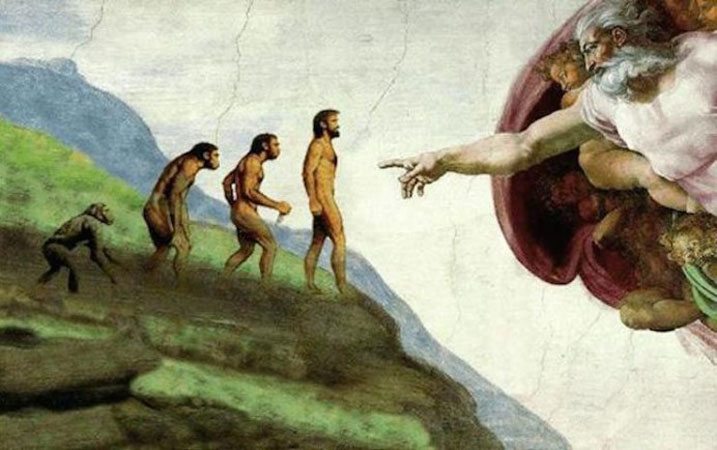
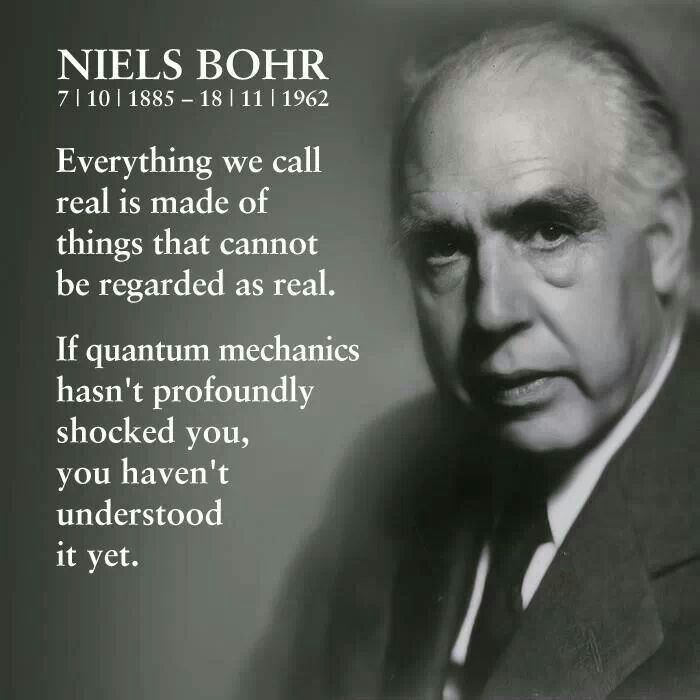
Pyre

Nothing More (feat. Alan Watts) – Pyre

When you opened your eyes on the world for the first time as a child,
How brilliant the colors were, what a jewel the sun was,
What marvel the stars, how incredibly alive the trees were…

And to love again and again, and have people to whom we are deeply attached go to sleep and never wake up…
And the laughter echoes only in one’s mind… but then the echo goes… the memory, the traces are all gone.

All your efforts, all your achievements, all your attainments turning into dust, Nothingness… what is the feeling? What happens to you?

The idea of God as the potter, the architect of the universe,
It makes you feel that life is, after all, important, that there is someone who cares.
It has meaning, it has sense, and you are valuable in the eyes of the Father.
But after a while it got embarrassing, the superstition, the myth, the absolutely unfounded idea… why does anybody believe that?

So you become an atheist, and then you feel terrible after that because you got rid of God…
But that means you got rid of yourself, you’re just nothing but a machine…
And your idea that you’re a machine is just a machine too… (a machine in the system)…

So if you think that that’s the way things are, you feel hostile to the world.
You feel that the world is a neurological trap into which you somehow got caught… trapped…
You run from the maternity ward to the crematorium and that’s it… that’s it…
So if you’re a smart kid you commit suicide.

Now I want to propose another idea altogether…
The real you, is not a puppet which life pushes around.
The real you, the real deep down you, is the whole universe.
You cannot confine yourself to what happens inside the skin.
Your skin doesn’t separate you from the world, it’s a bridge.
But just as a magnet polarizes itself in north and south, but its all one magnet,
So experience polarizes itself as “Self” and “Other”, but it’s all one.

What you call the “External world” is as much YOU as your own body.
Most people think that when they open their eyes and look around that what they are seeing is outside…
It seems, doesn’t it, that you are behind your eyes.
We haven’t realized that life and death, black and white, good and evil, being and non-being, come from the same center.

When you look for your own particularized center of being which is separate from everything else, you wont be able to find it.
The only way you’ll know it isn’t there is if you look hard enough, to find out that it isn’t there.
It isn’t there at all, there isn’t a separate you.
There are, in physical reality, no such things as separate events.

People can’t be talked out of illusions.
If a person believes that the earth is flat, you can’t talk him out of that, he knows that it’s flat.
He’ll go down to the window and see that its obvious, it looks flat.
So the only way to convince him that it isn’t is to say, “Well let’s go and find the edge”.


Songwriters: Daniel Oliver / Jonathan Taylor Hawkins / Mark Anthony Vollelunga / Alan Watts

Pyre lyrics © Downtown Music Publishing

On Science

Schrodinger_Equation


That of which tragedy died, the Socratism of morality, the dialectics, frugality, and cheerfulness of the theoretical man – might not this very Socratism be a sign of decline, of weariness, of infection, of an anarchical dissolution of the instincts? And the “Greek cheerfulness” of the later Greeks – merely the afterglow of the sunset? The Epicureans’ resolve against pessimism – a mere precaution of the afflicted? And science itself, our science – what is the significance of all science, viewed as a symptom of life? For what – worse yet, toward what – all science? Is the resolve to be so scientific about everything perhaps a fear of, an escape from, pessimism? A subtle last resort against – truth? Morally speaking, a sort of cowardice and falseness? Amorally speaking, a ruse?

It is still a metaphysical faith upon which our faith in science rests – even we seekers after knowledge today, we godless anti-metaphysicians still take our fire from the flame that was lit by a faith thousands of years old, that Christian faith which was also the faith of Plato, that God is the truth, that truth is divine. – But what if this should become more and more incredible, if nothing should prove to be divine anymore unless it were error, blindness, the lie – if God himself were to prove to be our most enduring lie?

No! Don’t come to me with science when I ask for the natural antagonist of the ascetic ideal, when I demand: “where is the opposing will expressing the opposing ideal?” Science is not nearly self-reliant enough to be that; it first requires in every respect an ideal of value, a value-creating power, in the service of which it could believe in itself – it never creates values. Its relation to the ascetic ideal is by no means essentially antagonistic; it might even be said to represent the driving force in the latter’s inner development. It opposes and fights, on closer inspection, not the ideal itself but only its exteriors, its guise and masquerade, its temporary dogmatic hardening and stiffening, and by denying what is exoteric in this ideal, it liberates what life is in it. This pair, science and the ascetic ideal, both rest on the same foundation – I have already indicated it: on the same overestimation of truth (more exactly: on the same belief that truth is inestimable and cannot be criticized). Therefore they are necessarily allies, so that if they are to be fought they can only be fought and called in question together. A depreciation of the ascetic ideal unavoidably involves a depreciation of science: one must keep one’s eyes and ears open to this fact.

Art, in which precisely the lie is sanctified and the will to deception has a good conscience, is much more fundamentally opposed to the ascetic ideal than is science: this was instinctively sensed by Plato, the greatest enemy of art Europe has yet produced. Plato versus Homer: that is the complete, the genuine antagonism – there the sincerest advocate of the “beyond”, the great slanderer of life; here the instinctive deifier, the golden nature. To place himself in the service of the ascetic ideal is therefore the most distinctive corruption of an artist that is at all possible.

With all these conceptions the steady and laborious process of science, which will one day celebrate its greatest triumph with a history of the genesis of thought, will in the end decisively have done; for the outcome of this history may well be the conclusion: That which we now call the world is the outcome of a host of errors and fantasies which have gradually arisen and grown entwined with one another in the course of the overall evolution of the organic being, and are now inherited by us as the accumulated treasure of the entire past – as treasure, for the value of our humanity depends upon it. Rigorous science is capable of detaching us from this ideational world only to a limited extent – and more is certainly not to be desired – as it is incapable of making any essential inroad into the power of habits of feeling acquired in primeval times: but it can, gradually and step by step, illuminate the history of the genesis of this world as idea – and, for brief periods at any rate, lift us up out of the entire proceeding. Perhaps we shall then realize that the ding an sich [thing in itself] is worthy of Homeric laughter: that it appeared to be so much, indeed everything, and is actually empty, that is to say empty of significance.

A ‘scientific’ interpretation of the world … might … be one of the most stupid of all possible interpretations of the world, meaning that it would be one of the poorest in meaning. This thought is intended for the ears and consciences of our mechanists who nowadays like to pass as philosophers and insist that mechanics is the doctrine of the first and last laws on which all existence must be based as on a ground floor. But an essentially mechanical world would be an essentially meaningless world. Assuming that one estimated the value of a piece of music according to how much of it can be counted, calculated, and expressed in formulas: how absurd would such a ‘scientific’ estimation of music be! Nothing, really nothing of what is ‘music’ in it!

– Friedrich Nietzsche


Today scientists describe the universe in terms of two basic partial theories – the general theory of relativity and quantum mechanics. They are the great intellectual achievements of the first half of this century. The general theory of relativity describes the force of gravity and the large-scale structure of the universe, that is, the structure on scales from only a few miles to as large as a million million million million (1 with twenty-four zeros after it) miles, the size of the observable universe. Quantum mechanics, on the other hand, deals with phenomena on extremely small scales, such as a millionth of a millionth of an inch. Unfortunately, however, these two theories are known to be inconsistent with each other – they cannot both be correct. One of the major endeavors in physics today, and the major theme of this book, is the search for a new theory that will incorporate them both – a quantum theory of gravity. We do not yet have such a theory, and we may still be a long way from having one, but we do already know many of the properties that it must have. And we shall see, in later chapters, that we already know a fair amount about the predictions a quantum theory of gravity must make.

Now, if you believe that the universe is not arbitrary, but is governed by definite laws, you ultimately have to combine the partial theories into a complete unified theory that will describe everything in the universe. But there is a fundamental paradox in the search for such a complete unified theory. The ideas about scientific theories outlined above assume we are rational beings who are free to observe the universe as we want and to draw logical deductions from what we see. In such a scheme it is reasonable to suppose that we might progress ever closer toward the laws that govern our universe. Yet if there really is a complete unified theory, it would also presumably determine our actions. And so the theory itself would determine the outcome of our search for it! And why should it determine that we come to the right conclusions from the evidence? Might it not equally well determine that we draw the wrong conclusion? Or no conclusion at all?

The only answer that I can give to this problem is based on Darwin’s principle of natural selection. The idea is that in any population of self-reproducing organisms, there will be variations in the genetic material and upbringing that different individuals have. These differences will mean that some individuals are better able than others to draw the right conclusions about the world around them and to act accordingly. These individuals will be more likely to survive and reproduce and so their pattern of behavior and thought will come to dominate. It has certainly been true in the past that what we call intelligence and scientific discovery has conveyed a survival advantage. It is not so clear that this is still the case: our scientific discoveries may well destroy us all, and even if they don’t, a complete unified theory may not make much difference to our chances of survival. However, provided the universe has evolved in a regular way, we might expect that the reasoning abilities that natural selection has given us would be valid also in our search for a complete unified theory, and so would not lead us to the wrong conclusions.

Because the partial theories that we already have are sufficient to make accurate predictions in all but the most extreme situations, the search for the ultimate theory of the universe seems difficult to justify on practical grounds. (It is worth noting, though, that similar arguments could have been used against both relativity and quantum mechanics, and these theories have given us both nuclear energy and the microelectronics revolution!) The discovery of a complete unified theory, therefore, may not aid the survival of our species. It may not even affect our life-style. But ever since the dawn of civilization, people have not been content to see events as unconnected and inexplicable. They have craved an understanding of the underlying order in the world. Today we still yearn to know why we are here and where we came from. Humanity’s deepest desire for knowledge is justification enough for our continuing quest. And our goal is nothing less than a complete description of the universe we live in.

– Stephen Hawking


Imagination is more important than knowledge. For knowledge is limited, whereas imagination embraces the entire world, stimulating progress, giving birth to evolution.

It is not so very important for a person to learn facts. … He can learn them from books. The value of an education in a liberal arts college is not the learning of many facts, but the training of the mind to think something that cannot be learned from textbooks.

It has become appallingly obvious that our technology has exceeded our humanity.

It is not enough that you should understand about applied science in order that your work may increase man’s blessings. Concern for the man himself and his fate must always form the chief interest of all technical endeavors; concern for the great unsolved problems of the organization of labor and the distribution of goods in order that the creations of our mind shall be a blessing and not a curse to mankind. Never forget this in the midst of your diagrams and equations.

All religions, arts and sciences are branches of the same tree. All these aspirations are directed toward ennobling man’s life, lifting it from the sphere of mere physical existence and leading the individual towards freedom.

The important thing is not to stop questioning. Curiosity has its own reason for existing. One cannot help but be in awe when he contemplates the mysteries of eternity, of life, of the marvelous structure of reality. It is enough if one tries merely to comprehend a little of this mystery every day.

– Albert Einstein


Two things fill the mind with ever new and increasing admiration and awe, the more often and steadily we reflect upon them: the starry heavens above me and the moral law within me. I do not seek or conjecture either of them as if they were veiled obscurities or extravagances beyond the horizon of my vision; I see them before me and connect them immediately with the consciousness of my existence.

– Immanuel Kant


We feel that even if all possible scientific questions be answered, the problems of life have still not been touched at all.

– Ludwig Wittgenstein

Zen & The Art of Postmodern Philosophy

zen and postmodern philosophy

Selected Passages


Nietzsche views Buddhism as a passive kind of nihilism, a sign of weakness. Contrary to Nietzsche’s opinion of Buddhism, the historical Buddha wanted to “steer clear of notions of permanent existence and nihilistic nonexistence.” Within the context of the historically later Mahayana Buddhist philosophy, classical Madhyamika thinkers, for instance, emphatically rejected a nihilistic interpretation of the doctrine of emptiness. In his Mulamadhyamakakarika, Nagarjuna writes, for instance, the following:

In truth, the cessation of a real existing entity is not possible. For, indeed, it is not possible to have the nature of both existence and non-existence at the same time.

This type of statement motivated some critical interpreters to label such assertions nihilistic…

In response to western critics like Nietzsche and others, Nishitani rejects such erroneous claims, and asserts that nihilism is “the single greatest issue facing philosophy and religion in our times.” Within our historical time and place, philosophy has failed to provide an adequate response to nihilism, a historical actuality. The failure of philosophy is connected with the death of the traditional notion of a transcendent deity that gave history its meaningful basis in eternity. Devoid of any transcendent foundation, history becomes an errant striving for a viable future and an unbearable burden upon the individual.

Nietzsche’s response to the loss of a transcendent God and ground of historical meaning was to attempt to transcend history in and through time rather than striving to go beyond time…

Nishitani does not think that Nietzsche’s vision is a useful solution because the “will to power” was conceived as a “thing” referred to as “will.” To remain an entity suggests for Nishitani that it did not lose its connotation as other for us and something of which could help us become aware of ourselves at a primary level.

Science is also part of the problem because “Modern science has completely transformed the old view of nature, resulting in the birth of various forms of atheism and the fomenting of an indifference to religion in general.” Moreover, science rejects the possibility of a personal God or a teleological view of the world, and conceives of nature as something indifferent and impersonal.

According to Nishitani, reality is not something that can be reduced: “It is both life and death, and at the same time is neither life nor death. It is what we have to call the nonduality of life and death.”

…

From Nishitani’s perspective, contemporary atheism goes further by adding a sense of the meaninglessness associated with a purely materialistic and mechanistic world and “an accompanying awareness of the nihility that lies concealed just beneath the surface of the world.” Within contemporary atheism, there is an awareness of nihility in which the existence of God is denied and replaced by nihility. How is it possible to break out of this fundamental crisis of human existence? It is possible to deepen our subjectivity and freedom by practicing zazen (seated meditation) which will help us to become aware of the reality of sunyata (emptiness)? … From Nishitani’s perspective, Zen Buddhism does not represent an eastern form of nihilism.

…

Nishitani refers to the elemental mode of being as possessing an illusory appearance: “That being is only being in unison with emptiness means that eing possesses at its ground the character of an ‘illusion,’ that everything that is, is in essence fleeting, illusory appearance.”

…

In his work entitled Human, All Too Human: A Book for Free Spirits, Nietzsche refers to the overcoming of metaphysics and links it with liberation. In his four-volume study of Nietzsche, Heidegger interprets Nietzsche’s call for an end of metaphysics in the following manner: “The end of metaphysics discloses itself as the collapse of the reign of the transcendent and the ‘ideal’ that sprang from it. But the end of metaphysics does not mean the cessation of history.” Heidegger’s study of Nietzsche depicts him as the last metaphysician. Rosen disputes this claim because Nietzsche view metaphysics as illusion, and “Metaphysics is rendered impossible by the irrational necessity of the Chaos that lies in the heart of all things.” Nonetheless, Nietzsche’s call for an end of the western metaphysical tradition creates room for the eventual development and retrieval of an analysis of Being from the perspective of Heidegger. In a lecture from his later period, Heidegger claims that “To think Being without beings means: to think Being without regard to metaphysics.” Within the space provided by Nietzsche’s termination of metaphysics, Heidegger anoints and appoints himself to be the initial philosopher after the end of metaphysics, which for some postmodern thinkers also means the end of philosophy or the conclusion of philosophy as it has been practiced in the West.

…

As part of his argument, Derrida states that not all languages are logocentric because Chinese or Japanese nonphonetic scripts are evidence of cultures developing alternatively to logocentrism.

…

D.T. Suzuki captures the spirit of play in Zen Buddhism when he writes, “For playfulness comes out of empty nothingness, and where there is something, this cannot take place. Zen comes out of absolute nothingness and knows how to be playful.” To be able to play is to be free, whereas to work is to be limited and confined. The free and voluntary nature of play is a source of joy and amusement. The spirit of play for Dogen represents his transcendence of earthly dichotomies and absolute freedom. In a spirit applicable to the Zen of Dogen, Huizinga writes, “Play lies outside te antithesis of wisdom and folly, equally outside those of truth and falsehood, good and evil.”

…

It is a time for thinkers to wander aimlessly, err, emphasize altarity, stress the importance of difference, communicate indirectly, and embrace irony.

…

Zen, from one perspective, represents the end of philosophy as the love of wisdom and the use of rational means to find the truth, and many postmodern thinkers share the Zen suspicion of metaphysics and representational thinking, even though some postmodernists might view Zen as an example of eastern logocentrism.

…

“[Writing] plays within the simulacrum.” In fact, other postmodernists agree with Derrida that we are located in the simulacrum, a copy of a copy according to Plato… The functioning of the simulacrum, a Dionysian machine, is simulation, a phantasm itself, that subverts the same or representative model and renders it false… “It harbors a positive power that deniesthe original and the copy, the model and the reproduction.” Such a philosophical position manifests an anti-Kantian perspective that is aconceptual and nonrepresentational.

…

Writing on behalf of all human beings, Deleuze concludes that “We have become simulacra.”

…

Although there are certainly many similarities between Buddhist philosophy and forms of postmodern philosophy as evident by our previous discussions, the differences are ultimately more significant. Many postmodern thinkers manifest evidence of moving in the direction of Zen, but there is always a point at which they become captives of their own radical skepticism and/or language games.

…

Proceeding in a direction where the postmodernists would never tread, Dogen claims that the body is both subject and object, and that the body and mind represent the entire world, which implies that we are never separated from the world.

…

Due the the absence of an end, a definite conclusion is impossible. The most that we can affirm is that a conclusion is inconclusive, and yet we must come to some sort of end. I tend to agree with Taylor who thinks that one must end where one finds oneself. It has not been the intention of this dialogue between representatives of the Zen philosophical tradition and postmodern thought to arrive at a final solution to any philosophical problems. The inconclusive end of this intercultural dialogue terminates with an interlude that anticipates a continuation of the dialogue at a future date. Unable to come to final conclusions or a definitive end, it seems advisable to simply sign out.

– Carl Olson

————————————–

“The Buddhist Dharma cannot be understood through rational and intellectual study.”

– Dogen

“The relationship of being and nothingness is thus one of mutual implication and intertwining; it is not predicated on antithesis or reciprocal exclusion.”

– Dallmayr