Is Religion a Universal in Human Culture or an Academic Invention?

People give names to persons and things, and then suppose that if they know the names, they know that which the names refer to.

– Keiji Nishitani
diogenes-photo

Brett Colasacco | Aeon Ideas

If anything seems self-evident in human culture, it’s the widespread presence of religion. People do ‘religious’ stuff all the time; a commitment to gods, myths and rituals has been present in all societies. These practices and beliefs are diverse, to be sure, from Aztec human sacrifice to Christian baptism, but they appear to share a common essence. So what could compel the late Jonathan Zittell Smith, arguably the most influential scholar of religion of the past half-century, to declare in his book Imagining Religion: From Babylon to Jonestown (1982) that ‘religion is solely the creation of the scholar’s study’, and that it has ‘no independent existence apart from the academy’?

Smith wanted to dislodge the assumption that the phenomenon of religion needs no definition. He showed that things appearing to us as religious says less about the ideas and practices themselves than it does about the framing concepts that we bring to their interpretation. Far from a universal phenomenon with a distinctive essence, the category of ‘religion’ emerges only through second-order acts of classification and comparison.

When Smith entered the field in the late 1960s, the academic study of religion was still quite young. In the United States, the discipline had been significantly shaped by the Romanian historian of religions Mircea Eliade, who, from 1957 until his death in 1986, taught at the University of Chicago Divinity School. There, Eliade trained a generation of scholars in the approach to religious studies that he had already developed in Europe.

What characterised religion, for Eliade, was ‘the sacred’ – the ultimate source of all reality. Simply put, the sacred was ‘the opposite of the profane’. Yet the sacred could ‘irrupt’ into profane existence in a number of predictable ways across archaic cultures and histories. Sky and earth deities were ubiquitous, for example; the Sun and Moon served as representations of rational power and cyclicality; certain stones were regarded as sacred; and water was seen as a source of potentiality and regeneration.

Eliade also developed the concepts of ‘sacred time’ and ‘sacred space’. According to Eliade, archaic man, or Homo religiosus, always told stories of what the gods did ‘in the beginning’. They consecrated time through repetitions of these cosmogonic myths, and dedicated sacred spaces according to their relationship to the ‘symbolism of the Centre’. This included the ‘sacred mountain’ or axis mundi – the archetypal point of intersection between the sacred and the profane – but also holy cities, palaces and temples. The exact myths, rituals and places were culturally and historically specific, of course, but Eliade saw them as examples of a universal pattern.

Smith was profoundly influenced by Eliade. As a graduate student, he set out to read nearly every work cited in the bibliographies of Eliade’s magnum opus, Patterns in Comparative Religion (1958). Smith’s move to join the faculty of the University of Chicago in 1968-69, he admitted, was motivated in part by a desire to work alongside his ‘master’. However, he soon began to set out his own intellectual agenda, which put him at odds with Eliade’s paradigm.

First, Smith challenged whether the Eliadean constructions of sacred time and sacred space were truly universal. He did not deny that these constructs mapped onto some archaic cultures quite well. But in his early essay ‘The Wobbling Pivot’ (1972), Smith noted that some cultures aspired to explode or escape from space and time, rather than revere or reify them. (Think of the various schools of Gnosticism that thrived during the first two centuries CE, which held that the material world was the work of a flawed, even malevolent spirit known as the demiurge, who was inferior to the true, hidden god.) Smith distinguished these ‘utopian’ patterns, which seek the sacred outside the prevailing natural and social order, from the ‘locative’ ones described by Eliade, which reinforce it – a move that undercut Eliade’s universalist vocabulary.

Second, Smith introduced a new self-awareness and humility to the study of religion. In the essay ‘Adde Parvum Parvo Magnus Acervus Erit’ (1971) – the title a quotation from Ovid, meaning ‘add a little to a little and there will be a great heap’ – Smith showed how comparisons of ‘religious’ data are laced with political and ideological values. What Smith identified as ‘Right-wing’ approaches, such as Eliade’s, strive for organic wholeness and unity; intertwined with this longing, he said, is a commitment to traditional social structures and authority. ‘Left-wing’ approaches, on the other hand, incline toward analysis and critique, which upset the established order and make possible alternative visions of society. By situating Eliade’s approach to religion on the conservative end of the spectrum, Smith did not necessarily intend to disparage it. Instead, he sought to distinguish these approaches so as to prevent scholars from carelessly combining them.

Behind Smith’s work was the motivating thesis that no theory or method for studying religion can be purely objective. Rather, the classifying devices we apply to decide whether something is ‘religious’ or not always rely on pre-existing norms. The selective taxonomy of ‘religious’ data from across cultures, histories and societies, Smith argued, is therefore a result of the scholar’s ‘imaginative acts of comparison and generalisation’. Where once we had the self-evident, universal phenomenon of religion, all that is left is a patchwork of particular beliefs, practices and experiences.

A vast number of traditions have existed over time that one could conceivably categorise as religions. But in order to decide one way or the other, an observer first has to formulate a definition according to which some traditions can be included and others excluded. As Smith wrote in the introduction to Imagining Religion: ‘while there is a staggering amount of data, of phenomena, of human experiences and expressions that might be characterised in one culture or another, by one criterion or another, as religious – there is no data for religion’. There might be evidence for various expressions of Hinduism, Judaism, Christianity, Islam and so forth. But these become ‘religions’ only through second-order, scholarly reflection. A scholar’s definition could even lead her to categorise some things as religions that are not conventionally thought of as such (Alcoholics Anonymous, for instance), while excluding others that are (certain strains of Buddhism).

Provocative and initially puzzling, Smith’s claim that religion ‘is created for the scholar’s analytic purposes’ is now widely accepted in the academy. Still, Smith reaffirmed his own critical appreciation for Eliade’s work in two of his last publications before his death in December 2017, and one of the final courses he taught at Chicago was a close reading of Patterns. Smith’s aim was never to exorcise Eliade from the field. His intention was instead to dispense with the temptations of self-evidence, to teach scholars of religion, whatever their preferred methods or political-ideological leanings, to be clear about the powers and limits of the decisions that they need to make. The student of religion, Smith said, must be self-conscious above all: ‘Indeed, this self-consciousness constitutes his primary expertise, his foremost object of study.’Aeon counter – do not remove

Brett Colasacco

This article was originally published at Aeon and has been republished under Creative Commons.
Pragmatism & Postmodernism

william-james

To my best belief: just what is the pragmatic theory of truth?


Cheryl Misak | Aeon Ideas

What is it for something to be true? One might think that the answer is obvious. A true belief gets reality right: our words correspond to objects and relations in the world. But making sense of that idea involves one in ever more difficult workarounds to intractable problems. For instance, how do we account for the statement ‘It did not rain in Toronto on 20 May 2018’? There don’t seem to be negative facts in the world that might correspond to the belief. What about ‘Every human is mortal’? There are more humans – past, present and future – than individual people in the world. (That is, a generalisation like ‘All Fs’ goes beyond the existing world of Fs, because ‘All Fs’ stretches into the future.) What about ‘Torture is wrong’? What are the objects in the world that might correspond to that? And what good is it explaining truth in terms of independently existing objects and facts, since we have access only to our interpretations of them?

Pragmatism can help us with some of these issues. The 19th-century American philosopher Charles Peirce, one of the founders of pragmatism, explained the core of this tradition beautifully: ‘We must not begin by talking of pure ideas, – vagabond thoughts that tramp the public roads without any human habitation, – but must begin with men and their conversation.’ Truth is a property of our beliefs. It is what we aim at, and is essentially connected to our practices of enquiry, action and evaluation. Truth, in other words, is the best that we could do.

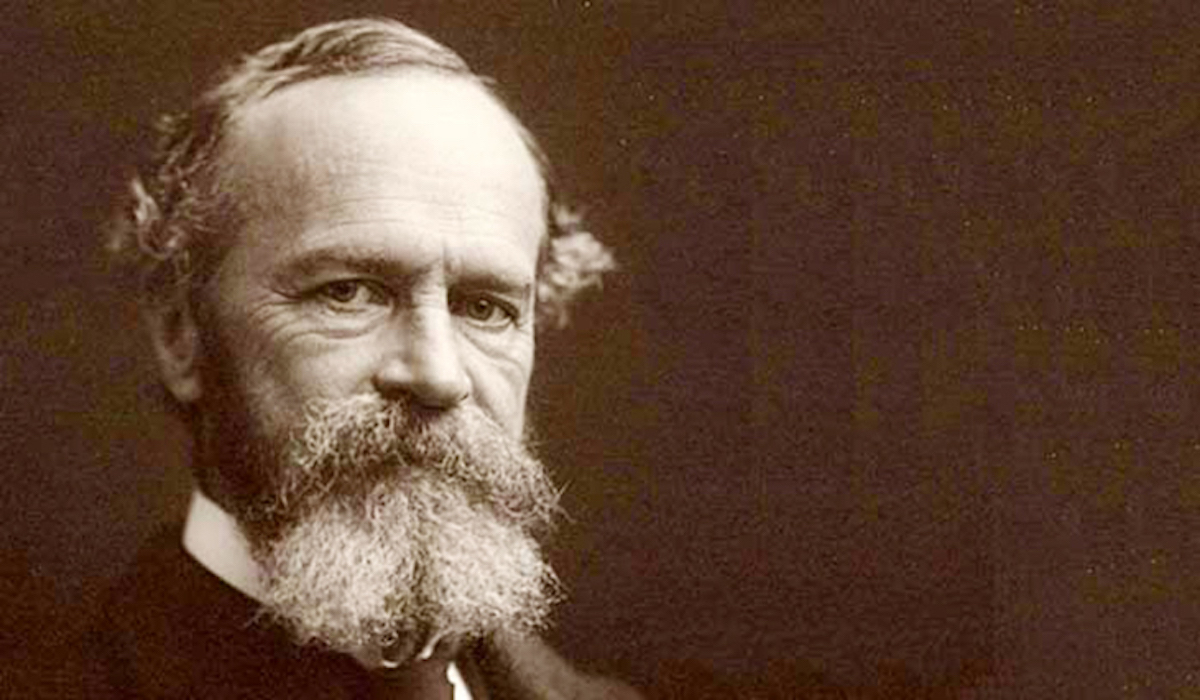
The pragmatic theory of truth arose in Cambridge, Massachusetts in the 1870s, in a discussion group that included Peirce and William James. They called themselves the Metaphysical Club, with intentional irony. Though they shared the same broad outlook on truth, there was immediate disagreement about how to unpack the idea of the ‘best belief’. The debate stemmed from the different temperaments of Peirce and James.

Philosophy, James said, ‘is at once the most sublime and the most trivial of human pursuits. It works in the minutest crannies and it opens out the widest vistas.’ He was more a vista than a crannies man, dead set against technical philosophy. At the beginning of his book Pragmatism (1907), he said: ‘the philosophy which is so important to each of us is not a technical matter; it is our more or less dumb sense of what life honestly and deeply means.’ He wanted to write accessible philosophy for the public, and did so admirably. He became the most famous living academic in the United States.

The version of the pragmatist theory of truth made famous (or perhaps infamous) by James held that ‘Any idea upon which we can ride … any idea that will carry us prosperously from any one part of our experience to any other part, linking things satisfactorily, working securely, simplifying, saving labour, is … true INSTRUMENTALLY.’

‘Satisfactorily’ for James meant ‘more satisfactorily to ourselves, and individuals will emphasise their points of satisfaction differently. To a certain degree, therefore, everything here is plastic.’ He argued that if the available evidence underdetermines a matter, and if there are non-epistemic reasons for believing something (my people have always believed it, believing it would make me happier), then it is rational to believe it. He argued that if a belief in God has a positive impact on someone’s life, then it is true for that person. If it does not have a good impact on someone else’s life, it is not true for them.

Peirce, a crackerjack logician, was perfectly happy working in the crannies as well as opening out the vistas. He wrote much, but published little. A cantankerous man, Peirce described the difference in personality with his friend James thus: ‘He so concrete, so living; I a mere table of contents, so abstract, a very snarl of twine.’

Peirce said that James’s version of the pragmatic theory of truth was ‘a very exaggerated utterance, such as injures a serious man very much’. It amounted to: ‘Oh, I could not believe so-and-so, because I should be wretched if I did.’ Peirce’s worries, in these days of fake news, are more pressing than ever.

On Peirce’s account, a belief is true if it would be ‘indefeasible’ or would not in the end be defeated by reasons, argument, evidence and the actions that ensue from it. A true belief is the belief that we would come to, were we to enquire as far as we could on a matter. He added an important rider: a true belief must be put in place in a manner ‘not extraneous to the facts’. We cannot believe something because we would like it to be true. The brute impinging of experience cannot be ignored.

The disagreement continues to this day. James influenced John Dewey (who, when a student at Johns Hopkins, avoided Peirce and his technical philosophy like the plague) and later Richard Rorty. Dewey argued that truth (although he tended to stay away from the word) is nothing more than a resolution of a problematic situation. Rorty, at his most extreme, held that truth is nothing more than what our peers will let us get away with saying. This radically subjective or plastic theory of truth is what is usually thought of as pragmatism.

Peirce, however, managed to influence a few people himself, despite being virtually unknown in his lifetime. One was the Harvard logician and Kant scholar C I Lewis. He argued for a position remarkably similar to what his student W V O Quine would take over (and fail to acknowledge as Lewis’s). Reality cannot be ‘alien’, wrote Lewis – ‘the only reality there for us is one delimited in concepts of the results of our own ways of acting’. We have something given to us in brute experience, which we then interpret. With all pragmatists, Lewis was set against conceptions of truth in which ‘the mind approaches the flux of immediacy with some godlike foreknowledge of principles’. There is no ‘natural light’, no ‘self-illuminating propositions’, no ‘innate ideas’ from which other certainties can be deduced. Our body of knowledge is a pyramid, with the most general beliefs, such as the laws of logic, at the top, and the least general, such as ‘all swans are birds’, at the bottom. When faced with recalcitrant experience, we make adjustments in this complex system of interrelated concepts. ‘The higher up a concept stands in our pyramid, the more reluctant we are to disturb it, because the more radical and far-reaching the results will be…’ But all beliefs are fallible, and we can indeed disturb any of them. A true belief would be one that survives this process of enquiry.

Lewis saw that the pragmatist theory of truth deals nicely with those beliefs that the correspondence theory stumbles over. For instance, there is no automatic bar to ethical beliefs being true. Beliefs about what is right and wrong might well be evaluable in ways similar to how other kinds of beliefs are evaluable – in terms of whether they fit with experience and survive scrutiny.Aeon counter – do not remove

Cheryl Misak

This article was originally published at Aeon and has been republished under Creative Commons.

Emptiness, form, and Dzogchen ethics

For a hundred years, the West has wrestled with the problem of ethical nihilism. God’s commands once provided a firm foundation for morality; but then he died. All attempts to find an alternative foundation have failed. Why, then, should we be moral? How can we be sure what is moral? No one has satisfactory answers, despite many ingenious attempts by brilliant philosophers…

Read the rest at Vividness.

What did Max Weber mean by the ‘Spirit’ of Capitalism?

ludwigshafen

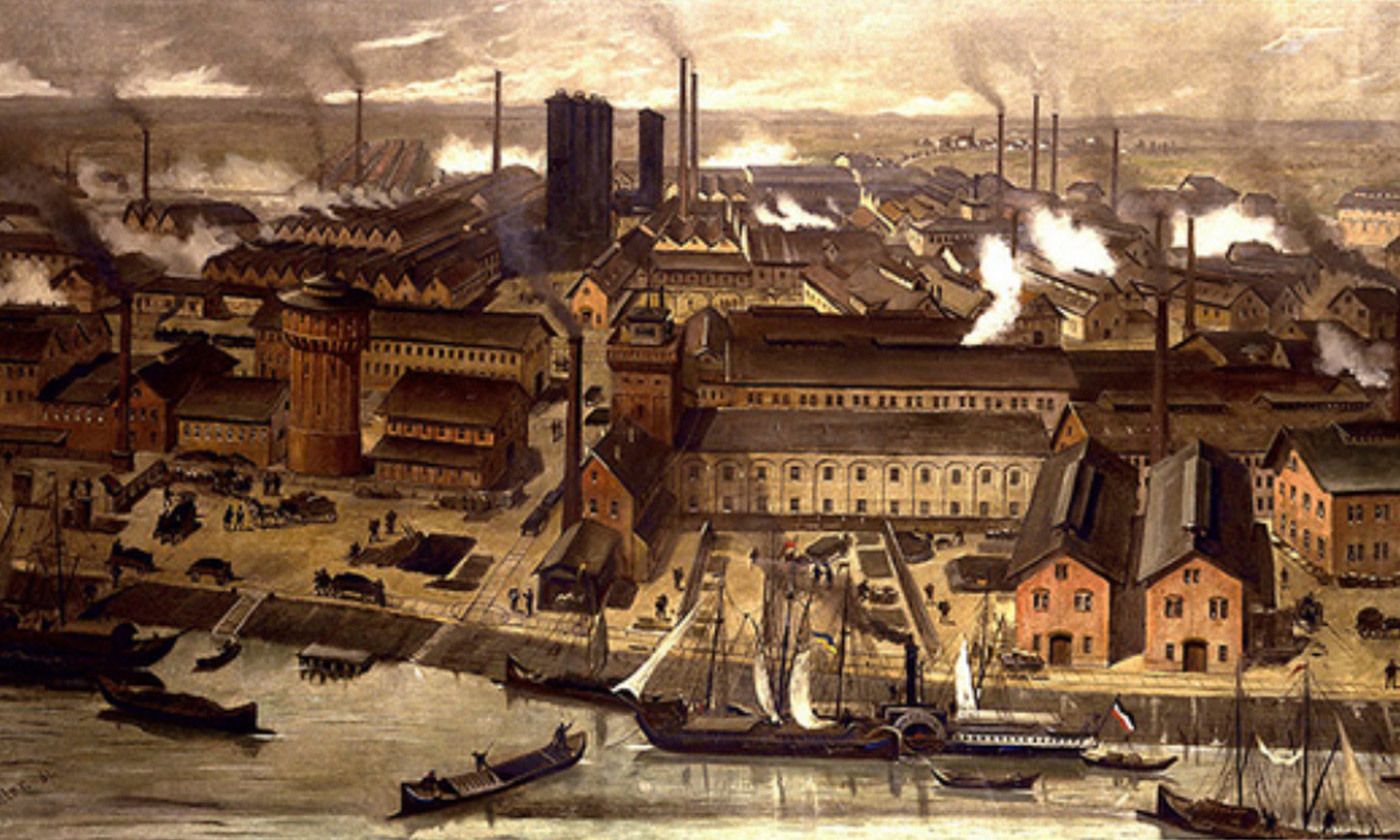
The BASF factory at Ludwigshafen, Germany, pictured on a postcard in 1881. Courtesy Wikipedia

Peter Ghosh | Aeon Ideas

Max Weber’s famous text The Protestant Ethic and the Spirit of Capitalism (1905) is surely one of the most misunderstood of all the canonical works regularly taught, mangled and revered in universities across the globe. This is not to say that teachers and students are stupid, but that this is an exceptionally compact text that ranges across a very broad subject area, written by an out-and-out intellectual at the top of his game. He would have been dumb­founded to find that it was being used as an elementary introduction to sociology for undergraduate students, or even schoolchildren.

We use the word ‘capitalism’ today as if its meaning were self-evident, or else as if it came from Marx, but this casualness must be set aside. ‘Capitalism’ was Weber’s own word and he defined it as he saw fit. Its most general meaning was quite simply modernity itself: capitalism was ‘the most fateful power in our modern life’. More specifically, it controlled and generated ‘modern Kultur’, the code of values by which people lived in the 20th-century West, and now live, we may add, in much of the 21st-century globe. So the ‘spirit’ of capitalism is also an ‘ethic’, though no doubt the title would have sounded a bit flat if it had been called The Protestant Ethic and the Ethic of Capitalism.

This modern ‘ethic’ or code of values was unlike any other that had gone before. Weber supposed that all previous ethics – that is, socially accepted codes of behaviour rather than the more abstract propositions made by theologians and philosophers – were religious. Religions supplied clear messages about how to behave in society in straightforward human terms, messages that were taken to be moral absolutes binding on all people. In the West this meant Christianity, and its most important social and ethical prescription came out of the Bible: ‘Love thy neighbour.’ Weber was not against love, but his idea of love was a private one – a realm of intimacy and sexuality. As a guide to social behaviour in public places ‘love thy neighbour’ was obviously nonsense, and this was a principal reason why the claims of churches to speak to modern society in authentically religious terms were marginal. He would not have been surprised at the long innings enjoyed by the slogan ‘God is love’ in the 20th-century West – its career was already launched in his own day – nor that its social consequences should have been so limited.

The ethic or code that dominated public life in the modern world was very different. Above all it was impersonal rather than personal: by Weber’s day, agreement on what was right and wrong for the individual was breaking down. The truths of religion – the basis of ethics – were now contested, and other time-honoured norms – such as those pertaining to sexuality, marriage and beauty – were also breaking down. (Here is a blast from the past: who today would think to uphold a binding idea of beauty?) Values were increasingly the property of the individual, not society. So instead of humanly warm contact, based on a shared, intuitively obvious understanding of right and wrong, public behaviour was cool, reserved, hard and sober, governed by strict personal self-control. Correct behaviour lay in the observance of correct procedures. Most obviously, it obeyed the letter of the law (for who could say what its spirit was?) and it was rational. It was logical, consistent, and coherent; or else it obeyed unquestioned modern realities such as the power of numbers, market forces and technology.

There was another kind of disintegration besides that of traditional ethics. The proliferation of knowledge and reflection on knowledge had made it impossible for any one person to know and survey it all. In a world which could not be grasped as a whole, and where there were no universally shared values, most people clung to the particular niche to which they were most committed: their job or profession. They treated their work as a post-religious calling, ‘an absolute end in itself’, and if the modern ‘ethic’ or ‘spirit’ had an ultimate found­ation, this was it. One of the most widespread clichés about Weber’s thought is to say that he preached a work ethic. This is a mistake. He personally saw no particular virtue in sweat – he thought his best ideas came to him when relaxing on a sofa with a cigar – and had he known he would be misunder­stood in this way, he would have pointed out that a capacity for hard work was something that did not dist­inguish the modern West from previous soc­ieties and their value systems. However, the idea that people were being ever more defined by the blinkered focus of their employment was one he regarded as profoundly modern and characteristic.

The blinkered pro­fessional ethic was common to entrepreneurs and an increasingly high-wage, skilled labour force, and it was this combination that produced a situation where the ‘highest good’ was the making of money and ever more money, without any limit. This is what is most readily recognisable as the ‘spirit’ of capitalism, but it should be stressed that it was not a simple ethic of greed which, as Weber recognised, was age-old and eternal. In fact there are two sets of ideas here, though they overlap. There is one about potentially universal rational pro­cedures – specialisation, logic, and formally consistent behaviour – and another that is closer to the modern economy, of which the central part is the professional ethic. The modern situation was the product of narrow-minded adhesion to one’s particular function under a set of conditions where the attempt to understand modernity as a whole had been abandoned by most people. As a result they were not in control of their own destiny, but were governed by the set of rational and impersonal pro­cedures which he likened to an iron cage, or ‘steel housing’. Given its rational and impersonal foundations, the housing fell far short of any human ideal of warmth, spontaneity or breadth of outlook; yet rationality, technology and legality also produced material goods for mass consumption in unprecedented amounts. For this reason, though they could always do so if they chose to, people were unlikely to leave the housing ‘until the last hundredweight of fossil fuel is burned up’.

It is an extremely powerful analysis, which tells us a great deal about the 20th-century West and a set of Western ideas and priorities that the rest of the world has been increasingly happy to take up since 1945. It derives its power not simply from what it says, but because Weber sought to place under­standing before judgment, and to see the world as a whole. If we wish to go beyond him, we must do the same.Aeon counter – do not remove

Peter Ghosh

This article was originally published at Aeon and has been republished under Creative Commons.
Is Philosophy Absurd? Only When You’re Doing it Right

diogenes

Helena de Bres | Aeon Ideas

Last semester, halfway through a meeting of my ‘Meaning of Life’ seminar, I found myself lying on a window seat along the eastern wall of the classroom. I was scheduled for spinal surgery in a few months, and sitting and standing were tough. I needed a break.

‘It was the Romantics,’ I intoned, adjusting the pillow under my head, ‘who first argued that living “authentically” is an end in itself. For some, authenticity overtook morality as the ultimate ideal. As Ralph Waldo Emerson put it [here I began to gesticulate energetically]: The only right is what is after my constitution, the only wrong what is against it!’ I whacked my elbow involuntarily against the wall. ‘Nothing is at last sacred but the integrity of your own mind!’

I glanced up at my students and faltered. It had occurred to me, and perhaps to them, that I was being absurd.

I had this thought, and then, because overthinking is my profession, I analysed it. Why absurd, exactly? On one account, absurdity springs from a noticeable gap between expectation and reality, aim and outcome, or means and end. Sometimes the discrepancy is amusing. Imagine an artist-in-residence’s end-of-year exhibition involving only a tiny makeshift diorama depicting the artist sleeping. Other times, the discrepancy is terrifying, as when a darling of the fossil-fuel industry is appointed to lead the Environmental Protection Agency. In my case, the mismatch was between the command and authority that a professor is expected to display and the fact that I was lying below eye level on a puffy log-shaped pillow.

My horizontal lecture wouldn’t have been quite as absurd, though, if I were, say, an economist or historian. There’s something especially absurd about philosophers, supine or not. The explanation for this might lie in the best-known philosophical account of absurdity, offered by Thomas Nagel in 1971. Nagel argued that when we sense that something – or everything – in life is absurd, we’re experiencing the clash of two perspectives from which to view the world. One is that of the engaged agent, seeing her life from the inside, with her heart vibrating in her chest. The other is that of the detached spectator, watching human activity coolly, as if from the distance of another planet. Nagel notes that it’s our nature to flip between these points of view. One moment we’re fully caught up in our mushroom-cultivation class, our infatuation with our sister’s husband or our intractable power struggle with Terri in accounting. The next moment, our mental tectonics shift and we see ourselves from an emotional remove, like a spirit hovering over its own body. It becomes evident to us that, ‘from the point of view of the Universe’, to use the 19th-century utilitarian Henry Sidgwick’s phrase, none of these things matter.

Our sense of absurdity kicks in when we snap between these two perspectives rapidly, in a kind of duck-rabbit movement of the soul. The sense of absurdity depends on this instability. If we could retain the internal perspective forever, we’d never experience the shock of doubt about whether what we were doing was ultimately worthwhile or made any kind of sense. If, alternatively, we could permanently view all human affairs, our own included, from the perspective of the Universe, we’d never find ourselves eagerly attempting to adhere fungi to a damp log. We’d be full-time ascetics, to whom nothing human mattered at all, people who couldn’t be caught red-handed caring about something small.

Though Nagel says that we all adopt both the internal and external perspectives on our lives, some people clearly identify more with one than the other. And some of these people cluster in professions where one perspective is disproportionately valued. Academic philosophy is one such profession. When people say: ‘Let’s be philosophical about this,’ they mean: ‘Let’s calm down, step back, detach.’ The philosopher, in the public imagination, is set apart from the mundane concerns and fiery attachments that govern the rest of humanity. He or she takes the external perspective on pretty much everything. When Søren Kierkegaard collapsed at a party and people tried to help him up, he allegedly said: ‘Oh, leave it. Let the maid sweep it up in the morning.’

If this image is accurate, and if Nagel’s account is right, philosophers, parked forever in only one of Nagel’s perspectives, will escape the absurdity of the human condition. We philosophers, however, are among the most absurd people I’ve ever met. The reason for this has a whiff of paradox. Abstraction and detachment might be a philosopher’s stock-in-trade, but philosophers are often fiercely attached to those very things: passionate about impassion, abstract in the most concrete of ways. They spend years working obsessively on papers with titles such as ‘Nonreducible Supervenient Causation’ and then have public brawls about them at conferences. This is part of philosophy’s charm for me. There’s something especially absurd, yes, but also endearing, about people who are so serious about their core life endeavour that they regularly forget its ridiculous aspects, even though the endeavour itself is meant to serve as a perpetual reminder.

So I was both abstract and fervent down there on my log pillow. But what does this really have to do with the absurd? Many of us associate the concept not with simple discrepancy, nor with Nagel’s more complex perspectival clash, but with futility. A nice illustration of this is the video of a Japanese game show named ‘Slippery Stairs’ that went viral last year. The show requires its contestants – barefoot, in skin-tight onesies – to scramble to the top of a staircase coated with what looks like tepid ice. The video portrays six people painstakingly, desperately, attempting to do this, and repeatedly sliding dramatically back down the stairs, often taking the other five with them. ‘Life,’ someone wrote in the comments.

What attitude should we take to our situation or ourselves, once we recognise that they’re absurd, in any of these ways? One option is to shake our noble fists at the cosmos, cursing its silent coldness and slippery stairs. This stance appeals to a certain kind of guy in college. But some of us – women, the disabled, ethnic and gender minorities, etc – got the memo pretty early on that we weren’t plausibly the centre of the Universe. So when our adolescent attention was directed to life’s disappointments and farcicality, we were more inclined to shrug and get back to what we were doing than get theatrical about it.

Nagel recommends something like this approach. He writes: ‘If sub specie aeternitatis [viewed in relation to the eternal; in a universal perspective] there is no reason to believe that anything matters, then that doesn’t matter either, and we can approach our absurd lives with irony instead of heroism or despair.’ But irony might be less attractive in 2018 than it was in 1971. There’s something about seeing everything you value under constant attack that increases your sense that some things do matter.

My preferred take is this. The absurdity of our situation is only troubling if it implies that nothing really matters and that all human pursuits are inherently meaningless. But none of the accounts of absurdity canvassed above have that implication. If you love what you’re doing, and if what you love has genuine human-sized value (roughly, the moral philosopher Susan Wolf’s definition of meaningfulness), your life can have depth and purpose even if it involves incongruity and failure, and even if the Universe cares naught for it, or for you. Talking seriously about philosophy with teenagers, while your back collapses, their hearts break, their parents struggle, and the country falls apart – you could call it absurd. But you could also look up from your window seat, catch yourself in the thick of it, and, after a twinge of embarrassment, call it beautiful. Then get back to work.Aeon counter – do not remove

Helena de Bres

This article was originally published at Aeon and has been republished under Creative Commons.

What is Christianity?

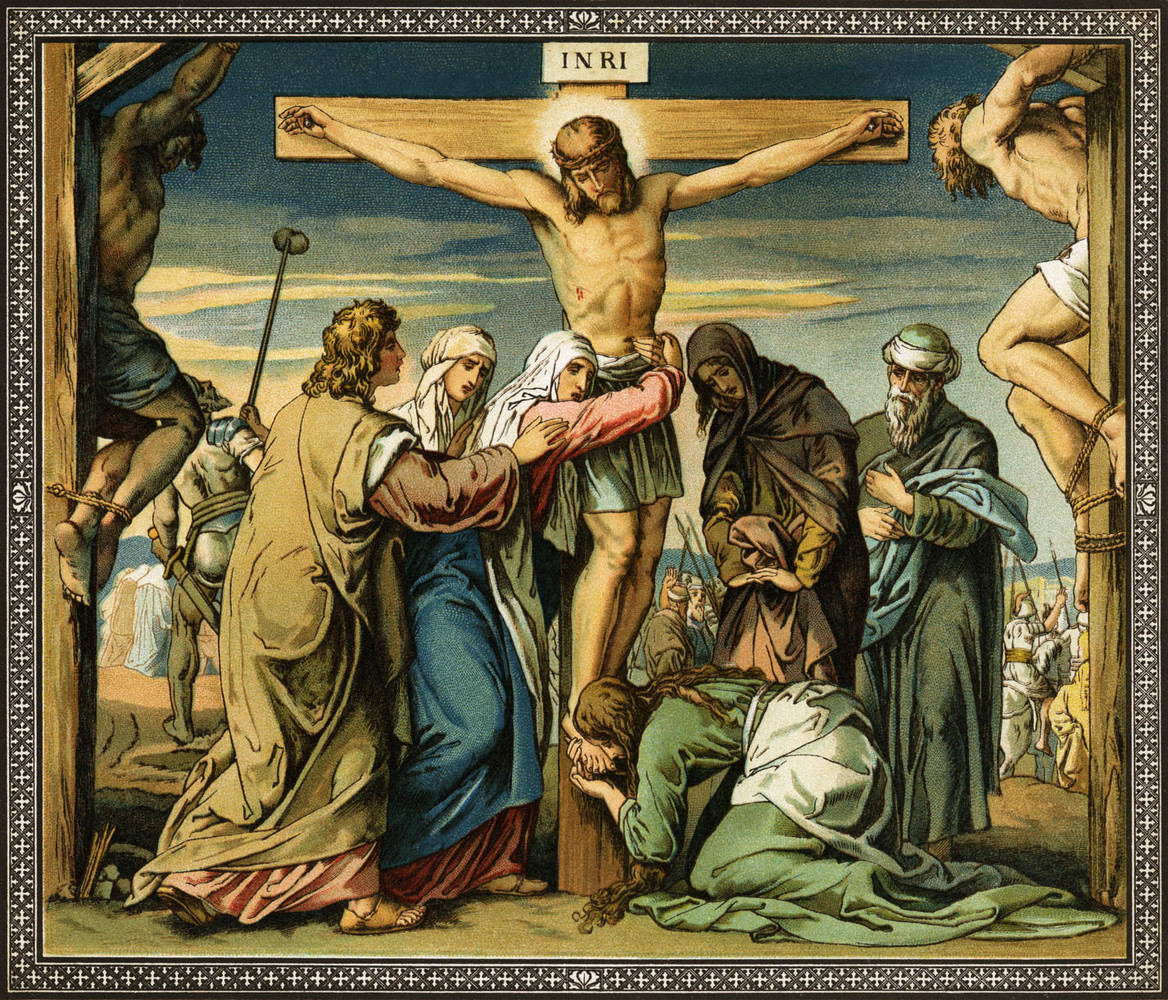
This is an excellent discussion between Sam Harris and Bart Ehrman about Christianity and Christian history and theology. There is a remarkable resemblance between Ehrman’s life and periods of my own life in which I pursued truth and my faith was gradually lost. The problems with interpreting the scriptures too literally are exemplified. Anybody that honestly believes herself to be a Christian should cautiously examine the things discussed here. Sapere aude!

inri

Waking Up Podcast with Sam Harris #125: What is Christianity?


In this episode of the Waking Up podcast, Sam Harris speaks to Bart Ehrman about his experience of being a born-again Christian, his academic training in New Testament scholarship, his loss of faith, the most convincing argument in defense of Christianity, the status of miracles, the composition of the New Testament, the resurrection of Jesus, the nature of heaven and hell, the book of Revelation, the End Times, self-contradictions in the Bible, the concept of a messiah, whether Jesus actually existed, Christianity as a cult of human sacrifice, the conversion of Constantine, and other topics.

Bart D. Ehrman is the author or editor of more than thirty books, including the New York Times bestsellers Misquoting Jesus and How Jesus Became God. Ehrman is a professor of religious studies at the University of North Carolina, Chapel Hill, and a leading authority on the New Testament and the history of early Christianity. He has been featured in Time, The New Yorker, and The Washington Post, and has appeared on NBC, CNN, The Daily Show with Jon Stewart, The History Channel, National Geographic, BBC, major NPR shows, and other top print and broadcast media outlets. His most recent book is The Triumph of Christianity.

Twitter: @BartEhrman

Philosophers Should be Keener to Talk about the Meaning of Life

gachet-van-gogh

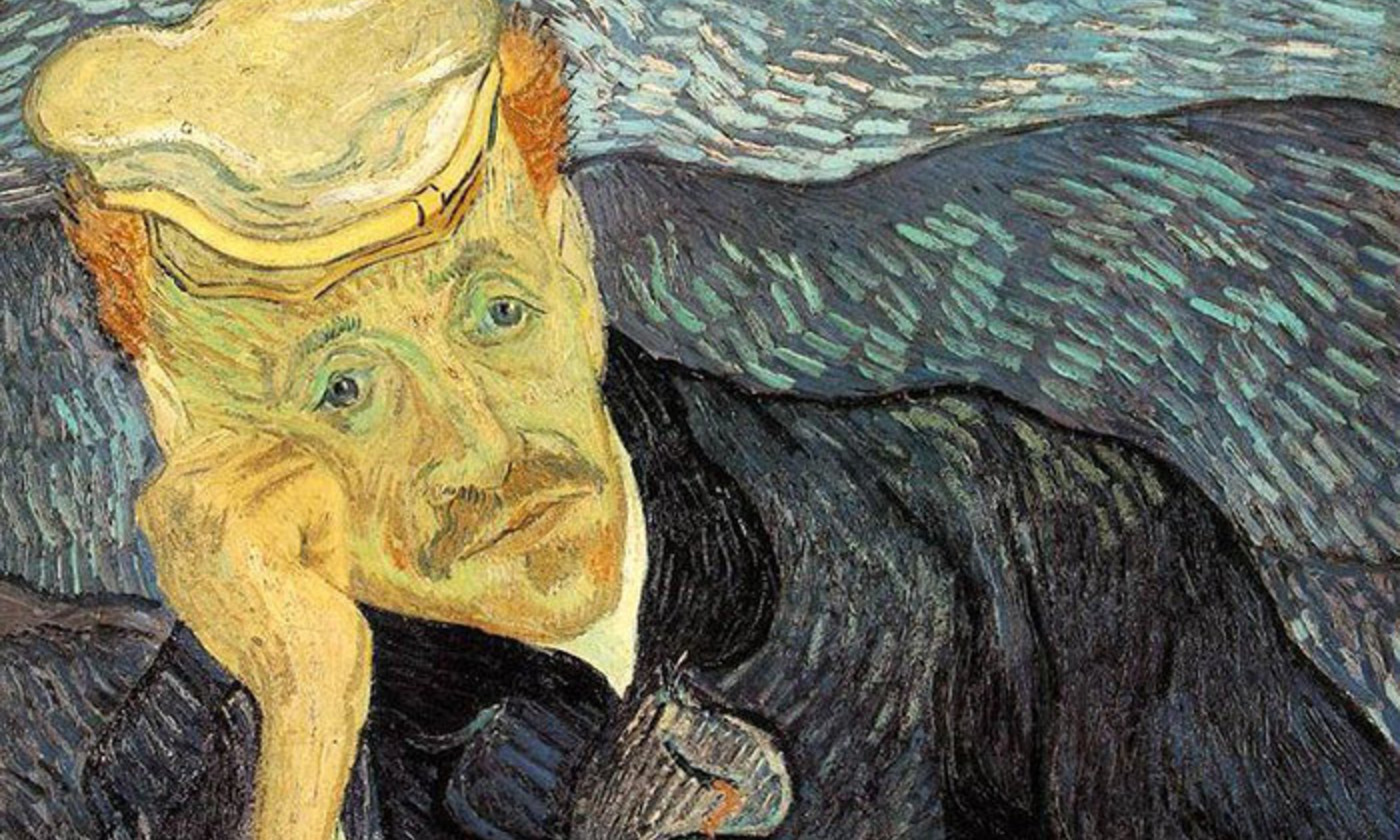
Detail from Portrait of Dr Gachet (1890), by Vincent van Gogh. Private collection. Photo courtesy Wikipedia

Kieran Setiya | Aeon Ideas

Philosophers ponder the meaning of life. At least, that is the stereotype. When I risk admitting to a stranger that I teach philosophy for a living and face the question ‘What is the meaning of life?’, I have a ready response: we figured that out in the 1980s, but we have to keep it secret or we’d be out of a job; I could tell you, but then I’d have to kill you. In fact, professional philosophers rarely ask the question and, when they do, they often dismiss it as nonsense.

The phrase itself is of relatively recent origin. Its first use in English is in Thomas Carlyle’s parodic novel Sartor Resartus (1836), where it appears in the mouth of a comic German philosopher, Diogenes Teufelsdröckh (‘God-born devil-dung’), noted for his treatise on clothes. The question of life’s meaning remains both easy to mock and paradigmatically obscure.

What is the meaning of ‘meaning’ in ‘the meaning of life’? We talk about the meaning of words, or linguistic meaning, the meaning of an utterance or of writing in a book. When we ask if human life has meaning, are we asking whether it has meaning in this semantic sense? Could human history be a sentence in some cosmic language? The answer is that it could, in principle, but that this isn’t what we want when we search for the meaning of life. If we are unwitting ink in some alien script, it would be interesting to know what we spell out, but the answer would not have authority over us, as befits the meaning of life.

‘Meaning’ could mean purpose or function in a larger system. Could human life play that role? Again, it could, but yet again, this seems irrelevant. In Douglas Adams’s Hitchhiker’s books, the Earth is part of a galactic computer, designed (ironically) to reveal the meaning of life. Whatever that meaning might be, our role in the computer program is not it. To discover that we are cogs in some cosmic machine is not to discover the meaning of life. It leaves our existential maladies untouched.

Seeing no other way to interpret the question, many philosophers conclude that the question is confused. If they go on to talk about meaning in life, they have in mind the meaning of individual lives, the question of whether this life or that life is meaningful for the person who is living it. But the meaning of life is not an individual possession. If life has meaning, it has a meaning that applies to us all. Does this idea make sense?

I think it does. We can make progress if we turn from the words that make up the question – ‘meaning’ in particular – to the contexts in which we feel compelled to ask it. We raise the question ‘Does life have meaning?’ in times of anguish, or despair, or emptiness. We ask it when we confront mortality and loss, the pervasiveness of suffering and injustice, the facts of life from which we recoil and which we cannot accept. Life seems profoundly flawed. Is there meaning to it all? Historically, the question of life’s meaning comes into focus through the anxiety of early existentialist philosophers, such as Søren Kierkegaard and Friedrich Nietzsche, who worried that it has none.

On the interpretation that this context suggests, the meaning of life would be a truth about us and about the world that makes sense of the worst. It would be something we could know about life, the Universe and everything, that should reconcile us to mortality and loss, suffering and injustice. Knowledge of this truth would make it irrational not to affirm life as it is, not to accept things as they are. It would show that despair, or angst, is a mistake.

The idea that life has meaning is the idea that there is a truth of this extraordinary kind. Whether or not there is, the suggestion is not nonsense. It is a hope that animates the great religions. Whatever else they do, religions offer metaphysical pictures whose acceptance is meant to bestow salvation, to reconcile us to the seeming faults of life. Or if they do not supply the truth, if they do not claim to convey the meaning of life, they offer the conviction that there is one, however hard to grasp or articulate it might be.

The meaning of life might be theistic, involving God or gods, or it might be non-theistic, as in one form of Buddhism. What distinguishes Buddhist meditation from mindfulness-based stress-reduction is the aim of ending suffering through metaphysical revelation. The emotional solace of Buddhism is meant to derive from insight into how things are – in particular, into the non-existence of the self – an insight that should move anyone. To come to terms with life through meditation for serenity, or through talk therapy, is not to discover the meaning of life, since it is not to discover any such truth.

Albert Einstein wrote that to know an answer to the question ‘What is the meaning of human life?’ means to be religious. But there is in principle room for non-religious accounts of meaning, ones that do not appeal to anything beyond the given world or the world revealed to us by science. Religion has no monopoly on meaning, even if it is hard to see how a non-transcendent truth could meet our definition: to know the meaning of life is to be reconciled to all that is wrong with the world. At the same time, it is hard to prove a negative, to show that nothing short of religion could play this role.

Philosophers are prone to see confusion in the question ‘What is the meaning of life?’ They have replaced it with questions about meaningful lives. But the search for life’s meaning will not go away and it is perfectly intelligible. I cannot tell you the meaning of life or give assurance that it has one. But I can say that it is not a mistake to ask the question. Does life have meaning? The answer is: it might.Aeon counter – do not remove

Kieran Setiya

This article was originally published at Aeon and has been republished under Creative Commons.
Why Our Declining Biblical Literacy Matters

File 20180412 592 sy3x6n.jpg?ixlib=rb 1.1

Songwriters such as Nick Cave (pictured) and the late Yolngu star Gurrumul have often drawn on the scriptures in their work.
Paul Bergen/EPA


Meredith Lake, University of Sydney

Biblical literacy is likely lower in Australia today than at any point since the convict era. General levels of familiarity with the Christian scriptures are difficult to plot precisely, but studies of Bible reading habits, and data on various forms of Christian socialisation, indicate a significant decline in Australians’ exposure to the Bible over the last half century.

A 1960 study found that nine in ten Australians had a Bible at home. It was rivalled only by a cookery book and a dictionary, and far outstripped works by Shakespeare. Sixty one per cent of Bible-owning Australians picked it up at least once a year. Thirty eight per cent had read it within the previous two weeks. (Mind you, it seems that apart from the most regular churchgoers, most people read the Bible in a cursory manner if at all.)


Read more: Jesus wasn’t white: he was a brown-skinned, Middle Eastern Jew. Here’s why that matters


A 2002 survey found that 29% of Australian adults still read the Bible at least once a year, with 8% reading it frequently. In 2010, around 10% of Australian secondary students read the Bible weekly or more, and a further 15 to 20% browsed it occasionally.

Overall, though, since 1960 the proportion of annual Bible readers has dropped by half, and regular readers by three-quarters. In less than two generations, the proportion of Australians who never pick up a Bible for themselves has leapt to seven out of ten. The rising use of online Bibles and Bible apps may modify this picture, but 2013 data indicates that Australians read less of the Bible online than their counterparts in the UK or the US.

A working knowledge of the Bible, and a critical skill in interpreting it, remain extremely useful in a secular society.
shutterstock

In parallel with declining Bible reading, fewer Australians identify as Christian at the census. Similarly, the proportion of people attending church at least once a month has fallen from 36% in 1972 to 15% in 2014. So fewer Australians have been exposed to the public reading and preaching of the Bible, and to its inculcation through liturgy and hymnody.


Read more: Friday essay: who was Mary Magdalene? Debunking the myth of the penitent prostitute


Does it matter if Australians are becoming less familiar with the Christian scriptures? I would argue that, even aside from matters of faith, a working knowledge of the Bible, and a critical skill in interpreting it, remain extremely useful.

Firstly, the world is still an overwhelmingly religious place.

While Christianity has declined in its former European strongholds, and in related societies like New Zealand and Australia, it has spread widely in the global south. In 2018, it remains the most practised faith in the world. Effective global citizenship can only benefit from a working knowledge of its key text.

Shaping Our Culture

Secondly, biblical literacy is worthwhile because of the Bible’s dynamic role in creative culture.

Shakespeare’s plays contain many biblical references.
First Folio of Shakespeare’s works (and used for three subsequent issues). Published in 1623. Wikimedia Commons

The foundational role of the Bible in shaping English language and literature is well attested. Common phrases such as “the powers that be”, “from strength to strength”, “in the twinkling of an eye” and “escaped by the skin of my teeth” all come from English translations of the Bible.

Classic texts from Shakespeare’s plays to T. S. Eliot’s poems to the speeches of Martin Luther King assume some knowledge of biblical stories, images and ideas.

Among Australian creatives, too, literary lights such as Patrick White, Elizabeth Jolley, Tim Winton, Helen Garner and Christos Tsiolkas all make powerful use of biblical narratives and imagery. Songwriters from Nick Cave to the late Yolngu star Gurrumul have drawn on the scriptures in their lyrics.

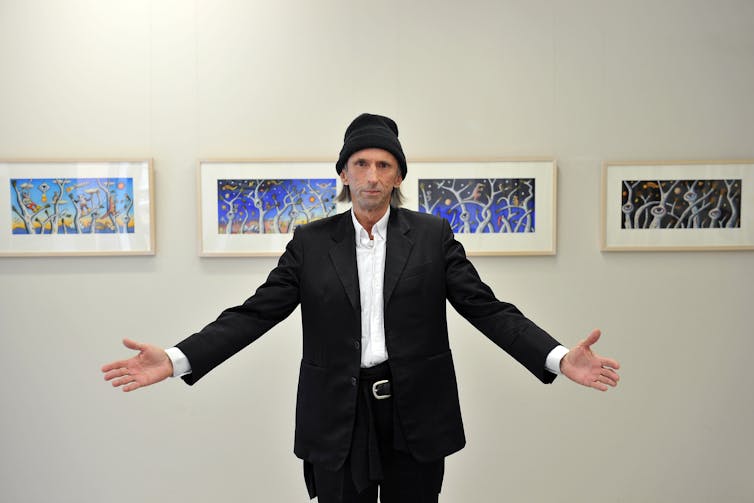
Biblical stories and symbols have also inspired visual artists such as Grace Cossington Smith, Arthur Boyd and Margaret Preston. Reg Mombassa’s popular creation, “Australian Jesus”, offers a subversive take on the gospels.

Each of these Australians has found the Bible an enlarging influence on the imagination. Audiences can easily miss key elements of their work without a degree of biblical literacy

Reg Mombassa’s popular creation, ‘Australian Jesus’, offers a subversive take on the gospels.
Paul Miller/AAP

A Colonial Legacy

Thirdly, the Bible is a substantial – and unresolved – part of Australia’s European cultural baggage.

It loomed especially large in the process of colonising Aboriginal land and forging settler societies. The legal fiction of terra nullius, for example, drew on a particular interpretation of Genesis 1:28 – “replenish the earth, and subdue it”.

Most British colonists assumed that European agriculture was the proper means of fulfilling this divine command. Failing to recognise Indigenous forms of land use, they deemed the land “waste”, belonging to no one, and ripe for the taking.

At the same time, a minority of colonists drew on verses like Acts 17:26 – “[God] hath made of one blood all nations of men for to dwell on all the face of the earth” – to affirm the common humanity of Aboriginal people, and to denounce settler greed and violence.

Crucially, as Indigenous Australians interpreted the Bible for themselves, they used it to demand just treatment and to assert their unique relationship to country. As the Mabo case made its way through the courts, for instance, plaintiff Dave Passi liked to quote from the Old Testament: “Do not move an everlasting boundary stone, set up by your ancestors” (Proverbs 22:28).

The ConversationIn all these ways, the Bible has been bound up with the Australian experience of colonialism. As such, a robust biblical literacy can aid understanding of the past and contribute to present day reconciliation.

Meredith Lake, Honorary Associate, Department of History, University of Sydney

This article was originally published on The Conversation. Read the original article.

Why Religion is not Going Away and Science will not Destroy It

church-holy-saviour-istanbul

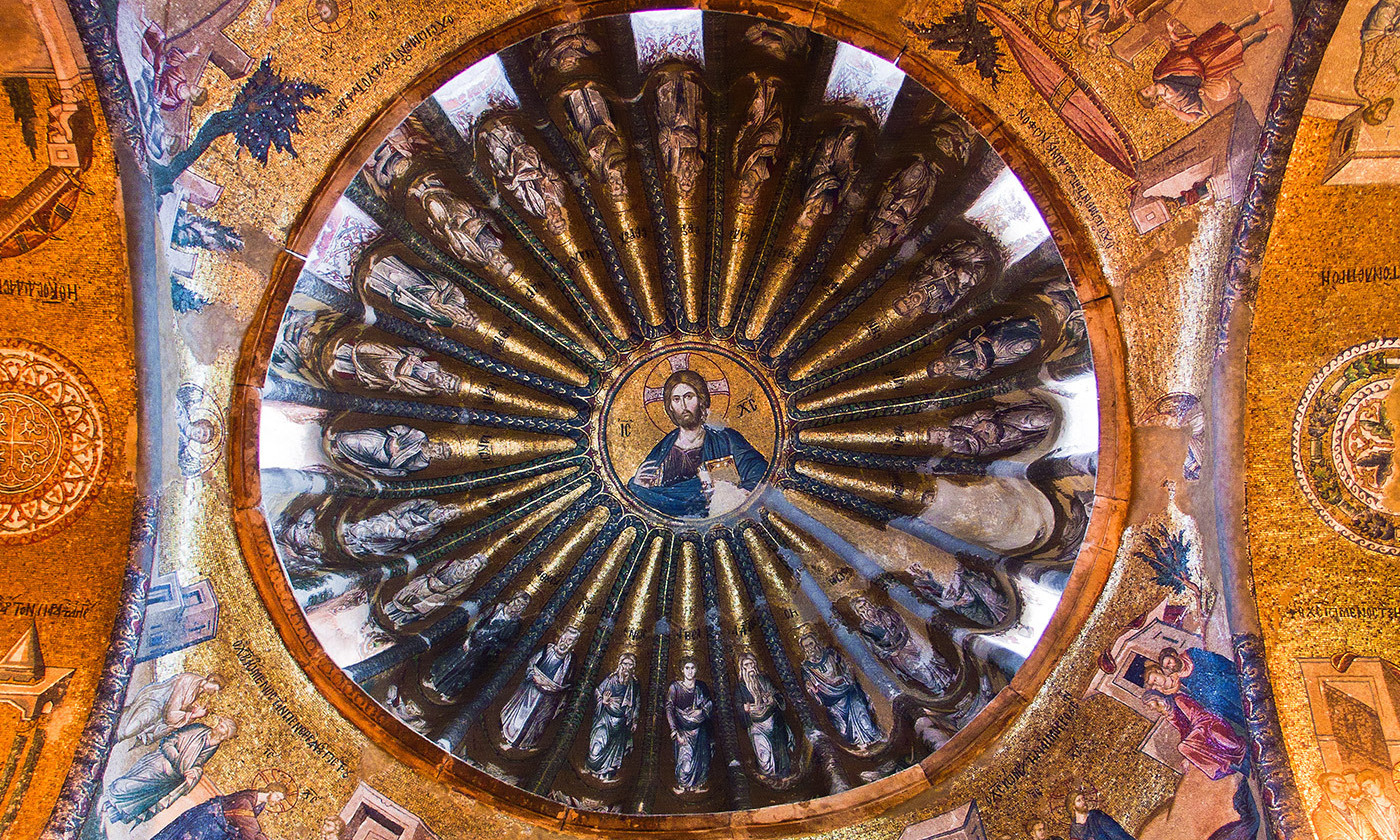
At the Church of the Holy Saviour in Chora, Istanbul. Photo by Guillen Perez/Flickr

Peter Harrison | Aeon Ideas


In 1966, just over 50 years ago, the distinguished Canadian-born anthropologist Anthony Wallace confidently predicted the global demise of religion at the hands of an advancing science: ‘belief in supernatural powers is doomed to die out, all over the world, as a result of the increasing adequacy and diffusion of scientific knowledge’. Wallace’s vision was not exceptional. On the contrary, the modern social sciences, which took shape in 19th-century western Europe, took their own recent historical experience of secularisation as a universal model. An assumption lay at the core of the social sciences, either presuming or sometimes predicting that all cultures would eventually converge on something roughly approximating secular, Western, liberal democracy. Then something closer to the opposite happened.

Not only has secularism failed to continue its steady global march but countries as varied as Iran, India, Israel, Algeria and Turkey have either had their secular governments replaced by religious ones, or have seen the rise of influential religious nationalist movements. Secularisation, as predicted by the social sciences, has failed.

To be sure, this failure is not unqualified. Many Western countries continue to witness decline in religious belief and practice. The most recent census data released in Australia, for example, shows that 30 per cent of the population identify as having ‘no religion’, and that this percentage is increasing. International surveys confirm comparatively low levels of religious commitment in western Europe and Australasia. Even the United States, a long-time source of embarrassment for the secularisation thesis, has seen a rise in unbelief. The percentage of atheists in the US now sits at an all-time high (if ‘high’ is the right word) of around 3 per cent. Yet, for all that, globally, the total number of people who consider themselves to be religious remains high, and demographic trends suggest that the overall pattern for the immediate future will be one of religious growth. But this isn’t the only failure of the secularisation thesis.

Scientists, intellectuals and social scientists expected that the spread of modern science would drive secularisation – that science would be a secularising force. But that simply hasn’t been the case. If we look at those societies where religion remains vibrant, their key common features are less to do with science, and more to do with feelings of existential security and protection from some of the basic uncertainties of life in the form of public goods. A social safety net might be correlated with scientific advances but only loosely, and again the case of the US is instructive. The US is arguably the most scientifically and technologically advanced society in the world, and yet at the same time the most religious of Western societies. As the British sociologist David Martin concluded in The Future of Christianity (2011): ‘There is no consistent relation between the degree of scientific advance and a reduced profile of religious influence, belief and practice.’

The story of science and secularisation becomes even more intriguing when we consider those societies that have witnessed significant reactions against secularist agendas. India’s first prime minister Jawaharlal Nehru championed secular and scientific ideals, and enlisted scientific education in the project of modernisation. Nehru was confident that Hindu visions of a Vedic past and Muslim dreams of an Islamic theocracy would both succumb to the inexorable historical march of secularisation. ‘There is only one-way traffic in Time,’ he declared. But as the subsequent rise of Hindu and Islamic fundamentalism adequately attests, Nehru was wrong. Moreover, the association of science with a secularising agenda has backfired, with science becoming a collateral casualty of resistance to secularism.

Turkey provides an even more revealing case. Like most pioneering nationalists, Mustafa Kemal Atatürk, the founder of the Turkish republic, was a committed secularist. Atatürk believed that science was destined to displace religion. In order to make sure that Turkey was on the right side of history, he gave science, in particular evolutionary biology, a central place in the state education system of the fledgling Turkish republic. As a result, evolution came to be associated with Atatürk’s entire political programme, including secularism. Islamist parties in Turkey, seeking to counter the secularist ideals of the nation’s founders, have also attacked the teaching of evolution. For them, evolution is associated with secular materialism. This sentiment culminated in the decision this June to remove the teaching of evolution from the high-school classroom. Again, science has become a victim of guilt by association.

The US represents a different cultural context, where it might seem that the key issue is a conflict between literal readings of Genesis and key features of evolutionary history. But in fact, much of the creationist discourse centres on moral values. In the US case too, we see anti-evolutionism motivated at least in part by the assumption that evolutionary theory is a stalking horse for secular materialism and its attendant moral commitments. As in India and Turkey, secularism is actually hurting science.

In brief, global secularisation is not inevitable and, when it does happen, it is not caused by science. Further, when the attempt is made to use science to advance secularism, the results can damage science. The thesis that ‘science causes secularisation’ simply fails the empirical test, and enlisting science as an instrument of secularisation turns out to be poor strategy. The science and secularism pairing is so awkward that it raises the question: why did anyone think otherwise?

Historically, two related sources advanced the idea that science would displace religion. First, 19th-century progressivist conceptions of history, particularly associated with the French philosopher Auguste Comte, held to a theory of history in which societies pass through three stages – religious, metaphysical and scientific (or ‘positive’). Comte coined the term ‘sociology’ and he wanted to diminish the social influence of religion and replace it with a new science of society. Comte’s influence extended to the ‘young Turks’ and Atatürk.

The 19th century also witnessed the inception of the ‘conflict model’ of science and religion. This was the view that history can be understood in terms of a ‘conflict between two epochs in the evolution of human thought – the theological and the scientific’. This description comes from Andrew Dickson White’s influential A History of the Warfare of Science with Theology in Christendom (1896), the title of which nicely encapsulates its author’s general theory. White’s work, as well as John William Draper’s earlier History of the Conflict Between Religion and Science (1874), firmly established the conflict thesis as the default way of thinking about the historical relations between science and religion. Both works were translated into multiple languages. Draper’s History went through more than 50 printings in the US alone, was translated into 20 languages and, notably, became a bestseller in the late Ottoman empire, where it informed Atatürk’s understanding that progress meant science superseding religion.

Today, people are less confident that history moves through a series of set stages toward a single destination. Nor, despite its popular persistence, do most historians of science support the idea of an enduring conflict between science and religion. Renowned collisions, such as the Galileo affair, turned on politics and personalities, not just science and religion. Darwin had significant religious supporters and scientific detractors, as well as vice versa. Many other alleged instances of science-religion conflict have now been exposed as pure inventions. In fact, contrary to conflict, the historical norm has more often been one of mutual support between science and religion. In its formative years in the 17th century, modern science relied on religious legitimation. During the 18th and 19th centuries, natural theology helped to popularise science.

The conflict model of science and religion offered a mistaken view of the past and, when combined with expectations of secularisation, led to a flawed vision of the future. Secularisation theory failed at both description and prediction. The real question is why we continue to encounter proponents of science-religion conflict. Many are prominent scientists. It would be superfluous to rehearse Richard Dawkins’s musings on this topic, but he is by no means a solitary voice. Stephen Hawking thinks that ‘science will win because it works’; Sam Harris has declared that ‘science must destroy religion’; Stephen Weinberg thinks that science has weakened religious certitude; Colin Blakemore predicts that science will eventually make religion unnecessary. Historical evidence simply does not support such contentions. Indeed, it suggests that they are misguided.

So why do they persist? The answers are political. Leaving aside any lingering fondness for quaint 19th-century understandings of history, we must look to the fear of Islamic fundamentalism, exasperation with creationism, an aversion to alliances between the religious Right and climate-change denial, and worries about the erosion of scientific authority. While we might be sympathetic to these concerns, there is no disguising the fact that they arise out of an unhelpful intrusion of normative commitments into the discussion. Wishful thinking – hoping that science will vanquish religion – is no substitute for a sober assessment of present realities. Continuing with this advocacy is likely to have an effect opposite to that intended.

Religion is not going away any time soon, and science will not destroy it. If anything, it is science that is subject to increasing threats to its authority and social legitimacy. Given this, science needs all the friends it can get. Its advocates would be well advised to stop fabricating an enemy out of religion, or insisting that the only path to a secure future lies in a marriage of science and secularism.Aeon counter – do not remove

Peter Harrison

This article was originally published at Aeon and has been republished under Creative Commons.

I Believe Because it is Absurd

the-incredulity-of-saint-thomas

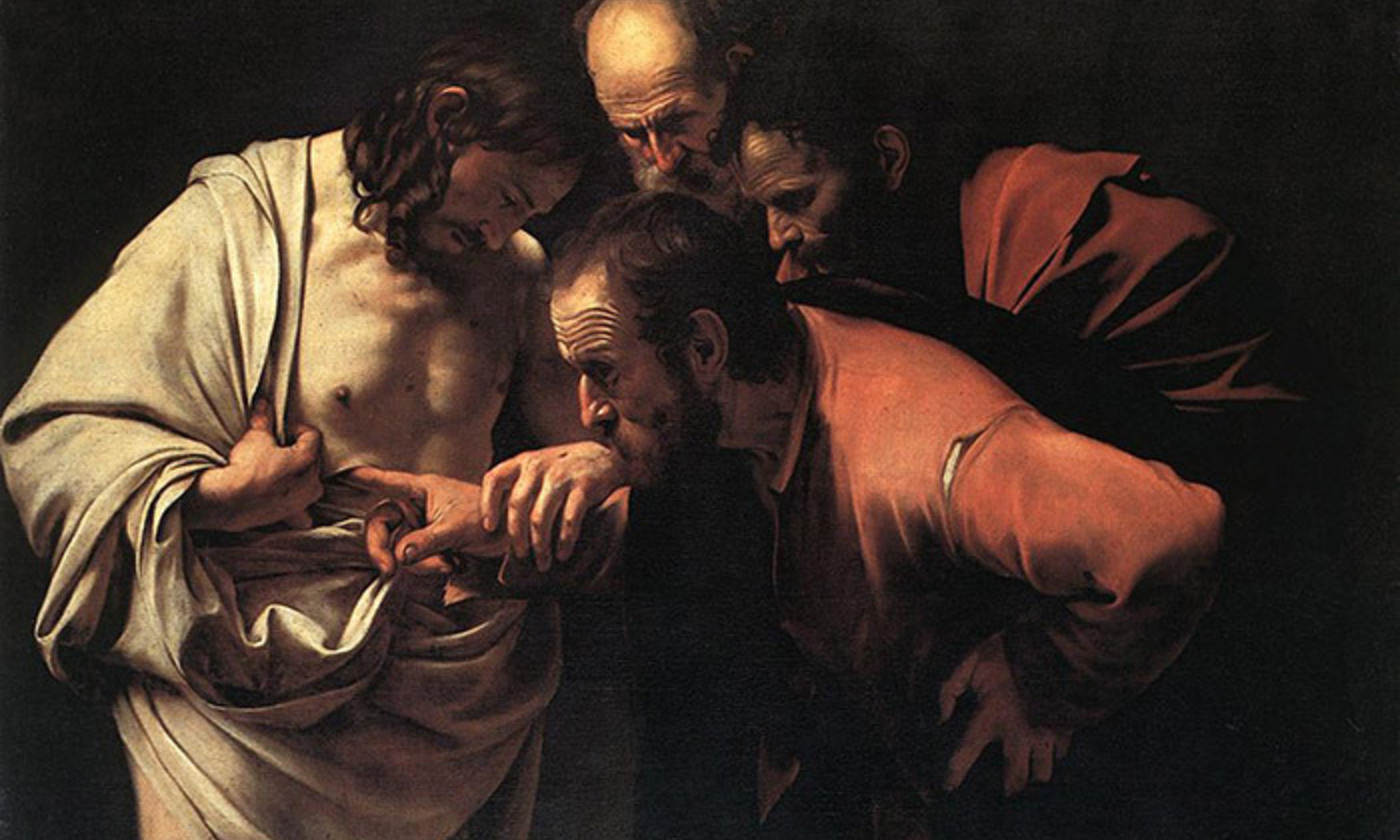
The Incredulity of Saint Thomas (1601-1602), by Caravaggio, Sanssouci Palace, Potsdam, Germany. Courtesy Wikipedia

Peter Harrison | Aeon Ideas


Religious belief is often thought to evince a precarious kind of commitment, in which the degree of conviction is inversely proportional to correspondence with the facts. Exhibit A for this common characterisation of religious belief is the maxim of the third-century Christian writer Tertullian, who is credited with the saying ‘I believe because it is absurd.’ This paradoxical expression makes a routine appearance in philosophical evaluations of the rationality of religious belief, in contemporary polemics addressed to an imagined opposition between science and religion, and in virtually every reputable dictionary of quotations.

Scholars of early Christianity have long known that Tertullian never wrote those words. What he originally said and meant poses intriguing questions, but equally interesting is the story of how the invented expression came to be attributed to him in the first place, what its invention tells us about changing conceptions of ‘faith’, and why, in spite of attempts to correct the record, it stubbornly persists as an irradicable meme about the irrationality of religious commitment.

On the face of it, being committed to something because it is absurd is an unpromising foundation for a belief system. It should not come as a complete surprise, then, that Tertullian did not advocate this principle. He did, however, make this observation, with specific reference to the death and resurrection of Christ: ‘it is entirely credible, because it is unfitting … it is certain, because it is impossible’ (For Latinists out there: prorsus credibile est, quia ineptum est … certum est, quia impossibile). This might seem to be within striking distance of the fideistic phrase commonly attributed to him. Puzzlingly, though, even this original formulation does not fit with Tertullian’s generally positive view of reason and rational justification. Elsewhere, he insists that Christians ‘should believe nothing but that nothing should be rashly believed’. For Tertullian, God is ‘author of Reason’, the natural order of the world is ‘ordained by reason’, and everything is to be ‘understood by reason’.

One likely explanation for this apparent incongruence is that, in his paradoxical juxtaposition of impossibility and certainty, Tertullian is drawing upon a principle set out in Aristotle’s Rhetoric. Addressing himself to the credibility of highly improbable events, Aristotle observes: ‘We may argue that people could not have believed them, if they had not been true or nearly true. And that they are more likely to be true because they are incredible.’ His point seems to be that the apparent incredibility of a reported claim can actually provide a reason for believing it, since a witness seeking to perpetuate a false story would most likely have come up with something that at least seemed plausible. If this connection is on the right track, Tertullian, who almost certainly knew Aristotle’s Rhetoric, is not advocating belief without justification, but suggesting that we sometimes have good reasons to believe the highly improbable.

This leaves us with the question of how Tertullian came to be attributed with authorship of the rather different expression: ‘I believe because it is absurd.’ For this, we need to look to two decisive moments in the early modern period.

In the middle of the 17th century, the physician and polymath Thomas Browne drew attention to Tertullian’s original remarks in his bestselling Religio Medici (1643), or The Religion of a Physician. Crucially, not only did Browne introduce numerous readers to this relatively unnoticed passage in Tertullian, but he lent it an entirely new interpretation, proposing as a general principle that the strength of one’s faith is inversely proportional to the probability of what is believed: ‘Methinks there be not impossibilities enough in Religion for an active faith.’ Before long, numerous sources were quoting Tertullian, albeit disapprovingly, as having said: ‘I believe, because it is impossible’. The philosopher John Locke thus makes reference to this new version of the paradox in his classic An Essay Concerning Human Understanding (1689), summing up the view of most of his contemporaries that this was a ‘very ill Rule for Men to chuse their Opinions, or Religion by’.

A key element of the background to this development was the rise of sectarian disputes in the wake of the Reformation. Protestants chastised Catholics for their overcredulous ‘implicit faith’ – the giving of assent to doctrines promulgated by the Church but without a full comprehension of what was being assented to. A prime case was the doctrine of transubstantiation – a theory, based on Aristotle’s philosophy, of how during the Mass the elements of bread and wine could become the body and blood of Christ. For many Protestants, this was an emblematic instance of believing something that was literally impossible. The maxim ‘I believe because it is impossible’ thus first gained currency because of its deployment in anti-Catholic polemic.

The second phase in the transformation of Tertullian’s original remarks came when the French philosopher Voltaire introduced the ‘absurdity’ condition. In the entry for ‘Faith’ in his Philosophical Dictionary (1764), Voltaire concludes a characteristically entertaining account of the exploits of the notoriously promiscuous Pope Alexander VI by defining faith as ‘believing things because they are impossible’. The first appearance of the phrase ‘I believe because it is absurd’ comes subsequently in one of Voltaire’s 1767 publications, in which Voltaire attributes to the church father Augustine (rather than to Tertullian), the maxim: ‘I believe because it is absurd, I believe because it is impossible.’

Thereafter, ‘I believe because it is absurd’ became the standard form of the credo, and it was increasingly applied indiscriminately to all religious belief. Lending the phrase greater authenticity was its circulation in Latin as credo quia absurdum – a reverse-engineered version of Voltaire’s je le crois parce que cela est absurd. The misattribution of the saying to Augustine serves as a helpful marker of Voltaire’s influence, and for many years Augustine was regarded as the author of the paradox. While attributions to Augustine are rare today, Voltaire’s subtle insinuation of ‘absurdity’ into the new ‘I believe’ version of the paradox has persisted.

Since Voltaire’s time, the maxim ‘I believe because it is absurd’ has continued to serve the purpose intended by its Enlightenment originator – a gesture towards the inherent irrationality of religious belief. Thus in 1928, Sigmund Freud cited the motto as evidence of the infantile nature of religion, which he characterised as always attempting to shield its beliefs from rational scrutiny. The German philosopher Ernst Cassirer similarly maintained that the maxim typified a particular religious psychology that attended both the birth of religion and its regrettable contemporary manifestations: ‘The motto “I believe because it is absurd” exhibits its old force here and everywhere,’ he complained in 1951. Reference works, though generally less partisan, often convey similar sentiments. Typical is the offering in the Oxford Dictionary of Philosophy (1996), where the entry on credo quia absurdum est reads: ‘Also known as Tertullian’s dictum or paradox. Literally (Latin), I believe because it is absurd: that is, the very impossibility of a proposition becomes (mostly in theology) a kind of motivation for belief in it.’

One of the more conspicuous sites for the contemporary deployment of the maxim has been unflattering comparisons of fanciful religious belief with the ‘facts’ of science. In his lecture ‘Science as a Vocation’ (1917), Max Weber invented for himself an even more extreme Latin variant of Tertullian’s saying (Credo non quod, sed quia absurdum est – ‘I believe nothing except that which is absurd’, which Weber attributes to Augustine) in order to illustrate what he thought was an intrinsic tension between science and religion. Contemporary science vs religion warriors such as Richard Dawkins and Jerry Coyne have predictably followed suit, pointing to Tertullian as a personification of the irrationality of religious belief.

Much could be said about the differences and similarities between religious and scientific commitment, but it is worth observing, in brief, that the contemporary sciences afford conspicuous instances of justified belief in both the impossible (quantum mechanics) and the staggeringly improbable (Big Bang cosmology). This brings us back to the original context of Tertullian’s remarks, which were not about belief motivated by the absurdity of its object, but whether is it ever warranted to believe in things we consider to be impossible or extremely improbable. Clearly, that remains a live question.Aeon counter – do not remove

Peter Harrison

This article was originally published at Aeon and has been republished under Creative Commons.

Commentary

This reminds me of Kierkegaard. I wonder why he wasn’t mentioned:

Revelation is marked by mystery, eternal happiness by suffering, the certitude of faith by uncertainty, easiness by difficulty, truth by absurdity; if this is not maintained, then the esthetic and the religious merge in common confusion. … The religious lies in the dialectic of inwardness deepening and therefore, with regard to the conception of God, this means that he himself is moved, is changed. An action in the eternal transforms the individual’s existence.


When the question about truth is asked objectively, truth is reflected upon objectively as an object to which the knower relates himself. What is reflected upon is not the relation but that what he related himself to is the truth, the true. If only that to which he relates himself is the truth, the true, then the subject is in the truth. When the question about truth is asked subjectively, the individual’s relation is reflected upon subjectively. If only the how of this relation is in truth, the individual is in truth, even if he in this way were to relate himself to untruth.


When subjectivity, inwardness, is truth, then truth, objectively defined, is a paradox; and that truth is objectively a paradox shows precisely that subjectivity is truth, since the objectivity does indeed thrust away, and the objectivity’s repulsion, or the expression for the objectivity’s repulsion, is the resilience and dynamometer of inwardness. The paradox is the objective uncertainty that is the expression for the passion of inwardness that is truth. So much for the Socratic. The eternal, essential truth, that is, the truth that is related essentially to the existing person by pertaining essentially to what it means to exist (viewed Socratically, all other knowledge is accidental, its degree and scope indifferent), is a paradox. Nevertheless the eternal, essential truth is itself not at all a paradox, but it is a paradox by being related to an existing person… The Socratic inwardness in existing is an analogue to faith, except that the inwardness of faith, corresponding not to the repulsion exerted by ignorance but to the repulsion exerted by the absurd, is infinitely deeper.

–  Søren Kierkegaard, Concluding Unscientific Postscript to Philosophical Fragments (1846)