Memento Mori

charnel

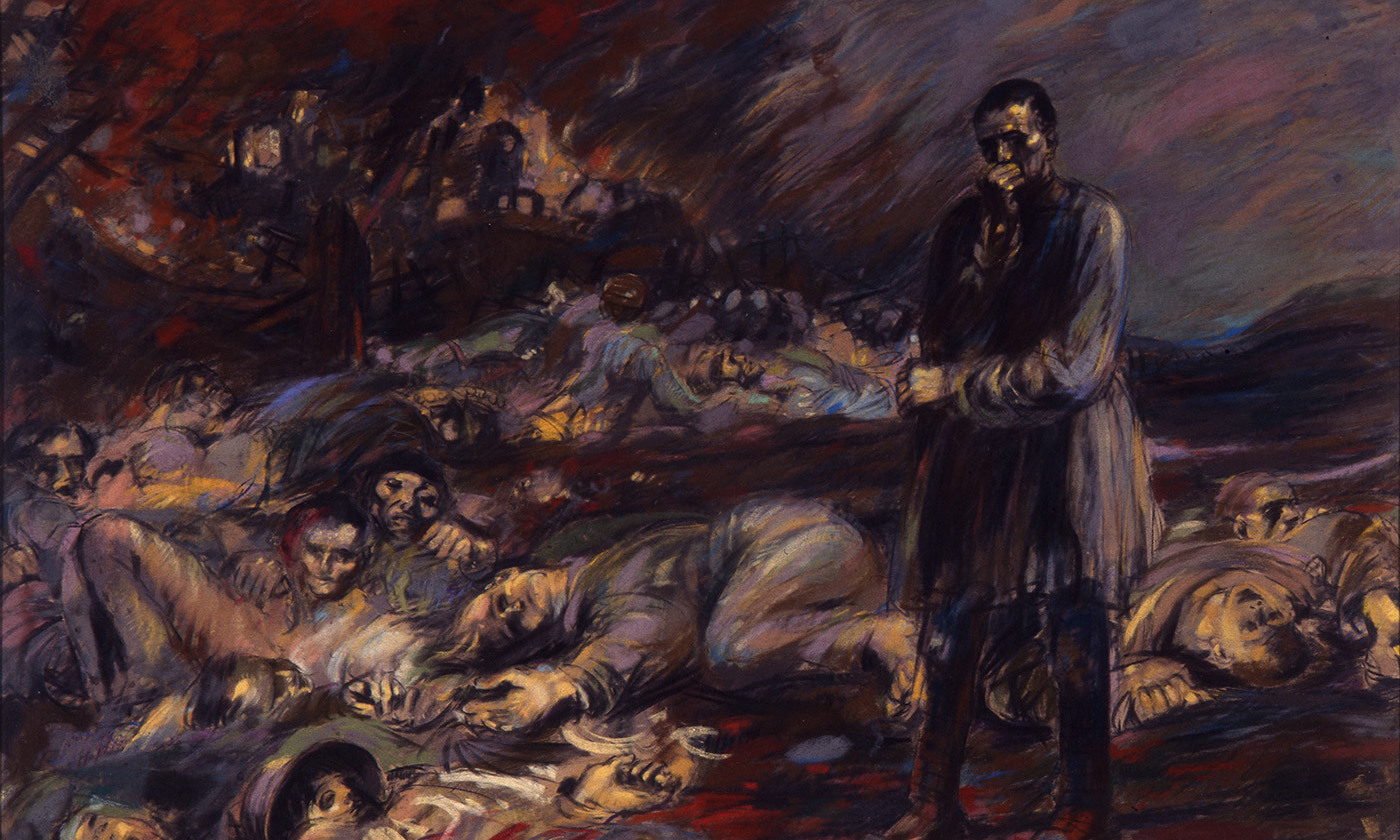
The Charnel House by Henry de Groux (1866-1930), Musée des Beaux-Arts, Mons, Belgium. Photo by Getty


Antonia Macaro | Aeon Ideas

Memento mori – invitations to reflect on our own mortality – have been common throughout history. Two ancient traditions that made reflection on death central to their paths are Buddhism and Stoicism. For both, the starting point is the fact that our normal perceptions of value are deeply flawed, as we are constantly craving or loathing things that in reality are unimportant. The Buddhist texts offer a neat list of these: gain and loss, fame and disrepute, praise and blame, pleasure and pain. The Stoics had a word for them, which translates as ‘indifferents’. The things that we are so keen to pursue – wealth, material possessions, sense pleasures, comfort, success, people’s approval, romantic love and so on – are bound to disappoint and distract us from what really matters, which is our ethical and spiritual progress.

But arguing that we shouldn’t spend our lives seeking those things is not enough. The urges are strong and engrained in us, and both traditions knew it takes more than reason to begin to shake them. It takes sustained reflection on vivid and even shocking imagery to make the point on a more visceral level. This is where death meditations come in.

One of the most striking examples of this is the meditation on corpses presented in the Buddhist Satipatthana Sutta. In ancient India, corpses were left out in ‘charnel grounds’, and people would have had the opportunity to observe the various stages of decomposition. The text is nothing if not thorough, describing in some detail ‘a corpse thrown aside in a charnel ground – one, two or three days dead, bloated, livid, and oozing matter … being devoured by crows, hawks, vultures, dogs, jackals or various kinds of worms’, eventually turning into ‘bones rotten and crumbling to dust’. On observing this, the monk reminds himself that ‘This body too is of the same nature, it will be like that, it is not exempt from that fate.’

Reminders of death are everywhere in the Stoic literature, albeit generally less graphic. The nearest the Stoics come to such detailed descriptions is with the Meditations of Marcus Aurelius: ‘Bear in mind that everything that exists is already fraying at the edges, and in transition, subject to fragmentation and to rot. Or that everything was born to die.’ He is also concise and to the point in his assessment of human life, which is ‘brief and trivial. Yesterday a blob of semen; tomorrow embalming fluid, ash.’

Epictetus advises to keep death always at the front of our minds: ‘Day by day you must keep before your eyes death and exile, and everything that seems terrible, but death above all; and then you will never have any abject thought, or desire anything beyond due measure.’

These reflections are meant to alert us to the fact that the things we find attractive and desirable are ‘shiny on the outside, but on the inside are pitiful’, as Seneca put it. Practices that instigate detachment from the things of the world are a preparation for death in the sense that the recognition that they are not important should make it easier to accept that soon enough we will not be around to enjoy them.

The ancients knew that such practices should be handled with care. Their intention was to elicit equanimity, not aversion. The Buddha warns that if a meditation of this kind were to evoke loathing, the monk should switch to a different one. To illustrate this, one discourse reports the case of a group of monks who engage so enthusiastically with contemplating the unattractiveness of the body that a number of them end up killing themselves. On finding out what happened, the Buddha decides to teach the survivors the more soothing practice of mindfulness instead.

As the Buddha advised, we need to be alert to the possibility that death meditation could be detrimental if we overdo it, or do it in the wrong spirit or state of mind. But why do it at all, if we’re not Buddhists or Stoics? Not everyone is convinced that preparing for death is a good idea. In ‘On Physiognomy’ (1580), Michel de Montaigne muses that it’s a bit like putting on a fur coat in summer because we’ll need it at Christmas: ‘It is certain that most preparations for death have caused more torment than undergoing it.’ Why weigh ourselves down with thoughts of our demise when we can choose to enjoy life and leave the end to take care of itself?

While that is an appealing perspective, there are reasons to keep mortality towards the front of our minds. According to the existential psychotherapist Irvin Yalom’s Staring at the Sun (2008), the fear of death is with us all the time, whether we realise it or not. Even if we are not racked with it, death anxiety sneaks into our life in many disguises. It is what causes us to distract ourselves through the pursuit of wealth and status, for instance, or seek comfort through merging with another, or a cause. But such denial ‘always exacts a price – narrowing our inner life, blurring our vision, blunting our rationality. Ultimately self-deception catches up with us.’

Sometimes, we are shaken out of our denial by a great crisis, such as terminal illness or bereavement, or by another significant life event. Unexpectedly, Yalom argues, such experiences can evoke a sense of awakening, leading to a dropping away of trivial concerns, to reprioritising what matters in life and a heightened perception of the beauty around us: ‘[T]hough the physicality of death destroys us, the idea of death saves us.’

But we needn’t wait for pivotal experiences, says Yalom. By confronting our finitude through therapy, or reflection on death, a lasting shift in perception can arise. Yes, the process might evoke some anxiety, but ultimately it is worth it, as it can make our life richer and more vibrant.

By highlighting the fact that time is short, death meditation can help us to put things in perspective and appreciate the present more. It can remind us that the things we get so worked up about are not worth it – our appearance, career, how our achievements compare with those of our peers, the satisfaction of material desires, disputes with neighbours and tradespeople. Marcus Aurelius draws out this aspect of it well: ‘think of the list of people who had to be pried away from life. What did they gain by dying old? In the end, they all sleep six feet under.’

Death can happen at any time, as Seneca is fond of reminding us: ‘There’s no way to know the point where death lies waiting for you, so you must wait for death at every point.’ But this thought need not lead us to brood on the unsatisfactory quality of the human condition. Instead, it can open the way to a deep acceptance of it, together with the awareness that we had better make the most of what we have here and now. This is no glib hedonism, but a bittersweet recognition that any joy in life is always and necessarily intermingled with death and transience.Aeon counter – do not remove

Antonia Macaro

This article was originally published at Aeon and has been republished under Creative Commons.

What do you really believe?

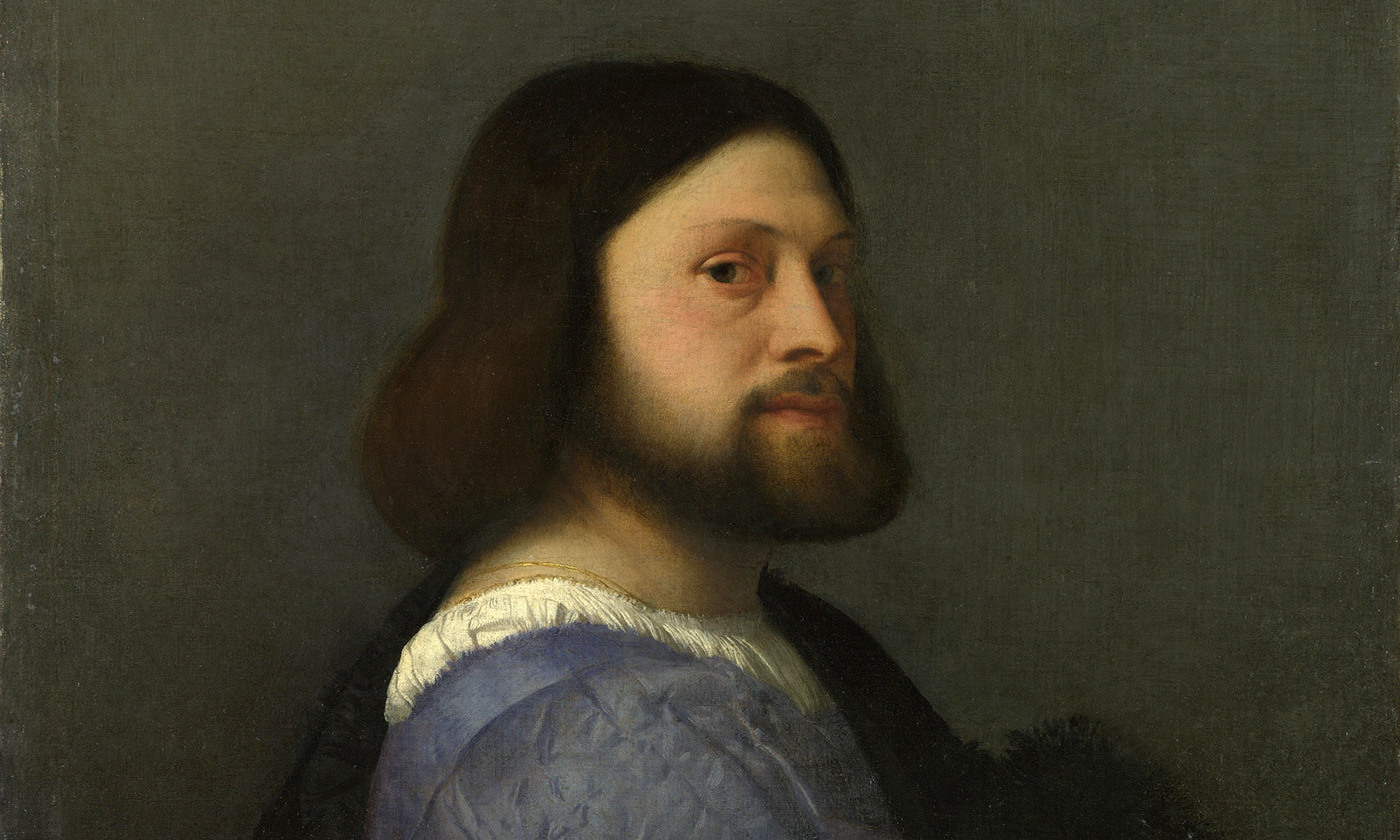
titian

Portrait of a Man with a Quilted Sleeve, Titian, c1509. Courtesy Wikipedia/National Gallery, London.

Keith Frankish | Aeon Ideas

Edited by Nigel Warburton

Most of us have views on politics, current events, religion, society, morality and sport, and we spend a lot of time expressing these views, whether in conversation or on social media. We argue for our positions, and get annoyed if they are challenged. Why do we do this? The obvious answer is that we believe the views we express (ie, we think they are true), and we want to get others to believe them too, because they are true. We want the truth to prevail. That’s how it seems. But do we really believe everything we say? Are you always trying to establish the truth when you argue, or might there be other motives at work?

These questions might seem strange, offensive even. Am I suggesting that you are insincere or hypocritical in your views? No – at least I’m not suggesting that you are consciously so. But you might be unconsciously influenced by concerns other than truth. Nowadays, most psychologists agree that rapid, unconscious mental processes (sometimes called ‘System 1’ processes) play a huge role in guiding our behaviour. These processes are not thought of as Freudian ones, involving repressed memories and desires, but as ordinary, everyday judgments, motives and feelings that operate without conscious awareness, like a mental autopilot.

It seems plausible that such processes guide much of our speech. After all, we rarely give conscious thought to our reasons for saying what we do; the words just come to our lips. But if the motives behind our words are unconscious, then we must infer them from our behaviour, and might be mistaken about what they are. Again, this isn’t a revolutionary idea; for centuries, dramatists and novelists have depicted people deceived about their own motives. (For more on the nature and limits of self-knowledge, see my earlier Aeon article.)

It’s easy to think of motives that might prompt us to express a view we don’t really believe. We might want it to be true, and feel reassurance when we argue for it (think of the parents who insist that their missing child is still alive, despite the lack of evidence). We might associate it with people we admire, and assert it so as to be like them (think of how people are influenced by the views of celebrities). We might think that it will get us attention, and make us seem interesting (think of teenagers who adopt provocative views). We might profess it to fit in and gain social acceptance (think of a university student from a conservative background). Or we might feel that we have a duty to defend it because of our commitment to some creed or ideology (we sometimes call this attitude faith – belief in the religious sense).

Such motives might also be reinforced by other factors. As a society, we tend to admire people who know their own minds and stick to their principles. So, once we have expressed a view, for whatever reason, we might feel (again, unconsciously) that we are now committed to it, and should stick with it as a matter of integrity. At the same time, we might develop an emotional attachment to the view, a bit like an attachment to a sports team. It is now our view, the one we have publicly endorsed, and we want it to win out over its rivals just because it is ours. In this way, we might come to have a strong personal commitment to a claim, even if we don’t really believe it.

I am not suggesting that we are never guided by concerns for truth and knowledge (what philosophers call epistemic concerns), but I suspect that these sorts of emotional and social factors play a much larger role than we like to think. How else can we explain the vehemence with which people defend their views, and the hurt they feel when their views are challenged?

Is it bad if we sometimes say things we don’t believe? It might seem not. The aims I’ve mentioned – seeking social acceptance, for example, or cultivating a self-image – are not necessarily bad ones, and since they are unconscious it is arguable that we shouldn’t be held responsible for them anyway. There are dangers, however. For in order to achieve these aims we must convince our audience that we genuinely believe what we say. If they thought we were saying something merely in order to create an impression on them, then we wouldn’t succeed in creating that impression. And when our aim is to make some impression on ourselves – like the parents who insist that their child is still alive – we must convince ourselves that we believe it too. As a consequence, we might need to back up our words with deeds, acting as if we believe what we say. If there were a glaring disparity between what we said and did, our insincerity would be obvious. In this way, unconscious desires for acceptance, approval and reassurance can lead us to make choices on the basis of claims for which we have no good evidence, with obvious risks of frustration and failure.

Is there, then, any way of telling whether you really believe a claim? It might seem that conscious reflection would settle it. If you consciously entertain the claim, do you think it is true? Even this process might be unreliable, however. Many theorists hold that conscious thinking is simply talking to oneself in inner speech, in which case it can be guided by unconscious motives, just like outer speech. And, as I mentioned, unconscious desires can prompt us to deceive ourselves, telling ourselves that a claim is true even though we don’t really believe it.

Despite this, a thought experiment might help us detect what we genuinely believe to be true. In real life, there might be few contexts where truth really is our dominant concern: maintaining a comforting view or upholding a cherished ideology or self-image might almost always be more important to us than truth. But suppose you were being questioned by the Truth Demon – a super-powerful being who knows the truth on every topic, and will punish you horribly if you give a wrong answer or fail to answer at all. If you continue to assert a claim when the Truth Demon asks you if it is true, then you do really believe it, really think it is true. But if you give a different answer when under threat of torture by the all-knowing demon, then you don’t really believe the claim. This gives us a practical test for belief: imagine the situation just described as vividly as you can, and see what you would say about any of your views. But do be careful not to give too much conscious thought to the matter in case you start telling yourself what you want to hear.Aeon counter – do not remove


Keith Frankish is an English philosopher and writer. He is a visiting research fellow with the Open University in the UK and an adjunct professor with the Brain and Mind Programme at the University of Crete. He lives in Greece.

This article was originally published at Aeon and has been republished under Creative Commons.


Commentary

I like the gist of this article (along with the author’s previous article), but the Truth Demon (a.k.a. God) thought experiment could use some work. It’s too easy to deceive and delude oneself, even under imagined duress. It’s also unclear if many people would be “punished horribly” while expressing their false beliefs in good conscience. As mentioned by the author, a good judge of honest belief is one’s actions, but there is a difference between honest belief and truth itself (or is there?). Although the author’s final word is on point, I prefer Nietzsche’s thought experiment: “What, if some day or night a demon were to steal after you into your loneliest loneliness and say to you: ‘This life as you now live it and have lived it, you will have to live once more and innumerable times more’ … Would you not throw yourself down and gnash your teeth and curse the demon who spoke thus? Or have you once experienced a tremendous moment when you would have answered him: ‘You are a god and never have I heard anything more divine.”


We don’t know ourselves, we knowledgeable people—we are personally ignorant
about ourselves. And there’s good reason for that. We’ve never tried to find out who
we are. How could it ever happen that one day we’d discover our own selves? With
justice it’s been said that “Where your treasure is, there shall your heart be also.” Our treasure lies where the beehives of our knowledge stand. We are always busy with our knowledge, as if we were born winged creatures—collectors of intellectual honey. In our hearts we are basically concerned with only one thing, to “bring something home.” As far as the rest of life is concerned, what people call “experience”—which of us is serious enough for that? Who has enough time? In these matters, I fear, we’ve been “missing the point.”

Our hearts have not even been engaged—nor, for that matter, have our ears! We’ve
been much more like someone divinely distracted and self-absorbed into whose ear
the clock has just pealed the twelve strokes of noon with all its force and who all at
once wakes up and asks himself “What exactly did that clock strike?”—so we rub
ourselves behind the ears afterwards and ask, totally surprised and embarrassed “What have we really just experienced? And more: “Who are we really?” Then, as I’ve mentioned, we count—after the fact—all the twelve trembling strokes of the clock of our experience, our lives, our being—alas! in the process we keep losing the count. So we remain necessarily strangers to ourselves, we do not understand ourselves, we have to keep ourselves confused. For us this law holds for all eternity: “Each man is furthest from himself.” Where we ourselves are concerned, we are not “knowledgeable people.”

? Friedrich Nietzsche, On the Genealogy of Morals/Ecce Homo

When subjectivity, inwardness, is the truth, the truth becomes objectively determined as a paradox, and that it is paradoxical is made clear by the fact that subjectivity is truth, for it repels objectivity, and the expression for the objective repulsion is the intensity and measure of inwardness. The paradox is the objective uncertainty, which is the expression for the passion of inwardness, which is precisely the truth. This is the Socratic principle. The eternal, essential truth, that is, that which relates itself essentially to the individual because it concerns his existence (all other knowledge is, Socratically speaking, accidental, its degree and scope being indifferent), is a paradox. Nevertheless, the eternal truth is not essentially in itself paradoxical, but it becomes so by relating itself to an existing individual. Socratic ignorance is the expression of this objective uncertainty, the inwardness of the existential subject is the truth. To anticipate what I will develop later, Socratic ignorance is an analogy to the category of the absurd, only that there is still less objective certainty in the absurd, and therefore infinitely greater tension in its inwardness. The Socratic inwardness that involves existence is an analogy to faith, except that this inwardness is repulsed not by ignorance but by the absurd, which is infinitely deeper. Socratically the eternal, essential truth is by no means paradoxical in itself, but only by virtue of its relation to an existing individual.

? Søren Kierkegaard, Concluding Unscientific Postscript

Lost in Translation

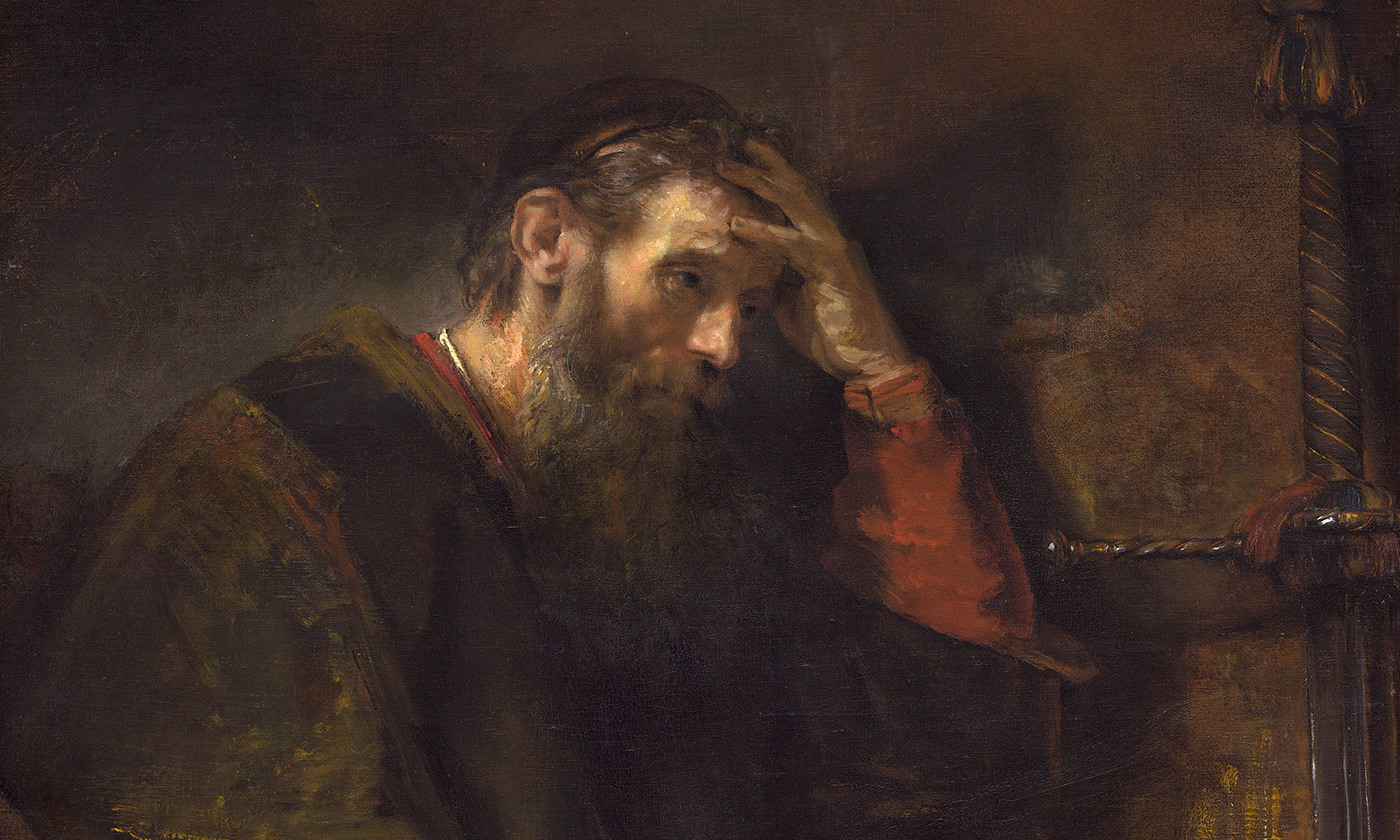
paul.jpg

Detail from The Apostle Paul by Rembrandt van Rijn (c1675). Courtesy National Gallery of Art/Wikipedia

Everything You Know about the Gospel of Paul is Likely Wrong

By David Bentley Hart

This past year, I burdened the English-speaking world with my very own translation of the New Testament – a project that I undertook at the behest of my editor at Yale University Press, but that I agreed to almost in the instant that it was proposed. I had long contemplated attempting a ‘subversively literal’ rendering of the text. Over the years, I had become disenchanted with almost all the standard translations available, and especially with modern versions produced by large committees of scholars, many of whom (it seems to me) have been predisposed by inherited theological habits to see things in the text that are not really there, and to fail to notice other things that most definitely are. Committees are bland affairs, and tend to reinforce our expectations; but the world of late antiquity is so remote from our own that it is almost never what we expect.

Ask, for instance, the average American Christian – say, some genial Presbyterian who attends church regularly and owns a New International Version of the Bible – what gospel the Apostle Paul preached. The reply will fall along predictable lines: human beings, bearing the guilt of original sin and destined for eternal hell, cannot save themselves through good deeds, or make themselves acceptable to God; yet God, in his mercy, sent the eternal Son to offer himself up for our sins, and the righteousness of Christ has been graciously imputed or imparted to all who have faith.

Some details might vary, but not the basic story. And, admittedly, much of the tale’s language is reminiscent of terms used by Paul, at least as filtered through certain conventional translations; but it is a fantasy. It presumes elements of later Christian belief absent from Paul’s own writings. Some of these (like the idea that humans are born damnably guilty in God’s eyes, or that good deeds are not required for salvation) arise from a history of misleading translations. Others (like the concept of an eternal hell of conscious torment) are entirely imagined, attributed to Paul on the basis of some mistaken picture of what the New Testament as a whole teaches.

Paul’s actual teachings, however, as taken directly from the Greek of his letters, emphasise neither original guilt nor imputed righteousness (he believed in neither), but rather the overthrow of bad angels. A certain long history of misreadings – especially of the Letter to the Romans – has created an impression of Paul’s theological concerns so entirely alien to his conceptual world that the real Paul occupies scarcely any place at all in Christian memory. It is true that he addresses issues of ‘righteousness’ or ‘justice’, and asserts that this is available to us only through the virtue of pistis – ‘faith’ or ‘trust’ or even ‘fidelity’. But for Paul, pistis largely consists in works of obedience to God and love of others. The only erga, ‘works’, which he is anxious to claim make no contribution to personal sanctity, are certain ‘ritual observances’ of the Law of Moses, such as circumcision or kosher dietary laws. This, though, means that the separation between Jews and gentiles has been annulled in Christ, opening salvation to all peoples; it does not mean (as Paul fears some might imagine) that God has abandoned his covenant with Israel.

Questions of law and righteousness, however, are secondary concerns. The essence of Paul’s theology is something far stranger, and unfolds on a far vaster scale. For Paul, the present world-age is rapidly passing, while another world-age differing from the former in every dimension – heavenly or terrestrial, spiritual or physical – is already dawning. The story of salvation concerns the entire cosmos; and it is a story of invasion, conquest, spoliation and triumph. For Paul, the cosmos has been enslaved to death, both by our sin and by the malign governance of those ‘angelic’ or ‘daemonian’ agencies who reign over the earth from the heavens, and who hold spirits in thrall below the earth. These angelic beings, these Archons, whom Paul calls Thrones and Powers and Dominations and Spiritual Forces of Evil in the High Places, are the gods of the nations. In the Letter to the Galatians, he even hints that the angel of the Lord who rules over Israel might be one of their number. Whether fallen, or mutinous, or merely incompetent, these beings stand intractably between us and God. But Christ has conquered them all.

In descending to Hades and ascending again through the heavens, Christ has vanquished all the Powers below and above that separate us from the love of God, taking them captive in a kind of triumphal procession. All that now remains is the final consummation of the present age, when Christ will appear in his full glory as cosmic conqueror, having ‘subordinated’ (hypetaxen) all the cosmic powers to himself – literally, having properly ‘ordered’ them ‘under’ himself – and will then return this whole reclaimed empire to his Father. God himself, rather than wicked or inept spiritual intermediaries, will rule the cosmos directly. Sometimes, Paul speaks as if some human beings will perish along with the present age, and sometimes as if all human beings will finally be saved. He never speaks of some hell for the torment of unregenerate souls.

The new age, moreover – when creation will be glorified and transformed into God’s kingdom – will be an age of ‘spirit’ rather than ‘flesh’. For Paul, these are two antithetical principles of creaturely existence, though most translations misrepresent the antithesis as a mere contrast between God’s ‘spirit’ and human perversity. But Paul is quite explicit: ‘Flesh and blood cannot inherit the Kingdom.’ Neither can psych?, ‘soul’, the life-principle or anima that gives life to perishable flesh. In the age to come, the ‘psychical body’, the ‘ensouled’ or ‘animal’ way of life, will be replaced by a ‘spiritual body’, beyond the reach of death – though, again, conventional translations usually obscure this by speaking of the former, vaguely, as a ‘natural body’.

Paul’s voice, I hasten to add, is hardly an eccentric one. John’s Gospel too, for instance, tells of the divine saviour who comes ‘from above’, descending from God’s realm into this cosmos, overthrowing its reigning Archon, bringing God’s light into the darkness of our captivity, and ‘dragging’ everyone to himself. And, in varying registers, so do most of the texts of the New Testament. As I say, it is a conceptual world very remote from our own.

And yet it would be foolish to try to judge the gospel’s spiritual claims by how plausible we find the cosmology that accompanies them. For one thing, the ancient picture of reality might be in many significant respects more accurate than ours. And it would surely be a category error to assume that the story of Christ’s overthrow of death and sin cannot express a truth that transcends the historical and cultural conditions in which it was first told. But, before we decide anything at all about that story, we must first recover it from the very different stories that we so frequently tell in its place.

This Idea was made possible through the support of a grant from Templeton Religion Trust.  The opinions expressed in this publication are those of the author(s) and do not necessarily reflect the views of Templeton Religion Trust.Aeon counter – do not remove

David Bentley Hart

This article was originally published at Aeon and has been republished under Creative Commons.

Reality and the Imagination

5361608149_56eff83272_b

“Freedom” by akshay moon


In this episode of the Waking Up podcast, Sam Harris speaks with Yuval Noah Harari about meditation, the need for stories, the power of technology to erase the boundary between fact and fiction, wealth inequality, the problem of finding meaning in a world without work, religion as a virtual reality game, the difference between pain and suffering, the future of globalism, and other topics.

Yuval Noah Harari has a PhD in history from Oxford University and is a professor in the Department of History at Hebrew University in Jerusalem. He specialized in World History, medieval history and military history, but his current research focuses on macro-historical questions: What is the relation between history and biology? What is the essential difference between Homo sapiens and other animals? Is there justice in history? Does history have a direction? Did people become happier as history unfolded?

He is the author of two blockbuster books, Sapiens: A Brief History of Humankind and Homo Deus: A Brief History of Tomorrow.

Discuss this in the forums


Follow Sam Harris on Twitter: @SamHarrisOrg

‘Know thyself’ is not just silly advice: it’s actively dangerous

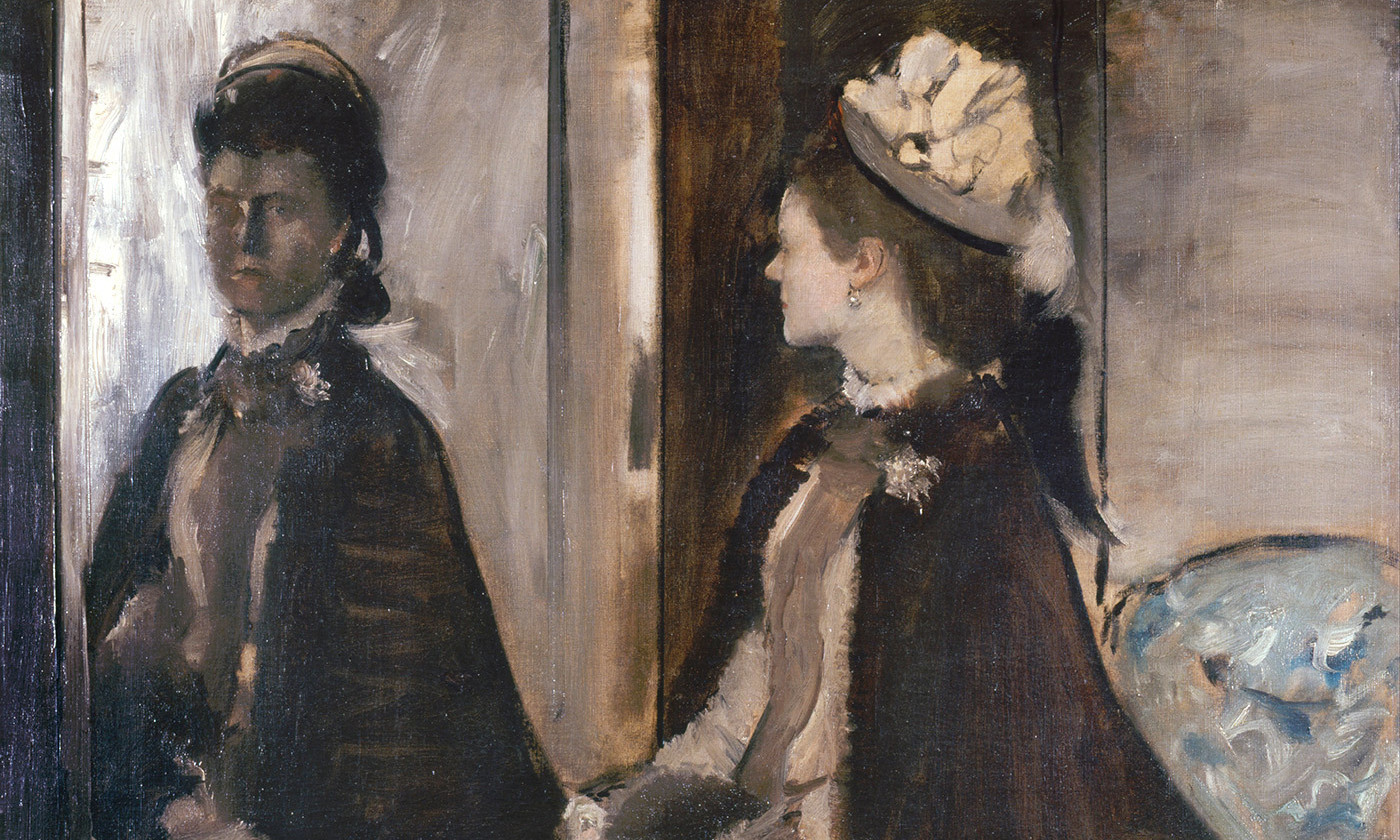
idea_sized-edgar_degas_-_mrs_jeantaud_in_the_mirror_-_google_art_project

Detail from Madame Jeantaud au miroir by Edgar Degas c1875. Courtesy Wikipedia

By Bence Nanay

There is a phrase you are as likely to find in a serious philosophy text as you are in the wackiest self-help book: ‘Know thyself!’ The phrase has serious philosophical pedigree: by Socrates’ time, it was more or less received wisdom (apparently chiselled into the forecourt of the Temple of Apollo at Delphi) though a form of the phrase reaches back to Ancient Egypt. And ever since, the majority of philosophers have had something to say about it.

But ‘Know thyself!’ also has self-help appeal. Is your aim to accept yourself? Well, you need to know thyself for that first. Or is it to make good decisions – decisions that are right for you? Again, this would be difficult unless you knew thyself. The problem is that none of this is based on a realistic picture of the self and of how we make decisions. This whole ‘knowing thyself’ business is not as simple as it seems. In fact, it might be a serious philosophical muddle – not to say bad advice.

Let’s take an everyday example. You go to the local cafe and order an espresso. Why? Just a momentary whim? Trying something new? Maybe you know that the owner is Italian and she would judge you if you ordered a cappuccino after 11am? Or are you just an espresso kind of person?

I suspect that the last of these options best reflects your choices. You do much of what you do because you think it meshes with the kind of person you think you are. You order eggs Benedict because you’re an eggs Benedict kind of person. It’s part of who you are. And this goes for many of our daily choices. You go to the philosophy section of the bookshop and the fair-trade section at the grocer’s shop because you are a philosopher who cares about global justice, and that’s what philosophers who care about global justice do.

We all have fairly stable ideas about what kind of people we are. And that’s all for the best – we don’t have to think too hard when ordering coffee every morning. These ideas about what kind of people we are might also be accompanied by ideas about what kind of people we are not – I’m not going to shop at Costco, I’m not that kind of person. (This way of thinking about yourself could easily slide into moralising your preferences, but let’s not open that can of worms here.)

There is, however, a deep problem with this mental set-up: people change. There are tumultuous periods when we change drastically – in times of romantic love, say, or divorce, or having children. Often we are aware of these changes. After you’ve had kids, you probably notice that you’ve suddenly become a morning person.

But most changes happen gradually and under the radar. A few mechanisms of these changes are well understood, such as the ‘mere exposure effect’: the more you are exposed to something, the more you tend to like it. Another, more troubling one, is that the more your desire for something is frustrated, the more you tend to dislike it. These changes happen gradually, often without us noticing anything.

The problem is this: if we change while our self-image remains the same, then there will be a deep abyss between who we are and who we think we are. And this leads to conflict.

To make things worse, we are exceptionally good at dismissing even the possibility that we might change. Psychologists have given this phenomenon a fancy name: ‘The End of History Illusion’. We all think that who we are now is the finished product: we will be the same in five, 10, 20 years. But, as these psychologists found, this is completely delusional – our preferences and values will be very different already in the not-so-distant future.

Why is this such a big issue? It might be okay when it comes to ordering the espresso. Maybe you now slightly prefer cappuccino, but you think of yourself as an espresso kind of person, so you keep ordering espresso. So you’re enjoying your morning drink a little bit less – not such a big deal.

But what is true of espresso is true of other preferences and values in life. Maybe you used to genuinely enjoy doing philosophy, but you no longer do. But as being a philosopher is such a stable feature of your self-image, you keep doing it. There is a huge difference between what you like and what you do. What you do is dictated not by what you like, but by what kind of person you think you are.

The real harm of this situation is not only that you spend much of your time doing something that you don’t particularly like (and often positively dislike). Instead, it is that the human mind does not like blatant contradictions of this kind. It does its best to hide this contradiction: a phenomenon known as cognitive dissonance.

Hiding a gaping contradiction between what we like and what we do takes significant mental effort and this leaves little energy to do anything else. And if you have little mental energy left, it is so much more difficult to switch off the TV or to resist spending half an hour looking at Facebook or Instagram.

‘Know thyself!’, right? If we take the importance of change in our lives seriously, this just isn’t an option. You might be able to know what you think of yourself in this moment. But what you think of yourself is very different from who you are and what you actually like. And in a couple of days or weeks, all of this might change anyway.

Knowing thyself is an obstacle to acknowledging and making peace with constantly changing values. If you know thyself to be such-and-such a kind of person, this limits your freedom considerably. You might have been the one who chose to be an espresso person or a donating-to-charity person but, once these features are built into your self-image, you have very little say in what direction your life is going. Any change would be either censored or lead to cognitive dissonance. As André Gide wrote in Autumn Leaves (1950): ‘A caterpillar who seeks to know himself would never become a butterfly.’Aeon counter – do not remove


Bence Nanay is professor of philosophy at the University of Antwerp and Senior Research Associate at the University of Cambridge. He is the author of Aesthetics as Philosophy of Perception (2016).

This article was originally published at Aeon and has been republished under Creative Commons.

Our Illusory Sense of Agency Has a Deeply Important Social Purpose

I’m trying to concentrate on writing this piece, but my two grandchildren in the room next door have stopped making paper aeroplanes and started arguing. ‘You kicked me,’ yells Freya. Her brother Ben insists it was an accident. ‘I didn’t mean to,’ he cries.

Why should this be an excuse, I wonder? The pain is the same in either case.

But Freya is more concerned with Ben’s intention than the pain. ‘You did it deliberately,’ she says. But did Ben hit her on purpose? How do we know, and why should it matter?

It certainly doesn’t come from having access to the brain processes that underlie our actions. After all, I have no insight into the electrochemical particulars of how my nerves are firing or how neurotransmitters are coursing through my brain and bloodstream. Instead, our experience of agency seems to come from inferences we make about the causes of our actions, based on crude sensory data. And, as with any kind of perception based on inference, our experience can be tricked.

Look at this picture of a domino:

We clearly see five convex knobs and three concave hollows, despite the fact we’re looking at a flat screen. Our brain creates the illusion because we expect light to come from above, and so we can infer the 3D shapes from the shading. If the shadow is at the top, we see a hollow. If it is at the bottom, we see a knob. But, for the same reason, if you turn the picture upside down you’ll see three knobs and five hollows.

It’s the same with our experience of agency. Our inferences can be wrong. I can believe that I am acting when it’s actually someone else. Or I can believe that someone else is acting when it’s actually me.

Such illusions aren’t confined to highly contrived laboratory situations. In the 1970s, facilitated communication, or supported typing, was promoted as a teaching strategy for helping people with autism communicate with the wider world. The child’s fingers rested on the keys and the facilitator helped the child to type by detecting their intended movements. The technique was eventually discredited after many demonstrations showed that any ‘communication’ came from the facilitator, and not from the child. But the striking thing was that most of the facilitators sincerely believed that they were not the agents of these actions. Free will is not something we have, so much as something we feel.

These observations point to a fundamental paradox about consciousness. We have the strong impression that we choose when we do and don’t act and, as a consequence, we hold people responsible for their actions. Yet many of the ways we encounter the world don’t require any real conscious processing, and our feeling of agency can be deeply misleading.

If our experience of action doesn’t really affect what we do in the moment, then what is it for? Why have it? Contrary to what many people believe, I think agency is only relevant to what happens after we act – when we try to justify and explain ourselves to each other.

There are a few hints that support this view. Take the subjective experience of fluency: the easier it feels to do something, the more likely you are to think that you’re in control of the action. But we have to learn to interpret such feelings, and what other people tell us can alter the way we respond. When doing hard mental work, we have a strong sense of making an effort. Does this mean that we’ll be tired and need a rest, or that we’ll be energised and ready to keep going? If someone tells us we will feel depleted, we’ll perform badly on the task. But if we’re told we should feel energised, we’ll do well. In the same way we learn to associate certain experiences of action with a sense of agency. And it is these kinds of action that we feel responsible for.

The bond between agency and mutual accountability goes back at least as far as 300 BCE. The Greek philosophers, Epicurus and the Stoics, wanted to defend the idea of free will despite believing the universe to be pre-determined by the laws of nature. Free will has two fundamental features, they said. The first is the feeling of being in control: ‘I am the cause of this event.’ The second is a grasp of the counterfactual: ‘I could have chosen otherwise.’ Pangs of regret – something we’ve all experienced – make no sense unless we believe that we could have done something differently. Furthermore, Epicurus believed that we acquire this sense of responsibility via the praise and blame we received from others. By listening to our peers and elders, we become attuned to our capacity to effect change in the world.

Our conscious experience is what enables us to pick up these lessons. It might be surplus to requirements for most of our actions, but we certainly need consciousness when we’re reflecting on our life and discussing it with other people. For example, many children are reminded to think before they act, lest they regret it. They also learn that ‘accidents’ are more readily excused than intentional wrongs. So my grandson Ben might not really be sure whether he kicked Freya accidentally or on purpose, but he knows he’s got a better chance of getting away with it if he claims the kick was unintentional. In this way, we gradually figure out what it ‘feels’ like for our actions to be ‘deliberate’, and if all goes well, we develop into adults with a sense of responsibility about our own powers.

Given the social dimensions of agency, it’s unsurprising that the norms about responsibility vary considerably. In another time and place Ben might not get off so lightly for inadvertently kicking Freya. Certain Pacific Islander cultures, for example, believe in the ‘opacity’ of other minds – the idea that it is impossible, or at least very difficult, to know what other people think and feel. As a result, people are frequently held responsible for their wrongdoings, even when they were the result of an accident or error. Intentionality is impossible to grasp, and therefore largely irrelevant. Similarly, among the Mopan Maya of Belize and Guatemala, children and adults alike are punished according to the outcome of their actions.

What’s more, by considering our experiences and sharing them with others, we can reach a consensus about what the world and we humans are really like. A consensus need not be accurate to be attractive or useful, of course. For a long time everyone agreed that the Sun went round the Earth. Perhaps our sense of agency is a similar trick: it might not be ‘true’, but it maintains social cohesion by creating a shared basis for morality. It helps us understand why people act as they do – and, as a result, makes it is easier to predict people’s behaviour.

Responsibility, then, is the real currency of conscious experience. In turn, it is also the bedrock of culture. Humans are social animals, but we’d be unable to cooperate or get along in communities if we couldn’t agree on the kinds of creatures we are and the sort of world we inhabit. It’s only by reflecting, sharing and accounting for our experiences that we can find such common ground. To date, the scientific method is the most advanced cognitive technology we’ve developed for honing the accuracy of our consensus – a method involving continuous experimentation, discussion and replication. Ben and Freya’s debate about the meaning of action is just the beginning.Aeon counter – do not remove

Chris Frith

This article was originally published at Aeon and has been republished under Creative Commons.


Philosophy via Facebook? Why Not?

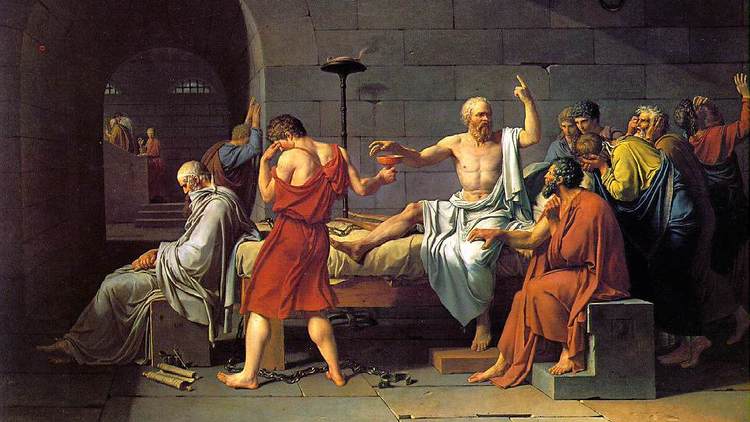
the death of socrates

A portion of Jacques-Louis David’s 1787 painting, “The Death of Socrates.” (Scan by Mark Harden / Metropolitan Museum of Art)

By Eric Schwitzgebel

Academic philosophers tend to have a narrow view of what is valuable philosophical work. Hiring, tenure, promotion and prestige depend mainly on one’s ability to produce journal articles in a particular theoretical, abstract style, mostly in reaction to a small group of canonical and 20th century figures, for a small readership of specialists. We should broaden our vision.

Consider the historical contingency of the journal article, a late-19th century invention. Even as recently as the middle of the 20th century, leading philosophers in Western Europe and North America did important work in a much broader range of genres: the fictions and difficult-to-classify reflections of Sartre, Camus and Unamuno; Wittgenstein’s cryptic fragments; the peace activism and popular writings of Bertrand Russell; John Dewey’s work on educational reform.

Popular essays, fictions, aphorisms, dialogues, autobiographical reflections and personal letters have historically played a central role in philosophy. So also have public acts of direct confrontation with the structures of one’s society: Socrates’ trial and acceptance of the hemlock; Confucius’ inspiring personal correctness.

It was really only with the generation hired to teach the baby boomers in the 1960s and ’70s that academic philosophers’ conception of philosophical work became narrowly focused on the technical journal article.

Consider, too, the emergence of new media. Is there reason to think that journal articles are uniformly better for philosophical reflection than videos, interactive demonstrations, blog posts or multi-party conversations on Facebook?

A conversation in social media, if good participants bring their best to the enterprise, has the potential to be a philosophical creation of the highest order, with a depth and breadth beyond the capacity of any individual philosopher to create. A video game could illuminate, critique and advance a vision of worthwhile living, deploying sight, hearing, emotion and personal narrative as well as (why not?) traditional verbal exposition — and it could potentially do so with all the freshness of thinking, all the transformative power and all the expository rigor of Hume, Kant or Nietzsche.

Academic philosophers are paid to develop expertise in philosophy, to bring that expertise into the classroom and to contribute that expertise to society in part by advancing philosophical knowledge. A wide range of activities fit within that job description.

Every topic of human concern is open to philosophical inquiry. This includes not only subjects well represented in journals, such as the structure of propositional attitudes and the nature of moral facts, but also how one ought to raise children and what makes for a good sports team. And the method of writing and responding to journal-article-length expository arguments by fellow philosophers is only one possible method of inquiry.

Engaging with the world, trying out one’s ideas in action, seeing the reactions of non-academics, exploring ideas in fiction and meditation — in these activities we can not only deploy knowledge but cultivate, expand and propagate that knowledge.

Philosophical expertise is not like scientific expertise. Although academic philosophers know certain literatures very well, on questions about the general human condition and what our fundamental values should be, knowledge of the canon gives academic philosophers no especially privileged wisdom. Non-academics can and should be respected partners in the philosophical dialogue. Too exclusive a focus on technical journal articles excludes non-academics from the dialogue — or maybe, better said, excludes us philosophers from non-academics’ more important dialogue.

The academic journal article as it exists today is thus too limited in format, topic, method and audience to deserve so centrally privileged a place in philosophers’ conception of the discipline.

Research-oriented philosophy departments tend to regard writing for popular media as “service,” which is held in less esteem than “research.” I’m not sure service should be held in less esteem, but I would suggest that popular writing can also qualify as research.

If one approaches popular writing only as a means of “dumbing down” preexisting philosophical ideas for an audience of non-experts whose reactions one doesn’t plan to take seriously, then yes, that writing is not really research. If, however, the popular essay is itself a locus of philosophical creativity, in which ideas are explored in hope of discovering new possibilities, advancing (and not just marketing) one’s own thinking in a way that might strike professionals too as interesting rather than as merely familiar rehashing, then it is every bit as much research as is a standard journal article. Analogously for government consulting, Twitter feeds, TED videos and poetry.

A Philosophical Review article can be an amazing thing. But we should see journal articles in that style, in that type of venue, as only one of many possible forms of important, field-shaping philosophical work.

Eric Schwitzgebel is a professor of philosophy at UC Riverside and the author of “Perplexities of Consciousness.” He blogs at The Splintered Mind.

Source: Los Angeles Times

The Death of Postmodernism And Beyond

Alan Kirby says postmodernism is dead and buried. In its place comes a new paradigm of authority and knowledge formed under the pressure of new technologies and contemporary social forces.

Originally Published in Philosophy Now
digimodernism

I have in front of me a module description downloaded from a British university English department’s website. It includes details of assignments and a week-by-week reading list for the optional module ‘Postmodern Fictions’, and if the university is to remain nameless here it’s not because the module is in any way shameful but that it handily represents modules or module parts which will be taught in virtually every English department in the land this coming academic year. It assumes that postmodernism is alive, thriving and kicking: it says it will introduce “the general topics of ‘postmodernism’ and ‘postmodernity’ by examining their relationship to the contemporary writing of fiction”. This might suggest that postmodernism is contemporary, but the comparison actually shows that it is dead and buried.

Postmodern philosophy emphasises the elusiveness of meaning and knowledge. This is often expressed in postmodern art as a concern with representation and anironic self-awareness. And the argument that postmodernism is over has already been made philosophically. There are people who have essentially asserted that for a while we believed in postmodern ideas, but not any more, and from now on we’re going to believe in critical realism. The weakness in this analysis is that it centres on the academy, on the practices and suppositions of philosophers who may or may not be shifting ground or about to shift – and many academics will simply decide that, finally, they prefer to stay with Foucault [arch postmodernist] than go over to anything else. However, a far more compelling case can be made that postmodernism is dead by looking outside the academy at current cultural production.

Most of the undergraduates who will take ‘Postmodern Fictions’ this year will have been born in 1985 or after, and all but one of the module’s primary texts were written before their lifetime. Far from being ‘contemporary’, these texts were published in another world, before the students were born: The French Lieutenant’s Woman, Nights at the Circus, If on a Winter’s Night a Traveller, Do Androids Dream of Electric Sheep? (and Blade Runner), White Noise: this is Mum and Dad’s culture. Some of the texts (‘The Library of Babel’) were written even before theirparents were born. Replace this cache with other postmodern stalwarts – Beloved,Flaubert’s Parrot, Waterland, The Crying of Lot 49, Pale Fire, Slaughterhouse 5,Lanark, Neuromancer, anything by B.S. Johnson – and the same applies. It’s all about as contemporary as The Smiths, as hip as shoulder pads, as happening as Betamax video recorders. These are texts which are just coming to grips with the existence of rock music and television; they mostly do not dream even of the possibility of the technology and communications media – mobile phones, email, the internet, computers in every house powerful enough to put a man on the moon – which today’s undergraduates take for granted.

The reason why the primary reading on British postmodernism fictions modules is so old, in relative terms, is that it has not been rejuvenated. Just look out into the cultural market-place: buy novels published in the last five years, watch a twenty-first century film, listen to the latest music – above all just sit and watch television for a week – and you will hardly catch a glimpse of postmodernism. Similarly, one can go to literary conferences (as I did in July) and sit through a dozen papers which make no mention of Theory, of Derrida, Foucault, Baudrillard. The sense of superannuation, of the impotence and the irrelevance of so much Theory among academics, also bears testimony to the passing of postmodernism. The people who produce the cultural material which academics and non-academics read, watch and listen to, have simply given up on postmodernism. The occasional metafictional or self-conscious text will appear, to widespread indifference – like Bret Easton Ellis’Lunar Park – but then modernist novels, now long forgotten, were still being written into the 1950s and 60s. The only place where the postmodern is extant is in children’s cartoons like Shrek and The Incredibles, as a sop to parents obliged to sit through them with their toddlers. This is the level to which postmodernism has sunk; a source of marginal gags in pop culture aimed at the under-eights.

What’s Post Postmodernism?

I believe there is more to this shift than a simple change in cultural fashion. The terms by which authority, knowledge, selfhood, reality and time are conceived have been altered, suddenly and forever. There is now a gulf between most lecturers and their students akin to the one which appeared in the late 1960s, but not for the same kind of reason. The shift from modernism to postmodernism did not stem from any profound reformulation in the conditions of cultural production and reception; all that happened, to rhetorically exaggerate, was that the kind of people who had once written Ulysses and To the Lighthousewrote Pale Fire and The Bloody Chamber instead. But somewhere in the late 1990s or early 2000s, the emergence of new technologies re-structured, violently and forever, the nature of the author, the reader and the text, and the relationships between them.

Postmodernism, like modernism and romanticism before it, fetishised [ie placed supreme importance on] the author, even when the author chose to indict or pretended to abolish him or herself. But the culture we have now fetishises the recipient of the text to the degree that they become a partial or whole author of it. Optimists may see this as the democratisation of culture; pessimists will point to the excruciating banality and vacuity of the cultural products thereby generated (at least so far).

Let me explain. Postmodernism conceived of contemporary culture as a spectacle before which the individual sat powerless, and within which questions of the real were problematised. It therefore emphasised the television or the cinema screen. Its successor, which I will call pseudo-modernism, makes the individual’s action the necessary condition of the cultural product. Pseudo-modernism includes all television or radio programmes or parts of programmes, all ‘texts’, whose content and dynamics are invented or directed by the participating viewer or listener (although these latter terms, with their passivity and emphasis on reception, are obsolete: whatever a telephoning Big Brother voter or a telephoning 6-0-6 football fan are doing, they are not simply viewing or listening).

By definition, pseudo-modern cultural products cannot and do not exist unless the individual intervenes physically in them. Great Expectations will exist materially whether anyone reads it or not. Once Dickens had finished writing it and the publisher released it into the world, its ‘material textuality’ – its selection of words – was made and finished, even though its meanings, how people interpret it, would remain largely up for grabs. Its material production and its constitution were decided by its suppliers, that is, its author, publisher, serialiser etc alone – only the meaning was the domain of the reader. Big Brother on the other hand, to take a typical pseudo-modern cultural text, would not exist materially if nobody phoned up to vote its contestants off. Voting is thus part of the material textuality of the programme – the telephoning viewers write the programme themselves. If it were not possible for viewers to write sections of Big Brother, it would then uncannily resemble an Andy Warhol film: neurotic, youthful exhibitionists inertly bitching and talking aimlessly in rooms for hour after hour. This is to say, what makes Big Brother what it is, is the viewer’s act of phoning in.

Pseudo-modernism also encompasses contemporary news programmes, whose content increasingly consists of emails or text messages sent in commenting on the news items. The terminology of ‘interactivity’ is equally inappropriate here, since there is no exchange: instead, the viewer or listener enters – writes a segment of the programme – then departs, returning to a passive role. Pseudo-modernism also includes computer games, which similarly place the individual in a context where they invent the cultural content, within pre-delineated limits. The content of each individual act of playing the game varies according to the particular player.

The pseudo-modern cultural phenomenon par excellence is the internet. Its central act is that of the individual clicking on his/her mouse to move through pages in a way which cannot be duplicated, inventing a pathway through cultural products which has never existed before and never will again. This is a far more intense engagement with the cultural process than anything literature can offer, and gives the undeniable sense (or illusion) of the individual controlling, managing, running, making up his/her involvement with the cultural product. Internet pages are not ‘authored’ in the sense that anyone knows who wrote them, or cares. The majority either require the individual to make them work, like Streetmap or Route Planner, or permit him/her to add to them, like Wikipedia, or through feedback on, for instance, media websites. In all cases, it is intrinsic to the internet that you can easily make up pages yourself (eg blogs).

If the internet and its use define and dominate pseudo-modernism, the new era has also seen the revamping of older forms along its lines. Cinema in the pseudo-modern age looks more and more like a computer game. Its images, which once came from the ‘real’ world – framed, lit, soundtracked and edited together by ingenious directors to guide the viewer’s thoughts or emotions – are now increasingly created through a computer. And they look it. Where once special effects were supposed to make the impossible appear credible, CGI frequently [inadvertently] works to make the possible look artificial, as in much ofLord of the Rings or Gladiator. Battles involving thousands of individuals have really happened; pseudo-modern cinema makes them look as if they have only ever happened in cyberspace. And so cinema has given cultural ground not merely to the computer as a generator of its images, but to the computer game as the model of its relationship with the viewer.

Similarly, television in the pseudo-modern age favours not only reality TV (yet another unapt term), but also shopping channels, and quizzes in which the viewer calls to guess the answer to riddles in the hope of winning money. It also favours phenomena like Ceefax and Teletext. But rather than bemoan the new situation, it is more useful to find ways of making these new conditions conduits for cultural achievements instead of the vacuity currently evident. It is important here to see that whereas the form may change (Big Brother may wither on the vine), the terms by which individuals relate to their television screen and consequently what broadcasters show have incontrovertibly changed. The purely ‘spectacular’ function of television, as with all the arts, has become a marginal one: what is central now is the busy, active, forging work of the individual who would once have been called its recipient. In all of this, the ‘viewer’ feels powerful and is indeed necessary; the ‘author’ as traditionally understood is either relegated to the status of the one who sets the parameters within which others operate, or becomes simply irrelevant, unknown, sidelined; and the ‘text’ is characterised both by its hyper-ephemerality and by its instability. It is made up by the ‘viewer’, if not in its content then in its sequence – you wouldn’t read Middlemarch by going from page 118 to 316 to 401 to 501, but you might well, and justifiably, read Ceefax that way.

A pseudo-modern text lasts an exceptionally brief time. Unlike, say, Fawlty Towers, reality TV programmes cannot be repeated in their original form, since the phone-ins cannot be reproduced, and without the possibility of phoning-in they become a different and far less attractive entity. Ceefax text dies after a few hours. If scholars give the date they referenced an internet page, it is because the pages disappear or get radically re-cast so quickly. Text messages and emails are extremely difficult to keep in their original form; printing out emails does convert them into something more stable, like a letter, but only by destroying their essential, electronic state. Radio phone-ins, computer games – their shelf-life is short, they are very soon obsolete. A culture based on these things can have no memory – certainly not the burdensome sense of a preceding cultural inheritance which informed modernism and postmodernism. Non-reproducible and evanescent, pseudo-modernism is thus also amnesiac: these are cultural actions in the present moment with no sense of either past or future.

The cultural products of pseudo-modernism are also exceptionally banal, as I’ve hinted. The content of pseudo-modern films tends to be solely the acts which beget and which end life. This puerile primitivism of the script stands in stark contrast to the sophistication of contemporary cinema’s technical effects. Much text messaging and emailing is vapid in comparison with what people of all educational levels used to put into letters. A triteness, a shallowness dominates all. The pseudo-modern era, at least so far, is a cultural desert. Although we may grow so used to the new terms that we can adapt them for meaningful artistic expression (and then the pejorative label I have given pseudo-modernism may no longer be appropriate), for now we are confronted by a storm of human activity producing almost nothing of any lasting or even reproducible cultural value – anything which human beings might look at again and appreciate in fifty or two hundred years time.

The roots of pseudo-modernism can be traced back through the years dominated by postmodernism. Dance music and industrial pornography, for instance, products of the late 70s and 80s, tend to the ephemeral, to the vacuous on the level of signification, and to the unauthored (dance much more so than pop or rock). They also foreground the activity of their ‘reception’: dance music is to be danced to, porn is not to be read or watched but used, in a way which generates the pseudo-modern illusion of participation. In music, the pseudo-modern supersedingof the artist-dominated album as monolithic text by the downloading and mix-and-matching of individual tracks on to an iPod, selected by the listener, was certainly prefigured by the music fan’s creation of compilation tapes a generation ago. But a shift has occurred, in that what was a marginal pastime of the fan has become the dominant and definitive way of consuming music, rendering the idea of the album as a coherent work of art, a body of integrated meaning, obsolete.

To a degree, pseudo-modernism is no more than a technologically motivated shift to the cultural centre of something which has always existed (similarly, metafiction has always existed, but was never so fetishised as it was by postmodernism). Television has always used audience participation, just as theatre and other performing arts did before it; but as an option, not as a necessity: pseudo-modern TV programmes have participation built into them. There have long been very ‘active’ cultural forms, too, from carnival to pantomime. But none of these implied a written or otherwise material text, and so they dwelt in the margins of a culture which fetishised such texts – whereas the pseudo-modern text, with all its peculiarities, stands as the central, dominant, paradigmatic form of cultural product today, although culture, in its margins, still knows other kinds. Nor should these other kinds be stigmatised as ‘passive’ against pseudo-modernity’s ‘activity’. Reading, listening, watching always had their kinds of activity; but there is a physicality to the actions of the pseudo-modern text-maker, and a necessity to his or her actions as regards the composition of the text, as well as a domination which has changed the cultural balance of power (note how cinema and TV, yesterday’s giants, have bowed before it). It forms the twenty-first century’s social-historical-cultural hegemony. Moreover, the activity of pseudo-modernism has its own specificity: it is electronic, and textual, but ephemeral.

Clicking In The Changes

In postmodernism, one read, watched, listened, as before. In pseudo-modernism one phones, clicks, presses, surfs, chooses, moves, downloads. There is a generation gap here, roughly separating people born before and after 1980. Those born later might see their peers as free, autonomous, inventive, expressive, dynamic, empowered, independent, their voices unique, raised and heard: postmodernism and everything before it will by contrast seem elitist, dull, a distant and droning monologue which oppresses and occludes them. Those born before 1980 may see, not the people, but contemporary texts which are alternately violent, pornographic, unreal, trite, vapid, conformist, consumerist, meaningless and brainless (see the drivel found, say, on some Wikipedia pages, or the lack of context on Ceefax). To them what came before pseudo-modernism will increasingly seem a golden age of intelligence, creativity, rebellion and authenticity. Hence the name ‘pseudo-modernism’ also connotes the tension between the sophistication of the technological means, and the vapidity or ignorance of the content conveyed by it – a cultural moment summed up by the fatuity of the mobile phone user’s “I’m on the bus”.

Whereas postmodernism called ‘reality’ into question, pseudo-modernism defines the real implicitly as myself, now, ‘interacting’ with its texts. Thus, pseudo-modernism suggests that whatever it does or makes is what is reality, and a pseudo-modern text may flourish the apparently real in an uncomplicated form: the docu-soap with its hand-held cameras (which, by displaying individuals aware of being regarded, give the viewer the illusion of participation); The Office and The Blair Witch Project, interactive pornography and reality TV; the essayistic cinema of Michael Moore or Morgan Spurlock.

Along with this new view of reality, it is clear that the dominant intellectual framework has changed. While postmodernism’s cultural products have been consigned to the same historicised status as modernism and romanticism, its intellectual tendencies (feminism, postcolonialism etc) find themselves isolated in the new philosophical environment. The academy, perhaps especially in Britain, is today so swamped by the assumptions and practices of market economics that it is deeply implausible for academics to tell their students they inhabit a postmodern world where a multiplicity of ideologies, world-views and voices can be heard. Their every step hounded by market economics, academics cannot preach multiplicity when their lives are dominated by what amounts in practice to consumer fanaticism. The world has narrowed intellectually, not broadened, in the last ten years. Where Lyotard saw the eclipse of Grand Narratives, pseudo-modernism sees the ideology of globalised market economics raised to the level of the sole and over-powering regulator of all social activity – monopolistic, all-engulfing, all-explaining, all-structuring, as every academic must disagreeably recognise. Pseudo-modernism is of course consumerist and conformist, a matter of moving around the world as it is given or sold.

Secondly, whereas postmodernism favoured the ironic, the knowing and the playful, with their allusions to knowledge, history and ambivalence, pseudo-modernism’s typical intellectual states are ignorance, fanaticism and anxiety: Bush, Blair, Bin Laden, Le Pen and their like on one side, and the more numerous but less powerful masses on the other. Pseudo-modernism belongs to a world pervaded by the encounter between a religiously fanatical segment of the United States, a largely secular but definitionally hyper-religious Israel, and a fanatical sub-section of Muslims scattered across the planet: pseudo-modernism was not born on 11 September 2001, but postmodernism was interred in its rubble. In this context pseudo-modernism lashes fantastically sophisticated technology to the pursuit of medieval barbarism – as in the uploading of videos of beheadings onto the internet, or the use of mobile phones to film torture in prisons. Beyond this, the destiny of everyone else is to suffer the anxiety of getting hit in the cross-fire. But this fatalistic anxiety extends far beyond geopolitics, into every aspect of contemporary life; from a general fear of social breakdown and identity loss, to a deep unease about diet and health; from anguish about the destructiveness of climate change, to the effects of a new personal ineptitude and helplessness, which yield TV programmes about how to clean your house, bring up your children or remain solvent. This technologised cluelessness is utterly contemporary: the pseudo-modernist communicates constantly with the other side of the planet, yet needs to be told to eat vegetables to be healthy, a fact self-evident in the Bronze Age. He or she can direct the course of national television programmes, but does not know how to make him or herself something to eat – a characteristic fusion of the childish and the advanced, the powerful and the helpless. For varying reasons, these are people incapable of the “disbelief of Grand Narratives” which Lyotard argued typified postmodernists.

This pseudo-modern world, so frightening and seemingly uncontrollable, inevitably feeds a desire to return to the infantile playing with toys which also characterises the pseudo-modern cultural world. Here, the typical emotional state, radically superseding the hyper-consciousness of irony, is the trance – the state of being swallowed up by your activity. In place of the neurosis of modernism and the narcissism of postmodernism, pseudo-modernism takes the world away, by creating a new weightless nowhere of silent autism. You click, you punch the keys, you are ‘involved’, engulfed, deciding. You are the text, there is no-one else, no ‘author’; there is nowhere else, no other time or place. You are free: you are the text: the text is superseded.

© Dr Alan Kirby 2006

Alan Kirby holds a PhD in English Literature from the University of Exeter. He currently lives in Oxford.

Source: Philosophy Now: A Magazine of Ideas, Issue 58
Everything is Broken / A Message of Hope…

‘Kintsugi’ (or ‘Kintsukuroi’) is the Japanese art of repairing broken objects with gold.  Once repaired, the objects are considered more beautiful for having been broken.

In today’s world, perhaps more than ever before, we are subject to a continual and interminable bombardment of images touting promises of an almost laughably untenable perfection.  Flawless beauty, endless youth, perfect health, white-teeth beach-body relationships and a six-pack smile (‘yours for only $99 or your money back’) and on, and on, and on…

Read the rest at JamesRadcliffe.com.

A beautiful way to view the things that we believe have broken us.