Between Gods and Animals: Becoming Human in the Gilgamesh Epic

Tablet_V_of_the_Epic_of_Gilgamesh

A newly discovered, partially broken, tablet V of the Epic of Gilgamesh. The tablet dates back to the old Babylonian period, 2003-1595 BCE. From Mesopotamia, Iraq. The Sulaymaniyah Museum, Iraq. Photograph by Osama Shukir Muhammed Amin. Wikimedia.


Sophus Helle | Aeon Ideas

The Epic of Gilgamesh is a Babylonian poem composed in ancient Iraq, millennia before Homer. It tells the story of Gilgamesh, king of the city of Uruk. To curb his restless and destructive energy, the gods create a friend for him, Enkidu, who grows up among the animals of the steppe. When Gilgamesh hears about this wild man, he orders that a woman named Shamhat be brought out to find him. Shamhat seduces Enkidu, and the two make love for six days and seven nights, transforming Enkidu from beast to man. His strength is diminished, but his intellect is expanded, and he becomes able to think and speak like a human being. Shamhat and Enkidu travel together to a camp of shepherds, where Enkidu learns the ways of humanity. Eventually, Enkidu goes to Uruk to confront Gilgamesh’s abuse of power, and the two heroes wrestle with one another, only to form a passionate friendship.

This, at least, is one version of Gilgamesh’s beginning, but in fact the epic went through a number of different editions. It began as a cycle of stories in the Sumerian language, which were then collected and translated into a single epic in the Akkadian language. The earliest version of the epic was written in a dialect called Old Babylonian, and this version was later revised and updated to create another version, in the Standard Babylonian dialect, which is the one that most readers will encounter today.

Not only does Gilgamesh exist in a number of different versions, each version is in turn made up of many different fragments. There is no single manuscript that carries the entire story from beginning to end. Rather, Gilgamesh has to be recreated from hundreds of clay tablets that have become fragmentary over millennia. The story comes to us as a tapestry of shards, pieced together by philologists to create a roughly coherent narrative (about four-fifths of the text have been recovered). The fragmentary state of the epic also means that it is constantly being updated, as archaeological excavations – or, all too often, illegal lootings – bring new tablets to light, making us reconsider our understanding of the text. Despite being more than 4,000 years old, the text remains in flux, changing and expanding with each new finding.

The newest discovery is a tiny fragment that had lain overlooked in the museum archive of Cornell University in New York, identified by Alexandra Kleinerman and Alhena Gadotti and published by Andrew George in 2018. At first, the fragment does not look like much: 16 broken lines, most of them already known from other manuscripts. But working on the text, George noticed something strange. The tablet seemed to preserve parts of both the Old Babylonian and the Standard Babylonian version, but in a sequence that didn’t fit the structure of the story as it had been understood until then.

The fragment is from the scene where Shamhat seduces Enkidu and has sex with him for a week. Before 2018, scholars believed that the scene existed in both an Old Babylonian and a Standard Babylonian version, which gave slightly different accounts of the same episode: Shamhat seduces Enkidu, they have sex for a week, and Shamhat invites Enkidu to Uruk. The two scenes are not identical, but the differences could be explained as a result of the editorial changes that led from the Old Babylonian to the Standard Babylonian version. However, the new fragment challenges this interpretation. One side of the tablet overlaps with the Standard Babylonian version, the other with the Old Babylonian version. In short, the two scenes cannot be different versions of the same episode: the story included two very similar episodes, one after the other.

According to George, both the Old Babylonian and the Standard Babylonian version ran thus: Shamhat seduces Enkidu, they have sex for a week, and Shamhat invites Enkidu to come to Uruk. The two of them then talk about Gilgamesh and his prophetic dreams. Then, it turns out, they had sex for another week, and Shamhat again invites Enkidu to Uruk.

Suddenly, Shamhat and Enkidu’s marathon of love had been doubled, a discovery that The Times publicised under the racy headline ‘Ancient Sex Saga Now Twice As Epic’. But in fact, there is a deeper significance to this discovery. The difference between the episodes can now be understood, not as editorial changes, but as psychological changes that Enkidu undergoes as he becomes human. The episodes represent two stages of the same narrative arc, giving us a surprising insight into what it meant to become human in the ancient world.

The first time that Shamhat invites Enkidu to Uruk, she describes Gilgamesh as a hero of great strength, comparing him to a wild bull. Enkidu replies that he will indeed come to Uruk, but not to befriend Gilgamesh: he will challenge him and usurp his power. Shamhat is dismayed, urging Enkidu to forget his plan, and instead describes the pleasures of city life: music, parties and beautiful women.

After they have sex for a second week, Shamhat invites Enkidu to Uruk again, but with a different emphasis. This time she dwells not on the king’s bullish strength, but on Uruk’s civic life: ‘Where men are engaged in labours of skill, you, too, like a true man, will make a place for yourself.’ Shamhat tells Enkidu that he is to integrate himself in society and find his place within a wider social fabric. Enkidu agrees: ‘the woman’s counsel struck home in his heart’.

It is clear that Enkidu has changed between the two scenes. The first week of sex might have given him the intellect to converse with Shamhat, but he still thinks in animal terms: he sees Gilgamesh as an alpha male to be challenged. After the second week, he has become ready to accept a different vision of society. Social life is not about raw strength and assertions of power, but also about communal duties and responsibility.

Placed in this gradual development, Enkidu’s first reaction becomes all the more interesting, as a kind of intermediary step on the way to humanity. In a nutshell, what we see here is a Babylonian poet looking at society through Enkidu’s still-feral eyes. It is a not-fully-human perspective on city life, which is seen as a place of power and pride rather than skill and cooperation.

What does this tell us? We learn two main things. First, that humanity for the Babylonians was defined through society. To be human was a distinctly social affair. And not just any kind of society: it was the social life of cities that made you a ‘true man’. Babylonian culture was, at heart, an urban culture. Cities such as Uruk, Babylon or Ur were the building blocks of civilisation, and the world outside the city walls was seen as a dangerous and uncultured wasteland.

Second, we learn that humanity is a sliding scale. After a week of sex, Enkidu has not become fully human. There is an intermediary stage, where he speaks like a human but thinks like an animal. Even after the second week, he still has to learn how to eat bread, drink beer and put on clothes. In short, becoming human is a step-by-step process, not an either/or binary.

In her second invitation to Uruk, Shamhat says: ‘I look at you, Enkidu, you are like a god, why with the animals do you range through the wild?’ Gods are here depicted as the opposite of animals, they are omnipotent and immortal, whereas animals are oblivious and destined to die. To be human is to be placed somewhere in the middle: not omnipotent, but capable of skilled labour; not immortal, but aware of one’s mortality.

In short, the new fragment reveals a vision of humanity as a process of maturation that unfolds between the animal and the divine. One is not simply born human: to be human, for the ancient Babylonians, involved finding a place for oneself within a wider field defined by society, gods and the animal world.Aeon counter – do not remove

Sophus Helle

This article was originally published at Aeon and has been republished under Creative Commons.
Tools for Thinking: Isaiah Berlin’s Two Concepts of Freedom

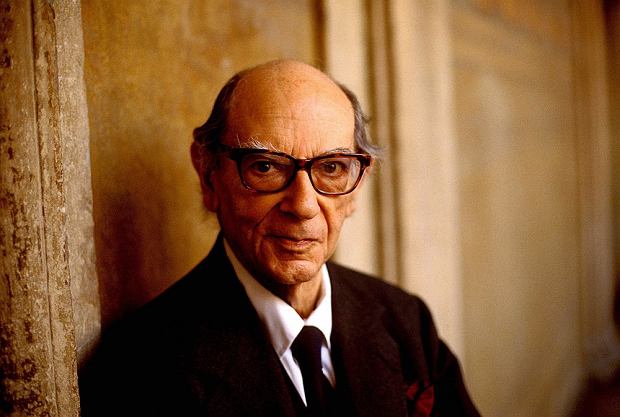
isaiah-berlin

Maria Kasmirli | Aeon Ideas

‘Freedom’ is a powerful word. We all respond positively to it, and under its banner revolutions have been started, wars have been fought, and political campaigns are continually being waged. But what exactly do we mean by ‘freedom’? The fact that politicians of all parties claim to believe in freedom suggests that people don’t always have the same thing in mind when they talk about it. Might there be different kinds of freedom and, if so, could the different kinds conflict with each other? Could the promotion of one kind of freedom limit another kind? Could people even be coerced in the name of freedom?

The 20th-century political philosopher Isaiah Berlin (1909-97) thought that the answer to both these questions was ‘Yes’, and in his essay ‘Two Concepts of Liberty’ (1958) he distinguished two kinds of freedom (or liberty; Berlin used the words interchangeably), which he called negative freedom and positive freedom.

Negative freedom is freedom from interference. You are negatively free to the extent that other people do not restrict what you can do. If other people prevent you from doing something, either directly by what they do, or indirectly by supporting social and economic arrangements that disadvantage you, then to that extent they restrict your negative freedom. Berlin stresses that it is only restrictions imposed by other people that count as limitations of one’s freedom. Restrictions due to natural causes do not count. The fact that I cannot levitate is a physical limitation but not a limitation of my freedom.

Virtually everyone agrees that we must accept some restrictions on our negative freedom if we are to avoid chaos. All states require their citizens to follow laws and regulations designed to help them live together and make society function smoothly. We accept these restrictions on our freedom as a trade-off for other benefits, such as peace, security and prosperity. At the same time, most of us would insist that there are some areas of life that should not be regulated, and where individuals should have considerable, if not complete, freedom. A major debate in political philosophy concerns the boundaries of this area of personal negative freedom. For example, should the state place restrictions on what we may say or read, or on what sexual activities we may engage in?

Whereas negative freedom is freedom from control by others, positive freedom is freedom to control oneself. To be positively free is to be one’s own master, acting rationally and choosing responsibly in line with one’s interests. This might seem to be simply the counterpart of negative freedom; I control myself to the extent that no one else controls me. However, a gap can open between positive and negative freedom, since a person might be lacking in self-control even when he is not restrained by others. Think, for example, of a drug addict who cannot kick the habit that is killing him. He is not positively free (that is, acting rationally in his own best interests) even though his negative freedom is not being limited (no one is forcing him to take the drug).

In such cases, Berlin notes, it is natural to talk of something like two selves: a lower self, which is irrational and impulsive, and a higher self, which is rational and far-sighted. And the suggestion is that a person is positively free only if his higher self is dominant. If this is right, then we might be able to make a person more free by coercing him. If we prevent the addict from taking the drug, we might help his higher self to gain control. By limiting his negative freedom, we would increase his positive freedom. It is easy to see how this view could be abused to justify interventions that are misguided or malign.

Berlin argued that the gap between positive and negative freedom, and the risk of abuse, increases further if we identify the higher, or ‘real’, self, with a social group (‘a tribe, a race, a church, a state’). For we might then conclude that individuals are free only when the group suppresses individual desires (which stem from lower, nonsocial selves) and imposes its will upon them. What particularly worried Berlin about this move was that it justifies the coercion of individuals, not merely as a means of securing social benefits, such as security and cooperation, but as a way of freeing the individuals themselves. The coercion is not seen as coercion at all, but as liberation, and protests against it can be dismissed as expressions of the lower self, like the addict’s craving for his fix. Berlin called this a ‘monstrous impersonation’, which allows those in power ‘to ignore the actual wishes of men or societies, to bully, oppress, torture them in the name, and on behalf, of their “real” selves’. (The reader might be reminded of George Orwell’s novel Nineteen Eighty-Four (1949), which shows how a Stalinist political party imposes its conception of truth on an individual, ‘freeing’ him to love the Party leader.)

Berlin was thinking of how ideas of freedom had been abused by the totalitarian regimes of Nazi Germany and Stalinist Russia, and he was right to highlight the dangers of this kind of thinking. But it does not follow that it is always wrong to promote positive freedom. (Berlin does not claim that it is, and he notes that the notion of negative freedom can be abused in a similar way.) Some people might need help to understand their best interests and achieve their full potential, and we could believe that the state has a responsibility to help them do so. Indeed, this is the main rationale for compulsory education. We require children to attend school (severely limiting their negative freedom) because we believe it is in their own best interests. To leave children free to do whatever they like would, arguably, amount to neglect or abuse. In the case of adults, too, it is arguable that the state has a responsibility to help its citizens live rich and fulfilling lives, through cultural, educational and health programmes. (The need for such help might be especially pressing in freemarket societies, where advertisers continually tempt us to indulge our ‘lower’ appetites.) It might be, too, that some people find meaning and purpose through identification with a wider social or political movement, such as feminism, and that in helping them to do so we are helping to liberate them.

Of course, this raises many further questions. Does our current education system really work in children’s best interests, or does it just mould them into a form that is socially and economically useful? Who decides what counts as a rich and fulfilling life? What means can the state legitimately use to help people live well? Is coercion ever acceptable? These are questions about what kind of society we want to live in, and they have no easy answers. But in giving us the distinction between negative and positive freedom, Berlin has given us a powerful tool for thinking about them.Aeon counter – do not remove

Maria Kasmirli

This article was originally published at Aeon and has been republished under Creative Commons.

Should contemporary philosophers read Ockham? Or: what did history ever do for us?

If you are a historian of philosophy, you’ve probably encountered the question whether the stuff you’re working on is of any interest today. It’s the kind of question that awakens all the different souls in your breast at once. Your more enthusiastic self might think, “yes, totally”, while your methodological soul might shout, “anachronism ahead!” And your humbler part might think, “I don’t even understand it myself.” When exposed to this question, I often want to say many things at once, and out comes something garbled. But now I’d like to suggest that there is only one true reply to the main question in the title: “No, that’s the wrong kind of question to ask!” – But of course that’s not all there is to it. So please hear me out…

Read the rest at Handling Ideas, “a blog on (writing) philosophy”

Does Microdosing Improve your Mood and Performance? Here’s what the Research Says

File 20190206 86233 7rvfkk.jpg?ixlib=rb 1.1
Microdosers take such small quantities of psychedelic substances that there are no noticeable effects.
By AppleZoomZoom

Vince Polito, Macquarie University

Microdosing means regularly taking very small doses of psychedelic substances such as LSD or psilocybin (magic mushrooms) over a period of weeks or months. The practice has made countless headlines over the past couple of years, with claims it can improve health, strengthen relationships, and increase productivity.

These claims are surprising because microdosers take doses so small there are no noticeable effects. These can be just 1/20th of a typical recreational dose, often every three or four days. With such small amounts, microdosers go about their daily business, including going to work, without experiencing any typical drug effects.

Previous research suggests microdosing may lead to better mood and energy levels, improved creativity, increased wisdom, and changes to how we perceive time.


Read more:
LSD ‘microdosing’ is trending in Silicon Valley – but can it actually make you more creative?


But these previous studies have mainly involved asking people to complete ratings or behavioural tasks as one-off measures.

Our study, published today in PLOS One, tracked the experience of 98 users over a longer period – six weeks – to systematically measure any psychological changes.

Overall, the participants reported both positive and negative effects from microdosing, including improved attention and mental health; but also more neuroticism.

What we did

As you would expect, there are many legal and bureaucratic barriers to psychedelic research. It wasn’t possible for us to run a study where we actually provided participants with psychedelic substances. Instead, we tried to come up with the most rigorous design possible in the current restrictive legal climate.

Our solution was to recruit people who were already experimenting with microdosing and to track their experiences carefully over time, using well validated and reliable psychometric measures.

Microdosers go about their lives without any typical drug effects.
Parker Byrd

Each day we asked participants to complete some brief ratings, telling us whether they had microdosed that day and describing their overall experience. This let us track the immediate effects of microdosing.

At the beginning and end of the study participants completed a detailed battery of psychological measures. This let us track the longer-term effects of microdosing.

In a separate sample, we explored the beliefs and expectations of people who are interested in microdosing. This let us track whether any changes in our main sample were aligned with what people generally predict will happen when microdosing.

What we found

There are five key findings from our study.

1. A general positive boost on microdosing days, but limited residual effects of each dose.

Many online accounts of microdosing suggest people microdose every three or four days. The thinking is that each microdose supposedly has a residual effect that lasts for a few days.

The daily ratings from participants in our study do not support this idea. Participants reported an immediate boost in all measures (connectedness, contemplation, creativity, focus, happiness, productiveness and wellness) on dosing days. But this was mostly not maintained on the following days.

However, there was some indication of a slight rebound in feelings of focus and productivity two days after dosing.

Microdosers experienced increased focus.
Rawpixel

2. Some indications of improvements in mental health

We also looked at cumulative effects of longer term microdosing. We found that after six weeks, participants reported lower levels of depression and stress.

We recruited people who were not experiencing any kind of mental illness for the study, so levels of depression and stress were relatively low to begin with. Nevertheless, ratings on these measures did drop.

This is an intriguing finding but it’s not clear from this result whether microdosing would have any effect on more significant levels of mood disturbance.

3. Shifts in attention

The microdosers in our study reported reduced mind wandering, meaning they were less likely to be distracted by unwanted thoughts.

They also reported an increase in absorption, meaning they were more likely to experience intense focused attention on imaginative experiences. Absorption has been linked to strong engagement with art and nature.

4. Increases in neuroticism and some challenging experiences

Not everyone had a good time microdosing. Some participants reported unpleasant and difficult experiences. In some cases, participants tried microdosing just once or twice, then didn’t want to continue.

Overall, participants reported a small increase in neuroticism after six weeks of microdosing, indicating an increase in the frequency of unpleasant emotions.

5. Changes do not entirely match people’s expectations

People have strong expectations about the effects of microdosing. But when we looked at the specific variables participants most expected would change, these didn’t match up with the changes actually reported by our microdosers.

Two of the biggest changes microdosers expected were increases in creativity and life satisfaction, but we found no evidence of shifts in these areas. This suggests the changes we found were not simply due to people’s expectations.

What does it all mean?

This complex set of findings is not what’s typically reported in media stories and online discussions of microdosing. There are promising indications of possible benefits of microdosing here, but also indications of some potential negative impacts, which should be taken seriously.


Read more:
Opening up the future of psychedelic science


It’s important to remember this was an observational study that relied heavily on the accuracy and honesty of participants in their reports. As such, these results need to be treated cautiously.

It’s early days for microdosing research and this work shows that we need to look more carefully at the effects of low dose psychedelics on mental health, attention, and neuroticism.The Conversation

Vince Polito, Postdoctoral Research Fellow in Cognitive Science, Macquarie University

This article is republished from The Conversation under a Creative Commons license. Read the original article.

How Seeing Snakes in the Grass Helped Primates to Evolve

snake

Phrynonax poecilonotus, Wikipedia


Lynne A Isbell | Aeon Ideas

Evolution has favoured the modification and expansion of primate vision. Compared with other mammals, primates have, for example, greater depth perception from having forward-facing eyes with extensively overlapping visual fields, sharper visual acuity, more areas in the brain that are involved with vision, and, in some primates, trichromatic colour vision, which enables them to distinguish red from green hues. In fact, what separates primates from other mammals most is their much greater reliance on vision as the main sensory interface with the environment.

Vision is a window onto the world, its qualities determined by natural selection and the constraints of both animals’ bodies and the environments in which they live. Despite their long, shared evolutionary history, mammals don’t all see the world in the same way because they inhabit a variety of niches with different selective pressures. What were those selective pressures for primates, our lineage, that led to their having visual systems more expansive and more complex than those of other mammals?

In 2006, I published a new idea that could answer that question and more: the ‘snake detection theory’. I hypothesised that when large-gaped constricting snakes appeared about 100 million years ago and began eating mammals, their predatory behaviour favoured the evolution of changes in the vision of one kind of prey, the lineage that was to become primates. In other words, the ability to see immobile predatory snakes before getting too close became a highly beneficial trait for them to have and pass on to their descendants. Then, about 60 million years ago, venomous snakes appeared in Africa or Asia, adding more pressure on primates to detect and avoid them. This has also had repercussions on their visual systems.

There is a consistency between the degree of complexity in primate visual systems and the length of evolutionary time that primates have spent with venomous snakes. At one extreme, the lineage that comprises Old World monkeys, apes and humans has the best vision of all primates, including excellent visual acuity and fully trichromatic colour vision. Having evolved roughly at the same time and in the same place as venomous snakes, these primates have had continuous coexistence with them. They are also uniformly wary of snakes.

At the opposite end of the spectrum, Malagasy primates have the simplest visual systems. Among other things, they have low visual acuity because the fovea, a depression in the retina that is responsible for our visual acuity wherever we focus our eyes, is poorly developed (when it’s present at all). Although Madagascar has constricting snakes, it has no venomous snakes, so primates on that island never had to face that particular selective pressure. Behavioural evidence also reveals that they don’t all react fearfully toward snakes. Some can even walk on snakes or snake models, treating them as if they’re just another branch.

The visual systems of New World monkeys are in the middle. They have better visual acuity than Malagasy primates but more variability in their visual systems than Old World monkeys. For example, New World howler monkeys are all trichromatic, but in other New World primate species, only some individuals are able to distinguish red from green hues. New World primates were originally part of the anthropoid primate lineage in Africa that also includes Old World monkeys and apes, and so had to deal with venomous snakes for about 20-25 million years, but then, some 36 million years ago, they left Africa and arrived in South America where venomous snakes were not present until roughly 15 million years later. By then, New World monkeys had begun to diversify into different genera, and so each genus evolved separate solutions to the renewed problem caused by the arrival again of venomous snakes. As far as I know, no other explanation for the variation in their visual systems exists.

Since I proposed the snake detection theory, several studies have shown that nonhuman and human primates, including young children and snake-naive infants, have a visual bias toward snakes compared with other animate objects, such as lizards, spiders, worms, birds and flowers. Psychologists have discovered that we pick out images of snakes faster or more accurately than other objects, especially under cluttered or obscuring conditions that resemble the sorts of environments in which snakes are typically found. Snakes also distract us from finding other objects as quickly. Our ability to detect snakes faster is also more pronounced when we have less time to detect them and when they are in our periphery. Moreover, our ‘primary visual area’ in the back of the brain shows stronger electrophysiological responses to images of snakes than of lizards 150-300 milliseconds after people see the images, providing a measurable physical correlate of our greater visual bias toward them.

Since vision is mostly in the brain, we need to turn to neuroscience to understand the mechanisms for our visual bias toward snakes. All vertebrates have a visual system that allows them to distinguish potential predators from potential prey. This is a nonconscious visual system that involves only subcortical structures, including those that in mammals are called the superior colliculus and the pulvinar, and it allows for very fast visual detection and response. When an animal sees a predator, this nonconscious visual system also taps directly into motor responses such as freezing and darting.

As vertebrates, mammals have this nonconscious visual system, but they have also incorporated vision into the neocortex. No other animals have a neocortex. This somewhat slower, conscious visual system allows mammals to become cognizant of objects for what they really are. The first neocortical stop is the primary visual area, which is particularly sensitive to edges and lines of different orientations.

In a breakthrough study, a team of neuroscientists probed the responses of individual neurons in the pulvinar of Japanese macaques as they were shown images of snakes, faces of monkeys, hands of monkeys, and simple geometric shapes. Sure enough, many pulvinar neurons responded more strongly and more quickly to snakes than to the other images. The snake-sensitive neurons were found in a subsection of the pulvinar that is connected to a part of the superior colliculus involved in defensive motor behaviour such as freezing and darting, and to the amygdala, a subcortical structure involved in mediating fear responses. Among all mammals, the lineage with the greatest evolutionary exposure to venomous snakes, the anthropoid monkeys, apes and humans, also have the largest pulvinar. This makes perfect sense in the context of the snake detection theory.

What is it about snakes that makes them so attention-grabbing to us? Naturally, we use all the cues available (such as body shape and leglessness) but it’s their scales that should be the most reliable, because a little patch of snake might be all we have to go on. Indeed, wild vervet monkeys in Africa, for instance, are able with their superb visual acuity to detect just an inch of snake skin within a minute of coming near it. In people, electrophysiological responses in the primary visual area reveal greater early visual attention to snake scales compared with lizard skins and bird feathers. Again, the primary visual area is highly sensitive to edges and lines of different orientations, and snake skins with their spades offer these visual cues in spades.

The snake detection theory takes our seemingly contradictory attitudes about snakes and makes sense of them as a cohesive whole. Our long evolutionary exposure to snakes explains why ophiophobia is humanity’s most-reported phobia but also why our attraction and attention to snakes is so strong that we have even included them prominently in our religions and folklore. Most importantly, by recognising that our vision and our behaviour have been shaped by millions of years of interactions with another type of animal, we admit our close relationship with nature. We have not been above or outside nature as we might like to think, but have always been fully a part of it.Aeon counter – do not remove


Lynne A Isbell is professor of anthropology at the University of California, Davis. She is the author of The Fruit, the Tree, and the Serpent: Why We See So Well (2009). She is interested in primate behaviour and ecology.

This article was originally published at Aeon and has been republished under Creative Commons. Visit the original article here.

Introduction to Deontology: Kantian Ethics

One popular moral theory that denies that morality is solely about the consequences of our actions is known as Deontology. The most influential and widely adhered to version of Deontology was extensively laid out by Immanuel Kant (1724–1804). Kant’s ethics, as well as the overall philosophical system in which it is embedded, is vast and incredibly difficult. However, one relatively simple concept lies at the center of his ethical system: The Categorical Imperative.

via Introduction to Deontology: Kantian Ethics (1000-Word Philosophy)

Author: Andrew Chapman
Category: Ethics
Word Count: 1000

Don’t let the rise of Europe steal World History

harvard-classics


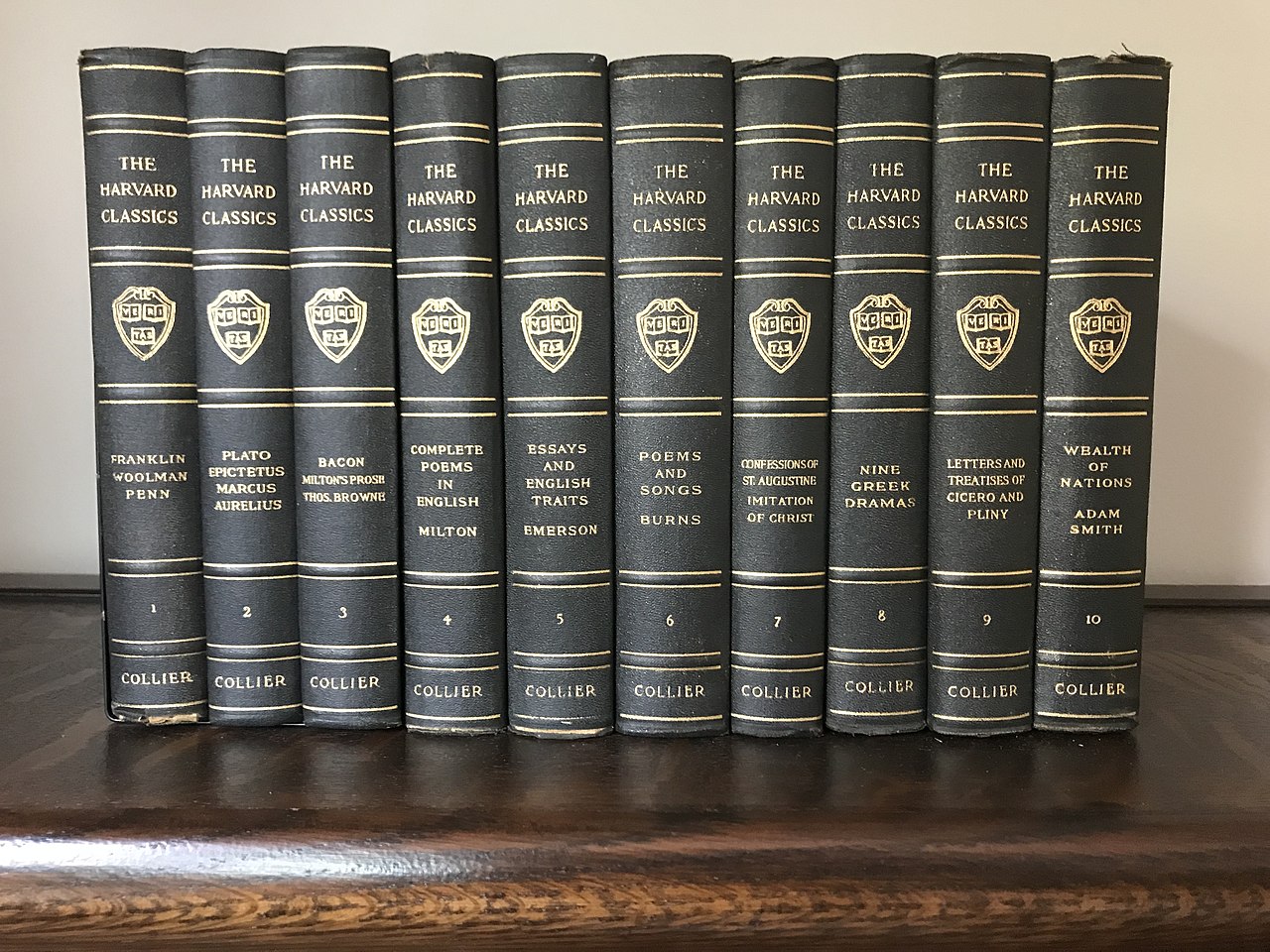
The first 10 volumes of The Harvard Classics, Wikipedia


Peter Frankopan | Aeon Ideas

The centre of a map tells you much, as does the choice where to begin a story, or a history. Arab geographers used to place the Caspian Sea at the centre of world maps. On a medieval Turkish map, one that transfixed me long ago, we find the city of Balasaghun at the heart of the world. How to teach world history today is a question that is going to grow only more and more important.

Last summer in the United States, a debate flared when the influential testing agency Advanced Placement (AP) announced a change to its attendant courses, a change in which ‘world history’ would begin in 1450. In practice, beginning world history in 1450 becomes a story about how Europeans came to dominate not one but all the continents, and excludes the origins of alphabets, agriculture, cities and civilisation. Before the 1400s, it was others who did the empire-building, drove sciences, medicine and philosophy, and sought to capitalise on and extend the trading networks that facilitated the flow and exchange of goods, ideas, faiths and people.

Under pressure, the AP College Board retreated. ‘We’ve received thoughtful, principled feedback from AP teachers, students and college faculty,’ said a statement. As a result, the start date for the course has been nudged back 250 years to 1200. Consequently, said the board, ‘teachers and students can begin the course with a study of the civilisations in Africa, the Americas and Asia that are foundational to the modern era’.

Where that leaves Plato and Aristotle, or ancient Greece and Rome, is unclear – but presumably none are ‘foundational to the modern era’. That in itself is strange given that so many of the most famous buildings of Washington, DC (for example) are designed in classical style to deliberately evoke the world of 2,000 years ago; or that Mark Zuckerberg, a posterboy for new technologies and the 21st century, admits to the Emperor Augustus as his role model.

Gone too is China of the Han dynasty (206 BCE-220 CE) and the networks that linked the Pacific with the Indian Ocean and the Mediterranean 2,000 years ago, and that allow us to understand that Asia, Africa and Europe were connected many centuries prior in a world that was effectively ‘globalised’. No space for the Maya civilisation and culture in Central America or for the kingdom of Igodomigodo in West Africa, whose economic, cultural, military and political achievements have been discarded as irrelevant to the ‘modern era’. Who cares about the Indian emperor Ashoka, or the Chola dynasty of Southern India that spread eastwards into South East Asia in the 10th and 11th centuries? The connections between Scandinavia and Central Asia that helped to bring all of northern Europe out of what used to be called ‘the Dark Ages’ don’t get a look-in either. And too bad for climate change and the ways in which looking at the changes in global temperatures 1,500 years ago led to the collapse of cities, the dispersal of populations and the spread of pandemics.

History is at its most exciting and stimulating for students and teachers alike when there is scope to look at connectivity, to identify and work through deep rhythms and trends, and to explore the past by challenging assumptions that the story of the world can be charted through a linear progression – as the AP College Board seems to think with its statement linking 1200 with the ‘modern era’.

If you really want to see how foolish this view is – and how unfortunate it is to narrow down the scope of the World History course, then take a look at the front pages in just about any country in the world today. In China, news is dominated by the Belt and Road Initiative, the Chinese-led plan to regalvanise the ancient networks of the past into the modern-day Silk Roads: there are many and sharply divergent views about the aims, motivations and likely outcomes of the Belt and Road Initiative. This is far and away the single most important geopolitical development in the modern world today. Understanding why Beijing is trying to return to the glory years of the Silk Roads (which date back 2,000 years) would seem to be both interesting, and important – and largely to be bypassed by the new World History scope.

We can look to the other end of Asia, to Istanbul where, every year, hundreds of thousands of people take to the streets in Turkey to commemorate the Battle of Manzikert – which was fought in 1071. It might be useful to know why. Assessing the relationship between Russia and Ukraine might also be of some value in a period when the former has annexed part of the territory of the latter. A major spat broke out last summer between the two countries over whether Anne of Kiev was Russian or Ukrainian. She died in 1075.

It does not take an expert to see the resonance of the 7th century across the Middle East – where fundamentalists attempted to build an ‘Islamic State’ based on their model of the early Muslim world, destroying not only lives and the region in the process, but deliberately destroying history itself in places such as Palmyra. It does, though, take an expert to work out why they are trying to turn back the clock 1,400 years and what their utopian world looks like. It matters because there are plenty of others who want to do the same thing: Imran Khan, the new Prime Minister of Pakistan, for example, has said that he wants to turn his country, with its population of almost 200 million people, into ‘an ideal welfare state’ on the model that Muhammad set in Medina in the 620s and 630s – a model that set up one of the world’s ‘greatest civilisations’.

Students taking world history courses that begin in 1200 will not learn about any of these topics, even though their peers in colleges and schools around the world will. Education should expand horizons and open minds. What a shame that, in this case, they are being narrowed and shuttered. And what a shame too that this is happening at a time of such profound global change – when understanding the depth of our interconnected world is more important than ever. That, for me anyway, is the most valuable conclusion that is ‘foundational to the modern era’.Aeon counter – do not remove

Peter Frankopan

This article was originally published at Aeon and has been republished under Creative Commons.

Philosophy Can Make the Previously Unthinkable Thinkable

woman-at-window

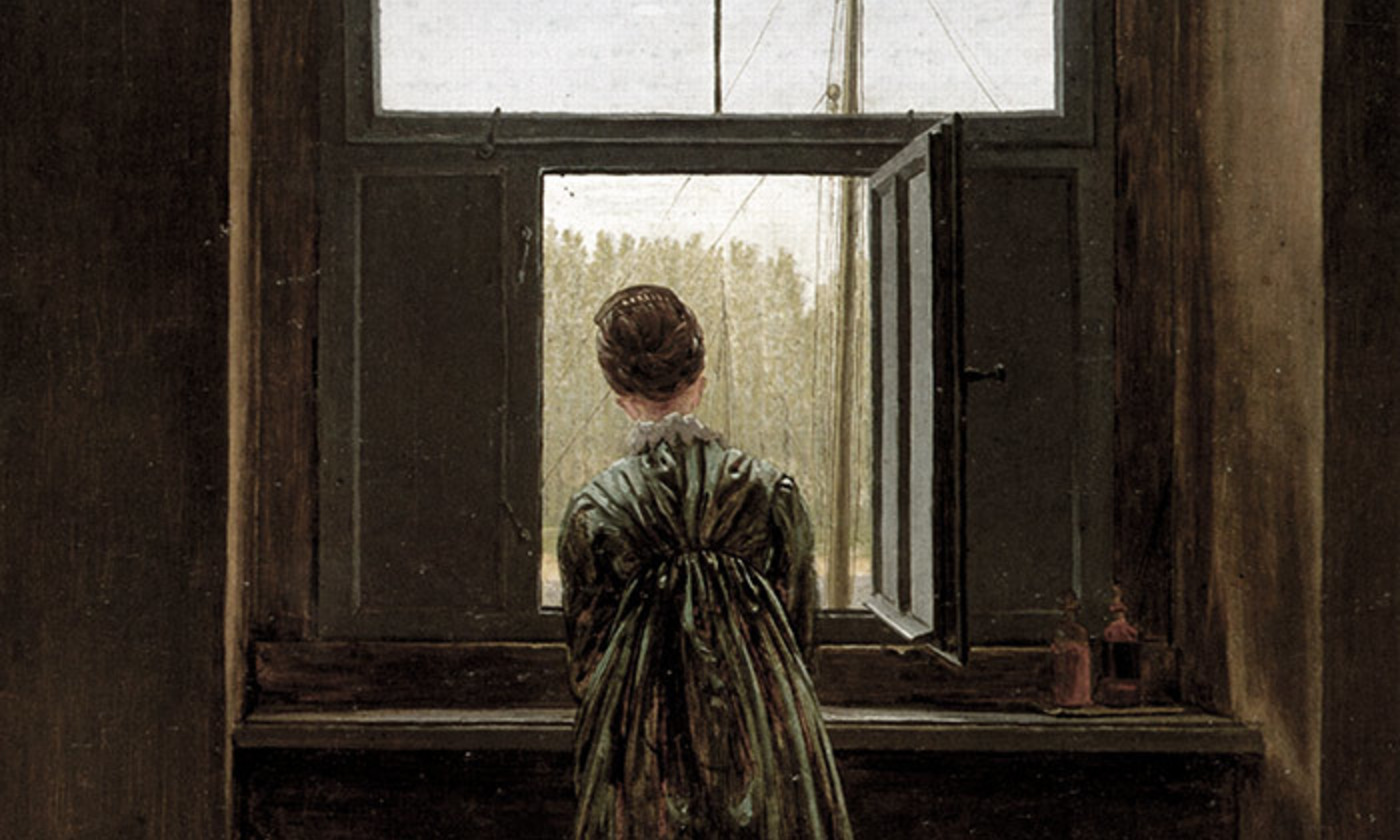
Detail from Woman at a Window (1822) by Caspar David Friedrich. Courtesy Alte Nationalgalerie, Berlin


Rebecca Brown | Aeon Ideas

In the mid-1990s, Joseph Overton, a researcher at the US think tank the Mackinac Center for Public Policy, proposed the idea of a ‘window’ of socially acceptable policies within any given domain. This came to be known as the Overton window of political possibilities. The job of think tanks, Overton proposed, was not directly to advocate particular policies, but to shift the window of possibilities so that previously unthinkable policy ideas – those shocking to the sensibilities of the time – become mainstream and part of the debate.

Overton’s insight was that there is little point advocating policies that are publicly unacceptable, since (almost) no politician will support them. Efforts are better spent, he argued, in shifting the debate so that such policies seem less radical and become more likely to receive support from sympathetic politicians. For instance, working to increase awareness of climate change might make future proposals to restrict the use of diesel cars more palatable, and ultimately more effective, than directly lobbying for a ban on such vehicles.

Overton was concerned with the activities of think tanks, but philosophers and practical ethicists might gain something from considering the Overton window. By its nature, practical ethics typically addresses controversial, politically sensitive topics. It is the job of philosophers to engage in ‘conceptual hygiene’ or, as the late British philosopher Mary Midgley described it, ‘philosophical plumbing’: clarifying and streamlining, diagnosing unjustified assertions and pointing out circularities.

Hence, philosophers can be eager to apply their skills to new subjects. This can provoke frustration from those embedded within a particular subject. Sometimes, this is deserved: philosophers can be naive in contributing their thoughts to complex areas with which they lack the kind of familiarity that requires time and immersion. But such an outside perspective can also be useful. Although such contributions will rarely get everything right, the standard is too demanding in areas of great division and debate (such as practical ethics). Instead, we should expect philosophers to offer a counterpoint to received wisdom, established norms and doctrinal prejudice.

Ethicists, at least within their academic work, are encouraged to be skeptical of intuition and the naturalistic fallacy (the idea that values can be derived simply from facts). Philosophers are also familiar with tools such as thought experiments: hypothetical and contrived descriptions of events that can be useful for clarifying particular intuitions or the implications of a philosophical claim. These two factors make it unsurprising that philosophers often publicly adopt positions that are unintuitive and outside mainstream thought, and that they might not personally endorse.

This can serve to shift, and perhaps widen, the Overton window. Is this a good thing? Sometimes philosophers argue for conclusions far outside the domain of ‘respectable’ positions; conclusions that could be hijacked by those with intolerant, racist, sexist or fundamentalist beliefs to support their stance. It is understandable that those who are threatened by such beliefs want any argument that might conceivably support them to be absent from the debate, off the table, and ignored.

However, the freedom to test the limits of argumentation and intuition is vital to philosophical practice. There are sufficient and familiar examples of historical orthodoxies that have been overturned – women’s right to vote; the abolition of slavery; the decriminalisation of same-sex relationships – to establish that strength and pervasiveness of a belief indicate neither truth nor immutability.

It can be tedious to repeatedly debate women’s role in the workforce, abortion, animals’ capacity to feel pain and so on, but to silence discussion would be far worse. Genuine attempts to resolve difficult ethical dilemmas must recognise that understanding develops by getting things wrong and having this pointed out. Most (arguably, all) science fails to describe or predict how the world works with perfect accuracy. But as a collective enterprise, it can identify errors and gradually approximate ‘truth’. Ethical truths are less easy to come by, and a different methodology is required in seeking out satisfactory approximations. But part of this model requires allowing plenty of room to get things wrong.

It is unfortunate but true that bad ideas are sometimes undermined by bad reasoning, and also that sometimes those who espouse offensive and largely false views can say true things. Consider the ‘born this way’ argument, which endorses the flawed assumption that a genetic basis for homosexuality indicates the permissibility of same-sex relationships. While this might win over some individuals, it could cause problems down the line if it turns out that homosexuality isn’t genetically determined. Debates relating to the ‘culture wars’ on college campuses have attracted many ad hominem criticisms that set out to discredit the authors’ position by pointing to the fact that they fit a certain demographic (white, middle-class, male) or share some view with a villainous figure, and thus are not fit to contribute. The point of philosophy is to identify such illegitimate moves, and to keep the argument on topic; sometimes, this requires coming to the defence of bad ideas or villainous characters.

Participation in this process can be daunting. Defending an unpopular position can make one a target both for well-directed, thoughtful criticisms, and for emotional, sweeping attacks. Controversial positions on contentious topics attract far more scrutiny than abstract philosophical contributions to niche subjects. This means that, in effect, the former are required to be more rigorous than the latter, and to foresee and head off more potential misappropriations, misinterpretations and misunderstandings – all while contributing to an interdisciplinary area, which requires some understanding not only of philosophical theory but perhaps also medicine, law, natural and social science, politics and various other disciplines.

This can be challenging, though I do not mean to be an apologist for thoughtless, sensationalist provocation and controversy-courting, whether delivered by philosophers or others. We should see one important social function of practical ethicists as widening the Overton window and pushing the public and political debate towards reasoned deliberation and respectful disagreement. Widening the Overton window can yield opportunities for ideas that many find offensive, and straightforwardly mistaken, as well as for ideas that are well-defended and reasonable. It is understandable that those with deep personal involvement in these debates often want to narrow the window and push it in the direction of those views they find unthreatening. But philosophers have a professional duty, as conceptual plumbers, to keep the whole system in good working order. This depends upon philosophical contributors upholding the disciplinary standards of academic rigour and intellectual honesty that are essential to ethical reflection, and trusting that this will gradually, collectively lead us in the right direction.Aeon counter – do not remove

Rebecca Brown

This article was originally published at Aeon and has been republished under Creative Commons.

The Empathetic Humanities have much to teach our Adversarial Culture

Books


Alexander Bevilacqua | Aeon Ideas

As anyone on Twitter knows, public culture can be quick to attack, castigate and condemn. In search of the moral high ground, we rarely grant each other the benefit of the doubt. In her Class Day remarks at Harvard’s 2018 graduation, the Nigerian novelist Chimamanda Ngozi Adichie addressed the problem of this rush to judgment. In the face of what she called ‘a culture of “calling out”, a culture of outrage’, she asked students to ‘always remember context, and never disregard intent’. She could have been speaking as a historian.

History, as a discipline, turns away from two of the main ways of reading that have dominated the humanities for the past half-century. These methods have been productive, but perhaps they also bear some responsibility for today’s corrosive lack of generosity. The two approaches have different genealogies, but share a significant feature: at heart, they are adversarial.

One mode of reading, first described in 1965 by the French philosopher Paul Ricœur and known as ‘the hermeneutics of suspicion’, aims to uncover the hidden meaning or agenda of a text. Whether inspired by Karl Marx, Friedrich Nietzsche or Sigmund Freud, the reader interprets what happens on the surface as a symptom of something deeper and more dubious, from economic inequality to sexual anxiety. The reader’s task is to reject the face value of a work, and to plumb for a submerged truth.

A second form of interpretation, known as ‘deconstruction’, was developed in 1967 by the French philosopher Jacques Derrida. It aims to identify and reveal a text’s hidden contradictions – ambiguities and even aporias (unthinkable contradictions) that eluded the author. For example, Derrida detected a bias that favoured speech over writing in many influential philosophical texts of the Western tradition, from Plato to Jean-Jacques Rousseau. The fact that written texts could privilege the immediacy and truth of speech was a paradox that revealed unarticulated metaphysical commitments at the heart of Western philosophy.

Both of these ways of reading pit reader against text. The reader’s goal becomes to uncover meanings or problems that the work does not explicitly express. In both cases, intelligence and moral probity are displayed at the expense of what’s been written. In the 20th century, these approaches empowered critics to detect and denounce the workings of power in all kinds of materials – not just the dreams that Freud interpreted, or the essays by Plato and Rousseau with which Derrida was most closely concerned.

They do, however, foster a prosecutorial attitude among academics and public intellectuals. As a colleague once told me: ‘I am always looking for the Freudian slip.’ He scours the writings of his peers to spot when they trip up and betray their problematic intellectual commitments. One poorly chosen phrase can sully an entire work.

Not surprisingly, these methods have fostered a rather paranoid atmosphere in modern academia. Mutual monitoring of lexical choices leads to anxiety, as an increasing number of words are placed on a ‘no fly’ list. One error is taken as the symptom of problematic thinking; it can spoil not just a whole book, but perhaps even the author’s entire oeuvre. This set of attitudes is not a world apart from the pile-ons that we witness on social media.

Does the lack of charity in public discourse – the quickness to judge, the aversion to context and intent – stem in part from what we might call the ‘adversarial’ humanities? These practices of interpretation are certainly on display in many classrooms, where students learn to exercise their moral and intellectual prowess by dismantling what they’ve read. For teachers, showing students how to take a text apart bestows authority; for students, learning to read like this can be electrifying.

Yet the study of history is different. History deals with the past – and the past is, as the British novelist L P Hartley wrote in 1953, ‘a foreign country’. By definition, historians deal with difference: with what is unlike the present, and with what rarely meets today’s moral standards.

The virtue of reading like a historian, then, is that critique or disavowal is not the primary goal. On the contrary, reading historically provides something more destabilising: it requires the historian to put her own values in parentheses.

The French medievalist Marc Bloch wrote that the task of the historian is understanding, not judging. Bloch, who fought in the French Resistance, was caught and turned over to the Gestapo. Poignantly, the manuscript of The Historian’s Craft, where he expressed this humane statement, was left unfinished: Bloch was executed by firing squad in June 1944.

As Bloch knew well, historical empathy involves reaching out across the chasm of time to understand people whose values and motivations are often utterly unlike our own. It means affording these people the gift of intellectual charity – that is, the best possible interpretation of what they said or believed. For example, a belief in magic can be rational on the basis of a period’s knowledge of nature. Yet acknowledging this demands more than just contextual, linguistic or philological skill. It requires empathy.

Aren’t a lot of psychological assumptions built into this model? The call for empathy might seem theoretically naive. Yet we judge people’s intentions all the time in our daily lives; we can’t function socially without making inferences about others’ motivations. Historians merely apply this approach to people who are dead. They invoke intentions not from a desire to attack, nor because they seek reasons to restrain a text’s range of meanings. Their questions about intentions stem, instead, from respect for the people whose actions and thoughts they’re trying to understand.

Reading like a historian, then, involves not just a theory of interpretation, but also a moral stance. It is an attempt to treat others generously, and to extend that generosity even to those who can’t be hic et nunc – here and now.

For many historians (as well as others in what we might call the ‘empathetic’ humanities, such as art history and literary history), empathy is a life practice. Living with the people of the past changes one’s relationship to the present. At our best, we begin to offer empathy not just to those who are distant, but to those who surround us, aiming in our daily life for ‘understanding, not judging’.

To be sure, it’s challenging to impart these lessons to students in their teens or early 20s, to whom the problems of the present seem especially urgent and compelling. The injunction to read more generously is pretty unfashionable. It can even be perceived as conservative: isn’t the past what’s holding us back, and shouldn’t we reject it? Isn’t it more useful to learn how to deconstruct a text, and to be on the lookout for latent, pernicious meanings?

Certainly, reading isn’t a zero-sum game. One can and should cultivate multiple modes of interpretation. Yet the nostrum that the humanities teach ‘critical thinking and reading skills’ obscures the profound differences in how adversarial and empathetic disciplines engage with written works – and how they teach us to respond to other human beings. If the empathetic humanities can make us more compassionate and more charitable – if they can encourage us to ‘always remember context, and never disregard intent’ – they afford something uniquely useful today.Aeon counter – do not remove

Alexander Bevilacqua

This article was originally published at Aeon and has been republished under Creative Commons.

Psychology’s Five Revelations for Finding Your True Calling


Christian Jarrett | Aeon Ideas

Look. You can’t plan out your life. What you have to do is first discover your passion – what you really care about.
Barack Obama

If, like many, you are searching for your calling in life – perhaps you are still unsure which profession aligns with what you most care about – here are five recent research findings worth taking into consideration.

First, there’s a difference between having a harmonious passion and an obsessive passion. If you can find a career path or occupational goal that fires you up, you are more likely to succeed and find happiness through your work – that much we know from the deep research literature. But beware – since a seminal paper published in 2003 by the Canadian psychologist Robert Vallerand and colleagues, researchers have made an important distinction between having a harmonious passion and an obsessive one. If you feel that your passion or calling is out of control, and that your mood and self-esteem depend on it, then this is the obsessive variety, and such passions, while they are energising, are also associated with negative outcomes such as burnout and anxiety. In contrast, if your passion feels in control, reflects qualities that you like about yourself, and complements other important activities in your life, then this is the harmonious version, which is associated with positive outcomes, such as vitality, better work performance, experiencing flow, and positive mood.

Secondly, having an unanswered calling in life is worse than having no calling at all. If you already have a burning ambition or purpose, do not leave it to languish. A few years ago, researchers at the University of South Florida surveyed hundreds of people and grouped them according to whether they felt like they had no calling in life, that they had a calling they’d answered, or they had a calling but had never done anything about it. In terms of their work engagement, career commitment, life satisfaction, health and stress, the stand-out finding was that the participants who had a calling they hadn’t answered scored the worst across all these measures. The researchers said that this puts a different spin on the presumed benefits of having a calling in life. They concluded: ‘having a calling is only a benefit if it is met, but can be a detriment when it is not as compared to having no calling at all’.

The third finding to bear in mind is that, without passion, grit is ‘merely a grind’. The idea that ‘grit’ is vital for career success was advanced by the psychologist Angela Duckworth of the University of Pennsylvania, who argued that highly successful, ‘gritty’ people have impressive persistence. ‘To be gritty,’ Duckworth writes in her 2016 book on the subject, ‘is to fall down seven times, and rise eight.’ Many studies certainly show that being more conscientious – more self-disciplined and industrious – is associated with more career success. But is that all that being gritty means? Duckworth has always emphasised that it has another vital component that brings us back to passion again – alongside persistence, she says that gritty people also have an ‘ultimate concern’ (another way of describing having a passion or calling).

However, according to a paper published last year, the standard measure of grit has failed to assess passion (or more specifically, ‘passion attainment’) – and Jon Jachimowicz at Columbia Business School in New York and colleagues believe this could explain why the research on grit has been so inconsistent (leading to claims that it is an overhyped concept and simply conscientiousness repackaged). Jachimowicz’s team found that when they explicitly measured passion attainment (how much people feel they have adequate passion for their work) and combined this with a measure of perseverance (a consistency of interests and the ability to overcome setbacks), then the two together did predict superior performance among tech-company employees and university students. ‘Our findings suggest that perseverance without passion attainment is mere drudgery, but perseverance with passion attainment propels individuals forward,’ they said.

Another finding is that, when you invest enough effort, you might find that your work becomes your passion. It’s all very well reading about the benefits of having a passion or calling in life but, if you haven’t got one, where to find it? Duckworth says it’s a mistake to think that in a moment of revelation one will land in your lap, or simply occur to you through quiet contemplation – rather, you need to explore different activities and pursuits, and expose yourself to the different challenges and needs confronting society. If you still draw a blank, then perhaps it’s worth heeding the advice of others who say that it is not always the case that energy and determination flow from finding your passion – sometimes it can be the other way around and, if you put enough energy into your work, then passion will follow. Consider, for instance, an eight-week repeated survey of German entrepreneurs published in 2014 that found a clear pattern – their passion for their ventures increased after they’d invested more effort into them the week before. A follow-up study qualified this, suggesting that the energising effect of investing effort arises only when the project is freely chosen and there is a sense of progress. ‘Entrepreneurs increase their passion when they make significant progress in their venture and when they invest effort out of their own free choice,’ the researchers said.

Finally, if you think that passion comes from doing a job you enjoy, you’re likely to be disappointed. Consider where you think passion comes from. In a preprint paper released at PsyArXiv, Jachimowicz and his team draw a distinction between people who believe that passion comes from doing what you enjoy (which they say is encapsulated by Oprah Winfrey’s commencement address in 2008 in which she said passions ‘bloom when we’re doing what we love’), and those who see it as arising from doing what you believe in or value in life (as reflected in the words of former Mexican president Felipe Calderón who in his own commencement address in 2011 said ‘you have to embrace with passion the things that you believe in, and that you are fighting for’).

The researchers found that people who believe that passion comes from pleasurable work were less likely to feel that they had found their passion (and were more likely to want to leave their job) as compared with people who believe that passion comes from doing what you feel matters. Perhaps this is because there is a superficiality and ephemerality to working for sheer pleasure – what fits the bill one month or year might not do so for long – whereas working towards what you care about is a timeless endeavour that is likely to stretch and sustain you indefinitely. The researchers conclude that their results show ‘the extent to which individuals attain their desired level of work passion may have less to do with their actual jobs and more to do with their beliefs about how work passion is pursued’.

This is an adaptation of an article originally published by The British Psychological Society’s Research Digest.Aeon counter – do not remove

Christian Jarrett

This article was originally published at Aeon and has been republished under Creative Commons.