Being ‘interesting’ is Not an Objective Feature of the World

carina-nebula

Colour-composite image of the Carina Nebula. Courtesy ESO

Lorraine L Besser | Aeon Ideas

Most of us know and value pleasant experiences. We savour the taste of a freshly picked strawberry. We laugh more than an event warrants, just because laughing feels good. We might argue about the degree to which such pleasant experiences are valuable, and the extent to which they ought to shape our lives, but we can’t deny their value.

So pleasant experiences are necessarily valuable, but are there also valuable experiences that are not necessarily pleasant? It seems there are. Often, we have experiences that captivate us, that we cherish even though they are not entirely pleasant. We read a novel that leads us to feel both horror and awe. We binge-watch a TV show that explores the shocking course of moral corruption of someone who could be your neighbour, friend, even your spouse. The experience is both painful and horrifying, but we can’t turn it off.

These experiences seem intuitively valuable in the same way that pleasant experiences are intuitively valuable. But they are not valuable because they are pleasant – rather, they are valuable by virtue of being interesting.

What does it mean for an experience to be interesting? First, to say that something is interesting is to describe what the experience feels like to the person undergoing it. This is the phenomenological quality of the experience. When we study the phenomenology of something, we examine what it feels like, from the inside, to experience that thing. For instance, most of us would describe eating our favourite foods as a pleasurable experience: the food itself isn’t pleasurable, but the experience of eating it is. Similarly, when we talk about something being beautiful or awe-inspiring, we aren’t describing the thing itself, but rather our experience of it. We see the sunset and feel moved by it; the beauty is something we experience. Likewise the awe it inspires is a feature of our experiential reaction to it. The interesting is just like this. It is a feature of our experiential reaction, of our engagement.

We don’t always use the word ‘interesting’ in this way. In ordinary language, we often describe the objects of experience as interesting. We talk about interesting books, interesting people, and so on. When we say that a book is interesting, we more likely mean that the experience of reading the book is interesting. It just doesn’t make sense to describe a book to be objectively interesting, independently of people experiencing it as interesting. How could a book be interesting without being read? And if a book is objectively interesting, shouldn’t we all find it interesting? We don’t all find the same things to be interesting. It is a common experience for something to be interesting to one person, yet not another. So while we might describe objects as interesting, we should recognise that this is a loose, and shorthand, way to describe what’s really interesting – our experience of them.

Another way in which we use the word ‘interesting’ is in the context of describing what a person is interested in: John is interested in Second World War novels, for example. This usage also differs from what I’m describing as the ‘interesting’. It describes a particular fit between one’s interests and the objects of one’s experiences. But notice that fitting with your interests, and being interested in something, is actually a different experience to finding something interesting. We’ve all been interested in things that turn out to be boring, and we’ve all found experiences interesting when we had no prior interest in them. The interesting is thus not an objective feature of an object, nor an experience that necessarily aligns or follows from your interests. It is rather a feature of our experiences.

To say that something is interesting is also to describe a particular kind of synthesis that arises within the experience. Whenever we engage in an activity, we bring to that experience some combination of expectations, likes/desires, beliefs, curiosity, and so forth. This package contributes to the activity delivering a particular subjective experience. There is a synthesis, specific to the individual’s engagement, that determines what her experience feels like – its phenomenological quality. It is within this synthesis that a person finds an experience interesting, or not. There is no one synthesis that makes an experience interesting. Sometimes, a clash of expectations and reality makes something interesting, sometimes someone’s curiosity allows one to notice features that make an activity interesting, and so on. Because the interesting lies within a synthesis between the individual and an activity, one individual can find something interesting (say, reading philosophy) that another person doesn’t.

The synthesis is complex, unique to the subject and the experience – and, in the end, unspecifiable. This is why we tend to overlook the interesting as a valuable feature of our experiences. Pleasure, by contrast, is a fairly uniform feature of experience. We know exactly what others are talking about when they talk about pleasurable experiences, and can relate to that experience in a personal way – even if it is something that we have not experienced as pleasurable. Our reactions to the experiences that others find interesting are often different. John finds reading Second World War novels to be an ongoing source of interest, yet Julia can’t imagine a more boring way of spending her time, and can’t understand how anyone would find them interesting. In such scenarios, we are more likely to discredit the value of John’s experience than to try to understand and appreciate it. Because the interesting is by nature a more complicated, harder-to-reach, harder-to-describe feature than others, we rarely stop to think about just what the interesting is.

While wrapping our head around the interesting might be challenging, it is important to acknowledge the value intrinsic to interesting experiences. Recognising it as valuable validates those who choose to pursue the interesting, and also opens up a new dimension of value that can enrich our lives. Most of us know there is more to life than pleasure, yet it is all too easy to choose our experiences for the sake of pleasure. For many of us, though, interesting experiences are more rewarding than pleasurable experiences, insofar as their intrinsic value is a product of multifaceted aspects of our engagement. Interesting experiences spark the mind in a way that stimulates and lingers. They can also be easy to come by – sometimes just a sense of curiosity is needed to make an activity interesting. Look around, feel the pull, and cherish the interesting.Aeon counter – do not remove

Lorraine L Besser

This article was originally published at Aeon and has been republished under Creative Commons.
The Varieties of Religious Experience

varieties

The Varieties of Religious Experience: A Study in Human Nature is a book by Harvard University psychologist and philosopher William James (1842 – 1910). James was an American philosopher and psychologist, and the first educator to offer a psychology course in the United States. He was one of the leading thinkers of the late nineteenth century and is believed by many to be one of the most influential philosophers the United States has ever produced, while others have labelled him the “Father of American psychology”.

Varieties comprises his edited Gifford Lectures on natural theology, which were delivered at the University of Edinburgh in Scotland in 1901 and 1902. The lectures concerned the nature of religion and the neglect of science in the academic study of religion.

Soon after its publication, Varieties entered the Western canon of psychology and philosophy and has remained in print for over a century.

James later developed his philosophy of pragmatism. There are many overlapping ideas in Varieties and his 1907 book, Pragmatism.

Religion, therefore, as I now ask you arbitrarily to take it, shall mean for us the feelings, acts, and experiences of individual men in their solitude, so far as they apprehend themselves to stand in relation to whatever they may consider the divine. Since the relation may be either moral, physical, or ritual, it is evident that out of religion in the sense in which we take it, theologies, philosophies, and ecclesiastical organizations may secondarily grow. Religion is a man’s total reaction upon life.

James was most interested in direct religious experiences. Theology and the organizational aspects of religion were of secondary interest. He believed that religious experiences were simply human experiences: “Religious happiness is happiness. Religious trance is trance.”

He believed that religious experiences can have “morbid origins” in brain pathology and can be irrational but nevertheless are largely positive. Unlike the bad ideas that people have under the influence of a high fever, after a religious experience, the ideas and insights usually remain and are often valued for the rest of the person’s life.

Under James’ pragmatism, the effectiveness of religious experiences proves their truth, whether they stem from religious practices or from drugs: “Nitrous oxide … stimulate[s] the mystical consciousness in an extraordinary degree.”

James had relatively little interest in the legitimacy or illegitimacy of religious experiences. Further, despite James’ examples being almost exclusively drawn from Christianity, he did not mean to limit his ideas to any single religion. Religious experiences are something that people sometimes have under certain conditions. In James’ description, these conditions are likely to be psychological or pharmaceutical rather than cultural.

Religion thus makes easy and felicitous what in any case is necessary; and if it be the only agency that can accomplish this result, its vital importance as a human faculty stands vindicated beyond dispute. It becomes an essential organ of our life, performing a function which no other portion of our nature can so successfully fulfill.

James believed that the origins of a religion shed little light upon its value. There is a distinction between an existential judgment (a judgment on “constitution, origin, and history”) and a proposition of value (a judgment on “importance, meaning, or significance”).

For example, if the founder of the Quaker religion, George Fox, had been a hereditary degenerate, the Quaker religion could yet be “a religion of veracity rooted in spiritual inwardness, and a return to something more like the original gospel truth than men had ever known in England.”

Furthermore, the potentially dubious psychological origins of religious beliefs apply just as well to non-religious beliefs:

Scientific theories are organically conditioned just as much as religious emotions are; and if we only knew the facts intimately enough, we should doubtless see “the liver” determining the dicta of the sturdy atheist as decisively as it does those of the Methodist under conviction anxious about his soul. Science… has ended by utterly repudiating the personal point of view.

James criticized scientists for ignoring unseen aspects of the universe. Science studies some of reality, but not all of it:

Vague impressions of something indefinable have no place in the rationalistic system…. Nevertheless, if we look on man’s whole mental life as it exists … we have to confess that the part of it of which rationalism can give an account of is relatively superficial. It is the part that has the prestige undoubtedly, for it has the loquacity, it can challenge you for proofs, and chop logic, and put you down with words … Your whole subconscious life, your impulses, your faiths, your needs, your divinations, have prepared the premises, of which your consciousness now feels the weight of the result; and something in you absolutely knows that that result must be truer than any logic-chopping rationalistic talk, however clever, that may contradict it.

James saw “healthy-mindedness” as America’s main contribution to religion. This is the religious experience of optimism and positive thinking which James sees running from the transcendentalists Emerson and Whitman to Mary Baker Eddy’s Christian Science. At the extreme, the “healthy-minded” see sickness and evil as an illusion. James considered belief in the “mind cure” to be reasonable when compared to medicine as practiced at the beginning of the twentieth century.

The “sick souls” (“morbid-mindedness” / the “twice-born”) are merely those who hit bottom before their religious experience; those whose redemption gives relief from the pains they suffered beforehand. By contrast, the “healthy-minded” deny the need for such preparatory pain or suffering. James believes that “morbid-mindedness ranges over the wider scale of experience” and that while healthy-mindedness is a surprisingly effective “religious solution”,

healthy-mindedness is inadequate as a philosophical doctrine, because the evil facts which it refuses positively to account for are a genuine portion of reality; and they may after all be the best key to life’s significance, and possibly the only openers of our eyes to the deepest levels of truth.

James sees the two types as being a mere matter of temperament: the healthy minded having a “constitutional incapacity for prolonged suffering”; the morbid-minded being those prone to “religious melancholia”.

The basenesses so commonly charged to religion’s account are thus, almost all of them, not chargeable at all to religion proper, but rather to religion’s wicked practical partner, the spirit of corporate dominion. And the bigotries are most of them in their turn chargeable to religion’s wicked intellectual partner, the spirit of dogmatic dominion, the passion for laying down the law in the form of an absolutely closed-in theoretic system.

For James, a saintly character is one where “spiritual emotions are the habitual centre of the personal energy.” James states that saintliness includes:

1. A feeling of being in a wider life than that of this world’s selfish little interests; and a conviction … of the existence of an Ideal Power.

2. A sense of the friendly continuity of the ideal power with our own life, and a willing self-surrender to its control.

3. An immense elation and freedom, as the outlines of the confining selfhood melt down.

4. A shifting of the emotional Centre towards loving and harmonious affections, towards “yes, yes” and away from “no,” where the claims of the non-ego are concerned.

For James, the practical consequences of saintliness are asceticism (pleasure in sacrifice), strength of soul (a “blissful equanimity” free from anxieties), purity (a withdrawal from the material world), and charity (tenderness to those most would naturally disdain).

James identified two main features to a mystical experience:

Ineffability —”No adequate report of its contents can be given in words. … its quality must be directly experienced; it cannot be imparted or transferred to others. … mystical states are more like states of feeling than like states of intellect. No one can make clear to another who has never had a certain feeling, in what the quality or worth of it consists.”

Noetic quality —”Although so similar to states of feeling, mystical states seem to those who experience them to be also states of knowledge. They are states of insight into depths of truth unplumbed by the discursive intellect. They are illuminations, revelations, full of significance and importance, all inarticulate though they remain; and as a rule they carry with them a curious sense of authority for after-time.”

He also identified two subsidiary features that are often, but not always, found with mystical experiences:

Transiency —”Mystical states cannot be sustained for long.”

Passivity —”The mystic feels as if his own will were in abeyance, and indeed sometimes as if he were grasped and held by a superior power.”


The only thing that religious experience, as we have studied it, unequivocally testifies to is that we can experience union with something larger than ourselves and in that union find our greatest peace.

Read Now: The Varieties of Religious Experience by William James (PDF)

Man’s Search for Meaning


Man’s Search for Meaning is a 1946 book by Viktor Frankl chronicling his experiences as an Auschwitz concentration camp inmate during World War II, and describing his psychotherapeutic method, which involved identifying a purpose in life to feel positively about, and then immersively imagining that outcome. According to Frankl, the way a prisoner imagined the future affected his longevity. The book intends to answer the question “How was everyday life in a concentration camp reflected in the mind of the average prisoner?” Part One constitutes Frankl’s analysis of his experiences in the concentration camps, while Part Two introduces his ideas of meaning and his theory called logotherapy.

According to a survey conducted by the Book-of-the-Month Club and the Library of Congress, Man’s Search for Meaning belongs to a list of “the ten most influential books in the United States.” At the time of the author’s death in 1997, the book had sold over 10 million copies and had been translated into 24 languages.

Frankl identifies three psychological reactions experienced by all inmates to one degree or another: (1) shock during the initial admission phase to the camp, (2) apathy after becoming accustomed to camp existence, in which the inmate values only that which helps himself and his friends survive, and (3) reactions of depersonalization, moral deformity, bitterness, and disillusionment if he survives and is liberated.

Frankl concludes that the meaning of life is found in every moment of living; life never ceases to have meaning, even in suffering and death. In a group therapy session during a mass fast inflicted on the camp’s inmates trying to protect an anonymous fellow inmate from fatal retribution by authorities, Frankl offered the thought that for everyone in a dire condition there is someone looking down, a friend, family member, or even God, who would expect not to be disappointed. Frankl concludes from his experience that a prisoner’s psychological reactions are not solely the result of the conditions of his life, but also from the freedom of choice he always has even in severe suffering. The inner hold a prisoner has on his spiritual self relies on having a hope in the future, and that once a prisoner loses that hope, he is doomed.

An example of Frankl’s idea of finding meaning in the midst of extreme suffering is found in his account of an experience he had while working in the harsh conditions of the Auschwitz concentration camp:

… We stumbled on in the darkness, over big stones and through large puddles, along the one road leading from the camp. The accompanying guards kept shouting at us and driving us with the butts of their rifles. Anyone with very sore feet supported himself on his neighbor’s arm. Hardly a word was spoken; the icy wind did not encourage talk. Hiding his mouth behind his upturned collar, the man marching next to me whispered suddenly: “If our wives could see us now! I do hope they are better off in their camps and don’t know what is happening to us.”

That brought thoughts of my own wife to mind. And as we stumbled on for miles, slipping on icy spots, supporting each other time and again, dragging one another up and onward, nothing was said, but we both knew: each of us was thinking of his wife. Occasionally I looked at the sky, where the stars were fading and the pink light of the morning was beginning to spread behind a dark bank of clouds. But my mind clung to my wife’s image, imagining it with an uncanny acuteness. I heard her answering me, saw her smile, her frank and encouraging look. Real or not, her look was then more luminous than the sun which was beginning to rise.

A thought transfixed me: for the first time in my life I saw the truth as it is set into song by so many poets, proclaimed as the final wisdom by so many thinkers. The truth—that love is the ultimate and the highest goal to which man can aspire. Then I grasped the meaning of the greatest secret that human poetry and human thought and belief have to impart: The salvation of man is through love and in love. I understood how a man who has nothing left in this world still may know bliss, be it only for a brief moment, in the contemplation of his beloved. In a position of utter desolation, when man cannot express himself in positive action, when his only achievement may consist in enduring his sufferings in the right way—an honorable way—in such a position man can, through loving contemplation of the image he carries of his beloved, achieve fulfillment. For the first time in my life I was able to understand the meaning of the words, “The angels are lost in perpetual contemplation of an infinite glory….”

Frankl also concludes that there are only two races of men, decent men and indecent. No society is free of either of them, and thus there were “decent” Nazi guards and “indecent” prisoners, most notably the kapo who would torture and abuse their fellow prisoners for personal gain.

His concluding passage in Part One describes the psychological reaction of the inmates to their liberation, which he separates into three stages. The first is depersonalization—a period of readjustment, in which a prisoner gradually returns to the world. Initially, the liberated prisoners are so numb that they are unable to understand what freedom means, or to emotionally respond to it. Part of them believes that it is an illusion or a dream that will be taken away from them. In their first foray outside their former prison, the prisoners realized that they could not comprehend pleasure. Flowers and the reality of the freedom they had dreamed about for years were all surreal, unable to be grasped in their depersonalization.

The body is the first element to break out of this stage, responding by big appetites of eating and wanting more sleeping. Only after the partial replenishing of the body is the mind finally able to respond, as “feeling suddenly broke through the strange fetters which had restrained it”.

This begins the second stage, in which there is a danger of deformation. As the intense pressure on the mind is released, mental health can be endangered. Frankl uses the analogy of a diver suddenly released from his pressure chamber. He recounts the story of a decent friend who became immediately obsessed with dispensing the same violence in judgment of his abusers that they had inflicted on him.

Upon returning home, the prisoners had to struggle with two fundamental experiences which could also damage their mental health: bitterness and disillusionment. The last stage is bitterness at the lack of responsiveness of the world outside—a “superficiality and lack of feeling… so disgusting that one finally felt like creeping into a hole and neither hearing nor seeing human beings any more”. Worse was disillusionment, which was the discovery that suffering does not end, that the longed-for happiness will not come. This was the experience of those who—like Frankl—returned home to discover that no one awaited them. The hope that had sustained them throughout their time in the concentration camp was now gone. Frankl cites this experience as the most difficult to overcome.

As time passed, however, the prisoner’s experience in a concentration camp finally became nothing but a remembered nightmare. What is more, he comes to believe that he has nothing left to fear any more, “except his God”.


frankl.jpg

Man’s Search for Meaning (PDF)

The Psychological Significance of the Biblical Stories

15-Part Lecture series by Dr. Jordan B. Peterson

The Bible is a series of books written, edited and assembled over thousands of years. It contains the most influential stories of mankind. Knowledge of those stories is essential to a deep understanding of Western culture, which is in turn vital to proper psychological health (as human beings are cultural animals) and societal stability. These stories are neither history, as we commonly conceive it, nor empirical science. Instead, they are investigations into the structure of Being itself and calls to action within that Being. They have deep psychological significance. This lecture series, starting with the very first book, will constitute an analysis of that significance.

Dr. Peterson is a professor at the University of Toronto, a clinical psychologist and the author of 12 Rules for Life: An Antidote to Chaos (Jan 2018, Penguin Books). His now-classic book, Maps of Meaning: The Architecture of Belief, offers a revolutionary take on the psychology of religion, and the hundred or more scientific papers he published with his colleagues and students have substantively advanced the modern understanding of creativity and personality. As a Harvard professor, he was nominated for the prestigious Levinson Teaching Prize, and is regarded by his current University of Toronto students as one of three truly life-changing professors. His classroom lectures on mythology and psychology, based on Maps of Meaning, were turned into a popular 13-part TV series on TVO.

Dr. Peterson’s YouTube channel, Jordan Peterson Videos features his university and public lectures (including the most recent 15-part biblical series), responses to the polarizing political crises of today, and interviews with people such as Camille Paglia, Jonathan Haidt and Ayaan Hirsi Ali. As of December 2017, the channel has 300 videos, 550,000 subscribers, and 30 million views.

Dr. Peterson and his colleagues have also produced two online programs to help people understand their personalities and improve their lives. The newest, UnderstandMyself, provides its users with detailed information about their personalities, based on work he published with his students here. Tens of thousands have now used it to determine who they are, and to help others understand them, as well. His original self-analysis program, the Self Authoring Suite, (featured in O: The Oprah Magazine, CBC radio, and NPR’s national website), has helped over 200,000 people resolve the problems of their past, rectify their personality faults and enhance their virtues, and radically improve their future. Research indicating the program’s effectiveness at helping university students stay in school and thrive can be found here and here.

Dr. Peterson has appeared on many popular podcasts and shows, including the Joe Rogan Experience (#877, #958, #1006), The Rubin Report (12 Rules for Life: An Antidote to Chaos, Free Speech, Psychology, Gender Pronouns), H3H3 (#37), and many more.

What do you really believe?

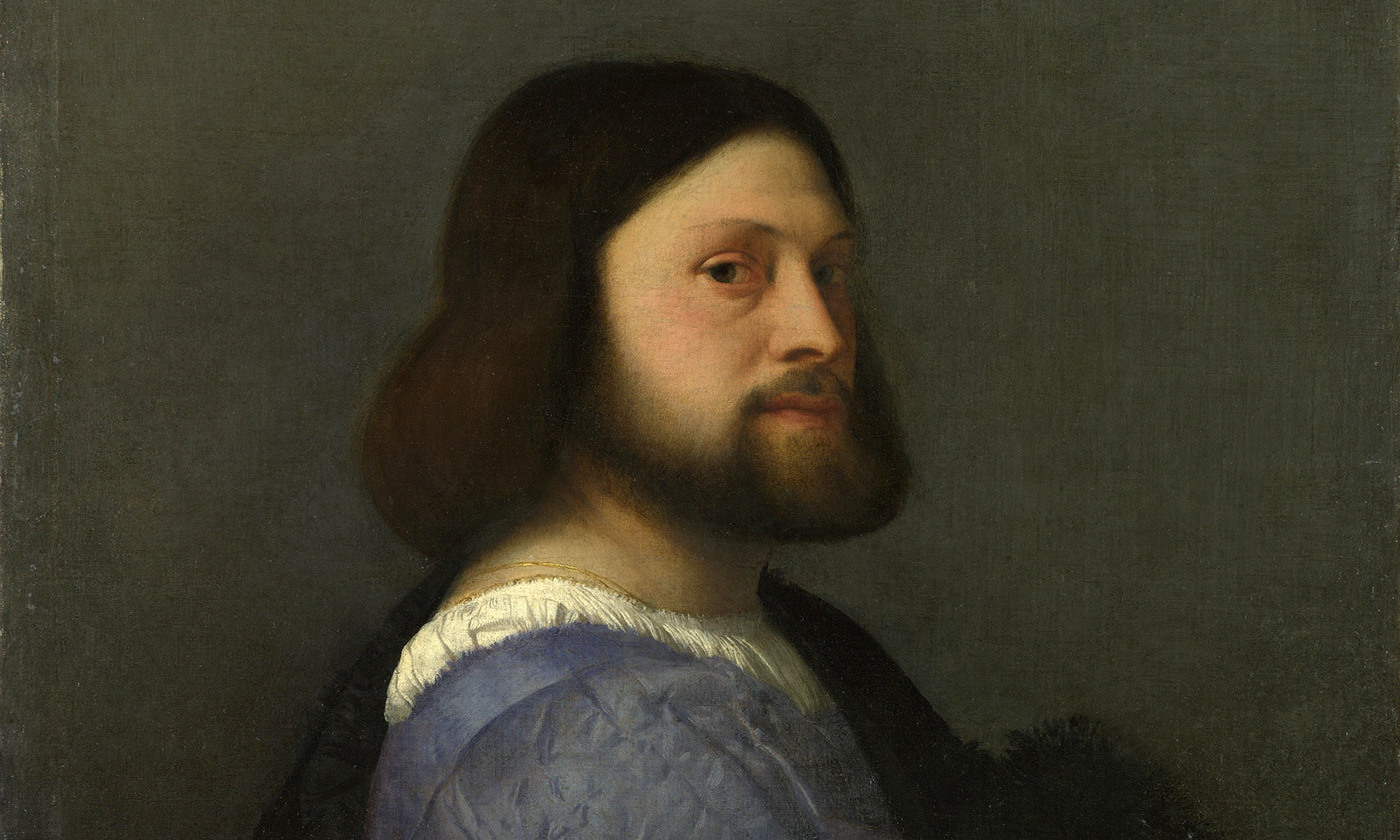
titian

Portrait of a Man with a Quilted Sleeve, Titian, c1509. Courtesy Wikipedia/National Gallery, London.

Keith Frankish | Aeon Ideas

Edited by Nigel Warburton

Most of us have views on politics, current events, religion, society, morality and sport, and we spend a lot of time expressing these views, whether in conversation or on social media. We argue for our positions, and get annoyed if they are challenged. Why do we do this? The obvious answer is that we believe the views we express (ie, we think they are true), and we want to get others to believe them too, because they are true. We want the truth to prevail. That’s how it seems. But do we really believe everything we say? Are you always trying to establish the truth when you argue, or might there be other motives at work?

These questions might seem strange, offensive even. Am I suggesting that you are insincere or hypocritical in your views? No – at least I’m not suggesting that you are consciously so. But you might be unconsciously influenced by concerns other than truth. Nowadays, most psychologists agree that rapid, unconscious mental processes (sometimes called ‘System 1’ processes) play a huge role in guiding our behaviour. These processes are not thought of as Freudian ones, involving repressed memories and desires, but as ordinary, everyday judgments, motives and feelings that operate without conscious awareness, like a mental autopilot.

It seems plausible that such processes guide much of our speech. After all, we rarely give conscious thought to our reasons for saying what we do; the words just come to our lips. But if the motives behind our words are unconscious, then we must infer them from our behaviour, and might be mistaken about what they are. Again, this isn’t a revolutionary idea; for centuries, dramatists and novelists have depicted people deceived about their own motives. (For more on the nature and limits of self-knowledge, see my earlier Aeon article.)

It’s easy to think of motives that might prompt us to express a view we don’t really believe. We might want it to be true, and feel reassurance when we argue for it (think of the parents who insist that their missing child is still alive, despite the lack of evidence). We might associate it with people we admire, and assert it so as to be like them (think of how people are influenced by the views of celebrities). We might think that it will get us attention, and make us seem interesting (think of teenagers who adopt provocative views). We might profess it to fit in and gain social acceptance (think of a university student from a conservative background). Or we might feel that we have a duty to defend it because of our commitment to some creed or ideology (we sometimes call this attitude faith – belief in the religious sense).

Such motives might also be reinforced by other factors. As a society, we tend to admire people who know their own minds and stick to their principles. So, once we have expressed a view, for whatever reason, we might feel (again, unconsciously) that we are now committed to it, and should stick with it as a matter of integrity. At the same time, we might develop an emotional attachment to the view, a bit like an attachment to a sports team. It is now our view, the one we have publicly endorsed, and we want it to win out over its rivals just because it is ours. In this way, we might come to have a strong personal commitment to a claim, even if we don’t really believe it.

I am not suggesting that we are never guided by concerns for truth and knowledge (what philosophers call epistemic concerns), but I suspect that these sorts of emotional and social factors play a much larger role than we like to think. How else can we explain the vehemence with which people defend their views, and the hurt they feel when their views are challenged?

Is it bad if we sometimes say things we don’t believe? It might seem not. The aims I’ve mentioned – seeking social acceptance, for example, or cultivating a self-image – are not necessarily bad ones, and since they are unconscious it is arguable that we shouldn’t be held responsible for them anyway. There are dangers, however. For in order to achieve these aims we must convince our audience that we genuinely believe what we say. If they thought we were saying something merely in order to create an impression on them, then we wouldn’t succeed in creating that impression. And when our aim is to make some impression on ourselves – like the parents who insist that their child is still alive – we must convince ourselves that we believe it too. As a consequence, we might need to back up our words with deeds, acting as if we believe what we say. If there were a glaring disparity between what we said and did, our insincerity would be obvious. In this way, unconscious desires for acceptance, approval and reassurance can lead us to make choices on the basis of claims for which we have no good evidence, with obvious risks of frustration and failure.

Is there, then, any way of telling whether you really believe a claim? It might seem that conscious reflection would settle it. If you consciously entertain the claim, do you think it is true? Even this process might be unreliable, however. Many theorists hold that conscious thinking is simply talking to oneself in inner speech, in which case it can be guided by unconscious motives, just like outer speech. And, as I mentioned, unconscious desires can prompt us to deceive ourselves, telling ourselves that a claim is true even though we don’t really believe it.

Despite this, a thought experiment might help us detect what we genuinely believe to be true. In real life, there might be few contexts where truth really is our dominant concern: maintaining a comforting view or upholding a cherished ideology or self-image might almost always be more important to us than truth. But suppose you were being questioned by the Truth Demon – a super-powerful being who knows the truth on every topic, and will punish you horribly if you give a wrong answer or fail to answer at all. If you continue to assert a claim when the Truth Demon asks you if it is true, then you do really believe it, really think it is true. But if you give a different answer when under threat of torture by the all-knowing demon, then you don’t really believe the claim. This gives us a practical test for belief: imagine the situation just described as vividly as you can, and see what you would say about any of your views. But do be careful not to give too much conscious thought to the matter in case you start telling yourself what you want to hear.Aeon counter – do not remove


Keith Frankish is an English philosopher and writer. He is a visiting research fellow with the Open University in the UK and an adjunct professor with the Brain and Mind Programme at the University of Crete. He lives in Greece.

This article was originally published at Aeon and has been republished under Creative Commons.

Commentary

I like the gist of this article (along with the author’s previous article), but the Truth Demon (a.k.a. God) thought experiment could use some work. It’s too easy to deceive and delude oneself, even under imagined duress. It’s also unclear if many people would be “punished horribly” while expressing their false beliefs in good conscience. As mentioned by the author, a good judge of honest belief is one’s actions, but there is a difference between honest belief and truth itself (or is there?). Although the author’s final word is on point, I prefer Nietzsche’s thought experiment: “What, if some day or night a demon were to steal after you into your loneliest loneliness and say to you: ‘This life as you now live it and have lived it, you will have to live once more and innumerable times more’ … Would you not throw yourself down and gnash your teeth and curse the demon who spoke thus? Or have you once experienced a tremendous moment when you would have answered him: ‘You are a god and never have I heard anything more divine.”


We don’t know ourselves, we knowledgeable people—we are personally ignorant
about ourselves. And there’s good reason for that. We’ve never tried to find out who
we are. How could it ever happen that one day we’d discover our own selves? With
justice it’s been said that “Where your treasure is, there shall your heart be also.” Our treasure lies where the beehives of our knowledge stand. We are always busy with our knowledge, as if we were born winged creatures—collectors of intellectual honey. In our hearts we are basically concerned with only one thing, to “bring something home.” As far as the rest of life is concerned, what people call “experience”—which of us is serious enough for that? Who has enough time? In these matters, I fear, we’ve been “missing the point.”

Our hearts have not even been engaged—nor, for that matter, have our ears! We’ve
been much more like someone divinely distracted and self-absorbed into whose ear
the clock has just pealed the twelve strokes of noon with all its force and who all at
once wakes up and asks himself “What exactly did that clock strike?”—so we rub
ourselves behind the ears afterwards and ask, totally surprised and embarrassed “What have we really just experienced? And more: “Who are we really?” Then, as I’ve mentioned, we count—after the fact—all the twelve trembling strokes of the clock of our experience, our lives, our being—alas! in the process we keep losing the count. So we remain necessarily strangers to ourselves, we do not understand ourselves, we have to keep ourselves confused. For us this law holds for all eternity: “Each man is furthest from himself.” Where we ourselves are concerned, we are not “knowledgeable people.”

? Friedrich Nietzsche, On the Genealogy of Morals/Ecce Homo

When subjectivity, inwardness, is the truth, the truth becomes objectively determined as a paradox, and that it is paradoxical is made clear by the fact that subjectivity is truth, for it repels objectivity, and the expression for the objective repulsion is the intensity and measure of inwardness. The paradox is the objective uncertainty, which is the expression for the passion of inwardness, which is precisely the truth. This is the Socratic principle. The eternal, essential truth, that is, that which relates itself essentially to the individual because it concerns his existence (all other knowledge is, Socratically speaking, accidental, its degree and scope being indifferent), is a paradox. Nevertheless, the eternal truth is not essentially in itself paradoxical, but it becomes so by relating itself to an existing individual. Socratic ignorance is the expression of this objective uncertainty, the inwardness of the existential subject is the truth. To anticipate what I will develop later, Socratic ignorance is an analogy to the category of the absurd, only that there is still less objective certainty in the absurd, and therefore infinitely greater tension in its inwardness. The Socratic inwardness that involves existence is an analogy to faith, except that this inwardness is repulsed not by ignorance but by the absurd, which is infinitely deeper. Socratically the eternal, essential truth is by no means paradoxical in itself, but only by virtue of its relation to an existing individual.

? Søren Kierkegaard, Concluding Unscientific Postscript

Reality and the Imagination

5361608149_56eff83272_b

“Freedom” by akshay moon


In this episode of the Waking Up podcast, Sam Harris speaks with Yuval Noah Harari about meditation, the need for stories, the power of technology to erase the boundary between fact and fiction, wealth inequality, the problem of finding meaning in a world without work, religion as a virtual reality game, the difference between pain and suffering, the future of globalism, and other topics.

Yuval Noah Harari has a PhD in history from Oxford University and is a professor in the Department of History at Hebrew University in Jerusalem. He specialized in World History, medieval history and military history, but his current research focuses on macro-historical questions: What is the relation between history and biology? What is the essential difference between Homo sapiens and other animals? Is there justice in history? Does history have a direction? Did people become happier as history unfolded?

He is the author of two blockbuster books, Sapiens: A Brief History of Humankind and Homo Deus: A Brief History of Tomorrow.

Discuss this in the forums


Follow Sam Harris on Twitter: @SamHarrisOrg

‘Know thyself’ is not just silly advice: it’s actively dangerous

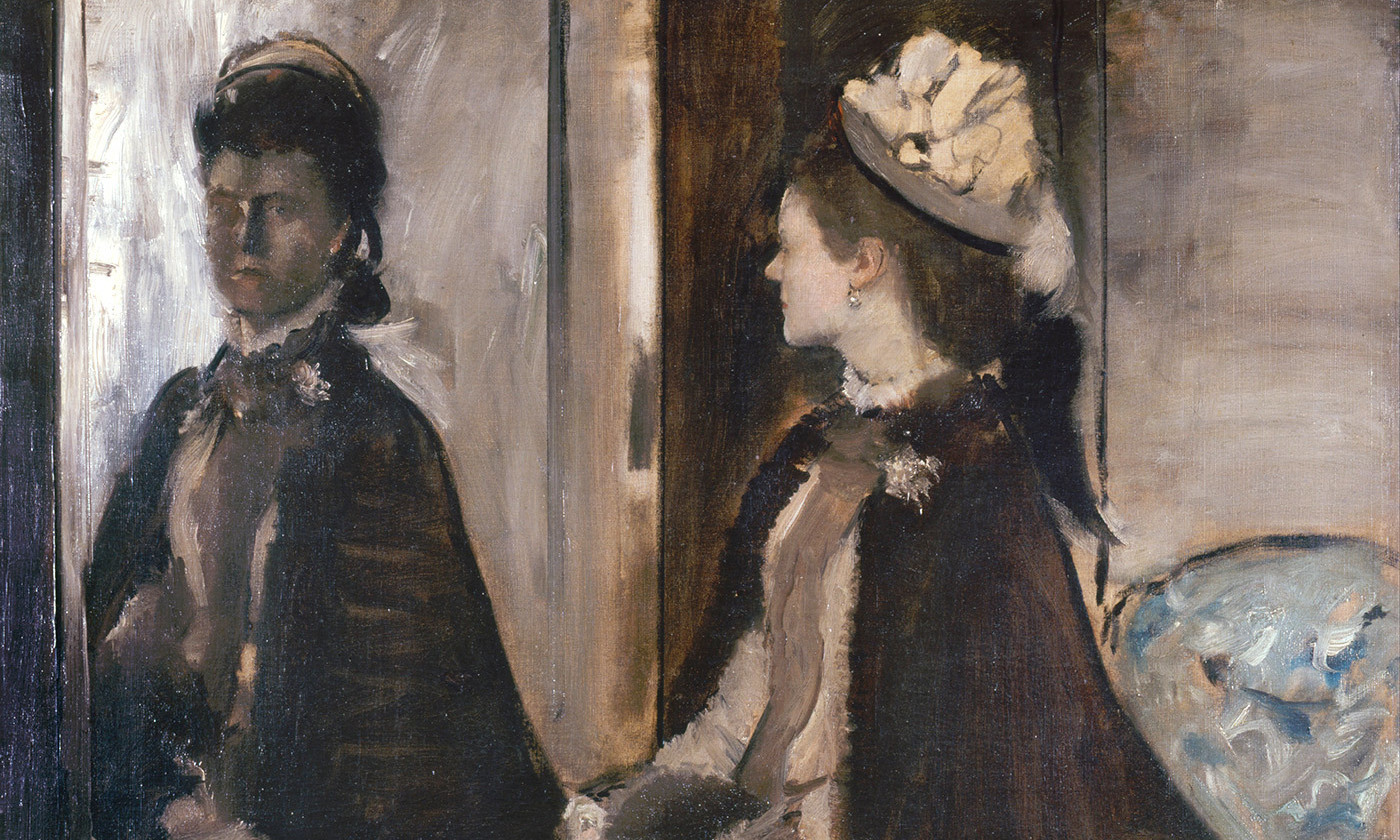
idea_sized-edgar_degas_-_mrs_jeantaud_in_the_mirror_-_google_art_project

Detail from Madame Jeantaud au miroir by Edgar Degas c1875. Courtesy Wikipedia

By Bence Nanay

There is a phrase you are as likely to find in a serious philosophy text as you are in the wackiest self-help book: ‘Know thyself!’ The phrase has serious philosophical pedigree: by Socrates’ time, it was more or less received wisdom (apparently chiselled into the forecourt of the Temple of Apollo at Delphi) though a form of the phrase reaches back to Ancient Egypt. And ever since, the majority of philosophers have had something to say about it.

But ‘Know thyself!’ also has self-help appeal. Is your aim to accept yourself? Well, you need to know thyself for that first. Or is it to make good decisions – decisions that are right for you? Again, this would be difficult unless you knew thyself. The problem is that none of this is based on a realistic picture of the self and of how we make decisions. This whole ‘knowing thyself’ business is not as simple as it seems. In fact, it might be a serious philosophical muddle – not to say bad advice.

Let’s take an everyday example. You go to the local cafe and order an espresso. Why? Just a momentary whim? Trying something new? Maybe you know that the owner is Italian and she would judge you if you ordered a cappuccino after 11am? Or are you just an espresso kind of person?

I suspect that the last of these options best reflects your choices. You do much of what you do because you think it meshes with the kind of person you think you are. You order eggs Benedict because you’re an eggs Benedict kind of person. It’s part of who you are. And this goes for many of our daily choices. You go to the philosophy section of the bookshop and the fair-trade section at the grocer’s shop because you are a philosopher who cares about global justice, and that’s what philosophers who care about global justice do.

We all have fairly stable ideas about what kind of people we are. And that’s all for the best – we don’t have to think too hard when ordering coffee every morning. These ideas about what kind of people we are might also be accompanied by ideas about what kind of people we are not – I’m not going to shop at Costco, I’m not that kind of person. (This way of thinking about yourself could easily slide into moralising your preferences, but let’s not open that can of worms here.)

There is, however, a deep problem with this mental set-up: people change. There are tumultuous periods when we change drastically – in times of romantic love, say, or divorce, or having children. Often we are aware of these changes. After you’ve had kids, you probably notice that you’ve suddenly become a morning person.

But most changes happen gradually and under the radar. A few mechanisms of these changes are well understood, such as the ‘mere exposure effect’: the more you are exposed to something, the more you tend to like it. Another, more troubling one, is that the more your desire for something is frustrated, the more you tend to dislike it. These changes happen gradually, often without us noticing anything.

The problem is this: if we change while our self-image remains the same, then there will be a deep abyss between who we are and who we think we are. And this leads to conflict.

To make things worse, we are exceptionally good at dismissing even the possibility that we might change. Psychologists have given this phenomenon a fancy name: ‘The End of History Illusion’. We all think that who we are now is the finished product: we will be the same in five, 10, 20 years. But, as these psychologists found, this is completely delusional – our preferences and values will be very different already in the not-so-distant future.

Why is this such a big issue? It might be okay when it comes to ordering the espresso. Maybe you now slightly prefer cappuccino, but you think of yourself as an espresso kind of person, so you keep ordering espresso. So you’re enjoying your morning drink a little bit less – not such a big deal.

But what is true of espresso is true of other preferences and values in life. Maybe you used to genuinely enjoy doing philosophy, but you no longer do. But as being a philosopher is such a stable feature of your self-image, you keep doing it. There is a huge difference between what you like and what you do. What you do is dictated not by what you like, but by what kind of person you think you are.

The real harm of this situation is not only that you spend much of your time doing something that you don’t particularly like (and often positively dislike). Instead, it is that the human mind does not like blatant contradictions of this kind. It does its best to hide this contradiction: a phenomenon known as cognitive dissonance.

Hiding a gaping contradiction between what we like and what we do takes significant mental effort and this leaves little energy to do anything else. And if you have little mental energy left, it is so much more difficult to switch off the TV or to resist spending half an hour looking at Facebook or Instagram.

‘Know thyself!’, right? If we take the importance of change in our lives seriously, this just isn’t an option. You might be able to know what you think of yourself in this moment. But what you think of yourself is very different from who you are and what you actually like. And in a couple of days or weeks, all of this might change anyway.

Knowing thyself is an obstacle to acknowledging and making peace with constantly changing values. If you know thyself to be such-and-such a kind of person, this limits your freedom considerably. You might have been the one who chose to be an espresso person or a donating-to-charity person but, once these features are built into your self-image, you have very little say in what direction your life is going. Any change would be either censored or lead to cognitive dissonance. As André Gide wrote in Autumn Leaves (1950): ‘A caterpillar who seeks to know himself would never become a butterfly.’Aeon counter – do not remove


Bence Nanay is professor of philosophy at the University of Antwerp and Senior Research Associate at the University of Cambridge. He is the author of Aesthetics as Philosophy of Perception (2016).

This article was originally published at Aeon and has been republished under Creative Commons.
The Four Horsemen

This little chat, a casual yet intellectually stimulating discussion between four brilliant minds was so excellent that I felt the need to share it. Many topics are discussed spanning science, religion, psychology and sociology. The way they interact with each other with sincerity, empathy and humility and a sense of fellowship is hard to come by in the world today. My personal loss of faith was due more to the study of philosophy rather than science, although science certainly played a role. I don’t agree with some of the things that are said by these so-called “New Atheists,” but I think that is the point. We need more fellowship and real human connection. We need to learn to love one another, regardless of worldview.

https://www.youtube.com/watch?v=n7IHU28aR2E


Full Texts by these Authors (PDF)

The God Delusion by Richard Dawkins

Darwin’s Dangerous Idea by Daniel Dennett

God is Not Great by Christopher Hitchens

The End of Faith by Sam Harris

Our Illusory Sense of Agency Has a Deeply Important Social Purpose

I’m trying to concentrate on writing this piece, but my two grandchildren in the room next door have stopped making paper aeroplanes and started arguing. ‘You kicked me,’ yells Freya. Her brother Ben insists it was an accident. ‘I didn’t mean to,’ he cries.

Why should this be an excuse, I wonder? The pain is the same in either case.

But Freya is more concerned with Ben’s intention than the pain. ‘You did it deliberately,’ she says. But did Ben hit her on purpose? How do we know, and why should it matter?

It certainly doesn’t come from having access to the brain processes that underlie our actions. After all, I have no insight into the electrochemical particulars of how my nerves are firing or how neurotransmitters are coursing through my brain and bloodstream. Instead, our experience of agency seems to come from inferences we make about the causes of our actions, based on crude sensory data. And, as with any kind of perception based on inference, our experience can be tricked.

Look at this picture of a domino:

We clearly see five convex knobs and three concave hollows, despite the fact we’re looking at a flat screen. Our brain creates the illusion because we expect light to come from above, and so we can infer the 3D shapes from the shading. If the shadow is at the top, we see a hollow. If it is at the bottom, we see a knob. But, for the same reason, if you turn the picture upside down you’ll see three knobs and five hollows.

It’s the same with our experience of agency. Our inferences can be wrong. I can believe that I am acting when it’s actually someone else. Or I can believe that someone else is acting when it’s actually me.

Such illusions aren’t confined to highly contrived laboratory situations. In the 1970s, facilitated communication, or supported typing, was promoted as a teaching strategy for helping people with autism communicate with the wider world. The child’s fingers rested on the keys and the facilitator helped the child to type by detecting their intended movements. The technique was eventually discredited after many demonstrations showed that any ‘communication’ came from the facilitator, and not from the child. But the striking thing was that most of the facilitators sincerely believed that they were not the agents of these actions. Free will is not something we have, so much as something we feel.

These observations point to a fundamental paradox about consciousness. We have the strong impression that we choose when we do and don’t act and, as a consequence, we hold people responsible for their actions. Yet many of the ways we encounter the world don’t require any real conscious processing, and our feeling of agency can be deeply misleading.

If our experience of action doesn’t really affect what we do in the moment, then what is it for? Why have it? Contrary to what many people believe, I think agency is only relevant to what happens after we act – when we try to justify and explain ourselves to each other.

There are a few hints that support this view. Take the subjective experience of fluency: the easier it feels to do something, the more likely you are to think that you’re in control of the action. But we have to learn to interpret such feelings, and what other people tell us can alter the way we respond. When doing hard mental work, we have a strong sense of making an effort. Does this mean that we’ll be tired and need a rest, or that we’ll be energised and ready to keep going? If someone tells us we will feel depleted, we’ll perform badly on the task. But if we’re told we should feel energised, we’ll do well. In the same way we learn to associate certain experiences of action with a sense of agency. And it is these kinds of action that we feel responsible for.

The bond between agency and mutual accountability goes back at least as far as 300 BCE. The Greek philosophers, Epicurus and the Stoics, wanted to defend the idea of free will despite believing the universe to be pre-determined by the laws of nature. Free will has two fundamental features, they said. The first is the feeling of being in control: ‘I am the cause of this event.’ The second is a grasp of the counterfactual: ‘I could have chosen otherwise.’ Pangs of regret – something we’ve all experienced – make no sense unless we believe that we could have done something differently. Furthermore, Epicurus believed that we acquire this sense of responsibility via the praise and blame we received from others. By listening to our peers and elders, we become attuned to our capacity to effect change in the world.

Our conscious experience is what enables us to pick up these lessons. It might be surplus to requirements for most of our actions, but we certainly need consciousness when we’re reflecting on our life and discussing it with other people. For example, many children are reminded to think before they act, lest they regret it. They also learn that ‘accidents’ are more readily excused than intentional wrongs. So my grandson Ben might not really be sure whether he kicked Freya accidentally or on purpose, but he knows he’s got a better chance of getting away with it if he claims the kick was unintentional. In this way, we gradually figure out what it ‘feels’ like for our actions to be ‘deliberate’, and if all goes well, we develop into adults with a sense of responsibility about our own powers.

Given the social dimensions of agency, it’s unsurprising that the norms about responsibility vary considerably. In another time and place Ben might not get off so lightly for inadvertently kicking Freya. Certain Pacific Islander cultures, for example, believe in the ‘opacity’ of other minds – the idea that it is impossible, or at least very difficult, to know what other people think and feel. As a result, people are frequently held responsible for their wrongdoings, even when they were the result of an accident or error. Intentionality is impossible to grasp, and therefore largely irrelevant. Similarly, among the Mopan Maya of Belize and Guatemala, children and adults alike are punished according to the outcome of their actions.

What’s more, by considering our experiences and sharing them with others, we can reach a consensus about what the world and we humans are really like. A consensus need not be accurate to be attractive or useful, of course. For a long time everyone agreed that the Sun went round the Earth. Perhaps our sense of agency is a similar trick: it might not be ‘true’, but it maintains social cohesion by creating a shared basis for morality. It helps us understand why people act as they do – and, as a result, makes it is easier to predict people’s behaviour.

Responsibility, then, is the real currency of conscious experience. In turn, it is also the bedrock of culture. Humans are social animals, but we’d be unable to cooperate or get along in communities if we couldn’t agree on the kinds of creatures we are and the sort of world we inhabit. It’s only by reflecting, sharing and accounting for our experiences that we can find such common ground. To date, the scientific method is the most advanced cognitive technology we’ve developed for honing the accuracy of our consensus – a method involving continuous experimentation, discussion and replication. Ben and Freya’s debate about the meaning of action is just the beginning.Aeon counter – do not remove

Chris Frith

This article was originally published at Aeon and has been republished under Creative Commons.


Philosophy Primary Sources II

library

This post will serve as Part II of Philosophy Primary Sources and a supplement to Primary Sources & Encyclopedias (check out the Links section for even more research sources). There are certain books that are essential to an education about the human condition of which I believe should be available for free and with easy access to everybody. This list is more comprehensive and nuanced than the previous list, as it includes books that hold cultural significance in various fields of study. Each book on this list is in PDF format. I have organized them by topic (many topics intersect) and the last name of the author.


Philosophy

The Life of the Mind by Hannah Arendt

The Human Condition by Hannah Arendt

Language, Truth, and Logic by A.J. Ayer

The Problem of Knowledge by A.J. Ayer

Selected Writings of Jean Baudrillard

The Second Sex by Simone de Beauvoir

The Ethics of Ambiguity by Simone de Beauvoir

Matter and Memory by Henri Bergson

An Introduction to Metaphysics by Henri Bergson

I and Thou by Martin Buber

The Myth of Sisyphus and Other Essays by Albert Camus

The Rebel by Albert Camus

Language and Mind by Noam Chomsky

The God Delusion by Richard Dawkins

Nietzsche and Philosophy by Gilles Deleuze

What is Philosophy? by Gilles Deleuze & Félix Guattari

Darwin’s Dangerous Idea by Daniel Dennett

Speech and Phenomena & Other Essays by Jacques Derrida

Dissemination by Jacques Derrida

In Praise of Folly by Desiderius Erasmus

The Vocation of Man by Johann Gottlieb Fichte

The Science of Knowledge by Johann Gottlieb Fichte

The Archaeology of Knowledge & The Discourse on Language by Michel Foucault

Selected Writings of Mahatma Gandhi

Being and Time by Martin Heidegger

The Question Concerning Technology & Other Essays by Martin Heidegger

What is Metaphysics? by Martin Heidegger

God is Not Great by Christopher Hitchens

Logical Investigations by Edmund Husserl

Reason and Existenz by Karl Jaspers

Fear and Trembling by Søren Kierkegaard

The Sickness Unto Death by Søren Kierkegaard

Philosophical Fragments by Søren Kierkegaard

Last Writings: Nothingness and the Religious Worldview by Nishida Kitar?

The Levinas Reader edited by Sáun Hand

The Postmodern Condition by Jean-François Lyotard

Essays of Michel de Montaigne

On the Genealogy of Morals by Friedrich Nietzsche

The Portable Nietzsche edited by Walter Kaufmann

The Self-Overcoming of Nihilism by Keiji Nishitani

Philosophical Explanations by Robert Nozick

Man Has No Nature by José Ortega y Gasset

The Age of Reason by Thomas Paine

Pensées by Blaise Pascal

The Morals of Plutarch

The Virtue of Selfishness by Ayn Rand

Contingency, Irony, and Solidarity by Richard Rorty

Philosophy and the Mirror of Nature by Richard Rorty

The Confessions of Jean-Jacques Rousseau

Free Thought & Official Propaganda by Bertrand Russell

In Praise of Idleness by Bertrand Russell

Mysticism and Logic: And Other Essays by Bertrand Russell

Being and Nothingness by Jean-Paul Sartre

Existentialism is a Humanism by Jean-Paul Sartre

The World as Will and Representation – Vol. 1 by Arthur Schopenhauer

The World as Will and Representation – Vol. 2 by Arthur Schopenhauer

The Basis of Morality by Arthur Schopenhauer

My View of the World (Excerpt) by Erwin Schrödinger

Athens and Jerusalem by Lev Shestov

The Ego and His Own by Max Stirner

The Courage to Be by Paul Tillich

The Eternal Now by Paul Tillich

Weak Thought edited by Gianni Vattimo and Pier Aldo Rovatti

The Wisdom of Insecurity by Alan Watts

Philosophical Investigations by Ludwig Wittgenstein


Science

The Essays of Francis Bacon

The New Organon by Francis Bacon

The Grounds for and Excellence of the Corpuscular or Mechanical Philosophy by Robert Boyle

On the Revolutions of the Heavenly Spheres (Dedication) by Nicolaus Copernicus

On the Origin of Species by Means of Natural Selection by Charles Darwin

The Blind Watchmaker by Richard Dawkins

The Selfish Gene by Richard Dawkins

The Principles of Quantum Mechanics by Paul Dirac

Relativity: The Special and General Theory by Albert Einstein

The Assayer by Galileo Galilei

Dialogues Concerning the Two Chief World Systems by Galileo Galilei

A Brief History of Time by Stephen Hawking

Physics and Philosophy: The Revolution in Modern Science by Werner Heisenberg

The Grand Design by Stephen Hawking & Leonard Mlodinow

Treatise on Light by Christiaan Huygens

The Structure of Scientific Revolutions by Thomas Kuhn

The Copernican Revolution by Thomas Kuhn

The Mathematical Principles of Natural Philosophy by Sir Isaac Newton

Science and Hypothesis by Henri Poincaré

What is Life? by Erwin Schrödinger

Mind and Matter by Erwin Schrödinger

The Physics of the Healing by Ibn Sīnā (Avicenna)


Psychology

Man’s Search for Meaning by Viktor Frankl

The Complete Works of Sigmund Freud

The Principles of Psychology: Volume I by William James

The Principles of Psychology: Volume II by William James

Man and his Symbols by Carl Jung

Memories, Dreams, Reflection by Carl Jung

Écrits by Jacques Lacan

Religions, Values, and Peak Experiences by Abraham Maslow

Cognitive Psychology by Ulric Neisser

Verbal Behavior by B.F. Skinner


Literature

The Tragedies of Aeschylus

The Divine Comedy by Dante Alighieri

Don Quixote by Miguel de Cervantes

The Brothers Karamazov by Fyodor Dostoevsky

Crime and Punishment by Fyodor Dostoevsky

Notes from the Underground by Fyodor Dostoevsky

Euripides: Ion, Hippolytus, Medea, & Alcestis

Faust by Johann Wolfgang von Goethe

The Iliad of Homer

The Odyssey of Homer

Brave New World by Aldous Huxley

The Complete Stories of Franz Kafka

Paradise Lost by John Milton

1984 by George Orwell

Animal Farm by George Orwell

In Search of Lost Time by Marcel Proust

Atlas Shrugged by Ayn Rand

The Fountainhead by Ayn Rand

Letters to a Young Poet by Rainer Maria Rilke

The Notes of Malte Laurids Brigge by Rainer Maria Rilke

The Complete Works of William Shakespeare

The Tragedies of Sophocles

Walden by Henry David Thoreau

War and Peace by Leo Tolstoy

Candide by Voltaire

Player Piano by Kurt Vonnegut

Note: Planet Publish hosts a vast selection of literature in PDF format available for free.


Religious

A Study of Dōgen by Masao Abe

Deliverance from Error by Al-Ghazali

The Incoherence of the Philosophers by Al-Ghazali

The Summa Theologica by Thomas Aquinas

The Teaching of Buddha

Institutes of the Christian Religion by John Calvin

The Analects of Confucius

The Vedas compiled by the Dharmic Scriptures Team

On Divine Names & Mystical Theology by Pseudo-Dionysius the Areopagite

The Shōbōgenzō: Volume I by Eihei Dōgen

The Shōbōgenzō: Volume II by Eihei Dōgen

The Shōbōgenzō: Volume III by Eihei Dōgen

The Shōbōgenzō: Volume IV by Eihei Dōgen

Dōgen’s Extensive Record: A Translation of the Eihei Kōroku

The Tibetan Book of the Dead edited by W. Y. Evans-Wentz

The Essence of Christianity by Ludwig Feuerbach

Christian Apologetics by Norman Geisler

Philosophy of Religion by Norman Geisler

The Principia Discordia by Greg Hill and Kerry Wendell Thornley

The Perennial Philosophy by Aldous Huxley

The Guide for the Perplexed by Moses Maimonides

The Mūlamadhyamakakārikā of Nāgārjuna

On Buddhism by Keiji Nishitani

The Upanishads translated by Swami Paramananda

On the Harmony of Religion and Philosophy by Ibn Rushd (Averroes)

The Incoherence of the Incoherence by Ibn Rushd (Averroes)

Forgotten Truth by Huston Smith

An Introduction to Zen Buddhism by D.T. Suzuki

The Bhagavad Gita translated by Shri Purohit Swami

The New Being by Paul Tillich

The Way of Zen by Alan Watts

Note: Internet Sacred Text Archive hosts an archive of online books about religion, mythology, folklore and the esoteric (including the writings of the early church fathers).


Historical

World History: Patterns of Interaction by Beck, et al.

The Diary of a Young Girl by Anne Frank

The Decline and Fall of the Roman Empire: Volume I by Edward Gibbon

The Decline and Fall of the Roman Empire: Volume II by Edward Gibbon

The Decline and Fall of the Roman Empire: Volume III by Edward Gibbon

The Decline and Fall of the Roman Empire: Volume IV by Edward Gibbon

The Decline and Fall of the Roman Empire: Volume V by Edward Gibbon

The Decline and Fall of the Roman Empire: Volume VI by Edward Gibbon

The Histories of Herodotus

I Have a Dream by Martin Luther King Jr.

The History of Rome by Titus Livius

The History of Western Philosophy by Bertrand Russell

Anti-Semite and Jew: An Exploration of the Etiology of Hate by Jean-Paul Sartre

The Decline of the West by Oswald Spengler

The Annals of Tacitus

The History of the Peloponnesian War by Thucydides

Note: Project Gutenberg and the Internet Archive are excellent sources of historical writings and much more. Ancient Greek and Roman histories can be found at Loebolus.


Important Historical Documents

Magna Carta Libertatum (Great Charter of Liberties)

Universal Declaration of Human Rights

The Code of Hammurabi

Note: OurDocuments.gov hosts a list of 100 milestone documents, compiled by the National Archives and Records Administration, and drawn primarily from its nationwide holdings. The documents chronicle United States history from 1776 to 1965.


Political & Social Theory

On the Reproduction of Capitalism by Louis Althusser

An Introduction to The Principles of Morals and Legislation by Jeremy Bentham

Understanding Power: The Indispensable Chomsky

Anti-Oedipus: Capitalism & Schizophrenia by Gilles Deleuze & Félix Guattari

Discipline and Punish: The Birth of the Prison by Michel Foucault

The History of Sexuality by Michel Foucault

Madness and Civilization by Michel Foucault

The Theory of Communicative Action by Jürgen Habermas

Between Facts and Norms by Jürgen Habermas

Leviathan by Thomas Hobbes

Dialectic of Enlightenment by Max Horkheimer and Theodor Adorno

The General Theory of Employment, Interest, and Money by John Maynard Keynes

Structural Anthropology by Claude Lévi-Strauss

The Savage Mind by Claude Lévi-Strauss

The Prince by Niccolò Machiavelli

Capital: Critique of Political Economy, Volume I by Karl Marx

Capital: Critique of Political Economy, Volume II by Karl Marx

Capital: Critique of Political Economy, Volume III by Karl Marx

Economic and Philosophic Manuscripts of 1844 by Karl Marx

The German Ideology by Karl Marx & Friedrich Engels

Areopagitica by John Milton

The Spirit of Laws by Montesquieu

A Theory of Justice by John Rawls

Émile, or Concerning Education by Jean-Jacques Rousseau

The Origin of Inequality by Jean-Jacques Rousseau

The Social Contract by Jean-Jacques Rousseau

The Wealth of Nations by Adam Smith

Civil Disobedience by Henry David Thoreau

Writings of Leon Trotsky

The Theory of the Leisure Class by Thorstein Veblen

The Protestant Ethic and the Spirit of Capitalism by Max Weber


Check out the Links Section for more sources of primary texts and general research.