Aphorisms 1

“If you meet the Buddha on the road, kill him.”

– Buddhist Teaching

“The United States has less than 5 percent of the world’s population. But it has almost a quarter of the world’s prisoners.”

– The New York Times

“The contemporary philosophical situation is determined by the fact that two philosophers, Kierkegaard and Nietzsche, who did not count in their times and, for a long time, remained without influence in the history of philosophy, have continually grown in significance. Philosophers after Hegel have increasingly returned to face them, and they stand today unquestioned as the authentically great thinkers of their age. Both their influence and the opposition to them prove it. Why then can these philosophers no longer be ignored, in our time?

In the situation of philosophizing, as well as in the real life of men, Kierkegaard and Nietzsche appear as the expression of destinies…”

– Karl Jaspers

“There is always some madness in love. But there is also always some reason in madness.”

“The will to truth which will still tempt us to many a venture, that famous truthfulness of which all philosophers so far have spoken with respect – what questions has this will to truth not laid before us! What strange, wicked, questionable questions! That is a long story even now – and yet it seems as if it had scarcely begun. Is it any wonder that we should finally become suspicious, lose patience, and turn away impatiently? that we should finally learn from this Sphinx to ask questions, too? Who is it really that puts questions to us here? What in us really wants “truth”?

Indeed we came to a long halt at the question about the cause of this will – until we finally came to a complete stop before a still more basic question. We asked about the value of this will. Suppose we want truth: why not rather untruth? and uncertainty? even ignorance?

The problem of the value of truth came before us – or was it we who came before the problem? Who of us is Oedipus here? Who the Sphinx? It is a rendezvous, it seems, of questions and question marks.

And though it scarcely seems credible, it finally almost seems to us as if the problem had never even been put so far – as if we were the first to see it, fix it with our eyes, and risk it. For it does involve a risk, and perhaps there is none that is greater.”

“What, then, is truth? A mobile army of metaphors, metonyms, and anthropomorphisms—in short, a sum of human relations which have been enhanced, transposed, and embellished poetically and rhetorically, and which after long use seem firm, canonical, and obligatory to a people: truths are illusions about which one has forgotten that this is what they are; metaphors which are worn out and without sensuous power; coins which have lost their pictures and now matter only as metal, no longer as coins.”

“There are no facts, only interpretations.”

“Either one does not dream, or does so interestingly. One should learn to spend one’s waking life in the same way: not at all, or interestingly.”

“For – believe me – the secret for harvesting from existence the greatest fruitfulness and the greatest enjoyment is – to live dangerously! Build your cities on the slopes of Vesuvius! Send your ships unto uncharted seas! Live at war with your peers and yourselves! Be robbers and conquerors as long as you cannot be rulers and possessors, you seekers of knowledge! Soon the time will be past in which you had to be content living hidden in forests like shy deer! Finally the search for knowledge will reach for its due; it will want to rule and possess, and you with it!”

“What, if some day or night a demon were to steal after you into your loneliest loneliness and say to you: “This life as you now live it and have lived it, you will have to live once more and innumerable times more; and there will be nothing new in it, but every pain and every joy and every thought and sigh and everything unutterably small or great in your life will have to return to you, all in the same succession and sequence – even this spider and this moonlight between the trees, and even this moment and I myself. The eternal hourglass of existence is turned upside down again and again, and you with it, speck of dust!” Would you not throw yourself down and gnash your teeth and curse the demon who spoke thus?… Or have you once experienced a tremendous moment when you would have answered him: ‘You are a god and never have I heard anything more divine.'”

“In former times, one sought to prove that there is no God—today one indicates how the belief that there is a God arose and how this belief acquired its weight and importance: a counter-proof that there is no God thereby becomes superfluous.—When in former times one had refuted the ‘proofs of the existence of God’ put forward, there always remained the doubt whether better proofs might not be adduced than those just refuted: in those days atheists did not know how to make a clean sweep.”

“Once upon a time, in some remote corner of the universe, poured out and glittering in innumerable solar systems, there once was a star on which clever animals invented knowledge. That was the highest and most mendacious minute of “world history” — yet only a minute. After nature had drawn a few breaths the star grew cold, and the clever animals had to die. One might invent such a fable and still not have illustrated sufficiently how wretched, how shadowy and flighty, how aimless and arbitrary, the human intellect appears in nature. There have been eternities when it did not exist; and when it is done for again, nothing will have happened.”

“God is dead. God remains dead. And we have killed him. How shall we comfort ourselves, the murderers of all murderers? What was holiest and mightiest of all that the world has yet owned has bled to death under our knives: who will wipe this blood off us? What water is there for us to clean ourselves? What festivals of atonement, what sacred games shall we have to invent? Is not the greatness of this deed too great for us? Must we ourselves not become gods simply to appear worthy of it?”

“It was precisely here that I saw the great danger to mankind, its sublimest enticement and seduction—but to what? to nothingness?—it was precisely here that I saw the beginning of the end, the dead stop, a retrospective weariness, the will turning against life, the tender and sorrowful signs of the ultimate illness: I understood the ever spreading morality of pity that had seized even on philosophers and made them ill, as the most sinister symptom of a European culture that had itself become sinister, perhaps as its by-pass to a new Buddhism? to a Buddhism for Europeans? to—nihilism?”

“The desire for a unio mystica with God is the desire of the Buddhist for nothingness, Nirvana—and no more!”

“A ‘scientific’ interpretation of the world … might … be one of the most stupid of all possible interpretations of the world, meaning that it would be one of the poorest in meaning. This thought is intended for the ears and consciences of our mechanists who nowadays like to pass as philosophers and insist that mechanics is the doctrine of the first and last laws on which all existence must be based as on a ground floor. But an essentially mechanical world would be an essentially meaningless world. Assuming that one estimated the value of a piece of music according to how much of it can be counted, calculated, and expressed in formulas: how absurd would such a ‘scientific’ estimation of music be! Nothing, really nothing of what is ‘music’ in it!”

“Gradually it has become clear to me what every great philosophy so far has been – namely, the personal confession of its author and a kind of involuntary and unconscious memoir; also that the moral (or immoral) intentions in every philosophy constituted the real germ of life from which the whole plant had grown.

Indeed, if one would explain how the abstrusest metaphysical claims of a philosopher really came about, it is always well (and wise) to ask first: at what morality does all this (does he) aim?”

“There are no moral phenomena, only moral interpretations of phenomena.”

“Nothing is true. All is permitted.”

“Virtue is under certain circumstances merely an honorable form of stupidity: who could be ill-disposed toward it on that account? And this kind of virtue has not been outlived even today. A kind of sturdy peasant simplicity, which, however, is possible in all classes and can be encountered only with respect and a smile, believes even today that everything is in good hands, namely in the “hands of God”; and when it maintains this proportion with the same modest certainty as it would that two and two make four, we others certainly refrain from contradicting. Why disturb this pure foolishness? Why darken it with our worries about man, people, goal, future? And even if we wanted to do it, we could not. They project their own honorable stupidity and goodness into the heart of things (the old God, deus myops, still lives among them!); we others – we read something else into the heart of things: our own enigmatic nature, our contradictions, our deeper, more painful, more mistrustful wisdom.”

“The higher man is distinguished from the lower by his fearlessness and his readiness to challenge misfortune.”

“Another Christian concept, no less crazy, has passed even more deeply into the tissue of modernity: the concept of the ‘equality of souls before God.’ This concept furnishes the prototype of all theories of equal rights.”

“The domestication (the culture) of man does not go deep – where it does go deep it at once becomes degeneration (type: the Christian). The ‘savage’ (or, in moral terms, the evil man) is a return to nature – and in a certain sense his recovery, his cure from ‘culture’.”

“My humanity is a constant self-overcoming.”

“We do not belong to those who have ideas only among books, when stimulated by books. It is our habit to think outdoors – walking, leaping, climbing, dancing, preferably on lonely mountains or near the sea where even the trails become thoughtful. Our first questions about the value of a book, of a human being, or a musical composition are: Can they walk? Even more, can they dance?”

“For us this law holds for all eternity: ‘Each man is furthest from himself’ – where we ourselves are concerned, we are not ‘knowledgeable people.'”

“The nihilistic question ‘for what?’ is rooted in the old habit of supposing that the goal must be put up, given, demanded from outside – by some superhuman authority. Having unlearned faith in that, one still follows the old habit and seeks another authority that can speak unconditionally and command goals and tasks.”

“But you will have gathered what I am driving at, namely, that it is still a metaphysical faith upon which our faith in science rests—that even we seekers after knowledge today, we godless anti-metaphysicians still take our fire, too, from the flame lit by a faith that is thousands of years old, that Christian faith which was also the faith of Plato, that God is the truth, that truth is divine. —But what if this should become more and more incredible, if nothing should prove to be divine any more unless it were error, blindness, the lie—if God himself should prove to be our most enduring lie?”

“One must still have chaos in oneself to give birth to a dancing star.”

“To recognize untruth as a condition of life—that certainly means resisting accustomed value feelings in a dangerous way; and a philosophy that risks this would by that token alone place itself beyond good and evil.”

“I want to learn more and more to see as beautiful what is necessary in things; then I shall be one of those who make things beautiful. Amor fati: let that be my love henceforth! I do not want to wage war against what is ugly. I do not want to accuse; I do not even want to accuse those who accuse. Looking away shall be my only negation. And all in all and on the whole: some day I wish to be only a Yes-sayer.”

“My formula for greatness in a human being is amor fati: that one wants nothing to be different, not forward, not backward, not in all eternity. Not merely bear what is necessary, still less conceal it – all idealism is mendacity in the face of what is necessary – but love it.”

“Not by wrath, but by laughter does one kill. Come, let us kill the spirit of gravity! And let that day be lost to us on which we did not dance once! And let that wisdom be false to us that brought no laughter with it! Perhaps I know best why it is man alone who laughs; he alone suffers so deeply that he had to invent laughter.”

“Men have become suffering creatures as a consequence of their moralities: what they have purchased with them is, all in all, a feeling that at bottom they are too good and too significant for the earth and are paying it only a passing visit. For the present, the ‘proud sufferer’ is still the highest type of man.”

“I call Christianity the one great curse, the one great intrinsic depravity, the one great instinct for revenge for which no expedient is sufficiently poisonous, secret, subterranean, petty – I call it the one mortal blemish of mankind.”

“We have arranged for ourselves a world in which we can live by the postulating of bodies, lines, surfaces, causes and effects, motion and rest, form and content: without these articles of faith no one could manage to live at present!  But for all that they are still unproved.  Life is no argument; error might be among the conditions of life.”

“He who has a why to live for can bear almost any how.”

“The cause of the origin of a thing and its eventual utility, its actual employment and place in a system of purposes, lie worlds apart; whatever exists, having somehow come into being, is again and again reinterpreted to new ends, taken over, transformed, and redirected by some power superior to it; all events in the organic world are a subduing, a becoming master, and all subduing and becoming master involves a fresh interpretation, an adaptation through which any previous “meaning” and “purpose” are necessarily obscured or even obliterated.”

“Verily, I advise you: depart from me, and guard yourselves against Zarathustra! And better still: be ashamed of him! Perhaps he hath deceived you. The man of knowledge must be able not only to love his enemies, but also to hate his friends. One requiteth a teacher badly if one remain merely a student. And why will ye not pluck at my wreath? Ye venerate me; but what if your veneration should some day collapse? Take heed lest a statue crush you! Ye say, ye believe in Zarathustra? But of what account is Zarathustra! Ye are my believers: but of what account are all believers! Ye had not yet sought yourselves: then did ye find me. So do all believers; therefore all belief is of so little account. Now do I bid you lose me and find yourselves; and only when ye have all denied me, will I return unto you.”

– Friedrich Nietzsche

“I begin with the principle that all men are bores. Surely no one will prove himself so great a bore as to contradict me in this.”

“This is what is sad when one contemplates human life, that so many live out their lives in quiet lostness… they live, as it were, away from themselves and vanish like shadows. Their immortal souls are blown away, and they are not disquieted by the question of its immortality, because they are already disintegrated before they die.”

“What is a poet? An unhappy person who conceals profound anguish in his heart but whose lips are so formed that as sighs and cries pass over them they sound like beautiful music.”

“Life is a mystery to be lived, not a problem to be solved.”

“Not just in commerce but in the world of ideas too our age is putting on a veritable clearance sale. Everything can be had so dirt cheap that one begins to wonder whether in the end anyone will want to make a bid.”

“Faith is the highest passion in a human being. Many in every generation may not come that far, but none comes further.”

“It is the duty of the human understanding to understand that there are things which it cannot understand, and what those things are. Human understanding has vulgarly occupied itself with nothing but understanding, but if it would only take the trouble to understand itself at the same time it would simply have to posit the paradox.”

“When subjectivity, inwardness, is truth, then truth, objectively defined, is a paradox; and that truth is objectively a paradox shows precisely that subjectivity is truth, since the objectivity does indeed thrust away, and the objectivity’s repulsion, or the expression for the objectivity’s repulsion, is the resilience and dynamometer of inwardness.”

“In addition to my other numerous acquaintances, I have one more intimate confidant. My depression is the most faithful mistress I have known – no wonder, then, that I return the love.”

“Nowadays not even a suicide kills himself in desperation. Before taking the step he deliberates so long and so carefully that he literally chokes with thought. It is even questionable whether he ought to be called a suicide, since it is really thought which takes his life. He does not die with deliberation but from deliberation.”

“All logical thinking employs the language of abstraction, and is sub specie aeterni. To think existence logically is thus to ignore the difficulty, the difficulty, that is, of thinking the eternal as in process or becoming. But this difficulty is unavoidable, since the thinker himself is in process of becoming. It is easier to indulge in abstract thought than it is to exist, unless we understand by this latter term what is loosely called existing, in analogy with what is loosely called being a subject. Here we have again an example of the fact that the simplest tasks are the most difficult. Existing is ordinarily regarded as no very complex matter, much less an art, since we all exist, but abstract thinking takes rank as an accomplishment. But really to exist, so as to interpenetrate one’s existence with consciousness, at one and the same time eternal and as if far removed from existence, and yet also present in existence and in the process of becoming: that is truly difficult.”

“An objective uncertainty, held fast through appropriation with the most passionate inwardness, is the truth, the highest truth there is for an existing person. At the point where the road swings off (and where that is cannot be stated objectively, since it is precisely subjectivity), objective knowledge is suspended. Objectively he then has only uncertainty, but this is precisely what intensifies the infinite passion of inwardness, and truth is precisely the daring venture of choosing the objective uncertainty with the passion of the infinite. I observe nature in order to find God, and I do indeed see omnipotence and wisdom, but I also see much that troubles and disturbs. The sum total of this is an objective uncertainty, but the inwardness is so very great, precisely because it grasps this objective uncertainty with all the passion of the infinite. In a mathematical proposition, for example, the objectivity is given, but therefore its truth is also an indifferent truth.”

“Being an individual man is a thing that has been abolished, and every speculative philosopher confuses himself with humanity at large; whereby he becomes something infinitely great, and at the same time nothing at all… To be a particular individual is world-historically absolutely nothing, infinitely nothing — and yet, this is the only true and highest significance of a human being, so much higher as to make every other significance illusory… If initially my human nature is merely an abstract something, it is at any rate the task which life sets me to become subjective, the uncertainty of death comes more and more to interpenetrate my subjectivity dialectically. It thus becomes more and more important for me to think it in connection with every factor and phase of my life; for since the uncertainty is there in every moment, it can be overcome only by overcoming it in every moment… An objective uncertainty held fast in an appropriation-process of the most passionate inwardness is the truth, the highest truth attainable for an existing individual… All knowledge about reality is possibility. The only reality to which an existing individual may have a relation that is more than cognitive, is his own reality, the fact that he exists; this reality constitutes his absolute interest. Abstract thought requires him to become disinterested in order to acquire knowledge; the ethical demand is that he become infinitely interested in existing… For an abstract thinker to try to prove his existence by the fact that he thinks, is a curious contradiction; for in the degree that he thinks abstractly he abstracts from his own existence.”

“Man is spirit. But what is spirit? Spirit is the self. But what is the self? The self is a relation which relates itself to its own self, or it is that in the relation that the relation relates itself to its own self; the self is not the relation but that the relation relates itself to its own self.”

“In so-called Christian speculative thought, what other presupposition can there be at all than that Christianity is the very opposite of speculative thought, that it is the miraculous, the absurd, with the requirement that the individual is to exist in it and is not to waste time on speculatively understanding. If there is speculative thinking within this presupposition, then the speculative thought will instead have as its task a concentration on the impossibility of speculatively understanding Christianity.”

“People have wanted to perform the astonishing trick of saying: ‘Christianity is an objective doctrine.’ This is what has abolished Christianity.”

“If the problem is to calculate where there is more truth, whether on the side of the person who only objectively seeks the true God and the approximating truth of the God-idea or on the side of the person who is infinitely concerned that he in truth relates himself to God with the infinite passion of need – then there can be no doubt about the answer for anyone who is not totally botched by scholarship and science.”

“Sin is this: before God, or with the conception of God, to be in despair at not willing to be oneself, or in despair at willing to be oneself.”

“Spiritual superiority only sees the individual. But alas, ordinarily we human beings are sensual and, therefore, as soon as it is a gathering, the impression changes- we see something abstract, the crowd, and we become different. But in the eyes of God, the infinite spirit, all the millions that have lived and now live do not make a crowd, He only sees each individual.”

“I see it all perfectly; there are two possible situations – one can either do this or that. My honest opinion and my friendly advice is this: do it or do not do it – you will regret both.”

“Anxiety may be compared with dizziness. He whose eye happens to look down into the yawning abyss becomes dizzy. But what is the reason for this? It is just as much in his own eye as in the abyss, for suppose he had not looked down. Hence, anxiety is the dizziness of freedom, which emerges when the spirit wants to posit the synthesis and freedom looks down into its own possibility, laying hold of finiteness to support itself. Freedom succumbs to dizziness. Further than this, psychology cannot and will not go. In that very moment everything is changed, and freedom, when it again rises, sees that it is guilty. Between these two moments lies the leap, which no science has explained and which no science can explain. He who becomes guilty in anxiety becomes as ambiguously guilty as it is possible to become.”

“Whoever is educated by anxiety is educated by possibility, and only he who is educated by possibility is educated according to his infinitude… When the discoveries of possibility are honestly administered, possibility will discover all the finitudes, but it will idealize them in the form of infinity and in anxiety overwhelm the individual until he again overcomes them in the anticipation of faith.”

“If I were to wish for anything, I should not wish for wealth and power, but for the passionate sense of the potential, for the eye which, ever young and ardent, sees the possible. Pleasure disappoints, possibility never. And what wine is so sparkling, what so fragrant, what so intoxicating, as possibility!”

“Deep within every human being there still lives the anxiety over the possibility of being alone in the world, forgotten by God, overlooked among the millions and millions in this enormous household. A person keeps this anxiety at a distance by looking at the many round about who are related to him as kin and friends, but the anxiety is still there, nevertheless, and he hardly dares think of how he would feel if all this were taken away.”

“This has to be said; So Let It Be Said. Whoever you are, whatever in other respects your life may be, my friend, by ceasing to take part (if ordinarily you do) in the public worship of God, as it now is (with the claim that it is the Christianity of the New Testament), you have constantly one guilt the less, and that a great one: you do not take part in treating God as a fool by calling that the Christianity of the New Testament, which is not the Christianity of the New Testament… the official worship of God… is, Christianly, a counterfeit, a forgery.”

“The matter is quite simple. The Bible is very easy to understand. But we Christians are a bunch of scheming swindlers. We pretend to be unable to understand it because we know very well that the minute we understand, we are obliged to act accordingly. Take any words in the New Testament and forget everything except pledging yourself to act accordingly. My God, you will say, if I do that my whole life will be ruined. How would I ever get on in the world? Herein lies the real place of Christian scholarship. Christian scholarship is the Church’s prodigious invention to defend itself against the Bible, to ensure that we can continue to be good Christians without the Bible coming too close.”

“The greatest hazard of all, losing one’s self, can occur very quietly in the world, as if it were nothing at all. No other loss can occur so quietly; any other loss – an arm, a leg, five dollars, a wife, etc. – is sure to be noticed.”

“People understand me so poorly that they don’t even understand my complaint about them not understanding me.”

“Suppose someone wanted to impart the following conviction: truth is inwardness, objectively there is no truth, but appropriation is the truth. Suppose him to be very eager and enthusiastic to have this said, since if people could only hear it they would be saved; suppose he said it on every occasion and succeeded in moving the hard-boiled as well as those who perspire easily: what then? No doubt there would be some workers standing idle in the marketplace and simply on hearing this summons would go forth to work in the vineyard – proclaiming this doctrine for all. And then? He would then have contradicted himself still further, just as he had from the beginning; for the eagerness and enthusiasm to have it said and get it heard was already a misunderstanding. What of course was most important was that he should be understood, and the inwardness of the understanding would consist exactly in each individual coming to understand it by himself. Here he had even gone so far as to obtain town criers of inwardness, and a town crier of inwardness is a quite remarkable animal. In order actually to impart such a conviction, art and self-control would be needed; self-control enough to grasp in inwardness that the individual’s God-relationship is the main thing, and the bustle of a third party a lack of inwardness and an excess of amiable stupidity; art enough to vary the doubly reflected form of the communication as inexhaustibly as the inwardness is itself inexhaustible.”

“If someone who wanted to learn to dance were to say: For centuries, one generation after the other has learned the positions, and it is high time that I take advantage of this and promptly begin with the quadrille–people would presumably laugh a little at him, but in the world of spirit this is very plausible. What, then, is education? I believed it is the course the individual goes through in order to catch up with himself, and the person who will not go through this course is not much helped by being born in the most enlightened age.”

“I might be tempted to make to Christendom a proposal different from that of the Bible society. Let us collect all the New Testaments we have, let us bring them out to an open square or up to the summit of a mountain, and while we all kneel let one man speak to God thus: ‘Take this book back again; we men, such as we now are, are not fit to go in for this sort of thing, it only makes us unhappy,’ This is my proposal, that like those inhabitants in Gerasa we beseech Christ to depart from our borders. This would be an honest and human way of talking — rather different from the disgusting hypocritical priestly fudge.”

“Doubt is thought’s despair; despair is personality’s doubt…. Doubt and despair … belong to completely different spheres; different sides of the soul are set in motion… Despair is an expression of the total personality, doubt only of thought.”

“Although an outsider, I have at least understood this much, that the only unforgivable high treason against Christianity is the single individual’s taking his relation to it for granted. I must therefore most respectfully refuse all theocentric helpers and the assistance of helper’s helpers to help me into Christianity in that way. So I prefer to remain where I am, with my infinite interest, with the issue, with the possibility. In other words, it is not impossible that the individual who is infinitely interested in his own eternal happiness can some day become eternally happy; on the other hand, it is certainly impossible that the person who has lost a sense for it (and such a sense can scarcely be anything but an infinite concern) can become eternally happy. Indeed, once lost, it is perhaps impossible to regain it.”

– Søren Kierkegaard

“Kierkegaard called his philosophy existential – this means: he thought in order to live and did not live in order to think. And in this lies his distinction from professional philosophers, for whom their philosophy is frequently only a “specialty” (as there are all kinds of other specialties: philology, astronomy, mathematics), a specialty that has no relationship and no connection with their life.”

– Lev Shestov

“All philosophers agree – whereby they really exalt themselves – that mind is king of heaven and earth.”

“A witty maid-servant saw Thales tumbling into a well and said that he was so eager to know what was going on in heaven that he could not see what was before his feet. This is applicable to all philosophers. The philosopher is unacquainted with the world; he hardly knows whether his neighbor is a man or an animal. For he is always searching into the essence of man, and enquiring what such a nature ought to do or suffer different from any other.”

– Plato

“Son, did you ever think that this whole enlightenment thing is just a personal journey? It has no meaning to anyone else and nobody understands it. It is a way of thinking and dealing with life, but it is not actually living. You need to get out of your head and live life. Unfortunately, living life includes doing things you don’t necessarily want to do. I am seriously worried about you. I’m afraid you’re going to end up in a psych ward.”

– Theresa Happner

“The study of crippled, stunted, immature, and unhealthy specimens can yield only a cripple psychology and a cripple philosophy.”

– Abraham Maslow

“Nothingness” is generally forced into a relationship with “being” and made to serve as its negation, leading to its conception as something that “is” nothingness because it “is not” being. This seems to be especially evident in Western thought, even in the “nihility” of nihilism. But insofar as one stops here, nothingness remains a mere concept, a nothingness only in thought. Absolute nothingness, wherein even that “is” is negated, is not possible as a nothingness that is thought but only as a nothingness that is lived. It was remarked above that behind person there is nothing at all, that is, that “nothing at all” is what stands behind person. But this assertion does not come about as a conceptual conversion, but only as an existential conversion away from the mode of being of person-centered person. Granted what we have said about the person-centered self-prehension of person as being intertwined with the very essence and realization of the personal, the negation of person-centeredness must amount to an existential self-negation of man as person. The shift of man as person from person-centered self-prehension to self-revelation as the manifestation of absolute nothingness (??nyat?) requires an existential conversion, a change of heart within man himself.”

“All things that are in the world are linked together, one way or the other. Not a single thing comes into being without some relationship to every other thing. Scientific intellect thinks here in terms of natural laws of necessary causality; mythico-poetic imagination perceives an organic, living connection; philosophic reason contemplates an absolute One. But on a more essential level, a system of circuminsession has to be seen here, according to which, on the field of ??nyat?, all things are in a process of becoming master and servant to one another. In this system, each thing is itself in not being itself, and is not itself in being itself. Its being is illusion in its truth and truth in its illusion. This may sound strange the first time one hears it, but in fact it enables us for the first time to conceive of a force by virtue of which all things are gathered together and brought into relationship with one another, a force which, since ancient times, has gone by the name of “nature” (physis).”

“When I say that person is a phenomenon, however, I do not wish to imply that there is some other “thing” behind personal being, like an actor behind a mask. Person is an appearance with nothing at all behind it to make an appearance. That is to say, “nothing at all” is what is behind person; complete nothingness, not one single thing, occupies the position behind person.”

“What is more, that core of self-prehension remains forever shackled, as we observed before, to its own narcissism. It is a grasping of the self by the self, a confinement of the self by the self that spells attachment to the self.”

– Keiji Nishitani

“‘I think we don’t have ideology,’ he said, ‘We don’t have theology. We dance.’”

– Joseph Campbell

“Those who would by learning attain to this, seek for what they cannot learn. Those who would by effort attain to this, attempt what effort can never effect. Those who aim by reasoning to reach it, reason where reasoning has no place. To know to stop where they cannot arrive by means of knowledge is the highest attainment.”

“Right is not right; so is not so. If right were really right it would differ so clearly from not right that there would be no need for argument. If so were really so, it would differ so clearly from not so that there would be no need for argument.”

“A trap is for fish: when you’ve got the fish, you can forget the trap. A snare is for rabbits: when you’ve got the rabbit, you can forget the snare. Words are for meaning: when you’ve got the meaning, you can forget the words. Where can I find someone who’s forgotten words so I can have a word with him?”

“During our dreams we do not know we are dreaming. We may even dream of interpreting a dream. Only on waking do we know it was a dream. Only after the great awakening will we realize that this is the great dream. And yet fools think they are awake, presuming to know that they are rulers or herdsmen. How dense! You and Confucius are both dreaming, and I who say you are a dream am also a dream. Such is my tale.”

“How do I know that the dead do not regret their previous longing for life?”

“Forget the years, forget distinctions. Leap into the boundless and make it your home!”

– Zhuangzi

“The God of theological theism deprives me of my subjectivity because he is all-powerful and all-knowing. I revolt and make him into an object, but the revolt fails and becomes desperate. God appears as the invincible tyrant, the being in contrast with whom all other beings are without freedom and subjectivity. He is equated with the recent tyrants who with the help of terror try to transform everything into a mere object, a thing among things, a cog in a machine they control. He becomes the model of everything against which Existentialism revolted. This is the God Nietzsche said had to be killed because nobody can tolerate being made into a mere object of absolute knowledge and absolute control. This is the deepest root of atheism. It is an atheism which is justified as the reaction against theological theism and its disturbing implications.”

“Absolute faith is a faith which has been deprived by doubt of any concrete content, which nevertheless is faith and the source of the most paradoxical manifestation of the courage to be.”

“Sometimes I think it is my mission to bring faith to the faithless, and doubt to the faithful.”

“Man, like every living being, is concerned about many things, above all about those which condition his very existence. If a situation or concern claims ultimacy it demands the total surrender of him who accepts this claim, it demands that all other concerns be sacrificed. Faith as ultimate concern is an act of the total personality. It transcends both the drives of the nonrational unconsciousness and the structures of the rational conscious. The ecstatic character of faith does not exclude its rational character although it is not identical with it, and it includes nonrational strivings without being identical with them. ‘Ecstasy’ means ‘standing outside of oneself’ – without ceasing to be oneself – with all the elements which are united in the personal center.”

“Language has created the word loneliness to express the pain of being alone and the word solitude to express the glory of being alone.”

– Paul Tillich

“Where is my faith? Even deep down… there is nothing but emptiness and darkness… If there be God — please forgive me… Such deep longing for God… Repulsed, empty, no faith, no love, no zeal… What do I labor for? If there be no God, there can be no soul. If there be no soul then, Jesus, You also are not true… Jesus has a very special love for you. As for me, the silence and the emptiness is so great that I look and do not see, listen and do not hear.”

– Mother Teresa

“The Tao that can be spoken is not the eternal Tao.

The name that can be named is not the eternal name.

The nameless is the origin of Heaven and Earth.

The named is the mother of myriad things.

Thus, constantly without desire, one observes its essence.

Constantly with desire, one observes its manifestations.

These two emerge together but differ in name.

The unity is said to be the mystery.

Mystery of mysteries, the door to all wonders.”

“A man with outward courage dares to die; a man with inner courage dares to live.”

– Lao Tzu


“And if the inevitability of human oblivion worries you, I encourage you to ignore it. God knows that’s what everyone else does.”

– John Green

“The whole problem of knowledge has constantly been that of bringing the one and the many together. When man looks about him and within him, he sees that there is a great variety of facts. The question that comes up at once is whether there is any unity in this variety, whether there is one principle in accordance with which all these many things appear and occur. All non-Christian thought, if it has utilized the idea of a supra-mundane existence at all, has used this supra-mundane existence as furnishing only the unity or the a priori aspect of knowledge, while it has maintained that the a posteriori aspect of knowledge is something that is furnished by the universe.”

– Cornelius Van Til

“Who would give a law to lovers? Love is unto itself a higher law.”

“Wretched men cringe before tyrants who have no power, the victims of their trivial hopes and fears. They do not realize that anger is hopeless, fear is pointless and desire all a delusion. He whose heart is fickle is not his own master, has thrown away his shield, deserted his post, and he forges the links of the chain that holds him.”

“Men who give up the common goal of all things that exist, thereby cease to exist themselves. Some may perhaps think it strange that we say that wicked men, who form the majority of men, do not exist; but that is how it is. I am not trying to deny the wickedness of the wicked; what I do deny is that their existence is absolute and complete existence. Just as you might call a corpse a dead man, but couldn’t simply call it a man, so I would agree that the wicked are wicked, but could not agree that they have unqualified existence.”

“One’s virtue is all that one truly has, because it is not imperiled by the vicissitudes of fortune.”

“Human souls are more free when they persevere in the contemplation of the mind of God, less free when they descend to the corporeal, and even less free when they are entirely imprisoned in earthly flesh and blood.”

“Human perversity, then, makes divisions of that which by nature is one and simple, and in attempting to obtain part of something which has no parts, succeeds in getting neither the part- which is nothing- nor the whole, which they are not interested in.”

– Boethius

“I quote others only to better express myself.”

“There is nothing more notable in Socrates than that he found time, when he was an old man, to learn music and dancing, and thought it time well spent.”

“Obsession is the wellspring of genius and madness.”

“Learned we may be with another man’s learning: we can only be wise with wisdom of our own.”

“Not necessity, not desire – no, the love of power is the demon of men. Let them have everything – health, food, a place to live, entertainment – they are and remain unhappy and low-spirited: for the demon waits and waits and will be satisfied.”

“To begin depriving death of its greatest advantage over us, let us adopt a way clean contrary to that common one; let us deprive death of its strangeness, let us frequent it, let us get used to it; let us have nothing more often in mind than death… We do not know where death awaits us: so let us wait for it everywhere.”

“As our birth brought us the birth of all things, so in our death is the death of all things included. And therefore to lament that we shall not be alive a hundred years hence, is the same folly as to be sorry we were not alive a hundred years ago. … Long life, and short, are by death made all one; for there is no long, nor short, to things that are no more.”

“Life in itself is neither good nor evil; it is the scene of good or evil as you make it.’ And, if you have lived a day, you have seen all: one day is equal and like to all other days. There is no other light, no other shade; this very sun, this moon, these very stars, this very order and disposition of things, is the same your ancestors enjoyed, and that shall also entertain your posterity.”

“Wherever your life ends, it is all there. The utility of living consists not in the length of days, but in the use of time; a man may have lived long, and yet lived but a little. Make use of time while it is present with you. It depends upon your will, and not upon the number of days, to have a sufficient length of life.”

“A man who fears suffering is already suffering from what he fears.”

“Where death waits for us is uncertain; let us look for him everywhere. The premeditation of death is the premeditation of liberty; he who has learned to die has unlearned to serve. There is nothing evil in life for him who rightly comprehends that the privation of life is no evil: to know, how to die delivers us from all subjection and constraint.”

“My art and profession is to live.”

“The greater part of the world’s troubles are due to questions of grammar.”

“The greatest thing in the world is to know how to belong to oneself.”

– Michel de Montaigne

“Some writers have so confounded society with government, as to leave little or no distinction between them; whereas they are not only different, but have different origins. Society is produced by our wants, and government by wickedness; the former promotes our happiness positively by uniting our affections, the latter negatively by restraining our vices. The one encourages intercourse, the other creates distinctions. The first is a patron, the last a punisher. Society in every state is a blessing, but government even in its best state is but a necessary evil; in its worst state an intolerable one.”

“The mind once enlightened cannot again become dark.”

– Thomas Paine

“Quietus.”

“Most humans have an above average number of legs.”

– Jordan O’Connors

“Many people suffer from the fear of finding oneself alone, and so they don’t find themselves at all.”

“Intimacy requires courage because risk is inescapable. We cannot know at the outset how the relationship will affect us. Like a chemical mixture, if one of us is changed, both of us will be. Will we grow in self-actualization, or will it destroy us? The one thing we can be certain of is that if we let ourselves fully into the relationship for good or evil, we will not come out unaffected.”

“Finding the center of strength within ourselves is in the long run the best contribution we can make to our fellow men. … One person with indigenous inner strength exercises a great calming effect on panic among people around him. This is what our society needs — not new ideas and inventions; important as these are, and not geniuses and supermen, but persons who can “be”, that is, persons who have a center of strength within themselves.”

– Rollo May

“If there is no God, then everything is permitted.”

– Dostoevsky

“To laugh often and much; To win the respect of intelligent people and the affection of children; To earn the appreciation of honest critics and endure the betrayal of false friends; To appreciate beauty, to find the best in others; To leave the world a bit better, whether by a healthy child, a garden patch, or a redeemed social condition; To know even one life has breathed easier because you have lived. This is to have succeeded.”

“Make your own Bible. Select and collect all the words and sentences that in all your readings have been to you like the blast of a trumpet.”

“Is it so bad, then, to be misunderstood? Pythagoras was misunderstood, and Socrates, and Jesus, and Luther, and Copernicus, and Galileo, and Newton, and every pure and wise spirit that ever took flesh. To be great is to be misunderstood.”

– Ralph Waldo Emerson

“It’s only after we’ve lost everything that we’re free to do anything.”

“I don’t want to die without any scars.”

“This is your life and its ending one moment at a time.”

“The things you used to own, now they own you.”

“You are not your job, you’re not how much money you have in the bank. You are not the car you drive. You’re not the contents of your wallet. You are not your fucking khakis. You are all singing, all dancing crap of the world.”

“I let go. Lost in oblivion. Dark and silent and complete. I found freedom. Losing all hope was freedom.”

“I’ve met God across his long walnut desk with his diplomas hanging on the wall behind him, and God asks me, “Why?”

Why did I cause so much pain?

Didn’t I realize that each of us is a sacred, unique snowflake of special unique specialness?

Can’t I see how we’re all manifestations of love?

I look at God behind his desk, taking notes on a pad, but God’s got this all wrong.

We are not special.

We are not crap or trash, either.

We just are.

We just are, and what happens just happens.

And God says, “No, that’s not right.”

Yeah. Well. Whatever. You can’t teach God anything.”

“I am Jack’s complete lack of surprise.”

– Chuck Palahniuk

“I went to the woods because I wished to live deliberately, to front only the essential facts of life, and see if I could not learn what it had to teach, and not, when I came to die, discover that I had not lived. I did not wish to live what was not life, living is so dear; nor did I wish to practise resignation, unless it was quite necessary. I wanted to live deep and suck out all the marrow of life, to live so sturdily and Spartan-like as to put to rout all that was not life, to cut a broad swath and shave close, to drive life into a corner, and reduce it to its lowest terms.”

“I learned this, at least, by my experiment: that if one advances confidently in the direction of his dreams, and endeavors to live the life which he has imagined, he will meet with a success unexpected in common hours.”

– Henry David Thoreau

“It’s a mystery to me. We have a greed with which we have agreed. And you think you have to want more than you need. Until you have it all, you won’t be free. When you want more than you have, you think you need. And when you think more than you want, your thoughts begin to bleed. I think I need to find a bigger place. Cause when you have more than you think, you need more space.”

– Eddie Vedder

“The man whose whole life is spent in performing a few simple operations, of which the effects are perhaps always the same, or very nearly the same, has no occasion to exert his understanding or to exercise his invention in finding out expedients for removing difficulties which never occur. He naturally loses, therefore, the habit of such exertion, and generally becomes as stupid and ignorant as it is possible for a human creature to become.”

– Adam Smith

“Our mission statement is to make virtual worlds more meaningful than real life. For me, real life has stopped being interesting. The economy of Eve is what I care about. You can set all kinds of rules and see how they affect human behavior. It’s about running tests without threatening real life, so to speak.”

– Eyjólfur Guðmundsson

“A crowd flowed over London Bridge, so many. I had not thought death had undone so many.”

– T.S. Eliot

“There is a pleasure in the pathless woods; there is a rapture on the lonely shore; there is society, where none intrudes, by the deep sea, and music in its roar: I love not man the less, but Nature more.”

– Lord Byron

“My philosophy, in essence, is the concept of man as a heroic being, with his own happiness as the moral purpose of his life, with productive achievement as his noblest activity, and reason as his only absolute.”

“And Ragnar – you didn’t know what profession Ragnar had chosen, Miss Taggart? No, it wasn’t a stunt pilot, or jungle explorer, or deep-sea diver. It was something much more outrageous than these. Ragnar intended to be a philosopher. An abstract, theoretical, academic, cloistered, ivory-tower philosopher.”

“What I actually am, Mr. Rearden, is a policeman. It is a policeman’s duty to protect men from criminals – criminals being those who seize wealth by force… But when robbery becomes the purpose of the law… then it is an outlaw who has to become a policeman.”

“I’m after a man whom I want to destroy… Robin Hood… He was the man who robbed the rich and gave to the poor. Well, I’m the man who robs the poor and gives to the rich – or, to be exact, the man who robs the thieving poor and gives back to the productive rich.”

“The question isn’t who is going to let me; it’s who is going to stop me.”

“Do not let your fire go out, spark by irreplaceable spark in the hopeless swamps of the not-quite, the not-yet, and the not-at-all. Do not let the hero in your soul perish in lonely frustration for the life you deserved and have never been able to reach. The world you desire can be won. It exists.. it is real.. it is possible.. it’s yours.”

“I have no defense. I do not recognize this court’s right to try me. I do not recognize my action as a crime. I am complying with the law – to the letter. Your law holds that my life, my property, my work may be disposed of without my consent. Very well, you may now dispose of me without my participation in the matter. I will not play the part of defending myself, where no defense is possible, and I will not simulate the illusion of dealing with a tribunal of justice.”

“Love is blind, they say; sex is impervious to reason and mocks the power of all philosophers. But, in fact, a person’s sexual choice is the result and sum of their fundamental convictions. Tell me what a person finds sexually attractive and I will tell you their entire philosophy of life. Show me the person they sleep with and I will tell you their valuation of themselves. No matter what corruption they’re taught about the virtue of selflessness, sex is the most profoundly selfish of all acts, an act which they cannot perform for any motive but their own enjoyment – just try to think of performing it in a spirit of selfless charity! – an act which is not possible in self-abasement, only in self-exultation, only on the confidence of being desired and being worthy of desire. It is an act that forces them to stand naked in spirit, as well as in body, and accept their real ego as their standard of value. They will always be attracted to the person who reflects their deepest vision of themselves, the person whose surrender permits them to experience – or to fake – a sense of self-esteem .. Love is our response to our highest values – and can be nothing else.”

“A creative man is motivated by the desire to achieve, not by the desire to beat others.”

“Freedom (n.): To ask nothing. To expect nothing. To depend on nothing.”

“People think that a liar gains a victory over his victim. What I’ve learned is that a lie is an act of self-abdication, because one surrenders one’s reality to the person to whom one lies, making that person one’s master, condemning oneself from then on to faking the sort of reality that person’s view requires to be faked…The man who lies to the world, is the world’s slave from then on…There are no white lies, there is only the blackest of destruction, and a white lie is the blackest of all.”

“Why do they always teach us that it’s easy and evil to do what we want and that we need discipline to restrain ourselves? It’s the hardest thing in the world–to do what we want. And it takes the greatest kind of courage. I mean, what we really want.”

“I started my life with a single absolute: that the world was mine to shape in the image of my highest values and never to be given up to a lesser standard, no matter how long or hard the struggle.”

“The hardest thing to explain is the glaringly evident which everybody has decided not to see.”

“If you saw Atlas, the giant who holds the world on his shoulders, if you saw that he stood, blood running down his chest, his knees buckling, his arms trembling but still trying to hold the world aloft with the last of his strength, and the greater his effort the heavier the world bore down upon his shoulders – What would you tell him? … To shrug.”

“The man who does not value himself, cannot value anything or anyone.”

“I swear by my life and my love of it that I will never live for the sake of another man, nor ask another man to live for mine.”

“To say ‘I love you’ one must know first how to say the ‘I’.”

“Have you felt it too? Have you seen how your best friends love everything about you- except the things that count? And your most important is nothing to them; nothing, not even a sound they can recognize.”

– Ayn Rand

“Religious distress is at the same time the expression of real distress and the protest against real distress. Religion is the sigh of the oppressed creature, the heart of a heartless world, just as it is the spirit of a spiritless situation. It is the opium [i.e. “numbing agent”] of the people. The abolition of religion as the illusory happiness of the people is required for their real happiness. The demand to give up the illusion about its condition is the demand to give up a condition which needs illusions.”

– Karl Marx

“Everything has been figured out, except how to live.”

“Man is condemned to be free. It is up to you to give your life meaning.”

– Jean-Paul Sartre

“Don’t fear god.

Don’t worry about death.
What is good is easy to get.
What is terrible is easy to endure.”

– Epicurus
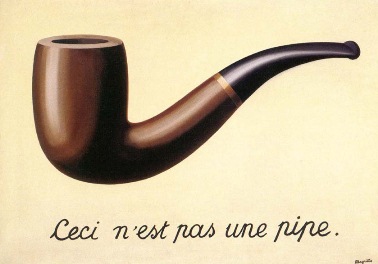
And Justice for All…

Libertarianism

Libertarianism, in the strict sense, is the moral view that agents initially fully own themselves and have certain moral powers to acquire property rights in external things. In a looser sense, libertarianism is any view that approximates the strict view. This entry will focus on libertarianism in the strict sense. For excellent discussion of the liberty tradition more generally (including classical liberalism), see Gaus and Mack (2004) and Barnett (2004).

Libertarianism is sometimes identified with the principle that each agent has a right to maximum equal empirical negative liberty, where empirical negative liberty is the absence of forcible interference from other agents when one attempts to do things. (See, for example, Narveson 1988, 2000, Steiner 1994, and Narveson and Sterba 2010.) This is sometimes called “Spencerian Libertarianism” (after Herbert Spencer). It is usually claimed that this view is equivalent to above “self-ownership” version of libertarianism. Kagan (1994), however, has cogently argued that the former (depending on the interpretation) either leads to radical pacifism (the use of force is never permissible) or is compatible with a wide range of views in addition to the above “self-ownership” libertarianism. I shall not, however, attempt to assess this issue here. Instead, I shall simply focus on the above “self-ownership” version of libertarianism.

Libertarianism can be understood as a basic moral principle or as a derivative one. It might, for example, be advocated as a basic natural rights doctrine. Alternatively, it might be defended on the basis of rule consequentialism or teleology (e.g., Epstein 1995, 1998; Rasmussen and Den Uyl 2005; or Shapiro 2007) or rule contractarianism (e.g., Narveson 1988 and roughly Lomasky 1987). Instrumental derivations of libertarianism appeal to considerations such as human limitations (e.g., of knowledge and motivation), incentive effects, administrative costs, the intrinsic value of liberty for the good life, etc. This entry will not address arguments for libertarian principles on the basis of other moral principles. Instead, it will simply address the plausibility of libertarian principles in their own right.

Although libertarianism could be advocated as a full theory of moral permissibility, it is almost always advocated as a theory of justice in one of two senses. In one sense, justice is concerned with the moral duties that we owe others. It does not address impersonal duties (duties owed to no one) or duties owed to self. In a second sense, justice is concerned with the morally enforceable duties that we have. It does not address duties for which it is impermissible to use force to ensure compliance or to rectify (e.g., punish) non-compliance (e.g. a duty to see your mother on her birthday). We shall here consider libertarianism as a theory of justice in each sense.

Libertarianism is often thought of as “right-wing” doctrine. This, however, is mistaken for at least two reasons. First, on social—rather than economic—issues, libertarianism tends to be “left-wing”. It opposes laws that restrict consensual and private sexual relationships between adults (e.g., gay sex, extra-marital sex, and deviant sex), laws that restrict drug use, laws that impose religious views or practices on individuals, and compulsory military service. Second, in addition to the better-known version of libertarianism—right-libertarianism—there is also a version known as “left-libertarianism”. Both endorse full self-ownership, but they differ with respect to the powers agents have to appropriate unowned natural resources (land, air, water, minerals, etc.). Right-libertarianism holds that typically such resources may be appropriated by the first person who discovers them, mixes her labor with them, or merely claims them—without the consent of others, and with little or no payment to them. Left-libertarianism, by contrast, holds that unappropriated natural resources belong to everyone in some egalitarian manner. It can, for example, require those who claim rights over natural resources to make a payment to others for the value of those rights. This can provide the basis for a kind of egalitarian redistribution.

The best known early statement of (something close to) libertarianism is Locke (1690). The most influential contemporary work is Nozick (1974).

  • Self-Ownership
  • The Power to Appropriate Natural Resources: Libertarianism, Left and Right
  • Enforcement Rights: Prior Restraint and Rectification
  • Anarchism and the Minimal State
  • Some Ancillary Issues
    • 1 Non-Autonomous Sentient Beings
    • 2 Historical Principles and the Real World
  • Conclusion
  • Bibliography
  1. Self-Ownership

Libertarianism holds that agents are, at least initially, full self-owners. Agents are (moral) full self-owners just in case they morally own themselves in just the same way that they can morally fully own inanimate objects. Below we shall distinguish between full (interpersonal) self-ownership and full political self-ownership. Many versions of libertarianism endorse only the latter.

Full ownership of an entity consists of a full set of the following ownership rights: (1) control rights over the use of the entity: both a liberty-right to use it and a claim-right that others not use it, (2)rights to compensation if someone uses the entity without one’s permission, (3) enforcement rights (e.g., rights of prior restraint if someone is about to violate these rights), (4) rights to transfer these rights to others (by sale, rental, gift, or loan), and (5) immunities to the non-consensual loss of these rights. Full ownership is simply a logically strongest set of ownership rights over a thing. There is some indeterminacy in this notion (since there can be more than one strongest set of such rights), but there is a determinate core set of rights (see below).

At the core of full self-ownership, then, is full control self-ownership, the full right to control the use of one’s person. Something like control self-ownership is arguably needed to recognize the fact there are some things (e.g., various forms of physical contact) that may not be done to a person without her consent, but which may be done with that consent. It wrongs an individual to subject her to non-consensual and unprovoked killing, maiming, enslavement, or forcible manipulation.

Full-self ownership is sometimes thought to guarantee that the agent has a certain basic liberty of action, but this is not so. For if the rest of the world (natural resources and artifacts) is fully (“maximally”) owned by others, one is not permitted to do anything without their consent—since that would involve the use of their property. For example, as a result of one’s trespass on their land, one may become their slave. The protection that self-ownership affords is a basic protection against others doing certain things to one, but not a guarantee of liberty. Even this protection, however, may be merely formal. A plausible thesis of self-ownership must allow that some rights (e.g., against imprisonment) may be lost if one violates the rights of others. Hence, if the rest of world is owned by others, then anything one does without their consent violates their property rights, and, as a result of such violations, one may lose some or all of one’s rights of self-ownership. This point shows that, because agents must use natural resources (occupy space, breathe air, etc.), self-ownership on its own has no substantive implications. It is only when combined with assumptions about how the rest of the world is owned (and the consequences of violating those property rights) that substantive implications follow.

Let us now consider five important objections to full self-ownership.

One objection to full (interpersonal) self-ownership is that it denies that individuals have an obligation to help others in need, except through voluntary agreement or prior wrongdoing. Those who advocate libertarianism as a theory of the duties owed to others typically endorse full (interpersonal) self-ownership and are subject to this objection. They reject any such obligation on the ground that it induces a form of partial slavery.

Those who advocate libertarianism as theory of enforceable duties, however, need not be subject to this objection. They can endorse full political self-ownership, without endorsing full (interpersonal) self-ownership. The two are the same except the former is silent about what duties one may owe to others and asserts instead that one has no enforceable duties to aid others, except those that arise from voluntary agreement and prior wrongdoing. Of course, many would still insist that we have non-voluntary enforceable duties to aid those in extreme need when we can do so at little cost to ourselves or others.

The remaining objections apply to both interpersonal and political self-ownership, and hence I shall cease distinguishing them.

A second objection also concerns situations in which individuals in extreme needed can greatly benefit from the involvement of an agent. Instead, however, of addressing whether the agent owes the individual a duty, or has an enforceable duty, to aid her, the question is whether others may use the agent’s person without her consent to aid those in need. For example, is it permissible to gently push an innocent agent to the ground in order to save ten innocent lives? Full self-ownership (of both sorts) asserts that it is not. The rough idea is that individuals are normatively separate and their person may not be used non-consensually for the benefit of others.

A third objection to full self-ownership is that it includes a right to make gifts of one’s services, and that such gifts, when given from members of an older generation to members of a younger generation, can significantly disrupt the conditions of equality of opportunity. (Note that the right to make gifts of external things is not at issue here, since it does not follow from full self-ownership alone.) The right to make gifts of personal services can be defended by emphasizing how such gifts are an essential part of intimate personal relationships. Moreover, if a person has the right to perform an action for her own benefit, then she arguably also has the right to perform it for someone else’s benefit. A possible reply here is that, although the donor may well have the power to make gifts of her services, the recipient may not have a right to the full benefit of those services (e.g., the benefits may not be immune to taxation).

A fourth objection to full self-ownership is that it permits voluntary enslavement. Agents have, it claims, not only the right to control the use of their person, but also the right to transfer that right (e.g., by sale or gift) to others. Some libertarians—such as Rothbard (1982) and Barnett (1998, pp. 78–82)—deny that such transfer is even possible, since others cannot control one’s will. This, however, seems to be a mistake, since what is at issue is the moral right to control permissible use (by giving or denying permission), not the psychological capacity to control. Many authors—such as Locke (1690) and Grunebaum (1987)—deny that the rights over oneself are so transferable, typically on the ground that such transfers undermine one’s autonomy. One might, however, reply that the right to exercise one’s autonomy is more fundamental than the protection or promotion of one’s autonomy. (For elaboration, see Vallentyne 1998. See also Steiner 1994.)

A fifth objection to full self-ownership is that it (like rights in general) can lead to inefficient outcomes. Where there are externalities or public goods (such as police protection), each person may be better off if some of each person’s rights are infringed (e.g., if each person is required to provide service each week on a police patrol). Given the problems generated by prisoners’ dilemmas and other kinds of market failure, in large societies it will typically be impossible to obtain everyone’s consent to perform such services. Given the importance of such services, it is arguably permissible to force individuals to provide certain services (in violation of full self-ownership) as long as everyone benefits appropriately.

  1. The Power to Appropriate Natural Resources: Libertarianism, Left and Right

Libertarianism is committed to full self-ownership. A distinction can be made, however, between right-libertarianism and left-libertarianism, depending on the stance taken on how natural resources can be owned. (Throughout, I use “resource” in the weak sense of “stuff” in the world, with no assumption about whether it has any value to individuals. The term is often used in a more restrictive sense.)

One possible view holds that initially no one has any liberty right to use, or any moral power to appropriate, natural resources. A radical version of joint-ownership left-libertarianism, for example, holds that individuals may use natural resources only with the collective consent (e.g., majority or unanimous) of the members of society. Given that all action requires the use of some natural resources (land, air, etc.), this leaves agents no freedom of action (except with the permission of others), and this is clearly implausible. A less radical version of joint-ownership left-libertarianism allows that agents may use natural resources, but holds that they have no moral power to appropriate natural resources without the collective consent of the members of society (e.g., Grunebaum 1987). Although this leaves agents a significant range of freedom of action, it leaves them little security in their plans of action. They have the security that others are not permitted to use their person (e.g., assault them) without their consent, but they have only limited security in their possessions of external things (except with the consent of others). Agents are permitted to cultivate and gather apples, but others are permitted to take them when this violates no rights of self-ownership (e.g., when they can simply take them from the collected pile).

Given the central importance of security of some external resources, it is implausible that agents have no power to appropriate without the consent of others. More specifically, it is most implausible to hold that the consent of others is required for appropriation when communication with others is impossible, extremely difficult, or expensive (as it almost always is). And even when communication is relatively easy and costless, there is no need for the consent of others as long as one appropriates no more than one’s fair share. Joint-ownership left-libertarianism is thus implausible.

A plausible account of liberty rights and powers of appropriation over natural resources must, I claim, be unilateralist in the sense that, under a broad range of conditions (1) agents are initially permitted to use natural resources without anyone’s consent, and (2) agents initially have the power to appropriate (acquire rights over) natural resources without anyone’s consent. This is just to say that initially natural resources are not protected by a property rule (which requires consent for permissible use or appropriation).

According to a unilateralist conception of the power to appropriate, agents who first claim rights over a natural resource acquire those rights—perhaps provided that certain other conditions are met. These additional conditions may include some kind of an interaction constraint (such as that the agent “mixed her labor” with the resource or that she was the first to discover the resource) and some kind of “fair share” constraint. In what follows, for simplicity, I shall ignore the interaction constraint and focus on the fair share constraint.

Let us, then, consider some unilateralist versions of libertarianism. Radical right libertarianism— advocated, for example, by Rothbard (1978, 1982), Narveson (1988, ch. 7; 1999), and Feser (2005)—holds that that there are no fair share constraints on use or appropriation.[1] Agents may destroy whatever natural resources they want (as long as they violate no one’s self-ownership) and they have the power to appropriate whatever natural resources they first claim. On this view, natural resources are initially not merely unprotected by a property rule (i.e., permissible use does not require anyone else’s permission); they are also unprotected by a compensation liability rule (i.e., no compensation is owed if one uses). A main objection to this view is that no human agent created natural resources, and there is no reason that the lucky person who first claims rights over a natural resource should reap all the benefit that the resource provides. Nor is there any reason to think the individuals are morally permitted to ruin or monopolize natural resources as they please. Some sort of fair share condition restricts use and appropriation.

Consider Lockean libertarianism, which allows unilateral use and appropriation but requires the satisfaction of some version of the Lockean proviso that “enough and as good” be left for others. Lockean libertarianism views natural resources as initially unprotected by any property rule (no consent is needed for use or appropriation) but as protected by a compensation liability rule. Those who use natural resources, or claim rights over them, owe compensation to others for any wrongful costs imposed.

Nozickean right-libertarianism—advocated, for example, by Nozick (1974)—interprets the Lockean proviso as requiring that no individual be made worse off by the use or appropriation of a natural resource compared with non-use or non-appropriation.[2] One might object that this sets the compensation payment too low. It bases compensation on each person’s reservation price, which is the lowest payment that would leave the individual indifferent with non-use or non-appropriation. Use or appropriation of natural resources typically brings significant benefits even after providing such compensation. There is little reason, one might argue, to hold that those who first use or claim rights over a natural resource should reap all the excess benefits that those resources provide.

Sufficientarian (centrist) libertarianism—such as something in the spirit of Simmons (1992, 1993) or Lomasky (1987)—interprets the Lockean proviso as requiring that others be left an adequate share of natural resources (on some conception of adequacy). There are different criteria that can be invoked for adequacy, but the most plausible ones are based on the quality of one’s life prospects: enough for life prospects worth living, enough for basic subsistence life prospects, or enough for “minimally decent” life prospects. Depending on the nature of the world and the conception of adequacy, the sufficientarian proviso may be more, or less, demanding than the Nozickean proviso. If natural resources are sufficiently abundant relative to the individuals, then Nozickean proviso will be more demanding (since many individuals would get more than an adequate share without the use or appropriation), but if natural resources are sufficiently scarce, then the sufficientarian proviso will be more demanding than the Nozickean one.

Although sufficientarian libertarianism may be more sensitive than Nozickean libertarianism to the quality of life prospects left to others, some libertarians, left-libertarians, argue that it nevertheless fails to recognize the extent to which natural resources belong to all of us in some egalitarian manner. Suppose that there are enough natural resources to give everyone fabulous life prospects, and someone appropriates (or uses) natural resources leaving others only minimally adequate life prospects and generating ultra fabulously life prospects for herself. Left-libertarians argue that it is implausible to hold that those who first use or claim a natural resource are entitled to reap all the benefits in excess of what is needed to leave others adequate life prospects. Natural resources were not created by any human agent and their value, they argue, belongs to all of us in some egalitarian manner.

Let us now consider left-libertarianism. It holds that natural resources initially belong to everyone in some egalitarian manner.[3] We have already rejected one version—joint-ownership left-libertarianism—for failing to be unilateralist (i.e., because it requires the permission of others for use or appropriation of unowned natural resources). We shall now focus on Lockean (and hence unilateralist) versions of left-libertarianism.

Equal share left-libertarianism—advocated, for example, by Henry George (1879) and Hillel Steiner (1994)—interprets the Lockean proviso as requiring that one leave an equally valuable share of natural resources for others. Individuals are morally free to use or appropriate natural resources, but those who use or appropriate more than their per capita share owe others compensation for their excess share.

Even equal share libertarianism, one might argue, is not sufficiently egalitarian. Although it requires that the competitive value of natural resources be distributed equally, it does nothing to offset disadvantages in unchosen internal endowments (e.g., the effects of genes or childhood environment). Equal share libertarianism is thus compatible with radically unequal life prospects.[4]

Consider, then, equal opportunity left-libertarianism advocated, for example, by Otsuka (2003).[5] It interprets the Lockean proviso as requiring that one leave enough for others to have an opportunity for well-being that is at least as good as the opportunity for well-being that one obtained in using or appropriating natural resources. Individuals who leave less than this are required to pay the full competitive value of their excess share to those deprived of their fair share. Unlike the equal share view, those whose initial internal endowments provide less favorable effective opportunities for well-being are entitled to larger shares of natural resources. Although this version of libertarianism is highly egalitarian, it limits the egalitarianism to the distribution of the value of the natural resources. Full self-ownership still places constraints on the promotion of equality: Individuals are not morally required to provide personal services or body parts merely because they have more valuable personal endowments.

  1. Enforcement Rights: Prior Restraint and Rectification

So far, we have addressed the core libertarian rights of full self-ownership and the right to appropriate natural resources. A complete libertarian theory must also specify what enforcement rights individuals have when others violate their rights. The idea of full self-ownership does not include a full specification of enforcement rights. This is because the relevant idea is universal full self-ownership (i.e., every agent being a full self-owner), and this notion is indeterminate with respect to enforcement rights (as well as compensation rights). For a given individual, a maximal set of self-ownership rights would include both a full immunity against loss even if the agent violates the rights of others (and hence others would not be permitted to use non-consensual force against her ever) and maximal enforcement rights against others (which would permit the agent to use force against others in order to prevent their violation of her rights). This set of rights, however, is not universalizable. If one agent has the strong immunity to loss of rights, then other agents cannot have the strong enforcement rights (which require the offending agent to have lost some of her rights of self-ownership). Thus, full (universalizable) self-ownership can include no enforcement rights (but a full immunity to loss), or full enforcement rights (but no immunity to loss for rights violations), or anything in between. (On the issue of indeterminacy, see Fried (2004, 2005) and Vallentyne, Steiner, and Otsuka (2005).

One possible position is extreme pacifism, according to which individuals are never permitted to use non-consensual force against others. Another is moderate pacifism, according to which individuals are permitted to use non-consensual force against others only when necessary in self-defense (or the defense of others). This moderate view would allow the use of force against a person to prevent her from wrongfully using force against others, but it would not allow the use of force to rectify past violations (e.g., punish or extract compensation from the rights-violator). Most libertarian positions would allow the use of force for cases of rectification. Many would allow the use of force for retributive punishment, but some—Barnett (1998), for example—reject retributive punishment and insist that compensation for wrongful harms is the sole justification for the rectificatory use of force.

  1. Anarchism and the Minimal State

Libertarianism holds that many of the powers of the modern welfare state are morally illegitimate. Agents of the state violate the rights of citizens when they punish, or threaten to punish, a person for riding a motorcycle without a helmet, for taking drugs, for refusing to serve in the military, for engaging in consensual sexual relations in private, or for gambling. Furthermore, agents of the state violate the rights of citizens when they force, or threaten to force, individuals to transfer their legitimately held wealth to the state in order to provide for pensions, to help the needy, or to pay for public goods (e.g., parks or roads). (Left-libertarians object to such transfers to the extent that these are in excess of what is owed for the appropriation of natural resources.) Some libertarian-leaning theorists—such as Hayek (1960)—argue that it is legitimate to force people to pay their fair share of the costs of providing basic police services (i.e., protection of the libertarian rights and prosecution of those who violate them), but it’s hard to see how this could be legitimate on right-libertarian grounds. If one does not voluntarily agree to share one’s wealth in this way, the mere fact that one reaps a benefit from the services does not, on libertarian grounds, generate an enforceable duty to pay one’s fair share.[6]

One objection, then, that libertarians raise against the modern welfare state is that it uses force, or the threat thereof, to restrict people’s freedom to engage in activities that do not violate anyone’s rights. A second objection is that the modern welfare state—and most states generally—uses force, or the threat thereof, to restrict people’s freedom to use force to protect and enforce their own rights. Although most states recognize a right to use force in self-defense, few states recognize a legal right to forcibly extract compensation from, or punish, a person who has violated one’s rights. States typically punish those who attempt to impose the relevant rectification—even if the private citizens impose the very same rectification that the state would impose. Non-pacifist libertarians, however, deny this. Each individual has the right to enforce his rights in various ways, and these are not lost unless the individual voluntarily gives them up. The objection here, then, is not that agents of the state enforce people’s rights (which they are perfectly entitled to do if the protected person so wishes), but rather that the state uses force to prevent citizens from directly enforcing their own rights.

The above objections to the modern welfare state would be made both by right-libertarians and left-libertarians. Left-libertarians, however, can endorse certain “state-like” activities that right-libertarians reject. For on most left-libertarian views, individuals have an enforceable duty to pay others for the value of the rights that they claim over natural resources. Individuals seeking economic justice could form organizations that, under certain conditions, could force individuals to give them the payment they owe for their rights over natural resources, and could then transfer the payments to the individuals who are owed payments (after deducting a fee for the service, if the person agrees). The organization could also provide various public goods such as basic police services, national defense, roads, parks, and so on. By providing such public goods, the value of the rights claimed over natural resources by individuals will increase (e.g., rights over land for which police protection is provided are more valuable than rights over that land without police protection). Such public goods could be provided when and only when they would be self-financing based on the increased rents that they generate.

Such “justice-promoting” organizations engage in many of the activities of the modern states, and left-libertarianism can accept the legitimacy of such activities. There are, however, three important qualifications. First, organizational activities are limited to enforcing people’s libertarian rights and to enhancing people’s opportunities by providing public goods. Force is never used to restrict activities that violate no libertarian rights. Second, no monopoly on such activities is claimed. There may be many organizations providing such services. Third and finally, the agents of the organization are permitted to use force to make an individual make her payment for the value of rights over natural resources only if such use is, in some suitable sense, the most reliable way of ensuring that she discharges her duty. Corrupt or inefficient organizations are not permitted to use force to collect such payments.

Furthermore, even honest and efficient organizations are not so permitted when the individual owing the payment will voluntarily make the payment directly to the relevant parties. (For elaboration, see Vallentyne, 2007.)

Libertarianism, then, is not only critical of the modern welfare state, but of states in general. Given that so much of modern life seems to require a state, libertarianism’s anarchist stance is a powerful objection against it. In reply, libertarians argue that (1) many of the effects of states are quite negative, (2) many of the positive effects can be obtained without the state through voluntary mechanisms, and (3) even if some positive effects cannot be so obtained, the ends do not justify the means in these cases.

  1. Some Ancillary Issues

5.1 Non-Autonomous Sentient Beings

Libertarianism asserts that each autonomous agent initially fully owns herself and that agents have moral power to acquire property rights in natural resources and artifacts. What is the status of non-autonomous beings—such as children and many animals—that have moral standing (e.g., because sentient)? One possible reply is to deny that there are any non-autonomous beings with moral standing (e.g., because only beings capable of having moral duties—agents—are owed any duties). Non-autonomous beings are simply things to be used. As such, they can be the full private property of agents. Few people, however, will accept that position. Children are not the full private property of their parents. Dogs may not be tortured for fun. Another possibility is to hold that non-autonomous sentient beings are also full self-owners, where the rights involved are understood as protecting their interests rather than their choices (see, for example, Vallentyne 2002). This, of course, would have the wild implication that rats are protected by rights of self-ownership. Perhaps there is some plausible intermediate position, but if so, it has not yet been developed adequately. (See Steiner 1999 for one attempt.)

5.2 Historical Principles and the Real World

According to libertarianism, the justice of the current distribution of legal rights over resources depends on what the past was like. Given that the history of the world is full of systematic violence (genocide, invasion, murder, assault, theft, etc.), we can be sure that the current distribution of legal rights over resources did not come about justly and that adequate reparations have not been made. At the same time, however, we have little knowledge of the specific rights violations that took place in the past (e.g., we have little knowledge of all but the most egregious rights violations that took place more than one hundred years ago). Thus, we have little knowledge of what justice today requires.

The epistemic problem confronting libertarianism is similar to that confronting utilitarianism and other consequentialist theories. Consequentialist theories require knowledge of the entire future that will result from each possible action, and we have very little such knowledge. Libertarianism requires knowledge of the entire past, and we have very little such knowledge. The appropriate answer in both cases is that the facts determine what is just, and we should simply make our best judgments about what is just based on what we know. Moral reality is complex, and it’s not surprising that it’s extremely difficult to know what is permissible.

In the case of libertarianism, an additional response is possible. One could hold that there is a moral statute of limitations for rights violations. After the passage of enough time—or perhaps, after the passage of enough time during which no claim for rectification is made—the right of rectification for a specific past rights-violation may cease to be valid. If the period of time is short enough (e.g., 100 years), this would radically reduce the epistemic problem. It’s not clear, however, that there is a plausible principled libertarian justification (as opposed to a practical one) for such a statute of limitations.

  1. Conclusion

Libertarianism is attractive because (1) it provides significant moral liberty of action, (2) it provides significant moral protection against interference from others, and (3) it is sensitive to what the past was like (e.g., what agreements were made and what rights violations took place). It faces, however, the serious objection that it gives too much protection from interference and not enough attention to making the future better (e.g., by meeting people’s basic needs, making people’s lives go better, or promoting equality). As with all prominent moral and political theories, the overall assessment of libertarianism is a matter of on-going debate.

Bibliography

Right-Libertarianism

  • Barnett, R., 1998, The Structure of Liberty: Justice and the Rule of Law, Oxford: Clarendon Press.
  • Epstein, R.A., 1995, Simple Rules for a Complex World, Cambridge: Harvard University Press.
  • Epstein, R.A., 1998, Principles for a Free Society: Reconciling Individual Liberty with the Common Good, New York: Basic Books.
  • Feser, E., 2005, “There Is No Such Thing As An Unjust Initial Acquisition,” Social Philosophy and Policy, 22: 56–80.
  • Friedman, D., 1989, The Machinery of Freedom: A Guide to Radical Capitalism, New York: Harper and Row.
  • Hayek, F.A., 1960, The Constitution of Liberty, Chicago: University of Chicago Press.
  • Hayek, F.A., 1973, Law, Legislation, and Liberty, Vol. 1: Rules and Order, London: Routledge.
  • Hospers, J., 1971, Libertarianism, Los Angeles: Nash.
  • Lomasky, L., 1987, Persons, Rights, and the Moral Community, New York: Oxford University Press.
  • Kirzner, I., 1978, “Entrepreneurship, Entitlement, and Economic Justice,” Eastern Economic Journal4: 9–25. Reprinted in Vallentyne and Steiner, 2000a.
  • Locke, J., 1690, Two Treatises of Government, P. Laslett (ed.), New York: Cambridge University Press, 1960. Extract reprinted in Vallentyne and Steiner, 2000b.
  • Machan, T. (ed.), 1974, The Libertarian Alternative: Essays in Social and Political Philosophy, Chicago: Nelson-Hall Company.
  • Machan, T., (ed.), 1982, The Libertarian Reader, Totowa: Rowman and Littlefield.
  • Machan, T., 1989, Individuals and Their Rights, La Salle, IL: Open Court.
  • Machan, T. and Rasmussen, D. (eds.), 1997, Liberty for the 21st Century, Latham, MD: Rowman and Littlefield.
  • Mack, E., 1995, “The Self-Ownership Proviso: A New and Improved Lockean Proviso,” Social Philosophy and Policy, 12: 186–218.
  • Mack, E., 2002a, “Self-Ownership, Marxism, and Egalitarianism: Part I. Challenges to Historical Entitlement,” Politics, Philosophy, and Economics, 1: 119–146.
  • Mack, E., 2002b, “Self-Ownership, Marxism, and Egalitarianism: Part II. Challenges to the Self-Ownership Thesis,” Politics, Philosophy, and Economics, 1: 237–276.
  • Mack, E., 2010, “The Natural Right of Property,” Social Philosophy and Policy, 27: 53–78.
  • Narveson, J., 1988, The Libertarian Idea, Philadelphia: Temple University Press.
  • Narveson, J., 1999, “Original Appropriation and Lockean Provisos,” Public Affairs Quarterly, 13: 205–27. Reprinted in Respecting Persons in Theory and Practice, Lanham: Rowman & Littlefield Publishers, 2002, pp. 111–131.
  • Narveson, J., 2000, “Libertarianism,” in the Blackwell Guide to Ethical Theory, H. LaFollette (ed.), Oxford: Blackwell, pp. 306–24.
  • Narveson, J. and J. P. Sterba, 2010, Are Liberty and Equality Compatible?, New York: Cambridge University Press.
  • Nozick, R., 1974, Anarchy, State, and Utopia, New York: Basic Books. Extract reprinted in Vallentyne and Steiner, 2000a.
  • Paul J. (ed.), 1982, Reading Nozick: Essays on Anarchy, State, and Utopia, Oxford: Basil Blackwell.
  • Rasmussen, D.B., & Den Uyl, D.J., 2005, Norms of Liberty: A Perfectionist Basis for Non-perfectionist Politics, University Park, PA: Penn State University Press.
  • Rothbard, M., 1978, For a New Liberty, The Libertarian Manifesto, revised edition, New York: Libertarian Review Foundation.
  • Rothbard, M., 1982, The Ethics of Liberty, Atlantic Highlands: Humanities Press. Extract reprinted in Vallentyne and Steiner, 2000a.
  • Schmidtz, D., 1991, The Limits of Government, Boulder, CO: Westview.
  • Shapiro, D. (2007). Is the Welfare State Justified?Cambridge: Cambridge University Press.
  • Wheeler, S., 1980, “Natural Property Rights as Body Rights,” Noûs, 16: 171–193. Reprinted in Vallentyne P., and H. Steiner, eds., 2000a.

Left-Libertarianism

  • Fried, B., 2004, “Left-Libertarianism: A Review Essay,” Philosophy and Public Affairs, 32: 66–92.
  • Fried, B., 2005, “Left-Libertarianism, Once More: A Rejoinder to Vallentyne, Steiner, and Otsuka,” Philosophy and Public Affairs, 33: 216–222.
  • Cohen, G. A., 1995, Self-Ownership, Freedom, and Equality, Cambridge: Cambridge University Press.
  • George, H., 1879, Progress and Poverty, 5th edition, New York, D. Appleton and Company, 1882. Reprinted by Robert Schalkenbach Foundation, 1966. Extract reprinted in Vallentyne and Steiner, 2000b.
  • Grunebaum, J., 1987, Private Ownership, New York: Routledge & Kegan Paul. Extract reprinted in Vallentyne and Steiner, 2000a.
  • Otsuka, M., 2003, Libertarianism without Inequality, Oxford: Clarendon Press.
  • Steiner, H., 1994, An Essay on Rights, Cambridge, MA: Blackwell Publishers. Extract reprinted in Vallentyne and Steiner, 2000a.
  • Steiner, H., 1999, “Silver Spoons And Golden Genes: Talent Differentials and Distributive Justice,” in The Genetic Revolution and Human Rights: The Oxford Amnesty Lectures 1998, Justine Burley (ed.), Oxford: Oxford University Press.
  • Tideman, N., 2000, “Global Economic Justice,” Geophilos, 00: 134–146.
  • Tideman, N., 2001, “Creating Global Economic Justice,” Geophilos, 01: 88–94.
  • Vallentyne, P., 1998, “Critical Notice of G.A. Cohen’s Self-Ownership, Freedom, and Equality,” Canadian Journal of Philosophy, 28: 609–626.
  • Vallentyne, P., and H. Steiner (eds.), 2000a, Left Libertarianism and Its Critics: The Contemporary Debate, New York: Palgrave Publishers Ltd.
  • Vallentyne, P. and H. Steiner (eds.), 2000b, The Origins of Left Libertarianism: An Anthology of Historical Writings, New York: Palgrave Publishers Ltd.
  • Vallentyne, P., H. Steiner, and M. Otsuka, 2005, “Why Left-Libertarianism Isn’t Incoherent, Indeterminate, or Irrelevant: A Reply to Fried,” Philosophy and Public Affairs, 33: 201–15.
  • Van Parijs, P., 1995, Real Freedom for All, New York: Oxford University Press. Extract reprinted in P. Vallentyne and H. Steiner (eds.) 2000a.

Related Topics

  • Barnett, R. E., 2004, “The Moral Foundations of Modern Libertarianism,” in P. Berkowitz (ed.), Varieties of Conservatism in America, Stanford: Hoover Press, pp. 51–74.
  • Christman, J., 1994, The Myth of Property, New York: Oxford University Press.
  • Gaus, G. and Mack, E., 2004, “Libertarianism and Classical Liberalism,” A Handbook of Political Theory, G. Gaus and C. Kukathus (eds.), London: Routledge, pp. 115–129.
  • Kagan, S., 1994, “The Argument from Liberty,” in In Harm’s Way: Essays in honor of Joel Feinberg, J. Coleman and A. Buchanan (eds.), Cambridge: Cambridge University Press, pp. 16–41.
  • Sanders, J and J. Narveson (eds.), 1996, For and Against the State, London: Rowman & Littlefield.
  • Skoble, A., 2008, Deleting the State, New York: Open Court Press.
  • Simmons, A.J., 1992, The Lockean Theory of Rights, Princeton: Princeton University Press.
  • Simmons, A.J., 1993, On the Edge of Anarchy, Princeton: Princeton University Press.
  • Sreenivasan, G., 1995, The Limits of Lockean Rights in Property, New York: Oxford University Press.
  • Vallentyne, P., 2002, “Equality and the Duties of Procreators,” in Children and Political Theory, D. Archard and C. MacLeod (eds.), Oxford: Oxford University Press.
  • Vallentyne, P., 2007, “Libertarianism and the State,” Social Philosophy and Policy, 24: 187–205.

Source: Stanford Encyclopedia of Philosophy

An Imagined Dialogue on Eastern & Western Philosophy & The Nature of Knowledge

“The search for knowledge is like the search for true love. We live in a web of relationships, be it of propositions or people. Sometimes we are in a skeptical mood and we grasp for a solid base—a belief that we’re sure of or a friend or lover we can trust completely—but experience seems to admonish us, ‘all are fickle’; at such times the web can seem inscrutable. Then at other times we’re completely in the moment and the web is worldwide, and we’re secure in its interrelationships, confident in our position. We’re in a web all right—just sometimes we see ourselves as the spider other times as the fly.” – Raam Gokhale

“Truth may have been found but might never be known.” – Kedar Joshi

________________________________________

Ram: You know the quote from Kipling, “East is East and West is West and never the twain shall meet”? Do you think it applies to philosophy?

Kedar: It applies there more than anywhere else. Western philosophy demands the rigors of sound arguments. Eastern philosophy is virtually indistinguishable from religion.

Ram: But “NEVER the twain shall meet” is pretty radical. Don’t you think they must meet in some sense if both are to be labeled as philosophy? To compare them, to use the same word, ‘philosophy’, to describe them, they must have something in common. It’s not like say comparing farming with the Dewey-decimal system, for example.

Kedar: You seem to have a common ground in mind?

Ram: I do. I think it’s contained in the inscription at the Temple of the Delphic oracle, namely ‘Know Thyself’.

Kedar: Hmm. I think you’re right. Western philosophy exhorts ‘Know Thyself’ in order to know all other things. Eastern philosophy exhorts ‘Know Thyself’ in order to forget about all other things.

Ram: As usual, you’ve put things very pithily. In western philosophy, whether you’re dealing with ideas that have an external existence as in Plato or Berkeley or ideas only present in the mind as in Descartes, Locke, or Hume, ideas are known first and are the basis of knowing everything else. Know thyself in order to know all other things.

Kedar: How about your favorite philosopher, Wittgenstein? Doesn’t he argue that even self-knowledge is only possible through outward criteria, that there is no such thing as a private language? I for one would be only too happy to dismiss Wittgenstein as not a true philosopher.

Ram: Ah so that’s how philosophers trade barbs huh? They don’t directly insult each other; they insult each other’s intellectual heroes. I agree Wittgenstein doesn’t fit the paradigm too neatly but you must admit, even his linguistic analysis can be described as an exercise in ‘Knowing Thyself’—except in his case the thyself that you’re exhorted to know is the linguistic practices of your “form of life”, your community of speakers. Not ‘Know Thyself in order to know all other things’ but ‘know the practices of thy community in order not to muck up the enterprise of knowing other things’.

Kedar: At any rate, the later Wittgenstein is understood partly as attacking the phenomenalists who definitely fit into the ‘Know Thyself in order to know all other things’ camp. So I guess he’s a philosopher in the same sense as the statement, ‘Philosophy is crap’ is itself taken to express a philosophical position.

Ram: You put it more crudely than I would but I think we agree that in western philosophy, ‘Knowing Thyself’ is generally necessary in order to know other things. Wittgenstein might be an exception, but if he is, he is the exception that proves the rule.

Kedar: OK…perhaps. Now how about eastern philosophy? I take it you have in mind ‘Atman is Brahman’ and the doctrine of Maya from the Vedas when you say eastern philosophy exhorts, ‘Know Thyself in order to forget about all other things’.

Ram: Actually you said eastern philosophy exhorts ‘Know Thyself in order to forget about all other things’. I recently read The Tao of Physics and I would have to redescribe eastern philosophy as exhorting, ‘Know Thyself in order to know the subjective nature of all other things’. I think that’s a more accurate formulation of eastern philosophy.

Kedar: Interesting reformulation. It still fits the ‘Atman is Brahman’ and Maya doctrines of Hindu philosophy. And I can see how one might draw parallels with quantum mechanics where the observer plays an inseparable role in the process of observing. But can it really be taken to represent all eastern philosophy? I mean I don’t know much about Chinese and Japanese philosophy for instance.

Ram: Actually it better fits non-Hindu eastern philosophy, especially Taoism, much better because, unlike Hinduism, Taoism, in exhorting us to see the subjective nature of all other things, actively encourages us to understand all other things. Each separate thing is a Tao, composed of opposites like the yin-yang, with each piece containing the seeds of its opposite. The parallels with modern physics are clear: matter is energy; particles are waves. In Hinduism, a genuine interest in understanding individual things outside the self is sometimes lacking. This is certainly true in Hinduism’s emphasis on the big picture, of transcending the veil of Maya in order for the atman or self to merge with the Brahman or God. But even Hinduism holds that the duality of Shiva and Shakti, the male and female elements, like yin and yang from Taoism, or matter and energy, particles and waves from modern physics, can be seen in everything.

Kedar: OK it seems ‘the twain do meet’ in the exhortation, ‘Know Thyself’. That’s how we can recognize eastern philosophy and western philosophy, as different as they are, as philosophy. But they clearly differ in their recommendation of how best we can know ourselves.

Ram: That’s right and the methods they recommend are suited to their widely divergent views about the nature of reality—the ‘twains’ do meet but from then on steam in opposite directions. Western science has been making successively more accurate maps of the world but their first approximation was always common sense. Common sense is what all the theorizing must tie back to. And the methods of common sense–ordinary seeing is believing—are at the core of classical science just as ordinary introspection is at the heart of western philosophy. Eastern philosophy seeks to transcend common sense; common sense is Maya. The essence of reality is glimpsed in mystical visions. The extra-ordinary visions may explain the world of common sense but their basis is an ineffable contradiction: all things are a unity of opposites, opposites like the tendency to rest/to move, to sometimes exhibit ‘male’ sometimes ‘female’ characteristics, etc. We see these opposites first in our innermost natures. ‘Know thyself in order to know the subjective nature of all other things’.

Kedar: And quantum mechanics…I guess it just so happens reality has dictated western maps have eastern legends?

Ram: I couldn’t have said it better myself.

Kedar: But like you I consider myself more of a western philosopher. Must the west be so short-changed?

Ram: Not at all. Western philosophy’s great contribution is a healthy skepticism. While eastern philosophy goes on to prescribe how to go about acquiring self-knowledge be it through yogic meditation or contemplation of Zen paradoxes, western philosophy, facing a much simpler task as far as acquiring self-knowledge is concerned, goes on to either explicate how we then acquire knowledge of external things or failing that raises doubts about whether such knowledge is even possible.

Kedar: Ahem, with all this talk of knowledge, don’t you think we should define knowledge first?

Ram: You’re right. Surprisingly, as different as they are, both eastern and western philosophy, I think, would agree, at least as a first approximation, that knowledge is justified, true belief…just the things they believe and their methods of justification would be as different as night and day.

Kedar: I know ‘justified, true belief’ has been a definition of knowledge at least as far back as Plato but I am not sure it’s correct.

Ram: Well a lot of contemporary epistemologists think that the traditional definition needs at least a fourth condition to provide necessary and sufficient conditions for knowledge. And even the ones that don’t think that the traditional 3-condition definition is deficient, think that justification has to be radically reinterpreted.

Kedar: I’m not referring to that. I think knowledge is just true belief not justified true belief. Yet even with the simpler definition, I don’t think we ever have knowledge because we’re never sufficiently confident in our beliefs. Indeed the more beliefs we have, the less sure we are of any of them. Our uncertainty is even warranted on purely probabilistic grounds.

Ram: You and I have had this conversation before. As I recall, you think justification is merely a tool that helps us to have greater conviction in our beliefs but that it itself isn’t really necessary for knowledge.

Kedar: That’s right.

Ram: I think you have the ‘man-on-the-street’ on your side. I think if we asked an ordinary person to define knowledge, he would say true belief. Justification is usually the kind of thing only philosophers worry about.

Kedar: Is this another way that philosophers trade insults, by saying the ‘man-on-the-street’ would agree with you? Philosophers are a passive-aggressive lot aren’t they? You know me: I usually walk on the opposite side of the street as the ‘man-on-the-street’. So I don’t exactly find comfort in having the ‘man-on-the-street’ on my side.

Ram: Philosophy makes strange bedfellows. I usually find comfort in using words as they are used in everyday speech and, as yours is the more ‘everyday’ definition, let me try to see things from your perspective. First let me try to put a philosopher in your corner so you feel a little more secure. The philosopher Robert Nozick, like you, drops justification from his basic account of knowledge though like you he also thinks justification has a very important role to play in how we acquire knowledge. According to Nozick, knowledge is true belief except the belief has to be so ‘secure’ that it would vary with the truth of what’s believed in ‘close’ counterfactual situations.

Kedar: Could you elaborate?

Ram: Sure. I believe I’m talking to you. And in fact I AM talking to you. But for my belief to count as knowledge, Nozick would say my belief would have to be such that if I weren’t talking to you, I wouldn’t believe I was talking to you and in other not-too-farfetched situations where I would be talking to you, I would continue to believe I’m talking to you. As Nozick says it, my belief has to ‘track’ the truth in close counterfactual situations in order to count as knowledge.

Kedar: I don’t think I walk on the same side of the street as Mr. Nozick either. If I weren’t talking to you, I might still believe that I was; and there may be situations where I would be talking to you but for whatever reason I wouldn’t believe I was talking to you. Still that doesn’t change the fact that I know here and now that I am talking to you.

Ram: Nozick tries to capture this intuition by restricting his tracking conditions to close counterfactual situations. For example if I were drugged I could believe I’m talking to you even if I wasn’t talking to you. But Nozick would say that is not a close possible world. In ‘normal’ situations where I wouldn’t be talking to you, I would (undrugged) simply be talking to someone else or to no one at all. And in such circumstances, it might seem reasonable to require that I wouldn’t continue to believe I’m talking to you if my belief is to count as knowledge.

Kedar: But even if in close-counterfactual situations my belief doesn’t track the truth, even then I think I could still be said to know. What does it matter if I’m drugged and would think I’m talking to you even when I’m not. If I believe I’m talking to you when I AM talking to you, and my belief is caused by the usual perceptual cues, and not the drug in my system, then in those circumstances I’m right and have knowledge. For instance, I can give an accurate report of our conversation. It doesn’t matter that the drug would make me believe I’m talking to you even when I’m not. In that case I don’t have knowledge but that shouldn’t infect the case where the belief is properly caused.

Ram: I think I agree with you, though other people, in particular some epistemologists, might have different intuitions so we have to make the situation more precise. Imagine the drug that’s in my system only works when I don’t hear anything for a length of time. We may imagine the doctor has prescribed it to alleviate my desperate fear of being alone. Then in close counterfactual situations when I’m not talking with you, I would still believe I’m talking with you. My intuition is that, despite this weird drug, when I’m talking with you, I know I’m talking with you. We could imagine a doctor saying the drug only affects my judgment when I don’t hear any sounds for a length of time.

Nozick with his observations about ‘keeping the method fixed’ has some wiggle-room to deal with our intuitions, but ultimately I think he fails. But let’s not lose sight of what his tracking conditions were really meant to do. They were intended to rule out lucky guesses as not instances of knowledge; the intuition he was trying to capture is that if your belief is only accidentally true, it shouldn’t count as knowledge. The trouble is in our example, the belief I am talking to you is NOT accidentally true—it’s properly caused by the fact that I am talking to you; it’s just that even if it weren’t true, there would be another cause—namely the drug—that would make me believe I was talking to you; but the existence of this other cause doesn’t make my belief accidentally true when the right cause is the one that’s operating at the present time.

Kedar: My view of knowledge, as you know, permits even accidentally true beliefs or lucky guesses to count, provided they are firmly believed.

Ram: I was wondering when you were going to say that. I happen to think lucky guesses should be excluded, though not as Nozick does, so let me try to dissuade you with the following example: suppose someone has a dream he is going to win the lottery; the dream firmly convinces him it’s going to happen and so he buys a ticket; the ticket wins. You would say that though he wasn’t justified in believing he would win, he nevertheless knew he would win?

Kedar: Sure I would. Wouldn’t we in such circumstances say he JUST KNEW he was going to win?

Ram: Watch it! You’re in danger of appealing to the man-on-the-street again. The man-on-the-street’s intuitions can be notoriously slippery. Though in the lottery example, we could picture him agreeing to the claim, ‘the dreamer just knew he was going to win’, if we pressed him, the man-on-the-street could equally be brought to say the dreamer didn’t really know he was going to win, he just got lucky.

We’ve had this type of conversation before. The other day when we were talking about necessity in the Deccan Dugout, you stated there can be multiple, sometimes conflicting intuitions about the proper meaning of common words. But you said the philosopher has the right, the obligation, to select or define a technical meaning to suit his purpose. I submit to you, justified, true belief or some account of knowledge that precludes accidentally true beliefs is a more technical, philosophically more interesting definition of knowledge than just true belief, and so should be chosen by the philosopher over the latter.

Kedar: Well I have to admit just true belief as a definition of knowledge is not very philosophically interesting. For example, as you pointed out before, a man could be said to acquire a lot of knowledge on this definition simply by believing each pair of a series of contradictory statements. One of each pair has to be true and if he ‘hedges his bets’ by believing both he’s guaranteed to have knowledge. This is clearly a pretty ridiculous way of acquiring knowledge. Perhaps when I proposed the ‘true-belief’ definition, I was guilty of appealing to the man-on-the-street’s lesser intuitions.

So it seems beliefs have to be non-accidentally true in order to count as knowledge. How do we flush out exactly the conditions necessary to rule out accidentally true beliefs?

Ram: Certainly if someone as illustrious as Robert Nozick, the winner of the Ralph Waldo Emerson Prize, has failed, we should be on guard.

Kedar: I’m not sure whether you’re being facetious or passive-aggressive again, but we definitely should be on guard. For example, your justification condition—we would want to say most people have knowledge about the content of their perceptual beliefs without having a justification for them. We know the causes that make most perceptual beliefs true—i.e. their reliability in conditions of good lighting, the perceiver not being under the influence of drugs, etc.—so we would say such people are justified but these people may not be aware all the premises that go into their justification.

Ram: You bring up an interesting point. Could someone be justified in his knowledge claim only from the outside and still be said to know?

Kedar: What do you mean ‘from the outside’?

Ram: I mean inaccessible to the putative knower. This is the internalism/externalism distinction one encounters in contemporary epistemology. We from the outside, external perspective know why the man-on-the-street’s perceptual beliefs are justified but from the internal perspective, based solely on what the man is aware of, the man might have no justification—he simply believes what he sees. The question is do we want to require the man be aware of the full justification of his beliefs in order to know them or do we allow external justifications to support his knowledge claims?

Kedar: I’ve re-girded myself against the man-on-the-street. My intuitions about justifications are that it’s an internal thing, so I would say if the man-on-the-street doesn’t have the full justifications for his perceptual beliefs internally, so much the worse for him—he doesn’t know.

Ram: Now we have to be careful what we require as full justification. For consider the following example. A man in an empty public square sees a prominent clock in a country known for punctuality and precision…

Kedar: Not India, I take it.

Ram: Ha, Ha, OK not India. The man notices that the clock reads 5:00 pm. He thinks to himself, ‘clocks around here generally tell the correct time’, looks at the position of the sun in the sky and judges that it’s about 5:00 pm and takes similar other measures to justify his belief that it is in fact 5:00 pm. Suppose it is in fact 5:00 pm but the clock he is looking at stopped working at 5:00 am. A philosopher named Edmund Gettier used examples like this to argue that knowledge can’t simply be justified, true belief because the man seems to meet all three conditions but we don’t want to say he knows it’s 5:00 pm.

Kedar: Interesting example. My first inclination is to maintain that knowledge can be justified, true belief. It’s just that the man’s justification is not a full, complete justification.

Ram: I had the same reaction when I first heard this example. But remember: you’re committed to justification being internal, that the man be fully aware of each premise in his justification. What would you have him do? Wait a few minutes to see if the clock is running? We could suppose the clock did coincidentally restart at 5:00 pm so it seems to be running. Still we don’t want to say that the man who relies on such an on-off clock knows what time it is. Do we want to further require he examine the inner workings of the clock? Again since the clock has restarted, inner workings might yield no clue that in fact it’s reading 5:00 am and that therefore the man’s belief that it’s 5:00 pm is only accidentally true.

In general any belief inductively justified can be false. That’s the nature of inductive justification. All we have to do to cook up a Gettieresque example is to imagine a scenario in which the inductively justified belief would be false but suppose the belief coincidentally is true. Then you have truth, belief, justification—just not knowledge.

Kedar: Extending your example to the n-th degree, we could imagine a full justification would require a justification for induction, which the history of philosophy has taught us is a losing battle.

Ram: Fortunately it’s not as bad as that. In the case of inductive justification you could argue that a justification only has to make it likely that the conclusion-belief is true. Against Gettieresque examples, the only thing that’s required is that there be no genuine defeaters of that justification as there are in the clock example.

Kedar: What’s a genuine defeater?

Ram: Well, a defeater of a person’s justification for a belief is a true proposition such that if the person believed this proposition, he would no longer be justified in holding the belief in question. The proposition ‘the clock stopped working at 5:00 am’ is a defeater, a genuine defeater, in the earlier example because if the man believed it, he would no longer be justified in believing it’s 5:00 pm.

Kedar: I guess to understand why you say genuine defeater, I have to know what’s a non-genuine defeater.

Ram: A non-genuine defeater, or a misleading defeater as it’s known in the literature, is a proposition that is a defeater in the sense that were the putative knower to believe it, he would no longer be justified. But it is a misleading defeater in the sense that its power to defeat is dependent on a false proposition. That at least is how my graduate school professor, Peter Klein, a defeasibility theorist, put it.

Kedar: Can you give an example?

Ram: We already had one. The drug that caused conversations to be imagined when no conversation was going on is an example of a misleading defeater. Imagine that I was unknowingly given this drug. This proposition is a defeater of my justification for believing that I’m talking to you. It is a defeater because if I believed it, I would no longer be justified in believing I was talking to you. Yet to some it seems like a misleading defeater because its power to defeat is dependent on the false proposition that the drug in my system is active right now. Remember we said the drug doesn’t operate so long as I hear sounds.

Kedar: OK—I think I have some sense of defeasibility theories of knowledge. And in Nozick I got some flavor of a different type of theory. I know we couldn’t have covered every epistemological theory but did we at least hit all the major classifications?

Ram: Let’s see…Nozick was an example of reliabilism. We talked about defeasibility. I guess the only other major strand is the causal theory of knowledge.

Kedar: That sounds interesting…maybe just the kind of theory I can espouse. I don’t know exactly what a causal theory of knowledge is but it sounds like it could fit our intuitions in the drug case. There we said I know I am talking to you because my belief is caused by the facts that make it true.

Ram: A causal theory has strong intuitive appeal. We want to say what’s true caused us to know it’s true. It’s the basis of our most common beliefs, namely perceptual beliefs. Seeing is believing because the thing we believe plays a causal role in forming our belief.

Kedar: And a causal theory would handle our Gettieresque clock example. The man doesn’t know it’s 5:00 pm because there is a causal disconnect between it actually being 5:00 pm and his belief that it’s 5:00 pm.

Ram: That’s right, but…

Kedar: I just knew there would be a but. Did you ever think, philosophy is crap because it’s full of butts?

Ram: Very funny. Seriously though, a causal theory of knowledge faces some challenges distinguishing causal connections of the right sort from causal connections that don’t result in knowledge.

Kedar: Could you give an example of the wrong sort of causal connection?

Ram: Certainly. Let’s modify our drugged conversation example. Suppose the drug administered unknown to me makes me imagine a conversation, perhaps a very flattering conversation, when someone is talking to me. I think we would say I don’t know you’re talking to me though my belief that you’re talking to me is caused by your talking to me.

Kedar: It’s funny how our strongest intuitions fall prey to such easy to dream up counterexamples.

Ram: They’re not that easy to dream up—I’ve just heard them or their kind before. For example another criticism of the causal theory I’ve heard is that it’s unable to handle deductive knowledge like our knowledge of the truths of mathematics. Numbers don’t cause anything because they’re simply logical constructs.

Kedar: Remember, I happen to be a Platonist about truths of mathematics so I can believe that somehow they cause our beliefs. They cause our beliefs because our mind directly ‘grasps’ them.

Ram: Well let’s just say numbers pose difficulties for most ‘normal’ causal theorists of knowledge.

Kedar: As usual you’re being very cagey and passive-aggressively insulting. We’ve surveyed the major epistemological theories but you still haven’t said which one you prefer.

Ram: If I am being cagey it’s not from any deviousness. Remember, like Wittgenstein, I’m an ordinary language philosopher. To borrow Wittgenstein’s metaphor, maybe knowledge is like a family resemblance: we see a family’s photographs and the faces all seem to resemble one another but we may be hard-pressed to find a single feature that is common to them all; knowledge may be like that, a concept that has many intuitions running through it without one being common to them all. For example, for knowledge we have intuitions that it must be reliable, non-accidental, caused by the thing known, be supported by a justification. It wouldn’t surprise me if all these intuitions couldn’t be brought together under one rubric. Maybe all philosophically interesting concepts are like that, making our attempts to find necessary and sufficient conditions for them ultimately doomed to failure.

Kedar: Don’t be so pessimistic. After all, as different as eastern and western philosophies are, you found a common thread running through all of them—know thyself.

Ram: I think I got lucky. But you may have a point. Maybe I got lucky because philosophy is a more technical word than knowledge. Maybe philosophers should only focus on words that have already been lifted out of the confused din of common discourse. Maybe epistemologists would do better to focus on concepts like evidence or justification which are already more technical than knowledge.

Though, wouldn’t it be funny if the word philosophy was the only philosophically interesting word that permits a philosophically satisfying definition?

Kedar: I think that would be funny only to a philosopher. I choose to believe that concepts like justification and evidence would permit philosophically interesting definitions. Let’s talk about them next.

Ram: Wait a minute. I see by the clock outside it’s 5:00 pm. I think I better be getting back. We can talk about justification and evidence next time.

Kedar: OK. Meanwhile I’ll take the imagined conversation drug and think about what you and I might say.

eastunleashed

March 6, 2011

Philosophy Now Forums


Amor Fati

Nietzsche’s Amor Fati

THE EMBRACING OF AN UNDECIDED FATE


By Friedrich Ulfers and Mark Daniel Cohen

There is in Nietzsche an unequivocal affirmation of life, and it would be precisely wrong to say, “notwithstanding the equivocality that he injects into his every assertion,” for there is nothing in Nietzsche that withstands his equivocality. Yet, it speaks to the essence of Nietzsche’s posture to observe that there is nothing diffident or less than forthright in his work—he makes assertions, enormously complex assertions, and they are clearly intended to be taken as asserted. Nietzsche means what he says. It is his saying that bears the complexity in its method, which practices the undermining and enhancing of inherited terminology and philosophical principles, often in ploys of overt contradiction, to propose what is unequivocally meant. One must follow him in his every move, through each verbal gambit, to get at a meaning that always constitutes straight answers to straight questions, at a meaning that presumably requires the richness of literary strategy, of complicated saying, to be formulated at all. The idea dissolves without the verbal underpinning. It evaporates in the absence of his statement. It is so subtle, even as it is so clear and unequivocal once grasped. In short, nothing in Nietzsche goes without saying.

One could be clever and say merely that, with Nietzsche, his very equivocality is itself equivocal, and it would be right to say so. However, left at that, such a characterization initiates a spiral of thought that burrows itself into the soil. It is the business of philosophy to digest such material, to sift it for its intrinsic clarity—otherwise, philosophy would be nothing more than gamesmanship and scholarly fantasy. And so it is as much to the point to observe that Nietzsche is dealing with conceptions that defy simple expression, that he is laced in and trussed by conventional terminology that resists the statement he needs to make, terminology that has been filtered by and formulated according to the very conceptions he wishes to deny, conceptions that frequently establish themselves as opposites, as choices one is required to choose between, and that he is seeking to say that which has not yet found its unequivocal terminology, which stands beyond the perimeters of established options. His verbal play is a ploy. It is a means to an end, not the end itself, not the thought but the only available statement for getting at the thought, and it is our business to find our way to it.

And so there is an unequivocal affirmation of life in Nietzsche, but it is not such as one would think, nor perhaps one that many readers would be prepared to affirm. The very category of expression becomes transformed under Nietzsche’s hand, by his voice. An affirmation is, by definition, an act of counsel: it is an attitudinal posture, a judgment of value, an expression out of a principle of appropriateness, which is recommended to the reader, which is voiced for the purpose of exhorting the reader to do likewise. Implicitly, it is intended as guidance. But if one asks if this is Nietzsche’s intention, if he affirms life so as to suggest to readers that in a matter open to discretion they choose to affirm life, the answer is as complex as is his personal rhetoric: it is both yes and no. In essence, the category of recommendation does not fit, not even so far as to warrant denial. Something subtler is at work here.

One of Nietzsche’s most overt, and perhaps his best known, assertions of affirmation for life is his clear exhortation: “Amor fati”—the love of fate, the acceptance of necessity. From his first expression of the thought in The Gay Science, Nietzsche makes it clear that his reference to fate is a reference to necessity: “I want to learn more and more to see as beautiful what is necessary in things; then I shall be one of those who make things beautiful. Amor fati: let that be my love henceforth! . . . And all in all and on the whole: some day I wish to be only a Yes-sayer.” (1) The issue of fate is not to be mis-read here. Nietzsche means the necessary, but it is not the necessary in an ordinary sense.

And so, to understand Nietzsche’s Amor fati, one must first comprehend what Nietzsche means by “fate,” what quality of the fateful is possible within Nietzsche’s ontology, within his vision of the world. The idea of fate is not to be understood as a fixed and unalterable orientation of events on a necessary outcome. It is not a promise and eventual achievement, extending from some source capable of guaranteeing outcome, of a final state, for oneself, humanity at large, or the world, and after the accomplishment of which, eventuality—the playing out of result—comes to an end. There is no teleology in Nietzsche’s universe—nothing comes to an end. The process that is the world, that is reality, is incessant. And so, Nietzsche’s fate must not be understood in the context of a determinism that takes the form of a finality that the world or the self are “fated,” or promised, to achieve. Nor is it fate in the sense of some categorical, transcendental moral imperative to which we owe absolute allegiance and under which we are laden with a sense of absolute responsibility. The incessant process, the continuous “Becoming” of the universe, leads to nothing in the end, for there is no end: “becoming aims at nothing and achieves nothing.” (2)

Nietzsche’s “fate” is something more complex than the nominal concept of fate as pure necessity, for as with everything in Nietzsche’s conception of the universe, it is riddled with its own opposite—the intricacy of opposites is the principle of relation in Nietzsche’s understanding of reality. Nietzsche emphasizes the aspect of necessity in his first explicit reference to Amor fati, yet he again and again returns to linking necessity and freedom in his conception of fate. It is an ideal, an ideal of Amor fati, that he envisions in his characterization of Goethe and the poet’s “fatalism”: “Such a spirit [as Goethe] who has become freestands amidst all with a joyous and trusting fatalism, in the faith that only the single is loathsome, and that all is redeemed and affirmed in the whole—he does not negate any more.” (3)

The fatalism of Amor fati involves an insight into Being as that which is, as Jacques Derrida phrased the comparable idea, “a third irreducible to the dualisms of classical ontology” (4) whereby Becoming negates Being. For Nietzsche, fate and the love of it involve us in a knowledge, amounting to wisdom, of an “excess” (5) beyond Being with Becoming as its negation, beyond the value of truth with non-truth as its negation, in a state of awareness that is beyond normative conception and that leaves him who “knows” it “only as a Yes-sayer.”

This saying as an intricacy of opposites—of those which are opposite from the logical point of view, which functions by means of an operative stipulation that everything is to be conceived according to what it is not, according to its negation—is a philosophical strategy, a tactics of proposition, that Nietzsche initiated at the beginning of his career, in The Birth of Tragedy, with his analysis of the tragic view of the world. There, the tragic, rather than constituting the “negating” side to an opposed “affirming,” embodies, through the conception of opposites as interpenetrating, what Nietzsche calls an irreducible “contradiction.” (6) “Contradiction,” for Nietzsche, does not mean the violation of binary logic, but an “intricate relation” (7) between opposites, such as bliss and pain, that simultaneously unites them and holds them apart.

The tragic worldview, then, is a chiasmic unity of opposites, one with neither negation nor affirmation, because as a medium that permits “Yes” and “No” to interpenetrate, it affirms them both equally, leaving affirmation affirmed precisely to the degree that negation is.

Thus, comparable to the tragic, as conceived in the tragic worldview, fate for Nietzsche is a seeming contradiction in terms—the terms of “freedom” and “necessity.” The solution is not a resolution, for no solution is required, for in a truer sense than that conveyed by phrasing the matter as “interpenetrating” opposites, there is no contradiction. Nietzsche does not attribute necessity to fate as determinism vs. freedom; he ascribes both qualities to fate in equal measure. The necessity of fate rests in Nietzsche’s insight that it is unalterably—eternally, necessarily—“free” in a playful elusiveness.

Nietzsche disabuses us of the interpretation of Amor fati as an embracing of fate without interpolation of freedom by linking it to the poetic. This linkage is particularly evident in one of Nietzsche’s Dionysus-Dithyrambs, “Only a Fool! Only a Poet!” (Nur Narr! Nur Dichter!), which alludes to the foolishness, or playfulness, of the poet as the epistemological frame within which to address the excess beyond truth and its opposite, the excess that is fate for Nietzsche.

You, the suitor of truth? [. . .]

No! Only a poet! [. . .]

May I be banished

From all truth,

Only a fool! Only a poet! (8)

It is the playfulness/foolishness of the poet and poetry—that is, of the ambiguity or indeterminacy of poetry’s metaphorical core—that would be able to capture the elusive “truth” of fate. But as before, Nietzsche ties together the “freedom” of fate—freedom in the sense of not being restricted by the oppositional logic of discursive language—and the dimension of “necessity” he acknowledges in fate. Thus he writes in “Praise and Eternity” of his love of fate as necessity:

My love is lit eternally

Only by the fire of necessity.

Shield of necessity!

Highest constellation of Being!

Not reachable by any desire,

Not sullied by any No,

Eternal Yes of Being,

Eternally I am your Yes:

For I love you, oh eternity! – – (9)

This interpretation of fate—which braces each with its opposite, rendering a “conception” that is “above,” inclusive of, paired normative conceptions in their definition by opposition, and which Nietzsche renders late in his philosophical career—has been implicit in all of his thought, in various guises. It is present in his view of the world as not being determined by the “outside” of some final cause or meaning that serves as its goal, that is not judged as “guilty” by the “No” of the fixity of transcendental Being for being “playful” in its ceaseless, goalless Becoming. In other words, fate, as Nietzsche interprets it, is the emblem of his insight that there is nothing—nihil—outside the transitoriness of the world of eternal Becoming. Fate, then, is the name for a totally immanent, perpetually transitory world that is not subject to the finality of a goal outside of it, the achievement of which would redeem the “guiltiness” of Becoming. Amor fati is the embrace of the world that is as it is—eternally Becoming—not as it “should” be, for there is no “should,” no imperative that it be, or be transformed into, something other than it is. Put differently, Amor fati is the embrace of a world that is an implicate order of freedom and necessity: of freedom in that it is free from any “should” that would judge it to be deficient, and from any goal that “should” be attained, and of necessity because the lack of a goal to be achieved allows the world its “must,” its having to be what it is, not what it is made by an authority beyond the perimeters of the world.

In particular, it can be said that Nietzsche’s appeal to love of fate is the consequence of his thesis of the “death of God,” love of a supreme center of the value of Being that guaranteed meaning to a meaningless world of Becoming—the authority beyond the limits of the world. The fate of Amor fati “frees” us, then, to a world of radical immanence, a world beyond the dualism of immanence and transcendence. Nietzsche characterizes this world as whole in the sense of an interconnectedness or web-like structure Nietzsche describes as Verhängnis (literally a “hanging together”), a word that also means “fate.” Given that the world of interconnectedness (Verhängnis) is its own fate (Verhängnis), it is beyond any outside determinism because there is no outside to the whole. Given a radically holistic world, there is no outside to its Verhängnis, and thus we must be what we are: Verhängnis. As Nietzsche puts it succinctly: “One is necessary, one is a piece of fatefulness [Verhängnis], one belongs to the whole, one is the whole.” (10)

It is clear that the freedom of Amor fati, of Nietzsche’s fate, of Nietzsche’s universe, is a “freedom from”: a freedom from a fate imposed upon the world from “outside” the world, the freedom from ultimate, absolute authority. The recipient of freedom in the interpenetration of necessity and freedom is the world, and thus is Becoming. With his appeal to Amor fati, Nietzsche affirms the lack of a center of Being, and thus recognizes a world without the horizon that Being would set to its Becoming. The world has been set free in this thought, and is free to become whatever it will. It is not “guilty” for departing from what it is or only approaching, eternally approaching, what it “should” be. It is innocent in that it is free to become anything—nothing is disallowed, there is no outside authority to disallow.

The realization of Amor fati thus brings us a “new ‘infinite’.” “Rather has the world become ‘infinite’ for us all over again, inasmuch as we cannot reject the possibility that it may include infinite interpretations.”(11) A world open to potentially infinite interpretations is one without the institution of a given, unalterable meaning stemming from the metaphysical source of meaning. And with the death of God, with the realization that the necessity of the world is that it must be free from the imposition upon it of any determining authority, “At long last the horizon appears free to us again, even if it should not be bright; at long last our ships may venture out again . . . the sea, our sea, lies open again; perhaps there has never yet been such an ‘open sea’.—” (12)

Thus, Nietzsche is giving us Amor fati as the emblem of a world that demands to be interpreted beyond the “corner” of metaphysics, that is, beyond the reign of a dualistic perspective that insists on one interpretation of the world: the interpretation, the ultimate truth, of the supremacy of Being and its variants functioning as perfection, goal, meaning, and judge over the world of Becoming, the world that is, apart from its interdiction, eternally in process. The world is free in that no such interdiction is possible.

And the awareness of this freedom of the world, the freedom from a truth about which it, and we, would have no choice, is for Nietzsche a “new knowledge” and “the sun of a new gospel”—the gospel of necessity that sets us free and returns us to an innocence in place of the guilt that is inherent in being subject to an ultimate authority, an authority that sets a truth one can never become and a responsibility one can never meet, caught in a state of mutability, in a process of incessant change.

The sun of a new gospel is casting its first beam on the topmost summits in the soul of every individual: there the mists are gathering more thickly then ever, and the brightest glimmer and the gloomiest twilight lie side by side. Everything is necessity—thus says the new knowledge; and this knowledge itself is necessity. Everything is innocence: and knowledge is the path to insight into this innocence. (13)

The necessity is the necessity of play, play that is aesthetic, as the world has been for Nietzsche from the start, from the assertion in The Birth of Tragedy, “existence and the world seem justified only as an aesthetic phenomenon.” (14) That play, that integration of integral opposites, qualifies even the aspect of existence, subtending beneath it both existence and non-existence. The affirmation of life, the affirmation of fate that is life as necessity, as play, is, as Derrida put it in his reading of Nietzsche, an affirmation that determines the absence of a center of Being (“presence”) “otherwise than as loss of the center.” This interpretation is one in which “play must be conceived before the alternative of presence and absence,” that is, the alternative of Being and Becoming. It is an interpretation that is not “negative, nostalgic” about the lost center of Being but “the joyous affirmation of the play of the world and of the innocence of becoming,” an affirmation that “tries to pass beyond man and humanism . . .” (15)

The sense of the affirmation of life, of fate, as a thought that moves “beyond man and humanism,” of a qualification of existence that intertwines it with nonexistence as a condition of its existence, points to the reason that underlies Nietzsche’s rhetorical strategies and that renders the terminology he employs impertinent to the truth he wishes to reveal—for there is a truth to “things.” Meaning is infinitely interpretable, but there is a reality to which we are subject, of which we are—the reality whose meaning is infinitely interpretable. There is a reason that fate for Nietzsche is authentically fatalistic and which compels all the standard terminology established for contending with questions of meaning and existence capable of nothing better than interpenetration and unending play.

The events of the world are not fatalistic in the sense that there is an ultimate eventuality, an outcome, and thus a meaning to which they always are trending and which puts an end to the process of eventuality. The process is unending, and it is for us fatalistic in that it is beyond our capability to influence. The freedom in necessity is for the world, but it is not for us. We cannot direct or curtail the course of events because we are not present within the course of events. We are, as is all else, merely momentary presences, our lives a sequence of disconnected, flashing events that demonstrate a sequence only for our perceptions. In themselves, they are as glimmering lights on an ocean of glimmering lights, in incessant motion but flowing nowhere. “Here I sat waiting . . . all time without aim”(16)—all time without goal, without finality.

We are without integrity, neither self-sustaining objects nor subjects in the world, for nothing is a self-sustaining object. There is freedom only for the world as there is necessity only for the world, for there is only the world. The rejection of individual integrity, of individual existence, can be found at the start of Nietzsche’s thought, as one can find the philosophical foundation of the aesthetic nature of existence and the world. In The Birth of Tragedy, Nietzsche dismisses the reality of the principium individuationis, (17)the principle of individuality, of the integrity of the object and its individual presence. There are, for Nietzsche, no “things,” no existences that stand apart in any way from all of existence. All exist only in the web-like structure of Verhängnis and exist in no other sense. Our conception of individual existences is a function of our error regarding the sense of unity. “We need ‘unities’ in order to be able to reckon: that does not mean we must suppose that such unities exist. We have borrowed the concept of unity from our ‘ego’ concept—our oldest article of faith. If we did not hold ourselves to be unities, we would never have formed the concept ‘thing.’ ” (18)

There is thus no free will, not for individual beings, “we realize the impossibility of any liberum arbitrium, or ‘intelligible freedom.’ ” (19) The Will to Power is the motivating impulse to apparent eventuality—more, it is the “substance” of constant eventuality rather than the power “behind” it—but the Will to Power is not ours. Our personal impulses to action are not freely chosen, we do what we do just as objects subject to interaction, subject to laws of physics, subject to the slip of gravity, do what they do—without motive, without intention. Our motivating impulses function something more like instincts than intentions. They function in a law-like fashion.

Weakness of the will: that is a metaphor that can prove misleading. For there is no will, and consequently neither a strong nor a weak will. The multitude and disgregation of impulses and the lack of any systematic order among them result in a “weak will”; their coordination under a single predominant impulse results in a “strong will”: in the first case it is the oscillation and the lack of gravity; in the latter, the precision and clarity of the direction. (20)

Comparable to gravity. Law-like, but our impulses are as if controlled by natural law within a universe free of outside imposition, free of imposed requirement. We follow what the universe does—we are of it, and are nothing else.

And it is the nature of Nietzsche’s universe that necessitates the absence of integral, individual existences—specifically, the nature of his temporality. In Nietzsche’s ontology, there is no time line, no movement from the past to the present and into the future, not as a continuous flow upon which all events and existences are buoyed, like leaves meandering down a stream. Time has no currents. There is no continuance. There are but isolated moments in time, points of time—“It is possible to speak only of points of time, no longer of time” (21)—and nothing endures, thus there is nothing to endure, for there is no time for anything to continue to exist.

The moment is an expansive idea, increasingly expansive over the course of his career to the point at which it becomes the central image of his ontological vision, comparable to, and explicative of, the Will to Power. It becomes the setting for the realization of the truth of the world. “On this perfect day [. . .] a glance of the sun fell upon my life: I looked backward, I looked outward, I never saw so much and so many good things at the same time. [. . .] How could I not be thankful to the whole of my life?” (22) It is important to realize that the perfection Nietzsche refers to here is not the perfection of Being beyond the world of Becoming but the contemplative experience of a moment, of a wink of an eye—Augenblick—during which time is a Becoming without the striving for a goal, and thus is not deficient, that it is “perfect,” complete unto itself, in the world of Becoming. The gratitude Nietzsche expresses for the time of his whole life, out of the experience of the perfection of the moment, is an affirmation of fate as the irreducible interplay of time and eternity, for the moment and eternity as an immeasurable moment become interlaced. “Can we remove the idea of a goal from the process and then affirm the process in spite of this?—This would be the case if something were attained at every moment within this process—and always the same.” (23) The moment is ever the moment, what is “attained” is “always the same,” but it is always something “attained,” always something newly achieved. The moment of attainment never departs, and Being and Becoming are inextricably intertwined under the aegis of the moment, of the point of time, as under the aegis of the Will to Power.

Yet, normally, we do not experience the moments, the time points, as always the same attainment—we experience them as constantly shifting, constantly transforming into something different and following each other in a sequence. The time points are isolated in the sense that each is a span of duration limited by its nature as a dynamic “atom” of time, but they are not isolated from each other in terms of influence—they are not walled off from each other. “The point of time affects another point of time, thus dynamic properties are to be presupposed.” (24) Thus, a world can exist—it does not flash into and out of existence, all time points compounded in some sense upon each other, with no time line along which to distribute them. And thus we are capable of interpreting—misinterpreting—a personal history, a continuing appearance of self, a memory. The appearance of distinct, individual, continuing identity becomes what was analyzed in The Birth of Tragedy as the Apollinian “beautiful illusion” (25) that obscures the Dionysian vision of continuous flux, the flux of incessant moments of time that somehow are always new and yet always the same—the “article of faith” of the idea of unity, which permits us to “reckon”: the reduction of the flux down to the appearance of a coherence of existence.

Thus there can be the appearance of personal outcome, of an inexorability to personally significant events, of eventuality on an individual level—of personal fate—but the viewpoint of integrity is our own Apollinian construction. It is error, but it is not our error, and it is not our Apollinian construction in the sense of personal commission. The construction is made, the error of interpretation committed, but they are not made and committed by us, for that could be so only if we created ourselves. Only then would we be present to construct the illusion of our own existence. We would then be causa sui, self-generating, and in Beyond Good and Evil, Nietzsche committed himself to the unacceptability of causa sui, (26) to the absurdity of the claim of self-creation, on the basis of logical flaw.

Which is to say that, in Nietzsche’s universe, we can exercise no influence over events because we do not exist. We are mere appearance, delusions suffering the delusion of ourselves, apparent presences by our natures strangely capable of being aware of ourselves as appearances and incapable of seeing past the deceptive appearance of our natures. “ ‘Mankind’ does not advance, it does not even exist.” (27) We are not the source of events, and thus not in a position to be the source of any influence over events—we are events, comparable to all other events, appearances thrown up by the dynamism of the Will to Power, the active and sole reality of the world. In more technical language, we are epiphenomenal—moved as are all apparent “things” and incapable of moving them, patterns among the patterns woven and rewoven into the tapestry, and thus the center of a philosophy that “tries to pass beyond man and humanism . . .”

“World wheel . . . blends us in too,” (28) which is to say that Nietzsche’s is a nihilistic vision, a vision in which all that we know and all that we are is rendered void of reality: we are “something” done by “something” else. “It is only late that one musters the courage for what one really knows. That I have hitherto been a thorough-going nihilist, I have admitted to myself only recently.” (29) But for Nietzsche, Nihilism is a complex matter: “Nihilism. It is ambiguous: A. Nihilism as a sign of increased power of the spirit: as active nihilism. B. Nihilism as decline and recession of power of the spirit: as passive nihilism.”(30)

Passive nihilism, also “Nihilism as a psychological state,” (31) is a widespread and historically significant condition of despair, following upon the collapse of values that have been revealed to be untenable, that can no longer be believed. This is the psychological repercussion of the death of God, the loss of the sense of an outside authority to constrain the Becoming of the world and give it a fixed meaning, an ultimate and final goal. For Nietzsche, after 2,000 years of Christianity and its moral interpretation of the world, its belief that the world is organized by principles of good and evil, that principles of good and evil are true—a self-aggrandizing faith that envisions the world on the model of ourselves, that sees the world as centered on us and our fate, “the hyperbolic naiveté of man: positing himself as the meaning and the measure of the value of all things” (32)—the forced loss of faith in these values, the recognition of their arbitrariness, their lack of truth, brings about the “decline and recession of power of the spirit”—a general dispiritedness. Under the principle that attitudes give way to their opposites—“Extreme positions are not succeeded by moderate ones but by extreme positions of the opposite kind” (33)—the loss of faith results in a yearning for nothingness. “At bottom, man has lost his faith in his own value when no infinitely valuable whole works through him; i.e., he conceived such a whole in order to be able to believe in his own value.” (34) Once we realize “the world does not have the value we thought it had,” (35) we become as nothing to ourselves, and the world loses all worth.

But there is also the form of active Nihilism, which in individuals of strength—the virtue that Nietzsche admires most, “I teach the Yes to all that strengthens, that stores up strength, that justifies the feeling of strength,” (36) a quality one may think of as fortitude—can realize the “new knowledge,” “the sun of the new gospel,” can observe the freedom of the world that is absent the imposition of a fate imposed from without. In the same conditions that bring about the despair that yearns for nothingness, in the collapse of all old values, “we find the pathos that impels us to seek new values. In sum: the world might be far more valuable than we used to believe; we must see through the naiveté of our ideals, and while we thought we accorded it the highest interpretation, we may not even have given our human existence a moderately fair value. What has become deified? The value instincts in the community (that which made possible its continued existence.)” (37)

In this, we are given the indication of the new value, of the higher aspiration that is revealed when we are made aware of the freedom of the world from outside authority and forced meaning, when the scales fall from the eyes of those who formerly believed in the values that imposed our image on our vision of the universe. The new value is that of the “community,” as conceived in the opening of The Gay Science, the species, that to which we are sacrificed: the existence that continues as we, as individuals, do not, but that depends on our fortitude to preserve it. (Indicating what Nietzsche makes clear in numerous passages: that which breaks the credibility of the values that held sway over us for 2,000 years is evolution, the realization that we do not come from a source outside the earth, that we are born of this world.) And, as the title of the book conveys, the tragic philosophy has been re-envisioned as something joyous.

Whether I contemplate men with benevolence or with an evil eye, I always find them concerned with a single task, all of them and every one of them in particular: to do what is good for the preservation of the human race. Not from any feeling of love for the race, but merely because nothing in them is older, stronger, more inexorable and unconquerable than this instinct—because this instinct constitutes the essence of our species, our herd. . . . 

Pursue your best or your worst desires, and above all perish!— In both cases you are probably still in some way a promoter and benefactor of humanity and therefore entitled to your eulogists—but also to your detractors! . . . I mean, when the proposition “the species is everything, one is always none” has become part of humanity, and this ultimate liberation and irresponsibility has become accessible to all at all times. Perhaps laughter will then have formed an alliance with wisdom, perhaps only “gay science” will then be left. (38)

As with Goethe, “all is redeemed and affirmed in the whole.” Here is the affirmation of life, the essence ofAmor fati: we must learn the joy of perishing for the life of the species, of being sacrificed, as we have no choice but to be, for the continuance of life that both is ours and is not ours: not our individual lives but the life of the whole of which we are a part. We must learn to face with joy, with the Yes of affirmation, our part in a world that “lives on itself: its excrements are its food,” (39) and we are among what is consumed. For that is the continuing, unending eventuality of the Will to Power, and it is the counsel offered, the recommendation made, that there is joy in realizing “This world is the will to power—and nothing besides! And you yourselves are also this will to power—and nothing besides!” (40)

But there is an anomaly in this affirmation; there is a logical absurdity in the counsel offered. There is a flaw in this Yes to life that recommends itself to its readership. There is a ghostly presence haunting every proposition that Nietzsche propounds, brooding and questioning the very core of the philosopher’s reasoning. If there is no free will, then to what purpose the recommendation of a posture toward existence, an acceptance of fate—what point to Amor fati? To what purpose advising an attitude toward existence to those who do not exist, who “are also this will to power—and nothing besides”? What is the point of a new gospel? How can it be possible to choose to formulate new values in reaction to a recognition of necessity? How can one be exhorted to affirm necessity? If we should acknowledge fate, if we can, then isn’t it all something other than fated? If fate is something to which we owe “absolute allegiance” and from which devolves upon us “absolute responsibility,” if that allegiance is ours to give or not, if the matter even arises, then where is the fate? And if there is no mankind, if it “does not even exist,” then to whom is Nietzsche writing, and who is speaking? Where is the sense in all this?

The questions are right, for there is nothing in Nietzsche to indicate that fate is merely a quality of large-scale patterns of events whereas the petty events of an individual life occur freely, as if too unimportant to be noticed—the standard bail-out position for those reading denunciations of free will, as if Cassandra-like, we act and speak by our own discretion within an unalterable flow of history. And it is right to say that non-existence is a chiasmic unity of existence and non-existence and is not a pure quality different from its opposite, to say that freedom and necessity are two sides of the same infinitely self-differentiating and ontologically variegated coin. It would even be necessary to say it, but it would not be sufficient.

For just to say precisely what Nietzsche has told us is merely to say precisely what Nietzsche has told us. That is mere reiteration, a parroting of endowed phrasings, a demonstration of memorization, of received input, as if we were without the freedom to consider, to understand. We have yet to digest what we have been told. We have yet to see what sense it makes. We have yet to sift it for its intrinsic clarity. We have yet to make something of it.

In the end, there is only one answer, if one is to take Nietzsche seriously and not qualify what he has said without qualification, not partialize him where he has been impartial, so as to leave room in what he says for his act of saying it. Nietzsche is playing the game he must play, the game all philosophers must play, in order to write at all, in order to think at all. The necessity, the Nihilism of non-existence, of being an appearance generated by something he is not, applies to him as much as to everyone, but he writes as if he is exempt from his own conditions, from his own mental scenario, from the truth he is telling—as if he stood “outside” and commented on what lay under the gaze of his mind. To write at all, to think at all, is of necessity to do so—one cannot stand at both ends of the microscope at the same time. To announce the non-existence of free will, and of us, is significant only if the announcement is freely made. If one could not have done other than say it, then there is no significance in its being said, no more significance than there is in an earthquake, or a tidal wave, or any natural event—no more significance than in the falling of a leaf. When something is said, there must be a reason, and if the reason is that it had to have been said, that it could have not been other than said, that it was compelled, mindlessly, there thinking is at an end.

Here, Nietzsche has no choice but to place himself in the position of the Cretan Liar—if he chooses to speak the absence of free will, then he gives evidence of free will; if he says nothing to deny free will, then it is possible at least that there is no free will. If he denies existence, then he cannot not exist; if he does not arrive to deny it, then it might be there is no individual existence. But then, this is what it is to philosophize. All philosophers place themselves under the rubric of the Cretan Liar. All make themselves, as they have no choice but to do as they theorize conditions, exemptions from the conditions they theorize. To philosophize is that as much as it is anything more: to make oneself, for the moment, apparently, an exemption—an eye gazing in from somewhere else, from outside the philosophical vision.

However, there is a moral imperative here—for Nietzsche, for any thinker of integrity who confronts the image of deception entailed by the very attempt to state the truth. Given that the acts of thinking and speaking necessarily falsify themselves and imply the denial of what is being thought about and spoken of, and given that one has no choice but to think and speak—for to refuse to think about the absence of free will because there is no free will is as willful an act as deliberately to proclaim the absence of free will because there is no free will—it is an obligation, an imposition not out of authority but out of a sense of honesty, a sense against the odds, to speak so as to correct the inherent error in speech, to militate against the implication that speech is free and there is someone speaking, to speak what one seems to deny by speaking.

In the end, there is no guarantee, because there is no discretion—we cannot choose to be able to choose, that too would be causa sui: freedom creating itself. There is no set of appearances that could demonstrate that the appearance of freedom is freedom, even when the freedom appears through the act of deliberately denying freedom. It could well be that Nietzsche writes what he writes because he must, because he is the creature he is, and that there is no choice in his assertion of necessity or in his suggestion by demonstration that there is freedom in the saying. So too, we could be reading Nietzsche because we are fated to and thinking what we think of him because it is determined that we will. And it could be we are certain that the constraint of thought is palpably absurd—because we have no choice but to so think. “Everything is necessity—thus says the new knowledge; and this knowledge itself is necessity.” (41)

But to philosophize at all, one must embrace the contradiction and remain content that one will, of necessity, undermine the credibility of anything one can say by the act of saying it—one must affirm that contradiction. This would make philosophy itself the very image of life, and of the affirmation of life, and of Amor fati: the enthusiastic embrace of necessity, which is itself, in its simplest sense, an utter contradiction, a nonsensical counsel, as if necessity could care whether we embraced it. Thereby, freedom and necessity become a contradiction that does not entail a violation of binary logic but rather an intricate relation that simultaneously unites them and holds them apart. Thereby, we become what we already are.(42) And thereby, Nietzsche can be said to have affirmed life not so well by what he said as simply by his saying.


FOOTNOTES

(1) Friedrich Nietzsche, The Gay Science, trans. Walter Kaufmann (New York: Vintage Books, 1974), § 276, p. 223.

(2) Nietzsche, The Will to Power, trans. Walter Kaufmann and R. J. Hollingdale, ed. Walter Kaufmann (New York: Vintage Books, 1968), § 12, p. 12.

(3) Nietzsche, Twilight of the Idols, “Skirmishes of an Untimely Man,” in The Portable Nietzsche, trans. and ed. Walter Kaufmann (New York: Penguin Books, 1968), § 49, p. 554.

(4) Jacques Derrida, Dissemination, trans. Barbara Johnson (Chicago: The University of Chicago Press, 1981), p. 165.

(5) Nietzsche, The Birth of Tragedy, in Basic Writings of Nietzsche, trans. and ed. Walter Kaufmann (New York: The Modern Library, 1968), § 4, p. 46. “Excess revealed itself as truth.”

(6) Nietzsche, The Birth of Tragedy, § 4, p. 46.

(7) Nietzsche, The Birth of Tragedy, § 21, p. 130.

(8) Nietzsche, KSA 6.377. “Der Wahrheit Freier — du? [. . .] / Nein! nur ein Dichter!” “[. . .] dass ich verbannt sei / von aller Wahrheit, / Nur Narr! Nur Dichter!” Translation by the authors.

(9) Nietzsche, KSA 6.402. “Meine Liebe entzündet / sich ewig nur an der Nothwendigkeit. / Schild der Nothwendigkeit! / Höchstes Gestirn des Seins! / – das kein Wunsch erreicht / das kein Nein befleckt, / ewiges Ja des Sein’s, / ewig bin ich dein Ja: / denn ich liebe dich, oh Ewigkeit! – -” Translation by the authors.

(10) Nietzsche, Twilight of the Idols, “The Four Great Errors,” § 8, p. 500.

(11) Nietzsche, The Gay Science, § 374, p. 336.

(12) Nietzsche, The Gay Science, § 343, p. 280.

(13) Nietzsche, Human, All Too Human, vol. 1, trans. R. J. Hollingdale (Cambridge: Cambridge University Press, 1987), § 107, p. 58.

(14) Nietzsche, The Birth of Tragedy, § 24, p. 141.

(15) Derrida, Writing and Difference, trans. Alan Bass (Chicago: The University of Chicago Press, 1980), p. 292.

(16) Nietzsche, The Gay Science, “Sils Maria,” p. 371.

(17) Nietzsche, The Birth of Tragedy, § 1, p. 36.

(18) Nietzsche, The Will to Power, § 635, p. 338.

(19) Nietzsche, The Will to Power, § 8, p. 11.

(20) Nietzsche, The Will to Power, § 46, pp. 28-29.

(21) Nietzsche, KSA 7.575. “Es ist nur von Zeitpunken zu reden, nicht mehr von Zeit.” Translation by the authors.

(22) Nietzsche, Ecce Homo, Vorwort, KSA 6.263. “An diesem vollkommenen Tage [. . .] fiel mir eben ein Sonnenblick auf mein Leben: ich sah rückwärts, ich sah hinaus, ich sah nie so viel und so gute Dinge auf einmal. [. . .] Wie sollte ich nicht meinem ganzen Leben dankbar sein?” Translation by the authors. See also Ecce Homo, “Preface,” in Basic Writings of Nietzsche, p. 677.

(23) Nietzsche, The Will to Power, § 55, p. 36.

(24) Nietzsche, KSA 7.575. “Der Zeitpunkt wirkt auf einen anderen Zeitpunkt, also dynamische Eigenschaften vorauszusetzen.” Translation by the authors.

(25) Nietzsche, The Birth of Tragedy, § 1, p. 35.

(26) Nietzsche, Beyond Good and Evil, “On the Prejudices of Philosophers,” in Basic Writings of Nietzsche, § 15, pp. 212-213.

(27) Nietzsche, The Will to Power, § 90, pp. 55.

(28) Nietzsche, The Gay Science, “To Goethe,” p. 351.

(29) Nietzsche, The Will to Power, § 25, pp. 18.

(30) Nietzsche, The Will to Power, § 22, pp. 17.

(31) Nietzsche, The Will to Power, § 12, pp. 12.

(32) Nietzsche, The Will to Power, § 12, pp. 14.

(33) Nietzsche, The Will to Power, § 55, pp. 35.

(34) Nietzsche, The Will to Power, § 12, pp. 12.

(35) Nietzsche, The Will to Power, § 32, pp. 22.

(36) Nietzsche, The Will to Power, § 54, pp. 33.

(37) Nietzsche, The Will to Power, § 32, pp. 22.

(38) Nietzsche, The Gay Science, § 1, pp. 73-74.

(39) Nietzsche, The Will to Power, § 1066, pp. 548.

(40) Nietzsche, The Will to Power, § 1067, pp. 550.

(41) Nietzsche, Human, All Too Human, vol. 1, § 107, p. 58.

(42) See Nietzsche, Also Sprach Zarathustra: Fourth and Last Part, “The Honey Sacrifice,” in The Portable Nietzsche, p. 351. “Become who you are!” — “Werde, der du bist!”

Friedrich Ulfers and Mark Daniel Cohen, 2007

American Hegemony

Author of Blowback, The Sorrows Of Empire, and Nemesis: The Last Days Of The American Empire, Chalmers Johnson has literally written the book on the concept of American Hegemony. A former naval officer and consultant of the C.I.A., he now serves as professor Emeritus at UC San Diego. As co-founder and President of the Japan Policy Research Institute, Mr. Johnson also continues to promote public education about Asia’s role in the international community.

In this exclusive interview, you will find out why the practice of empire building is, by no means, a thing of the past. As the United States continues to expand its military forces around the globe, the consequences are being suffered by each and every one of us.

Aleister Crowley

My Christmas Gift to the World

Aleister Crowley Wikiquote

Thelema

“I was in the death struggle with self: God and Satan fought for my soul those three long hours. God conquered — now I have only one doubt left — which of the twain was God?”

“Sit still. Stop thinking. Shut up. Get out!”

“I am divided for love’s sake, for the chance of union.”

“Do what thou wilt shall be the whole of the Law.”

“We know one thing only. Absolute existence, absolute motion, absolute direction, absolute simultaneity, absolute truth, all such ideas: they have not, and never can have, any real meaning. If a man in delirium tremens fell into the Hudson River, he might remember the proverb and clutch at an imaginary straw. Words such as “truth” are like that straw. Confusion of thought is concealed, and its impotence denied, by the invention. This paragraph opened with “We know”: yet, questioned, “we” make haste to deny the possibility of possessing, or even of defining, knowledge. What could be more certain to a parabola-philosopher that he could be approached in two ways, and two only? It would be indeed little less that the whole body of his knowledge, implied in the theory of his definition of himself, and confirmed by every single experience. He could receive impressions only be meeting A, or being caught up by B. Yet he would be wrong in an infinite number of ways. There are therefore Aleph-Zero possibilities that at any moment a man may find himself totally transformed. And it may be that our present dazzled bewilderment is due to our recognition of the existence of a new dimension of thought, which seems so “inscrutably infinite” and “absurd” and “immoral,” etc. — because we have not studied it long enough to appreciate that its laws are identical with our own, though extended to new conceptions.”

– Aleister Crowley

Absurdism

not a pipe

This is not a pipe, for any representation of an object does not constitute the essence of said object. The map is not the territory. A tip for metaphysicians.

Epistemology & The Soul

Preface

It was shortly after finishing the second edition of Natural Theology & Classical Apologetics that I wrote this essay. It is clear that at the time of this writing I did not possess the understanding of some of the ideas that I now have. Some ideas in this essay are oversimplified and reflect the infancy of my own understanding.

Epistemology and the Metaphysics of the Soul

by Joshua Synon

If I have a book which understands for me, a pastor who has a conscience for me, a doctor who decides my diet, I need not trouble myself. If I am willing to pay, I need not think. Others will do it for me.

– Immanuel Kant

When I began to inquire into the relationship of the body to the mind, spirit, or soul, I had no idea how deeply profound the topic really is, and how hotly debated it has been throughout history. Most people today would explain, in a very Neoplatonic way, that the human soul is analogous to a truck driver with the body being the truck. This is an ancient approach to the issue that is termed dualism in which the human being is comprised of two ontologically separate substances, namely the body and the soul. In this vitalistic understanding, the soul, the vital essence of life, is said to live on after bodily death and, hence, is the real us, the truck driver. In most cases, it seems, the soul is synonymous with the mind. But dualism is not the only view of reality prevalent in history. What evidence do we have that a soul or a vital substance that is ontologically separate from matter actually exists? Cannot the natural sciences explain self-consciousness and thought in totality? Many have thought so and, if so, then there seems to be no need to postulate a separate substance that animates our body. This latter group posits that all that exists is the material world of matter and energy.

The ancient Eastern sages did not develop great epistemological systems, mostly because they were a more practical lot, but they seem to believe the nature of the human soul to be part of a mystical grand system of order, perhaps a universal consciousness or a type of pantheism, which has moral responsibilities to other beings. They seem to presume that we are spiritual creatures. Some claim that reality is multifaceted and therefore ultimately inarticulate. The goal of the Buddhist, for instance, is to achieve a state of complete emptiness or “no-thing-ness” with only experience of the moment remaining, a completely spiritual and selfless state of being. Western thinkers, however, have attacked the notion that consciousness can exist without sense data to interpret or think about. In this case, what is one really conscious of? To answer that one is conscious of his own consciousness is only begging the question.  As soon as consciousness is conscious of some “thing” an interpretation has already taken place.

As Eastern mysticism has not satisfied the majority of Western thinkers, the West has developed grand epistemological and metaphysical systems, grounded in reason, that attempt to make sense of reality and discover the true nature and purpose of human being. In order to counter the antifoundational and relativistic thinking of the sophists, Plato (427-348 B.C.) argued that for us to even have ideas in our mind there must be an external world (a foundational reality) that we do not directly interact with where these ideas come from. The world that we experience merely takes part in or resembles this perfect and timeless world of Forms (a type of emanationism). From this he developed the notion that all knowledge is recollection. He invoked his famous allegories of the divided line and the cave to explain this point. Plato ultimately divided the soul into three parts: reason, spirit, and appetite. Reason is our rational side, spirit has to do with our will, and appetite is synonymous with our natural desires. Plato taught that reason should rule our spirit and appetite. The nature of the soul was said to be immortal and upon bodily death, then, it was said that the soul is released into this perfect reality of Forms, which later became adopted by the Christians as the concept of Heaven. This dualistic view led Plato’s followers, including said Christians, to view the body as evil or a type of prison for the soul.

Aristotle (384-322 B.C.) was by far Plato’s greatest student and, even so, disagreed with his teacher on many grounds. Aristotle was a naturalist and thus rejected the existence of a separate world of perfect Forms. He rather took the stance that the “Form” of a thing is actually in the thing itself. Aristotle posited that everything can be explained in totality in terms of four causes: material, formal, efficient, and final. The material cause is simply the substance or matter that a thing consists of. The formal cause is what makes a thing as it is. The form of a thing, for Aristotle, was synonymous with the soul. The efficient cause is simply the how of a thing; how it has come into existence, what (materially speaking) caused it to be. The final cause is synonymous with the end or purpose of a thing. Consider the example of a statue of a woman. The material cause would be stone; the formal cause a statue of a woman; the efficient cause the sculptor; the final cause the depiction of a woman for the sake of aesthetic or religious value. Aristotle had this idea that formed matter held its final cause, its entelechy as he called it, its ultimate purpose, within itself. It is the job of the formed matter to realize this purpose or entelechy. Modern functionalism is reminiscent of Aristotle’s concept of the soul.

Aristotle held that the human soul is entelechy. It is therefore incoherent to suggest that the soul could be separated from the body. Additionally, he suggested that there exist three types of soul: vegetative, sensitive, and rational. All the vegetative soul does is absorb matter from other things. Plants could be said to possess this type of soul. The sensitive soul is a step up in that it can “register information regarding the form of things, but does not absorb or become those things” (Soccio 170). Animals possess the sensitive soul. Human beings are said to possess the highest form of soul, the rational form. This form includes the other two, but goes beyond with “capacities for analyzing things, understanding various forms of relationships, and making reasoned decisions” (ibid). A human being can choose to realize his entelechy or not. For Aristotle, the soul is not a separate mystical reality such as dualism might suggest. The formed body cannot exist without the soul, and vice versa. It is nonsensical to speak of the soul without reference to a body of some sort. In effect, his approach is dissatisfying to many because it seems to deny any notion of life after death. But in all actuality, his view does not, indeed cannot, negate a personal afterlife. It simply has nothing to say of such matters. In any case, the ancient Greeks were of diverse opinion with some considering biological reproduction (or even “intellectual offspring”) sufficient to constitute the notion of human immortality.

One intriguing view that is related to Aristotle’s is termed nonreductive physicalism. This is a form of materialism, but it claims that the form of something, including mental processes, cannot be reduced to merely physical aspects. Thus, physics alone can never fully explain the universe. “Philosophers of mind call the subjective aspects of mental events qualia (or raw feels). There is something that it’s like to feel pain, to see a familiar shade of blue, and so on; there are qualia involved in these mental events. And the claim is that qualia seem particularly difficult to reduce to anything physical” (“Dualism”). There have been many attempts to explain these qualia, both physically and mentally based theories. Nonreductive physicalism seems to hold to a form of property dualism, which “asserts that when matter is organized in the appropriate way (i.e. in the way that living human bodies are organized), mental properties emerge” (ibid). Like Aristotle’s position, this position cannot say anything about life after bodily death. Any notion of an afterlife would be purely speculative.

Thomas Hobbes (1588-1679), an English political philosopher, was of the opinion that, “All that exists is bodies in motion.” The natural sciences and modern psychology seem to be inclined to a materialistic monism, or physicalism, which claims that matter is all that exists. In this system, mental states are reduced to nothing more than physical states. Consciousness is then merely an artificial property that we ascribe to ourselves in an attempt to meaningfully describe the interaction of various atoms and chemicals in an otherwise random and meaningless system. Colors and sounds are merely waves and vibrations that we artificially apply meaning to. It must follow that we also ascribe artificial meaning to morality, the soul, and free will.

Hobbes believed that before each decision we make, we unconsciously (and/or consciously) and mechanistically weigh a list of pros against a list of cons to decide which choice to make in a matter. We will always choose, it is claimed, whichever decision will bring the most pleasure and/or relieve the most pain, whichever decision will fulfill the strongest present desire. If we do happen to choose otherwise, it is only because we were ignorant of the opposing list, and the result is a “bad” decision. This way of thinking is reminiscent of Socrates’ view that it is impossible for a human to knowingly will evil. The trouble that I run into with this theory is in finding a basic principle that defines pleasure.

The natural schools of science such as behaviorism, eliminative materialism, and type identity theory hold that everything can be explained in full by physical laws and natural processes. As such, they are deterministic and mechanistic views that seem to deny the reality of free will and an external supernatural or nonphysical reality. Indeed, a truly free will makes no sense in a determined universe, it is quite inconceivable. If our actions are just effects of biological and physical processes, then there is no such thing as morality or responsibility. Free will is then an illusion. Atoms cannot make choices. Mind, therefore, is really matter and there is no getting past our human nature. Modern psychology has attempted in many ways to describe the human mind in purely physical ways.

Hobbes, however, was a compatibilist with regard to free will. He would define free will in a different way than most would today. Rather than claim that free will is the absolute ability to choose between two or more options concerning a matter, he would claim that free will is “a hypothetical ability to have chosen differently if one had been differently psychologically disposed by some different beliefs or desires” (“Compatibilism”). With this definition, free will is said to be compatible with a determined universe. But this definition seems to lack the complete and utter freedom that “free will” implies. It would seem, rather, that we are definitely influenced by beliefs, desires, and physical “laws,” but by no means determined. However, more problems arise when we attempt to prove the free will of beings other than ourselves.

It seems a mistake, as Hume would suggest, to generalize these laws of physics and then apply them back to human actions and claim that mankind is completely deterministic, thereby opposing the commonsensical notion of free will. As Kant argued, which we will see later, “[W]hen a theory results in conclusions that are clearly inconsistent with experience, real-world evidence must outweigh theoretical consistency” (Soccio 325). Though some people argue for a strict determinism, nobody lives as though they actually believe it. It must be noted, however, that even if the mind can be fully explained via natural processes it seems that, although it would rule out the need to invoke a soul, it cannot deny the possibility of a soul (as we will also see later).

Some claim that modern quantum mechanics lends support to the notion of free will. In the tiny world of quantum physics, it is said that events can occur without any reason whatsoever, essentially randomly. To some, this implies that not everything is determined, including the human will. But the problem here is that this would reduce free will to a purely random, chaotic phenomenon. Free will is indeed indeterminate in a sense, but it is still caused by an act of volition on the free agent’s part. Since both pure determinism and pure chaos are opposed to free will, quantum physics does not seem to lend much help to the argument for free will. It does, however, go to show that we cannot definitely state that the universe is strictly determined, thus leaving the door open for faith in free will.

René Descartes (1596-1650), a noted French philosopher, is generally considered the father of rationalism in modern philosophy. He posited that the only way to gain absolutely certain knowledge is through reason alone (i.e. a priori). He chose to doubt everything that his senses told him because he believed that they could be deceiving him: perhaps we are all now dreaming, or perhaps there is an evil demon that is deceiving us. In doing so, he started with a blank slate and his first conclusive, undoubtable claim was the knowledge that he exists as a thinking being. This thinking being, he concludes, is his mind or soul and exists independent of the body. The view is espouses is termed substance dualism, which holds that the mind and body are distinct and separate substances. Unlike much of Christendom, Descartes makes no distinction between the mind, spirit, or soul. But if the dualistic model is true, then how can the soul actually interact with the body and vice versa (save the speculative and mystical notions of occasionalism or parallelism, both of which invoke God, but have no real explanatory power)? If the mind is substantially different than the body, then why is it that when the body drinks, the mind becomes drunk? Descartes would reject the truck driver analogy in favor of a more intimately united theory with the pineal gland being the epicenter of interaction between body and soul. He then proceeds to prove the existence of a good God a priori via ontological arguments and develops a trust of his basic senses on that foundation.

While reading Descartes’ Meditations on First Philosophy, however, I began to ask some serious questions and found that I was not alone in my inquiry. What can a mind without a body know or even think about? Is it really possible to know anything a priori? Certainly a spirit cannot know anything a priori pertaining to bodily or sensational experience because it lacks a body itself. It has been postulated that things such as mathematics and geometry are true a priori independent of whether anybody knows this or not. But can a spirit know such things a priori? Concepts such as mathematics and time exist as human ideas of relations of objects and events, but do they actually exist in and of themselves as Plato would claim? How can mathematics or geometry be knowable in a purely spiritual or rational realm, as the are both merely descriptions of relationships between material objects of human perception? Once we invoke bodies, then mathematics seems to apply. But before that, there is nothing for mathematics to explain. It seems impossible to teach a spirit the concept of numbers or for a spirit to even think about mathematics. Indeed, I cannot think ofanything that a spirit could think about without reference to any material form. Similarly, it would seem that if we were to shut off all of our senses, we could not think of anything other than, perhaps, our past experiences while in the body. It seems, then, that experience must be the ultimate seat and cause of all knowledge. Furthermore, if a spirit cannot think about anything or know anything (besides, perhaps, past bodily experiences), and a spirit is defined as mind without body, then is it really mind? Is it not rather nothing? This is not even to mention the complex processes involved in the human brain. It seems to follow that if God is spirit, as is traditionally thought, the only conclusion to be reached is that God is nothing – nonexistent. As we will see later, Descartes failed in his attempt to prove the existence of God or even the reality of the self.

The view that all knowledge comes from experience (a posteriori) is termed empiricism and was espoused by an influential English philosopher named John Locke (1632-1704). This man came to deny the possibility of innate, a priori, ideas. He believed that human beings are born with a blank slate, a tabula rasa, which is gradually filled with sense data. Locke claims that, “Nothing exists in the mind that was not first in the senses.” He does recognize, however, along with Descartes, that we do seem to possess a substance that is separate from our body; a thinking substance. Locke divided qualities of experience into two categories, namely primary and secondary qualities. Primary (i.e. objective) qualities are those that are independent of any perception of them, such as shape, size, and location in space. Secondary (i.e. subjective) qualities are those that depend on the perceiver, such as color, sound, or taste (Soccio 290). In Locke’s epistemology our experiences are nothing more than photographs or copies of the real thing (think re-presentation). As we all know, a photograph is never equal to the real thing. Therefore, we can never experience any thing-in-itself as it exists objectively. But if everything that we think we know about external things is actually just sense data in our own minds, then how can we even be sure that there exists anything outside of our own minds (cf. solipsism)?

Ah, but what if the only thing that actually exists is mind (or will)? What if what we call reality and matter is actually an effect of, and dependent on, the mind or soul, an active product of the thinking spirit? Would this not solve our problem? George Berkeley thought so. He took Locke’s epistemology a step further to one of its extreme, albeit logical, ends. Berkeley contends that all that really exists are Locke’s secondary qualities. We cannot even say anything about primary qualities, for it would be unintelligible to attempt speaking of them. So who is to say that they exist when nobody is perceiving them? This would relieve us from looking for meaning in our existence because existence would be meaning. God would, of course, be the ultimate mind, which makes all other minds possible. If this were the case, however, it would seem that I could simply will certain things to happen, such as bending a spoon with my mind. But perhaps there are mental limits imposed by God that prohibit my mental bending of the spoon. God is what holds everything in existence while we are not experiencing it, for he is the all-perceiver. This can easily lead to a form of pantheism, such as that which Spinoza espoused. However, Berkeley failed to prove the existence of an all-perceiver. In this case, however, it seems to make absolutely no difference to our experience whether noumena exist or not, whether we label it as matter or mind. It seems that Berkeley was simply giving a different name to the same thing as the materialists.

The renowned British empiricist David Hume (1711-1776) pursued Locke’s epistemology to its furthest logical end. In his works, Hume “makes compelling arguments against materialism, the possibility of a spiritual, supernatural reality, and personal immortality… [and] challenged established religious beliefs, moral judgments, reason and rationalism, earlier forms of empiricism, and the certainty of science” (Soccio 296). He was of the opinion that neither matter nor mind exist, a complete skeptic or agnostic. He denied that we can know anything. He even denied the concept of a persisting self. When I speak of me, what am I speaking of? This thing that is doing the speaking of course. But can I explain the concept of me outside of any sensational experience? I cannot think of a way to do so, to describe my mind, or my self, without reference to my body or its perceptions. It seems, then, that the mind is inseparable from the body. We seem to be merely a bundle of sense perceptions, impressions as Hume called them, that are diluted into “ideas” (synonymous with Locke’s copy theory). If something did not come from an impression then it is meaningless. His conclusion is “that identity is not a property of things, but a mental act” (Soccio 302).

Furthermore, Hume tells us that “beliefs that cannot be reduced to sense experience are technically not ‘ideas’ at all: They are meaningless utterances” (Soccio 300). Included in these beliefs that are not empirically experienced are those of God and the spirit or soul. If my body is not different in any sense from my spirit or my self, then life after bodily death seems to be ruled out. Again taking Locke’s epistemology to its logical conclusion, Hume concludes that the only thing we can know is our own perceptions, which occur in some type of pattern or regularity to which we ascribe meaning and coherence. He denies the rationality of inductive logic, which science depends on. Induction “reasons from the particular to the general” (Soccio 304). But Hume would claim that we have no right to make that jump. This is why he rejects even seemingly self-evident concepts such as cause and effect or objective morality. David Hume’s philosophy has devastating effects on faith, reason, and science. He concluded that we can be sure of absolutely nothing. But surely nobody can consistently live a truly skeptical life. The only reason Hume gives for being able to live a normal life in light of his skepticism is that nature tends to take over and fill in the gaps when he is not thinking about it (Soccio 304). This complete skepticism really leaves us nowhere and gives us nowhere to go, not only concerning the relationship of the mind to the body, but concerning anything at all.

Thus far we have explored dualistic and monistic (both physical and mental) views of reality. However, there also exist two other less widely known views: pluralism and neutral monism. While the former posits that there exist more than two essential substances in the universe, the latter suggests that there does indeed exist only one substance, but that substance is neither material nor immaterial. Rather, this single substance is said to be neutral, capable of existing as both matter and non-matter. Some have claimed, however, that this is simply a rehash of Berkeleian idealism. Each of these, however, seem to be venturing into the metaphysical realm of unfalsifiability.

Perhaps it is again a mistake to generalize things. Strict materialism, any type of monism really, seems to be begging the question in that it defines everything that exists and is sensible as matter and natural and then claims that nothing exists besides matter and the natural. If any genuinely new type of thing were to be discovered, including something that many would deem supernatural or somehow inherently new, it could then be labeled natural, sensible, and material. Idealism seems to do the same exact thing. In this way they are both unfalsifiable and seem to be giving different names or descriptions for the same exact stuff.

Perhaps our definition of spirit as mind without body is flawed. Perhaps the soul is as complex, in some way, as the body. Perhaps we cannot properly understand the nature of spirit. As my studies continued I inevitably encountered the German philosopher named Immanuel Kant (1724-1804). Kant’s philosophy was an effect of the inadequacies of the two major philosophical schools and the deterministic implications of science in his day. The rationalists “established grand systems of logical relationships ungrounded in observation or perception,” while the British empiricists viewed “the human mind as the passive receiver of impressions and experiences” (Soccio 322-3). All the empiricists were left with in the end were ideas, which could never really bring them back to experience of external realities, the result of which was “Hume’s admission that we must believe in an external world, in selves, and in causes and effects, without ever knowing them” (ibid).

Kant saw philosophy tending toward absurd conclusions and science leading to a mechanistic universe with no basis for free will or morality. Moreover, a strict empiricism, Kant claims, aside from presupposing what it sets out to disprove, restricts us from making judgments about our experience, while a strict rationalism produces antinomies such as it being possible to prove both that the world had a beginning in time and is limited in space and that the world had no beginning and has no limits. As both notions are absurd, it would seem that neither reason alone nor sensations alone can render knowledge.

Kant began by stating that the normal division of knowledge into a priori and a posteriori was insufficient:

[The] old division between a priori truths and a posteriori truths employed by both camps [rationalism and empiricism] was insufficient to describe the sort of metaphysical claims that were under dispute. An analysis of knowledge also requires a distinction between synthetic and analytic truths. In an analytic claim, the predicate is contained within the subject. In the claim, “Every body occupies space,” the property of occupying space is revealed in an analysis of what it means to be a body. The subject of a synthetic claim, however, does not contain the predicate. In the phrase, “This tree is 120 feet tall,” the concepts are synthesized or brought together to form a new claim that is not contained in any of the individual concepts. The Empiricists had not been able to prove synthetic a priori claims like “Every event must have a cause, because they had conflated “synthetic” and “a posteriori” as well as “analytic” and “a priori.” Then they had assumed that the two resulting categories were exhaustive. A synthetic a priori claim, Kant argues, is one that must be true without appealing to experience, yet the predicate is not logically contained within the subject, so it is no surprise that the Empiricists failed to produce the sought after justification. The Rationalists had similarly conflated the four terms and mistakenly proceeded as if claims like, “The self is a simple substance,” could be proven analytically and a priori.

Synthetic a priori claims, Kant argues, demand an entirely different kind of proof than those required for analytic, a priori claims or synthetic, a posteriori claims. Indications for how to proceed, Kant says, can be found in the examples of synthetic a priori claims in natural science and mathematics, specifically geometry. Claims like Newton’s, “the quantity of matter is always preserved,” and the geometer’s claim, “the angles of a triangle always add up to 180 degrees” are known a priori, but they cannot be known merely from an analysis of the concepts of matter or triangle. We must “go outside and beyond the concept… joining to it a priori in thought something which I have not thought in it.” … A synthetic a priori claim constructs upon and adds to what is contained analytically in a concept without appealing to experience. So if we are to solve the problems generated by Empiricism and Rationalism, the central question of metaphysics in the Critique of Pure Reason reduces to “How are synthetic a priori judgments possible?” … If we can answer that question, then we can determine the possibility, legitimacy, and range of all metaphysical claims. (McCormick)

Kant proposed an extraordinary idea, such that he termed it a Copernican Revolution of his own in philosophy: “He would reverse the course of his philosophical predecessors and assume that instead of the mind having to conform to what can be known, what can be known must conform to the mind” (Soccio 325). Knowledge then becomes a “kind of interaction, a two-way street between the knower (the subject) and the known (the object)” (ibid).

Kant’s answer to the question is complicated, but his conclusion is that a number of synthetic a priori claims, like those from geometry and the natural sciences, are true because of the structure of the mind that knows them. “Every event must have a cause” cannot be proven by experience, but experience is impossible without it because it describes the way the mind must necessarily order its representations. (McCormick)

Kant divides reality into two categories: phenomenal and noumenal. The phenomenal is reality as we experience it, while the noumenal is reality as things are in themselves. The only thing we can know about noumena is that it exists, at least logically:

We can experience only what our human faculty of understanding is capable of… Kant argues that although we cannot directly experience noumena, a special class of transcendental ideas bridges the gap between the phenomenal and noumenal worlds. Empirical ideas are validated by sense data (experience). Transcendental ideas are “triggered” by experience when we rely on them to impose unity on the totality of our experiences. They “unify” or “make possible” having experience in the first place. Without some sort of unifying structure, Kant argues, the mind could not ‘experience’ raw sense data. It would be meaningless, undifferentiated – unexperienced. (Soccio 327)

These transcendental ideas, almost reminiscent of the Greek logos, can be said to be structures in the mind that interpret phenomena. It is this structuring in the mind that makes any experience possible. Kant developed a table of categories that is comprised of these ideas or structures. “Kant identified three transcendental ideas: self, cosmos (totality), and God… Kant goes on to say that we must act as if self, cosmos, and God refer to existing things but that, as in the case of all noumena, there is no way empirically to verify that they do. They refer to universal ideas that regulate human understanding” (Soccio 328). These ideas or structures make up the faculties of synthesis and understanding in the mind:

We must assume the ideas of God, freedom, and immortality, Kant says, not as objects of knowledge, but as practical necessities for the employment of reason in the realm where we can have knowledge. By denying the possibility of knowledge of these ideas, yet arguing for their role in the system of reason, Kant had to, “annul knowledge in order to make room for faith.” (McCormick)

Kant holds that the very intelligibility of the universe necessarily implies certain ideas, including God, but that the nature of human reason renders direct (noumenal) knowledge of the ontological status of such a transcendental (noumenal) being utterly impossible. In saying this, “Kant means that God is not the kind of thing that can be verified by an appeal to experience… Kant, however, claims that it is not possible to dismiss the idea of God…” (Soccio328). However, “a consciousness that apprehends objects directly, as they are in themselves and not by means of space and time, is possible – God, Kant says, has a purely intuitive consciousness – but our apprehension of objects is always mediated by the conditions of sensibility” (McCormick).

The metaphysical implications of Kant’s transcendental idealism are staggering. His philosophy is to be differentiated from the idealism of, say, Berkeley because Kant is an empirical realist. However, he says that we can only know things as they appear to us. His revolution ratified the sense of self and an external reality, and therefore the natural sciences, from Hume’s radical skepticism, pronounced the subjectivity of truth (which was later expounded on by the existentialists), and threw most metaphysics and speculative theology out the window. There could be an infinite amount of things out there that are real, but we as human beings cannot say anything about them. We cannot possibly comprehend them, unless we are afforded some new type of sense. It would be like trying to teach a man blind from birth the concept of color; like a sphere trying to describe the concept of three dimensions to a circle. Even then, we could still only know some new phenomena, but not the noumena directly. It seems to follow that the only way for human beings to understand anything about a metaphysical reality outside of the five senses must be in the form of analogy from a divine or supernatural source. Even then we cannot properly understand the details of any different metaphysical reality. We can only be certain that a reality outside of what we experience does indeed exist. This would seem, then, to lead toward a type of theological agnosticism. Moreover, it appears that Plato’s cave allegory fits quite nicely with Kant’s philosophy. Any man that has indeed seen beyond what normal humans sense would have trouble explaining it to others.

Kant also lays out a remarkable moral philosophy that is described as a sense of duty found within all rational creatures, which posits the reality of free will and moral responsibility: “Kant asserts that it is possible to be both determined, or unfree (in the phenomenal world), and free (in the noumenal world)” (Soccio 330).

While it is interesting to speculate, it may not be possible until bodily death to say anything absolute about the nature of the human soul or what happens to it thereof. Perhaps we shall never know. Where any of this gets us in life I have failed to ascertain. Perhaps the ancient Eastern sages were wise in not wasting time developing elaborate epistemological systems. Any system that attempts to explain the universe is going to be inadequate and insufficient. Perhaps we should stop all of this nonsensical reasoning and begin to live life instead of attempting to make sense of it.

It is easier to indulge in abstract thought than it is to exist.

– Kierkegaard

You will never be happy if you continue to search for what happiness consists of. You will never live if you are looking for the meaning of life.

– Albert Camus


Bibliography

“Compatibilism.” Wikipedia. 26 April 2006. http://en.wikipedia.org/wiki/Compatibilism.

Descartes, René. “Meditations on First Philosophy.” The Philosophy Source. Version 3.0. CD-ROM. Belmont: Wadsworth/Thomson Learning, 2004.

Gogan, Aisling. “God in Kant’s Critique of Pure Reason.” Memorial University of Newfoundland. 26 April 2006. http://www.mun.ca/phil/codgito/vol3/v3doc1.html.

McCormick, Matt. “Immanuel Kant – Metaphysics.” The Internet Encyclopedia of Philosophy.Ed. James Fieser. 2006. 26 April 2006. http://www.iep.utm.edu/k/kantmeta.htm.

O’Connor, Timothy. “Free Will.” Stanford Encyclopedia of Philosophy. Ed. Edward N. Zalta. 2005. 26 April 2006. http://plato.stanford.edu/entries/freewill/.

“Philosophy of Mind.” Wikipedia. 26 April 2006. http://en.wikipedia.org/wiki/Mind-body_problem.

Pratt, David. “Consciousness, Causality, and Quantum Physics.” Exploring Theosophy.1997. 26 April 2006. http://ourworld.compuserve.com/homepages/dp5/jse.htm.

Robinson, Howard. “Dualism.” Stanford Encyclopedia of Philosophy. Ed. Edward N. Zalta. 2003. 26 April 2006. http://plato.stanford.edu/entries/dualism/.

Soccio, Douglas. Archetypes of Wisdom: An Introduction to Philosophy. Belmont: Wadsworth/Thomson Learning, 2004.


View on Academia.edu

View on PhilPapers

Natural Theology & Classical Apologetics

Preface

This is the second edition of an essay that I felt compelled to write in 2006. The first edition was quite uncritical of the various arguments examined. However, after further study, I felt the need to revise the arguments and, ultimately, the conclusion. Although I may no longer agree with everything written in this essay it remains an important part of my spiritual journey. Some ideas in this essay may be oversimplified and reflect the infancy of my own understanding.

Back when I attended church regularly I had a friend try to explain to me that Christianity is not a religion, but a relationship. However, I was primarily concerned with pursuing the “truth” no matter the consequences. This was my curse. Only years later did the epiphany strike me of what exactly he was trying to convey.

For since the creation of the world His invisible attributes are clearly seen, being understood by the things that are made, even His eternal power and Godhead, so that they are without excuse, because, although they knew God, they did not glorify Him as God, nor were thankful, but became futile in their thoughts, and their foolish hearts were darkened. Professing to be wise, they became fools, and changed the glory of the incorruptible God into an image made like corruptible man.

– Romans 1:20-23

Beware lest anyone cheat you through philosophy and empty deceit, according to the tradition of men, according to the basic principles of the world, and not according to Christ.

– Colossians 2:8

Natural Theology and Classical Apologetics

By Joshua Synon

In former times, one sought to prove that there is no God—today one indicates how the belief that there is a God arose and how this belief acquired its weight and importance: a counter-proof that there is no God thereby becomes superfluous.—When in former times one had refuted the ‘proofs of the existence of God’ put forward, there always remained the doubt whether better proofs might not be adduced than those just refuted: in those days atheists did not know how to make a clean sweep.

– Friedrich Nietzsche

Why is there something rather than nothing? Or in a more subjective sense – How and why do I exist? These questions have intrigued mankind for thousands of years. Is it possible to prove the existence of God? Each side of this ancient debate is by no means lacking of great scholars and philosophers. Everybody believes in a higher power whether it be a natural force or a personal God. Even in ancient Eastern philosophy it was taught that there is a force beyond our control that guides us and gives life direction (e.g. Taoism).

Some claim that belief in the existence of a personal God is entirely reasonable. Others argue that such belief is completely irrational and unreasonable, that God is essentially an outdated hypothesis grounded on ignorance. Those in line with Reformed epistemology argue that positive apologetics are unnecessary, that mankind is justified in assuming that God exists. Still others argue for the presumption of atheism, placing the burden of proof on the theist. For the sake of argument, it will be assumed that man is not justified in claiming the existence of God as self-evident. It will also be assumed that knowledge of God is possible.

Defining God

The first task will be to get a working definition of God. The traditional theistic conception of God is generally a being of which there is no greater; that which created matter, but is himself immaterial (spiritual); an atemporal being, existing outside of time; not a force, but a person; infinitely just and loving; therefore, worthy of devotion and worship. This God is reminiscent of Plato’s Form of the Good (albeit personal) and possesses all perfections. The theological noncognitivist would argue that the term God is meaningless. However, many would claim it contradictory to say that the term God is meaningless, for without an ultimate (objective) source of meaning (of which God is equivalent) there is no such thing as (objective) meaning. Hence, the statement that the term God is meaningless would itself be meaningless.

But it has been questioned (by great minds such as Aristotle and Kant among many others) whether God (the Platonic Ideal; the “Good”) is really needed for meaning or intelligibility. Sartre went so far as to deny that even God cannot give us a life of meaning. Still, the theological noncognitivist would hold that nobody really knows exactly what they are talking about when they say God, for the proposed attributes of the theistic God are inherently incoherent to us. In any case, we will be using the traditional theistic concept of God as our framework here.

The Teleological Argument

Teleological arguments are perhaps the easiest to understand and they date back as far as the ancient Greek philosophers. The word teleological comes from the Greek root telosused to denote an end, purpose, or goal (Soccio 173). As such, the teleological argument is also known as the argument from or to design, postulating that every design must have a designer. Supporters of the argument hold that the universe has many hints of design and therefore must have an intelligent designer. William Paley (1743-1805), an English theologian, “…insisted that if one found a watch in an empty field he would naturally and correctly conclude that it had a watchmaker. Likewise, if one studies the more complex design found in the natural world, he cannot but conclude that there is a world Designer behind it” (Geisler 88). This is the major argument used by controversial neocreationist groups such as the Intelligent Design movement. The movement argues that it is almost infinitely improbable that mere chance can account for the fine-tuning of the solar system and the seemingly irreducible complexity of many biological forms; they attempt to attribute these things to an ultimate Designer (i.e., God). Still others, such as Kant, hold that the very intelligibility of the universe necessarily implies the idea of God, but that the nature of human reason renders knowledge of such a transcendental being utterly impossible.

Objections to the teleological argument come mostly in the form of those posed by David Hume (1711-1776), the radical British skeptic. These include contentions that the analogy drawn between man-made designs (such as Paley’s watch) and nature is not very good, suggestions that chance can possibly account for the existence of mankind, and questioning the conclusion of the argument as adequately describing the theistic God. Hume argued that the teleological argument reduced the existence of God to something that is merely probable at best. In recent times, most objections to the teleological argument are aimed at showing that random chance can indeed account for the apparent hints of design found in the universe. Hume argued that, “Given enough time it is possible that chance reshuffling would produce any given combination of elements including the human eye, the human anatomy, and the whole of the so-called order of nature” (Geisler 89). If there is infinite space and time, then, it seems, there is an infinite amount of possibilities, including the universe experienced today. Norman Geisler, a contemporary philosopher and theologian, argues that “the immensity of the universe does not help the chance hypothesis [because] the mere possibilities in the unknown universe cannot outweigh the probability in the known universe.” When the universe is fully examined it may be that it argues more so for design than chance (232).

Proponents of the Intelligent Design movement argue that infinite time does not allow for infinite possibilities based on the second law of thermodynamics, commonly known as entropy, which states that closed systems tend to move toward disorder and disorganization. If the universe had no beginning, they claim, then it would now be in a state of heat death. However, it must be noted that it is an incoherent claim that the universe is materially infinite because infinite is merely a mathematical nuance that can have no ontological status. Furthermore, it is also nonsensical to claim that the universe is finite because the question is immediately raised of what lies beyond the universe. It seems that we can make no absolute claim as to the size of the universe.

Furthermore, the probability that the current universe with all of its abounding life on Earth arose by way of pure chance is infinitesimally small. Julian Huxley (1887-1975), a British biologist, is said to have “calculated the odds against a purely chance evolution of life at 1 to 1,000 to the millionth power (i.e., one followed by 3 million zeros)” (Geisler 233). The naturalist, however, sees that the universe indeed exists and therefore has to live with those slim odds. Geisler further argues that supposing atheism from the argument from chance is self-defeating: “Chance makes sense only on the backdrop of design, as meaninglessness can be understood only in the overall context of meaning… there is no way to even express the state of complete randomness without implying that there exist such characteristics of design as relatability, or even intelligibility” (ibid). Therefore, chance, it seems, cannot prove atheism, it can only allow for its possibility, however slim. In much the same way, as Hume points out, the argument from alleged design, however convincing it may be, does not provethe God of traditional theism:

But were this world ever so perfect a production, it must still remain uncertain, whether all the excellences of the work can justly be ascribed to the workman. If we survey a ship, what an exalted idea must we form of the ingenuity of the carpenter, who framed so complicated, useful, and beautiful a machine? And what surprise must we feel, when we find him a stupid mechanic, who imitated others, and copied an art, which, through a long succession of ages, after multiplied trials, mistakes, corrections, deliberations, and controversies, had gradually been improving? Many worlds might have been botched and bungled, throughout an eternity, ere this system was struck out: Much labor lost: Many fruitless trials made: And a slow, but continued improvement carried on during infinite ages in the art of world-making… (Soccio 306)

An interesting argument that relates to Platonic Idealism was posed by a medieval Christian philosopher named Thomas Aquinas (1225-1274). His fourth way, out of five, of proving the existence of God consisted of an argument from gradation. Aquinas argued that there must be an ultimate standard to which people compare things, For example, some things are more beautiful, while others are less beautiful. The more beautiful must be said to resemble a perfect form of beauty more so than the less beautiful, much as Plato would argue. Therefore, there must exist a being that consists of all of these perfections, including beauty, goodness, and so on. God is said to be this perfect being and ultimate standard. Descartes later advanced a similar argument, but this all seems to be edging on the ontological argument, which will be discussed later. A problem can be seen with this type of argument when one suggests that all knowledge is relational or subjective. For instance, it could be posed that, from birth, we gradually learn what others consider “beauty” and then apply it to things on our own. Perhaps beauty is simply familiarity. If this is the case, then there is no such thing as “perfect” and no good reason to employ Aquinas’ ultimate standard or Plato’s Forms.

The Cosmological Argument

It is clear from what has been said that there is a substance which is eternal and unmovable and separate from sensible things. 

– Aristotle

Perhaps the most widely debated type of argument for the existence of God is termed the cosmological argument. This type of argument was named so because it alleges to prove the existence of God using experience and facts about the world or universe: the cosmos. The cosmological argument can be dated back to the days of Plato (427-347 B.C.) and it has been debated by great minds ever since (e.g. Aquinas’ Unmoved Mover). There are multiple variances, but in its most basic form the cosmological argument can be stated thus: Everything that exists has a cause; the universe exists; therefore, the universe has a cause. The first premise simply states that everything that is in existence has a cause for its existence. Nobody can deny the second premise, for in attempting to do so he would only affirm it. The conclusions is that, since the universe exists, and all existing things have a cause for their existence, the universe must ultimately have a cause for its existence. This cause is claimed by theists to be God.

The principle of sufficient reason states that everything needs a cause. Critics such as Bertrand Russell (1872-1970), a British philosopher and logician, object that “if everything needs a cause, then so does God; if God does not need a cause, then neither does the world (Geisler 216). This objection has been resolved in part by a temporal version of the argument termed the kalam cosmological argument, which dates back to medieval Muslim philosophers such as al-Kindi and al-Ghazali (Reichenbach). It was most recently defended by a contemporary philosopher and theologian named William Lane Craig. The argument is reworked thus: everything that begins to exist has a cause of its existence; the universe began to exist; therefore, the universe has a cause of its existence. No longer does God need a cause, the theist claims, as God did not begin to exist. Rather, it is claimed that God is atemporal.

The task at hand is to show that the universe did indeed have a beginning to its existence. Craig goes about this by arguing that an actual (as opposed to a potential) infinite is impossible (Craig). An actual infinite, he suggests, is only logically, not metaphysically, possible. Attempting to follow temporal causes back in time will soon cause one to realize that there seems to be an infinite temporal regress of causes. A beginningless temporal series of causes constitutes an actual infinite. An actual infinite cannot be reached by successive addition, and, therefore, an actually infinite amount of time cannot be traversed. In order to stop this regress the universe must be said to have had a beginning that was caused by an essentially uncaused cause. But this, of course, reveals nothing about any characteristics of the first cause: whether it is a person or a force; if a person, whether it is essentially good or bad, etc.

Critics, however, claim that it is nonsensical to speak of “before” the Big Bang. Time and space as we know it, they claim, were nonexistent “before” the Big Bang and cannot be meaningfully spoken of. Others claim that trying to reach the beginning of time is quite an asymptotic task in which one can get closer and closer without ever reaching it. This, however, seems only to push the problem back and avoid the issue. In any case, it seems that it is meaningless to speak of the beginning of time, as “time” is simply a regulatory idea that we use to make sense of phenomena: nothing really exists except this moment. Time begins when a person thinks about it.

Modal Cosmological Arguments

Another solution to the objection brought up by Russell is the argument from contingency. The existential principle of causality states that every finite, contingent, changing thing has a cause for its existence outside of itself. A thing is said to be contingent if it is possible for it to not exist, making it dependent on something other than itself for its existence. A thing that cannot possibly cease to exist is said to be necessary, as it relies on nothing outside of itself for its existence. This modal form of the cosmological argument can be stated as follows: every contingent thing has a cause of its existence; the universe is contingent; therefore, the universe has a cause of its existence. This avoids the criticism that God needs a cause by positing God as a necessary, rather than a contingent, being.

Jean-Paul Sartre (1905-1980), a French existentialist, objected that in order to end the seemingly infinite temporal regress of causes one must invoke a cause that must be self-caused (Geisler 217). As a self-caused being is impossible, because that would require it to be in existence before it was in existence, it is asserted that God cannot exist. Geisler argues, however, that “since only finite, dependent beings need a cause, [the principle of causality] leads to an infinite and necessary Being that does not need a cause” (225). God is therefore an uncaused, rather than a self-caused, being. Geisler does admit, however, that “the principle of sufficient reason, by demanding that everything needs a cause, does lead to a contradictory self-caused being… theists… must agree with atheists in rejecting arguments based on the principle of sufficient reason” (ibid). Theists, it is claimed, must rather rely on the Thomistic existential principle of causality.

Geisler, in his book entitled Christian Apologetics, pushes an argument from contingency, rejecting both purely a posteriori arguments (as Hume showed that causal relationships cannot be shown to exist in a purely a posteriori fashion) and purely a priori arguments as invalid to prove the existence of God. He attempts, rather, to combine the self-evident a priori principle of existential causality, which states that every effect has a cause (actualization of a potential), and the undeniable a posteriori fact that something contingent exists. It is understood that an effect is simply something that has been caused and a cause is something that can produce an effect (252). He argues for a cause of here-and-now being, rather than of becoming, in such a way that is not subject to many of the previous objections. The question he is attempting to answer is why there is something rather than nothing. Geisler notes that, “The only adequate explanation for why there is something rather than nothing at all is that the something that could be nothing is caused to exist by something that cannot be nothing” (243).

In essence, Geisler’s basic argument is: every effect has a cause; the world is an effect; therefore, the world has a cause (253). He begins by affirming that something undeniably exists (e.g. he cannot deny his own existence. He argues that “his existence must fit one of three logical categories: impossible, possible, or necessary.” His existence is neither impossible nor necessary, but rather possible; thus it follows that his nonexistence is possible. Something that has the possibility of nonexistence is currently caused to exist by another because potentiality is not actuality (239). Reason dictates that there cannot be an infinite regress of current causes of here-and-now being: “If each being is a caused being… then adding up all these effects does not provide a cause for these effects. No amount of effects equals a cause” (245). Therefore, “a first uncaused cause [an unactualized actualizer] of [his] current existence exists” (239). Geisler is here attempting to answer the question of why anything has current here-and-now being at all rather than simply nothing existing, instead of the temporal form of the cosmological argument.

But perhaps the universe is the “something that cannot be nothing.” To this end, Geisler explains, a necessary being, as this uncaused cause is, must be: pure actuality (pure beingas Plato would have it) because if it had any potentiality (becoming) whatsoever with regard to its existence, then it would be possible for it not to exist, which a necessary being cannot do; changeless because change requires potentiality and possibility; nontemporal and nonspatial because space and time involve change and finiteness; eternal because if it ever did not exist, then it would be a possible, contingent existence rather than necessary; one because if there were two or more it seems that none would be fundamentally different from the others in its being; simple and undivided because there is no principle of differentiation in it and whatever is composed has the possibility of being decomposed or destroyed; infinite in all of its attributes because only what has potentiality can be limited; uncaused because whatever is caused passes from potentiality to actuality (240-241).

If we assume that this evaluation is accurate, then it is obvious that human beings are not necessary beings. Mankind and the universe are contingent, limited, and changing beings. Contingent beings must have their being caused to exist by another because “potentiality is not actuality” (Geisler 242). Geisler goes on to explain that this uncaused cause must also be: omnipotent because it is infinite in all of its attributes and must have unlimited causal power; omniscient because the cause of the ability to know must be infinitely knowing; all-good because the cause of goodness must be all-good (247-248). Furthermore, he argues, this being must be personal, as opposed to an impersonal force of sorts, because the cause of personhood cannot be less than personal, although he may be more than what is meant by finite person (249). This infinitely perfect being is appropriately called God.

Geisler’s final conclusion is that since “this God who exists is identical to the God described in the Christian scriptures, it follows that the God described in the Bible exists” (250). However, it does not follow that everything the Bible says about this God is true, but only that the God described in the Bible exists and events attributed to him in the Bible that do not seem to go against his established nature could have happened.

On the contrary, all this talk of a non-local necessary being seems nothing but pure conjecture, especially the specific attributes ascribed to such a being. Geisler’s pure actuality sounds quite similar to Plato’s theory of the Forms. Both, however, seem to dive into the metaphysical realm of unfalsifiable speculation. Furthermore, the necessary being described by Geisler is rather unthinkable and unknowable, a purely logical thing rather than a metaphysical thing. We could not even begin to comprehend such a being, nay, we cannot even begin to comprehend what such nonspatial and infinite attributes even mean. To us, they are apparently meaningless. Indeed, infinite only applies to logic and mathematics, and has no metaphysical equivalent. Furthermore, it does not follow that the being that created matter now has the power to control it, or that this being even still exists. Nor does it follow that the cause of knowledge or personhood must be omniscient or a person. It is presumptuous to claim that there must exist a necessary being, or that, if it does exist, the universe is not such a being.

Various Objections to Cosmological Arguments

Until rather recently, the first premise of the argument has been understood to be self-evident: everything has a cause. However, scientists are claiming that findings in quantum physics undercut the Causal Principle:

On the quantum level, the connection between cause and effect, if not entirely broken, is to some extent loosened. For example, it appears that electrons can pass out of existence at one point and come back into existence elsewhere. One can neither trace their intermediate existence nor determine what causes them to come into existence at one point rather than another. (ibid)

However, Craig points out that:

…quantum events are not completely devoid of causal conditions. Even if one grants that the causal conditions are not jointly sufficient to determine the event, at least some necessary conditions are involved in the quantum event. But when one considers the beginning of the universe, Craig notes, there are no prior necessary causal conditions; simply nothing exists. (ibid)

Quantum events may not have any physical cause, with particles coming into and going out of existence seemingly randomly, which would suggest a non-local reality, but, with regard to the origin of the universe, one prior necessary condition for any of this to even occur is the existence of any energy in the first place. However, as Craig presumptuously notes, the traditional belief is that nothing existed before the beginning of the universe and for a piece of energy to spontaneously pop into existence out of absolutely nothing not only violates established laws of physics, but is blatantly contrary to reason. Nothing comes from nothing and the first law of thermodynamics still holds at the quantum level. However, as nothing comes from nothing, it seems that belief in creation ex nihilo is also irrational. Even so, if current beliefs about quantum events are true, then one of two scenarios is implied: Either there indeed does not exist any efficient cause for quantum events, in which case it follows that one can no longer use the cosmological argument to prove the existence of a first cause, or there exists a nonlocal reality, which we have not found or cannot know.

Hume objected to the cosmological argument on the basis that when the individual parts of the universe are explained, then the whole is explained:

But the whole, you say, wants a cause. I answer that the uniting of these parts into a whole… is performed merely by an arbitrary act of the mind, and has no influence on the nature of things. Did I show you the particular causes of each individual in a collection of twenty particles of matter, I should think it very unreasonable should you afterwards ask me what was the cause of the whole twenty. This is sufficiently explained in explaining the parts. (Reichenbach)

Hume claims that it is sufficient to explain, via natural processes, each of the individual parts of the universe. Hence, there is no need to explain a cause of the universe as a whole. However, his objection fails to provide a reason for “why these parts exist rather than others, why [dependent beings] exist rather than not, [and] why the parts are arranged as they are” (ibid). Kant refuted Hume’s assertion by affirming that the “arbitrary act of the mind” is actually part of what creates the universe. It is as necessary to the phenomena as the objects, the noumena, themselves. Moreover, if each individual part is explained by another part of the universe, it seems that this would inevitably lead to an infinite regress of causes and would never lead to a cause of the existence of the universe.

Also, it seems, that if all of the parts of the universe are contingent, then it follows that the whole of the universe is contingent. However, the critic may argue that the parts of the universe are indeed necessary. Aquinas, anticipating this approach, “goes on to ask whether these beings have their existence from themselves or from another. If from another, then we have an unsatisfactory infinite regress of explanations. Hence, there must be something whose necessity is uncaused.” Aquinas understood this uncaused necessity to be God, but nontheists may contend that the uncaused necessity is matter itself (Reichenbach). This seems to lead to the claim of Russell that the universe just is, an objection which has already been covered by the kalam cosmological argument. Hence, the universe must be contingent since it has a beginning, and, as such, it must have a necessary cause for its existence outside of itself.

In a devastating blow to the cosmological argument, Hume questioned the validity of the causal principle, arguing that “there is no reason for thinking that the Causal Principle is true a priori, for we can conceive of effects without conceiving of their being caused” (Reichenbach). What we perceive and label as cause and effect is actually nothing more than one event followed by another, and we are not justified in generalizing the apparent causality of the event. Hume’s reasoning is logically consistent, but was shown to be fatally lacking shortly after his death by German philosopher Immanuel Kant (1724-1804). Kant argued that there can be no such thing as a necessary being and therefore undercut the cosmological argument. He “contends that the cosmological argument, in identifying the necessary being, relies on the ontological argument, which in turn is suspect” (Reichenbach). Kant held that theists unjustly claim infinite attributes for the first cause. Although Hume’s analysis of reality was found wanting, Kant’s solution to the causality problem showed that one cannot use causality to prove the ontological status of God. Causality, in this case, is simply another regulative transcendental idea that we use to make sense of reality. This regulative idea, as such, can merely lead to a logical regulative idea of a first cause or designer, which imposes order and unity on the universe, but can say nothing of the ontological status of such a thing. Moreover, this transcendental idea can only be cognized by analogy with nature: hence, all the world religions trying to make sense of things.

The Ontological Argument

The first ontological argument for the existence of God was developed by St. Anselm in 1078 AD. In more recent times, great minds including René Descartes (1596-1650) defended similar arguments. Descartes, a French philosopher, is known for his mistrust of human senses and empirical evidence. This led him to rely on an entirely a priori proof of God that allowed him to trust his senses to some extent. Ontological arguments are “arguments, for the conclusion that God exists, from premises which are supposed to derive from some source other than observation of the world – e.g., from reason alone” (Oppy). Ontology has to do with the nature of being and ontological arguments are entirely a priori. The basic ontological argument goes something like this: God is a being of which no greater can be conceived; if God does not exist then there is something greater than God that can be imagined, namely a God that does exist; therefore, God exists. The first premise describes what God is thought to be, namely the greatest being that can be thought of. In the second premise, “St. Anselm reasoned that if such a being fails to exist, then a greater being can be conceived, namely one that does exist. But this would be absurd: nothing can be greater than a being than which no greater can be conceived. So a being than which no greater can be conceived – i.e., God – exists” (ibid). A being that exists is surely greater than a being that does not exist, therefore God must exist. Descartes’ argument is similar. He notes that he has an idea in his mind of infinite perfection. This idea, he says, cannot proceed from merely himself: “…because of its very uniqueness, the idea of an infinite, perfect being must come from just such a being: God” (Soccio 271).

The first critic of St. Anselm’s argument was a contemporary of his named Gaunilo. Gaunilo proposed that he could use the same logic to prove the existence of any perfect thing, e.g., the perfect painting in a painter’s mind. An argument that arrives at the conclusion that a perfect painting exists seems to be clearly fallacious. Perhaps the most infamous objection to the ontological argument, Kant argued that existence is not a property of metaphysical objects. The logic of the ontological argument seems to be begging the question, i.e., it is circular: it assumes what it purports to prove. It seems to be a redundant way of defining God as existent and then coming to the conclusion that God exists. Some claim, however, such as Descartes, that the idea of God is completely unique and therefore the only exception for which this type of argument can work.

Critics such as J.N. Findlay (1903-1987) have also attempted to disprove the existence of God using ontological arguments:

[J.N. Findlay] follows Kant in holding that necessity is merely a logical characteristic of propositions, but not a characteristic of reality. It would follow from this that the existence of the theistic God is impossible. For if the only way that a theistic God can exist (viz., as a necessary being) is the very way in which he cannot exist (since no statement about existence can be necessary), then it follows that God’s existence is impossible. (Geisler 217)

Geisler maintains, however, that this ontological disproof of God is self-defeating. When Kant and Findlay claim that no statements about existence are necessarily true, they are making a necessary claim about existence (225). Either their claim is necessarily true, in which case it cancels itself out, or it is not a necessary statement about existence, in which case it remains that there can be necessary statements about existence.

Another form of ontological argument is of the modal type. It can be stated thus: It is possible that God exists; God is not a contingent being, that is, either it is not possible that God exists or it is necessary that God exists; hence, it is necessary that God exists (Oppy). If God is not a contingent being and it is possible that he exists, then it is not impossible for him to exist and it follows that God is a necessary being that must exist. However, this argument can be easily turned around to reach the opposite conclusion: It is possible that God does not exist; God is not a contingent being, that is, either it is not possible that God exists or it is necessary that God exists; hence, it is not possible that God exists (ibid). The argument suggests that it is possible that God does not exist. If it is possible that God does not exist then it follows that God is not a necessary being, leaving the only alternative that God cannot exist. This seems to prove that this type of ontological argument is invalid as a proof of the existence of a thing.

Geisler seems to agree with Hume that nothing can be proven to exist a priori unless the contrary leads to a contradiction: The only way to prove something a priori is if its opposite implies a contradiction; if something implies a contradiction, then it is inconceivable; everything can be conceived not to exist; therefore, nothing can be proven to exist a priori. (Holt, Hume’s Critique of A Priori Theistic Proofs). Geisler agrees that, “One cannot argue from the mere concept of an absolutely perfect or necessary Being to its existence the way Anselm or Descartes did” (251). Aquinas also concurs, “it does not therefore follow that he understands that what the word signifies exists actually, but only that it exists mentally” (Aquinas). Just because a necessary being can be conceived of – in thought only – has nothing to say about any metaphysical reality.

The Axiological Argument

The next argument in favor of theism to be examined has often been termed the axiological argument. It is self-evident to most that there exists a universal moral code of sorts. There are of course moral relativists who hold that morals are relative not only to circumstance, but to each individual or society. However, it is generally agreed throughout the world that there are at least some absolute morals such as it being wrong to murder or lie. It has been argued that the mere existence of objective moral values necessarily entails the existence of a higher power that is the source of those values. A.E. Taylor (1869-1945) notes that a law or moral system is not valid unless there is “an intelligence which recognizes and upholds it” (Byrne). The enforcer must have ultimate authority and sovereignty over all creatures because these moral standards apply to each and every creature. Taylor goes on to note that, “it cannot be human intelligence that provides the needed recognition and upholding of moral law, since the moral law holds everywhen and everywhere whereas the human mind is limited in its comprehension and scope” (Byrne). Kant, however, would argue that the key to discovering morality is reason alone, the source of morality being not God, but laws that the nature of free will and reason demand, and that a good will is an end in itself.

Kant proposed a different type of axiological argument. He suggested that moral behavior is rational and, therefore, one has good reason to act morally if it is in his best interest to act rationally. If immoral behavior were to lead to the best consequences then it would be rational to behave immorally rather than morally. However, it is known that immoral behavior often does bring better consequences. Hence, moral behavior seems only to be rational if there is more than this life, a divine Justice giver in another life (Hold, The Moral Argument). Hence Kant’s faith in the immortality of the noumenal soul. This is reminiscent of the afterlife and judgment taught by much of Christendom.

Another moral case for a Creator is termed the perfectionist moral argument. This argument can be stated thus: humans ought to be morally perfect; ought implies can; but humans cannot be perfect. The perfectionist moral argument suggests that:

The most plausible resolution of the conflict is not to deny our duty by saying that it’s okay to fall short of the moral standard, or to exaggerate our potential for moral behavior by saying that we can meet that standard really, but to invoke God. If God exists, the argument suggests, then he can help us to bridge the gap between what we are able to do by our own strength and what morality requires of us.” (Holt, The Perfectionist Moral Argument)

This is reminiscent of Christian theology that suggests mankind cannot, on his own terms, be justified before God without willingly asking for his help.

The Euthyphro Dilemma

In millennia past, Plato marked the origin of a great moral problem posed against the traditional conception of God. When Socrates was being held for trial, he had a discussion with a man named Euthyphro. Euthyphro was only there to witness against his father for murdering a slave. Socrates reasoned that such a person as Euthyphro must truly understand piety. Euthyphro was unable to give a proper explanation of piety ironically establishing that the men of Athens sentencing Socrates to death did not even understand the charges brought against him. However, during their dialogue Socrates exclaims, “The point which I should first wish to understand is whether the pious or holy is beloved by the gods because it is holy, or holy because it is beloved by the gods” (Plato). This enquiry gave rise in later generations to what has come to be known as the Euthyphro dilemma and was posed as a disproof of God as the source of morality by Bertrand Russell:

…if you are quite sure there is a difference between right and wrong, then you are in this situation: Is that difference due to God’s fiat or is it not? If it is due to God’s fiat, then for God himself there is no difference between right and wrong, and it is no longer a significant statement to say that God is good. If you are going to say, as theologians do, that God is good, you must then say that right and wrong have some meaning which is independent of God’s fiat, because God’s fiats are good and not bad independently of the mere fact that he made them. If you are going to say that, you will then have to say that it is not only through God that right and wrong came into being, but that they are in their essence logically anterior to God. (Russell)

The dilemma asks whether moral absolutes exist because God wills them to or if God enforces them because they are absolute morals in their own right. If moral absolutes exist because God wills them to, then it would seem that they are merely the arbitrary will of God. It would then be quite meaningless to claim that God is good, in which case few would feel justified in worshiping such a deity (as he could arbitrarily will anything to be good, e.g., murder). However, if these moral absolutes are somehow existent on their own merit apart from God, then the origin seems to lie outside of God and there is no longer any ground for saying that God is the source of morality. With this dilemma in mind, it only seems possible to call God good if his commands and actions reflect some good anterior to himself, such as natural law. Neither answer seems to fit with the traditional theistic concept of God.

The solution that Geisler proposes to this dilemma is that moral values are derived from the unchangeably good and just nature of God, not from his will alone, nor from anything beyond him (226). In this sense, the questions seems akin to asking whether two plus two equals four because God wills it or if God wills two plus two to equal four because it does. It would seem that the latter would be the best response. Although arithmetic is merely man’s way of organizing the universe, the concept of mathematics is derived directly from the nature of the universe as observed by man. Furthermore, as Kant attempted to show, the very nature of mankind in this world demands certain duties of men. The origin of moral values seems neither from God or man’s fiat alone, but rather from the very nature of the universe.

It is, of course, possible to claim that God’s nature (as opposed to his fiat) defines moral values, and that his commandments are merely the revealing of his nature to mankind. In this case, God does not choose or declare what good is, but, rather, he is the good. This type of argument seems to reduce God to a type of logical idea in a speculative realm rather than an ontological being. Furthermore, this argument would normally claim that a certain holy book (be it the Bible, the Qur’an, etc.) reveals God’s nature and thus moral absolutes, but then the question moves to the reliability of the divine claim of revealed scriptures, which is a claim that is impossible to verify or falsify. Thus, it is only possible through faith to hold that the traditional theistic God is the origin of moral values. Either way, fiat or nature, adding God to the moral equation seems only to add unnecessary metaphysical complications.

Humanitarianism – For or Against God?

Another moral dilemma was posed by a French writer named Albert Camus (1913-1960). In his novel entitled The Plague, Camus contends that “one must either join the doctor and fight the plague of rats sent by God on the sinful city or he must join the priest and refuse to fight the plague lest he be fighting against God who sent it.” However, if one refuses to fight the plague then he is acting in an antihumanitarian way. Thus, it follows that if humanitarianism is correct, then theism is not (Geisler 219). The dilemma, however, is based on a false dichotomy: “it assumes a disjunction between fighting the plague and being a believer in God.” Geisler argues, “The theist may claim that man has brought the plague on himself by rebelling against God, but he need not refuse to help him back to God and wholeness again” (227). It is now apparent that it is neither antihumanitarian nor against God to help men recover from their “self-inflicted plague” by bringing them nearer to God.

The Problem of Evil

A giant in terms of arguments against the plausibility of the existence of God, the so-called problem of evil has been debated for centuries. The problem was stated in the late seventeenth century by Pierre Bayle thus: “…evil exists in the world; if there were an all-powerful God, he could destroy this evil; and if there were an all-good God he surely would destroy this evil. But this evil continues… [therefore] the infinitely perfect and powerful God of traditional theism is logically ruled out” (Geisler 218). It is allegedly impossible for the traditional God of theism to create a world in which evil exists. This apparent dilemma was first advocated by ancient Greek philosopher Epicurus (341-270 B.C.) and has been disputed in many different ways throughout the course of history.

Karma and Reincarnation

Eastern philosophy has proposed a unique solution to the problem: “Indian thought is able to endorse a complete and consistent retributive explanation of evil: all suffering can be explained by the wrongdoing of the sufferer himself” (Kaufman). Karma and rebirth is the name of this solution to the problem of evil. It suggests that all suffering is ultimately justified in that the sufferer earned the punishment imposed on him, whether in this or a past life.

However, karma seems to be inherently problematic when posed as a systematic theodicy. Kaufman suggests multiple moral problems with karma as a systematic theodicy. The first has to do with the lack of memory of past lives. Aside from casting doubt on the fact of reincarnation, the moral implications are staggering. It would seem unjust to administer the punishment for sins of a past life on the current life because the subject has no idea what he is being punished for. There is a lack of repentance and learning from one’s mistakes and this makes karma seem more like a strict system of retribution or revenge. A second problem is that there seems to be an infinite regress of rebirths. The response typically given by defenders of reincarnation is that the process is beginningless, which only sidesteps the question as it has already been shown that an actual infinite is impossible. A third problem lies in finding a reason why all humans must die.

Furthermore, if each person has infinitely many lives to reach perfection, then it seems to lessen the ultimate impact of everyday choices in the present life, making them relatively unimportant. A more serious problem arises when the concept of free will comes into mind. Consider the scenario of a terrorist killing innocent people. If these people do not deserve this suffering, then this system has lost its grounds for explaining all suffering. However, if they do deserve this suffering, then the terrorist can be seen as enacting karma on the guilty victims, which could ultimately justify any evil act – “human justice apparently counts as divine justice” (Kaufman). Either scenario seems to discount karma and rebirth as an adequate explanation of human suffering.

Theistic Solutions

Theists have also proposed solutions to the problem of evil including explaining that evil is necessary for the nature and consequences of free will as well as defining evil as something that is not always bad. Saint Augustine is quoted as saying, “God judged it better to bring good out of evil than to suffer no evil to exist.” Geisler contends that this may not be the best of all possible worlds, but it is the best way to reach the best possible world (227). The nature of free will demands that there be such a thing as good and evil to choose from.

Christian philosophers have also established the idea of the fall of man, or original sin, as being the reason that suffering exists. Suffering then, the result of Adam’s original sin, seems to be the stain with which every human being is born with. It may also be argued that only through suffering are great virtues to be learned, including patience and perseverance. Perhaps the most intriguing rebuttal was put forth by Aquinas. He argued that evil is not a positive quality of a thing, but is rather a lack of good. As such, God never created evil nor willed it at all, but it has come about as the logical consequence of the free will given to mankind.

Another solution, which relates to the Kantian moral argument discussed earlier, is to invoke an afterlife in which ultimate justice is delivered. The early Christian author Paul, in Colossians 3:25, wrote that, “…he who does wrong will be repaid for what he has done, and there is no partiality” (Holy Bible). However, a great number of people have found the concept of conscious eternal physical torment in a fiery hell to be incompatible with the loving nature of the traditional theistic God. A few solutions have been proposed including universalism, which denies the existence of a literal eternal hell and claims that every human being will get into heaven somehow (perhaps reincarnation), and annihilationism, which holds that hell is essentially annihilation of the soul altogether.

In any case, Geisler maintains, moving back to the original argument that the existence of morals demands the existence of God, “…the only way to disprove God via the problem of evil is to posit God as an ultimate moral standard of justice beyond the world” (228). Without an ultimate standard of justice there would be no such thing as evil. But to claim that there is evil and at the same time claim that there is no God (who is the ultimate standard of justice) is contradictory and self-defeating.

Alleged Antinomies

Many nontheists have contended that the proposed nature of the classical theistic God is self-contradictory. Included in their attempts to disprove God is the famous oft-posed question, “If God can do anything, then can he create a rock so heavy that he cannot lift it?” It is argued that if God cannot lift the rock, then he is not all-powerful because there exists something that he cannot lift. If God cannot create the rock, then, likewise, he is not all-powerful because there exists something that he cannot create. Therefore, the classical theistic God cannot possibly exist. However, the problem seems to lie with the nature of omnipotence. Omnipotence does not mean the ability to do what is impossible, but only the ability to do everything that is possible.

Others argue that omniscience and divine foreknowledge seem to be incompatible with the concept of free will. It is argued that, “Because God’s omniscience entails knowledge of all of our future acts, therefore, it also entails that it is impossible for any of us not to perform those acts” (Holt, Freedom and Foreknowledge). This argument implies a fatalistic outlook, which hardly seems compatible with complete free will. The theist can argue, however, that God is atemporal, existing outside of time, and therefore he can see what we choose to do. The theist could also argue that there are no facts to know about the future because it has not happened yet, and therefore God is still omniscient.

Pascal’s Wager

I suppose we have all heard of Pascal’s Wager. Basically, it states that it is more rational to believe in God than to disbelieve: if one chooses to believe in God and God does exist, then he will be infinitely rewarded; if one chooses to disbelieve in God and God does exist, then he will lose everything; and finally, if one chooses to disbelieve in God and God does not exist, then he will gain nothing. Pascal maintains that, in this case, it is most rational to believe in God. His analysis, however, seems to be seriously lacking. First, it unfoundedly presupposes, as does much of Christendom, that, if God exists, mere belief in God results in infinite reward. Second, it does not follow that accepting the reward is morally virtuous since this God may be, say for the sake of argument, an evil demon. The third, and perhaps most serious flaw, is that it reduces belief in God to self-interest, as do most religions today, and is therefore unworthy of the gravity of the situation. Faith in God should not be dependent on any notions of heaven (infinite reward) or hell (infinite loss).

Conclusion

It seems that not one of the classical arguments for the existence of God definitively proves his existence. Natural theology is thereby impotent and reason cannot lead to God. Perhaps the only argument that holds some weight is Kant’s transcendental postulate of God (as a necessary regulating faculty of human reason and experience), but even this postulate is an abstraction within Kant’s epistemological system and has no bearing on the ontological status of such a being.

Neither the theist nor the atheist seem able to make any absolute claims about the existence of God. It seems, then, that it requires at least as much faith to uphold strong atheism as it does to be a theist. Theism, as well as atheism, is utterly irrational. It is common knowledge that the ancients attempted to explain the unknown via the actions of gods. Is it possible that in the 21st century we are still accustomed to explaining the unknown via the work of God?

What we are left with is an idea of God, essentially Platonic, which is not exactly synonymous with the traditional theistic God. But anything more, any statement about the ontological status of such a being, proceeds from nothing more than pure faith. There is no pure reason to uphold belief in the existence or nonexistence of God.

Such pure faith, essentially arising out of nothing other than inductive intuition, in things such as the existence of God, in free will, in the immortality of the soul, in the existence of minds other than our own, in the existence of the outside world, and even in the existence of our own persisting selves, however, is justified in practice. However, lack of belief in the existence of the theistic God, it seems, is also justified.

In closing, it has been frequently noted that the God of the philosophers is not the God of Abraham, for the latter is lived in faith, while the former is merely an endless grasping for metaphysical truth. Faith in God is therefore not synonymous with belief in God, for faith is essentially a state of being. Ultimately, though, one thing is certain: the purpose of life is not to sit around and figure out if God exists. Perhaps Western philosophy has much to learn from the Eastern anti-metaphysical traditions. I am honored to allow Kierkegaard the final word on the matter:

How extraordinarily stupid it is to defend Christianity, how little knowledge of humanity it betrays, how it connives if only unconsciously with offence by making Christianity out to be some miserable object that in the end must be rescued by a defence. It is therefore certain and true that the person who first thought of defending Christianity is de facto a Judas No. 2; he too betrays with a kiss, except his treason is that of stupidity. To defend something is always to discredit it.

If the whole of Christianity hangs on this, on its having to be believed, not comprehended, on its either having to be believed or one’s having to be offended by it, is it then so commendable to want to comprehend?

Reason has brought God as near as possible, and yet He is as far away as ever.

People have wanted to perform the astonishing trick of saying: “Christianity is an objective doctrine.” This is what has abolished Christianity.

If the problem is to calculate where there is more truth, whether on the side of the person who only objectively seeks the true God and the approximating truth of the God-idea or on the side of the person who is infinitely concerned that he in truth relates himself to God with the infinite passion of need – then there can be no doubt about the answer for anyone who is not totally botched by scholarship and science.

When subjectivity, inwardness, is truth, then truth, objectively defined, is a paradox; and that truth is objectively a paradox shows precisely that subjectivity is truth, since the objectivity does indeed thrust away, and the objectivity’s repulsion, or the expression for the objectivity’s repulsion, is the resilience and dynamometer of inwardness.

An objective uncertainty, held fast through appropriation with the most passionate inwardness, is the truth, the highest truth there is for an existing person. At the point where the road swings off (and where that is cannot be stated objectively, since it is precisely subjectivity), objective knowledge is suspended. Objectively he then has only uncertainty, but this is precisely what intensifies the infinite passion of inwardness, and truth is precisely the daring venture of choosing the objective uncertainty with the passion of the infinite. I observe nature in order to find God, and I do indeed see omnipotence and wisdom, but I also see much that troubles and disturbs. The sum total of this is an objective uncertainty, but the inwardness is so very great, precisely because it grasps this objective uncertainty with all the passion of the infinite. In a mathematical proposition, for example, the objectivity is given, but therefore its truth is also an indifferent truth.

In so-called Christian speculative thought, what other presupposition can there be at all than that Christianity is the very opposite of speculative thought, that it is the miraculous, the absurd, with the requirement that the individual is to exist in it and is not to waste time on speculatively understanding. If there is speculative thinking within this presupposition, then the speculative thought will instead have as its task a concentration on the impossibility of speculatively understanding Christianity.

As long as I keep my hold on the proof, i.e., continue to demonstrate, the existence does not come out, if for no other reason than that I am engaged in proving it; but when I let the proof go, the existence is there. But this act of letting go is surely also something; it is indeed a contribution of mine. Must not this also be taken into the account, this little moment, brief as it may be — it need not be long, for it is a leap.

– Søren Kierkegaard


Bibliography

Alekseyev, Yaroslav. Ebert, Ron. “Is the Universe Acausal, and Does God Exist?” Skeptic. 1 Jan. 2003. 23 Jan. 2006. http://elibrary.bigchalk.com.

Aquinas, Thomas. “Whether the Existence of God is Self-evident?” Summa Theologica. 2003. 20 March 2006. http://www.newadvent.org/summa/100201.htm.

Byrne, Peter. “Moral Arguments for the Existence of God.” Stanford Encyclopedia of Philosophy. Ed. Edward N. Zalta. 2004. 23 Jan. 2006. http://plato.stanford.edu/entries/moral-arguments-god.

Cathcart, Thomas W. “The Ontological Argument Works! (Sort of).” Theology Today. July 1, 2004. 23 Jan. 2006. http://elibrary.bigchalk.com.

Craig, William Lane. “The Existence of God and the Beginning of the Universe.” Leadership University. 14 July, 2002. 23 Jan. 2006. http://leaderu.com/truth/3truth11.html.

Does God Exist? 2006. 23 Jan. 2006. http://existence-of-god.com.

“Existence of God.” Wikipedia. 26 April 2006. http://en.wikipedia.org/wiki/Arguments_for_the_existence_of_God.

Geisler, Norman L. Christian Apologetics. Grand Rapids: Baker Books, 1976.

Holt, Tim. “Hume’s Critique of A Priori Theistic Proofs.” Philosophy of Religion. 2006. 23 Jan. 2006. http://www.philosophyofreligion.info/humeonaprioriproofs.html.

——–. “The Moral Argument.” Philosophy of Religion. 2006. 23 Jan. 2006. http://www.philosophyofreligion.info/moral.html.

——–. “The Perfectionist Moral Argument.” Philosophy of Religion. 2006. 23 Jan. 2006. http://www.philosophyofreligion.info/perfectionistmoral.html.

——–. “Freedom and Foreknowledge.” Philosophy of Religion. 2006. 23 Jan. 2006. http://www.philosophyofreligion.info/freedomandforeknowledge.html.

Holy Bible: New King James Version. Thomas Nelson, Inc.: Iowa Falls, 1994.

The Internet Encyclopedia of Philosophy. Ed. James Fieser. 2006. 23 Jan. 2006. http://www.iep.utm.edu.

Kaufman, Whitley. “Karma, Rebirth, and the Problem of Evil.” Philosophy East and West. 1 Jan. 2005. 23 Jan. 2006. http://elibrary.bigchalk.com.

Meynell, Hugo. “Hume, Kant, and Rational Theism.” Leadership University. 14 July, 2002. 23 Jan. 2006. http://elibrary.bigchalk.com.

Oppy, Graham. “Ontological Arguments.” Stanford Encyclopedia of Philosophy. Ed. Edward N. Zalta. 2005. 23 Jan. 2006. http://plato.stanford.edu/entries/ontological-arguments.

Plato. “Euthyphro.” The Internet Classics Archive. Trans. Benjamin Jowett. 2000. 20 March 2006. http://classics.mit.edu/Plato/euthyfro.html.

Reichenbach, Bruce. “Cosmological Argument.” Stanford Encyclopedia of Philosophy. Ed. Edward N. Zalta. 2004. 23 Jan. 2006. http://plato.stanford.edu/entries/cosmological-argument.

Russell, Bertrand. “Why I Am Not A Christian.” The Bertrand Russell Society. 26 April 2006. http://users.drew.edu/~jlenz/whynot.html.

Smith, Huston. The World’s Religions: Our Great Wisdom Traditions. New York: HarperCollins Publishers, 1991.

Soccio, Douglas. Archetypes of Wisdom: An Introduction to Philosophy. Belmont: Wadsworth/Thomson Learning, 2004.


Will Christian theology make up its mind one day to take seriously the word of the apostle and thus also the conception of philosophy as foolishness?

– Martin Heidegger


Copyleft (?) 2019 by Joshua Synon. All rites reversed.

View on Academia.edu

View on PhilPapers


Further Reading

Teleological Arguments for God’s Existence (Stanford Encyclopedia of Philosophy)

Cosmological Argument (Stanford Encyclopedia of Philosophy)

Ontological Arguments (Stanford Encyclopedia of Philosophy)

Moral Arguments for the Existence of God (Stanford Encyclopedia of Philosophy)

Hiddenness of God (Stanford Encyclopedia of Philosophy)