Our Illusory Sense of Agency Has a Deeply Important Social Purpose

I’m trying to concentrate on writing this piece, but my two grandchildren in the room next door have stopped making paper aeroplanes and started arguing. ‘You kicked me,’ yells Freya. Her brother Ben insists it was an accident. ‘I didn’t mean to,’ he cries.

Why should this be an excuse, I wonder? The pain is the same in either case.

But Freya is more concerned with Ben’s intention than the pain. ‘You did it deliberately,’ she says. But did Ben hit her on purpose? How do we know, and why should it matter?

It certainly doesn’t come from having access to the brain processes that underlie our actions. After all, I have no insight into the electrochemical particulars of how my nerves are firing or how neurotransmitters are coursing through my brain and bloodstream. Instead, our experience of agency seems to come from inferences we make about the causes of our actions, based on crude sensory data. And, as with any kind of perception based on inference, our experience can be tricked.

Look at this picture of a domino:

We clearly see five convex knobs and three concave hollows, despite the fact we’re looking at a flat screen. Our brain creates the illusion because we expect light to come from above, and so we can infer the 3D shapes from the shading. If the shadow is at the top, we see a hollow. If it is at the bottom, we see a knob. But, for the same reason, if you turn the picture upside down you’ll see three knobs and five hollows.

It’s the same with our experience of agency. Our inferences can be wrong. I can believe that I am acting when it’s actually someone else. Or I can believe that someone else is acting when it’s actually me.

Such illusions aren’t confined to highly contrived laboratory situations. In the 1970s, facilitated communication, or supported typing, was promoted as a teaching strategy for helping people with autism communicate with the wider world. The child’s fingers rested on the keys and the facilitator helped the child to type by detecting their intended movements. The technique was eventually discredited after many demonstrations showed that any ‘communication’ came from the facilitator, and not from the child. But the striking thing was that most of the facilitators sincerely believed that they were not the agents of these actions. Free will is not something we have, so much as something we feel.

These observations point to a fundamental paradox about consciousness. We have the strong impression that we choose when we do and don’t act and, as a consequence, we hold people responsible for their actions. Yet many of the ways we encounter the world don’t require any real conscious processing, and our feeling of agency can be deeply misleading.

If our experience of action doesn’t really affect what we do in the moment, then what is it for? Why have it? Contrary to what many people believe, I think agency is only relevant to what happens after we act – when we try to justify and explain ourselves to each other.

There are a few hints that support this view. Take the subjective experience of fluency: the easier it feels to do something, the more likely you are to think that you’re in control of the action. But we have to learn to interpret such feelings, and what other people tell us can alter the way we respond. When doing hard mental work, we have a strong sense of making an effort. Does this mean that we’ll be tired and need a rest, or that we’ll be energised and ready to keep going? If someone tells us we will feel depleted, we’ll perform badly on the task. But if we’re told we should feel energised, we’ll do well. In the same way we learn to associate certain experiences of action with a sense of agency. And it is these kinds of action that we feel responsible for.

The bond between agency and mutual accountability goes back at least as far as 300 BCE. The Greek philosophers, Epicurus and the Stoics, wanted to defend the idea of free will despite believing the universe to be pre-determined by the laws of nature. Free will has two fundamental features, they said. The first is the feeling of being in control: ‘I am the cause of this event.’ The second is a grasp of the counterfactual: ‘I could have chosen otherwise.’ Pangs of regret – something we’ve all experienced – make no sense unless we believe that we could have done something differently. Furthermore, Epicurus believed that we acquire this sense of responsibility via the praise and blame we received from others. By listening to our peers and elders, we become attuned to our capacity to effect change in the world.

Our conscious experience is what enables us to pick up these lessons. It might be surplus to requirements for most of our actions, but we certainly need consciousness when we’re reflecting on our life and discussing it with other people. For example, many children are reminded to think before they act, lest they regret it. They also learn that ‘accidents’ are more readily excused than intentional wrongs. So my grandson Ben might not really be sure whether he kicked Freya accidentally or on purpose, but he knows he’s got a better chance of getting away with it if he claims the kick was unintentional. In this way, we gradually figure out what it ‘feels’ like for our actions to be ‘deliberate’, and if all goes well, we develop into adults with a sense of responsibility about our own powers.

Given the social dimensions of agency, it’s unsurprising that the norms about responsibility vary considerably. In another time and place Ben might not get off so lightly for inadvertently kicking Freya. Certain Pacific Islander cultures, for example, believe in the ‘opacity’ of other minds – the idea that it is impossible, or at least very difficult, to know what other people think and feel. As a result, people are frequently held responsible for their wrongdoings, even when they were the result of an accident or error. Intentionality is impossible to grasp, and therefore largely irrelevant. Similarly, among the Mopan Maya of Belize and Guatemala, children and adults alike are punished according to the outcome of their actions.

What’s more, by considering our experiences and sharing them with others, we can reach a consensus about what the world and we humans are really like. A consensus need not be accurate to be attractive or useful, of course. For a long time everyone agreed that the Sun went round the Earth. Perhaps our sense of agency is a similar trick: it might not be ‘true’, but it maintains social cohesion by creating a shared basis for morality. It helps us understand why people act as they do – and, as a result, makes it is easier to predict people’s behaviour.

Responsibility, then, is the real currency of conscious experience. In turn, it is also the bedrock of culture. Humans are social animals, but we’d be unable to cooperate or get along in communities if we couldn’t agree on the kinds of creatures we are and the sort of world we inhabit. It’s only by reflecting, sharing and accounting for our experiences that we can find such common ground. To date, the scientific method is the most advanced cognitive technology we’ve developed for honing the accuracy of our consensus – a method involving continuous experimentation, discussion and replication. Ben and Freya’s debate about the meaning of action is just the beginning.Aeon counter – do not remove

Chris Frith

This article was originally published at Aeon and has been republished under Creative Commons.


The Sunset Limited

For in much wisdom is much grief: and he that increaseth knowledge increaseth sorrow.

– Ecclesiastes 1:18


The Sunset Limited is a 2011 television film based on the play written by Cormac McCarthy. The film stars Tommy Lee Jones and Samuel L. Jackson.

Two men with opposing beliefs confront each other in an apartment. The film starts out with Black (Samuel L. Jackson) and White (Tommy Lee Jones) conversing about White’s attempted suicide. White feels as though everything ends up in death, and that his life is minuscule in the throes of time.

From White’s point of view, no matter how great someone or something is, all that is created eventually fades away. This is the opposite of what Black believes. He believes that there is a God and that we all must go through the troubles of life to get to paradise (Heaven). By his own account, his story is that of a man who has committed murder and was far away from God, but has now changed.

Black feels that he can persuade White from committing suicide. With Black stopping White right before he was about to kill himself, Black feels that this is destiny.


Available on HBO: http://www.hbo.com/movies/sunset-limited

Full text: The Sunset Limited by Cormac McCarthy (PDF)

Philosophy Primary Sources II

library

This post will serve as Part II of Philosophy Primary Sources and a supplement to Primary Sources & Encyclopedias (check out the Links section for even more research sources). There are certain books that are essential to an education about the human condition of which I believe should be available for free and with easy access to everybody. This list is more comprehensive and nuanced than the previous list, as it includes books that hold cultural significance in various fields of study. Each book on this list is in PDF format. I have organized them by topic (many topics intersect) and the last name of the author.


Philosophy

The Life of the Mind by Hannah Arendt

The Human Condition by Hannah Arendt

Language, Truth, and Logic by A.J. Ayer

The Problem of Knowledge by A.J. Ayer

Selected Writings of Jean Baudrillard

The Second Sex by Simone de Beauvoir

The Ethics of Ambiguity by Simone de Beauvoir

Matter and Memory by Henri Bergson

An Introduction to Metaphysics by Henri Bergson

I and Thou by Martin Buber

The Myth of Sisyphus and Other Essays by Albert Camus

The Rebel by Albert Camus

Language and Mind by Noam Chomsky

The God Delusion by Richard Dawkins

Nietzsche and Philosophy by Gilles Deleuze

What is Philosophy? by Gilles Deleuze & Félix Guattari

Darwin’s Dangerous Idea by Daniel Dennett

Speech and Phenomena & Other Essays by Jacques Derrida

Dissemination by Jacques Derrida

In Praise of Folly by Desiderius Erasmus

The Vocation of Man by Johann Gottlieb Fichte

The Science of Knowledge by Johann Gottlieb Fichte

The Archaeology of Knowledge & The Discourse on Language by Michel Foucault

Selected Writings of Mahatma Gandhi

Being and Time by Martin Heidegger

The Question Concerning Technology & Other Essays by Martin Heidegger

What is Metaphysics? by Martin Heidegger

God is Not Great by Christopher Hitchens

Logical Investigations by Edmund Husserl

Reason and Existenz by Karl Jaspers

Fear and Trembling by Søren Kierkegaard

The Sickness Unto Death by Søren Kierkegaard

Philosophical Fragments by Søren Kierkegaard

Last Writings: Nothingness and the Religious Worldview by Nishida Kitar?

The Levinas Reader edited by Sáun Hand

The Postmodern Condition by Jean-François Lyotard

Essays of Michel de Montaigne

On the Genealogy of Morals by Friedrich Nietzsche

The Portable Nietzsche edited by Walter Kaufmann

The Self-Overcoming of Nihilism by Keiji Nishitani

Philosophical Explanations by Robert Nozick

Man Has No Nature by José Ortega y Gasset

The Age of Reason by Thomas Paine

Pensées by Blaise Pascal

The Morals of Plutarch

The Virtue of Selfishness by Ayn Rand

Contingency, Irony, and Solidarity by Richard Rorty

Philosophy and the Mirror of Nature by Richard Rorty

The Confessions of Jean-Jacques Rousseau

Free Thought & Official Propaganda by Bertrand Russell

In Praise of Idleness by Bertrand Russell

Mysticism and Logic: And Other Essays by Bertrand Russell

Being and Nothingness by Jean-Paul Sartre

Existentialism is a Humanism by Jean-Paul Sartre

The World as Will and Representation – Vol. 1 by Arthur Schopenhauer

The World as Will and Representation – Vol. 2 by Arthur Schopenhauer

The Basis of Morality by Arthur Schopenhauer

My View of the World (Excerpt) by Erwin Schrödinger

Athens and Jerusalem by Lev Shestov

The Ego and His Own by Max Stirner

The Courage to Be by Paul Tillich

The Eternal Now by Paul Tillich

Weak Thought edited by Gianni Vattimo and Pier Aldo Rovatti

The Wisdom of Insecurity by Alan Watts

Philosophical Investigations by Ludwig Wittgenstein


Science

The Essays of Francis Bacon

The New Organon by Francis Bacon

The Grounds for and Excellence of the Corpuscular or Mechanical Philosophy by Robert Boyle

On the Revolutions of the Heavenly Spheres (Dedication) by Nicolaus Copernicus

On the Origin of Species by Means of Natural Selection by Charles Darwin

The Blind Watchmaker by Richard Dawkins

The Selfish Gene by Richard Dawkins

The Principles of Quantum Mechanics by Paul Dirac

Relativity: The Special and General Theory by Albert Einstein

The Assayer by Galileo Galilei

Dialogues Concerning the Two Chief World Systems by Galileo Galilei

A Brief History of Time by Stephen Hawking

Physics and Philosophy: The Revolution in Modern Science by Werner Heisenberg

The Grand Design by Stephen Hawking & Leonard Mlodinow

Treatise on Light by Christiaan Huygens

The Structure of Scientific Revolutions by Thomas Kuhn

The Copernican Revolution by Thomas Kuhn

The Mathematical Principles of Natural Philosophy by Sir Isaac Newton

Science and Hypothesis by Henri Poincaré

What is Life? by Erwin Schrödinger

Mind and Matter by Erwin Schrödinger

The Physics of the Healing by Ibn Sīnā (Avicenna)


Psychology

Man’s Search for Meaning by Viktor Frankl

The Complete Works of Sigmund Freud

The Principles of Psychology: Volume I by William James

The Principles of Psychology: Volume II by William James

Man and his Symbols by Carl Jung

Memories, Dreams, Reflection by Carl Jung

Écrits by Jacques Lacan

Religions, Values, and Peak Experiences by Abraham Maslow

Cognitive Psychology by Ulric Neisser

Verbal Behavior by B.F. Skinner


Literature

The Tragedies of Aeschylus

The Divine Comedy by Dante Alighieri

Don Quixote by Miguel de Cervantes

The Brothers Karamazov by Fyodor Dostoevsky

Crime and Punishment by Fyodor Dostoevsky

Notes from the Underground by Fyodor Dostoevsky

Euripides: Ion, Hippolytus, Medea, & Alcestis

Faust by Johann Wolfgang von Goethe

The Iliad of Homer

The Odyssey of Homer

Brave New World by Aldous Huxley

The Complete Stories of Franz Kafka

Paradise Lost by John Milton

1984 by George Orwell

Animal Farm by George Orwell

In Search of Lost Time by Marcel Proust

Atlas Shrugged by Ayn Rand

The Fountainhead by Ayn Rand

Letters to a Young Poet by Rainer Maria Rilke

The Notes of Malte Laurids Brigge by Rainer Maria Rilke

The Complete Works of William Shakespeare

The Tragedies of Sophocles

Walden by Henry David Thoreau

War and Peace by Leo Tolstoy

Candide by Voltaire

Player Piano by Kurt Vonnegut

Note: Planet Publish hosts a vast selection of literature in PDF format available for free.


Religious

A Study of Dōgen by Masao Abe

Deliverance from Error by Al-Ghazali

The Incoherence of the Philosophers by Al-Ghazali

The Summa Theologica by Thomas Aquinas

The Teaching of Buddha

Institutes of the Christian Religion by John Calvin

The Analects of Confucius

The Vedas compiled by the Dharmic Scriptures Team

On Divine Names & Mystical Theology by Pseudo-Dionysius the Areopagite

The Shōbōgenzō: Volume I by Eihei Dōgen

The Shōbōgenzō: Volume II by Eihei Dōgen

The Shōbōgenzō: Volume III by Eihei Dōgen

The Shōbōgenzō: Volume IV by Eihei Dōgen

Dōgen’s Extensive Record: A Translation of the Eihei Kōroku

The Tibetan Book of the Dead edited by W. Y. Evans-Wentz

The Essence of Christianity by Ludwig Feuerbach

Christian Apologetics by Norman Geisler

Philosophy of Religion by Norman Geisler

The Principia Discordia by Greg Hill and Kerry Wendell Thornley

The Perennial Philosophy by Aldous Huxley

The Guide for the Perplexed by Moses Maimonides

The Mūlamadhyamakakārikā of Nāgārjuna

On Buddhism by Keiji Nishitani

The Upanishads translated by Swami Paramananda

On the Harmony of Religion and Philosophy by Ibn Rushd (Averroes)

The Incoherence of the Incoherence by Ibn Rushd (Averroes)

Forgotten Truth by Huston Smith

An Introduction to Zen Buddhism by D.T. Suzuki

The Bhagavad Gita translated by Shri Purohit Swami

The New Being by Paul Tillich

The Way of Zen by Alan Watts

Note: Internet Sacred Text Archive hosts an archive of online books about religion, mythology, folklore and the esoteric (including the writings of the early church fathers).


Historical

World History: Patterns of Interaction by Beck, et al.

The Diary of a Young Girl by Anne Frank

The Decline and Fall of the Roman Empire: Volume I by Edward Gibbon

The Decline and Fall of the Roman Empire: Volume II by Edward Gibbon

The Decline and Fall of the Roman Empire: Volume III by Edward Gibbon

The Decline and Fall of the Roman Empire: Volume IV by Edward Gibbon

The Decline and Fall of the Roman Empire: Volume V by Edward Gibbon

The Decline and Fall of the Roman Empire: Volume VI by Edward Gibbon

The Histories of Herodotus

I Have a Dream by Martin Luther King Jr.

The History of Rome by Titus Livius

The History of Western Philosophy by Bertrand Russell

Anti-Semite and Jew: An Exploration of the Etiology of Hate by Jean-Paul Sartre

The Decline of the West by Oswald Spengler

The Annals of Tacitus

The History of the Peloponnesian War by Thucydides

Note: Project Gutenberg and the Internet Archive are excellent sources of historical writings and much more. Ancient Greek and Roman histories can be found at Loebolus.


Important Historical Documents

Magna Carta Libertatum (Great Charter of Liberties)

Universal Declaration of Human Rights

The Code of Hammurabi

Note: OurDocuments.gov hosts a list of 100 milestone documents, compiled by the National Archives and Records Administration, and drawn primarily from its nationwide holdings. The documents chronicle United States history from 1776 to 1965.


Political & Social Theory

On the Reproduction of Capitalism by Louis Althusser

An Introduction to The Principles of Morals and Legislation by Jeremy Bentham

Understanding Power: The Indispensable Chomsky

Anti-Oedipus: Capitalism & Schizophrenia by Gilles Deleuze & Félix Guattari

Discipline and Punish: The Birth of the Prison by Michel Foucault

The History of Sexuality by Michel Foucault

Madness and Civilization by Michel Foucault

The Theory of Communicative Action by Jürgen Habermas

Between Facts and Norms by Jürgen Habermas

Leviathan by Thomas Hobbes

Dialectic of Enlightenment by Max Horkheimer and Theodor Adorno

The General Theory of Employment, Interest, and Money by John Maynard Keynes

Structural Anthropology by Claude Lévi-Strauss

The Savage Mind by Claude Lévi-Strauss

The Prince by Niccolò Machiavelli

Capital: Critique of Political Economy, Volume I by Karl Marx

Capital: Critique of Political Economy, Volume II by Karl Marx

Capital: Critique of Political Economy, Volume III by Karl Marx

Economic and Philosophic Manuscripts of 1844 by Karl Marx

The German Ideology by Karl Marx & Friedrich Engels

Areopagitica by John Milton

The Spirit of Laws by Montesquieu

A Theory of Justice by John Rawls

Émile, or Concerning Education by Jean-Jacques Rousseau

The Origin of Inequality by Jean-Jacques Rousseau

The Social Contract by Jean-Jacques Rousseau

The Wealth of Nations by Adam Smith

Civil Disobedience by Henry David Thoreau

Writings of Leon Trotsky

The Theory of the Leisure Class by Thorstein Veblen

The Protestant Ethic and the Spirit of Capitalism by Max Weber


Check out the Links Section for more sources of primary texts and general research.

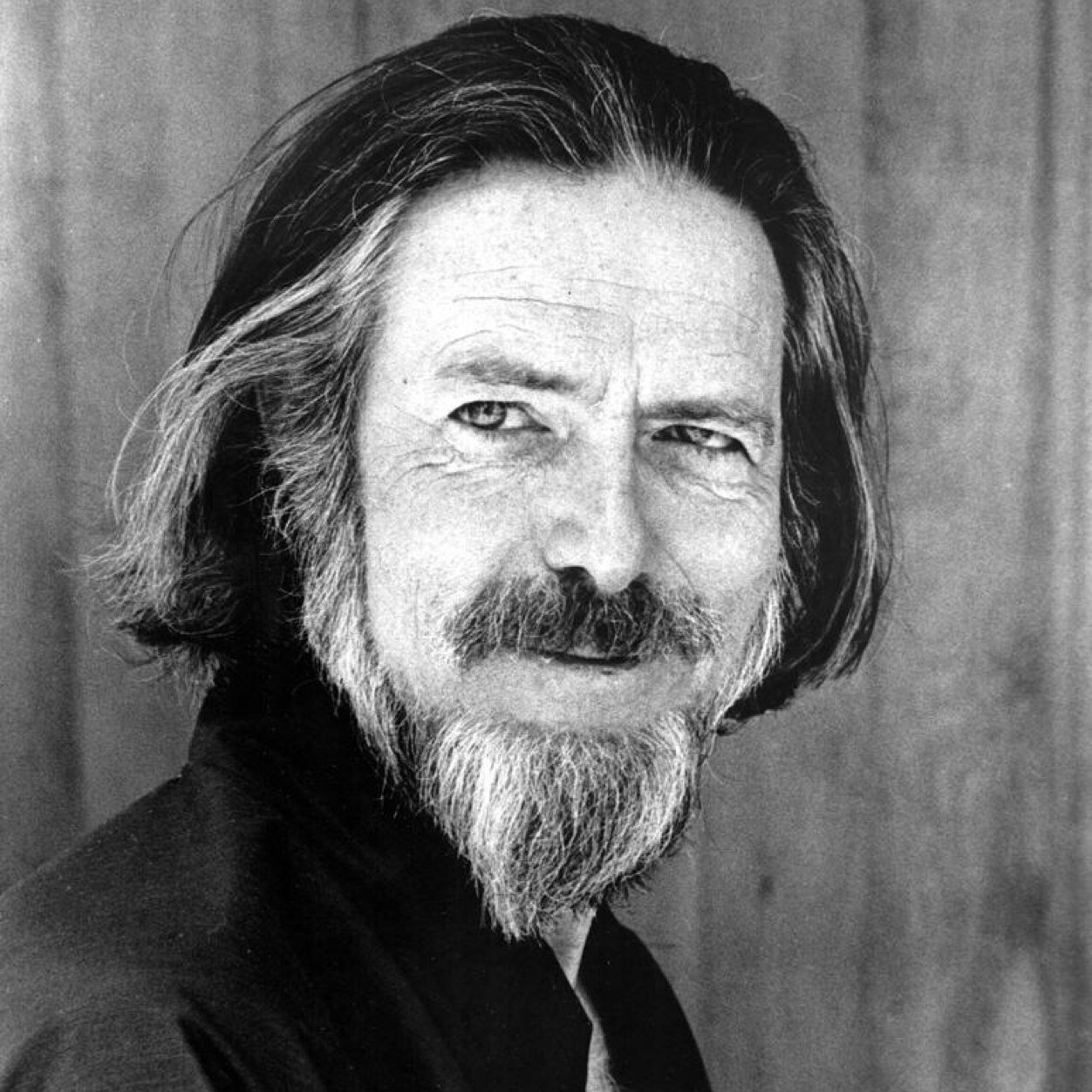
Alan Watts – The Trickster Guru?

The Trickster Guru

by Alan Watts

I have often thought of writing a novel, similar to Thomas Mann’s “Confessions of Felix Krull,” which would be the life story of a charlatan making out as a master guru – either initiated in Tibet or appearing as the reincarnation of Nagarjuna, Padmasambhava, or some other great historical sage of the Orient. It would be a romantic and glamorous tale, flavored with the scent of pines in Himalayan valleys, with garden courtyards in obscure parts of Alexandria, with mountain temples in Japan, and with secretive meetings and initiations in country houses adjoining Paris, New York, and Los Angeles. It would also raise some rather unexpected philosophical questions as to the relations between genuine mysticism and stage magic. But I have neither the patience nor the skill to be a novelist, and thus can do no more than sketch the idea for some more gifted author.

The attractions of being a trickster guru are many. There is power and there is wealth, and still more the satisfactions of being an actor without need for a stage, who turns “real life” into a drama. It is not, furthermore, an illegal undertaking such as selling shares in non-existent corporations, impersonating a doctor, or falsifying checks. There are no recognized and official qualifications for being a guru, though now that some universities are offering courses in meditation and Kundalini Yoga it may soon be necessary to be a member of the U.S. Fraternity of Gurus. But a really fine trickster would get around all that by the one-upmanship of inventing an entirely new discipline outside and beyond all known forms of esoteric teaching.

It must be understood from the start that the trickster guru fills a real need and performs a genuine public service. Millions of people are searching desperately for a true father-Magician, especially at a time when the clergy and the psychiatrists are making rather a poor show, and do not seem to have the courage of their convictions or of their fantasies. Perhaps they have lost nerve through too high a valuation of the virtue of honesty – as if a painter felt bound to give his landscapes the fidelity of photographs. To fulfil his compassionate vocation, the trickster guru must above all have nerve. He must also be quite well-read in mystical and occult literature, both that which is historically authentic and sound in scholarship, and that which is somewhat questionable – such as the writings of H.P. Blavatsky, P.D. Ouspensky, and Aleister Crowley. It doesn’t do to be caught out on details now known to a wide public.

After such preparatory studies, the first step is to frequent those circles where gurus are especially sought, such as the various cult groups which pursue oriental religions or peculiar forms of psychotherapy, or simply the intellectual and artistic milieux of any great city. Be somewhat quiet and solitary. Never ask questions, but occasionally add a point – quite briefly – to what some speaker has said. Volunteer no information about your personal life, but occasionally indulge in a little absent-minded name-dropping to suggest that you have travelled widely and spent time in Turkestan. Evade close questioning by giving the impression that mere travel is a small matter hardly worth discussing, and that your real interests lie on much deeper levels.

Such behavior will soon provoke people into asking your advice. Don’t come right out with it, but suggest that the question is rather deep and ought to be discussed at length in some quiet place. Make an appointment at a congenial restaurant or cafe – not at your home, unless you have an impressive library and no evidence of being tied down with a family. At first, answer nothing, but without direct questioning, draw the person out to enlarge on his problem and listen with your eyes closed – not as if sleeping, but as if attending to the deep inner vibrations of his thoughts. Conclude the interview with a slightly veiled command to perform some rather odd exercise, such as humming a sound and then suddenly stopping. Carefully instruct the person to be aware of the slightest decision to stop before actually stopping, and indicate that the point is to be able to stop without any prior decision. Make a further appointment for a report on progress.

To carry this through, you must work out a whole series of unusual exercises, both psychological and physical. Some must be rather difficult tricks which can actually be accomplished, to give your student the sense of real progress.

Others must be virtually impossible – such as to think of the words yes and no at the same instant, repeatedly for five minutes, or with a pencil in each hand, to try to hit the opposite hand – which is equally trying to defend itself and hit the other. Don’t give all your students the same exercises but, because people love to be types, sort them into groups according to their astrological sun signs or according to your own private classifications, which must be given such odd names as grubers, jongers, milers, and trovers.

A judidous use of hypnosis – avoiding all the common tricks of hand-raising, staring at lights, or saying “Relax. Relax, while I count up to ten” will produce pleasant changes of feeling and the impression of attaining higher states of consciousness.

First, describe such a stage quite vividly – say, the sense of walking on air – and then have your students walk around barefooted trying not to make the slightest sound and yet giving their whole weight to the floor. Imply that the floor will soon feel like a cushion, then like water, and finally like air. Indicate a little later that there is reason to believe that something of this kind is the initial stage of levitation.

Next, be sure to have about thirty or forty different stages of progress worked out, giving them numbers, and suggest that there are still some extremely high stages beyond those numbered which can only be understood by those who have reached twenty-eight – so no point in discussing them now. After the walking-on-air gambit, try for instance having them push out hard with their arms as if some overwhelming force were pulling them. Reverse the procedure. This leads quickly to the feeling that one is not doing what one is doing and doing what one is not doing. Tell them to stay in this state while going about everyday business.

After a while let it be known that you have a rather special and peculiar background – as when some student asks, “Where did you get all this?” Well, you just picked up a thing or two in Turkestan, or “I’m quite a bit older than I look,” or say that “Reincarnation is entirely unlike what people suppose it to be.” Later, let on that you are in some way connected with an extremely select in-group. Don’t brashly claim anything. Your students will soon do that for you, and, when one hits on the fantasy that pleases you most, say, “I see you are just touching stage eighteen.”

There are two schools of thought about asking for money for your services. One is to have fees just like a doctor, because people are embarrassed if they do not know just what is expected of them. The other, used by the real high-powered tricksters, is to do everything free with, however, the understanding that each student has been personally selected for his or her innate capacity for the work (call it that), and thus be careful not to admit anyone without first putting them through some sort of hazing. Monetary contributions will soon be offered. Otherwise, charge rather heavily, making it dear that the work is worth infinitely more to oneself and to others than, say, expensive surgery or a new home. Imply that you give most of it away to mysterious beneficiaries.

As soon as you can afford to wangle it, get hold of a country house as an ashram or spiritual retreat, and put students to work on all the menial tasks. Insist on some special diet, but do not follow it yourself. Indeed, you should cultivate small vices, such as smoking, mild boozing, or, if you are very careful, sleeping with the ladies, to suggest that your stage of evolution is so high that such things do not affect you, or that only by such means can you remain in contact with ordinary mundane consciousness.

On the one hand, you yourself must be utterly free from any form of religious or parapsychological superstition, lest some other trickster should outplay you. On the other hand, you must eventually come to believe in your own hoax, because this will give you ten times more nerve. This can be done through religionizing total skepticism to the point of basic incredulity about everything – even science. After all, this is in line with the Hindu-Buddhist position that the whole universe is an illusion, and you need not worry about whether the Absolute is real or unreal, eternal or non-eternal, because every idea of it that you could form would, in comparison with living it up in the present, be horribly boring. Furthermore, you should convince yourself that the Absolute is precisely the same as illusion, and thus not be in the least ashamed of being greedy or anxious or depressed. Make it dear that we are ultimately God, but that you know it. If you are challenged to perform wonders, point out that everything is already a fabulous wonder, and to do something bizarre would be to go against your own most perfect scheme of things. On the other hand, when funny coincidences turn up, look knowing and show no surprise, especially when any student has good fortune or recovers from sickness. It will promptly be attributed to your powers, and you may be astonished to find that your very touch becomes healing, because people really believe in you. When it doesn’t work, you should sigh gently about lack of faith, or explain that this particular sickness is a very important working out of Karma which will have to be reckoned with some day, so why not now.

The reputation for supernormal powers is self-reinforcing, and as it builds up you can get more daring, such that you will have the whole power of mass self-deception working for you. But always remember that a good guru plays it cool and maintains a certain aloofness, especially from those sharpies of the press and TV whose game is to expose just about everyone as a fraud. Always insist, like the finest restaurants, that your clientele is exclusive. The very highest “society” does not deign to be listed in the Social Register.

As time goes on, allow it more and more to be understood that you are in constant touch with other centers of work. Disappear from time to time by taking trips abroad, and come back looking more mysterious than ever. You can easily find someone in India or Syria to do duty as your colleague, and take a small and select group of students on a journey which includes a brief interview with this Personage. He can talk any kind of nonsense, while you do the “translating.” When travelling with students, avoid any obvious assistance from regular agencies, and let it appear that your secret fraternity has arranged everything in advance.

Now a trickster guru is certainly an illusionist, but one might ask “What else is art?” If the universe is nothing but a vast Rorschach blot upon which we project our collective measures and interpretations, and if past and future has no real existence, an illusionist is simply a creative artist who changes the collective interpretation of life, and even improves on it. Reality is mostly what a people or a culture conceives it to be. Money, worthless in itself, depends entirely on collective faith for its value. The past is held against you only because others believe in it, and the future seems important only because we have conned ourselves into the notion that surviving for a long time, with painstaking care, is preferable to surviving for a short time with no responsibility and lots of thrills. It is really a matter of changing fashion.

Perhaps, then, a trickster may be one who actually liberates people from their more masochistic participations in the collective illusion, on the homeopathic principle of “The hair of the dog that bit you. ” Even genuine gurus set their disciples impossible psychological exercises to demonstrate the unreality of the ego, and it could be argued that they too, are unwitting tricksters, raised as they have been in cultures without disillusioning benefits of “scientific knowledge,” which, as ecologists note, isn’t working out too well. Perhaps it all boils down to the ancient belief that God himself is a trickster, eternally fooling himself by the power of maya into the sensation that he is a human being, a cat, or an insect, since no art can be accomplished which does not set itself certain rules and limitations. A fully infinite and boundless God would have no limitations, and thus no way of manifesting power or love. Omnipotence must therefore include the power of self-restriction – to the point of forgetting that it is restricting itself and thus making limitations seem real. It could be that genuine students and gurus are on the side of being fooled, whereas the phony gurus are the foolers – and one must make one’s choice.

I am proposing this problem as a kind of Zen koan, like “Beyond positive and negative, what is reality?” How will you avoid being either a fool or a fooler? How will you get rid of the ego-illusion without either trying or not trying? If you need God’s grace to be saved, how will you get the grace to get grace? Who will answer these questions if yourself is itself an illusion? Man’s extremity is God’s opportunity.

The cock crows in the evening;
At midnight, the brilliant sun.
And there have also been such effective mother-magicians as Mary Baker Eddy, Helena Blavatsky, Aimee Semple McPherson, Annie Besant, and Alice Bailey.

© Alan Watts (1915 – 1973) The Essential Alan Watts, Celestial Arts (1974)

alan_watts

Alan Watts: Out of Your Mind – Essential Listening from the Alan Watts Audio Archives

Schopenhauer

“In India our religions will never take root. The ancient wisdom of the human race will not be displaced by what happened in Galilee. On the contrary, Indian philosophy streams back to Europe, and will produce a fundamental change in our knowledge and thought.”

– Arthur Schopenhauer
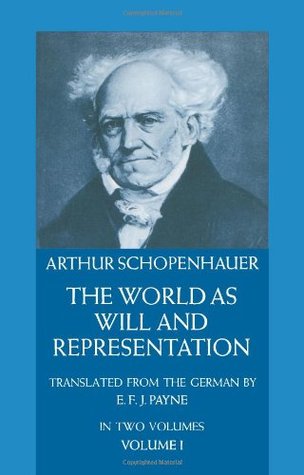
the-world-as-will-and-representation

Full Book (PDF): The World as Will and Representation – Volume I – Volume II

Full Book (PDF): On the Basis of Morality

Schopenhauer’s Thought

A key focus of Schopenhauer was his investigation of individual motivation. Before Schopenhauer, Hegel had popularized the concept of Zeitgeist, the idea that society consisted of a collective consciousness that moved in a distinct direction, dictating the actions of its members. Schopenhauer, a reader of both Kant and Hegel, criticized their logical optimism and the belief that individual morality could be determined by society and reason. Schopenhauer believed that humans were motivated by only their own basic desires, or Wille zum Leben (“Will to Live”), which directed all of mankind.

For Schopenhauer, human desire was futile, illogical, directionless, and, by extension, so was all human action in the world. Einstein paraphrased his views as follows: “Man can indeed do what he wants, but he cannot will what he wants.” In this sense, he adhered to the Fichtean principle of idealism: “The world is for a subject.” This idealism so presented, immediately commits it to an ethical attitude, unlike the purely epistemological concerns of Descartes and Berkeley. To Schopenhauer, the Will is a blind force that controls not only the actions of individual, intelligent agents, but ultimately all observable phenomena—an evil to be terminated via mankind’s duties: asceticism and chastity. He is credited with one of the most famous opening lines of philosophy: “The world is my representation.” Will, for Schopenhauer, is what Kant called the “thing-in-itself”. Friedrich Nietzsche was greatly influenced by this idea of Will, although he eventually rejected it.

For Schopenhauer, human desiring, “willing”, and craving cause suffering or pain. A temporary way to escape this pain is through aesthetic contemplation (a method comparable to Zapffe’s “Sublimation“). Aesthetic contemplation allows one to escape this pain—albeit temporarily—because it stops one perceiving the world as mere presentation. Instead, one no longer perceives the world as an object of perception (therefore as subject to the Principle of Sufficient Grounds; time, space and causality) from which one is separated; rather one becomes one with that perception: “one can thus no longer separate the perceiver from the perception” (The World as Will and Representation, section 34). From this immersion with the world one no longer views oneself as an individual who suffers in the world due to one’s individual will but, rather, becomes a “subject of cognition” to a perception that is “Pure, will-less, timeless” (section 34) where the essence, “ideas”, of the world are shown. Art is the practical consequence of this brief aesthetic contemplation as it attempts to depict one’s immersion with the world, thus tries to depict the essence/pure ideas of the world. Music, for Schopenhauer, was the purest form of art because it was the one that depicted the will itself without it appearing as subject to the Principle of Sufficient Grounds, therefore as an individual object. According to Daniel Albright, “Schopenhauer thought that music was the only art that did not merely copy ideas, but actually embodied the will itself”.

He deemed music a timeless, universal language comprehended everywhere, that can imbue global enthusiasm, if in possession of a significant melody.

Will as Noumenon

Schopenhauer accepted Kant’s double-aspect of the universe—the phenomenal (world of experience) and the noumenal (the true world, independent of experience). Some commentators suggest that Schopenhauer claimed that the noumenon, or thing-in-itself, was the basis for Schopenhauer’s concept of the will. Other commentators suggest that Schopenhauer considered will to be only a subset of the “thing-in-itself” class, namely that which we can most directly experience.

Schopenhauer’s identification of the Kantian noumenon (i.e., the actually existing entity) with what he termed “will” deserves some explanation. The noumenon was what Kant called the Ding an sich (the Thing in Itself), the reality that is the foundation of our sensory and mental representations of an external world. In Kantian terms, those sensory and mental representations are mere phenomena. Schopenhauer departed from Kant in his description of the relationship between the phenomenon and the noumenon. According to Kant, things-in-themselves ground the phenomenal representations in our minds; Schopenhauer, on the other hand, believed that phenomena and noumena are two different sides of the same coin. Noumena do not cause phenomena, but rather phenomena are simply the way by which our minds perceive the noumena, according to the principle of sufficient reason.

Schopenhauer’s second major departure from Kant’s epistemology concerns the body. Kant’s philosophy was formulated as a response to the radical philosophical skepticism of David Hume, who claimed that causality could not be observed empirically. Schopenhauer begins by arguing that Kant’s demarcation between external objects, knowable only as phenomena, and the Thing in Itself of noumenon, contains a significant omission. There is, in fact, one physical object we know more intimately than we know any object of sense perception: our own body.

We know our human bodies have boundaries and occupy space, the same way other objects known only through our named senses do. Though we seldom think of our body as a physical object, we know even before reflection that it shares some of an object’s properties. We understand that a watermelon cannot successfully occupy the same space as an oncoming truck; we know that if we tried to repeat the experiment with our own body, we would obtain similar results—we know this even if we do not understand the physics involved.

We know that our consciousness inhabits a physical body, similar to other physical objects only known as phenomena. Yet our consciousness is not commensurate with our body. Most of us possess the power of voluntary motion. We usually are not aware of the breathing of our lungs or the beating of our heart unless somehow our attention is called to them. Our ability to control either is limited. Our kidneys command our attention on their schedule rather than one we choose. Few of us have any idea what our liver is doing right now, though this organ is as needful as lungs, heart, or kidneys. The conscious mind is the servant, not the master, of these and other organs. These organs have an agenda the conscious mind did not choose, and over which it has limited power.

When Schopenhauer identifies the noumenon with the desires, needs, and impulses in us that we name “will”, what he is saying is that we participate in the reality of an otherwise unachievable world outside the mind through will. We cannot prove that our mental picture of an outside world corresponds with a reality by reasoning; through will, we know—without thinking—that the world can stimulate us. We suffer fear, or desire: these states arise involuntarily; they arise prior to reflection; they arise even when the conscious mind would prefer to hold them at bay. The rational mind is, for Schopenhauer, a leaf borne along in a stream of pre-reflective and largely unconscious emotion. That stream is will, and through will, if not through logic, we can participate in the underlying reality beyond mere phenomena. It is for this reason that Schopenhauer identifies the noumenon with what we call our will.

In his criticism of Kant, Schopenhauer claimed that sensation and understanding are separate and distinct abilities. Yet, for Kant, an object is known through each of them. Kant wrote: “[T]here are two stems of human knowledge … namely, sensibility and understanding, objects being given by the former [sensibility] and thought by the latter [understanding].” Schopenhauer disagreed. He asserted that mere sense impressions, not objects, are given by sensibility. According to Schopenhauer, objects are intuitively perceived by understanding and are discursively thought by reason (Kant had claimed that (1) the understanding thinks objects through concepts and that (2) reason seeks the unconditioned or ultimate answer to “why?”). Schopenhauer said that Kant’s mistake regarding perception resulted in all of the obscurity and difficult confusion that is exhibited in the Transcendental Analytic section of his critique.

Lastly, Schopenhauer departed from Kant in how he interpreted the Platonic ideas. In The World as Will and Representation Schopenhauer explicitly stated:

…Kant used the word [Idea] wrongly as well as illegitimately, although Plato had already taken possession of it, and used it most appropriately.

Instead Schopenhauer relied upon the Neoplatonist interpretation of the biographer Diogenes Laërtius from Lives and Opinions of Eminent Philosophers. In reference to Plato’s Ideas, Schopenhauer quotes Laërtius verbatim in an explanatory footnote.

Diogenes Laërtius (III, 12): Plato teaches that the Ideas exist in nature, so to speak, as patterns or prototypes, and that the remainder of things only resemble them, and exist as their copies.
schopenhauer_statue

Moral Theory

Schopenhauer’s moral theory proposed that only compassion can drive moral acts. According to Schopenhauer, compassion alone is the good of the object of the acts, that is, they cannot be inspired by either the prospect of personal utility or the feeling of duty. Mankind can also be guided by egoism and malice. Egotistic acts are those guided by self-interest, desire for pleasure or happiness. Schopenhauer believed most of our deeds belong to this class. Acts of malice are different from egotistic acts. As in the case of acts of compassion, these do not target personal utility. Their aim is to cause damage to others, independently of personal gains. He believed, like Swami Vivekananda in the unity of all with one-self and also believed that ego is the origin of pain and conflicts, that reduction of ego frames the moral principles.

Even though Schopenhauer ended his treatise on the freedom of human will with the postulate of everyone’s responsibility for their character and, consequently, acts—the responsibility following from one’s being the Will as noumenon (from which also all the characters and creations come)—he considered his views incompatible with theism, on grounds of fatalism and, more generally, responsibility for evil. In Schopenhauer’s philosophy the dogmas of Christianity lose their significance, and the “Last Judgment” is no longer preceded by anything—”The world is itself the Last Judgment on it.” Whereas God, if he existed, would be evil.

He named a force within man that he felt took invariable precedence over reason: the Will to Live or Will to Life (Wille zum Leben), defined as an inherent drive within human beings, and indeed all creatures, to stay alive; a force that inveigles us into reproducing.

Schopenhauer refused to conceive of love as either trifling or accidental, but rather understood it as an immensely powerful force that lay unseen within man’s psyche and dramatically shaped the world:

The ultimate aim of all love affairs … is more important than all other aims in man’s life; and therefore it is quite worthy of the profound seriousness with which everyone pursues it. What is decided by it is nothing less than the composition of the next generation.
young_schopenhauer

Influence of Eastern Thought

Schopenhauer read the Latin translation of the ancient Hindu texts, The Upanishads, which French writer Anquetil du Perron had translated from the Persian translation of Prince Dara Shikoh entitled Sirre-Akbar (“The Great Secret”). He was so impressed by their philosophy that he called them “the production of the highest human wisdom”, and believed they contained superhuman concepts. The Upanishads was a great source of inspiration to Schopenhauer. Writing about them, he said:

It is the most satisfying and elevating reading (with the exception of the original text) which is possible in the world; it has been the solace of my life and will be the solace of my death.

It is well known that the book Oupnekhat (Upanishad) always lay open on his table, and he invariably studied it before sleeping at night. He called the opening up of Sanskrit literature “the greatest gift of our century”, and predicted that the philosophy and knowledge of the Upanishads would become the cherished faith of the West.

Schopenhauer was first introduced to the 1802 Latin Upanishad translation through Friedrich Majer. They met during the winter of 1813–1814 in Weimar at the home of Schopenhauer’s mother according to the biographer Safranski. Majer was a follower of Herder, and an early Indologist. Schopenhauer did not begin a serious study of the Indic texts, however, until the summer of 1814. Sansfranski maintains that between 1815 and 1817, Schopenhauer had another important cross-pollination with Indian thought in Dresden. This was through his neighbor of two years, Karl Christian Friedrich Krause. Krause was then a minor and rather unorthodox philosopher who attempted to mix his own ideas with that of ancient Indian wisdom. Krause had also mastered Sanskrit, unlike Schopenhauer, and the two developed a professional relationship. It was from Krause that Schopenhauer learned meditation and received the closest thing to expert advice concerning Indian thought.

Most noticeable, in the case of Schopenhauer’s work, was the significance of the Chandogya Upanishad, whose Mahavakya, Tat Tvam Asi is mentioned throughout The World as Will and Representation.

Schopenhauer noted a correspondence between his doctrines and the Four Noble Truths of Buddhism. Similarities centered on the principles that life involves suffering, that suffering is caused by desire (taṇhā), and that the extinction of desire leads to liberation. Thus three of the four “truths of the Buddha” correspond to Schopenhauer’s doctrine of the will. In Buddhism, however, while greed and lust are always unskillful, desire is ethically variable – it can be skillful, unskillful, or neutral.

For Schopenhauer, Will had ontological primacy over the intellect; in other words, desire is understood to be prior to thought. Schopenhauer felt this was similar to notions of puruṣārtha or goals of life in Vedānta Hinduism.

In Schopenhauer’s philosophy, denial of the will is attained by either:

  • personal experience of an extremely great suffering that leads to loss of the will to live; or
  • knowledge of the essential nature of life in the world through observation of the suffering of other people.

However, Buddhist nirvāṇa is not equivalent to the condition that Schopenhauer described as denial of the will. Nirvāṇa is not the extinguishing of the person as some Western scholars have thought, but only the “extinguishing” (the literal meaning of nirvana) of the flames of greed, hatred, and delusion that assail a person’s character. Occult historian Joscelyn Godwin (1945– ) stated, “It was Buddhism that inspired the philosophy of Arthur Schopenhauer, and, through him, attracted Richard Wagner. This Orientalism reflected the struggle of the German Romantics, in the words of Leon Poliakov, to “free themselves from Judeo-Christian fetters”. In contradistinction to Godwin’s claim that Buddhism inspired Schopenhauer, the philosopher himself made the following statement in his discussion of religions:

If I wished to take the results of my philosophy as the standard of truth, I should have to concede to Buddhism pre-eminence over the others. In any case, it must be a pleasure to me to see my doctrine in such close agreement with a religion that the majority of men on earth hold as their own, for this numbers far more followers than any other. And this agreement must be yet the more pleasing to me, inasmuch as in my philosophizing I have certainly not been under its influence. For up till 1818, when my work appeared, there was to be found in Europe only a very few accounts of Buddhism.

Buddhist philosopher Nishitani Keiji, however, sought to distance Buddhism from Schopenhauer. While Schopenhauer’s philosophy may sound rather mystical in such a summary, his methodology was resolutely empirical, rather than speculative or transcendental:

Philosophy … is a science, and as such has no articles of faith; accordingly, in it nothing can be assumed as existing except what is either positively given empirically, or demonstrated through indubitable conclusions.

Also note:

This actual world of what is knowable, in which we are and which is in us, remains both the material and the limit of our consideration.

The argument that Buddhism affected Schopenhauer’s philosophy more than any other Dharmic faith loses more credence when viewed in light of the fact that Schopenhauer did not begin a serious study of Buddhism until after the publication of The World as Will and Representation in 1818. Scholars have started to revise earlier views about Schopenhauer’s discovery of Buddhism. Proof of early interest and influence, however, appears in Schopenhauer’s 1815/16 notes (transcribed and translated by Urs App) about Buddhism. They are included in a recent case study that traces Schopenhauer’s interest in Buddhism and documents its influence. Other scholarly work questions how similar Schopenhauer’s philosophy actually is to Buddhism.

Schopenhauer said he was influenced by the Upanishads, Immanuel Kant and Plato. References to Eastern philosophy and religion appear frequently in his writing. As noted above, he appreciated the teachings of the Buddha and even called himself a Buddhist. He said that his philosophy could not have been conceived before these teachings were available.

Concerning the Upanishads and Vedas, he writes in The World as Will and Representation:

If the reader has also received the benefit of the Vedas, the access to which by means of the Upanishads is in my eyes the greatest privilege which this still young century (1818) may claim before all previous centuries, if then the reader, I say, has received his initiation in primeval Indian wisdom, and received it with an open heart, he will be prepared in the very best way for hearing what I have to tell him. It will not sound to him strange, as to many others, much less disagreeable; for I might, if it did not sound conceited, contend that every one of the detached statements which constitute the Upanishads, may be deduced as a necessary result from the fundamental thoughts which I have to enunciate, though those deductions themselves are by no means to be found there.

Among Schopenhauer’s other influences were: Shakespeare, Jean-Jacques Rousseau, John Locke, Thomas Reid, Baruch Spinoza, Matthias Claudius, George Berkeley, David Hume, and René Descartes.
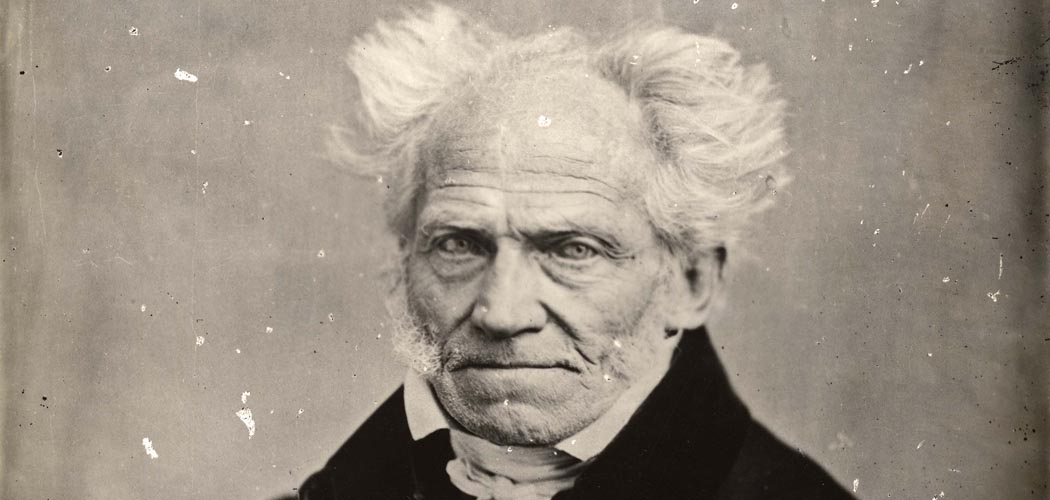
schopenhauer

Schopenhauer’s Influence

Schopenhauer has had a massive influence upon later thinkers, though more so in the arts (especially literature and music) and psychology than in philosophy. His popularity peaked in the early twentieth century, especially during the Modernist era, and waned somewhat thereafter. Nevertheless, a number of recent publications have reinterpreted and modernised the study of Schopenhauer. His theory is also being explored by some modern philosophers as a precursor to evolutionary theory and modern evolutionary psychology.

Russian writer and philosopher Leo Tolstoy was greatly influenced by Schopenhauer. After reading Schopenhauer’s The World as Will and Representation, Tolstoy gradually became converted to the ascetic morality upheld in that work as the proper spiritual path for the upper classes: “Do you know what this summer has meant for me? Constant raptures over Schopenhauer and a whole series of spiritual delights which I’ve never experienced before. … no student has ever studied so much on his course, and learned so much, as I have this summer”

Richard Wagner, writing in his autobiography, remembered his first impression that Schopenhauer left on him (when he read The World as Will and Representation):

Schopenhauer’s book was never completely out of my mind, and by the following summer I had studied it from cover to cover four times. It had a radical influence on my whole life.

Wagner also commented on that “serious mood, which was trying to find ecstatic expression” created by Schopenhauer inspired the conception of Tristan und Isolde.

Friedrich Nietzsche owed the awakening of his philosophical interest to reading The World as Will and Representation and admitted that he was one of the few philosophers that he respected, dedicating to him his essay Schopenhauer als Erzieher one of his Untimely Meditations.

Jorge Luis Borges remarked that the reason he had never attempted to write a systematic account of his world view, despite his penchant for philosophy and metaphysics in particular, was because Schopenhauer had already written it for him.

As a teenager, Ludwig Wittgenstein adopted Schopenhauer’s epistemological idealism. However, after his study of the philosophy of mathematics, he rejected epistemological idealism for Gottlob Frege’s conceptual realism. In later years, Wittgenstein was highly dismissive of Schopenhauer, describing him as an ultimately shallow thinker: “Schopenhauer has quite a crude mind… where real depth starts, his comes to an end.”

The philosopher Gilbert Ryle read Schopenhauer’s works as a student, but later largely forgot them, only to unwittingly recycle ideas from Schopenhauer in his The Concept of Mind (1949).


Further Study

Arthur Schopenhauer (SEP)

Arthur Schopenhauer (IEP)

Schopenhauer’s Works (Project Gutenberg)

Schopenhauer’s Works (Wikisource)

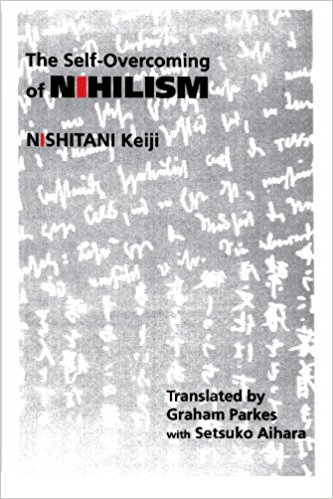
The Self-Overcoming of Nihilism

the self-overcoming of nihilism

Full Book (PDF): The Self-Overcoming of Nihilism by Nishitani Keiji

As a past reader of Nishitani in both the original Japanese and English translation, I find this manuscript to be the most accessible and clearly written of any book-length work I have read by him. It shows Nishitani as a vital and vigorous thinker, and serves as an introduction to his widely acclaimed Religion and Nothingness.

The summaries of the relation to nihilism of Hegel, Schopenhauer, Kierkegaard, Feuerbach, and Stirner, a nearly forgotten figure in intellectual history, are all perspicacious. Even the chapters on Nietzsche, about whom volumes are written these days, provide new insights. The brief section on the problem of nihilism for Japan is unprecedented in the English literature, and the sketches on karma and historicity whet the appetite for the more extensive and difficult expositions in Religion and Nothingness.

It will be mandatory reading for an understanding of both Nishitani’s thought and the problem of nihilism. Scholars and other persons interested in nihilism, in Nietzsche, and/or in contemporary Buddhist or Japanese philosophy, will greatly profit from a study of this book.

– John C. Maraldo, Department of Philosophy, University of North Florida

This is a fine translation of an important work in the corpus of Nishitani’s early writings. The translation is timely both because of the Western interest in Nishitani as a preeminent contemporary Japanese philosopher and because of the continuing Western perplexity about the problems Nishitani addresses. Nishitani is one of the world’s greatest living philosophers and even in this early work of his that brilliance shines through.

– Thomas P. Kasulis, Department of Philosophy, Northland College

Nishitani Keiji was for many years Professor of Religious Philosophy at Kyoto University and the leading thinker of the “Kyoto School” of philosophy. He died in 1990. Graham Parkes is Professor of Philosophy at the University of Hawaii, the editor of Heidegger and Asian Thought and Nietzsche and Asian Thought, and the author of Composing the Soul: Reaches of Nietzsche’s Psychology. Setsuko Aihara has taught Japanese at the University of Hawaii and Harvard University, and is the author of Strategies for Reading Japanese: A Rational Approach to the Japanese Sentence.

Contents

Chapter One – Nihilism as Existence

1. Two Problems

2. Nihilism and the Philosophy of History

3. European Nihilism

Chapter Two – From Realism to Nihilism: Hegel, Schopenhauer, Kierkegaard, Feuerbach

1. Hegel’s Absolute Idealism and Radical Realism

2. Schopenhauer—Will as Real—The Nullity of Existence

3. Kierkegaard—Becoming and Existence

4. Feuerbach—Critique of Religion, Philosophy, and Ethics

Chapter Three – Friedrich Nietzsche: The First Consummate Nihilist

1. The Significance of Nihilism in Nietzsche

2. Radical Nihilism

3. Nietzsche’s Interpretation of Christianity

4. The Concept of “Sincerity”—”Will to Illusion”

Chapter Four – Nietzsche’s Affirmative Nihilism: Amor Fati and Eternal Recurrence

1. Value-Interpretation and Perspectivism

2. The Problem of Amor Fati

3. Love of Fate as “Innermost Nature”—Suffering—Soul

4. The Idea of Eternal Recurrence: The “Moment” and Eternity

5. Eternal Recurrence and Overcoming the Spirit of Gravity

6. Love of Fate and Eternal Recurrence

7. The Self-Overcoming of Nihilism

Chapter Five – Nihilism and Existence in Nietzsche

1. “God is Dead”

2. Critique of Religion

3. The Stages of Nihilism

4. Nihilism as Existence

5. The First Stage of Existence

6. The Second Stage of Existence

7. Nihilism as Scientific Conscience

8. Science and History as Existence

9. “Living Dangerously” and “Experimentation”

10. The Third Stage—Existence as Body

11. The Dialectical Development of Nihilism

Chapter Six – Nihilism as Egoism: Max Stirner

1. Stirner’s Context

2. The Meaning of Egoism

3. Realist, Idealist, Egoist—”Creative Nothing”

4. From Paganism to Christianity

5. From Christianity to Liberalism

6. From Liberalism to Egoism

7. Ownness and Property—All and Nothing

8. The State and the Individual

Chapter Seven – Nihilism in Russia

1. Russian Nihilism

2. Bazarov’s Nihilism—”Fathers and Sons”

3. Nihilism as Contemplation—”Notes from Underground”

Chapter Eight – Nihilism as Philosophy: Martin Heidegger

1. Existentialism as a Discipline

2. The “Ontological Difference”

3. Transcendence and Being-in-the-World

4. Being-toward-Death and Anxiety

5. Finitude—Metaphysics—Existence—Freedom

Chapter Nine – The Meaning of Nihilism for Japan

1. The Crisis in Europe and Nihilism

2. The Crisis Compounded

3. The Significance of European Nihilism for Us

4. Buddhism and Nihilism

Appendix – The Problem of Atheism

1. Marxist Humanism

2. Sartrean Existentialism

3. Atheism in the World of Today

Philosophy Primary Sources

sky-bookshelf

Full books in PDF format. These are the books that are generally considered standard reading for anybody interested in philosophy. You can find even more primary sources in Philosophy Primary Sources II, and head to the Links section for even more research sources!

Fragments By Anaxagoras of Clazomenae

Summa Contra Gentiles By Aquinas

De Anima (On the Soul) By Aristotle

Categories By Aristotle

On Dreams By Aristotle

Nicomachean Ethics By Aristotle

On Interpretation By Aristotle

Metaphysics By Aristotle

Physics By Aristotle

Poetics By Aristotle

Politics By Aristotle

Posterior Analytics By Aristotle

Prior Analytics By Aristotle

Rhetoric By Aristotle

City of God By Augustine

Confessions By Augustine

The Meditations By Marcus Aurelius Antoninus

Three Dialogues Between Hylas and Philonous By Berkeley

A Treatise Concerning the Principles of Human Knowledge By Berkeley

The Consolation of Philosophy By Boethius

The Dhammapada By Buddha

The Vagrakkhedikâ Or Diamond-Cutter By Buddha

Discourse on the Method of Rightly Conducting the Reason and Seeking for Truth in the Sciences By Descartes

Meditations on First Philosophy By Descartes

Democracy and Education By Dewey

Discourses By Epictetus

The Enchiridion, or Manual By Epictetus

Letter to Menoeceus By Epicurus

Principal Doctrines By Epicurus

The Philosophy Of History (Introduction) By G. W. F. Hegel

Philosophy Of Mind: Part Three of the Encyclopaedia of the Philosophical Sciences By G.W.F. Hegel

Fragments By Heraclitus

Dialogues Concerning Natural Religion By Hume

An Enquiry Concerning Human Understanding By Hume

Does Consciousness Exist? By James

What Pragmatism Means By James

The Varieties of Religious Experience By James

The Will to Believe By James

The Critique of Pure Reason By Kant

Fundamental Principles of the Metaphysics of Morals By Kant

The Critique of Judgement By Kant

Introduction to the Metaphysics of Morals By Kant

Prolegomena to any Future Metaphysics By Kant

Critique of Practical Reason By Kant

Tao Te Ching By Lao-Tzu

Monadology By Leibniz

An Essay Concerning Human Understanding By Locke

The Second Treatise of Government By Locke

Communist Manifesto By Marx

On Liberty By Mill

Utilitarianism By Mill

On Subjection of Women By Mill

Thus Spake Zarathustra By Nietzsche

Fragments and Commentary By Parmenides

The Fixation of Belief By Peirce

How to Make Our Ideas Clear By Peirce

Apology By Plato

Charmides By Plato

Cratylus By Plato

Crito By Plato

Euthydemus By Plato

Euthyphro By Plato

Gorgias By Plato

Ion By Plato

Laches By Plato

Laws By Plato

Meno By Plato

Parmenides By Plato

Phaedo By Plato

Phaedrus By Plato

Philebus By Plato

Protagoras By Plato

The Republic By Plato

Sophist By Plato

Statesman By Plato

Symposium By Plato

Theaetetus By Plato

Timaeus By Plato

Enneads By Plotinus

Fragments and Commentary By Pythagoras

On Denoting By Russell

The Problems of Philosophy By Russell

Ethics By Spinoza

On the Improvement of Understanding By Spinoza

Fragments and Commentary of Thales

A Vindication of the Rights of Women By Wollstonecraft


Check out Philosophy Primary Sources II and the Links section for even more research sources!

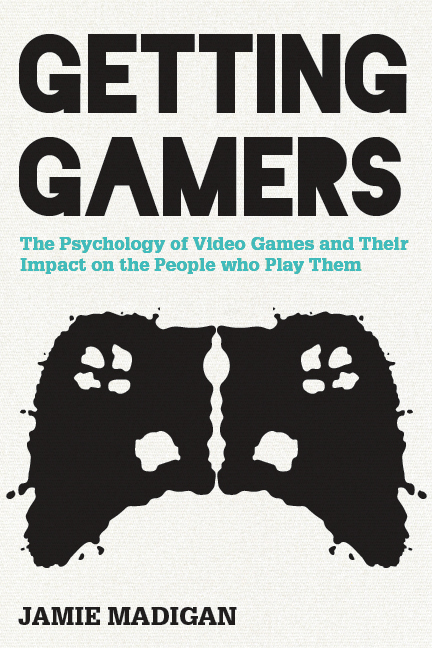
The Psychology of Video Games

Getting-Gamers-Large

Getting Gamers: The Psychology of Video Games and Their Impact on the People who Play Them

Video games are big business. They can be addicting. They are available almost anywhere you go and are appealing to people of all ages. They can eat up our time, cost us money, even kill our relationships. But it’s not all bad! This book will show that rather than being a waste of time, video games can help us develop skills, make friends, succeed at work, form good habits, and be happy. Taking the time to learn what’s happening in our heads as we play and shop allows us to approach games and gaming communities on our own terms and get more out of them.

With sales in the tens of billions of dollars each year, just about everybody is playing some kind of video game whether it’s on a console, a computer, a web browser, or a phone. Much of the medium’s success is built on careful (though sometimes unwitting) adherence to basic principles of psychology. This is something that’s becoming even more important as games become more social, interactive, and sophisticated. This book offers something unique to the millions of people who play or design games: how to use an understanding of psychology to be a better part of their gaming communities, to avoid being manipulated when they shop and play, and to get the most enjoyment out of playing games. With examples from the games themselves, Jamie Madigan offers a fuller understanding of the impact of games on our psychology and the influence of psychology on our games.

About the Author

Jamie Madigan, PhD, has become an expert on the psychology of video games and seeks to popularize understanding of how various aspects of psychology can be used to understand why games are made how they are and why their players behave as they do. Madigan has written extensively on the subject for various magazines, websites, blogs, and his own site at www.psychologyofgames.com. He has also consulted with game development companies and talked at conferences about how game developers can incorporate psychology principles into game design and how players can understand how it affects their play. Finally, he has appeared as an expert on the psychology of video games in dozens of print, radio, and web outlets such as The Washington Post, the Chicago Tribune, BBC Radio 5, the BBC, The Guardian, and more. He is a lifelong gamer.

Herd Mentality

In his heart every man knows quite well that, being unique, he will be in the world only once and that no imaginable chance will for a second time gather together into a unity so strangely variegated an assortment as he is: he knows it but he hides it like a bad conscience—why? From fear of his neighbor, who demands conventionality and cloaks himself with it. But what is it that constrains the individual to fear his neighbor, to think and act like a member of a herd, and to have no joy in himself? Modesty, perhaps, in a few rare cases. With the great majority it is indolence, inertia. … Men are even lazier than they are timid, and fear most of all the inconveniences with which unconditional honesty and nakedness would burden them. Artists alone hate this sluggish promenading in borrowed fashions and appropriated opinions and they reveal everyone’s secret bad conscience, the law that every man is a unique miracle.

Parliamentarianism—that is, public permission to choose between five basic political opinions—flatters and wins the favor of all those who would like to seem independent and individual, as if they fought for their opinions. Ultimately, however, it is indifferent whether the herd is commanded to have one opinion or to have five. Whoever deviates from the five public opinions and stands apart will always have the whole herd against him.

No shepherd and one herd! Everybody wants the same, everybody is the same: whoever feels different goes voluntarily into a madhouse. The individual has always had to struggle to keep from being overwhelmed by the tribe. If you try it, you will be lonely often, and sometimes frightened. But no price is too high to pay for the privilege of owning yourself.

There are horrible people who, instead of solving a problem, tangle it up and make it harder to solve for anyone who wants to deal with it. Whoever does not know how to hit the nail on the head should be asked not to hit it at all. The surest way to corrupt a youth is to instruct him to hold in higher esteem those who think alike than those who think differently.

If you have a virtue and she is your virtue, then you have her in common with nobody. But you want to call her by her name and pet her … and behold, now you have her in common with the people and have become one of the herd with your virtue. You would do better to say “Inexpressible and nameless is that which gives my soul agony and sweetness.”… May your virtue be too exalted for the familiarity of names, and if you must speak of her, do not be ashamed to stammer.

– Friedrich Nietzsche


Obama Accepts Nomination On Final Day Of Democratic National Convention

What is Enlightenment?

Enlightenment is man’s emergence from his self-imposed immaturity. Immaturity is the inability to use one’s understanding without guidance from another. This immaturity is self-imposed when its cause lies not in lack of understanding, but in lack of resolve and courage to use it without guidance from another. Sapere Aude! [dare to know] “Have courage to use your own understanding!”–that is the motto of enlightenment.

Laziness and cowardice are the reasons why so great a proportion of men, long after nature has released them from alien guidance (natura-liter maiorennes), nonetheless gladly remain in lifelong immaturity, and why it is so easy for others to establish themselves as their guardians. It is so easy to be immature. If I have a book to serve as my understanding, a pastor to serve as my conscience, a physician to determine my diet for me, and so on, I need not exert myself at all. I need not think, if only I can pay: others will readily undertake the irksome work for me. The guardians who have so benevolently taken over the supervision of men have carefully seen to it that the far greatest part of them (including the entire fair sex) regard taking the step to maturity as very dangerous, not to mention difficult. Having first made their domestic livestock dumb, and having carefully made sure that these docile creatures will not take a single step without the go-cart to which they are harnessed, these guardians then show them the danger that threatens them, should they attempt to walk alone. Now this danger is not actually so great, for after falling a few times they would in the end certainly learn to walk; but an example of this kind makes men timid and usually frightens them out of all further attempts.

Thus, it is difficult for any individual man to work himself out of the immaturity that has all but become his nature. He has even become fond of this state and for the time being is actually incapable of using his own understanding, for no one has ever allowed him to attempt it. Rules and formulas, those mechanical aids to the rational use, or rather misuse, of his natural gifts, are the shackles of a permanent immaturity. Whoever threw them off would still make only an uncertain leap over the smallest ditch, since he is unaccustomed to this kind of free movement. Consequently, only a few have succeeded, by cultivating their own minds, in freeing themselves from immaturity and pursuing a secure course.

But that the public should enlighten itself is more likely; indeed, if it is only allowed freedom, enlightenment is almost inevitable. For even among the entrenched guardians of the great masses a few will always think for themselves, a few who, after having themselves thrown off the yoke of immaturity, will spread the spirit of a rational appreciation for both their own worth and for each person’s calling to think for himself. But it should be particularly noted that if a public that was first placed in this yoke by the guardians is suitably aroused by some of those who are altogether incapable of enlightenment, it may force the guardians themselves to remain under the yoke–so pernicious is it to instill prejudices, for they finally take revenge upon their originators, or on their descendants. Thus a public can only attain enlightenment slowly. Perhaps a revolution can overthrow autocratic despotism and profiteering or power-grabbing oppression, but it can never truly reform a manner of thinking; instead, new prejudices, just like the old ones they replace, will serve as a leash for the great unthinking mass.

Nothing is required for this enlightenment, however, except freedom; and the freedom in question is the least harmful of all, namely, the freedom to use reason publicly in all matters. But on all sides I hear: “Do not argue!” The officer says, “Do not argue, drill!” The tax man says, “Do not argue, pay!” The pastor says, “Do not argue, believe!” (Only one ruler in the World says, “Argue as much as you want and about what you want, but obey!”) In this we have examples of pervasive restrictions on freedom. But which restriction hinders enlightenment and which does not, but instead actually advances it? I reply: The public use of one’s reason must always be free, and it alone can bring about enlightenment among mankind; the private use of reason may, however, often be very narrowly restricted, without otherwise hindering the progress of enlightenment. By the public use of one’s own reason I understand the use that anyone as a scholar makes of reason before the entire literate world. I call the private use of reason that which a person may make in a civic post or office that has been entrusted to him. Now in many affairs conducted in the interests of a community, a certain mechanism is required by means of which some of its members must conduct themselves in an entirely passive manner so that through an artificial unanimity the government may guide them toward public ends, or at least prevent them from destroying such ends. Here one certainly must not argue, instead one must obey. However, insofar as this part of the machine also regards himself as a member of the community as a whole, or even of the world community, and as a consequence addresses the public in the role of a scholar, in the proper sense of that term, he can most certainly argue, without thereby harming the affairs for which as a passive member he is partly responsible. Thus it would be disastrous if an officer on duty who was given a command by his superior were to question the appropriateness or utility of the order. He must obey.

But as a scholar he cannot be justly constrained from making comments about errors in military service, or from placing them before the public for its judgment. The citizen cannot refuse to pay the taxes imposed on him; indeed, impertinent criticism of such levies, when they should be paid by him, can be punished as a scandal (since it can lead to widespread insubordination). But the same person does not act contrary to civic duty when, as a scholar, he publicly expresses his thoughts regarding the impropriety or even injustice of such taxes. Likewise a pastor is bound to instruct his catecumens and congregation in accordance with the symbol of the church he serves, for he was appointed on that condition. But as a scholar he has complete freedom, indeed even the calling, to impart to the public all of his carefully considered and well-intentioned thoughts concerning mistaken aspects of that symbol, as well as his suggestions for the better arrangement of religious and church matters. Nothing in this can weigh on his conscience. What he teaches in consequence of his office as a servant of the church he sets out as something with regard to which he has no discretion to teach in accord with his own lights; rather, he offers it under the direction and in the name of another. He will say, “Our church teaches this or that and these are the demonstrations it uses.” He thereby extracts for his congregation all practical uses from precepts to which he would not himself subscribe with complete conviction, but whose presentation he can nonetheless undertake, since it is not entirely impossible that truth lies hidden in them, and, in any case, nothing contrary to the very nature of religion is to be found in them. If he believed he could find anything of the latter sort in them, he could not in good conscience serve in his position; he would have to resign. Thus an appointed teacher’s use of his reason for the sake of his congregation is merely private, because, however large the congregation is, this use is always only domestic; in this regard, as a priest, he is not free and cannot be such because he is acting under instructions from someone else. By contrast, the cleric–as a scholar who speaks through his writings to the public as such, i.e., the world–enjoys in this public use of reason an unrestricted freedom to use his own rational capacities and to speak his own mind. For that the (spiritual) guardians of a people should themselves be immature is an absurdity that would insure the perpetuation of absurdities.

But would a society of pastors, perhaps a church assembly or venerable presbytery (as those among the Dutch call themselves), not be justified in binding itself by oath to a certain unalterable symbol in order to secure a constant guardianship over each of its members and through them over the people, and this for all time: I say that this is wholly impossible. Such a contract, whose intention is to preclude forever all further enlightenment of the human race, is absolutely null and void, even if it should be ratified by the supreme power, by parliaments, and by the most solemn peace treaties. One age cannot bind itself, and thus conspire, to place a succeeding one in a condition whereby it would be impossible for the later age to expand its knowledge (particularly where it is so very important), to rid itself of errors,and generally to increase its enlightenment. That would be a crime against human nature, whose essential destiny lies precisely in such progress; subsequent generations are thus completely justified in dismissing such agreements as unauthorized and criminal. The criterion of everything that can be agreed upon as a law by a people lies in this question: Can a people impose such a law on itself? Now it might be possible, in anticipation of a better state of affairs, to introduce a provisional order for a specific, short time, all the while giving all citizens, especially clergy, in their role as scholars, the freedom to comment publicly, i.e., in writing, on the present institution’s shortcomings. The provisional order might last until insight into the nature of these matters had become so widespread and obvious that the combined (if not unanimous) voices of the populace could propose to the crown that it take under its protection those congregations that, in accord with their newly gained insight, had organized themselves under altered religious institutions, but without interfering with those wishing to allow matters to remain as before. However, it is absolutely forbidden that they unite into a religious organization that nobody may for the duration of a man’s lifetime publicly question, for so do-ing would deny, render fruitless, and make detrimental to succeeding generations an era in man’s progress toward improvement. A man may put off enlightenment with regard to what he ought to know, though only for a short time and for his own person; but to renounce it for himself, or, even more, for subsequent generations, is to violate and trample man’s divine rights underfoot. And what a people may not decree for itself may still less be imposed on it by a monarch, for his lawgiving authority rests on his unification of the people’s collective will in his own. If he only sees to it that all genuine or purported improvement is consonant with civil order, he can allow his subjects to do what they find necessary to their spiritual well-being, which is not his affair. However, he must prevent anyone from forcibly interfering with another’s working as best he can to determine and promote his well-being. It detracts from his own majesty when he interferes in these matters, since the writings in which his subjects attempt to clarify their insights lend value to his conception of governance. This holds whether he acts from his own highest insight–whereby he calls upon himself the reproach, “Caesar non eat supra grammaticos.”‘–as well as, indeed even more, when he despoils his highest authority by supporting the spiritual despotism of some tyrants in his state over his other subjects.

If it is now asked, “Do we presently live in an enlightened age?” the answer is, “No, but we do live in an age of enlightenment.” As matters now stand, a great deal is still lacking in order for men as a whole to be, or even to put themselves into a position to be able without external guidance to apply understanding confidently to religious issues. But we do have clear indications that the way is now being opened for men to proceed freely in this direction and that the obstacles to general enlightenment–to their release from their self-imposed immaturity–are gradually diminishing. In this regard, this age is the age of enlightenment, the century of Frederick.

A prince who does not find it beneath him to say that he takes it to be his duty to prescribe nothing, but rather to allow men complete freedom in religious matters–who thereby renounces the arrogant title of tolerance–is himself enlightened and deserves to be praised by a grateful present and by posterity as the first, at least where the government is concerned, to release the human race from immaturity and to leave everyone free to use his own reason in all matters of conscience. Under his rule, venerable pastors, in their role as scholars and without prejudice to their official duties, may freely and openly set out for the world’s scrutiny their judgments and views, even where these occasionally differ from the accepted symbol. Still greater freedom is afforded to those who are not restricted by an official post. This spirit of freedom is expanding even where it must struggle against the external obstacles of governments that misunderstand their own function. Such governments are illuminated by the example that the existence of freedom need not give cause for the least concern regarding public order and harmony in the commonwealth. If only they refrain from inventing artifices to keep themselves in it, men will gradually raise themselves from barbarism.

I have focused on religious matters in setting out my main point concerning enlightenment, i.e., man’s emergence from self-imposed immaturity, first because our rulers have no interest in assuming the role of their subjects’ guardians with respect to the arts and sciences, and secondly because that form of immaturity is both the most pernicious and disgraceful of all. But the manner of thinking of a head of state who favors religious enlightenment goes even further, for he realizes that there is no danger to his legislation in allowing his subjects to use reason publicly and to set before the world their thoughts concerning better formulations of his laws, even if this involves frank criticism of legislation currently in effect. We have before us a shining example, with respect to which no monarch surpasses the one whom we honor.

But only a ruler who is himself enlightened and has no dread of shadows, yet who likewise has a well-disciplined, numerous army to guarantee public peace, can say what no republic may dare, namely: “Argue as much as you want and about what you want, but obey!” Here as elsewhere, when things are considered in broad perspective, a strange, unexpected pattern in human affairs reveals itself, one in which almost everything is paradoxical. A greater degree of civil freedom seems advantageous to a people’s spiritual freedom; yet the former established impassable boundaries for the latter; conversely, a lesser degree of civil freedom provides enough room for all fully to expand their abilities. Thus, once nature has removed the hard shell from this kernel for which she has most fondly cared, namely, the inclination to and vocation for free thinking, the kernel gradually reacts on a people’s mentality (whereby they become increasingly able to act freely), and it finally even influences the principles of government, which finds that it can profit by treating men, who are now more than machines, in accord with their dignity.

– Immanuel Kant


lakewood-church-houstontx-040

The Crowd is Untruth

There is a view of life which holds that where the crowd is, the truth is also, that it is a need in truth itself, that it must have the crowd on its side. There is another view of life; which holds that wherever the crowd is, there is untruth, so that, for a moment to carry the matter out to its farthest conclusion, even if every individual possessed the truth in private, yet if they came together into a crowd (so that “the crowd” received any decisive, voting, noisy, audible importance), untruth would at once be let in.

For “the crowd” is untruth. Eternally, godly, christianly what Paul says is valid: “only one receives the prize,” [I Cor. 9:24] not by way of comparison, for in the comparison “the others” are still present. That is to say, everyone can be that one, with God’s help – but only one receives the prize; again, that is to say, everyone should cautiously have dealings with “the others,” and essentially only talk with God and with himself – for only one receives the prize; again, that is to say, the human being is in kinship with, or to be a human is to be in kinship with the divinity. The worldly, temporal, busy, socially-friendly person says this: “How unreasonable, that only one should receive the prize, it is far more probable that several combined receive the prize; and if we become many, then it becomes more certain and also easier for each individually.” Certainly, it is far more probable; and it is also true in relation to all earthly and sensuous prizes; and it becomes the only truth, if it is allowed to rule, for this point of view abolishes both God and the eternal and “the human being’s” kinship with the divinity; it abolishes it or changes it into a fable, and sets the modern (as a matter of fact, the old heathen) in its place, so that to be a human being is like being a specimen which belongs to a race gifted with reason, so that the race, the species, is higher than the individual, or so that there are only specimens, not individuals. But the eternal, which vaults high over the temporal, quiet as the night sky, and God in heaven, who from this exalted state of bliss, without becoming the least bit dizzy, looks out over these innumerable millions and knows each single individual; he, the great examiner, he says: only one receives the prize; that is to say, everyone can receive it, and everyone ought to become this by oneself, but only one receives the prize. Where the crowd is, therefore, or where a decisive importance is attached to the fact that there is a crowd, there no one is working, living, and striving for the highest end, but only for this or that earthly end; since the eternal, the decisive, can only be worked for where there is one; and to become this by oneself, which all can do, is to will to allow God to help you – “the crowd” is untruth.

A crowd – not this or that, one now living or long dead, a crowd of the lowly or of nobles, of rich or poor, etc., but in its very concept – is untruth, since a crowd either renders the single individual wholly unrepentant and irresponsible, or weakens his responsibility by making it a fraction of his decision. Observe, there was not a single soldier who dared lay a hand on Caius Marius; this was the truth. But given three or four women with the consciousness or idea of being a crowd, with a certain hope in the possibility that no one could definitely say who it was or who started it: then they had the courage for it; what untruth! The untruth is first that it is “the crowd,” which does either what only the single individual in the crowd does, or in every case what each single individual does. For a crowd is an abstraction, which does not have hands; each single individual, on the other hand, normally has two hands, and when he, as a single individual, lays his two hands on Caius Marius, then it is the two hands of this single individual, not after all his neighbor’s, even less – the crowd’s, which has no hands. In the next place, the untruth is that the crowd had “the courage” for it, since never at any time was even the most cowardly of all single individuals so cowardly, as the crowd always is. For every single individual who escapes into the crowd, and thus flees in cowardice from being a single individual (who either had the courage to lay his hand on Caius Marius, or the courage to admit that he did not have it), contributes his share of cowardice to “the cowardice,” which is: the crowd. Take the highest, think of Christ – and the whole human race, all human beings, which were ever born and ever will be born; the situation is the single individual, as an individual, in solitary surroundings alone with him; as a single individual he walks up to him and spits on him: the human being has never been born and never will be, who would have the courage or the impudence for it; this is the truth. But since they remain in a crowd, they have the courage for it – what frightening untruth.

The crowd is untruth. There is therefore no one who has more contempt for what it is to be a human being than those who make it their profession to lead the crowd. Let someone, some individual human being, certainly, approach such a person, what does he care about him; that is much too small a thing; he proudly sends him away; there must be at least a hundred. And if there are thousands, then he bends before the crowd, he bows and scrapes; what untruth! No, when there is an individual human being, then one should express the truth by respecting what it is to be a human being; and if perhaps, as one cruelly says, it was a poor, needy human being, then especially should one invite him into the best room, and if one has several voices, he should use the kindest and friendliest; that is the truth. When on the other hand it was an assembly of thousands or more, and “the truth” became the object of balloting, then especially one should godfearingly – if one prefers not to repeat in silence the Our Father: deliver us from evil – one should godfearingly express, that a crowd, as the court of last resort, ethically and religiously, is the untruth, whereas it is eternally true, that everyone can be the one. This is the truth.

The crowd is untruth. Therefore was Christ crucified, because he, even though he addressed himself to all, would not have to do with the crowd, because he would not in any way let a crowd help him, because he in this respect absolutely pushed away, would not found a party, or allow balloting, but would be what he was, the truth, which relates itself to the single individual. And therefore everyone who in truth will serve the truth, is eo ipso in some way or other a martyr; if it were possible that a human being in his mother’s womb could make a decision to will to serve “the truth” in truth, so he also is eo ipso a martyr, however his martyrdom comes about, even while in his mother’s womb. For to win a crowd is not so great a trick; one only needs some talent, a certain dose of untruth and a little acquaintance with the human passions. But no witness for the truth – alas, and every human being, you and I, should be one – dares have dealings with a crowd. The witness for the truth – who naturally will have nothing to do with politics, and to the utmost of his ability is careful not to be confused with a politician – the godfearing work of the witness to the truth is to have dealings with all, if possible, but always individually, to talk with each privately, on the streets and lanes – to split up the crowd, or to talk to it, not to form a crowd, but so that one or another individual might go home from the assembly and become a single individual. “A crowd,” on the other hand, when it is treated as the court of last resort in relation to “the truth,” its judgment as the judgment, is detested by the witness to the truth, more than a virtuous young woman detests the dance hall. And they who address the “crowd” as the court of last resort, he considers to be instruments of untruth. For to repeat: that which in politics and similar domains has its validity, sometimes wholly, sometimes in part, becomes untruth, when it is transferred to the intellectual, spiritual, and religious domains. And at the risk of a possibly exaggerated caution, I add just this: by “truth” I always understand “eternal truth.” But politics and the like has nothing to do with “eternal truth.” A politics, which in the real sense of “eternal truth” made a serious effort to bring “eternal truth” into real life, would in the same second show itself to be in the highest degree the most “impolitic” thing imaginable.

The crowd is untruth. And I could weep, in every case I can learn to long for the eternal, whenever I think about our age’s misery, even compared with the ancient world’s greatest misery, in that the daily press and anonymity make our age even more insane with help from “the public,” which is really an abstraction, which makes a claim to be the court of last resort in relation to “the truth”; for assemblies which make this claim surely do not take place. That an anonymous person, with help from the press, day in and day out can speak however he pleases (even with respect to the intellectual, the ethical, the religious), things which he perhaps did not in the least have the courage to say personally in a particular situation; every time he opens up his gullet – one cannot call it a mouth – he can all at once address himself to thousands upon thousands; he can get ten thousand times ten thousand to repeat after him – and no one has to answer for it; in ancient times the relatively unrepentant crowd was the almighty, but now there is the absolutely unrepentant thing: No One, an anonymous person: the Author, an anonymous person: the Public, sometimes even anonymous subscribers, therefore: No One. No One! God in heaven, such states even call themselves Christian states. One cannot say that, again with the help of the press, “the truth” can overcome the lie and the error. O, you who say this, ask yourself: Do you dare to claim that human beings, in a crowd, are just as quick to reach for truth, which is not always palatable, as for untruth, which is always deliciously prepared, when in addition this must be combined with an admission that one has let oneself be deceived! Or do you dare to claim that “the truth” is just as quick to let itself be understood as is untruth, which requires no previous knowledge, no schooling, no discipline, no abstinence, no self-denial, no honest self-concern, no patient labor! No, “the truth,” which detests this untruth, the only goal of which is to desire its increase, is not so quick on its feet. Firstly, it cannot work through the fantastical, which is the untruth; its communicator is only a single individual. And its communication relates itself once again to the single individual; for in this view of life the single individual is precisely the truth. The truth can neither be communicated nor be received without being as it were before the eyes of God, nor without God’s help, nor without God being involved as the middle term, since he is the truth. It can therefore only be communicated by and received by “the single individual,” which, for that matter, every single human being who lives could be: this is the determination of the truth in contrast to the abstract, the fantastical, impersonal, “the crowd” – “the public,” which excludes God as the middle term (for the personal God cannot be the middle term in an impersonal relation), and also thereby the truth, for God is the truth and its middle term.

And to honor every individual human being, unconditionally every human being, that is the truth and fear of God and love of “the neighbor”; but ethico-religiously viewed, to recognize “the crowd” as the court of last resort in relation to “the truth,” that is to deny God and cannot possibly be to love “the neighbor.” And “the neighbor” is the absolutely true expression for human equality; if everyone in truth loved the neighbor as himself, then would perfect human equality be unconditionally attained; every one who in truth loves the neighbor, expresses unconditional human equality; every one who is really aware (even if he admits, like I, that his effort is weak and imperfect) that the task is to love the neighbor, he is also aware of what human equality is. But never have I read in the Holy Scriptures this command: You shall love the crowd; even less: You shall, ethico-religiously, recognize in the crowd the court of last resort in relation to “the truth.” It is clear that to love the neighbor is self-denial, that to love the crowd or to act as if one loved it, to make it the court of last resort for “the truth,” that is the way to truly gain power, the way to all sorts of temporal and worldly advantage – yet it is untruth; for the crowd is untruth.

But he who acknowledges this view, which is seldom presented (for it often happens, that a man believes that the crowd is in untruth, but when it, the crowd, merely accepts his opinion en masse, then everything is all right), he admits to himself that he is the weak and powerless one; how would a single individual be able to stand against the many, who have the power! And he could not then want to get the crowd on his side to carry through the view that the crowd, ethico-religiously, as the court of last resort, is untruth; that would be to mock himself. But although this view was from the first an admission of weakness and powerlessness, and since it seems therefore so uninviting, and is therefore heard so seldom: yet it has the good feature, that it is fair, that it offends no one, not a single one, that it does not distinguish between persons, not a single one. A crowd is indeed made up of single individuals; it must therefore be in everyone’s power to become what he is, a single individual; no one is prevented from being a single individual, no one, unless he prevents himself by becoming many. To become a crowd, to gather a crowd around oneself, is on the contrary to distinguish life from life; even the most well-meaning one who talks about that, can easily offend a single individual. But it is the crowd which has power, influence, reputation, and domination – this is the distinction of life from life, which tyrannically overlooks the single individual as the weak and powerless one, in a temporal-worldly way overlooks the eternal truth: the single individual.

– Søren Kierkegaard


anonymous-internet-turkey-protest

For the amoral herd that fears boredom above all else, everything becomes entertainment. Sex and sport, politics and the arts are transformed into entertainment. … Nothing is immune from the demand that boredom be relieved (but without personal involvement, for mass society is a spectator society).

– Merold Westphal

Psychiatry as Pseudoscience

Not only psychiatry itself but also the values reflected in its statistical definition of “normalcy” serve to condition men to habitual, unthinking, conformist behavior.

– Benjamin R. Barber

psychiatryprotest


myth of mental illness

It is customary to define psychiatry as a medical specialty concerned with the study, diagnosis, and treatment of mental illnesses. This is a worthless and misleading definition. Mental illness is a myth. Psychiatrists are not concerned with mental illnesses and their treatments. In actual practice they deal with personal, social, and ethical problems in living.

I have argued that, today, the notion of a person “having a mental illness” is scientifically crippling. It provides professional assent to a popular rationalization – namely, that problems in living experienced and expressed in terms of so-called psychiatric symptoms are basically similar to bodily diseases. Moreover, the concept of mental illness also undermines the principle of personal responsibility, the ground on which all free political institutions rest. For the individual, the notion of mental illness precludes an inquiring attitude toward his conflicts which his “symptoms” at once conceal and reveal. For a society, it precludes regarding individuals as responsible persons and invites, instead, treating them as irresponsible patients.

Although powerful institutional forces lend their massive weight to the tradition of keeping psychiatric problems within the conceptual framework of medicine, the moral and scientific challenge is clear: we must recast and redefine the problem of “mental illness” so that it may be encompassed in a morally explicit science of man. This, of course, would require a radical revision of our ideas about “psychopathology” and “psychotherapy” – the former having to be conceived in terms of sign-using, rule-following, and game-playing, the latter in terms of human relationships and social arrangements promoting certain types of learning and values.

Human behavior is fundamentally moral behavior. Attempts to describe and alter such behavior without, at the same time, coming to grips with the issue of ethical values are therefore doomed to failure. Hence, so long as the moral dimensions of psychiatric theories and therapies remain hidden and inexplicit, their scientific worth will be seriously limited. In the theory of personal conduct which I have proposed – and in the theory of psychotherapy implicit in it – I have tried to correct this defect by articulating the moral dimensions of human behaviors occurring in psychiatric contexts.

The principle arguments advanced in this book and their implications may be summarized as follows.

  1. Strictly speaking, disease or illness can affect only the body; hence, there can be no mental illness.

  2. “Mental illness” is a metaphor. Minds can be “sick” only in the sense that jokes are “sick” or economies are “sick.”

  3. Psychiatric diagnoses are stigmatizing labels, phrased to resemble medical diagnoses and applied to persons whose behavior annoys or offends others.

  4. Those who suffer from and complain of their own behavior are usually classified as “neurotic”; those whose behavior makes others suffer, and about whom others complain, are usually classified as “psychotic.”

  5. Mental illness is not something a person has, but is something he does or is.

  6. If there is no mental illness there can be no hospitalization, treatment, or cure for it. Of course, people may change their behavior or personality, with or without psychiatric intervention. Such intervention is nowadays called “treatment,” and the change, if it proceeds in a direction approved by society, “recovery” or “cure.”

  7. The introduction of psychiatric considerations into the administration of the criminal law – for example, the insanity plea and verdict, diagnoses of mental incompetence to stand trial, and so forth – corrupt the law and victimize the subject on whose behalf they are ostensibly employed.

  8. Personal conduct is always rule-following, strategic, and meaningful. Patterns of interpersonal and social relations may be regarded and analyzed as if they were games, the behavior of the players being governed by explicit or tacit game rules.

  9. In most types of voluntary psychotherapy, the therapist tries to elucidate the inexplicit game rules by which the client conducts himself; and to help the client scrutinize the goals and values of the life games he plays.

  10. There is no medical, moral, or legal justification for involuntary psychiatric interventions. They are crimes against humanity.


Moral Bias and Politics in Psychiatry

Unrecognized Facts About Modern Psychiatric Practice (PDF)

  • There are no known biological causes for any of the psychiatric disorders apart from dementia and some rare chromosomal disorders. Consequently, there are no biological tests such as blood tests or brain scans that can be used to provide independent objective data in support of any psychiatric diagnosis.
  • Psychiatric drugs have often been prescribed to patients on the basis that they cure a ‘chemical imbalance’. However, no chemical imbalances have been proven to exist in relation to any mental health disorder. There is also no method available to test for the presence or absence of these chemical imbalances.
  • Psychiatric diagnostic manuals such as the DSM and ICD (chapter 5) are not works of objective science, but rather works of culture since they have largely been developed through clinical consensus and voting. Their validity and clinical utility is therefore highly questionable, yet their influence has contributed to an expansive medicalization of human experience.
  • Just like other substances that affect brain chemistry (such as illicit drugs), psychiatric drugs produce altered mental states. They do not ‘cure‘ diseases, and in many cases, their mechanism of action is not properly understood.
  • Studies have found that antidepressants have no clinically significant benefit over placebo pills (inert pills) in the treatment of mild to moderate depression, while they provide some benefit for severe depression, at least in the short term. Recent research also suggests that antidepressants may be associated with a risk of increased mortality, at least among the elderly.
  • There has been little research on the long-term outcomes of people taking psychiatric drugs. The available studies suggest that all the major classes of psychiatric drugs add little additional long-term benefit, and for some patients they may lead to significantly worse long-term outcomes.
  • Psychiatric drugs can have long-lasting effects on the brain and central nervous system, particularly when taken long-term, which can lead to physical, emotional and cognitive difficulties.
  • Psychiatric drugs can have effects that include mental disturbance, suicide, violence, and withdrawal syndromes. These can be misdiagnosed as new psychiatric presentations, for which additional drugs may be prescribed, sometimes leading to long-term use of multiple different psychiatric drugs in the same person
  • Withdrawal from psychiatric drugs can be disabling and can cause a range of severe physical and psychological effects which often last for months and sometimes years; in some cases, withdrawal charities report, it may lead to suicide.
  • Use of psychiatric drugs in children and adolescents has been rapidly expanding across the developed world. The potential long-term damage these drugs can have on developing brains has not been properly assessed. Furthermore, there is now evidence that increased use of medication within this age group may lead to worse long-term outcomes.
  • The UK regulator of psychiatric drugs (the MHRA) is entirely funded by the pharmaceutical industry, and employs ex-industry professionals in key leadership positions. Such conflicts of interest could lead to lenient regulation that places commercial interests above patient protection.
  • Ties between doctors and the pharmaceutical industry are particularly widespread in psychiatry. In the UK psychiatrists do not have to report to any agency or authority how much industry income they receive each year.
  • The majority of psychiatric drug trials are conducted and commissioned by the pharmaceutical industry or those who have extensive ties with them. This industry has a long history of burying negative results, and of manipulating research to highlight positive outcomes.

Macbeth: How does your patient, doctor?

Doctor: Not so sick, my lord, as she is troubled with thick-coming fancies that keep her from rest.

Macbeth: Cure her of that! Canst thou not minister to a mind diseased, pluck from the memory a rooted sorrow, raze out the written troubles of the brain, and with some sweet oblivious antidote cleanse the stuffed bosom of that perilous stuff which weighs upon her heart?

Doctor: Therein the patient must minister to himself.

– William Shakespeare

MindFreedom International