Religion is About Emotion Regulation, and It’s Very Good at It

westernwall

Stephen T Asma | Aeon Ideas

Religion does not help us to explain nature. It did what it could in pre-scientific times, but that job was properly unseated by science. Most religious laypeople and even clergy agree: Pope John Paul II declared in 1996 that evolution is a fact and Catholics should get over it. No doubt some extreme anti-scientific thinking lives on in such places as Ken Ham’s Creation Museum in Kentucky, but it has become a fringe position. Most mainstream religious people accept a version of Galileo’s division of labour: ‘The intention of the Holy Ghost is to teach us how one goes to heaven, not how heaven goes.’

Maybe, then, the heart of religion is not its ability to explain nature, but its moral power? Sigmund Freud, who referred to himself as a ‘godless Jew’, saw religion as delusional, but helpfully so. He argued that we humans are naturally awful creatures – aggressive, narcissistic wolves. Left to our own devices, we would rape, pillage and burn our way through life. Thankfully, we have the civilising influence of religion to steer us toward charity, compassion and cooperation by a system of carrots and sticks, otherwise known as heaven and hell.

The French sociologist Émile Durkheim, on the other hand, argued in The Elementary Forms of the Religious Life (1912) that the heart of religion was not its belief system or even its moral code, but its ability to generate collective effervescence: intense, shared experiences that unify individuals into cooperative social groups. Religion, Durkheim argued, is a kind of social glue, a view confirmed by recent interdisciplinary research.

While Freud and Durkheim were right about the important functions of religion, its true value lies in its therapeutic power, particularly its power to manage our emotions. How we feel is as important to our survival as how we think. Our species comes equipped with adaptive emotions, such as fear, rage, lust and so on: religion was (and is) the cultural system that dials these feelings and behaviours up or down. We see this clearly if we look at mainstream religion, rather than the deleterious forms of extremism. Mainstream religion reduces anxiety, stress and depression. It provides existential meaning and hope. It focuses aggression and fear against enemies. It domesticates lust, and it strengthens filial connections. Through story, it trains feelings of empathy and compassion for others. And it provides consolation for suffering.

Emotional therapy is the animating heart of religion. Social bonding happens not only when we agree to worship the same totems, but when we feel affection for each other. An affective community of mutual care emerges when groups share rituals, liturgy, song, dance, eating, grieving, comforting, tales of saints and heroes, hardships such as fasting and sacrifice. Theological beliefs are bloodless abstractions by comparison.

Emotional management is important because life is hard. The Buddha said: ‘All life is suffering’ and most of us past a certain age can only agree. Religion evolved to handle what I call the ‘vulnerability problem’. When we’re sick, we go to the doctor, not the priest. But when our child dies, or we lose our home in a fire, or we’re diagnosed with Stage-4 cancer, then religion is helpful because it provides some relief and some strength. It also gives us something to do, when there’s nothing we can do.

Consider how religion helps people after a death. Social mammals who have suffered separation distress are restored to health by touch, collective meals and grooming. Human grieving customs involve these same soothing prosocial mechanisms. We comfort-touch and embrace a person who has lost a loved one. Our bodies give ancient comfort directly to the grieving body. We provide the bereaved with food and drink, and we break bread with them (think of the Jewish tradition of shiva, or the visitation tradition of wakes in many cultures). We share stories about the loved one, and help the bereaved reframe their pain in larger optimistic narratives. Even music, in the form of consoling melodies and collective singing, helps to express shared sorrow and also transforms it from an unbearable and lonely experience to a bearable communal one. Social involvement from the community after a death can act as an antidepressant, boosting adaptive emotional changes in the bereaved.

Religion also helps to manage sorrow with something I’ll call ‘existential shaping’ or more precisely ‘existential debt’. It is common for Westerners to think of themselves as individuals first and as members of a community second, but our ideology of the lone protagonist fulfilling an individual destiny is more fiction than fact. Losing someone reminds us of our dependence on others and our deep vulnerability, and at such moments religion turns us toward the web of relations rather than away from it. Long after your parents have died, for example, religion helps you memorialise them and acknowledge your existential debt to them. Formalising the memory of the dead person, through funerary rites, or tomb-sweeping (Qingming) festivals in Asia, or the Day of the Dead in Mexico, or annual honorary masses in Catholicism, is important because it keeps reminding us, even through the sorrow, of the meaningful influence of these deceased loved ones. This is not a self-deception about the unreality of death, but an artful way of learning to live with it. The grief becomes transformed in the sincere acknowledgment of the value of the loved one, and religious rituals help people to set aside time and mental space for that acknowledgment.

An emotion such as grief has many ingredients. The physiological arousal of grief is accompanied by cognitive evaluations: ‘I will never see my friend again’; ‘I could have done something to prevent this’; ‘She was the love of my life’; and so on. Religions try to give the bereaved an alternative appraisal that reframes their tragedy as something more than just misery. Emotional appraisals are proactive, according to the psychologists Phoebe Ellsworth at the University of Michigan and Klaus Scherer at the University of Geneva, going beyond the immediate disaster to envision the possible solutions or responses. This is called ‘secondary appraisal’. After the primary appraisal (‘This is very sad’), the secondary appraisal assesses our ability to deal with the situation: ‘This is too much for me’ – or, positively: ‘I will survive this.’ Part of our ability to cope with suffering is our sense of power or agency: more power generally means better coping ability. If I acknowledge my own limitations when faced with unavoidable loss, but I feel that a powerful ally, God, is part of my agency or power, then I can be more resilient.

Because religious actions are often accompanied by magical thinking or supernatural beliefs, Christopher Hitchens argued in God Is not Great (2007) that religion is ‘false consolation’. Many critics of religion echo his condemnation. But there is no such thing as false consolation. Hitchens and fellow critics are making a category mistake, like saying: ‘The colour green is sleepy.’ Consolation or comfort is a feeling, and it can be weak or strong, but it can’t be false or true. You can be false in your judgment of why you’re feeling better, but feeling better is neither true nor false. True and false applies only if we’re evaluating whether our propositions correspond with reality. And no doubt many factual claims of religion are false in that way – the world was not created in six days.

Religion is real consolation in the same way that music is real consolation. No one thinks that the pleasure of Mozart’s opera The Magic Flute is ‘false pleasure’ because singing flutes don’t really exist. It doesn’t need to correspond to reality. It’s true that some religious devotees, unlike music devotees, pin their consolation to additional metaphysical claims, but why should we trust them to know how religion works? Such believers do not recognise that their unthinking religious rituals and social activities are the true sources of their therapeutic healing. Meanwhile, Hitchens and other critics confuse the factual disappointments of religion with the value of religion generally, and thereby miss the heart of it.

‘Why We Need Religion: An Agnostic Celebration of Spiritual Emotions’ by Stephen Asma © 2018 is published by Oxford University Press.Aeon counter – do not remove

Stephen T Asma

This article was originally published at Aeon and has been republished under Creative Commons.

The Varieties of Religious Experience

varieties

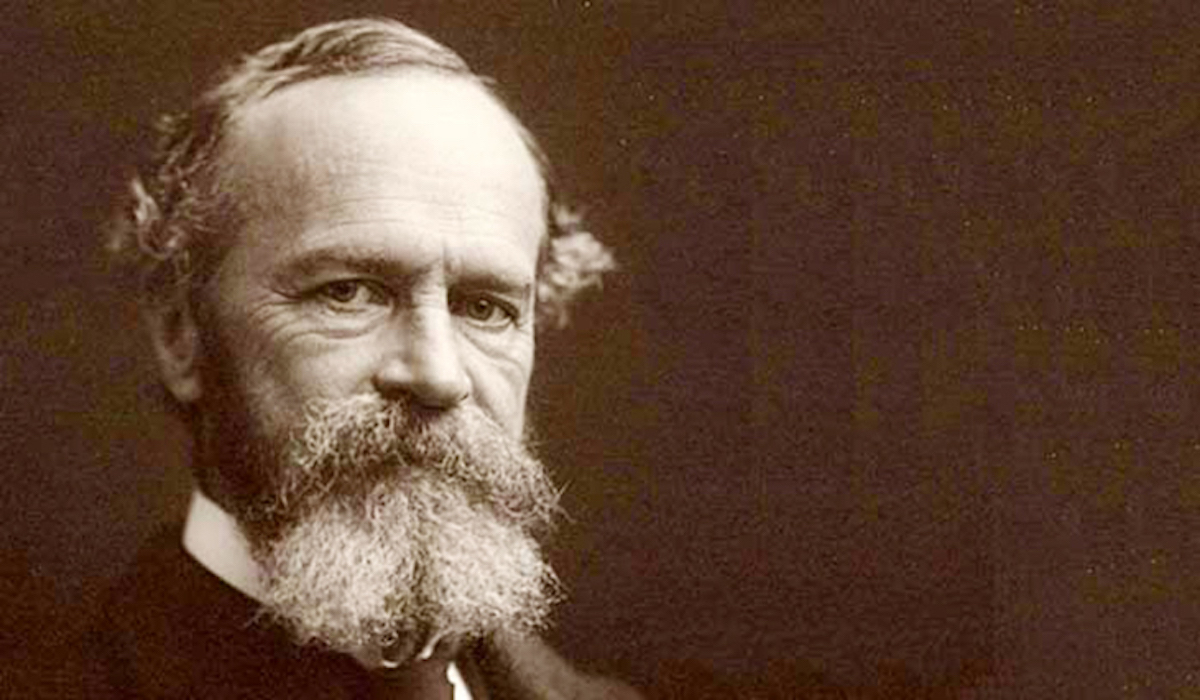
The Varieties of Religious Experience: A Study in Human Nature is a book by Harvard University psychologist and philosopher William James (1842 – 1910). James was an American philosopher and psychologist, and the first educator to offer a psychology course in the United States. He was one of the leading thinkers of the late nineteenth century and is believed by many to be one of the most influential philosophers the United States has ever produced, while others have labelled him the “Father of American psychology”.

Varieties comprises his edited Gifford Lectures on natural theology, which were delivered at the University of Edinburgh in Scotland in 1901 and 1902. The lectures concerned the nature of religion and the neglect of science in the academic study of religion.

Soon after its publication, Varieties entered the Western canon of psychology and philosophy and has remained in print for over a century.

James later developed his philosophy of pragmatism. There are many overlapping ideas in Varieties and his 1907 book, Pragmatism.

Religion, therefore, as I now ask you arbitrarily to take it, shall mean for us the feelings, acts, and experiences of individual men in their solitude, so far as they apprehend themselves to stand in relation to whatever they may consider the divine. Since the relation may be either moral, physical, or ritual, it is evident that out of religion in the sense in which we take it, theologies, philosophies, and ecclesiastical organizations may secondarily grow. Religion is a man’s total reaction upon life.

James was most interested in direct religious experiences. Theology and the organizational aspects of religion were of secondary interest. He believed that religious experiences were simply human experiences: “Religious happiness is happiness. Religious trance is trance.”

He believed that religious experiences can have “morbid origins” in brain pathology and can be irrational but nevertheless are largely positive. Unlike the bad ideas that people have under the influence of a high fever, after a religious experience, the ideas and insights usually remain and are often valued for the rest of the person’s life.

Under James’ pragmatism, the effectiveness of religious experiences proves their truth, whether they stem from religious practices or from drugs: “Nitrous oxide … stimulate[s] the mystical consciousness in an extraordinary degree.”

James had relatively little interest in the legitimacy or illegitimacy of religious experiences. Further, despite James’ examples being almost exclusively drawn from Christianity, he did not mean to limit his ideas to any single religion. Religious experiences are something that people sometimes have under certain conditions. In James’ description, these conditions are likely to be psychological or pharmaceutical rather than cultural.

Religion thus makes easy and felicitous what in any case is necessary; and if it be the only agency that can accomplish this result, its vital importance as a human faculty stands vindicated beyond dispute. It becomes an essential organ of our life, performing a function which no other portion of our nature can so successfully fulfill.

James believed that the origins of a religion shed little light upon its value. There is a distinction between an existential judgment (a judgment on “constitution, origin, and history”) and a proposition of value (a judgment on “importance, meaning, or significance”).

For example, if the founder of the Quaker religion, George Fox, had been a hereditary degenerate, the Quaker religion could yet be “a religion of veracity rooted in spiritual inwardness, and a return to something more like the original gospel truth than men had ever known in England.”

Furthermore, the potentially dubious psychological origins of religious beliefs apply just as well to non-religious beliefs:

Scientific theories are organically conditioned just as much as religious emotions are; and if we only knew the facts intimately enough, we should doubtless see “the liver” determining the dicta of the sturdy atheist as decisively as it does those of the Methodist under conviction anxious about his soul. Science… has ended by utterly repudiating the personal point of view.

James criticized scientists for ignoring unseen aspects of the universe. Science studies some of reality, but not all of it:

Vague impressions of something indefinable have no place in the rationalistic system…. Nevertheless, if we look on man’s whole mental life as it exists … we have to confess that the part of it of which rationalism can give an account of is relatively superficial. It is the part that has the prestige undoubtedly, for it has the loquacity, it can challenge you for proofs, and chop logic, and put you down with words … Your whole subconscious life, your impulses, your faiths, your needs, your divinations, have prepared the premises, of which your consciousness now feels the weight of the result; and something in you absolutely knows that that result must be truer than any logic-chopping rationalistic talk, however clever, that may contradict it.

James saw “healthy-mindedness” as America’s main contribution to religion. This is the religious experience of optimism and positive thinking which James sees running from the transcendentalists Emerson and Whitman to Mary Baker Eddy’s Christian Science. At the extreme, the “healthy-minded” see sickness and evil as an illusion. James considered belief in the “mind cure” to be reasonable when compared to medicine as practiced at the beginning of the twentieth century.

The “sick souls” (“morbid-mindedness” / the “twice-born”) are merely those who hit bottom before their religious experience; those whose redemption gives relief from the pains they suffered beforehand. By contrast, the “healthy-minded” deny the need for such preparatory pain or suffering. James believes that “morbid-mindedness ranges over the wider scale of experience” and that while healthy-mindedness is a surprisingly effective “religious solution”,

healthy-mindedness is inadequate as a philosophical doctrine, because the evil facts which it refuses positively to account for are a genuine portion of reality; and they may after all be the best key to life’s significance, and possibly the only openers of our eyes to the deepest levels of truth.

James sees the two types as being a mere matter of temperament: the healthy minded having a “constitutional incapacity for prolonged suffering”; the morbid-minded being those prone to “religious melancholia”.

The basenesses so commonly charged to religion’s account are thus, almost all of them, not chargeable at all to religion proper, but rather to religion’s wicked practical partner, the spirit of corporate dominion. And the bigotries are most of them in their turn chargeable to religion’s wicked intellectual partner, the spirit of dogmatic dominion, the passion for laying down the law in the form of an absolutely closed-in theoretic system.

For James, a saintly character is one where “spiritual emotions are the habitual centre of the personal energy.” James states that saintliness includes:

1. A feeling of being in a wider life than that of this world’s selfish little interests; and a conviction … of the existence of an Ideal Power.

2. A sense of the friendly continuity of the ideal power with our own life, and a willing self-surrender to its control.

3. An immense elation and freedom, as the outlines of the confining selfhood melt down.

4. A shifting of the emotional Centre towards loving and harmonious affections, towards “yes, yes” and away from “no,” where the claims of the non-ego are concerned.

For James, the practical consequences of saintliness are asceticism (pleasure in sacrifice), strength of soul (a “blissful equanimity” free from anxieties), purity (a withdrawal from the material world), and charity (tenderness to those most would naturally disdain).

James identified two main features to a mystical experience:

Ineffability —”No adequate report of its contents can be given in words. … its quality must be directly experienced; it cannot be imparted or transferred to others. … mystical states are more like states of feeling than like states of intellect. No one can make clear to another who has never had a certain feeling, in what the quality or worth of it consists.”

Noetic quality —”Although so similar to states of feeling, mystical states seem to those who experience them to be also states of knowledge. They are states of insight into depths of truth unplumbed by the discursive intellect. They are illuminations, revelations, full of significance and importance, all inarticulate though they remain; and as a rule they carry with them a curious sense of authority for after-time.”

He also identified two subsidiary features that are often, but not always, found with mystical experiences:

Transiency —”Mystical states cannot be sustained for long.”

Passivity —”The mystic feels as if his own will were in abeyance, and indeed sometimes as if he were grasped and held by a superior power.”


The only thing that religious experience, as we have studied it, unequivocally testifies to is that we can experience union with something larger than ourselves and in that union find our greatest peace.

Read Now: The Varieties of Religious Experience by William James (PDF)

Pragmatism & Postmodernism

william-james

To my best belief: just what is the pragmatic theory of truth?


Cheryl Misak | Aeon Ideas

What is it for something to be true? One might think that the answer is obvious. A true belief gets reality right: our words correspond to objects and relations in the world. But making sense of that idea involves one in ever more difficult workarounds to intractable problems. For instance, how do we account for the statement ‘It did not rain in Toronto on 20 May 2018’? There don’t seem to be negative facts in the world that might correspond to the belief. What about ‘Every human is mortal’? There are more humans – past, present and future – than individual people in the world. (That is, a generalisation like ‘All Fs’ goes beyond the existing world of Fs, because ‘All Fs’ stretches into the future.) What about ‘Torture is wrong’? What are the objects in the world that might correspond to that? And what good is it explaining truth in terms of independently existing objects and facts, since we have access only to our interpretations of them?

Pragmatism can help us with some of these issues. The 19th-century American philosopher Charles Peirce, one of the founders of pragmatism, explained the core of this tradition beautifully: ‘We must not begin by talking of pure ideas, – vagabond thoughts that tramp the public roads without any human habitation, – but must begin with men and their conversation.’ Truth is a property of our beliefs. It is what we aim at, and is essentially connected to our practices of enquiry, action and evaluation. Truth, in other words, is the best that we could do.

The pragmatic theory of truth arose in Cambridge, Massachusetts in the 1870s, in a discussion group that included Peirce and William James. They called themselves the Metaphysical Club, with intentional irony. Though they shared the same broad outlook on truth, there was immediate disagreement about how to unpack the idea of the ‘best belief’. The debate stemmed from the different temperaments of Peirce and James.

Philosophy, James said, ‘is at once the most sublime and the most trivial of human pursuits. It works in the minutest crannies and it opens out the widest vistas.’ He was more a vista than a crannies man, dead set against technical philosophy. At the beginning of his book Pragmatism (1907), he said: ‘the philosophy which is so important to each of us is not a technical matter; it is our more or less dumb sense of what life honestly and deeply means.’ He wanted to write accessible philosophy for the public, and did so admirably. He became the most famous living academic in the United States.

The version of the pragmatist theory of truth made famous (or perhaps infamous) by James held that ‘Any idea upon which we can ride … any idea that will carry us prosperously from any one part of our experience to any other part, linking things satisfactorily, working securely, simplifying, saving labour, is … true INSTRUMENTALLY.’

‘Satisfactorily’ for James meant ‘more satisfactorily to ourselves, and individuals will emphasise their points of satisfaction differently. To a certain degree, therefore, everything here is plastic.’ He argued that if the available evidence underdetermines a matter, and if there are non-epistemic reasons for believing something (my people have always believed it, believing it would make me happier), then it is rational to believe it. He argued that if a belief in God has a positive impact on someone’s life, then it is true for that person. If it does not have a good impact on someone else’s life, it is not true for them.

Peirce, a crackerjack logician, was perfectly happy working in the crannies as well as opening out the vistas. He wrote much, but published little. A cantankerous man, Peirce described the difference in personality with his friend James thus: ‘He so concrete, so living; I a mere table of contents, so abstract, a very snarl of twine.’

Peirce said that James’s version of the pragmatic theory of truth was ‘a very exaggerated utterance, such as injures a serious man very much’. It amounted to: ‘Oh, I could not believe so-and-so, because I should be wretched if I did.’ Peirce’s worries, in these days of fake news, are more pressing than ever.

On Peirce’s account, a belief is true if it would be ‘indefeasible’ or would not in the end be defeated by reasons, argument, evidence and the actions that ensue from it. A true belief is the belief that we would come to, were we to enquire as far as we could on a matter. He added an important rider: a true belief must be put in place in a manner ‘not extraneous to the facts’. We cannot believe something because we would like it to be true. The brute impinging of experience cannot be ignored.

The disagreement continues to this day. James influenced John Dewey (who, when a student at Johns Hopkins, avoided Peirce and his technical philosophy like the plague) and later Richard Rorty. Dewey argued that truth (although he tended to stay away from the word) is nothing more than a resolution of a problematic situation. Rorty, at his most extreme, held that truth is nothing more than what our peers will let us get away with saying. This radically subjective or plastic theory of truth is what is usually thought of as pragmatism.

Peirce, however, managed to influence a few people himself, despite being virtually unknown in his lifetime. One was the Harvard logician and Kant scholar C I Lewis. He argued for a position remarkably similar to what his student W V O Quine would take over (and fail to acknowledge as Lewis’s). Reality cannot be ‘alien’, wrote Lewis – ‘the only reality there for us is one delimited in concepts of the results of our own ways of acting’. We have something given to us in brute experience, which we then interpret. With all pragmatists, Lewis was set against conceptions of truth in which ‘the mind approaches the flux of immediacy with some godlike foreknowledge of principles’. There is no ‘natural light’, no ‘self-illuminating propositions’, no ‘innate ideas’ from which other certainties can be deduced. Our body of knowledge is a pyramid, with the most general beliefs, such as the laws of logic, at the top, and the least general, such as ‘all swans are birds’, at the bottom. When faced with recalcitrant experience, we make adjustments in this complex system of interrelated concepts. ‘The higher up a concept stands in our pyramid, the more reluctant we are to disturb it, because the more radical and far-reaching the results will be…’ But all beliefs are fallible, and we can indeed disturb any of them. A true belief would be one that survives this process of enquiry.

Lewis saw that the pragmatist theory of truth deals nicely with those beliefs that the correspondence theory stumbles over. For instance, there is no automatic bar to ethical beliefs being true. Beliefs about what is right and wrong might well be evaluable in ways similar to how other kinds of beliefs are evaluable – in terms of whether they fit with experience and survive scrutiny.Aeon counter – do not remove

Cheryl Misak

This article was originally published at Aeon and has been republished under Creative Commons.

I Believe Because it is Absurd

the-incredulity-of-saint-thomas

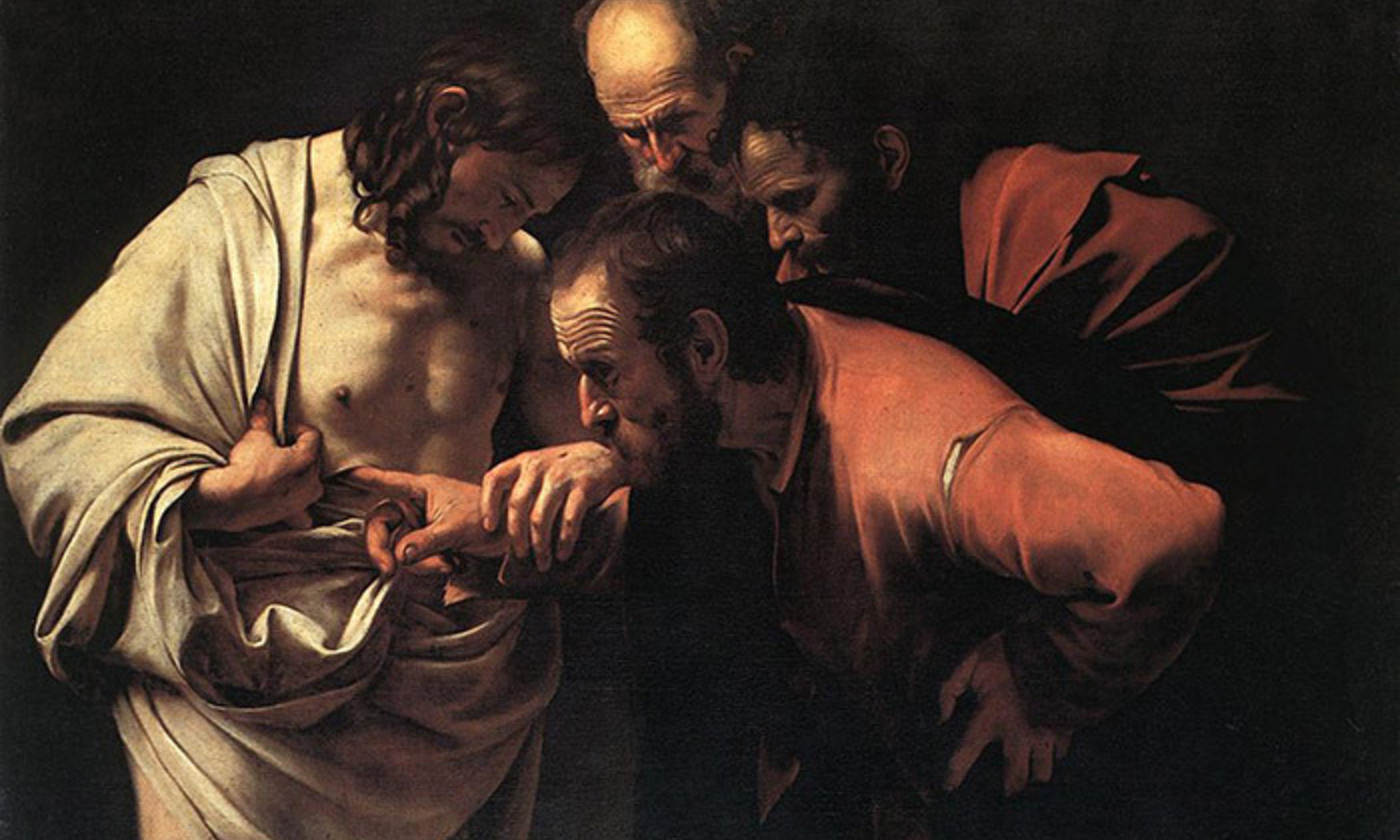
The Incredulity of Saint Thomas (1601-1602), by Caravaggio, Sanssouci Palace, Potsdam, Germany. Courtesy Wikipedia

Peter Harrison | Aeon Ideas


Religious belief is often thought to evince a precarious kind of commitment, in which the degree of conviction is inversely proportional to correspondence with the facts. Exhibit A for this common characterisation of religious belief is the maxim of the third-century Christian writer Tertullian, who is credited with the saying ‘I believe because it is absurd.’ This paradoxical expression makes a routine appearance in philosophical evaluations of the rationality of religious belief, in contemporary polemics addressed to an imagined opposition between science and religion, and in virtually every reputable dictionary of quotations.

Scholars of early Christianity have long known that Tertullian never wrote those words. What he originally said and meant poses intriguing questions, but equally interesting is the story of how the invented expression came to be attributed to him in the first place, what its invention tells us about changing conceptions of ‘faith’, and why, in spite of attempts to correct the record, it stubbornly persists as an irradicable meme about the irrationality of religious commitment.

On the face of it, being committed to something because it is absurd is an unpromising foundation for a belief system. It should not come as a complete surprise, then, that Tertullian did not advocate this principle. He did, however, make this observation, with specific reference to the death and resurrection of Christ: ‘it is entirely credible, because it is unfitting … it is certain, because it is impossible’ (For Latinists out there: prorsus credibile est, quia ineptum est … certum est, quia impossibile). This might seem to be within striking distance of the fideistic phrase commonly attributed to him. Puzzlingly, though, even this original formulation does not fit with Tertullian’s generally positive view of reason and rational justification. Elsewhere, he insists that Christians ‘should believe nothing but that nothing should be rashly believed’. For Tertullian, God is ‘author of Reason’, the natural order of the world is ‘ordained by reason’, and everything is to be ‘understood by reason’.

One likely explanation for this apparent incongruence is that, in his paradoxical juxtaposition of impossibility and certainty, Tertullian is drawing upon a principle set out in Aristotle’s Rhetoric. Addressing himself to the credibility of highly improbable events, Aristotle observes: ‘We may argue that people could not have believed them, if they had not been true or nearly true. And that they are more likely to be true because they are incredible.’ His point seems to be that the apparent incredibility of a reported claim can actually provide a reason for believing it, since a witness seeking to perpetuate a false story would most likely have come up with something that at least seemed plausible. If this connection is on the right track, Tertullian, who almost certainly knew Aristotle’s Rhetoric, is not advocating belief without justification, but suggesting that we sometimes have good reasons to believe the highly improbable.

This leaves us with the question of how Tertullian came to be attributed with authorship of the rather different expression: ‘I believe because it is absurd.’ For this, we need to look to two decisive moments in the early modern period.

In the middle of the 17th century, the physician and polymath Thomas Browne drew attention to Tertullian’s original remarks in his bestselling Religio Medici (1643), or The Religion of a Physician. Crucially, not only did Browne introduce numerous readers to this relatively unnoticed passage in Tertullian, but he lent it an entirely new interpretation, proposing as a general principle that the strength of one’s faith is inversely proportional to the probability of what is believed: ‘Methinks there be not impossibilities enough in Religion for an active faith.’ Before long, numerous sources were quoting Tertullian, albeit disapprovingly, as having said: ‘I believe, because it is impossible’. The philosopher John Locke thus makes reference to this new version of the paradox in his classic An Essay Concerning Human Understanding (1689), summing up the view of most of his contemporaries that this was a ‘very ill Rule for Men to chuse their Opinions, or Religion by’.

A key element of the background to this development was the rise of sectarian disputes in the wake of the Reformation. Protestants chastised Catholics for their overcredulous ‘implicit faith’ – the giving of assent to doctrines promulgated by the Church but without a full comprehension of what was being assented to. A prime case was the doctrine of transubstantiation – a theory, based on Aristotle’s philosophy, of how during the Mass the elements of bread and wine could become the body and blood of Christ. For many Protestants, this was an emblematic instance of believing something that was literally impossible. The maxim ‘I believe because it is impossible’ thus first gained currency because of its deployment in anti-Catholic polemic.

The second phase in the transformation of Tertullian’s original remarks came when the French philosopher Voltaire introduced the ‘absurdity’ condition. In the entry for ‘Faith’ in his Philosophical Dictionary (1764), Voltaire concludes a characteristically entertaining account of the exploits of the notoriously promiscuous Pope Alexander VI by defining faith as ‘believing things because they are impossible’. The first appearance of the phrase ‘I believe because it is absurd’ comes subsequently in one of Voltaire’s 1767 publications, in which Voltaire attributes to the church father Augustine (rather than to Tertullian), the maxim: ‘I believe because it is absurd, I believe because it is impossible.’

Thereafter, ‘I believe because it is absurd’ became the standard form of the credo, and it was increasingly applied indiscriminately to all religious belief. Lending the phrase greater authenticity was its circulation in Latin as credo quia absurdum – a reverse-engineered version of Voltaire’s je le crois parce que cela est absurd. The misattribution of the saying to Augustine serves as a helpful marker of Voltaire’s influence, and for many years Augustine was regarded as the author of the paradox. While attributions to Augustine are rare today, Voltaire’s subtle insinuation of ‘absurdity’ into the new ‘I believe’ version of the paradox has persisted.

Since Voltaire’s time, the maxim ‘I believe because it is absurd’ has continued to serve the purpose intended by its Enlightenment originator – a gesture towards the inherent irrationality of religious belief. Thus in 1928, Sigmund Freud cited the motto as evidence of the infantile nature of religion, which he characterised as always attempting to shield its beliefs from rational scrutiny. The German philosopher Ernst Cassirer similarly maintained that the maxim typified a particular religious psychology that attended both the birth of religion and its regrettable contemporary manifestations: ‘The motto “I believe because it is absurd” exhibits its old force here and everywhere,’ he complained in 1951. Reference works, though generally less partisan, often convey similar sentiments. Typical is the offering in the Oxford Dictionary of Philosophy (1996), where the entry on credo quia absurdum est reads: ‘Also known as Tertullian’s dictum or paradox. Literally (Latin), I believe because it is absurd: that is, the very impossibility of a proposition becomes (mostly in theology) a kind of motivation for belief in it.’

One of the more conspicuous sites for the contemporary deployment of the maxim has been unflattering comparisons of fanciful religious belief with the ‘facts’ of science. In his lecture ‘Science as a Vocation’ (1917), Max Weber invented for himself an even more extreme Latin variant of Tertullian’s saying (Credo non quod, sed quia absurdum est – ‘I believe nothing except that which is absurd’, which Weber attributes to Augustine) in order to illustrate what he thought was an intrinsic tension between science and religion. Contemporary science vs religion warriors such as Richard Dawkins and Jerry Coyne have predictably followed suit, pointing to Tertullian as a personification of the irrationality of religious belief.

Much could be said about the differences and similarities between religious and scientific commitment, but it is worth observing, in brief, that the contemporary sciences afford conspicuous instances of justified belief in both the impossible (quantum mechanics) and the staggeringly improbable (Big Bang cosmology). This brings us back to the original context of Tertullian’s remarks, which were not about belief motivated by the absurdity of its object, but whether is it ever warranted to believe in things we consider to be impossible or extremely improbable. Clearly, that remains a live question.Aeon counter – do not remove

Peter Harrison

This article was originally published at Aeon and has been republished under Creative Commons.


Commentary

This reminds me of Kierkegaard. I wonder why he wasn’t mentioned:

Revelation is marked by mystery, eternal happiness by suffering, the certitude of faith by uncertainty, easiness by difficulty, truth by absurdity; if this is not maintained, then the esthetic and the religious merge in common confusion. … The religious lies in the dialectic of inwardness deepening and therefore, with regard to the conception of God, this means that he himself is moved, is changed. An action in the eternal transforms the individual’s existence.


When the question about truth is asked objectively, truth is reflected upon objectively as an object to which the knower relates himself. What is reflected upon is not the relation but that what he related himself to is the truth, the true. If only that to which he relates himself is the truth, the true, then the subject is in the truth. When the question about truth is asked subjectively, the individual’s relation is reflected upon subjectively. If only the how of this relation is in truth, the individual is in truth, even if he in this way were to relate himself to untruth.


When subjectivity, inwardness, is truth, then truth, objectively defined, is a paradox; and that truth is objectively a paradox shows precisely that subjectivity is truth, since the objectivity does indeed thrust away, and the objectivity’s repulsion, or the expression for the objectivity’s repulsion, is the resilience and dynamometer of inwardness. The paradox is the objective uncertainty that is the expression for the passion of inwardness that is truth. So much for the Socratic. The eternal, essential truth, that is, the truth that is related essentially to the existing person by pertaining essentially to what it means to exist (viewed Socratically, all other knowledge is accidental, its degree and scope indifferent), is a paradox. Nevertheless the eternal, essential truth is itself not at all a paradox, but it is a paradox by being related to an existing person… The Socratic inwardness in existing is an analogue to faith, except that the inwardness of faith, corresponding not to the repulsion exerted by ignorance but to the repulsion exerted by the absurd, is infinitely deeper.

–  Søren Kierkegaard, Concluding Unscientific Postscript to Philosophical Fragments (1846)

Man’s Search for Meaning


Man’s Search for Meaning is a 1946 book by Viktor Frankl chronicling his experiences as an Auschwitz concentration camp inmate during World War II, and describing his psychotherapeutic method, which involved identifying a purpose in life to feel positively about, and then immersively imagining that outcome. According to Frankl, the way a prisoner imagined the future affected his longevity. The book intends to answer the question “How was everyday life in a concentration camp reflected in the mind of the average prisoner?” Part One constitutes Frankl’s analysis of his experiences in the concentration camps, while Part Two introduces his ideas of meaning and his theory called logotherapy.

According to a survey conducted by the Book-of-the-Month Club and the Library of Congress, Man’s Search for Meaning belongs to a list of “the ten most influential books in the United States.” At the time of the author’s death in 1997, the book had sold over 10 million copies and had been translated into 24 languages.

Frankl identifies three psychological reactions experienced by all inmates to one degree or another: (1) shock during the initial admission phase to the camp, (2) apathy after becoming accustomed to camp existence, in which the inmate values only that which helps himself and his friends survive, and (3) reactions of depersonalization, moral deformity, bitterness, and disillusionment if he survives and is liberated.

Frankl concludes that the meaning of life is found in every moment of living; life never ceases to have meaning, even in suffering and death. In a group therapy session during a mass fast inflicted on the camp’s inmates trying to protect an anonymous fellow inmate from fatal retribution by authorities, Frankl offered the thought that for everyone in a dire condition there is someone looking down, a friend, family member, or even God, who would expect not to be disappointed. Frankl concludes from his experience that a prisoner’s psychological reactions are not solely the result of the conditions of his life, but also from the freedom of choice he always has even in severe suffering. The inner hold a prisoner has on his spiritual self relies on having a hope in the future, and that once a prisoner loses that hope, he is doomed.

An example of Frankl’s idea of finding meaning in the midst of extreme suffering is found in his account of an experience he had while working in the harsh conditions of the Auschwitz concentration camp:

… We stumbled on in the darkness, over big stones and through large puddles, along the one road leading from the camp. The accompanying guards kept shouting at us and driving us with the butts of their rifles. Anyone with very sore feet supported himself on his neighbor’s arm. Hardly a word was spoken; the icy wind did not encourage talk. Hiding his mouth behind his upturned collar, the man marching next to me whispered suddenly: “If our wives could see us now! I do hope they are better off in their camps and don’t know what is happening to us.”

That brought thoughts of my own wife to mind. And as we stumbled on for miles, slipping on icy spots, supporting each other time and again, dragging one another up and onward, nothing was said, but we both knew: each of us was thinking of his wife. Occasionally I looked at the sky, where the stars were fading and the pink light of the morning was beginning to spread behind a dark bank of clouds. But my mind clung to my wife’s image, imagining it with an uncanny acuteness. I heard her answering me, saw her smile, her frank and encouraging look. Real or not, her look was then more luminous than the sun which was beginning to rise.

A thought transfixed me: for the first time in my life I saw the truth as it is set into song by so many poets, proclaimed as the final wisdom by so many thinkers. The truth—that love is the ultimate and the highest goal to which man can aspire. Then I grasped the meaning of the greatest secret that human poetry and human thought and belief have to impart: The salvation of man is through love and in love. I understood how a man who has nothing left in this world still may know bliss, be it only for a brief moment, in the contemplation of his beloved. In a position of utter desolation, when man cannot express himself in positive action, when his only achievement may consist in enduring his sufferings in the right way—an honorable way—in such a position man can, through loving contemplation of the image he carries of his beloved, achieve fulfillment. For the first time in my life I was able to understand the meaning of the words, “The angels are lost in perpetual contemplation of an infinite glory….”

Frankl also concludes that there are only two races of men, decent men and indecent. No society is free of either of them, and thus there were “decent” Nazi guards and “indecent” prisoners, most notably the kapo who would torture and abuse their fellow prisoners for personal gain.

His concluding passage in Part One describes the psychological reaction of the inmates to their liberation, which he separates into three stages. The first is depersonalization—a period of readjustment, in which a prisoner gradually returns to the world. Initially, the liberated prisoners are so numb that they are unable to understand what freedom means, or to emotionally respond to it. Part of them believes that it is an illusion or a dream that will be taken away from them. In their first foray outside their former prison, the prisoners realized that they could not comprehend pleasure. Flowers and the reality of the freedom they had dreamed about for years were all surreal, unable to be grasped in their depersonalization.

The body is the first element to break out of this stage, responding by big appetites of eating and wanting more sleeping. Only after the partial replenishing of the body is the mind finally able to respond, as “feeling suddenly broke through the strange fetters which had restrained it”.

This begins the second stage, in which there is a danger of deformation. As the intense pressure on the mind is released, mental health can be endangered. Frankl uses the analogy of a diver suddenly released from his pressure chamber. He recounts the story of a decent friend who became immediately obsessed with dispensing the same violence in judgment of his abusers that they had inflicted on him.

Upon returning home, the prisoners had to struggle with two fundamental experiences which could also damage their mental health: bitterness and disillusionment. The last stage is bitterness at the lack of responsiveness of the world outside—a “superficiality and lack of feeling… so disgusting that one finally felt like creeping into a hole and neither hearing nor seeing human beings any more”. Worse was disillusionment, which was the discovery that suffering does not end, that the longed-for happiness will not come. This was the experience of those who—like Frankl—returned home to discover that no one awaited them. The hope that had sustained them throughout their time in the concentration camp was now gone. Frankl cites this experience as the most difficult to overcome.

As time passed, however, the prisoner’s experience in a concentration camp finally became nothing but a remembered nightmare. What is more, he comes to believe that he has nothing left to fear any more, “except his God”.


frankl.jpg

Man’s Search for Meaning (PDF)

The Structure of Scientific Revolutions

We may, to be more precise, have to relinquish the notion, explicit or implicit, that changes of paradigm carry scientists and those who learn from them closer and closer to the truth.

– Thomas Kuhn
kuhn.jpg

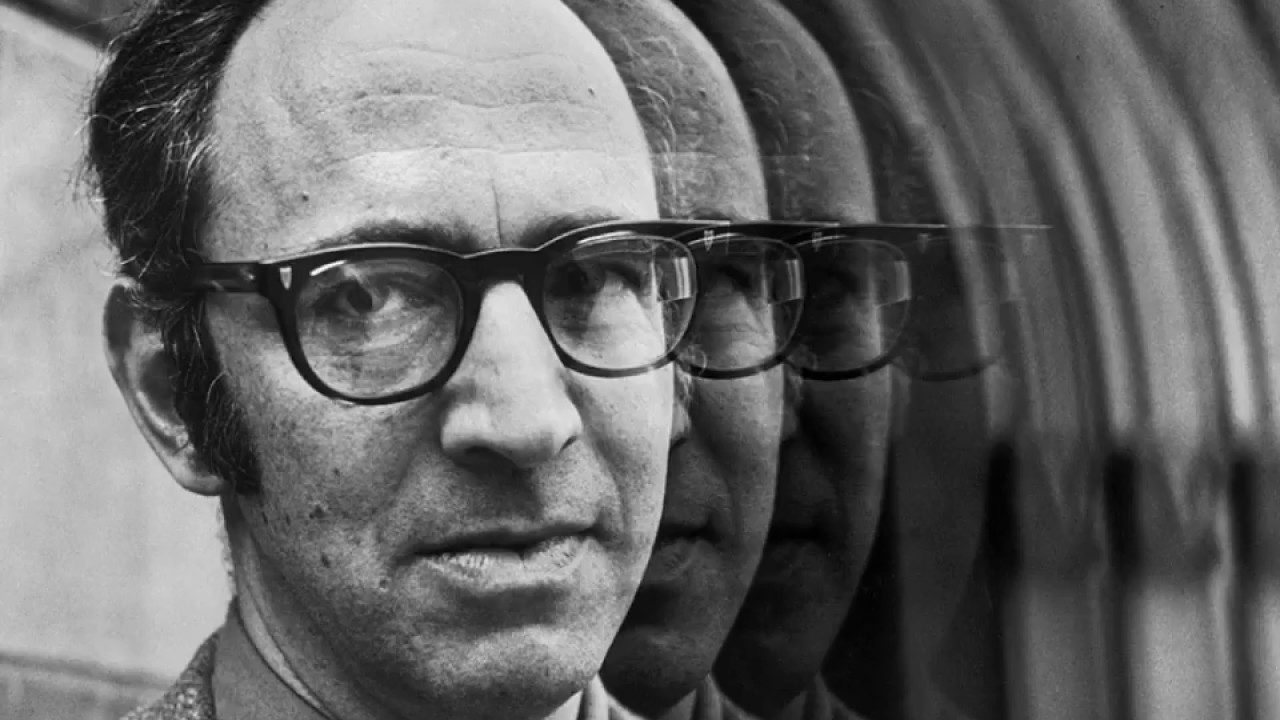
The Structure of Scientific Revolutions (1962) is a book about the history of science by the philosopher Thomas S. Kuhn. Its publication was a landmark event in the history, philosophy, and sociology of scientific knowledge. Kuhn challenged the then prevailing view of progress in “normal science”. Normal scientific progress was viewed as “development-by-accumulation” of accepted facts and theories. Kuhn argued for an episodic model in which periods of such conceptual continuity in normal science were interrupted by periods of revolutionary science. The discovery of “anomalies” during revolutions in science leads to new paradigms. New paradigms then ask new questions of old data, move beyond the mere “puzzle-solving” of the previous paradigm, change the rules of the game and the “map” directing new research.

For example, Kuhn’s analysis of the Copernican Revolution emphasized that, in its beginning, it did not offer more accurate predictions of celestial events, such as planetary positions, than the Ptolemaic system, but instead appealed to some practitioners based on a promise of better, simpler, solutions that might be developed at some point in the future. Kuhn called the core concepts of an ascendant revolution its “paradigms” and thereby launched this word into widespread analogical use in the second half of the 20th century. Kuhn’s insistence that a paradigm shift was a mélange of sociology, enthusiasm and scientific promise, but not a logically determinate procedure, caused an uproar in reaction to his work. Kuhn addressed concerns in the 1969 postscript to the second edition. For some commentators, The Structure of Scientific Revolutions introduced a realistic humanism into the core of science, while for others the nobility of science was tarnished by Kuhn’s introduction of an irrational element into the heart of its greatest achievements.

In a sense that I am unable to explicate further, the proponents of competing paradigms practice their trades in different worlds.

History

The Structure of Scientific Revolutions was first published as a monograph in the International Encyclopedia of Unified Science, then as a book by University of Chicago Press in 1962. In 1969, Kuhn added a postscript to the book in which he replied to critical responses to the first edition. A 50th Anniversary Edition (with an introductory essay by Ian Hacking) was published by the University of Chicago Press in April 2012.

Kuhn dated the genesis of his book to 1947 when he was a graduate student at Harvard University and had been asked to teach a science class for humanities undergraduates with a focus on historical case studies. Kuhn later commented that until then, “I’d never read an old document in science.” Aristotle’s Physics was astonishingly unlike Isaac Newton’s work in its concepts of matter and motion. Kuhn wrote “… as I was reading him, Aristotle appeared not only ignorant of mechanics, but a dreadfully bad physical scientist as well. About motion, in particular, his writings seemed to me full of egregious errors, both of logic and of observation.” This was in an apparent contradiction with the fact that Aristotle was a brilliant mind. While perusing Aristotle’s Physics, Kuhn formed the view that in order to properly appreciate Aristotle’s reasoning, one must be aware of the scientific conventions of the time. Kuhn concluded that Aristotle’s concepts were not “bad Newton,” just different. This insight was the foundation of The Structure of Scientific Revolutions.

Prior to the publication of Kuhn’s book, a number of ideas regarding the process of scientific investigation and discovery had already been proposed. Ludwik Fleck developed the first system of the sociology of scientific knowledge in his book The Genesis and Development of a Scientific Fact (1935). He claimed that the exchange of ideas led to the establishment of a thought collective, which, when developed sufficiently, served to separate the field into esoteric (professional) and exoteric (laymen) circles. Kuhn wrote the foreword to the 1979 edition of Fleck’s book, noting that he read it in 1950 and was reassured that someone “saw in the history of science what I myself was finding there.”

Kuhn was not confident about how his book would be received. Harvard University had denied his tenure, a few years before. However, by the mid-1980s, his book had achieved blockbuster status.

One theory to which Kuhn replies directly is Karl Popper’s “falsificationism,” which stresses falsifiability as the most important criterion for distinguishing between that which is scientific and that which is unscientific. Kuhn also addresses verificationism, a philosophical movement that emerged in the 1920s among logical positivists. The verifiability principle claims that meaningful statements must be supported by empirical evidence or logical requirements.

Scientists work from models acquired through education and through subsequent exposure to the literature often without quite knowing or needing to know what characteristics have given these models the status of community paradigms.

Basic Approach

Kuhn’s approach to the history and philosophy of science focuses on conceptual issues like the practice of normal science, influence of historical events, emergence of scientific discoveries, nature of scientific revolutions and progress through scientific revolutions. What sorts of intellectual options and strategies were available to people during a given period? What types of lexicons and terminology were known and employed during certain epochs? Stressing the importance of not attributing traditional thought to earlier investigators, Kuhn’s book argues that the evolution of scientific theory does not emerge from the straightforward accumulation of facts, but rather from a set of changing intellectual circumstances and possibilities. Such an approach is largely commensurate with the general historical school of non-linear history.

Kuhn did not see scientific theory as proceeding linearly from an objective, unbiased accumulation of all available data, but rather as paradigm-driven. “The operations and measurements that a scientist undertakes in the laboratory are not ‘the given’ of experience but rather ‘the collected with difficulty.’ They are not what the scientist sees—at least not before his research is well advanced and his attention focused. Rather, they are concrete indices to the content of more elementary perceptions, and as such they are selected for the close scrutiny of normal research only because they promise opportunity for the fruitful elaboration of an accepted paradigm. Far more clearly than the immediate experience from which they in part derive, operations and measurements are paradigm-determined. Science does not deal in all possible laboratory manipulations. Instead, it selects those relevant to the juxtaposition of a paradigm with the immediate experience that that paradigm has partially determined. As a result, scientists with different paradigms engage in different concrete laboratory manipulations.”

History, if viewed as a repository for more than anecdote or chronology, could produce a decisive transformation in the image of science by which we are now possessed.

Historical Examples of Chemistry

Kuhn explains his ideas using examples taken from the history of science. For instance, eighteenth century scientists believed that homogenous solutions were chemical compounds. Therefore, a combination of water and alcohol was generally classified as a compound. Nowadays it is considered to be a solution, but there was no reason then to suspect that it was not a compound. Water and alcohol would not separate spontaneously, nor will they separate completely upon distillation (they form an azeotrope). Water and alcohol can be combined in any proportion.

Under this paradigm, scientists believed that chemical reactions (such as the combination of water and alcohol) did not necessarily occur in fixed proportion. This belief was ultimately overturned by Dalton’s atomic theory, which asserted that atoms can only combine in simple, whole-number ratios. Under this new paradigm, any reaction which did not occur in fixed proportion could not be a chemical process. This type world-view transition among the scientific community exemplifies Kuhn’s paradigm shift.

To my complete surprise, that exposure to out-of-date scientific theory and practice radically undermined some of my basic conceptions about the nature of science and the reasons for its special success.

Copernican Revolution

A famous example of a revolution in scientific thought is the Copernican Revolution. In Ptolemy’s school of thought, cycles and epicycles (with some additional concepts) were used for modeling the movements of the planets in a cosmos that had a stationary Earth at its center. As accuracy of celestial observations increased, complexity of the Ptolemaic cyclical and epicyclical mechanisms had to increase to maintain the calculated planetary positions close to the observed positions. Copernicus proposed a cosmology in which the Sun was at the center and the Earth was one of the planets revolving around it. For modeling the planetary motions, Copernicus used the tools he was familiar with, namely the cycles and epicycles of the Ptolemaic toolbox. Yet Copernicus’ model needed more cycles and epicycles than existed in the then-current Ptolemaic model, and due to a lack of accuracy in calculations, his model did not appear to provide more accurate predictions than the Ptolemy model. Copernicus’ contemporaries rejected his cosmology, and Kuhn asserts that they were quite right to do so: Copernicus’ cosmology lacked credibility.

Kuhn illustrates how a paradigm shift later became possible when Galileo Galilei introduced his new ideas concerning motion. Intuitively, when an object is set in motion, it soon comes to a halt. A well-made cart may travel a long distance before it stops, but unless something keeps pushing it, it will eventually stop moving. Aristotle had argued that this was presumably a fundamental property of nature: for the motion of an object to be sustained, it must continue to be pushed. Given the knowledge available at the time, this represented sensible, reasonable thinking.

Galileo put forward a bold alternative conjecture: suppose, he said, that we always observe objects coming to a halt simply because some friction is always occurring. Galileo had no equipment with which to objectively confirm his conjecture, but he suggested that without any friction to slow down an object in motion, its inherent tendency is to maintain its speed without the application of any additional force.

The Ptolemaic approach of using cycles and epicycles was becoming strained: there seemed to be no end to the mushrooming growth in complexity required to account for the observable phenomena. Johannes Kepler was the first person to abandon the tools of the Ptolemaic paradigm. He started to explore the possibility that the planet Mars might have an elliptical orbit rather than a circular one. Clearly, the angular velocity could not be constant, but it proved very difficult to find the formula describing the rate of change of the planet’s angular velocity. After many years of calculations, Kepler arrived at what we now know as the law of equal areas.

Galileo’s conjecture was merely that — a conjecture. So was Kepler’s cosmology. But each conjecture increased the credibility of the other, and together, they changed the prevailing perceptions of the scientific community. Later, Newton showed that Kepler’s three laws could all be derived from a single theory of motion and planetary motion. Newton solidified and unified the paradigm shift that Galileo and Kepler had initiated.

Only when they must choose between competing theories do scientists behave like philosophers.

Coherence

One of the aims of science is to find models that will account for as many observations as possible within a coherent framework. Together, Galileo’s rethinking of the nature of motion and Keplerian cosmology represented a coherent framework that was capable of rivaling the Aristotelian/Ptolemaic framework.

Once a paradigm shift has taken place, the textbooks are rewritten. Often the history of science too is rewritten, being presented as an inevitable process leading up to the current, established framework of thought. There is a prevalent belief that all hitherto-unexplained phenomena will in due course be accounted for in terms of this established framework. Kuhn states that scientists spend most (if not all) of their careers in a process of puzzle-solving. Their puzzle-solving is pursued with great tenacity, because the previous successes of the established paradigm tend to generate great confidence that the approach being taken guarantees that a solution to the puzzle exists, even though it may be very hard to find. Kuhn calls this process normal science.

As a paradigm is stretched to its limits, anomalies — failures of the current paradigm to take into account observed phenomena — accumulate. Their significance is judged by the practitioners of the discipline. Some anomalies may be dismissed as errors in observation, others as merely requiring small adjustments to the current paradigm that will be clarified in due course. Some anomalies resolve themselves spontaneously, having increased the available depth of insight along the way. But no matter how great or numerous the anomalies that persist, Kuhn observes, the practicing scientists will not lose faith in the established paradigm until a credible alternative is available; to lose faith in the solvability of the problems would in effect mean ceasing to be a scientist.

In any community of scientists, Kuhn states, there are some individuals who are bolder than most. These scientists, judging that a crisis exists, embark on what Kuhn calls revolutionary science, exploring alternatives to long-held, obvious-seeming assumptions. Occasionally this generates a rival to the established framework of thought. The new candidate paradigm will appear to be accompanied by numerous anomalies, partly because it is still so new and incomplete. The majority of the scientific community will oppose any conceptual change, and, Kuhn emphasizes, so they should. To fulfill its potential, a scientific community needs to contain both individuals who are bold and individuals who are conservative. There are many examples in the history of science in which confidence in the established frame of thought was eventually vindicated. It is almost impossible to predict whether the anomalies in a candidate for a new paradigm will eventually be resolved. Those scientists who possess an exceptional ability to recognize a theory’s potential will be the first whose preference is likely to shift in favor of the challenging paradigm. There typically follows a period in which there are adherents of both paradigms. In time, if the challenging paradigm is solidified and unified, it will replace the old paradigm, and a paradigm shift will have occurred.

Suddenly the fragments in my head sorted themselves out in a new way, and fell into place together. My jaw dropped, for all at once Aristotle seemed a very good physicist indeed, but of a sort I’d never dreamed possible. Now I could understand why he had said what he’d said, and what his authority had been.

Phases

Kuhn explains the process of scientific change as the result of various phases of paradigm change.

Phase 1 – It exists only once and is the pre-paradigm phase, in which there is no consensus on any particular theory. This phase is characterized by several incompatible and incomplete theories. Consequently, most scientific inquiry takes the form of lengthy books, as there is no common body of facts that may be taken for granted. If the actors in the pre-paradigm community eventually gravitate to one of these conceptual frameworks and ultimately to a widespread consensus on the appropriate choice of methods, terminology and on the kinds of experiment that are likely to contribute to increased insights.

Phase 2 – Normal science begins, in which puzzles are solved within the context of the dominant paradigm. As long as there is consensus within the discipline, normal science continues. Over time, progress in normal science may reveal anomalies, facts that are difficult to explain within the context of the existing paradigm. While usually these anomalies are resolved, in some cases they may accumulate to the point where normal science becomes difficult and where weaknesses in the old paradigm are revealed.

Phase 3 – If the paradigm proves chronically unable to account for anomalies, the community enters a crisis period. Crises are often resolved within the context of normal science. However, after significant efforts of normal science within a paradigm fail, science may enter the next phase.

Phase 4 – Paradigm shift, or scientific revolution, is the phase in which the underlying assumptions of the field are reexamined and a new paradigm is established.

Phase 5- Post-Revolution, the new paradigm’s dominance is established and so scientists return to normal science, solving puzzles within the new paradigm.

A science may go through these cycles repeatedly, though Kuhn notes that it is a good thing for science that such shifts do not occur often or easily.

Philosophers of science have repeatedly demonstrated that more than one theoretical construction can always be placed upon a given collection of data. History of science indicates that, particularly in the early developmental stages of a new paradigm, it is not even very difficult to invent such alternates.

Incommensurability

According to Kuhn, the scientific paradigms preceding and succeeding a paradigm shift are so different that their theories are incommensurable — the new paradigm cannot be proven or disproven by the rules of the old paradigm, and vice versa. (A later interpretation by Kuhn of ‘commensurable’ versus ‘incommensurable’ was as a distinction between languages, namely, that statements in commensurable languages were translatable fully from one to the other, while in incommensurable languages, strict translation is not possible.) The paradigm shift does not merely involve the revision or transformation of an individual theory, it changes the way terminology is defined, how the scientists in that field view their subject, and, perhaps most significantly, what questions are regarded as valid, and what rules are used to determine the truth of a particular theory. The new theories were not, as the scientists had previously thought, just extensions of old theories, but were instead completely new world views. Such incommensurability exists not just before and after a paradigm shift, but in the periods in between conflicting paradigms. It is simply not possible, according to Kuhn, to construct an impartial language that can be used to perform a neutral comparison between conflicting paradigms, because the very terms used are integral to the respective paradigms, and therefore have different connotations in each paradigm. The advocates of mutually exclusive paradigms are in a difficult position: “Though each may hope to convert the other to his way of seeing science and its problems, neither may hope to prove his case. The competition between paradigms is not the sort of battle that can be resolved by proofs.” Scientists subscribing to different paradigms end up talking past one another.

Kuhn states that the probabilistic tools used by verificationists are inherently inadequate for the task of deciding between conflicting theories, since they belong to the very paradigms they seek to compare. Similarly, observations that are intended to falsify a statement will fall under one of the paradigms they are supposed to help compare, and will therefore also be inadequate for the task. According to Kuhn, the concept of falsifiability is unhelpful for understanding why and how science has developed as it has. In the practice of science, scientists will only consider the possibility that a theory has been falsified if an alternative theory is available that they judge credible. If there is not, scientists will continue to adhere to the established conceptual framework. If a paradigm shift has occurred, the textbooks will be rewritten to state that the previous theory has been falsified.

Kuhn further developed his ideas regarding incommensurability in the 1980s and 1990s. In his unpublished manuscript The Plurality of Worlds, Kuhn introduces the theory of kind concepts: sets of interrelated concepts that are characteristic of a time period in a science and differ in structure from the modern analogous kind concepts. These different structures imply different “taxonomies” of things and processes, and this difference in taxonomies constitutes incommensurability. This theory is strongly naturalistic and draws on developmental psychology to “found a quasi-transcendental theory of experience and of reality.”

Scientific revolutions are inaugurated by a growing sense… that an existing paradigm has ceased to function adequately in the exploration of an aspect of nature to which that paradigm itself had previously led the way.

Exemplar

Kuhn introduced the concept of an exemplar in a postscript to the second edition of The Structure of Scientific Revolutions (1970). He noted that he was substituting the term ‘exemplars’ for ‘paradigm’, meaning the problems and solutions that students of a subject learn from the beginning of their education. For example, physicists might have as exemplars the inclined plane, Kepler’s laws of planetary motion, or instruments like the calorimeter.

According to Kuhn, scientific practice alternates between periods of normal science and revolutionary science. During periods of normalcy, scientists tend to subscribe to a large body of interconnecting knowledge, methods, and assumptions which make up the reigning paradigm. Normal science presents a series of problems that are solved as scientists explore their field. The solutions to some of these problems become well known and are the exemplars of the field.

Those who study a scientific discipline are expected to know its exemplars. There is no fixed set of exemplars, but for a physicist today it would probably include the harmonic oscillator from mechanics and the hydrogen atom from quantum mechanics.

By now it may be clear that the position I’m developing is a sort of post-Darwinian Kantianism.

Kuhn on Scientific Progress

The first edition of The Structure of Scientific Revolutions ended with a chapter titled “Progress through Revolutions”, in which Kuhn spelled out his views on the nature of scientific progress. Since he considered problem solving to be a central element of science, Kuhn saw that for a new candidate paradigm to be accepted by a scientific community, “First, the new candidate must seem to resolve some outstanding and generally recognized problem that can be met in no other way. Second, the new paradigm must promise to preserve a relatively large part of the concrete problem solving activity that has accrued to science through its predecessors.

While the new paradigm is rarely as expansive as the old paradigm in its initial stages, it must nevertheless have significant promise for future problem-solving. As a result, though new paradigms seldom or never possess all the capabilities of their predecessors, they usually preserve a great deal of the most concrete parts of past achievement and they always permit additional concrete problem-solutions besides.

In the second edition, Kuhn added a postscript in which he elaborated his ideas on the nature of scientific progress. He described a thought experiment involving an observer who has the opportunity to inspect an assortment of theories, each corresponding to a single stage in a succession of theories. What if the observer is presented with these theories without any explicit indication of their chronological order? Kuhn anticipates that it will be possible to reconstruct their chronology on the basis of the theories’ scope and content, because the more recent a theory is, the better it will be as an instrument for solving the kinds of puzzle that scientists aim to solve. Kuhn remarked: “That is not a relativist’s position, and it displays the sense in which I am a convinced believer in scientific progress.”

The man who is striving to solve a problem defined by existing knowledge and technique is not, however, just looking around. He knows what he wants to achieve, and he designs his instruments and directs his thoughts accordingly. Unanticipated novelty, the new discovery, can emerge only to the extent that his anticipations about nature and his instruments prove wrong… There is no other effective way in which discoveries might be generated.

If these out-of date beliefs are to be called myths, then myths can be produced by the same sorts of methods and held for the same sorts of reasons that now lead to scientific knowledge.


See Also: Science as Mythology

The Psychological Significance of the Biblical Stories

15-Part Lecture series by Dr. Jordan B. Peterson

The Bible is a series of books written, edited and assembled over thousands of years. It contains the most influential stories of mankind. Knowledge of those stories is essential to a deep understanding of Western culture, which is in turn vital to proper psychological health (as human beings are cultural animals) and societal stability. These stories are neither history, as we commonly conceive it, nor empirical science. Instead, they are investigations into the structure of Being itself and calls to action within that Being. They have deep psychological significance. This lecture series, starting with the very first book, will constitute an analysis of that significance.

Dr. Peterson is a professor at the University of Toronto, a clinical psychologist and the author of 12 Rules for Life: An Antidote to Chaos (Jan 2018, Penguin Books). His now-classic book, Maps of Meaning: The Architecture of Belief, offers a revolutionary take on the psychology of religion, and the hundred or more scientific papers he published with his colleagues and students have substantively advanced the modern understanding of creativity and personality. As a Harvard professor, he was nominated for the prestigious Levinson Teaching Prize, and is regarded by his current University of Toronto students as one of three truly life-changing professors. His classroom lectures on mythology and psychology, based on Maps of Meaning, were turned into a popular 13-part TV series on TVO.

Dr. Peterson’s YouTube channel, Jordan Peterson Videos features his university and public lectures (including the most recent 15-part biblical series), responses to the polarizing political crises of today, and interviews with people such as Camille Paglia, Jonathan Haidt and Ayaan Hirsi Ali. As of December 2017, the channel has 300 videos, 550,000 subscribers, and 30 million views.

Dr. Peterson and his colleagues have also produced two online programs to help people understand their personalities and improve their lives. The newest, UnderstandMyself, provides its users with detailed information about their personalities, based on work he published with his students here. Tens of thousands have now used it to determine who they are, and to help others understand them, as well. His original self-analysis program, the Self Authoring Suite, (featured in O: The Oprah Magazine, CBC radio, and NPR’s national website), has helped over 200,000 people resolve the problems of their past, rectify their personality faults and enhance their virtues, and radically improve their future. Research indicating the program’s effectiveness at helping university students stay in school and thrive can be found here and here.

Dr. Peterson has appeared on many popular podcasts and shows, including the Joe Rogan Experience (#877, #958, #1006), The Rubin Report (12 Rules for Life: An Antidote to Chaos, Free Speech, Psychology, Gender Pronouns), H3H3 (#37), and many more.

What do you really believe?

titian

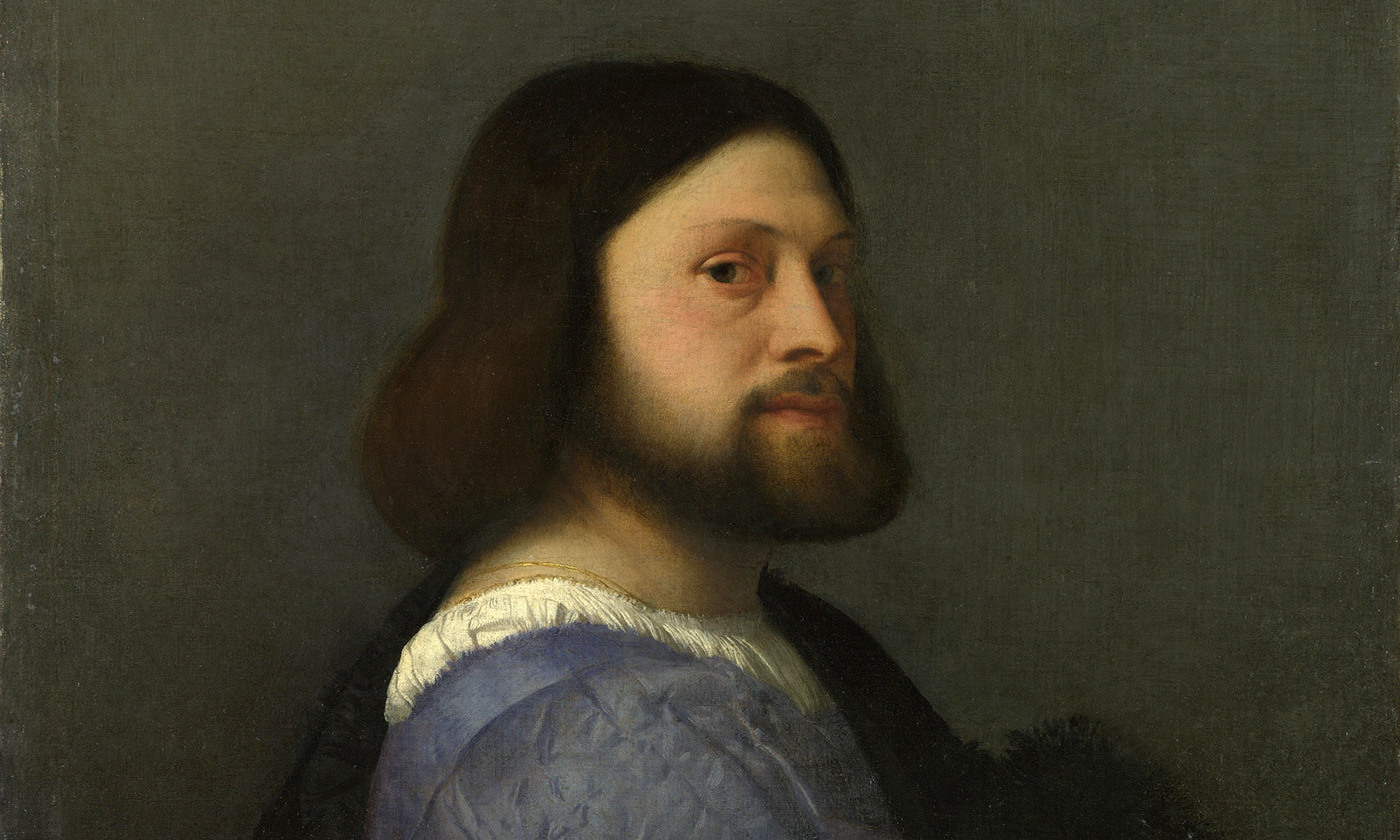
Portrait of a Man with a Quilted Sleeve, Titian, c1509. Courtesy Wikipedia/National Gallery, London.

Keith Frankish | Aeon Ideas

Edited by Nigel Warburton

Most of us have views on politics, current events, religion, society, morality and sport, and we spend a lot of time expressing these views, whether in conversation or on social media. We argue for our positions, and get annoyed if they are challenged. Why do we do this? The obvious answer is that we believe the views we express (ie, we think they are true), and we want to get others to believe them too, because they are true. We want the truth to prevail. That’s how it seems. But do we really believe everything we say? Are you always trying to establish the truth when you argue, or might there be other motives at work?

These questions might seem strange, offensive even. Am I suggesting that you are insincere or hypocritical in your views? No – at least I’m not suggesting that you are consciously so. But you might be unconsciously influenced by concerns other than truth. Nowadays, most psychologists agree that rapid, unconscious mental processes (sometimes called ‘System 1’ processes) play a huge role in guiding our behaviour. These processes are not thought of as Freudian ones, involving repressed memories and desires, but as ordinary, everyday judgments, motives and feelings that operate without conscious awareness, like a mental autopilot.

It seems plausible that such processes guide much of our speech. After all, we rarely give conscious thought to our reasons for saying what we do; the words just come to our lips. But if the motives behind our words are unconscious, then we must infer them from our behaviour, and might be mistaken about what they are. Again, this isn’t a revolutionary idea; for centuries, dramatists and novelists have depicted people deceived about their own motives. (For more on the nature and limits of self-knowledge, see my earlier Aeon article.)

It’s easy to think of motives that might prompt us to express a view we don’t really believe. We might want it to be true, and feel reassurance when we argue for it (think of the parents who insist that their missing child is still alive, despite the lack of evidence). We might associate it with people we admire, and assert it so as to be like them (think of how people are influenced by the views of celebrities). We might think that it will get us attention, and make us seem interesting (think of teenagers who adopt provocative views). We might profess it to fit in and gain social acceptance (think of a university student from a conservative background). Or we might feel that we have a duty to defend it because of our commitment to some creed or ideology (we sometimes call this attitude faith – belief in the religious sense).

Such motives might also be reinforced by other factors. As a society, we tend to admire people who know their own minds and stick to their principles. So, once we have expressed a view, for whatever reason, we might feel (again, unconsciously) that we are now committed to it, and should stick with it as a matter of integrity. At the same time, we might develop an emotional attachment to the view, a bit like an attachment to a sports team. It is now our view, the one we have publicly endorsed, and we want it to win out over its rivals just because it is ours. In this way, we might come to have a strong personal commitment to a claim, even if we don’t really believe it.

I am not suggesting that we are never guided by concerns for truth and knowledge (what philosophers call epistemic concerns), but I suspect that these sorts of emotional and social factors play a much larger role than we like to think. How else can we explain the vehemence with which people defend their views, and the hurt they feel when their views are challenged?

Is it bad if we sometimes say things we don’t believe? It might seem not. The aims I’ve mentioned – seeking social acceptance, for example, or cultivating a self-image – are not necessarily bad ones, and since they are unconscious it is arguable that we shouldn’t be held responsible for them anyway. There are dangers, however. For in order to achieve these aims we must convince our audience that we genuinely believe what we say. If they thought we were saying something merely in order to create an impression on them, then we wouldn’t succeed in creating that impression. And when our aim is to make some impression on ourselves – like the parents who insist that their child is still alive – we must convince ourselves that we believe it too. As a consequence, we might need to back up our words with deeds, acting as if we believe what we say. If there were a glaring disparity between what we said and did, our insincerity would be obvious. In this way, unconscious desires for acceptance, approval and reassurance can lead us to make choices on the basis of claims for which we have no good evidence, with obvious risks of frustration and failure.

Is there, then, any way of telling whether you really believe a claim? It might seem that conscious reflection would settle it. If you consciously entertain the claim, do you think it is true? Even this process might be unreliable, however. Many theorists hold that conscious thinking is simply talking to oneself in inner speech, in which case it can be guided by unconscious motives, just like outer speech. And, as I mentioned, unconscious desires can prompt us to deceive ourselves, telling ourselves that a claim is true even though we don’t really believe it.

Despite this, a thought experiment might help us detect what we genuinely believe to be true. In real life, there might be few contexts where truth really is our dominant concern: maintaining a comforting view or upholding a cherished ideology or self-image might almost always be more important to us than truth. But suppose you were being questioned by the Truth Demon – a super-powerful being who knows the truth on every topic, and will punish you horribly if you give a wrong answer or fail to answer at all. If you continue to assert a claim when the Truth Demon asks you if it is true, then you do really believe it, really think it is true. But if you give a different answer when under threat of torture by the all-knowing demon, then you don’t really believe the claim. This gives us a practical test for belief: imagine the situation just described as vividly as you can, and see what you would say about any of your views. But do be careful not to give too much conscious thought to the matter in case you start telling yourself what you want to hear.Aeon counter – do not remove


Keith Frankish is an English philosopher and writer. He is a visiting research fellow with the Open University in the UK and an adjunct professor with the Brain and Mind Programme at the University of Crete. He lives in Greece.

This article was originally published at Aeon and has been republished under Creative Commons.


Commentary

I like the gist of this article (along with the author’s previous article), but the Truth Demon (a.k.a. God) thought experiment could use some work. It’s too easy to deceive and delude oneself, even under imagined duress. It’s also unclear if many people would be “punished horribly” while expressing their false beliefs in good conscience. As mentioned by the author, a good judge of honest belief is one’s actions, but there is a difference between honest belief and truth itself (or is there?). Although the author’s final word is on point, I prefer Nietzsche’s thought experiment: “What, if some day or night a demon were to steal after you into your loneliest loneliness and say to you: ‘This life as you now live it and have lived it, you will have to live once more and innumerable times more’ … Would you not throw yourself down and gnash your teeth and curse the demon who spoke thus? Or have you once experienced a tremendous moment when you would have answered him: ‘You are a god and never have I heard anything more divine.”


We don’t know ourselves, we knowledgeable people—we are personally ignorant
about ourselves. And there’s good reason for that. We’ve never tried to find out who
we are. How could it ever happen that one day we’d discover our own selves? With
justice it’s been said that “Where your treasure is, there shall your heart be also.” Our treasure lies where the beehives of our knowledge stand. We are always busy with our knowledge, as if we were born winged creatures—collectors of intellectual honey. In our hearts we are basically concerned with only one thing, to “bring something home.” As far as the rest of life is concerned, what people call “experience”—which of us is serious enough for that? Who has enough time? In these matters, I fear, we’ve been “missing the point.”

Our hearts have not even been engaged—nor, for that matter, have our ears! We’ve
been much more like someone divinely distracted and self-absorbed into whose ear
the clock has just pealed the twelve strokes of noon with all its force and who all at
once wakes up and asks himself “What exactly did that clock strike?”—so we rub
ourselves behind the ears afterwards and ask, totally surprised and embarrassed “What have we really just experienced? And more: “Who are we really?” Then, as I’ve mentioned, we count—after the fact—all the twelve trembling strokes of the clock of our experience, our lives, our being—alas! in the process we keep losing the count. So we remain necessarily strangers to ourselves, we do not understand ourselves, we have to keep ourselves confused. For us this law holds for all eternity: “Each man is furthest from himself.” Where we ourselves are concerned, we are not “knowledgeable people.”

? Friedrich Nietzsche, On the Genealogy of Morals/Ecce Homo

When subjectivity, inwardness, is the truth, the truth becomes objectively determined as a paradox, and that it is paradoxical is made clear by the fact that subjectivity is truth, for it repels objectivity, and the expression for the objective repulsion is the intensity and measure of inwardness. The paradox is the objective uncertainty, which is the expression for the passion of inwardness, which is precisely the truth. This is the Socratic principle. The eternal, essential truth, that is, that which relates itself essentially to the individual because it concerns his existence (all other knowledge is, Socratically speaking, accidental, its degree and scope being indifferent), is a paradox. Nevertheless, the eternal truth is not essentially in itself paradoxical, but it becomes so by relating itself to an existing individual. Socratic ignorance is the expression of this objective uncertainty, the inwardness of the existential subject is the truth. To anticipate what I will develop later, Socratic ignorance is an analogy to the category of the absurd, only that there is still less objective certainty in the absurd, and therefore infinitely greater tension in its inwardness. The Socratic inwardness that involves existence is an analogy to faith, except that this inwardness is repulsed not by ignorance but by the absurd, which is infinitely deeper. Socratically the eternal, essential truth is by no means paradoxical in itself, but only by virtue of its relation to an existing individual.

? Søren Kierkegaard, Concluding Unscientific Postscript

Reality and the Imagination

5361608149_56eff83272_b

“Freedom” by akshay moon


In this episode of the Waking Up podcast, Sam Harris speaks with Yuval Noah Harari about meditation, the need for stories, the power of technology to erase the boundary between fact and fiction, wealth inequality, the problem of finding meaning in a world without work, religion as a virtual reality game, the difference between pain and suffering, the future of globalism, and other topics.

Yuval Noah Harari has a PhD in history from Oxford University and is a professor in the Department of History at Hebrew University in Jerusalem. He specialized in World History, medieval history and military history, but his current research focuses on macro-historical questions: What is the relation between history and biology? What is the essential difference between Homo sapiens and other animals? Is there justice in history? Does history have a direction? Did people become happier as history unfolded?

He is the author of two blockbuster books, Sapiens: A Brief History of Humankind and Homo Deus: A Brief History of Tomorrow.

Discuss this in the forums


Follow Sam Harris on Twitter: @SamHarrisOrg

‘Know thyself’ is not just silly advice: it’s actively dangerous

idea_sized-edgar_degas_-_mrs_jeantaud_in_the_mirror_-_google_art_project

Detail from Madame Jeantaud au miroir by Edgar Degas c1875. Courtesy Wikipedia

By Bence Nanay

There is a phrase you are as likely to find in a serious philosophy text as you are in the wackiest self-help book: ‘Know thyself!’ The phrase has serious philosophical pedigree: by Socrates’ time, it was more or less received wisdom (apparently chiselled into the forecourt of the Temple of Apollo at Delphi) though a form of the phrase reaches back to Ancient Egypt. And ever since, the majority of philosophers have had something to say about it.

But ‘Know thyself!’ also has self-help appeal. Is your aim to accept yourself? Well, you need to know thyself for that first. Or is it to make good decisions – decisions that are right for you? Again, this would be difficult unless you knew thyself. The problem is that none of this is based on a realistic picture of the self and of how we make decisions. This whole ‘knowing thyself’ business is not as simple as it seems. In fact, it might be a serious philosophical muddle – not to say bad advice.

Let’s take an everyday example. You go to the local cafe and order an espresso. Why? Just a momentary whim? Trying something new? Maybe you know that the owner is Italian and she would judge you if you ordered a cappuccino after 11am? Or are you just an espresso kind of person?

I suspect that the last of these options best reflects your choices. You do much of what you do because you think it meshes with the kind of person you think you are. You order eggs Benedict because you’re an eggs Benedict kind of person. It’s part of who you are. And this goes for many of our daily choices. You go to the philosophy section of the bookshop and the fair-trade section at the grocer’s shop because you are a philosopher who cares about global justice, and that’s what philosophers who care about global justice do.

We all have fairly stable ideas about what kind of people we are. And that’s all for the best – we don’t have to think too hard when ordering coffee every morning. These ideas about what kind of people we are might also be accompanied by ideas about what kind of people we are not – I’m not going to shop at Costco, I’m not that kind of person. (This way of thinking about yourself could easily slide into moralising your preferences, but let’s not open that can of worms here.)

There is, however, a deep problem with this mental set-up: people change. There are tumultuous periods when we change drastically – in times of romantic love, say, or divorce, or having children. Often we are aware of these changes. After you’ve had kids, you probably notice that you’ve suddenly become a morning person.

But most changes happen gradually and under the radar. A few mechanisms of these changes are well understood, such as the ‘mere exposure effect’: the more you are exposed to something, the more you tend to like it. Another, more troubling one, is that the more your desire for something is frustrated, the more you tend to dislike it. These changes happen gradually, often without us noticing anything.

The problem is this: if we change while our self-image remains the same, then there will be a deep abyss between who we are and who we think we are. And this leads to conflict.

To make things worse, we are exceptionally good at dismissing even the possibility that we might change. Psychologists have given this phenomenon a fancy name: ‘The End of History Illusion’. We all think that who we are now is the finished product: we will be the same in five, 10, 20 years. But, as these psychologists found, this is completely delusional – our preferences and values will be very different already in the not-so-distant future.

Why is this such a big issue? It might be okay when it comes to ordering the espresso. Maybe you now slightly prefer cappuccino, but you think of yourself as an espresso kind of person, so you keep ordering espresso. So you’re enjoying your morning drink a little bit less – not such a big deal.

But what is true of espresso is true of other preferences and values in life. Maybe you used to genuinely enjoy doing philosophy, but you no longer do. But as being a philosopher is such a stable feature of your self-image, you keep doing it. There is a huge difference between what you like and what you do. What you do is dictated not by what you like, but by what kind of person you think you are.

The real harm of this situation is not only that you spend much of your time doing something that you don’t particularly like (and often positively dislike). Instead, it is that the human mind does not like blatant contradictions of this kind. It does its best to hide this contradiction: a phenomenon known as cognitive dissonance.

Hiding a gaping contradiction between what we like and what we do takes significant mental effort and this leaves little energy to do anything else. And if you have little mental energy left, it is so much more difficult to switch off the TV or to resist spending half an hour looking at Facebook or Instagram.

‘Know thyself!’, right? If we take the importance of change in our lives seriously, this just isn’t an option. You might be able to know what you think of yourself in this moment. But what you think of yourself is very different from who you are and what you actually like. And in a couple of days or weeks, all of this might change anyway.

Knowing thyself is an obstacle to acknowledging and making peace with constantly changing values. If you know thyself to be such-and-such a kind of person, this limits your freedom considerably. You might have been the one who chose to be an espresso person or a donating-to-charity person but, once these features are built into your self-image, you have very little say in what direction your life is going. Any change would be either censored or lead to cognitive dissonance. As André Gide wrote in Autumn Leaves (1950): ‘A caterpillar who seeks to know himself would never become a butterfly.’Aeon counter – do not remove


Bence Nanay is professor of philosophy at the University of Antwerp and Senior Research Associate at the University of Cambridge. He is the author of Aesthetics as Philosophy of Perception (2016).

This article was originally published at Aeon and has been republished under Creative Commons.