Tools for Thinking: Isaiah Berlin’s Two Concepts of Freedom

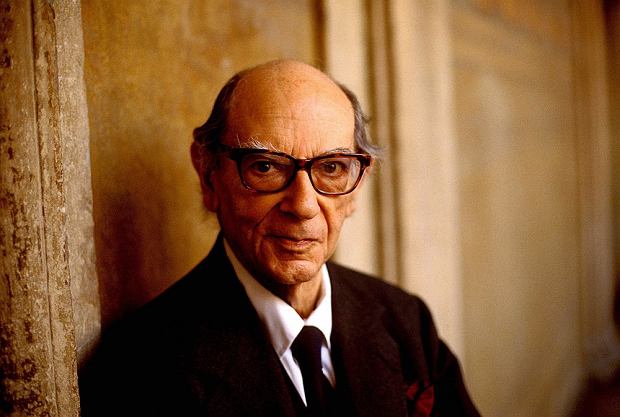
isaiah-berlin

Maria Kasmirli | Aeon Ideas

‘Freedom’ is a powerful word. We all respond positively to it, and under its banner revolutions have been started, wars have been fought, and political campaigns are continually being waged. But what exactly do we mean by ‘freedom’? The fact that politicians of all parties claim to believe in freedom suggests that people don’t always have the same thing in mind when they talk about it. Might there be different kinds of freedom and, if so, could the different kinds conflict with each other? Could the promotion of one kind of freedom limit another kind? Could people even be coerced in the name of freedom?

The 20th-century political philosopher Isaiah Berlin (1909-97) thought that the answer to both these questions was ‘Yes’, and in his essay ‘Two Concepts of Liberty’ (1958) he distinguished two kinds of freedom (or liberty; Berlin used the words interchangeably), which he called negative freedom and positive freedom.

Negative freedom is freedom from interference. You are negatively free to the extent that other people do not restrict what you can do. If other people prevent you from doing something, either directly by what they do, or indirectly by supporting social and economic arrangements that disadvantage you, then to that extent they restrict your negative freedom. Berlin stresses that it is only restrictions imposed by other people that count as limitations of one’s freedom. Restrictions due to natural causes do not count. The fact that I cannot levitate is a physical limitation but not a limitation of my freedom.

Virtually everyone agrees that we must accept some restrictions on our negative freedom if we are to avoid chaos. All states require their citizens to follow laws and regulations designed to help them live together and make society function smoothly. We accept these restrictions on our freedom as a trade-off for other benefits, such as peace, security and prosperity. At the same time, most of us would insist that there are some areas of life that should not be regulated, and where individuals should have considerable, if not complete, freedom. A major debate in political philosophy concerns the boundaries of this area of personal negative freedom. For example, should the state place restrictions on what we may say or read, or on what sexual activities we may engage in?

Whereas negative freedom is freedom from control by others, positive freedom is freedom to control oneself. To be positively free is to be one’s own master, acting rationally and choosing responsibly in line with one’s interests. This might seem to be simply the counterpart of negative freedom; I control myself to the extent that no one else controls me. However, a gap can open between positive and negative freedom, since a person might be lacking in self-control even when he is not restrained by others. Think, for example, of a drug addict who cannot kick the habit that is killing him. He is not positively free (that is, acting rationally in his own best interests) even though his negative freedom is not being limited (no one is forcing him to take the drug).

In such cases, Berlin notes, it is natural to talk of something like two selves: a lower self, which is irrational and impulsive, and a higher self, which is rational and far-sighted. And the suggestion is that a person is positively free only if his higher self is dominant. If this is right, then we might be able to make a person more free by coercing him. If we prevent the addict from taking the drug, we might help his higher self to gain control. By limiting his negative freedom, we would increase his positive freedom. It is easy to see how this view could be abused to justify interventions that are misguided or malign.

Berlin argued that the gap between positive and negative freedom, and the risk of abuse, increases further if we identify the higher, or ‘real’, self, with a social group (‘a tribe, a race, a church, a state’). For we might then conclude that individuals are free only when the group suppresses individual desires (which stem from lower, nonsocial selves) and imposes its will upon them. What particularly worried Berlin about this move was that it justifies the coercion of individuals, not merely as a means of securing social benefits, such as security and cooperation, but as a way of freeing the individuals themselves. The coercion is not seen as coercion at all, but as liberation, and protests against it can be dismissed as expressions of the lower self, like the addict’s craving for his fix. Berlin called this a ‘monstrous impersonation’, which allows those in power ‘to ignore the actual wishes of men or societies, to bully, oppress, torture them in the name, and on behalf, of their “real” selves’. (The reader might be reminded of George Orwell’s novel Nineteen Eighty-Four (1949), which shows how a Stalinist political party imposes its conception of truth on an individual, ‘freeing’ him to love the Party leader.)

Berlin was thinking of how ideas of freedom had been abused by the totalitarian regimes of Nazi Germany and Stalinist Russia, and he was right to highlight the dangers of this kind of thinking. But it does not follow that it is always wrong to promote positive freedom. (Berlin does not claim that it is, and he notes that the notion of negative freedom can be abused in a similar way.) Some people might need help to understand their best interests and achieve their full potential, and we could believe that the state has a responsibility to help them do so. Indeed, this is the main rationale for compulsory education. We require children to attend school (severely limiting their negative freedom) because we believe it is in their own best interests. To leave children free to do whatever they like would, arguably, amount to neglect or abuse. In the case of adults, too, it is arguable that the state has a responsibility to help its citizens live rich and fulfilling lives, through cultural, educational and health programmes. (The need for such help might be especially pressing in freemarket societies, where advertisers continually tempt us to indulge our ‘lower’ appetites.) It might be, too, that some people find meaning and purpose through identification with a wider social or political movement, such as feminism, and that in helping them to do so we are helping to liberate them.

Of course, this raises many further questions. Does our current education system really work in children’s best interests, or does it just mould them into a form that is socially and economically useful? Who decides what counts as a rich and fulfilling life? What means can the state legitimately use to help people live well? Is coercion ever acceptable? These are questions about what kind of society we want to live in, and they have no easy answers. But in giving us the distinction between negative and positive freedom, Berlin has given us a powerful tool for thinking about them.Aeon counter – do not remove

Maria Kasmirli

This article was originally published at Aeon and has been republished under Creative Commons.
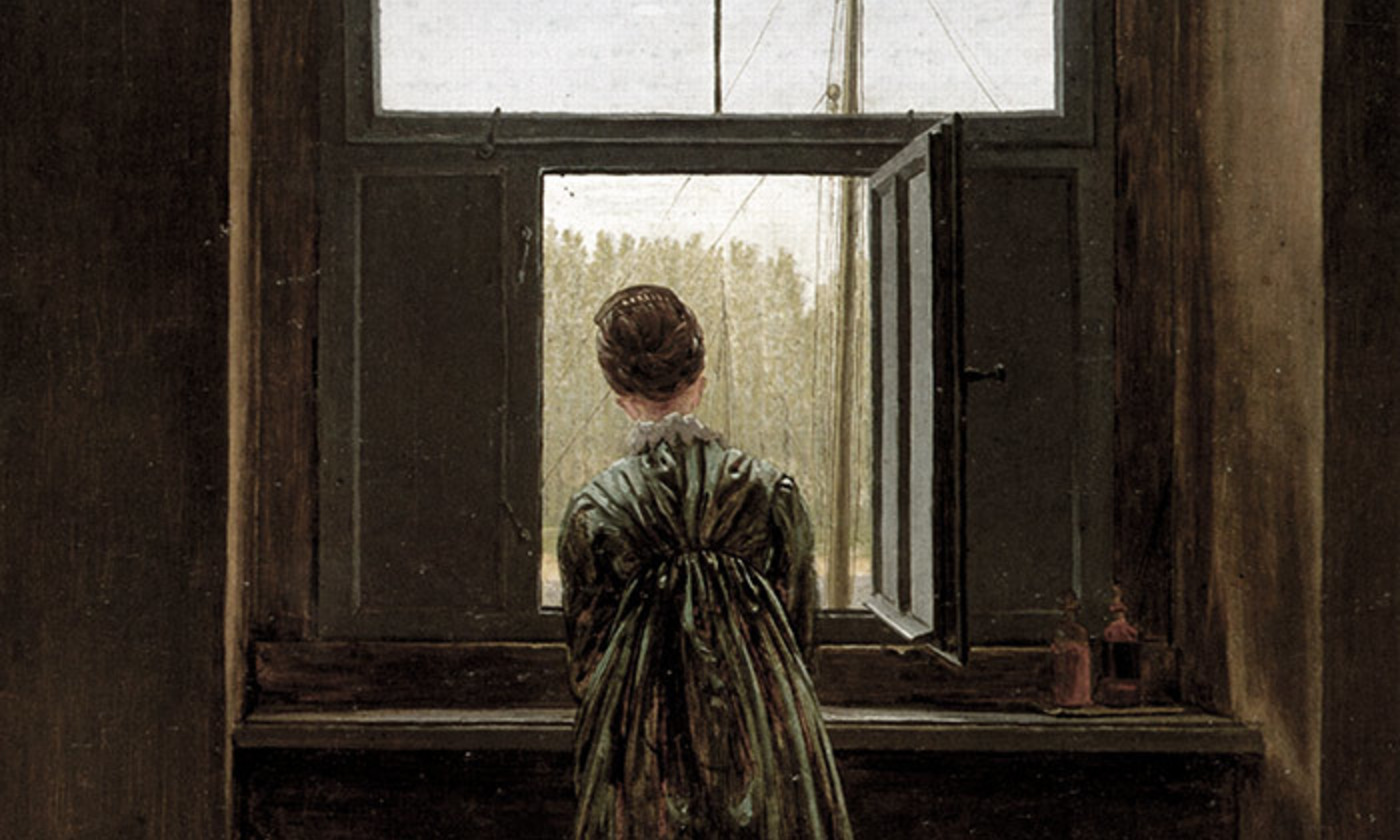
Philosophy Can Make the Previously Unthinkable Thinkable

woman-at-window

Detail from Woman at a Window (1822) by Caspar David Friedrich. Courtesy Alte Nationalgalerie, Berlin


Rebecca Brown | Aeon Ideas

In the mid-1990s, Joseph Overton, a researcher at the US think tank the Mackinac Center for Public Policy, proposed the idea of a ‘window’ of socially acceptable policies within any given domain. This came to be known as the Overton window of political possibilities. The job of think tanks, Overton proposed, was not directly to advocate particular policies, but to shift the window of possibilities so that previously unthinkable policy ideas – those shocking to the sensibilities of the time – become mainstream and part of the debate.

Overton’s insight was that there is little point advocating policies that are publicly unacceptable, since (almost) no politician will support them. Efforts are better spent, he argued, in shifting the debate so that such policies seem less radical and become more likely to receive support from sympathetic politicians. For instance, working to increase awareness of climate change might make future proposals to restrict the use of diesel cars more palatable, and ultimately more effective, than directly lobbying for a ban on such vehicles.

Overton was concerned with the activities of think tanks, but philosophers and practical ethicists might gain something from considering the Overton window. By its nature, practical ethics typically addresses controversial, politically sensitive topics. It is the job of philosophers to engage in ‘conceptual hygiene’ or, as the late British philosopher Mary Midgley described it, ‘philosophical plumbing’: clarifying and streamlining, diagnosing unjustified assertions and pointing out circularities.

Hence, philosophers can be eager to apply their skills to new subjects. This can provoke frustration from those embedded within a particular subject. Sometimes, this is deserved: philosophers can be naive in contributing their thoughts to complex areas with which they lack the kind of familiarity that requires time and immersion. But such an outside perspective can also be useful. Although such contributions will rarely get everything right, the standard is too demanding in areas of great division and debate (such as practical ethics). Instead, we should expect philosophers to offer a counterpoint to received wisdom, established norms and doctrinal prejudice.

Ethicists, at least within their academic work, are encouraged to be skeptical of intuition and the naturalistic fallacy (the idea that values can be derived simply from facts). Philosophers are also familiar with tools such as thought experiments: hypothetical and contrived descriptions of events that can be useful for clarifying particular intuitions or the implications of a philosophical claim. These two factors make it unsurprising that philosophers often publicly adopt positions that are unintuitive and outside mainstream thought, and that they might not personally endorse.

This can serve to shift, and perhaps widen, the Overton window. Is this a good thing? Sometimes philosophers argue for conclusions far outside the domain of ‘respectable’ positions; conclusions that could be hijacked by those with intolerant, racist, sexist or fundamentalist beliefs to support their stance. It is understandable that those who are threatened by such beliefs want any argument that might conceivably support them to be absent from the debate, off the table, and ignored.

However, the freedom to test the limits of argumentation and intuition is vital to philosophical practice. There are sufficient and familiar examples of historical orthodoxies that have been overturned – women’s right to vote; the abolition of slavery; the decriminalisation of same-sex relationships – to establish that strength and pervasiveness of a belief indicate neither truth nor immutability.

It can be tedious to repeatedly debate women’s role in the workforce, abortion, animals’ capacity to feel pain and so on, but to silence discussion would be far worse. Genuine attempts to resolve difficult ethical dilemmas must recognise that understanding develops by getting things wrong and having this pointed out. Most (arguably, all) science fails to describe or predict how the world works with perfect accuracy. But as a collective enterprise, it can identify errors and gradually approximate ‘truth’. Ethical truths are less easy to come by, and a different methodology is required in seeking out satisfactory approximations. But part of this model requires allowing plenty of room to get things wrong.

It is unfortunate but true that bad ideas are sometimes undermined by bad reasoning, and also that sometimes those who espouse offensive and largely false views can say true things. Consider the ‘born this way’ argument, which endorses the flawed assumption that a genetic basis for homosexuality indicates the permissibility of same-sex relationships. While this might win over some individuals, it could cause problems down the line if it turns out that homosexuality isn’t genetically determined. Debates relating to the ‘culture wars’ on college campuses have attracted many ad hominem criticisms that set out to discredit the authors’ position by pointing to the fact that they fit a certain demographic (white, middle-class, male) or share some view with a villainous figure, and thus are not fit to contribute. The point of philosophy is to identify such illegitimate moves, and to keep the argument on topic; sometimes, this requires coming to the defence of bad ideas or villainous characters.

Participation in this process can be daunting. Defending an unpopular position can make one a target both for well-directed, thoughtful criticisms, and for emotional, sweeping attacks. Controversial positions on contentious topics attract far more scrutiny than abstract philosophical contributions to niche subjects. This means that, in effect, the former are required to be more rigorous than the latter, and to foresee and head off more potential misappropriations, misinterpretations and misunderstandings – all while contributing to an interdisciplinary area, which requires some understanding not only of philosophical theory but perhaps also medicine, law, natural and social science, politics and various other disciplines.

This can be challenging, though I do not mean to be an apologist for thoughtless, sensationalist provocation and controversy-courting, whether delivered by philosophers or others. We should see one important social function of practical ethicists as widening the Overton window and pushing the public and political debate towards reasoned deliberation and respectful disagreement. Widening the Overton window can yield opportunities for ideas that many find offensive, and straightforwardly mistaken, as well as for ideas that are well-defended and reasonable. It is understandable that those with deep personal involvement in these debates often want to narrow the window and push it in the direction of those views they find unthreatening. But philosophers have a professional duty, as conceptual plumbers, to keep the whole system in good working order. This depends upon philosophical contributors upholding the disciplinary standards of academic rigour and intellectual honesty that are essential to ethical reflection, and trusting that this will gradually, collectively lead us in the right direction.Aeon counter – do not remove

Rebecca Brown

This article was originally published at Aeon and has been republished under Creative Commons.

Why Amartya Sen Remains the Century’s Great Critic of Capitalism

amartya-sen

Nobel laureate Amartya Kumar Sen in 2000, Wikipedia


Tim Rogan | Aeon Ideas

Critiques of capitalism come in two varieties. First, there is the moral or spiritual critique. This critique rejects Homo economicus as the organising heuristic of human affairs. Human beings, it says, need more than material things to prosper. Calculating power is only a small part of what makes us who we are. Moral and spiritual relationships are first-order concerns. Material fixes such as a universal basic income will make no difference to societies in which the basic relationships are felt to be unjust.

Then there is the material critique of capitalism. The economists who lead discussions of inequality now are its leading exponents. Homo economicus is the right starting point for social thought. We are poor calculators and single-minded, failing to see our advantage in the rational distribution of prosperity across societies. Hence inequality, the wages of ungoverned growth. But we are calculators all the same, and what we need above all is material plenty, thus the focus on the redress of material inequality. From good material outcomes, the rest follows.

The first kind of argument for capitalism’s reform seems recessive now. The material critique predominates. Ideas emerge in numbers and figures. Talk of non-material values in political economy is muted. The Christians and Marxists who once made the moral critique of capitalism their own are marginal. Utilitarianism grows ubiquitous and compulsory.

But then there is Amartya Sen.

Every major work on material inequality in the 21st century owes a debt to Sen. But his own writings treat material inequality as though the moral frameworks and social relationships that mediate economic exchanges matter. Famine is the nadir of material deprivation. But it seldom occurs – Sen argues – for lack of food. To understand why a people goes hungry, look not for catastrophic crop failure; look rather for malfunctions of the moral economy that moderates competing demands upon a scarce commodity. Material inequality of the most egregious kind is the problem here. But piecemeal modifications to the machinery of production and distribution will not solve it. The relationships between different members of the economy must be put right. Only then will there be enough to go around.

In Sen’s work, the two critiques of capitalism cooperate. We move from moral concerns to material outcomes and back again with no sense of a threshold separating the two. Sen disentangles moral and material issues without favouring one or the other, keeping both in focus. The separation between the two critiques of capitalism is real, but transcending the divide is possible, and not only at some esoteric remove. Sen’s is a singular mind, but his work has a widespread following, not least in provinces of modern life where the predominance of utilitarian thinking is most pronounced. In economics curricula and in the schools of public policy, in internationalist secretariats and in humanitarian NGOs, there too Sen has created a niche for thinking that crosses boundaries otherwise rigidly observed.

This was no feat of lonely genius or freakish charisma. It was an effort of ordinary human innovation, putting old ideas together in new combinations to tackle emerging problems. Formal training in economics, mathematics and moral philosophy supplied the tools Sen has used to construct his critical system. But the influence of Rabindranath Tagore sensitised Sen to the subtle interrelation between our moral lives and our material needs. And a profound historical sensibility has enabled him to see the sharp separation of the two domains as transient.

Tagore’s school at Santiniketan in West Bengal was Sen’s birthplace. Tagore’s pedagogy emphasised articulate relations between a person’s material and spiritual existences. Both were essential – biological necessity, self-creating freedom – but modern societies tended to confuse the proper relation between them. In Santiniketan, pupils played at unstructured exploration of the natural world between brief forays into the arts, learning to understand their sensory and spiritual selves as at once distinct and unified.

Sen left Santiniketan in the late 1940s as a young adult to study economics in Calcutta and Cambridge. The major contemporary controversy in economics was the theory of welfare, and debate was affected by Cold War contention between market- and state-based models of economic order. Sen’s sympathies were social democratic but anti-authoritarian. Welfare economists of the 1930s and 1940s sought to split the difference, insisting that states could legitimate programmes of redistribution by appeal to rigid utilitarian principles: a pound in a poor man’s pocket adds more to overall utility than the same pound in the rich man’s pile. Here was the material critique of capitalism in its infancy, and here is Sen’s response: maximising utility is not everyone’s abiding concern – saying so and then making policy accordingly is a form of tyranny – and in any case using government to move money around in pursuit of some notional optimum is a flawed means to that end.

Economic rationality harbours a hidden politics whose implementation damaged the moral economies that groups of people built up to govern their own lives, frustrating the achievement of its stated aims. In commercial societies, individuals pursue economic ends within agreed social and moral frameworks. The social and moral frameworks are neither superfluous nor inhibiting. They are the coefficients of durable growth.

Moral economies are not neutral, given, unvarying or universal. They are contested and evolving. Each person is more than a cold calculator of rational utility. Societies aren’t just engines of prosperity. The challenge is to make non-economic norms affecting market conduct legible, to bring the moral economies amid which market economies and administrative states function into focus. Thinking that bifurcates moral on the one hand and material on the other is inhibiting. But such thinking is not natural and inevitable, it is mutable and contingent – learned and apt to be unlearned.

Sen was not alone in seeing this. The American economist Kenneth Arrow was his most important interlocutor, connecting Sen in turn with the tradition of moral critique associated with R H Tawney and Karl Polanyi. Each was determined to re-integrate economics into frameworks of moral relationship and social choice. But Sen saw more clearly than any of them how this could be achieved. He realised that at earlier moments in modern political economy this separation of our moral lives from our material concerns had been inconceivable. Utilitarianism had blown in like a weather front around 1800, trailing extremes of moral fervour and calculating zeal in its wake. Sen sensed this climate of opinion changing, and set about cultivating ameliorative ideas and approaches eradicated by its onset once again.

There have been two critiques of capitalism, but there should be only one. Amartya Sen is the new century’s first great critic of capitalism because he has made that clear.Aeon counter – do not remove

Tim Rogan

This article was originally published at Aeon and has been republished under Creative Commons.

Reach out, listen, be patient. Good arguments can stop extremism

coming-together

Walter Sinnott-Armstrong | Aeon Ideas

Many of my best friends think that some of my deeply held beliefs about important issues are obviously false or even nonsense. Sometimes, they tell me so to my face. How can we still be friends? Part of the answer is that these friends and I are philosophers, and philosophers learn how to deal with positions on the edge of sanity. In addition, I explain and give arguments for my claims, and they patiently listen and reply with arguments of their own against my – and for their – stances. By exchanging reasons in the form of arguments, we show each other respect and come to understand each other better.

Philosophers are weird, so this kind of civil disagreement still might seem impossible among ordinary folk. However, some stories give hope and show how to overcome high barriers.

One famous example involved Ann Atwater and C P Ellis in my home town of Durham, North Carolina; it is described in Osha Gray Davidson’s book The Best of Enemies (1996) and a forthcoming movie. Atwater was a single, poor, black parent who led Operation Breakthrough, which tried to improve local black neighbourhoods. Ellis was an equally poor but white parent who was proud to be Exalted Cyclops of the local Ku Klux Klan. They could not have started further apart. At first, Ellis brought a gun and henchmen to town meetings in black neighbourhoods. Atwater once lurched toward Ellis with a knife and had to be held back by her friends.

Despite their mutual hatred, when courts ordered Durham to integrate their public schools, Atwater and Ellis were pressured into co-chairing a charrette – a series of public discussions that lasted eight hours per day for 10 days in July 1971 – about how to implement integration. To plan their ordeal, they met and began by asking questions, answering with reasons, and listening to each other. Atwater asked Ellis why he opposed integration. He replied that mainly he wanted his children to get a good education, but integration would ruin their schools. Atwater was probably tempted to scream at him, call him a racist, and walk off in a huff. But she didn’t. Instead, she listened and said that she also wanted his children – as well as hers – to get a good education. Then Ellis asked Atwater why she worked so hard to improve housing for blacks. She replied that she wanted her friends to have better homes and better lives. He wanted the same for his friends.

When each listened to the other’s reasons, they realised that they shared the same basic values. Both loved their children and wanted decent lives for their communities. As Ellis later put it: ‘I used to think that Ann Atwater was the meanest black woman I’d ever seen in my life … But, you know, her and I got together one day for an hour or two and talked. And she is trying to help her people like I’m trying to help my people.’ After realising their common ground, they were able to work together to integrate Durham schools peacefully. In large part, they succeeded.

None of this happened quickly or easily. Their heated discussions lasted 10 long days in the charrette. They could not have afforded to leave their jobs for so long if their employers (including Duke University, where Ellis worked in maintenance) had not granted them time off with pay. They were also exceptional individuals who had strong incentives to work together as well as many personal virtues, including intelligence and patience. Still, such cases prove that sometimes sworn enemies can become close friends and can accomplish a great deal for their communities.

Why can’t liberals and conservatives do the same today? Admittedly, extremists on both sides of the current political scene often hide in their echo chambers and homogeneous neighbourhoods. They never listen to the other side. When they do venture out, the level of rhetoric on the internet is abysmal. Trolls resort to slogans, name-calling and jokes. When they do bother to give arguments, their arguments often simply justify what suits their feelings and signals tribal alliances.

The spread of bad arguments is undeniable but not inevitable. Rare but valuable examples such as Atwater and Ellis show us how we can use philosophical tools to reduce political polarisation.

The first step is to reach out. Philosophers go to conferences to find critics who can help them improve their theories. Similarly, Atwater and Ellis arranged meetings with each other in order to figure out how to work together in the charrette. All of us need to recognise the value of listening carefully and charitably to opponents. Then we need to go to the trouble of talking with those opponents, even if it means leaving our comfortable neighbourhoods or favourite websites.

Second, we need to ask questions. Since Socrates, philosophers have been known as much for their questions as for their answers. And if Atwater and Ellis had not asked each other questions, they never would have learned that what they both cared about the most was their children and alleviating the frustrations of poverty. By asking the right questions in the right way, we can often discover shared values or at least avoid misunderstanding opponents.

Third, we need to be patient. Philosophers teach courses for months on a single issue. Similarly, Atwater and Ellis spent 10 days in a public charrette before they finally came to understand and appreciate each other. They also welcomed other members of the community to talk as long as they wanted, just as good teachers include conflicting perspectives and bring all students into the conversation. Today, we need to slow down and fight the tendency to exclude competing views or to interrupt and retort with quick quips and slogans that demean opponents.

Fourth, we need to give arguments. Philosophers typically recognise that they owe reasons for their claims. Similarly, Atwater and Ellis did not simply announce their positions. They referred to the concrete needs of their children and their communities in order to explain why they held their positions. On controversial issues, neither side is obvious enough to escape demands for evidence and reasons, which are presented in the form of arguments.

None of these steps is easy or quick, but books and online courses on reasoning – especially in philosophy – are available to teach us how to appreciate and develop arguments. We can also learn through practice by reaching out, asking questions, being patient, and giving arguments in our everyday lives.

We still cannot reach everyone. Even the best arguments sometimes fall on deaf ears. But we should not generalise hastily to the conclusion that arguments always fail. Moderates are often open to reason on both sides. So are those all-too-rare exemplars who admit that they (like most of us) do not know which position to hold on complex moral and political issues.

Two lessons emerge. First, we should not give up on trying to reach extremists, such as Atwater and Ellis, despite how hard it is. Second, it is easier to reach moderates, so it usually makes sense to try reasoning with them first. Practising on more receptive audiences can help us improve our arguments as well as our skills in presenting arguments. These lessons will enable us to do our part to shrink the polarisation that stunts our societies and our lives.Aeon counter – do not remove

Walter Sinnott-Armstrong

This article was originally published at Aeon and has been republished under Creative Commons.

How Camus and Sartre Split Up Over the Question of How to be Free

camus

Albert Camus by Cecil Beaton for Vogue in 1946. Photo by Getty

Sam Dresser | Aeon Ideas

They were an odd pair. Albert Camus was French Algerian, a pied-noir born into poverty who effortlessly charmed with his Bogart-esque features. Jean-Paul Sartre, from the upper reaches of French society, was never mistaken for a handsome man. They met in Paris during the Occupation and grew closer after the Second World War. In those days, when the lights of the city were slowly turning back on, Camus was Sartre’s closest friend. ‘How we loved you then,’ Sartre later wrote.

They were gleaming icons of the era. Newspapers reported on their daily movements: Sartre holed up at Les Deux Magots, Camus the peripatetic of Paris. As the city began to rebuild, Sartre and Camus gave voice to the mood of the day. Europe had been immolated, but the ashes left by war created the space to imagine a new world. Readers looked to Sartre and Camus to articulate what that new world might look like. ‘We were,’ remembered the fellow philosopher Simone de Beauvoir, ‘to provide the postwar era with its ideology.’

It came in the form of existentialism. Sartre, Camus and their intellectual companions rejected religion, staged new and unnerving plays, challenged readers to live authentically, and wrote about the absurdity of the world – a world without purpose and without value. ‘[There are] only stones, flesh, stars, and those truths the hand can touch,’ Camus wrote. We must choose to live in this world and to project our own meaning and value onto it in order to make sense of it. This means that people are free and burdened by it, since with freedom there is a terrible, even debilitating, responsibility to live and act authentically.

If the idea of freedom bound Camus and Sartre philosophically, then the fight for justice united them politically. They were committed to confronting and curing injustice, and, in their eyes, no group of people was more unjustly treated than the workers, the proletariat. Camus and Sartre thought of them as shackled to their labour and shorn of their humanity. In order to free them, new political systems must be constructed.

In October 1951, Camus published The Rebel. In it, he gave voice to a roughly drawn ‘philosophy of revolt’. This wasn’t a philosophical system per se, but an amalgamation of philosophical and political ideas: every human is free, but freedom itself is relative; one must embrace limits, moderation, ‘calculated risk’; absolutes are anti-human. Most of all, Camus condemned revolutionary violence. Violence might be used in extreme circumstances (he supported the French war effort, after all) but the use of revolutionary violence to nudge history in the direction you desire is utopian, absolutist, and a betrayal of yourself.

‘Absolute freedom is the right of the strongest to dominate,’ Camus wrote, while ‘absolute justice is achieved by the suppression of all contradiction: therefore it destroys freedom.’ The conflict between justice and freedom required constant re-balancing, political moderation, an acceptance and celebration of that which limits the most: our humanity. ‘To live and let live,’ he said, ‘in order to create what we are.’

Sartre read The Rebel with disgust. As far as he was concerned, it was possible to achieve perfect justice and freedom – that described the achievement of communism. Under capitalism, and in poverty, workers could not be free. Their options were unpalatable and inhumane: to work a pitiless and alienating job, or to die. But by removing the oppressors and broadly returning autonomy to the workers, communism allows each individual to live without material want, and therefore to choose how best they can realise themselves. This makes them free, and through this unbending equality, it is also just.

The problem is that, for Sartre and many others on the Left, communism required revolutionary violence to achieve because the existing order must be smashed. Not all leftists, of course, endorsed such violence. This division between hardline and moderate leftists – broadly, between communists and socialists – was nothing new. The 1930s and early ’40s, however, had seen the Left temporarily united against fascism. With the destruction of fascism, the rupture between hardline leftists willing to condone violence and moderates who condemned it returned. This split was made all the more dramatic by the practical disappearance of the Right and the ascendancy of the Soviet Union – which empowered hardliners throughout Europe, but raised disquieting questions for communists as the horrors of gulags, terror and show trials came to light. The question for every leftist of the postwar era was simple: which side are you on?

With the publication of The Rebel, Camus declared for a peaceful socialism that would not resort to revolutionary violence. He was appalled by the stories emerging from the USSR: it was not a country of hand-in-hand communists, living freely, but a country with no freedom at all. Sartre, meanwhile, would fight for communism, and he was prepared to endorse violence to do so.

The split between the two friends was a media sensation. Les Temps Modernes – the journal edited by Sartre, which published a critical review of The Rebel – sold out three times over. Le Monde and L’Observateur both breathlessly covered the falling out. It’s hard to imagine an intellectual feud capturing that degree of public attention today, but, in this disagreement, many readers saw the political crises of the times reflected back at them. It was a way of seeing politics played out in the world of ideas, and a measure of the worth of ideas. If you are thoroughly committed to an idea, are you compelled to kill for it? What price for justice? What price for freedom?

Sartre’s position was shot through with contradiction, with which he struggled for the remainder of his life. Sartre, the existentialist, who said that humans are condemned to be free, was also Sartre, the Marxist, who thought that history does not allow much space for true freedom in the existential sense. Though he never actually joined the French Communist Party, he would continue to defend communism throughout Europe until 1956, when the Soviet tanks in Budapest convinced him, finally, that the USSR did not hold the way forward. (Indeed, he was dismayed by the Soviets in Hungary because they were acting like Americans, he said.) Sartre would remain a powerful voice on the Left throughout his life, and chose the French president Charles de Gaulle as his favourite whipping boy. (After one particularly vicious attack, de Gaulle was asked to arrest Sartre. ‘One does not imprison Voltaire,’ he responded.) Sartre remained unpredictable, however, and was engaged in a long, bizarre dalliance with hardline Maoism when he died in 1980. Though Sartre moved away from the USSR, he never completely abandoned the idea that revolutionary violence might be warranted.

Philosophy Feud: Sartre vs Camus from Aeon Video on Vimeo

The violence of communism sent Camus on a different trajectory. ‘Finally,’ he wrote in The Rebel, ‘I choose freedom. For even if justice is not realised, freedom maintains the power of protest against injustice and keeps communication open.’ From the other side of the Cold War, it is hard not to sympathise with Camus, and to wonder at the fervour with which Sartre remained a loyal communist. Camus’s embrace of sober political reality, of moral humility, of limits and fallible humanity, remains a message well-heeded today. Even the most venerable and worthy ideas need to be balanced against one another. Absolutism, and the impossible idealism it inspires, is a dangerous path forward – and the reason Europe lay in ashes, as Camus and Sartre struggled to envision a fairer and freer world.Aeon counter – do not remove

Sam Dresser

This article was originally published at Aeon and has been republished under Creative Commons.

What did Max Weber mean by the ‘Spirit’ of Capitalism?

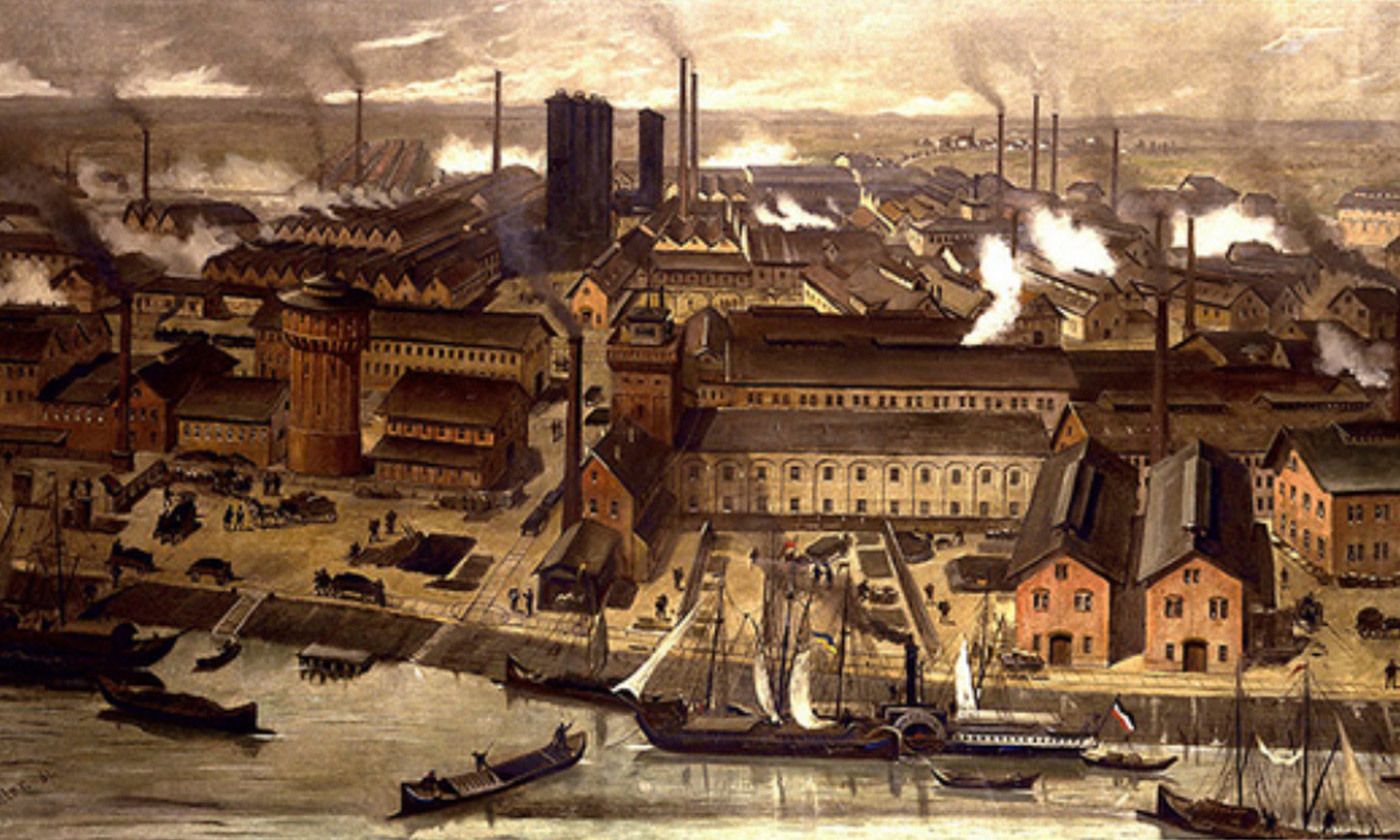
ludwigshafen

The BASF factory at Ludwigshafen, Germany, pictured on a postcard in 1881. Courtesy Wikipedia

Peter Ghosh | Aeon Ideas

Max Weber’s famous text The Protestant Ethic and the Spirit of Capitalism (1905) is surely one of the most misunderstood of all the canonical works regularly taught, mangled and revered in universities across the globe. This is not to say that teachers and students are stupid, but that this is an exceptionally compact text that ranges across a very broad subject area, written by an out-and-out intellectual at the top of his game. He would have been dumb­founded to find that it was being used as an elementary introduction to sociology for undergraduate students, or even schoolchildren.

We use the word ‘capitalism’ today as if its meaning were self-evident, or else as if it came from Marx, but this casualness must be set aside. ‘Capitalism’ was Weber’s own word and he defined it as he saw fit. Its most general meaning was quite simply modernity itself: capitalism was ‘the most fateful power in our modern life’. More specifically, it controlled and generated ‘modern Kultur’, the code of values by which people lived in the 20th-century West, and now live, we may add, in much of the 21st-century globe. So the ‘spirit’ of capitalism is also an ‘ethic’, though no doubt the title would have sounded a bit flat if it had been called The Protestant Ethic and the Ethic of Capitalism.

This modern ‘ethic’ or code of values was unlike any other that had gone before. Weber supposed that all previous ethics – that is, socially accepted codes of behaviour rather than the more abstract propositions made by theologians and philosophers – were religious. Religions supplied clear messages about how to behave in society in straightforward human terms, messages that were taken to be moral absolutes binding on all people. In the West this meant Christianity, and its most important social and ethical prescription came out of the Bible: ‘Love thy neighbour.’ Weber was not against love, but his idea of love was a private one – a realm of intimacy and sexuality. As a guide to social behaviour in public places ‘love thy neighbour’ was obviously nonsense, and this was a principal reason why the claims of churches to speak to modern society in authentically religious terms were marginal. He would not have been surprised at the long innings enjoyed by the slogan ‘God is love’ in the 20th-century West – its career was already launched in his own day – nor that its social consequences should have been so limited.

The ethic or code that dominated public life in the modern world was very different. Above all it was impersonal rather than personal: by Weber’s day, agreement on what was right and wrong for the individual was breaking down. The truths of religion – the basis of ethics – were now contested, and other time-honoured norms – such as those pertaining to sexuality, marriage and beauty – were also breaking down. (Here is a blast from the past: who today would think to uphold a binding idea of beauty?) Values were increasingly the property of the individual, not society. So instead of humanly warm contact, based on a shared, intuitively obvious understanding of right and wrong, public behaviour was cool, reserved, hard and sober, governed by strict personal self-control. Correct behaviour lay in the observance of correct procedures. Most obviously, it obeyed the letter of the law (for who could say what its spirit was?) and it was rational. It was logical, consistent, and coherent; or else it obeyed unquestioned modern realities such as the power of numbers, market forces and technology.

There was another kind of disintegration besides that of traditional ethics. The proliferation of knowledge and reflection on knowledge had made it impossible for any one person to know and survey it all. In a world which could not be grasped as a whole, and where there were no universally shared values, most people clung to the particular niche to which they were most committed: their job or profession. They treated their work as a post-religious calling, ‘an absolute end in itself’, and if the modern ‘ethic’ or ‘spirit’ had an ultimate found­ation, this was it. One of the most widespread clichés about Weber’s thought is to say that he preached a work ethic. This is a mistake. He personally saw no particular virtue in sweat – he thought his best ideas came to him when relaxing on a sofa with a cigar – and had he known he would be misunder­stood in this way, he would have pointed out that a capacity for hard work was something that did not dist­inguish the modern West from previous soc­ieties and their value systems. However, the idea that people were being ever more defined by the blinkered focus of their employment was one he regarded as profoundly modern and characteristic.

The blinkered pro­fessional ethic was common to entrepreneurs and an increasingly high-wage, skilled labour force, and it was this combination that produced a situation where the ‘highest good’ was the making of money and ever more money, without any limit. This is what is most readily recognisable as the ‘spirit’ of capitalism, but it should be stressed that it was not a simple ethic of greed which, as Weber recognised, was age-old and eternal. In fact there are two sets of ideas here, though they overlap. There is one about potentially universal rational pro­cedures – specialisation, logic, and formally consistent behaviour – and another that is closer to the modern economy, of which the central part is the professional ethic. The modern situation was the product of narrow-minded adhesion to one’s particular function under a set of conditions where the attempt to understand modernity as a whole had been abandoned by most people. As a result they were not in control of their own destiny, but were governed by the set of rational and impersonal pro­cedures which he likened to an iron cage, or ‘steel housing’. Given its rational and impersonal foundations, the housing fell far short of any human ideal of warmth, spontaneity or breadth of outlook; yet rationality, technology and legality also produced material goods for mass consumption in unprecedented amounts. For this reason, though they could always do so if they chose to, people were unlikely to leave the housing ‘until the last hundredweight of fossil fuel is burned up’.

It is an extremely powerful analysis, which tells us a great deal about the 20th-century West and a set of Western ideas and priorities that the rest of the world has been increasingly happy to take up since 1945. It derives its power not simply from what it says, but because Weber sought to place under­standing before judgment, and to see the world as a whole. If we wish to go beyond him, we must do the same.Aeon counter – do not remove

Peter Ghosh

This article was originally published at Aeon and has been republished under Creative Commons.

Why Religion is not Going Away and Science will not Destroy It

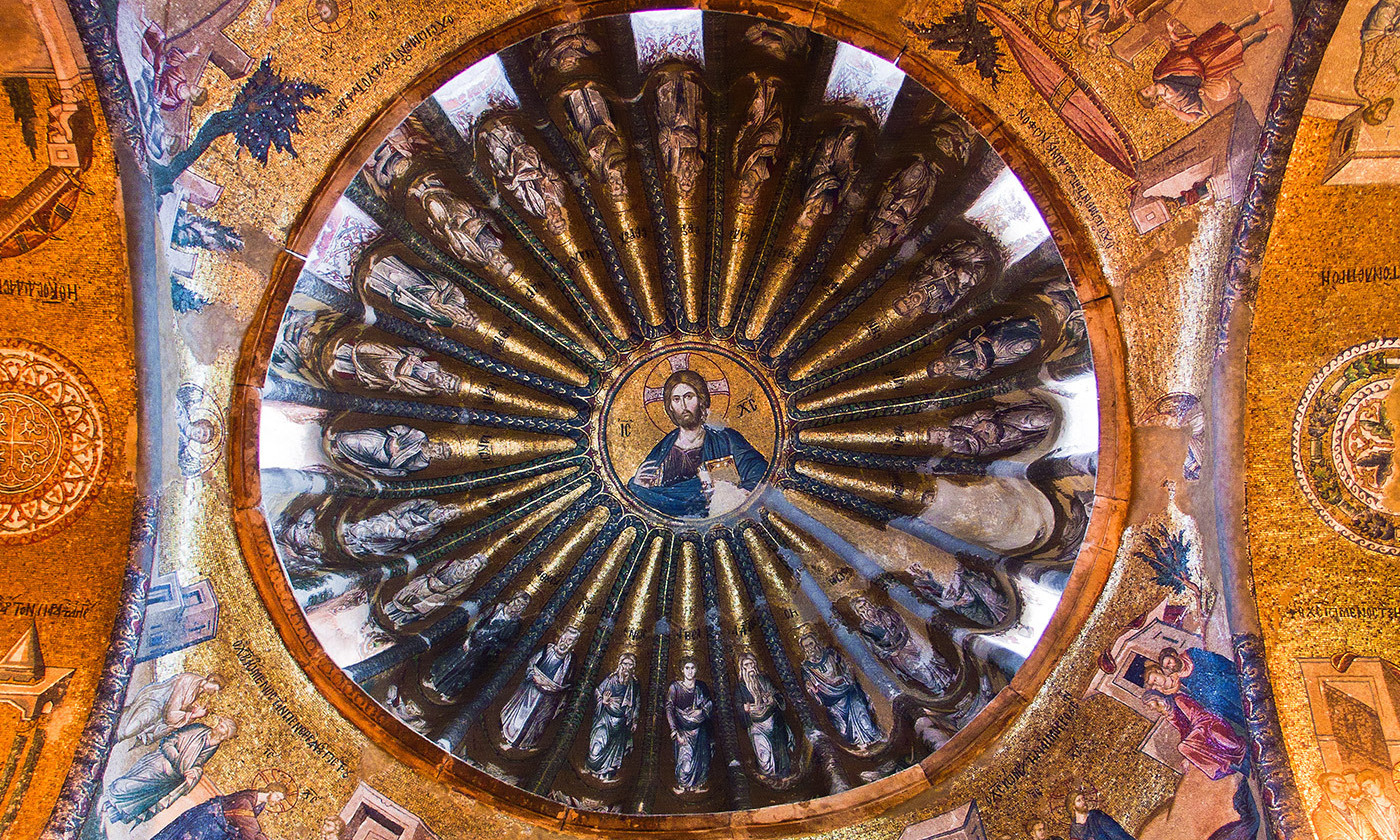
church-holy-saviour-istanbul

At the Church of the Holy Saviour in Chora, Istanbul. Photo by Guillen Perez/Flickr

Peter Harrison | Aeon Ideas


In 1966, just over 50 years ago, the distinguished Canadian-born anthropologist Anthony Wallace confidently predicted the global demise of religion at the hands of an advancing science: ‘belief in supernatural powers is doomed to die out, all over the world, as a result of the increasing adequacy and diffusion of scientific knowledge’. Wallace’s vision was not exceptional. On the contrary, the modern social sciences, which took shape in 19th-century western Europe, took their own recent historical experience of secularisation as a universal model. An assumption lay at the core of the social sciences, either presuming or sometimes predicting that all cultures would eventually converge on something roughly approximating secular, Western, liberal democracy. Then something closer to the opposite happened.

Not only has secularism failed to continue its steady global march but countries as varied as Iran, India, Israel, Algeria and Turkey have either had their secular governments replaced by religious ones, or have seen the rise of influential religious nationalist movements. Secularisation, as predicted by the social sciences, has failed.

To be sure, this failure is not unqualified. Many Western countries continue to witness decline in religious belief and practice. The most recent census data released in Australia, for example, shows that 30 per cent of the population identify as having ‘no religion’, and that this percentage is increasing. International surveys confirm comparatively low levels of religious commitment in western Europe and Australasia. Even the United States, a long-time source of embarrassment for the secularisation thesis, has seen a rise in unbelief. The percentage of atheists in the US now sits at an all-time high (if ‘high’ is the right word) of around 3 per cent. Yet, for all that, globally, the total number of people who consider themselves to be religious remains high, and demographic trends suggest that the overall pattern for the immediate future will be one of religious growth. But this isn’t the only failure of the secularisation thesis.

Scientists, intellectuals and social scientists expected that the spread of modern science would drive secularisation – that science would be a secularising force. But that simply hasn’t been the case. If we look at those societies where religion remains vibrant, their key common features are less to do with science, and more to do with feelings of existential security and protection from some of the basic uncertainties of life in the form of public goods. A social safety net might be correlated with scientific advances but only loosely, and again the case of the US is instructive. The US is arguably the most scientifically and technologically advanced society in the world, and yet at the same time the most religious of Western societies. As the British sociologist David Martin concluded in The Future of Christianity (2011): ‘There is no consistent relation between the degree of scientific advance and a reduced profile of religious influence, belief and practice.’

The story of science and secularisation becomes even more intriguing when we consider those societies that have witnessed significant reactions against secularist agendas. India’s first prime minister Jawaharlal Nehru championed secular and scientific ideals, and enlisted scientific education in the project of modernisation. Nehru was confident that Hindu visions of a Vedic past and Muslim dreams of an Islamic theocracy would both succumb to the inexorable historical march of secularisation. ‘There is only one-way traffic in Time,’ he declared. But as the subsequent rise of Hindu and Islamic fundamentalism adequately attests, Nehru was wrong. Moreover, the association of science with a secularising agenda has backfired, with science becoming a collateral casualty of resistance to secularism.

Turkey provides an even more revealing case. Like most pioneering nationalists, Mustafa Kemal Atatürk, the founder of the Turkish republic, was a committed secularist. Atatürk believed that science was destined to displace religion. In order to make sure that Turkey was on the right side of history, he gave science, in particular evolutionary biology, a central place in the state education system of the fledgling Turkish republic. As a result, evolution came to be associated with Atatürk’s entire political programme, including secularism. Islamist parties in Turkey, seeking to counter the secularist ideals of the nation’s founders, have also attacked the teaching of evolution. For them, evolution is associated with secular materialism. This sentiment culminated in the decision this June to remove the teaching of evolution from the high-school classroom. Again, science has become a victim of guilt by association.

The US represents a different cultural context, where it might seem that the key issue is a conflict between literal readings of Genesis and key features of evolutionary history. But in fact, much of the creationist discourse centres on moral values. In the US case too, we see anti-evolutionism motivated at least in part by the assumption that evolutionary theory is a stalking horse for secular materialism and its attendant moral commitments. As in India and Turkey, secularism is actually hurting science.

In brief, global secularisation is not inevitable and, when it does happen, it is not caused by science. Further, when the attempt is made to use science to advance secularism, the results can damage science. The thesis that ‘science causes secularisation’ simply fails the empirical test, and enlisting science as an instrument of secularisation turns out to be poor strategy. The science and secularism pairing is so awkward that it raises the question: why did anyone think otherwise?

Historically, two related sources advanced the idea that science would displace religion. First, 19th-century progressivist conceptions of history, particularly associated with the French philosopher Auguste Comte, held to a theory of history in which societies pass through three stages – religious, metaphysical and scientific (or ‘positive’). Comte coined the term ‘sociology’ and he wanted to diminish the social influence of religion and replace it with a new science of society. Comte’s influence extended to the ‘young Turks’ and Atatürk.

The 19th century also witnessed the inception of the ‘conflict model’ of science and religion. This was the view that history can be understood in terms of a ‘conflict between two epochs in the evolution of human thought – the theological and the scientific’. This description comes from Andrew Dickson White’s influential A History of the Warfare of Science with Theology in Christendom (1896), the title of which nicely encapsulates its author’s general theory. White’s work, as well as John William Draper’s earlier History of the Conflict Between Religion and Science (1874), firmly established the conflict thesis as the default way of thinking about the historical relations between science and religion. Both works were translated into multiple languages. Draper’s History went through more than 50 printings in the US alone, was translated into 20 languages and, notably, became a bestseller in the late Ottoman empire, where it informed Atatürk’s understanding that progress meant science superseding religion.

Today, people are less confident that history moves through a series of set stages toward a single destination. Nor, despite its popular persistence, do most historians of science support the idea of an enduring conflict between science and religion. Renowned collisions, such as the Galileo affair, turned on politics and personalities, not just science and religion. Darwin had significant religious supporters and scientific detractors, as well as vice versa. Many other alleged instances of science-religion conflict have now been exposed as pure inventions. In fact, contrary to conflict, the historical norm has more often been one of mutual support between science and religion. In its formative years in the 17th century, modern science relied on religious legitimation. During the 18th and 19th centuries, natural theology helped to popularise science.

The conflict model of science and religion offered a mistaken view of the past and, when combined with expectations of secularisation, led to a flawed vision of the future. Secularisation theory failed at both description and prediction. The real question is why we continue to encounter proponents of science-religion conflict. Many are prominent scientists. It would be superfluous to rehearse Richard Dawkins’s musings on this topic, but he is by no means a solitary voice. Stephen Hawking thinks that ‘science will win because it works’; Sam Harris has declared that ‘science must destroy religion’; Stephen Weinberg thinks that science has weakened religious certitude; Colin Blakemore predicts that science will eventually make religion unnecessary. Historical evidence simply does not support such contentions. Indeed, it suggests that they are misguided.

So why do they persist? The answers are political. Leaving aside any lingering fondness for quaint 19th-century understandings of history, we must look to the fear of Islamic fundamentalism, exasperation with creationism, an aversion to alliances between the religious Right and climate-change denial, and worries about the erosion of scientific authority. While we might be sympathetic to these concerns, there is no disguising the fact that they arise out of an unhelpful intrusion of normative commitments into the discussion. Wishful thinking – hoping that science will vanquish religion – is no substitute for a sober assessment of present realities. Continuing with this advocacy is likely to have an effect opposite to that intended.

Religion is not going away any time soon, and science will not destroy it. If anything, it is science that is subject to increasing threats to its authority and social legitimacy. Given this, science needs all the friends it can get. Its advocates would be well advised to stop fabricating an enemy out of religion, or insisting that the only path to a secure future lies in a marriage of science and secularism.Aeon counter – do not remove

Peter Harrison

This article was originally published at Aeon and has been republished under Creative Commons.

Philosophy Primary Sources II

library

This post will serve as Part II of Philosophy Primary Sources and a supplement to Primary Sources & Encyclopedias (check out the Links section for even more research sources). There are certain books that are essential to an education about the human condition of which I believe should be available for free and with easy access to everybody. This list is more comprehensive and nuanced than the previous list, as it includes books that hold cultural significance in various fields of study. Each book on this list is in PDF format. I have organized them by topic (many topics intersect) and the last name of the author.


Philosophy

The Life of the Mind by Hannah Arendt

The Human Condition by Hannah Arendt

Language, Truth, and Logic by A.J. Ayer

The Problem of Knowledge by A.J. Ayer

Selected Writings of Jean Baudrillard

The Second Sex by Simone de Beauvoir

The Ethics of Ambiguity by Simone de Beauvoir

Matter and Memory by Henri Bergson

An Introduction to Metaphysics by Henri Bergson

I and Thou by Martin Buber

The Myth of Sisyphus and Other Essays by Albert Camus

The Rebel by Albert Camus

Language and Mind by Noam Chomsky

The God Delusion by Richard Dawkins

Nietzsche and Philosophy by Gilles Deleuze

What is Philosophy? by Gilles Deleuze & Félix Guattari

Darwin’s Dangerous Idea by Daniel Dennett

Speech and Phenomena & Other Essays by Jacques Derrida

Dissemination by Jacques Derrida

In Praise of Folly by Desiderius Erasmus

The Vocation of Man by Johann Gottlieb Fichte

The Science of Knowledge by Johann Gottlieb Fichte

The Archaeology of Knowledge & The Discourse on Language by Michel Foucault

Selected Writings of Mahatma Gandhi

Being and Time by Martin Heidegger

The Question Concerning Technology & Other Essays by Martin Heidegger

What is Metaphysics? by Martin Heidegger

God is Not Great by Christopher Hitchens

Logical Investigations by Edmund Husserl

Reason and Existenz by Karl Jaspers

Fear and Trembling by Søren Kierkegaard

The Sickness Unto Death by Søren Kierkegaard

Philosophical Fragments by Søren Kierkegaard

Last Writings: Nothingness and the Religious Worldview by Nishida Kitar?

The Levinas Reader edited by Sáun Hand

The Postmodern Condition by Jean-François Lyotard

Essays of Michel de Montaigne

On the Genealogy of Morals by Friedrich Nietzsche

The Portable Nietzsche edited by Walter Kaufmann

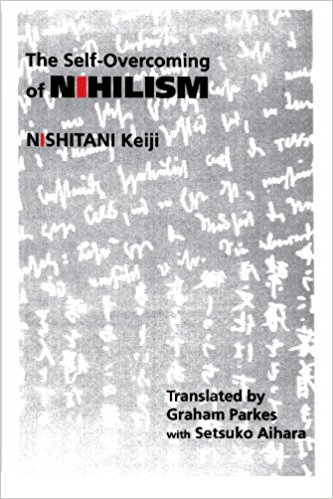
The Self-Overcoming of Nihilism by Keiji Nishitani

Philosophical Explanations by Robert Nozick

Man Has No Nature by José Ortega y Gasset

The Age of Reason by Thomas Paine

Pensées by Blaise Pascal

The Morals of Plutarch

The Virtue of Selfishness by Ayn Rand

Contingency, Irony, and Solidarity by Richard Rorty

Philosophy and the Mirror of Nature by Richard Rorty

The Confessions of Jean-Jacques Rousseau

Free Thought & Official Propaganda by Bertrand Russell

In Praise of Idleness by Bertrand Russell

Mysticism and Logic: And Other Essays by Bertrand Russell

Being and Nothingness by Jean-Paul Sartre

Existentialism is a Humanism by Jean-Paul Sartre

The World as Will and Representation – Vol. 1 by Arthur Schopenhauer

The World as Will and Representation – Vol. 2 by Arthur Schopenhauer

The Basis of Morality by Arthur Schopenhauer

My View of the World (Excerpt) by Erwin Schrödinger

Athens and Jerusalem by Lev Shestov

The Ego and His Own by Max Stirner

The Courage to Be by Paul Tillich

The Eternal Now by Paul Tillich

Weak Thought edited by Gianni Vattimo and Pier Aldo Rovatti

The Wisdom of Insecurity by Alan Watts

Philosophical Investigations by Ludwig Wittgenstein


Science

The Essays of Francis Bacon

The New Organon by Francis Bacon

The Grounds for and Excellence of the Corpuscular or Mechanical Philosophy by Robert Boyle

On the Revolutions of the Heavenly Spheres (Dedication) by Nicolaus Copernicus

On the Origin of Species by Means of Natural Selection by Charles Darwin

The Blind Watchmaker by Richard Dawkins

The Selfish Gene by Richard Dawkins

The Principles of Quantum Mechanics by Paul Dirac

Relativity: The Special and General Theory by Albert Einstein

The Assayer by Galileo Galilei

Dialogues Concerning the Two Chief World Systems by Galileo Galilei

A Brief History of Time by Stephen Hawking

Physics and Philosophy: The Revolution in Modern Science by Werner Heisenberg

The Grand Design by Stephen Hawking & Leonard Mlodinow

Treatise on Light by Christiaan Huygens

The Structure of Scientific Revolutions by Thomas Kuhn

The Copernican Revolution by Thomas Kuhn

The Mathematical Principles of Natural Philosophy by Sir Isaac Newton

Science and Hypothesis by Henri Poincaré

What is Life? by Erwin Schrödinger

Mind and Matter by Erwin Schrödinger

The Physics of the Healing by Ibn Sīnā (Avicenna)


Psychology

Man’s Search for Meaning by Viktor Frankl

The Complete Works of Sigmund Freud

The Principles of Psychology: Volume I by William James

The Principles of Psychology: Volume II by William James

Man and his Symbols by Carl Jung

Memories, Dreams, Reflection by Carl Jung

Écrits by Jacques Lacan

Religions, Values, and Peak Experiences by Abraham Maslow

Cognitive Psychology by Ulric Neisser

Verbal Behavior by B.F. Skinner


Literature

The Tragedies of Aeschylus

The Divine Comedy by Dante Alighieri

Don Quixote by Miguel de Cervantes

The Brothers Karamazov by Fyodor Dostoevsky

Crime and Punishment by Fyodor Dostoevsky

Notes from the Underground by Fyodor Dostoevsky

Euripides: Ion, Hippolytus, Medea, & Alcestis

Faust by Johann Wolfgang von Goethe

The Iliad of Homer

The Odyssey of Homer

Brave New World by Aldous Huxley

The Complete Stories of Franz Kafka

Paradise Lost by John Milton

1984 by George Orwell

Animal Farm by George Orwell

In Search of Lost Time by Marcel Proust

Atlas Shrugged by Ayn Rand

The Fountainhead by Ayn Rand

Letters to a Young Poet by Rainer Maria Rilke

The Notes of Malte Laurids Brigge by Rainer Maria Rilke

The Complete Works of William Shakespeare

The Tragedies of Sophocles

Walden by Henry David Thoreau

War and Peace by Leo Tolstoy

Candide by Voltaire

Player Piano by Kurt Vonnegut

Note: Planet Publish hosts a vast selection of literature in PDF format available for free.


Religious

A Study of Dōgen by Masao Abe

Deliverance from Error by Al-Ghazali

The Incoherence of the Philosophers by Al-Ghazali

The Summa Theologica by Thomas Aquinas

The Teaching of Buddha

Institutes of the Christian Religion by John Calvin

The Analects of Confucius

The Vedas compiled by the Dharmic Scriptures Team

On Divine Names & Mystical Theology by Pseudo-Dionysius the Areopagite

The Shōbōgenzō: Volume I by Eihei Dōgen

The Shōbōgenzō: Volume II by Eihei Dōgen

The Shōbōgenzō: Volume III by Eihei Dōgen

The Shōbōgenzō: Volume IV by Eihei Dōgen

Dōgen’s Extensive Record: A Translation of the Eihei Kōroku

The Tibetan Book of the Dead edited by W. Y. Evans-Wentz

The Essence of Christianity by Ludwig Feuerbach

Christian Apologetics by Norman Geisler

Philosophy of Religion by Norman Geisler

The Principia Discordia by Greg Hill and Kerry Wendell Thornley

The Perennial Philosophy by Aldous Huxley

The Guide for the Perplexed by Moses Maimonides

The Mūlamadhyamakakārikā of Nāgārjuna

On Buddhism by Keiji Nishitani

The Upanishads translated by Swami Paramananda

On the Harmony of Religion and Philosophy by Ibn Rushd (Averroes)

The Incoherence of the Incoherence by Ibn Rushd (Averroes)

Forgotten Truth by Huston Smith

An Introduction to Zen Buddhism by D.T. Suzuki

The Bhagavad Gita translated by Shri Purohit Swami

The New Being by Paul Tillich

The Way of Zen by Alan Watts

Note: Internet Sacred Text Archive hosts an archive of online books about religion, mythology, folklore and the esoteric (including the writings of the early church fathers).


Historical

World History: Patterns of Interaction by Beck, et al.

The Diary of a Young Girl by Anne Frank

The Decline and Fall of the Roman Empire: Volume I by Edward Gibbon

The Decline and Fall of the Roman Empire: Volume II by Edward Gibbon

The Decline and Fall of the Roman Empire: Volume III by Edward Gibbon

The Decline and Fall of the Roman Empire: Volume IV by Edward Gibbon

The Decline and Fall of the Roman Empire: Volume V by Edward Gibbon

The Decline and Fall of the Roman Empire: Volume VI by Edward Gibbon

The Histories of Herodotus

I Have a Dream by Martin Luther King Jr.

The History of Rome by Titus Livius

The History of Western Philosophy by Bertrand Russell

Anti-Semite and Jew: An Exploration of the Etiology of Hate by Jean-Paul Sartre

The Decline of the West by Oswald Spengler

The Annals of Tacitus

The History of the Peloponnesian War by Thucydides

Note: Project Gutenberg and the Internet Archive are excellent sources of historical writings and much more. Ancient Greek and Roman histories can be found at Loebolus.


Important Historical Documents

Magna Carta Libertatum (Great Charter of Liberties)

Universal Declaration of Human Rights

The Code of Hammurabi

Note: OurDocuments.gov hosts a list of 100 milestone documents, compiled by the National Archives and Records Administration, and drawn primarily from its nationwide holdings. The documents chronicle United States history from 1776 to 1965.


Political & Social Theory

On the Reproduction of Capitalism by Louis Althusser

An Introduction to The Principles of Morals and Legislation by Jeremy Bentham

Understanding Power: The Indispensable Chomsky

Anti-Oedipus: Capitalism & Schizophrenia by Gilles Deleuze & Félix Guattari

Discipline and Punish: The Birth of the Prison by Michel Foucault

The History of Sexuality by Michel Foucault

Madness and Civilization by Michel Foucault

The Theory of Communicative Action by Jürgen Habermas

Between Facts and Norms by Jürgen Habermas

Leviathan by Thomas Hobbes

Dialectic of Enlightenment by Max Horkheimer and Theodor Adorno

The General Theory of Employment, Interest, and Money by John Maynard Keynes

Structural Anthropology by Claude Lévi-Strauss

The Savage Mind by Claude Lévi-Strauss

The Prince by Niccolò Machiavelli

Capital: Critique of Political Economy, Volume I by Karl Marx

Capital: Critique of Political Economy, Volume II by Karl Marx

Capital: Critique of Political Economy, Volume III by Karl Marx

Economic and Philosophic Manuscripts of 1844 by Karl Marx

The German Ideology by Karl Marx & Friedrich Engels

Areopagitica by John Milton

The Spirit of Laws by Montesquieu

A Theory of Justice by John Rawls

Émile, or Concerning Education by Jean-Jacques Rousseau

The Origin of Inequality by Jean-Jacques Rousseau

The Social Contract by Jean-Jacques Rousseau

The Wealth of Nations by Adam Smith

Civil Disobedience by Henry David Thoreau

Writings of Leon Trotsky

The Theory of the Leisure Class by Thorstein Veblen

The Protestant Ethic and the Spirit of Capitalism by Max Weber


Check out the Links Section for more sources of primary texts and general research.

The Self-Overcoming of Nihilism

the self-overcoming of nihilism

Full Book (PDF): The Self-Overcoming of Nihilism by Nishitani Keiji

As a past reader of Nishitani in both the original Japanese and English translation, I find this manuscript to be the most accessible and clearly written of any book-length work I have read by him. It shows Nishitani as a vital and vigorous thinker, and serves as an introduction to his widely acclaimed Religion and Nothingness.

The summaries of the relation to nihilism of Hegel, Schopenhauer, Kierkegaard, Feuerbach, and Stirner, a nearly forgotten figure in intellectual history, are all perspicacious. Even the chapters on Nietzsche, about whom volumes are written these days, provide new insights. The brief section on the problem of nihilism for Japan is unprecedented in the English literature, and the sketches on karma and historicity whet the appetite for the more extensive and difficult expositions in Religion and Nothingness.

It will be mandatory reading for an understanding of both Nishitani’s thought and the problem of nihilism. Scholars and other persons interested in nihilism, in Nietzsche, and/or in contemporary Buddhist or Japanese philosophy, will greatly profit from a study of this book.

– John C. Maraldo, Department of Philosophy, University of North Florida

This is a fine translation of an important work in the corpus of Nishitani’s early writings. The translation is timely both because of the Western interest in Nishitani as a preeminent contemporary Japanese philosopher and because of the continuing Western perplexity about the problems Nishitani addresses. Nishitani is one of the world’s greatest living philosophers and even in this early work of his that brilliance shines through.

– Thomas P. Kasulis, Department of Philosophy, Northland College

Nishitani Keiji was for many years Professor of Religious Philosophy at Kyoto University and the leading thinker of the “Kyoto School” of philosophy. He died in 1990. Graham Parkes is Professor of Philosophy at the University of Hawaii, the editor of Heidegger and Asian Thought and Nietzsche and Asian Thought, and the author of Composing the Soul: Reaches of Nietzsche’s Psychology. Setsuko Aihara has taught Japanese at the University of Hawaii and Harvard University, and is the author of Strategies for Reading Japanese: A Rational Approach to the Japanese Sentence.

Contents

Chapter One – Nihilism as Existence

1. Two Problems

2. Nihilism and the Philosophy of History

3. European Nihilism

Chapter Two – From Realism to Nihilism: Hegel, Schopenhauer, Kierkegaard, Feuerbach

1. Hegel’s Absolute Idealism and Radical Realism

2. Schopenhauer—Will as Real—The Nullity of Existence

3. Kierkegaard—Becoming and Existence

4. Feuerbach—Critique of Religion, Philosophy, and Ethics

Chapter Three – Friedrich Nietzsche: The First Consummate Nihilist

1. The Significance of Nihilism in Nietzsche

2. Radical Nihilism

3. Nietzsche’s Interpretation of Christianity

4. The Concept of “Sincerity”—”Will to Illusion”

Chapter Four – Nietzsche’s Affirmative Nihilism: Amor Fati and Eternal Recurrence

1. Value-Interpretation and Perspectivism

2. The Problem of Amor Fati

3. Love of Fate as “Innermost Nature”—Suffering—Soul

4. The Idea of Eternal Recurrence: The “Moment” and Eternity

5. Eternal Recurrence and Overcoming the Spirit of Gravity

6. Love of Fate and Eternal Recurrence

7. The Self-Overcoming of Nihilism

Chapter Five – Nihilism and Existence in Nietzsche

1. “God is Dead”

2. Critique of Religion

3. The Stages of Nihilism

4. Nihilism as Existence

5. The First Stage of Existence

6. The Second Stage of Existence

7. Nihilism as Scientific Conscience

8. Science and History as Existence

9. “Living Dangerously” and “Experimentation”

10. The Third Stage—Existence as Body

11. The Dialectical Development of Nihilism

Chapter Six – Nihilism as Egoism: Max Stirner

1. Stirner’s Context

2. The Meaning of Egoism

3. Realist, Idealist, Egoist—”Creative Nothing”

4. From Paganism to Christianity

5. From Christianity to Liberalism

6. From Liberalism to Egoism

7. Ownness and Property—All and Nothing

8. The State and the Individual

Chapter Seven – Nihilism in Russia

1. Russian Nihilism

2. Bazarov’s Nihilism—”Fathers and Sons”

3. Nihilism as Contemplation—”Notes from Underground”

Chapter Eight – Nihilism as Philosophy: Martin Heidegger

1. Existentialism as a Discipline

2. The “Ontological Difference”

3. Transcendence and Being-in-the-World

4. Being-toward-Death and Anxiety

5. Finitude—Metaphysics—Existence—Freedom

Chapter Nine – The Meaning of Nihilism for Japan

1. The Crisis in Europe and Nihilism

2. The Crisis Compounded

3. The Significance of European Nihilism for Us

4. Buddhism and Nihilism

Appendix – The Problem of Atheism

1. Marxist Humanism

2. Sartrean Existentialism

3. Atheism in the World of Today

Lost Tribes

uncontacted_tribes

A few nights ago, I watched The Lost City of Z, which is about British explorer Percy Fawcett who was sent to Bolivia and later made several attempts to find an ancient lost city in the Amazon. He disappeared in 1925 along with his son on an expedition. It got me thinking about people today who are still uncontacted by the rest of humanity. It’s a bewildering thought, indeed, but could there be anything that they could teach us? I think so.

Some people want to protect these “lost tribes” from contact with the Western world for various reasons. For example, our “civilized” immune systems have developed immunities to diseases that would kill most of them. Many feel that these uncontacted people should be left alone to determine their own destiny; that we should afford them the same basic human rights that we (supposedly) apply to the rest of humanity. Reservations have been created to prevent the abuse of those rights where businesses large and small would like to encroach on tribal territory. Questions of morality arise in complex ways.

What intrigues me, of course, has nothing to do with their rights or protections. I’m concerned with the philosophical implications, as selfish as that might sound. These uncontacted people have no ideology or sense of history that could be remotely similar to the rest of humanity. I’m sure they have their own simple ideologies and codes of ethics to live by. The point at which I think we could learn from them lay precisely in these differences of worldview.

Many of them are still preliterate and think thunderstorms are the work of gods. They may even look upon us as gods with all of our great technological advancements. But what of their moral sense? A thought experiment: a human being is raised and lives in the wild for the entirety of their life. Would they develop the same or a similar sense of morality that we civilized Westerners have? Do unto others? I tend to think not, though some would disagree.

The point at which we could learn from the lost tribes lay precisely in seeing how exactly we Westerners are conditioned from birth. It makes me think twice about my own study of philosophy. They live close to the earth, as it were. We are mostly emancipated from the earth. They are not burdened by our lifestyle, yet we feel that they must be living miserable lives out there alone in the wild. What I am studying, really, is the history of the thought processes of civilization. And what is my concern with history? Why do I believe it to be so important?

Lastly, though less important I think, the entire situation makes possible another thought experiment: suppose there exist intelligent life forms outside of Earth that look upon us as we look upon the lost tribes. Or suppose that we happen across a newfound planet that contains intelligent life forms similar to us, but far less technologically advanced. These thought experiments inevitably bring up serious questions of morality.

The movie gave me a lot to think about, so I figured I would share my thoughts. Should we take a closer look at how we are conditioned? Would it be healthy to attempt to live a more simple lifestyle? More than our material lifestyle, I mean to question our spiritual lifestyle. Perhaps they go hand in hand. In any case, I think the thought deserves some consideration.