Subjectivity as Truth

conc-sci-post

A Selected Passage


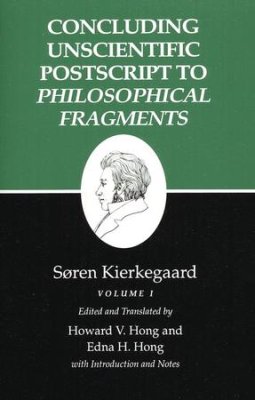
When subjectivity, inwardness, is truth, then objectively truth is the paradox; and the fact that truth is objectively the paradox is just what proves subjectivity to be truth, since the objective situation proves repellent, and this resistance on the part of objectivity, or its expression, is the resilience of inwardness and the gauge of its strength. The paradox is the objective uncertainty that is the expression for the passion of inwardness, which is just what truth is. So much for the Socratic. Eternal, essential truth, i.e., truth that relates essentially to someone existing through essentially concerning what it is to exist (all other knowledge being from the Socratic point of view accidental, its scope and degree a matter of indifference), is the paradox. Yet the eternal, essential truth is by no means itself the paradox; it is so by relating to someone existing. Socratic ignorance is the expression of the objective uncertainty, the inwardness of the one who exists is truth. Just to anticipate here, note the following: Socratic ignorance is an analogue to the category of the absurd, except that in the repellency of the absurd there is even less objective certainty, since there is only the certainty that it is absurd. And just for that reason is the resilience of the inwardness even greater. Socratic inwardness in existing is an analogue of faith, except that the inwardness of faith, corresponding as it does to the resistance not of ignorance but of the absurd, is infinitely more profound.

Socratically, the eternal essential truth is by no means in itself paradoxical; it is so only by relating to someone existing. This is expressed in another Socratic proposition, namely, that all knowing is recollecting. That proposition foreshadows the beginning of speculative thought, which is also the reason why Socrates did not pursue it. Essentially it became Platonic. Here is where the path branches off and Socrates essentially accentuates existing, while Plato, forgetting the latter, loses himself in speculation. The infinite merit of Socrates is precisely to be an existing thinker, not a speculator who forgets what it is to exist. For Socrates, therefore, the proposition that all knowing is recollecting has, at the moment of his leave-taking and as the suspended possibility of speculating, a two-fold significance: (1) that the knower is essentially integer and that there is no other anomaly concerning knowledge confronting him than that he exists, which anomaly, however, is so essential and decisive for him that it means that existing, the inward absorption in and through existing, is truth; (2) that existence in temporality has no decisive importance, since the possibility of taking oneself back into eternity through recollection is always there, even though this possibility is constantly cancelled by the time taken in inner absorption in existing.

The unending merit of the Socratic was precisely to accentuate the fact that the knower is someone existing and that existing is what is essential. Going further through failing to understand this is but a mediocre merit. The Socratic is therefore something we must bear in mind and then see whether the formula might not be altered so as to make a real advance on the Socratic.

Subjectivity, inwardness, accordingly, is truth. Is there now a more inward expression of this? Yes, indeed; when talk of ‘subjectivity, inwardness, is truth’ begins as follows: ‘Subjectivity is untruth.’ But let us not be in a hurry. Speculation also says that subjectivity is untruth, but says this in exactly the opposite direction; namely, that objectivity is truth. Speculation defines subjectivity negatively in the direction of objectivity. This other definition, on the contrary, gets in its own way from the start, which is just what makes the inwardness so much more inward. Socratically, subjectivity is untruth if it refuses to grasp that subjectivity is truth but, for example, wants to become objective. Here, however, in setting about becoming truth by becoming subjective, subjectivity is in the difficult position of being untruth. The work thus goes backwards, that is, back into inwardness. Far from the path leading in the direction of the objective, the beginning itself lies only even deeper in subjectivity.

But the subject cannot be untruth eternally, or be presupposed eternally to have been so; he must have become that in time, or becomes that in time. The Socratic paradox lay in the eternal truth relating to someone existing. But now existence has put its mark a second time on the one who exists. A change so essential has occurred in him that now he cannot possibly take himself back into the eternal through Socratic recollection. To do that is to speculate; the Socratic is to be able to do it but to cancel the possibility by grasping the inward absorption in existence. But now the difficulty is this, that what followed Socrates as a cancelled possibility has become an impossibility. If, in relation to Socrates, speculating was already a dubious merit, now it is only confusion.

The paradox emerges when the eternal truth and existence are put together; but every time existence is marked out, the paradox becomes ever clearer. Socratically, the knower was someone who existed, but now someone who exists has been marked in such a way that existence has undertaken an essential change in him.

How Al-Farabi drew on Plato to argue for censorship in Islam

Israel-2013(2)-Jerusalem-Temple_Mount-Dome_of_the_Rock_(SE_exposure)

Andrew Shiva / Wikipedia

Rashmee Roshan Lall | Aeon Ideas

You might not be familiar with the name Al-Farabi, a 10th-century thinker from Baghdad, but you know his work, or at least its results. Al-Farabi was, by all accounts, a man of steadfast Sufi persuasion and unvaryingly simple tastes. As a labourer in a Damascus vineyard before settling in Baghdad, he favoured a frugal diet of lambs’ hearts and water mixed with sweet basil juice. But in his political philosophy, Al-Farabi drew on a rich variety of Hellenic ideas, notably from Plato and Aristotle, adapting and extending them in order to respond to the flux of his times.

The situation in the mighty Abbasid empire in which Al-Farabi lived demanded a delicate balancing of conservatism with radical adaptation. Against the backdrop of growing dysfunction as the empire became a shrunken version of itself, Al-Farabi formulated a political philosophy conducive to civic virtue, justice, human happiness and social order.

But his real legacy might be the philosophical rationale that Al-Farabi provided for controlling creative expression in the Muslim world. In so doing, he completed the aniconism (or antirepresentational) project begun in the late seventh century by a caliph of the Umayyads, the first Muslim dynasty. Caliph Abd al-Malik did it with nonfigurative images on coins and calligraphic inscriptions on the Dome of the Rock in Jerusalem, the first monument of the new Muslim faith. This heralded Islamic art’s break from the Greco-Roman representative tradition. A few centuries later, Al-Farabi took the notion of creative control to new heights by arguing for restrictions on representation through the word. He did it using solidly Platonic concepts, and can justifiably be said to have helped concretise the way Islam understands and responds to creative expression.

Word portrayals of Islam and its prophet can be deemed sacrilegious just as much as representational art. The consequences of Al-Farabi’s rationalisation of representational taboos are apparent in our times. In 1989, Iran’s Ayatollah Khomeini issued a fatwa sentencing Salman Rushdie to death for writing The Satanic Verses (1988). The book outraged Muslims for its fictionalised account of Prophet Muhammad’s life. In 2001, the Taliban blew up the sixth-century Bamiyan Buddhas in Afghanistan. In 2005, controversy erupted over the publication by the Danish newspaper Jyllands-Posten of cartoons depicting the Prophet. The cartoons continued to ignite fury in some way or other for at least a decade. There were protests across the Middle East, attacks on Western embassies after several European papers reprinted the cartoons, and in 2008 Osama bin Laden issued an incendiary warning to Europe of ‘grave punishment’ for its ‘new Crusade’ against Islam. In 2015, the offices of Charlie Hebdo, a satirical magazine in Paris that habitually offended Muslim sensibilities, was attacked by armed gunmen, killing 12. The magazine had featured Michel Houellebecq’s novel Submission (2015), a futuristic vision of France under Islamic rule.

In a sense, the destruction of the Bamiyan Buddhas was no different from the Rushdie fatwa, which was like the Danish cartoons fallout and the violence wreaked on Charlie Hebdo’s editorial staff. All are linked by the desire to control representation, be it through imagery or the word.

Control of the word was something that Al-Farabi appeared to judge necessary if Islam’s biggest project – the multiethnic commonwealth that was the Abbasid empire – was to be preserved. Figural representation was pretty much settled as an issue for Muslims when Al-Farabi would have been pondering some of his key theories. Within 30 years of the Prophet’s death in 632, art and creative expression took two parallel paths depending on the context for which it was intended. There was art for the secular space, such as the palaces and bathhouses of the Umayyads (661-750). And there was the art considered appropriate for religious spaces – mosques and shrines such as the Dome of the Rock (completed in 691). Caliph Abd al-Malik had already engaged in what has been called a ‘polemic of images’ on coinage with his Byzantine counterpart, Emperor Justinian II. Ultimately, Abd al-Malik issued coins inscribed with the phrases ‘ruler of the orthodox’ and ‘representative [caliph] of Allah’ rather than his portrait. And the Dome of the Rock had script rather than representations of living creatures as a decoration. The lack of image had become an image. In fact, the word was now the image. That is why calligraphy became the greatest of Muslim art forms. The importance of the written word – its absorption and its meaning – was also exemplified by the Abbasids’ investment in the Greek-to-Arabic translation movement from the eighth to the 10th centuries.

Consequently, in Al-Farabi’s time, what was most important for Muslims was to control representation through the word. Christian iconophiles made their case for devotional images with the argument that words have the same representative power as paintings. Words are like icons, declared the iconophile Christian priest Theodore Abu Qurrah, who lived in dar-al Islam and wrote in Arabic in the ninth century. And images, he said, are the writing of the illiterate.

Al-Farabi was concerned about the power – for good or ill – of writings at a time when the Abbasid empire was in decline. He held creative individuals responsible for what they produced. Abbasid caliphs increasingly faced a crisis of authority, both moral and political. This led Al-Farabi – one of the Arab world’s most original thinkers – to extrapolate from topical temporal matters the key issues confronting Islam and its expanding and diverse dominions.

Al-Farabi fashioned a political philosophy that naturalised Plato’s imaginary ideal state for the world to which he belonged. He tackled the obvious issue of leadership, reminding Muslim readers of the need for a philosopher-king, a ‘virtuous ruler’ to preside over a ‘virtuous city’, which would be run on the principles of ‘virtuous religion’.

Like Plato, Al-Farabi suggested creative expression should support the ideal ruler, thus shoring up the virtuous city and the status quo. Just as Plato in the Republic demanded that poets in the ideal state tell stories of unvarying good, especially about the gods, Al-Farabi’s treatises mention ‘praiseworthy’ poems, melodies and songs for the virtuous city. Al-Farabi commended as ‘most venerable’ for the virtuous city the sorts of writing ‘used in the service of the supreme ruler and the virtuous king.’

It is this idea of writers following the approved narrative that most clearly joins Al-Farabi’s political philosophy to that of the man he called Plato the ‘Divine’. When Al-Farabi seized on Plato’s argument for ‘a censorship of the writers’ as a social good for Muslim society, he was making a case for managing the narrative by controlling the word. It would be important to the next phase of Islamic image-building.

Some of Al-Farabi’s ideas might have influenced other prominent Muslim thinkers, including the Persian polymath Ibn Sina, or Avicenna, (c980-1037) and the Persian theologian Al-Ghazali (c1058-1111). Certainly, his rationalisation for controlling creative writing enabled a further move to deny legitimacy to new interpretation.Aeon counter – do not remove

Rashmee Roshan Lall

This article was originally published at Aeon and has been republished under Creative Commons.

Possibility and Necessity: An Introduction to Modality

We frequently say things like, ‘This seems possible,’ ‘That can’t be done,’ ‘This must happen,’ ‘She might be able to . . ,’ ‘This is necessary for . .’ and so on.[1]

Claims like these are modal claims. They involve the modal concepts of actuality, possibility, and necessity. Modality concerns the mode or way in which a claim is true or false, and how something exists or does not exist.

This essay explains basic modal concepts, illustrates some different kinds of possibility and necessity, and briefly explains how we try to identify whether a modal claim is true or false…

Read the rest at 1000-Word Philosophy: An Introduction Anthology.

What Einstein Meant by ‘God Does Not Play Dice’

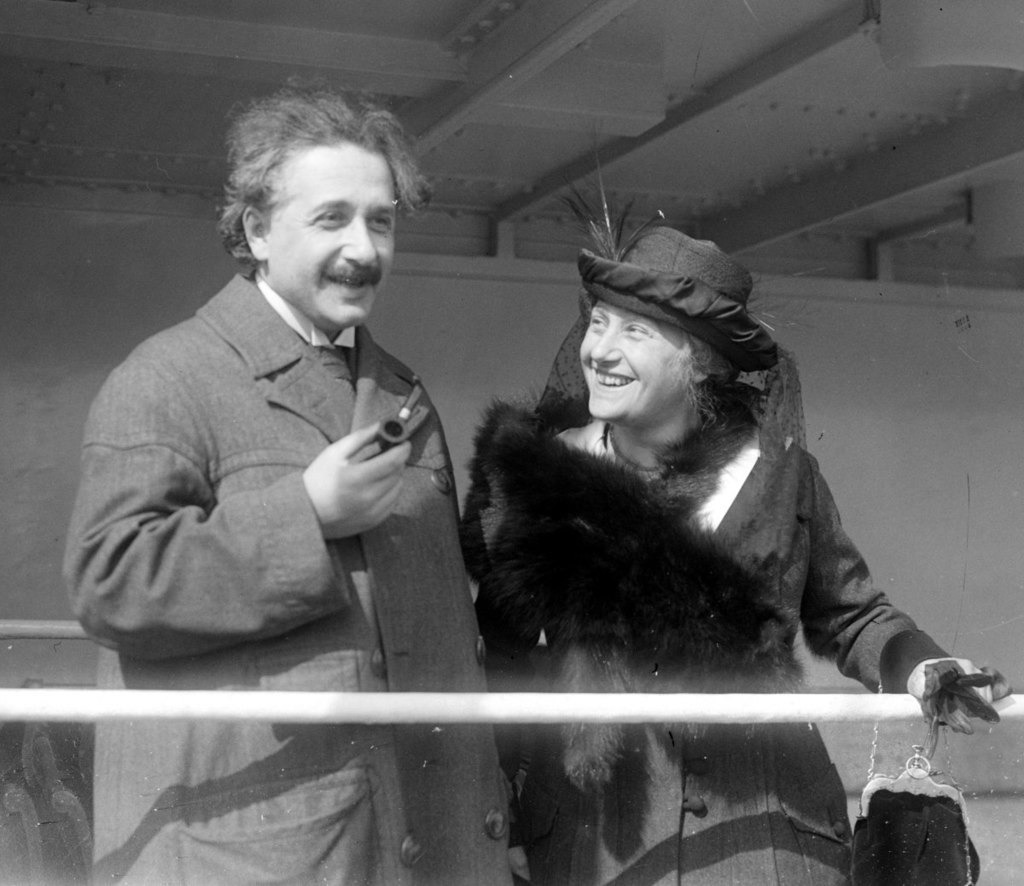
Einstein with his second wife Elsa, 1921. Wikipedia.

Jim Baggott | Aeon Ideas

‘The theory produces a good deal but hardly brings us closer to the secret of the Old One,’ wrote Albert Einstein in December 1926. ‘I am at all events convinced that He does not play dice.’

Einstein was responding to a letter from the German physicist Max Born. The heart of the new theory of quantum mechanics, Born had argued, beats randomly and uncertainly, as though suffering from arrhythmia. Whereas physics before the quantum had always been about doing this and getting that, the new quantum mechanics appeared to say that when we do this, we get that only with a certain probability. And in some circumstances we might get the other.

Einstein was having none of it, and his insistence that God does not play dice with the Universe has echoed down the decades, as familiar and yet as elusive in its meaning as E = mc2. What did Einstein mean by it? And how did Einstein conceive of God?

Hermann and Pauline Einstein were nonobservant Ashkenazi Jews. Despite his parents’ secularism, the nine-year-old Albert discovered and embraced Judaism with some considerable passion, and for a time he was a dutiful, observant Jew. Following Jewish custom, his parents would invite a poor scholar to share a meal with them each week, and from the impoverished medical student Max Talmud (later Talmey) the young and impressionable Einstein learned about mathematics and science. He consumed all 21 volumes of Aaron Bernstein’s joyful Popular Books on Natural Science (1880). Talmud then steered him in the direction of Immanuel Kant’s Critique of Pure Reason (1781), from which he migrated to the philosophy of David Hume. From Hume, it was a relatively short step to the Austrian physicist Ernst Mach, whose stridently empiricist, seeing-is-believing brand of philosophy demanded a complete rejection of metaphysics, including notions of absolute space and time, and the existence of atoms.

But this intellectual journey had mercilessly exposed the conflict between science and scripture. The now 12-year-old Einstein rebelled. He developed a deep aversion to the dogma of organised religion that would last for his lifetime, an aversion that extended to all forms of authoritarianism, including any kind of dogmatic atheism.

This youthful, heavy diet of empiricist philosophy would serve Einstein well some 14 years later. Mach’s rejection of absolute space and time helped to shape Einstein’s special theory of relativity (including the iconic equation E = mc2), which he formulated in 1905 while working as a ‘technical expert, third class’ at the Swiss Patent Office in Bern. Ten years later, Einstein would complete the transformation of our understanding of space and time with the formulation of his general theory of relativity, in which the force of gravity is replaced by curved spacetime. But as he grew older (and wiser), he came to reject Mach’s aggressive empiricism, and once declared that ‘Mach was as good at mechanics as he was wretched at philosophy.’

Over time, Einstein evolved a much more realist position. He preferred to accept the content of a scientific theory realistically, as a contingently ‘true’ representation of an objective physical reality. And, although he wanted no part of religion, the belief in God that he had carried with him from his brief flirtation with Judaism became the foundation on which he constructed his philosophy. When asked about the basis for his realist stance, he explained: ‘I have no better expression than the term “religious” for this trust in the rational character of reality and in its being accessible, at least to some extent, to human reason.’

But Einstein’s was a God of philosophy, not religion. When asked many years later whether he believed in God, he replied: ‘I believe in Spinoza’s God, who reveals himself in the lawful harmony of all that exists, but not in a God who concerns himself with the fate and the doings of mankind.’ Baruch Spinoza, a contemporary of Isaac Newton and Gottfried Leibniz, had conceived of God as identical with nature. For this, he was considered a dangerous heretic, and was excommunicated from the Jewish community in Amsterdam.

Einstein’s God is infinitely superior but impersonal and intangible, subtle but not malicious. He is also firmly determinist. As far as Einstein was concerned, God’s ‘lawful harmony’ is established throughout the cosmos by strict adherence to the physical principles of cause and effect. Thus, there is no room in Einstein’s philosophy for free will: ‘Everything is determined, the beginning as well as the end, by forces over which we have no control … we all dance to a mysterious tune, intoned in the distance by an invisible player.’

The special and general theories of relativity provided a radical new way of conceiving of space and time and their active interactions with matter and energy. These theories are entirely consistent with the ‘lawful harmony’ established by Einstein’s God. But the new theory of quantum mechanics, which Einstein had also helped to found in 1905, was telling a different story. Quantum mechanics is about interactions involving matter and radiation, at the scale of atoms and molecules, set against a passive background of space and time.

Earlier in 1926, the Austrian physicist Erwin Schrödinger had radically transformed the theory by formulating it in terms of rather obscure ‘wavefunctions’. Schrödinger himself preferred to interpret these realistically, as descriptive of ‘matter waves’. But a consensus was growing, strongly promoted by the Danish physicist Niels Bohr and the German physicist Werner Heisenberg, that the new quantum representation shouldn’t be taken too literally.

In essence, Bohr and Heisenberg argued that science had finally caught up with the conceptual problems involved in the description of reality that philosophers had been warning of for centuries. Bohr is quoted as saying: ‘There is no quantum world. There is only an abstract quantum physical description. It is wrong to think that the task of physics is to find out how nature is. Physics concerns what we can say about nature.’ This vaguely positivist statement was echoed by Heisenberg: ‘[W]e have to remember that what we observe is not nature in itself but nature exposed to our method of questioning.’ Their broadly antirealist ‘Copenhagen interpretation’ – denying that the wavefunction represents the real physical state of a quantum system – quickly became the dominant way of thinking about quantum mechanics. More recent variations of such antirealist interpretations suggest that the wavefunction is simply a way of ‘coding’ our experience, or our subjective beliefs derived from our experience of the physics, allowing us to use what we’ve learned in the past to predict the future.

But this was utterly inconsistent with Einstein’s philosophy. Einstein could not accept an interpretation in which the principal object of the representation – the wavefunction – is not ‘real’. He could not accept that his God would allow the ‘lawful harmony’ to unravel so completely at the atomic scale, bringing lawless indeterminism and uncertainty, with effects that can’t be entirely and unambiguously predicted from their causes.

The stage was thus set for one of the most remarkable debates in the entire history of science, as Bohr and Einstein went head-to-head on the interpretation of quantum mechanics. It was a clash of two philosophies, two conflicting sets of metaphysical preconceptions about the nature of reality and what we might expect from a scientific representation of this. The debate began in 1927, and although the protagonists are no longer with us, the debate is still very much alive.

And unresolved.

I don’t think Einstein would have been particularly surprised by this. In February 1954, just 14 months before he died, he wrote in a letter to the American physicist David Bohm: ‘If God created the world, his primary concern was certainly not to make its understanding easy for us.’


Jim Baggott

This article was originally published at Aeon and has been republished under Creative Commons.

Interview with Simone de Beauvoir (1959)

Simone de Beauvoir was a French writer, intellectual, existentialist philosopher, political activist, feminist and social theorist. Though she did not consider herself a philosopher, she had a significant influence on both feminist existentialism and feminist theory.

De Beauvoir wrote novels, essays, biographies, autobiography and monographs on philosophy, politics and social issues. She was known for her 1949 treatise The Second Sex, a detailed analysis of women’s oppression and a foundational tract of contemporary feminism; and for her novels, including She Came to Stay and The Mandarins. She was also known for her lifelong relationship with French philosopher Jean-Paul Sartre.


You may find two of de Beauvoir’s works, namely, The Second Sex (PDF) and The Ethics of Ambiguity (PDF), in the Political & Cultural and 20th-Century Philosophy sections of the Bookshelf.

How Camus and Sartre Split Up Over the Question of How to be Free

camus

Albert Camus by Cecil Beaton for Vogue in 1946. Photo by Getty

Sam Dresser | Aeon Ideas

They were an odd pair. Albert Camus was French Algerian, a pied-noir born into poverty who effortlessly charmed with his Bogart-esque features. Jean-Paul Sartre, from the upper reaches of French society, was never mistaken for a handsome man. They met in Paris during the Occupation and grew closer after the Second World War. In those days, when the lights of the city were slowly turning back on, Camus was Sartre’s closest friend. ‘How we loved you then,’ Sartre later wrote.

They were gleaming icons of the era. Newspapers reported on their daily movements: Sartre holed up at Les Deux Magots, Camus the peripatetic of Paris. As the city began to rebuild, Sartre and Camus gave voice to the mood of the day. Europe had been immolated, but the ashes left by war created the space to imagine a new world. Readers looked to Sartre and Camus to articulate what that new world might look like. ‘We were,’ remembered the fellow philosopher Simone de Beauvoir, ‘to provide the postwar era with its ideology.’

It came in the form of existentialism. Sartre, Camus and their intellectual companions rejected religion, staged new and unnerving plays, challenged readers to live authentically, and wrote about the absurdity of the world – a world without purpose and without value. ‘[There are] only stones, flesh, stars, and those truths the hand can touch,’ Camus wrote. We must choose to live in this world and to project our own meaning and value onto it in order to make sense of it. This means that people are free and burdened by it, since with freedom there is a terrible, even debilitating, responsibility to live and act authentically.

If the idea of freedom bound Camus and Sartre philosophically, then the fight for justice united them politically. They were committed to confronting and curing injustice, and, in their eyes, no group of people was more unjustly treated than the workers, the proletariat. Camus and Sartre thought of them as shackled to their labour and shorn of their humanity. In order to free them, new political systems must be constructed.

In October 1951, Camus published The Rebel. In it, he gave voice to a roughly drawn ‘philosophy of revolt’. This wasn’t a philosophical system per se, but an amalgamation of philosophical and political ideas: every human is free, but freedom itself is relative; one must embrace limits, moderation, ‘calculated risk’; absolutes are anti-human. Most of all, Camus condemned revolutionary violence. Violence might be used in extreme circumstances (he supported the French war effort, after all) but the use of revolutionary violence to nudge history in the direction you desire is utopian, absolutist, and a betrayal of yourself.

‘Absolute freedom is the right of the strongest to dominate,’ Camus wrote, while ‘absolute justice is achieved by the suppression of all contradiction: therefore it destroys freedom.’ The conflict between justice and freedom required constant re-balancing, political moderation, an acceptance and celebration of that which limits the most: our humanity. ‘To live and let live,’ he said, ‘in order to create what we are.’

Sartre read The Rebel with disgust. As far as he was concerned, it was possible to achieve perfect justice and freedom – that described the achievement of communism. Under capitalism, and in poverty, workers could not be free. Their options were unpalatable and inhumane: to work a pitiless and alienating job, or to die. But by removing the oppressors and broadly returning autonomy to the workers, communism allows each individual to live without material want, and therefore to choose how best they can realise themselves. This makes them free, and through this unbending equality, it is also just.

The problem is that, for Sartre and many others on the Left, communism required revolutionary violence to achieve because the existing order must be smashed. Not all leftists, of course, endorsed such violence. This division between hardline and moderate leftists – broadly, between communists and socialists – was nothing new. The 1930s and early ’40s, however, had seen the Left temporarily united against fascism. With the destruction of fascism, the rupture between hardline leftists willing to condone violence and moderates who condemned it returned. This split was made all the more dramatic by the practical disappearance of the Right and the ascendancy of the Soviet Union – which empowered hardliners throughout Europe, but raised disquieting questions for communists as the horrors of gulags, terror and show trials came to light. The question for every leftist of the postwar era was simple: which side are you on?

With the publication of The Rebel, Camus declared for a peaceful socialism that would not resort to revolutionary violence. He was appalled by the stories emerging from the USSR: it was not a country of hand-in-hand communists, living freely, but a country with no freedom at all. Sartre, meanwhile, would fight for communism, and he was prepared to endorse violence to do so.

The split between the two friends was a media sensation. Les Temps Modernes – the journal edited by Sartre, which published a critical review of The Rebel – sold out three times over. Le Monde and L’Observateur both breathlessly covered the falling out. It’s hard to imagine an intellectual feud capturing that degree of public attention today, but, in this disagreement, many readers saw the political crises of the times reflected back at them. It was a way of seeing politics played out in the world of ideas, and a measure of the worth of ideas. If you are thoroughly committed to an idea, are you compelled to kill for it? What price for justice? What price for freedom?

Sartre’s position was shot through with contradiction, with which he struggled for the remainder of his life. Sartre, the existentialist, who said that humans are condemned to be free, was also Sartre, the Marxist, who thought that history does not allow much space for true freedom in the existential sense. Though he never actually joined the French Communist Party, he would continue to defend communism throughout Europe until 1956, when the Soviet tanks in Budapest convinced him, finally, that the USSR did not hold the way forward. (Indeed, he was dismayed by the Soviets in Hungary because they were acting like Americans, he said.) Sartre would remain a powerful voice on the Left throughout his life, and chose the French president Charles de Gaulle as his favourite whipping boy. (After one particularly vicious attack, de Gaulle was asked to arrest Sartre. ‘One does not imprison Voltaire,’ he responded.) Sartre remained unpredictable, however, and was engaged in a long, bizarre dalliance with hardline Maoism when he died in 1980. Though Sartre moved away from the USSR, he never completely abandoned the idea that revolutionary violence might be warranted.

Philosophy Feud: Sartre vs Camus from Aeon Video on Vimeo

The violence of communism sent Camus on a different trajectory. ‘Finally,’ he wrote in The Rebel, ‘I choose freedom. For even if justice is not realised, freedom maintains the power of protest against injustice and keeps communication open.’ From the other side of the Cold War, it is hard not to sympathise with Camus, and to wonder at the fervour with which Sartre remained a loyal communist. Camus’s embrace of sober political reality, of moral humility, of limits and fallible humanity, remains a message well-heeded today. Even the most venerable and worthy ideas need to be balanced against one another. Absolutism, and the impossible idealism it inspires, is a dangerous path forward – and the reason Europe lay in ashes, as Camus and Sartre struggled to envision a fairer and freer world.Aeon counter – do not remove

Sam Dresser

This article was originally published at Aeon and has been republished under Creative Commons.

Being ‘interesting’ is Not an Objective Feature of the World

carina-nebula

Colour-composite image of the Carina Nebula. Courtesy ESO

Lorraine L Besser | Aeon Ideas

Most of us know and value pleasant experiences. We savour the taste of a freshly picked strawberry. We laugh more than an event warrants, just because laughing feels good. We might argue about the degree to which such pleasant experiences are valuable, and the extent to which they ought to shape our lives, but we can’t deny their value.

So pleasant experiences are necessarily valuable, but are there also valuable experiences that are not necessarily pleasant? It seems there are. Often, we have experiences that captivate us, that we cherish even though they are not entirely pleasant. We read a novel that leads us to feel both horror and awe. We binge-watch a TV show that explores the shocking course of moral corruption of someone who could be your neighbour, friend, even your spouse. The experience is both painful and horrifying, but we can’t turn it off.

These experiences seem intuitively valuable in the same way that pleasant experiences are intuitively valuable. But they are not valuable because they are pleasant – rather, they are valuable by virtue of being interesting.

What does it mean for an experience to be interesting? First, to say that something is interesting is to describe what the experience feels like to the person undergoing it. This is the phenomenological quality of the experience. When we study the phenomenology of something, we examine what it feels like, from the inside, to experience that thing. For instance, most of us would describe eating our favourite foods as a pleasurable experience: the food itself isn’t pleasurable, but the experience of eating it is. Similarly, when we talk about something being beautiful or awe-inspiring, we aren’t describing the thing itself, but rather our experience of it. We see the sunset and feel moved by it; the beauty is something we experience. Likewise the awe it inspires is a feature of our experiential reaction to it. The interesting is just like this. It is a feature of our experiential reaction, of our engagement.

We don’t always use the word ‘interesting’ in this way. In ordinary language, we often describe the objects of experience as interesting. We talk about interesting books, interesting people, and so on. When we say that a book is interesting, we more likely mean that the experience of reading the book is interesting. It just doesn’t make sense to describe a book to be objectively interesting, independently of people experiencing it as interesting. How could a book be interesting without being read? And if a book is objectively interesting, shouldn’t we all find it interesting? We don’t all find the same things to be interesting. It is a common experience for something to be interesting to one person, yet not another. So while we might describe objects as interesting, we should recognise that this is a loose, and shorthand, way to describe what’s really interesting – our experience of them.

Another way in which we use the word ‘interesting’ is in the context of describing what a person is interested in: John is interested in Second World War novels, for example. This usage also differs from what I’m describing as the ‘interesting’. It describes a particular fit between one’s interests and the objects of one’s experiences. But notice that fitting with your interests, and being interested in something, is actually a different experience to finding something interesting. We’ve all been interested in things that turn out to be boring, and we’ve all found experiences interesting when we had no prior interest in them. The interesting is thus not an objective feature of an object, nor an experience that necessarily aligns or follows from your interests. It is rather a feature of our experiences.

To say that something is interesting is also to describe a particular kind of synthesis that arises within the experience. Whenever we engage in an activity, we bring to that experience some combination of expectations, likes/desires, beliefs, curiosity, and so forth. This package contributes to the activity delivering a particular subjective experience. There is a synthesis, specific to the individual’s engagement, that determines what her experience feels like – its phenomenological quality. It is within this synthesis that a person finds an experience interesting, or not. There is no one synthesis that makes an experience interesting. Sometimes, a clash of expectations and reality makes something interesting, sometimes someone’s curiosity allows one to notice features that make an activity interesting, and so on. Because the interesting lies within a synthesis between the individual and an activity, one individual can find something interesting (say, reading philosophy) that another person doesn’t.

The synthesis is complex, unique to the subject and the experience – and, in the end, unspecifiable. This is why we tend to overlook the interesting as a valuable feature of our experiences. Pleasure, by contrast, is a fairly uniform feature of experience. We know exactly what others are talking about when they talk about pleasurable experiences, and can relate to that experience in a personal way – even if it is something that we have not experienced as pleasurable. Our reactions to the experiences that others find interesting are often different. John finds reading Second World War novels to be an ongoing source of interest, yet Julia can’t imagine a more boring way of spending her time, and can’t understand how anyone would find them interesting. In such scenarios, we are more likely to discredit the value of John’s experience than to try to understand and appreciate it. Because the interesting is by nature a more complicated, harder-to-reach, harder-to-describe feature than others, we rarely stop to think about just what the interesting is.

While wrapping our head around the interesting might be challenging, it is important to acknowledge the value intrinsic to interesting experiences. Recognising it as valuable validates those who choose to pursue the interesting, and also opens up a new dimension of value that can enrich our lives. Most of us know there is more to life than pleasure, yet it is all too easy to choose our experiences for the sake of pleasure. For many of us, though, interesting experiences are more rewarding than pleasurable experiences, insofar as their intrinsic value is a product of multifaceted aspects of our engagement. Interesting experiences spark the mind in a way that stimulates and lingers. They can also be easy to come by – sometimes just a sense of curiosity is needed to make an activity interesting. Look around, feel the pull, and cherish the interesting.Aeon counter – do not remove

Lorraine L Besser

This article was originally published at Aeon and has been republished under Creative Commons.

Pragmatism & Postmodernism

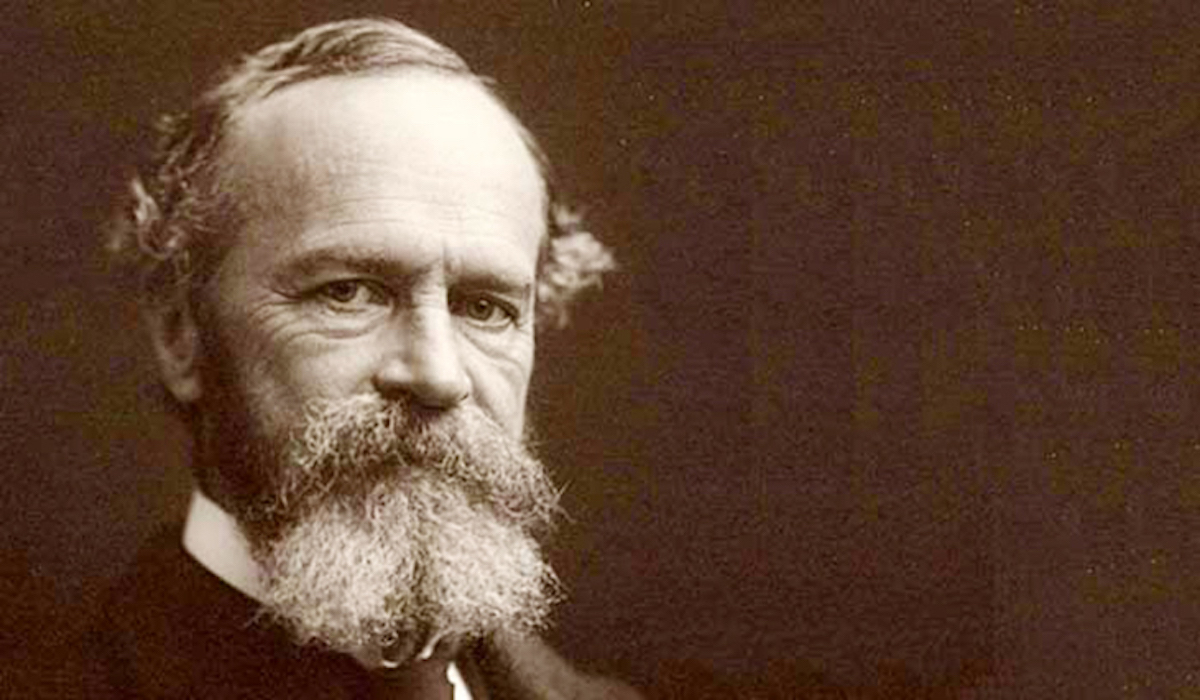
william-james

To my best belief: just what is the pragmatic theory of truth?


Cheryl Misak | Aeon Ideas

What is it for something to be true? One might think that the answer is obvious. A true belief gets reality right: our words correspond to objects and relations in the world. But making sense of that idea involves one in ever more difficult workarounds to intractable problems. For instance, how do we account for the statement ‘It did not rain in Toronto on 20 May 2018’? There don’t seem to be negative facts in the world that might correspond to the belief. What about ‘Every human is mortal’? There are more humans – past, present and future – than individual people in the world. (That is, a generalisation like ‘All Fs’ goes beyond the existing world of Fs, because ‘All Fs’ stretches into the future.) What about ‘Torture is wrong’? What are the objects in the world that might correspond to that? And what good is it explaining truth in terms of independently existing objects and facts, since we have access only to our interpretations of them?

Pragmatism can help us with some of these issues. The 19th-century American philosopher Charles Peirce, one of the founders of pragmatism, explained the core of this tradition beautifully: ‘We must not begin by talking of pure ideas, – vagabond thoughts that tramp the public roads without any human habitation, – but must begin with men and their conversation.’ Truth is a property of our beliefs. It is what we aim at, and is essentially connected to our practices of enquiry, action and evaluation. Truth, in other words, is the best that we could do.

The pragmatic theory of truth arose in Cambridge, Massachusetts in the 1870s, in a discussion group that included Peirce and William James. They called themselves the Metaphysical Club, with intentional irony. Though they shared the same broad outlook on truth, there was immediate disagreement about how to unpack the idea of the ‘best belief’. The debate stemmed from the different temperaments of Peirce and James.

Philosophy, James said, ‘is at once the most sublime and the most trivial of human pursuits. It works in the minutest crannies and it opens out the widest vistas.’ He was more a vista than a crannies man, dead set against technical philosophy. At the beginning of his book Pragmatism (1907), he said: ‘the philosophy which is so important to each of us is not a technical matter; it is our more or less dumb sense of what life honestly and deeply means.’ He wanted to write accessible philosophy for the public, and did so admirably. He became the most famous living academic in the United States.

The version of the pragmatist theory of truth made famous (or perhaps infamous) by James held that ‘Any idea upon which we can ride … any idea that will carry us prosperously from any one part of our experience to any other part, linking things satisfactorily, working securely, simplifying, saving labour, is … true INSTRUMENTALLY.’

‘Satisfactorily’ for James meant ‘more satisfactorily to ourselves, and individuals will emphasise their points of satisfaction differently. To a certain degree, therefore, everything here is plastic.’ He argued that if the available evidence underdetermines a matter, and if there are non-epistemic reasons for believing something (my people have always believed it, believing it would make me happier), then it is rational to believe it. He argued that if a belief in God has a positive impact on someone’s life, then it is true for that person. If it does not have a good impact on someone else’s life, it is not true for them.

Peirce, a crackerjack logician, was perfectly happy working in the crannies as well as opening out the vistas. He wrote much, but published little. A cantankerous man, Peirce described the difference in personality with his friend James thus: ‘He so concrete, so living; I a mere table of contents, so abstract, a very snarl of twine.’

Peirce said that James’s version of the pragmatic theory of truth was ‘a very exaggerated utterance, such as injures a serious man very much’. It amounted to: ‘Oh, I could not believe so-and-so, because I should be wretched if I did.’ Peirce’s worries, in these days of fake news, are more pressing than ever.

On Peirce’s account, a belief is true if it would be ‘indefeasible’ or would not in the end be defeated by reasons, argument, evidence and the actions that ensue from it. A true belief is the belief that we would come to, were we to enquire as far as we could on a matter. He added an important rider: a true belief must be put in place in a manner ‘not extraneous to the facts’. We cannot believe something because we would like it to be true. The brute impinging of experience cannot be ignored.

The disagreement continues to this day. James influenced John Dewey (who, when a student at Johns Hopkins, avoided Peirce and his technical philosophy like the plague) and later Richard Rorty. Dewey argued that truth (although he tended to stay away from the word) is nothing more than a resolution of a problematic situation. Rorty, at his most extreme, held that truth is nothing more than what our peers will let us get away with saying. This radically subjective or plastic theory of truth is what is usually thought of as pragmatism.

Peirce, however, managed to influence a few people himself, despite being virtually unknown in his lifetime. One was the Harvard logician and Kant scholar C I Lewis. He argued for a position remarkably similar to what his student W V O Quine would take over (and fail to acknowledge as Lewis’s). Reality cannot be ‘alien’, wrote Lewis – ‘the only reality there for us is one delimited in concepts of the results of our own ways of acting’. We have something given to us in brute experience, which we then interpret. With all pragmatists, Lewis was set against conceptions of truth in which ‘the mind approaches the flux of immediacy with some godlike foreknowledge of principles’. There is no ‘natural light’, no ‘self-illuminating propositions’, no ‘innate ideas’ from which other certainties can be deduced. Our body of knowledge is a pyramid, with the most general beliefs, such as the laws of logic, at the top, and the least general, such as ‘all swans are birds’, at the bottom. When faced with recalcitrant experience, we make adjustments in this complex system of interrelated concepts. ‘The higher up a concept stands in our pyramid, the more reluctant we are to disturb it, because the more radical and far-reaching the results will be…’ But all beliefs are fallible, and we can indeed disturb any of them. A true belief would be one that survives this process of enquiry.

Lewis saw that the pragmatist theory of truth deals nicely with those beliefs that the correspondence theory stumbles over. For instance, there is no automatic bar to ethical beliefs being true. Beliefs about what is right and wrong might well be evaluable in ways similar to how other kinds of beliefs are evaluable – in terms of whether they fit with experience and survive scrutiny.Aeon counter – do not remove

Cheryl Misak

This article was originally published at Aeon and has been republished under Creative Commons.

Emptiness, form, and Dzogchen ethics

For a hundred years, the West has wrestled with the problem of ethical nihilism. God’s commands once provided a firm foundation for morality; but then he died. All attempts to find an alternative foundation have failed. Why, then, should we be moral? How can we be sure what is moral? No one has satisfactory answers, despite many ingenious attempts by brilliant philosophers…

Read the rest at Vividness.