What did Max Weber mean by the ‘Spirit’ of Capitalism?

ludwigshafen

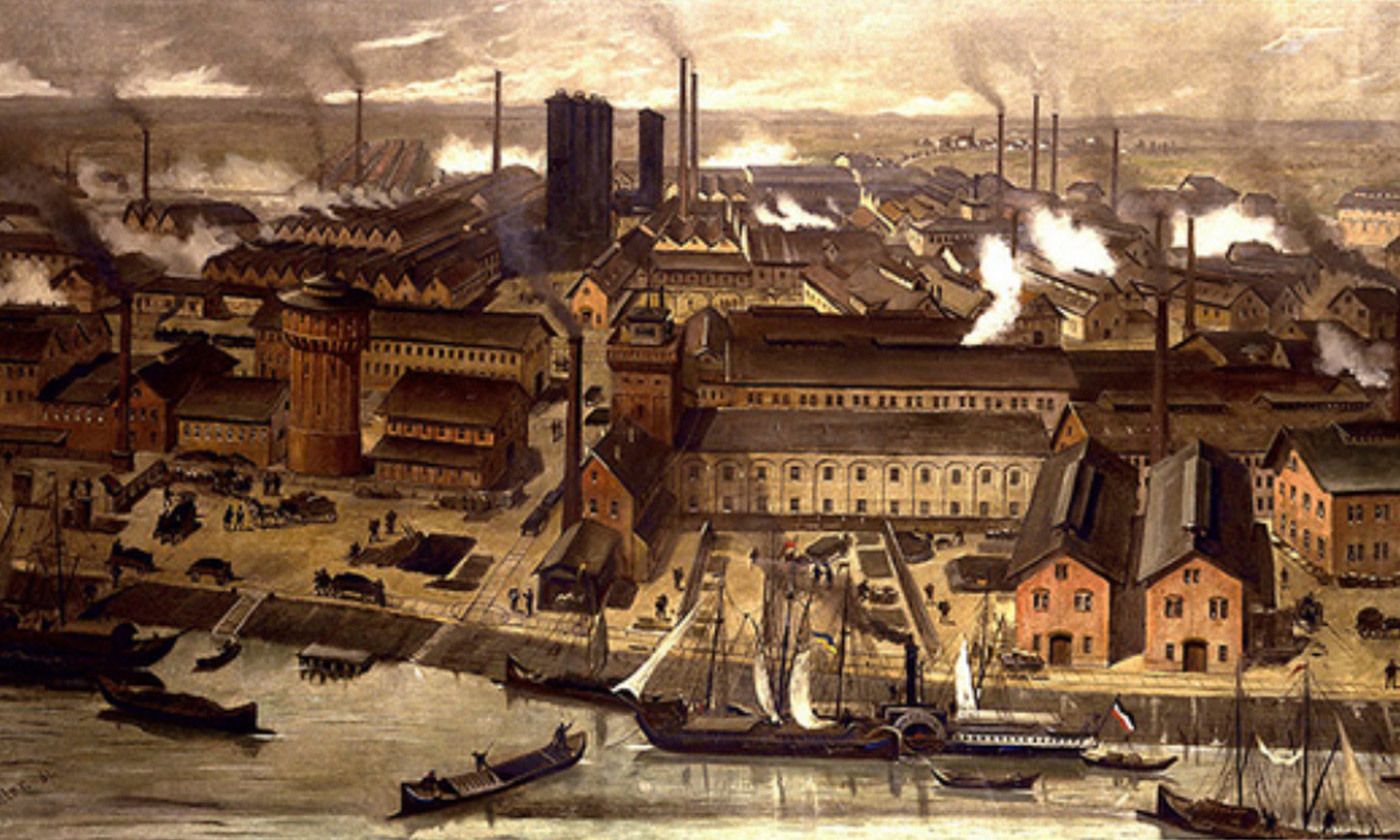
The BASF factory at Ludwigshafen, Germany, pictured on a postcard in 1881. Courtesy Wikipedia

Peter Ghosh | Aeon Ideas

Max Weber’s famous text The Protestant Ethic and the Spirit of Capitalism (1905) is surely one of the most misunderstood of all the canonical works regularly taught, mangled and revered in universities across the globe. This is not to say that teachers and students are stupid, but that this is an exceptionally compact text that ranges across a very broad subject area, written by an out-and-out intellectual at the top of his game. He would have been dumb­founded to find that it was being used as an elementary introduction to sociology for undergraduate students, or even schoolchildren.

We use the word ‘capitalism’ today as if its meaning were self-evident, or else as if it came from Marx, but this casualness must be set aside. ‘Capitalism’ was Weber’s own word and he defined it as he saw fit. Its most general meaning was quite simply modernity itself: capitalism was ‘the most fateful power in our modern life’. More specifically, it controlled and generated ‘modern Kultur’, the code of values by which people lived in the 20th-century West, and now live, we may add, in much of the 21st-century globe. So the ‘spirit’ of capitalism is also an ‘ethic’, though no doubt the title would have sounded a bit flat if it had been called The Protestant Ethic and the Ethic of Capitalism.

This modern ‘ethic’ or code of values was unlike any other that had gone before. Weber supposed that all previous ethics – that is, socially accepted codes of behaviour rather than the more abstract propositions made by theologians and philosophers – were religious. Religions supplied clear messages about how to behave in society in straightforward human terms, messages that were taken to be moral absolutes binding on all people. In the West this meant Christianity, and its most important social and ethical prescription came out of the Bible: ‘Love thy neighbour.’ Weber was not against love, but his idea of love was a private one – a realm of intimacy and sexuality. As a guide to social behaviour in public places ‘love thy neighbour’ was obviously nonsense, and this was a principal reason why the claims of churches to speak to modern society in authentically religious terms were marginal. He would not have been surprised at the long innings enjoyed by the slogan ‘God is love’ in the 20th-century West – its career was already launched in his own day – nor that its social consequences should have been so limited.

The ethic or code that dominated public life in the modern world was very different. Above all it was impersonal rather than personal: by Weber’s day, agreement on what was right and wrong for the individual was breaking down. The truths of religion – the basis of ethics – were now contested, and other time-honoured norms – such as those pertaining to sexuality, marriage and beauty – were also breaking down. (Here is a blast from the past: who today would think to uphold a binding idea of beauty?) Values were increasingly the property of the individual, not society. So instead of humanly warm contact, based on a shared, intuitively obvious understanding of right and wrong, public behaviour was cool, reserved, hard and sober, governed by strict personal self-control. Correct behaviour lay in the observance of correct procedures. Most obviously, it obeyed the letter of the law (for who could say what its spirit was?) and it was rational. It was logical, consistent, and coherent; or else it obeyed unquestioned modern realities such as the power of numbers, market forces and technology.

There was another kind of disintegration besides that of traditional ethics. The proliferation of knowledge and reflection on knowledge had made it impossible for any one person to know and survey it all. In a world which could not be grasped as a whole, and where there were no universally shared values, most people clung to the particular niche to which they were most committed: their job or profession. They treated their work as a post-religious calling, ‘an absolute end in itself’, and if the modern ‘ethic’ or ‘spirit’ had an ultimate found­ation, this was it. One of the most widespread clichés about Weber’s thought is to say that he preached a work ethic. This is a mistake. He personally saw no particular virtue in sweat – he thought his best ideas came to him when relaxing on a sofa with a cigar – and had he known he would be misunder­stood in this way, he would have pointed out that a capacity for hard work was something that did not dist­inguish the modern West from previous soc­ieties and their value systems. However, the idea that people were being ever more defined by the blinkered focus of their employment was one he regarded as profoundly modern and characteristic.

The blinkered pro­fessional ethic was common to entrepreneurs and an increasingly high-wage, skilled labour force, and it was this combination that produced a situation where the ‘highest good’ was the making of money and ever more money, without any limit. This is what is most readily recognisable as the ‘spirit’ of capitalism, but it should be stressed that it was not a simple ethic of greed which, as Weber recognised, was age-old and eternal. In fact there are two sets of ideas here, though they overlap. There is one about potentially universal rational pro­cedures – specialisation, logic, and formally consistent behaviour – and another that is closer to the modern economy, of which the central part is the professional ethic. The modern situation was the product of narrow-minded adhesion to one’s particular function under a set of conditions where the attempt to understand modernity as a whole had been abandoned by most people. As a result they were not in control of their own destiny, but were governed by the set of rational and impersonal pro­cedures which he likened to an iron cage, or ‘steel housing’. Given its rational and impersonal foundations, the housing fell far short of any human ideal of warmth, spontaneity or breadth of outlook; yet rationality, technology and legality also produced material goods for mass consumption in unprecedented amounts. For this reason, though they could always do so if they chose to, people were unlikely to leave the housing ‘until the last hundredweight of fossil fuel is burned up’.

It is an extremely powerful analysis, which tells us a great deal about the 20th-century West and a set of Western ideas and priorities that the rest of the world has been increasingly happy to take up since 1945. It derives its power not simply from what it says, but because Weber sought to place under­standing before judgment, and to see the world as a whole. If we wish to go beyond him, we must do the same.Aeon counter – do not remove

Peter Ghosh

This article was originally published at Aeon and has been republished under Creative Commons.

The Problem of Atheism

Human Values and Science, Art and Mathematics

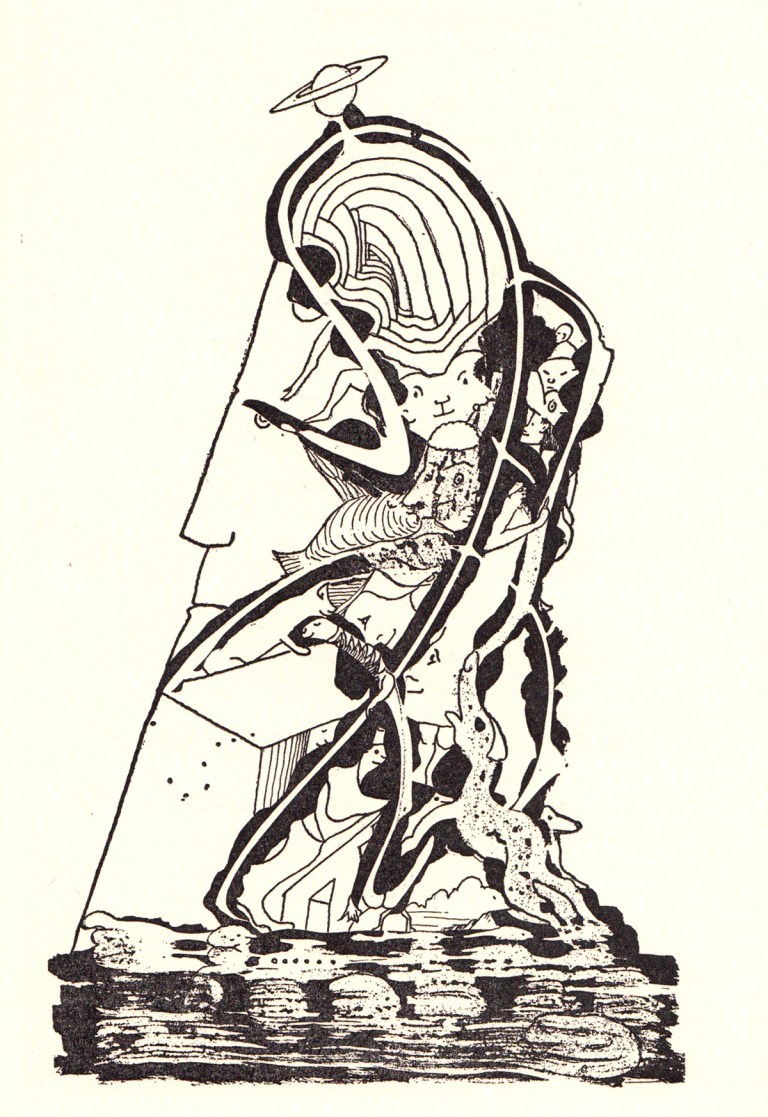
Illustration by artist Hugh Lieber from Human Values and Science, Art and Mathematics by mathematician Lillian Lieber


Excerpts from Keiji Nishitani (1900-1990), The Self-Overcoming of Nihilism (Appendix)

Marxist Humanism

As is commonly known, Marxism looks on religion as a way for those unable to come to terms with the frustrations of life to find satisfaction at the ideal level by imagining a world beyond. In so doing, the argument goes, they nullify the self and transpose the essence of their humanity into the image of “God” in the other world. In this act of religious “self-alienation” both nature and humanity become nonessential, void, and without substance. Atheism consists in the negation of this nonessentiality. By denying God it affirms the essence of the human. This emancipation of the human in turn is of a single root with human freedom.

This variety of atheism is connected with Marx’s characterization of the essence of the human individual as worker: humanity is achieved by remaking the world through work. The process of self-creation by which one gradually makes oneself human through work is what constitutes history. Seen from such a perspective, atheism is unavoidable. For since the source of religious self-alienation lies in economic self-alienation (the condition of being deprived of one’s humanity economically), once the latter is overcome, the former will fall away as a matter of course. According to Marx, then, atheism is a humanism wrought through the negation of religion.

Now insofar as Marx’s atheistic humanism is a humanism that has become self-conscious dialectically – its affirmation rests on the negation of religion – it clearly strikes at the very heart of religion. In it we find a clear and pointed expression of the general indifference, if not outright antagonism, to religion in the modern mind. From its very beginning, modern humanism has combined the two facets of maintaining ties to religion and gradually breaking away from it. In a sense, the history of modern philosophy can be read as a struggle among approaches to humanism based on one or the other of these aspects. At present the debate over humanism – what it is that constitutes the essence of the human – has become completely polarized. The responses provided by the various religious traditions show no signs of being able to allay the situation. Questions such as freedom, history, and labor, in the sense in which Marx discusses them in relation to the essence of humanity, paint a picture of the modern individual that had until recently escaped the notice of religion. To come to grips with such questions, religion will have to open up a new horizon.

Even if we grant that Marx’s thought touches the problem of religion at some depth, it is hard to sustain the claim that he understood its true foundations correctly. Matters like the meaning of life and death, or the impermanence of all things, simply cannot be reduced without remainder to a matter of economic self-alienation. These are questions of much broader and deeper reach, indeed questions essential for human being.

The problem expressed in the term “all is suffering” is a good example. It is clearly much more than a matter of the socio-historical suffering of human individuals; it belongs essentially to the way of being of all things in the world. The problem of human suffering is a problem of the suffering of the human being as “being-in-the-world,” too profound a matter to be alleviated merely by removing socio-historical suffering. It has to do with a basic mode of human being that also serves as the foundation for the pleasure, or the freedom from suffering and pleasure, that we oppose to suffering.

Or again, we might say that the issue of “the non-self nature of all dharmas” refers to “the nonessentiality of nature and humanity,” but this does not mean that we can reduce the claim to a self-alienating gesture of projecting the essence of our humanity on to “God.” It refers to the essential way that all things in the world are: depending on each other and existing only in interdependency. It is meant to point to the essential “non-essentiality” of all beings, and hence to a domain that no society can alter, however far it may progress. It is, in short, the very domain of religion that remains untouched by Marx’s critique. Marx argues emphatically that through work human beings conquer nature, change the world, and give the self its human face. But deep in the recesses behind the world of work lies a world whose depth and vastness are beyond our ken, a world in which everything arises only by depending on everything else, in which no single thing exists through the power of a “self” (or what is called “self-power”). This is the world of human beings who exist as “being-in-the-world.”

As for religion itself, whose maxim all along has been “all is suffering,” the idea that this has to do with “historical” suffering has not often come to the fore. (In this regard, Christianity represents an exception.) The idea of “karma” is supposed to relate concretely to the historicity of human existence, but even this viewpoint has not been forthcoming. The human activities of producing and using various things through “self-power,” of changing nature and society and creating a “human” self – in short, the emancipation of the human and the freedom of the human individual – would seem to be the most concrete “karma” of humanity and therefore profoundly connected with modern atheism. But none of these ideas has been forthcoming from the traditional religions. Even though for Christianity the fact that we must labor by the sweat of our brows is related to original sin, the germ of this idea has not, to my knowledge, been developed anywhere in modern theology.


Sartrean Existentialism

Modern atheism also appears in the form of existentialism. The same sharp and total opposition that separates existentialism and Marxism in general applies also to their respective forms of atheism. Unlike Marxism, which understands the human being as an essentially social being, existentialism thinks of the human being essentially as an individual; that is, it defines the human as a way of being in which each individual relates to itself. Marx’s critique of religion begins from the self-alienation of human beings in religion, redefines it as an economic self-alienation, and then deals with religion in terms of its social functions. In contrast, the existentialist Sartre, for example, understands the relationship between God and humanity as a problem of each individual’s relating to the essence of “self”-being itself. In other words, he begins from something like an ontological self-alienation implied in seeing human beings as creatures of God. For all the differences between the standpoints, they share the basic tenet that it is only by denying God that we can regain our own humanity. As is the case with Marx’s socialist individual, for Sartre’s existentialist individual humanism is viable only as an atheism – which is the force of Sartre’s referring to existentialism as a humanism.

According to Sartre, if God existed and had indeed created us, there would be basically no human freedom. If human existence derived from God and the essence of human existence consisted in this derivation, the individual’s every action and situation would be determined by this essential fact. In traditional terms, “essential being” precedes “actual being” and continually determines it. This means that the whole of actual human being is essentially contained within the “Providence” of God and is necessarily predetermined by God’s will. Such predestination amounts to a radical negation of human freedom. If we grant the existence of God we must admit God’s creation; and if we grant God’s creation, we must also allow for God’s predestination – in other words, we are forced to deny that there is any such thing as human freedom. If human freedom is to be affirmed, the existence of God must be denied.

Human “existence” (a temporal and “phenomenal” way of being) does not have behind it any essential being (a supratemporal and “noumenal” way of being) that would constitute its ground. There is nothing at all at the ground of existence. And it is from this ground of “nothing” where there is simply nothing at all that existence must continually determine itself. We must create ourselves anew ever and again out of nothing. Only in this way can one secure the being of a self – and exist. To be a human being is to humanize the self constantly, to create, indeed to have no choice other than to create, a “human being.” This self-being as continued self-creation out of nothing is what Sartre calls freedom. Insofar as one actually creates the self as human, actual existence precedes essence in the human being. In essence, the human individual is existence itself. This way of being human is “Existence,” and Existence can stand only on an atheism.

Of late we are beginning to see a turn in the standpoint of Heidegger, in that he no longer refers to his thought as an “existentialism.” Still, it seems important to point out what his thinking up until now has shared in common with the existentialism of Sartre. That human beings continually create themselves out of nothing is meant to supplant the Christian notion of God’s creatio ex nihilo. To this extent it is not the standpoint of “self-power” in the ordinary sense. Self-creation out of nothing is not brought about simply by the inner power of a being called human and hence is not a power contained within the framework of human being. This “being” is continually stepping beyond the framework of “being.” Nothingness means transcendence, but since this transcendence does not mean that there is some transcendent “other” apart from self-being, it implies a standpoint of “self-power,” not of “other-power.” In contrast to Christianity, it is a view in which nothingness becomes the ground of the subject and thereby becomes subjective nothing – a self-power based on nothing. Here the consciousness of freedom in the modern mind finds a powerful expression and amounts to what is, at least in the West, an entirely new standpoint. It seems doubtful that this standpoint can be confronted from within the traditional horizons that have defined Christianity so far. It is quite different with Buddhism.

From the perspective of Buddhism, Sartre’s notion of Existence, according to which one must create oneself continually in order to maintain oneself within nothing, remains a standpoint of attachment to the self – indeed, the most profound form of this attachment – and as such is caught in the self-contradiction this implies. It is not simply a question here of a standpoint of ordinary self-love in which the self is willfully attached to itself. It is rather a question of the self being compelled to be attached to itself willfully. To step out of the framework of being and into nothing is only to enter into a new framework of being once again. This self-contradiction constitutes a way of being in which the self is its own “prison,” which amounts to a form of karma. Self-creation, or freedom, may be self-aware, but only because, as Sartre himself says, we are “condemned to be free.” Such a freedom is not true freedom. Again, it may represent an exhaustive account of what we normally take freedom to be, but this only means that our usual idea of freedom is basically a kind of karma. Karma manifests itself in the way modern men and women ground themselves on an absolute affirmation of their freedom. As Sartre himself says, his standpoint of Existence is a radical carrying out of the cogito, ergo sum of Descartes, for the Cartesian ego shows us what the modern mode of being is.

That Sartre’s “Existence” retains a sense of attachment to the self implies, if we can get behind the idea, that the “nothingness” of which he speaks remains a nothingness to which the self is attached. It was remarked earlier that in existentialism nothingness became subjective nothingness, which means that, as in the case of Greek philosophy or Christianity, it is still bound to the human individual. Again looked at from behind, we find that human subjectivity is bound up inextricably with nothingness and that at the ground of human existence there is nothing, albeit a nothing of which there is still consciousness at the ground of the self. No matter how “pre-reflective” this consciousness is, it is not the point at which the being of the self is transformed existentially into absolute nothingness. Sartre’s nothingness is unable to make the being of the self (Existence) sufficiently “ek-static,” and to this extent it differs radically from Buddhist “emptiness.” The standpoint of emptiness appears when Sartrean Existence is overturned one more time. The question is whether Buddhism, in its traditional form, is equal to the confrontation with existentialism.

Sartre thinks that to be a human being is to “human-ize” the self continually and to create the self as human out of nothing. Pushing this idea to the extreme, and speaking from the standpoint of emptiness in Buddhism, it is a matter of continually assuming human form from a point where this form has been left behind and absolutely negated. It is, as it were, a matter of continued creative “accommodation,” a never-ending “return” to being a new “human.” Taken in the context of Buddhist thought as a whole, there is some question as to whether this idea of “accommodation” really carries such an actual and existential sense. Does it really, as Sartre’s idea of continual humanization does, have to do with our actual being at each moment?

When Sartre speaks of ceaseless self-creation out of nothing, he refers to an Existence that is temporal through and through. It does not admit of any separate realm of being, such as a supratemporal (or “eternal”) essence, but is simply based on “nothing.” But for Sartre Existence is self-created within a socio-historical situation, which demonstrates his profound appreciation of the social and historical dimensions of the human way of being. In the case of the standpoint of Buddhist emptiness, in which human being is understood as arising out of emptiness and existing in emptiness, we need to ask how far the actual Existence of the human being at each moment is included. How much of the Existence within the actual socio-historical situation, and completely temporalized in this actuality, is comprehended? To the extent that the comprehension is inadequate, the standpoint of Buddhism has become detached from our actuality, and that means that we have failed to take the standpoint of emptiness seriously enough and to make it existential. In this case, talk of “accommodation” is merely a kind of mythologizing.


Atheism in the World of Today

A crisis is taking place in the contemporary world in a variety of forms, cutting across the realms of culture, ethics, politics, and so forth. At the ground of these problems is that fact that the essence of being human has turned into a question mark for humanity itself. This means that a crisis has also struck in the field of religion, and that this crisis is the root of the problems that have arisen in other areas. We see evidence of this state of affairs in the fact that the most recent trends of thought in contemporary philosophy which are having a great influence – directly and indirectly – on culture, ethics, politics, and so on, are all based on a standpoint of atheism. This applies not only to Marxism and existentialism, especially as represented by Sartre, but also to logical positivism and numerous other currents of thought.

Involved in the problem of the essence of human being are the questions, “What is a human being?” and “By what values should one live?” These are questions that need to be thought through in terms of the totality of beings, the “myriad things” of which human beings are only one part. It is a question, too, of the place of human beings in the order of the totality of beings, and of how to accommodate to this position (that is, how to be truly human). For the order of being implies a ranking of values.

For example, even if “man” is said to be the lord of creation, this places him in a certain “locus” within the totality of things, and therefore refers to how one ought to live as a human being. In the Western tradition the locus of human being has been defined in relation to God. While we are said to have been created from nothing, our soul contains the imago dei. This divine image was shattered through original sin, to be restored only through the atonement of God’s Son, Jesus, and our faith in him as the Christ. Here the locus of human beings in the order of being and ranking of value takes a different form from the straightforward characterization of man as lord of creation, a form consisting of a complex interplay of negation and affirmation. This locus of human being is well expressed in Augustine’s saying: “Oh God, you have created us for you, and our hearts are restless until they rest in you.” Needless to say, the basic dynamism behind the forming of this locus came from Greek philosophy and Christianity.

Modern atheism, Marxism, and existentialism share in common the attempt to repudiate this traditional location of the human in order to restore human nature and freedom. The seriousness of this new humanism is that such a restoration is possible only through a denial of God. At the same time, the new humanism harbors a schism in its ranks between the standpoints of Marxism and existentialism. The axis of the existentialist standpoint is a subjectivity in which the self becomes truly itself, while Marxism, for all its talk of human beings as subjects of praxis, does not go beyond a view of the human being as an objective factor in the objective world of nature or society. Each of them comprehends human being from a locus different from the other.

In the Western tradition the objective world and subjective being – the natural and social orders on the one hand, the “soul” with its innate orientation to God on the other – were united within a single system. The two main currents in modern atheism correspond respectively to these two coordinates, the soul and the world, but there is little hope of their uniting given the current confrontation. There is no way for modern men and women simply to return to the old locus, and the new atheism offers only a locus split into two. Confusion reigns in today’s world at the most basic level concerning what human beings are and how they are to live.

Each of these two standpoints seeks to ground itself from start to finish in actual being. This is related to the denial of God, in that full engagement of the self in actual being requires a denial of having already been determined within the world-order established by God, as well as a denial of having been fitted out in advance with an orientation to God in one’s very soul. Both standpoints stress the importance of not becoming detached from the locus in which one “actually” is, of remaining firmly grounded in one’s actual socio-historical situation, or more fundamentally, in actual “time” and “space.” But do these standpoints really engage actual being to the full?

Earlier on I suggested that as long as Marxism and existentialism continue to hold to the standpoint of the “human,” they will never be able to give a full account of actual human being. These new forms of humanism try to restore human beings to actual being by eliminating from the world and the soul the element of divine “predetermination.” The result is that they leave a gaping void at the foundations, as is evidenced by the lack of a locus from which to address the problem of life and death. Since the human mode of being consists in life and death, we must pass beyond the human standpoint to face the problem of life and death squarely. But to overcome the human standpoint does not necessarily mean that one merely returns to the “predetermination” of God, nor that one simply extinguishes freedom or actual being. It is rather a matter of opening up the horizon in which the question can be engaged truly and to its outermost limits.

Earlier I also proposed consideration of the locus of Buddhist “emptiness” in this regard. In the locus of emptiness, beyond the human standpoint, a world of “dependent origination” is opened up in which everything is related to everything else. Seen in this light there is nothing in the world that arises from “self-power” and yet all “self-powered” workings arise from the world. Existence at each instant, Sartre’s self-creation as “human,” the humanization in which the self becomes human – all these can be said to arise ceaselessly as new accommodations from a locus of emptiness that absolutely negates the human standpoint. From the standpoint of emptiness, it is at least possible to see the actuality of human being in its socio-historical situation in such a way that one does not take leave of “actual” time and space. In the words of the Zen master Mus?:

When acting apprehend the place of acting, when sitting apprehend the place of sitting, when lying apprehend the place of lying, when seeing and hearing apprehend the place of seeing and hearing, and when experiencing and knowing apprehend the place of experiencing and knowing.


Further Reading

The Self-Overcoming of Nihilism by Keiji Nishitani (PDF)

On Buddhism by Keiji Nishitani (PDF)

The Kyoto School (SEP)
What is Christianity?

This is an excellent discussion between Sam Harris and Bart Ehrman about Christianity and Christian history and theology. There is a remarkable resemblance between Ehrman’s life and periods of my own life in which I pursued truth and my faith was gradually lost. The problems with interpreting the scriptures too literally are exemplified. Anybody that honestly believes herself to be a Christian should cautiously examine the things discussed here. Sapere aude!

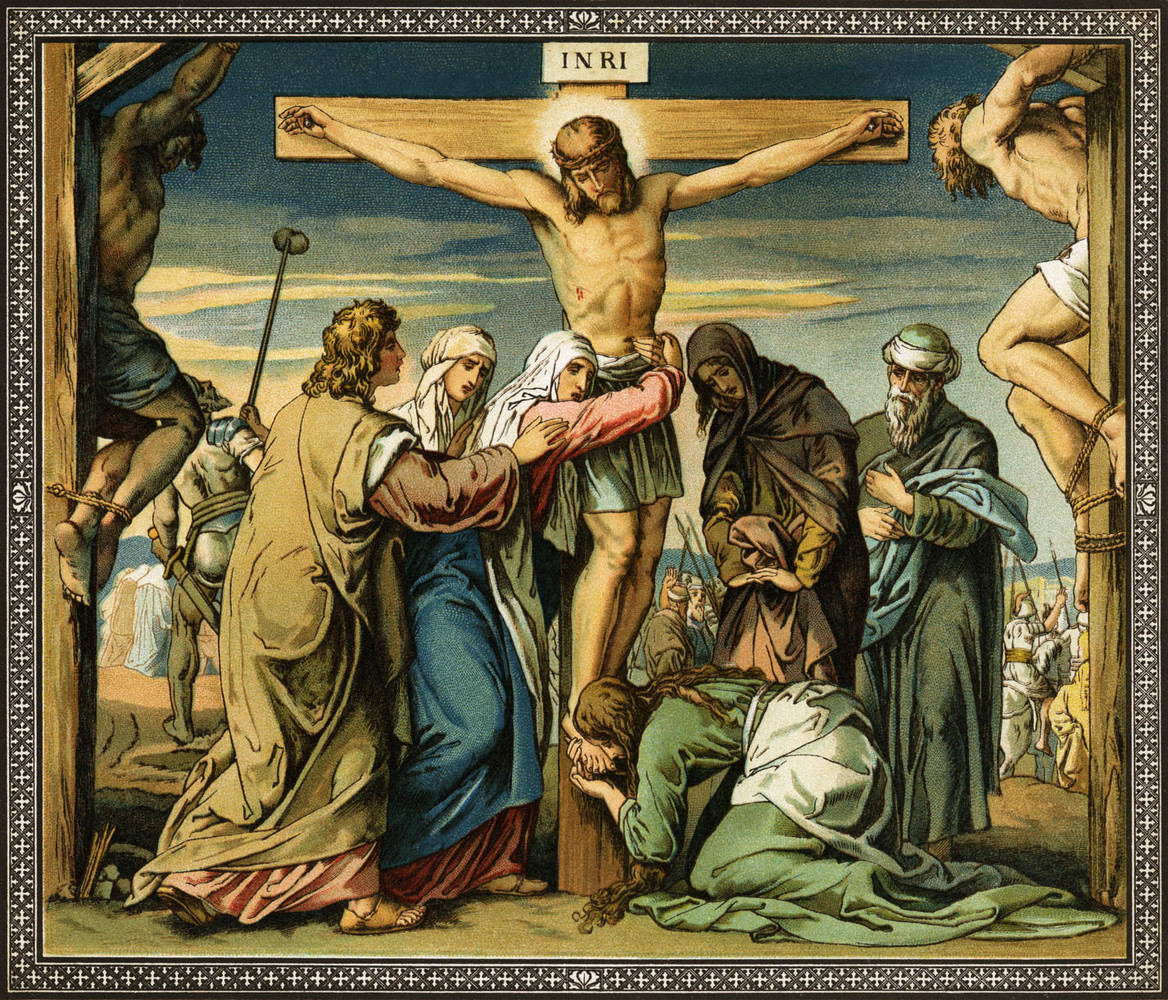
inri

Waking Up Podcast with Sam Harris #125: What is Christianity?


In this episode of the Waking Up podcast, Sam Harris speaks to Bart Ehrman about his experience of being a born-again Christian, his academic training in New Testament scholarship, his loss of faith, the most convincing argument in defense of Christianity, the status of miracles, the composition of the New Testament, the resurrection of Jesus, the nature of heaven and hell, the book of Revelation, the End Times, self-contradictions in the Bible, the concept of a messiah, whether Jesus actually existed, Christianity as a cult of human sacrifice, the conversion of Constantine, and other topics.

Bart D. Ehrman is the author or editor of more than thirty books, including the New York Times bestsellers Misquoting Jesus and How Jesus Became God. Ehrman is a professor of religious studies at the University of North Carolina, Chapel Hill, and a leading authority on the New Testament and the history of early Christianity. He has been featured in Time, The New Yorker, and The Washington Post, and has appeared on NBC, CNN, The Daily Show with Jon Stewart, The History Channel, National Geographic, BBC, major NPR shows, and other top print and broadcast media outlets. His most recent book is The Triumph of Christianity.

Twitter: @BartEhrman

Why Our Declining Biblical Literacy Matters

File 20180412 592 sy3x6n.jpg?ixlib=rb 1.1

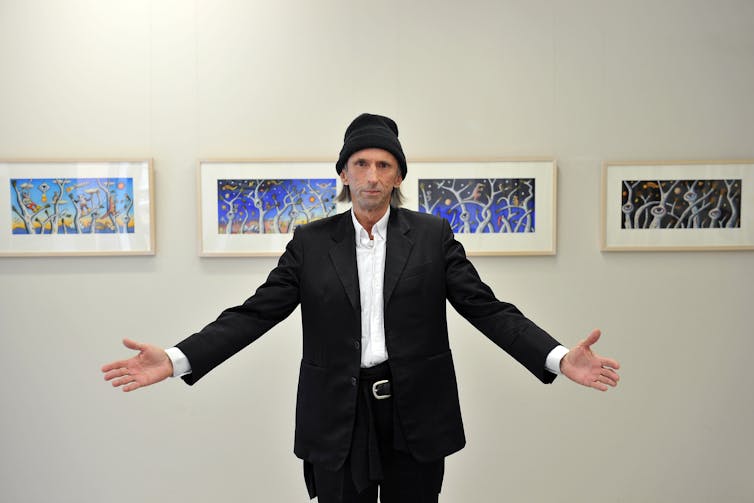
Songwriters such as Nick Cave (pictured) and the late Yolngu star Gurrumul have often drawn on the scriptures in their work.
Paul Bergen/EPA


Meredith Lake, University of Sydney

Biblical literacy is likely lower in Australia today than at any point since the convict era. General levels of familiarity with the Christian scriptures are difficult to plot precisely, but studies of Bible reading habits, and data on various forms of Christian socialisation, indicate a significant decline in Australians’ exposure to the Bible over the last half century.

A 1960 study found that nine in ten Australians had a Bible at home. It was rivalled only by a cookery book and a dictionary, and far outstripped works by Shakespeare. Sixty one per cent of Bible-owning Australians picked it up at least once a year. Thirty eight per cent had read it within the previous two weeks. (Mind you, it seems that apart from the most regular churchgoers, most people read the Bible in a cursory manner if at all.)


Read more: Jesus wasn’t white: he was a brown-skinned, Middle Eastern Jew. Here’s why that matters


A 2002 survey found that 29% of Australian adults still read the Bible at least once a year, with 8% reading it frequently. In 2010, around 10% of Australian secondary students read the Bible weekly or more, and a further 15 to 20% browsed it occasionally.

Overall, though, since 1960 the proportion of annual Bible readers has dropped by half, and regular readers by three-quarters. In less than two generations, the proportion of Australians who never pick up a Bible for themselves has leapt to seven out of ten. The rising use of online Bibles and Bible apps may modify this picture, but 2013 data indicates that Australians read less of the Bible online than their counterparts in the UK or the US.

A working knowledge of the Bible, and a critical skill in interpreting it, remain extremely useful in a secular society.
shutterstock

In parallel with declining Bible reading, fewer Australians identify as Christian at the census. Similarly, the proportion of people attending church at least once a month has fallen from 36% in 1972 to 15% in 2014. So fewer Australians have been exposed to the public reading and preaching of the Bible, and to its inculcation through liturgy and hymnody.


Read more: Friday essay: who was Mary Magdalene? Debunking the myth of the penitent prostitute


Does it matter if Australians are becoming less familiar with the Christian scriptures? I would argue that, even aside from matters of faith, a working knowledge of the Bible, and a critical skill in interpreting it, remain extremely useful.

Firstly, the world is still an overwhelmingly religious place.

While Christianity has declined in its former European strongholds, and in related societies like New Zealand and Australia, it has spread widely in the global south. In 2018, it remains the most practised faith in the world. Effective global citizenship can only benefit from a working knowledge of its key text.

Shaping Our Culture

Secondly, biblical literacy is worthwhile because of the Bible’s dynamic role in creative culture.

Shakespeare’s plays contain many biblical references.
First Folio of Shakespeare’s works (and used for three subsequent issues). Published in 1623. Wikimedia Commons

The foundational role of the Bible in shaping English language and literature is well attested. Common phrases such as “the powers that be”, “from strength to strength”, “in the twinkling of an eye” and “escaped by the skin of my teeth” all come from English translations of the Bible.

Classic texts from Shakespeare’s plays to T. S. Eliot’s poems to the speeches of Martin Luther King assume some knowledge of biblical stories, images and ideas.

Among Australian creatives, too, literary lights such as Patrick White, Elizabeth Jolley, Tim Winton, Helen Garner and Christos Tsiolkas all make powerful use of biblical narratives and imagery. Songwriters from Nick Cave to the late Yolngu star Gurrumul have drawn on the scriptures in their lyrics.

Biblical stories and symbols have also inspired visual artists such as Grace Cossington Smith, Arthur Boyd and Margaret Preston. Reg Mombassa’s popular creation, “Australian Jesus”, offers a subversive take on the gospels.

Each of these Australians has found the Bible an enlarging influence on the imagination. Audiences can easily miss key elements of their work without a degree of biblical literacy

Reg Mombassa’s popular creation, ‘Australian Jesus’, offers a subversive take on the gospels.
Paul Miller/AAP

A Colonial Legacy

Thirdly, the Bible is a substantial – and unresolved – part of Australia’s European cultural baggage.

It loomed especially large in the process of colonising Aboriginal land and forging settler societies. The legal fiction of terra nullius, for example, drew on a particular interpretation of Genesis 1:28 – “replenish the earth, and subdue it”.

Most British colonists assumed that European agriculture was the proper means of fulfilling this divine command. Failing to recognise Indigenous forms of land use, they deemed the land “waste”, belonging to no one, and ripe for the taking.

At the same time, a minority of colonists drew on verses like Acts 17:26 – “[God] hath made of one blood all nations of men for to dwell on all the face of the earth” – to affirm the common humanity of Aboriginal people, and to denounce settler greed and violence.

Crucially, as Indigenous Australians interpreted the Bible for themselves, they used it to demand just treatment and to assert their unique relationship to country. As the Mabo case made its way through the courts, for instance, plaintiff Dave Passi liked to quote from the Old Testament: “Do not move an everlasting boundary stone, set up by your ancestors” (Proverbs 22:28).

The ConversationIn all these ways, the Bible has been bound up with the Australian experience of colonialism. As such, a robust biblical literacy can aid understanding of the past and contribute to present day reconciliation.
Meredith Lake, Honorary Associate, Department of History, University of Sydney

This article was originally published on The Conversation. Read the original article.

Man’s Search for Meaning


Man’s Search for Meaning is a 1946 book by Viktor Frankl chronicling his experiences as an Auschwitz concentration camp inmate during World War II, and describing his psychotherapeutic method, which involved identifying a purpose in life to feel positively about, and then immersively imagining that outcome. According to Frankl, the way a prisoner imagined the future affected his longevity. The book intends to answer the question “How was everyday life in a concentration camp reflected in the mind of the average prisoner?” Part One constitutes Frankl’s analysis of his experiences in the concentration camps, while Part Two introduces his ideas of meaning and his theory called logotherapy.

According to a survey conducted by the Book-of-the-Month Club and the Library of Congress, Man’s Search for Meaning belongs to a list of “the ten most influential books in the United States.” At the time of the author’s death in 1997, the book had sold over 10 million copies and had been translated into 24 languages.

Frankl identifies three psychological reactions experienced by all inmates to one degree or another: (1) shock during the initial admission phase to the camp, (2) apathy after becoming accustomed to camp existence, in which the inmate values only that which helps himself and his friends survive, and (3) reactions of depersonalization, moral deformity, bitterness, and disillusionment if he survives and is liberated.

Frankl concludes that the meaning of life is found in every moment of living; life never ceases to have meaning, even in suffering and death. In a group therapy session during a mass fast inflicted on the camp’s inmates trying to protect an anonymous fellow inmate from fatal retribution by authorities, Frankl offered the thought that for everyone in a dire condition there is someone looking down, a friend, family member, or even God, who would expect not to be disappointed. Frankl concludes from his experience that a prisoner’s psychological reactions are not solely the result of the conditions of his life, but also from the freedom of choice he always has even in severe suffering. The inner hold a prisoner has on his spiritual self relies on having a hope in the future, and that once a prisoner loses that hope, he is doomed.

An example of Frankl’s idea of finding meaning in the midst of extreme suffering is found in his account of an experience he had while working in the harsh conditions of the Auschwitz concentration camp:

… We stumbled on in the darkness, over big stones and through large puddles, along the one road leading from the camp. The accompanying guards kept shouting at us and driving us with the butts of their rifles. Anyone with very sore feet supported himself on his neighbor’s arm. Hardly a word was spoken; the icy wind did not encourage talk. Hiding his mouth behind his upturned collar, the man marching next to me whispered suddenly: “If our wives could see us now! I do hope they are better off in their camps and don’t know what is happening to us.”

That brought thoughts of my own wife to mind. And as we stumbled on for miles, slipping on icy spots, supporting each other time and again, dragging one another up and onward, nothing was said, but we both knew: each of us was thinking of his wife. Occasionally I looked at the sky, where the stars were fading and the pink light of the morning was beginning to spread behind a dark bank of clouds. But my mind clung to my wife’s image, imagining it with an uncanny acuteness. I heard her answering me, saw her smile, her frank and encouraging look. Real or not, her look was then more luminous than the sun which was beginning to rise.

A thought transfixed me: for the first time in my life I saw the truth as it is set into song by so many poets, proclaimed as the final wisdom by so many thinkers. The truth—that love is the ultimate and the highest goal to which man can aspire. Then I grasped the meaning of the greatest secret that human poetry and human thought and belief have to impart: The salvation of man is through love and in love. I understood how a man who has nothing left in this world still may know bliss, be it only for a brief moment, in the contemplation of his beloved. In a position of utter desolation, when man cannot express himself in positive action, when his only achievement may consist in enduring his sufferings in the right way—an honorable way—in such a position man can, through loving contemplation of the image he carries of his beloved, achieve fulfillment. For the first time in my life I was able to understand the meaning of the words, “The angels are lost in perpetual contemplation of an infinite glory….”

Frankl also concludes that there are only two races of men, decent men and indecent. No society is free of either of them, and thus there were “decent” Nazi guards and “indecent” prisoners, most notably the kapo who would torture and abuse their fellow prisoners for personal gain.

His concluding passage in Part One describes the psychological reaction of the inmates to their liberation, which he separates into three stages. The first is depersonalization—a period of readjustment, in which a prisoner gradually returns to the world. Initially, the liberated prisoners are so numb that they are unable to understand what freedom means, or to emotionally respond to it. Part of them believes that it is an illusion or a dream that will be taken away from them. In their first foray outside their former prison, the prisoners realized that they could not comprehend pleasure. Flowers and the reality of the freedom they had dreamed about for years were all surreal, unable to be grasped in their depersonalization.

The body is the first element to break out of this stage, responding by big appetites of eating and wanting more sleeping. Only after the partial replenishing of the body is the mind finally able to respond, as “feeling suddenly broke through the strange fetters which had restrained it”.

This begins the second stage, in which there is a danger of deformation. As the intense pressure on the mind is released, mental health can be endangered. Frankl uses the analogy of a diver suddenly released from his pressure chamber. He recounts the story of a decent friend who became immediately obsessed with dispensing the same violence in judgment of his abusers that they had inflicted on him.

Upon returning home, the prisoners had to struggle with two fundamental experiences which could also damage their mental health: bitterness and disillusionment. The last stage is bitterness at the lack of responsiveness of the world outside—a “superficiality and lack of feeling… so disgusting that one finally felt like creeping into a hole and neither hearing nor seeing human beings any more”. Worse was disillusionment, which was the discovery that suffering does not end, that the longed-for happiness will not come. This was the experience of those who—like Frankl—returned home to discover that no one awaited them. The hope that had sustained them throughout their time in the concentration camp was now gone. Frankl cites this experience as the most difficult to overcome.

As time passed, however, the prisoner’s experience in a concentration camp finally became nothing but a remembered nightmare. What is more, he comes to believe that he has nothing left to fear any more, “except his God”.


frankl.jpg

Man’s Search for Meaning (PDF)

The Second Sex

beauvoir.jpg

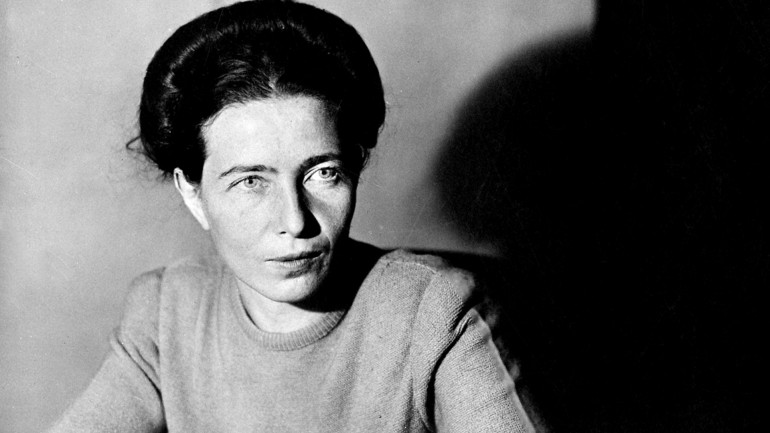
The Second Sex is a 1949 book by the French existentialist Simone de Beauvoir, in which the author discusses the treatment of women throughout history. Beauvoir researched and wrote the book in about 14 months when she was 38 years old. She published it in two volumes, Facts and Myths and Lived Experience. One of Beauvoir’s best-known books, The Second Sex is often regarded as a major work of feminist philosophy and the starting point of second-wave feminism.

Beauvoir asks “What is woman?” She argues that man is considered the default, while woman is considered the “Other”: “Thus humanity is male and man defines woman not herself but as relative to him.” Beauvoir describes the relationship of ovum to sperm in various creatures (fish, insects, mammals), leading up to the human being. She describes women’s subordination to the species in terms of reproduction, compares the physiology of men and women, concluding that values cannot be based on physiology and that the facts of biology must be viewed in light of the ontological, economic, social, and physiological context.

Authors whose views Beauvoir rejects include Sigmund Freud and Alfred Adler, and Friedrich Engels. Beauvoir argues that while Engels, in his The Origin of the Family, Private Property and the State (1884), maintained that “the great historical defeat of the female sex” is the result of the invention of bronze and the emergence of private property, his claims are unsupported.

According to Beauvoir, two factors explain the evolution of women’s condition: participation in production and freedom from reproductive slavery. Beauvoir writes that motherhood left woman “riveted to her body” like an animal and made it possible for men to dominate her and Nature. She describes man’s gradual domination of women, starting with the statue of a female Great Goddess found in Susa, and eventually the opinion of ancient Greeks like Pythagoras who wrote, “There is a good principle that created order, light and man and a bad principle that created chaos, darkness and woman.” Men succeed in the world by transcendence, but immanence is the lot of women. Beauvoir writes that men oppress women when they seek to perpetuate the family and keep patrimony intact. She compares women’s situation in ancient Greece with Rome. In Greece, with exceptions like Sparta where there were no restraints on women’s freedom, women were treated almost like slaves. In Rome because men were still the masters, women enjoyed more rights but, still discriminated against on the basis of their gender, had only empty freedom.

Discussing Christianity, Beauvoir argues that, with the exception of the German tradition, it and its clergy have served to subordinate women. She also describes prostitution and the changes in dynamics brought about by courtly love that occurred about the twelfth century. Beauvoir describes from the early fifteenth century “great Italian ladies and courtesans” and singles out the Spaniard Teresa of Ávila as successfully raising “herself as high as a man.” Through the nineteenth century women’s legal status remained unchanged but individuals (like Marguerite de Navarre) excelled by writing and acting. Some men helped women’s status through their works. Beauvoir finds fault with the Napoleonic Code, criticizes Auguste Comte and Honoré de Balzac, and describes Pierre-Joseph Proudhon as an anti-feminist. The Industrial Revolution of the nineteenth century gave women an escape from their homes but they were paid little for their work. Beauvoir traces the growth of trade unions and participation by women. She examines the spread of birth control methods and the history of abortion. Beauvoir relates the history of women’s suffrage, and writes that women like Rosa Luxemburg and Marie Curie “brilliantly demonstrate that it is not women’s inferiority that has determined their historical insignificance: it is their historical insignificance that has doomed them to inferiority”.

Beauvoir provides a presentation about the “everlasting disappointment” of women, for the most part from a male heterosexual’s point of view. She covers female menstruation, virginity, and female sexuality including copulation, marriage, motherhood, and prostitution. To illustrate man’s experience of the “horror of feminine fertility”, Beauvoir quotes the British Medical Journal of 1878 in which a member of the British Medical Association writes, “It is an indisputable fact that meat goes bad when touched by menstruating women.” She quotes poetry by André Breton, Léopold Sédar Senghor, Michel Leiris, Paul Verlaine, Edgar Allan Poe, Paul Valéry, Johann Wolfgang von Goethe, and William Shakespeare along with other novels, philosophers, and films. Beauvoir writes that sexual division is maintained in homosexuality.

Examining the work of Henry de Montherlant, D. H. Lawrence, Paul Claudel, André Breton, and Stendhal, Beauvoir writes that these “examples show that the great collective myths are reflected in each singular writer”. “Feminine devotion is demanded as a duty by Montherlant and Lawrence; less arrogant, Claudel, Breton, and Stendhal admire it as a generous choice….” She finds that woman is “the privileged Other“, that Other is defined in the “way the One chooses to posit himself”, and writes that, “But the only earthly destiny reserved to the woman equal, child-woman, soul sister, woman-sex, and female animal is always man.” Beauvoir writes that, “The absence or insignificance of the female element in a body of work is symptomatic… it loses importance in a period like ours in which each individual’s particular problems are of secondary import.”

Beauvoir writes that “mystery” is prominent among men’s myths about women. She also writes that mystery is not confined by sex to women but instead by situation, and that it pertains to any slave. She thinks it disappeared during the eighteenth century when men however briefly considered women to be peers. She quotes Arthur Rimbaud, who writes that hopefully one day, women can become fully human beings when man gives her her freedom.

Presenting a child’s life beginning with birth, Beauvoir contrasts a girl’s upbringing with a boy’s, who at age 3 or 4 is told he is a “little man”. A girl is taught to be a woman and her “feminine” destiny is imposed on her by society. She has no innate “maternal instinct”. A girl comes to believe in and to worship a male god and to create imaginary adult lovers. The discovery of sex is a “phenomenon as painful as weaning” and she views it with disgust. When she discovers that men, not women, are the masters of the world this “imperiously modifies her consciousness of herself”. Beauvoir describes puberty, the beginning of menstruation, and the way girls imagine sex with a man. She relates several ways that girls in their late teens accept their “femininity”, which may include running away from home, fascination with the disgusting, following nature, or stealing. Beauvoir describes sexual relations with men, maintaining that the repercussions of the first of these experiences informs a woman’s whole life. Beauvoir describes women’s sexual relations with women. She writes that “homosexuality is no more a deliberate perversion than a fatal curse”.

Beauvoir writes that “to ask two spouses bound by practical, social and moral ties to satisfy each other sexually for their whole lives is pure absurdity”. She describes the work of married women, including housecleaning, writing that it is “holding away death but also refusing life”. She thinks, “what makes the lot of the wife-servant ungratifying is the division of labor that dooms her wholly to the general and inessential”. Beauvoir writes that a woman finds her dignity only in accepting her vassalage which is bed “service” and housework “service”. A woman is weaned away from her family and finds only “disappointment” on the day after her wedding. Beauvoir points out various inequalities between a wife and husband and finds they pass the time not in love but in “conjugal love”. She thinks that marriage “almost always destroys woman”. She quotes Sophia Tolstoy who wrote in her diary: “you are stuck there forever and there you must sit”. Beauvoir thinks marriage is a perverted institution oppressing both men and women.

In Beauvoir’s view, abortions performed legally by doctors would have little risk to the mother. She argues that the Catholic Church cannot make the claim that the souls of the unborn would not end up in heaven because of their lack of baptism because that would be contradictory to other Church teachings. She writes that the issue of abortion is not an issue of morality but of “masculine sadism” toward woman. Beauvoir describes pregnancy, which is viewed as both a gift and a curse to woman. In this new creation of a new life the woman loses her self, seeing herself as “no longer anything… [but] a passive instrument”. Beauvoir writes that, “maternal sadomasochism creates guilt feelings for the daughter that will express themselves in sadomasochistic behavior toward her own children, without end”, and makes an appeal for socialist child-rearing practices.

Beauvoir describes a woman’s clothes, her girl friends and her relationships with men. She writes that “marriage, by frustrating women’s erotic satisfaction, denies them the freedom and individuality of their feelings, drives them to adultery”. Beauvoir describes prostitutes and their relationships with pimps and with other women, as well as hetaeras. In contrast to prostitutes, hetaeras can gain recognition as an individual and if successful can aim higher and be publicly distinguished. Beauvoir writes that women’s path to menopause might arouse woman’s homosexual feelings (which Beauvoir thinks are latent in most women). When she agrees to grow old she becomes elderly with half of her adult life left to live. Woman might choose to live through her children (often her son) or her grandchildren but she faces “solitude, regret, and ennui”. To pass her time she might engage in useless “women’s handiwork”, watercolors, music or reading, or she might join charitable organizations. While a few rare women are committed to a cause and have an end in mind, Beauvoir concludes that “the highest form of freedom a woman-parasite can have is stoic defiance or skeptical irony”.

According to Beauvoir, while a woman knows how to be as active, effective and silent as a man, her situation keeps her being useful, preparing food, clothes, and lodging. She worries because she does not do anything, she complains, she cries, and she may threaten suicide. She protests but doesn’t escape her lot. She may achieve happiness in “Harmony” and the “Good” as illustrated by Virginia Woolf and Katherine Mansfield. Beauvoir thinks it is pointless to try to decide whether woman is superior or inferior, and that it is obvious that the man’s situation is “infinitely preferable”. She writes, “for woman there is no other way out than to work for her liberation”.

Beauvoir describes narcissistic women, who might find themselves in a mirror and in the theater, and women in and outside marriage: “The day when it will be possible for the woman to love in her strength and not in her weakness, not to escape from herself but to find herself, not out of resignation but to affirm herself, love will become for her as for man the source of life and not a mortal danger.” Beauvoir discusses the lives of several women, some of whom developed stigmata. Beauvoir writes that these women may develop a relation “with an unreal”— with their double or a god, or they create an “unreal relation with a real being”. She also mentions women with careers who are able to escape sadism and masochism. A few women have successfully reached a state of equality, and Beauvoir, in a footnote, singles out the example of Clara and Robert Schumann. Beauvoir says that the goals of wives can be overwhelming: as a wife tries to be elegant, a good housekeeper and a good mother. Singled out are “actresses, dancers and singers” who may achieve independence. Among writers, Beauvoir chooses only Emily Brontë, Woolf and (“sometimes”) Mary Webb (and she mentions Colette and Mansfield) as among those who have tried to approach nature “in its inhuman freedom”. Beauvoir then says that women don’t “challenge the human condition” and that in comparison to the few “greats”, woman comes out as “mediocre” and will continue at that level for quite some time. A woman could not have been Vincent van Gogh or Franz Kafka. Beauvoir thinks that perhaps, of all women, only Saint Teresa lived her life for herself. She says it is “high time” woman “be left to take her own chances”.

In her conclusion, Beauvoir looks forward to a future when women and men are equals, something the “Soviet revolution promised” but did not ever deliver. She concludes that, “to carry off this supreme victory, men and women must, among other things and beyond their natural differentiations, unequivocally affirm their brotherhood.”


Source: The Second Sex

Primary Source: The Second Sex (PDF)

Postmodernism in Ancient Greece

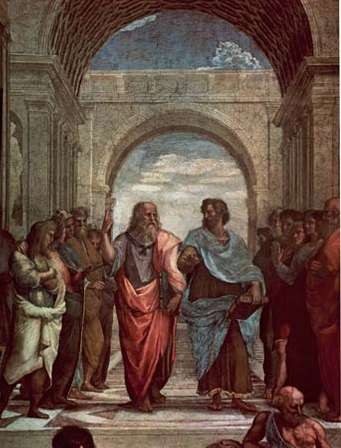
plato-aristotle

Plato and Aristotle Plato (left) and Aristotle, detail from School of Athens, fresco by Raphael, 1508–11; in the Stanza della Segnatura, the Vatican. Plato pointing to the heavens and the realm of forms, Aristotle to the earth and the realm of things. Album/Oronoz/SuperStock

The 5th-Century Sophists

The Sophists taught men how to speak and what arguments to use in public debate. A Sophistic education was increasingly sought after both by members of the oldest families and by aspiring newcomers without family backing. The changing pattern of Athenian society made merely traditional attitudes in many cases no longer adequate. Criticizing such attitudes and replacing them by rational arguments held special attraction for the young, and it explains the violent distaste which they aroused in traditionalists. Plato thought that much of the Sophistic attack upon traditional values was unfair and unjustified. But even he learned at least one thing from the Sophists—if the older values were to be defended, it must be by reasoned argument, not by appeals to tradition and unreflecting faith.

Seen from this point of view, the Sophistic movement performed a valuable function within Athenian democracy in the 5th century BCE. It offered an education designed to facilitate and promote success in public life. All of the Sophists appear to have provided a training in rhetoric and in the art of speaking, and the Sophistic movement, responsible for large advances in rhetorical theory, contributed greatly to the development of style in oratory. In modern times the view occasionally has been advanced that this was the Sophists’ only concern. But the range of topics dealt with by the major Sophists makes this unlikely, and even if success in this direction was their ultimate aim, the means they used were surely as much indirect as direct, for the pupils were instructed not merely in the art of speaking, but in grammar; in the nature of virtue (aret?) and the bases of morality; in the history of society and the arts; in poetry, music, and mathematics; and also in astronomy and the physical sciences. Naturally the balance and emphasis differed from Sophist to Sophist, and some offered wider curricula than others. But this was an individual matter, and attempts by earlier historians of philosophy to divide the Sophistic movement into periods in which the nature of the instruction was altered are now seen to fail for lack of evidence. The 5th-century Sophists inaugurated a method of higher education that in range and method anticipated the modern humanistic approach inaugurated or revived during the European Renaissance.

Nature of Sophistic Thought

A question still discussed is whether the Sophists in general had any real regard for truth or whether they taught their pupils that truth was unimportant compared with success in argument. Plato’s hostile judgment on both counts is still frequently repeated without question. The Platonic writings make frequent reference to what Plato calls “eristic” (eristikos, “fond of wrangling”) and “antilogic”; the two often have been incorrectly treated as identical. Eristic, for Plato, consists in arguments aimed at victory rather than at truth. Antilogic involves the assignment to any argument of a counterargument that negates it, with the implication that both argument and counterargument are equally true. Antilogic in this sense was especially associated with Protagoras; but Plato, no doubt correctly, attributes its use to other Sophists as well. He regards the use of antilogic as essentially eristic, whether it be used to silence an opponent by making his position seem self-contradictory, or whether it be used mechanically to negate any proposition put forward in debate. He concludes that the widespread use of antilogic is evidence that Sophists had no real regard for the truth, which must itself be free from antilogic.

But Plato himself believed, for much or possibly all of his life, that the phenomenal world was essentially antilogical inasmuch as no statement about it could be made possessing a greater degree of truth than the contradictory of that statement. For example, if a person is tall in relation to one object, he will be short in relation to another object. In so characterizing the phenomenal world, Plato certainly did not wish to be called eristic—he regarded the application of antilogic to the description of the phenomenal world as an essential preliminary to the search for the truth residing in the Platonic forms, which are themselves free from antilogic.

Seen in this perspective, the Sophistic use of antilogic must be judged less harshly. To the extent that it was used irresponsibly to secure success in debate it was eristic, and the temptation so to use it must often have arisen. But where it was invoked in the sincere belief that antilogic elements were indeed involved, or where it was used for analyzing a complex situation in order to reveal its complexity, then antilogic was in no way inconsistent with devotion to truth. This raises the question to what extent the Sophists possessed any general view of the world or gave expression to any genuine philosophical views, whether original or derived. Ancient writers, influenced by Plato and Aristotle, seem to have excluded the Sophists, apart from Protagoras, from their schematized accounts of early Greek thinkers. Modern writers have frequently maintained that, whatever else they were, the Sophists were in no sense philosophers. Even those who acknowledge the philosophical interest of certain particular doctrines attributed to individual Sophists often tend to regard these as exceptions and claim that, inasmuch as the Sophists were not a school but only independent teachers and writers, as a class they were not philosophers. Two questions are involved: whether the Sophists held common intellectual doctrines and whether some or all of these could actually be termed philosophical.

Among moderns, Georg Wilhelm Friedrich Hegel was one of the first to reinsert the Sophists into the history of Greek philosophy. He did so within the framework of his own dialectic, in which every thesis invokes its own opposite, or antithesis; thus, he treated the Sophists as representing the antithesis to the thesis of the group of philosophers known collectively as the pre-Socratics. Pre-Socratics such as Thales, Heracleitus, and Parmenides sought the truth about the external world with a bold enthusiasm that produced a series of explanations, each claiming to be correct. None of these explanations of the physical world paid attention to the observer and each was driven to reject more and more of the phenomenal world itself as unreal. Finally, with the Eleatics, a 5th-century school at Elea in Italy that held that reality is a static one, of which Parmenides and Zeno are representatives, little or nothing of the phenomenal world was left as real. This trend in turn produced a growing distrust of the power of human beings to attain knowledge of the ultimate basis of natural phenomena. Philosophy had reached an impasse, and there was a danger of complete skepticism. Such an extreme position, according to Hegel’s view, provoked the “antithesis” of the Sophistic movement, which rejected the “thesis” of the objectivists and concentrated attention upon humankind rather than upon nature. To Hegel, the Sophists were subjective idealists, holding that reality is only minds and their contents, and so philosophy could move forward by turning its attention to the subjective element in knowing. Reflection upon the contrast between the thought of the Sophists and that of their predecessors produced the “syntheses” of Plato and Aristotle.

Whether any of the Sophists actually were subjective idealists may be doubted. The conclusion depends in part on whether Protagoras held that phenomena had subjective existence only, or whether he thought that all things perceived had objective existence but were perceived differently according to the nature of the percipient and their relation to him—i.e., whether he interpreted phenomena subjectively or relativistically. It is fairly clear, however, that the Sophists did concentrate very largely upon human beings and human society, upon questions of words in their relations to things, upon issues in the theory of knowledge, and upon the importance of the observer and the subjective element in reality and in the correct understanding of reality.

This emphasis helps to explain the philosophical hostility of Plato and Aristotle. Particularly in the eyes of Plato, anyone who looks for the truth in phenomena alone, whether he interprets it subjectively or relativistically, cannot hope to find it there; and his persistence in turning away from the right direction virtually amounts to a rejection of philosophy and of the search for truth. Many a subsequent thinker for whom metaphysics, or the investigation of the deepest nature of reality, was the crowning achievement of philosophy has felt with Plato that the Sophists were so antimetaphysical that they have no claim to rank as philosophers. But since the mid-19th century there has been growing appreciation of a number of problems and doctrines recurring in the discussions of the Sophists in the 5th and 4th centuries BCE. In the 18th and early 19th centuries the Sophists were considered charlatans. Their intellectual honesty was impugned, and their doctrines were blamed for weakening the moral fibre of Greece. The charge was based on two contentions, both correct: first, that many of the Sophists attacked the traditionally accepted moral code; and second, that they explored and even commended alternative approaches to morality that would condone or allow behaviour of a kind inadmissible under the stricter traditional code.

Much less weight is now attached to these charges. First, many of the attacks on the traditional morality were in the name of a new morality that claimed to be of greater validity. Attacks upon particular doctrines often claimed that accepted views should be abandoned as morally defective. Furthermore, even when socially disfavoured action seemed to be commended, this was frequently done to introduce a principle necessary in any satisfactory moral theory. Thus, when Thrasymachus in the first book of Plato’s Republic argues that justice is unwarranted when it merely contributes to another’s good and not to the good of the doer, Plato agrees. Finally, there is no evidence that any of the Sophists were personally immoral or that any of their pupils were induced to immoral actions by Sophistic teaching. The serious discussion of moral problems and the theory of morality tends to improve behaviour, not to corrupt it.

Theoretical Issues

Relativism and skepticism have often been regarded as common features of the Sophistic movement as a whole. But it was early pointed out that only in Protagoras and Gorgias is there any suggestion of a radical skepticism about the possibility of knowledge; and even in their case Sextus Empiricus, in his discussion of skepticism, is probably right when he declares that neither was really a skeptic. Protagoras does seem to have restricted knowledge to sense experience, but he believed emphatically that whatever was perceived by the senses was certainly true. This led him to assert that the tangent does not touch the circle at a point only but along a definite length of the circumference; clearly he was referring to human perception of drawn tangents and circles. Gorgias, who claimed that nothing exists, or if it does exist it cannot be known, or if it exists and is knowable it cannot be communicated to another, has often been accused of denying all reality and all knowledge. Yet he also seems to have appealed in his very discussion of these themes to the certainty of perceived facts about the physical world; e.g., that chariots do not race across the sea. Others dismiss his whole thesis as a satire or joke against philosophers.

Probably neither view is correct. What Gorgias seems to have been attacking was not perceived reality nor one’s power to perceive it but the attempt to assign existence or nonexistence (with the metaphysical implications of such an operation) to what one perceives. There is evidence that other Sophists (e.g., Hippias) were interested in questions of this kind, and it is likely that they were all concerned to some degree with rejecting claims of any nonsensible existence, such as those of the Eleatics. The Sophists, in fact, were attempting to explain the phenomenal world without appealing to any principles outside phenomena. They believed that this could be done by including the observer within the phenomenal world. Their refusal to go beyond phenomena was, for Plato, the great weakness in their thinking.

A second common generalization about the Sophists has been that they represent a revolt against science and the study of the physical world. The evidence is against this, inasmuch as for Hippias, Prodicus, Gorgias, and Protagoras there are records of a definite interest in questions of this kind. The truth is rather that they were in revolt against attempts to explain the physical world by appeals to principles that could not be perceived by the senses; and instead of framing new “objective” explanations, they attempted to explain things, where explanation was required, by introducing the perceiver as one element in the perceptual situation.

One of the most famous doctrines associated with the Sophistic movement was the opposition between nature and custom or convention in morals. It is probable that the antithesis did not originate in Sophistic circles but was rather earlier; but it was clearly very popular and figured largely in Sophistic discussions. The commonest form of the doctrine involved an appeal from conventional laws to supposedly higher laws based on nature. Sometimes these higher laws were invoked to remedy defects in actual laws and to impose more stringent obligations; but usually it was in order to free the individual from restrictions unjustifiably imposed by human laws that the appeal to nature was made. In its extreme form the appeal involved the throwing off of all restraints upon self-interest and the desires of the individual (e.g., the doctrine of Callicles in Plato’s Gorgias that might, if one possesses it, is actually right), and it was this, more than anything else, that gave support to charges against the Sophists of immoral teaching. On other occasions the terms of the antithesis were reversed and human laws were explicitly acclaimed as superior to the laws of nature and as representing progress achieved by human endeavour. In all cases the laws of nature were regarded not as generalized descriptions of what actually happens in the natural world (and so not like the laws of physics to which no exceptions are possible) but rather as norms that people ought to follow but are free to ignore. Thus, the appeal to nature tended to mean an appeal to human nature treated as a source for norms of conduct. (See also natural law.)

To Greeks this appeal was not very novel. It represented a conscious probing and exploration into an area wherein, according to their whole tradition of thought, lay the true source for norms of conduct. If Plato’s Callicles represents a position actually held by a living Sophist when he advocates free rein for the passions, then it was easy for Plato to argue in reply that human nature, if it is to be fulfilled, requires organization and restraint in the license given to the desires of particular aspects of it; otherwise the interests of the whole will be frustrated. Both Plato and Aristotle, in basing so much of their ethics on human nature, are only following up the approach begun by the Sophists.

Humanistic Issues

The Sophists have sometimes been characterized by their attacks on the traditional religious beliefs of the Greeks (see Greek religion). It is true that more than one Sophist seems to have faced prosecution for impiety, as did Socrates also. Protagoras wrote “concerning the gods, I cannot know either that they exist or that they do not exist nor what they are like in form,” and Prodicus offered a sociological account of the development of religion. Critias went further when he supposed that the gods were deliberately invented to inspire fear in the evildoer. It is thus probably correct to say that the tendency of much Sophistic thought was to reject the traditional doctrines about the gods. Indeed, this follows almost inevitably if the supposition is correct that all the Sophists were attempting to explain the phenomenal world from within itself, while excluding all principles or entities not discernible in phenomena. But in their agnostic attitudes toward the Olympian deities, the Sophists were probably at one with most of the pre-Socratic philosophers of the 6th and 5th centuries and also with most thinking people living toward the end of the 5th century. It is thus probably misleading to regard them as revolutionary in their religious beliefs.

The importance the Sophists attached to human beings meant that they were extremely interested in the history and organization of human societies. Here again most is known about Protagoras, and there is a danger of treating his particular doctrines as typical of the Sophistic movement as a whole. In the 5th century, human history was very commonly seen in terms of a decline from an earlier golden age. Another view supposed that there were recurring cycles in human affairs according to which a progression from good to bad would give way to one from bad to good. The typical Sophistic attitude toward society rejected both of these views in favour of one that saw human history in terms of progress from savagery to civilization. In a famous myth, Protagoras explained how humans achieved civilized society first with the aid of arts and crafts and then by gaining a sense of respect and justice in the ordering of their affairs. The general thinking of most of the Sophists seems to have been along similar lines.

One of the most distinctive Sophistic tenets was that virtue can be taught, a position springing naturally from the Sophists’ professional claim to be the teachers of young men. But the word virtue (aret?) implied both success in living and the qualities necessary for achieving such success, and the claim that aret? could be taught by the kind of teaching that the Sophists offered had far-ranging implications. It involved the rejection of the view that aret? came only by birth—for example, by being born a member of a noble family—and it involved also the rejection of the doctrine that aret? was a matter of the chance occurrence of specified qualities in particular individuals. Aret?, in the Sophists’ view, was the result of known and controllable procedures, a contention of profound importance for the organization of society. Moreover, what can be taught has some relation to what can be known and understood. The belief that teaching of a high intellectual calibre could produce success both for the individual and for governments has had a profound influence upon the subsequent history of education. Once again, it is through the acceptance of this doctrine by Plato and Aristotle that the Sophistic position came to be part of subsequent humanist tradition.


Source

Encyclopedia Britannica – Sophist

The Psychological Significance of the Biblical Stories

15-Part Lecture series by Dr. Jordan B. Peterson

The Bible is a series of books written, edited and assembled over thousands of years. It contains the most influential stories of mankind. Knowledge of those stories is essential to a deep understanding of Western culture, which is in turn vital to proper psychological health (as human beings are cultural animals) and societal stability. These stories are neither history, as we commonly conceive it, nor empirical science. Instead, they are investigations into the structure of Being itself and calls to action within that Being. They have deep psychological significance. This lecture series, starting with the very first book, will constitute an analysis of that significance.

Dr. Peterson is a professor at the University of Toronto, a clinical psychologist and the author of 12 Rules for Life: An Antidote to Chaos (Jan 2018, Penguin Books). His now-classic book, Maps of Meaning: The Architecture of Belief, offers a revolutionary take on the psychology of religion, and the hundred or more scientific papers he published with his colleagues and students have substantively advanced the modern understanding of creativity and personality. As a Harvard professor, he was nominated for the prestigious Levinson Teaching Prize, and is regarded by his current University of Toronto students as one of three truly life-changing professors. His classroom lectures on mythology and psychology, based on Maps of Meaning, were turned into a popular 13-part TV series on TVO.

Dr. Peterson’s YouTube channel, Jordan Peterson Videos features his university and public lectures (including the most recent 15-part biblical series), responses to the polarizing political crises of today, and interviews with people such as Camille Paglia, Jonathan Haidt and Ayaan Hirsi Ali. As of December 2017, the channel has 300 videos, 550,000 subscribers, and 30 million views.

Dr. Peterson and his colleagues have also produced two online programs to help people understand their personalities and improve their lives. The newest, UnderstandMyself, provides its users with detailed information about their personalities, based on work he published with his students here. Tens of thousands have now used it to determine who they are, and to help others understand them, as well. His original self-analysis program, the Self Authoring Suite, (featured in O: The Oprah Magazine, CBC radio, and NPR’s national website), has helped over 200,000 people resolve the problems of their past, rectify their personality faults and enhance their virtues, and radically improve their future. Research indicating the program’s effectiveness at helping university students stay in school and thrive can be found here and here.

Dr. Peterson has appeared on many popular podcasts and shows, including the Joe Rogan Experience (#877, #958, #1006), The Rubin Report (12 Rules for Life: An Antidote to Chaos, Free Speech, Psychology, Gender Pronouns), H3H3 (#37), and many more.

Lost in Translation

paul.jpg

Detail from The Apostle Paul by Rembrandt van Rijn (c1675). Courtesy National Gallery of Art/Wikipedia

Everything You Know about the Gospel of Paul is Likely Wrong

By David Bentley Hart

This past year, I burdened the English-speaking world with my very own translation of the New Testament – a project that I undertook at the behest of my editor at Yale University Press, but that I agreed to almost in the instant that it was proposed. I had long contemplated attempting a ‘subversively literal’ rendering of the text. Over the years, I had become disenchanted with almost all the standard translations available, and especially with modern versions produced by large committees of scholars, many of whom (it seems to me) have been predisposed by inherited theological habits to see things in the text that are not really there, and to fail to notice other things that most definitely are. Committees are bland affairs, and tend to reinforce our expectations; but the world of late antiquity is so remote from our own that it is almost never what we expect.

Ask, for instance, the average American Christian – say, some genial Presbyterian who attends church regularly and owns a New International Version of the Bible – what gospel the Apostle Paul preached. The reply will fall along predictable lines: human beings, bearing the guilt of original sin and destined for eternal hell, cannot save themselves through good deeds, or make themselves acceptable to God; yet God, in his mercy, sent the eternal Son to offer himself up for our sins, and the righteousness of Christ has been graciously imputed or imparted to all who have faith.

Some details might vary, but not the basic story. And, admittedly, much of the tale’s language is reminiscent of terms used by Paul, at least as filtered through certain conventional translations; but it is a fantasy. It presumes elements of later Christian belief absent from Paul’s own writings. Some of these (like the idea that humans are born damnably guilty in God’s eyes, or that good deeds are not required for salvation) arise from a history of misleading translations. Others (like the concept of an eternal hell of conscious torment) are entirely imagined, attributed to Paul on the basis of some mistaken picture of what the New Testament as a whole teaches.

Paul’s actual teachings, however, as taken directly from the Greek of his letters, emphasise neither original guilt nor imputed righteousness (he believed in neither), but rather the overthrow of bad angels. A certain long history of misreadings – especially of the Letter to the Romans – has created an impression of Paul’s theological concerns so entirely alien to his conceptual world that the real Paul occupies scarcely any place at all in Christian memory. It is true that he addresses issues of ‘righteousness’ or ‘justice’, and asserts that this is available to us only through the virtue of pistis – ‘faith’ or ‘trust’ or even ‘fidelity’. But for Paul, pistis largely consists in works of obedience to God and love of others. The only erga, ‘works’, which he is anxious to claim make no contribution to personal sanctity, are certain ‘ritual observances’ of the Law of Moses, such as circumcision or kosher dietary laws. This, though, means that the separation between Jews and gentiles has been annulled in Christ, opening salvation to all peoples; it does not mean (as Paul fears some might imagine) that God has abandoned his covenant with Israel.

Questions of law and righteousness, however, are secondary concerns. The essence of Paul’s theology is something far stranger, and unfolds on a far vaster scale. For Paul, the present world-age is rapidly passing, while another world-age differing from the former in every dimension – heavenly or terrestrial, spiritual or physical – is already dawning. The story of salvation concerns the entire cosmos; and it is a story of invasion, conquest, spoliation and triumph. For Paul, the cosmos has been enslaved to death, both by our sin and by the malign governance of those ‘angelic’ or ‘daemonian’ agencies who reign over the earth from the heavens, and who hold spirits in thrall below the earth. These angelic beings, these Archons, whom Paul calls Thrones and Powers and Dominations and Spiritual Forces of Evil in the High Places, are the gods of the nations. In the Letter to the Galatians, he even hints that the angel of the Lord who rules over Israel might be one of their number. Whether fallen, or mutinous, or merely incompetent, these beings stand intractably between us and God. But Christ has conquered them all.

In descending to Hades and ascending again through the heavens, Christ has vanquished all the Powers below and above that separate us from the love of God, taking them captive in a kind of triumphal procession. All that now remains is the final consummation of the present age, when Christ will appear in his full glory as cosmic conqueror, having ‘subordinated’ (hypetaxen) all the cosmic powers to himself – literally, having properly ‘ordered’ them ‘under’ himself – and will then return this whole reclaimed empire to his Father. God himself, rather than wicked or inept spiritual intermediaries, will rule the cosmos directly. Sometimes, Paul speaks as if some human beings will perish along with the present age, and sometimes as if all human beings will finally be saved. He never speaks of some hell for the torment of unregenerate souls.

The new age, moreover – when creation will be glorified and transformed into God’s kingdom – will be an age of ‘spirit’ rather than ‘flesh’. For Paul, these are two antithetical principles of creaturely existence, though most translations misrepresent the antithesis as a mere contrast between God’s ‘spirit’ and human perversity. But Paul is quite explicit: ‘Flesh and blood cannot inherit the Kingdom.’ Neither can psych?, ‘soul’, the life-principle or anima that gives life to perishable flesh. In the age to come, the ‘psychical body’, the ‘ensouled’ or ‘animal’ way of life, will be replaced by a ‘spiritual body’, beyond the reach of death – though, again, conventional translations usually obscure this by speaking of the former, vaguely, as a ‘natural body’.

Paul’s voice, I hasten to add, is hardly an eccentric one. John’s Gospel too, for instance, tells of the divine saviour who comes ‘from above’, descending from God’s realm into this cosmos, overthrowing its reigning Archon, bringing God’s light into the darkness of our captivity, and ‘dragging’ everyone to himself. And, in varying registers, so do most of the texts of the New Testament. As I say, it is a conceptual world very remote from our own.

And yet it would be foolish to try to judge the gospel’s spiritual claims by how plausible we find the cosmology that accompanies them. For one thing, the ancient picture of reality might be in many significant respects more accurate than ours. And it would surely be a category error to assume that the story of Christ’s overthrow of death and sin cannot express a truth that transcends the historical and cultural conditions in which it was first told. But, before we decide anything at all about that story, we must first recover it from the very different stories that we so frequently tell in its place.

This Idea was made possible through the support of a grant from Templeton Religion Trust.  The opinions expressed in this publication are those of the author(s) and do not necessarily reflect the views of Templeton Religion Trust.Aeon counter – do not remove

David Bentley Hart

This article was originally published at Aeon and has been republished under Creative Commons.

The Four Horsemen

This little chat, a casual yet intellectually stimulating discussion between four brilliant minds was so excellent that I felt the need to share it. Many topics are discussed spanning science, religion, psychology and sociology. The way they interact with each other with sincerity, empathy and humility and a sense of fellowship is hard to come by in the world today. My personal loss of faith was due more to the study of philosophy rather than science, although science certainly played a role. I don’t agree with some of the things that are said by these so-called “New Atheists,” but I think that is the point. We need more fellowship and real human connection. We need to learn to love one another, regardless of worldview.

https://www.youtube.com/watch?v=n7IHU28aR2E


Full Texts by these Authors (PDF)

The God Delusion by Richard Dawkins

Darwin’s Dangerous Idea by Daniel Dennett

God is Not Great by Christopher Hitchens

The End of Faith by Sam Harris