Lau Tzu say…

The way that can be spoken of

Is not the constant way;

The name that can be named

Is not the constant name.

The nameless was the beginning of heaven and earth;

The named was the mother of the myriad creatures.

Hence always rid yourself of desires in order to observe its manifestations.

But always allow yourself to have desires in order to observe its manifestations.

These two are the same

But diverge in name as they issue forth.

Being the same they are called mysteries,

Mystery upon mystery –

The gateway of the manifold secrets.

…

The whole world recognizes the beautiful as the beautiful,

yet this is only the ugly; the whole world recognizes the

good as the good, yet this is only the bad.

Thus Something and Nothing produce each other;

The difficult and the easy complement each other;

The long and the short offset each other;

The high and the low incline towards each other;

Note and sound harmonize with each other;

Before and after follow each other.

Therefore the sage keeps to the deed that consists in taking

no action and practices the teaching that uses no words.

The myriad creatures rise from it yet it claims no authority;

It gives them life yet claims no possession;

It benefits them yet exacts no gratitude;

It accomplishes its task yet lays claim to no merit.

It is because it lays claim to no merit

That its merit never deserts it.

…

Therefore in governing the people, the sage empties their minds but fills their bellies, weakens their wills, but strengthens their bones. He always keep them innocent of knowledge and free from desire, and ensures that the clever never dare to act.

Do that which consists in taking no action, and order will prevail.

…

Heaven and earth are ruthless, and treat the myriad creatures as straw dogs;

the sage is ruthless, and treats the people as straw dogs.

Is not the space between heaven and earth like a bellows?

It is empty without being exhausted:

The more it works the more comes out.

Much speech leads inevitably to silence.

Better to hold fast to the void.

…

The five colours make man’s eyes blind;

The five notes make his ears deaf;

The five tastes injure his palate;

Riding and hunting

Make his mind go wild with excitement;

…

The reason I have great trouble is that I have a body. When I no longer have a body, what trouble have I?

…

The ability to know the beginning of antiquity

Is called the thread running through the Way.

…

Of old he who was well versed in the Way

Was minutely subtle, mysteriously comprehending,

And too profound to be known.

…

I do my utmost to attain emptiness;

I hold firmly to stillness.

…

Returning to one’s roots is known as stillness.

This is what is meant by returning to one’s destiny.

Returning to one’s destiny is known as the constant.

Knowledge of the constant is known as discernment.

Woe to him who willfully innovates

While ignorant of the constant.

…

The best of all rulers is but a shadowy presence to his subjects.

Next comes the ruler they love and praise;

Next comes one they fear;

Next comes one with whom they take liberties.

Where there is not enough faith, there is lack of good faith.

Hesitant, he does not utter words lightly.

When his task is accomplished and his work done

The people all say, “It happened to us naturally.”

…

When the great way falls into disuse

There are benevolence and rectitude;

When cleverness emerges

There is great hypocrisy.

…

Exterminate the sage, discard the wise,

And the people will benefit a hundredfold;

Exterminate benevolence, discard rectitude,

And the people will again be filial.

…

Have little thought of self and as few desires as possible.

…

Exterminate learning and there will no longer be worries.

Between yea and nay

How much difference is there?

Between good and evil

How great is the distance?

…

The multitude are joyous

I alone am inactive and reveal no signs,

My mind is that of a food – how blank!

Vulgar people are clear.

I alone am drowsy.

Vulgar people are alert.

I alone am muddled.

Calm like the sea;

Like a high wind that never ceases.

The multitude all have a purpose.

I alone am foolish and uncouth.

I alone am different from others

And value being fed by the mother.

…

To use words but rarely

Is to be natural.

…

A man of the way conforms to the way;

A man of virtue conforms to virtue;

A man of loss conforms to loss.

He who conforms to the way is gladly accepted by the way;

He who conforms to virtue is gladly accepted by virtue;

He who conforms to loss is gladly accepted by loss.

He who shows himself is not conspicuous;

He who considers himself right is not illustrious;

He who brags will have no merit;

He who boasts will not endure.

…

One who knows does not speak; one who speaks does not know.

Block the openings;

Shut the doors.

Blunt the sharpness;

Untangle the knots;

Soften the glare;

Let your wheels move only along old ruts.

This is known as mysterious sameness.

…

The whole world says that my way is vast and resembles nothing. It is because it is vast that it resembles nothing. If it resembled anything, it would, long before now, have become small.

…

My words are very easy to understand and very easy to put into practice, yet no one in the world can understand them or put them into practice.

Words have an ancestor and affairs have a sovereign.

It is because people are ignorant that they fail to understand me.

Those who understand me are few;

Those who imitate me are honoured.

Therefore the sage, while clad in homespun, conceals on his person a priceless piece of jade.

…

To know yet to think that one does not know is best;

Not to know yet to think that one knows will lead to difficulty.

It is by being alive to difficulty that one can avoid it.

The sage meets with no difficulty.

It is because he is alive to it that he meets with no difficulty.

…

Truthful words are not beautiful; beautiful words are not truthful. Good words are not persuasive; persuasive words are not good. He who knows has no wide learning; he who has wide learning does not know.

…

There is a thing confusedly formed,

Born before heaven and earth.

Silent and void

It stands alone and does not change,

Goes round and does not weary.

It is capable of being the mother of the world.

I know not its name

So I style it “the way.”

– Tao Te Ching

————————————–

@ Lao Tzu: I understand your Tao, your “Way.” I appreciate the existential nature of the Tao (from 500 years BC mind you!) and your advice on governing the people and wartime strategy. But going with the flow and following the way of Heaven just to avoid difficulty is too good. Embrace the hunt. Embrace the dark side as well as the way of Heaven. For they are one.


Kierkegaard Attacked the Christianity of the Church, Nietzsche Attacked Christendom as Such

When the question about truth is asked objectively, truth is reflected upon objectively as an object to which the knower relates himself. What is reflected upon is not the relation but that what he relates himself to is the truth, the true. If only that to which he relates himself is the truth, the true, then the subject is in the truth. When the question about truth is asked subjectively, the individual’s relation is reflected upon subjectively. If only the how of this relation is in truth, the individual is in truth, even if he in this way were to relate himself to untruth.

Objectively the emphasis is on what is said; subjectively the emphasis is on how it is said.

…

When subjectivity is truth, the definition of truth must also contain in itself an expression of the antithesis to objectivity, a memento of that fork in the road, and this expression will at the same time indicate the resilience of the inwardness.

Here is such a definition of truth: An objective uncertainty, held fast through appropriration with the most passionate inwardness, is the truth, the highest truth there is for an existing person.

At the point where the road swings off (and where that is cannot be stated objectively, since it is precisely subjectivity), objective knowledge is suspended. Objectively he then has only uncertainty, but this is precisely what intensifies the infinite passion of inwardness, and truth is precisely the daring venture of choosing the objective uncertainty with the passion of the infinite.

I observe nature in order to find God, and I do indeed see omnipotence and wisdom, but I also see much that troubles and disturbs. The sum total of this is an objective uncertainty, but the inwardness is so very great, precisely because it grasps this objective uncertainty with all the passion of the infinite.

In a mathematical proposition, for example, the objectivity is given, but therefore its truth is also an indifferent truth.

But the definition of truth stated above is a paraphrasing of faith. Without risk, no faith. Faith is the contradiction between the infinite passion of inwardness and the objective uncertainty. If I am able to apprehend God objectively, I do not have faith; but because I cannot do this, I must have faith.

…

Sin is: before God in despair not to will to be oneself, or before God in despair to will to be oneself.

Very often, however, it is overlooked that the opposite of sin is by no means virtue. In part, this is a pagan view, which is satisfied with a merely human criterion and simply does not know what sin is, that all sin is before God.

No, the opposite of sin is faith, as it says in Romans 14:23: “whatever does not proceed from faith is sin.” And this is one of the most decisive definitions for all Christianity – that the opposite of sin is not virtue but faith.

The thought of death is a nimble dancer. Everybody is too serious for me. My whole thought is the task of becoming a Christian.

– Søren Kierkegaard

—————————

“Merciful Heavens! but what do I care for the laws of nature and arithmetic, when, for some reason, I dislike those laws and the fact that twice two makes four? … I write only for myself, and I wish to declare once and for all that if I write as though I were addressing readers, that is simply because it is easier for me to write in that form. It is a form, an empty form – I shall never have readers.”

– Dostoevsky (Notes from Underground)

Great Doubt, Great Death, Great Awakening

The Kyoto School of Philosophy

The Kyoto School (京都学派, Kyōto-gakuha) is the name given to the Japanese philosophical movement centered at Kyoto University that assimilated western philosophy and religious ideas and used them to reformulate religious and moral insights unique to the East Asian cultural tradition.”[1] However, it is also used to describe several postwar scholars from various disciplines who have taught at the same university, been influenced by the foundational thinkers of Kyoto school philosophy, and who have developed distinctive theories of Japanese uniqueness. To disambiguate the term, therefore, thinkers and writers covered by this second sense appear under The Kyoto University Research Centre for the Cultural Sciences.

Beginning roughly in 1913 with Nishida Kitaro, it survived the serious controversy it garnered after World War II to develop into a well-known and active movement. However, it is not a “school” of philosophy in the traditional sense of the phrase, such as with the Frankfurt School or Plato’s Academy. Instead, the group of academics gathered around Kyoto University as a de facto meeting place, and as its founder, Nishida, steadfastly encouraged independent thinking.

According to James Heisig, the name “Kyoto School” was first used in 1932 by a student of Nishida and Hajime Tanabe. Tosaka Jun (1900–45) considered himself to be part of the ‘Marxist left-wing’ of the school.[2] Afterwards, the media and other academic institutions outside of Japan began to use the moniker, and by the 1970s it had become a universal title – practically by default.

Contents

  • 1 History
  • 2 Significance of its notable members
    • 1 Kitaro Nishida
    • 2 Hajime Tanabe
    • 3 Keiji Nishitani
    • 4 Masao Abe
    • 5 Shizuteru Ueda
    • 6 Eshin Nishimura
  • 3 Criticism of the Kyoto School
  • 4 Members
  • 5 Suggested reading
    • 1 Readings byindividual members
    • 2 Secondary sources onindividual members
  • 6 References
  • 7 External links

History

Masao Abe writes in his introduction to a new English translation of Nishida’s magnum opus, that if one thinks of philosophy in terms of Kant or Hegel, then there is no philosophy taking place in Japan. But if it is instead thought of in terms of the tradition carried out by Augustine and Kierkegaard, then Japan has a rich philosophical history, composed of the great thinkers Kūkai, Shinran, Dōgen, and others.[3]

The group of philosophers involved with the Kyoto School in its nearly 100 year history is a diverse one. Individual members often come from very different social backgrounds. At the same time, in the heat of intellectual they did not hesitate to criticise each others’ work.

The following criteria roughly characterize the features of this school:

  1. Teaching at Kyoto University or at a nearby affiliated school
  2. Share some basic assumptions about using Asian thought in the framework of western philosophical tradition.
  3. Introduce and rationally investigate the meaning of “nothingness” and its importance in the history of philosophical debate.
  4. Expand on the philosophical vocabulary introduced by Nishida.

Generally, most were strongly influenced by the German philosophical tradition, especially the thought of Kant, Hegel, Nietzsche, and Heidegger. In addition, many employed their cultural resources in formulating their philosophy and bringing it to play to add to the philosophical enterprise. However, while their work was not expressly religious it was informed significantly by it. For example, both Tanabe and Keiji Nishitani wrote on Christianity and Buddhism and identified common elements between the two religions.[4] For this reason, some scholars classify the intellectual products of the school as “religious philosophy.”

Although the group was fluidic and largely informal, traditionally whoever occupied the Chair of the Department of Modern Philosophy at the University of Kyoto was considered its leader. Nishida was the first, from 1913 to 1928. Hajime Tanabe succeeded him until the mid-1930s. By this time, Nishitani had graduated from Kyoto University, studied with Martin Heidegger for two years in Germany, and returned to a teaching post since 1928. From 1955 to 1963, Nishitani officially occupied the Chair and since his departure, leadership of the school has crumbled – turning the movement into a very decentralized group of philosophers with common beliefs and common interests.

Significance of its notable members

The significance of the group continues to grow, especially in American departments of religion and philosophy. Since the mid-1980s, there has been a growing interest in East/West dialogue, especially inter-faith scholarship. Masao Abe traveled to both coasts of the United States on professorships, and lectured to many groups on Buddhist-Christian relations.

In addition, although Daisetz Teitaro Suzuki was closely connected to the Kyoto school and in some ways critical to the development of thought that occurred there—indeed, Suzuki personally knew Nishida, Tanabe, and Nishitani—he is not considered a true member of the group.[5]

Kitaro Nishida

Main article: Kitaro Nishida

Nishida, the school’s founder, is most known for his groundbreaking work An Inquiry into the Good and later for his elucidation of the “logic of basho” (Japanese: ??; usually translated as “place,” or the Greek topos) – which brought him fame outside of Japan, and contributed largely to the attention later paid to philosophers from the Kyoto School.

Nishida’s work is notable for a few reasons, chief among them however is how much they are related to the German tradition of philosophy since Schopenhauer. The logic of basho is a non-dualistic ‘concrete’ logic, meant to overcome the inadequacy of the subject-object distinction essential to the subject logic of Aristotle and the predicate logic of Kant, through the affirmation of what he calls the ‘absolutely contradictory self-identity’, a dynamic tension of opposites that, unlike the dialectical logic of Hegel, does not resolve in a synthesis, but rather defines its proper subject by maintaining the tension between affirmation and negation as opposite poles or perspectives.

Nishitani describes East Asian philosophy as something very different from what the Western tradition of Descartes, Leibniz or Hume would indicate,

It is ‘intuitive and practical,’ with its emphasis on religious aspects of experience not lending themselves readily to theoretical description. True wisdom is to be distinguished from intellectual understanding of the kind appropriate to the sciences. The ‘appropriation’ of Nishida’s thought,…’embraces difficulties entirely different from those of intellectual understanding’…and those who ‘pretend to understand much but do not really understand, no matter how much they intellectually understand’ are the object of his scorn.[1]

Before his death Nishida wrote The Logic of Place and the Religious Worldview, developing more fully the religious implications of his work and philosophy through “Absolute Nothingness,” which “contains its own absolute self-negation within itself.”[6] By this Nishida means that, while the divine is dynamically paradoxical, it should not be construed as pantheism or transcendent theism. Both Nishitani and Abe spent much of their academic lives dedicated to this development of nothingness and the Absolute, leading on occasion topanentheism.[citation needed]

Hajime Tanabe

Main article: Hajime Tanabe

Keiji Nishitani

Main article: Keiji Nishitani

Nishitani, one of Nishida’s main disciples, would become the doyen in the post-war period. Nishitani’s works, such as his Religion and Nothingness, primarily dealt with the Western notion of nihilism, inherited from Nietzsche, and religious interpretation of nothingness, as found in the Buddhist idea of sunyata and the specifically Zen Buddhist concept of mu.

Masao Abe

Main article: Masao Abe

Shizuteru Ueda

A disciple of Keiji Nishitani.

Main article: Shizuteru Ueda

Eshin Nishimura

Main article: Eshin Nishimura

Criticism of the Kyoto School

Today, there is a great deal of critical research into the school’s role prior to and during the Second World War. Hajime Tanabe bears the greatest brunt of the criticism for bringing his work on the “Logic of Species” into Japanese politics, which was used to buttress the militarist project to formulate imperialist ideology and propaganda. Tanabe’s notion is that the logical category of “species” and nation are equivalent, and each nation or “species” provides a fundamental set of characteristics which define and determine the lives and outlooks of those who participate in it.

Some western scholars think this criticism of the Kyoto School is inaccurate and spurious.[7] They have shown that Tanabe did not support the war effort and that Nishitani tried to organize intellectuals to question and criticize the growing militarism of the Tojo junta. This scholarly work attempts to provide an historical understanding of these thinkers’ work in terms of opposition to western colonial imperialism at the same as the thinkers opposed fascist reactionary politics.[8]

Members

  • Kitaro Nishida: 1870 – 1945 (KU Philosophy Dept. 1910-13, Chair 1913-28)
  • Hajime Tanabe: 1885 – 1962 (KU Philosophy Dept. ?, Chair, 1928-35?)
  • Keiji Nishitani: 1900 – 1990 (KU Philosophy Dept. 1928-35, Chair 1935-63)
  • Masao Abe
  • Miki Kiyoshi
  • Hisamatsu Shinichi
  • Shizuteru Ueda
  • Saneshige Komaki
  • Yamanouchi Tokuryu
  • Takeuchi Yoshinori

Suggested reading

Scholarly books

  • The Buddha Eye: An Anthology of the Kyoto School.Edited by Frederick Franck. New York: Crossroad Publishing, 1982.

—Seventeen essays, most from The Eastern Buddhist, on Zen and Pure Land Buddhism.

—Anthology of texts by Kyoto scholars themselves, with additional biographical essays.

  • The Thought of the Kyoto School,edited by Ohashi Ryosuke. 2004.

—Collection of essays dealing with the history of its name, and its members contributions to philosophy.

  • Philosophers of Nothingnessby James Heisig. Honolulu: University of Hawaii Press, 2001. ISBN 0-8248-2481-4

—Excellent introduction to the School’s history and content; includes rich multilingual bibliography.

  • Absolute Nothingness: Foundations for a Buddhist-Christian Dialogue,Hans Waldenfels. New York: Paulist Press, 1980.

—Good early work, focuses mostly on Nishitani’s relevance for the perspective of Buddhist-Christian dialogue.

  • James W. Heisig, John C. Maraldo (Ed.): “Rude Awakenings. Zen, the Kyoto School, & the Question of Nationalism”, Honololu: University of Hawaii Press, 1994.

Journal articles

  • “The Religious Philosophy of the Kyoto School: An Overview,” by James Heisig.Japanese Journal of Religious Studies17, No.1, (1990), p51-81.
  • “Heidegger and Buddhism,” by T. Umehara. Philosophy East and West,20 (1970), p271-281.
  • “Nishida’s Philosophy of ‘Place’,” by Masao Abe, International Philosophical Quarterly28, No.4 (Winter 1988), p. 355-371.
  • “In Memoriam: Keiji Nishitani (1900-1990),” by E. Kawamura-Hanoka. Buddhist-Christian Studies,12 (1992), p241-245.

Readings by individual members

For further information, see the Nanzan Institute’s Complete Bibliography for all Kyoto School members

  • Kitaro Nishida, An Inquiry into the Good,Translated by Masao Abe and Christopher Ives. New Haven: Yale University Press, 1987 (1921).
  • ——, Art and Morality,Translated by D. Dilworth and Valdo Viglielmo. Honolulu: University of Hawaii Press, 1973.
  • ——, Intelligibility and the Philosophy of Nothingness,Translated by Robert Schinzinger. Westport: 1958.
  • Tanabe, Hajime, “Demonstratio of Christianity”, in Introduction to the philosophy of Tanabe: According to the English translation of the seventh chapter of the demonstratio of Christianity, translated by Makoto Ozaki, Rodopi Bv Editions, January 1990, ISBN 90-5183-205-2,ISBN 978-90-5183-205-1, ASIN B0006F1CBU.
  • –, “The Logic of The Species as Dialectics,” trns. David Dilworth; Taira Sato, inMonumenta Nipponica, Vol. 24, No. 3, 1969, pp. 273-288. [Available as pdf through JSTOR]
  • –, Philosophy as Metanoetics(Nanzan studies in religion and culture), Yoshinori Takeuchi, Valdo Viglielmo, and James W. Heisig (Translators), University of California Press, April 1987, ISBN 0-520-05490-3.
  • Keiji Nishitani, Religion and Nothingness,Berkeley: University of California Press, 1982. ISBN 0-520-04946-2
  • ——, The Self-overcoming of Nihilism,translated by Graham Parkes and Setsuko Aihara. Albany: State University of New York Press, 1990.
  • Yoshinori Takeuchi, The Heart of Buddhism,translated by James Heisig. New York: 1983.

Secondary sources on individual members

  • Nishida Kitaro,by Nishitani Keiji, translated by Yamamoto Sesaku and James Heisig. Berkeley: University of California Press, 1991.
  • The Religious Philosophy of Tanabe Hajime,edited by Taitetsu Unno and James Heisig. Berkeley: University of California Press, 1990.
  • The Religious Philosophy of Nishitani Keiji,edited by Taitetsu Unno. Berkeley: University of California Press, 1990.

References

  1. ^ a b D.S. Clarke, Jr. “Introduction” in Nishida Kitaro by Nishitani Keiji, 1991.
  2. ^ Heisig 2001, p.4
  3. ^ Masao Abe, “Introduction” in An Inquiry into the Good, 1987, (1921).
  4. ^ Tanabe in Philosophy as Metanoetics and Demonstratio of Christianity, and Nishitani in Religion and Nothingness and On Buddhism.
  5. ^ Robert Lee, “Review of The Buddha Eye: An Anthology of the Kyoto School,” in The Journal of Asian Studies, Vol.42, No.4 (Aug.,1983).
  6. ^ The Kyoto School (Stanford Encyclopedia of Philosophy)
  7. ^ Parkes, Graham, ‘Heidegger and Japanese Fascism: An Unsubstantiated Connection,’ in Japanese and Continental Philosophy, Indiana University press, 2011. Parkes exposes the shabby scholarship of the accusers of the Kyoto School, while leaving open the question of what exactly the politics of the Kyoto school philosophers consisted in.
  8. ^ David Williams, Defending Japan’s Pacific War: The Kyoto School philosophers and post-White power Routledge Curzon, London and New York 2004

External links

  • Stanford Encyclopedia of Philosophy
  • The Fascist Next Door? Nishitani Keiji and the ChuokoronDiscussions in Perspective, Discussion Paper by Xiaofei Tu in the electronic journal of contemporary Japanese studies, 27 July 2006.

Source: https://en.wikipedia.org/wiki/Kyoto_School

Biblical Prophecy

bib proph

In a chapter entitled “The Messianic Prophecies of the Old Testament Fulfilled in Jesus Christ,” Josh McDowell lists a grand total of 61 Old Testament prophecies he claims were fulfilled in the life of Jesus. The first great problem with accepting these as valid proof is that there is no extra-biblical source of validation. True, the writers of the New Testament were separated by centuries from the writers of the Old Testament. However they held the same basic religious beliefs and were looking for Jesus to fulfill the messianic prophecies. Furthermore, the historicity of the details of the life of Jesus is not verified outside the New Testament, with the exception of the statement by Tacitus in the Annals of Imperial Rome that Jesus was crucified by Pilate for sedition and a reference in the writings of Flavius Josephus to James, the brother of Jesus. Thus, the validity of the gospels cannot be verified by external sources and must be taken somewhat on faith. As such, using them as fulfillment of Old Testament prophecy is likewise a matter of faith.

– Tim Callahan

@Tim Callahan: You wrote this 274-page hard cover Bible Prophecy: Failure or Fulfillment? book to debunk Biblical prophecy and some secular prophets, yet you admit it is a matter of faith. Why did you write this book tiny Tim with no credentials? Deep internal issues about the death of God perhaps? Or… wait… maybe that’s me… and why I purchased it…

“Our treatment of the problem does not raise the question of the truth of Christianity. It merely deals with the question of the individual’s relationship to Christianity.”

– Kierkegaard

“We discover that we do not know our role; we look for a mirror; we want to remove our make-up and take off what is false and be real. But somewhere a piece of disguise that we forgot still sticks to us. A trace of exaggeration remains in our eyebrows; we do not notice that the corners of our mouth are bent. And so we walk around, a mockery and a mere half: neither having achieved being nor actors.”

– Rilke

Behind the Scenes

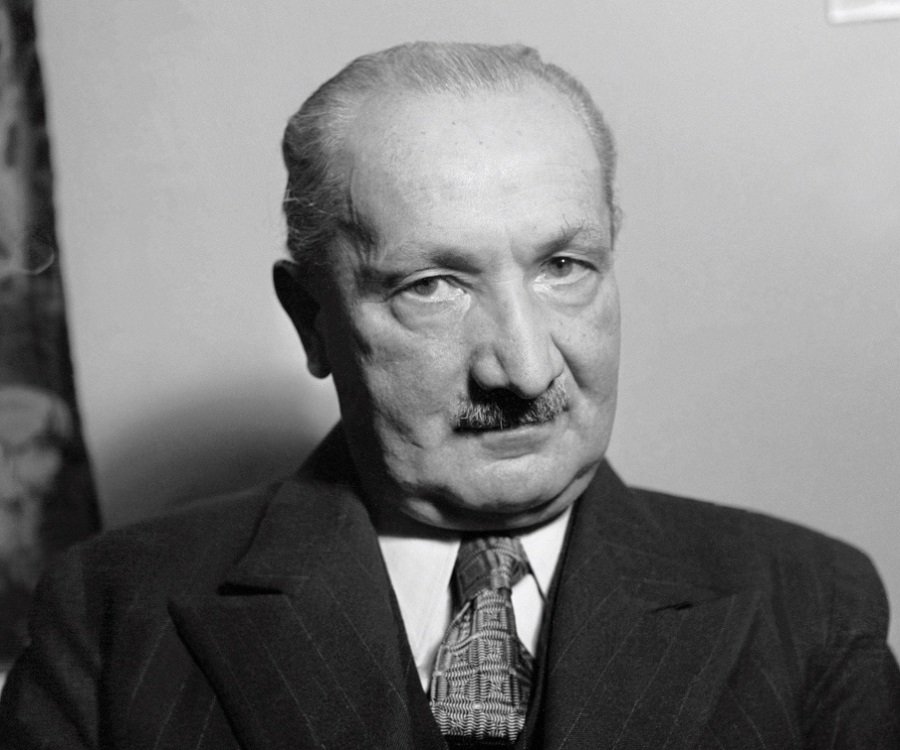
Martin Heidegger

heidegger

Metaphysics, however, speaks continually and in the most various ways of Being. Metaphysics gives, and seems to confirm, the appearance that it asks and answers the question concerning Being. In fact, metaphysics never answers the question concerning the truth of Being, for it never asks this question. Metaphysics does not ask this question because it thinks of Being only by representing beings as beings. …

Due to the manner in which it thinks of beings, metaphysics almost seems to be, without knowing it, the barrier which keeps man from the original involvement of Being in human nature.

What if the absence of this involvement and the oblivion of this absence determined the entire modern age? What if the absence of Being abandoned man more and more exclusively to beings, leaving him forsaken and far from any involvement of Being in his nature, while this forsakenness itself remained veiled? What if this were the case – and has been the case for a long time now? What if there were signs that this oblivion will become still more decisive in the future?

Would there still be occasion for a thoughtful person to give himself arrogant airs in view of this fateful withdrawal with which Being presents us? Would there still be occasion, if this should be our situation, to deceive ourselves with pleasant phantasms and to indulge, of all things, in an artificially induced elation? If the oblivion of Being which has been described here should be real, would there not be occasion enough for a thinker who recalls Being to experience a genuine horror? What more can his thinking do than to endure in dread this fateful withdrawal while first of all facing up to the oblivion of Being? But how could thought achieve this as long as its fatefully granted dread seems to it no more than a mood of depression? What does such dread, which is fated by Being, have to do with psychology or psychoanalysis?

Suppose that the overcoming of metaphysics involved the endeavor to commence with a regard for the oblivion of Being – the attempt to learn to develop such a regard, in order to experience this oblivion and to absorb this experience into the involvement of Being in man, and to preserve it there: then, in the distress of the oblivion of Being, the question, “What is metaphysics?” might well become the most necessary necessity for thought.

Thus everything depends on this: that our thinking should become more thoughtful in its season. …

Will Christian theology make up its mind one day to take seriously the word of the apostle and thus also the conception of philosophy as foolishness?

…

Nihilism has a very specific meaning. What remains unquestioned and forgotten in metaphysics is Being; and hence, it is nihilistic.

…

Cue The Matrix.

Epistemology & The Soul

Preface

It was shortly after finishing the second edition of Natural Theology & Classical Apologetics that I wrote this essay. It is clear that at the time of this writing I did not possess the understanding of some of the ideas that I now have. Some ideas in this essay are oversimplified and reflect the infancy of my own understanding.

Epistemology and the Metaphysics of the Soul

by Joshua Synon

If I have a book which understands for me, a pastor who has a conscience for me, a doctor who decides my diet, I need not trouble myself. If I am willing to pay, I need not think. Others will do it for me.

– Immanuel Kant

When I began to inquire into the relationship of the body to the mind, spirit, or soul, I had no idea how deeply profound the topic really is, and how hotly debated it has been throughout history. Most people today would explain, in a very Neoplatonic way, that the human soul is analogous to a truck driver with the body being the truck. This is an ancient approach to the issue that is termed dualism in which the human being is comprised of two ontologically separate substances, namely the body and the soul. In this vitalistic understanding, the soul, the vital essence of life, is said to live on after bodily death and, hence, is the real us, the truck driver. In most cases, it seems, the soul is synonymous with the mind. But dualism is not the only view of reality prevalent in history. What evidence do we have that a soul or a vital substance that is ontologically separate from matter actually exists? Cannot the natural sciences explain self-consciousness and thought in totality? Many have thought so and, if so, then there seems to be no need to postulate a separate substance that animates our body. This latter group posits that all that exists is the material world of matter and energy.

The ancient Eastern sages did not develop great epistemological systems, mostly because they were a more practical lot, but they seem to believe the nature of the human soul to be part of a mystical grand system of order, perhaps a universal consciousness or a type of pantheism, which has moral responsibilities to other beings. They seem to presume that we are spiritual creatures. Some claim that reality is multifaceted and therefore ultimately inarticulate. The goal of the Buddhist, for instance, is to achieve a state of complete emptiness or “no-thing-ness” with only experience of the moment remaining, a completely spiritual and selfless state of being. Western thinkers, however, have attacked the notion that consciousness can exist without sense data to interpret or think about. In this case, what is one really conscious of? To answer that one is conscious of his own consciousness is only begging the question.  As soon as consciousness is conscious of some “thing” an interpretation has already taken place.

As Eastern mysticism has not satisfied the majority of Western thinkers, the West has developed grand epistemological and metaphysical systems, grounded in reason, that attempt to make sense of reality and discover the true nature and purpose of human being. In order to counter the antifoundational and relativistic thinking of the sophists, Plato (427-348 B.C.) argued that for us to even have ideas in our mind there must be an external world (a foundational reality) that we do not directly interact with where these ideas come from. The world that we experience merely takes part in or resembles this perfect and timeless world of Forms (a type of emanationism). From this he developed the notion that all knowledge is recollection. He invoked his famous allegories of the divided line and the cave to explain this point. Plato ultimately divided the soul into three parts: reason, spirit, and appetite. Reason is our rational side, spirit has to do with our will, and appetite is synonymous with our natural desires. Plato taught that reason should rule our spirit and appetite. The nature of the soul was said to be immortal and upon bodily death, then, it was said that the soul is released into this perfect reality of Forms, which later became adopted by the Christians as the concept of Heaven. This dualistic view led Plato’s followers, including said Christians, to view the body as evil or a type of prison for the soul.

Aristotle (384-322 B.C.) was by far Plato’s greatest student and, even so, disagreed with his teacher on many grounds. Aristotle was a naturalist and thus rejected the existence of a separate world of perfect Forms. He rather took the stance that the “Form” of a thing is actually in the thing itself. Aristotle posited that everything can be explained in totality in terms of four causes: material, formal, efficient, and final. The material cause is simply the substance or matter that a thing consists of. The formal cause is what makes a thing as it is. The form of a thing, for Aristotle, was synonymous with the soul. The efficient cause is simply the how of a thing; how it has come into existence, what (materially speaking) caused it to be. The final cause is synonymous with the end or purpose of a thing. Consider the example of a statue of a woman. The material cause would be stone; the formal cause a statue of a woman; the efficient cause the sculptor; the final cause the depiction of a woman for the sake of aesthetic or religious value. Aristotle had this idea that formed matter held its final cause, its entelechy as he called it, its ultimate purpose, within itself. It is the job of the formed matter to realize this purpose or entelechy. Modern functionalism is reminiscent of Aristotle’s concept of the soul.

Aristotle held that the human soul is entelechy. It is therefore incoherent to suggest that the soul could be separated from the body. Additionally, he suggested that there exist three types of soul: vegetative, sensitive, and rational. All the vegetative soul does is absorb matter from other things. Plants could be said to possess this type of soul. The sensitive soul is a step up in that it can “register information regarding the form of things, but does not absorb or become those things” (Soccio 170). Animals possess the sensitive soul. Human beings are said to possess the highest form of soul, the rational form. This form includes the other two, but goes beyond with “capacities for analyzing things, understanding various forms of relationships, and making reasoned decisions” (ibid). A human being can choose to realize his entelechy or not. For Aristotle, the soul is not a separate mystical reality such as dualism might suggest. The formed body cannot exist without the soul, and vice versa. It is nonsensical to speak of the soul without reference to a body of some sort. In effect, his approach is dissatisfying to many because it seems to deny any notion of life after death. But in all actuality, his view does not, indeed cannot, negate a personal afterlife. It simply has nothing to say of such matters. In any case, the ancient Greeks were of diverse opinion with some considering biological reproduction (or even “intellectual offspring”) sufficient to constitute the notion of human immortality.

One intriguing view that is related to Aristotle’s is termed nonreductive physicalism. This is a form of materialism, but it claims that the form of something, including mental processes, cannot be reduced to merely physical aspects. Thus, physics alone can never fully explain the universe. “Philosophers of mind call the subjective aspects of mental events qualia (or raw feels). There is something that it’s like to feel pain, to see a familiar shade of blue, and so on; there are qualia involved in these mental events. And the claim is that qualia seem particularly difficult to reduce to anything physical” (“Dualism”). There have been many attempts to explain these qualia, both physically and mentally based theories. Nonreductive physicalism seems to hold to a form of property dualism, which “asserts that when matter is organized in the appropriate way (i.e. in the way that living human bodies are organized), mental properties emerge” (ibid). Like Aristotle’s position, this position cannot say anything about life after bodily death. Any notion of an afterlife would be purely speculative.

Thomas Hobbes (1588-1679), an English political philosopher, was of the opinion that, “All that exists is bodies in motion.” The natural sciences and modern psychology seem to be inclined to a materialistic monism, or physicalism, which claims that matter is all that exists. In this system, mental states are reduced to nothing more than physical states. Consciousness is then merely an artificial property that we ascribe to ourselves in an attempt to meaningfully describe the interaction of various atoms and chemicals in an otherwise random and meaningless system. Colors and sounds are merely waves and vibrations that we artificially apply meaning to. It must follow that we also ascribe artificial meaning to morality, the soul, and free will.

Hobbes believed that before each decision we make, we unconsciously (and/or consciously) and mechanistically weigh a list of pros against a list of cons to decide which choice to make in a matter. We will always choose, it is claimed, whichever decision will bring the most pleasure and/or relieve the most pain, whichever decision will fulfill the strongest present desire. If we do happen to choose otherwise, it is only because we were ignorant of the opposing list, and the result is a “bad” decision. This way of thinking is reminiscent of Socrates’ view that it is impossible for a human to knowingly will evil. The trouble that I run into with this theory is in finding a basic principle that defines pleasure.

The natural schools of science such as behaviorism, eliminative materialism, and type identity theory hold that everything can be explained in full by physical laws and natural processes. As such, they are deterministic and mechanistic views that seem to deny the reality of free will and an external supernatural or nonphysical reality. Indeed, a truly free will makes no sense in a determined universe, it is quite inconceivable. If our actions are just effects of biological and physical processes, then there is no such thing as morality or responsibility. Free will is then an illusion. Atoms cannot make choices. Mind, therefore, is really matter and there is no getting past our human nature. Modern psychology has attempted in many ways to describe the human mind in purely physical ways.

Hobbes, however, was a compatibilist with regard to free will. He would define free will in a different way than most would today. Rather than claim that free will is the absolute ability to choose between two or more options concerning a matter, he would claim that free will is “a hypothetical ability to have chosen differently if one had been differently psychologically disposed by some different beliefs or desires” (“Compatibilism”). With this definition, free will is said to be compatible with a determined universe. But this definition seems to lack the complete and utter freedom that “free will” implies. It would seem, rather, that we are definitely influenced by beliefs, desires, and physical “laws,” but by no means determined. However, more problems arise when we attempt to prove the free will of beings other than ourselves.

It seems a mistake, as Hume would suggest, to generalize these laws of physics and then apply them back to human actions and claim that mankind is completely deterministic, thereby opposing the commonsensical notion of free will. As Kant argued, which we will see later, “[W]hen a theory results in conclusions that are clearly inconsistent with experience, real-world evidence must outweigh theoretical consistency” (Soccio 325). Though some people argue for a strict determinism, nobody lives as though they actually believe it. It must be noted, however, that even if the mind can be fully explained via natural processes it seems that, although it would rule out the need to invoke a soul, it cannot deny the possibility of a soul (as we will also see later).

Some claim that modern quantum mechanics lends support to the notion of free will. In the tiny world of quantum physics, it is said that events can occur without any reason whatsoever, essentially randomly. To some, this implies that not everything is determined, including the human will. But the problem here is that this would reduce free will to a purely random, chaotic phenomenon. Free will is indeed indeterminate in a sense, but it is still caused by an act of volition on the free agent’s part. Since both pure determinism and pure chaos are opposed to free will, quantum physics does not seem to lend much help to the argument for free will. It does, however, go to show that we cannot definitely state that the universe is strictly determined, thus leaving the door open for faith in free will.

René Descartes (1596-1650), a noted French philosopher, is generally considered the father of rationalism in modern philosophy. He posited that the only way to gain absolutely certain knowledge is through reason alone (i.e. a priori). He chose to doubt everything that his senses told him because he believed that they could be deceiving him: perhaps we are all now dreaming, or perhaps there is an evil demon that is deceiving us. In doing so, he started with a blank slate and his first conclusive, undoubtable claim was the knowledge that he exists as a thinking being. This thinking being, he concludes, is his mind or soul and exists independent of the body. The view is espouses is termed substance dualism, which holds that the mind and body are distinct and separate substances. Unlike much of Christendom, Descartes makes no distinction between the mind, spirit, or soul. But if the dualistic model is true, then how can the soul actually interact with the body and vice versa (save the speculative and mystical notions of occasionalism or parallelism, both of which invoke God, but have no real explanatory power)? If the mind is substantially different than the body, then why is it that when the body drinks, the mind becomes drunk? Descartes would reject the truck driver analogy in favor of a more intimately united theory with the pineal gland being the epicenter of interaction between body and soul. He then proceeds to prove the existence of a good God a priori via ontological arguments and develops a trust of his basic senses on that foundation.

While reading Descartes’ Meditations on First Philosophy, however, I began to ask some serious questions and found that I was not alone in my inquiry. What can a mind without a body know or even think about? Is it really possible to know anything a priori? Certainly a spirit cannot know anything a priori pertaining to bodily or sensational experience because it lacks a body itself. It has been postulated that things such as mathematics and geometry are true a priori independent of whether anybody knows this or not. But can a spirit know such things a priori? Concepts such as mathematics and time exist as human ideas of relations of objects and events, but do they actually exist in and of themselves as Plato would claim? How can mathematics or geometry be knowable in a purely spiritual or rational realm, as the are both merely descriptions of relationships between material objects of human perception? Once we invoke bodies, then mathematics seems to apply. But before that, there is nothing for mathematics to explain. It seems impossible to teach a spirit the concept of numbers or for a spirit to even think about mathematics. Indeed, I cannot think ofanything that a spirit could think about without reference to any material form. Similarly, it would seem that if we were to shut off all of our senses, we could not think of anything other than, perhaps, our past experiences while in the body. It seems, then, that experience must be the ultimate seat and cause of all knowledge. Furthermore, if a spirit cannot think about anything or know anything (besides, perhaps, past bodily experiences), and a spirit is defined as mind without body, then is it really mind? Is it not rather nothing? This is not even to mention the complex processes involved in the human brain. It seems to follow that if God is spirit, as is traditionally thought, the only conclusion to be reached is that God is nothing – nonexistent. As we will see later, Descartes failed in his attempt to prove the existence of God or even the reality of the self.

The view that all knowledge comes from experience (a posteriori) is termed empiricism and was espoused by an influential English philosopher named John Locke (1632-1704). This man came to deny the possibility of innate, a priori, ideas. He believed that human beings are born with a blank slate, a tabula rasa, which is gradually filled with sense data. Locke claims that, “Nothing exists in the mind that was not first in the senses.” He does recognize, however, along with Descartes, that we do seem to possess a substance that is separate from our body; a thinking substance. Locke divided qualities of experience into two categories, namely primary and secondary qualities. Primary (i.e. objective) qualities are those that are independent of any perception of them, such as shape, size, and location in space. Secondary (i.e. subjective) qualities are those that depend on the perceiver, such as color, sound, or taste (Soccio 290). In Locke’s epistemology our experiences are nothing more than photographs or copies of the real thing (think re-presentation). As we all know, a photograph is never equal to the real thing. Therefore, we can never experience any thing-in-itself as it exists objectively. But if everything that we think we know about external things is actually just sense data in our own minds, then how can we even be sure that there exists anything outside of our own minds (cf. solipsism)?

Ah, but what if the only thing that actually exists is mind (or will)? What if what we call reality and matter is actually an effect of, and dependent on, the mind or soul, an active product of the thinking spirit? Would this not solve our problem? George Berkeley thought so. He took Locke’s epistemology a step further to one of its extreme, albeit logical, ends. Berkeley contends that all that really exists are Locke’s secondary qualities. We cannot even say anything about primary qualities, for it would be unintelligible to attempt speaking of them. So who is to say that they exist when nobody is perceiving them? This would relieve us from looking for meaning in our existence because existence would be meaning. God would, of course, be the ultimate mind, which makes all other minds possible. If this were the case, however, it would seem that I could simply will certain things to happen, such as bending a spoon with my mind. But perhaps there are mental limits imposed by God that prohibit my mental bending of the spoon. God is what holds everything in existence while we are not experiencing it, for he is the all-perceiver. This can easily lead to a form of pantheism, such as that which Spinoza espoused. However, Berkeley failed to prove the existence of an all-perceiver. In this case, however, it seems to make absolutely no difference to our experience whether noumena exist or not, whether we label it as matter or mind. It seems that Berkeley was simply giving a different name to the same thing as the materialists.

The renowned British empiricist David Hume (1711-1776) pursued Locke’s epistemology to its furthest logical end. In his works, Hume “makes compelling arguments against materialism, the possibility of a spiritual, supernatural reality, and personal immortality… [and] challenged established religious beliefs, moral judgments, reason and rationalism, earlier forms of empiricism, and the certainty of science” (Soccio 296). He was of the opinion that neither matter nor mind exist, a complete skeptic or agnostic. He denied that we can know anything. He even denied the concept of a persisting self. When I speak of me, what am I speaking of? This thing that is doing the speaking of course. But can I explain the concept of me outside of any sensational experience? I cannot think of a way to do so, to describe my mind, or my self, without reference to my body or its perceptions. It seems, then, that the mind is inseparable from the body. We seem to be merely a bundle of sense perceptions, impressions as Hume called them, that are diluted into “ideas” (synonymous with Locke’s copy theory). If something did not come from an impression then it is meaningless. His conclusion is “that identity is not a property of things, but a mental act” (Soccio 302).

Furthermore, Hume tells us that “beliefs that cannot be reduced to sense experience are technically not ‘ideas’ at all: They are meaningless utterances” (Soccio 300). Included in these beliefs that are not empirically experienced are those of God and the spirit or soul. If my body is not different in any sense from my spirit or my self, then life after bodily death seems to be ruled out. Again taking Locke’s epistemology to its logical conclusion, Hume concludes that the only thing we can know is our own perceptions, which occur in some type of pattern or regularity to which we ascribe meaning and coherence. He denies the rationality of inductive logic, which science depends on. Induction “reasons from the particular to the general” (Soccio 304). But Hume would claim that we have no right to make that jump. This is why he rejects even seemingly self-evident concepts such as cause and effect or objective morality. David Hume’s philosophy has devastating effects on faith, reason, and science. He concluded that we can be sure of absolutely nothing. But surely nobody can consistently live a truly skeptical life. The only reason Hume gives for being able to live a normal life in light of his skepticism is that nature tends to take over and fill in the gaps when he is not thinking about it (Soccio 304). This complete skepticism really leaves us nowhere and gives us nowhere to go, not only concerning the relationship of the mind to the body, but concerning anything at all.

Thus far we have explored dualistic and monistic (both physical and mental) views of reality. However, there also exist two other less widely known views: pluralism and neutral monism. While the former posits that there exist more than two essential substances in the universe, the latter suggests that there does indeed exist only one substance, but that substance is neither material nor immaterial. Rather, this single substance is said to be neutral, capable of existing as both matter and non-matter. Some have claimed, however, that this is simply a rehash of Berkeleian idealism. Each of these, however, seem to be venturing into the metaphysical realm of unfalsifiability.

Perhaps it is again a mistake to generalize things. Strict materialism, any type of monism really, seems to be begging the question in that it defines everything that exists and is sensible as matter and natural and then claims that nothing exists besides matter and the natural. If any genuinely new type of thing were to be discovered, including something that many would deem supernatural or somehow inherently new, it could then be labeled natural, sensible, and material. Idealism seems to do the same exact thing. In this way they are both unfalsifiable and seem to be giving different names or descriptions for the same exact stuff.

Perhaps our definition of spirit as mind without body is flawed. Perhaps the soul is as complex, in some way, as the body. Perhaps we cannot properly understand the nature of spirit. As my studies continued I inevitably encountered the German philosopher named Immanuel Kant (1724-1804). Kant’s philosophy was an effect of the inadequacies of the two major philosophical schools and the deterministic implications of science in his day. The rationalists “established grand systems of logical relationships ungrounded in observation or perception,” while the British empiricists viewed “the human mind as the passive receiver of impressions and experiences” (Soccio 322-3). All the empiricists were left with in the end were ideas, which could never really bring them back to experience of external realities, the result of which was “Hume’s admission that we must believe in an external world, in selves, and in causes and effects, without ever knowing them” (ibid).

Kant saw philosophy tending toward absurd conclusions and science leading to a mechanistic universe with no basis for free will or morality. Moreover, a strict empiricism, Kant claims, aside from presupposing what it sets out to disprove, restricts us from making judgments about our experience, while a strict rationalism produces antinomies such as it being possible to prove both that the world had a beginning in time and is limited in space and that the world had no beginning and has no limits. As both notions are absurd, it would seem that neither reason alone nor sensations alone can render knowledge.

Kant began by stating that the normal division of knowledge into a priori and a posteriori was insufficient:

[The] old division between a priori truths and a posteriori truths employed by both camps [rationalism and empiricism] was insufficient to describe the sort of metaphysical claims that were under dispute. An analysis of knowledge also requires a distinction between synthetic and analytic truths. In an analytic claim, the predicate is contained within the subject. In the claim, “Every body occupies space,” the property of occupying space is revealed in an analysis of what it means to be a body. The subject of a synthetic claim, however, does not contain the predicate. In the phrase, “This tree is 120 feet tall,” the concepts are synthesized or brought together to form a new claim that is not contained in any of the individual concepts. The Empiricists had not been able to prove synthetic a priori claims like “Every event must have a cause, because they had conflated “synthetic” and “a posteriori” as well as “analytic” and “a priori.” Then they had assumed that the two resulting categories were exhaustive. A synthetic a priori claim, Kant argues, is one that must be true without appealing to experience, yet the predicate is not logically contained within the subject, so it is no surprise that the Empiricists failed to produce the sought after justification. The Rationalists had similarly conflated the four terms and mistakenly proceeded as if claims like, “The self is a simple substance,” could be proven analytically and a priori.

Synthetic a priori claims, Kant argues, demand an entirely different kind of proof than those required for analytic, a priori claims or synthetic, a posteriori claims. Indications for how to proceed, Kant says, can be found in the examples of synthetic a priori claims in natural science and mathematics, specifically geometry. Claims like Newton’s, “the quantity of matter is always preserved,” and the geometer’s claim, “the angles of a triangle always add up to 180 degrees” are known a priori, but they cannot be known merely from an analysis of the concepts of matter or triangle. We must “go outside and beyond the concept… joining to it a priori in thought something which I have not thought in it.” … A synthetic a priori claim constructs upon and adds to what is contained analytically in a concept without appealing to experience. So if we are to solve the problems generated by Empiricism and Rationalism, the central question of metaphysics in the Critique of Pure Reason reduces to “How are synthetic a priori judgments possible?” … If we can answer that question, then we can determine the possibility, legitimacy, and range of all metaphysical claims. (McCormick)

Kant proposed an extraordinary idea, such that he termed it a Copernican Revolution of his own in philosophy: “He would reverse the course of his philosophical predecessors and assume that instead of the mind having to conform to what can be known, what can be known must conform to the mind” (Soccio 325). Knowledge then becomes a “kind of interaction, a two-way street between the knower (the subject) and the known (the object)” (ibid).

Kant’s answer to the question is complicated, but his conclusion is that a number of synthetic a priori claims, like those from geometry and the natural sciences, are true because of the structure of the mind that knows them. “Every event must have a cause” cannot be proven by experience, but experience is impossible without it because it describes the way the mind must necessarily order its representations. (McCormick)

Kant divides reality into two categories: phenomenal and noumenal. The phenomenal is reality as we experience it, while the noumenal is reality as things are in themselves. The only thing we can know about noumena is that it exists, at least logically:

We can experience only what our human faculty of understanding is capable of… Kant argues that although we cannot directly experience noumena, a special class of transcendental ideas bridges the gap between the phenomenal and noumenal worlds. Empirical ideas are validated by sense data (experience). Transcendental ideas are “triggered” by experience when we rely on them to impose unity on the totality of our experiences. They “unify” or “make possible” having experience in the first place. Without some sort of unifying structure, Kant argues, the mind could not ‘experience’ raw sense data. It would be meaningless, undifferentiated – unexperienced. (Soccio 327)

These transcendental ideas, almost reminiscent of the Greek logos, can be said to be structures in the mind that interpret phenomena. It is this structuring in the mind that makes any experience possible. Kant developed a table of categories that is comprised of these ideas or structures. “Kant identified three transcendental ideas: self, cosmos (totality), and God… Kant goes on to say that we must act as if self, cosmos, and God refer to existing things but that, as in the case of all noumena, there is no way empirically to verify that they do. They refer to universal ideas that regulate human understanding” (Soccio 328). These ideas or structures make up the faculties of synthesis and understanding in the mind:

We must assume the ideas of God, freedom, and immortality, Kant says, not as objects of knowledge, but as practical necessities for the employment of reason in the realm where we can have knowledge. By denying the possibility of knowledge of these ideas, yet arguing for their role in the system of reason, Kant had to, “annul knowledge in order to make room for faith.” (McCormick)

Kant holds that the very intelligibility of the universe necessarily implies certain ideas, including God, but that the nature of human reason renders direct (noumenal) knowledge of the ontological status of such a transcendental (noumenal) being utterly impossible. In saying this, “Kant means that God is not the kind of thing that can be verified by an appeal to experience… Kant, however, claims that it is not possible to dismiss the idea of God…” (Soccio328). However, “a consciousness that apprehends objects directly, as they are in themselves and not by means of space and time, is possible – God, Kant says, has a purely intuitive consciousness – but our apprehension of objects is always mediated by the conditions of sensibility” (McCormick).

The metaphysical implications of Kant’s transcendental idealism are staggering. His philosophy is to be differentiated from the idealism of, say, Berkeley because Kant is an empirical realist. However, he says that we can only know things as they appear to us. His revolution ratified the sense of self and an external reality, and therefore the natural sciences, from Hume’s radical skepticism, pronounced the subjectivity of truth (which was later expounded on by the existentialists), and threw most metaphysics and speculative theology out the window. There could be an infinite amount of things out there that are real, but we as human beings cannot say anything about them. We cannot possibly comprehend them, unless we are afforded some new type of sense. It would be like trying to teach a man blind from birth the concept of color; like a sphere trying to describe the concept of three dimensions to a circle. Even then, we could still only know some new phenomena, but not the noumena directly. It seems to follow that the only way for human beings to understand anything about a metaphysical reality outside of the five senses must be in the form of analogy from a divine or supernatural source. Even then we cannot properly understand the details of any different metaphysical reality. We can only be certain that a reality outside of what we experience does indeed exist. This would seem, then, to lead toward a type of theological agnosticism. Moreover, it appears that Plato’s cave allegory fits quite nicely with Kant’s philosophy. Any man that has indeed seen beyond what normal humans sense would have trouble explaining it to others.

Kant also lays out a remarkable moral philosophy that is described as a sense of duty found within all rational creatures, which posits the reality of free will and moral responsibility: “Kant asserts that it is possible to be both determined, or unfree (in the phenomenal world), and free (in the noumenal world)” (Soccio 330).

While it is interesting to speculate, it may not be possible until bodily death to say anything absolute about the nature of the human soul or what happens to it thereof. Perhaps we shall never know. Where any of this gets us in life I have failed to ascertain. Perhaps the ancient Eastern sages were wise in not wasting time developing elaborate epistemological systems. Any system that attempts to explain the universe is going to be inadequate and insufficient. Perhaps we should stop all of this nonsensical reasoning and begin to live life instead of attempting to make sense of it.

It is easier to indulge in abstract thought than it is to exist.

– Kierkegaard

You will never be happy if you continue to search for what happiness consists of. You will never live if you are looking for the meaning of life.

– Albert Camus


Bibliography

“Compatibilism.” Wikipedia. 26 April 2006. http://en.wikipedia.org/wiki/Compatibilism.

Descartes, René. “Meditations on First Philosophy.” The Philosophy Source. Version 3.0. CD-ROM. Belmont: Wadsworth/Thomson Learning, 2004.

Gogan, Aisling. “God in Kant’s Critique of Pure Reason.” Memorial University of Newfoundland. 26 April 2006. http://www.mun.ca/phil/codgito/vol3/v3doc1.html.

McCormick, Matt. “Immanuel Kant – Metaphysics.” The Internet Encyclopedia of Philosophy.Ed. James Fieser. 2006. 26 April 2006. http://www.iep.utm.edu/k/kantmeta.htm.

O’Connor, Timothy. “Free Will.” Stanford Encyclopedia of Philosophy. Ed. Edward N. Zalta. 2005. 26 April 2006. http://plato.stanford.edu/entries/freewill/.

“Philosophy of Mind.” Wikipedia. 26 April 2006. http://en.wikipedia.org/wiki/Mind-body_problem.

Pratt, David. “Consciousness, Causality, and Quantum Physics.” Exploring Theosophy.1997. 26 April 2006. http://ourworld.compuserve.com/homepages/dp5/jse.htm.

Robinson, Howard. “Dualism.” Stanford Encyclopedia of Philosophy. Ed. Edward N. Zalta. 2003. 26 April 2006. http://plato.stanford.edu/entries/dualism/.

Soccio, Douglas. Archetypes of Wisdom: An Introduction to Philosophy. Belmont: Wadsworth/Thomson Learning, 2004.


View on Academia.edu

View on PhilPapers

Natural Theology & Classical Apologetics

Preface

This is the second edition of an essay that I felt compelled to write in 2006. The first edition was quite uncritical of the various arguments examined. However, after further study, I felt the need to revise the arguments and, ultimately, the conclusion. Although I may no longer agree with everything written in this essay it remains an important part of my spiritual journey. Some ideas in this essay may be oversimplified and reflect the infancy of my own understanding.

Back when I attended church regularly I had a friend try to explain to me that Christianity is not a religion, but a relationship. However, I was primarily concerned with pursuing the “truth” no matter the consequences. This was my curse. Only years later did the epiphany strike me of what exactly he was trying to convey.

For since the creation of the world His invisible attributes are clearly seen, being understood by the things that are made, even His eternal power and Godhead, so that they are without excuse, because, although they knew God, they did not glorify Him as God, nor were thankful, but became futile in their thoughts, and their foolish hearts were darkened. Professing to be wise, they became fools, and changed the glory of the incorruptible God into an image made like corruptible man.

– Romans 1:20-23

Beware lest anyone cheat you through philosophy and empty deceit, according to the tradition of men, according to the basic principles of the world, and not according to Christ.

– Colossians 2:8

Natural Theology and Classical Apologetics

By Joshua Synon

In former times, one sought to prove that there is no God—today one indicates how the belief that there is a God arose and how this belief acquired its weight and importance: a counter-proof that there is no God thereby becomes superfluous.—When in former times one had refuted the ‘proofs of the existence of God’ put forward, there always remained the doubt whether better proofs might not be adduced than those just refuted: in those days atheists did not know how to make a clean sweep.

– Friedrich Nietzsche

Why is there something rather than nothing? Or in a more subjective sense – How and why do I exist? These questions have intrigued mankind for thousands of years. Is it possible to prove the existence of God? Each side of this ancient debate is by no means lacking of great scholars and philosophers. Everybody believes in a higher power whether it be a natural force or a personal God. Even in ancient Eastern philosophy it was taught that there is a force beyond our control that guides us and gives life direction (e.g. Taoism).

Some claim that belief in the existence of a personal God is entirely reasonable. Others argue that such belief is completely irrational and unreasonable, that God is essentially an outdated hypothesis grounded on ignorance. Those in line with Reformed epistemology argue that positive apologetics are unnecessary, that mankind is justified in assuming that God exists. Still others argue for the presumption of atheism, placing the burden of proof on the theist. For the sake of argument, it will be assumed that man is not justified in claiming the existence of God as self-evident. It will also be assumed that knowledge of God is possible.

Defining God

The first task will be to get a working definition of God. The traditional theistic conception of God is generally a being of which there is no greater; that which created matter, but is himself immaterial (spiritual); an atemporal being, existing outside of time; not a force, but a person; infinitely just and loving; therefore, worthy of devotion and worship. This God is reminiscent of Plato’s Form of the Good (albeit personal) and possesses all perfections. The theological noncognitivist would argue that the term God is meaningless. However, many would claim it contradictory to say that the term God is meaningless, for without an ultimate (objective) source of meaning (of which God is equivalent) there is no such thing as (objective) meaning. Hence, the statement that the term God is meaningless would itself be meaningless.

But it has been questioned (by great minds such as Aristotle and Kant among many others) whether God (the Platonic Ideal; the “Good”) is really needed for meaning or intelligibility. Sartre went so far as to deny that even God cannot give us a life of meaning. Still, the theological noncognitivist would hold that nobody really knows exactly what they are talking about when they say God, for the proposed attributes of the theistic God are inherently incoherent to us. In any case, we will be using the traditional theistic concept of God as our framework here.

The Teleological Argument

Teleological arguments are perhaps the easiest to understand and they date back as far as the ancient Greek philosophers. The word teleological comes from the Greek root telosused to denote an end, purpose, or goal (Soccio 173). As such, the teleological argument is also known as the argument from or to design, postulating that every design must have a designer. Supporters of the argument hold that the universe has many hints of design and therefore must have an intelligent designer. William Paley (1743-1805), an English theologian, “…insisted that if one found a watch in an empty field he would naturally and correctly conclude that it had a watchmaker. Likewise, if one studies the more complex design found in the natural world, he cannot but conclude that there is a world Designer behind it” (Geisler 88). This is the major argument used by controversial neocreationist groups such as the Intelligent Design movement. The movement argues that it is almost infinitely improbable that mere chance can account for the fine-tuning of the solar system and the seemingly irreducible complexity of many biological forms; they attempt to attribute these things to an ultimate Designer (i.e., God). Still others, such as Kant, hold that the very intelligibility of the universe necessarily implies the idea of God, but that the nature of human reason renders knowledge of such a transcendental being utterly impossible.

Objections to the teleological argument come mostly in the form of those posed by David Hume (1711-1776), the radical British skeptic. These include contentions that the analogy drawn between man-made designs (such as Paley’s watch) and nature is not very good, suggestions that chance can possibly account for the existence of mankind, and questioning the conclusion of the argument as adequately describing the theistic God. Hume argued that the teleological argument reduced the existence of God to something that is merely probable at best. In recent times, most objections to the teleological argument are aimed at showing that random chance can indeed account for the apparent hints of design found in the universe. Hume argued that, “Given enough time it is possible that chance reshuffling would produce any given combination of elements including the human eye, the human anatomy, and the whole of the so-called order of nature” (Geisler 89). If there is infinite space and time, then, it seems, there is an infinite amount of possibilities, including the universe experienced today. Norman Geisler, a contemporary philosopher and theologian, argues that “the immensity of the universe does not help the chance hypothesis [because] the mere possibilities in the unknown universe cannot outweigh the probability in the known universe.” When the universe is fully examined it may be that it argues more so for design than chance (232).

Proponents of the Intelligent Design movement argue that infinite time does not allow for infinite possibilities based on the second law of thermodynamics, commonly known as entropy, which states that closed systems tend to move toward disorder and disorganization. If the universe had no beginning, they claim, then it would now be in a state of heat death. However, it must be noted that it is an incoherent claim that the universe is materially infinite because infinite is merely a mathematical nuance that can have no ontological status. Furthermore, it is also nonsensical to claim that the universe is finite because the question is immediately raised of what lies beyond the universe. It seems that we can make no absolute claim as to the size of the universe.

Furthermore, the probability that the current universe with all of its abounding life on Earth arose by way of pure chance is infinitesimally small. Julian Huxley (1887-1975), a British biologist, is said to have “calculated the odds against a purely chance evolution of life at 1 to 1,000 to the millionth power (i.e., one followed by 3 million zeros)” (Geisler 233). The naturalist, however, sees that the universe indeed exists and therefore has to live with those slim odds. Geisler further argues that supposing atheism from the argument from chance is self-defeating: “Chance makes sense only on the backdrop of design, as meaninglessness can be understood only in the overall context of meaning… there is no way to even express the state of complete randomness without implying that there exist such characteristics of design as relatability, or even intelligibility” (ibid). Therefore, chance, it seems, cannot prove atheism, it can only allow for its possibility, however slim. In much the same way, as Hume points out, the argument from alleged design, however convincing it may be, does not provethe God of traditional theism:

But were this world ever so perfect a production, it must still remain uncertain, whether all the excellences of the work can justly be ascribed to the workman. If we survey a ship, what an exalted idea must we form of the ingenuity of the carpenter, who framed so complicated, useful, and beautiful a machine? And what surprise must we feel, when we find him a stupid mechanic, who imitated others, and copied an art, which, through a long succession of ages, after multiplied trials, mistakes, corrections, deliberations, and controversies, had gradually been improving? Many worlds might have been botched and bungled, throughout an eternity, ere this system was struck out: Much labor lost: Many fruitless trials made: And a slow, but continued improvement carried on during infinite ages in the art of world-making… (Soccio 306)

An interesting argument that relates to Platonic Idealism was posed by a medieval Christian philosopher named Thomas Aquinas (1225-1274). His fourth way, out of five, of proving the existence of God consisted of an argument from gradation. Aquinas argued that there must be an ultimate standard to which people compare things, For example, some things are more beautiful, while others are less beautiful. The more beautiful must be said to resemble a perfect form of beauty more so than the less beautiful, much as Plato would argue. Therefore, there must exist a being that consists of all of these perfections, including beauty, goodness, and so on. God is said to be this perfect being and ultimate standard. Descartes later advanced a similar argument, but this all seems to be edging on the ontological argument, which will be discussed later. A problem can be seen with this type of argument when one suggests that all knowledge is relational or subjective. For instance, it could be posed that, from birth, we gradually learn what others consider “beauty” and then apply it to things on our own. Perhaps beauty is simply familiarity. If this is the case, then there is no such thing as “perfect” and no good reason to employ Aquinas’ ultimate standard or Plato’s Forms.

The Cosmological Argument

It is clear from what has been said that there is a substance which is eternal and unmovable and separate from sensible things. 

– Aristotle

Perhaps the most widely debated type of argument for the existence of God is termed the cosmological argument. This type of argument was named so because it alleges to prove the existence of God using experience and facts about the world or universe: the cosmos. The cosmological argument can be dated back to the days of Plato (427-347 B.C.) and it has been debated by great minds ever since (e.g. Aquinas’ Unmoved Mover). There are multiple variances, but in its most basic form the cosmological argument can be stated thus: Everything that exists has a cause; the universe exists; therefore, the universe has a cause. The first premise simply states that everything that is in existence has a cause for its existence. Nobody can deny the second premise, for in attempting to do so he would only affirm it. The conclusions is that, since the universe exists, and all existing things have a cause for their existence, the universe must ultimately have a cause for its existence. This cause is claimed by theists to be God.

The principle of sufficient reason states that everything needs a cause. Critics such as Bertrand Russell (1872-1970), a British philosopher and logician, object that “if everything needs a cause, then so does God; if God does not need a cause, then neither does the world (Geisler 216). This objection has been resolved in part by a temporal version of the argument termed the kalam cosmological argument, which dates back to medieval Muslim philosophers such as al-Kindi and al-Ghazali (Reichenbach). It was most recently defended by a contemporary philosopher and theologian named William Lane Craig. The argument is reworked thus: everything that begins to exist has a cause of its existence; the universe began to exist; therefore, the universe has a cause of its existence. No longer does God need a cause, the theist claims, as God did not begin to exist. Rather, it is claimed that God is atemporal.

The task at hand is to show that the universe did indeed have a beginning to its existence. Craig goes about this by arguing that an actual (as opposed to a potential) infinite is impossible (Craig). An actual infinite, he suggests, is only logically, not metaphysically, possible. Attempting to follow temporal causes back in time will soon cause one to realize that there seems to be an infinite temporal regress of causes. A beginningless temporal series of causes constitutes an actual infinite. An actual infinite cannot be reached by successive addition, and, therefore, an actually infinite amount of time cannot be traversed. In order to stop this regress the universe must be said to have had a beginning that was caused by an essentially uncaused cause. But this, of course, reveals nothing about any characteristics of the first cause: whether it is a person or a force; if a person, whether it is essentially good or bad, etc.

Critics, however, claim that it is nonsensical to speak of “before” the Big Bang. Time and space as we know it, they claim, were nonexistent “before” the Big Bang and cannot be meaningfully spoken of. Others claim that trying to reach the beginning of time is quite an asymptotic task in which one can get closer and closer without ever reaching it. This, however, seems only to push the problem back and avoid the issue. In any case, it seems that it is meaningless to speak of the beginning of time, as “time” is simply a regulatory idea that we use to make sense of phenomena: nothing really exists except this moment. Time begins when a person thinks about it.

Modal Cosmological Arguments

Another solution to the objection brought up by Russell is the argument from contingency. The existential principle of causality states that every finite, contingent, changing thing has a cause for its existence outside of itself. A thing is said to be contingent if it is possible for it to not exist, making it dependent on something other than itself for its existence. A thing that cannot possibly cease to exist is said to be necessary, as it relies on nothing outside of itself for its existence. This modal form of the cosmological argument can be stated as follows: every contingent thing has a cause of its existence; the universe is contingent; therefore, the universe has a cause of its existence. This avoids the criticism that God needs a cause by positing God as a necessary, rather than a contingent, being.

Jean-Paul Sartre (1905-1980), a French existentialist, objected that in order to end the seemingly infinite temporal regress of causes one must invoke a cause that must be self-caused (Geisler 217). As a self-caused being is impossible, because that would require it to be in existence before it was in existence, it is asserted that God cannot exist. Geisler argues, however, that “since only finite, dependent beings need a cause, [the principle of causality] leads to an infinite and necessary Being that does not need a cause” (225). God is therefore an uncaused, rather than a self-caused, being. Geisler does admit, however, that “the principle of sufficient reason, by demanding that everything needs a cause, does lead to a contradictory self-caused being… theists… must agree with atheists in rejecting arguments based on the principle of sufficient reason” (ibid). Theists, it is claimed, must rather rely on the Thomistic existential principle of causality.

Geisler, in his book entitled Christian Apologetics, pushes an argument from contingency, rejecting both purely a posteriori arguments (as Hume showed that causal relationships cannot be shown to exist in a purely a posteriori fashion) and purely a priori arguments as invalid to prove the existence of God. He attempts, rather, to combine the self-evident a priori principle of existential causality, which states that every effect has a cause (actualization of a potential), and the undeniable a posteriori fact that something contingent exists. It is understood that an effect is simply something that has been caused and a cause is something that can produce an effect (252). He argues for a cause of here-and-now being, rather than of becoming, in such a way that is not subject to many of the previous objections. The question he is attempting to answer is why there is something rather than nothing. Geisler notes that, “The only adequate explanation for why there is something rather than nothing at all is that the something that could be nothing is caused to exist by something that cannot be nothing” (243).

In essence, Geisler’s basic argument is: every effect has a cause; the world is an effect; therefore, the world has a cause (253). He begins by affirming that something undeniably exists (e.g. he cannot deny his own existence. He argues that “his existence must fit one of three logical categories: impossible, possible, or necessary.” His existence is neither impossible nor necessary, but rather possible; thus it follows that his nonexistence is possible. Something that has the possibility of nonexistence is currently caused to exist by another because potentiality is not actuality (239). Reason dictates that there cannot be an infinite regress of current causes of here-and-now being: “If each being is a caused being… then adding up all these effects does not provide a cause for these effects. No amount of effects equals a cause” (245). Therefore, “a first uncaused cause [an unactualized actualizer] of [his] current existence exists” (239). Geisler is here attempting to answer the question of why anything has current here-and-now being at all rather than simply nothing existing, instead of the temporal form of the cosmological argument.

But perhaps the universe is the “something that cannot be nothing.” To this end, Geisler explains, a necessary being, as this uncaused cause is, must be: pure actuality (pure beingas Plato would have it) because if it had any potentiality (becoming) whatsoever with regard to its existence, then it would be possible for it not to exist, which a necessary being cannot do; changeless because change requires potentiality and possibility; nontemporal and nonspatial because space and time involve change and finiteness; eternal because if it ever did not exist, then it would be a possible, contingent existence rather than necessary; one because if there were two or more it seems that none would be fundamentally different from the others in its being; simple and undivided because there is no principle of differentiation in it and whatever is composed has the possibility of being decomposed or destroyed; infinite in all of its attributes because only what has potentiality can be limited; uncaused because whatever is caused passes from potentiality to actuality (240-241).

If we assume that this evaluation is accurate, then it is obvious that human beings are not necessary beings. Mankind and the universe are contingent, limited, and changing beings. Contingent beings must have their being caused to exist by another because “potentiality is not actuality” (Geisler 242). Geisler goes on to explain that this uncaused cause must also be: omnipotent because it is infinite in all of its attributes and must have unlimited causal power; omniscient because the cause of the ability to know must be infinitely knowing; all-good because the cause of goodness must be all-good (247-248). Furthermore, he argues, this being must be personal, as opposed to an impersonal force of sorts, because the cause of personhood cannot be less than personal, although he may be more than what is meant by finite person (249). This infinitely perfect being is appropriately called God.

Geisler’s final conclusion is that since “this God who exists is identical to the God described in the Christian scriptures, it follows that the God described in the Bible exists” (250). However, it does not follow that everything the Bible says about this God is true, but only that the God described in the Bible exists and events attributed to him in the Bible that do not seem to go against his established nature could have happened.

On the contrary, all this talk of a non-local necessary being seems nothing but pure conjecture, especially the specific attributes ascribed to such a being. Geisler’s pure actuality sounds quite similar to Plato’s theory of the Forms. Both, however, seem to dive into the metaphysical realm of unfalsifiable speculation. Furthermore, the necessary being described by Geisler is rather unthinkable and unknowable, a purely logical thing rather than a metaphysical thing. We could not even begin to comprehend such a being, nay, we cannot even begin to comprehend what such nonspatial and infinite attributes even mean. To us, they are apparently meaningless. Indeed, infinite only applies to logic and mathematics, and has no metaphysical equivalent. Furthermore, it does not follow that the being that created matter now has the power to control it, or that this being even still exists. Nor does it follow that the cause of knowledge or personhood must be omniscient or a person. It is presumptuous to claim that there must exist a necessary being, or that, if it does exist, the universe is not such a being.

Various Objections to Cosmological Arguments

Until rather recently, the first premise of the argument has been understood to be self-evident: everything has a cause. However, scientists are claiming that findings in quantum physics undercut the Causal Principle:

On the quantum level, the connection between cause and effect, if not entirely broken, is to some extent loosened. For example, it appears that electrons can pass out of existence at one point and come back into existence elsewhere. One can neither trace their intermediate existence nor determine what causes them to come into existence at one point rather than another. (ibid)

However, Craig points out that:

…quantum events are not completely devoid of causal conditions. Even if one grants that the causal conditions are not jointly sufficient to determine the event, at least some necessary conditions are involved in the quantum event. But when one considers the beginning of the universe, Craig notes, there are no prior necessary causal conditions; simply nothing exists. (ibid)

Quantum events may not have any physical cause, with particles coming into and going out of existence seemingly randomly, which would suggest a non-local reality, but, with regard to the origin of the universe, one prior necessary condition for any of this to even occur is the existence of any energy in the first place. However, as Craig presumptuously notes, the traditional belief is that nothing existed before the beginning of the universe and for a piece of energy to spontaneously pop into existence out of absolutely nothing not only violates established laws of physics, but is blatantly contrary to reason. Nothing comes from nothing and the first law of thermodynamics still holds at the quantum level. However, as nothing comes from nothing, it seems that belief in creation ex nihilo is also irrational. Even so, if current beliefs about quantum events are true, then one of two scenarios is implied: Either there indeed does not exist any efficient cause for quantum events, in which case it follows that one can no longer use the cosmological argument to prove the existence of a first cause, or there exists a nonlocal reality, which we have not found or cannot know.

Hume objected to the cosmological argument on the basis that when the individual parts of the universe are explained, then the whole is explained:

But the whole, you say, wants a cause. I answer that the uniting of these parts into a whole… is performed merely by an arbitrary act of the mind, and has no influence on the nature of things. Did I show you the particular causes of each individual in a collection of twenty particles of matter, I should think it very unreasonable should you afterwards ask me what was the cause of the whole twenty. This is sufficiently explained in explaining the parts. (Reichenbach)

Hume claims that it is sufficient to explain, via natural processes, each of the individual parts of the universe. Hence, there is no need to explain a cause of the universe as a whole. However, his objection fails to provide a reason for “why these parts exist rather than others, why [dependent beings] exist rather than not, [and] why the parts are arranged as they are” (ibid). Kant refuted Hume’s assertion by affirming that the “arbitrary act of the mind” is actually part of what creates the universe. It is as necessary to the phenomena as the objects, the noumena, themselves. Moreover, if each individual part is explained by another part of the universe, it seems that this would inevitably lead to an infinite regress of causes and would never lead to a cause of the existence of the universe.

Also, it seems, that if all of the parts of the universe are contingent, then it follows that the whole of the universe is contingent. However, the critic may argue that the parts of the universe are indeed necessary. Aquinas, anticipating this approach, “goes on to ask whether these beings have their existence from themselves or from another. If from another, then we have an unsatisfactory infinite regress of explanations. Hence, there must be something whose necessity is uncaused.” Aquinas understood this uncaused necessity to be God, but nontheists may contend that the uncaused necessity is matter itself (Reichenbach). This seems to lead to the claim of Russell that the universe just is, an objection which has already been covered by the kalam cosmological argument. Hence, the universe must be contingent since it has a beginning, and, as such, it must have a necessary cause for its existence outside of itself.

In a devastating blow to the cosmological argument, Hume questioned the validity of the causal principle, arguing that “there is no reason for thinking that the Causal Principle is true a priori, for we can conceive of effects without conceiving of their being caused” (Reichenbach). What we perceive and label as cause and effect is actually nothing more than one event followed by another, and we are not justified in generalizing the apparent causality of the event. Hume’s reasoning is logically consistent, but was shown to be fatally lacking shortly after his death by German philosopher Immanuel Kant (1724-1804). Kant argued that there can be no such thing as a necessary being and therefore undercut the cosmological argument. He “contends that the cosmological argument, in identifying the necessary being, relies on the ontological argument, which in turn is suspect” (Reichenbach). Kant held that theists unjustly claim infinite attributes for the first cause. Although Hume’s analysis of reality was found wanting, Kant’s solution to the causality problem showed that one cannot use causality to prove the ontological status of God. Causality, in this case, is simply another regulative transcendental idea that we use to make sense of reality. This regulative idea, as such, can merely lead to a logical regulative idea of a first cause or designer, which imposes order and unity on the universe, but can say nothing of the ontological status of such a thing. Moreover, this transcendental idea can only be cognized by analogy with nature: hence, all the world religions trying to make sense of things.

The Ontological Argument

The first ontological argument for the existence of God was developed by St. Anselm in 1078 AD. In more recent times, great minds including René Descartes (1596-1650) defended similar arguments. Descartes, a French philosopher, is known for his mistrust of human senses and empirical evidence. This led him to rely on an entirely a priori proof of God that allowed him to trust his senses to some extent. Ontological arguments are “arguments, for the conclusion that God exists, from premises which are supposed to derive from some source other than observation of the world – e.g., from reason alone” (Oppy). Ontology has to do with the nature of being and ontological arguments are entirely a priori. The basic ontological argument goes something like this: God is a being of which no greater can be conceived; if God does not exist then there is something greater than God that can be imagined, namely a God that does exist; therefore, God exists. The first premise describes what God is thought to be, namely the greatest being that can be thought of. In the second premise, “St. Anselm reasoned that if such a being fails to exist, then a greater being can be conceived, namely one that does exist. But this would be absurd: nothing can be greater than a being than which no greater can be conceived. So a being than which no greater can be conceived – i.e., God – exists” (ibid). A being that exists is surely greater than a being that does not exist, therefore God must exist. Descartes’ argument is similar. He notes that he has an idea in his mind of infinite perfection. This idea, he says, cannot proceed from merely himself: “…because of its very uniqueness, the idea of an infinite, perfect being must come from just such a being: God” (Soccio 271).

The first critic of St. Anselm’s argument was a contemporary of his named Gaunilo. Gaunilo proposed that he could use the same logic to prove the existence of any perfect thing, e.g., the perfect painting in a painter’s mind. An argument that arrives at the conclusion that a perfect painting exists seems to be clearly fallacious. Perhaps the most infamous objection to the ontological argument, Kant argued that existence is not a property of metaphysical objects. The logic of the ontological argument seems to be begging the question, i.e., it is circular: it assumes what it purports to prove. It seems to be a redundant way of defining God as existent and then coming to the conclusion that God exists. Some claim, however, such as Descartes, that the idea of God is completely unique and therefore the only exception for which this type of argument can work.

Critics such as J.N. Findlay (1903-1987) have also attempted to disprove the existence of God using ontological arguments:

[J.N. Findlay] follows Kant in holding that necessity is merely a logical characteristic of propositions, but not a characteristic of reality. It would follow from this that the existence of the theistic God is impossible. For if the only way that a theistic God can exist (viz., as a necessary being) is the very way in which he cannot exist (since no statement about existence can be necessary), then it follows that God’s existence is impossible. (Geisler 217)

Geisler maintains, however, that this ontological disproof of God is self-defeating. When Kant and Findlay claim that no statements about existence are necessarily true, they are making a necessary claim about existence (225). Either their claim is necessarily true, in which case it cancels itself out, or it is not a necessary statement about existence, in which case it remains that there can be necessary statements about existence.

Another form of ontological argument is of the modal type. It can be stated thus: It is possible that God exists; God is not a contingent being, that is, either it is not possible that God exists or it is necessary that God exists; hence, it is necessary that God exists (Oppy). If God is not a contingent being and it is possible that he exists, then it is not impossible for him to exist and it follows that God is a necessary being that must exist. However, this argument can be easily turned around to reach the opposite conclusion: It is possible that God does not exist; God is not a contingent being, that is, either it is not possible that God exists or it is necessary that God exists; hence, it is not possible that God exists (ibid). The argument suggests that it is possible that God does not exist. If it is possible that God does not exist then it follows that God is not a necessary being, leaving the only alternative that God cannot exist. This seems to prove that this type of ontological argument is invalid as a proof of the existence of a thing.

Geisler seems to agree with Hume that nothing can be proven to exist a priori unless the contrary leads to a contradiction: The only way to prove something a priori is if its opposite implies a contradiction; if something implies a contradiction, then it is inconceivable; everything can be conceived not to exist; therefore, nothing can be proven to exist a priori. (Holt, Hume’s Critique of A Priori Theistic Proofs). Geisler agrees that, “One cannot argue from the mere concept of an absolutely perfect or necessary Being to its existence the way Anselm or Descartes did” (251). Aquinas also concurs, “it does not therefore follow that he understands that what the word signifies exists actually, but only that it exists mentally” (Aquinas). Just because a necessary being can be conceived of – in thought only – has nothing to say about any metaphysical reality.

The Axiological Argument

The next argument in favor of theism to be examined has often been termed the axiological argument. It is self-evident to most that there exists a universal moral code of sorts. There are of course moral relativists who hold that morals are relative not only to circumstance, but to each individual or society. However, it is generally agreed throughout the world that there are at least some absolute morals such as it being wrong to murder or lie. It has been argued that the mere existence of objective moral values necessarily entails the existence of a higher power that is the source of those values. A.E. Taylor (1869-1945) notes that a law or moral system is not valid unless there is “an intelligence which recognizes and upholds it” (Byrne). The enforcer must have ultimate authority and sovereignty over all creatures because these moral standards apply to each and every creature. Taylor goes on to note that, “it cannot be human intelligence that provides the needed recognition and upholding of moral law, since the moral law holds everywhen and everywhere whereas the human mind is limited in its comprehension and scope” (Byrne). Kant, however, would argue that the key to discovering morality is reason alone, the source of morality being not God, but laws that the nature of free will and reason demand, and that a good will is an end in itself.

Kant proposed a different type of axiological argument. He suggested that moral behavior is rational and, therefore, one has good reason to act morally if it is in his best interest to act rationally. If immoral behavior were to lead to the best consequences then it would be rational to behave immorally rather than morally. However, it is known that immoral behavior often does bring better consequences. Hence, moral behavior seems only to be rational if there is more than this life, a divine Justice giver in another life (Hold, The Moral Argument). Hence Kant’s faith in the immortality of the noumenal soul. This is reminiscent of the afterlife and judgment taught by much of Christendom.

Another moral case for a Creator is termed the perfectionist moral argument. This argument can be stated thus: humans ought to be morally perfect; ought implies can; but humans cannot be perfect. The perfectionist moral argument suggests that:

The most plausible resolution of the conflict is not to deny our duty by saying that it’s okay to fall short of the moral standard, or to exaggerate our potential for moral behavior by saying that we can meet that standard really, but to invoke God. If God exists, the argument suggests, then he can help us to bridge the gap between what we are able to do by our own strength and what morality requires of us.” (Holt, The Perfectionist Moral Argument)

This is reminiscent of Christian theology that suggests mankind cannot, on his own terms, be justified before God without willingly asking for his help.

The Euthyphro Dilemma

In millennia past, Plato marked the origin of a great moral problem posed against the traditional conception of God. When Socrates was being held for trial, he had a discussion with a man named Euthyphro. Euthyphro was only there to witness against his father for murdering a slave. Socrates reasoned that such a person as Euthyphro must truly understand piety. Euthyphro was unable to give a proper explanation of piety ironically establishing that the men of Athens sentencing Socrates to death did not even understand the charges brought against him. However, during their dialogue Socrates exclaims, “The point which I should first wish to understand is whether the pious or holy is beloved by the gods because it is holy, or holy because it is beloved by the gods” (Plato). This enquiry gave rise in later generations to what has come to be known as the Euthyphro dilemma and was posed as a disproof of God as the source of morality by Bertrand Russell:

…if you are quite sure there is a difference between right and wrong, then you are in this situation: Is that difference due to God’s fiat or is it not? If it is due to God’s fiat, then for God himself there is no difference between right and wrong, and it is no longer a significant statement to say that God is good. If you are going to say, as theologians do, that God is good, you must then say that right and wrong have some meaning which is independent of God’s fiat, because God’s fiats are good and not bad independently of the mere fact that he made them. If you are going to say that, you will then have to say that it is not only through God that right and wrong came into being, but that they are in their essence logically anterior to God. (Russell)

The dilemma asks whether moral absolutes exist because God wills them to or if God enforces them because they are absolute morals in their own right. If moral absolutes exist because God wills them to, then it would seem that they are merely the arbitrary will of God. It would then be quite meaningless to claim that God is good, in which case few would feel justified in worshiping such a deity (as he could arbitrarily will anything to be good, e.g., murder). However, if these moral absolutes are somehow existent on their own merit apart from God, then the origin seems to lie outside of God and there is no longer any ground for saying that God is the source of morality. With this dilemma in mind, it only seems possible to call God good if his commands and actions reflect some good anterior to himself, such as natural law. Neither answer seems to fit with the traditional theistic concept of God.

The solution that Geisler proposes to this dilemma is that moral values are derived from the unchangeably good and just nature of God, not from his will alone, nor from anything beyond him (226). In this sense, the questions seems akin to asking whether two plus two equals four because God wills it or if God wills two plus two to equal four because it does. It would seem that the latter would be the best response. Although arithmetic is merely man’s way of organizing the universe, the concept of mathematics is derived directly from the nature of the universe as observed by man. Furthermore, as Kant attempted to show, the very nature of mankind in this world demands certain duties of men. The origin of moral values seems neither from God or man’s fiat alone, but rather from the very nature of the universe.

It is, of course, possible to claim that God’s nature (as opposed to his fiat) defines moral values, and that his commandments are merely the revealing of his nature to mankind. In this case, God does not choose or declare what good is, but, rather, he is the good. This type of argument seems to reduce God to a type of logical idea in a speculative realm rather than an ontological being. Furthermore, this argument would normally claim that a certain holy book (be it the Bible, the Qur’an, etc.) reveals God’s nature and thus moral absolutes, but then the question moves to the reliability of the divine claim of revealed scriptures, which is a claim that is impossible to verify or falsify. Thus, it is only possible through faith to hold that the traditional theistic God is the origin of moral values. Either way, fiat or nature, adding God to the moral equation seems only to add unnecessary metaphysical complications.

Humanitarianism – For or Against God?

Another moral dilemma was posed by a French writer named Albert Camus (1913-1960). In his novel entitled The Plague, Camus contends that “one must either join the doctor and fight the plague of rats sent by God on the sinful city or he must join the priest and refuse to fight the plague lest he be fighting against God who sent it.” However, if one refuses to fight the plague then he is acting in an antihumanitarian way. Thus, it follows that if humanitarianism is correct, then theism is not (Geisler 219). The dilemma, however, is based on a false dichotomy: “it assumes a disjunction between fighting the plague and being a believer in God.” Geisler argues, “The theist may claim that man has brought the plague on himself by rebelling against God, but he need not refuse to help him back to God and wholeness again” (227). It is now apparent that it is neither antihumanitarian nor against God to help men recover from their “self-inflicted plague” by bringing them nearer to God.

The Problem of Evil

A giant in terms of arguments against the plausibility of the existence of God, the so-called problem of evil has been debated for centuries. The problem was stated in the late seventeenth century by Pierre Bayle thus: “…evil exists in the world; if there were an all-powerful God, he could destroy this evil; and if there were an all-good God he surely would destroy this evil. But this evil continues… [therefore] the infinitely perfect and powerful God of traditional theism is logically ruled out” (Geisler 218). It is allegedly impossible for the traditional God of theism to create a world in which evil exists. This apparent dilemma was first advocated by ancient Greek philosopher Epicurus (341-270 B.C.) and has been disputed in many different ways throughout the course of history.

Karma and Reincarnation

Eastern philosophy has proposed a unique solution to the problem: “Indian thought is able to endorse a complete and consistent retributive explanation of evil: all suffering can be explained by the wrongdoing of the sufferer himself” (Kaufman). Karma and rebirth is the name of this solution to the problem of evil. It suggests that all suffering is ultimately justified in that the sufferer earned the punishment imposed on him, whether in this or a past life.

However, karma seems to be inherently problematic when posed as a systematic theodicy. Kaufman suggests multiple moral problems with karma as a systematic theodicy. The first has to do with the lack of memory of past lives. Aside from casting doubt on the fact of reincarnation, the moral implications are staggering. It would seem unjust to administer the punishment for sins of a past life on the current life because the subject has no idea what he is being punished for. There is a lack of repentance and learning from one’s mistakes and this makes karma seem more like a strict system of retribution or revenge. A second problem is that there seems to be an infinite regress of rebirths. The response typically given by defenders of reincarnation is that the process is beginningless, which only sidesteps the question as it has already been shown that an actual infinite is impossible. A third problem lies in finding a reason why all humans must die.

Furthermore, if each person has infinitely many lives to reach perfection, then it seems to lessen the ultimate impact of everyday choices in the present life, making them relatively unimportant. A more serious problem arises when the concept of free will comes into mind. Consider the scenario of a terrorist killing innocent people. If these people do not deserve this suffering, then this system has lost its grounds for explaining all suffering. However, if they do deserve this suffering, then the terrorist can be seen as enacting karma on the guilty victims, which could ultimately justify any evil act – “human justice apparently counts as divine justice” (Kaufman). Either scenario seems to discount karma and rebirth as an adequate explanation of human suffering.

Theistic Solutions

Theists have also proposed solutions to the problem of evil including explaining that evil is necessary for the nature and consequences of free will as well as defining evil as something that is not always bad. Saint Augustine is quoted as saying, “God judged it better to bring good out of evil than to suffer no evil to exist.” Geisler contends that this may not be the best of all possible worlds, but it is the best way to reach the best possible world (227). The nature of free will demands that there be such a thing as good and evil to choose from.

Christian philosophers have also established the idea of the fall of man, or original sin, as being the reason that suffering exists. Suffering then, the result of Adam’s original sin, seems to be the stain with which every human being is born with. It may also be argued that only through suffering are great virtues to be learned, including patience and perseverance. Perhaps the most intriguing rebuttal was put forth by Aquinas. He argued that evil is not a positive quality of a thing, but is rather a lack of good. As such, God never created evil nor willed it at all, but it has come about as the logical consequence of the free will given to mankind.

Another solution, which relates to the Kantian moral argument discussed earlier, is to invoke an afterlife in which ultimate justice is delivered. The early Christian author Paul, in Colossians 3:25, wrote that, “…he who does wrong will be repaid for what he has done, and there is no partiality” (Holy Bible). However, a great number of people have found the concept of conscious eternal physical torment in a fiery hell to be incompatible with the loving nature of the traditional theistic God. A few solutions have been proposed including universalism, which denies the existence of a literal eternal hell and claims that every human being will get into heaven somehow (perhaps reincarnation), and annihilationism, which holds that hell is essentially annihilation of the soul altogether.

In any case, Geisler maintains, moving back to the original argument that the existence of morals demands the existence of God, “…the only way to disprove God via the problem of evil is to posit God as an ultimate moral standard of justice beyond the world” (228). Without an ultimate standard of justice there would be no such thing as evil. But to claim that there is evil and at the same time claim that there is no God (who is the ultimate standard of justice) is contradictory and self-defeating.

Alleged Antinomies

Many nontheists have contended that the proposed nature of the classical theistic God is self-contradictory. Included in their attempts to disprove God is the famous oft-posed question, “If God can do anything, then can he create a rock so heavy that he cannot lift it?” It is argued that if God cannot lift the rock, then he is not all-powerful because there exists something that he cannot lift. If God cannot create the rock, then, likewise, he is not all-powerful because there exists something that he cannot create. Therefore, the classical theistic God cannot possibly exist. However, the problem seems to lie with the nature of omnipotence. Omnipotence does not mean the ability to do what is impossible, but only the ability to do everything that is possible.

Others argue that omniscience and divine foreknowledge seem to be incompatible with the concept of free will. It is argued that, “Because God’s omniscience entails knowledge of all of our future acts, therefore, it also entails that it is impossible for any of us not to perform those acts” (Holt, Freedom and Foreknowledge). This argument implies a fatalistic outlook, which hardly seems compatible with complete free will. The theist can argue, however, that God is atemporal, existing outside of time, and therefore he can see what we choose to do. The theist could also argue that there are no facts to know about the future because it has not happened yet, and therefore God is still omniscient.

Pascal’s Wager

I suppose we have all heard of Pascal’s Wager. Basically, it states that it is more rational to believe in God than to disbelieve: if one chooses to believe in God and God does exist, then he will be infinitely rewarded; if one chooses to disbelieve in God and God does exist, then he will lose everything; and finally, if one chooses to disbelieve in God and God does not exist, then he will gain nothing. Pascal maintains that, in this case, it is most rational to believe in God. His analysis, however, seems to be seriously lacking. First, it unfoundedly presupposes, as does much of Christendom, that, if God exists, mere belief in God results in infinite reward. Second, it does not follow that accepting the reward is morally virtuous since this God may be, say for the sake of argument, an evil demon. The third, and perhaps most serious flaw, is that it reduces belief in God to self-interest, as do most religions today, and is therefore unworthy of the gravity of the situation. Faith in God should not be dependent on any notions of heaven (infinite reward) or hell (infinite loss).

Conclusion

It seems that not one of the classical arguments for the existence of God definitively proves his existence. Natural theology is thereby impotent and reason cannot lead to God. Perhaps the only argument that holds some weight is Kant’s transcendental postulate of God (as a necessary regulating faculty of human reason and experience), but even this postulate is an abstraction within Kant’s epistemological system and has no bearing on the ontological status of such a being.

Neither the theist nor the atheist seem able to make any absolute claims about the existence of God. It seems, then, that it requires at least as much faith to uphold strong atheism as it does to be a theist. Theism, as well as atheism, is utterly irrational. It is common knowledge that the ancients attempted to explain the unknown via the actions of gods. Is it possible that in the 21st century we are still accustomed to explaining the unknown via the work of God?

What we are left with is an idea of God, essentially Platonic, which is not exactly synonymous with the traditional theistic God. But anything more, any statement about the ontological status of such a being, proceeds from nothing more than pure faith. There is no pure reason to uphold belief in the existence or nonexistence of God.

Such pure faith, essentially arising out of nothing other than inductive intuition, in things such as the existence of God, in free will, in the immortality of the soul, in the existence of minds other than our own, in the existence of the outside world, and even in the existence of our own persisting selves, however, is justified in practice. However, lack of belief in the existence of the theistic God, it seems, is also justified.

In closing, it has been frequently noted that the God of the philosophers is not the God of Abraham, for the latter is lived in faith, while the former is merely an endless grasping for metaphysical truth. Faith in God is therefore not synonymous with belief in God, for faith is essentially a state of being. Ultimately, though, one thing is certain: the purpose of life is not to sit around and figure out if God exists. Perhaps Western philosophy has much to learn from the Eastern anti-metaphysical traditions. I am honored to allow Kierkegaard the final word on the matter:

How extraordinarily stupid it is to defend Christianity, how little knowledge of humanity it betrays, how it connives if only unconsciously with offence by making Christianity out to be some miserable object that in the end must be rescued by a defence. It is therefore certain and true that the person who first thought of defending Christianity is de facto a Judas No. 2; he too betrays with a kiss, except his treason is that of stupidity. To defend something is always to discredit it.

If the whole of Christianity hangs on this, on its having to be believed, not comprehended, on its either having to be believed or one’s having to be offended by it, is it then so commendable to want to comprehend?

Reason has brought God as near as possible, and yet He is as far away as ever.

People have wanted to perform the astonishing trick of saying: “Christianity is an objective doctrine.” This is what has abolished Christianity.

If the problem is to calculate where there is more truth, whether on the side of the person who only objectively seeks the true God and the approximating truth of the God-idea or on the side of the person who is infinitely concerned that he in truth relates himself to God with the infinite passion of need – then there can be no doubt about the answer for anyone who is not totally botched by scholarship and science.

When subjectivity, inwardness, is truth, then truth, objectively defined, is a paradox; and that truth is objectively a paradox shows precisely that subjectivity is truth, since the objectivity does indeed thrust away, and the objectivity’s repulsion, or the expression for the objectivity’s repulsion, is the resilience and dynamometer of inwardness.

An objective uncertainty, held fast through appropriation with the most passionate inwardness, is the truth, the highest truth there is for an existing person. At the point where the road swings off (and where that is cannot be stated objectively, since it is precisely subjectivity), objective knowledge is suspended. Objectively he then has only uncertainty, but this is precisely what intensifies the infinite passion of inwardness, and truth is precisely the daring venture of choosing the objective uncertainty with the passion of the infinite. I observe nature in order to find God, and I do indeed see omnipotence and wisdom, but I also see much that troubles and disturbs. The sum total of this is an objective uncertainty, but the inwardness is so very great, precisely because it grasps this objective uncertainty with all the passion of the infinite. In a mathematical proposition, for example, the objectivity is given, but therefore its truth is also an indifferent truth.

In so-called Christian speculative thought, what other presupposition can there be at all than that Christianity is the very opposite of speculative thought, that it is the miraculous, the absurd, with the requirement that the individual is to exist in it and is not to waste time on speculatively understanding. If there is speculative thinking within this presupposition, then the speculative thought will instead have as its task a concentration on the impossibility of speculatively understanding Christianity.

As long as I keep my hold on the proof, i.e., continue to demonstrate, the existence does not come out, if for no other reason than that I am engaged in proving it; but when I let the proof go, the existence is there. But this act of letting go is surely also something; it is indeed a contribution of mine. Must not this also be taken into the account, this little moment, brief as it may be — it need not be long, for it is a leap.

– Søren Kierkegaard


Bibliography

Alekseyev, Yaroslav. Ebert, Ron. “Is the Universe Acausal, and Does God Exist?” Skeptic. 1 Jan. 2003. 23 Jan. 2006. http://elibrary.bigchalk.com.

Aquinas, Thomas. “Whether the Existence of God is Self-evident?” Summa Theologica. 2003. 20 March 2006. http://www.newadvent.org/summa/100201.htm.

Byrne, Peter. “Moral Arguments for the Existence of God.” Stanford Encyclopedia of Philosophy. Ed. Edward N. Zalta. 2004. 23 Jan. 2006. http://plato.stanford.edu/entries/moral-arguments-god.

Cathcart, Thomas W. “The Ontological Argument Works! (Sort of).” Theology Today. July 1, 2004. 23 Jan. 2006. http://elibrary.bigchalk.com.

Craig, William Lane. “The Existence of God and the Beginning of the Universe.” Leadership University. 14 July, 2002. 23 Jan. 2006. http://leaderu.com/truth/3truth11.html.

Does God Exist? 2006. 23 Jan. 2006. http://existence-of-god.com.

“Existence of God.” Wikipedia. 26 April 2006. http://en.wikipedia.org/wiki/Arguments_for_the_existence_of_God.

Geisler, Norman L. Christian Apologetics. Grand Rapids: Baker Books, 1976.

Holt, Tim. “Hume’s Critique of A Priori Theistic Proofs.” Philosophy of Religion. 2006. 23 Jan. 2006. http://www.philosophyofreligion.info/humeonaprioriproofs.html.

——–. “The Moral Argument.” Philosophy of Religion. 2006. 23 Jan. 2006. http://www.philosophyofreligion.info/moral.html.

——–. “The Perfectionist Moral Argument.” Philosophy of Religion. 2006. 23 Jan. 2006. http://www.philosophyofreligion.info/perfectionistmoral.html.

——–. “Freedom and Foreknowledge.” Philosophy of Religion. 2006. 23 Jan. 2006. http://www.philosophyofreligion.info/freedomandforeknowledge.html.

Holy Bible: New King James Version. Thomas Nelson, Inc.: Iowa Falls, 1994.

The Internet Encyclopedia of Philosophy. Ed. James Fieser. 2006. 23 Jan. 2006. http://www.iep.utm.edu.

Kaufman, Whitley. “Karma, Rebirth, and the Problem of Evil.” Philosophy East and West. 1 Jan. 2005. 23 Jan. 2006. http://elibrary.bigchalk.com.

Meynell, Hugo. “Hume, Kant, and Rational Theism.” Leadership University. 14 July, 2002. 23 Jan. 2006. http://elibrary.bigchalk.com.

Oppy, Graham. “Ontological Arguments.” Stanford Encyclopedia of Philosophy. Ed. Edward N. Zalta. 2005. 23 Jan. 2006. http://plato.stanford.edu/entries/ontological-arguments.

Plato. “Euthyphro.” The Internet Classics Archive. Trans. Benjamin Jowett. 2000. 20 March 2006. http://classics.mit.edu/Plato/euthyfro.html.

Reichenbach, Bruce. “Cosmological Argument.” Stanford Encyclopedia of Philosophy. Ed. Edward N. Zalta. 2004. 23 Jan. 2006. http://plato.stanford.edu/entries/cosmological-argument.

Russell, Bertrand. “Why I Am Not A Christian.” The Bertrand Russell Society. 26 April 2006. http://users.drew.edu/~jlenz/whynot.html.

Smith, Huston. The World’s Religions: Our Great Wisdom Traditions. New York: HarperCollins Publishers, 1991.

Soccio, Douglas. Archetypes of Wisdom: An Introduction to Philosophy. Belmont: Wadsworth/Thomson Learning, 2004.


Will Christian theology make up its mind one day to take seriously the word of the apostle and thus also the conception of philosophy as foolishness?

– Martin Heidegger


Copyleft (?) 2019 by Joshua Synon. All rites reversed.

View on Academia.edu

View on PhilPapers


Further Reading

Teleological Arguments for God’s Existence (Stanford Encyclopedia of Philosophy)

Cosmological Argument (Stanford Encyclopedia of Philosophy)

Ontological Arguments (Stanford Encyclopedia of Philosophy)

Moral Arguments for the Existence of God (Stanford Encyclopedia of Philosophy)
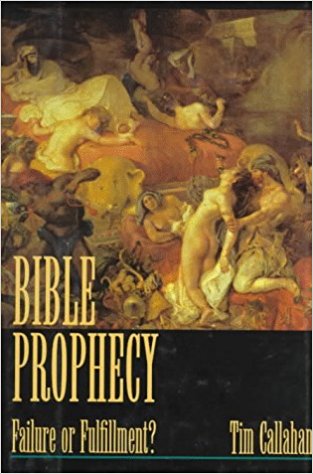
Hiddenness of God (Stanford Encyclopedia of Philosophy)