The Myth of Sisyphus

This limitation leads me to myself, where I can no longer withdraw behind an objective point of view that I am merely representing, where neither I myself nor the existence of others can any longer become an object for me. – Karl Jaspers
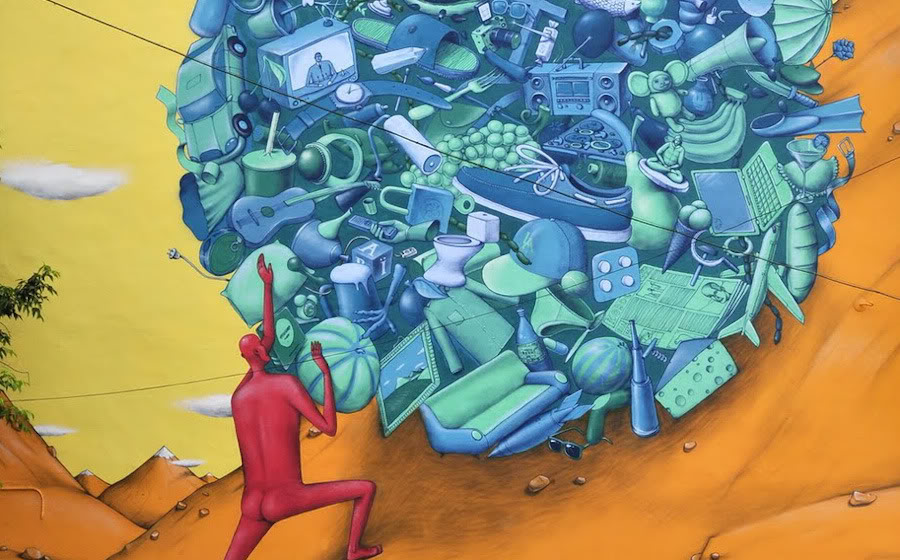
modern-sisyphus

Selected passages from The Myth of Sisyphus by Albert Camus

Preface

For me “The Myth of Sisyphus” marks the beginning of an idea which I was to pursue in The Rebel. It attempts to resolve the problem of suicide, as The Rebel attempts to resolve that of murder, in both cases without the aid of eternal values which, temporarily perhaps, are absent or distorted in contemporary Europe. The fundamental subject of “The Myth of Sisyphus” is this: it is legitimate and necessary to wonder whether life has a meaning; therefore it is legitimate to meet the problem of suicide face to face. The answer, underlying and appearing through the paradoxes which cover it, is this: even if one does not believe in God, suicide is not legitimate. Written fifteen years ago, in 1940, amid the French and European disaster, this book declares that even within the limits of nihilism it is possible to find the means to proceed beyond nihilism. In all the books I have written since, I have attempted to pursue this direction. Although “The Myth of Sisyphus” poses mortal problems, it sums itself up for me as a lucid invitation to live and to create, in the very midst of the desert.

The pages that follow deal with an absurd sensitivity that can be found widespread in the age. But it is useful to note that the absurd, hitherto taken as a conclusion, is considered in this essay as a starting-point. In this sense it may be said that there is something provisional in my commentary: one cannot prejudge the position it entails. There will be found here merely the description, in the pure state, of an intellectual malady.

Absurdity and Suicide

There is but one truly serious philosophical problem, and that is suicide. Judging whether life is or is not worth living amounts to answering the fundamental question of philosophy. All the rest – whether or not the world has three dimensions, whether the mind has nine or twelve categories – comes afterward. These are games; one must first answer. If I ask myself how to judge that this question is more urgent than that, I reply that one judges by the actions it entails. I have never seen anyone die for the ontological argument. On the other hand, I see many people die because they judge that life is not worth living.

Suicide has never been dealt with except as a social phenomenon. On the contrary, we are concerned here, at the outset, with the relationship between individual thought and suicide. In a sense, and as in melodrama, killing yourself amounts to confessing. It is confessing that life is too much for you or that you do not understand it. Let’s not go too far in such analogies, however, but rather return to everyday words. It is merely confessing that that “is not worth the trouble.” Living, naturally, is never easy. You continue making the gestures commanded by existence for many reasons, the first of which is habit. Dying voluntarily implies that you have recognized, even instinctively, the ridiculous character of that habit, the absence of any profound reason for living, the insane character of that daily agitation, and the uselessness of suffering.

What, then, is that incalculable feeling that deprives the mind of the sleep necessary to life? A world that can be explained even with bad reasons is a familiar world. But, on the other hand, in a universe suddenly divested of illusions and lights, man feels an alien, a stranger. His exile is without remedy since he is deprived of the memory of a lost home or the hope of a promised land. This divorce between man and his life, the actor and his setting, is properly the feeling of absurdity. All healthy men having thought of their own suicide, it can be seen, without further explanation, that there is a direct connection between this feeling and the longing for death.

The subject of this essay is precisely this relationship between the absurd and suicide, the exact degree to which suicide is a solution to the absurd. Does its absurdity require one to escape it through hope or suicide – this is what must be clarified, hunted down, and elucidated while brushing aside all the rest. Does the Absurd dictate death? It is always easy to be logical. It is almost impossible to be logical to the bitter end. Men who die by their own hand consequently follow to its conclusion their emotional inclination. Reflection on suicide gives me an opportunity to raise the only problem to interest me: is there a logic to the point of death?

Absurd Walls

It is essential to consider as a constant point of reference in this essay the regular hiatus between what we fancy we know and what we really know, practical assent and simulated ignorance which allows us to live with ideas which, if we truly put them to the test, ought to upset our whole life. If the only significant history of human thought were to be written, it would have to be the history of its successive regrets and its impotences.

Of whom and of what indeed can I say: “I know that!” This heart within me I can feel, and I judge that it exists. This world I can touch, and I likewise judge that it exists. There ends all my knowledge, and the rest is construction. For if I try to seize this self of which I feel sure, if I try to define and to summarize it, it is nothing but water slipping through my fingers. I can sketch one by one all the aspects it is able to assume, all those likewise that have been attributed to it, this upbringing, this origin, this ardor or these silences, this nobility or this vileness. But aspects cannot be added up. This very heart which is mine will forever remain indefinable to me. Between the certainty I have of my existence and the content I try to give to that assurance, the gap will never be filled. Forever I shall be a stranger to myself. In psychology as in logic, there are truths but no truth. Socrates’ “Know thyself” has as much value as the “Be virtuous” of our confessionals. They reveal a nostalgia at the same time as an ignorance. They are sterile exercises on great subjects. They are legitimate only precisely so far as they are approximate.

And here are trees and I know their gnarled surface, water and I feel its taste. These scents of grass and stars at night, certain evenings when the heart relaxes – how shall I negate this world whose power and strength I feel? Yet all the knowledge on earth will give me nothing to assure me that this world is mine. You describe it to me and you teach me to classify it. You enumerate its laws and in my thirst for knowledge I admit that they are true. You take apart its mechanism and my hope increases. At the final stage you teach me that this wondrous and multicolored universe can be reduced to the atom and that the atom itself can be reduced to the electron. All this is good and I wait for you to continue. But you tell me of an invisible planetary system in which electrons gravitate around a nucleus. You explain this world to me with an image. I realize then that you have been reduced to poetry: I shall never know. Have I the time to become indignant? You have already changed theories. So that science that was to teach me everything ends up in a hypothesis, that lucidity founders in metaphor, that uncertainty is resolved in a work of art. What need had I of so many efforts? The soft lines of these hills and the hand of evening on this troubled heart teach me much more. I have returned to my beginning. I realize that if through science I can seize phenomena and enumerate them, I cannot, for all that, apprehend the world. Were I to trace its entire relief with my finger, I should not know any more. And you give me the choice between a description that is sure but that teaches me nothing and hypotheses that claim to teach me but that are not sure. A stranger to myself and to the world, armed solely with a thought that negates itself as soon as it asserts, what is this condition in which I can have peace only by refusing to know and to live, in which the appetite for conquest bumps into walls that defy its assaults? To will is to stir up paradoxes. Everything is ordered in such a way as to bring into being that poisoned peace produced by thoughtlessness, lack of heart, or fatal renunciations.

Hence the intelligence, too, tells me in its way that this world is absurd. Its contrary, blind reason, may well claim that all is clear; I was waiting for proof and longing for it to be right. But despite so many pretentious centuries and over the heads of so many eloquent and persuasive men, I know that is false. On this plane, at least, there is no happiness if I cannot know. That universal reason, practical or ethical, that determinism, those categories that explain everything are enough to make a decent man laugh. They have nothing to do with the mind. They negate its profound truth, which is to be enchained. In this unintelligible and limited universe, man’s fate henceforth assumes its meaning. A horde of irrationals has sprung up and surrounds him until his ultimate end. In his recovered and now studied lucidity, the feeling of the absurd becomes clear and definite. I said that the world is absurd, but I was too hasty. This world in itself is not reasonable, that is all that can be said. But what is absurd is the confrontation of this irrational and the wild longing for clarity whose call echoes in the human heart. The absurd depends as much on man as on the world. For the moment it is all that links them together. It binds them one to the other as only hatred can weld two creatures together. This is all I can discern clearly in this measureless universe where my adventure takes place. Let us pause here. If I hold to be true that absurdity that determines my relationship with life, if I become thoroughly imbued with that sentiment that seizes me in face of the world’s scenes, with that lucidity imposed on me by the pursuit of a science, I must sacrifice everything to these certainties and I must see them squarely to be able to maintain them. Above all, I must adapt my behavior to them and pursue them in all their consequences. I am speaking here of decency. But I want to know beforehand if thought can live in those deserts.

I already know that thought has at least entered those deserts. There it found its bread. There it realized that it had previously been feeding on phantoms. It justified some of the most urgent themes of human reflection. From the moment absurdity is recognized, it becomes a passion, the most harrowing of all. But whether or not one can live with one’s passions, whether or not one can accept their law, which is to burn the heart they simultaneously exalt – that is the whole question.

Never perhaps at any time has the attack on reason been more violent than in ours. Since Zarathustra’s great outburst: “By chance it is the oldest nobility in the world. I conferred it upon all things when I proclaimed that above them no eternal will was exercised,” since Kierkegaard’s fatal illness, “that malady that leads to death with nothing else following it,” the significant and tormenting themes of absurd thought have followed one another. Or at least, and this proviso is of capital importance, the themes of irrational and religious thought. From Jaspers to Heidegger, from Kierkegaard to Chestov, from the phenomenologists to Scheler, on the logical plane and on the moral plane, a whole family of minds related by their nostalgia but opposed by their methods or their aims, have persisted in blocking the royal road of reason and in recovering the direct paths of truth. Here I assume these thoughts to be known and lived. Whatever may be or have been their ambitions, all started out from that indescribable universe where contradiction, antinomy, anguish, or impotence reigns.

Heidegger considers the human condition coldly and announces that existence is humiliated. The only reality is “anxiety” in the whole chain of beings. To the man lost in the world and its diversions this anxiety is a brief, fleeting fear. But if that fear becomes conscious of itself, it becomes anguish, the perpetual climate of the lucid man “in whom existence is concentrated.” This professor of philosophy writes without trembling and in the most abstract language in the world that “the finite and limited character of human existence is more primordial than man himself.” His interest in Kant extends only to recognizing the restricted character of his “pure Reason.” This is to conclude at the end of his analyses that “the world can no longer offer anything to the man filled with anguish.”

Jaspers despairs of any ontology because he claims that we have lost “naïveté.” He knows that we can achieve nothing that will transcend the fatal game of appearances. He knows that the end of the mind is failure. He tarries over the spiritual adventures revealed by history and pitilessly discloses the flaw in each system, the illusion that saved everything, the preaching that hid nothing. In this ravaged world in which the impossibility of knowledge is established, in which everlasting nothingness seems the only reality and irremediable despair seems the only attitude, he tries to recover the Ariadne’s thread that leads to divine secrets.

Chestov, for his part, throughout a wonderfully monotonous work, constantly straining toward the same truths, tirelessly demonstrates that the tightest system, the most universal rationalism always stumbles eventually on the irrational of human thought. None of the ironic facts or ridiculous contradictions that depreciate the reason escapes him. One thing only interests him, and that is the exception, whether in the domain of the heart or of the mind. Through the Dostoevskian experiences of the condemned man, the exacerbated adventures of the Nietzschean mind, Hamlet’s imprecations, or the bitter aristocracy of an Ibsen, he tracks down, illuminates, and magnifies the human revolt against the irremediable. He refuses the reason its reasons and begins to advance with some decision only in the middle of that colorless desert where all certainties have become stones.

Of all perhaps the most engaging, Kierkegaard, for a part of his existence at least, does more than discover the absurd, he lives it. The man who writes: “The surest of stubborn silences is not to hold one’s tongue but to talk” makes sure in the beginning that no truth is absolute or can render satisfactory an existence that is impossible in itself. Don Juan of the understanding, he multiplies pseudonyms and contradictions, writes his Discourses of Edification at the same time as that manual of cynical spiritualism, The Diary of the Seducer. He refuses consolations, ethics, reliable principles. As for that thorn he feels in his heart, he is careful not to quiet its pain. On the contrary, he awakens it and, in the desperate joy of a man crucified and happy to be so, he builds up piece by piece – lucidity, refusal, make-believe – a category of the man possessed. That face both tender and sneering, those pirouettes followed by a cry from the heart are the absurd spirit itself grappling with a reality beyond its comprehension. And the spiritual adventure that leads Kierkegaard to his beloved scandals begins likewise in the chaos of an experience divested of its setting and relegated to its original incoherence.

On quite a different plane, that of method, Husserl and the phenomenologists, by their very extravagances, reinstate the world in its diversity and deny the transcendent power of the reason. The spiritual universe becomes incalculably enriched through them. The rose petal, the milestone, or the human hand are as important as love, desire, or the laws of gravity. Thinking ceases to be unifying or making a semblance familiar in the guise of a major principle. Thinking is learning all over again to see, to be attentive, to focus consciousness; it is turning every idea and every image, in the manner of Proust, into a privileged moment. What justifies thought is its extreme consciousness. Though more positive than Kierkegaard’s or Chestov’s, Husserl’s manner of proceeding, in the beginning, nevertheless negates the classic method of the reason, disappoints hope, opens to intuition and to the heart a whole proliferation of phenomena, the wealth of which has about it something inhuman. These paths lead to all sciences or to none. This amounts to saying that in this case the means are more important than the end. All that is involved is “an attitude for understanding” and not a consolation. Let me repeat: in the beginning, at very least.

How can one fail to feel the basic relationship of these minds! How can one fail to see that they take their stand around a privileged and bitter moment in which hope has no further place? I want everything to be explained to me or nothing. And the reason is impotent when it hears this cry from the heart. The mind aroused by this insistence seeks and finds nothing but contradictions and nonsense. What I fail to understand is nonsense. The world is peopled with such irrationals. The world itself, whose single meaning I do not understand, is but a vast irrational. If one could only say just once: “This is clear,” all would be saved. But these men vie with one another in proclaiming that nothing is clear, all is chaos, that all man has is his lucidity and his definite knowledge of the walls surrounding him.

Philosophical Suicide

There exists an obvious fact that seems utterly moral: namely, that a man is always a prey to his truths. Once he has admitted them, he cannot free himself from them. One has to pay something. A man who has become conscious of the absurd is forever bound to it. A man devoid of hope and conscious of being so has ceased to belong to the future. That is natural. But it is just as natural that he should strive to escape the universe of which he is the creator. All the foregoing has significance only on account of this paradox. Certain men, starting from a critique of rationalism, have admitted the absurd climate. Nothing is more instructive in this regard than to scrutinize the way in which they have elaborated their consequences.

Now, to limit myself to existential philosophies, I see that all of them without exception suggest escape. Through an odd reasoning, starting out from the absurd over the ruins of reason, in a closed universe limited to the human, they deify what crushes them and find reason to hope in what impoverishes them. That forced hope is religious in all of them.

Jaspers is left powerless to realize the transcendent, incapable of plumbing the depth of experience, and conscious of that universe upset by failure. Will he advance or at least draw the conclusions from that failure? He contributes nothing new. He has found nothing in experience but the confession of his own impotence and no occasion to infer any satisfactory principle. Yet without justification, as he says to himself, he suddenly asserts all at once the transcendent, the essence of experience, and the superhuman significance of life when he writes: “Does not the failure reveal, beyond any possible explanation and interpretation, not the absence but the existence of transcendence?” That existence which, suddenly and through a blind act of human confidence, explains everything, he defines as “the unthinkable unity of the general and the particular.” Thus the absurd becomes god (in the broadest meaning of this word) and that inability to understand becomes to existence that illuminates everything. Nothing logically prepares this reasoning. I can call it a leap.

Mystical thought has familiarized us with such devices. They are just as legitimate as any attitude of mind. But for the moment I am acting as if I took a certain problem seriously. Without judging beforehand the general value of this attitude or its educative power, I mean simply to consider whether it answers the conditions I set myself, whether it is worthy of the conflict that concerns me. Thus I return to Chestov. A commentator relates a remark of his that deserves interest: “The only true solution,” he said, “is precisely where human judgment sees no solution. Otherwise, what need would we have of God? We turn toward God only to obtain the impossible. As for the possible, men suffice.” If there is a Chestovian philosophy, I can say that it is altogether summed up in this way. For when, at the conclusion of his passionate analyses, Chestov discovers the fundamental absurdity of all existence, he does not say: “This is the absurd,” but rather: “This is God: we must rely on him even if he does not correspond to any of our rational categories.”

Now, if it is admitted that the absurd is the contrary of hope, it is seen that existential thought for Chestov presupposes the absurd but proves it only to dispel it. Such subtlety of thought is a conjuror’s emotional trick. If there is an absurd, it is in man’s universe. The moment the notion transforms itself into eternity’s springboard, it ceases to be linked to human lucidity. The absurd is no longer that evidence that man ascertains without consenting to it. The struggle is eluded. Man integrates the absurd and in that communion causes to disappear its essential character, which is opposition, laceration, and divorce. This leap is an escape. The intoxication of the irrational and the vocation of rapture turn a lucid mind away from the absurd. To Chestov reason is useless but there is something beyond reason. To an absurd mind reason is useless and there is nothing beyond reason.

Kierkegaard likewise takes the leap. His childhood having been so frightened by Christianity, he ultimately returns to its harshest aspect. For him, too, antinomy and paradox become criteria of the religious. Thus, the very thing that led to despair of the meaning and depth of this life now gives it its truth and its clarity. Christianity is the scandal, and what Kierkegaard calls for quite plainly is the third sacrifice required by Ignatius Loyola, the one in which God most rejoices: “The sacrifice of the intellect.” This effect of the “leap” is odd, but must not surprise us any longer. He makes of the absurd the criterion of the other world, whereas it is simply a residue of the experience of this world. “In his failure,” says Kierkegaard, “the believer finds his triumph.” If he substitutes for his cry of revolt a frantic adherence, at once he is led to blind himself to the absurd which hitherto enlightened him and to deify the only certainty he henceforth possesses, the irrational.

Kierkegaard wants to be cured. To be cured is his frenzied wish, and it runs throughout his whole journal. The entire effort of his intelligence is to escape the antinomy of the human condition. Thus it is that, through a strained subterfuge, he gives the irrational the appearance and God the attributes of the absurd: unjust, incoherent, and incomprehensible. Reconciliation through scandal is still reconciliation. It allows one perhaps, as can be seen, to derive hope of its contrary, which is death. I want to know whether I can live with what I know and with that alone. I am told again that here the intelligence must sacrifice its pride and the reason bow down. But if I recognize the limits of the reason, I do not therefore negate it, recognizing its relative powers. I merely want to remain in this middle path where the intelligence can remain clear. If that is its pride, I see no sufficient reason for giving it up. Nothing more profound, for example, than Kierkegaard’s view according to which despair is not a fact but a state: the very state of sin. For sin is what alienates from God. The absurd, which is the metaphysical state of the conscious man, does not lead to God. Perhaps this notion will become clearer if I risk this shocking statement: the absurd is sin without God.

It is a matter of living in that state of the absurd. I know on what it is founded, this mind and this world straining against each other without being able to embrace each other. I ask for the rule of life of that state, and what I am offered neglects its basis, negates one of the terms of the painful opposition, demands of me a resignation. I ask what is involved in the condition I recognize as mine; I know it implies obscurity and ignorance; and I am assured that this ignorance explains everything and that this darkness is my light. But there is no reply here to my intent, and this stirring lyricism cannot hide the paradox from me. One must therefore turn away. Kierkegaard may shout in warning: “If man had no eternal consciousness, if, at the bottom of everything, there were merely a wild, seething force producing everything, both large and trifling, in the storm of dark passions, if the bottomless void that nothing can fill underlay all things, what would life be but despair?” This cry is not likely to stop the absurd man. Seeking what is true is not seeking what is desirable. If in order to elude the anxious question: “What would life be?” one must, like the donkey, feed on the roses of illusion, then the absurd mind, rather than resigning itself to falsehood, prefers to adopt fearlessly Kierkegaard’s reply: “despair.” Everything considered, a determined soul will always manage.

I am taking the liberty at this point of calling the existential attitude philosophical suicide. But this does not imply a judgment. It is a convenient way of indicating the movement by which a thought negates itself and tends to transcend itself in its very negation. For the existentials negation is their God. To be precise, that god is maintained only through the negation of human reason. But, like suicides, gods change with men. There are many ways of leaping, the essential being to leap. Those redeeming negations, those ultimate contradictions which negate the obstacle that has not yet been leaped over, may spring just as well (this is the paradox at which this reasoning aims) from a certain religious inspiration as from the rational order. They always lay claim to the eternal, and it is solely in this that they take the leap.

It is futile to be amazed by the apparent paradox that leads thought to its own negation by the opposite paths of humiliated reason and triumphal reason. From the abstract god of Husserl to the dazzling god of Kierkegaard the distance is not so great. Reason and the irrational lead to the same preaching. In truth the way matters but little; the will to arrive suffices. The abstract philosopher and the religious philosopher start out from the same disorder and support each other in the same anxiety. But the essential is to explain. Nostalgia is stronger here than knowledge. It is significant that the thought of the epoch is at once one of the most deeply imbued with a philosophy of the non-significance of the world and one of the most divided in its conclusions. It is constantly oscillating between extreme rationalization of reality which tends to break up that thought into standard reasons and its extreme irrationalization which tends to deify it. But this divorce is only apparent. It is a matter of reconciliation, and, in both cases, the leap suffices.

Just as reason was able to soothe the melancholy of Plotinus, it provides modern anguish the means of calming itself in the familiar setting of the eternal. The absurd mind has less luck. For it the world is neither so rational nor so irrational. It is unreasonable and only that. With Husserl the reason eventually has no limits at all. The absurd, on the contrary, establishes its limits since it is powerless to calm its anguish. Kierkegaard independently asserts that a single limit is enough to negate that anguish. But the absurd does not go so far. For it that limit is directed solely at the reason’s ambitions. The theme of the irrational, as it is conceived by the existentials, is reason becoming confused and escaping by negating itself. The absurd is lucid reason noting its limits.

Absurd Freedom

I don’t know whether this world has a meaning that transcends it. But I know that I do not know that meaning and that it is impossible for me just now to know it. What can a meaning outside my condition mean to me? I can understand only in human terms. What I touch, what resists me—that is what I understand. And these two certainties—my appetite for the absolute and for unity and the impossibility of reducing this world to a rational and reasonable principle—I also know that I cannot reconcile them. What other truth can I admit without lying, without bringing in a hope I lack and which means nothing within the limits of my condition?

If I were a tree among trees, a cat among animals, this life would have a meaning, or rather this problem would not arise, for I should belong to this world. I should be this world to which I am now opposed by my whole consciousness and my whole insistence upon familiarity. This ridiculous reason is what sets me in opposition to all creation. I cannot cross it out with a stroke of the pen. What I believe to be true I must therefore preserve. What seems to me so obvious, even against me, I must support. And what constitutes the basis of that conflict, of that break between the world and my mind, but the awareness of it? If therefore I want to preserve it, I can through a constant awareness, ever revived, ever alert. This is what, for the moment, I must remember. At this moment the absurd, so obvious and yet so hard to win, returns to a man’s life and finds its home there. At this moment, too, the mind can leave the arid, dried-up path of lucid effort. That path now emerges in daily life. It encounters the world of the anonymous impersonal pronoun “one,” but henceforth man enters in with his revolt and his lucidity. He has forgotten how to hope. This hell of the present is his Kingdom at last. All problems recover their sharp edge. Abstract evidence retreats before the poetry of forms and colors. Spiritual conflicts become embodied and return to the abject and magnificent shelter of man’s heart. None of them is settled. But all are transfigured. Is one going to die, escape by the leap, rebuild a mansion of ideas and forms to one’s own scale? Is one, on the contrary, going to take up the heart-rending and marvelous wager of the absurd? Let’s make a final effort in this regard and draw all our conclusions. The body, affection, creation, action, human nobility will then resume their places in this mad world. At last man will again find there the wine of the absurd and the bread of indifference on which he feeds his greatness.

At a certain point on his path the absurd man is tempted. History is not lacking in either religions or prophets, even without gods. He is asked to leap. All he can reply is that he doesn’t fully understand, that it is not obvious. Indeed, he does not want to do anything but what he fully understands. He is assured that this is the sin of pride, but he does not understand the notion of sin; that perhaps hell is in store, but he has not enough imagination to visualize that strange future; that he is losing immortal life, but that seems to him an idle consideration. An attempt is made to get him to admit his guilt. He feels innocent. To tell the truth, that is all he feels—his irreparable innocence. This is what allows him everything. Hence, what he demands of himself is to live solely with what he knows, to accommodate himself to what is, and to bring in nothing that is not certain. He is told that nothing is. But this at least is a certainty. And it is with this that he is concerned: he wants to find out if it is possible to live without appeal.

To abolish conscious revolt is to elude the problem. The theme of permanent revolution is thus carried into individual experience. Living is keeping the absurd alive. Keeping it alive is, above all, contemplating it. Unlike Eurydice, the absurd dies only when we turn away from it. One of the only coherent philosophical positions is thus revolt. It is a constant confrontation between man and his own obscurity. It is an insistence upon an impossible transparency. It challenges the world anew every second. Just as danger provided man the unique opportunity of seizing awareness, so metaphysical revolt extends awareness to the whole of experience. It is that constant presence of man in his own eyes. It is not aspiration, for it is devoid of hope. That revolt is the certainty of a crushing fate, without the resignation that ought to accompany it.

This is where it is seen to what a degree absurd experience is remote from suicide. It may be thought that suicide follows revolt—but wrongly. For it does not represent the logical outcome of revolt. It is just the contrary by the consent it presupposes. Suicide, like the leap, is acceptance at its extreme. Everything is over and man returns to his essential history. His future, his unique and dreadful future—he sees and rushes toward it. In its way, suicide settles the absurd. It engulfs the absurd in the same death. But I know that in order to keep alive, the absurd cannot be settled. It escapes suicide to the extent that it is simultaneously awareness and rejection of death.

That revolt gives life its value. Spread out over the whole length of a life, it restores its majesty to that life. To a man devoid of blinders, there is no finer sight than that of the intelligence at grips with a reality that transcends it. The sight of human pride is unequaled. No disparagement is of any use. That discipline that the mind imposes on itself, that will conjured up out of nothing, that face-to-face struggle have something exceptional about them. To impoverish that reality whose inhumanity constitutes man’s majesty is tantamount to impoverishing him himself. I understand then why the doctrines that explain everything to me also debilitate me at the same time. They relieve me of the weight of my own life, and yet I must carry it alone. At this juncture, I cannot conceive that a skeptical metaphysics can be joined to an ethics of renunciation.

Consciousness and revolt, these rejections are the contrary of renunciation. Everything that is indomitable and passionate in a human heart quickens them, on the contrary, with its own life. It is essential to die unreconciled and not of one’s own free will. Suicide is a repudiation. The absurd man can only drain everything to the bitter end, and deplete himself. The absurd is his extreme tension, which he maintains constantly by solitary effort, for he knows that in that consciousness and in that day-to-day revolt he gives proof of his only truth, which is defiance.

There is no future. Henceforth this is the reason for my inner freedom. I shall use two comparisons here. Mystics, to begin with, find freedom in giving themselves. By losing themselves in their god, by accepting his rules, they become secretly free. In spontaneously accepted slavery they recover a deeper independence. But what does that freedom mean? It may be said, above all, that they feel free with regard to themselves, and not so much free as liberated. Likewise, completely turned toward death (taken here as the most obvious absurdity), the absurd man feels released from everything outside that passionate attention crystallizing in him. He enjoys a freedom with regard to common rules. It can be seen at this point that the initial themes of existential philosophy keep their entire value.

It is clear that death and the absurd are here the principles of the only reasonable freedom: that which a human heart can experience and live. The absurd man thus catches sight of a burning and frigid, transparent and limited universe in which nothing is possible but everything is given, and beyond which all is collapse and nothingness. He can then decide to accept such a universe and draw from it his strength, his refusal to hope, and the unyielding evidence of a life without consolation.

But what does life mean in such a universe? Nothing else for the moment but indifference to the future and a desire to use up everything that is given. Belief in the meaning of life always implies a scale of values, a choice, our preferences. Belief in the absurd, according to our definitions, teaches the contrary.

Knowing whether or not one can live without appeal is all that interests me. I do not want to get out of my depth. This aspect of life being given me, can I adapt myself to it? By the mere activity of consciousness I transform into a rule of life what was an invitation to death—and I refuse suicide. I know, to be sure, the dull resonance that vibrates throughout these days. Yet I have but a word to say: that it is necessary. When Nietzsche writes: “It clearly seems that the chief thing in heaven and on earth is to obey at length and in a single direction: in the long run there results something for which it is worth the trouble of living on this earth as, for example, virtue, art, music, the dance, reason, the mind—something that transfigures, something delicate, mad, or divine,” he elucidates the rule of a really distinguished code of ethics. But he also points the way of the absurd man. Obeying the flame is both the easiest and the hardest thing to do. However, it is good for man to judge himself occasionally. He is alone in being able to do so.

“Prayer,” says Alain, “is when night descends over thought.” “But the mind must meet the night,” reply the mystics and the existentials. Yes, indeed, but not that night that is born under closed eyelids and through the mere will of man—dark, impenetrable night that the mind calls up in order to plunge into it. If it must encounter a night, let it be rather that of despair, which remains lucid—polar night, vigil of the mind, whence will arise perhaps that white and virginal brightness which outlines every object in the light of the intelligence. At that degree, equivalence encounters passionate understanding. Then it is no longer even a question of judging the existential leap. It resumes its place amid
the age-old fresco of human attitudes. For the spectator, if he is conscious, that leap is still absurd. In so far as it thinks it solves the paradox, it reinstates it intact. On this score, it is stirring. On this score, everything resumes its place and the absurd world is reborn in all its splendor and diversity.

But it is bad to stop, hard to be satisfied with a single way of seeing, to go without contradiction, perhaps the most subtle of all spiritual forces. The preceding merely defines a way of thinking. But the point is to live.

(Oriental thought teaches that one can indulge in the same effort of logic by choosing against the world. That is just as legitimate and gives this essay its perspectives and its limits.)

The Absurd Man

The lover, the actor, or the adventurer plays the absurd. But equally well, if he wishes, the chaste man, the civil servant, or the president of the Republic. It is enough to know and to mask nothing. In Italian museums are sometimes found little painted screens that the priest used to hold in front of the face of condemned men to hide the scaffold from them. The leap in all its forms, rushing into the divine or the eternal, surrendering to the illusions of the everyday or of the idea—all these screens hide the absurd. But there are civil servants without screens, and they are the ones of whom I mean to speak. I have chosen the most extreme ones. At this level the absurd gives them a royal power. It is true that those princes are without a kingdom. But they have this advantage over others: they know that all royalties are illusory. They know that is their whole nobility, and it is useless to speak in relation to them of hidden misfortune or the ashes of disillusion. Being deprived of hope is not despairing. The flames of earth are surely worth celestial perfumes. Neither I nor anyone can judge them here. They are not striving to be better; they are attempting to be consistent. If the term “wise man” can be applied to the man who lives on what he has without speculating on what he has not, then they are wise men.

In any case, it was essential to restore to the absurd reasoning more cordial examples. The imagination can add many others, inseparable from time and exile, who likewise know how to live in harmony with a universe without future and without weakness. This absurd, godless world is, then, peopled with men who think clearly and have ceased to hope. And I have not yet spoken of the most absurd character, who is the creator.

Absurd Creation

All those lives maintained in the rarefied air of the absurd could not persevere without some profound and constant thought to infuse its strength into them. Right here, it can be only a strange feeling of fidelity. Conscious men have been seen to fulfill their task amid the most stupid of wars without considering themselves in contradiction. This is because it was essential to elude nothing. There is thus a metaphysical honor in enduring the world’s absurdity. Conquest or play-acting, multiple loves, absurd revolt are tributes that man pays to his dignity in a campaign in which he is defeated in advance.

It is merely a matter of being faithful to the rule of the battle. That thought may suffice to sustain a mind; it has supported and still supports whole civilizations. War cannot be negated. One must live it or die of it. So it is with the absurd: it is a question of breathing with it, of recognizing its lessons and recovering their flesh. In this regard the absurd joy par excellence is creation. “Art and nothing but art,” said Nietzsche; “we have art in order not to die of the truth.”

Kirilov

All of Dostoevsky’s heroes question themselves as to the meaning of life. In this they are modern: they do not fear ridicule. What distinguishes modern sensibility from classical sensibility is that the latter thrives on moral problems and the former on metaphysical problems. In Dostoevsky’s novels the question is propounded with such intensity that it can only invite extreme solutions. Existence is illusory or it is eternal. If Dostoevsky were satisfied with this inquiry, he would be a philosopher. But he illustrates the consequences that such intellectual pastimes may have in a man’s life, and in this regard he is an artist. Among those consequences, his attention is arrested particularly by the last one, which he himself calls logical suicide in his Diary of a Writer. In the installments for December 1876, indeed, he imagines the reasoning of “logical suicide.” Convinced that human existence is an utter absurdity for anyone without faith in immortality, the desperate man comes to the following conclusions:

“Since in reply to my questions about happiness, I am told, through the intermediary of my consciousness, that I cannot be happy except in harmony with the great all, which I cannot conceive and shall never be in a position to conceive, it is evident …”

“Since, finally, in this connection, I assume both the role of the plaintiff and that of the defendant, of the accused and of the judge, and since I consider this comedy perpetrated by nature altogether stupid, and since I even deem it humiliating for me to deign to play
it …”

“In my indisputable capacity of plaintiff and defendant, of judge and accused, I condemn that nature which, with such impudent nerve, brought me into being in order to suffer—I condemn it to be annihilated with me.”

There remains a little humor in that position. This suicide kills himself because, on the metaphysical plane, he is vexed. In a certain sense he is taking his revenge. This is his way of proving that he “will not be had.” It is known, however, that the same theme is embodied, but with the most wonderful generality, in Kirilov of The Possessed, likewise an advocate of logical suicide. Kirilov the engineer declares somewhere that he wants to take his own life because it “is his idea.” Obviously the word must be taken in its proper sense. It is for an idea, a thought, that he is getting ready for death. This is the superior suicide. Progressively, in a series of scenes in which Kirilov’s mask is gradually illuminated, the fatal thought driving him is revealed to us. The engineer, in fact, goes back to the arguments of the Diary. He feels that God is necessary and that he must exist. But he knows that he does not and cannot exist. “Why do you not realize,” he exclaims, “that this is sufficient reason for killing oneself?” That attitude involves likewise for him some of the absurd consequences. Through indifference he accepts letting his suicide be used to the advantage of a cause he despises. “I decided last night that I didn’t care.” And finally he prepares his deed with a mixed feeling of revolt and freedom. “I shall kill myself in order to assert my insubordination, my new and dreadful liberty.” It is no longer a question of revenge, but of revolt. Kirilov is consequently an absurd character—yet with this essential reservation: he kills himself. But he himself explains this contradiction, and in such a way that at the same time he reveals the absurd secret in all its purity. In truth, he adds to his fatal logic an extraordinary ambition which gives the character its full perspective: he wants to kill himself to become god.

The reasoning is classic in its clarity. If God does not exist, Kirilov is god. If God does not exist, Kirilov must kill himself. Kirilov must therefore kill himself to become god. That logic is absurd, but it is what is needed. The interesting thing, however, is to give a meaning to that divinity brought to earth. That amounts to clarifying the premise: “If God does not exist, I am god,” which still remains rather obscure. It is important to note at the outset that the man who flaunts that mad claim is indeed of this world. He performs his gymnastics every morning to preserve his health. He is stirred by the joy of Chatov recovering his wife. On a sheet of paper to be found after his death he wants to draw a face sticking out his tongue at “them.” He is childish and irascible, passionate, methodical, and sensitive. Of the superman he has nothing but the logic and the obsession, whereas of man he has the whole catalogue. Yet it is he who speaks calmly of his divinity. He is not mad, or else Dostoevsky is. Consequently it is not a megalomaniac’s illusion that excites him. And taking the words in their specific sense would, in this instance, be ridiculous.

Kirilov himself helps us to understand. In reply to a question from Stavrogin, he makes clear that he is not talking of a god-man. It might be thought that this springs from concern to distinguish himself from Christ. But in reality it is a matter of annexing Christ. Kirilov in fact fancies for a moment that Jesus at his death did not find himself in Paradise. He found out then that his torture had been useless. “The laws of nature,” says the engineer, “made Christ live in the midst of falsehood and die for a falsehood.” Solely in this sense Jesus indeed personifies the whole human drama. He is the complete man, being the one who realized the most absurd condition. He is not the God-man but the man-god. And, like him, each of us can be crucified and victimized—and is to a certain degree.

The divinity in question is therefore altogether terrestrial. “For three years,” says Kirilov, “I sought the attribute of my divinity and I have found it. The attribute of my divinity is independence.” Now can be seen the meaning of Kirilov’s premise: “If God does not exist, I am god.” To become god is merely to be free on this earth, not to serve an immortal being. Above all, of course, it is drawing all the inferences from that painful independence. If God exists, all depends on him and we can do nothing against his will. If he does not exist, everything depends on us. For Kirilov, as for Nietzsche, to kill God is to become god oneself; it is to realize on this earth the eternal life of which the Gospel speaks.

But if this metaphysical crime is enough for man’s fulfillment, why add suicide? Why kill oneself and leave this world after having won freedom? That is contradictory. Kirilov is well aware of this, for he adds: “If you feel that, you are a tsar and, far from killing yourself, you will live covered with glory.” But men in general do not know it. They do not feel “that.” As in the time of Prometheus, they entertain blind hopes. They need to be shown the way and cannot do without preaching. Consequently, Kirilov must kill himself out of love for humanity. He must show his brothers a royal and difficult path on which he will be the first. It is a pedagogical suicide. Kirilov sacrifices himself, then. But if he is crucified, he will not be victimized. He remains the man-god, convinced of a death without future, imbued with evangelical melancholy. “I,” he says, “am unhappy because I am obliged to assert my freedom.”

But once he is dead and men are at last enlightened, this earth will be peopled with tsars and lighted up with human glory. Kirilov’s pistol shot will be the signal for the last revolution. Thus, it is not despair that urges him to death, but love of his neighbor for his own sake. Before terminating in blood an indescribable spiritual adventure, Kirilov makes a remark as old as human suffering: “All is well.”

This theme of suicide in Dostoevsky, then, is indeed an absurd theme. Let us merely note before going on that Kirilov reappears in other characters who themselves set in motion additional absurd themes. Stavrogin and Ivan Karamazov try out the absurd truths in
practical life. They are the ones liberated by Kirilov’s death. They try their skill at being tsars. Stavrogin leads an “ironic” life, and it is well known in what regard. He arouses hatred around him. And yet the key to the character is found in his farewell letter: “I have not been able to detest anything.” He is a tsar in indifference. Ivan is likewise by refusing to surrender the royal powers of the mind. To those who, like his brother, prove by their lives that it is essential to humiliate oneself in order to believe, he might reply that the condition is shameful. His key word is: “Everything is permitted,” with the appropriate shade of melancholy. Of course, like Nietzsche, the most famous of God’s assassins, he ends in madness. But this is a risk worth running, and, faced with such tragic ends, the essential impulse of the absurd mind is to ask: “What does that prove?”

Thus the novels, like the Diary, propound the absurd question. They establish logic unto death, exaltation, “dreadful” freedom, the glory of the tsars become human. All is well, everything is permitted, and nothing is hateful—these are absurd judgments. But what an amazing creation in which those creatures of fire and ice seem so familiar to us. The passionate world of indifference that rumbles in their hearts does not seem at all monstrous to us. We recognize in it our everyday anxieties. And probably no one so much as Dostoevsky has managed to give the absurd world such familiar and tormenting charms.

Yet what is his conclusion? Two quotations will show the complete metaphysical reversal that leads the writer to other revelations. The argument of the one who commits logical suicide having provoked protests from the critics, Dostoevsky in the following installments of the Diary amplifies his position and concludes thus: “If faith in immortality is so necessary to the human being (that without it he comes to the point of killing himself), it must therefore be the normal state of humanity. Since this is the case, the immortality of the human soul exists without any doubt.” Then again in the last pages of his last novel, at the conclusion of that gigantic combat with God, some children ask Aliocha: “Karamazov, is it true what religion says, that we shall rise from the dead, that we shall see one another again?” And Aliocha answers: “Certainly, we shall see one another again, we shall joyfully tell one another everything that has happened.’’

Thus Kirilov, Stavrogin, and Ivan are defeated. The Brothers Karamazov replies to The Possessed. And it is indeed a conclusion. Aliocha’s case is not ambiguous, as is that of Prince Muichkin. Ill, the latter lives in a perpetual present, tinged with smiles and indifference, and that blissful state might be the eternal life of which the Prince speaks. On the contrary, Aliocha clearly says: “We shall meet again.” There is no longer any question of suicide and of madness. What is the use, for anyone who is sure of immortality and of its joys? Man exchanges his divinity for happiness. “We shall joyfully tell one another everything that has happened.” Thus again Kirilov’s pistol rang out somewhere in Russia, but the world continued to cherish its blind hopes. Men did not understand “that.”

Consequently, it is not an absurd novelist addressing us, but an existential novelist. Here, too, the leap is touching and gives its nobility to the art that inspires it. It is a stirring acquiescence, riddled with doubts, uncertain and ardent. Speaking of The Brothers Karamazov, Dostoevsky wrote: “The chief question that will be pursued throughout this book is the very one from which I have suffered consciously or unconsciously all life long: the existence of God.” It is hard to believe that a novel sufficed to transform into joyful certainty the suffering of a lifetime. One commentator correctly pointed out that Dostoevsky is on Ivan’s side and that the affirmative chapters took three months of effort whereas what he called “the blasphemies” were written in three weeks in a state of excitement. There is not one of his characters who does not have that thorn in the flesh, who does not aggravate it or seek a remedy for it in sensation or immortality. In any case, let us remain with this doubt. Here is a work which, in a chiaroscuro more gripping than the light of day, permits us to seize man’s struggle against his hopes. Having reached the end, the creator makes his choice against his characters. That contradiction thus allows us to make a distinction. It is not an absurd work that is involved here, but a work that propounds the absurd problem.

Dostoevsky’s reply is humiliation, “shame” according to Stavrogin. An absurd work, on the contrary, does not provide a reply; that is the whole difference. Let us note this carefully in conclusion: what contradicts the absurd in that work is not its Christian character, but rather its announcing a future life. It is possible to be Christian and absurd. There are examples of Christians who do not believe in a future life. In regard to the work of art, it should therefore be possible to define one of the directions of the absurd analysis that could have been anticipated in the preceding pages. It leads to propounding “the absurdity of the Gospel.” It throws light upon this idea, fertile in repercussions, that convictions do not prevent incredulity. On the contrary, it is easy to see that the author of The Possessed, familiar with these paths, in conclusion took a quite different way. The surprising reply of the creator to his characters, of Dostoevsky to Kirilov, can indeed be summed up thus: existence is illusory and it is eternal.

Ephemeral Creation

At this point I perceive, therefore, that hope cannot be eluded forever and that it can beset even those who wanted to be free of it. This is the interest I find in the works discussed up to this point. I could, at least in the realm of creation, list some truly absurd works. But everything must have a beginning. The object of this quest is a certain fidelity. The Church has been so harsh with heretics only because she deemed that there is no worse enemy than a child who has gone astray. But the record of Gnostic effronteries and the persistence of Manichean currents have contributed more to the construction of orthodox dogma than all the prayers. With due allowance, the same is true of the absurd. One recognizes one’s course by discovering the paths that stray from it. At the very conclusion of the absurd reasoning, in one of the attitudes dictated by its logic, it is not a matter of indifference to find hope coming back in under one of its most touching guises. That shows the difficulty of the absurd ascesis. Above all, it shows the necessity of unfailing alertness and thus confirms the general plan of this essay.

But if it is still too early to list absurd works, at least a conclusion can be reached as to the creative attitude, one of those which can complete absurd existence. Art can never be so well served as by a negative thought. Its dark and humiliated proceedings are as necessary to the understanding of a great work as black is to white. To work and create “for nothing,” to sculpture in clay, to know that one’s creation has no future, to see one’s work destroyed in a day while being aware that fundamentally this has no more importance than building for centuries—this is the difficult wisdom that absurd thought sanctions. Performing these two tasks simultaneously, negating on the one hand and magnifying on the other, is the way open to the absurd creator. He must give the void its colors.

This leads to a special conception of the work of art. Too often the work of a creator is looked upon as a series of isolated testimonies. Thus, artist and man of letters are confused. A profound thought is in a constant state of becoming; it adopts the experience of a life and assumes its shape, likewise, a man’s sole creation is strengthened in its successive and multiple aspects: his works. One after another, they complement one another, correct or overtake one another, contradict one another too. If something brings creation to an end, it is not the victorious and illusory cry of the blinded artist: “I have said everything,” but the death of the creator which closes his experience and the book of his genius.

That effort, that superhuman consciousness are not necessarily apparent to the reader. There is no mystery in human creation. Will performs this miracle. But at least there is no true creation without a secret. To be sure, a succession of works can be but a series of approximations of the same thought. But it is possible to conceive of another type of creator proceeding by juxtaposition. Their works may seem to be devoid of interrelations. To a certain degree, they are contradictory.

But viewed all together, they resume their natural grouping. From death, for instance, they derive their definitive significance. They receive their most obvious light from the very life of their author. At the moment of death, the succession of his works is but a collection of failures. But if those failures all have the same resonance, the creator has managed to repeat the image of his own condition, to make the air echo with the sterile secret he possesses.

The effort to dominate is considerable here. But human intelligence is up to much more. It will merely indicate clearly the voluntary aspect of creation. Elsewhere I have brought out the fact that human will had no other purpose than to maintain awareness. But that could not do without discipline. Of all the schools of patience and lucidity, creation is the most effective. It is also the staggering evidence of man’s sole dignity: the dogged revolt against his condition, perseverance in an effort considered sterile. It calls for a daily effort, self-mastery, a precise estimate of the limits of truth, measure, and strength. It constitutes an ascesis. All that “for nothing,” in order to repeat and mark time. But perhaps the great work of art has less importance in itself than in the ordeal it demands of a man and the opportunity it provides him of overcoming his phantoms and approaching a little closer to his naked reality.

Let there be no mistake in aesthetics. It is not patient inquiry, the unceasing, sterile illustration of a thesis that I am calling for here. Quite the contrary, if I have made myself clearly understood. The thesis-novel, the work that proves, the most hateful of all, is the one that most often is inspired by a smug thought. You demonstrate the truth you feel sure of possessing. But those are ideas one launches, and ideas are the contrary of thought. Those creators are philosophers, ashamed of themselves. Those I am speaking of or whom I imagine are, on the contrary, lucid thinkers. At a certain point where thought turns back on itself, they raise up the images of their works like the obvious symbols of a limited, mortal, and rebellious thought.

They perhaps prove something. But those proofs are ones that the novelists provide for themselves rather than for the world in general. The essential is that the novelists should triumph in the concrete and that this constitute their nobility. This wholly carnal triumph has been prepared for them by a thought in which abstract powers have been humiliated. When they are completely so, at the same time the flesh makes the creation shine forth in all its absurd luster. After all, ironic philosophies produce passionate works.

Any thought that abandons unity glorifies diversity. And diversity is the home of art. The only thought to liberate the mind is that which leaves it alone, certain of its limits and of its impending end. No doctrine tempts it. It awaits the ripening of the work and of life. Detached from it, the work will once more give a barely muffled voice to a soul Forever freed from hope. Or it will give voice to nothing if the creator, tired of his activity, intends to turn away. That is equivalent.

Thus, I ask of absurd creation what I required from thought—revolt, freedom, and diversity. Later on it will manifest its utter futility. In that daily effort in which intelligence and passion mingle and delight each other, the absurd man discovers a discipline that will make up the greatest of his strengths. The required diligence, the doggedness and lucidity thus resemble the conqueror’s attitude. To create is likewise to give a shape to one’s fate. For all these characters, their work defines them at least as much as it is defined by them. The actor taught us this: there is no frontier between being and appearing.

Let me repeat. None of all this has any real meaning. On the way to that liberty, there is still a progress to be made. The final effort for these related minds, creator or conqueror, is to manage to free themselves also from their undertakings: succeed in granting that the very work, whether it be conquest, love, or creation, may well not be; consummate thus the utter futility of any individual life. Indeed, that gives them more freedom in the realization of that work, just as becoming aware of the absurdity of life authorized them to plunge into it with every excess.

All that remains is a fate whose outcome alone is fatal. Outside of that single fatality of death, everything, joy or happiness, is liberty. A world remains of which man is the sole master. What bound him was the illusion of another world. The outcome of his thought, ceasing to be renunciatory, flowers in images. It frolics—in myths, to be sure, but myths with no other depth than that of human suffering and, like it, inexhaustible. Not the divine fable that amuses and blinds, but the terrestrial face, gesture, and drama in which are summed up a difficult wisdom and an ephemeral passion.

The Myth of Sisyphus

The gods had condemned Sisyphus to ceaselessly rolling a rock to the top of a mountain, whence the stone would fall back of its own weight. They had thought with some reason that there is no more dreadful punishment than futile and hopeless labor. If one believes Homer, Sisyphus was the wisest and most prudent of mortals. According to another tradition, however, he was disposed to practice the profession of highwayman. I see no contradiction in this. Opinions differ as to the reasons why he became the futile laborer of the underworld. To begin with, he is accused of a certain levity in regard to the gods. He stole their secrets. Aegina, the daughter of Aesopus, was carried off by Jupiter. The father was shocked by that disappearance and complained to Sisyphus. He, who knew of the abduction, offered to tell about it on condition that Aesopus would give water to the citadel of Corinth. To the celestial thunderbolts he preferred the benediction of water. He was punished for this in the underworld. Homer tells us also that Sisyphus had put Death in chains. Pluto could not endure the sight of his deserted, silent empire. He dispatched the god of war, who liberated Death from the hands of her conqueror.

It is said also that Sisyphus, being near to death, rashly wanted to test his wife’s love. He ordered her to cast his unburied body into the middle of the public square. Sisyphus woke up in the underworld. And there, annoyed by an obedience so contrary to human love, he obtained from Pluto permission to return to earth in order to chastise his wife. But when he had seen again the face of this world, enjoyed water and sun, warm stones and the sea, he no longer wanted to go back to the infernal darkness. Recalls, signs of anger, warnings were of no avail. Many years more he lived facing the curve of the gulf, the sparkling sea, and the smiles of earth. A decree of the gods was necessary. Mercury came and seized the impudent man by the collar and, snatching him from his joys, led him forcibly back to the underworld, where his rock was ready for him.

You have already grasped that Sisyphus is the absurd hero. He is, as much through his passions as through his torture. His scorn of the gods, his hatred of death, and his passion for life won him that unspeakable penalty in which the whole being is exerted toward accomplishing nothing. This is the price that must be paid for the passions of this earth. Nothing is told us about Sisyphus in the underworld. Myths are made for the imagination to breathe life into them. As for this myth, one sees merely the whole effort of a body straining to raise the huge stone, to roll it and push it up a slope a hundred times over; one sees the face screwed up, the cheek tight against the stone, the shoulder bracing the clay-covered mass, the foot wedging it, the fresh start with arms outstretched, the wholly human security of two earth-clotted hands. At the very end of his long effort measured by skyless space and time without depth, the purpose is achieved. Then Sisyphus watches the stone rush down in a few moments toward that lower world whence he will have to push it up again toward the summit. He goes back down to the plain.

It is during that return, that pause, that Sisyphus interests me. A face that toils so close to stones is already stone itself! I see that man going back down with a heavy yet measured step toward the torment of which he will never know the end. That hour like a breathing-space which returns as surely as his suffering, that is the hour of consciousness. At each of those moments when he leaves the heights and gradually sinks toward the lairs of the gods, he is superior to his fate. He is stronger than his rock.

If this myth is tragic, that is because its hero is conscious. Where would his torture be, indeed, if at every step the hope of succeeding upheld him? The workman of today works every day in his life at the same tasks, and this fate is no less absurd. But it is tragic only at the rare moments when it becomes conscious. Sisyphus, proletarian of the gods, powerless and rebellious, knows the whole extent of his wretched condition: it is what he thinks of during his descent. The lucidity that was to constitute his torture at the same time crowns his victory. There is no fate that cannot be surmounted by scorn.

If the descent is thus sometimes performed in sorrow, it can also take place in joy. This word is not too much. Again I fancy Sisyphus returning toward his rock, and the sorrow was in the beginning. When the images of earth cling too tightly to memory, when the call of happiness becomes too insistent, it happens that melancholy rises in man’s heart: this is the rock’s victory, this is the rock itself. The boundless grief is too heavy to bear. These are our nights of Gethsemane. But crushing truths perish from being acknowledged. Thus, Oedipus at the outset obeys fate without knowing it. But from the moment he knows, his tragedy begins. Yet at the same moment, blind and desperate, he realizes that the only bond linking him to the world is the cool hand of a girl. Then a tremendous remark rings out: “Despite so many ordeals, my advanced age and the nobility of my soul make me conclude that all is well.” Sophocles’ Oedipus, like Dostoevsky’s Kirilov, thus gives the recipe for the absurd victory. Ancient wisdom confirms modern heroism.

One does not discover the absurd without being tempted to write a manual of happiness. “What! by such narrow ways—?” There is but one world, however. Happiness and the absurd are two sons of the same earth. They are inseparable. It would be a mistake to say that happiness necessarily springs from the absurd discovery. It happens as well that the feeling of the absurd springs from happiness. “I conclude that all is well,” says Oedipus, and that remark is sacred. It echoes in the wild and limited universe of man. It teaches that all is not, has not been, exhausted. It drives out of this world a god who had come into it with dissatisfaction and a preference for futile sufferings. It makes of fate a human matter, which must be settled among men.

All Sisyphus’ silent joy is contained therein. His fate belongs to him. His rock is his thing. Likewise, the absurd man, when he contemplates his torment, silences all the idols. In the universe suddenly restored to its silence, the myriad wondering little voices of the earth rise up. Unconscious, secret calls, invitations from all the faces, they are the necessary reverse and price of victory. There is no sun without shadow, and it is essential to know the night. The absurd man says yes and his effort will henceforth be unceasing. If there is a personal fate, there is no higher destiny, or at least there is but one which he concludes is inevitable and despicable. For the rest, he knows himself to be the master of his days. At that subtle moment when man glances backward over his life, Sisyphus returning toward his rock, in that slight pivoting he contemplates that series of unrelated actions which becomes his fate, created by him, combined under his memory’s eye and soon sealed by his death. Thus, convinced of the wholly human origin of all that is human, a blind man eager to see who knows that the night has no end, he is still on the go. The rock is still rolling.

I leave Sisyphus at the foot of the mountain! One always finds one’s burden again. But Sisyphus teaches the higher fidelity that negates the gods and raises rocks. He too concludes that all is well. This universe henceforth without a master seems to him neither sterile nor futile. Each atom of that stone, each mineral flake of that night-filled mountain, in itself forms a world. The struggle itself toward the heights is enough to fill a man’s heart. One must imagine Sisyphus happy.

Philosophy Primary Sources II

library

This post will serve as Part II of Philosophy Primary Sources and a supplement to Primary Sources & Encyclopedias (check out the Links section for even more research sources). There are certain books that are essential to an education about the human condition of which I believe should be available for free and with easy access to everybody. This list is more comprehensive and nuanced than the previous list, as it includes books that hold cultural significance in various fields of study. Each book on this list is in PDF format. I have organized them by topic (many topics intersect) and the last name of the author.


Philosophy

The Life of the Mind by Hannah Arendt

The Human Condition by Hannah Arendt

Language, Truth, and Logic by A.J. Ayer

The Problem of Knowledge by A.J. Ayer

Selected Writings of Jean Baudrillard

The Second Sex by Simone de Beauvoir

The Ethics of Ambiguity by Simone de Beauvoir

Matter and Memory by Henri Bergson

An Introduction to Metaphysics by Henri Bergson

I and Thou by Martin Buber

The Myth of Sisyphus and Other Essays by Albert Camus

The Rebel by Albert Camus

Language and Mind by Noam Chomsky

The God Delusion by Richard Dawkins

Nietzsche and Philosophy by Gilles Deleuze

What is Philosophy? by Gilles Deleuze & Félix Guattari

Darwin’s Dangerous Idea by Daniel Dennett

Speech and Phenomena & Other Essays by Jacques Derrida

Dissemination by Jacques Derrida

In Praise of Folly by Desiderius Erasmus

The Vocation of Man by Johann Gottlieb Fichte

The Science of Knowledge by Johann Gottlieb Fichte

The Archaeology of Knowledge & The Discourse on Language by Michel Foucault

Selected Writings of Mahatma Gandhi

Being and Time by Martin Heidegger

The Question Concerning Technology & Other Essays by Martin Heidegger

What is Metaphysics? by Martin Heidegger

God is Not Great by Christopher Hitchens

Logical Investigations by Edmund Husserl

Reason and Existenz by Karl Jaspers

Fear and Trembling by Søren Kierkegaard

The Sickness Unto Death by Søren Kierkegaard

Philosophical Fragments by Søren Kierkegaard

Last Writings: Nothingness and the Religious Worldview by Nishida Kitar?

The Levinas Reader edited by Sáun Hand

The Postmodern Condition by Jean-François Lyotard

Essays of Michel de Montaigne

On the Genealogy of Morals by Friedrich Nietzsche

The Portable Nietzsche edited by Walter Kaufmann

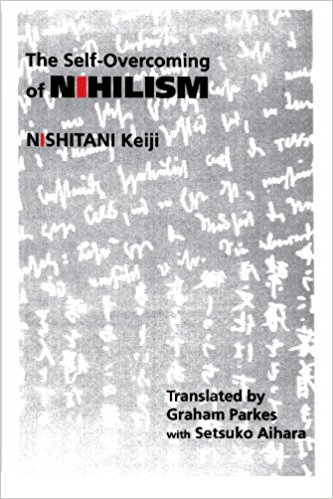
The Self-Overcoming of Nihilism by Keiji Nishitani

Philosophical Explanations by Robert Nozick

Man Has No Nature by José Ortega y Gasset

The Age of Reason by Thomas Paine

Pensées by Blaise Pascal

The Morals of Plutarch

The Virtue of Selfishness by Ayn Rand

Contingency, Irony, and Solidarity by Richard Rorty

Philosophy and the Mirror of Nature by Richard Rorty

The Confessions of Jean-Jacques Rousseau

Free Thought & Official Propaganda by Bertrand Russell

In Praise of Idleness by Bertrand Russell

Mysticism and Logic: And Other Essays by Bertrand Russell

Being and Nothingness by Jean-Paul Sartre

Existentialism is a Humanism by Jean-Paul Sartre

The World as Will and Representation – Vol. 1 by Arthur Schopenhauer

The World as Will and Representation – Vol. 2 by Arthur Schopenhauer

The Basis of Morality by Arthur Schopenhauer

My View of the World (Excerpt) by Erwin Schrödinger

Athens and Jerusalem by Lev Shestov

The Ego and His Own by Max Stirner

The Courage to Be by Paul Tillich

The Eternal Now by Paul Tillich

Weak Thought edited by Gianni Vattimo and Pier Aldo Rovatti

The Wisdom of Insecurity by Alan Watts

Philosophical Investigations by Ludwig Wittgenstein


Science

The Essays of Francis Bacon

The New Organon by Francis Bacon

The Grounds for and Excellence of the Corpuscular or Mechanical Philosophy by Robert Boyle

On the Revolutions of the Heavenly Spheres (Dedication) by Nicolaus Copernicus

On the Origin of Species by Means of Natural Selection by Charles Darwin

The Blind Watchmaker by Richard Dawkins

The Selfish Gene by Richard Dawkins

The Principles of Quantum Mechanics by Paul Dirac

Relativity: The Special and General Theory by Albert Einstein

The Assayer by Galileo Galilei

Dialogues Concerning the Two Chief World Systems by Galileo Galilei

A Brief History of Time by Stephen Hawking

Physics and Philosophy: The Revolution in Modern Science by Werner Heisenberg

The Grand Design by Stephen Hawking & Leonard Mlodinow

Treatise on Light by Christiaan Huygens

The Structure of Scientific Revolutions by Thomas Kuhn

The Copernican Revolution by Thomas Kuhn

The Mathematical Principles of Natural Philosophy by Sir Isaac Newton

Science and Hypothesis by Henri Poincaré

What is Life? by Erwin Schrödinger

Mind and Matter by Erwin Schrödinger

The Physics of the Healing by Ibn Sīnā (Avicenna)


Psychology

Man’s Search for Meaning by Viktor Frankl

The Complete Works of Sigmund Freud

The Principles of Psychology: Volume I by William James

The Principles of Psychology: Volume II by William James

Man and his Symbols by Carl Jung

Memories, Dreams, Reflection by Carl Jung

Écrits by Jacques Lacan

Religions, Values, and Peak Experiences by Abraham Maslow

Cognitive Psychology by Ulric Neisser

Verbal Behavior by B.F. Skinner


Literature

The Tragedies of Aeschylus

The Divine Comedy by Dante Alighieri

Don Quixote by Miguel de Cervantes

The Brothers Karamazov by Fyodor Dostoevsky

Crime and Punishment by Fyodor Dostoevsky

Notes from the Underground by Fyodor Dostoevsky

Euripides: Ion, Hippolytus, Medea, & Alcestis

Faust by Johann Wolfgang von Goethe

The Iliad of Homer

The Odyssey of Homer

Brave New World by Aldous Huxley

The Complete Stories of Franz Kafka

Paradise Lost by John Milton

1984 by George Orwell

Animal Farm by George Orwell

In Search of Lost Time by Marcel Proust

Atlas Shrugged by Ayn Rand

The Fountainhead by Ayn Rand

Letters to a Young Poet by Rainer Maria Rilke

The Notes of Malte Laurids Brigge by Rainer Maria Rilke

The Complete Works of William Shakespeare

The Tragedies of Sophocles

Walden by Henry David Thoreau

War and Peace by Leo Tolstoy

Candide by Voltaire

Player Piano by Kurt Vonnegut

Note: Planet Publish hosts a vast selection of literature in PDF format available for free.


Religious

A Study of Dōgen by Masao Abe

Deliverance from Error by Al-Ghazali

The Incoherence of the Philosophers by Al-Ghazali

The Summa Theologica by Thomas Aquinas

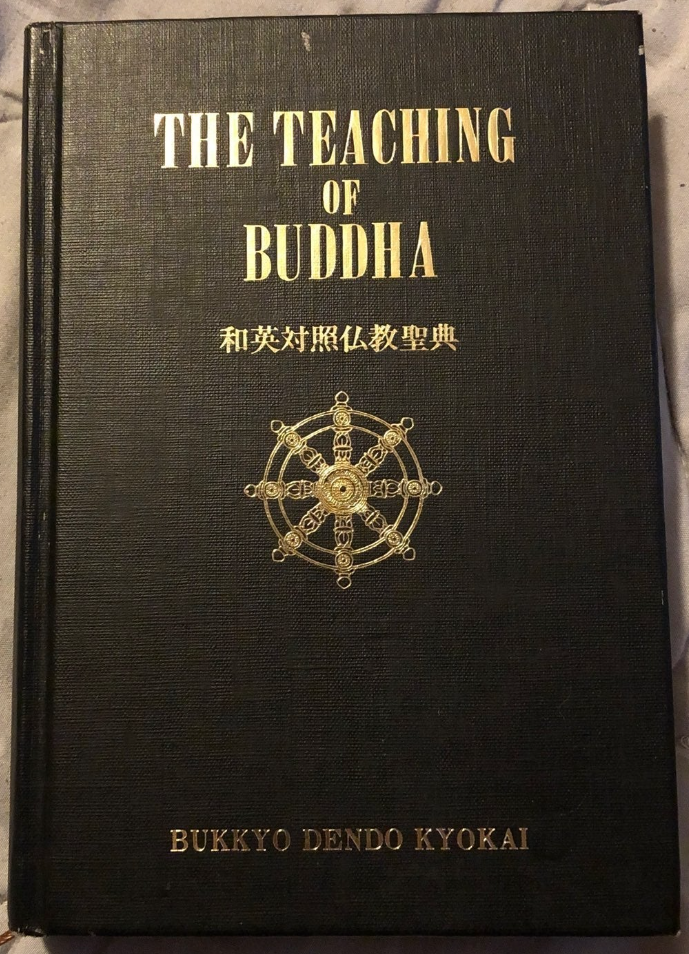
The Teaching of Buddha

Institutes of the Christian Religion by John Calvin

The Analects of Confucius

The Vedas compiled by the Dharmic Scriptures Team

On Divine Names & Mystical Theology by Pseudo-Dionysius the Areopagite

The Shōbōgenzō: Volume I by Eihei Dōgen

The Shōbōgenzō: Volume II by Eihei Dōgen

The Shōbōgenzō: Volume III by Eihei Dōgen

The Shōbōgenzō: Volume IV by Eihei Dōgen

Dōgen’s Extensive Record: A Translation of the Eihei Kōroku

The Tibetan Book of the Dead edited by W. Y. Evans-Wentz

The Essence of Christianity by Ludwig Feuerbach

Christian Apologetics by Norman Geisler

Philosophy of Religion by Norman Geisler

The Principia Discordia by Greg Hill and Kerry Wendell Thornley

The Perennial Philosophy by Aldous Huxley

The Guide for the Perplexed by Moses Maimonides

The Mūlamadhyamakakārikā of Nāgārjuna

On Buddhism by Keiji Nishitani

The Upanishads translated by Swami Paramananda

On the Harmony of Religion and Philosophy by Ibn Rushd (Averroes)

The Incoherence of the Incoherence by Ibn Rushd (Averroes)

Forgotten Truth by Huston Smith

An Introduction to Zen Buddhism by D.T. Suzuki

The Bhagavad Gita translated by Shri Purohit Swami

The New Being by Paul Tillich

The Way of Zen by Alan Watts

Note: Internet Sacred Text Archive hosts an archive of online books about religion, mythology, folklore and the esoteric (including the writings of the early church fathers).


Historical

World History: Patterns of Interaction by Beck, et al.

The Diary of a Young Girl by Anne Frank

The Decline and Fall of the Roman Empire: Volume I by Edward Gibbon

The Decline and Fall of the Roman Empire: Volume II by Edward Gibbon

The Decline and Fall of the Roman Empire: Volume III by Edward Gibbon

The Decline and Fall of the Roman Empire: Volume IV by Edward Gibbon

The Decline and Fall of the Roman Empire: Volume V by Edward Gibbon

The Decline and Fall of the Roman Empire: Volume VI by Edward Gibbon

The Histories of Herodotus

I Have a Dream by Martin Luther King Jr.

The History of Rome by Titus Livius

The History of Western Philosophy by Bertrand Russell

Anti-Semite and Jew: An Exploration of the Etiology of Hate by Jean-Paul Sartre

The Decline of the West by Oswald Spengler

The Annals of Tacitus

The History of the Peloponnesian War by Thucydides

Note: Project Gutenberg and the Internet Archive are excellent sources of historical writings and much more. Ancient Greek and Roman histories can be found at Loebolus.


Important Historical Documents

Magna Carta Libertatum (Great Charter of Liberties)

Universal Declaration of Human Rights

The Code of Hammurabi

Note: OurDocuments.gov hosts a list of 100 milestone documents, compiled by the National Archives and Records Administration, and drawn primarily from its nationwide holdings. The documents chronicle United States history from 1776 to 1965.


Political & Social Theory

On the Reproduction of Capitalism by Louis Althusser

An Introduction to The Principles of Morals and Legislation by Jeremy Bentham

Understanding Power: The Indispensable Chomsky

Anti-Oedipus: Capitalism & Schizophrenia by Gilles Deleuze & Félix Guattari

Discipline and Punish: The Birth of the Prison by Michel Foucault

The History of Sexuality by Michel Foucault

Madness and Civilization by Michel Foucault

The Theory of Communicative Action by Jürgen Habermas

Between Facts and Norms by Jürgen Habermas

Leviathan by Thomas Hobbes

Dialectic of Enlightenment by Max Horkheimer and Theodor Adorno

The General Theory of Employment, Interest, and Money by John Maynard Keynes

Structural Anthropology by Claude Lévi-Strauss

The Savage Mind by Claude Lévi-Strauss

The Prince by Niccolò Machiavelli

Capital: Critique of Political Economy, Volume I by Karl Marx

Capital: Critique of Political Economy, Volume II by Karl Marx

Capital: Critique of Political Economy, Volume III by Karl Marx

Economic and Philosophic Manuscripts of 1844 by Karl Marx

The German Ideology by Karl Marx & Friedrich Engels

Areopagitica by John Milton

The Spirit of Laws by Montesquieu

A Theory of Justice by John Rawls

Émile, or Concerning Education by Jean-Jacques Rousseau

The Origin of Inequality by Jean-Jacques Rousseau

The Social Contract by Jean-Jacques Rousseau

The Wealth of Nations by Adam Smith

Civil Disobedience by Henry David Thoreau

Writings of Leon Trotsky

The Theory of the Leisure Class by Thorstein Veblen

The Protestant Ethic and the Spirit of Capitalism by Max Weber


Check out the Links Section for more sources of primary texts and general research.

The Teaching of Buddha

“Both formerly and now, it is only suffering that I describe, and the cessation of suffering.”

– Siddhārtha Gautama

The Teaching of Buddha is a collection of writings on the essence of Buddhism, selected and edited from the vast Buddhist canon, presented in a concise, easy-to-read, and nonsectarian format. It also includes a brief history of Buddhism, a listing of the source texts, a glossary of Sanskrit terms, and an index.

You can get this book for FREE from Bukkyō Dendō Kyōkai America, the Society for the Promotion of Buddhism. I prefer to read this book as a philosophy of life, a different perspective on things, rather than a religious dogma. There are some great lessons to be found within this book and within yourself while reading it. Siddhārtha Gautama tackles some tough philosophical questions, of which Western philosophers have been dealing with for centuries, from a unique perspective. I would suggest reading On Buddhism by Keiji Nishitani (PDF) as a companion to this book.

Do not believe in anything simply because you have heard it. Do not believe in anything simply because it is spoken and rumored by many. Do not believe in anything simply because it is found written in your religious books. Do not believe in anything merely on the authority of your teachers and elders. Do not believe in traditions because they have been handed down for many generations. But after observation and analysis, when you find that anything agrees with reason and is conducive to the good and benefit of one and all, then accept it and live up to it.

The Teaching of Buddha (PDF)

Alan Watts – The Trickster Guru?

The Trickster Guru

by Alan Watts

I have often thought of writing a novel, similar to Thomas Mann’s “Confessions of Felix Krull,” which would be the life story of a charlatan making out as a master guru – either initiated in Tibet or appearing as the reincarnation of Nagarjuna, Padmasambhava, or some other great historical sage of the Orient. It would be a romantic and glamorous tale, flavored with the scent of pines in Himalayan valleys, with garden courtyards in obscure parts of Alexandria, with mountain temples in Japan, and with secretive meetings and initiations in country houses adjoining Paris, New York, and Los Angeles. It would also raise some rather unexpected philosophical questions as to the relations between genuine mysticism and stage magic. But I have neither the patience nor the skill to be a novelist, and thus can do no more than sketch the idea for some more gifted author.

The attractions of being a trickster guru are many. There is power and there is wealth, and still more the satisfactions of being an actor without need for a stage, who turns “real life” into a drama. It is not, furthermore, an illegal undertaking such as selling shares in non-existent corporations, impersonating a doctor, or falsifying checks. There are no recognized and official qualifications for being a guru, though now that some universities are offering courses in meditation and Kundalini Yoga it may soon be necessary to be a member of the U.S. Fraternity of Gurus. But a really fine trickster would get around all that by the one-upmanship of inventing an entirely new discipline outside and beyond all known forms of esoteric teaching.

It must be understood from the start that the trickster guru fills a real need and performs a genuine public service. Millions of people are searching desperately for a true father-Magician, especially at a time when the clergy and the psychiatrists are making rather a poor show, and do not seem to have the courage of their convictions or of their fantasies. Perhaps they have lost nerve through too high a valuation of the virtue of honesty – as if a painter felt bound to give his landscapes the fidelity of photographs. To fulfil his compassionate vocation, the trickster guru must above all have nerve. He must also be quite well-read in mystical and occult literature, both that which is historically authentic and sound in scholarship, and that which is somewhat questionable – such as the writings of H.P. Blavatsky, P.D. Ouspensky, and Aleister Crowley. It doesn’t do to be caught out on details now known to a wide public.

After such preparatory studies, the first step is to frequent those circles where gurus are especially sought, such as the various cult groups which pursue oriental religions or peculiar forms of psychotherapy, or simply the intellectual and artistic milieux of any great city. Be somewhat quiet and solitary. Never ask questions, but occasionally add a point – quite briefly – to what some speaker has said. Volunteer no information about your personal life, but occasionally indulge in a little absent-minded name-dropping to suggest that you have travelled widely and spent time in Turkestan. Evade close questioning by giving the impression that mere travel is a small matter hardly worth discussing, and that your real interests lie on much deeper levels.

Such behavior will soon provoke people into asking your advice. Don’t come right out with it, but suggest that the question is rather deep and ought to be discussed at length in some quiet place. Make an appointment at a congenial restaurant or cafe – not at your home, unless you have an impressive library and no evidence of being tied down with a family. At first, answer nothing, but without direct questioning, draw the person out to enlarge on his problem and listen with your eyes closed – not as if sleeping, but as if attending to the deep inner vibrations of his thoughts. Conclude the interview with a slightly veiled command to perform some rather odd exercise, such as humming a sound and then suddenly stopping. Carefully instruct the person to be aware of the slightest decision to stop before actually stopping, and indicate that the point is to be able to stop without any prior decision. Make a further appointment for a report on progress.

To carry this through, you must work out a whole series of unusual exercises, both psychological and physical. Some must be rather difficult tricks which can actually be accomplished, to give your student the sense of real progress.

Others must be virtually impossible – such as to think of the words yes and no at the same instant, repeatedly for five minutes, or with a pencil in each hand, to try to hit the opposite hand – which is equally trying to defend itself and hit the other. Don’t give all your students the same exercises but, because people love to be types, sort them into groups according to their astrological sun signs or according to your own private classifications, which must be given such odd names as grubers, jongers, milers, and trovers.

A judidous use of hypnosis – avoiding all the common tricks of hand-raising, staring at lights, or saying “Relax. Relax, while I count up to ten” will produce pleasant changes of feeling and the impression of attaining higher states of consciousness.

First, describe such a stage quite vividly – say, the sense of walking on air – and then have your students walk around barefooted trying not to make the slightest sound and yet giving their whole weight to the floor. Imply that the floor will soon feel like a cushion, then like water, and finally like air. Indicate a little later that there is reason to believe that something of this kind is the initial stage of levitation.

Next, be sure to have about thirty or forty different stages of progress worked out, giving them numbers, and suggest that there are still some extremely high stages beyond those numbered which can only be understood by those who have reached twenty-eight – so no point in discussing them now. After the walking-on-air gambit, try for instance having them push out hard with their arms as if some overwhelming force were pulling them. Reverse the procedure. This leads quickly to the feeling that one is not doing what one is doing and doing what one is not doing. Tell them to stay in this state while going about everyday business.

After a while let it be known that you have a rather special and peculiar background – as when some student asks, “Where did you get all this?” Well, you just picked up a thing or two in Turkestan, or “I’m quite a bit older than I look,” or say that “Reincarnation is entirely unlike what people suppose it to be.” Later, let on that you are in some way connected with an extremely select in-group. Don’t brashly claim anything. Your students will soon do that for you, and, when one hits on the fantasy that pleases you most, say, “I see you are just touching stage eighteen.”

There are two schools of thought about asking for money for your services. One is to have fees just like a doctor, because people are embarrassed if they do not know just what is expected of them. The other, used by the real high-powered tricksters, is to do everything free with, however, the understanding that each student has been personally selected for his or her innate capacity for the work (call it that), and thus be careful not to admit anyone without first putting them through some sort of hazing. Monetary contributions will soon be offered. Otherwise, charge rather heavily, making it dear that the work is worth infinitely more to oneself and to others than, say, expensive surgery or a new home. Imply that you give most of it away to mysterious beneficiaries.

As soon as you can afford to wangle it, get hold of a country house as an ashram or spiritual retreat, and put students to work on all the menial tasks. Insist on some special diet, but do not follow it yourself. Indeed, you should cultivate small vices, such as smoking, mild boozing, or, if you are very careful, sleeping with the ladies, to suggest that your stage of evolution is so high that such things do not affect you, or that only by such means can you remain in contact with ordinary mundane consciousness.

On the one hand, you yourself must be utterly free from any form of religious or parapsychological superstition, lest some other trickster should outplay you. On the other hand, you must eventually come to believe in your own hoax, because this will give you ten times more nerve. This can be done through religionizing total skepticism to the point of basic incredulity about everything – even science. After all, this is in line with the Hindu-Buddhist position that the whole universe is an illusion, and you need not worry about whether the Absolute is real or unreal, eternal or non-eternal, because every idea of it that you could form would, in comparison with living it up in the present, be horribly boring. Furthermore, you should convince yourself that the Absolute is precisely the same as illusion, and thus not be in the least ashamed of being greedy or anxious or depressed. Make it dear that we are ultimately God, but that you know it. If you are challenged to perform wonders, point out that everything is already a fabulous wonder, and to do something bizarre would be to go against your own most perfect scheme of things. On the other hand, when funny coincidences turn up, look knowing and show no surprise, especially when any student has good fortune or recovers from sickness. It will promptly be attributed to your powers, and you may be astonished to find that your very touch becomes healing, because people really believe in you. When it doesn’t work, you should sigh gently about lack of faith, or explain that this particular sickness is a very important working out of Karma which will have to be reckoned with some day, so why not now.

The reputation for supernormal powers is self-reinforcing, and as it builds up you can get more daring, such that you will have the whole power of mass self-deception working for you. But always remember that a good guru plays it cool and maintains a certain aloofness, especially from those sharpies of the press and TV whose game is to expose just about everyone as a fraud. Always insist, like the finest restaurants, that your clientele is exclusive. The very highest “society” does not deign to be listed in the Social Register.

As time goes on, allow it more and more to be understood that you are in constant touch with other centers of work. Disappear from time to time by taking trips abroad, and come back looking more mysterious than ever. You can easily find someone in India or Syria to do duty as your colleague, and take a small and select group of students on a journey which includes a brief interview with this Personage. He can talk any kind of nonsense, while you do the “translating.” When travelling with students, avoid any obvious assistance from regular agencies, and let it appear that your secret fraternity has arranged everything in advance.

Now a trickster guru is certainly an illusionist, but one might ask “What else is art?” If the universe is nothing but a vast Rorschach blot upon which we project our collective measures and interpretations, and if past and future has no real existence, an illusionist is simply a creative artist who changes the collective interpretation of life, and even improves on it. Reality is mostly what a people or a culture conceives it to be. Money, worthless in itself, depends entirely on collective faith for its value. The past is held against you only because others believe in it, and the future seems important only because we have conned ourselves into the notion that surviving for a long time, with painstaking care, is preferable to surviving for a short time with no responsibility and lots of thrills. It is really a matter of changing fashion.

Perhaps, then, a trickster may be one who actually liberates people from their more masochistic participations in the collective illusion, on the homeopathic principle of “The hair of the dog that bit you. ” Even genuine gurus set their disciples impossible psychological exercises to demonstrate the unreality of the ego, and it could be argued that they too, are unwitting tricksters, raised as they have been in cultures without disillusioning benefits of “scientific knowledge,” which, as ecologists note, isn’t working out too well. Perhaps it all boils down to the ancient belief that God himself is a trickster, eternally fooling himself by the power of maya into the sensation that he is a human being, a cat, or an insect, since no art can be accomplished which does not set itself certain rules and limitations. A fully infinite and boundless God would have no limitations, and thus no way of manifesting power or love. Omnipotence must therefore include the power of self-restriction – to the point of forgetting that it is restricting itself and thus making limitations seem real. It could be that genuine students and gurus are on the side of being fooled, whereas the phony gurus are the foolers – and one must make one’s choice.

I am proposing this problem as a kind of Zen koan, like “Beyond positive and negative, what is reality?” How will you avoid being either a fool or a fooler? How will you get rid of the ego-illusion without either trying or not trying? If you need God’s grace to be saved, how will you get the grace to get grace? Who will answer these questions if yourself is itself an illusion? Man’s extremity is God’s opportunity.

The cock crows in the evening;
At midnight, the brilliant sun.
And there have also been such effective mother-magicians as Mary Baker Eddy, Helena Blavatsky, Aimee Semple McPherson, Annie Besant, and Alice Bailey.

© Alan Watts (1915 – 1973) The Essential Alan Watts, Celestial Arts (1974)

alan_watts

Alan Watts: Out of Your Mind – Essential Listening from the Alan Watts Audio Archives

Schopenhauer

“In India our religions will never take root. The ancient wisdom of the human race will not be displaced by what happened in Galilee. On the contrary, Indian philosophy streams back to Europe, and will produce a fundamental change in our knowledge and thought.”

– Arthur Schopenhauer

the-world-as-will-and-representation

Full Book (PDF): The World as Will and Representation – Volume I – Volume II

Full Book (PDF): On the Basis of Morality

Schopenhauer’s Thought

A key focus of Schopenhauer was his investigation of individual motivation. Before Schopenhauer, Hegel had popularized the concept of Zeitgeist, the idea that society consisted of a collective consciousness that moved in a distinct direction, dictating the actions of its members. Schopenhauer, a reader of both Kant and Hegel, criticized their logical optimism and the belief that individual morality could be determined by society and reason. Schopenhauer believed that humans were motivated by only their own basic desires, or Wille zum Leben (“Will to Live”), which directed all of mankind.

For Schopenhauer, human desire was futile, illogical, directionless, and, by extension, so was all human action in the world. Einstein paraphrased his views as follows: “Man can indeed do what he wants, but he cannot will what he wants.” In this sense, he adhered to the Fichtean principle of idealism: “The world is for a subject.” This idealism so presented, immediately commits it to an ethical attitude, unlike the purely epistemological concerns of Descartes and Berkeley. To Schopenhauer, the Will is a blind force that controls not only the actions of individual, intelligent agents, but ultimately all observable phenomena—an evil to be terminated via mankind’s duties: asceticism and chastity. He is credited with one of the most famous opening lines of philosophy: “The world is my representation.” Will, for Schopenhauer, is what Kant called the “thing-in-itself”. Friedrich Nietzsche was greatly influenced by this idea of Will, although he eventually rejected it.

For Schopenhauer, human desiring, “willing”, and craving cause suffering or pain. A temporary way to escape this pain is through aesthetic contemplation (a method comparable to Zapffe’s “Sublimation“). Aesthetic contemplation allows one to escape this pain—albeit temporarily—because it stops one perceiving the world as mere presentation. Instead, one no longer perceives the world as an object of perception (therefore as subject to the Principle of Sufficient Grounds; time, space and causality) from which one is separated; rather one becomes one with that perception: “one can thus no longer separate the perceiver from the perception” (The World as Will and Representation, section 34). From this immersion with the world one no longer views oneself as an individual who suffers in the world due to one’s individual will but, rather, becomes a “subject of cognition” to a perception that is “Pure, will-less, timeless” (section 34) where the essence, “ideas”, of the world are shown. Art is the practical consequence of this brief aesthetic contemplation as it attempts to depict one’s immersion with the world, thus tries to depict the essence/pure ideas of the world. Music, for Schopenhauer, was the purest form of art because it was the one that depicted the will itself without it appearing as subject to the Principle of Sufficient Grounds, therefore as an individual object. According to Daniel Albright, “Schopenhauer thought that music was the only art that did not merely copy ideas, but actually embodied the will itself”.

He deemed music a timeless, universal language comprehended everywhere, that can imbue global enthusiasm, if in possession of a significant melody.

Will as Noumenon

Schopenhauer accepted Kant’s double-aspect of the universe—the phenomenal (world of experience) and the noumenal (the true world, independent of experience). Some commentators suggest that Schopenhauer claimed that the noumenon, or thing-in-itself, was the basis for Schopenhauer’s concept of the will. Other commentators suggest that Schopenhauer considered will to be only a subset of the “thing-in-itself” class, namely that which we can most directly experience.

Schopenhauer’s identification of the Kantian noumenon (i.e., the actually existing entity) with what he termed “will” deserves some explanation. The noumenon was what Kant called the Ding an sich (the Thing in Itself), the reality that is the foundation of our sensory and mental representations of an external world. In Kantian terms, those sensory and mental representations are mere phenomena. Schopenhauer departed from Kant in his description of the relationship between the phenomenon and the noumenon. According to Kant, things-in-themselves ground the phenomenal representations in our minds; Schopenhauer, on the other hand, believed that phenomena and noumena are two different sides of the same coin. Noumena do not cause phenomena, but rather phenomena are simply the way by which our minds perceive the noumena, according to the principle of sufficient reason.

Schopenhauer’s second major departure from Kant’s epistemology concerns the body. Kant’s philosophy was formulated as a response to the radical philosophical skepticism of David Hume, who claimed that causality could not be observed empirically. Schopenhauer begins by arguing that Kant’s demarcation between external objects, knowable only as phenomena, and the Thing in Itself of noumenon, contains a significant omission. There is, in fact, one physical object we know more intimately than we know any object of sense perception: our own body.

We know our human bodies have boundaries and occupy space, the same way other objects known only through our named senses do. Though we seldom think of our body as a physical object, we know even before reflection that it shares some of an object’s properties. We understand that a watermelon cannot successfully occupy the same space as an oncoming truck; we know that if we tried to repeat the experiment with our own body, we would obtain similar results—we know this even if we do not understand the physics involved.

We know that our consciousness inhabits a physical body, similar to other physical objects only known as phenomena. Yet our consciousness is not commensurate with our body. Most of us possess the power of voluntary motion. We usually are not aware of the breathing of our lungs or the beating of our heart unless somehow our attention is called to them. Our ability to control either is limited. Our kidneys command our attention on their schedule rather than one we choose. Few of us have any idea what our liver is doing right now, though this organ is as needful as lungs, heart, or kidneys. The conscious mind is the servant, not the master, of these and other organs. These organs have an agenda the conscious mind did not choose, and over which it has limited power.

When Schopenhauer identifies the noumenon with the desires, needs, and impulses in us that we name “will”, what he is saying is that we participate in the reality of an otherwise unachievable world outside the mind through will. We cannot prove that our mental picture of an outside world corresponds with a reality by reasoning; through will, we know—without thinking—that the world can stimulate us. We suffer fear, or desire: these states arise involuntarily; they arise prior to reflection; they arise even when the conscious mind would prefer to hold them at bay. The rational mind is, for Schopenhauer, a leaf borne along in a stream of pre-reflective and largely unconscious emotion. That stream is will, and through will, if not through logic, we can participate in the underlying reality beyond mere phenomena. It is for this reason that Schopenhauer identifies the noumenon with what we call our will.

In his criticism of Kant, Schopenhauer claimed that sensation and understanding are separate and distinct abilities. Yet, for Kant, an object is known through each of them. Kant wrote: “[T]here are two stems of human knowledge … namely, sensibility and understanding, objects being given by the former [sensibility] and thought by the latter [understanding].” Schopenhauer disagreed. He asserted that mere sense impressions, not objects, are given by sensibility. According to Schopenhauer, objects are intuitively perceived by understanding and are discursively thought by reason (Kant had claimed that (1) the understanding thinks objects through concepts and that (2) reason seeks the unconditioned or ultimate answer to “why?”). Schopenhauer said that Kant’s mistake regarding perception resulted in all of the obscurity and difficult confusion that is exhibited in the Transcendental Analytic section of his critique.

Lastly, Schopenhauer departed from Kant in how he interpreted the Platonic ideas. In The World as Will and Representation Schopenhauer explicitly stated:

…Kant used the word [Idea] wrongly as well as illegitimately, although Plato had already taken possession of it, and used it most appropriately.

Instead Schopenhauer relied upon the Neoplatonist interpretation of the biographer Diogenes Laërtius from Lives and Opinions of Eminent Philosophers. In reference to Plato’s Ideas, Schopenhauer quotes Laërtius verbatim in an explanatory footnote.

Diogenes Laërtius (III, 12): Plato teaches that the Ideas exist in nature, so to speak, as patterns or prototypes, and that the remainder of things only resemble them, and exist as their copies.

schopenhauer_statue

Moral Theory

Schopenhauer’s moral theory proposed that only compassion can drive moral acts. According to Schopenhauer, compassion alone is the good of the object of the acts, that is, they cannot be inspired by either the prospect of personal utility or the feeling of duty. Mankind can also be guided by egoism and malice. Egotistic acts are those guided by self-interest, desire for pleasure or happiness. Schopenhauer believed most of our deeds belong to this class. Acts of malice are different from egotistic acts. As in the case of acts of compassion, these do not target personal utility. Their aim is to cause damage to others, independently of personal gains. He believed, like Swami Vivekananda in the unity of all with one-self and also believed that ego is the origin of pain and conflicts, that reduction of ego frames the moral principles.

Even though Schopenhauer ended his treatise on the freedom of human will with the postulate of everyone’s responsibility for their character and, consequently, acts—the responsibility following from one’s being the Will as noumenon (from which also all the characters and creations come)—he considered his views incompatible with theism, on grounds of fatalism and, more generally, responsibility for evil. In Schopenhauer’s philosophy the dogmas of Christianity lose their significance, and the “Last Judgment” is no longer preceded by anything—”The world is itself the Last Judgment on it.” Whereas God, if he existed, would be evil.

He named a force within man that he felt took invariable precedence over reason: the Will to Live or Will to Life (Wille zum Leben), defined as an inherent drive within human beings, and indeed all creatures, to stay alive; a force that inveigles us into reproducing.

Schopenhauer refused to conceive of love as either trifling or accidental, but rather understood it as an immensely powerful force that lay unseen within man’s psyche and dramatically shaped the world:

The ultimate aim of all love affairs … is more important than all other aims in man’s life; and therefore it is quite worthy of the profound seriousness with which everyone pursues it. What is decided by it is nothing less than the composition of the next generation.

young_schopenhauer

Influence of Eastern Thought

Schopenhauer read the Latin translation of the ancient Hindu texts, The Upanishads, which French writer Anquetil du Perron had translated from the Persian translation of Prince Dara Shikoh entitled Sirre-Akbar (“The Great Secret”). He was so impressed by their philosophy that he called them “the production of the highest human wisdom”, and believed they contained superhuman concepts. The Upanishads was a great source of inspiration to Schopenhauer. Writing about them, he said:

It is the most satisfying and elevating reading (with the exception of the original text) which is possible in the world; it has been the solace of my life and will be the solace of my death.

It is well known that the book Oupnekhat (Upanishad) always lay open on his table, and he invariably studied it before sleeping at night. He called the opening up of Sanskrit literature “the greatest gift of our century”, and predicted that the philosophy and knowledge of the Upanishads would become the cherished faith of the West.

Schopenhauer was first introduced to the 1802 Latin Upanishad translation through Friedrich Majer. They met during the winter of 1813–1814 in Weimar at the home of Schopenhauer’s mother according to the biographer Safranski. Majer was a follower of Herder, and an early Indologist. Schopenhauer did not begin a serious study of the Indic texts, however, until the summer of 1814. Sansfranski maintains that between 1815 and 1817, Schopenhauer had another important cross-pollination with Indian thought in Dresden. This was through his neighbor of two years, Karl Christian Friedrich Krause. Krause was then a minor and rather unorthodox philosopher who attempted to mix his own ideas with that of ancient Indian wisdom. Krause had also mastered Sanskrit, unlike Schopenhauer, and the two developed a professional relationship. It was from Krause that Schopenhauer learned meditation and received the closest thing to expert advice concerning Indian thought.

Most noticeable, in the case of Schopenhauer’s work, was the significance of the Chandogya Upanishad, whose Mahavakya, Tat Tvam Asi is mentioned throughout The World as Will and Representation.

Schopenhauer noted a correspondence between his doctrines and the Four Noble Truths of Buddhism. Similarities centered on the principles that life involves suffering, that suffering is caused by desire (taṇhā), and that the extinction of desire leads to liberation. Thus three of the four “truths of the Buddha” correspond to Schopenhauer’s doctrine of the will. In Buddhism, however, while greed and lust are always unskillful, desire is ethically variable – it can be skillful, unskillful, or neutral.

For Schopenhauer, Will had ontological primacy over the intellect; in other words, desire is understood to be prior to thought. Schopenhauer felt this was similar to notions of puruṣārtha or goals of life in Vedānta Hinduism.

In Schopenhauer’s philosophy, denial of the will is attained by either:

  • personal experience of an extremely great suffering that leads to loss of the will to live; or
  • knowledge of the essential nature of life in the world through observation of the suffering of other people.

However, Buddhist nirvāṇa is not equivalent to the condition that Schopenhauer described as denial of the will. Nirvāṇa is not the extinguishing of the person as some Western scholars have thought, but only the “extinguishing” (the literal meaning of nirvana) of the flames of greed, hatred, and delusion that assail a person’s character. Occult historian Joscelyn Godwin (1945– ) stated, “It was Buddhism that inspired the philosophy of Arthur Schopenhauer, and, through him, attracted Richard Wagner. This Orientalism reflected the struggle of the German Romantics, in the words of Leon Poliakov, to “free themselves from Judeo-Christian fetters”. In contradistinction to Godwin’s claim that Buddhism inspired Schopenhauer, the philosopher himself made the following statement in his discussion of religions:

If I wished to take the results of my philosophy as the standard of truth, I should have to concede to Buddhism pre-eminence over the others. In any case, it must be a pleasure to me to see my doctrine in such close agreement with a religion that the majority of men on earth hold as their own, for this numbers far more followers than any other. And this agreement must be yet the more pleasing to me, inasmuch as in my philosophizing I have certainly not been under its influence. For up till 1818, when my work appeared, there was to be found in Europe only a very few accounts of Buddhism.

Buddhist philosopher Nishitani Keiji, however, sought to distance Buddhism from Schopenhauer. While Schopenhauer’s philosophy may sound rather mystical in such a summary, his methodology was resolutely empirical, rather than speculative or transcendental:

Philosophy … is a science, and as such has no articles of faith; accordingly, in it nothing can be assumed as existing except what is either positively given empirically, or demonstrated through indubitable conclusions.

Also note:

This actual world of what is knowable, in which we are and which is in us, remains both the material and the limit of our consideration.

The argument that Buddhism affected Schopenhauer’s philosophy more than any other Dharmic faith loses more credence when viewed in light of the fact that Schopenhauer did not begin a serious study of Buddhism until after the publication of The World as Will and Representation in 1818. Scholars have started to revise earlier views about Schopenhauer’s discovery of Buddhism. Proof of early interest and influence, however, appears in Schopenhauer’s 1815/16 notes (transcribed and translated by Urs App) about Buddhism. They are included in a recent case study that traces Schopenhauer’s interest in Buddhism and documents its influence. Other scholarly work questions how similar Schopenhauer’s philosophy actually is to Buddhism.

Schopenhauer said he was influenced by the Upanishads, Immanuel Kant and Plato. References to Eastern philosophy and religion appear frequently in his writing. As noted above, he appreciated the teachings of the Buddha and even called himself a Buddhist. He said that his philosophy could not have been conceived before these teachings were available.

Concerning the Upanishads and Vedas, he writes in The World as Will and Representation:

If the reader has also received the benefit of the Vedas, the access to which by means of the Upanishads is in my eyes the greatest privilege which this still young century (1818) may claim before all previous centuries, if then the reader, I say, has received his initiation in primeval Indian wisdom, and received it with an open heart, he will be prepared in the very best way for hearing what I have to tell him. It will not sound to him strange, as to many others, much less disagreeable; for I might, if it did not sound conceited, contend that every one of the detached statements which constitute the Upanishads, may be deduced as a necessary result from the fundamental thoughts which I have to enunciate, though those deductions themselves are by no means to be found there.

Among Schopenhauer’s other influences were: Shakespeare, Jean-Jacques Rousseau, John Locke, Thomas Reid, Baruch Spinoza, Matthias Claudius, George Berkeley, David Hume, and René Descartes.

schopenhauer

Schopenhauer’s Influence

Schopenhauer has had a massive influence upon later thinkers, though more so in the arts (especially literature and music) and psychology than in philosophy. His popularity peaked in the early twentieth century, especially during the Modernist era, and waned somewhat thereafter. Nevertheless, a number of recent publications have reinterpreted and modernised the study of Schopenhauer. His theory is also being explored by some modern philosophers as a precursor to evolutionary theory and modern evolutionary psychology.

Russian writer and philosopher Leo Tolstoy was greatly influenced by Schopenhauer. After reading Schopenhauer’s The World as Will and Representation, Tolstoy gradually became converted to the ascetic morality upheld in that work as the proper spiritual path for the upper classes: “Do you know what this summer has meant for me? Constant raptures over Schopenhauer and a whole series of spiritual delights which I’ve never experienced before. … no student has ever studied so much on his course, and learned so much, as I have this summer”

Richard Wagner, writing in his autobiography, remembered his first impression that Schopenhauer left on him (when he read The World as Will and Representation):

Schopenhauer’s book was never completely out of my mind, and by the following summer I had studied it from cover to cover four times. It had a radical influence on my whole life.

Wagner also commented on that “serious mood, which was trying to find ecstatic expression” created by Schopenhauer inspired the conception of Tristan und Isolde.

Friedrich Nietzsche owed the awakening of his philosophical interest to reading The World as Will and Representation and admitted that he was one of the few philosophers that he respected, dedicating to him his essay Schopenhauer als Erzieher one of his Untimely Meditations.

Jorge Luis Borges remarked that the reason he had never attempted to write a systematic account of his world view, despite his penchant for philosophy and metaphysics in particular, was because Schopenhauer had already written it for him.

As a teenager, Ludwig Wittgenstein adopted Schopenhauer’s epistemological idealism. However, after his study of the philosophy of mathematics, he rejected epistemological idealism for Gottlob Frege’s conceptual realism. In later years, Wittgenstein was highly dismissive of Schopenhauer, describing him as an ultimately shallow thinker: “Schopenhauer has quite a crude mind… where real depth starts, his comes to an end.”

The philosopher Gilbert Ryle read Schopenhauer’s works as a student, but later largely forgot them, only to unwittingly recycle ideas from Schopenhauer in his The Concept of Mind (1949).


Further Study

Arthur Schopenhauer (SEP)

Arthur Schopenhauer (IEP)

Schopenhauer’s Works (Project Gutenberg)

Schopenhauer’s Works (Wikisource)

The Absurd

absurdism_definition

The Nature of the Absurd

A nihilist is not one who believes in nothing, but one who does not believe in what exists.

My contention has been that death and the certain prospect of death make an absurdity out of life. But, argues Albert Camus, even if we humans were immortal, this would make life no less absurd. According to Absurdism, humans historically attempt to find meaning in their lives. Traditionally, this search results in one of two conclusions: either that life is meaningless, or life contains within it a purpose set forth by a higher power—a belief in God, or adherence to some religion or other abstract concept.

I don’t know whether this world has a meaning that transcends it. But I know that I cannot know that meaning and that it is impossible for me just now to know it. What can a meaning outside my condition mean to me? I can understand only in human terms. What I touch, what resists me — that I understand. And these two certainties — my appetite for the absolute and for unity and the impossibility of reducing this world to a rational and reasonable principle — I also know that I cannot reconcile them. What other truth can I admit without lying, without bringing in a hope I lack and which means nothing within the limits of my conditions?

In philosophy, “the Absurd” refers to the conflict between the human tendency to seek inherent value and meaning in life and the human inability to find any. In this context, absurd does not mean “logically impossible,” but rather “humanly impossible.” The universe and the human mind do not each separately cause the Absurd, but rather, the Absurd arises by the contradictory nature of the two existing simultaneously.

I said that the world is absurd, but I was too hasty. This world in itself is not reasonable, that is all that can be said. But what is absurd is the confrontation of this irrational and the wild longing for clarity whose call echoes in the human heart. The absurd depends as much on man as on the world. For the moment it is all that links them together. It binds them one to the other as only hatred can weld two creatures together. This is all I can discern clearly in this measureless universe where my adventure takes place.

Accordingly, Absurdism is a philosophical school of thought stating that the efforts of humanity to find inherent meaning will ultimately fail (and hence are absurd) because the sheer amount of information, as well as the vast realm of the unknown, make total certainty impossible. As a philosophy, absurdism furthermore explores the fundamental nature of the Absurd and how individuals, once becoming conscious of the Absurd, should respond to it. The absurdist philosopher Albert Camus stated that individuals should embrace the absurd condition of human existence while also defiantly continuing to explore and search for meaning.

In a universe suddenly divested of illusions and lights, man feels an alien, a stranger. His exile is without remedy since he is deprived of the memory of a lost home or the hope of a promised land. This divorce between man and his life, the actor and his setting, is properly the feeling of absurdity.

Absurdism shares some concepts, and a common theoretical template, with existentialism and nihilism. It has its origins in the work of the 19th-century Danish philosopher Søren Kierkegaard, who chose to confront the crisis that humans face with the Absurd by developing his own existentialist philosophy. Absurdism as a belief system was born of the European existentialist movement that ensued, specifically when Camus rejected certain aspects of that philosophical line of thought and published his essay The Myth of Sisyphus. The aftermath of World War II provided the social environment that stimulated absurdist views and allowed for their popular development, especially in the devastated country of France.

At this point of his effort man stands face to face with the irrational. He feels within him his longing for happiness and for reason. The absurd is born of this confrontation between the human need and the unreasonable silence of the world. 

Camus perceives filling the void with some invented belief or meaning as a mere “act of eluding”—that is, avoiding or escaping rather than acknowledging and embracing the Absurd. To Camus, elusion is a fundamental flaw in religion, existentialism, and various other schools of thought. If the individual eludes the Absurd, then he or she can never confront it. Camus also concedes that elusion is the most common response to the absurd.

Even with a spiritual power as the answer to meaning, another question arises: What is the purpose of a belief in God? Kierkegaard believed that there is no human-comprehensible purpose of God, making faith in God absurd itself. Camus, on the other hand, states that to believe in God is to “deny one of the terms of the contradiction” between humanity and the universe (and is therefore not absurd but what he calls “philosophical suicide”). Camus (as well as Kierkegaard), though, suggests that while absurdity does not lead to belief in God, neither does it lead to the denial of God. Camus notes, “I did not say ‘excludes God’, which would still amount to asserting”.

Intelligence, too, tells me in its way that this world is absurd. Its contrary, blind reason, may well claim that all is clear; I was waiting for proof and longing for it to be right. But despite so many pretentious centuries and over the heads of so many eloquent and persuasive men, I know that is false. On this plane, at least, there is no happiness if I cannot know. That universal reason, practical or ethical, that determinism, those categories that explain everything are enough to make a decent man laugh. They have nothing to do with the mind. They negate its profound truth, which is to be enchained. In this unintelligible and limited universe, man’s fate henceforth assumes its meaning. A horde of irrationals has sprung up and surrounds him until his ultimate end. In his recovered and now studied lucidity, the feeling of the absurd becomes clear and definite.

camus_quote

Creation as Rebellion

Nothing can discourage the appetite for divinity in the heart of man.

For Camus, the beauty people encounter in life makes it worth living. People may create meaning in their own lives, which may not be the objective meaning of life (if there is one), but can still provide something to strive for. However, he insisted that one must always maintain an ironic distance between this invented meaning and the knowledge of the absurd, lest the fictitious meaning take the place of the absurd.

In absurdist philosophy, the Absurd arises out of the fundamental disharmony between the individual’s search for meaning and the meaninglessness of the universe. As beings looking for meaning in a meaningless world, humans have three ways of resolving the dilemma. Kierkegaard and Camus describe the solutions in their works, The Sickness Unto Death (1849) and The Myth of Sisyphus (1942), respectively:

  • Suicide (or, “escaping existence”): a solution in which a person ends one’s own life. Both Kierkegaard and Camus dismiss the viability of this option. Camus states that it does not counter the Absurd. Rather, the act of ending one’s existence only becomes more absurd.
  • Religious, spiritual, or abstract belief in a transcendent realm, being, or idea: a solution in which one believes in the existence of a reality that is beyond the Absurd, and, as such, has meaning. Kierkegaard stated that a belief in anything beyond the Absurd requires an irrational but perhaps necessary religious acceptance in such an intangible and empirically unprovable thing (now commonly referred to as a “leap of faith“). However, Camus regarded this solution, and others, as “philosophical suicide”.
  • Acceptance of the Absurd: a solution in which one accepts the Absurd and continues to live in spite of it. Camus endorsed this solution, believing that by accepting the Absurd, one can achieve the greatest extent of their freedom, and that by recognizing no religious or other moral constraints and by revolting against the Absurd while simultaneously accepting it as unstoppable, one could possibly be content from the personal meaning constructed in the process. Kierkegaard, on the other hand, regarded this solution as “demoniac madness”: “He rages most of all at the thought that eternity might get it into its head to take his misery from him!“

There exists an obvious fact that seems utterly moral: namely, that a man is always a prey to his truths. Once he has admitted them, he cannot free himself from them. One has to pay something. A man who has become conscious of the absurd is forever bound to it. A man devoid of hope and conscious of being so has ceased to belong to the future. That is natural. But it is just as natural that he should strive to escape the universe of which he is the creator.

Absurdism originated from (as well as alongside) the 20th-century strains of existentialism and nihilism; it shares some prominent starting points with, though also entails conclusions that are uniquely distinct from, these other schools of thought. All three arose from the human experience of anguish and confusion stemming from the Absurd: the apparent meaninglessness in a world in which humans, nevertheless, are so compelled to find or create meaning. The three schools of thought diverge from there. Existentialists have generally advocated the individual’s construction of his or her own meaning in life as well as the free will of the individual. Nihilists, on the contrary, contend that “it is futile to seek or to affirm meaning where none can be found.” Absurdists, following Camus’s formulation, hesitantly allow the possibility for some meaning or value in life, but are neither as certain as existentialists are about the value of one’s own constructed meaning nor as nihilists are about the total inability to create meaning. Absurdists following Camus also devalue or outright reject free will, encouraging merely that the individual live defiantly and authentically in spite of the psychological tension of the Absurd.

To work and create “for nothing,” to sculpture in clay, to know one’s creation has no future, to see one’s work destroyed in a day while being aware that fundamentally this has no more importance than building for centuries — this is the difficult wisdom that absurd thought sanctions. Performing these two tasks simultaneously, negating on the one hand and magnifying on the other, is the way open to the absurd creator. He must give the void its colors.

Camus himself passionately worked to counter nihilism, as he explained in his essay “The Rebel,” while he also categorically rejected the label of “existentialist” in his essay “Enigma” and in the compilation The Lyrical and Critical Essays of Albert Camus, though he was, and still is, often broadly characterized by others as an existentialist. Both existentialism and absurdism entail consideration of the practical applications of becoming conscious of the truth of existential nihilism: i.e., how a driven seeker of meaning should act when suddenly confronted with the seeming concealment, or downright absence, of meaning in the universe. Camus’s own understanding of the world (e.g., “a benign indifference”, in The Stranger), and every vision he had for its progress, however, sets him apart from the general existentialist trend.

The absurd … is an experience to be lived through, a point of departure, the equivalent, in existence of Descartes’ methodical doubt. Absurdism, like methodical doubt, has wiped the slate clean. It leaves us in a blind alley. But, like methodical doubt, it can, by returning upon itself, open up a new field of investigation, and in the process of reasoning then pursues the same course. I proclaim that I believe in nothing and that everything is absurd, but I cannot doubt the validity of my proclamation and I must at least believe in my protest. The first and only evidence that is supplied me, within the terms of the absurdist experience, is rebellion … Rebellion is born of the spectacle of irrationality, confronted with an unjust and incomprehensible condition.

Though the notion of the ‘absurd’ pervades all Albert Camus’s writing, The Myth of Sisyphus is his chief work on the subject. In it, Camus considers absurdity as a confrontation, an opposition, a conflict or a “divorce” between two ideals. Specifically, he defines the human condition as absurd, as the confrontation between man’s desire for significance, meaning and clarity on the one hand – and the silent, cold universe on the other. He continues that there are specific human experiences evoking notions of absurdity. Such a realization or encounter with the absurd leaves the individual with a choice: suicide, a leap of faith, or recognition. He concludes that recognition is the only defensible option.

Rebellion in itself is not an element of civilization. But it is a preliminary to all civilization. Rebellion alone, in the blind alley in which we live, allows us to hope for the future of which Nietzsche dreamed: “Instead of the judge and the oppressor, the creator.” … Of all the schools of patience and lucidity, creation is the most effective. It is also the staggering evidence of man’s sole dignity: the dogged revolt against his condition, perseverance in an effort considered sterile.

Freedom cannot be achieved beyond what the absurdity of existence permits; however, the closest one can come to being absolutely free is through acceptance of the Absurd. Camus introduced the idea of “acceptance without resignation” as a way of dealing with the recognition of absurdity, asking whether or not man can “live without appeal”, while defining a “conscious revolt” against the avoidance of absurdity of the world. In a world devoid of higher meaning or judicial afterlife, the human nature becomes as close to absolutely free as is humanly possible.

I am not a philosopher, because I don’t believe in reason enough to believe in a system. What interests me is knowing how we must behave, and more precisely, how to behave when one does not believe in God or reason.

The rejection of hope, in absurdism, denotes the refusal to believe in anything more than what this absurd life provides. Hope, Camus emphasizes, however, has nothing to do with despair (meaning that the two terms are not opposites). One can still live fully while rejecting hope, and, in fact, can only do so without hope. Hope is perceived by the absurdist as another fraudulent method of evading the Absurd, and by not having hope, one is motivated to live every fleeting moment to the fullest. In the words of Nikos Kazantzakis’ epitaph: “I hope for nothing. I fear nothing. I am free.”

should_i_kill_myself

Suicide

There is but one truly serious philosophical problem and that is suicide. Judging whether life is or is not worth living amounts to answering the fundamental question of philosophy. All the rest – whether or not the world has three dimensions, whether the mind has nine or twelve categories – comes afterwards. These are games; one must first answer.

For Camus, suicide is a “confession” that life is not worth living; it is a choice that implicitly declares that life is “too much.” Suicide offers the most basic “way out” of absurdity: the immediate termination of the self and its place in the universe.

The final conclusion of absurdist reasoning is, in fact, the repudiation of suicide and the acceptance of the desperate encounter between human inquiry and the silence of the universe. Suicide would mean the end of this encounter, and absurdist reasoning considers that it could not consent to this without negating its own premises. According to absurdist reasoning, such a solution would be the equivalent of flight or deliverance. But it is obvious that absurdism hereby admits that human life is the only necessary good since it is precisely life that makes this encounter possible and since, without life, the absurdist wager would have no basis. To say that life is absurd, the conscience must be alive.

The absurd encounter can also arouse a “leap of faith,” a term derived from one of Kierkegaard’s early pseudonyms, Johannes de Silentio (although the term was not used by Kierkegaard himself), where one believes that there is more than the rational life (aesthetic or ethical). To take a “leap of faith,” one must act with the “virtue of the absurd” (as Johannes de Silentio put it), where a suspension of the ethical may need to exist. This faith has no expectations, but is a flexible power initiated by a recognition of the absurd. (Although at some point, one recognizes or encounters the existence of the Absurd and, in response, actively ignores it.) However, Camus states that because the leap of faith escapes rationality and defers to abstraction over personal experience, the leap of faith is not absurd. Camus considers the leap of faith as “philosophical suicide,” rejecting both this and physical suicide.

You have already grasped that Sisyphus is the absurd hero. He is, as much through his passions as through his torture. His scorn of the gods, his hatred of death, and his passion for life won him that unspeakable penalty in which the whole being is exerted toward accomplishing nothing. This is the price that must be paid for the passions of this earth. Nothing is told us about Sisyphus in the underworld. Myths are made for the imagination to breathe life into them.

Lastly, a person can choose to embrace their own absurd condition. According to Camus, one’s freedom – and the opportunity to give life meaning – lies in the recognition of absurdity. If the absurd experience is truly the realization that the universe is fundamentally devoid of absolutes, then we as individuals are truly free. “To live without appeal,” as he puts it, is a philosophical move to define absolutes and universals subjectively, rather than objectively. The freedom of humans is thus established in a human’s natural ability and opportunity to create their own meaning and purpose; to decide (or think) for him- or herself. The individual becomes the most precious unit of existence, representing a set of unique ideals that can be characterized as an entire universe in its own right. In acknowledging the absurdity of seeking any inherent meaning, but continuing this search regardless, one can be happy, gradually developing meaning from the search alone.

To shed light upon the step taken by the mind when, starting from a philosophy of the world’s lack of meaning, it ends up by finding a meaning and depth in it.

Camus states in The Myth of Sisyphus: “Thus I draw from the absurd three consequences, which are my revolt, my freedom, and my passion. By the mere activity of consciousness I transform into a rule of life what was an invitation to death, and I refuse suicide.” “Revolt” here refers to the refusal of suicide and search for meaning despite the revelation of the Absurd; “Freedom” refers to the lack of imprisonment by religious devotion or others’ moral codes; “Passion” refers to the most wholehearted experiencing of life, since hope has been rejected, and so he concludes that every moment must be lived fully.

Every ideology is contrary to human psychology.

The absurdist is not guided by morality, but rather, by their own integrity. The absurdist is, in fact, amoral (though not necessarily immoral). The Absurdist’s view of morality implies an unwavering sense of definite right and wrong at all times, while integrity implies honesty with one’s self and consistency in the motivations of one’s actions and decisions.

The preceding merely defines a way of thinking. But the point is to live.

In the midst of winter, I found there was, within me, an invincible summer. And that makes me happy. For it says that no matter how hard the world pushes against me, within me, there’s something stronger – something better, pushing right back.

– (All quotes in this article are from Albert Camus)

camus2

See Also

Absurdism (Wikipedia)

Albert Camus (SEP)

Absurdism (Wikiquote)

A Reconstructed Conversation with Camus (Nautilus)

Albert Camus (Wikiquote)

The Self-Overcoming of Nihilism

the self-overcoming of nihilism

Full Book (PDF): The Self-Overcoming of Nihilism by Nishitani Keiji

As a past reader of Nishitani in both the original Japanese and English translation, I find this manuscript to be the most accessible and clearly written of any book-length work I have read by him. It shows Nishitani as a vital and vigorous thinker, and serves as an introduction to his widely acclaimed Religion and Nothingness.

The summaries of the relation to nihilism of Hegel, Schopenhauer, Kierkegaard, Feuerbach, and Stirner, a nearly forgotten figure in intellectual history, are all perspicacious. Even the chapters on Nietzsche, about whom volumes are written these days, provide new insights. The brief section on the problem of nihilism for Japan is unprecedented in the English literature, and the sketches on karma and historicity whet the appetite for the more extensive and difficult expositions in Religion and Nothingness.

It will be mandatory reading for an understanding of both Nishitani’s thought and the problem of nihilism. Scholars and other persons interested in nihilism, in Nietzsche, and/or in contemporary Buddhist or Japanese philosophy, will greatly profit from a study of this book.

– John C. Maraldo, Department of Philosophy, University of North Florida

This is a fine translation of an important work in the corpus of Nishitani’s early writings. The translation is timely both because of the Western interest in Nishitani as a preeminent contemporary Japanese philosopher and because of the continuing Western perplexity about the problems Nishitani addresses. Nishitani is one of the world’s greatest living philosophers and even in this early work of his that brilliance shines through.

– Thomas P. Kasulis, Department of Philosophy, Northland College

Nishitani Keiji was for many years Professor of Religious Philosophy at Kyoto University and the leading thinker of the “Kyoto School” of philosophy. He died in 1990. Graham Parkes is Professor of Philosophy at the University of Hawaii, the editor of Heidegger and Asian Thought and Nietzsche and Asian Thought, and the author of Composing the Soul: Reaches of Nietzsche’s Psychology. Setsuko Aihara has taught Japanese at the University of Hawaii and Harvard University, and is the author of Strategies for Reading Japanese: A Rational Approach to the Japanese Sentence.

Contents

Chapter One – Nihilism as Existence

1. Two Problems

2. Nihilism and the Philosophy of History

3. European Nihilism

Chapter Two – From Realism to Nihilism: Hegel, Schopenhauer, Kierkegaard, Feuerbach

1. Hegel’s Absolute Idealism and Radical Realism

2. Schopenhauer—Will as Real—The Nullity of Existence

3. Kierkegaard—Becoming and Existence

4. Feuerbach—Critique of Religion, Philosophy, and Ethics

Chapter Three – Friedrich Nietzsche: The First Consummate Nihilist

1. The Significance of Nihilism in Nietzsche

2. Radical Nihilism

3. Nietzsche’s Interpretation of Christianity

4. The Concept of “Sincerity”—”Will to Illusion”

Chapter Four – Nietzsche’s Affirmative Nihilism: Amor Fati and Eternal Recurrence

1. Value-Interpretation and Perspectivism

2. The Problem of Amor Fati

3. Love of Fate as “Innermost Nature”—Suffering—Soul

4. The Idea of Eternal Recurrence: The “Moment” and Eternity

5. Eternal Recurrence and Overcoming the Spirit of Gravity

6. Love of Fate and Eternal Recurrence

7. The Self-Overcoming of Nihilism

Chapter Five – Nihilism and Existence in Nietzsche

1. “God is Dead”

2. Critique of Religion

3. The Stages of Nihilism

4. Nihilism as Existence

5. The First Stage of Existence

6. The Second Stage of Existence

7. Nihilism as Scientific Conscience

8. Science and History as Existence

9. “Living Dangerously” and “Experimentation”

10. The Third Stage—Existence as Body

11. The Dialectical Development of Nihilism

Chapter Six – Nihilism as Egoism: Max Stirner

1. Stirner’s Context

2. The Meaning of Egoism

3. Realist, Idealist, Egoist—”Creative Nothing”

4. From Paganism to Christianity

5. From Christianity to Liberalism

6. From Liberalism to Egoism

7. Ownness and Property—All and Nothing

8. The State and the Individual

Chapter Seven – Nihilism in Russia

1. Russian Nihilism

2. Bazarov’s Nihilism—”Fathers and Sons”

3. Nihilism as Contemplation—”Notes from Underground”

Chapter Eight – Nihilism as Philosophy: Martin Heidegger

1. Existentialism as a Discipline

2. The “Ontological Difference”

3. Transcendence and Being-in-the-World

4. Being-toward-Death and Anxiety

5. Finitude—Metaphysics—Existence—Freedom

Chapter Nine – The Meaning of Nihilism for Japan

1. The Crisis in Europe and Nihilism

2. The Crisis Compounded

3. The Significance of European Nihilism for Us

4. Buddhism and Nihilism

Appendix – The Problem of Atheism

1. Marxist Humanism

2. Sartrean Existentialism

3. Atheism in the World of Today

Lost Tribes

uncontacted_tribes

A few nights ago, I watched The Lost City of Z, which is about British explorer Percy Fawcett who was sent to Bolivia and later made several attempts to find an ancient lost city in the Amazon. He disappeared in 1925 along with his son on an expedition. It got me thinking about people today who are still uncontacted by the rest of humanity. It’s a bewildering thought, indeed, but could there be anything that they could teach us? I think so.

Some people want to protect these “lost tribes” from contact with the Western world for various reasons. For example, our “civilized” immune systems have developed immunities to diseases that would kill most of them. Many feel that these uncontacted people should be left alone to determine their own destiny; that we should afford them the same basic human rights that we (supposedly) apply to the rest of humanity. Reservations have been created to prevent the abuse of those rights where businesses large and small would like to encroach on tribal territory. Questions of morality arise in complex ways.

What intrigues me, of course, has nothing to do with their rights or protections. I’m concerned with the philosophical implications, as selfish as that might sound. These uncontacted people have no ideology or sense of history that could be remotely similar to the rest of humanity. I’m sure they have their own simple ideologies and codes of ethics to live by. The point at which I think we could learn from them lay precisely in these differences of worldview.

Many of them are still preliterate and think thunderstorms are the work of gods. They may even look upon us as gods with all of our great technological advancements. But what of their moral sense? A thought experiment: a human being is raised and lives in the wild for the entirety of their life. Would they develop the same or a similar sense of morality that we civilized Westerners have? Do unto others? I tend to think not, though some would disagree.

The point at which we could learn from the lost tribes lay precisely in seeing how exactly we Westerners are conditioned from birth. It makes me think twice about my own study of philosophy. They live close to the earth, as it were. We are mostly emancipated from the earth. They are not burdened by our lifestyle, yet we feel that they must be living miserable lives out there alone in the wild. What I am studying, really, is the history of the thought processes of civilization. And what is my concern with history? Why do I believe it to be so important?

Lastly, though less important I think, the entire situation makes possible another thought experiment: suppose there exist intelligent life forms outside of Earth that look upon us as we look upon the lost tribes. Or suppose that we happen across a newfound planet that contains intelligent life forms similar to us, but far less technologically advanced. These thought experiments inevitably bring up serious questions of morality.

The movie gave me a lot to think about, so I figured I would share my thoughts. Should we take a closer look at how we are conditioned? Would it be healthy to attempt to live a more simple lifestyle? More than our material lifestyle, I mean to question our spiritual lifestyle. Perhaps they go hand in hand. In any case, I think the thought deserves some consideration.

The Map of Philosophy

This video is such an excellent and comprehensive introduction to the various areas of philosophical interest. The narrator explains the intricate relations that each area has with the others. Also included in each section of the video are links to more videos about each specific subject. Carneades.org really did a great job creating this. They are also selling a full-sized poster of the Map of Philosophy on Zazzle.

Description from YouTube: A comprehensive map of all of the disciplines, areas and subdivisions of philosophy. Including logic, History of philosophy, philosophical traditions, value theory, epistemology, metaphysics, philosophy of religion, philosophy of science, philosophy of mind, philosophy of language, philosophy of action, ethics, aesthetics, social philosophy, political philosophy, philosophical methods and more! This video breaks down and offers a brief explanation of each area of study, and should serve as a good introduction for beginners, a solid refresher for journeymen and a cool illustration for experts. Enjoy!

map-of-philosophy

Carneades.org also maintains a website with videos and more. The website has an interesting stated goal:

“Carneades.org was created with the simple purpose of searching for knowledge.  The hope is to provide a place for anyone to submit beliefs and arguments for consideration and then subject those beliefs to rigorous criticism with the intent of finding those arguments which can withstand a skeptical eye.  Renowned and amateur arguments alike will be put to the test with the hope that some may pass.  Carneades.org does not assent to or endorse any beliefs, but rather cultivates a disposition to seek wisdom through rigorous argument.  In true skeptical fashion, suspension of judgement is encouraged whenever certain knowledge is unattainable.  An attempt will be made to find ways to doubt and challenge any and all arguments, beliefs, positions, or conclusions.”

You can find them on twitter at @CarneadesCyrene.

Related

A Taxonomic Map of Philosophy

Reason & Faith

My position was terrible. I knew I could find nothing along the path of reasonable knowledge except a denial of life; and there — in faith — was nothing but a denial of reason, which was yet more impossible for me than a denial of life.

– Leo Tolstoy

tolstoy

In a recent post I had asked myself if my approach to and conclusions about Truth and God, in both my thoughts and in some of my older writings, were completely backwards. Did I begin and end in the wrong place? Was my thought process illogical? Did I even ask the right questions and use the correct definitions? Did I completely confound the concepts of Faith and Reason in such a way as to promote absurdity?

I asked: “What is the meaning of my life, beyond time, cause, and space?” And I replied to quite another question: “What is the meaning of my life within time, cause, and space?” With the result that, after long efforts of thought, the answer I reached was: “None.”

It’s been a long time since I wrote Natural Theology & Classical Apologetics, when I came to the conclusion that Reason could not lead to God. Since that time, I had lost my faith and had given in to despair over the meaninglessness of life. A careful reading of Kierkegaard helped to restore some of that faith, but eventually gave way to emptiness again. The same happened when attempting to apply Nietzsche’s cheerful embrace of the death of God, or an existentialist embracement of the absurd, to my own life. Buddhist thought has offered some consolation, but was still never enough. I tend to fall back into old habits and thought patterns. A more recent conclusion I had come to was that my nihilism was simply a reaction that would not have been possible without knowing God in the first place, but I’m even unsure of that. What would I even do with that knowledge?

I asked myself what my life is, and got the reply: An evil and an absurdity. And really my life — a life of indulgence of desires — was senseless and evil, and therefore the reply, “Life is evil and an absurdity”, referred only to my life, but not to human life in general.

Today, I read a piece by Leo Tolstoy about his personal existential crisis, entitled A Confession. I’ve read my fair share of Kierkegaard and Nietzsche and wonder if Tolstoy was acquainted with Kierkegaard’s work. I could reasonably see my History of an Error, which was heavily influenced by Nietzsche, as the unconscious beginning of a revolt against Reason, which had deprived my life of any (eternal) meaning. Must I “remove knowledge in order to make room for belief,” as Kant wrote? Is faith of any kind even still possible for me? Or even necessary?

“But perhaps I have overlooked something, or misunderstood something?” I said to myself several times. “It cannot be that this condition of despair is natural to man!” And I sought for an explanation of these problems in all the branches of knowledge acquired by men. I sought painfully and long, not from idle curiosity or listlessly, but painfully and persistently day and night — sought as a perishing man seeks for safety — and I found nothing.

I decided to share A Confession here as I feel that I may as well have written it myself, so similar are Tolstoy’s experiences and thought-processes with regard to reason, faith, religion, a life of leisure and hedonism, and the meaning of such a life. I’m really not sure what to think of his conclusions about faith at this point. All I know is that this essay resonated with me in a deeply profound way.

All these conceptions in which the finite has been adjusted to the infinite and a meaning found for life — the conception of God, of will, of goodness — we submit to logical examination. And all those conceptions fail to stand reason’s criticism.

(On a side note: I think the psychology of faith, in contrast to an anthropology of religion, would make for a very interesting field of research.)

Click here for the PDF version. I would like to thank the Christian Classics Ethereal Library for providing both the PDF and text versions.

Click here for an excellent condensation of the writing if you don’t want to read the entire thing.

A Confession by Leo Tolstoy

I

I was baptized and brought up in the Orthodox Christian faith. I was taught it in childhood and throughout my boyhood and youth. But when I abandoned the second course of the university at the age of eighteen I no longer believed any of the things I had been taught.

Judging by certain memories, I never seriously believed them, but had merely relied on what I was taught and on what was professed by the grown-up people around me, and that reliance was very unstable.

I remember that before I was eleven a grammar school pupil, Vladimir Milyutin (long since dead), visited us one Sunday and announced as the latest novelty a discovery made at his school. This discovery was that there is no God and that all we are taught about Him is a mere invention (this was in 1838). I remember how interested my elder brothers were in this information. They called me to their council and we all, I remember, became very animated, and accepted it as something very interesting and quite possible.

I remember also that when my elder brother, Dmitriy, who was then at the university, suddenly, in the passionate way natural to him, devoted himself to religion and began to attend all the Church services, to fast and to lead a pure and moral life, we all — even our elders — unceasingly held him up to ridicule and for some unknown reason called him “Noah”. I remember that Musin-Pushkin, the then Curator of Kazan University, when inviting us to dance at his home, ironically persuaded my brother (who was declining the invitation) by the argument that even David danced before the Ark. I sympathized with these jokes made by my elders, and drew from them the conclusion that though it is necessary to learn the catechism and go to church, one must not take such things too seriously. I remember also that I read Voltaire when I was very young, and that his raillery, far from shocking me, amused me very much.

My lapse from faith occurred as is usual among people on our level of education. In most cases, I think, it happens thus: a man lives like everybody else, on the basis of principles not merely having nothing in common with religious doctrine, but generally opposed to it; religious doctrine does not play a part in life, in intercourse with others it is never encountered, and in a man’s own life he never has to reckon with it. Religious doctrine is professed far away from life and independently of it. If it is encountered, it is only as an external phenomenon disconnected from life.

Then as now, it was and is quite impossible to judge by a man’s life and conduct whether he is a believer or not. If there be a difference between a man who publicly professes orthodoxy and one who denies it, the difference is not in favor of the former. Then as now, the public profession and confession of orthodoxy was chiefly met with among people who were dull and cruel and who considered themselves very important. Ability, honesty, reliability, good-nature and moral conduct, were often met with among unbelievers.

The schools teach the catechism and send the pupils to church, and government officials must produce certificates of having received communion. But a man of our circle who has finished his education and is not in the government service may even now (and formerly it was still easier for him to do so) live for ten or twenty years without once remembering that he is living among Christians and is himself reckoned a member of the orthodox Christian Church.

So that, now as formerly, religious doctrine, accepted on trust and supported by external pressure, thaws away gradually under the influence of knowledge and experience of life which conflict with it, and a man very often lives on, imagining that he still holds intact the religious doctrine imparted to him in childhood whereas in fact not a trace of it remains.

S., a clever and truthful man, once told me the story of how he ceased to believe. On a hunting expedition, when he was already twenty-six, he once, at the place where they put up for the night, knelt down in the evening to pray — a habit retained from childhood. His elder brother, who was at the hunt with him, was lying on some hay and watching him. When S. had finished and was settling down for the night, his brother said to him: “So you still do that?”

They said nothing more to one another. But from that day S. ceased to say his prayers or go to church. And now he has not prayed, received communion, or gone to church, for thirty years. And this not because he knows his brother’s convictions and has joined him in them, nor because he has decided anything in his own soul, but simply because the word spoken by his brother was like the push of a finger on a wall that was ready to fall by its own weight. The word only showed that where he thought there was faith, in reality there had long been an empty space, and that therefore the utterance of words and the making of signs of the cross and genuflections while praying were quite senseless actions. Becoming conscious of their senselessness he could not continue them.

So it has been and is, I think, with the great majority of people. I am speaking of people of our educational level who are sincere with themselves, and not of those who make the profession of faith a means of attaining worldly aims. (Such people are the most fundamental infidels, for if faith is for them a means of attaining any worldly aims, then certainly it is not faith.) these people of our education are so placed that the light of knowledge and life has caused an artificial erection to melt away, and they have either already noticed this and swept its place clear, or they have not yet noticed it.

The religious doctrine taught me from childhood disappeared in me as in others, but with this difference, that as from the age of fifteen I began to read philosophical works, my rejection of the doctrine became a conscious one at a very early age. From the time I was sixteen I ceased to say my prayers and ceased to go to church or to fast of my own volition. I did not believe what had been taught me in childhood but I believed in something. What it was I believed in I could not at all have said. I believed in a God, or rather I did not deny God — but I could not have said what sort of God. Neither did I deny Christ and his teaching, but what his teaching consisted in I again could not have said.

Looking back on that time, I now see clearly that my faith — my only real faith — that which apart from my animal instincts gave impulse to my life — was a belief in perfecting myself. But in what this perfecting consisted and what its object was, I could not have said. I tried to perfect myself mentally — I studied everything I could, anything life threw in my way; I tried to perfect my will, I drew up rules I tried to follow; I perfected myself physically, cultivating my strength and agility by all sorts of exercises, and accustoming myself to endurance and patience by all kinds of privations. And all this I considered to be the pursuit of perfection. the beginning of it all was of course moral perfection, but that was soon replaced by perfection in general: by the desire to be better not in my own eyes or those of God but in the eyes of other people. And very soon this effort again changed into a desire to be stronger than others: to be more famous, more important and richer than others.

II

Some day I will narrate the touching and instructive history of my life during those ten years of my youth. I think very many people have had a like experience. With all my soul I wished to be good, but I was young, passionate and alone, completely alone when I sought goodness. Every time I tried to express my most sincere desire, which was to be morally good, I met with contempt and ridicule, but as soon as I yielded to low passions I was praised and encouraged.

Ambition, love of power, covetousness, lasciviousness, pride, anger, and revenge — were all respected.

Yielding to those passions I became like the grown-up folk and felt that they approved of me. The kind aunt with whom I lived, herself the purest of beings, always told me that there was nothing she so desired for me as that I should have relations with a married woman: ‘Rien ne forme un juene homme, comme une liaison avec une femme comme il faut‘. Another happiness she desired for me was that I should become an aide-de-camp, and if possible aide-de-camp to the Emperor. But the greatest happiness of all would be that I should marry a very rich girl and so become possessed of as many serfs as possible.

I cannot think of those years without horror, loathing and heartache. I killed men in war and challenged men to duels in order to kill them. I lost at cards, consumed the labor of the peasants, sentenced them to punishments, lived loosely, and deceived people. Lying, robbery, adultery of all kinds, drunkenness, violence, murder — there was no crime I did not commit, and in spite of that people praised my conduct and my contemporaries considered and consider me to be a comparatively moral man.

So I lived for ten years.

During that time I began to write from vanity, covetousness, and pride. In my writings I did the same as in my life. to get fame and money, for the sake of which I wrote, it was necessary to hide the good and to display the evil. and I did so. How often in my writings I contrived to hide under the guise of indifference, or even of banter, those strivings of mine towards goodness which gave meaning to my life! And I succeeded in this and was praised.

At twenty-six years of age I returned to Petersburg after the war, and met the writers. They received me as one of themselves and flattered me. And before I had time to look round I had adopted the views on life of the set of authors I had come among, and these views completely obliterated all my former strivings to improve — they furnished a theory which justified the dissoluteness of my life.

The view of life of these people, my comrades in authorship, consisted in this: that life in general goes on developing, and in this development we — men of thought — have the chief part; and among men of thought it is we — artists and poets — who have the greatest influence. Our vocation is to teach mankind. And lest the simple question should suggest itself: What do I know, and what can I teach? it was explained in this theory that this need not be known, and that the artist and poet teach unconsciously. I was considered an admirable artist and poet, and therefore it was very natural for me to adopt this theory. I, artist and poet, wrote and taught without myself knowing what. For this I was paid money; I had excellent food, lodging, women, and society; and I had fame, which showed that what I taught was very good.

this faith in the meaning of poetry and in the development of life was a religion, and I was one of its priests. To be its priest was very pleasant and profitable. And I lived a considerable time in this faith without doubting its validity. But in the second and still more in the third year of this life I began to doubt the infallibility of this religion and to examine it. My first cause of doubt was that I began to notice that the priests of this religion were not all in accord among themselves. Some said: We are the best and most useful teachers; we teach what is needed, but the others teach wrongly. Others said: No! we are the real teachers, and you teach wrongly. and they disputed, quarrelled, abused, cheated, and tricked one another. There were also many among us who did not care who was right and who was wrong, but were simply bent on attaining their covetous aims by means of this activity of ours. All this obliged me to doubt the validity of our creed.

Moreover, having begun to doubt the truth of the authors’ creed itself, I also began to observe its priests more attentively, and I became convinced that almost all the priests of that religion, the writers, were immoral, and for the most part men of bad, worthless character, much inferior to those whom I had met in my former dissipated and military life; but they were self-confident and self-satisfied as only those can be who are quite holy or who do not know what holiness is. These people revolted me, I became revolting to myself, and I realized that that faith was a fraud.

But strange to say, though I understood this fraud and renounced it, yet I did not renounce the rank these people gave me: the rank of artist, poet, and teacher. I naively imagined that I was a poet and artist and could teach everybody without myself knowing what I was teaching, and I acted accordingly.

From my intimacy with these men I acquired a new vice: abnormally developed pride and an insane assurance that it was my vocation to teach men, without knowing what.

To remember that time, and my own state of mind and that of those men (though there are thousands like them today), is sad and terrible and ludicrous, and arouses exactly the feeling one experiences in a lunatic asylum.

We were all then convinced that it was necessary for us to speak, write, and print as quickly as possible and as much as possible, and that it was all wanted for the good of humanity. And thousands of us, contradicting and abusing one another, all printed and wrote — teaching others. And without noticing that we knew nothing, and that to the simplest of life’s questions: What is good and what is evil? we did not know how to reply, we all talked at the same time, not listening to one another, sometimes seconding and praising one another in order to be seconded and praised in turn, sometimes getting angry with one another — just as in a lunatic asylum.

Thousands of workmen laboured to the extreme limit of their strength day and night, setting the type and printing millions of words which the post carried all over Russia, and we still went on teaching and could in no way find time to teach enough, and were always angry that sufficient attention was not paid us.

It was terribly strange, but is now quite comprehensible. Our real innermost concern was to get as much money and praise as possible. To gain that end we could do nothing except write books and papers. So we did that. But in order to do such useless work and to feel assured that we were very important people we required a theory justifying our activity. And so among us this theory was devised: “All that exists is reasonable. All that exists develops. And it all develops by means of Culture. And Culture is measured by the circulation of books and newspapers. And we are paid money and are respected because we write books and newspapers, and therefore we are the most useful and the best of men.” This theory would have been all very well if we had been unanimous, but as every thought expressed by one of us was always met by a diametrically opposite thought expressed by another, we ought to have been driven to reflection. But we ignored this; people paid us money and those on our side praised us, so each of us considered himself justified.

It is now clear to me that this was just as in a lunatic asylum; but then I only dimly suspected this, and like all lunatics, simply called all men lunatics except myself.

III

So I lived, abandoning myself to this insanity for another six years, till my marriage. During that time I went abroad. Life in Europe and my acquaintance with leading and learned Europeans confirmed me yet more in the faith of striving after perfection in which I believed, for I found the same faith among them. That faith took with me the common form it assumes with the majority of educated people of our day. It was expressed by the word “progress”. It then appeared to me that this word meant something. I did not as yet understand that, being tormented (like every vital man) by the question how it is best for me to live, in my answer, “Live in conformity with progress”, I was like a man in a boat who when carried along by wind and waves should reply to what for him is the chief and only question. “whither to steer”, by saying, “We are being carried somewhere”.

I did not then notice this. Only occasionally — not by reason but by instinct — I revolted against this superstition so common in our day, by which people hide from themselves their lack of understanding of life. . . . So, for instance, during my stay in Paris, the sight of an execution revealed to me the instability of my superstitious belief in progress. When I saw the head part from the body and how they thumped separately into the box, I understood, not with my mind but with my whole being, that no theory of the reasonableness of our present progress could justify this deed; and that though everybody from the creation of the world had held it to be necessary, on whatever theory, I knew it to be unnecessary and bad; and therefore the arbiter of what is good and evil is not what people say and do, nor is it progress, but it is my heart and I. Another instance of a realization that the superstitious belief in progress is insufficient as a guide to life, was my brother’s death. Wise, good, serious, he fell ill while still a young man, suffered for more than a year, and died painfully, not understanding why he had lived and still less why he had to die. No theories could give me, or him, any reply to these questions during his slow and painful dying. But these were only rare instances of doubt, and I actually continued to live professing a faith only in progress. “Everything evolves and I evolve with it: and why it is that I evolve with all things will be known some day.” So I ought to have formulated my faith at that time.

On returning from abroad I settled in the country and chanced to occupy myself with peasant schools. This work was particularly to my taste because in it I had not to face the falsity which had become obvious to me and stared me in the face when I tried to teach people by literary means. Here also I acted in the name of progress, but I already regarded progress itself critically. I said to myself: “In some of its developments progress has proceeded wrongly, and with primitive peasant children one must deal in a spirit of perfect freedom, letting them choose what path of progress they please.” In reality I was ever revolving round one and the same insoluble problem, which was: How to teach without knowing what to teach. In the higher spheres of literary activity I had realized that one could not teach without knowing what, for I saw that people all taught differently, and by quarrelling among themselves only succeeded in hiding their ignorance from one another. But here, with peasant children, I thought to evade this difficulty by letting them learn what they liked. It amuses me now when I remember how I shuffled in trying to satisfy my desire to teach, while in the depth of my soul I knew very well that I could not teach anything needful for I did not know what was needful. After spending a year at school work I went abroad a second time to discover how to teach others while myself knowing nothing.

And it seemed to me that I had learnt this aborad, and in the year of the peasants’ emancipation (1861) I returned to Russia armed with all this wisdom, and having become an Arbiter I began to teach, both the uneducated peasants in schools and the educated classes through a magazine I published. Things appeared to be going well, but I felt I was not quite sound mentally and that matters could not long continue in that way. And I should perhaps then have come to the state of despair I reached fifteen years later had there not been one side of life still unexplored by me which promised me happiness: that was my marriage.

For a year I busied myself with arbitration work, the schools, and the magazine; and I became so worn out — as a result especially of my mental confusion — and so hard was my struggle as Arbiter, so obscure the results of my activity in the schools, so repulsive my shuffling in the magazine (which always amounted to one and the same thing: a desire to teach everybody and to hide the fact that I did not know what to teach), that I fell ill, mentally rather than physically, threw up everything, and went away to the Bashkirs in the steppes, to breathe fresh air, drink kumys, and live a merely animal life.

Returning from there I married. The new conditions of happy family life completely diverted me from all search for the general meaning of life. My whole life was centred at that time in my family, wife and children, and therefore in care to increase our means of livelihood. My striving after self-perfection, for which I had already substituted a striving for perfection in general, i.e. progress, was now again replaced by the effort simply to secure the best possible conditions for myself and my family.

So another fifteen years passed.

In spite of the fact that I now regarded authorship as of no importance — the temptation of immense monetary rewards and applause for my insignificant work — and I devoted myself to it as a means of improving my material position and of stifling in my soul all questions as to the meaning of my own life or life in general.

I wrote: teaching what was for me the only truth, namely, that one should live so as to have the best for oneself and one’s family.

So I lived; but five years ago something very strange began to happen to me. At first I experienced moments of perplexity and arrest of life, and though I did not know what to do or how to live; and I felt lost and became dejected. But this passed and I went on living as before. Then these moments of perplexity began to recur oftener and oftener, and always in the same form. They were always expressed by the questions: What is it for? What does it lead to?

At first it seemed to me that these were aimless and irrelevant questions. I thought that it was all well known, and that if I should ever wish to deal with the solution it would not cost me much effort; just at present I had no time for it, but when I wanted to I should be able to find the answer. The questions however began to repeat themselves frequently, and to demand replies more and more insistently; and like drops of ink always falling on one place they ran together into one black blot.

Then occurred what happens to everyone sickening with a mortal internal disease. At first trivial signs of indisposition appear to which the sick man pays no attention; then these signs reappear more and more often and merge into one uninterrupted period of suffering. The suffering increases, and before the sick man can look round, what he took for a mere indisposition has already become more important to him than anything else in the world — it is death!

That is what happened to me. I understood that it was no casual indisposition but something very important, and that if these questions constantly repeated themselves they would have to be answered. And I tried to answer them. The questions seemed such stupid, simple, childish ones; but as soon as I touched them and tried to solve them I at once became convinced, first, that they are not childish and stupid but the most important and profound of life’s questions; and secondly that, occupying myself with my Samara estate, the education of my son, or the writing of a book, I had to know why I was doing it. As long as I did not know why, I could do nothing and could not live. Amid the thoughts of estate management which greatly occupied me at that time, the question would suddenly occur: “Well, you will have 6,000 desyatinas of land in Samara Government and 300 horses, and what then?” . . . And I was quite disconcerted and did not know what to think. Or when considering plans for the education of my children, I would say to myself: “What for?” Or when considering how the peasants might become prosperous, I would suddenly say to myself: “But what does it matter to me?” Or when thinking of the fame my works would bring me, I would say to myself, “Very well; you will be more famous than Gogol or Pushkin or Shakespeare or Moliere, or than all the writers in the world — and what of it?” And I could find no reply at all. The questions would not wait, they had to be answered at once, and if I did not answer them it was impossible to live. But there was no answer.

I felt that what I had been standing on had collapsed and that I had nothing left under my feet. What I had lived on no longer existed, and there was nothing left.

IV

My life came to a standstill. I could breathe, eat, drink, and sleep, and I could not help doing these things; but there was no life, for there were no wishes the fulfillment of which I could consider reasonable. If I desired anything, I knew in advance that whether I satisfied my desire or not, nothing would come of it. Had a fairy come and offered to fulfil my desires I should not have know what to ask. If in moments of intoxication I felt something which, though not a wish, was a habit left by former wishes, in sober moments I knew this to be a delusion and that there was really nothing to wish for. I could not even wish to know the truth, for I guessed of what it consisted. The truth was that life is meaningless. I had as it were lived, lived, and walked, walked, till I had come to a precipice and saw clearly that there was nothing ahead of me but destruction. It was impossible to stop, impossible to go back, and impossible to close my eyes or avoid seeing that there was nothing ahead but suffering and real death — complete annihilation.

It had come to this, that I, a healthy, fortunate man, felt I could no longer live: some irresistible power impelled me to rid myself one way or other of life. I cannot say I wished to kill myself. The power which drew me away from life was stronger, fuller, and more widespread than any mere wish. It was a force similar to the former striving to live, only in a contrary direction. All my strength drew me away from life. The thought of self-destruction now came to me as naturally as thoughts of how to improve my life had come formerly. and it was seductive that I had to be cunning with myself lest I should carry it out too hastily. I did not wish to hurry, because I wanted to use all efforts to disentangle the matter. “If I cannot unravel matters, there will always be time.” and it was then that I, a man favoured by fortune, hid a cord from myself lest I should hang myself from the crosspiece of the partition in my room where I undressed alone every evening, and I ceased to go out shooting with a gun lest I should be tempted by so easy a way of ending my life. I did not myself know what I wanted: I feared life, desired to escape from it, yet still hoped something of it.

And all this befell me at a time when all around me I had what is considered complete good fortune. I was not yet fifty; I had a good wife who loved me and whom I loved, good children, and a large estate which without much effort on my part improved and increased. I was respected by my relations and acquaintances more than at any previous time. I was praised by others and without much self-deception could consider that my name was famous. And far from being insane or mentally diseased, I enjoyed on the contrary a strength of mind and body such as I have seldom met with among men of my kind; physically I could keep up with the peasants at mowing, and mentally I could work for eight and ten hours at a stretch without experiencing any ill results from such exertion. And in this situation I came to this — that I could not live, and, fearing death, had to employ cunning with myself to avoid taking my own life.

My mental condition presented itself to me in this way: my life is a stupid and spiteful joke someone has played on me. Though I did not acknowledge a “someone” who created me, yet such a presentation — that someone had played an evil and stupid joke on my by placing me in the world — was the form of expression that suggested itself most naturally to me.

Involuntarily it appeared to me that there, somewhere, was someone who amused himself by watching how I lived for thirty or forty years: learning, developing, maturing in body and mind, and how, having with matured mental powers reached the summit of life from which it all lay before me, I stood on that summit — like an arch-fool — seeing clearly that there is nothing in life, and that there has been and will be nothing. And he was amused. . . .

But whether that “someone” laughing at me existed or not, I was none the better off. I could give no reasonable meaning to any single action or to my whole life. I was only surprised that I could have avoided understanding this from the very beginning — it has been so long known to all. Today or tomorrow sickness and death will come (they had come already) to those I love or to me; nothing will remain but stench and worms. Sooner or later my affairs, whatever they may be, will be forgotten, and I shall not exist. Then why go on making any effort? . . . How can man fail to see this? And how go on living? That is what is surprising! One can only live while one is intoxicated with life; as soon as one is sober it is impossible not to see that it is all a mere fraud and a stupid fraud! That is precisely what it is: there is nothing either amusing or witty about it, it is simply cruel and stupid.

There is an Eastern fable, told long ago, of a traveller overtaken on a plain by an enraged beast. Escaping from the beast he gets into a dry well, but sees at the bottom of the well a dragon that has opened its jaws to swallow him. And the unfortunate man, not daring to climb out lest he should be destroyed by the enraged beast, and not daring to leap to the bottom of the well lest he should be eaten by the dragon, seizes s twig growing in a crack in the well and clings to it. His hands are growing weaker and he feels he will soon have to resign himself to the destruction that awaits him above or below, but still he clings on. Then he sees that two mice, a black one and a white one, go regularly round and round the stem of the twig to which he is clinging and gnaw at it. And soon the twig itself will snap and he will fall into the dragon’s jaws. The traveller sees this and knows that he will inevitably perish; but while still hanging he looks around, sees some drops of honey on the leaves of the twig, reaches them with his tongue and licks them. So I too clung to the twig of life, knowing that the dragon of death was inevitably awaiting me, ready to tear me to pieces; and I could not understand why I had fallen into such torment. I tried to lick the honey which formerly consoled me, but the honey no longer gave me pleasure, and the white and black mice of day and night gnawed at the branch by which I hung. I saw the dragon clearly and the honey no longer tasted sweet. I only saw the unescapable dragon and the mice, and I could not tear my gaze from them. and this is not a fable but the real unanswerable truth intelligible to all.

The deception of the joys of life which formerly allayed my terror of the dragon now no longer deceived me. No matter how often I may be told, “You cannot understand the meaning of life so do not think about it, but live,” I can no longer do it: I have already done it too long. I cannot now help seeing day and night going round and bringing me to death. That is all I see, for that alone is true. All else is false.

The two drops of honey which diverted my eyes from the cruel truth longer than the rest: my love of family, and of writing — art as I called it — were no longer sweet to me.

“Family”. . .said I to myself. But my family — wife and children — are also human. They are placed just as I am: they must either live in a lie or see the terrible truth. Why should they live? Why should I love them, guard them, bring them up, or watch them? That they may come to the despair that I feel, or else be stupid? Loving them, I cannot hide the truth from them: each step in knowledge leads them to the truth. And the truth is death.

“Art, poetry?”. . .Under the influence of success and the praise of men, I had long assured myself that this was a thing one could do though death was drawing near — death which destroys all things, including my work and its remembrance; but soon I saw that that too was a fraud. It was plain to me that art is an adornment of life, an allurement to life. But life had lost its attraction for me, so how could I attract others? As long as I was not living my own life but was borne on the waves of some other life — as long as I believed that life had a meaning, though one I could not express — the reflection of life in poetry and art of all kinds afforded me pleasure: it was pleasant to look at life in the mirror of art. But when I began to seek the meaning of life and felt the necessity of living my own life, that mirror became for me unnecessary, superfluous, ridiculous, or painful. I could no longer soothe myself with what I now saw in the mirror, namely, that my position was stupid and desperate. It was all very well to enjoy the sight when in the depth of my soul I believed that my life had a meaning. Then the play of lights — comic, tragic, touching, beautiful, and terrible — in life amused me. No sweetness of honey could be sweet to me when I saw the dragon and saw the mice gnawing away my support.

Nor was that all. Had I simply understood that life had no meaning I could have borne it quietly, knowing that that was my lot. But I could not satisfy myself with that. Had I been like a man living in a wood from which he knows there is no exit, I could have lived; but I was like one lost in a wood who, horrified at having lost his way, rushes about wishing to find the road. He knows that each step he takes confuses him more and more, but still he cannot help rushing about.

It was indeed terrible. And to rid myself of the terror I wished to kill myself. I experienced terror at what awaited me — knew that that terror was even worse than the position I was in, but still I could not patiently await the end. However convincing the argument might be that in any case some vessel in my heart would give way, or something would burst and all would be over, I could not patiently await that end. The horror of darkness was too great, and I wished to free myself from it as quickly as possible by noose or bullet. that was the feeling which drew me most strongly towards suicide.

V

“But perhaps I have overlooked something, or misunderstood something?” said to myself several times. “It cannot be that this condition of despair is natural to man!” And I sought for an explanation of these problems in all the branches of knowledge acquired by men. I sought painfully and long, not from idle curiosity or listlessly, but painfully and persistently day and night — sought as a perishing man seeks for safety — and I found nothing.

I sought in all the sciences, but far from finding what I wanted, became convinced that all who like myself had sought in knowledge for the meaning of life had found nothing. And not only had they found nothing, but they had plainly acknowledged that the very thing which made me despair — namely the senselessness of life — is the one indubitable thing man can know.

I sought everywhere; and thanks to a life spent in learning, and thanks also to my relations with the scholarly world, I had access to scientists and scholars in all branches of knowledge, and they readily showed me all their knowledge, not only in books but also in conversation, so that I had at my disposal all that science has to say on this question of life.

I was long unable to believe that it gives no other reply to life’s questions than that which it actually does give. It long seemed to me, when I saw the important and serious air with which science announces its conclusions which have nothing in common with the real questions of human life, that there was something I had not understood. I long was timid before science, and it seemed to me that the lack of conformity between the answers and my questions arose not by the fault of science but from my ignorance, but the matter was for me not a game or an amusement but one of life and death, and I was involuntarily brought to the conviction that my questions were the only legitimate ones, forming the basis of all knowledge, and that I with my questions was not to blame, but science if it pretends to reply to those questions.

My question — that which at the age of fifty brought me to the verge of suicide — was the simplest of questions, lying in the soul of every man from the foolish child to the wisest elder: it was a question without an answer to which one cannot live, as I had found by experience. It was: “What will come of what I am doing today or shall do tomorrow? What will come of my whole life?”

Differently expressed, the question is: “Why should I live, why wish for anything, or do anything?” It can also be expressed thus: “Is there any meaning in my life that the inevitable death awaiting me does not destroy?”

To this one question, variously expressed, I sought an answer in science. And I found that in relation to that question all human knowledge is divided as it were into tow opposite hemispheres at the ends of which are two poles: the one a negative and the other a positive; but that neither at the one nor the other pole is there an answer to life’s questions.

The one series of sciences seems not to recognize the question, but replies clearly and exactly to its own independent questions: that is the series of experimental sciences, and at the extreme end of it stands mathematics. The other series of sciences recognizes the question, but does not answer it; that is the series of abstract sciences, and at the extreme end of it stands metaphysics.

From early youth I had been interested in the abstract sciences, but later the mathematical and natural sciences attracted me, and until I put my question definitely to myself, until that question had itself grown up within me urgently demanding a decision, I contented myself with those counterfeit answers which science gives.

Now in the experimental sphere I said to myself: “Everything develops and differentiates itself, moving towards complexity and perfection, and there are laws directing this movement. You are a part of the whole. Having learnt as far as possible the whole, and having learnt the law of evolution, you will understand also your place in the whole and will know yourself.” Ashamed as I am to confess it, there wa a time when I seemed satisfied with that. It was just the time when I was myself becoming more complex and was developing. My muscles were growing and strengthening, my memory was being enriched, my capacity to think and understand was increasing, I was growing and developing; and feeling this growth in myself it was natural for me to think that such was the universal law in which I should find the solution of the question of my life. But a time came when the growth within me ceased. I felt that I was not developing, but fading, my muscles were weakening, my teeth falling out, and I saw that the law not only did not explain anything to me, but that there never had been or could be such a law, and that I had taken for a law what I had found in myself at a certain period of my life. I regarded the definition of that law more strictly, and it became clear to me that there could be no law of endless development; it became clear that to say, “in infinite space and time everything develops, becomes more perfect and more complex, is differentiated”, is to say nothing at all. These are all words with no meaning, for in the infinite there is neither complex nor simple, neither forward nor backward, nor better or worse.

Above all, my personal question, “What am I with my desires?” remained quite unanswered. And I understood that those sciences are very interesting and attractive, but that they are exact and clear in inverse proportion to their applicability to the question of life: the less their applicability to the question of life, the more exact and clear they are, while the more they try to reply to the question of life, the more obscure and unattractive they become. If one turns to the division of sciences which attempt to reply to the questions of life — to physiology, psychology, biology, sociology — one encounters an appalling poverty of thought, the greatest obscurity, a quite unjustifiable pretension to solve irrelevant question, and a continual contradiction of each authority by others and even by himself. If one turns to the branches of science which are not concerned with the solution of the questions of life, but which reply to their own special scientific questions, one is enraptured by the power of man’s mind, but one knows in advance that they give no reply to life’s questions. Those sciences simply ignore life’s questions. They say: “To the question of what you are and why you live we have no reply, and are not occupied with that; but if you want to know the laws of light, of chemical combinations, the laws of development of organisms, if you want to know the laws of bodies and their form, and the relation of numbers and quantities, if you want to know the laws of your mind, to all that we have clear, exact and unquestionable replies.”

In general the relation of the experimental sciences to life’s question may be expressed thus: Question: “Why do I live?” Answer: “In infinite space, in infinite time, infinitely small particles change their forms in infinite complexity, and when you have under stood the laws of those mutations of form you will understand why you live on the earth.”

Then in the sphere of abstract science I said to myself: “All humanity lives and develops on the basis of spiritual principles and ideals which guide it. Those ideals are expressed in religions, in sciences, in arts, in forms of government. Those ideals become more and more elevated, and humanity advances to its highest welfare. I am part of humanity, and therefore my vocation is to forward the recognition and the realization of the ideals of humanity.” And at the time of my weak-mindedness I was satisfied with that; but as soon as the question of life presented itself clearly to me, those theories immediately crumbled away. Not to speak of the unscrupulous obscurity with which those sciences announce conclusions formed on the study of a small part of mankind as general conclusions; not to speak of the mutual contradictions of different adherents of this view as to what are the ideals of humanity; the strangeness, not to say stupidity, of the theory consists in the fact that in order to reply to the question facing each man: “What am I?” or “Why do I live?” or “What must I do?” one has first to decide the question: “What is the life of the whole?” (which is to him unknown and of which he is acquainted with one tiny part in one minute period of time. To understand what he is, one man must first understand all this mysterious humanity, consisting of people such as himself who do not understand one another.

I have to confess that there was a time when I believed this. It was the time when I had my own favourite ideals justifying my own caprices, and I was trying to devise a theory which would allow one to consider my caprices as the law of humanity. But as soon as the question of life arose in my soul in full clearness that reply at once flew to dust. And I understood that as in the experimental sciences there are real sciences, and semi-sciences which try to give answers to questions beyond their competence, so in this sphere there is a whole series of most diffused sciences which try to reply to irrelevant questions. Semi-sciences of that kind, the juridical and the social-historical, endeavour to solve the questions of a man’s life by pretending to decide each in its own way, the question of the life of all humanity.

But as in the sphere of man’s experimental knowledge one who sincerely inquires how he is to live cannot be satisfied with the reply — “Study in endless space the mutations, infinite in time and in complexity, of innumerable atoms, and then you will understand your life” — so also a sincere man cannot be satisfied with the reply: “Study the whole life of humanity of which we cannot know either the beginning or the end, of which we do not even know a small part, and then you will understand your own life.” And like the experimental semi-sciences, so these other semi-sciences are the more filled with obscurities, inexactitudes, stupidities, and contradictions, the further they diverge from the real problems. The problem of experimental science is the sequence of cause and effect in material phenomena. It is only necessary for experimental science to introduce the question of a final cause for it to become nonsensical. The problem of abstract science is the recognition of the primordial essence of life. It is only necessary to introduce the investigation of consequential phenomena (such as social and historical phenomena) and it also becomes nonsensical.

Experimental science only then gives positive knowledge and displays the greatness of the human mind when it does not introduce into its investigations the question of an ultimate cause. And, on the contrary, abstract science is only then science and displays the greatness of the human mind when it puts quite aside questions relating to the consequential causes of phenomena and regards man solely in relation to an ultimate cause. Such in this realm of science — forming the pole of the sphere — is metaphysics or philosophy. That science states the question clearly: “What am I, and what is the universe? And why do I exist, and why does the universe exist?” And since it has existed it has always replied in the same way. Whether the philosopher calls the essence of life existing within me, and in all that exists, by the name of “idea”, or “substance”, or “spirit”, or “will”, he says one and the same thing: that this essence exists and that I am of that same essence; but why it is he does not know, and does not say, if he is an exact thinker. I ask: “Why should this essence exist? What results from the fact that it is and will be?” . . . And philosophy not merely does not reply, but is itself only asking that question. And if it is real philosophy all its labour lies merely in trying to put that question clearly. And if it keeps firmly to its task it cannot reply to the question otherwise than thus: “What am I, and what is the universe?” “All and nothing”; and to the question “Why?” by “I do not know”.

So that however I may turn these replies of philosophy, I can never obtain anything like an answer — and not because, as in the clear experimental sphere, the reply does not relate to my question, but because here, though all the mental work is directed just to my question, there is no answer, but instead of an answer one gets the same question, only in a complex form.

VI

In my search for answers to life’s questions I experienced just what is felt by a man lost in a forest.

He reaches a glade, climbs a tree, and clearly sees the limitless distance, but sees that his home is not and cannot be there; then he goes into the dark wood and sees the darkness, but there also his home is not.

So I wandered n that wood of human knowledge, amid the gleams of mathematical and experimental science which showed me clear horizons but in a direction where there could be no home, and also amid the darkness of the abstract sciences where I was immersed in deeper gloom the further I went, and where I finally convinced myself that there was, and could be, no exit.

Yielding myself to the bright side of knowledge, I understood that I was only diverting my gaze from the question. However alluringly clear those horizons which opened out before me might be, however alluring it might be to immerse oneself in the limitless expanse of those sciences, I already understood that the clearer they were the less they met my need and the less they applied to my question.

“I know,” said I to myself, “what science so persistently tries to discover, and along that road there is no reply to the question as to the meaning of my life.” In the abstract sphere I understood that notwithstanding the fact, or just because of the fact, that the direct aim of science is to reply to my question, there is no reply but that which I have myself already given: “What is the meaning of my life?” “There is none.” Or: “What will come of my life?” “Nothing.” Or: “Why does everything exist that exists, and why do I exist?” “Because it exists.”

Inquiring for one region of human knowledge, I received an innumerable quantity of exact replies concerning matters about which I had not asked: about the chemical constituents of the stars, about the movement of the sun towards the constellation Hercules, about the origin of species and of man, about the forms of infinitely minute imponderable particles of ether; but in this sphere of knowledge the only answer to my question, “What is the meaning of my life?” was: “You are what you call your ‘life’; you are a transitory, casual cohesion of particles. The mutual interactions and changes of these particles produce in you what you call your “life”. That cohesion will last some time; afterwards the interaction of these particles will cease and what you call “life” will cease, and so will all your questions. You are an accidentally united little lump of something. that little lump ferments. The little lump calls that fermenting its ‘life’. The lump will disintegrate and there will be an end of the fermenting and of all the questions.” So answers the clear side of science and cannot answer otherwise if it strictly follows its principles.

From such a reply one sees that the reply does not answer the question. I want to know the meaning of my life, but that it is a fragment of the infinite, far from giving it a meaning destroys its every possible meaning. The obscure compromises which that side of experimental exact science makes with abstract science when it says that the meaning of life consists in development and in cooperation with development, owing to their inexactness and obscurity cannot be considered as replies.

The other side of science — the abstract side — when it holds strictly to its principles, replying directly to the question, always replies, and in all ages has replied, in one and the same way: “The world is something infinite and incomprehensible part of that incomprehensible ‘all’.” Again I exclude all those compromises between abstract and experimental sciences which supply the whole ballast of the semi-sciences called juridical, political, and historical. In those semi-sciences the conception of development and progress is again wrongly introduced, only with this difference, that there it was the development of everything while here it is the development of the life of mankind. The error is there as before: development and progress in infinity can have no aim or direction, and, as far as my question is concerned, no answer is given.

In truly abstract science, namely in genuine philosophy — not in that which Schopenhauer calls “professorial philosophy” which serves only to classify all existing phenomena in new philosophic categories and to call them by new names — where the philosopher does not lose sight of the essential question, the reply is always one and the same — the reply given by Socrates, Schopenhauer, Solomon, and buddha.

“We approach truth only inasmuch as we depart from life”, said Socrates when preparing for death. “For what do we, who love truth, strive after in life? To free ourselves from the body, and from all the evil that is caused by the life of the body! If so, then how can we fail to be glad when death comes to us?

“The wise man seeks death all his life and therefore death is not terrible to him.”

And Schopenhauer says:

“Having recognized the inmost essence of the world as will, and all its phenomena — from the unconscious working of the obscure forces of Nature up to the completely conscious action of man — as only the objectivity of that will, we shall in no way avoid the conclusion that together with the voluntary renunciation and self-destruction of the will all those phenomena also disappear, that constant striving and effort without aim or rest on all the stages of objectivity in which and through which the world exists; the diversity of successive forms will disappear, and together with the form all the manifestations of will, with its most universal forms, space and time, and finally its most fundamental form — subject and object. Without will there is no concept and no world. Before us, certainly, nothing remains. But what resists this transition into annihilation, our nature, is only that same wish to live — Wille zum Leben — which forms ourselves as well as our world. That we are so afraid of annihilation or, what is the same thing, that we so wish to live, merely means that we are ourselves nothing else but this desire to live, and know nothing but it. And so what remains after the complete annihilation of the will, for us who are so full of the will, is, of course, nothing; but on the other hand, for those in whom the will has turned and renounced itself, this so real world of ours with all its suns and milky way is nothing.”

“Vanity of vanities”, says Solomon — “vanity of vanities — all is vanity. What profit hath a man of all his labor which he taketh under the sun? One generation passeth away, and another generation commeth: but the earth abideth for ever. . . . The thing that hath been, is that which shall be; and that which is done is that which shall be done: and there is no new thing under the sun. Is there anything whereof it may be said, See, this is new? it hath been already of old time, which was before us. there is no remembrance of former things; neither shall there be any remembrance of things that are to come with those that shall come after. I the Preacher was King over Israel in Jerusalem. And I gave my heart to seek and search out by wisdom concerning all that is done under heaven: this sore travail hath God given to the sons of man to be exercised therewith. I have seen all the works that are done under the sun; and behold, all is vanity and vexation of spirit. . . . I communed with my own heart, saying, Lo, I am come to great estate, and have gotten more wisdom than all they that have been before me over Jerusalem: yea, my heart hath great experience of wisdom and knowledge. And I gave my heart to know wisdom, and to know madness and folly: I perceived that this also is vexation of spirit. For in much wisdom is much grief: and he that increaseth knowledge increaseth sorrow.

“I said in my heart, Go to now, I will prove thee with mirth, therefore enjoy pleasure: and behold this also is vanity. I said of laughter, It is mad: and of mirth, What doeth it? I sought in my heart how to cheer my flesh with wine, and while my heart was guided by wisdom, to lay hold on folly, till I might see what it was good for the sons of men that they should do under heaven the number of the days of their life. I made me great works; I builded me houses; I planted me vineyards; I made me gardens and orchards, and I planted trees in them of all kinds of fruits: I made me pools of water, to water therefrom the forest where trees were reared: I got me servants and maidens, and had servants born in my house; also I had great possessions of herds and flocks above all that were before me in Jerusalem: I gathered me also silver and gold and the peculiar treasure from kings and from the provinces: I got me men singers and women singers; and the delights of the sons of men, as musical instruments and all that of all sorts. So I was great, and increased more than all that were before me in Jerusalem: also my wisdom remained with me. And whatever mine eyes desired I kept not from them. I withheld not my heart from any joy. . . . Then I looked on all the works that my hands had wrought, and on the labour that I had laboured to do: and, behold, all was vanity and vexation of spirit, and there was no profit from them under the sun. And I turned myself to behold wisdom, and madness, and folly. . . . But I perceived that one even happeneth to them all. Then said I in my heart, As it happeneth to the fool, so it happeneth even to me, and why was I then more wise? then I said in my heart, that this also is vanity. For there is no remembrance of the wise more than of the fool for ever; seeing that which now is in the days to come shall all be forgotten. And how dieth the wise man? as the fool. Therefore I hated life; because the work that is wrought under the sun is grievous unto me: for all is vanity and vexation of spirit. Yea, I hated all my labour which I had taken under the sun: seeing that I must leave it unto the man that shall be after me. . . . For what hath man of all his labour, and of the vexation of his heart, wherein he hath laboured under the sun? For all his days are sorrows, and his travail grief; yea, even in the night his heart taketh no rest. this is also vanity. Man is not blessed with security that he should eat and drink and cheer his soul from his own labour. . . . All things come alike to all: there is one event to the righteous and to the wicked; to the good and to the evil; to the clean and to the unclean; to him that sacrificeth and to him that sacrificeth not; as is the good, so is the sinner; and he that sweareth, as he that feareth an oath. This is an evil in all that is done under the sun, that there is one event unto all; yea, also the heart of the sons of men is full of evil, and madness is in their heart while they live, and after that they go to the dead. For him that is among the living there is hope: for a living dog is better than a dead lion. For the living know that they shall die: but the dead know not any thing, neither have they any more a reward; for the memory of them is forgotten. also their love, and their hatred, and their envy, is now perished; neither have they any more a portion for ever in any thing that is done under the sun.”

So said Solomon, or whoever wrote those words.

And this is what the Indian wisdom tells:

Sakya Muni, a young, happy prince, from whom the existence of sickness, old age, and death had been hidden, went out to drive and saw a terrible old man, toothless and slobbering. the prince, from whom till then old age had been concealed, was amazed, and asked his driver what it was, and how that man had come to such a wretched and disgusting condition, and when he learnt that this was the common fate of all men, that the same thing inevitably awaited him — the young prince — he could not continue his drive, but gave orders to go home, that he might consider this fact. So he shut himself up alone and considered it. and he probably devised some consolation for himself, for he subsequently again went out to drive, feeling merry and happy. But this time he saw a sick man. He saw an emaciated, livid, trembling man with dim eyes. The prince, from whom sickness had been concealed, stopped and asked what this was. And when he learnt that this was sickness, to which all men are liable, and that he himself — a healthy and happy prince — might himself fall ill tomorrow, he again was in no mood to enjoy himself but gave orders to drive home, and again sought some solace, and probably found it, for he drove out a third time for pleasure. But this third time he saw another new sight: he saw men carrying something. ‘What is that?’ ‘A dead man.’ ‘What does dead mean?’ asked the prince. He was told that to become dead means to become like that man. The prince approached the corpse, uncovered it, and looked at it. ‘What will happen to him now?’ asked the prince. He was told that the corpse would be buried in the ground. ‘Why?’ ‘Because he will certainly not return to life, and will only produce a stench and worms.’ ‘And is that the fate of all men? Will the same thing happen to me? Will they bury me, and shall I cause a stench and be eaten by worms?’ ‘Yes.’ ‘Home! I shall not drive out for pleasure, and never will so drive out again!’

And Sakya Muni could find no consolation in life, and decided that life is the greatest of evils; and he devoted all the strength of his soul to free himself from it, and to free others; and to do this so that, even after death, life shall not be renewed any more but be completely destroyed at its very roots. So speaks all the wisdom of India.

These are the direct replies that human wisdom gives when it replies to life’s question.

“The life of the body is an evil and a lie. Therefore the destruction of the life of the body is a blessing, and we should desire it,” says Socrates.

“Life is that which should not be — an evil; and the passage into Nothingness is the only good in life,” says Schopenhauer.

“All that is in the world — folly and wisdom and riches and poverty and mirth and grief — is vanity and emptiness. Man dies and nothing is left of him. And that is stupid,” says Solomon.

“To life in the consciousness of the inevitability of suffering, of becoming enfeebled, of old age and of death, is impossible — we must free ourselves from life, from all possible life,” says Buddha.

And what these strong minds said has been said and thought and felt by millions upon millions of people like them. And I have thought it and felt it.

So my wandering among the sciences, far from freeing me from my despair, only strengthened it. One kind of knowledge did not reply to life’s question, the other kind replied directly confirming my despair, indicating not that the result at which I had arrived was the fruit of error or of a diseased state of my mind, but on the contrary that I had thought correctly, and that my thoughts coincided with the conclusions of the most powerful of human minds.

It is no good deceiving oneself. It is all — vanity! Happy is he who has not been born: death is better than life, and one must free oneself from life.

VII

Not finding an explanation in science I began to seek for it in life, hoping to find it among the people around me. And I began to observe how the people around me — people like myself — lived, and what their attitude was to this question which had brought me to despair.

And this is what I found among people who were in the same position as myself as regards education and manner of life.

I found that for people of my circle there were four ways out of the terrible position in which we are all placed.

The first was that of ignorance. It consists in not knowing, not understanding, that life is an evil and an absurdity. People of this sort — chiefly women, or very young or very dull people — have not yet understood that question of life which presented itself to Schopenhauer, Solomon, and Buddha. They see neither the dragon that awaits them nor the mice gnawing the shrub by which they are hanging, and they lick the drops of honey. but they lick those drops of honey only for a while: something will turn their attention to the dragon and the mice, and there will be an end to their licking. From them I had nothing to learn — one cannot cease to know what one does know.

The second way out is epicureanism. It consists, while knowing the hopelessness of life, in making use meanwhile of the advantages one has, disregarding the dragon and the mice, and licking the honey in the best way, especially if there is much of it within reach. Solomon expresses this way out thus: “Then I commended mirth, because a man hath no better thing under the sun, than to eat, and to drink, and to be merry: and that this should accompany him in his labour the days of his life, which God giveth him under the sun.

“Therefore eat thy bread with joy and drink thy wine with a merry heart. . . . Live joyfully with the wife whom thou lovest all the days of the life of thy vanity. . .for this is thy portion in life and in thy labours which thou takest under the sun. . . . Whatsoever thy hand findeth to do, do it with thy might, for there is not work, nor device, nor knowledge, nor wisdom, in the grave, whither thou goest.”

That is the way in which the majority of people of our circle make life possible for themselves. Their circumstances furnish them with more of welfare than of hardship, and their moral dullness makes it possible for them to forget that the advantage of their position is accidental, and that not everyone can have a thousand wives and palaces like Solomon, that for everyone who has a thousand wives there are a thousand without a wife, and that for each palace there are a thousand people who have to build it in the sweat of their brows; and that the accident that has today made me a Solomon may tomorrow make me a Solomon’s slave. The dullness of these people’s imagination enables them to forget the things that gave Buddha no peace — the inevitability of sickness, old age, and death, which today or tomorrow will destroy all these pleasures.

So think and feel the majority of people of our day and our manner of life. The fact that some of these people declare the dullness of their thoughts and imaginations to be a philosophy, which they call Positive, does not remove them, in my opinion, from the ranks of those who, to avoid seeing the question, lick the honey. I could not imitate these people; not having their dullness of imagination I could not artificially produce it in myself. I could not tear my eyes from the mice and the dragon, as no vital man can after he has once seen them.

The third escape is that of strength and energy. It consists in destroying life, when one has understood that it is an evil and an absurdity. A few exceptionally strong and consistent people act so. Having understood the stupidity of the joke that has been played on them, and having understood that it is better to be dead than to be alive, and that it is best of all not to exist, they act accordingly and promptly end this stupid joke, since there are means: a rope round one’s neck, water, a knife to stick into one’s heart, or the trains on the railways; and the number of those of our circle who act in this way becomes greater and greater, and for the most part they act so at the best time of their life, when the strength of their mind is in full bloom and few habits degrading to the mind have as yet been acquired.

I saw that this was the worthiest way of escape and I wished to adopt it.

The fourth way out is that of weakness. It consists in seeing the truth of the situation and yet clinging to life, knowing in advance that nothing can come of it. People of this kind know that death is better than life, but not having the strength to act rationally — to end the deception quickly and kill themselves — they seem to wait for something. This is the escape of weakness, for if I know what is best and it is within my power, why not yield to what is best? . . . I found myself in that category.

So people of my class evade the terrible contradiction in four ways. Strain my attention as I would, I saw no way except those four. One way was not to understand that life is senseless, vanity, and an evil, and that it is better not to live. I could not help knowing this, and when I once knew it could not shut my eyes to it. the second way was to use life such as it is without thinking of the future. And I could not do that. I, like Sakya Muni, could not ride out hunting when I knew that old age, suffering, and death exist. My imagination was too vivid. Nor could I rejoice in the momentary accidents that for an instant threw pleasure to my lot. The third way, having under stood that life is evil and stupid, was to end it by killing oneself. I understood that, but somehow still did not kill myself. The fourth way was to live like Solomon and Schopenhauer — knowing that life is a stupid joke played upon us, and still to go on living, washing oneself, dressing, dining, talking, and even writing books. This was to me repulsive and tormenting, but I remained in that position.

I see now that if I did not kill myself it was due to some dim consciousness of the invalidity of my thoughts. However convincing and indubitable appeared to me the sequence of my thoughts and of those of the wise that have brought us to the admission of the senselessness of life, there remained in me a vague doubt of the justice of my conclusion.

It was like this: I, my reason, have acknowledged that life is senseless. If there is nothing higher than reason (and there is not: nothing can prove that there is), then reason is the creator of life for me. If reason did not exist there would be for me no life. How can reason deny life when it is the creator of life? Or to put it the other way: were there no life, my reason would not exist; therefore reason is life’s son. Life is all. Reason is its fruit yet reason rejects life itself! I felt that there was something wrong here.

Life is a senseless evil, that is certain, said I to myself. Yet I have lived and am still living, and all mankind lived and lives. How is that? Why does it live, when it is possible not to live? Is it that only I and Schopenhauer are wise enough to understand the senselessness and evil of life?

The reasoning showing the vanity of life is not so difficult, and has long been familiar to the very simplest folk; yet they have lived and still live. How is it they all live and never think of doubting the reasonableness of life?

My knowledge, confirmed by the wisdom of the sages, has shown me that everything on earth — organic and inorganic — is all most cleverly arranged — only my own position is stupid. and those fools — the enormous masses of people — know nothing about how everything organic and inorganic in the world is arranged; but they live, and it seems to them that their life is very wisely arranged! . . .

And it struck me: “But what if there is something I do not yet know? Ignorance behaves just in that way. Ignorance always says just what I am saying. When it does not know something, it says that what it does not know is stupid. Indeed, it appears that there is a whole humanity that lived and lives as if it understood the meaning of its life, for without understanding it could not live; but I say that all this life is senseless and that I cannot live.

“Nothing prevents our denying life by suicide. well then, kill yourself, and you won’t discuss. If life displeases you, kill yourself! You live, and cannot understand the meaning of life — then finish it, and do not fool about in life, saying and writing that you do not understand it. You have come into good company where people are contented and know what they are doing; if you find it dull and repulsive — go away!”

Indeed, what are we who are convinced of the necessity of suicide yet do not decide to commit it, but the weakest, most inconsistent, and to put it plainly, the stupidest of men, fussing about with our own stupidity as a fool fusses about with a painted hussy? For our wisdom, however indubitable it may be, has not given us the knowledge of the meaning of our life. But all mankind who sustain life — millions of them — do not doubt the meaning of life.

Indeed, from the most distant time of which I know anything, when life began, people have lived knowing the argument about the vanity of life which has shown me its senselessness, and yet they lived attributing some meaning to it.

From the time when any life began among men they had that meaning of life, and they led that life which has descended to me. All that is in me and around me, all, corporeal and incorporeal, is the fruit of their knowledge of life. Those very instruments of thought with which I consider this life and condemn it were all devised not be me but by them. I myself was born, taught, and brought up thanks to them. They dug out the iron, taught us to cut down the forests, tamed the cows and horses, taught us to sow corn and to live together, organized our life, and taught me to think and speak. And I, their product, fed, supplied with drink, taught by them, thinking with their thoughts and words, have argued that they are an absurdity! “There is something wrong,” said I to myself. “I have blundered somewhere.” But it was a long time before I could find out where the mistake was.

VIII

All these doubts, which I am now able to express more or less systematically, I could not then have expressed. I then only felt that however logically inevitable were my conclusions concerning the vanity of life, confirmed as they were by the greatest thinkers, there was something not right about them. Whether it was in the reasoning itself or in the statement of the question I did not know — I only felt that the conclusion was rationally convincing, but that that was insufficient. All these conclusions could not so convince me as to make me do what followed from my reasoning, that is to say, kill myself. And I should have told an untruth had I, without killing myself, said that reason had brought me to the point I had reached. Reason worked, but something else was also working which I can only call a consciousness of life. A force was working which compelled me to turn my attention to this and not to that; and it was this force which extricated me from my desperate situation and turned my mind in quite another direction. This force compelled me to turn my attention to the fact that I and a few hundred similar people are not the whole of mankind, and that I did not yet know the life of mankind.

Looking at the narrow circle of my equals, I saw only people who had not understood the question, or who had understood it and drowned it in life’s intoxication, or had understood it and ended their lives, or had understood it and yet from weakness were living out their desperate life. And I saw no others. It seemed to me that that narrow circle of rich, learned, and leisured people to which I belonged formed the whole of humanity, and that those milliards of others who have lived and are living were cattle of some sort — not real people.

Strange, incredibly incomprehensible as it now seems to me that I could, while reasoning about life, overlook the whole life of mankind that surrounded me on all sides; that I could to such a degree blunder so absurdly as to think that my life, and Solomon’s and Schopenhauer’s, is the real, normal life, and that the life of the milliards is a circumstance undeserving of attention — strange as this now is to me, I see that so it was. In the delusion of my pride of intellect it seemed to me so indubitable that I and Solomon and Schopenhauer had stated the question so truly and exactly that nothing else was possible — so indubitable did it seem that all those milliards consisted of men who had not yet arrived at an apprehension of all the profundity of the question — that I sought for the meaning of my life without it once occurring to me to ask: “But what meaning is and has been given to their lives by all the milliards of common folk who live and have lived in the world?”

I long lived in this state of lunacy, which, in fact if not in words, is particularly characteristic of us very liberal and learned people. But thanks either to the strange physical affection I have for the real labouring people, which compelled me to understand them and to see that they are not so stupid as we suppose, or thanks to the sincerity of my conviction that I could know nothing beyond the fact that the best I could do was to hang myself, at any rate I instinctively felt that if I wished to live and understand the meaning of life, I must seek this meaning not among those who have lost it and wish to kill themselves, but among those milliards of the past and the present who make life and who support the burden of their own lives and of ours also. And I considered the enormous masses of those simple, unlearned, and poor people who have lived and are living and I saw something quite different. I saw that, with rare exceptions, all those milliards who have lived and are living do not fit into my divisions, and that I could not class them as not understanding the question, for they themselves state it and reply to it with extraordinary clearness. Nor could I consider them epicureans, for their life consists more of privations and sufferings than of enjoyments. Still less could I consider them as irrationally dragging on a meaningless existence, for every act of their life, as well as death itself, is explained by them. To kill themselves they consider the greatest evil. It appeared that all mankind had a knowledge, unacknowledged and despised by me, of the meaning of life. It appeared that reasonable knowledge does not give the meaning of life, but excludes life: while the meaning attributed to life by milliards of people, by all humanity, rests on some despised pseudo-knowledge.

Rational knowledge presented by the learned and wise, denies the meaning of life, but the enormous masses of men, the whole of mankind receive that meaning in irrational knowledge. And that irrational knowledge is faith, that very thing which I could not but reject. It is God, One in Three; the creation in six days; the devils and angels, and all the rest that I cannot accept as long as I retain my reason.

My position was terrible. I knew I could find nothing along the path of reasonable knowledge except a denial of life; and there — in faith — was nothing but a denial of reason, which was yet more impossible for me than a denial of life. From rational knowledge it appeared that life is an evil, people know this and it is in their power to end life; yet they lived and still live, and I myself live, though I have long known that life is senseless and an evil. By faith it appears that in order to understand the meaning of life I must renounce my reason, the very thing for which alone a meaning is required.

IX

A contradiction arose from which there were two exits. Either that which I called reason was not so rational as I supposed, or that which seemed to me irrational was not so irrational as I supposed. And I began to verify the line of argument of my rational knowledge.

Verifying the line of argument of rational knowledge I found it quite correct. The conclusion that life is nothing was inevitable; but I noticed a mistake. The mistake lay in this, that my reasoning was not in accord with the question I had put. The question was: “Why should I live, that is to say, what real, permanent result will come out of my illusory transitory life — what meaning has my finite existence in this infinite world?” And to reply to that question I had studied life.

The solution of all the possible questions of life could evidently not satisfy me, for my question, simple as it at first appeared, included a demand for an explanation of the finite in terms of the infinite, and vice versa.

I asked: “What is the meaning of my life, beyond time, cause, and space?” And I replied to quite another question: “What is the meaning of my life within time, cause, and space?” With the result that, after long efforts of thought, the answer I reached was: “None.”

In my reasonings I constantly compared (nor could I do otherwise) the finite with the finite, and the infinite with the infinite; but for that reason I reached the inevitable result: force is force, matter is matter, will is will, the infinite is the infinite, nothing is nothing — and that was all that could result.

It was something like what happens in mathematics, when thinking to solve an equation, we find we are working on an identity. the line of reasoning is correct, but results in the answer that a equals a, or x equals x, or ø equals ø. the same thing happened with my reasoning in relation to the question of the meaning of my life. The replies given by all science to that question only result in — identity.

And really, strictly scientific knowledge — that knowledge which begins, as Descartes’s did, with complete doubt about everything — rejects all knowledge admitted on faith and builds everything afresh on the laws of reason and experience, and cannot give any other reply to the question of life than that which I obtained: an indefinite reply. Only at first had it seemed to me that knowledge had given a positive reply — the reply of Schopenhauer: that life has no meaning and is an evil. But on examining the matter I understood that the reply is not positive, it was only my feeling that so expressed it. Strictly expressed, as it is by the Brahmins and by Solomon and Schopenhauer, the reply is merely indefinite, or an identity: ø equals ø, life is nothing. So that philosophic knowledge denies nothing, but only replies that the question cannot be solved by it — that for it the solution remains indefinite.

Having understood this, I understood that it was not possible to seek in rational knowledge for a reply to my question, and that the reply given by rational knowledge is a mere indication that a reply can only be obtained by a different statement of the question and only when the relation of the finite to the infinite is included in the question. And I understood that, however irrational and distorted might be the replies given by faith, they have this advantage, that they introduce into every answer a relation between the finite and the infinite, without which there can be no solution.

In whatever way I stated the question, that relation appeared in the answer. How am I to live? — According to the law of God. What real result will come of my life? — Eternal torment or eternal bliss. What meaning has life that death does not destroy? — Union with the eternal God: heaven.

So that besides rational knowledge, which had seemed to me the only knowledge, I was inevitably brought to acknowledge that all live humanity has another irrational knowledge — faith which makes it possible to live. Faith still remained to me as irrational as it was before, but I could not but admit that it alone gives mankind a reply to the questions of life, and that consequently it makes life possible. Reasonable knowledge had brought me to acknowledge that life is senseless — my life had come to a halt and I wished to destroy myself. Looking around on the whole of mankind I saw that people live and declare that they know the meaning of life. I looked at myself — I had lived as long as I knew a meaning of life and had made life possible.

Looking again at people of other lands, at my contemporaries and at their predecessors, I saw the same thing. Where there is life, there since man began faith has made life possible for him, and the chief outline of that faith is everywhere and always identical.

Whatever the faith may be, and whatever answers it may give, and to whomsoever it gives them, every such answer gives to the finite existence of man an infinite meaning, a meaning not destroyed by sufferings, deprivations, or death. This means that only in faith can we find for life a meaning and a possibility. What, then, is this faith? And I understood that faith is not merely “the evidence of things not seen”, etc., and is not a revelation (that defines only one of the indications of faith, is not the relation of man to God (one has first to define faith and then God, and not define faith through God); it not only agreement with what has been told one (as faith is most usually supposed to be), but faith is a knowledge of the meaning of human life in consequence of which man does not destroy himself but lives. Faith is the strength of life. If a man lives he believes in something. If he did not believe that one must live for something, he would not live. If he does not see and recognize the illusory nature of the finite, he believes in the finite; if he understands the illusory nature of the finite, he must believe in the infinite. Without faith he cannot live.

And I recalled the whole course of my mental labour and was horrified. It was now clear to me that for man to be able to live he must either not see the infinite, or have such an explanation of the meaning of life as will connect the finite with the infinite. Such an explanation I had had; but as long as I believed in the finite I did not need the explanation, and I began to verify it by reason. And in the light of reason the whole of my former explanation flew to atoms. But a time came when I ceased to believe in the finite. And then I began to build up on rational foundations, out of what I knew, an explanation which would give a meaning to life; but nothing could I build. Together with the best human intellects I reached the result that ø equals ø, and was much astonished at that conclusion, though nothing else could have resulted.

What was I doing when I sought an answer in the experimental sciences? I wished to know why I live, and for this purpose studied all that is outside me. Evidently I might learn much, but nothing of what I needed.

What was I doing when I sought an answer in philosophical knowledge? I was studying the thoughts of those who had found themselves in the same position as I, lacking a reply to the question “why do I live?” Evidently I could learn nothing but what I knew myself, namely that nothing can be known.

What am I? — A part of the infinite. In those few words lies the whole problem.

Is it possible that humanity has only put that question to itself since yesterday? And can no one before me have set himself that question — a question so simple, and one that springs to the tongue of every wise child?

Surely that question has been asked since man began; and naturally for the solution of that question since man began it has been equally insufficient to compare the finite with the finite and the infinite with the infinite, and since man began the relation of the finite to the infinite has been sought out and expressed.

All these conceptions in which the finite has been adjusted to the infinite and a meaning found for life — the conception of God, of will, of goodness — we submit to logical examination. And all those conceptions fail to stand reason’s criticism.

Were it not so terrible it would be ludicrous with what pride and self-satisfaction we, like children, pull the watch to pieces, take out the spring, make a toy of it, and are then surprised that the watch does not go.

A solution of the contradiction between the finite and the infinite, and such a reply to the question of life as will make it possible to live, is necessary and precious. And that is the only solution which we find everywhere, always, and among all peoples: a solution descending from times in which we lose sight of the life of man, a solution so difficult that we can compose nothing like it — and this solution we light-heartedly destroy in order again to set the same question, which is natural to everyone and to which we have no answer.

The conception of an infinite god, the divinity of the soul, the connexion of human affairs with God, the unity and existence of the soul, man’s conception of moral goodness and evil — are conceptions formulated in the hidden infinity of human thought, they are those conceptions without which neither life nor I should exist; yet rejecting all that labour of the whole of humanity, I wished to remake it afresh myself and in my own manner.

I did not then think like that, but the germs of these thoughts were already in me. I understood, in the first place, that my position with Schopenhauer and Solomon, notwithstanding our wisdom, was stupid: we see that life is an evil and yet continue to live. That is evidently stupid, for if life is senseless and I am so fond of what is reasonable, it should be destroyed, and then there would be no one to challenge it. Secondly, I understood that all one’s reasonings turned in a vicious circle like a wheel out of gear with its pinion. However much and however well we may reason we cannot obtain a reply to the question; and o will always equal o, and therefore our path is probably erroneous. Thirdly, I began to understand that in the replies given by faith is stored up the deepest human wisdom and that I had no right to deny them on the ground of reason, and that those answers are the only ones which reply to life’s question.

X

I understood this, but it made matters no better for me. I was now ready to accept any faith if only it did not demand of me a direct denial of reason — which would be a falsehood. And I studied Buddhism and Mohammedanism from books, and most of all I studied Christianity both from books and from the people around me.

Naturally I first of all turned to the orthodox of my circle, to people who were learned: to Church theologians, monks, to theologians of the newest shade, and even to Evangelicals who profess salvation by belief in the Redemption. And I seized on these believers and questioned them as to their beliefs and their understanding of the meaning of life.

But though I made all possible concessions, and avoided all disputes, I could not accept the faith of these people. I saw that what they gave out as their faith did not explain the meaning of life but obscured it, and that they themselves affirm their belief not to answer that question of life which brought me to faith, but for some other aims alien to me.

I remember the painful feeling of fear of being thrown back into my former state of despair, after the hope I often and often experienced in my intercourse with these people.

The more fully they explained to me their doctrines, the more clearly did I perceive their error and realized that my hope of finding in their belief an explanation of the meaning of life was vain.

It was not that in their doctrines they mixed many unnecessary and unreasonable things with the Christian truths that had always been near to me: that was not what repelled me. I was repelled by the fact that these people’s lives were like my own, with only this difference — that such a life did not correspond to the principles they expounded in their teachings. I clearly felt that they deceived themselves and that they, like myself found no other meaning in life than to live while life lasts, taking all one’s hands can seize. I saw this because if they had had a meaning which destroyed the fear of loss, suffering, and death, they would not have feared these things. But they, these believers of our circle, just like myself, living in sufficiency and superfluity, tried to increase or preserve them, feared privations, suffering, and death, and just like myself and all of us unbelievers, lived to satisfy their desires, and lived just as badly, if not worse, than the unbelievers.

No arguments could convince me of the truth of their faith. Only deeds which showed that they saw a meaning in life making what was so dreadful to me — poverty, sickness, and death — not dreadful to them, could convince me. And such deeds I did not see among the various believers in our circle. On the contrary, I saw such deeds done by people of our circle who were the most unbelieving, but never by our so-called believers.

And I understood that the belief of these people was not the faith I sought, and that their faith is not a real faith but an epicurean consolation in life.

I understood that that faith may perhaps serve, if not for a consolation at least for some distraction for a repentant Solomon on his death-bed, but it cannot serve for the great majority of mankind, who are called on not to amuse themselves while consuming the labour of others but to create life.

For all humanity to be able to live, and continue to live attributing a meaning to life, they, those milliards, must have a different, a real, knowledge of faith. Indeed, it was not the fact that we, with Solomon and Schopenhauer, did not kill ourselves that convinced me of the existence of faith, but the fact that those milliards of people have lived and are living, and have borne Solomon and us on the current of their lives.

And I began to draw near to the believers among the poor, simple, unlettered folk: pilgrims, monks, sectarians, and peasants. The faith of these common people was the same Christian faith as was professed by the pseudo-believers of our circle. Among them, too, I found a great deal of superstition mixed with the Christian truths; but the difference was that the superstitions of the believers of our circle were quite unnecessary to them and were not in conformity with their lives, being merely a kind of epicurean diversion; but the superstitions of the believers among the labouring masses conformed so with their lives that it was impossible to imagine them to oneself without those superstitions, which were a necessary condition of their life. the whole life of believers in our circle was a contradiction of their faith, but the whole life of the working-folk believers was a confirmation of the meaning of life which their faith gave them. And I began to look well into the life and faith of these people, and the more I considered it the more I became convinced that they have a real faith which is a necessity to them and alone gives their life a meaning and makes it possible for them to live. In contrast with what I had seen in our circle — where life without faith is possible and where hardly one in a thousand acknowledges himself to be a believer — among them there is hardly one unbeliever in a thousand. In contrast with what I had seen in our circle, where the whole of life is passed in idleness, amusement, and dissatisfaction, I saw that the whole life of these people was passed in heavy labour, and that they were content with life. In contradistinction to the way in which people of our circle oppose fate and complain of it on account of deprivations and sufferings, these people accepted illness and sorrow without any perplexity or opposition, and with a quiet and firm conviction that all is good. In contradistinction to us, who the wiser we are the less we understand the meaning of life, and see some evil irony in the fact that we suffer and die, these folk live and suffer, and they approach death and suffering with tranquillity and in most cases gladly. In contrast to the fact that a tranquil death, a death without horror and despair, is a very rare exception in our circle, a troubled, rebellious, and unhappy death is the rarest exception among the people. and such people, lacking all that for us and for Solomon is the only good of life and yet experiencing the greatest happiness, are a great multitude. I looked more widely around me. I considered the life of the enormous mass of the people in the past and the present. And of such people, understanding the meaning of life and able to live and to die, I saw not two or three, or tens, but hundreds, thousands, and millions. and they all — endlessly different in their manners, minds, education, and position, as they were — all alike, in complete contrast to my ignorance, knew the meaning of life and death, laboured quietly, endured deprivations and sufferings, and lived and died seeing therein not vanity but good.

And I learnt to love these people. The more I came to know their life, the life of those who are living and of others who are dead of whom I read and heard, the more I loved them and the easier it became for me to live. So I went on for about two years, and a change took place in me which had long been preparing and the promise of which had always been in me. It came about that the life of our circle, the rich and learned, not merely became distasteful to me, but lost all meaning in my eyes. All our actions, discussions, science and art, presented itself to me in a new light. I understood that it is all merely self-indulgence, and the to find a meaning in it is impossible; while the life of the whole labouring people, the whole of mankind who produce life, appeared to me in its true significance. I understood that that is life itself, and that the meaning given to that life is true: and I accepted it.

XI

And remembering how those very beliefs had repelled me and had seemed meaningless when professed by people whose lives conflicted with them, and how these same beliefs attracted me and seemed reasonable when I saw that people lived in accord with them, I understood why I had then rejected those beliefs and found them meaningless, yet now accepted them and found them full of meaning. I understood that I had erred, and why I erred. I had erred not so much because I thought incorrectly as because I lived badly. I understood that it was not an error in my thought that had hid truth from me as much as my life itself in the exceptional conditions of epicurean gratification of desires in which I passed it. I understood that my question as to what my life is, and the answer — and evil — was quite correct. The only mistake was that the answer referred only to my life, while I had referred it to life in general. I asked myself what my life is, and got the reply: An evil and an absurdity. and really my life — a life of indulgence of desires — was senseless and evil, and therefore the reply, “Life is evil and an absurdity”, referred only to my life, but not to human life in general. I understood the truth which I afterwards found in the Gospels, “that men loved darkness rather than the light, for their works were evil. For everyone that doeth ill hateth the light, and cometh not to the light, lest his works should be reproved.” I perceived that to understand the meaning of life it is necessary first that life should not be meaningless and evil, then we can apply reason to explain it. I understood why I had so long wandered round so evident a truth, and that if one is to think and speak of the life of mankind, one must think and speak of that life and not of the life of some of life’s parasites. That truth was always as true as that two and two are four, but I had not acknowledged it, because on admitting two and two to be four I had also to admit that I was bad; and to feel myself to be good was for me more important and necessary than for two and two to be four. I came to love good people, hated myself, and confessed the truth. Now all became clear to me.

What if an executioner passing his whole life in torturing people and cutting off their heads, or a hopeless drunkard, or a madman settled for life in a dark room which he has fouled and imagines that he would perish if he left — what if he asked himself: “What is life?” Evidently he could not other reply to that question than that life is the greatest evil, and the madman’s answer would be perfectly correct, but only as applied to himself. What if I am such a madman? What if all we rich and leisured people are such madmen? and I understood that we really are such madmen. I at any rate was certainly such.

And indeed a bird is so made that it must fly, collect food, and build a nest, and when I see that a bird does this I have pleasure in its joy. A goat, a hare, and a wolf are so made that they must feed themselves, and must breed and feed their family, and when they do so I feel firmly assured that they are happy and that their life is a reasonable one. then what should a man do? He too should produce his living as the animals do, but with this difference, that he will perish if he does it alone; he must obtain it not for himself but for all. And when he does that, I have a firm assurance that he is happy and that his life is reasonable. But what had I done during the whole thirty years of my responsible life? Far from producing sustenance for all, I did not even produce it for myself. I lived as a parasite, and on asking myself, what is the use of my life? I got the reply: “No use.” If the meaning of human life lies in supporting it, how could I — who for thirty years had been engaged not on supporting life but on destroying it in myself and in others — how could I obtain any other answer than that my life was senseless and an evil? . . . It was both senseless and evil.

The life of the world endures by someone’s will — by the life of the whole world and by our lives someone fulfills his purpose. To hope to understand the meaning of that will one must first perform it by doing what is wanted of us. But if I will not do what is wanted of me, I shall never understand what is wanted of me, and still less what is wanted of us all and of the whole world.

If a naked, hungry beggar has been taken from the cross-roads, brought into a building belonging to a beautiful establishment, fed, supplied with drink, and obliged to move a handle up and down, evidently, before discussing why he was taken, why he should move the handle, and whether the whole establishment is reasonably arranged — the begger should first of all move the handle. If he moves the handle he will understand that it works a pump, that the pump draws water and that the water irrigates the garden beds; then he will be taken from the pumping station to another place where he will gather fruits and will enter into the joy of his master, and, passing from lower to higher work, will understand more and more of the arrangements of the establishment, and taking part in it will never think of asking why he is there, and will certainly not reproach the master.

So those who do his will, the simple, unlearned working folk, whom we regard as cattle, do not reproach the master; but we, the wise, eat the master’s food but do not do what the master wishes, and instead of doing it sit in a circle and discuss: “Why should that handle be moved? Isn’t it stupid?” So we have decided. We have decided that the master is stupid, or does not exist, and that we are wise, only we feel that we are quite useless and that we must somehow do away with ourselves.

XII

The consciousness of the error in reasonable knowledge helped me to free myself from the temptation of idle ratiocination. The conviction that knowledge of truth can only be found by living led me to doubt the rightness of my life; but I was saved only by the fact that I was able to tear myself from my exclusiveness and to see the real life of the plain working people, and to understand that it alone is real life. I understood that if I wish to understand life and its meaning, I must not live the life of a parasite, but must live a real life, and — taking the meaning given to live by real humanity and merging myself in that life — verify it.

During that time this is what happened to me. During that whole year, when I was asking myself almost every moment whether I should not end matters with a noose or a bullet — all that time, together with the course of thought and observation about which I have spoken, my heart was oppressed with a painful feeling, which I can only describe as a search for God.

I say that that search for God was not reasoning, but a feeling, because that search proceeded not from the course of my thoughts — it was even directly contrary to them — but proceeded from the heart. It was a feeling of fear, orphanage, isolation in a strange land, and a hope of help from someone.

Though I was quite convinced of the impossibility of proving the existence of a Deity (Kant had shown, and I quite understood him, that it could not be proved), I yet sought for god, hoped that I should find Him, and from old habit addressed prayers to that which I sought but had not found. I went over in my mind the arguments of Kant and Schopenhauer showing the impossibility of proving the existence of a God, and I began to verify those arguments and to refute them. Cause, said I to myself, is not a category of thought such as are Time and Space. If I exist, there must be some cause for it, and a cause of causes. And that first cause of all is what men have called “God”. And I paused on that thought, and tried with all my being to recognize the presence of that cause. And as soon as I acknowledged that there is a force in whose power I am, I at once felt that I could live. But I asked myself: What is that cause, that force? How am I to think of it? What are my relations to that which I call “God”? And only the familiar replies occurred to me: “He is the Creator and Preserver.” This reply did not satisfy me, and I felt I was losing within me what I needed for my life. I became terrified and began to pray to Him whom I sought, that He should help me. But the more I prayed the more apparent it became to me that He did not hear me, and that there was no one to whom to address myself. And with despair in my heart that there is no God at all, I said: “Lord, have mercy, save me! Lord, teach me!” But no one had mercy on me, and I felt that my life was coming to a standstill.

But again and again, from various sides, I returned to the same conclusion that I could not have come into the world without any cause or reason or meaning; I could not be such a fledgling fallen from its nest as I felt myself to be. Or, granting that I be such, lying on my back crying in the high grass, even then I cry because I know that a mother has borne me within her, has hatched me, warmed me, fed me, and loved me. Where is she — that mother? If I have been deserted, who has deserted me? I cannot hide from myself that someone bored me, loving me. Who was that someone? Again “God”? He knows and sees my searching, my despair, and my struggle.”

“He exists,” said I to myself. And I had only for an instant to admit that, and at once life rose within me, and I felt the possibility and joy of being. But again, from the admission of the existence of a God I went on to seek my relation with Him; and again I imagined that God — our Creator in Three Persons who sent His Son, the Saviour — and again that God, detached from the world and from me, melted like a block of ice, melted before my eyes, and again nothing remained, and again the spring of life dried up within me, and I despaired and felt that I had nothing to do but to kill myself. And the worst of all was, that I felt I could not do it.

Not twice or three times, but tens and hundreds of times, I reached those conditions, first of joy and animation, and then of despair and consciousness of the impossibility of living.

I remember that it was in early spring: I was alone in the wood listening to its sounds. I listened and thought ever of the same thing, as I had constantly done during those last three years. I was again seeking God.

“Very well, there is no God,” said I to myself; “there is no one who is not my imagination but a reality like my whole life. He does not exist, and no miracles can prove His existence, because the miracles would be my imagination, besides being irrational.

“But my perception of God, of Him whom I seek,” I asked myself, “where has that perception come from?” And again at this thought the glad waves of life rose within me. All that was around me came to life and received a meaning. But my joy did not last long. My mind continued its work.

“The conception of God is not God,” said I to myself. “The conception is what takes place within me. The conception of God is something I can evoke or can refrain from evoking in myself. That is not what I seek. I seek that without which there can be no life.” And again all around me and within me began to die, and again I wished to kill myself.

But then I turned my gaze upon myself, on what went on within me, and I remembered all those cessations of life and reanimations that recurred within me hundreds of times. I remembered that I only lived at those times when I believed in God. As it was before, so it was now; I need only be aware of God to live; I need only forget Him, or disbelieve Him, and I died.

What is this animation and dying? I do not live when I lose belief in the existence of God. I should long ago have killed myself had I not had a dim hope of finding Him. I live, really live, only when I feel Him and seek Him. “What more do you seek?” exclaimed a voice within me. “This is He. He is that without which one cannot live. To know God and to live is one and the same thing. God is life.”

“Live seeking God, and then you will not live without God.” And more than ever before, all within me and around me lit up, and the light did not again abandon me.

And I was saved from suicide. When and how this change occurred I could not say. As imperceptibly and gradually the force of life in me had been destroyed and I had reached the impossibility of living, a cessation of life and the necessity of suicide, so imperceptibly and gradually did that force of life return to me. And strange to say the strength of life which returned to me was not new, but quite old — the same that had borne me along in my earliest days.

I quite returned to what belonged to my earliest childhood and youth. I returned to the belief in that Will which produced me and desires something of me. I returned to the belief that the chief and only aim of my life is to be better, i.e. to live in accord with that Will. and I returned to the belief that I can find the expression of that Will in what humanity, in the distant past hidden from, has produced for its guidance: that is to say, I returned to a belief in God, in moral perfection, and in a tradition transmitting the meaning of life. There was only this difference, that then all this was accepted unconsciously, while now I knew that without it I could not live.

What happened to me was something like this: I was put into a boat (I do not remember when) and pushed off from an unknown shore, shown the direction of the opposite shore, had oars put into my unpractised hands, and was left alone. I rowed as best I could and moved forward; but the further I advanced towards the middle of the stream the more rapid grew the current bearing me away from my goal and the more frequently did I encounter others, like myself, borne away by the stream. There were a few rowers who continued to row, there were others who had abandoned their oars; there were large boats and immense vessels full of people. Some struggled against the current, others yielded to it. And the further I went the more, seeing the progress down the current of all those who were adrift, I forgot the direction given me. In the very centre of the stream, amid the crowd of boats and vessels which were being borne down stream, I quite lost my direction and abandoned my oars. Around me on all sides, with mirth and rejoicing, people with sails and oars were borne down the stream, assuring me and each other that no other direction was possible. And I believed them and floated with them. And I was carried far; so far that I heard the roar of the rapids in which I must be shattered, and I saw boats shattered in them. And I recollected myself. I was long unable to understand what had happened to me. I saw before me nothing but destruction, towards which I was rushing and which I feared. I saw no safety anywhere and did not know what to do; but, looking back, I perceived innumerable boats which unceasingly and strenuously pushed across the stream, and I remembered about the shore, the oars, and the direction, and began to pull back upwards against the stream and towards the shore.

That shore was God; that direction was tradition; the oars were the freedom given me to pull for the shore and unite with God. And so the force of life was renewed in me and I again began to live.

XIII

I turned from the life of our circle, acknowledging that ours is not life but a simulation of life — that the conditions of superfluity in which we live deprive us of the possibility of understanding life, and that in order to understand life I must understand not an exceptional life such as our who are parasites on life, but the life of the simple labouring folk — those who make life — and the meaning which they attribute to it. The simplest labouring people around me were the Russian people, and I turned to them and to the meaning of life which they give. That meaning, if one can put it into words, was as follows: Every man has come into this world by the will of God. And God has so made man that every man can destroy his soul or save it. The aim of man in life is to save his soul, and to save his soul he must live “godly” and to live “godly” he must renounce all the pleasures of life, must labour, humble himself, suffer, and be merciful. That meaning the people obtain from the whole teaching of faith transmitted to them by their pastors and by the traditions that live among the people. This meaning was clear to me and near to my heart. But together with this meaning of the popular faith of our non-sectarian folk, among whom I live, much was inseparably bound up that revolted me and seemed to me inexplicable: sacraments, Church services, fasts, and the adoration of relics and icons. The people cannot separate the one from the other, nor could I. And strange as much of what entered into the faith of these people was to me, I accepted everything, and attended the services, knelt morning and evening in prayer, fasted, and prepared to receive the Eucharist: and at first my reason did not resist anything. The very things that had formerly seemed to me impossible did not now evoke in me any opposition.

My relations to faith before and after were quite different. Formerly life itself seemed to me full of meaning and faith presented itself as the arbitrary assertion of propositions to me quite unnecessary, unreasonable, and disconnected from life. I then asked myself what meaning those propositions had and, convinced that they had none, I rejected them. Now on the contrary I knew firmly that my life otherwise has, and can have, no meaning, and the articles of faith were far from presenting themselves to me as unnecessary — on the contrary I had been led by indubitable experience to the conviction that only these propositions presented by faith give life a meaning. formerly I looked on them as on some quite unnecessary gibberish, but now, if I did not understand them, I yet knew that they had a meaning, and I said to myself that I must learn to understand them.

I argued as follows, telling myself that the knowledge of faith flows, like all humanity with its reason, from a mysterious source. That source is God, the origin both of the human body and the human reason. As my body has descended to me from God, so also has my reason and my understanding of life, and consequently the various stages of the development of that understanding of life cannot be false. All that people sincerely believe in must be true; it may be differently expressed but it cannot be a lie, and therefore if it presents itself to me as a lie, that only means that I have not understood it. Furthermore I said to myself, the essence of every faith consists in its giving life a meaning which death does not destroy. Naturally for a faith to be able to reply to the questions of a king dying in luxury, of an old slave tormented by overwork, of an unreasoning child, of a wise old man, of a half-witted old woman, of a young and happy wife, of a youth tormented by passions, of all people in the most varied conditions of life and education — if there is one reply to the one eternal question of life: “Why do I live and what will result from my life?” — the reply, though one in its essence, must be endlessly varied in its presentation; and the more it is one, the more true and profound it is, the more strange and deformed must it naturally appear in its attempted expression, conformably to the education and position of each person. But this argument, justifying in my eyes the queerness of much on the ritual side of religion, did not suffice to allow me in the one great affair of life — religion — to do things which seemed to me questionable. With all my soul I wished to be in a position to mingle with the people, fulfilling the ritual side of their religion; but I could not do it. I felt that I should lie to myself and mock at what was sacred to me, were I to do so. At this point, however, our new Russian theological writers came to my rescue.

According to the explanation these theologians gave, the fundamental dogma of our faith is the infallibility of the Church. From the admission of that dogma follows inevitably the truth of all that is professed by the Church. The Church as an assembly of true believers united by love and therefore possessed of true knowledge became the basis of my belief. I told myself that divine truth cannot be accessible to a separate individual; it is revealed only to the whole assembly of people united by love. To attain truth one must not separate, and in order not to separate one must love and must endure things one may not agree with.

Truth reveals itself to love, and if you do not submit to the rites of the Church you transgress against love; and by transgressing against love you deprive yourself of the possibility of recognizing the truth. I did not then see the sophistry contained in this argument. I did not see that union in love may give the greatest love, but certainly cannot give us divine truth expressed in the definite words of the Nicene Creed. I also did not perceive that love cannot make a certain expression of truth an obligatory condition of union. I did not then see these mistakes in the argument and thanks to it was able to accept and perform all the rites of the Orthodox Church without understanding most of them. I then tried with all strength of my soul to avoid all arguments and contradictions, and tried to explain as reasonably as possible the Church statements I encountered.

When fulfilling the rites of the Church I humbled my reason and submitted to the tradition possessed by all humanity. I united myself with my forefathers: the father, mother, and grandparents I loved. They and all my predecessors believed and lived, and they produced me. I united myself also with the missions of the common people whom I respected. Moveover, those actions had nothing bad in themselves (“bad” I considered the indulgence of one’s desires). When rising early for Church services I knew I was doing well, if only because I was sacrificing my bodily ease to humble my mental pride, for the sake of union with my ancestors and contemporaries, and for the sake of finding the meaning of life. It was the same with my preparations to receive Communion, and with the daily reading of prayers with genuflections, and also with the observance of all the fasts. However insignificant these sacrifices might be I made them for the sake of something good. I fasted, prepared for Communion, and observed the fixed hours of prayer at home and in church. During Church service I attended to every word, and gave them a meaning whenever I could. In the Mass the most important words for me were: “Let us love one another in conformity!” The further words, “In unity we believe in the Father, the Son, and Holy Ghost”, I passed by, because I could not understand them.

XIV

In was then so necessary for me to believe in order to live that I unconsciously concealed from myself the contradictions and obscurities of theology. but this reading of meanings into the rites had its limits. If the chief words in the prayer for the Emperor became more and more clear to me, if I found some explanation for the words “and remembering our Sovereign Most-Holy Mother of God and all the Saints, ourselves and one another, we give our whole life to Christ our God”, if I explained to myself the frequent repetition of prayers for the Tsar and his relations by the fact that they are more exposed to temptations than other people and therefore are more in need of being prayed for — the prayers about subduing our enemies and evil under our feet (even if one tried to say that sin was the enemy prayed against), these and other prayers, such as the “cherubic song” and the whole sacrament of oblation, or “the chosen Warriors”, etc. — quite two-thirds of all the services — either remained completely incomprehensible or, when I forced an explanation into them, made me feel that I was lying, thereby quite destroying my relation to God and depriving me of all possibility of belief.

I felt the same about the celebration of the chief holidays. To remember the Sabbath, that is to devote one day to God, was something I could understand. But the chief holiday was in commemoration of the Resurrection, the reality of which I could not picture to myself or understand. And that name of “Resurrection” was also given the weekly holiday. And on those days the Sacrament of the Eucharist was administered, which was quite unintelligible to me. The rest of the twelve great holidays, except Christmas, commemorated miracles — the things I tried not to think about in order not to deny: the Ascension, Pentecost, Epiphany, the Feast of the Intercession of the Holy Virgin, etc. At the celebration of these holidays, feeling that importance was being attributed to the very things that to me presented a negative importance, I either devised tranquillizing explanations or shut my eyes in order not to see what tempted me.

Most of all this happened to me when taking part in the most usual Sacraments, which are considered the most important: baptism and communion. There I encountered not incomprehensible but fully comprehensible doings: doings which seemed to me to lead into temptation, and I was in a dilemma — whether to lie or to reject them.

Never shall I forge the painful feeling I experienced the day I received the Eucharist for the first time after many years. The service, confession, and prayers were quite intelligible and produced in me a glad consciousness that the meaning of life was being revealed to me. The Communion itself I explained as an act performed in remembrance of Christ, and indicating a purification from sin and the full acceptance of Christ’s teaching. If that explanation was artificial I did not notice its artificiality: so happy was I at humbling and abasing myself before the priest — a simple, timid country clergyman — turning all the dirt out of my soul and confessing my vices, so glad was I to merge in thought with the humility of the fathers who wrote the prayers of the office, so glad was I of union with all who have believed and now believe, that I did not notice the artificiality of my explanation. But when I approached the altar gates, and the priest made me say that I believed that what I was about to swallow was truly flesh and blood, I felt a pain in my heart: it was not merely a false note, it was a cruel demand made by someone or other who evidently had never known what faith is.

I now permit myself to say that it was a cruel demand, but I did not then think so: only it was indescribably painful to me. I was no longer in the position in which I had been in youth when I thought all in life was clear; I had indeed come to faith because, apart from faith, I had found nothing, certainly nothing, except destruction; therefore to throw away that faith was impossible and I submitted. And I found in my soul a feeling which helped me to endure it. This was the feeling of self-abasement and humility. I humbled myself, swallowed that flesh and blood without any blasphemous feelings and with a wish to believe. But the blow had been struck and, knowing what awaited me, I could not go a second time.

I continued to fulfil the rites of the Church and still believed that the doctrine I was following contained the truth, when something happened to me which I now understand but which then seemed strange.

I was listening to the conversation of an illiterate peasant, a pilgrim, about God, faith, life, and salvation, when a knowledge of faith revealed itself to me. I drew near to the people, listening to their opinions of life and faith, and I understood the truth more and more. So also was it when I read the Lives of Holy men, which became my favourite books. Putting aside the miracles and regarding them as fables illustrating thoughts, this reading revealed to me life’s meaning. There were the lives of Makarius the Great, the story of Buddha, there were the words of St. John Chrysostom, and there were the stories of the traveller in the well, the monk who found some gold, and of Peter the publican. There were stories of the martyrs, all announcing that death does not exclude life, and there were the stories of ignorant, stupid men, who knew nothing of the teaching of the Church but who yet were saves.

But as soon as I met learned believers or took up their books, doubt of myself, dissatisfaction, and exasperated disputation were roused within me, and I felt that the more I entered into the meaning of these men’s speech, the more I went astray from truth and approached an abyss.

XV

How often I envied the peasants their illiteracy and lack of learning! Those statements in the creeds which to me were evident absurdities, for them contained nothing false; they could accept them and could believe in the truth — the truth I believed in. Only to me, unhappy man, was it clear that with truth falsehood was interwoven by finest threads, and that I could not accept it in that form.

So I lived for about three years. At first, when I was only slightly associated with truth as a catechumen and was only scenting out what seemed to me clearest, these encounters struck me less. When I did not understand anything, I said, “It is my fault, I am sinful”; but the more I became imbued with the truths I was learning, the more they became the basis of my life, the more oppressive and the more painful became these encounters and the sharper became the line between what I do not understand because I am not able to understand it, and what cannot be understood except by lying to oneself.

In spite of my doubts and sufferings I still clung to the Orthodox Church. But questions of life arose which had to be decided; and the decision of these questions by the Church — contrary to the very bases of the belief by which I lived — obliged me at last to renounce communion with Orthodoxy as impossible. These questions were: first the relation of the Orthodox Eastern Church to other Churches — to the Catholics and to the so-called sectarians. At that time, in consequence of my interest in religion, I came into touch with believers of various faiths: Catholics, protestants, Old-Believers, Molokans, and others. And I met among them many men of lofty morals who were truly religious. I wished to be a brother to them. And what happened? That teaching which promised to unite all in one faith and love — that very teaching, in the person of its best representatives, told me that these men were all living a lie; that what gave them their power of life was a temptation of the devil; and that we alone possess the only possible truth. And I saw that all who do not profess an identical faith with themselves are considered by the Orthodox to be heretics, just as the Catholics and others consider the Orthodox to be heretics. And i saw that the Orthodox (though they try to hide this) regard with hostility all who do not express their faith by the same external symbols and words as themselves; and this is naturally so; first, because the assertion that you are in falsehood and I am in truth, is the most cruel thing one man can say to another; and secondly, because a man loving his children and brothers cannot help being hostile to those who wish to pervert his children and brothers to a false belief. And that hostility is increased in proportion to one’s greater knowledge of theology. And to me who considered that truth lay in union by love, it became self-evident that theology was itself destroying what it ought to produce.

This offence is so obvious to us educated people who have lived in countries where various religions are professed and have seen the contempt, self-assurance, and invincible contradiction with which Catholics behave to the Orthodox Greeks and to the Protestants, and the Orthodox to Catholics and Protestants, and the Protestants to the two others, and the similar attitude of Old-Believers, Pashkovites (Russian Evangelicals), Shakers, and all religions — that the very obviousness of the temptation at first perplexes us. One says to oneself: it is impossible that it is so simple and that people do not see that if two assertions are mutually contradictory, then neither of them has the sole truth which faith should possess. There is something else here, there must be some explanation. I thought there was, and sought that explanation and read all I could on the subject, and consulted all whom I could. And no one gave me any explanation, except the one which causes the Sumsky Hussars to consider the Sumsky Hussars the best regiment in the world, and the Yellow Uhlans to consider that the best regiment in the world is the Yellow Uhlans. The ecclesiastics of all the different creeds, through their best representatives, told me nothing but that they believed themselves to have the truth and the others to be in error, and that all they could do was to pray for them. I went to archimandrites, bishops, elders, monks of the strictest orders, and asked them; but none of them made any attempt to explain the matter to me except one man, who explained it all and explained it so that I never asked any one any more about it. I said that for every unbeliever turning to a belief (and all our young generation are in a position to do so) the question that presents itself first is, why is truth not in Lutheranism nor in Catholicism, but in Orthodoxy? Educated in the high school he cannot help knowing what the peasants do not know — that the Protestants and Catholics equally affirm that their faith is the only true one. Historical evidence, twisted by each religion in its own favour, is insufficient. Is it not possible, said I, to understand the teaching in a loftier way, so that from its height the differences should disappear, as they do for one who believes truly? Can we not go further along a path like the one we are following with the Old-Believers? They emphasize the fact that they have a differently shaped cross and different alleluias and a different procession round the altar. We reply: You believe in the Nicene Creed, in the seven sacraments, and so do we. Let us hold to that, and in other matters do as you pease. We have united with them by placing the essentials of faith above the unessentials. Now with the Catholics can we not say: You believe in so and so and in so and so, which are the chief things, and as for the Filioque clause and the Pope — do as you please. Can we not say the same to the Protestants, uniting with them in what is most important?

My interlocutor agreed with my thoughts, but told me that such conceptions would bring reproach o the spiritual authorities for deserting the faith of our forefathers, and this would produce a schism; and the vocation of the spiritual authorities is to safeguard in all its purity the Greco-Russian Orthodox faith inherited from our forefathers.

And I understood it all. I am seeking a faith, the power of life; and they are seeking the best way to fulfil in the eyes of men certain human obligations. and fulfilling these human affairs they fulfil them in a human way. However much they may talk of their pity for their erring brethren, and of addressing prayers for them to the throne of the Almighty — to carry out human purposes violence is necessary, and it has always been applied and is and will be applied. If of two religions each considers itself true and the other false, then men desiring to attract others to the truth will preach their own doctrine. And if a false teaching is preached to the inexperienced sons of their Church — which as the truth — then that Church cannot but burn the books and remove the man who is misleading its sons. What is to be done with a sectarian — burning, in the opinion of the Orthodox, with the fire of false doctrine — who in the most important affair of life, in faith, misleads the sons of the Church? What can be done with him except to cut off his head or to incarcerate him? Under the Tsar Alexis Mikhaylovich people were burned at the stake, that is to say, the severest method of punishment of the time was applied, and in our day also the severest method of punishment is applied — detention in solitary confinement.

The second relation of the Church to a question of life was with regard to war and executions.

At that time Russia was at war. And Russians, in the name of Christian love, began to kill their fellow men. It was impossible not to think about this, and not to see that killing is an evil repugnant to the first principles of any faith. Yet prayers were said in the churches for the success of our arms, and the teachers of the Faith acknowledged killing to be an act resulting from the Faith. And besides the murders during the war, I saw, during the disturbances which followed the war, Church dignitaries and teachers and monks of the lesser and stricter orders who approved the killing of helpless, erring youths. And I took note of all that is done by men who profess Christianity, and I was horrified.

XVI

And I ceased to doubt, and became fully convinced that not all was true in the religion I had joined. Formerly I should have said that it was all false, but I could not say so now. The whole of the people possessed a knowledge of the truth, for otherwise they could not have lived. Moreover, that knowledge was accessible to me, for I had felt it and had lived by it. But I no longer doubted that there was also falsehood in it. And all that had previously repelled me now presented itself vividly before me. And though I saw that among the peasants there was a smaller admixture of the lies that repelled me than among the representatives of the Church, I still saw that in the people’s belief also falsehood was mingled with the truth.

But where did the truth and where did the falsehood come from? Both the falsehood and the truth were contained in the so-called holy tradition and in the Scriptures. Both the falsehood and the truth had been handed down by what is called the Church.

And whether I liked or not, I was brought to the study and investigation of these writings and traditions — which till now I had been so afraid to investigate.

And I turned to the examination of that same theology which I had once rejected with such contempt as unnecessary. Formerly it seemed to me a series of unnecessary absurdities, when on all sides I was surrounded by manifestations of life which seemed to me clear and full of sense; now I should have been glad to throw away what would not enter a health head, but I had nowhere to turn to. On this teaching religious doctrine rests, or at least with it the only knowledge of the meaning of life that I have found is inseparably connected. However wild it may seem too my firm old mind, it was the only hope of salvation. It had to be carefully, attentively examined in order to understand it, and not even to understand it as I understand the propositions of science: I do not seek that, nor can I seek it, knowing the special character of religious knowledge. I shall not seek the explanation of everything. I know that the explanation of everything, like the commencement of everything, must be concealed in infinity. But I wish to understand in a way which will bring me to what is inevitably inexplicable. I wish to recognize anything that is inexplicable as being so not because the demands of my reason are wrong (they are right, and apart from them I can understand nothing), but because I recognize the limits of my intellect. I wish to understand in such a way that everything that is inexplicable shall present itself to me as being necessarily inexplicable, and not as being something I am under an arbitrary obligation to believe.

That there is truth in the teaching is to me indubitable, but it is also certain that there is falsehood in it, and I must find what is true and what is false, and must disentangle the one from the other. I am setting to work upon this task. What of falsehood I have found in the teaching and what I have found of truth, and to what conclusions I came, will form the following parts of this work, which if it be worth it and if anyone wants it, will probably some day be printed somewhere.

1879

The foregoing was written by me some three years ago, and will be printed.

Now a few days ago, when revising it and returning to the line of thought and to the feelings I had when I was living through it all, I had a dream. This dream expressed in condensed form all that I had experienced and described, and I think therefore that, for those who have understood me, a description of this dream will refresh and elucidate and unify what has been set forth at such length in the foregoing pages. The dream was this:

I saw that I was lying on a bed. I was neither comfortable nor uncomfortable: I was lying on my back. But I began to consider how, and on what, I was lying — a question which had not till then occurred to me. And observing my bed, I saw I was lying on plaited string supports attached to its sides: my feet were resting on one such support, by calves on another, and my legs felt uncomfortable. I seemed to know that those supports were movable, and with a movement of my foot I pushed away the furthest of them at my feet — it seemed to me that it would be more comfortable so. But I pushed it away too far and wished to reach it again with my foot, and that movement caused the next support under my calves to slip away also, so that my legs hung in the air. I made a movement with my whole body to adjust myself, fully convinced that I could do so at once; but the movement caused the other supports under me to slip and to become entangled, and I saw that matters were going quite wrong: the whole of the lower part of my body slipped and hung down, though my feet did not reach the ground. I was holding on only by the upper part of my back, and not only did it become uncomfortable but I was even frightened. And then only did I ask myself about something that had not before occurred to me. I asked myself: Where am I and what am I lying on? and I began to look around and first of all to look down in the direction which my body was hanging and whiter I felt I must soon fall. I looked down and did not believe my eyes. I was not only at a height comparable to the height of the highest towers or mountains, but at a height such as I could never have imagined.

I could not even make out whether I saw anything there below, in that bottomless abyss over which I was hanging and whiter I was being drawn. My heart contracted, and I experienced horror. To look thither was terrible. If I looked thither I felt that I should at once slip from the last support and perish. And I did not look. But not to look was still worse, for I thought of what would happen to me directly I fell from the last support. And I felt that from fear I was losing my last supports, and that my back was slowly slipping lower and lower. Another moment and I should drop off. And then it occurred to me that this cannot e real. It is a dream. Wake up! I try to arouse myself but cannot do so. What am I to do? What am I to do? I ask myself, and look upwards. Above, there is also an infinite space. I look into the immensity of sky and try to forget about the immensity below, and I really do forget it. The immensity below repels and frightens me; the immensity above attracts and strengthens me. I am still supported above the abyss by the last supports that have not yet slipped from under me; I know that I am hanging, but I look only upwards and my fear passes. As happens in dreams, a voice says: “Notice this, this is it!” And I look more and more into the infinite above me and feel that I am becoming calm. I remember all that has happened, and remember how it all happened; how I moved my legs, how I hung down, how frightened I was, and how I was saved from fear by looking upwards. And I ask myself: Well, and now am I not hanging just the same? And I do not so much look round as experience with my whole body the point of support on which I am held. I see that I no longer hang as if about to fall, but am firmly held. I ask myself how I am held: I feel about, look round, and see that under me, under the middle of my body, there is one support, and that when I look upwards I lie on it in the position of securest balance, and that it alone gave me support before. And then, as happens in dreams, I imagined the mechanism by means of which I was held; a very natural intelligible, and sure means, though to one awake that mechanism has no sense. I was even surprised in my dream that I had not understood it sooner. It appeared that at my head there was a pillar, and the security of that slender pillar was undoubted though there was nothing to support it. From the pillar a loop hung very ingeniously and yet simply, and if one lay with the middle of one’s body in that loop and looked up, there could be no question of falling. This was all clear to me, and I was glad and tranquil. And it seemed as if someone said to me: “See that you remember.”

And I awoke.

1882.