Existential Escapism

Video game addiction is a known issue around the world, with the advent of broadband technology in the 2000s it has evolved into a different level of addiction which involves the creation of an avatar and living a ‘second life’ through MMORPGs massive multiplayer online role playing games. World of Warcraft has the largest MMO gaming community on-line and there have been a number of studies about the addictive qualities of the game. Addicts of the game range from children to mature adults such as University professor Ryan van Cleave who almost lost everything as his life became consumed by on-line gaming.

B.F. Skinner’s theory of operant conditioning claims that the frequency of a given behaviour is directly linked to whether it is rewarded or punished. If a behaviour is rewarded, it is more likely to be repeated. If it is punished, it becomes suppressed. Orzack says variable ratio reinforcement is the idea that the best way to optimize the desired behaviour in the subject is to hand out rewards for correct behaviour, and then adjust the number of times the subject is required to exhibit that behaviour before a reward is handed out. For instance, if a rat must press a bar to receive food, then it will press faster and more often if it doesn’t know how many times it needs to press the bar. An equivalent in World of Warcraft would be purple (epic) loot drops. Players in World of Warcraft will often spend weeks hunting for a special item which is based on a chance system, sometimes with only a 0.001% chance of it being dropped by a killed monster. The rarity of the item and difficulty of acquiring the item, gives the player a status amongst their peers once they obtain the item.

Orzack, a clinical psychologist at McLean Hospital in Massachusetts claims 40 percent of World of Warcraft (WoW) players are addicted.

Globally, there have been deaths caused directly by exhaustion from playing games for excessive periods of time. There have also been deaths of gamers and/or others related to playing of video games.

China

In 2007, it was reported that Xu Yan died in Jinzhou after playing online games persistently for over 2 weeks during the Lunar New Year holiday. Later 2007 reports indicated that a 30-year-old man died in Guangzhou after playing video games continuously for three days.

The suicide of a young Chinese boy in the Tianjin municipality has highlighted once more the growing dangers of game addiction, when those responsible do not understand or notice the risks of unhealthy play. Xiao Yi was thirteen when he threw himself from the top of a twenty-four story tower block in his home town, leaving notes that spoke of his addiction and his hope of being reunited with fellow cyber-players in heaven. The suicide notes were written through the eyes of a gaming character, so reports the China Daily, and stated that he hoped to meet three gaming friends in the after life. His parents, who had noticed with growing concern his affliction, weren’t mentioned in the letters.

In March 2005, the BBC reported a murder in Shanghai, when Qiu Chengwei fatally stabbed fellow player Zhu Caoyuan, who had sold on eBay a dragon saber sword he had been lent in a Legend of Mir 3 game, and was given a suspended death sentence.

Taiwan

In February 2012, a man in New Taipei, Taiwan, was found dead facing a computer after gaming for 23 hours. In July 2012, an 18-year-old man identified by surname Chuang died after playing 40 hours of Diablo III in an internet cafe in Tainan, Taiwan. Both cases were reported as death by cardiac arrest.

South Korea

In 2005, Seungseob Lee visited an Internet cafe in the city of Taegu and played StarCraft almost continuously for fifty hours. He went into cardiac arrest, and died at a local hospital. A friend reported: “…he was a game addict. We all knew about it. He couldn’t stop himself.” About six weeks before his death, his girlfriend, also an avid gamer, broke up with him, in addition to his being fired from his job.

In 2009, Kim Sa-rang, a 3-month-old Korean child, died from malnutrition after both her parents spent hours each day in an internet cafe raising a virtual child on an online game, Prius Online.

Vietnam

An Earthtimes.org article reported in 2007 that police arrested a 13-year-old boy accused of murdering and robbing an 81-year-old woman. A local policeman was quoted as saying that the boy “…confessed that he needed money to play online games and decided to kill and rob…” the victim. The article further related a police report that the murder by strangling netted the thief 100,000 Vietnamese dong (US$6.20).

United States

In February 2002, a Louisiana woman sued Nintendo because her son died after suffering seizures caused by playing Nintendo 64 for eight hours a day, six days a week. Nintendo denied any responsibility.

Press reports in November 2005 state that Gregg J. Kleinmark, 24, pleaded “guilty to two counts of involuntary manslaughter”. He “left fraternal twins Drew and Bryn Kleinmark unattended in a bathtub for 30 minutes, in order to go three rooms away and play on his Game Boy Advance” while “in the mean time, the two ten-months old kids drowned”.

A New Mexico woman named Rebecca Colleen Christie was convicted of second degree murder and child abandonment, and sentenced to 25 years in prison, for allowing her 3 and a half-year-old daughter to die of malnutrition and dehydration while occupied with chatting and playing World of Warcraft online.

In November 2001 Shawn Woolley committed suicide due to the popular computer game Everquest. Shawn’s mother said the suicide was due to a rejection or betrayal in the game from a character Shawn called “iluvyou”.

Ohio teen Daniel Petric shot his parents, killing his mother, after they took away his copy ofHalo 3 in October 2007. In a sentencing hearing after the teen was found guilty of aggravated murder, the judge said, “I firmly believe that Daniel Petric had no idea at the time he hatched this plot that if he killed his parents they would be dead forever.” On 16 June 2009, Petric was sentenced to 23 years to life in prison.

In Jacksonville, Florida, Alexandra Tobias pleaded guilty to second-degree murder for shaking her baby to death. She told investigators that the baby boy’s crying had interrupted her while she was playing a Facebook game called FarmVille. She was sentenced in December 2010.

In November 2010 in South Philadelphia, Kendall Anderson, 16, killed his mother for taking away his PlayStation by hitting her 20 times with a claw hammer while she slept.

Video Game Addiction

Internet Addiction

Ethos

This documentary examines the flaws in our systems, and the mechanisms that work against democracy and the environment. From conflicts of interests in politics and unregulated corporate power, to a news media that serves the interests of powerful elites; ETHOS explores the systems that lead us into over consumption and warfare. Too often the media celebrates aspects of our society that belong in the dark ages, while at the same time ignoring or ridiculing progressive thinking or ideas. Many aspects of the way our systems work almost guarantee our destruction as a society and that’s what this film is about. Fractured societies, poverty, disparity, pollution, warfare. Is there something inherently wrong with the human race? Is that what we should think of ourselves? We have tried to set up forms of law and government that safeguard the public good. But, if the majority of people want to live in peace and justice in a clean environment and we look around at the world and see that isn’t the case, then is our democracy broken? Every time we turn on the TV there is another environmental catastrophe. Our water, our air, poisoned. Why do we allow this? The news shows endless reels of starving refugees fleeing to escape war zones. Why are we still fighting endless wars? Why do we live like this? If these things are happening then they are the logical outcomes to the way our systems work. So, what is wrong with the system? And more importantly, how can we fix it? These are the questions Ethos attempts to answer.


Dread & Freedom

Innocence is ignorance. In his innocence man is not determined as spirit but is soulishly determined in immediate unity with his natural condition. Spirit is dreaming in man. This view is in perfect accord with that of the Bible, and by refusing to ascribe to man in the state of innocence a knowledge of the difference between good and evil it condemns all the notions of merit Catholicism has imagined.

In this state there is peace and repose; but at the same time there is something different, which is not dissension and strife, for there is nothing to strive with. What is it then? Nothing. But what effect does nothing produce? It begets dread. This is the profound secret of innocence, that at the same time it is dread. Dreamingly the spirit projects its own reality, but this reality is nothing, but this nothing constantly sees innocence outside of it.

Dread is a qualification of the dreaming spirit, and as such it has its place in psychology. When awake, the difference between myself and my other is posited; sleeping, it is suspended; dreaming, it is a nothing vaguely hinted at. The reality of the spirit constantly shows itself in a form which entices its possibility, but it is away as soon as one grasps after it, and it is a nothing which is able only to alarm. More it cannot do so long as it only shows itself. One almost never sees the concept dread dealt with in psychology, and I must therefore call attention to the fact that it is different from fear and similar concepts which refer to something definite, whereas dread is freedom’s reality as possibility for possibility. One does not therefore find dread in the beast, precisely for the reason that by nature the beast is not qualified by spirit.

When we consider the dialectical determinants in dread, it appears that they have precisely the characteristic ambiguity of psychology. Dread is a sympathetic antipathy and an antipathetic sympathy. One easily sees, I think, that this is much more truly a psychological subject than is the concupiscence of which we have spoken. Language confirms this completely. One speaks of a sweet dread, a sweet feeling of apprehension, one speaks of a strange dread, a shrinking dread. [etc.]

The dread which is posited in innocence is, in the first place, not guilt; in the second place, it is not a heavy burden, not a suffering which cannot be brought into harmony with the felicity of innocence. If we observe children, we find this dread more definitely indicated as a seeking after adventure, a thirst for the prodigious, the mysterious. The fact that there are children in whom this is not found proves nothing, for neither in the beast does it exist, and the less spirit, the less dread. This dread belongs to the child so essentially that it cannot do without it; even though it alarms him, it captivates him nevertheless by its sweet feeling of apprehension. In all nations in which the childish character is preserved as the dreaming of the spirit this dread is found, and the deeper it is, the more profound is the nation. It is only a prosaic stupidity which thinks that this is a disorganization. Dread has here the same significance melancholy has at a far later point where freedom, after having passed through imperfect forms of its history, has to come to itself in a deeper sense.

Just as the relation of dread to its object, to something which is nothing (language in this instance also is pregnant: it speaks of being in dread of nothing), is altogether ambiguous, so will the transition here from innocence to guilt be correspondingly so dialectical that the explanation is and must be psychological. The qualitative leap is outside of ambiguity, but he who through dread becomes guilty is innocent, for it was not he himself but dread, an alien power, which laid hold of him, a power he did not love but dreaded — and yet he is guilty, for he sank in the dread which he loved even while he feared it. There is nothing in the world more ambiguous, and therefore this is the only psychological explanation, although (to repeat what I have said) it never occurs to it to want to be the explanation which explains the qualitative leap. Every theory about the prohibition tempting Adam or the seducer deceiving him has only for a superficial observation sufficient ambiguity, while it perverts ethics, introduces a quantitative determination, and would by the help of psychology pay man a compliment from which everyone who is ethically developed would beg to be excused, regarding it as a new and deeper seduction.

Everything turns upon dread coming into view. Man is a synthesis of the soulish and the bodily. But a synthesis is unthinkable if the two are not united in a third factor. This third factor is the spirit. In the state of innocence man is not merely an animal, for if at any time of his life he was merely an animal, he never would become a man. So then the spirit is present, but in a state of immediacy, a dreaming state. Forasmuch as it is present, it is in one way a hostile power, for it constantly disturbs the relation between soul and body, a relation which endures, and yet does not endure, inasmuch as it has endurance only by means of the spirit. On the other hand, it is a friendly power which has precisely the function of constituting the relationship. What then is man’s relation to this ambiguous power? How is spirit related to itself and to its situation? It is related as dread. The spirit cannot do away with itself; nor can it grasp itself so long as it has itself outside of itself. Neither can man sink down into the vegetative life, for he is determined as spirit. He cannot flee from dread, for he loves it; really he does not love it, for he flees from it. Innocence has now reached its apex. It is ignorance, but not an animal brutality, but an ignorance which is qualified by spirit, but which precisely is dread, because its ignorance is about nothing. Here there is no knowledge of good and evil, etc., but the whole reality of knowledge is projected in dread as the immense nothing of ignorance.

Innocence still is, but one word suffices, and with that ignorance is concentrated. Innocence of course cannot understand this word; but dread has as it were obtained its first prey; instead of nothing, innocence gets an enigmatic word. So when it is related in Genesis that God said to Adam, “Only of the tree of the knowledge of good and evil thou shalt not eat,” it is a matter of course that Adam did not really understand this word. For how could he have understood the difference between good and evil, seeing that this distinction was in fact consequent upon the enjoyment of the fruit?

When one assumes that the prohibition awakens the desire, one posits a knowledge instead of ignorance; for Adam would have had to have a knowledge of freedom, since his desire was to use it. The explanation therefore anticipates what was subsequent. The prohibition alarms Adam [induces a state of dread] because the prohibition awakens in him the possibility of freedom. That which passed innocence by as the nothing of dread has now entered into him, and here again it is a nothing, the alarming possibility of being able. What it is he is able to do, of that he has no conception; to suppose that he had some conception is to presuppose, as commonly is done, what came later, the distinction between good and evil. There is only the possibility of being able, as a higher form of ignorance, as a heightened expression of dread, because this in a more profound sense is and is not, because in a more profound sense he loves it and flees from it.

After the word of prohibition follows the word of judgment: “Thou shalt surely die.” What it means to die, Adam of course cannot conceive; but if one assumes that these words were said to him, there is nothing to prevent his having a notion of the terrible. Indeed even the beast is able to understand the mimic expression and movement in the speaker’s voice, without understanding the word. In case one lets the prohibition awaken desire, one may also let the word about punishment awaken a deterring conception. However, this confuses things. The terrible becomes in this instance merely dread; for Adam has not understood what was said, and here again we have only the ambiguity of dread. The infinite possibility of being able (awakened by the prohibition) draws closer for the fact that this possibility indicates a possibility as its consequence.

Thus innocence is brought to its last extremity. It is in dread in relation to the prohibition and the punishment. It is not guilty, and yet it is in dread, as though it were lost.

Further than this psychology cannot go, but so far it can reach, and moreover it can verify this point again and again in its observation of human life.

The possibility of freedom does not consist in being able to choose the good or the evil. Such thoughtlessness has as little support in the Scripture as in philosophy. Possibility means I can. In a logical system it is convenient enough to say that possibility passes over into actuality. In reality it is not so easy, and an intermediate determinant is necessary. This intermediate determinant is dread, which no more explains the qualitative leap than it justifies it ethically. Dread is not a determinant of necessity, but neither is it of freedom; it is a trammeled freedom, where freedom is not free in itself but trammeled, not by necessity but in itself. If sin has come into the world by necessity (which is a self-contradiction), then there is no dread. If sin has come into the world by an act of abstract liberum arbitrium (which no more existed at the beginning than it does at a later period of the world, for it is a non-sense to thought), neither in this case is there dread. To want to explain logically the entrance of sin into the world is a stupidity which could only occur to people who are comically anxious to get an explanation.

One may liken dread to dizziness. He whose eye chances to look down into the yawning abyss becomes dizzy. But the reason for it is just as much his eye as it is the precipice. For suppose he had not looked down.

Thus dread is the dizziness of freedom which occurs when the spirit would posit the synthesis, and freedom then gazes down into its own possibility, grasping at finiteness to sustain itself. In this dizziness freedom succumbs. Further than this psychology cannot go and will not. That very instant everything is changed, and when freedom rises again it sees that it is guilty. Between these two instants lies the leap, which no science has explained or can explain. He who becomes guilty in dread becomes as ambiguously guilty as it is possible to be. Dread is a womanish debility in which freedom swoons. Psychologically speaking, the fall into sin always occurs in impotence. But dread is at the same time the most egoistic thing, and no concrete expression of freedom is so egoistic as is the possibility of every concretion. This again is the overwhelming experience which determines the individual’s ambiguous relation, both sympathetic and antipathetic. In dread there is the egoistic infinity of possibility, which does not tempt like a definite choice, but alarms and fascinates with its sweet anxiety.

– Søren Kierkegaard

Distributive Justice

Principles of distributive justice are normative principles designed to guide the allocation of the benefits and burdens of economic activity.

After outlining the scope of this entry and the role of distributive principles, the first relatively simple principle of distributive justice examined is strict egalitarianism, which advocates the allocation of equal material goods to all members of society. John Rawls’ alternative distributive principle, which he calls the Difference Principle, is then examined. The Difference Principle allows allocation that does not conform to strict equality so long as the inequality has the effect that the least advantaged in society are materially better off than they would be under strict equality. However, some have thought that Rawls’ Difference Principle is not sensitive to the responsibility people have for their economic choices. Resource-based distributive principles, and principles based on what people deserve because of their work, endeavor to incorporate this idea of economic responsibility.

Advocates of Welfare-based principles do not believe the primary distributive concern should be material goods and services. They argue that material goods and services have no intrinsic value and are valuable only in so far as they increase welfare. Hence, they argue, the distributive principles should be designed and assessed according to how they affect welfare. Advocates of Libertarian principles, on the other hand, generally criticize any patterned distributive ideal, whether it is welfare or material goods that are the subjects of the pattern. They generally argue that such distributive principles conflict with more important moral demands such as those of liberty or respecting self-ownership. Finally, feminist critiques of existing distributive principles note that they tend to ignore the particular circumstances of women, especially the fact that women often have primary responsibility for child-rearing. Some feminists therefore are developing and/or modifying distributive principles to make them sensitive to the circumstances of women and to the fact that, on average, women spend less of their lifetimes in the market economy than men.

  1. Scope and Role of Distributive Principles
  2. Strict Egalitarianism
  3. The Difference Principle
  4. Resource-Based Principles
  5. Welfare-Based Principles
  6. Desert-Based Principles
  7. Libertarian Principles
  8. Feminist Principles
  9. Methodology and Empirical Beliefs about Distributive Justice

  1. Scope and Role of Distributive Principles

Distributive principles may vary in numerous dimensions. They can vary in what is subject to distribution (income, wealth, opportunities, jobs, welfare, utility, etc.); in the nature of the subjects of the distribution (natural persons, groups of persons, reference classes, etc.); and on what basis distribution should be made (equality, maximization, according to individual characteristics, according to free transactions, etc.). This entry will focus on principles of distributive justice designed to cover the distribution of the benefits and burdens of economic activity among individuals in a society. Although principles of this kind have been the dominant source of Anglo-American debate about distributive justice over the last four decades, there are other important distributive justice questions, some of which are covered by other entries in the encyclopedia. These include questions of distributive justice at the global level rather than just at the national level (see justice: international), distributive justice across generations (see justice: intergenerational) and how the topic of distributive justice can be approached, not as a set of principles but as a virtue (see justice: as a virtue).

Although the numerous proposed distributive principles vary along different dimensions, for simplicity, they are broadly grouped here. It is important to keep in mind though that this involves oversimplication, particularly with respect to the criticisms of each of the groups of principles. The criticisms may not apply to every principle in the group. The issue of how we are to understand and respond to criticisms of distributive principles is discussed briefly in the section on methodology at the end (see Methodology).

There has never been, and never will be, a purely libertarian society or Rawlsian society, or any society whose distribution conforms to one of the proposed principles. Some are misled by this fact to believe that discussions of distributive justice are exercises in ideal theory, which is unfortunate because, in the end, distributive justice theory is a practical enterprise.

Throughout most of history, people were born into, and largely stayed in a fairly rigid economic position. The distribution of economic benefits and burdens was seen as fixed, either by nature or by God. Only when people realized that the distribution of economic benefits and burdens could be affected by government did distributive justice become a live topic. Now the topic is unavoidable. Governments continuously make and change laws affecting the distribution of economic benefits and burdens in their societies. Almost all changes, from the standard tax and industry laws through to divorce laws have some distributive effect, and, as a result, different societies have different distributions. Every society then is always faced with a choice about whether to stay with the current laws and policies or to modify them. Distributive justice theory contributes practically by providing guidance for these unavoidable and constant choices. For instance, advocates of the difference principle are arguing that we should change our policies and laws to raise the position of the least advantaged in society. Others are arguing for changes to bring economic benefits and burdens more in accordance with what people deserve. Libertarians usually urge a reduction in government intervention in the economy. Sometimes a number of the theories will recommend the same change in policy; other times they will diverge. Contrary to a popular misconception, economics alone cannot decide what policy changes we should make. Economics, at its best, can tell us the effects of pursuing different policies; it cannot, without the guidance of normative principles, recommend which policy to pursue. The arguments and principles discussed in the present entry aim to supply this kind of guidance.

  1. Strict Egalitarianism

One of the simplest principles of distributive justice is that of strict or radical equality. The principle says that every person should have the same level of material goods and services. The principle is most commonly justified on the grounds that people are owed equal respect and that equality in material goods and services is the best way to give effect to this ideal.

Even with this ostensibly simple principle some of the difficult specification problems of distributive principles can be seen. The two main problems are the construction of appropriate indices for measurement (the index problem), and the specification of time frames. Because there are numerous proposed solutions to these problems, the ‘principle of strict equality’ is not a single principle but a name for a group of closely related principles. This range of possible specifications occurs with all the common principles of distributive justice.

The index problem arises primarily because the goods to be distributed need to be measured if they are going to be distributed according to some pattern (such as equality). The strict equality principle stated above says that there should be ‘the same level of material goods and services’. The problem is how to specify and measure levels. One way of solving the index problem in the strict equality case is to specify that everyone should have the same bundle of material goods and services rather than the same level (so everyone would have 4 oranges, 6 apples, 1 bike, etc.). The main problem with this solution is that there will be many other allocations of material goods and services which will make some people better off without making anybody else worse off. For instance, a person preferring apples to oranges will be better off if she swaps some of the oranges from her bundle for some of the apples belonging to a person preferring oranges to apples. Indeed, it is likely that everybody will have something they would wish to trade in order to make themselves better off. As a consequence, requiring identical bundles will make virtually everybody materially worse off than they would be under an alternative allocation. So specifying that everybody must have the same bundle of goods does not seem to be a satisfactory way of solving the index problem. Some index for measuring the value of goods and services is required.

Money is an index for the value of material goods and services. It is an imperfect index and its pitfalls are well-documented in most economics textbooks. Moreover, once the goods to be allocated are extended beyond material ones to include opportunities, etc. it needs to be combined with other indices. (For instance, John Rawls’ index of primary goods — see Rawls 1971.) Nevertheless, using money as index for the value of material goods and services is the most practical response so far suggested to the index problem and is widely used in the specification and implementation of distributive principles.

The second main specification problem involves time frames. Many distributive principles identify and require that a particular pattern of distribution be achieved. But they also need to specify whenthe pattern is required. One version of the principle of strict equality requires that all people should have the same wealth at some initial point, after which people are free to use their wealth in whatever way they choose. Principles specifying initial distributions after which the pattern need not be preserved are commonly called ‘starting-gate’ principles. (See Ackerman 1980, 53-59,168-170,180-186; Alstott and Ackerman 1999)

Because ‘starting-gate’ forms of the strict equality principle may lead in time to very inegalitarian wealth distributions they are not common. The most common form of strict equality principle specifies that income (measured in terms of money) should be equal in each time-frame, though even this may lead to significant disparities in wealth if variations in savings are permitted. Hence, strict equality principles are commonly conjoined with some society-wide specification of just saving behavior.

There are a number of direct moral criticisms made of strict equality principles: that they unduly restrict freedom, that they do not give best effect to equal respect for persons, that they conflict with what people deserve, etc. (see Desert-Based Principles) But the most common criticism is a welfare-based one: that everyone can be materially better off if incomes are not strictly equal. (see Carens) It is this fact which partly inspired the Difference Principle.

  1. The Difference Principle

The wealth of an economy is not a fixed amount from one period to the next. More wealth can be produced and indeed this has been the experience of industrialized countries over the last few centuries. The most common way of producing more wealth is to have a system where those who are more productive earn greater incomes. This partly inspired the formulation of the Difference Principle.

The most widely discussed theory of distributive justice in the past three decades has been that proposed by John Rawls in A Theory of Justice, (Rawls 1971), and Political Liberalism, (Rawls 1993). Rawls proposes the following two principles of justice:

  1. Each person has an equal claim to a fully adequate scheme of equal basic rights and liberties, which scheme is compatible with the same scheme for all; and in this scheme the equal political liberties, and only those liberties, are to be guaranteed their fair value.
  2. Social and economic inequalities are to satisfy two conditions: (a) They are to be attached to positions and offices open to all under conditions of fair equality of opportunity; and (b), they are to be to the greatest benefit of the least advantaged members of society. (Rawls 1993, pp. 5-6. The principles are numbered as they were in Rawls’ original A Theory of Justice.)

Under Rawls’ proposed system Principle (1) has priority over Principle (2). In addition to (2b) it is possible to think of Principles (1) and (2a) as principles of distributive justice: (1) to govern the distribution of liberties, and (2a) the distribution of opportunities. Looking at the principles of justice in this way makes all principles of justice, principles of distributive justice (even principles of retributive justice will be included on the basis that they distribute negative goods). Keeping in line with the primary focus of this entry though, let us concentrate on (2b), known as the Difference Principle.

The main moral motivation for the Difference Principle is similar to that for strict equality: equal respect for persons. Indeed the Difference Principle materially collapses to a form of strict equality under empirical conditions where differences in income have no effect on the work incentive of people. The overwhelming opinion though is that in the foreseeable future the possibility of earning greater income will bring forth greater productive effort. This will increase the total wealth of the economy and, under the Difference Principle, the wealth of the least advantaged. Opinion divides on the size of the inequalities which would, as a matter of empirical fact, be allowed by the Difference Principle, and on how much better off the least advantaged would be under the Difference Principle than under a strict equality principle. Rawls’ principle however gives fairly clear guidance on what type of arguments will count as justifications for inequality. Rawls is not opposed to the principle of strict equality per se, his concern is about the absolute position of the least advantaged group rather than their relative position. If a system of strict equality maximizes the absolute position of the least advantaged in society, then the Difference Principle advocates strict equality. If it is possible to raise the absolute position of the least advantaged further by having some inequalities of income and wealth, then the Difference Principle prescribes inequality up to that point where the absolute position of the least advantaged can no longer be raised.

Because there has been such extensive discussion of the Difference Principle in the last 30 years, there have been numerous criticisms of it from the perspective of all the other theories of distributive justice outlined here. Briefly, the main criticisms are as follows.

Advocates of strict equality argue that inequalities permitted by the Difference Principle are unacceptable even if they do benefit the least advantaged. The problem for these advocates is to explain in a satisfactory way why the relative position of the least advantaged is more important than their absolute position, and hence why society should be prevented from materially benefiting the least advantaged when this is possible. The most common explanation appeals to solidarity (Crocker): that being materially equal is an important expression of the equality of persons. Another common explanation appeals to the power some may have over others, if they are better off materially. Rawls’ response to this latter criticism appeals to the priority of his first principle: The inequalities consistent with the Difference Principle are only permitted so long as they do not compromise the fair value of the political liberties. So, for instance, very large wealth differentials may make it practically impossible for poor people to be elected to political office or to have their political views represented. These inequalities of wealth, even if they increase the material position of the least advantaged group, may need to be reduced in order for the first principle to be implemented.

The Utilitarian objection to the Difference Principle is that it does not maximize utility. In A Theory of Justice, Rawls uses Utilitarianism as the main theory for comparison with his own, and hence he responds at length to this Utilitarian objection and argues for his own theory in preference to Utilitarianism (some of these arguments are outlined in the section on Welfare-Based Principles).

Libertarians object that the Difference Principle involves unacceptable infringements on liberty. For instance, the Difference Principle may require redistributive taxation to the poor, and Libertarians commonly object that such taxation involves the immoral taking of just holdings. (see Libertarian Principles)

The Difference Principle is also criticized as a primary distributive principle on the grounds that it mostly ignores claims that people deserve certain economic benefits in light of their actions. Advocates of Desert-Based Principles argue that some may deserve a higher level of material goods because of their hard work or contributions even if their unequal rewards do not also function to improve the position of the least advantaged. They also argue that the explanations of how people come to be in more or less advantaged positions is relevant to their fairness, yet the Difference Principle wrongly ignores these explanations.

Like desert theorists, advocates of Resource-based principles criticize the Difference Principle on the grounds that it is not ‘ambition-sensitive’ enough, i.e. it is not sensitive to the consequences of people’s choices. They also argue that it is not adequately ‘endowment-sensitive’: it does not compensate people for natural inequalities (like handicaps or ill-health) over which people have no control.

  1. Resource-Based Principles

Resource-based principles (also called Resource Egalitarianism) prescribe equality of resources. Interestingly, resource-based principles do not normally prescribe a patterned outcome — the idea being that the outcomes are determined by people’s free use of their resources. Resource-theorists claim that the Difference Principle is insufficiently ‘ambition-sensitive’ and that provided people have equal resources they should live with the consequences of their choices. They argue, for instance, that people who choose to work hard to earn more income should not be required to subsidize those choosing more leisure and hence less income.

Resource-theorists also make a related complaint that the Difference Principle is not sufficiently ‘endowment-sensitive.’ While part of Rawls’ motivation for the Difference principle is that people have unequal endowments, resource-theorists explicitly emphasize this feature of their theory though they differ on which endowments are relevant to questions of distributive justice. They agree that, ideally, social circumstances over which people have no control should not adversely affect life prospects or earning capacities. Some resource-theorists further argue that, for the same sorts of reasons, unequal natural endowments should attract compensation. For instance, people born with handicaps, ill-health, or low levels of natural talents have not brought these circumstances upon themselves and hence, should not be disadvantaged in their life prospects.

The most prominent Resource-based theory, developed by Ronald Dworkin, (Dworkin 1981a, 1981b), proposes that people begin with equal resources but end up with unequal economic benefits as a result of their own choices. What constitutes a just material distribution is to be determined by the result of a thought experiment designed to model fair distribution. Suppose that everyone is given the same purchasing power and each use that purchasing power to bid, in a fair auction, for resources best suited to their life plans. They are then permitted to use those resources as they see fit. Although people may end up with different economic benefits, none of them is given less consideration than another in the sense that if they wanted somebody else’s resource bundle they could have bid for it instead.

As mentioned above, many resource-theorists, including Dworkin, add to this system of equal resources and ambition-sensitivity, a sensitivity to inequalities in natural endowments. They note that natural inequalities are not distributed according to people’s choices, nor are they justified by reference to some other morally relevant fact about people. Dworkin proposes a hypothetical compensation scheme in which he supposes that, before the hypothetical auction described above, people do not know their own natural endowments. However, they are able to buy insurance against being disadvantaged in the natural distribution of talents and they know that their payments will provide an insurance pool to compensate those people who are unlucky in the ‘natural lottery’.

Because the Resource-based theory has a similar motivation to the Difference Principle the moral criticisms of it tend to be variations on those leveled against the Difference Principle. However, unlike the Difference Principle, it is not at all clear what would constitute an implementation of Resource-based theories and their variants in a real economy. It seems impossible to measure differences in people’s natural talents — unfortunately, people’s talents do not neatly divide into the natural and developed categories. A system of special assistance to the physically and mentally handicapped and to the ill would be a partial implementation of the compensation system, but most natural inequalities would be left untouched by such assistance while the theory requires that such inequalities be compensated for. It is simply not clear how to implement equality of resources in a complex economy and hence despite its theoretical advantages, it is difficult to see it as a practical improvement on the Difference Principle.

  1. Welfare-Based Principles

Welfare-based principles are motivated by the idea that what is of primary moral importance is the level of welfare of people. Advocates of Welfare-based principles view the concerns of other theories – equality, the least advantaged, resources, desert-claims, or liberty as derivative concerns. Resources, equality, desert-claims, or liberty are only valuable in so far as they increase welfare, so that all distributive questions should be settled according to which distribution maximizes welfare. However, ‘maximizes welfare’ is imprecise, so welfare theorists propose particular welfare functions to maximize. The welfare functions proposed vary enormously both on what will count as welfare and the weighting system for that welfare. For almost any distribution of material benefits there is a welfare function whose maximization will yield that distribution (at least in a one sector period).

Distribution according to some welfare function is most commonly advocated by economists, who normally state the explicit functional form. Philosophers tend to avoid this. Philosophers also tend to restrict themselves to a small subset of the available welfare functions. Although there are a number of advocates of alternative welfare functions (like ‘equality of well-being’), most philosophical activity has concentrated on a variant known as Utilitarianism. This theory can be used to illustrate most of the main characteristics of Welfare-based principles.

Historically, Utilitarians have used the term ‘utility’ rather than ‘welfare’ and utility has been defined variously as pleasure, happiness, or preference-satisfaction. So, for instance, the principle for distributing economic benefits for Preference Utilitarians is to distribute them so as to maximize preference-satisfaction. The welfare function for such a principle has a simple theoretical form: it involves choosing that distribution maximizing the arithmetic sum of all satisfied preferences (unsatisfied preferences being negative), weighted for the intensity of those preferences.

The basic theory of Utilitarianism is one of the simplest to state and understand. Much of the work on the theory therefore has been directed towards defending it against moral criticisms, particularly from the point of view of ‘commonsense’ morality. The criticisms and responses have been widely discussed in the literature on Utilitarianism as a general moral theory. Only two of the criticisms will be mentioned here.

The first is that Utilitarianism fails to take the distinctness of persons seriously. Maximization of preference-satisfaction is often taken as prudent in the case of individuals — people may take on greater burdens, suffering or sacrifice at certain periods of their lives so that their lives are overall better. The complaint against Utilitarianism is that it takes this principle, commonly described as prudent for individuals, and uses it on an entity, society, unlike individuals in important ways. While it may be acceptable for a person to choose to suffer at some period in her life (be it a day, or a number of years) so that her overall life is better, it is often argued against Utilitarianism that it is immoral to make some people suffer so that there is a net gain for other people. In the individual case, there is a single entity experiencing both the sacrifice and the gain. Also, the individuals, who suffer or make the sacrifices, choose to do so in order to gain some benefit they deem worth their sacrifice. In the case of society as a whole, there is no single experiential entity — some people suffer or are sacrificed so that others may gain. Furthermore, under Utilitarianism, there is no requirement for people to consent to the suffering or sacrifice.

A related criticism of Utilitarianism involves the way it treats individual preferences or interests referring to the holdings of others. For instance, some people may have a preference that some minority racial group should have less material benefits. Under Utilitarian theories, in their classical form, this preference or interest counts like any other in determining the best distribution. Hence, if racial preferences are widespread and are not outweighed by the minorities’ contrary preferences, Utilitarianism will recommend an inegalitarian distribution based on race.

Utilitarians have responded to these criticisms in a number of ways. Utilitarians may apply their theory to the preferences themselves, arguing that utility is best promoted in the long run when people’s preferences are shaped (if this is possible) in ways that are harmonious with one another, suggesting racist preferences should be discouraged. However, the utilitarian then must supply an account of why racist or sexist preferences should be discouraged when the same level of total long term utility could be achieved by encouraging the less powerful to be contented with a lower position. It is difficult for utilitarians to explain why the position of the oppressed is aptly described as one of oppression. Utilitarians have also argued that the empirical conditions are such that utility maximizing will rarely require women or racial minorities to sacrifice or suffer for the benefit of others, or to satisfy the prejudices of others. But if their theory on rare occasions does require people sacrifice or suffer in these ways, Utilitarians have defended this unintuitive consequence on the grounds that our judgments about what is wrong provide us with ‘rules of thumb’ which are useful at the level of commonsense morality but ultimately mistaken at the level of ‘critical theory’.

Utilitarian distribution principles, like the other principles described here, have problems with specification and implementation. Most formulations of Utilitarianism require interpersonal comparisons of utility. This means, for instance, that we must be able to compare the utility one person gains from eating an apple with that another gains from eating an apple. Furthermore, Utilitarianism requires that differences in utility be measured and summed for widely disparate goods (so, for instance, the amount of utility a particular person gains from playing football is measured and compared with the amount of utility another gains from eating a gourmet meal). Critics have argued that such interpersonal utility comparisons are impossible, even in theory, due to one or both of the following: (1) It is not possible to combine all the diverse goods into a single index of ‘utility’ which can measured for an individual; (2) Even if you could do the necessary weighing and combining of the goods to construct such an index for an individual, there is no conceptually adequate way of calibrating such a measure between individuals. (see Elster 1991)

Utilitarians face a greater problem than this theoretical one in determining what material distribution is prescribed by their theory. Those who share similar Utilitarian theoretical principles frequently recommend very different material distributions to implement the principle. This problem occurs for other theories, but appears worse for Utilitarian and Welfare-based distribution principles. Recommendations for distributions or economic structures to implement other distributive principles commonly vary among advocates with similar theoretical principles, but the advocates tend to cluster around particular recommendations. This is not the case for Utilitarianism, with adherents dispersed in their recommendations across the full range of possible distributions and economic structures. For instance, many Preference Utilitarians believe their principle prescribes strongly egalitarian structures with lots of state invention while many other Preference Utilitarians believe it prescribes a laissez faire style of capitalism.

There is an explanation for why Utilitarians are faced with greater difficulties in implementation. Other distributive principles can rule out, relatively quickly, some practical policies on the grounds that they clearly violate the guiding principle, but Utilitarians must examine, in great detail, all the policies on offer. For each policy, they must determine the distribution of goods and services yielded by the policy and at least three other factors: the identity of each person in the distribution (if individuals’ utility functions differ); the utility of each person from the goods and services distributed to them; the utility of each person from the policy itself. The size of the information requirements make this task impossible. Hence, broad assumptions must be made and each different set of assumptions will yield a different answer, and so the answers range across the full set of policies on offer. Moreover, there is no obvious way to arbitrate between the different sets of assumptions. For instance, suppose three Utilitarians agree on the same Utilitarian distributive principle. Utilitarian 1 however, asserts that the population’s utility function conforms to function A (e.g. people’s marginal utility is linear in the goods and services they consume) and is maximized by Policy 1; while Utilitarian 2 asserts that half the population’s utility function conforms to function A and half to function B (e.g. people’s marginal utility is diminishing) and is maximized by Policy 2; Utilitarian 3 asserts Utilitarian 2 is correct about the utility functions of the population but claims that Policy 3 will maximize utility. What seems impossible for advocates of Utilitarian-distribution principles to answer is how we would arbitrate these claims. If Utilitarian principles are to play a role in debates about distributive justice then this is the most important question to answer.

  1. Desert-Based Principles

Another complaint against welfarism is that it ignores, and in fact cannot even make sense of, claims that people deserve certain economic benefits in light of their actions. The complaint is often motivated by the concern that various forms of welfarism treat people as mere containers for well-being, rather than purposeful beings, responsible for their actions and creative in their environments.

The different desert-based principles of distribution differ primarily according to what they identify as the basis for deserving. Most contemporary proposals for desert-bases fit into one of three broad categories:

  1. Contribution: People should be rewarded for their work activity according to the value of their contribution to the social product. (Miller 1976, Miller 1989, Riley 1989)
  2. Effort: People should be rewarded according to the effort they expend in their work activity. (Sadurski 1985a,b, Milne 1986)
  3. Compensation: People should be rewarded according to the costs they incur in their work activity. (Dick 1975, Lamont 1997)

Aristotle argued that virtue should be a basis for distributing rewards, but most contemporary principles owe a larger debt to John Locke. Locke argued people deserve to have those items produced by their toil and industry, the products (or the value thereof) being a fitting reward for their effort. His underlying idea was to guarantee to individuals the fruits of their own labor and abstinence. According to the contemporary desert theorist, people freely apply their abilities and talents, in varying degrees, to socially productive work. People come to deserve varying levels of income by providing goods and services desired by others. (Feinberg) Distributive systems are just insofar as they distribute incomes according to the different levels earned or deserved by the individuals in the society for their productive labors, efforts, or contributions.

Contemporary desert-principles all share the value of raising the standard of living — collectively, ‘the social product’. Under each principle, only activity directed at raising the social product will serve as a basis for deserving income. The concept of desert itself does not yield this value of raising the social product; it is a value societies hold independently. Hence, desert principles identifying desert-bases tied to socially productive activity (productivity, compensation, and effort all being examples of such bases) do not do so because the concept of desert requires this. They do so because societies value higher standards of living, and therefore choose the raising of living standards as the primary value relevant to desert-based distribution. This means that the full development of desert-based principles requires specification (and defense) of those activities which will or will not count as socially productive, and hence as deserving of remuneration. (Lamont 1994)

It is important to distinguish desert-payments from entitlements. For desert theorists a well-designed institutional structure will make it so that many of the entitlements people have are deserved. But, of course, entitlements and just deserts can come apart — a person can be entitled to a payment without it being deserved, just as a person can be entitled to assume the presidential office without deserving it. (Feinberg 1970, 86) Similarly, a person may deserve a payment but not being entitled to it (such instances are potential areas for institutional reform for a desert theorist). Payments designed to give people incentives are a form of entitlement particularly worth distinguishing from desert-payments as they are commonly confused. Incentive-payments are ‘forward-looking’ (Barry 1965, 111-112) in that they are set up to create a situation in the future, while desert-payments are ‘backwards-looking’ that they are justified with reference to work in the present or past. Even though it is possible for the same payment to be both deserved and an incentive, incentives and desert provide distinct rationales for income and should not be conflated. (Lamont 1997)

While some have sought to justify current capitalist distributions via desert-based distributive principles, John Stuart Mill and many since have forcefully argued the contrary claim — that the implementation of a productivity principle would involve dramatic changes in modern market economies and would greatly reduce the inequalities characteristic of them. It is important to note, though, that contemporary Desert-based principles are rarely complete distributive principles. They usually are only designed to cover distribution among working adults, leaving basic welfare needs to be met by other principles.

The specification and implementation problems for desert-based distribution principles revolve mainly around the desert-bases: it is difficult to identify what is to count as a contribution, an effort or a cost, and it is even more difficult to measure these in a complex modern economy.

The main moral objection to desert-based principles is that they make economic benefits depend on factors over which people have little control. John Rawls has made one of the most widely discussed arguments to this effect (Rawls 1971), and while the strong form of this argument has been clearly refuted (Zaitchik, Sher), it remains a problem for desert-based principles. The problem is most pronounced in the case of productivity-based principles — a person’s productivity seems clearly to be influenced by many factors over which the person has little control.

It is interesting to note that under most welfare-based principles, it is also the case that people’s level of economic benefits depend on factors beyond their control. But welfarists view this as a virtue of their theory, since they think the only morally relevant characteristic of any distribution is the welfare resulting from it. Whether the distribution ties economic benefits to matters beyond our control is morally irrelevant from the welfarist point of view. (As it happens, welfarists often hold the empirical claim that people have little control over their contributions to society anyway.) However, for people’s benefits to depend on factors beyond their control is a more awkward result for desert theorists who emphasize the responsibility of people in choosing to engage in more or less productive activities.

  1. Libertarian Principles

Most contemporary versions of the principles discussed so far allow some role for the market as a means of achieving the desired distributive pattern — the Difference Principle uses it as a means of helping the least advantaged; utilitarian principles commonly use it as a means of achieving the distributive pattern maximizing utility; desert-based principles rely on it to distribute goods according to desert, etc. In contrast, advocates of Libertarian distributive principles rarely see the market as a means to some desired pattern, since the principle(s) they advocate do not ostensibly propose a ‘pattern’ at all, but instead describe the sorts of acquisitions or exchanges which are themselves just. The market will be just, not as a means to some pattern, but insofar as the exchanges permitted in the market satisfy the conditions of just exchange described by the principles. For Libertarians, just outcomes are those arrived at by the separate just actions of individuals; a particular distributive pattern is not required for justice. Robert Nozick has advanced this version of Libertarianism (Nozick 1974), and is its most well-known contemporary advocate.

Nozick proposes a 3-part “Entitlement Theory”.

If the world were wholly just, the following inductive definition would exhaustively cover the subject of justice in holdings:

  1. A person who acquires a holding in accordance with the principle of justice in acquisition is entitled to that holding.
  2. A person who acquires a holding in accordance with the principle of justice in transfer, from someone else entitled to the holding, is entitled to the holding.
  3. No one is entitled to a holding except by (repeated) applications of (a) and (b).

The complete principle of distributive justice would say simply that a distribution is just if everyone is entitled to the holdings they possess under the distribution (Nozick, p.151).

The statement of the Entitlement Theory includes reference to the principles of justice in acquisition and transfer. (For details of these principles see Nozick, pp.149-182.) The principle of justice in transfer is the least controversial and is designed to specify fair contracts while ruling out stealing, fraud, etc. The principle of justice in acquisition is more complicated and more controversial. The principle is meant to govern the gaining of exclusive property rights over the material world. For the justification of these rights, Nozick takes his inspiration from John Locke’s idea that everyone ‘owns’ themselves and, by mixing one’s labors with the world, self-ownership can generate ownership of some part of the material world. However, of Locke’s mixing metaphor, Nozick legitimately asks: ‘…why isn’t mixing what I own with what I don’t own a way of losing what I own rather than a way of gaining what I don’t? If I own a can of tomato juice and spill it in the sea so its molecules… mingle evenly throughout the sea, do I thereby come to own the sea, or have I foolishly dissipated my tomato juice?’ (Nozick 1974, p.174) Nozick concludes that what is significant about mixing our labor with the material world is that in doing so, we tend to increase the value of it, so that self-ownership can lead to ownership of the external world in such cases (Nozick 1974, pp. 149-182).

The obvious objection to this claim is that it is not clear why the first people to acquire some part of the material world should be able to exclude others from it (and, for instance, be the land owners while the later ones become the wage laborers). In response to this objection, Nozick puts a qualification on just acquisition, called the Lockean Proviso, whereby an exclusive acquisition of the external world is just, if, after the acquisition, there is ‘enough and as good left in common for others’. One of the main challenges for Libertarians has been to formulate a morally plausible interpretation of this proviso. According to Nozick’s interpretation, an acquisition is just if and only if the position of others after the acquisition is no worse than their position was when the acquisition was unowned or ‘held in common’. For Nozick’s critics, his proviso is unacceptably weak. This is because it fails to consider the position others may have achieved under alternative distributions and thereby instantiates the morally dubious criterion of whoever is first gets the exclusive spoils. For example, one can satisfy Nozick’s proviso by ‘acquiring’ a beach and charging $1 admission to those who previously were able to use the beach for free, so long as one compensates them with a benefit they deem equally valuable, such as a clean up or life-guarding service on the beach. However, the beach-goers would have been even better off had the more efficient organizer among them acquired the beach, charging only 50 cents for the same service, but this alternative is never considered under Nozick’s proviso. (Cohen, 1995)

Will Kymlicka has given a summary of the steps in Nozick’s self-ownership argument:

  1. People own themselves.
  2. The world is initially unowned.
  3. You can acquire absolute rights over a disproportionate share of the world, if you do not worsen the condition of others.
  4. It is relatively easy to acquire absolute rights over a disproportionate share of the world. Therefore:
  5. Once private property has been appropriated, a free market in capital and labor is morally required. (Kymlicka, p.112)

The assessment of this argument is quite complex, but the difficulties mentioned above with the proviso call into question the step from (3) to (4).

The challenge for Libertarians then is to find a plausible reading of (3) which will yield (4). Moreover, at one point, Nozick claims the proviso must apply to both acquisitions and transfers, compounding the problem.

Of course, many existing holdings are the result of acquisitions or transfers which at some point did not satisfy principles (a) and (b) above. Hence, Nozick must supplement those principles with a principle of rectification for past injustice. Although he does not specify this principle he does describe its purpose:

This principle uses historical information about previous situations and injustices done in them… and information about the actual course of events that flowed from these injustices, until the present, and it yields a description (or descriptions) of holdings in the society. The principle of rectification presumably will make use of its best estimate of subjunctive information about what would have occurred… if the injustice had not taken place. If the actual description of holdings turns out not to be one of the descriptions yielded by the principle, then one of the descriptions yielded must be realized. (Nozick 1974, pp. 152-153)

Nozick does not make an attempt to provide a principle of rectification. The absence of such a principle is much worse for a historical theory than for a patterned theory. Past injustices systematically undermine the justice of every subsequent distribution in historical theories. Nozick is clear that his historical theory is of no use in evaluating the justice of actual societies until such a theory of rectification is given:

In the absence of [a full treatment of the principle of rectification] applied to a particular society, one cannot use the analysis and theory presented here to condemn any particular scheme of transfer payments, unless it is clear that no considerations of rectification of injustice could apply to justify it. (Nozick 1974, p.231)

Unfortunately for the theory, no such treatment will ever be forthcoming because the task is, for all practical purposes, impossible. The numbers of injustices perpetrated throughout history, both within nations and between them, are enormous and the necessary details of the vast majority of injustices are unavailable. Even if the details of the injustices were available, the counterfactual causal chains could not be reliably determined and, as Derek Parfit has pointed out, in a different context, even the people who would have been born would have been different. (Parfit 1986) As a consequence, Nozick’s entitlement theory will never provide any guidance as to what the current distribution of material holdings should be nor what distributions or redistributions are legitimate or illegitimate. (Indeed Nozick suggests, for instance, the Difference Principle may be the best implementation of the principle of rectification.) Although Nozick is fairly candid about this consequence, many of his supporters and critics have ignored it and have carried on a vigorous debate as though his theory is an attempt to tell us something about the justice of current economic distributions.

Libertarians inspired by Nozick usually advocate a system in which there are exclusive property rights, with the role of the government restricted to the protection of these property rights. The property rights commonly rule out taxation for purposes other than raising the funds necessary to protect property rights. The strongest critique of any attempt to institute such a system of legally protected property rights comes, as we have seen, from Nozick’s theory itself — there seems no obvious reason to give strong legal protection to property rights which have arisen through violations of the just principles of acquisition and transfer. But putting this critique to one side for a moment, what other arguments are made in favor of exclusionary property rights?

As already noted, Nozick argues that because people own themselves and hence their talents, they own whatever they can produce with these talents. Moreover, it is possible in a free market to sell the products of exercising one’s talents. Any taxation of the income from such selling, according to Nozick, ‘institute[s] (partial) ownership by others of people and their actions and labor’. (Nozick, p.172) People, according to this argument, have these exclusive rights of ownership. Taxation then, simply involves violating these rights and allowing some people to own (partially) other people. Moreover, it is argued, any system not legally recognizing these rights violates Kant’s maxim to treat people always as ends in themselves and never merely as a means. The two main difficulties with this argument have been: (1) to show that self-ownership is only compatible with having such strong exclusive property rights; and (2) that a system of exclusive property rights is the best system for treating people with respect, as ends in themselves.

Nozick candidly accepts that he does not himself give a systematic moral justification of the exclusionary property rights he advocates: ‘This book does not present a precise theory of the moral basis of individual rights.’ (Nozick, p.xiv) But others have tried to provide more systematic justifications of similar rights (Lomasky, Steiner) or to develop, more fully, justifications to which Nozick alludes.

In addition to the arguments from self-ownership, and the requirement to treat people as ends in themselves, the most common other route for trying to justify exclusive property rights has been to argue that they are required for the maximization of freedom and/or liberty or the minimization of violations of these. (Hayek) As an empirical claim though, this appears to be false. If we compare countries with less exclusionary property rights (e.g. more taxation) with countries with more exclusionary property regimes, we see no systematic advantage in freedoms/liberties enjoyed by people in the latter countries. (Of course, we do see a difference in distribution of such freedoms/liberties in the latter countries, the richer have more and the poorer less, while in the former they are more evenly distributed.) Now if Libertarians restrict what counts as a valuable freedom/liberty (and discount other freedoms/liberties people value), it will follow that exclusionary property rights are required to maximize freedom/liberty or to minimize violations of these. But the challenge for these Libertarians is to show why only their favored liberties and freedoms are valuable, and not those which are weakened by a system of exclusive property rights.

  1. Feminist Principles

There is no one feminist conception of distributive justice; theorists who name themselves feminists defend positions across the political spectrum. Hence, feminists offer distinctive versions of all the theories considered so far as well as others. One way of thinking about what unifies many feminist theorists is an interest in what difference, if any, the practical experience of gender makes to the subject matter or study of justice; how different feminists answer this question distinguishes them from each other and from those alternative distributive principles which most inspire their thinking.

The distributive principles so far outlined, with the exception of strict egalitarianism, could be classified as liberal theories — they both inform, and are the product of, the liberal democracies which have emerged over the last two centuries. Lumping them together this way, though clumsy, makes the task of understanding the emergence of feminist critiques (and the subsequent positive theories) much easier.

John Stuart Mill in The Subjection of Women (1869) gives one of the clearest early feminist critiques of the political and distributive structures of the emerging liberal democracies. His writings provide the starting point for many contemporary liberal feminists. Mill argued that the principles associated with the developing liberalism of his time required equal political status for women. The principles Mill explicitly mentions include a rejection of the aristocracy of birth, equal opportunity in education and in the marketplace, equal rights to hold property, a rejection of the man as the legal head of the household, and equal rights to political participation. Feminists who follow Mill believe that a proper recognition of the position of women in society requires that women be given equal and the same rights as men have, and that these primarily protect their liberty and their status as equal persons under the law. Thus, government regulation should not prevent women from competing on equal terms with men in educational, professional, marketplace and political institutions. From the point of view of other feminisms, the liberal feminist position is a conservative one, in the sense that it requires the proper inclusion for women of the rights, protections, and opportunities previously secured for men, rather than a fundamental change to the traditional liberal position. The problem for women, on this view, is not liberalism but the failure of society and the State to properly instantiate liberal principles.

One phrase or motto around which a whole range of feminists have rallied, however, marks a significant break with Mill’s liberalism: ‘the personal is political.’ Feminists have offered a variety of interpretations of this motto, many of which take the form of a critique of liberal theories. Mill was crucial in developing the liberal doctrine of limiting the state’s intervention in the private lives of citizens. Many contemporary feminists have argued that the resulting liberal theories of justice have fundamentally been unable to accommodate the injustices that have their origins in this ‘protected’ private sphere. This particular feminist critique has also been a primary source of inspiration for the broader multicultural critique of liberalism. The liberal commitments to government neutrality and to a protected personal sphere of liberty, where the government must not interfere, have been primary critical targets.

While issues about neutrality and personal liberty go beyond debates about distributive justice they also have application within these debates. The feminist critics recognize that liberalism correctly identifies the government as one potential source of oppression against individuals, and therefore recommends powerful political protections of individual liberty. They argue, however, that liberal theories of distributive justice are unable to address the oppression which surfaces in the so-called private sphere of government non-interference. Susan Moller Okin, for example, documents the effects of the institution of the nuclear family, arguing that the consequence of this institution is a position of systematic material and political inequality for women. Standard liberal theories, committed to neutrality in the private sphere, seem powerless to address (or sometimes even recognize) striking and lasting inequalities for women, minorities, or historically oppressed racial groups, when these are merely the cumulative effect of individuals’ free behavior. Okin and others demonstrate, for example, that women have substantial disadvantages in competing in the market because of childrearing responsibilities which are not equally shared with men. As a consequence, any theory relying on market mechanisms, including most liberal theories, will yield systems which result in women systematically having less income and wealth than men. Thus, feminists have challenged contemporary political theorists to rethink the boundaries of political authority in the name of securing a just outcome for women and other historically oppressed groups.

While the political effects of personal freedom pose a serious challenge to contemporary liberal theories of distributive justice, the feminist critiques are somewhat puzzling because, as Jean Hampton puts it, many feminists appear to complain in the name of liberal values. In other words, their claims about the fundamental flaws of liberalism at the same time leave in tact the various ideals of liberty and equality which inspire the liberal theories of justice. Moreover, the task of defining feasible pathways for modifying the structure of liberal democracies without undermining their virtues and protections has proved more difficult than the setting out the criticisms of liberalism. Indeed, despite a legitimate feminist worry about the effects of so-called government neutrality on women’s material status, the relative neutrality of liberal democracies compared to non-liberal societies has been one of the significant contributing factors both to the flourishing of feminist theory and to the many significant practical gains women in liberal democracies have made relative to women in other parts of the world. The challenge, being taken up by many, is to navigate both a coherent theoretical and practical path in response to the best feminist critiques available (see the entry on feminist ethics).

  1. Methodology and Empirical Beliefs about Distributive Justice

How are we to go about choosing between the different distributive principles on offer, and respond to criticisms of the principles? Unfortunately, few philosophers explicitly discuss the methodology they are using. The most notable exception is John Rawls (1971, 1974) who explicitly brought the method of wide reflective equilibrium to political philosophy. This method has been brilliantly discussed by Norman Daniels over the years and the reader is strongly encouraged to refer to his entry (see reflective equilibrium) to understand how to evaluate, revise and choose between normative principles. While there is no point in reiterating the method here there are some supplementary issues worth noting.

Empirical data on the beliefs of the population about distributive justice was not available when Rawls published A Theory of Justice (Rawls 1971) but much empirical work has since been completed. Swift (1995, 1999) and Miller (1999, chaps. 3-4) have provided surveys of this literature and arguments for why those committed to the method of reflective equilibrium in distributive justice literature should take the beliefs of the population seriously, though not uncritically. Indeed, some go even further, arguing that the distributive decisions arising through the legitimate application of particular democratic processes might even, at least in part, constitute distributive justice.(Walzer 1984) Data on people’s beliefs about distributive justice is also useful for addressing the necessary intersection between philosophical and political processes. Such beliefs put constraints on what institutional and policy reforms are practically achievable in any generation — especially when the society is committed to democratic processes.

Two final methodological issues need to be noted. The first concerns the distinctive role counterexamples play in debates about distributive justice. As noted above, the overarching methodological concern of the distributive justice literature must be, in the first instance, the pressing choice of how the benefits and burdens of economic activity should be distributed, rather than the mere uncovering of abstract truth. Principles are to be implemented in real societies with the problems and constraints inherent in such application. Given this, pointing out that the application of any particular principle will have some, perhaps many, immoral results will not by itself constitute a fatal counterexample to any distributive theory. Such counter-evidence to a theory would only be fatal if there were an alternative, or improved, version of the theory, which, if fully implemented, would yield a morally preferable society overall. So, it is at least possible that the best distributive theory, when implemented, might yield a system which still has many injustices and/or negative consequences. This practical aspect partly distinguishes the role of counterexamples in distributive justice theory from many other philosophical areas. Given that distributive justice is about what to do now, not just what to think, alternate distributive theories must, in part, compete as comprehensive systems which take into account the practical constraints we face.

The second and related methodological point is that the evaluation of alternate distributive principles requires us (and their advocates) to consider the application of the distributive principle in the world. If it is uncertain or indeterminate how a particular distributive principle might in practice apply to the ordering of real societies, then this principle is not yet a serious candidate for our consideration. This is also true of principles whose implementation is practically impossible given the institutional/psychological/informational/technical constraints of a society. Distributive justice is not an area where we can say an idea is good in theory but not in practice. If it is not good in practice, then it is not good in theory either.

Source: Stanford Encyclopedia of Philosophy

Civil Disobedience

“The aim for which we were fighting the war was the loftiest, the most overpowering, that man can conceive: it was the freedom and independence of our nation…”

– Adolf Hitler
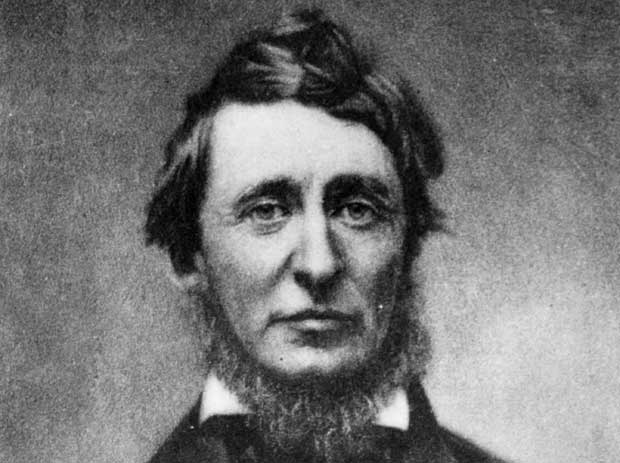
Image result for henry david thoreau

I heartily accept the motto, “That government is best which governs least”; and I should like to see it acted up to more rapidly and systematically. Carried out, it finally amounts to this, which also I believe–“That government is best which governs not at all”; and when men are prepared for it, that will be the kind of government which the will have. Government is at best but an expedient; but most governments are usually, and all governments are sometimes, inexpedient. The objections which have been brought against a standing army, and they are many and weighty, and deserve to prevail, may also at last be brought against a standing government. The standing army is only an arm of the standing government. The government itself, which is only the mode which the people have chosen to execute their will, is equally liable to be abused and perverted before the people can act through it. Witness the present Mexican war, the work of comparatively a few individuals using the standing government as their tool; for in the outset, the people would not have consented to this measure.

This American government–what is it but a tradition, though a recent one, endeavoring to transmit itself unimpaired to posterity, but each instant losing some of its integrity? It has not the vitality and force of a single living man; for a single man can bend it to his will. It is a sort of wooden gun to the people themselves. But it is not the less necessary for this; for the people must have some complicated machinery or other, and hear its din, to satisfy that idea of government which they have. Governments show thus how successfully men can be imposed upon, even impose on themselves, for their own advantage. It is excellent, we must all allow. Yet this government never of itself furthered any enterprise, but by the alacrity with which it got out of its way. It does not keep the country free. It does not settle the West. It does not educate. The character inherent in the American people has done all that has been accomplished; and it would have done somewhat more, if the government had not sometimes got in its way. For government is an expedient, by which men would fain succeed in letting one another alone; and, as has been said, when it is most expedient, the governed are most let alone by it. Trade and commerce, if they were not made of india-rubber, would never manage to bounce over obstacles which legislators are continually putting in their way; and if one were to judge these men wholly by the effects of their actions and not partly by their intentions, they would deserve to be classed and punished with those mischievious persons who put obstructions on the railroads.

But, to speak practically and as a citizen, unlike those who call themselves no-government men, I ask for, not at one no government, but at once a better government. Let every man make known what kind of government would command his respect, and that will be one step toward obtaining it.

After all, the practical reason why, when the power is once in the hands of the people, a majority are permitted, and for a long period continue, to rule is not because they are most likely to be in the right, nor because this seems fairest to the minority, but because they are physically the strongest. But a government in which the majority rule in all cases can not be based on justice, even as far as men understand it. Can there not be a government in which the majorities do not virtually decide right and wrong, but conscience?–in which majorities decide only those questions to which the rule of expediency is applicable? Must the citizen ever for a moment, or in the least degree, resign his conscience to the legislator? Why has every man a conscience then? I think that we should be men first, and subjects afterward. It is not desirable to cultivate a respect for the law, so much as for the right. The only obligation which I have a right to assume is to do at any time what I think right. It is truly enough said that a corporation has no conscience; but a corporation on conscientious men is a corporation with a conscience. Law never made men a whit more just; and, by means of their respect for it, even the well-disposed are daily made the agents on injustice. A common and natural result of an undue respect for the law is, that you may see a file of soldiers, colonel, captain, corporal, privates, powder-monkeys, and all, marching in admirable order over hill and dale to the wars, against their wills, ay, against their common sense and consciences, which makes it very steep marching indeed, and produces a palpitation of the heart. They have no doubt that it is a damnable business in which they are concerned; they are all peaceably inclined. Now, what are they? Men at all? or small movable forts and magazines, at the service of some unscrupulous man in power? Visit the Navy Yard, and behold a marine, such a man as an American government can make, or such as it can make a man with its black arts–a mere shadow and reminiscence of humanity, a man laid out alive and standing, and already, as one may say, buried under arms with funeral accompaniment, though it may be,

“Not a drum was heard, not a funeral note, As his corse to the rampart we hurried; Not a soldier discharged his farewell shot O’er the grave where out hero was buried.”

The mass of men serve the state thus, not as men mainly, but as machines, with their bodies. They are the standing army, and the militia, jailers, constables, posse comitatus, etc. In most cases there is no free exercise whatever of the judgement or of the moral sense; but they put themselves on a level with wood and earth and stones; and wooden men can perhaps be manufactured that will serve the purpose as well. Such command no more respect than men of straw or a lump of dirt. They have the same sort of worth only as horses and dogs. Yet such as these even are commonly esteemed good citizens. Others–as most legislators, politicians, lawyers, ministers, and office-holders–serve the state chiefly with their heads; and, as the rarely make any moral distinctions, they are as likely to serve the devil, without intending it, as God. A very few–as heroes, patriots, martyrs, reformers in the great sense, and men–serve the state with their consciences also, and so necessarily resist it for the most part; and they are commonly treated as enemies by it. A wise man will only be useful as a man, and will not submit to be “clay,” and “stop a hole to keep the wind away,” but leave that office to his dust at least:

“I am too high born to be propertied, To be a second at control, Or useful serving-man and instrument To any sovereign state throughout the world.”

He who gives himself entirely to his fellow men appears to them useless and selfish; but he who gives himself partially to them is pronounced a benefactor and philanthropist.

How does it become a man to behave toward the American government today? I answer, that he cannot without disgrace be associated with it. I cannot for an instant recognize that political organization as my government which is the slave’s government also.

All men recognize the right of revolution; that is, the right to refuse allegiance to, and to resist, the government, when its tyranny or its inefficiency are great and unendurable. But almost all say that such is not the case now. But such was the case, they think, in the Revolution of ’75. If one were to tell me that this was a bad government because it taxed certain foreign commodities brought to its ports, it is most probable that I should not make an ado about it, for I can do without them. All machines have their friction; and possibly this does enough good to counter-balance the evil. At any rate, it is a great evil to make a stir about it. But when the friction comes to have its machine, and oppression and robbery are organized, I say, let us not have such a machine any longer. In other words, when a sixth of the population of a nation which has undertaken to be the refuge of liberty are slaves, and a whole country is unjustly overrun and conquered by a foreign army, and subjected to military law, I think that it is not too soon for honest men to rebel and revolutionize. What makes this duty the more urgent is that fact that the country so overrun is not our own, but ours is the invading army.

Paley, a common authority with many on moral questions, in his chapter on the “Duty of Submission to Civil Government,” resolves all civil obligation into expediency; and he proceeds to say that “so long as the interest of the whole society requires it, that it, so long as the established government cannot be resisted or changed without public inconveniencey, it is the will of God. . .that the established government be obeyed–and no longer. This principle being admitted, the justice of every particular case of resistance is reduced to a computation of the quantity of the danger and grievance on the one side, and of the probability and expense of redressing it on the other.” Of this, he says, every man shall judge for himself. But Paley appears never to have contemplated those cases to which the rule of expediency does not apply, in which a people, as well and an individual, must do justice, cost what it may. If I have unjustly wrested a plank from a drowning man, I must restore it to him though I drown myself. This, according to Paley, would be inconvenient. But he that would save his life, in such a case, shall lose it. This people must cease to hold slaves, and to make war on Mexico, though it cost them their existence as a people.

In their practice, nations agree with Paley; but does anyone think that Massachusetts does exactly what is right at the present crisis?

“A drab of stat, a cloth-o’-silver slut, To have her train borne up, and her soul trail in the dirt.”

Practically speaking, the opponents to a reform in Massachusetts are not a hundred thousand politicians at the South, but a hundred thousand merchants and farmers here, who are more interested in commerce and agriculture than they are in humanity, and are not prepared to do justice to the slave and to Mexico, cost what it may. I quarrel not with far-off foes, but with those who, neat at home, co-operate with, and do the bidding of, those far away, and without whom the latter would be harmless. We are accustomed to say, that the mass of men are unprepared; but improvement is slow, because the few are not as materially wiser or better than the many. It is not so important that many should be good as you, as that there be some absolute goodness somewhere; for that will leaven the whole lump. There are thousands who are in opinion opposed to slavery and to the war, who yet in effect do nothing to put an end to them; who, esteeming themselves children of Washington and Franklin, sit down with their hands in their pockets, and say that they know not what to do, and do nothing; who even postpone the question of freedom to the question of free trade, and quietly read the prices-current along with the latest advices from Mexico, after dinner, and, it may be, fall asleep over them both. What is the price-current of an honest man and patriot today? They hesitate, and they regret, and sometimes they petition; but they do nothing in earnest and with effect. They will wait, well disposed, for other to remedy the evil, that they may no longer have it to regret. At most, they give up only a cheap vote, and a feeble countenance and Godspeed, to the right, as it goes by them. There are nine hundred and ninety-nine patrons of virtue to one virtuous man. But it is easier to deal with the real possessor of a thing than with the temporary guardian of it.

All voting is a sort of gaming, like checkers or backgammon, with a slight moral tinge to it, a playing with right and wrong, with moral questions; and betting naturally accompanies it. The character of the voters is not staked. I cast my vote, perchance, as I think right; but I am not vitally concerned that that right should prevail. I am willing to leave it to the majority. Its obligation, therefore, never exceeds that of expediency. Even voting for the right is doing nothing for it. It is only expressing to men feebly your desire that it should prevail. A wise man will not leave the right to the mercy of chance, nor wish it to prevail through the power of the majority. There is but little virtue in the action of masses of men. When the majority shall at length vote for the abolition of slavery, it will be because they are indifferent to slavery, or because there is but little slavery left to be abolished by their vote. They will then be the only slaves. Only his vote can hasten the abolition of slavery who asserts his own freedom by his vote.

I hear of a convention to be held at Baltimore, or elsewhere, for the selection of a candidate for the Presidency, made up chiefly of editors, and men who are politicians by profession; but I think, what is it to any independent, intelligent, and respectable man what decision they may come to? Shall we not have the advantage of this wisdom and honesty, nevertheless? Can we not count upon some independent votes? Are there not many individuals in the country who do not attend conventions? But no: I find that the respectable man, so called, has immediately drifted from his position, and despairs of his country, when his country has more reasons to despair of him. He forthwith adopts one of the candidates thus selected as the only available one, thus proving that he is himself available for any purposes of the demagogue. His vote is of no more worth than that of any unprincipled foreigner or hireling native, who may have been bought. O for a man who is a man, and, and my neighbor says, has a bone is his back which you cannot pass your hand through! Our statistics are at fault: the population has been returned too large. How many men are there to a square thousand miles in the country? Hardly one. Does not America offer any inducement for men to settle here? The American has dwindled into an Odd Fellow–one who may be known by the development of his organ of gregariousness, and a manifest lack of intellect and cheerful self-reliance; whose first and chief concern, on coming into the world, is to see that the almshouses are in good repair; and, before yet he has lawfully donned the virile garb, to collect a fund to the support of the widows and orphans that may be; who, in short, ventures to live only by the aid of the Mutual Insurance company, which has promised to bury him decently.

It is not a man’s duty, as a matter of course, to devote himself to the eradication of any, even to most enormous, wrong; he may still properly have other concerns to engage him; but it is his duty, at least, to wash his hands of it, and, if he gives it no thought longer, not to give it practically his support. If I devote myself to other pursuits and contemplations, I must first see, at least, that I do not pursue them sitting upon another man’s shoulders. I must get off him first, that he may pursue his contemplations too. See what gross inconsistency is tolerated. I have heard some of my townsmen say, “I should like to have them order me out to help put down an insurrection of the slaves, or to march to Mexico–see if I would go”; and yet these very men have each, directly by their allegiance, and so indirectly, at least, by their money, furnished a substitute. The soldier is applauded who refuses to serve in an unjust war by those who do not refuse to sustain the unjust government which makes the war; is applauded by those whose own act and authority he disregards and sets at naught; as if the state were penitent to that degree that it hired one to scourge it while it sinned, but not to that degree that it left off sinning for a moment. Thus, under the name of Order and Civil Government, we are all made at last to pay homage to and support our own meanness. After the first blush of sin comes its indifference; and from immoral it becomes, as it were, unmoral, and not quite unnecessary to that life which we have made.

The broadest and most prevalent error requires the most disinterested virtue to sustain it. The slight reproach to which the virtue of patriotism is commonly liable, the noble are most likely to incur. Those who, while they disapprove of the character and measures of a government, yield to it their allegiance and support are undoubtedly its most conscientious supporters, and so frequently the most serious obstacles to reform. Some are petitioning the State to dissolve the Union, to disregard the requisitions of the President. Why do they not dissolve it themselves–the union between themselves and the State–and refuse to pay their quota into its treasury? Do not they stand in same relation to the State that the State does to the Union? And have not the same reasons prevented the State from resisting the Union which have prevented them from resisting the State?

How can a man be satisfied to entertain and opinion merely, and enjoy it? Is there any enjoyment in it, if his opinion is that he is aggrieved? If you are cheated out of a single dollar by your neighbor, you do not rest satisfied with knowing you are cheated, or with saying that you are cheated, or even with petitioning him to pay you your due; but you take effectual steps at once to obtain the full amount, and see to it that you are never cheated again. Action from principle, the perception and the performance of right, changes things and relations; it is essentially revolutionary, and does not consist wholly with anything which was. It not only divided States and churches, it divides families; ay, it divides the individual, separating the diabolical in him from the divine.

Unjust laws exist: shall we be content to obey them, or shall we endeavor to amend them, and obey them until we have succeeded, or shall we transgress them at once? Men, generally, under such a government as this, think that they ought to wait until they have persuaded the majority to alter them. They think that, if they should resist, the remedy would be worse than the evil. But it is the fault of the government itself that the remedy is worse than the evil. It makes it worse. Why is it not more apt to anticipate and provide for reform? Why does it not cherish its wise minority? Why does it cry and resist before it is hurt? Why does it not encourage its citizens to put out its faults, and do better than it would have them? Why does it always crucify Christ and excommunicate Copernicus and Luther, and pronounce Washington and Franklin rebels?

One would think, that a deliberate and practical denial of its authority was the only offense never contemplated by its government; else, why has it not assigned its definite, its suitable and proportionate, penalty? If a man who has no property refuses but once to earn nine shillings for the State, he is put in prison for a period unlimited by any law that I know, and determined only by the discretion of those who put him there; but if he should steal ninety times nine shillings from the State, he is soon permitted to go at large again.

If the injustice is part of the necessary friction of the machine of government, let it go, let it go: perchance it will wear smooth–certainly the machine will wear out. If the injustice has a spring, or a pulley, or a rope, or a crank, exclusively for itself, then perhaps you may consider whether the remedy will not be worse than the evil; but if it is of such a nature that it requires you to be the agent of injustice to another, then I say, break the law. Let your life be a counter-friction to stop the machine. What I have to do is to see, at any rate, that I do not lend myself to the wrong which I condemn.

As for adopting the ways of the State has provided for remedying the evil, I know not of such ways. They take too much time, and a man’s life will be gone. I have other affairs to attend to. I came into this world, not chiefly to make this a good place to live in, but to live in it, be it good or bad. A man has not everything to do, but something; and because he cannot do everything, it is not necessary that he should be petitioning the Governor or the Legislature any more than it is theirs to petition me; and if they should not hear my petition, what should I do then? But in this case the State has provided no way: its very Constitution is the evil. This may seem to be harsh and stubborn and unconcilliatory; but it is to treat with the utmost kindness and consideration the only spirit that can appreciate or deserves it. So is all change for the better, like birth and death, which convulse the body.

I do not hesitate to say, that those who call themselves Abolitionists should at once effectually withdraw their support, both in person and property, from the government of Massachusetts, and not wait till they constitute a majority of one, before they suffer the right to prevail through them. I think that it is enough if they have God on their side, without waiting for that other one. Moreover, any man more right than his neighbors constitutes a majority of one already.

I meet this American government, or its representative, the State government, directly, and face to face, once a year–no more–in the person of its tax-gatherer; this is the only mode in which a man situated as I am necessarily meets it; and it then says distinctly, Recognize me; and the simplest, the most effectual, and, in the present posture of affairs, the indispensablest mode of treating with it on this head, of expressing your little satisfaction with and love for it, is to deny it then. My civil neighbor, the tax-gatherer, is the very man I have to deal with–for it is, after all, with men and not with parchment that I quarrel–and he has voluntarily chosen to be an agent of the government. How shall he ever know well that he is and does as an officer of the government, or as a man, until he is obliged to consider whether he will treat me, his neighbor, for whom he has respect, as a neighbor and well-disposed man, or as a maniac and disturber of the peace, and see if he can get over this obstruction to his neighborlines without a ruder and more impetuous thought or speech corresponding with his action. I know this well, that if one thousand, if one hundred, if ten men whom I could name–if ten honest men only–ay, if one HONEST man, in this State of Massachusetts, ceasing to hold slaves, were actually to withdraw from this co-partnership, and be locked up in the county jail therefor, it would be the abolition of slavery in America. For it matters not how small the beginning may seem to be: what is once well done is done forever. But we love better to talk about it: that we say is our mission. Reform keeps many scores of newspapers in its service, but not one man. If my esteemed neighbor, the State’s ambassador, who will devote his days to the settlement of the question of human rights in the Council Chamber, instead of being threatened with the prisons of Carolina, were to sit down the prisoner of Massachusetts, that State which is so anxious to foist the sin of slavery upon her sister–though at present she can discover only an act of inhospitality to be the ground of a quarrel with her–the Legislature would not wholly waive the subject of the following winter.

Under a government which imprisons unjustly, the true place for a just man is also a prison. The proper place today, the only place which Massachusetts has provided for her freer and less despondent spirits, is in her prisons, to be put out and locked out of the State by her own act, as they have already put themselves out by their principles. It is there that the fugitive slave, and the Mexican prisoner on parole, and the Indian come to plead the wrongs of his race should find them; on that separate but more free and honorable ground, where the State places those who are not with her, but against her–the only house in a slave State in which a free man can abide with honor. If any think that their influence would be lost there, and their voices no longer afflict the ear of the State, that they would not be as an enemy within its walls, they do not know by how much truth is stronger than error, nor how much more eloquently and effectively he can combat injustice who has experienced a little in his own person. Cast your whole vote, not a strip of paper merely, but your whole influence. A minority is powerless while it conforms to the majority; it is not even a minority then; but it is irresistible when it clogs by its whole weight. If the alternative is to keep all just men in prison, or give up war and slavery, the State will not hesitate which to choose. If a thousand men were not to pay their tax bills this year, that would not be a violent and bloody measure, as it would be to pay them, and enable the State to commit violence and shed innocent blood. This is, in fact, the definition of a peaceable revolution, if any such is possible. If the tax-gatherer, or any other public officer, asks me, as one has done, “But what shall I do?” my answer is, “If you really wish to do anything, resign your office.” When the subject has refused allegiance, and the officer has resigned from office, then the revolution is accomplished. But even suppose blood shed when the conscience is wounded? Through this wound a man’s real manhood and immortality flow out, and he bleeds to an everlasting death. I see this blood flowing now.

I have contemplated the imprisonment of the offender, rather than the seizure of his goods–though both will serve the same purpose–because they who assert the purest right, and consequently are most dangerous to a corrupt State, commonly have not spent much time in accumulating property. To such the State renders comparatively small service, and a slight tax is wont to appear exorbitant, particularly if they are obliged to earn it by special labor with their hands. If there were one who lived wholly without the use of money, the State itself would hesitate to demand it of him. But the rich man–not to make any invidious comparison–is always sold to the institution which makes him rich. Absolutely speaking, the more money, the less virtue; for money comes between a man and his objects, and obtains them for him; it was certainly no great virtue to obtain it. It puts to rest many questions which he would otherwise be taxed to answer; while the only new question which it puts is the hard but superfluous one, how to spend it. Thus his moral ground is taken from under his feet. The opportunities of living are diminished in proportion as that are called the “means” are increased. The best thing a man can do for his culture when he is rich is to endeavor to carry out those schemes which he entertained when he was poor. Christ answered the Herodians according to their condition. “Show me the tribute-money,” said he–and one took a penny out of his pocket–if you use money which has the image of Caesar on it, and which he has made current and valuable, that is, if you are men of the State, and gladly enjoy the advantages of Caesar’s government, then pay him back some of his own when he demands it. “Render therefore to Caesar that which is Caesar’s and to God those things which are God’s”–leaving them no wiser than before as to which was which; for they did not wish to know.

When I converse with the freest of my neighbors, I perceive that, whatever they may say about the magnitude and seriousness of the question, and their regard for the public tranquillity, the long and the short of the matter is, that they cannot spare the protection of the existing government, and they dread the consequences to their property and families of disobedience to it. For my own part, I should not like to think that I ever rely on the protection of the State. But, if I deny the authority of the State when it presents its tax bill, it will soon take and waste all my property, and so harass me and my children without end. This is hard. This makes it impossible for a man to live honestly, and at the same time comfortably, in outward respects. It will not be worth the while to accumulate property; that would be sure to go again. You must hire or squat somewhere, and raise but a small crop, and eat that soon. You must live within yourself, and depend upon yourself always tucked up and ready for a start, and not have many affairs. A man may grow rich in Turkey even, if he will be in all respects a good subject of the Turkish government. Confucius said: “If a state is governed by the principles of reason, poverty and misery are subjects of shame; if a state is not governed by the principles of reason, riches and honors are subjects of shame.” No: until I want the protection of Massachusetts to be extended to me in some distant Southern port, where my liberty is endangered, or until I am bent solely on building up an estate at home by peaceful enterprise, I can afford to refuse allegiance to Massachusetts, and her right to my property and life. It costs me less in every sense to incur the penalty of disobedience to the State than it would to obey. I should feel as if I were worth less in that case.

Some years ago, the State met me in behalf of the Church, and commanded me to pay a certain sum toward the support of a clergyman whose preaching my father attended, but never I myself. “Pay,” it said, “or be locked up in the jail.” I declined to pay. But, unfortunately, another man saw fit to pay it. I did not see why the schoolmaster should be taxed to support the priest, and not the priest the schoolmaster; for I was not the State’s schoolmaster, but I supported myself by voluntary subscription. I did not see why the lyceum should not present its tax bill, and have the State to back its demand, as well as the Church. However, as the request of the selectmen, I condescended to make some such statement as this in writing: “Know all men by these presents, that I, Henry Thoreau, do not wish to be regarded as a member of any society which I have not joined.” This I gave to the town clerk; and he has it. The State, having thus learned that I did not wish to be regarded as a member of that church, has never made a like demand on me since; though it said that it must adhere to its original presumption that time. If I had known how to name them, I should then have signed off in detail from all the societies which I never signed on to; but I did not know where to find such a complete list.

I have paid no poll tax for six years. I was put into a jail once on this account, for one night; and, as I stood considering the walls of solid stone, two or three feet thick, the door of wood and iron, a foot thick, and the iron grating which strained the light, I could not help being struck with the foolishness of that institution which treated my as if I were mere flesh and blood and bones, to be locked up. I wondered that it should have concluded at length that this was the best use it could put me to, and had never thought to avail itself of my services in some way. I saw that, if there was a wall of stone between me and my townsmen, there was a still more difficult one to climb or break through before they could get to be as free as I was. I did nor for a moment feel confined, and the walls seemed a great waste of stone and mortar. I felt as if I alone of all my townsmen had paid my tax. They plainly did not know how to treat me, but behaved like persons who are underbred. In every threat and in every compliment there was a blunder; for they thought that my chief desire was to stand the other side of that stone wall. I could not but smile to see how industriously they locked the door on my meditations, which followed them out again without let or hindrance, and they were really all that was dangerous. As they could not reach me, they had resolved to punish my body; just as boys, if they cannot come at some person against whom they have a spite, will abuse his dog. I saw that the State was half-witted, that it was timid as a lone woman with her silver spoons, and that it did not know its friends from its foes, and I lost all my remaining respect for it, and pitied it.

Thus the state never intentionally confronts a man’s sense, intellectual or moral, but only his body, his senses. It is not armed with superior with or honesty, but with superior physical strength. I was not born to be forced. I will breathe after my own fashion. Let us see who is the strongest. What force has a multitude? They only can force me who obey a higher law than I. They force me to become like themselves. I do not hear of men being forced to live this way or that by masses of men. What sort of life were that to live? When I meet a government which says to me, “Your money our your life,” why should I be in haste to give it my money? It may be in a great strait, and not know what to do: I cannot help that. It must help itself; do as I do. It is not worth the while to snivel about it. I am not responsible for the successful working of the machinery of society. I am not the son of the engineer. I perceive that, when an acorn and a chestnut fall side by side, the one does not remain inert to make way for the other, but both obey their own laws, and spring and grow and flourish as best they can, till one, perchance, overshadows and destroys the other. If a plant cannot live according to nature, it dies; and so a man.

The night in prison was novel and interesting enough. The prisoners in their shirtsleeves were enjoying a chat and the evening air in the doorway, when I entered. But the jailer said, “Come, boys, it is time to lock up”; and so they dispersed, and I heard the sound of their steps returning into the hollow apartments. My room-mate was introduced to me by the jailer as “a first-rate fellow and clever man.” When the door was locked, he showed me where to hang my hat, and how he managed matters there. The rooms were whitewashed once a month; and this one, at least, was the whitest, most simply furnished, and probably neatest apartment in town. He naturally wanted to know where I came from, and what brought me there; and, when I had told him, I asked him in my turn how he came there, presuming him to be an honest an, of course; and as the world goes, I believe he was. “Why,” said he, “they accuse me of burning a barn; but I never did it.” As near as I could discover, he had probably gone to bed in a barn when drunk, and smoked his pipe there; and so a barn was burnt. He had the reputation of being a clever man, had been there some three months waiting for his trial to come on, and would have to wait as much longer; but he was quite domesticated and contented, since he got his board for nothing, and thought that he was well treated.

He occupied one window, and I the other; and I saw that if one stayed there long, his principal business would be to look out the window. I had soon read all the tracts that were left there, and examined where former prisoners had broken out, and where a grate had been sawed off, and heard the history of the various occupants of that room; for I found that even there there was a history and a gossip which never circulated beyond the walls of the jail. Probably this is the only house in the town where verses are composed, which are afterward printed in a circular form, but not published. I was shown quite a long list of young men who had been detected in an attempt to escape, who avenged themselves by singing them.

I pumped my fellow-prisoner as dry as I could, for fear I should never see him again; but at length he showed me which was my bed, and left me to blow out the lamp.

It was like travelling into a far country, such as I had never expected to behold, to lie there for one night. It seemed to me that I never had heard the town clock strike before, not the evening sounds of the village; for we slept with the windows open, which were inside the grating. It was to see my native village in the light of the Middle Ages, and our Concord was turned into a Rhine stream, and visions of knights and castles passed before me. They were the voices of old burghers that I heard in the streets. I was an involuntary spectator and auditor of whatever was done and said in the kitchen of the adjacent village inn–a wholly new and rare experience to me. It was a closer view of my native town. I was fairly inside of it. I never had seen its institutions before. This is one of its peculiar institutions; for it is a shire town. I began to comprehend what its inhabitants were about.

In the morning, our breakfasts were put through the hole in the door, in small oblong-square tin pans, made to fit, and holding a pint of chocolate, with brown bread, and an iron spoon. When they called for the vessels again, I was green enough to return what bread I had left, but my comrade seized it, and said that I should lay that up for lunch or dinner. Soon after he was let out to work at haying in a neighboring field, whither he went every day, and would not be back till noon; so he bade me good day, saying that he doubted if he should see me again.

When I came out of prison–for some one interfered, and paid that tax–I did not perceive that great changes had taken place on the common, such as he observed who went in a youth and emerged a gray-headed man; and yet a change had come to my eyes come over the scene–the town, and State, and country, greater than any that mere time could effect. I saw yet more distinctly the State in which I lived. I saw to what extent the people among whom I lived could be trusted as good neighbors and friends; that their friendship was for summer weather only; that they did not greatly propose to do right; that they were a distinct race from me by their prejudices and superstitions, as the Chinamen and Malays are that in their sacrifices to humanity they ran no risks, not even to their property; that after all they were not so noble but they treated the thief as he had treated them, and hoped, by a certain outward observance and a few prayers, and by walking in a particular straight through useless path from time to time, to save their souls. This may be to judge my neighbors harshly; for I believe that many of them are not aware that they have such an institution as the jail in their village.

It was formerly the custom in our village, when a poor debtor came out of jail, for his acquaintances to salute him, looking through their fingers, which were crossed to represent the jail window, “How do ye do?” My neighbors did not this salute me, but first looked at me, and then at one another, as if I had returned from a long journey. I was put into jail as I was going to the shoemaker’s to get a shoe which was mender. When I was let out the next morning, I proceeded to finish my errand, and, having put on my mended show, joined a huckleberry party, who were impatient to put themselves under my conduct; and in half an hour–for the horse was soon tackled–was in the midst of a huckleberry field, on one of our highest hills, two miles off, and then the State was nowhere to be seen.

This is the whole history of “My Prisons.”

I have never declined paying the highway tax, because I am as desirous of being a good neighbor as I am of being a bad subject; and as for supporting schools, I am doing my part to educate my fellow countrymen now. It is for no particular item in the tax bill that I refuse to pay it. I simply wish to refuse allegiance to the State, to withdraw and stand aloof from it effectually. I do not care to trace the course of my dollar, if I could, till it buys a man a musket to shoot one with–the dollar is innocent–but I am concerned to trace the effects of my allegiance. In fact, I quietly declare war with the State, after my fashion, though I will still make use and get what advantages of her I can, as is usual in such cases.

If others pay the tax which is demanded of me, from a sympathy with the State, they do but what they have already done in their own case, or rather they abet injustice to a greater extent than the State requires. If they pay the tax from a mistaken interest in the individual taxed, to save his property, or prevent his going to jail, it is because they have not considered wisely how far they let their private feelings interfere with the public good.

This, then is my position at present. But one cannot be too much on his guard in such a case, lest his actions be biased by obstinacy or an undue regard for the opinions of men. Let him see that he does only what belongs to himself and to the hour.

I think sometimes, Why, this people mean well, they are only ignorant; they would do better if they knew how: why give your neighbors this pain to treat you as they are not inclined to? But I think again, This is no reason why I should do as they do, or permit others to suffer much greater pain of a different kind. Again, I sometimes say to myself, When many millions of men, without heat, without ill will, without personal feelings of any kind, demand of you a few shillings only, without the possibility, such is their constitution, of retracting or altering their present demand, and without the possibility, on your side, of appeal to any other millions, why expose yourself to this overwhelming brute force? You do not resist cold and hunger, the winds and the waves, thus obstinately; you quietly submit to a thousand similar necessities. You do not put your head into the fire. But just in proportion as I regard this as not wholly a brute force, but partly a human force, and consider that I have relations to those millions as to so many millions of men, and not of mere brute or inanimate things, I see that appeal is possible, first and instantaneously, from them to the Maker of them, and, secondly, from them to themselves. But if I put my head deliberately into the fire, there is no appeal to fire or to the Maker for fire, and I have only myself to blame. If I could convince myself that I have any right to be satisfied with men as they are, and to treat them accordingly, and not according, in some respects, to my requisitions and expectations of what they and I ought to be, then, like a good Mussulman and fatalist, I should endeavor to be satisfied with things as they are, and say it is the will of God. And, above all, there is this difference between resisting this and a purely brute or natural force, that I can resist this with some effect; but I cannot expect, like Orpheus, to change the nature of the rocks and trees and beasts.

I do not wish to quarrel with any man or nation. I do not wish to split hairs, to make fine distinctions, or set myself up as better than my neighbors. I seek rather, I may say, even an excuse for conforming to the laws of the land. I am but too ready to conform to them. Indeed, I have reason to suspect myself on this head; and each year, as the tax-gatherer comes round, I find myself disposed to review the acts and position of the general and State governments, and the spirit of the people to discover a pretext for conformity.

“We must affect our country as our parents, And if at any time we alienate Out love or industry from doing it honor, We must respect effects and teach the soul Matter of conscience and religion, And not desire of rule or benefit.”

I believe that the State will soon be able to take all my work of this sort out of my hands, and then I shall be no better patriot than my fellow-countrymen. Seen from a lower point of view, the Constitution, with all its faults, is very good; the law and the courts are very respectable; even this State and this American government are, in many respects, very admirable, and rare things, to be thankful for, such as a great many have described them; seen from a higher still, and the highest, who shall say what they are, or that they are worth looking at or thinking of at all?

However, the government does not concern me much, and I shall bestow the fewest possible thoughts on it. It is not many moments that I live under a government, even in this world. If a man is thought-free, fancy-free, imagination-free, that which is not never for a long time appearing to be to him, unwise rulers or reformers cannot fatally interrupt him.

I know that most men think differently from myself; but those whose lives are by profession devoted to the study of these or kindred subjects content me as little as any. Statesmen and legislators, standing so completely within the institution, never distinctly and nakedly behold it. They speak of moving society, but have no resting-place without it. They may be men of a certain experience and discrimination, and have no doubt invented ingenious and even useful systems, for which we sincerely thank them; but all their wit and usefulness lie within certain not very wide limits. They are wont to forget that the world is not governed by policy and expediency. Webster never goes behind government, and so cannot speak with authority about it. His words are wisdom to those legislators who contemplate no essential reform in the existing government; but for thinkers, and those who legislate for all tim, he never once glances at the subject. I know of those whose serene and wise speculations on this theme would soon reveal the limits of his mind’s range and hospitality. Yet, compared with the cheap professions of most reformers, and the still cheaper wisdom an eloquence of politicians in general, his are almost the only sensible and valuable words, and we thank Heaven for him. Comparatively, he is always strong, original, and, above all, practical. Still, his quality is not wisdom, but prudence. The lawyer’s truth is not Truth, but consistency or a consistent expediency. Truth is always in harmony with herself, and is not concerned chiefly to reveal the justice that may consist with wrong-doing. He well deserves to be called, as he has been called, the Defender of the Constitution. There are really no blows to be given him but defensive ones. He is not a leader, but a follower. His leaders are the men of ’87. “I have never made an effort,” he says, “and never propose to make an effort; I have never countenanced an effort, and never mean to countenance an effort, to disturb the arrangement as originally made, by which various States came into the Union.” Still thinking of the sanction which the Constitution gives to slavery, he says, “Because it was part of the original compact–let it stand.” Notwithstanding his special acuteness and ability, he is unable to take a fact out of its merely political relations, and behold it as it lies absolutely to be disposed of by the intellect–what, for instance, it behooves a man to do here in American today with regard to slavery–but ventures, or is driven, to make some such desperate answer to the following, while professing to speak absolutely, and as a private man–from which what new and singular of social duties might be inferred? “The manner,” says he, “in which the governments of the States where slavery exists are to regulate it is for their own consideration, under the responsibility to their constituents, to the general laws of propriety, humanity, and justice, and to God. Associations formed elsewhere, springing from a feeling of humanity, or any other cause, have nothing whatever to do with it. They have never received any encouragement from me and they never will.

They who know of no purer sources of truth, who have traced up its stream no higher, stand, and wisely stand, by the Bible and the Constitution, and drink at it there with reverence and humanity; but they who behold where it comes trickling into this lake or that pool, gird up their loins once more, and continue their pilgrimage toward its fountainhead.

No man with a genius for legislation has appeared in America. They are rare in the history of the world. There are orators, politicians, and eloquent men, by the thousand; but the speaker has not yet opened his mouth to speak who is capable of settling the much-vexed questions of the day. We love eloquence for its own sake, and not for any truth which t may utter, or any heroism it may inspire. Our legislators have not yet learned the comparative value of free trade and of freed, of union, and of rectitude, to a nation. They have no genius or talent for comparatively humble questions of taxation and finance, commerce and manufactures and agriculture. If we were left solely to the wordy wit of legislators in Congress for our guidance, uncorrected by the seasonable experience and the effectual complaints of the people, America would not long retain her rank among the nations. For eighteen hundred years, though perchance I have no right to say it, the New Testament has been written; yet where is the legislator who has wisdom and practical talent enough to avail himself of the light which it sheds on the science of legislation.

The authority of government, even such as I am willing to submit to–for I will cheerfully obey those who know and can do better than I, and in many things even those who neither know nor can do so well–is still an impure one: to be strictly just, it must have the sanction and consent of the governed. It can have no pure right over my person and property but what I concede to it. The progress from an absolute to a limited monarchy, from a limited monarchy to a democracy, is a progress toward a true respect for the individual. Even the Chinese philosopher was wise enough to regard the individual as the basis of the empire. Is a democracy, such as we know it, the last improvement possible in government? Is it not possible to take a step further towards recognizing and organizing the rights of man? There will never be a really free and enlightened State until the State comes to recognize the individual as a higher and independent power, from which all its own power and authority are derived, and treats him accordingly. I please myself with imagining a State at last which can afford to be just to all men, and to treat the individual with respect as a neighbor; which even would not think it inconsistent with its own repose if a few were to live aloof from it, not meddling with it, nor embraced by it, who fulfilled all the duties of neighbors and fellow men. A State which bore this kind of fruit, and suffered it to drop off as fast as it ripened, would prepare the way for a still more perfect and glorious State, which I have also imagined, but not yet anywhere seen.

– Henry David Thoreau, 1849

See also: Plato, Aristotle, Hobbes, Locke, Hume, Rousseau, Hegel, Marx, Nietzsche

American Hegemony

Author of Blowback, The Sorrows Of Empire, and Nemesis: The Last Days Of The American Empire, Chalmers Johnson has literally written the book on the concept of American Hegemony. A former naval officer and consultant of the C.I.A., he now serves as professor Emeritus at UC San Diego. As co-founder and President of the Japan Policy Research Institute, Mr. Johnson also continues to promote public education about Asia’s role in the international community.

In this exclusive interview, you will find out why the practice of empire building is, by no means, a thing of the past. As the United States continues to expand its military forces around the globe, the consequences are being suffered by each and every one of us.

A Buddhist View of Addiction

A BUDDHIST VIEW OF ADDICTION

by Peter Morrell

‘…it is said that as long as one is in cyclic existence, one is in the grip of some form of suffering.’ [1]

In this essay, I refer to drugs – meaning drugs of all kinds, anything we might become habituated to and that we enjoy to the degree of dependency. It seems that drugs are widely misunderstood. They have a very long history. People of all kinds, and in all times, need something to make their lives meaningful and that seems always to have been the purpose of drugs, food and sex, as well as religion. As religion has declined, so drugs of all types seem to have been turned to increasingly, to try and make life more exciting and meaningful. Thus, drugs can be seen as a challenge to our ordinary life, adult perception of the world as being somewhat dull and predictable. To have meaning, life must come to contain some excitement – into each life a little love must fall. It is in these contexts in this essay that I refer to ‘drugs’.

Apart from concepts like Karma and Merit, the 5 skandhas and rebirth – which are alien concepts to most westerners, and therefore require deep thought – Buddhism views human psychology as being mostly driven by two innate impulses: desire, or attraction [craving] and repulsion or aversion [hatred]. They probably represent the pleasure-pain principle in western psychology. In Buddhism, virtually all aspects of psychology and human behaviour, are explained in these terms. Deriving from this, Buddhism asserts that its teachings are based on how man actually is – the condition he is in – and that its ideas are largely observation-driven, rather than being dogmas handed down to us. Buddha encouraged people to test his ideas out for themselves. The impulses of attraction and aversion also reflect a basic form of selfishness and that we are generally driven by a desire to experience and seek out pleasure and to avoid pain.

‘By the power of the two, desire and hatred, intimate or alien, they wander in cyclic existence and thereby undergo suffering.’ [2]

The teachings of Buddhism are entirely designed to help us to become happier and more contented people, by reducing those things in our lives, which cause us suffering [or cause suffering to others], by helping us to reflect more deeply upon the consequences of our actions, and by increasing those things that bring us happiness. There is not really any ‘good’ and ‘bad’ in Buddhism; there are just actions that bring us greater happiness and those that bring us greater pain. To live skilfully, therefore, is to live in harmony with these principles. In general, it means to reduce our selfishness, to give more to others, to increase our happiness and to stop those things that harm self or others – to adopt a life of non-harming. Non-harming to self and all beings.

‘…the afflictive emotions, such as desire, hatred, enmity, jealousy, and belligerence, that bind beings in a round of uncontrolled birth, aging, sickness, and death, are founded on misperception of the nature of persons and other phenomena.’ [3]

In the case of addiction, it is clear from a Buddhist viewpoint that it can be seen as an overactive desire sense, that has gone way beyond normal limits, and which is harmful to self. It is also important to acknowledge that we are all in some ways addicted to something, be it only money, shopping, success, promotion, food or sex. People who are addicted to something have become too solidly locked into a love of pleasure and are reaping the consequences of that lifestyle. It also means that their sense of identity is rewarded only when they indulge whatever they crave, and this has thus become dependent upon their  addiction. A firm sense of self-identity is based solely upon their habit, and without it, they feel invisible and non-existent. This is often termed an ‘addictive personality’ – they believe that life without ‘their fix’ is unfaceable, not worth living and sad and boring. Such people have identified so strongly or solidly with the source of their pleasure that they believe life without it is not possible or is unthinkable. To at least some degree, they have lost control of their life.

‘When the self is alone [without the nine qualities – desire, hatred, effort, pleasure, pain, consciousness, virtue, non-virtue, and activity] – this is said to be the attainment of liberation.’ [4]

While there may well be deeper reasons for this behaviour and also a deeper basis of unhappiness that lies at the root of it [such as in unresolved childhood unhappinesses, or mixing with the ‘wrong people’], Buddhism, in typically pragmatic style, seeks merely to deal with the problem as-is and to reduce the extent and power of one’s current addiction. All other factors can be addressed through meditation, self-restraint and discussion.

‘…the mental factor of desire…accompanies the perception of an attractive object…’ [5]

However, addiction also contains a further element, which is a loss of control and surrender of the will to a craving. It is a situation in which the general balance of the will against whatever in the world is enjoyed, has been progressively weakened or collapsed, and the total craving for that one thing has largely overpowered it. Thus, any treatment of addiction must approach both aspects for success to be achieved. The sense of control, of independent existence and balance that we call willpower must be restored, just as much as any reduction in the craving for whatever one ‘enjoys’. This fact inevitably brings in the need to resuscitate a sense of self and a self-image, which have largely been destroyed in extreme cases of addiction. A coherent sense of self must be rebuilt, and it must be a sense of self that lies independent of any external form.

‘Illustrations of afflictive ignorance are a consciousness conceiving a self of persons and the three poisons [desire, hatred, and ignroance] which arise on account of this conception, as well as their seeds.’ [6]

The idea of self-image also brings with it a sense of self-respect and a sense of responsibility for one’s own actions and whatever state one has ended up in. The addicted person has to gain a new sense of self independent of their habit, and begin to see that the state they are in is predominantly a result of their own actions and therefore they are personally responsible for that state and any recovery from it. No change, therefore, is possible for those who are unwilling or unable to move in the direction of accepting these facts. Addicts often justify their craving by saying they only feel or act ‘normal’ when indulging their particular craving. In such examples, their ‘normal social conduct’ becomes entirely dependent upon their ‘drug’. For others, it is an escape from loneliness [e.g. ‘shopaholics’], sad facts of their existence they would rather not confront, or desire to impress/gain attention. In some cases, it reflects a desire to enter a fantasy realm for ‘artistic purposes’. The first step has to be acceptance of one’s own position, recognition of a problem and a desire to change. Without these as minimum requirements, no change is ever likely to occur.

‘…the three afflictive emotions [are]… desire, hatred and ignorance…’ [7]

Though varying shades of addiction occur, addicts of all types, when questioned, tend to blame some previous event they were not responsible for, or some other factor external to them, for their behaviour. This very conveniently absolves them from any blame for the position they are in. It is thus a crutch they lean on to get through their life. They portray it as normal or harmless – or both. They claim to be the victim of something and are in denial about their own motives and their own responsibility for what they do. They hide, and hide from, their true motivations, past experiences and the real basis for their behaviour. They also play down the harmfulness [to self and others] of what they do. They convince themselves that it is harmless and not serious – but something they can control – and when challenged, they try to convince others of the same viewpoint.

Buddhism can help addicts of all kinds in various ways. Firstly, it encourages moderation, abstention and self-control. That can lead to a degree of self-control. Secondly, it encourages a sense of self-identity not based upon desires, but upon self-fulfilment and self-respect. A self-respect that seeks to do no harm to oneself. It also encourages a harmless lifestyle, love, compassion and equanimity, which in turn encourage reflection and self-analysis.

‘The six root afflictions are desire, anger, pride, ignorance, doubt, and afflictive view…’ [8]

In certain Zen monasteries, one has heard about in the media, addiction is treated solely with enforced abstention [withdrawal or denial] and meditation. It is hard to see how this harsh, extreme and un-compassionate approach can be very successful, as it fails to address the central element of personal responsibility for the state a person is in. It is left for the person to figure everything out for themselves; a position of ‘you got yourself in there, so you can get yourself out’ approach. Such a problem might be approached by teaching a person that, though others can help and encourage, they are entirely responsible for their own actions, that there is nothing special [i.e. different] about the state they are in, that life as-is is good, to restore their sense of self-worth, and to gradually lead them away from that which they crave – that life without that ‘thing’ they crave is both possible and can be sweet. This has to include their realisation that the path they are on is for sure a path of self-destruction, a path of pain. It is a central tenet of Buddhism that excess pleasure is painful, and addiction illustrates this theme very well.

Addiction, through desire and aversion, also relates to power and powerlessness, cause and effect, and to the nature of mind and sensations. These are all related topics. It is easy to apprehend a link to power and powerlessness, because to obtain pleasure often also gives pleasure to another [for example, in sexual addiction]. However, it can also give rise to a ‘victim consciousness’ as one adopts a more subordinate role to the other. One also becomes jealously protective of another, primarily, not out of pure compassion for them, but because they are the chief source of one’s own pleasure. That is a form of selfishness. We seek to extend and exert control over, and ownership of, the partner one possesses. One sees this in many relationships where the power balance has become distorted, heavily favouring the more dominant partner. This is ‘bad’ as it brings suffering and restricts the freedom of the one ‘possessed’. It also means their ‘love’ is subject to continuous payment of the pleasure that is being extracted from them. It is thus un-genuine, fake and based upon their continued dominance. Challenge that dominance of their role, and see how much true ‘love’ there is left! Precious little. Causing suffering to another creates bad karma; such relationships are harmful and not as benign as they might appear.

In all addictions, the person has an ambivalent or blurred grasp of cause and effect, power and powerlessness. They exert power over their habit [as a cause] but also let and ultimately crave for it to have power over them [as an effect]. Thus, they never seem to know where they want to be in a ‘power seesaw’, constantly flipping between cause and effect, exerting and then receiving domination; craving power over others and then letting power be exerted over them. All this inevitably gives a person an unclear sense of who they are, what they really want and where the power really lies. They end up having a confused sense of self-identity. Other kinds of addictive behaviour concerning power over others, such as rape, sado-masochism, office bullying, racism, sexual harassment at work and child abuse, do not seem to contain a pleasure element except for the person in control. Such forms of addiction are mainly about power over others – other elements being secondary. The similarity is still present, however, in relation to the craving or need such people manifest in repeating their addictive behaviour. In that sense, they certainly need their ‘victim’ as much as a drug.

In relation to sensation and the nature of mind [Buddhist hermeneutics], this vast topic is far too complex to go into in sufficient detail here. But suffice it to say that ‘objects of sensation’ in the mind can be painful, neutral or pleasant. We desire to give and receive pleasant sensations, in such exchanges, we find pleasure, and to which we can become addicted. We then end up ‘loving’ those with whom we exchange these pleasant sensations. Particles of pleasant sensations in the mind can also be recalled to mind [consciousness] on request and so ‘in fantasy’ can be re-lived as real images. This acts as a pleasant stimulus to renewed pleasure and forms the basis of masturbation, daydreaming, erotic art, and pornography. Seen solely from the viewpoint of Buddhist hermeneutics, it is clear that addiction is primarily the exclusive enjoyment of particles of sensation, which are pleasant to the consciousness. In this sense, it could be said, that it is only ‘further down the same street’ of what all people engage in every day – gazing at attractive forms, delighting in attractive tastes, scents and touches, etc. However, it does also involve a loss of control and a pervasive belief that enjoyment of these sensations is vital to one’s existence and the only way to live out one’s life.

However, any pleasant sensation, in time and through overuse, wears out its own ‘pathway’ in consciousness, treading deeper ruts, such that more and more ‘drug’ is craved to reach the same ‘high’. By contrast, abstinence and self-control or moderation, re-empower the basic pleasure and increase it, while overuse dulls the enjoyment. This broadly applies to all forms of addiction, including food, chocolate, nicotine, sex, alcohol, shopping, promotion, power, etc. Non-attachment cultivates a looser and more nonchalant indifference to pleasure, which must be exhaustively cultivated in order to nullify addictions. This also enhances one’s sense of control over the pleasant sensations to which one has become addicted. And it gradually leads to a new sense of self based just on being who you are.

Cure of addiction necessarily involves unspinning – putting into reverse – the habit as it was formed. It means regaining control over one’s life, denying oneself the sensations to which one has become helplessly addicted, and generally negating the path one has followed. It means the re-establishment by gentle means, of control over the habit, being able to switch it on or off at will, just like a tap. This means stopping gazing at pleasant forms, stopping the internal fantasy element and stopping all the habits associated [attendant rituals of habit] with what is a pattern of addictive behaviour. Inevitably, a very long slow process can take as many years to un-learn as it took to establish in the first place. It means learning how to live day by day on nothing, on a sensory diet of nothing in particular and this will eventually stop the cravings. That is the basis of the Zen approach mentioned above. It means being able to ‘enjoy’ ordinary life as it is. Additionally, it means being able to discover and enjoy oneself just as we are. In these senses, it might be seen as a very joyful and refreshing path to follow. To the addict, this may sound like a very boring form of sense deprivation – which is exactly what it is!

‘Non-attachment…views desire as faulty, thereby deliberately restraining desire…’ [9]

Although addiction is harmful in certain respects [both to self and to others], in other ways, some positive things can come from it and it can be seen as a form of spiritual path. In this respect, it can lead one to make many useful realisations. There are at least three ways in which it can be useful. Firstly, it can lead to a realisation of the need for non-attachment, a greater indifference to the world and greater moderation in one’s habits. It can therefore lead one to a deeper realisation of the fleeting, transient [impermanent] nature of the world and of the mind, and their twin engagement. This is an important Buddhist realisation to make and which addicts of all types can apprehend. Likewise, it leads to an understanding of the way desire leads only to pain.

In another sense, addiction can also lead to a realisation of the fragmentation of corpuscular forms in space and time, which again is a profound realisation of Buddhist emptiness [Shunyata]. There seems little doubt that some addicts can apprehend this important Buddhist realisation with ease. It arises from the fragmentary sense of self many addicts become subject to. It also arises to some degree from the sense that their world is collapsing or disintegrating [‘cold turkey’] even when others reassure them that it is not. It especially arises from many drug-induced experiences in which life, self, the world, other people appear to be vacuous, diaphanous, empty forms, unreal or disintegrating. Such a sensation can persist for a lifetime, many years after the drugs have first been used. Such a sensation can be intensely real. Clearly, from a Buddhist perspective, this is like a direct experience of emptiness based upon an apprehension of the corpuscular nature of reality and the disintegrating nature of ‘unreal forms’. Persistent sensations of this type are illustrative of deep Buddhist concepts normally very hard for ‘normal’ people to comprehend or experience for oneself. Thus, in a sense, the addict has broken a fundamental illusion in our conception of reality that might pre-dispose them towards Buddhist ideas.

Thirdly, we can mention the contemplation of suffering and its causes. With a little guidance, the nature of suffering and its causes can be realised by addicts, without too much difficulty. This in itself can lead one to adopt a more sober, measured and moderate approach to life, and to realise the need for an abstention from indulgence and excesses. The safer and more serene beauty of ordinary life can also be apprehended from the standpoint of the addict. Abstinence alone can lead one to appreciate a Zen-like form of tranquillity as compared to the chaotic frenzy of indulgence in pleasure. It can also lead one to a realisation of the value of creating an inner world of vision, vivid memories recalled in perfect clarity impressed deeply upon the consciousness – this can be used in Buddhist practice to create vivid images of a pure realm of Buddhas.

‘…when you have attachment to, for instance, material things, it is best to desist from that activity. It is taught that one should have few desires and have satisfaction – detachment – with respect to material things…’ [10]

Finally, addiction can lead one towards a deeper interest in the Buddhist view on the nature of mind. Even the idea of karma and rebirth can lead addicts to temper their bad habits and gain some hope for a calmer future. Most of all, addicts should seriously consider the harmfulness of their addiction, both to self and others. In yet another sense, addicts are people who have failed to transform ordinary life into something acceptable or special for them and through which they can then experience life with some joy and fulfilment. The drug or addiction replaces this sense of fulfilment and thus they can only access that sense of life’s joy and meaning, via the drug itself.

To sum up is not easy, as there are many threads. To an extent, Buddhists and addicts seem to share some similar perspectives on the world. They both tend to see the transient and fleeting nature of self and phenomena as being an experience central to their worldview – a view almost utterly obscured to ordinary people. Both are also familiar with non-identity or selflessness, an egoless state in which forms appear diaphanous and unreal, in which self dissolves into nothingness and in which the world is consumed by emptiness. These are profound similarities. By contrast, the addict is not grounded in deep love and compassion for self and the world and is not on a path of self-improvement. Their vision is an essentially pessimistic one, while the Buddhist’s view is predominantly peaceful, hopeful and optimistic. The addict’s view is also harmful to self and others, while a Buddhist’s view is based upon respect and non-harming, love of everything. Though the addict – like a Buddhist – has apprehended the empty and dissolving nature of reality, they do not use that profound insight to construct an inner world of pure forms founded in love and compassion. The addict is essentially leaning on the crutches of their illusions, while the Buddhist leans on nothing, accepts self and the world just as they are and gets on along a path of continuous self-improvement.

‘…the sense of an object as being attractive, unattractive, or neutral…feelings of pleasure, pain, or neutrality arise. Due to such feelings, attachment develops, this being the attachment of not wanting to separate from pleasure and the attachment of wanting to separate from suffering…’ [11]

Other features stand out. The addict seems to have rejected the values of the ordinary person, which the Buddhist has also rejected, such as the permanent nature of reality and the idea that pleasure should be cosy, quiet and decent. The Buddhist aspires to entirely destroy desire and aversion as the root causes of all suffering, and sees both in turn as products of our deluded apprehension of the world as solid and real. The addict has also experienced the emptiness, but has failed to realise that the cause of suffering is aversion and desire – in which they continue to indulge. Thus, the addict appears to sit mid-way between the ordinary person and the Buddhist, and is moving in some ways ‘along the way towards’ Buddhism – chiefly in apprehending the emptiness and in realising that desire and hatred have some problems and price-tags attached. I would therefore conclude that the addict’s is a form of spiritual path – a development away from the ordinary life position – and that involves experiences, which can be more fully understood from a deeper study of Buddhism. These relate to cause and effect, the nature of mind, desire and aversion and finally impermanence and emptiness.

‘…the mental factor of desire…accompanies the perception of an attractive object…’ [12]

Sources

[1] The Dalai Lama at Harvard, 1988, Snow Lion USA, p.48 [2] Geshe Lhundup Sopa & Jeffrey Hopkins, Cutting through Appearances: Practice and Theory of Tibetan Buddhism, 1989, Snow Lion, USA, pp.49-50 [3] ibid., p.111 [4] ibid., p.158 [5] ibid., p.188 [6] ibid., p.205 [7] ibid., p.216 [8] ibid., p.272 [9] Dalai Lama at Harvard, p.76 [10] ibid., p.153 [11] ibid., pp.86-7 [12] Sopa & Hopkins, op cit, p.188

Source: http://www.homeoint.org/morrell/buddhism/addict.htm