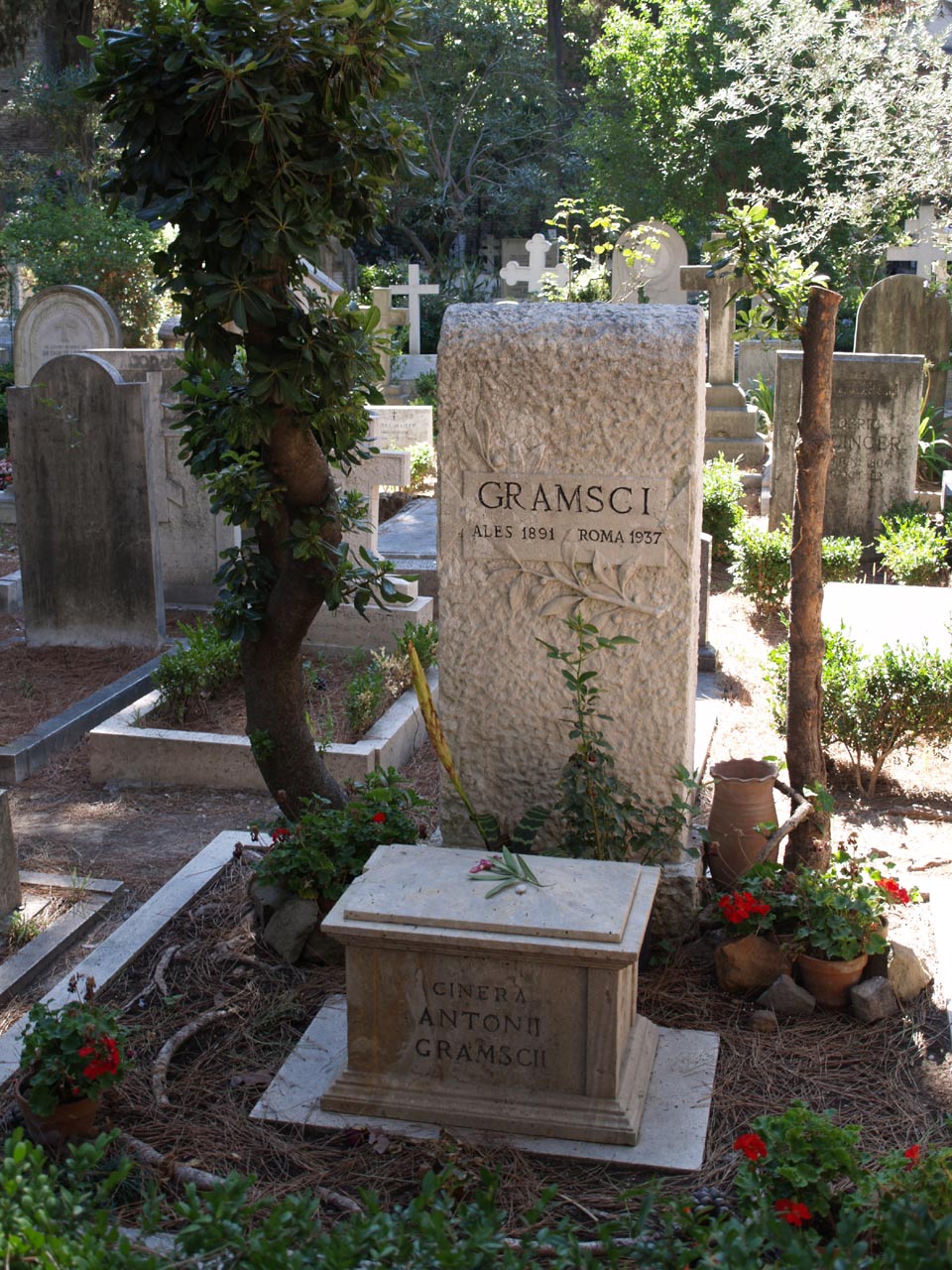
Antonio Gramsci, an Italian Marxist philosopher, politician, and revolutionary, stands as one of the most influential thinkers of the 20th century. His work transcends traditional Marxist thought, introducing nuanced theories of culture, ideology, and power that continue to resonate in contemporary political and cultural analysis. Born on January 22, 1891, in Ales, Sardinia, Gramsci’s early life was marked by poverty and illness, which significantly shaped his worldview. Despite these challenges, he excelled academically, eventually attending the University of Turin, where he was exposed to socialist ideas and became active in political organizing. It was in Turin, a hub of industrial activity, that Gramsci’s intellectual and political trajectory began to coalesce, informed by his observations of class struggle and the dynamics of industrial capitalism.
Gramsci’s contribution to Marxist theory is most prominently encapsulated in his concept of cultural hegemony. Unlike classical Marxism, which emphasized the economic base’s determination of the ideological superstructure, Gramsci proposed a more reciprocal and dynamic relationship between these spheres. He argued that ruling classes maintain dominance not merely through coercive means but also by securing consent from subordinate classes. This consent is achieved through the dissemination of ideologies that naturalize and legitimize the existing social order. For Gramsci, culture and ideology were not mere reflections of economic realities but active arenas of struggle where competing social forces vied for dominance. This insight expanded the scope of Marxist analysis, emphasizing the importance of intellectual and cultural work in revolutionary praxis.
Gramsci’s theory of hegemony also introduced the distinction between civil society and political society. Political society, comprising institutions like the state, law enforcement, and the military, represents the realm of coercive power. In contrast, civil society includes cultural, educational, and religious institutions that shape public consciousness and generate consent. For Gramsci, a revolutionary movement must not only confront the state but also transform civil society, challenging the dominant cultural and ideological frameworks that underpin the status quo. This dual approach necessitates the creation of what Gramsci termed a “counter-hegemony,” an alternative set of ideas and cultural practices that can inspire and mobilize the working class toward revolutionary change.
Gramsci’s emphasis on the role of intellectuals in this process marked another significant departure from traditional Marxism. He challenged the notion of intellectuals as a distinct class, instead categorizing them based on their function within society. Traditional intellectuals, such as clergy and academics, often serve to perpetuate the dominant ideology. In contrast, organic intellectuals emerge from within the working class and articulate its interests and aspirations. These organic intellectuals play a crucial role in fostering class consciousness and building counter-hegemonic movements. Gramsci’s nuanced understanding of intellectuals underscores the importance of education, culture, and leadership in achieving social transformation.
The prison years were a pivotal period in Gramsci’s intellectual development. Arrested in 1926 by Mussolini’s fascist regime, Gramsci spent over a decade in prison, where he produced his most significant work, the Prison Notebooks. These writings, smuggled out of prison, reveal a profound engagement with a wide range of topics, including history, philosophy, literature, and linguistics. Gramsci’s reflections on the Italian Risorgimento, for instance, offer a penetrating analysis of the limitations of bourgeois leadership and the failure to forge a robust popular alliance. He critiqued the passive revolution, a process by which social change occurs without significant popular mobilization, resulting in limited and compromised outcomes. This concept has been influential in analyzing historical and contemporary instances of reform and revolution.
Gramsci’s ideas also grapple with the question of historical agency and the conditions for revolutionary change. While he remained committed to Marxism, he rejected deterministic interpretations of historical materialism. For Gramsci, history is not an inevitable march toward socialism but a terrain of struggle shaped by human action and contingency. This perspective aligns with his broader emphasis on culture and ideology, which he viewed as integral to the dynamics of social transformation. Gramsci’s rejection of economic determinism allowed for a more flexible and context-sensitive analysis of power and resistance, making his work particularly relevant in diverse and complex social contexts.
Language and education were central concerns in Gramsci’s thought. He recognized the role of language in shaping consciousness and social relations, arguing that linguistic practices reflect and reinforce power dynamics. His analysis of the Italian language question, for instance, highlighted the cultural and political implications of linguistic standardization. Gramsci also emphasized the transformative potential of education, advocating for a system that fosters critical thinking and empowers individuals to challenge oppressive structures. His ideas on education continue to influence progressive pedagogical approaches, particularly in the tradition of critical pedagogy developed by scholars like Paulo Freire.
The legacy of Gramsci’s thought extends far beyond his immediate historical context. His theories of hegemony, civil society, and intellectuals have profoundly influenced a wide range of disciplines, including sociology, cultural studies, political science, and education. Postcolonial theorists, for instance, have drawn on Gramsci’s insights to analyze the cultural dimensions of imperialism and resistance. His work has also been instrumental in the development of neo-Marxist theories, particularly within the Frankfurt School and the Birmingham School of Cultural Studies. Scholars such as Stuart Hall and Raymond Williams have built on Gramsci’s ideas to explore the interplay between culture, ideology, and power in modern societies.
Critics of Gramsci have raised concerns about the potential for his emphasis on culture and ideology to dilute the materialist foundations of Marxism. Some argue that his focus on consent and civil society risks underestimating the enduring significance of economic exploitation and state coercion in sustaining capitalist dominance. However, defenders of Gramsci counter that his work does not abandon materialism but rather enriches it by incorporating a more comprehensive understanding of the mechanisms of power. Gramsci’s synthesis of materialist and cultural analysis represents a significant advancement in Marxist theory, offering tools to address the complexities of modern capitalism.
Gramsci’s life and work also serve as a powerful testament to the resilience of human spirit and intellect in the face of adversity. Despite the physical and psychological toll of imprisonment, he produced a body of work that continues to inspire and challenge. His commitment to social justice, intellectual rigor, and revolutionary praxis remains a beacon for those seeking to understand and transform the world. Gramsci’s insights into the dynamics of power and resistance offer a framework for analyzing the challenges of the 21st century, from the rise of authoritarianism to the persistence of inequality and environmental crisis.
Antonio Gramsci’s enduring relevance lies in his ability to bridge the gap between theory and practice, providing a nuanced and actionable understanding of social change. His work challenges us to think critically about the forces that shape our world and to imagine alternative possibilities. In an era marked by profound social and political challenges, Gramsci’s vision of counter-hegemony and transformative praxis offers a vital source of inspiration and guidance. His legacy reminds us that the struggle for a just and equitable society is not only a matter of economic redistribution but also a cultural and ideological battle that demands creativity, courage, and solidarity.