Not only psychiatry itself but also the values reflected in its statistical definition of “normalcy” serve to condition men to habitual, unthinking, conformist behavior.
– Benjamin R. Barber
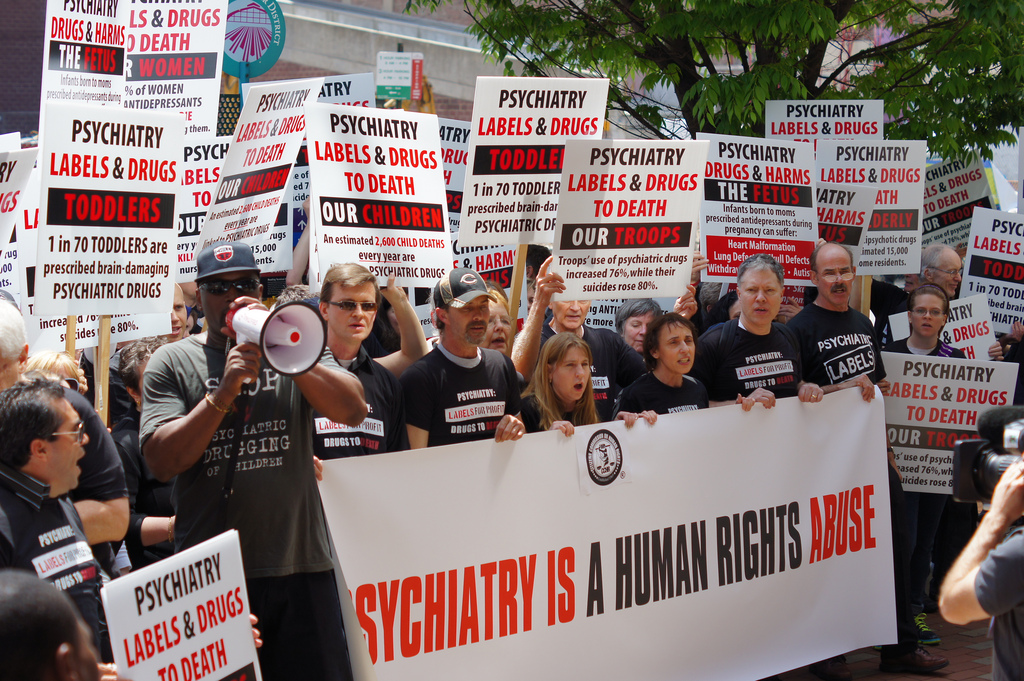
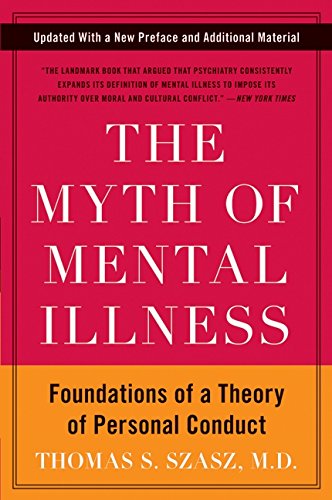
It is customary to define psychiatry as a medical specialty concerned with the study, diagnosis, and treatment of mental illnesses. This is a worthless and misleading definition. Mental illness is a myth. Psychiatrists are not concerned with mental illnesses and their treatments. In actual practice they deal with personal, social, and ethical problems in living.
I have argued that, today, the notion of a person “having a mental illness” is scientifically crippling. It provides professional assent to a popular rationalization – namely, that problems in living experienced and expressed in terms of so-called psychiatric symptoms are basically similar to bodily diseases. Moreover, the concept of mental illness also undermines the principle of personal responsibility, the ground on which all free political institutions rest. For the individual, the notion of mental illness precludes an inquiring attitude toward his conflicts which his “symptoms” at once conceal and reveal. For a society, it precludes regarding individuals as responsible persons and invites, instead, treating them as irresponsible patients.
Although powerful institutional forces lend their massive weight to the tradition of keeping psychiatric problems within the conceptual framework of medicine, the moral and scientific challenge is clear: we must recast and redefine the problem of “mental illness” so that it may be encompassed in a morally explicit science of man. This, of course, would require a radical revision of our ideas about “psychopathology” and “psychotherapy” – the former having to be conceived in terms of sign-using, rule-following, and game-playing, the latter in terms of human relationships and social arrangements promoting certain types of learning and values.
Human behavior is fundamentally moral behavior. Attempts to describe and alter such behavior without, at the same time, coming to grips with the issue of ethical values are therefore doomed to failure. Hence, so long as the moral dimensions of psychiatric theories and therapies remain hidden and inexplicit, their scientific worth will be seriously limited. In the theory of personal conduct which I have proposed – and in the theory of psychotherapy implicit in it – I have tried to correct this defect by articulating the moral dimensions of human behaviors occurring in psychiatric contexts.
The principle arguments advanced in this book and their implications may be summarized as follows.
-
Strictly speaking, disease or illness can affect only the body; hence, there can be no mental illness.
-
“Mental illness” is a metaphor. Minds can be “sick” only in the sense that jokes are “sick” or economies are “sick.”
-
Psychiatric diagnoses are stigmatizing labels, phrased to resemble medical diagnoses and applied to persons whose behavior annoys or offends others.
-
Those who suffer from and complain of their own behavior are usually classified as “neurotic”; those whose behavior makes others suffer, and about whom others complain, are usually classified as “psychotic.”
-
Mental illness is not something a person has, but is something he does or is.
-
If there is no mental illness there can be no hospitalization, treatment, or cure for it. Of course, people may change their behavior or personality, with or without psychiatric intervention. Such intervention is nowadays called “treatment,” and the change, if it proceeds in a direction approved by society, “recovery” or “cure.”
-
The introduction of psychiatric considerations into the administration of the criminal law – for example, the insanity plea and verdict, diagnoses of mental incompetence to stand trial, and so forth – corrupt the law and victimize the subject on whose behalf they are ostensibly employed.
-
Personal conduct is always rule-following, strategic, and meaningful. Patterns of interpersonal and social relations may be regarded and analyzed as if they were games, the behavior of the players being governed by explicit or tacit game rules.
-
In most types of voluntary psychotherapy, the therapist tries to elucidate the inexplicit game rules by which the client conducts himself; and to help the client scrutinize the goals and values of the life games he plays.
-
There is no medical, moral, or legal justification for involuntary psychiatric interventions. They are crimes against humanity.
Moral Bias and Politics in Psychiatry
Unrecognized Facts About Modern Psychiatric Practice (PDF)
- There are no known biological causes for any of the psychiatric disorders apart from dementia and some rare chromosomal disorders. Consequently, there are no biological tests such as blood tests or brain scans that can be used to provide independent objective data in support of any psychiatric diagnosis.
- Psychiatric drugs have often been prescribed to patients on the basis that they cure a ‘chemical imbalance’. However, no chemical imbalances have been proven to exist in relation to any mental health disorder. There is also no method available to test for the presence or absence of these chemical imbalances.
- Psychiatric diagnostic manuals such as the DSM and ICD (chapter 5) are not works of objective science, but rather works of culture since they have largely been developed through clinical consensus and voting. Their validity and clinical utility is therefore highly questionable, yet their influence has contributed to an expansive medicalization of human experience.
- Just like other substances that affect brain chemistry (such as illicit drugs), psychiatric drugs produce altered mental states. They do not ‘cure‘ diseases, and in many cases, their mechanism of action is not properly understood.
- Studies have found that antidepressants have no clinically significant benefit over placebo pills (inert pills) in the treatment of mild to moderate depression, while they provide some benefit for severe depression, at least in the short term. Recent research also suggests that antidepressants may be associated with a risk of increased mortality, at least among the elderly.
- There has been little research on the long-term outcomes of people taking psychiatric drugs. The available studies suggest that all the major classes of psychiatric drugs add little additional long-term benefit, and for some patients they may lead to significantly worse long-term outcomes.
- Psychiatric drugs can have long-lasting effects on the brain and central nervous system, particularly when taken long-term, which can lead to physical, emotional and cognitive difficulties.
- Psychiatric drugs can have effects that include mental disturbance, suicide, violence, and withdrawal syndromes. These can be misdiagnosed as new psychiatric presentations, for which additional drugs may be prescribed, sometimes leading to long-term use of multiple different psychiatric drugs in the same person
- Withdrawal from psychiatric drugs can be disabling and can cause a range of severe physical and psychological effects which often last for months and sometimes years; in some cases, withdrawal charities report, it may lead to suicide.
- Use of psychiatric drugs in children and adolescents has been rapidly expanding across the developed world. The potential long-term damage these drugs can have on developing brains has not been properly assessed. Furthermore, there is now evidence that increased use of medication within this age group may lead to worse long-term outcomes.
- The UK regulator of psychiatric drugs (the MHRA) is entirely funded by the pharmaceutical industry, and employs ex-industry professionals in key leadership positions. Such conflicts of interest could lead to lenient regulation that places commercial interests above patient protection.
- Ties between doctors and the pharmaceutical industry are particularly widespread in psychiatry. In the UK psychiatrists do not have to report to any agency or authority how much industry income they receive each year.
- The majority of psychiatric drug trials are conducted and commissioned by the pharmaceutical industry or those who have extensive ties with them. This industry has a long history of burying negative results, and of manipulating research to highlight positive outcomes.
Macbeth: How does your patient, doctor?
Doctor: Not so sick, my lord, as she is troubled with thick-coming fancies that keep her from rest.
Macbeth: Cure her of that! Canst thou not minister to a mind diseased, pluck from the memory a rooted sorrow, raze out the written troubles of the brain, and with some sweet oblivious antidote cleanse the stuffed bosom of that perilous stuff which weighs upon her heart?
Doctor: Therein the patient must minister to himself.
– William Shakespeare