The Essence of Christianity

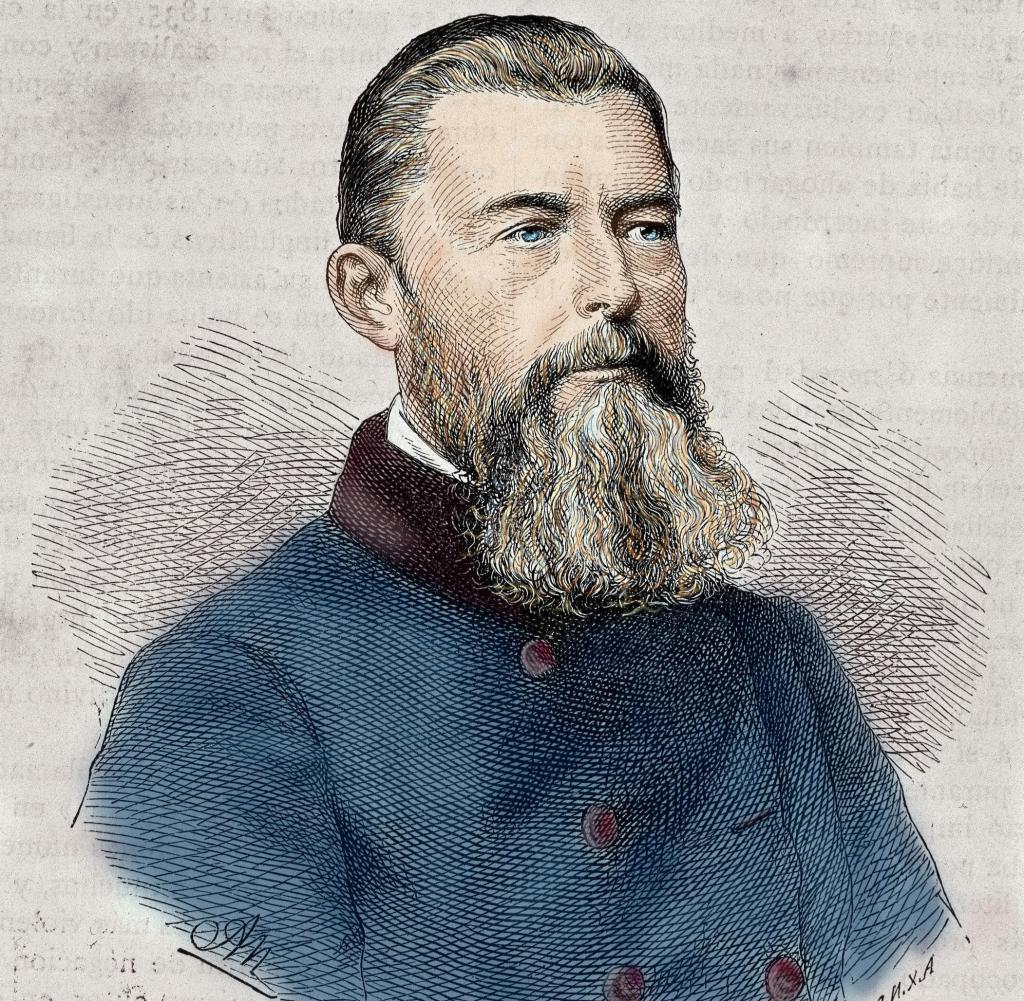
Ludwig Andreas Feuerbach (1804–1872) is a pivotal figure in 19th-century philosophy, whose work bridges the transition from German Idealism to materialist and humanist thought. His critique of religion, encapsulated in his most famous work, The Essence of Christianity (1841), significantly influenced subsequent thinkers, including Karl Marx, Friedrich Engels, and Sigmund Freud. Feuerbach’s philosophy is rooted in a profound critique of metaphysics and theology, reinterpreting them through a lens that places human beings at the center of philosophical inquiry. His ideas remain an essential milestone in the history of philosophy, with relevance to contemporary debates on religion, human nature, and social thought.

Feuerbach was born in Landshut, Bavaria, into an intellectually prominent family. His father, Paul Johann Anselm Ritter von Feuerbach, was a renowned legal scholar, and Ludwig initially followed in his father’s footsteps, studying theology at the University of Heidelberg. However, he soon grew disillusioned with theology’s dogmatic rigidity and shifted his focus to philosophy, moving to Berlin to study under Georg Wilhelm Friedrich Hegel. Hegel’s dialectical method profoundly influenced Feuerbach, but he eventually departed from Hegel’s abstract idealism, which he found overly speculative and disconnected from human experience. Instead, Feuerbach sought to ground philosophy in concrete, empirical reality, focusing on human nature and the material conditions of existence.

Feuerbach’s seminal work, The Essence of Christianity, marks a turning point in the critique of religion. In this book, he posits that theology is, at its core, anthropology. Religion, according to Feuerbach, is a projection of human nature and desires onto an imagined divine being. God, he argues, is nothing more than the idealized abstraction of humanity’s own qualities—power, wisdom, and love.

Feuerbach asserts that religious beliefs originate in human beings’ psychological need to externalize their highest aspirations and values. Humans, confronted with their limitations, create an image of God as a perfect being, embodying attributes they lack. For example, the omniscience and omnipotence ascribed to God reflect humanity’s longing for knowledge and power. By projecting their essence onto God, humans alienate themselves from their own potential. The divine becomes a separate entity that dominates and demands worship, leaving individuals estranged from the very qualities they have attributed to God. Feuerbach’s critique, therefore, is not only philosophical but also emancipatory, urging humanity to reclaim its own power and virtues. His famous assertion, “Man is what he eats,” emphasizes the material and physical grounding of human existence. This aphorism underscores his rejection of metaphysical dualisms and his insistence on the unity of body and mind.

Feuerbach’s philosophy marks a decisive turn toward materialism, a shift that influenced the development of Marxism. While Hegel saw the material world as a manifestation of Spirit (Geist), Feuerbach inverted this relationship, arguing that consciousness arises from material conditions. For Feuerbach, the starting point of philosophy is not abstract ideas but the tangible reality of human beings as embodied, social creatures. His emphasis on the sensory, material basis of human life represents a radical departure from the speculative traditions of German Idealism. Feuerbach’s materialism, however, is not reductive; he does not deny the significance of human consciousness, creativity, and culture. Instead, he seeks to ground these phenomena in the empirical realities of human existence.

Feuerbach’s humanism had a profound impact on Karl Marx and Friedrich Engels, who acknowledged his critique of religion as a necessary step in the development of historical materialism. Marx’s famous assertion that religion is “the opium of the people” owes much to Feuerbach’s analysis of religion as an ideological construct that reflects and perpetuates social alienation. However, Marx and Engels also critiqued Feuerbach for his lack of political engagement and his failure to analyze the social and economic conditions that give rise to alienation. While Feuerbach emphasized the role of human consciousness in creating religious and philosophical systems, Marx insisted that material conditions and class relations are the primary determinants of human thought and behavior.

After The Essence of Christianity, Feuerbach’s philosophical output waned, and he struggled to achieve the same level of influence. His later works, such as Principles of the Philosophy of the Future (1843), reiterated his commitment to a human-centered philosophy but failed to break new ground. Financial difficulties and the political turbulence of mid-19th-century Germany further marginalized him. Despite these challenges, Feuerbach’s legacy endures. His critique of religion laid the groundwork for modern secularism, psychology, and existentialism. Thinkers like Sigmund Freud and Jean-Paul Sartre echoed Feuerbach’s themes of projection and alienation, while his emphasis on human nature influenced the development of humanist ethics.

Feuerbach’s philosophy has been the subject of significant critique. Some have accused him of oversimplifying religion, reducing it to mere anthropological projection while neglecting its complex social and cultural dimensions. His materialism, while innovative, has also been criticized for its lack of a systematic method and for failing to address issues of political and economic power. Moreover, Feuerbach’s reliance on an essentialist notion of human nature has been questioned by contemporary philosophers who argue that human identity is more fluid and socially constructed than he acknowledged. Despite these critiques, Feuerbach’s insights into the human foundations of religious belief remain a cornerstone of modern thought.

In a world increasingly shaped by secularism, Feuerbach’s ideas resonate more than ever. His critique of religion as a form of alienation invites reflection on contemporary issues such as consumerism, nationalism, and the commodification of human relationships. Just as Feuerbach urged humanity to reclaim its essence from the projections of religion, modern society faces the challenge of reclaiming its autonomy from the dehumanizing forces of capitalism and technology. Feuerbach’s humanism also offers a compelling alternative to both nihilism and authoritarianism. By affirming the value and dignity of the human person, Feuerbach provides a foundation for ethical and political thought rooted in empathy, solidarity, and the recognition of shared humanity.

Ludwig Feuerbach was a philosopher ahead of his time, whose radical critique of religion and metaphysics reshaped the intellectual landscape of the 19th century and beyond. By challenging the foundations of theology and idealism, he paved the way for a more human-centered philosophy that continues to influence contemporary thought. While his ideas have been critiqued and refined by later thinkers, Feuerbach’s core insight—that understanding humanity is the key to understanding the world—remains as relevant today as it was in his time. Through his work, Feuerbach reminds us that philosophy is not merely an abstract pursuit but a means of grappling with the profound questions of existence, identity, and the human condition. His legacy endures as a testament to the enduring power of critical thought and the transformative potential of reclaiming our humanity.


Liberation Theology

Liberation theology emerged as a significant movement within Christian thought during the late 20th century, particularly in Latin America. It represents a paradigm shift in the way theology is understood and applied in the world, emphasizing the importance of social justice, human dignity, and the liberation of oppressed peoples. This theological movement sought to address the deep-seated social, economic, and political inequalities that characterized much of Latin American society and has had a lasting impact on both religious and secular spheres. At its heart, liberation theology is a call to action for Christians to engage in the struggle for justice and human dignity, a vision rooted not only in theological reflection but also in a lived praxis that confronts oppression and seeks liberation.

Liberation theology emerged in the 1960s and 1970s as a response to the widespread social, economic, and political conditions of Latin American countries. The region was marked by extreme poverty, political repression, and social inequality, particularly affecting rural and marginalized communities. Many saw the traditional role of the Catholic Church as either complicit in or indifferent to these conditions. However, a new generation of theologians and clergy began to see the potential for the Church to act as a force for justice. Theologians like Gustavo Gutiérrez, whose seminal work A Theology of Liberation (1971) is often considered the foundational text of the movement, sought to reinterpret Christian doctrine in light of the realities of poverty and oppression. Gutiérrez and others argued that faith must move beyond a merely individual and spiritualized focus on personal salvation and embrace a theology of action aimed at transforming society.

At the heart of liberation theology is the “preferential option for the poor,” a principle that asserts that God has a special concern for the poor and oppressed, and that Christians are called to prioritize their needs in both personal and collective action. This idea is rooted in the biblical narrative, particularly in the story of the exodus, where God frees the Israelites from slavery, and in the teachings of Jesus, who stands in solidarity with those on the margins of society. Liberation theology suggests that the Gospel message cannot be fully understood without addressing social, economic, and political inequalities. This “option for the poor” demands that the Church’s mission extend beyond individual piety and personal salvation to actively challenge systems of oppression, injustice, and inequality. It recognizes that the Kingdom of God is not merely a future, spiritual reality but a present struggle for justice, equality, and human dignity.

The social gospel, another central theme of liberation theology, emphasizes collective liberation rather than individual salvation. It stresses that the Kingdom of God is not just a future reality but an ongoing struggle for justice and equity here and now. Theologians like Gutiérrez and his contemporaries argued that Christians must move from a purely individualistic focus on salvation to a broader, communal approach that includes the pursuit of justice. This involves not just a change of heart but a change of structures. Liberation theology calls for active engagement with the world, working alongside the poor and oppressed to dismantle systems of economic exploitation, political oppression, and social inequality. It insists that Christian faith should not be divorced from social action, and that the Church must be a community that stands in solidarity with the poor and works toward their liberation.

The emphasis on praxis, or action informed by reflection, is a key element of liberation theology. This involves not only understanding the conditions of the oppressed but also acting to change them. Theologians argue that faith without works is meaningless, and Christian action should directly confront unjust structures such as colonialism, racism, and economic exploitation. In this sense, liberation theology seeks to bridge the gap between theory and practice, grounding theological reflection in the realities of daily life. This praxis involves collaboration between theology and social sciences, as liberation theologians often draw on insights from disciplines like sociology, economics, and anthropology to understand the root causes of poverty and oppression.

A radical reinterpretation of scripture is another foundational aspect of liberation theology. Theologians emphasize that the Bible should be read through the eyes of the oppressed. They point to passages such as the exodus story, in which God frees the Israelites from slavery, as central motifs for understanding God’s ongoing work of liberation in the world. Jesus’ ministry, in this framework, is understood as one of radical inclusivity and justice for the marginalized. The story of Jesus feeding the hungry, healing the sick, and challenging oppressive religious and political structures becomes a model for Christian action. This reinterpretation of scripture not only uncovers a biblical mandate for social justice but also challenges the traditional interpretations of Christianity that often focus solely on individual salvation.

Gustavo Gutiérrez, one of the key figures in the development of liberation theology, has had a profound impact on the movement. His work A Theology of Liberation laid the theological and biblical foundations for the movement, urging Christians to recognize the material conditions of the poor and oppressed and to act to change them. Gutiérrez’s theology is deeply influenced by Marxist thought, particularly the idea of class struggle. He does not advocate for a purely Marxist approach to theology but argues that Christians must recognize the structural nature of poverty and oppression and work to dismantle unjust social systems. Liberation theology, in Gutiérrez’s view, is a way of engaging the world that combines faith with a commitment to social transformation. His emphasis on the importance of grassroots communities, such as the Base Ecclesial Communities (CEBs), became a powerful force for political activism and social change. These communities, which sought to read the Bible together and understand their lives through the lens of scripture, became centers of solidarity, education, and advocacy for the poor.

The impact of liberation theology extended beyond Latin America, influencing movements for social justice and human rights worldwide. In many cases, the movement inspired clergy and laypeople to engage in advocacy for land reform, workers’ rights, and the end of military dictatorships. Liberation theologians often risked their lives to challenge oppressive regimes, and figures like Archbishop Oscar Romero of El Salvador became iconic figures of resistance and advocacy. Romero, who was martyred for his outspoken commitment to social justice, called on the Church to be a voice for the poor and oppressed, urging Christians to work for justice even at the cost of personal risk. Liberation theology provided a framework that connected faith with action, challenging the institutional Church to go beyond traditional forms of ministry and engage in political and social activism.

However, liberation theology faced significant criticism, particularly from conservative factions within the Catholic Church. The Vatican, under the leadership of Pope John Paul II and Cardinal Joseph Ratzinger (who later became Pope Benedict XVI), condemned aspects of liberation theology, particularly its Marxist influences. Critics argued that liberation theology’s focus on political activism detracted from the spiritual mission of the Church and could lead to the politicization of religion. The Vatican expressed concerns that this focus might divert the Church from its pastoral mission and challenge the doctrine of papal authority. These critiques often centered on the perception that liberation theology sought to align Christianity too closely with Marxist ideology, though liberation theologians themselves emphasized that their focus was on justice and human dignity rather than political ideology.

Despite these criticisms, liberation theology has continued to evolve and inspire new generations of theologians and activists. It has adapted to various contexts, including feminist liberation theology, black liberation theology, and queer liberation theology, each of which applies the principles of liberation theology to address specific forms of oppression. These new strands of liberation theology highlight the interconnected nature of various forms of oppression and emphasize the importance of solidarity across different social justice movements. This pluralistic approach to theology remains a compelling vision of faith that is intimately tied to the realities of human suffering and the quest for justice.

In conclusion, liberation theology represents a powerful and transformative approach to theology that seeks to address the material conditions of the poor and oppressed. By emphasizing social justice, human dignity, and the preferential option for the poor, liberation theology challenges Christians to move beyond personal salvation and engage in the struggle for systemic change. While it has faced significant opposition and criticism, its influence on both the religious and political spheres is undeniable. Liberation theology remains a vision of faith that calls for active solidarity with the poor and marginalized, rooted in a deep commitment to justice and human dignity. It continues to inspire new generations of theologians, activists, and Christians who seek to live out their faith in ways that challenge oppressive structures and build a more just and compassionate world.

Religious Trauma Syndrome

Religious belief has been both a source of profound meaning and intense personal struggle throughout human history. For many, religious faith provides comfort, moral guidance, and community support. However, certain environments can foster emotional and psychological distress, leaving some adherents traumatized rather than nurtured. One movement particularly scrutinized in this context is evangelicalism, especially in its more conservative and fundamentalist forms. The term Religious Trauma Syndrome (RTS) has been proposed to describe the psychological impact of these environments, often manifesting in symptoms similar to post-traumatic stress. This essay will examine evangelicalism’s relationship with RTS, exploring how the movement’s unique doctrines and practices can contribute to this phenomenon.

Understanding Evangelicalism: Beliefs and Practices

Evangelicalism, broadly defined, is a Protestant Christian movement that emphasizes a personal relationship with Jesus Christ, the authority of the Bible, and an imperative to evangelize, or “spread the gospel.” Although evangelicalism encompasses a wide spectrum of beliefs, certain features are common across many evangelical communities, such as a literal or near-literal interpretation of the Bible, a focus on sin and redemption, and an eschatological outlook involving teachings on the end times, judgment, and hell. The movement’s emphasis on the “born-again” experience often creates a dualistic worldview that divides individuals into two groups: the “saved” (those who have accepted Christ) and the “unsaved” (those who have not).

Evangelical teachings often address moral purity, personal sinfulness, and the need for repentance. Certain behaviors and beliefs may be prescribed or proscribed, particularly around sexuality, gender roles, and family dynamics, shaping the lives of adherents with a strict moral framework. While this structure can provide believers with clarity and a shared moral foundation, it can also lead to a culture of intense self-scrutiny and guilt, as individuals are taught to constantly examine their own lives for signs of spiritual inadequacy or impurity. The movement’s emphasis on conversion and salvation often includes fear-based warnings about hell, punishment, and eternal damnation. This fear-driven motivation to stay within the faith and “rescue” others from spiritual peril can, for some, result in long-lasting psychological effects.

What Is Religious Trauma Syndrome (RTS)?

Religious Trauma Syndrome is a term that describes the psychological distress experienced by individuals who have left—or who are trying to leave—high-control religious environments. Although not yet an official diagnosis in the DSM (Diagnostic and Statistical Manual of Mental Disorders), RTS has gained traction in psychological circles, particularly in discussions around the lasting impacts of certain religious teachings. The term seeks to encompass symptoms like anxiety, depression, low self-esteem, difficulty with decision-making, and sometimes symptoms resembling PTSD, such as flashbacks, nightmares, and hypervigilance.

RTS is generally understood to arise from religious environments that employ authoritarian, fear-based, or manipulative tactics to instill and maintain faith. In particular, RTS is thought to be more common among individuals who have been exposed to intense teachings on sin, eternal damnation, and human depravity, as well as environments where questioning or critical thought are discouraged. In many cases, people experiencing RTS report a prolonged internal struggle, caught between lingering fears instilled by religious teachings and the desire to reclaim a sense of personal autonomy and mental well-being.

The Mechanisms of RTS within Evangelicalism

Evangelicalism, with its doctrinal fervor and focus on conversion, creates several potential avenues for RTS to develop. The structure and culture within evangelical communities can cultivate intense psychological strain, especially in the following areas:

1. Fear-Based Teachings on Hell and Eternal Damnation

One of the defining characteristics of evangelicalism is the teaching of hell as a literal place of eternal punishment for the unrepentant. Many evangelical communities emphasize the gravity of sin and the impending danger of hell, with believers encouraged to live “holy lives” and evangelize to others to avoid damnation. These teachings can have a particularly strong impact on young people, who are often introduced to concepts of sin and punishment at a young age, creating deep-seated fears of divine retribution.

This fear-based approach can leave former believers struggling with anxiety, guilt, and residual fear long after they’ve left the faith. The idea of hell as an immediate, ever-present risk can create an internalized sense of unworthiness or terror, which may lead to a state of constant vigilance over one’s actions and thoughts, often to the detriment of mental health.

2. Focus on Sin and Guilt

Evangelicalism’s emphasis on personal sinfulness can foster an environment of guilt and shame. Believers are often taught to view themselves as inherently sinful and in need of salvation, with a focus on constantly identifying and repenting of sinful thoughts, behaviors, or tendencies. This creates a cycle of guilt and repentance, where individuals may feel unworthy, ashamed, or burdened by their inability to meet the high moral standards prescribed by their faith.

In people with RTS, these feelings of guilt can become internalized, forming an almost obsessive pattern of self-criticism and anxiety. Even after leaving the faith, many find themselves plagued by guilt over normal human experiences or desires, leading to low self-esteem and a fractured self-image. This effect is particularly pronounced for those raised in the faith, as they often develop their sense of self-worth within the framework of these teachings.

3. Authoritarian Structures and Lack of Autonomy

Many evangelical communities have strong hierarchical structures, with pastors or church leaders positioned as spiritual authorities whose teachings should not be questioned. This can lead to a dynamic where individuals feel pressured to conform and are discouraged from exploring beliefs outside of the group’s teachings. In authoritarian settings, critical thinking and questioning are often seen as signs of rebellion or weakness of faith, with a heavy emphasis placed on obedience and submission.

For those affected by RTS, this environment can stifle personal development and critical thinking skills, making it difficult to make independent decisions or trust one’s own judgment. Leaving the faith can therefore result in an identity crisis, as individuals struggle to build a sense of self outside the religious framework they once depended upon for validation and guidance.

4. Social Isolation and Loss of Community

Evangelicalism often encourages believers to limit their interactions with “worldly” influences, reinforcing a sense of separation from non-believers. In highly conservative communities, those who express doubt or choose to leave the faith can experience social ostracism, rejection, and even shunning by family and friends. This isolation can be devastating for former believers who find themselves cut off from the support networks they once relied upon.

For those dealing with RTS, the loss of community can compound feelings of abandonment and loneliness. The sense of betrayal that some experience upon leaving, or being rejected by, their community can deepen the trauma, leading to struggles with trust and relationship-building outside the faith. The breakdown of social support exacerbates symptoms of depression and anxiety, leaving individuals without the social anchors necessary for healing and growth.

Pathways to Recovery from RTS

Recovering from RTS within the context of evangelicalism is often a long and challenging process, requiring individuals to rebuild a sense of self and community outside the religious structure that shaped them. Some essential components of recovery include:

  1. Therapeutic Support: Many find help through therapy, especially with counselors experienced in religious trauma. Therapy can assist individuals in processing guilt and shame, developing self-compassion, and breaking free from fear-based beliefs.
  2. Building Community: Finding support groups or communities of people who have had similar experiences can provide a vital source of validation and encouragement. Shared experiences help individuals feel less isolated and offer a sense of solidarity.
  3. Critical Thinking and Education: Learning about alternative viewpoints, exploring religious history, and developing critical thinking skills can empower people to reclaim their agency. It also helps them contextualize their past experiences, reducing the power of fear-based beliefs.
  4. Reclaiming Autonomy and Self-Identity: Recovering from RTS involves creating a new self-identity based on personal beliefs, values, and experiences rather than on external expectations or authoritarian teachings.

Conclusion

Evangelicalism, with its strict doctrines and high-stakes teachings on sin, salvation, and hell, provides a fertile ground for the development of Religious Trauma Syndrome in certain adherents. While not all who practice evangelicalism experience RTS, those who do often struggle profoundly with feelings of guilt, shame, fear, and isolation. By acknowledging the unique psychological challenges that can arise in this context, RTS provides a language for understanding the real emotional toll that some religious environments can take on individuals. Moreover, it invites a broader discussion about the balance between doctrinal rigor and the mental well-being of believers, raising critical questions about the ethics of fear-based religious practices. Recognizing RTS may ultimately encourage religious communities to evolve, fostering environments that nurture spiritual growth without compromising psychological health.

American Evangelicalism

American evangelicalism, once a movement that purported to offer the gospel’s transformative power and wisdom, has devolved into a political weapon, a hollow shell of what it was meant to be. It has abandoned its sacred call to radical love, justice, and mercy in favor of political expediency, cultural influence, and financial gain. The evangelical church today, cloaked in a veil of self-righteousness, is more concerned with maintaining power and prestige than with living out the teachings of Jesus Christ. Its leaders, once the spiritual shepherds of a faith community, have traded their moral authority for political clout, and in the process, they have corrupted the gospel, turning it into a tool for personal and partisan gain.

At its core, evangelicalism in America has become an ideology dressed up as a faith. The movement has lost any meaningful connection to the person of Jesus Christ and instead serves as a vehicle for advancing political agendas, protecting wealth, and maintaining the status quo. Evangelical leaders, who once spoke of salvation, grace, and spiritual renewal, now echo the talking points of right-wing politics, forgetting that their Lord was a poor, marginalized figure who condemned the powerful, warned about wealth, and called for the care of the oppressed. The alliance between evangelicalism and conservative politics is not a coincidence—it is a deliberate and disgraceful fusion that has gutted the movement of its prophetic voice.

The evangelical embrace of Donald Trump, a man whose character is antithetical to everything that the Christian faith stands for, has exposed the depths of this betrayal. Trump, a man whose immorality, dishonesty, and egoism are evident in every aspect of his life, was enthusiastically endorsed by evangelical leaders as the champion of Christian values. This is not only a gross distortion of the gospel but a direct insult to the teachings of Christ. These evangelical leaders have turned a blind eye to Trump’s myriad moral failings—his racism, misogyny, greed, and outright dishonesty—because they saw him as a means to an end: power. The sad reality is that, for too many in evangelical circles, politics has replaced faith. In the search for power, they have chosen political alignment with a man who exemplifies everything that Christ came to challenge. This is not a political disagreement; it is a betrayal of the very heart of Christianity.

The embrace of Trump is not the only moral scandal of American evangelicalism. The movement has systematically distanced itself from the social and spiritual teachings of Jesus in order to accommodate the prevailing ideologies of the day. Evangelicals, once on the front lines of social justice, have largely abandoned any meaningful engagement with issues of poverty, racism, and inequality. Where Jesus preached the love of neighbor, the evangelical church has come to preach the love of nationalism, exclusion, and prosperity. Instead of welcoming the stranger and caring for the marginalized, the evangelical movement now cultivates an “us versus them” mentality, demonizing immigrants, the poor, and anyone who doesn’t conform to their narrow understanding of morality.

Let us not forget how the evangelical movement has become the very definition of hypocrisy. In the past, the church was a place for reflection, for repentance, for honesty in the face of human frailty. Today, however, it has become an institution that demands conformity above all else. Questions are not welcome, and doubt is viewed as a threat to the system. The movement is consumed with preserving the status quo, forcing adherents into a box of ideological purity where any deviation is punished. Those who dare to ask questions about the church’s practices or challenge the prevailing orthodoxy are ostracized, labeled as heretics, and often cast out. This culture of fear and control creates an environment in which spiritual growth is stifled, and true discipleship is nearly impossible. Evangelicals have forgotten that Jesus Himself was a challenger of the status quo, and in doing so, they have lost the courage to do the same.

The theological reductionism that has overtaken the movement is another tragic distortion. What was once a vibrant, intellectual faith has now been reduced to a shallow, black-and-white system of beliefs. No longer is there room for nuance, complexity, or mystery. Instead, everything is codified into a list of doctrines that are interpreted with such literalism that they lose any depth or meaning. The gospel, once a message of transformation, becomes a tool to reinforce a specific political agenda, with passages about love, mercy, and justice ignored in favor of texts that can be twisted to justify exclusionary practices, cultural superiority, and the accumulation of wealth.

Perhaps the most insidious aspect of this is how the evangelical movement has constructed an entire theology around fear. Fear of hell, fear of the unknown, fear of “the other”—this has become the driving force behind much of evangelical practice. The message of grace, freedom, and love that should define the Christian experience has been replaced with a constant drumbeat of fear, guilt, and shame. This fear-driven approach to faith results in a congregation that is more interested in being “saved” from punishment than in living out the radical, life-giving love that Jesus taught. The movement has constructed a false sense of security, where believers are encouraged to place their hope in political power, cultural dominance, and doctrinal purity, rather than in the transformative power of grace, repentance, and forgiveness.

In this climate of fear, doubt is not only discouraged but punished. The very act of questioning one’s faith becomes anathema, and anyone who dares to challenge the accepted narrative is cast aside. The evangelical church has become an echo chamber—afraid of change, allergic to dissent, and suspicious of anyone who does not adhere strictly to the prescribed beliefs. The result is a spiritually stagnant movement that has lost its ability to engage with the real struggles of the world. Instead of being a beacon of light in a darkened world, it has become a fortress of ideological purity, retreating further and further from the complex, messy reality of human life.

It is no wonder, then, that more and more people are leaving evangelicalism. The church, once a place of refuge, healing, and community, has become a toxic environment—where questions are silenced, power is worshiped, and grace is forgotten. People are waking up to the reality that evangelicalism has not only failed to live out the gospel but has become an agent of harm. Those who leave are not rejecting God—they are rejecting a corrupt system that has used God’s name to further its own interests.

The time has come for evangelicalism to reckon with its own failure. It needs a radical transformation—a return to the core principles of the gospel, a return to the values of love, justice, mercy, and humility that it once claimed to represent. It must free itself from its political entanglements, from its obsession with power, and from its insidious culture of fear and control. Only then can it hope to become the movement it was meant to be: a movement that embodies the radical love of Jesus, challenges the systems of oppression and injustice, and offers true transformation to a broken world.

Until then, American evangelicalism will remain a shadow of its former self—a movement that has lost its moral compass, abandoned its mission, and betrayed the very gospel it once held so dear. And as long as it continues down this path, it will continue to do more harm than good, perpetuating a false version of Christianity that bears little resemblance to the message of Christ.

Why the Demoniac Stayed in his Comfortable Corner of Hell

the-drunkard

Detail from The Drunkard (1912) by Marc Chagall. Courtesy Wikipedia

John Kaag | Aeon Ideas

I am not what one might call a religious man. I went to church, and then to confirmation class, under duress. My mother, whom I secretly regarded as more powerful than God, insisted that I go. So I went. Her insistence, however, had the unintended consequence of introducing me to a pastor whom I came to despise. So I eventually quit.

There were many problems with this pastor but the one that bothered me the most was his refusal to explain a story from the New Testament that I found especially hard to believe: the story of the demoniac.

This story from Mark 5:1-20 relates how Jesus and the disciples go to the town of Gerasenes and there encounter a man who is possessed by evil spirits. This demoniac – a self-imposed outcast from society – lived at the outskirts of town and ‘night and day among the tombs and in the hills he would cry out and cut himself with stones’. The grossest part of the story, however, isn’t the self-mutilation. It’s the demoniac’s insane refusal to accept help. When Jesus approached him, the demoniac threw himself to the ground and wailed: ‘What do you want with me? … In God’s name, don’t torture me!’ When you’re possessed by evil spirits, the worst thing in the world is to be healed. In short, the demoniac tells Jesus to bugger off, to leave him and his sharp little stones in his comfortable corner of hell.

When I first read about the demoniac, I was admittedly scared, but I eventually convinced myself that the parable was a manipulative attempt to persuade unbelievers such as me to find religion. And I wasn’t buying it. But when I entered university, went into philosophy, and began to cultivate an agnosticism that one might call atheism, I discovered that many a philosopher had been drawn to this scary story. So I took a second look.

The Danish philosopher Søren Kierkegaard, who spent years analysing the psychological and ethical dimensions of the demoniac, tells us that being demonic is more common than we might like to admit. He points out that when Jesus heals the possessed man, the spirits are exorcised en masse, flying out together as ‘the Legion’ – a vast army of evil forces. There are more than enough little demons to go around, and this explains why they come to roust in some rather mundane places. In Kierkegaard’s words: ‘One may hear the drunkard say: “Let me be the filth that I am.”’ Or, leave me alone with my bottle and let me ruin my life, thank you very much. I heard this first from my father, and then from an increasing number of close friends, and most recently from a voice that occasionally keeps me up at night when everyone else is asleep.

Those who are the most pointedly afflicted are often precisely those who are least able to recognise their affliction, or to save themselves. And those with the resources to rescue themselves are usually already saved. As Kierkegaard suggests, the virtue of sobriety makes perfect sense to one who is already sober. Eating well is second nature to the one who is already healthy; saving money is a no-brainer for one who one is already rich; truth-telling is the good habit of one who is already honest. But for those in the grips of crisis or sin, getting out usually doesn’t make much sense.

Sharp stones can take a variety of forms.

In The Concept of Anxiety (1844), Kierkegaard tells us that the ‘essential nature of [the demoniac] is anxiety about the good’. I’ve been ‘anxious’ about many things – about exams, about spiders, about going to sleep – but Kierkegaard explains that the feeling I have about these nasty things isn’t anxiety at all. It’s fear. Anxiety, on the other hand, has no particular object. It is the sense of uneasiness that one has at the edge of a cliff, or climbing a ladder, or thinking about the prospects of a completely open future – it isn’t fear per se, but the feeling that we get when faced with possibility. It’s the unsettling feeling of freedom. Yes, freedom, that most precious of modern watchwords, is deeply unsettling.

What does this have to do with our demoniac? Everything. Kierkegaard explains that the demoniac reflects ‘an unfreedom that wants to close itself off’; when confronted with the possibility of being healed, he wants nothing to do with it. The free life that Jesus offers is, for the demoniac, pure torture. I’ve often thought that this is the fate of the characters in Jean-Paul Sartre’s play No Exit (1944): they are always free to leave, but leaving seems beyond impossible.

Yet Jesus manages to save the demoniac. And I wanted my pastor to tell me how. At the time, I chalked up most of the miracles from the Bible as exaggeration, or interpretation, or poetic licence. But the healing of the demoniac – unlike the bread and fish and resurrection – seemed really quite fantastic. So how did Jesus do it? I didn’t get a particularly good answer from my pastor, so I left the Church. And never came back.

Today, I still want to know.

I’m not here to explain the salvation of the demoniac. I’m here only to observe, as carefully as I can, that this demonic situation is a problem. Indeed, I suspect it is the problem for many, many readers. The demoniac reflects what theologians call the ‘religious paradox’, namely that it is impossible for fallen human beings – such craven creatures – to bootstrap themselves to heaven. Any redemptive resources at our disposal are probably exactly as botched as we are.

There are many ways to distract ourselves from this paradox – and we are very good at manufacturing them: movies and alcohol and Facebook and all the fixations and obsessions of modern life. But at the end of the day, these are pitifully little comfort.

So this year, as New Year’s Day recedes from memory and the winter darkness remains, I am making a resolution: I will try not to take all the usual escapes. Instead, I will try to simply sit with the plight of the demoniac, to ‘stew in it’ as my mother used to say, for a minute or two more. In his essay ‘Self-will’ (1919), the German author Hermann Hesse put it thus: ‘If you and you … are in pain, if you are sick in body or soul, if you are afraid and have a foreboding of danger – why not, if only to amuse yourselves … try to put the question in another way? Why not ask whether the source of your pain might not be you yourselves?’ I will not reach for my familiar demonic stones, blood-spattered yet comforting. I will ask why I need them in the first place. When I do this, and attempt to come to terms with the demoniac’s underlying suffering, I might notice that it is not unique to me.

When I do, when I let go of the things that I think are going to ease my suffering, I might have the chance to notice that I am not alone in my anxiety. And maybe this is recompense enough. Maybe this is freedom and the best that I can hope for.Aeon counter – do not remove

John Kaag

This article was originally published at Aeon and has been republished under Creative Commons. Read the original article here.

What is Christianity?

This is an excellent discussion between Sam Harris and Bart Ehrman about Christianity and Christian history and theology. There is a remarkable resemblance between Ehrman’s life and periods of my own life in which I pursued truth and my faith was gradually lost. The problems with interpreting the scriptures too literally are exemplified. Anybody that honestly believes herself to be a Christian should cautiously examine the things discussed here. Sapere aude!

inri

Waking Up Podcast with Sam Harris #125: What is Christianity?


In this episode of the Waking Up podcast, Sam Harris speaks to Bart Ehrman about his experience of being a born-again Christian, his academic training in New Testament scholarship, his loss of faith, the most convincing argument in defense of Christianity, the status of miracles, the composition of the New Testament, the resurrection of Jesus, the nature of heaven and hell, the book of Revelation, the End Times, self-contradictions in the Bible, the concept of a messiah, whether Jesus actually existed, Christianity as a cult of human sacrifice, the conversion of Constantine, and other topics.

Bart D. Ehrman is the author or editor of more than thirty books, including the New York Times bestsellers Misquoting Jesus and How Jesus Became God. Ehrman is a professor of religious studies at the University of North Carolina, Chapel Hill, and a leading authority on the New Testament and the history of early Christianity. He has been featured in Time, The New Yorker, and The Washington Post, and has appeared on NBC, CNN, The Daily Show with Jon Stewart, The History Channel, National Geographic, BBC, major NPR shows, and other top print and broadcast media outlets. His most recent book is The Triumph of Christianity.

Twitter: @BartEhrman

Why Our Declining Biblical Literacy Matters

File 20180412 592 sy3x6n.jpg?ixlib=rb 1.1

Songwriters such as Nick Cave (pictured) and the late Yolngu star Gurrumul have often drawn on the scriptures in their work.
Paul Bergen/EPA


Meredith Lake, University of Sydney

Biblical literacy is likely lower in Australia today than at any point since the convict era. General levels of familiarity with the Christian scriptures are difficult to plot precisely, but studies of Bible reading habits, and data on various forms of Christian socialisation, indicate a significant decline in Australians’ exposure to the Bible over the last half century.

A 1960 study found that nine in ten Australians had a Bible at home. It was rivalled only by a cookery book and a dictionary, and far outstripped works by Shakespeare. Sixty one per cent of Bible-owning Australians picked it up at least once a year. Thirty eight per cent had read it within the previous two weeks. (Mind you, it seems that apart from the most regular churchgoers, most people read the Bible in a cursory manner if at all.)


Read more: Jesus wasn’t white: he was a brown-skinned, Middle Eastern Jew. Here’s why that matters


A 2002 survey found that 29% of Australian adults still read the Bible at least once a year, with 8% reading it frequently. In 2010, around 10% of Australian secondary students read the Bible weekly or more, and a further 15 to 20% browsed it occasionally.

Overall, though, since 1960 the proportion of annual Bible readers has dropped by half, and regular readers by three-quarters. In less than two generations, the proportion of Australians who never pick up a Bible for themselves has leapt to seven out of ten. The rising use of online Bibles and Bible apps may modify this picture, but 2013 data indicates that Australians read less of the Bible online than their counterparts in the UK or the US.

A working knowledge of the Bible, and a critical skill in interpreting it, remain extremely useful in a secular society.
shutterstock

In parallel with declining Bible reading, fewer Australians identify as Christian at the census. Similarly, the proportion of people attending church at least once a month has fallen from 36% in 1972 to 15% in 2014. So fewer Australians have been exposed to the public reading and preaching of the Bible, and to its inculcation through liturgy and hymnody.


Read more: Friday essay: who was Mary Magdalene? Debunking the myth of the penitent prostitute


Does it matter if Australians are becoming less familiar with the Christian scriptures? I would argue that, even aside from matters of faith, a working knowledge of the Bible, and a critical skill in interpreting it, remain extremely useful.

Firstly, the world is still an overwhelmingly religious place.

While Christianity has declined in its former European strongholds, and in related societies like New Zealand and Australia, it has spread widely in the global south. In 2018, it remains the most practised faith in the world. Effective global citizenship can only benefit from a working knowledge of its key text.

Shaping Our Culture

Secondly, biblical literacy is worthwhile because of the Bible’s dynamic role in creative culture.

Shakespeare’s plays contain many biblical references.
First Folio of Shakespeare’s works (and used for three subsequent issues). Published in 1623. Wikimedia Commons

The foundational role of the Bible in shaping English language and literature is well attested. Common phrases such as “the powers that be”, “from strength to strength”, “in the twinkling of an eye” and “escaped by the skin of my teeth” all come from English translations of the Bible.

Classic texts from Shakespeare’s plays to T. S. Eliot’s poems to the speeches of Martin Luther King assume some knowledge of biblical stories, images and ideas.

Among Australian creatives, too, literary lights such as Patrick White, Elizabeth Jolley, Tim Winton, Helen Garner and Christos Tsiolkas all make powerful use of biblical narratives and imagery. Songwriters from Nick Cave to the late Yolngu star Gurrumul have drawn on the scriptures in their lyrics.

Biblical stories and symbols have also inspired visual artists such as Grace Cossington Smith, Arthur Boyd and Margaret Preston. Reg Mombassa’s popular creation, “Australian Jesus”, offers a subversive take on the gospels.

Each of these Australians has found the Bible an enlarging influence on the imagination. Audiences can easily miss key elements of their work without a degree of biblical literacy

Reg Mombassa’s popular creation, ‘Australian Jesus’, offers a subversive take on the gospels.
Paul Miller/AAP

A Colonial Legacy

Thirdly, the Bible is a substantial – and unresolved – part of Australia’s European cultural baggage.

It loomed especially large in the process of colonising Aboriginal land and forging settler societies. The legal fiction of terra nullius, for example, drew on a particular interpretation of Genesis 1:28 – “replenish the earth, and subdue it”.

Most British colonists assumed that European agriculture was the proper means of fulfilling this divine command. Failing to recognise Indigenous forms of land use, they deemed the land “waste”, belonging to no one, and ripe for the taking.

At the same time, a minority of colonists drew on verses like Acts 17:26 – “[God] hath made of one blood all nations of men for to dwell on all the face of the earth” – to affirm the common humanity of Aboriginal people, and to denounce settler greed and violence.

Crucially, as Indigenous Australians interpreted the Bible for themselves, they used it to demand just treatment and to assert their unique relationship to country. As the Mabo case made its way through the courts, for instance, plaintiff Dave Passi liked to quote from the Old Testament: “Do not move an everlasting boundary stone, set up by your ancestors” (Proverbs 22:28).

The ConversationIn all these ways, the Bible has been bound up with the Australian experience of colonialism. As such, a robust biblical literacy can aid understanding of the past and contribute to present day reconciliation.
Meredith Lake, Honorary Associate, Department of History, University of Sydney

This article was originally published on The Conversation. Read the original article.

The Psychological Significance of the Biblical Stories

15-Part Lecture series by Dr. Jordan B. Peterson

The Bible is a series of books written, edited and assembled over thousands of years. It contains the most influential stories of mankind. Knowledge of those stories is essential to a deep understanding of Western culture, which is in turn vital to proper psychological health (as human beings are cultural animals) and societal stability. These stories are neither history, as we commonly conceive it, nor empirical science. Instead, they are investigations into the structure of Being itself and calls to action within that Being. They have deep psychological significance. This lecture series, starting with the very first book, will constitute an analysis of that significance.

Dr. Peterson is a professor at the University of Toronto, a clinical psychologist and the author of 12 Rules for Life: An Antidote to Chaos (Jan 2018, Penguin Books). His now-classic book, Maps of Meaning: The Architecture of Belief, offers a revolutionary take on the psychology of religion, and the hundred or more scientific papers he published with his colleagues and students have substantively advanced the modern understanding of creativity and personality. As a Harvard professor, he was nominated for the prestigious Levinson Teaching Prize, and is regarded by his current University of Toronto students as one of three truly life-changing professors. His classroom lectures on mythology and psychology, based on Maps of Meaning, were turned into a popular 13-part TV series on TVO.

Dr. Peterson’s YouTube channel, Jordan Peterson Videos features his university and public lectures (including the most recent 15-part biblical series), responses to the polarizing political crises of today, and interviews with people such as Camille Paglia, Jonathan Haidt and Ayaan Hirsi Ali. As of December 2017, the channel has 300 videos, 550,000 subscribers, and 30 million views.

Dr. Peterson and his colleagues have also produced two online programs to help people understand their personalities and improve their lives. The newest, UnderstandMyself, provides its users with detailed information about their personalities, based on work he published with his students here. Tens of thousands have now used it to determine who they are, and to help others understand them, as well. His original self-analysis program, the Self Authoring Suite, (featured in O: The Oprah Magazine, CBC radio, and NPR’s national website), has helped over 200,000 people resolve the problems of their past, rectify their personality faults and enhance their virtues, and radically improve their future. Research indicating the program’s effectiveness at helping university students stay in school and thrive can be found here and here.

Dr. Peterson has appeared on many popular podcasts and shows, including the Joe Rogan Experience (#877, #958, #1006), The Rubin Report (12 Rules for Life: An Antidote to Chaos, Free Speech, Psychology, Gender Pronouns), H3H3 (#37), and many more.

Lost in Translation

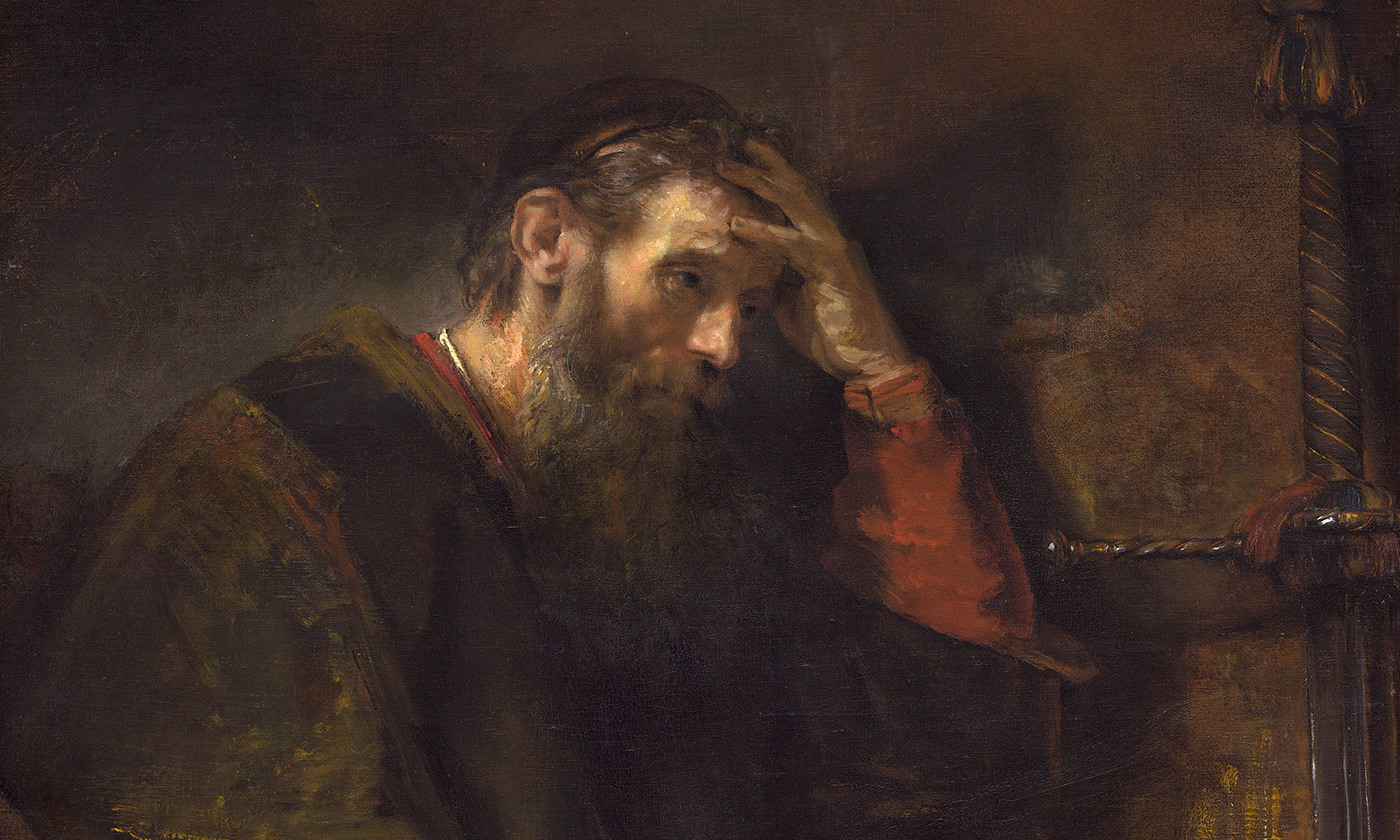
paul.jpg

Detail from The Apostle Paul by Rembrandt van Rijn (c1675). Courtesy National Gallery of Art/Wikipedia

Everything You Know about the Gospel of Paul is Likely Wrong

By David Bentley Hart

This past year, I burdened the English-speaking world with my very own translation of the New Testament – a project that I undertook at the behest of my editor at Yale University Press, but that I agreed to almost in the instant that it was proposed. I had long contemplated attempting a ‘subversively literal’ rendering of the text. Over the years, I had become disenchanted with almost all the standard translations available, and especially with modern versions produced by large committees of scholars, many of whom (it seems to me) have been predisposed by inherited theological habits to see things in the text that are not really there, and to fail to notice other things that most definitely are. Committees are bland affairs, and tend to reinforce our expectations; but the world of late antiquity is so remote from our own that it is almost never what we expect.

Ask, for instance, the average American Christian – say, some genial Presbyterian who attends church regularly and owns a New International Version of the Bible – what gospel the Apostle Paul preached. The reply will fall along predictable lines: human beings, bearing the guilt of original sin and destined for eternal hell, cannot save themselves through good deeds, or make themselves acceptable to God; yet God, in his mercy, sent the eternal Son to offer himself up for our sins, and the righteousness of Christ has been graciously imputed or imparted to all who have faith.

Some details might vary, but not the basic story. And, admittedly, much of the tale’s language is reminiscent of terms used by Paul, at least as filtered through certain conventional translations; but it is a fantasy. It presumes elements of later Christian belief absent from Paul’s own writings. Some of these (like the idea that humans are born damnably guilty in God’s eyes, or that good deeds are not required for salvation) arise from a history of misleading translations. Others (like the concept of an eternal hell of conscious torment) are entirely imagined, attributed to Paul on the basis of some mistaken picture of what the New Testament as a whole teaches.

Paul’s actual teachings, however, as taken directly from the Greek of his letters, emphasise neither original guilt nor imputed righteousness (he believed in neither), but rather the overthrow of bad angels. A certain long history of misreadings – especially of the Letter to the Romans – has created an impression of Paul’s theological concerns so entirely alien to his conceptual world that the real Paul occupies scarcely any place at all in Christian memory. It is true that he addresses issues of ‘righteousness’ or ‘justice’, and asserts that this is available to us only through the virtue of pistis – ‘faith’ or ‘trust’ or even ‘fidelity’. But for Paul, pistis largely consists in works of obedience to God and love of others. The only erga, ‘works’, which he is anxious to claim make no contribution to personal sanctity, are certain ‘ritual observances’ of the Law of Moses, such as circumcision or kosher dietary laws. This, though, means that the separation between Jews and gentiles has been annulled in Christ, opening salvation to all peoples; it does not mean (as Paul fears some might imagine) that God has abandoned his covenant with Israel.

Questions of law and righteousness, however, are secondary concerns. The essence of Paul’s theology is something far stranger, and unfolds on a far vaster scale. For Paul, the present world-age is rapidly passing, while another world-age differing from the former in every dimension – heavenly or terrestrial, spiritual or physical – is already dawning. The story of salvation concerns the entire cosmos; and it is a story of invasion, conquest, spoliation and triumph. For Paul, the cosmos has been enslaved to death, both by our sin and by the malign governance of those ‘angelic’ or ‘daemonian’ agencies who reign over the earth from the heavens, and who hold spirits in thrall below the earth. These angelic beings, these Archons, whom Paul calls Thrones and Powers and Dominations and Spiritual Forces of Evil in the High Places, are the gods of the nations. In the Letter to the Galatians, he even hints that the angel of the Lord who rules over Israel might be one of their number. Whether fallen, or mutinous, or merely incompetent, these beings stand intractably between us and God. But Christ has conquered them all.

In descending to Hades and ascending again through the heavens, Christ has vanquished all the Powers below and above that separate us from the love of God, taking them captive in a kind of triumphal procession. All that now remains is the final consummation of the present age, when Christ will appear in his full glory as cosmic conqueror, having ‘subordinated’ (hypetaxen) all the cosmic powers to himself – literally, having properly ‘ordered’ them ‘under’ himself – and will then return this whole reclaimed empire to his Father. God himself, rather than wicked or inept spiritual intermediaries, will rule the cosmos directly. Sometimes, Paul speaks as if some human beings will perish along with the present age, and sometimes as if all human beings will finally be saved. He never speaks of some hell for the torment of unregenerate souls.

The new age, moreover – when creation will be glorified and transformed into God’s kingdom – will be an age of ‘spirit’ rather than ‘flesh’. For Paul, these are two antithetical principles of creaturely existence, though most translations misrepresent the antithesis as a mere contrast between God’s ‘spirit’ and human perversity. But Paul is quite explicit: ‘Flesh and blood cannot inherit the Kingdom.’ Neither can psych?, ‘soul’, the life-principle or anima that gives life to perishable flesh. In the age to come, the ‘psychical body’, the ‘ensouled’ or ‘animal’ way of life, will be replaced by a ‘spiritual body’, beyond the reach of death – though, again, conventional translations usually obscure this by speaking of the former, vaguely, as a ‘natural body’.

Paul’s voice, I hasten to add, is hardly an eccentric one. John’s Gospel too, for instance, tells of the divine saviour who comes ‘from above’, descending from God’s realm into this cosmos, overthrowing its reigning Archon, bringing God’s light into the darkness of our captivity, and ‘dragging’ everyone to himself. And, in varying registers, so do most of the texts of the New Testament. As I say, it is a conceptual world very remote from our own.

And yet it would be foolish to try to judge the gospel’s spiritual claims by how plausible we find the cosmology that accompanies them. For one thing, the ancient picture of reality might be in many significant respects more accurate than ours. And it would surely be a category error to assume that the story of Christ’s overthrow of death and sin cannot express a truth that transcends the historical and cultural conditions in which it was first told. But, before we decide anything at all about that story, we must first recover it from the very different stories that we so frequently tell in its place.

This Idea was made possible through the support of a grant from Templeton Religion Trust.  The opinions expressed in this publication are those of the author(s) and do not necessarily reflect the views of Templeton Religion Trust.Aeon counter – do not remove

David Bentley Hart

This article was originally published at Aeon and has been republished under Creative Commons.

Silence

There is a saying here: Mountains and rivers can be moved, but man’s nature cannot be moved… We find our original nature in Japan. Perhaps it’s what’s meant by finding God.

– Father Ferreira

Related image

I recently watched the new Martin Scorsese film, Silence. It is based upon the 1966 novel of the same name by Shūsaku Endō. Silence holds a special significance for me since I have studied, and at times embraced, both Christianity and Buddhism. The film explores the lived experiences of faith and religion through the historical context of 17th century Jesuit priests on a mission to Catholicize Japan.

Father in Heaven, praised be Thy name. I’m just a foreigner who brought disaster. That’s what they think of me now.

– Father Rodrigues

While on foreign soil the Jesuit priests encounter a culture that they cannot understand, yet presume to. In much the same way, the Japanese struggle to understand Christianity and Western values. The priests, along with secret Japanese Christians, attempt to remain hidden as an inquisition sweeps the land purging itself of Catholicism. Worldviews and values clash as the priests are inevitably found, captured and forced to recant their beliefs.

Inquisitor: The doctrine you bring with you may be true in Spain and Portugal, but we have studied it carefully, thought about it over much time, and find it is of no use and of no value in Japan. We have concluded that it is a danger.

Father Rodrigues: But we believe we have brought you the truth. And the truth is universal. It’s common to all countries at all times. That’s why we call it the truth. If a doctrine weren’t as true here in Japan as it is in Portugal then we couldn’t call it the truth.

Inquisitor: I see you do not work with your hands, Father, but everyone knows a tree which flourishes in one kind of earth may decay and die in another. It is the same with the tree of Christianity. The leaves decay here. The buds die.

As nihilism encroaches upon the West and the death of God is both celebrated and denied, Silence offers a unique and insightful perspective on religion and the faithful. Myriad thoughts came to mind while I was watching the film. I was frequently reminded of Kierkegaard, Nietzsche, Nishitani, Jesus and Buddha. Sometimes I even veered in the direction of considering the missionaries as part of a national psychological operation geared toward global domination via the poison of ideology. In the end, though, I am reminded only of my own suffering at the hands of Christianity and the false hope it once offered.

I feel so tempted. I feel so tempted to despair. I’m afraid. The weight of your silence is terrible. I pray, but I’m lost. Or am I just praying to nothing? Nothing. Because you are not there?

– Father Rodrigues