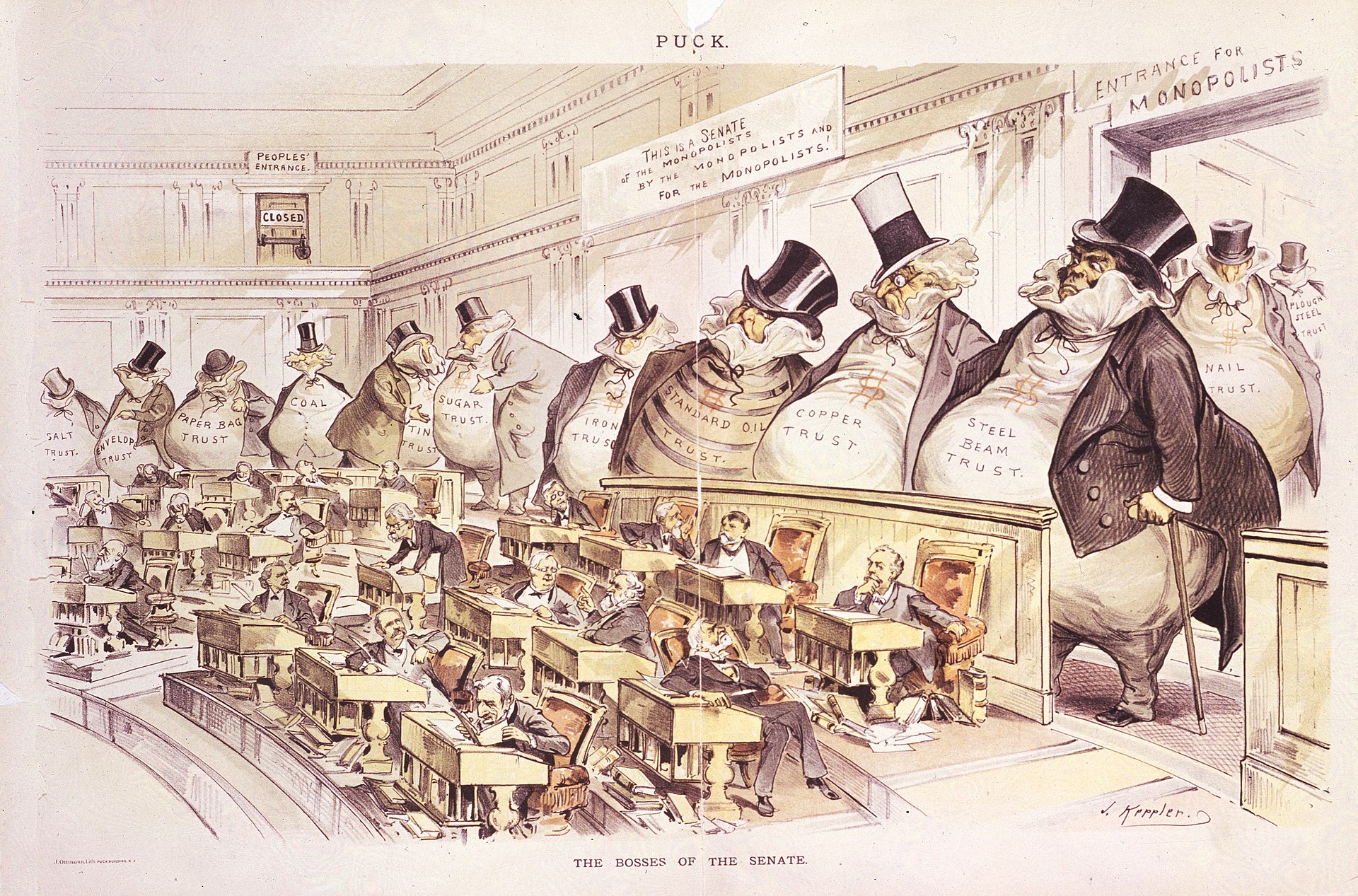
In an era when the United States is drifting dangerously close to oligarchy, voting for a third-party candidate is not only a strategic choice but a moral one. With corporations dictating policy, entrenched political elites hoarding power, and wealth disparity mimicking that of the late 19th-century Gilded Age, it has become impossible to ignore the stranglehold that money and privilege have over American politics. The two-party system has created a chokehold on democracy, silencing millions who dare to ask for a government that serves them, rather than the top 1%. Voting third party, then, is an act of resistance, a demand for accountability, and a refusal to perpetuate the corrupt system that is rapidly undermining democratic values.
The influence of corporations on U.S. politics is staggering. The Supreme Court’s disastrous Citizens United v. FEC decision in 2010 effectively legalized unlimited corporate spending in elections, handing the nation over to an elite few who wield unchecked power. This ruling ensures that elections are decided not by the will of the people but by billionaires and corporations funneling massive donations to their preferred candidates. Both the Democratic and Republican parties have accepted this money, turning campaigns into a war chest for the wealthy while everyday Americans struggle to make ends meet. This is not democracy; it is a corporate-controlled sham that rewards the powerful and crushes the powerless. Voting third party represents a clear rejection of this cycle, as third-party candidates are often far less reliant on corporate donations and far more committed to campaign finance reform that would put power back in the hands of the people.
We are living through a “second Gilded Age,” where economic inequality has reached alarming levels, and the American Dream is becoming nothing more than a cruel joke for most citizens. It is no coincidence that the wealth gap has ballooned in parallel with the consolidation of power by the two major parties. This wealth disparity is not just the product of a competitive economy; it is a deliberate result of policies that both major parties have supported for decades. Policies favoring deregulation, corporate bailouts, and tax breaks for the rich have created a class of ultra-wealthy individuals whose fortunes are protected at the expense of public welfare. The two-party system is complicit in perpetuating this inequality, cementing a reality where the richest Americans see their wealth multiply while the working class faces stagnation, poverty, and disenfranchisement. Third-party candidates, by contrast, generally advocate for progressive taxation, universal healthcare, and robust social programs. Voting for them is a statement that these issues matter, that wealth inequality is not just a statistic but a human crisis that requires urgent action.
The most immediate practical reason for voting third party is to help these parties gain 5% of the popular vote, qualifying them for federal funding in the next election cycle. With a larger base of resources, third parties can begin to mount competitive campaigns that challenge the duopoly of Republicans and Democrats. This access to funding is critical, as one of the greatest challenges third parties face is the stranglehold that money has on political viability. Major parties receive millions from wealthy donors, while third parties rely on grassroots support. By helping a third party achieve the 5% threshold, voters are laying the groundwork for future elections where third parties can truly compete, amplifying the voices that the two-party system has long sought to silence.
Those who say that voting third party is a “wasted vote” are perpetuating the very system that prevents third parties from gaining any traction. A vote is only wasted if it betrays your principles, not if it fails to result in an immediate victory. If the majority of Americans who express disillusionment with the two-party system actually voted third party, the landscape of American politics would be transformed overnight. By voting third party, citizens are rejecting the “lesser of two evils” narrative that keeps them trapped in a binary choice between candidates who both ultimately serve the same interests. Instead, a third-party vote demands that the entire political establishment be held accountable to the diverse values, needs, and aspirations of the American people.
The two-party system has fostered a culture where real solutions are sidelined, and innovative ideas are smothered in favor of the same stale, profit-driven agendas. This system locks out voices that challenge the status quo, leading to stagnation and neglect of urgent issues like climate change, wealth inequality, and healthcare reform. When third-party candidates bring these issues to the forefront, they force the conversation to shift. For example, the Green Party’s emphasis on climate action has pushed major parties to at least acknowledge environmental issues—something they likely would have ignored otherwise. Voting third party pressures the dominant parties to address ideas they would prefer to sideline or ignore. In this way, third-party votes create a ripple effect, challenging the narrow ideological boundaries that the two-party system imposes.
The structures supporting the two-party system are deeply entrenched and designed to perpetuate the illusion of choice while maintaining power within the same few hands. Winner-take-all voting, the Electoral College, and gerrymandering distort representation, discouraging third-party candidates and disenfranchising voters whose views do not align perfectly with either major party. These practices, upheld by both Democrats and Republicans, create an environment in which dissenting voices are marginalized. Yet, many third-party candidates advocate for structural reforms like ranked-choice voting and proportional representation. Supporting them sends a message that the current system is unacceptable and that the American people deserve a political structure that reflects their diversity and complexity, not a binary forced upon them by those who benefit from maintaining the status quo.
In a political landscape so dominated by corporate interests and entrenched elites, apathy has become a common reaction. Many Americans feel that their votes don’t matter, that their voices are drowned out in a system that caters to the wealthy and powerful. But this apathy is precisely what those in power rely on to maintain their grip. By voting third party, individuals reclaim their agency, refusing to accept that their only choices are to vote for candidates they don’t believe in or to abstain from voting altogether. Voting third party is a defiant declaration that the people’s voices will not be silenced, that they will not be pacified by the empty promises of two parties that have proven time and again that they serve wealth over welfare, power over principle.
In many functioning democracies, coalition governments and multi-party systems are the norm. These systems encourage negotiation, compromise, and accountability, fostering a government that is responsive to the needs of its people. The United States, by contrast, has settled into a two-party model that discourages cooperation and forces every issue into a partisan standoff. Supporting third parties is a necessary first step toward a multi-party system in which collaboration and genuine representation become possible. A third-party vote today is a vote for a different future, one where Americans are not forced into an endless tug-of-war but instead have a say in a truly democratic and representative government.
Voting for a third-party candidate is a moral imperative in a political climate marked by corporate control, vast economic inequality, and a lack of representation. It is an act of defiance against a political machine that has long stopped serving the interests of ordinary Americans. Voting third party is not just about supporting alternative candidates; it is about rejecting a system that has betrayed its democratic principles, that has given way to an oligarchy serving only the privileged few. The stakes are too high to settle for the illusion of choice between two parties that are more alike than they are different. By casting a vote that reflects genuine values and demanding change, Americans can help dismantle a system that serves the few and rebuild one that serves the many. In this second Gilded Age, voting third party is not just an option—it is an obligation for those who believe in democracy and justice.